Donald Trump rarely cancels an appearance that offers a chance for applause or praise.
But days after meetings in Davos, he unexpectedly declined — offering a bizarre explanation that immediately raised eyebrows and set off speculation about what really changed.
As always, the buildup to the Super Bowl brings its own gravity, with million-dollar ads teased, the halftime show endlessly debated, and the cultural temperature rising weeks before kickoff. This year is no different, with Super Bowl XL set to land in Northern California.
The Feb. 8 game at Levi’s Stadium in Santa Clara is shaping up to be one of the league’s most closely watched events, not just because of the matchup between the New England Patriots and Seattle Seahwaks, but because of the entertainment surrounding it. With a milestone anniversary and a global audience expected, the league’s decision for entertainment has already become part of the spectacle.
The NFL confirmed that Puerto Rican superstar Bad Bunny will headline the halftime show, while Bay Area punk rock veterans Green Day will take part in a special pregame ceremony. The announcements sparked immediate conversation, given both artists’ long history of mixing music with political commentary.
That backdrop set the stage for President Donald Trump, who has had a complicated history with the league’s choice of Bad Bunny for months, to weigh in.
“I don’t know who he is,” he said in a Newsmax’s “Greg Kelly Reports” interview in October 2025, “I don’t know why they’re doing it. It’s crazy. And then they blame it on some promoter they hired to pick up entertainment — I think it’s absolutely ridiculous.”
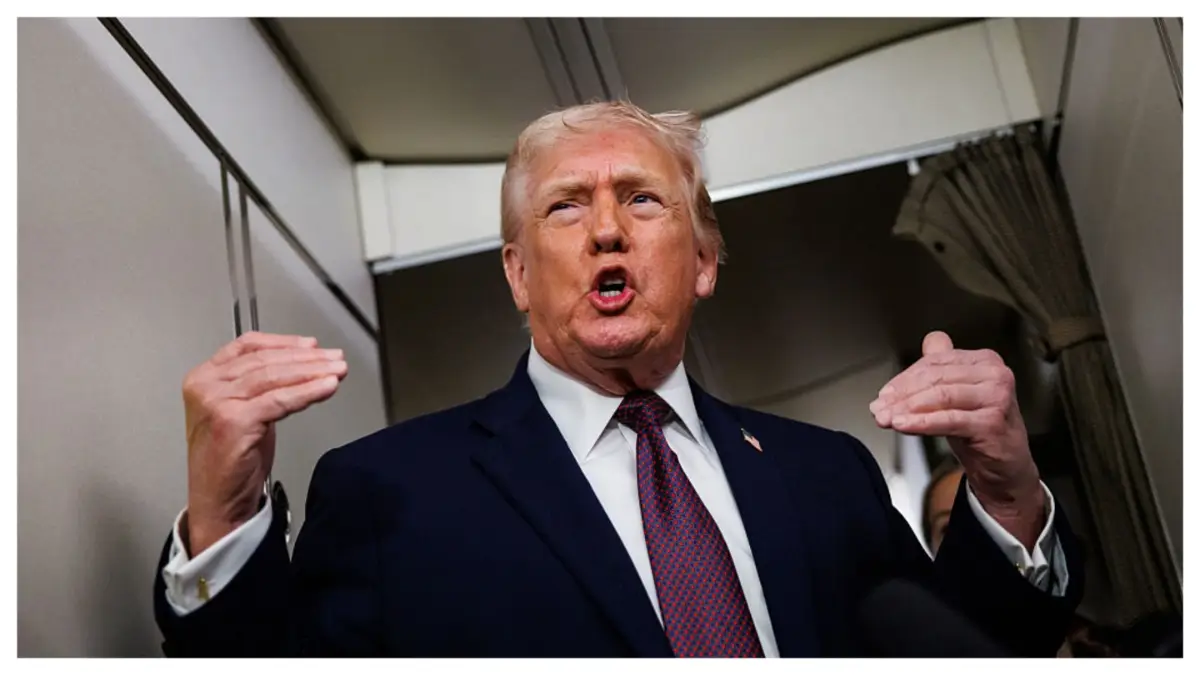
In a Jan. 23 interview with the New York Post, Trump said he will skip Super Bowl 60 in Santa Clara.
“It’s just too far away. I would. I’ve [gotten] great hands [at] the Super Bowl. They like me,” Trump said. “I would go if, you know, it was a little bit shorter.”
While he didn’t focus on the “Me Porto Bonito” chart-topper, he did not hide his frustration with the performers selected to take the stage. He made his feelings about the halftime and pregame acts explicit.
“I’m anti-them,” he said. “I think it’s a terrible choice. All it does is sow hatred. Terrible.”
Bad Bunny, born in Puerto Rico and known globally as the King of Latin Trap, has been openly critical of Trump for years.
In 2024, he released the song “Nuevayol,” which featured an imitated Trump voice apologizing to immigrants and praising Latino communities.
trump’ın latinlere olan tavrı yüzünden nuevayol klibinde şöyle bir sahne kullandı. bilmeyenler icin de bir detay porto riko bagimsiz bir ülke degil, amerikaya ait özerk bir bölge yani bad bunny zaten amerika vatandaşı ama dışlıyorlar onu pic.twitter.com/oz3X2siQ2j
— hatice. (@rosaliavibe) January 19, 2026
The track sharpened the divide between the artist and the president and cemented Bad Bunny’s role as a cultural critic of Trump-era politics.
Green Day’s opposition predates Trump’s presidency by decades.
The band’s 2004 album and Broadway “American Idiot” was written as a rejection of right-wing politics, nationalist messaging, and media manipulation during the George W. Bush era.
Those themes have remained central to the band’s identity, making its criticism of Trump consistent rather than situational. Frontman Billie Joe Armstrong has repeatedly condemned Trump’s administration from the stage and voiced support for anti-deportation protests in the U.S. and abroad.
In June 2025, he said during a performance in the U.K., “Ladies and gentlemen, we are slipping into fascism… Donald Trump and his administration is a fascist government, and it’s up to us to fight back.”
Trump’s Super Bowl comments follow a series of tense appearances at major sporting events.
In November 2025, his visit to a Washington Commanders game was met with extended booing that cut through the usual ceremony accompanying a presidential appearance, becoming a focal point of postgame discussion and online clips.
That divided response resurfaced during last year’s Super Bowl, when footage of Trump’s entrance sparked debate over how crowd noise was presented on the broadcast. Fan-recorded videos from different sections of the stadium circulated widely, capturing a reception split between cheers and boos depending on where cameras and microphones were positioned.
When news of Trump’s remarks spread across Threads and X, reactions were blunt.
“He doesn’t want to get booed and flipped off again,” one person wrote.
Another added, “Thank god!!!! Nobody wants you there.”
One person tweeted, “What @realDonaldTrump meant to say was, I’m terrified. I know they’re all going to boo me. They hate me!”
Someone else said, “Was that before or after he said he wasn’t going because of the halftime performance? Or maybe, just possibly, it’s because he knows everyone hates him and he’ll get boo’d out of the stadium?
What a…”
Trump says he’s skipping the Super Bowl: ‘It’s just too far away’
What @realDonaldTrump meant to say was, “I’m terrified. I know they’re all going to boo me. They hate me!”https://t.co/JtkTtMF8A7
— Mrs. H. (@Inchall2) January 25, 2026
One commenter joked, “Seriously? He jet sets all over the world. He just afraid California will arrest him. Donald Trump will not attend Super Bowl because it’s ‘too far away.’”
Another stated simply: “Chickening out.
Someone else added, “It’s in his favorite state.” While another person chimed in, “He’s probably scared Gavin will be there.”
Another reason fans aren’t buying the excuse is the location. The Super Bowl is in California, where Donald Trump and Gov. Gavin Newsom have openly clashed for years. That history has many saying it’s not about distance, but the optics of walking into Newsom’s backyard and the boos and backlash that would likely come with it.
Great Job Nicole Duncan-Smith & the Team @ Atlanta Black Star Source link for sharing this story.