

RICHMOND, Va.—The Virginia House of Delegates on Tuesday passed legislation continuing billions of dollars in state tax exemptions for all qualifying new and existing data centers as long as they take a series of steps to move away from fossil fuels and transition to renewable energy.
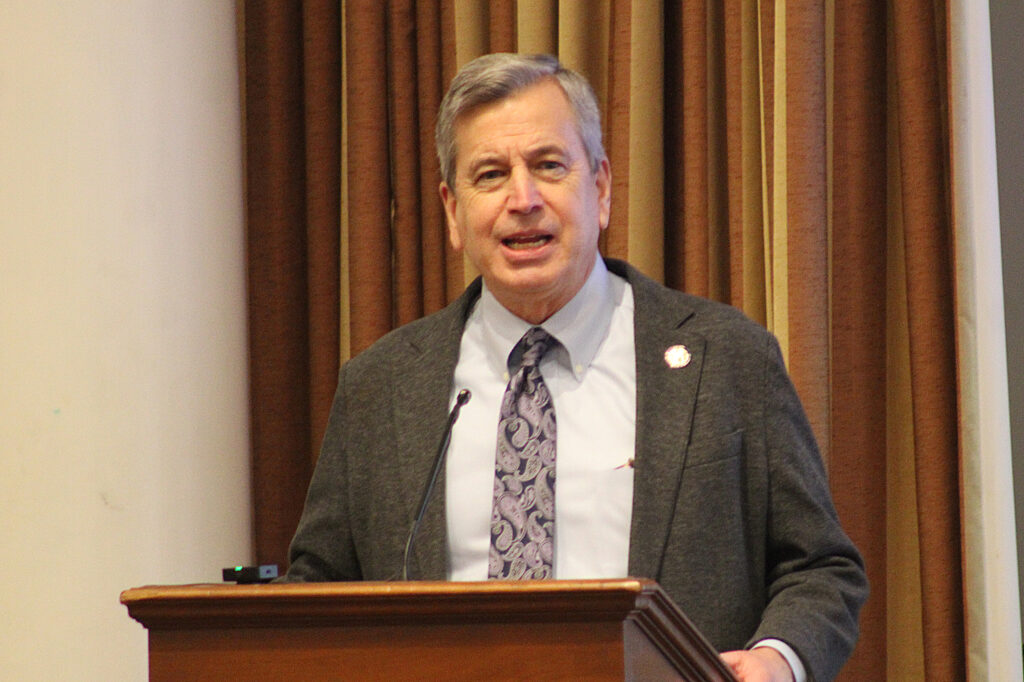
Passed roughly along party lines in the Democratic chamber, House Bill 897, sponsored by Del. Rip Sullivan, D-Fairfax, is seen as a bellwether measure for data center operations in Virginia, which has more of the industrial-size server farms than any other state, or nation.
Virginia, home of much of the U.S. national security establishment and birthplace of the internet, currently has 568 data centers in operation, according to datacentermap.com, and other states are watching the state’s tax and regulatory policies in the highly competitive and fast-moving national arena.
The state’s current tax policy exempts data centers that invest $150 million and create 50 jobs from its retail sales and use tax on their computer equipment, which ranges from 5.3 percent to 7 percent, depending upon the locality. The exemption ends in 2035, but more investments and jobs extend the credit to 2050. In 2025, those tax exemptions were worth $1.9 billion to data centers, which equals 2 percent of the state’s $74 billion budget.
The data center exemption was created by lawmakers after the 2008 housing crisis to create economic activity in the state.
“This exemption is enormous, and the data center industry is asking us to continue that investment,” Sullivan said. “If the data centers want this tax exemption, they have to make good on their supposed commitment to us. They have to be part of the solution to the challenges that they have created for our grid and for many of our local communities…What will they do in return?”
Under his bill, a compromise version of which was hammered out after intense pushback from the industry, data centers wanting the exemption and developed after the bill takes effect on July 1, 2027, would be prohibited from using their own polluting fossil fuel electricity sources as primary power. Natural gas power plants dedicated to data centers are a growing trend around the country.
The bill would also require data centers to match their electricity needs with clean energy sources, transition from diesel backup generators to non-carbon emitting power sources, like batteries, and use their energy more efficiently.
Existing data centers using the exemption would have one year from the bill’s effective date to comply with those provisions to continue receiving the tax exemption. If they did not comply, they would lose the exemption on Dec. 31. 2034. Negotiations on any extensions of the exemption are ongoing.
The data center industry has brought billions of dollars of local real estate and property tax revenue to counties, as well as construction jobs to build the facilities. But it’s also brought noise complaints for their 24-hours-a-day operation, heavy water usage in some areas for cooling the computers, and massive power usage that’s contributed to increases in residential bills for electricity and grid upgrades.
One of those upgrades is a 944 megawatt natural gas peaker plant in Chesterfield County. It’s the first of eight new natural gas plants Dominion wants to build, along with renewables and nuclear, to power continued load growth from data centers, which power the growing artificial intelligence industry.
The Chesterfield plant will have a construction cost of $1.47 billion. Financing and fuel costs could make the total cost $8 billion over its 30-plus year life. The plant’s PM2.5 emissions could also cause 80 premature deaths in Virginia over that time period, according to a study from the Southern Environmental Law Center.
This story is funded by readers like you.
Our nonprofit newsroom provides award-winning climate coverage free of charge and advertising. We rely on donations from readers like you to keep going. Please donate now to support our work.
“If we required data centers to run on clean energy, matching their new load with new clean energy, there would be absolutely no need for Chesterfield,” said Peter Anderson, director of state energy policy for Appalachian Voices, one of several environmental groups backing Sullivan’s bill.
Pushback from the industry has included not wanting to change previously agreed upon terms for those data centers already receiving the tax exemption, and concerns over difficulties in building renewable energy projects in Virginia. The exemption was a factor in 90 percent of data center investment in the state, said Nicole Riley, director of Virginia government affairs for the Data Center Coalition.
Another bill from Senate President Pro Tempore Louis Lucas, D-Portsmouth, is headed to the House for consideration by Mar. 14. Lucas’ bill seeks to assign more costs for grid upgrades to data centers, which are ratcheting up their defenses as a result.
“We have been in discussions with the bill sponsor and stakeholders, and are hopeful that we can find a path forward…” Riley, of the Data Center Coalition, said during testimony last week on Sullivan’s first proposal.
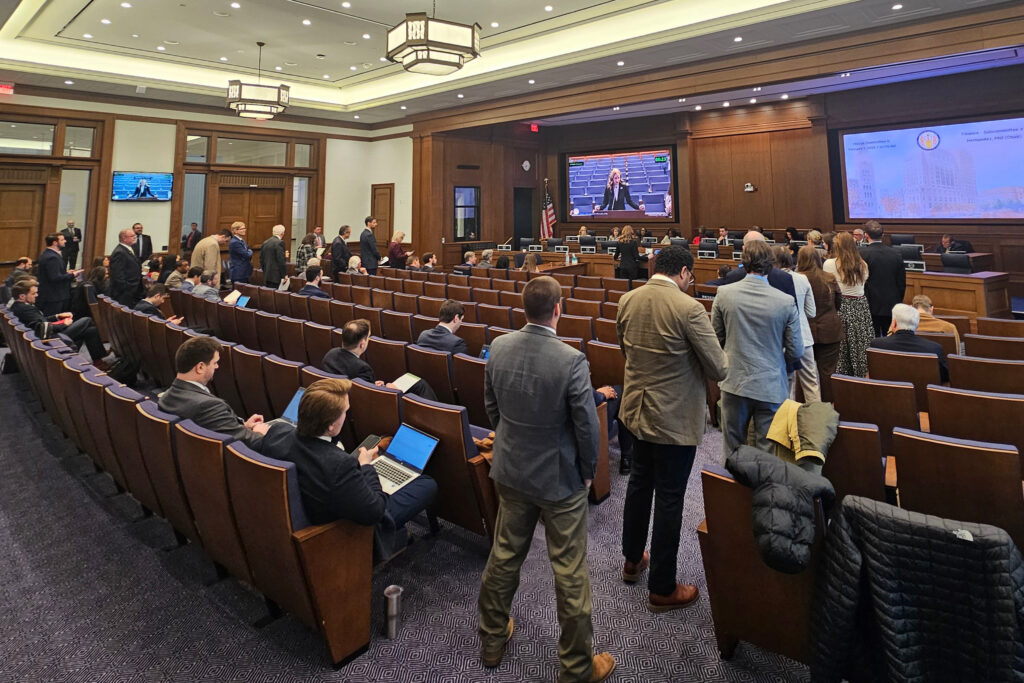
It’s not clear what will happen to Sullivan’s bill in the final weeks of this year’s legislative session in the Senate. Sen. Creigh Deeds, D-Charlottesville, had a similar measure to claw back the tax exemption for conservation efforts, but it failed to make it out of his chamber. He said to “stay tuned.”
“There are many moving pieces to this,” Deeds said. “That bill is similar to my bill that didn’t get reported.”
House Speaker Don Scott, D-Portsmouth, said in a brief interview Wednesday morning, “We’re going to continue the conversation…I’m just one person out of a hundred.”
House Appropriation Chairwoman Vivian Watts, D-Fairfax, wanting some changes, may signal a chance for some action on the exemption.
“It will grow, because every single data center, every three or four years will buy new equipment, and more and more and more state revenue will go to that exemption,” Watts said. “Meanwhile…data centers can’t be located just everywhere, because there’s all kinds of infrastructure that is crucial to their efficient operation,” Watts said. “So there will be a few winners. A few winners who will be taxing the equipment that the state has chosen not to tax.”
Former Republican Gov. Glenn Youngkin, an ally of President Donald Trump and staunch data center supporter, flatly opposed efforts to repeal or water down the tax exemption. Gov. Abigail Spanberger, a moderate Democratic who took office in January, hasn’t spoken publicly about Sullivan’s bill. But she rolled over her Trump-backed opponent in November after running on a campaign of affordability and wanting data centers to pay their “fare share.” Her Lt. Governor, Ghazala Hashmi, spoke at a clean energy rally about wanting corporate responsibility through legislation
“Corporate accountability means transparency in decision-making, fair treatment of employees and workers and responsibility for environmental and financial impacts,” Hashmi said. “It means ensuring that companies benefiting from public resources, benefiting from the tax incentives or ratepayer dollars are also meeting clear standards of conduct and performance.”
About This Story
Perhaps you noticed: This story, like all the news we publish, is free to read. That’s because Inside Climate News is a 501c3 nonprofit organization. We do not charge a subscription fee, lock our news behind a paywall, or clutter our website with ads. We make our news on climate and the environment freely available to you and anyone who wants it.
That’s not all. We also share our news for free with scores of other media organizations around the country. Many of them can’t afford to do environmental journalism of their own. We’ve built bureaus from coast to coast to report local stories, collaborate with local newsrooms and co-publish articles so that this vital work is shared as widely as possible.
Two of us launched ICN in 2007. Six years later we earned a Pulitzer Prize for National Reporting, and now we run the oldest and largest dedicated climate newsroom in the nation. We tell the story in all its complexity. We hold polluters accountable. We expose environmental injustice. We debunk misinformation. We scrutinize solutions and inspire action.
Donations from readers like you fund every aspect of what we do. If you don’t already, will you support our ongoing work, our reporting on the biggest crisis facing our planet, and help us reach even more readers in more places?
Please take a moment to make a tax-deductible donation. Every one of them makes a difference.
Thank you,

Virginia Correspondent
Charles Paullin is a Richmond, Virginia-based reporter focusing on energy and environment issues. He’s won several awards for his previous work covering state policy with the Virginia Mercury and local news with the Northern Virginia Daily in the Northern Shenandoah Valley. His first reporting gig was with the New Britain Herald in Connecticut, a couple years after attending the University of Hartford, where he first studied sports journalism.
Great Job By Charles Paullin & the Team @ Inside Climate News for sharing this story.