

In 2023, a friend took me to a night of off-Broadway theater in downtown Manhattan. A small audience gathered in a black box performance space to watch a series of tenderly performed short plays — about high school gun violence, empty nesting, heartbreak. It was much like any other night of Manhattan theater — except the tickets were sliding scale and all the playwrights and some of the actors were members of 32BJ, a large Service Employees International Union (SEIU) union local for building-maintenance workers like janitors and window cleaners.
The organization that transformed these workers into playwrights was Working Theater, a theater company that partners with labor unions and looks to recreate working-class theater for the twenty-first century. The playwrights were students in a playwriting course called THEATERWORKS! As part of their final project, professional actors performed their plays in front of a live audience at an off-Broadway venue. 32BJ was financially supporting the program through its worker training fund, and the workers discovered the course through their union.
In its work with unions and its commitment to creating working-class theater for all, Working Theater has no rivals. In New York City, Broadway theaters can now charge more for a single ticket than most working Americans make in a week. Theatrical training is also far from affordable for working-class people. As a result, performing artists overwhelmingly come from a narrow swathe of the upper and upper-middle classes. Working Theater looks to change that by bringing working-class people into the performing arts.
Working Theater was founded in 1985 in New York City by a company of actors as a working-class theater company to tell working-class stories. Under the leadership of their first artistic directors, Bill Mitchellson and later Mark Plesent, they evolved into a company that presented theater available to all. Where first they were a theater company that told stories about working class people, today they tell stories for working-class people.
While the company began as a downtown, experimental, avant garde theater troupe, they maintained a deep connection with the labor movement. Unique among theater companies nationwide, Working Theater is financially supported by labor unions, and its participants are frequently drawn from rank-and-file union membership. Their students come from unions across the city and work in a wide variety of fields, from carpentry to social work. Tickets to a show at Working Theater are also always on a sliding scale.
Like almost all small theater companies nationwide, Working Theater experienced an existential financial crisis during the pandemic. Their longtime artistic director, Plesent, died unexpectedly in 2020. Colm Summers, who was hired as artistic director after Plesent’s passing, described the company as consumed with grief when he joined. Already in mourning, they also had a 35 percent structural deficit and were in danger of collapsing.
Summers says the company was able to turn its fortunes around in the last five years by transforming it into more of a philanthropic organization, with partners in academia and other artistic and philanthropic nonprofits. Today, as the theater industry shrinks with each passing year, Working Theater is in surplus.
“The industry has contracted by a fifth every year [since 2020], and through 2023 major regionals all over the country buckled,” said Summers. “The word on everyone’s lips in artistic leadership is, ‘What is the audience of the future?’ At Working Theater, we really feel like we have that audience, we know who that audience is, and we know how to get to that audience.”
Harrison Magee was working as a unionized brick layer when he took his first class at Working Theater. He described himself as having been “baptized in the fire of the great recession” when he finished school; he was later active in Occupy Wall Street. Occupy brought him to the labor movement where he went from moving and storage jobs to a rank-and-file union job in the construction trades. In 2020, with essentially no background in theater, Magee signed up for a twelve-week playwriting class in the THEATERWORKS! program.
“Coming out of the pandemic, I’d forgotten how to have conversations, and I saw the ad for open access THEATERWORKS!” Magee told me. The class was sparsely attended. Besides himself there were only three other students: an International Brotherhood of Electrical Workers Local 3 electrician, a retired Professional Staff Congress-CUNY social worker, and an 1199 mental health professional. In the class, the students learned the fundamentals of playwriting, wrote short plays, and went together to see a Broadway show, Topdog/Underdog. At the end of the course, students’ plays were performed by professional actors and presented before a live audience.
Magee wrote a short play, Billionaire’s Row, which began in a 2022 class at Working Theater, about the years he spent working in the moving and storage business. He said that this job took him all over the city, allowing him to see the insides of apartments and walked into the lives of strangers. “Writing became a way of understanding it,” he told me. “It anchored my heart to all the beautiful people I worked with and the stories they had.”
Joe White is a playwriting instructor at Working Theater. He described trying to foment a feeling in his classes where his students feel like they are part of a community of artists. While these classes are similar to many continuing education adult creative writing classes, there is no financial barrier to entry, and the student body, drawn mainly from union membership, would often not otherwise be taking such a course.
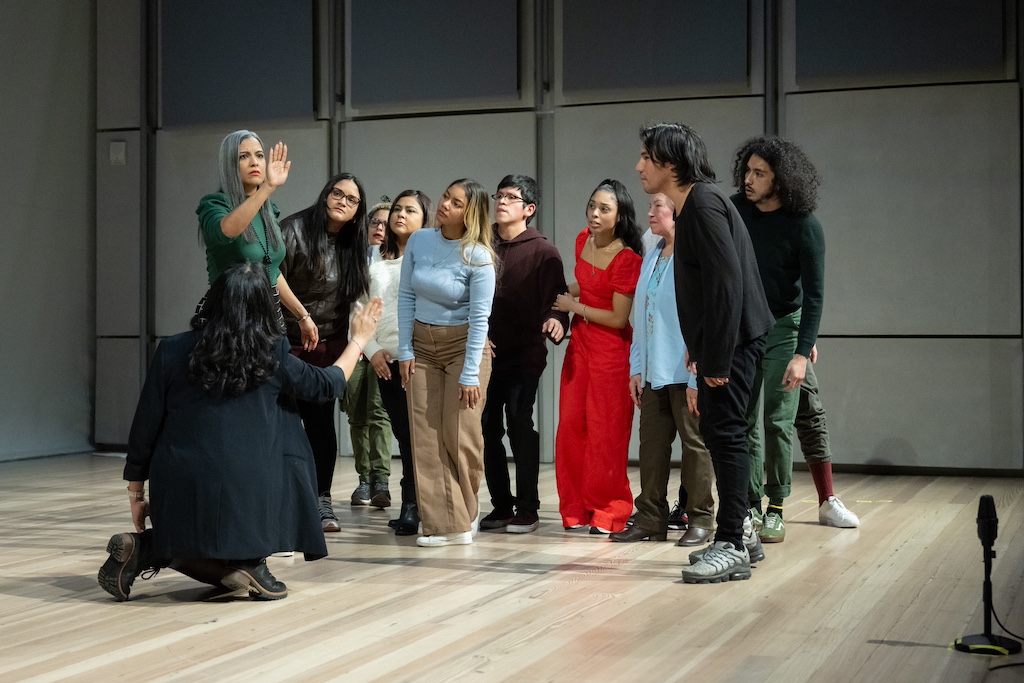
Working Theater recently helped rank-and-file organizer and playwright Laura Neill stage a play, Foot Wears House, about the real lives of workers at the outdoor goods store REI. The play aimed to help the new REI union in its long-fought contract campaign. Written by Neill and directed by Summers, Foot Wears House mirrors the dramatic series of events that occurred as REI workers unionized because of what they say were dangerous working conditions, low pay, and chaotic working hours. It chronicles the building of the REI union and the company’s alleged union busting as they dragged their feet on bargaining.
Presenting a reading of Neill’s play to a live audience was the first time Working Theater had involved itself directly in a union’s contract campaign. Speaking to Alex Press in Jacobin, Neill said,“I hope that the play is one tool in our union’s toolbox as we raise awareness of REI’s union busting.” She told Press that she’d begun the play as “a light farce about actors who all get the same day job,” but because of the union’s ongoing activity, it became a play about organizing on the job.
While Working Theater is the only organization of its kind in the United States today, it keeps alive a tradition of worker cultural organizing that flourished throughout the heyday of American unions in the 1940s. In our interview, Summers compared Working Theater to the Workers’ Theatre movement of the early-twentieth century, where plays portraying working-class politics and class struggle in an expressionist style were performed by small theater companies in downtown Manhattan. Playwrights like Eugene O’Neill, Clifford Odets, Sophie Treadwell, and Elmer Rice, who were socialists, communists, and advocates for birth control and women’s suffrage, were part of this movement and wrote political plays like Treadwell’s Machinal and O’Neill’s The Hairy Ape. They frequently wrote about working-class characters and poverty and political themes drawn from everyday life.
Working Theater’s relationship with the contemporary labor movement calls to mind another historical precedent: the 1937 musical revue Pins and Needles, put on by the International Ladies’ Garment Workers’ Union. Written in part by Communist Party member Marc Blitzstein (English translator of The Threepenny Opera and creator of The Cradle Will Rock), it was cast entirely with rank-and-file union members who could only rehearse nights and weekends. The lighthearted, socially conscious workers revue contains pro-union parodies of Broadway musicals with songs like “One Big Union for Two,” and “It’s Better with a Union Man.” It spoofs fascism, bigotry, and American conservatism with songs like “Doing the Reactionary.” Each show was updated to keep up to date on politics and the news of the day.
The revue was so popular that it moved from a small theater to Broadway, where it ran for three years, putting on over a thousand shows, an unheard-of number of performances in that era. The rank-and-file garment worker performers quit their day jobs to become full-time actors. The revue was ultimately performed at the White House in front of the Roosevelts.
More than a lifetime has passed since pro-union worker theater was last seen as a popular artform. In the decades since the pinnacle of left-wing worker theater in the United States, both the theater industry and the labor movement have severely contracted. But Working Theater reaches out to the labor movement as well as a loose coalition of progressive organizations to survive and thrive. Its focus today is less on telling politicized stories of class struggle than on opening access to theater and providing a venue in which to tell stories by and for the working class.
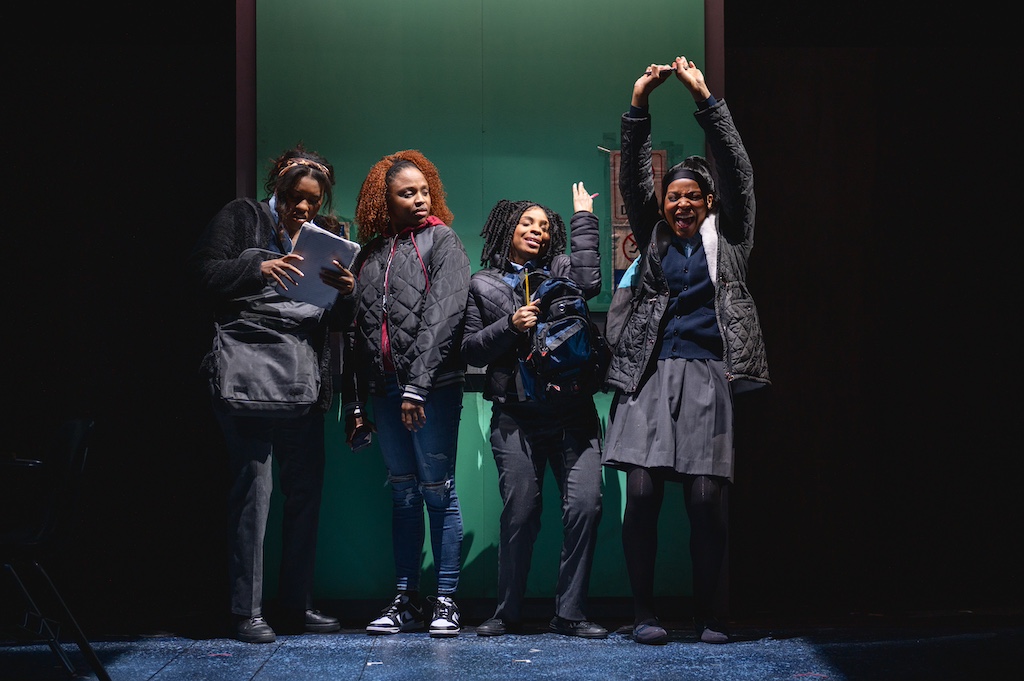
“We’re trying to tackle the problem of working-class work being perceived as agitprop, or as politically didactic, or stories which position working-class people as passive victims of a repressive system by producing work that exceeds those expectations,” Summers says.
One of Working Theater’s recent commissioned works, part of their Five Boroughs/One City initiative, was 2024’s Los Deliveristas Project. Playwright Ed Cardona Jr interviewed delivery cyclists and wrote a play about their real lives and efforts to improve their wages and working conditions. He had previously written the immersive play La Ruta for Working Theater. Staged inside a trailer, the play looks at the experience of immigrants being smuggled across the border into Texas from Mexico. The audience here is transformed into border crossers themselves, enduring the danger and hardships of the journey. The play is less agitational propaganda than a focus on the visceral experience of a border crossing, giving spectators a raw experience rather than telling them what to think.
Access and community involvement are currently buzzwords in the performing arts industry as a means of keeping the arts alive. The Public Theater put on a hybrid version of The Tempest in 2023 where an amateur choir performed alongside the professional cast. Opera Philadelphia currently offers any seat in the house for $11. For Working Theater, access and engagement are their reason for being. Summers credits this with their survival.
With most theater now prohibitively expensive for the working class, Working Theater has campaigned for its entire existence to offer the potentially transformative experience of theater to average people.
“If only the rest of American theater were less interested in pandering to a dying subscription model that will not outlive the next ten years,” Summers says, “we could actually arrive at a more equitable industry for everyone that was urgent and of high artistic quality for everyone.”
Great Job Annie Levin & the Team @ Jacobin Source link for sharing this story.