

For Afghan women escaping the Taliban, the new travel ban erases one of the last remaining paths to safety in the United States.
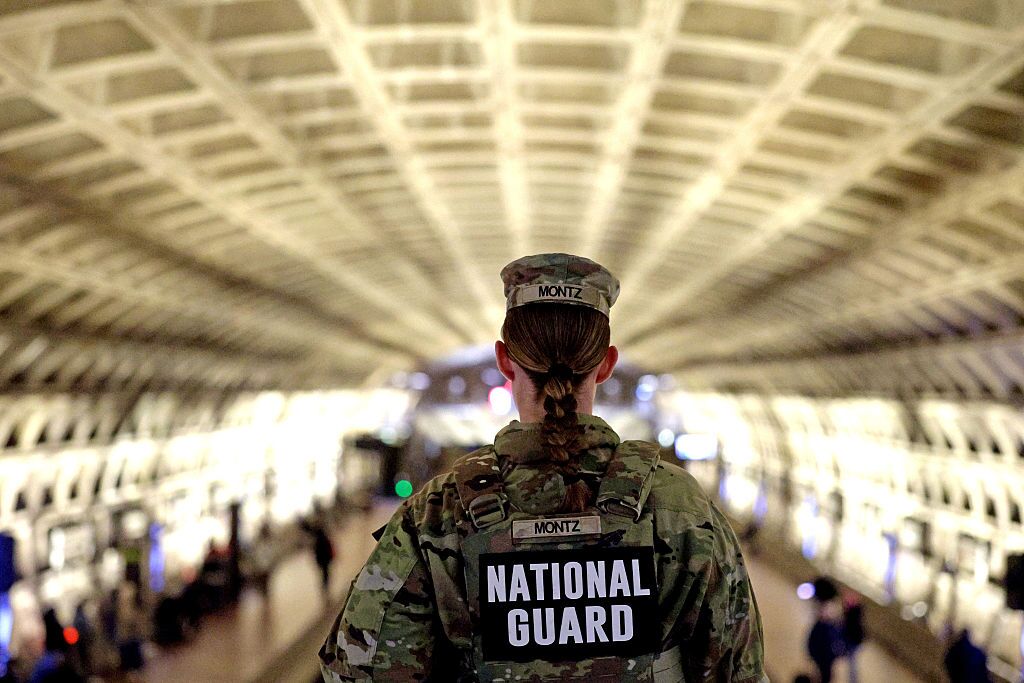
Months before the lives of West Virginia National Guard specialist Sarah Beckstrom and Afghan asylee Rahmanullah Lakanwal collided, the Trump administration planned to bring immigration to a halt from countries like Afghanistan, Somalia and other nations that supposedly threaten American values. When Lakanwal was charged with first-degree murder in Beckstrom’s Nov. 26 death, the administration seized on this tragedy to redouble its rhetoric against Afghans and others, and to usher in the next round of immigration restrictions.
“They are using the tragedy to enact the agenda that they already had,” said Spojmie Nasiri, an Afghan American immigration attorney.
The full scope of that agenda became clear on Dec. 16 when the Trump administration added another 15 countries to its travel ban, building on the anti-immigrant rhetoric the president spewed immediately after Beckstrom’s death.
Trump’s prior revised travel ban—announced June 4—named 12 countries, including Afghanistan, Somalia, Iran and Haiti, for which immigration of any kind was banned. Seven other countries had more limited restrictions.
The new ban adds seven additional countries (plus people traveling on Palestinian Authority travel documents) to the fully restricted category, and 15 more to the partially restricted category.
The White House justified this unprecedented action based on “Making America Safe Again,” arguing that the targeted countries, labeled “high risk,” lack the tools to allow the U.S. to sufficiently verify the identities of their citizens, or the countries don’t cooperate with U.S. deportation efforts, or the overstay rate from a particular country is too high. Fostering terrorism—the original justification for the Trump 1.0 travel ban in 2017, is at the bottom of the list, signaling what was already obvious: The ban is about keeping people out of the U.S. based on their nationality, punishing immigrants based on their place of birth.
The list of countries targets immigrants from African, Middle Eastern and Southeast Asian countries—a cover for banning Muslims, people of color and poor people. People from chaotic countries—like Cuba, Venezuela and Haiti—are also included, perhaps because proximity to the U.S. is considered a threat in itself.
And it ensures that many women who face oppression throughout the world will have no chance to enter the United States. Under the ban, Afghan women fleeing the Taliban will find no safe harbor in the U.S.
Ironically, the factors the president points to as grounds for the ban—corruption, civil unrest and authoritarian rule—are precisely the conditions that drive people to seek refuge from persecution.
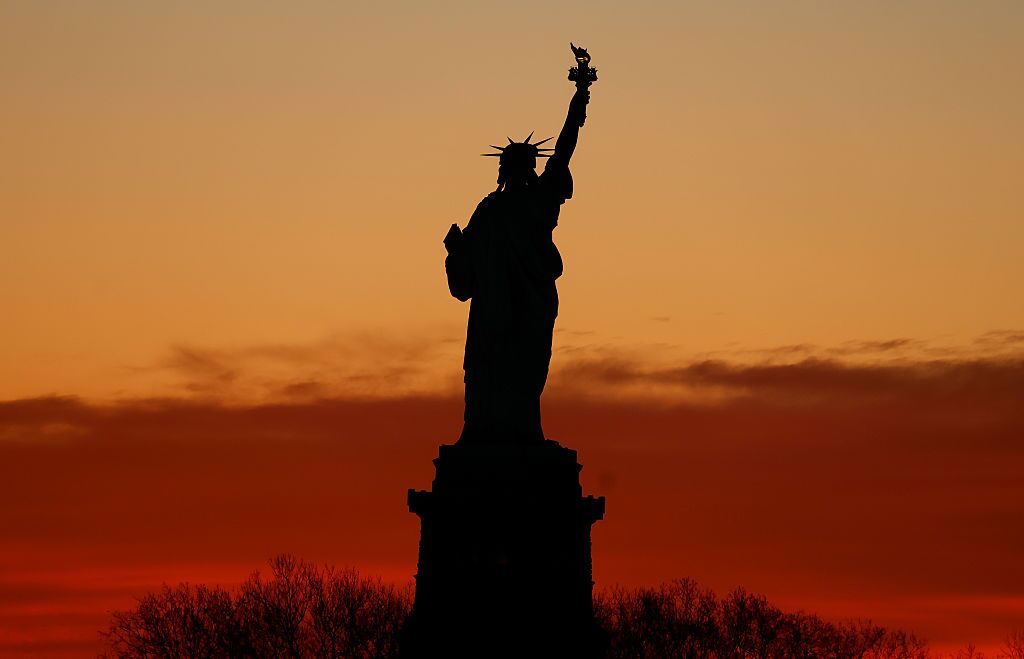
Looks like those who are tired, hungry, poor or yearning to breathe free are no longer welcome.
Afghan Women, Targeted by Design
Refugees, including Afghans, are taking the brunt of the new measures, but that is not a coincidence. By targeting the newest and often most vulnerable legal immigrants, the administration hopes to reshape the entire legal immigration structure, currying favor with the public by keeping Americans “safe” from supposedly dangerous immigrants.
Reporting for the Feminist Majority Foundation (publisher of Ms.), Sarah Hamidi points out that the administration has never paused to consider its own role in creating the conditions for this tragedy: its anti-immigrant rhetoric, its use of the National Guard to “fight” back against immigrants, or its failure to support the needs of traumatized veterans, including refugees.
Highly educated women, women who have worked here, will be in danger [if they return to Afghanistan].
Dana Lea, former office director of the Office of Refugee Resettlement, fired by Trump administration
Reflection leading to meaningful policy discussions, however, was never on the table. Instead, the administration took advantage of tragedy to accelerate its existing plans, shaped by Project 2025 and evident since Trump’s inauguration.
The Travel Ban as Part of a Broader Refugee Rollback
On that first day of his new administration, President Trump issued executive orders that effectively dismantled the U.S. refugee program and set in motion plans to expand the travel ban. Afghans were hard hit by the refugee ban, because hundreds of thousands of family members left behind during the U.S. evacuation of Kabul were in line for refugee status—and were now stranded and living in fear of the Taliban. A trickle of Afghans continued to arrive in the United States under other visa designations, including the Special Immigrant Visas issued to Afghans who had served with the U.S. military or government abroad. Meanwhile, the Trump administration announced that it would prioritize white Afrikaners for refugee admission in fiscal year 2025.
This plan continued to unfold in the fall. At the end of October 2025, the president set the refugee admission target for fiscal year 2026 at 7,500—the lowest number ever—and reserved most slots for white Afrikaners from South Africa.
With the admission of new refugees virtually blocked, the administration turned its attention to refugees already in the United States. Days before the shooting, USCIS head Joseph Edlow issued a memo accusing the Biden administration of prioritizing admissions over proper vetting and directing USCIS staff to examine all refugee admissions approved during the Biden administration for possible reinterview and revocation.
After the shooting, USCIS issued a news release, USCIS Implements Additional National Security Measures in the Wake of National Guard Shooting by Afghan National, touting a new directive to USCIS officers allowing them to treat an individual’s nationality as a negative factor in making a discretionary decision—such as granting adjustment of status, waivers, extensions, and employment authorization—if the applicant if from a country on the travel ban list (now called the list of high-risk countries).
While the headline drew a causal connection between the shooting and the directive, there can be little doubt that this was simply the next step in the administration’s plan to make it harder for people from certain countries to remain in the United States. Days later, a second USCIS memo went even further, placing a hold on the processing of all asylum applications, regardless of country of origin, pausing processing of all benefit requests made by individuals on the travel ban list, and directing officers to review all approved benefits for individuals who entered the United States after Jan. 21, 2020.
‘You Are Here, but You Are Not Guaranteed’
…. Some people fear ICE even more than the Taliban, because they believe that an ICE arrest leads to deportation, which would lead to certain death.
“R” (name wittheld)
This news sent shock waves through already traumatized Afghan communities in California, who began to report an increasing number of ICE vehicles in their neighborhoods.
“The distress in the community is a thousandfold more now,” says Nasiri.
While the fear is palpable, the level of risk within the community differs, she says. ICE appears to be prioritizing Afghans with past deportation orders and those without legal status who made their way to the U.S. without government assistance, but the barrage of policy changes is adding to the confusion about who may be at risk.
The feeling is, “You are here, but you are not guaranteed,” according to “R,” a naturalized Afghan immigrant living in Sacramento. He told Ms. that after an Afghan was arrested by ICE following an asylum interview, four other applicants asked him to help them reschedule their upcoming interviews. They were simply too afraid to appear.
Homayra Yusufi, the deputy director for the Partnership for the Advancement of New Americans (PANA) in San Diego, says that Afghans—and immigrants from other countries on the travel ban list—are terrified to leave their homes to attend Know Your Rights presentations, requiring PANA to hold more Zoom calls and do more individual counseling–but many people are afraid to even come to the PANA office because ICE may be watching.
“Everyone is just holding their breath,” Yusufi said. “What is the next thing that is going to happen? When will they come after me?”
R says that some people fear ICE even more than the Taliban, because they believe that an ICE arrest leads to deportation, which would lead to certain death.
R’s wife, who became a citizen years ago, now refuses to go to the store unless he accompanies her. For Afghan women new to the country, overcoming the cultural and educational barriers many experienced under the Taliban has been a slow process—and these new policies put that progress at risk.
Nasiri worries about this paralyzing fear affecting not just Afghans, but all immigrants. She has poured over the recent memos, attempting to construct clear guidance for her clients and the community, but the memos themselves are vague and talk incessantly about more vetting, even though Afghans may be one of the most highly vetted groups of immigrants arriving in the United States.
This lack of transparency is fueling the fear as well.
Under the Biden administration, the Office of Refugee Resettlement created an outreach office to improve communications between the government, refugees and the local communities where they settled, with the goal of strengthening understanding and support for resettlement.
On April 1, HHS essentially eliminated the outreach program and fired most people in the office, including office director, Dana Lea.
The absence of outreach and support leaves refugees more isolated—something particularly dangerous when the president is vilifying entire groups of people. The name-calling and unfounded talk of terrorism exposes people to harassment and harm, says Lea, but it also obscures the dangers Afghan refugees face from the Taliban.
“People will have targets on their back because they came here. We had to take [an employee’s] name off our website because the Taliban would know that he was in the U.S. They know who is here. The fact that you were coming from the U.S. meant that you fled and you supported the resistance to the Taliban. Highly educated women, women who have worked here, will be in danger [if they return to Afghanistan].”
The administration has also set in motion efforts to dilute the definition of refugee to meet its restrictionist agenda. For example, the 2025 Board of Immigration Appeals decision rejecting gender as a basis for asylum could put in jeopardy claims of persecution based on the treatment of women by the Taliban or lead to greater scrutiny of past approvals based on gender claims.
Harassing immigrants and using extreme tactics to shake their faith in America pays dividends for the anti-immigrant substrata because it makes immigrants question whether they belong, whether they can survive and whether they can thrive in the United States.
Regardless of whether the policy initiatives are blocked in the courts, pausing discretionary benefit processing, even for a short time, could lead to the loss of employment authorization or the loss of legal status because a renewal or extension request was put on hold.
In an already precarious economy, losing work authorization or the opportunities that come from naturalizing could make it impossible for families to remain self-sufficient—or to feed their kids.
Legal Challenges and Grassroots Resistance Offer a Path Forward
Despite the grim outlook, people continue to stand up and fight back. Across the country, people have pushed back on the absurd claims of the Trump administration. National lawsuits against the administration’s immigration policies are filed with increasingly regularity.
Locally, Know Your Rights presentations are a constant part of the work by advocates like Nasiri, Yusufi and R.
PANA has successfully lobbied for local protections against ICE raids in San Diego, campaigning for a Safety and Due Process ordinance that is designed to restrict local law enforcement participation in federal immigration actions.
PANA’s goal is to pass similar protections throughout San Diego County and the state, ensuring that local resources are not used to support ICE raids and that people are treated with dignity and respect.
“We don’t give up,” says Yusufi.
Great Job Mary Giovagnoli & the Team @ Ms. Magazine Source link for sharing this story.