Unhoused survivors of domestic violence are at the intersection of three underfunded federal offices. What do cuts mean for those in shelters?
Federally underfunded programs that support survivors of domestic violence have struggled to provide services for years. Now, the Trump administration’s budget bill—the lewdly named One, Big, Beautiful Bill Act—threatens to sever the last lifelines many women’s shelters were clinging to: funding for the Violence Against Women Act (VAWA) and the U.S. Department of Housing and Urban Development’s Continuum of Care programs.
By slashing both housing assistance and VAWA protections, lawmakers leave survivors trapped between violence and homelessness, with fewer paths to safety than ever before.
For Americans fleeing domestic violence, these budget cuts strip away lifesaving resources: emergency housing, legal support, funding for shelters, crisis centers and medical care.
Republicans’ “Beautiful” Bill Puts Lives at Risk
Trump’s 2026 budget proposed $208 million in cuts to the Office on Violence Against Women (OVW), which administers a majority of VAWA grants—“a reduction of nearly 30 percent,” according to Sen. Susan Collins (R-Maine), including cuts to transitional housing assistance and sexual assault services.
Republicans’ budget plan cuts aid for permanent housing by two-thirds, leaving many unsupported starting this month. Every person affected by these cuts is disabled, and many are elderly, with no explanation given for how they would find future housing.
Democracy Forward along with numerous other law firms, are currently representing a group of 21 states as they fight these grant limitations proposed by the Trump administration. According to a statement released by Democracy Forward, the attorneys general from each represented state “have asked the United States District of Rhode Island for permission to submit a brief explaining how crucial it is that the court stop the harmful and unlawful new restrictions.”
A new condition in the plan would also provide the U.S. Department of Housing and Urban Development (HUD) with the ability to prevent funding from going to organizations that acknowledge or support transgender or nonbinary people, deliberately discriminating based on gender identity. The plan also threatens funding for programs that focus on diversity.
Lifesaving services for 680,000 women and children are also estimated to disappear in the 2026 fiscal year due to these budget cuts. One nonprofit shelter, the Urban Resource Institute in New York, says 60 percent of the victims of gender-based violence they serve are children.
VAWA and OVW funding are two of the major federal funding sources for those experiencing gender-based violence in the U.S., but they operate in concert with many other federal departments—which are also facing drastic cuts.
In mid-November, Trump shifted $3.9 billion in funding within the Continuum of Care (CoC), a HUD-funded, community-based approach to ending homelessness that coordinates local nonprofits, governments and service providers. These funds will instead be used for police to break up encampments and force unhoused populations to accept treatment for mental illness or addiction.
This funding cut from permanent housing destabilizes the unhoused population throughout the country, many of whom are victims of domestic violence or need federal assistance in order to escape dangerous homes. It also devastates support for long-term housing programs, potentially plunging up to 170,000 previously unhoused Americans back into homelessness.
Slashed Programs Already Holding on by a Thread
Even before Trump’s second term, federal support for programs serving survivors was already eroding: Funding for women’s services fell by more than a quarter by 2023, even as demand for help rose by more than a third since 2020, and VAWA grants had already been cut by nearly 40 percent over the past five years.
The consequences are deadly: Domestic violence-related homicides increase by more than 26 percent in communities where survivor support systems are significantly weakened, research shows.
In the U.S., domestic violence is typically treated with band-aid solutions rather than infrastructure change that would decrease need for places like shelters (something most lawmakers have never relied on themselves).
Survivors Seeking Sanctuary
In New York state, thousands of households that utilize HUD funding could have their housing affected, leaving them with no immediate shelter. More than half of the households affected in the state are in New York City, where Sanctuary for Families (Sanctuary) is located.
Hon. Judy Harris Kluger has been the CEO of Sanctuary since 2014. She’s a former New York state judge and formerly the chief of policy and planning for the state.
She explained what it looks like to keep these necessary services afloat despite the cuts. Sanctuary, which provides a myriad of resources for those who have experienced gender-based violence and sexual harm, receives 60 percent of its funding from government sources, according to Kluger, and the rest from private sources.
As multiple federal sources lose funding, there is a unique impact on those who are survivors of domestic violence, whose safety exists at the intersection of these two programs.
“We have clients who are in housing as a result of that, and we will no longer have the funding to continue placing them,” Kluger told Ms. “If there isn’t funding for housing [including emergency and transitional shelters], then you go back to the very beginning: that clients can’t afford to leave their abusers and they have to choose between food and shelter [or] safety, which is a horrible choice.”
How will Sanctuary continue to operate with more than half of its funding threatened?
“Shelter is very expensive,” Kluger said. “Philanthropy assists survivors in significant ways, but it should not be asked to do what the government is supposed to be doing.”
Kluger saw the benefits of the Violence Against Women Act (VAWA) firsthand.
There aren’t enough domestic violence shelter beds as it is, and if we lose funding, that will be really devastating for survivors.
Hon. Judy Harris Kluger
“I started my career—first as a prosecutor, then as a judge—at a time when domestic violence wasn’t taken very seriously … VAWA changed the landscape significantly, in terms of laws, but also [attitudes and] resources available. My concern is the focus may be turning away from that.”
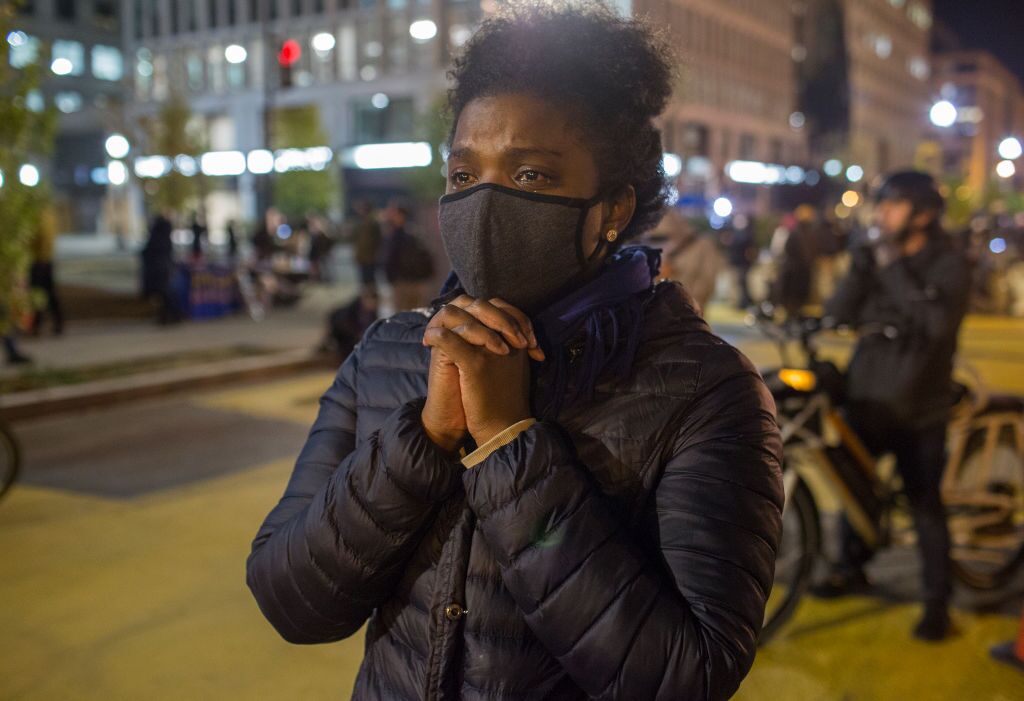
In October, U.S. representatives opposed efforts of the Department of Justice to merge the OVW into the Office of Justice Programs, which they argued is both illegal and would be a “profound step backwards” in federal responses to gender-based violence.
“OVW has specific expertise that will be diluted if that happens, and also cut funding,” said Kluger. “Our shelters are largely funded through funding that flows from the federal government to the state and then to us. There aren’t enough domestic violence shelter beds as it is, and if we lose funding, that will be really devastating for survivors.”
Kluger explained concerns of the slashed funding, which inevitably weakens reach, ability and support for VAWA-funded programs.
“The resources that have flowed from VAWA have been life-saving and life-changing for people, said Kluger. “They’re everything from shelter funding to lawyers and counselors. It helped us in New York significantly, but around the country there was a dearth of services and support. It will impact us at Sanctuary significantly, but it will impact others who will have to close their doors [completely]. I’m afraid.
“I don’t think it’s controversial—it shouldn’t be—to say we want to help people who are victims of gender-based violence as a government. We should be protecting people.”
According to Chris Negri, associate director of public policy at the California Partnership to End Domestic Violence, 20 percent of unhoused people are survivors of domestic violence, and 7.8 percent are “actively fleeing” such situations.
“One of the principal components of a decision to stay in a domestic violence situation, often, is the cost of housing and the risk of homelessness, perhaps especially with children,” Negri told Michele Goodwin during a recent episode of On the Issues.
The Cost of Violence
In terms of solely fiscal impacts to the funding cuts to VAWA and similar programs, intimate partner violence remains incredibly expensive for the federal government. In California alone, the cost of intimate partner violence is $73.7 billion in just one year, including hospitalizations, deaths, incarceration and other costs in the legal system. However, prevention efforts last year in California cost less than 1,000 times that amount: $69 million.
“If you want to be completely just about the dollars, there’s a tremendous cost to the government, to society [of gendered violence],” Kluger said. “Whether it’s an injury that needs to be treated in hospitals, doctors, lost wages … What domestic violence costs—if you want to turn it into dollars, as opposed to people—is a significant cost. So that’s going to be absorbed somewhere, if we take away the funds that are currently available [for prevention and resources].”
Sanctuary has both private and public funding sources, which allows them to provide essential wraparound services beyond immediate care, says Kluger. “Someone may come to us because they need a protective order, and then we also learn that they and their children need counseling. We have lawyers, we have counseling, we have a job training program and we have our shelter. We give cash client assistance when needed to help people with food and housing; so Sanctuary provides a holistic model of services.”
Kluger said she can’t imagine how shelters that rely solely on public funding will continue to provide services at all.
Trump-era immigration policies have added another barrier to safety services. ICE raids throughout the country have deported U.S. citizens and those with legal status as well as undocumented individuals, including at domestic violence shelters. Deportation threats “[have] a definite chilling effect on survivors who have to make the choice now: whether they run the risk of being subject to an ICE raid or staying in an abusive relationship,” Kluger said.
The services that typically offer emergency housing are now closing as an influx need them: 170,000 may be removed from their homes nationwide, and about 7,000 in New York City alone. Where will they go, when already 4,500 unhoused New Yorkers are sleeping outside of shelters, on benches and trains, and thousands more are already in the city shelters that are closing their doors?
As for the future, Kluger says Sanctuary is “worried, but resilient … we’re committed to our clients. We’re committed to the work that we do. We’ve been doing it for over 40 years, and that’s not going to stop.”
Great Job Maya Olson & the Team @ Ms. Magazine Source link for sharing this story.