

When the U.S. Fish and Wildlife Service attempted to delist grizzly bears during President Donald Trump’s first administration, its justification for doing so included the quality of grizzly habitat. Under the roadless rule, which prevents new thoroughfares from being built in some of the wildest corners of national forests, the mountainous areas and remote watersheds the bears depend on were ostensibly safe from development.
But now, both grizzlies and the roadless rule are in the crosshairs of the second Trump administration and Republicans in Congress.
In June, U.S. Secretary of Agriculture Brooke Rollins announced that the Forest Service, which is part of the U.S. Department of Agriculture, would begin the process to rescind the roadless rule; meanwhile, a House committee has passed legislation that would direct USFWS to delist grizzlies. Some in the environmental community are wondering whether these two objectives may be at odds with one another.
“A full rescission of the roadless rule may come with a whole bunch of consequences that we don’t even know yet,” said David Willms, an associate vice president for Public Lands with the National Wildlife Federation. In late November, Willms asked, in a LinkedIn post, whether rescinding the roadless rule was compatible with a potential grizzly bear delisting decision.
If the roadless rule is rescinded, those who are opposed to grizzlies losing endangered species protections may argue in court that the bears’ habitat lacks sufficient protections to justify a delisting, Willms told Inside Climate News. “Depending on how that plays out, it could delay that delisting effort even further.”
Currently, the U.S. Department of Agriculture (USDA) is deciding whether to rescind the roadless rule or leave it in place. “Maybe it’s worth having a more robust dialogue,” Willms said. “One of the things that, organizationally, we’ve been interested in seeing is a wider range of alternatives to be considered … to be able to vet things like this.”
Signed into law by President Bill Clinton in January 2001, the roadless rule prohibited new road development or redevelopment for timber harvesting on almost 60 million acres of land. Rescinding the rule would affect closer to 45 million acres after Idaho and Colorado received permission from President George W. Bush’s administration to implement state-specific roadless rules, according to the Forest Service.
Roads in the wilderness can often function like syringes, injecting humans and their ecological impacts—mining, clear-cutting, fossil fuel development, motorized vehicles, invasive species and litter, to name a few—into otherwise difficult-to-reach ecosystems. But they can also facilitate access to recreational opportunities, make it easier for forest managers to maintain healthy tree stands and give firefighters more options when combating remote blazes. (Studies have shown they may also exacerbate wildfires: Almost 85 percent of wildland fires are started by humans, and nearly 95 percent of those that occur in the lower 48 states start within half a mile of a road.)
Roadless areas are also critical for wildlife habitat. In its 2017 decision to remove grizzlies in the greater Yellowstone National Park ecosystem from the Endangered Species list, the USFWS estimated that roadless areas included about 1,900 square miles of “secure habitat for grizzly bears.” Challenges to the rule had failed in court, the agency noted, making potential changes to the management of these areas unlikely.
The presence of a robust, healthy habitat is a crucial benchmark for delisting a species under the Endangered Species Act. While the 2017 delisting effort failed in court for reasons unrelated to the roadless rule, grizzlies around Yellowstone have long met the population thresholds required to be removed from the endangered species list.
Current arguments over whether to delist the species primarily focus on whether there are adequate protections in place to ensure the animal’s long-term survival.
Several studies have shown that grizzly mortality increases with road density, including around Yellowstone.
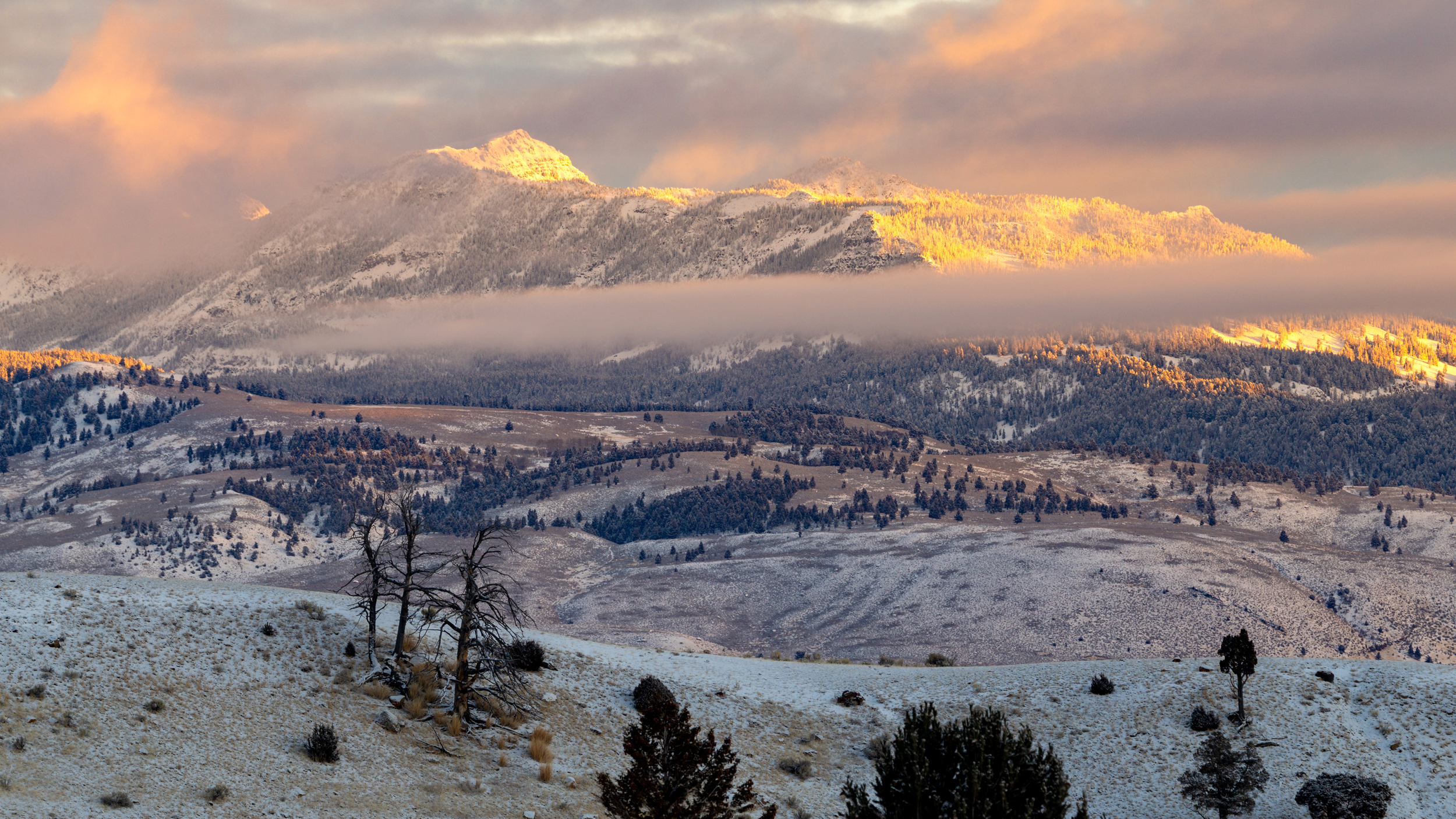
“Most of the roadless areas in Greater Yellowstone are what we would think about as core habitat for grizzlies,” said Scott Christensen, executive director of the Greater Yellowstone Coalition, a nonprofit that advocates for the ecosystems surrounding the park.
“In my mind, there are really big questions about the future of core grizzly bear habitat in a world where the roadless rule has been rescinded and where the administration seems to be very intent on opening up much more public land for development,” he said.
Climate change is also killing whitebark pine trees, an essential food source for grizzlies.
The USFWS did not respond to questions about whether it had communicated with USDA regarding the roadless rule and grizzlies.
In an email, a USDA spokesperson said “threatened, endangered, and sensitive species were identified as substantive issues to be analyzed” in the agency’s environmental impact statement for the proposed rollback of the roadless rule. “Over the coming months there will be more opportunities for public involvement as the agency prepares and issues a draft environmental impact statement under the National Environmental Policy Act,” the spokespersons said.
This story is funded by readers like you.
Our nonprofit newsroom provides award-winning climate coverage free of charge and advertising. We rely on donations from readers like you to keep going. Please donate now to support our work.
The vast majority of comments the Forest Service received regarding its plan to scuttle the roadless rule urged the agency not to do so, according to an analysis by the Center for Western Priorities.
But not everyone is concerned that rescinding the roadless rule would make it inherently more difficult to delist grizzlies. Individual forests already have management areas baked into their forest plans that achieve the same outcome as the roadless rule, said Micah Christensen (unrelated to Scott Christensen), natural resource counsel for the Wyoming County Commissioners Association. Without the roadless rule, the USFWS would “have to dig deeper into forest plans” to determine whether other management actions could maintain quality grizzly habitat around Yellowstone to justify a delisting decision, he said.
Grizzlies are not the only species that have benefited from roadless areas.
“In Wyoming, roadless areas make up 5 percent of the landscape and 20 percent of the trout habitat,” said Chris Wood, president and chief executive officer of Trout Unlimited, noting that similar ratios exist in other western states. These places “are ecologically disproportionately important,” he said.
Wood worked on the roadless rule as a Forest Service employee in 2001, and he still considers it one of his biggest accomplishments—a highly successful “surgical and methodical strike” that used input from millions of Americans to protect large tracts of forest lands without significantly curbing development. But some argue the roadless rule is too restrictive, especially when it comes to making it easier to thin fuels. (A 2020 Forest Service analysis found “a lack of roads did not prevent fuel reduction efforts in [roadless areas] between 2001 and 2019.”)
“I happen to think that the rule actually provides the flexibility that managers need to make good decisions,” Wood said. “That said, should there be an alternative between doing nothing or scraping the whole thing? For sure.”
Scott Christensen also felt there should be middle ground when it comes to revisiting the roadless rule, though “the devil is in the details,” he said. Still, he added, “that’s a better conversation to be having than ‘let’s get rid of it entirely.’”
As part of its comments to the Forest Service, the Wyoming County Commissioners Association suggested the Forest Service consider alternatives to completely rescinding the roadless rule, including “returning the decision-making authority for roadless areas” to local forest supervisors. “I’d be very surprised if the Forest Service doesn’t evaluate additional alternatives in this process,” Micah Christensen said.
But until any alternatives emerge, Scott Christensen felt like the two objectives—rescinding the roadless rule and delisting grizzlies—are incompatible.
“You can’t really have it both ways,” he said. “You can’t declare victory on recovering a species [while] at the same time you’re eroding the policies and conservation measures that have made that come back possible.”
On Dec. 11, environmental groups won a lawsuit against the Forest Service over a more than 16,500-acre forest management and logging plan in the Custer Gallatin National Forest outside Yellowstone, which was initially approved during the Biden Administration. In his decision halting the project, which did not occur in an area protected by the roadless rule, Judge Donald Molloy, from the U.S. District Court in Montana, noted that the Forest Service’s environmental impact analysis did not adequately consider the impacts of roads on grizzly habitat.
About This Story
Perhaps you noticed: This story, like all the news we publish, is free to read. That’s because Inside Climate News is a 501c3 nonprofit organization. We do not charge a subscription fee, lock our news behind a paywall, or clutter our website with ads. We make our news on climate and the environment freely available to you and anyone who wants it.
That’s not all. We also share our news for free with scores of other media organizations around the country. Many of them can’t afford to do environmental journalism of their own. We’ve built bureaus from coast to coast to report local stories, collaborate with local newsrooms and co-publish articles so that this vital work is shared as widely as possible.
Two of us launched ICN in 2007. Six years later we earned a Pulitzer Prize for National Reporting, and now we run the oldest and largest dedicated climate newsroom in the nation. We tell the story in all its complexity. We hold polluters accountable. We expose environmental injustice. We debunk misinformation. We scrutinize solutions and inspire action.
Donations from readers like you fund every aspect of what we do. If you don’t already, will you support our ongoing work, our reporting on the biggest crisis facing our planet, and help us reach even more readers in more places?
Please take a moment to make a tax-deductible donation. Every one of them makes a difference.
Thank you,

Reporter, Wyoming and the West
Jake Bolster reports on Wyoming and the West for Inside Climate News. Previously, he worked as a freelancer, covering climate change, energy, and the environment across the United States. He holds a Masters in Journalism from Columbia University.
Great Job By Jake Bolster & the Team @ Inside Climate News Source link for sharing this story.