

Ice fascinates Richard Behr.
Almost every winter day, the 66-year-old central Maine resident checks out satellite images of some of his favorite lakes and ponds for “wild” skating. He drives out to check ice thickness in person and shares condition reports with his fellow skaters on Facebook. He reads articles about ice science before bed.
“I don’t have to be on the ice to enjoy the sport,” Behr said. “I love talking about it. I drive my wife crazy.”
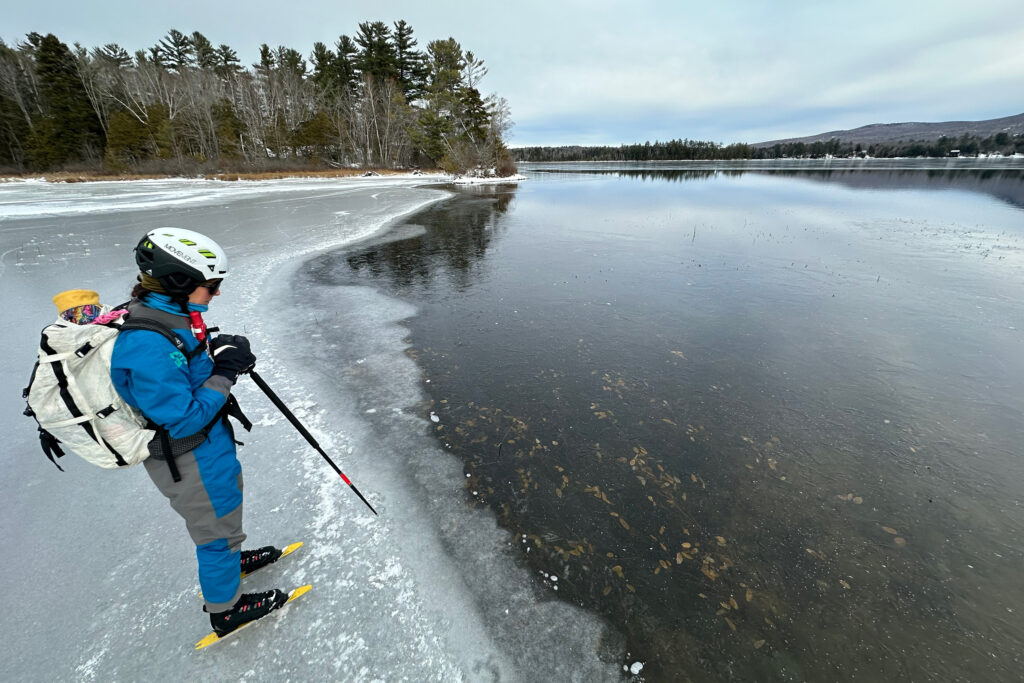
And when the conditions are right—usually about 40 to 60 days each winter, he said—Behr straps on his skates and glides out onto the ice.
“It keeps me alive. It really does energize me,” he said.
But climate change is making Maine’s ice season shorter and less predictable. Behr said he doesn’t think his grandson, age 7, will have the same chance to fall in love with ice.
“It’s an aspect of Maine that conceivably will be history,” he said. “I’m saddened by the fact that my grandson may never get to experience it. And not just him, other kids. That won’t be part of their lives because it will be gone.”
On Thinner Ice
When Behr was growing up on a lake in coastal Maine, his family drove their car onto the winter ice without worrying about its thickness. They drilled ice-fishing holes that he could reach his entire arm into before touching water.
“It was just a much safer environment because we made a lot more ice, even on the coast,” Behr said. “It’s not very often now that you see ice like that.”
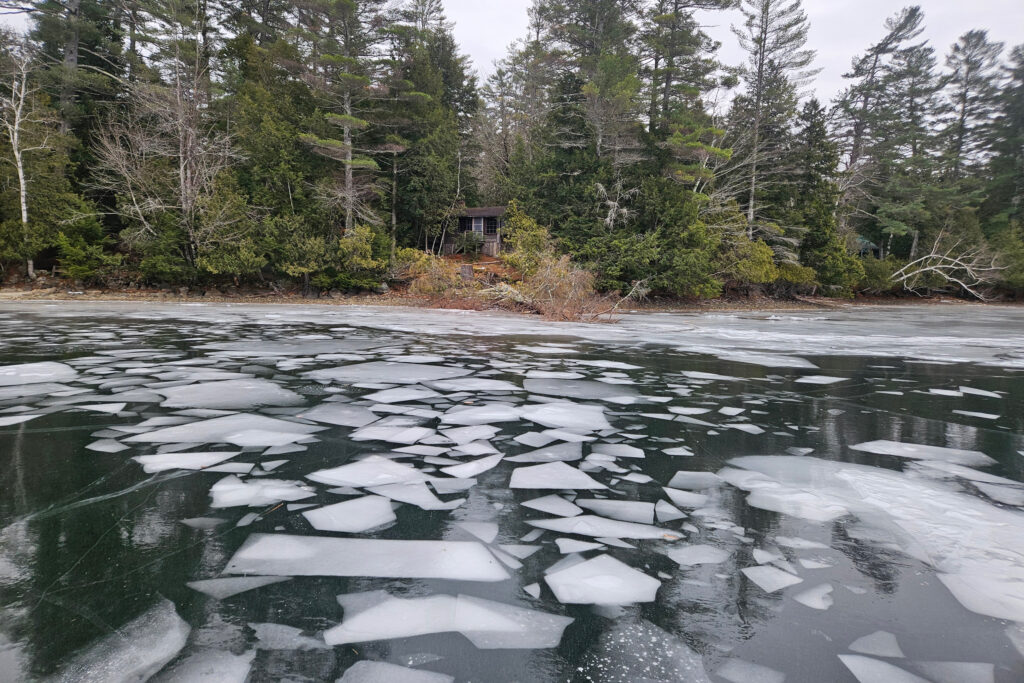
Maine’s lakes and ponds are icing over later in the winter and thawing earlier in the spring. On average, they’re experiencing 20 to 25 fewer days of ice than in the 1850s, according to Tristan Taber, the water quality program director for the Lake Stewards of Maine, a citizen science group dedicated to lake health. The rate of that change is accelerating, he said.
“We never historically had reports of ice leaving lakes in March, and within the past two decades—within the past decade, especially—we’ve had significantly more reports of ice-out in March,” he said. A century or more ago, ice-out was common in late spring and even into June in some areas.
The Lake Stewards are citizen scientists who provide some of the primary ice-cover records that researchers and state officials rely on.
Taber said the Lake Stewards collect regular ice data for around 130 lakes and ponds, while hikers and other passersby provide sporadic data from about 100 more sites.
“Our long-term trends show that people are having less days out on the ice,” Taber said.
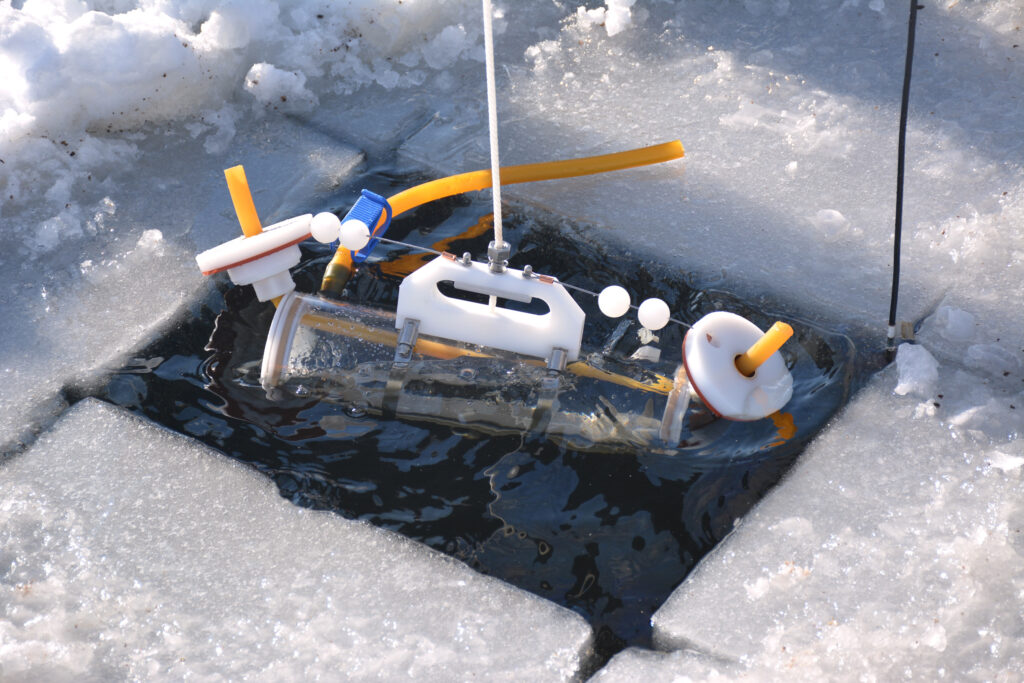
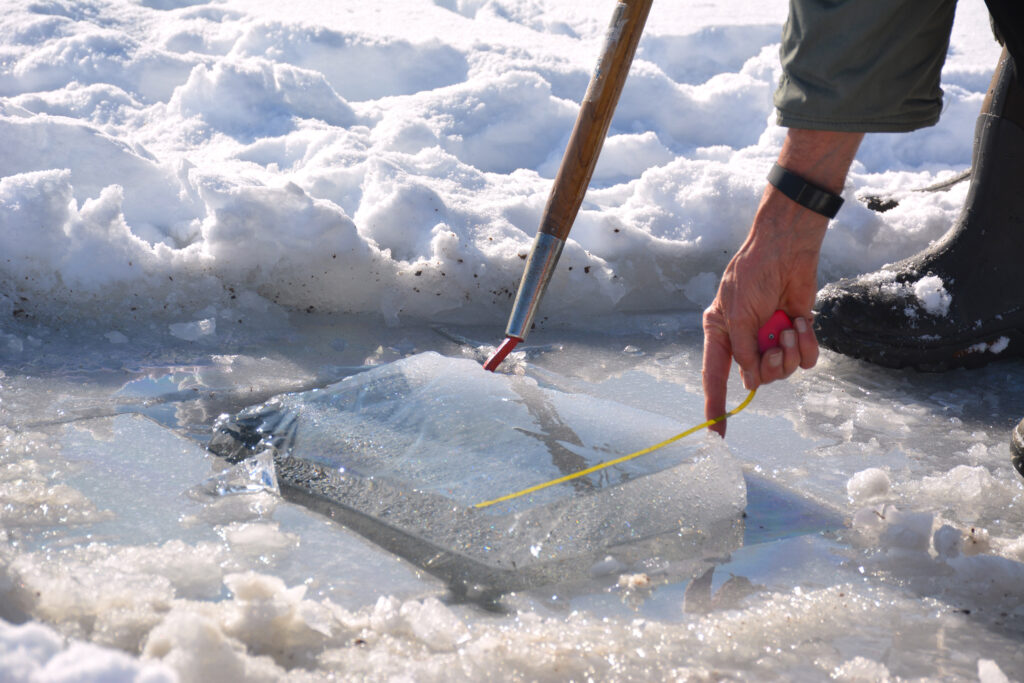
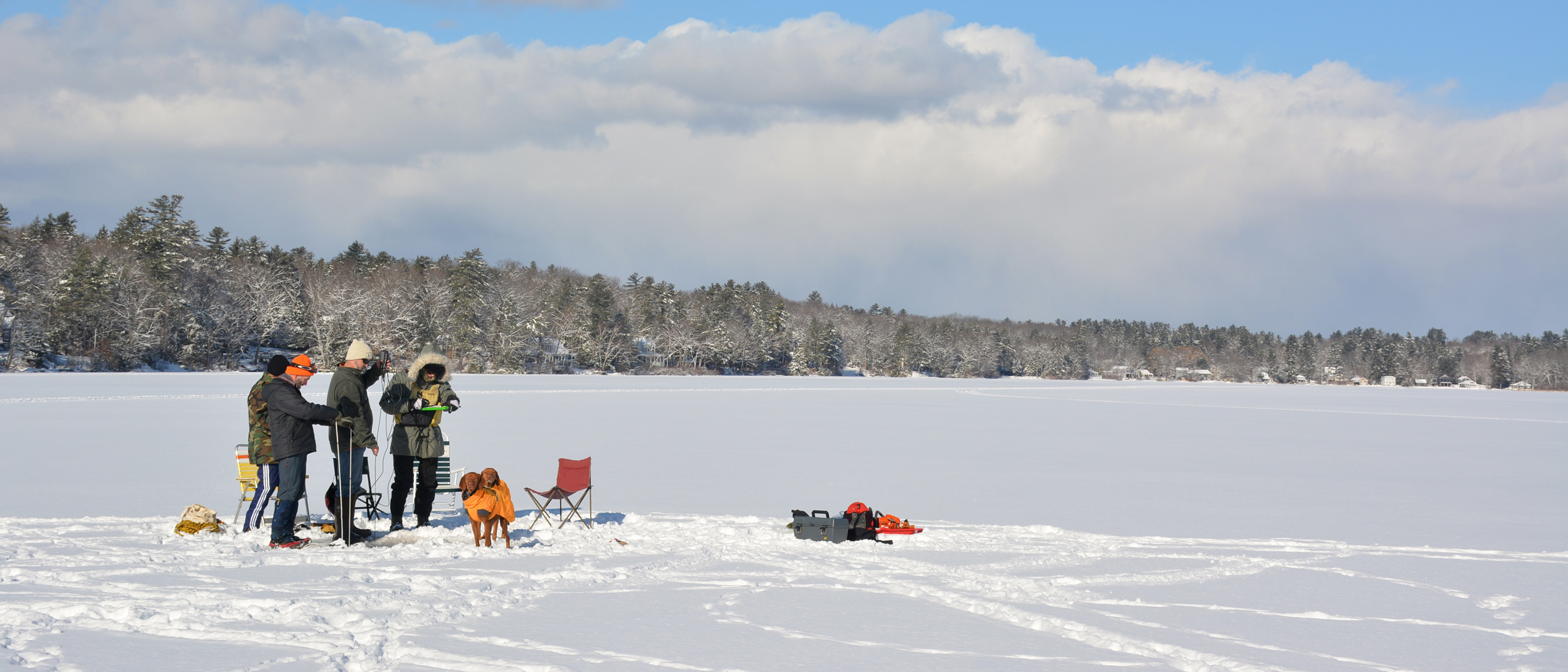
According to the Maine Climate Council, the state’s water bodies have warmed by an average of 1.4 degrees Fahrenheit per decade since the 1980s. Taber said the Lake Stewards are seeing not just shorter ice seasons but also bigger swings between cold and warm years.
“One of the big, scary takeaways within climate models and within what a lot of people are experiencing day to day is there’s a lot more variability,” he said.
December 2025, for instance, set record-low temperatures in many parts of the state, which is a boon for skaters like Behr. But the 2023–2024 winter was one of the warmest in the state’s history. Taber said some lakes failed to ice over during recent warm winters. Several towns cancelled or moved their annual ice fishing derbies in 2023 and 2024 due to lack of ice cover.
Lake “Metabolism”
When the ice closes over a lake, it puts a “lid on a lake’s biological activity,” according to Jeremy Deeds, an aquatic ecologist at the state Department of Environmental Protection.
That lid supports winter sports, from skating and ice fishing to snowmobiling and pond hockey. Below the lid, there are quiet life cycles occurring that are critical to the lake’s health.
“The ice timing has a pretty big bearing … [on] what I call the metabolism of the lake,” Deeds said.
When and how ice forms depends on a lot of factors beyond the temperature, including a lake’s surface area, depth, elevation and latitude, along with weather events like storms and wind.
This story is funded by readers like you.
Our nonprofit newsroom provides award-winning climate coverage free of charge and advertising. We rely on donations from readers like you to keep going. Please donate now to support our work.
The timing, thickness and clarity of ice cover all influence how water mixes and how nutrients and oxygen are distributed from upper to lower layers of the lake. This influence on water quality continues into the spring and summer, said Jasmine Saros, a professor of lake ecology at the University of Maine Climate Change Institute.
“There’s more and more evidence that that [ice] has implications on the lake systems throughout the year,” Saros said.
The life cycles of everything from zooplankton to cold-water game fish depend on the right amount of oxygen and nutrients at the right time. Ice cover also halts the growth of bacteria like cyanobacteria, which can cause algae blooms when unchecked, and E. coli, Taber said.
For a long time, Saros said, scientists didn’t do much winter research on lakes because they thought it was “a quiet time where nothing was really happening in lake systems, but there’s actually quite a bit of activity.”
A shorter ice season means less oxygen for species living in the deepest parts of Maine’s lakes and ponds, while fast-growing cyanobacteria have a longer season to create toxic blooms.
While these blooms aren’t new to the state, Deeds said the Department of Environmental Protections has seen recent indicators that they could become a larger problem.
“We have certainly seen lakes that did not historically have algae blooms all of a sudden tip into this situation … with some frequency in the past few years,” he said.
Excessive algae blooms harm not only the local ecosystem but also drinking-water quality, and in some cases can cause the closure of a popular recreation spot. Treating a lake once it gets to this point is “complicated and expensive and really involved,” Deeds said. “It’s so much easier and cheaper to deal with prevention than a cure.”
Year-round, Maine’s lakes support a $501 million recreation industry and $334 million in drinking water value, according to University of Maine research in 2024.
Add in property taxes from lakefront homes, and the total impact skyrockets to $14 billion. Water quality has a direct effect on home values and economies for lakefront communities.
Thinner ice also raises the potential for accidents during winter sports, Behr said, and a fall through the ice can be fatal. He now teaches ice safety courses.
“It’s more important than ever for people to understand some of the basics of ice behavior because we don’t have as much good ice,” he said. “I just see a lot of people on the ice that have no idea.”
The Ice Puzzle
Maine’s ice research is made up of a patchwork of sources and methods.
The state DEP doesn’t specifically track ice cover, Deeds said, though it does have continuous monitoring equipment at a couple major lakes. Their lake assessment staff focuses mainly on summer water quality and habitat conditions, and they rely on the Lake Stewards for winter data. Deeds helps with training volunteers to make sure they’re collecting data the right way.
Saros is part of a research team at University of Maine Farmington that is studying ice behavior and timing on some of Maine’s most remote, high-altitude lakes, in part with Lake Stewards data. Without interference from surrounding development or human activity, it’s easier for researchers to see how lakes react to more subtle changes in conditions like rainfall and temperature.
The Lake Stewards started in 1971 as a volunteer group to track summer water quality and invasive species. They began tracking ice-in and ice-out dates in the 1990s, though they’re able to pull from older records kept by ice fishers, lakefront residents and communities that hold spring competitions to guess the thaw date. Some of the state’s oldest ice records were marked on the doors of families’ fishing camps.
“There’s a little bit of a culture to celebrate ice cover here in this state,” Taber said.
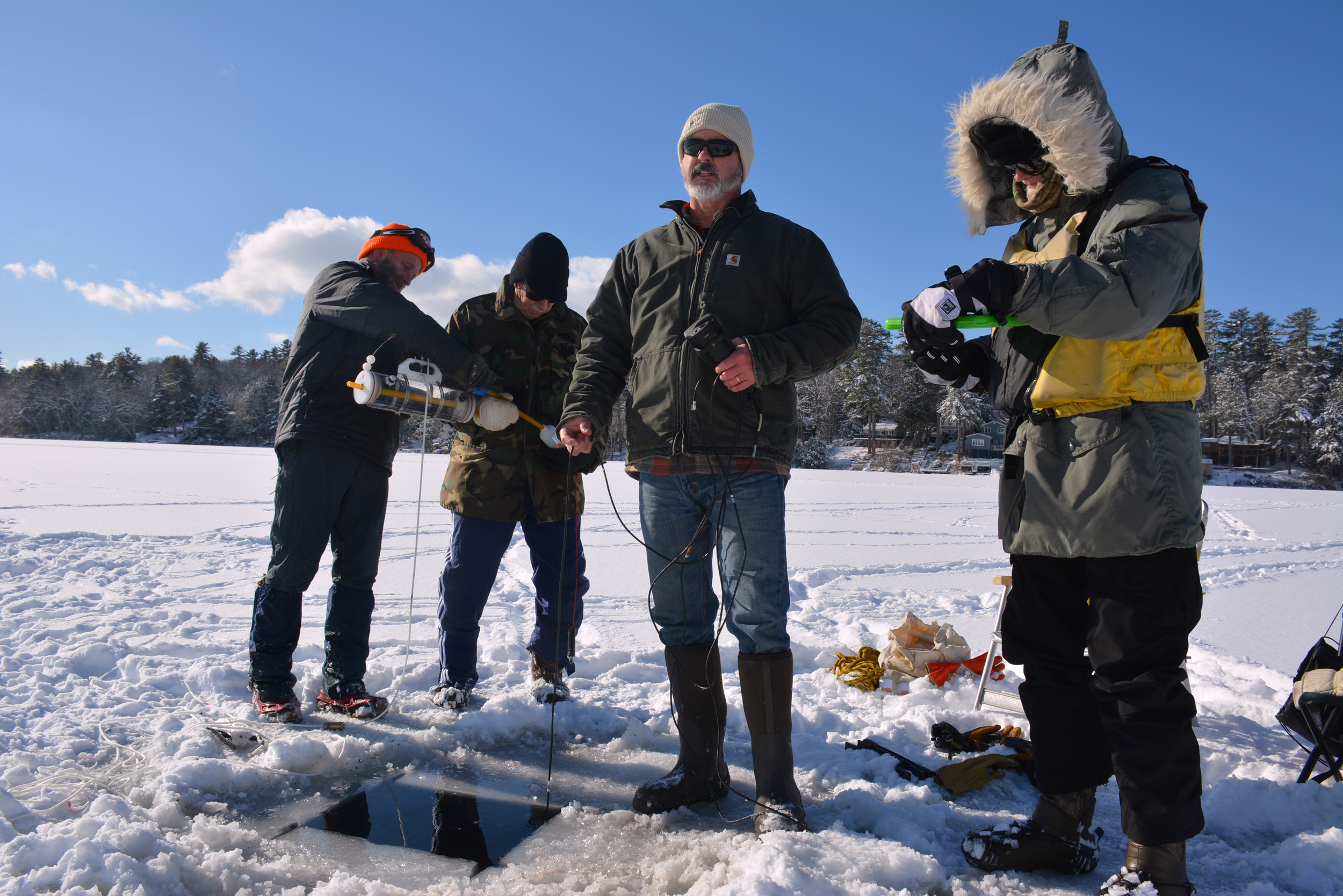
Still, their record is incomplete. Some lakes don’t have data prior to the Lake Stewards’ monitoring, while others are too remote to get more than occasional observations.
“Taking samples randomly, there’s a lot that can be missed in that process,” he said.
Only a few of the volunteers are equipped to drill through the ice and take water samples as part of their work, Taber said; most can only observe the lake from the shore.
The Lake Stewards are also hindered by the fact that historical records don’t always use the same definition of ice-in and ice-out. In some places, a lake was considered “iced-out” when a cinderblock broke through the center; in others, it wasn’t until a boat could travel across in a straight line.
Taber said volunteers stay consistent with the historical record for each lake: whatever was considered the ice-out indicator 50 years ago on that lake is what should be used today. That way, they can track an individual site’s trends with reasonable precision, even if they can’t compare it to other lakes and ponds.
“It’s more the consistency over time that’s important,” he said.
Deeds said Maine has known that its ice cover dates are shifting for more than two decades, but with the lack of consistent, long-term data across the state, it’s hard to nail down patterns or which areas might be most vulnerable to climate change.
“It’s one of those puzzles that the more you look at it, the more complicated it gets,” he said.
Taber agreed that he couldn’t make confident predictions of what the future holds for Maine’s lakes and ponds. Years without ice cover, riskier winter sports, more algae blooms and struggles for some aquatic species are all likely, however.
“It’s certainly going to increase our risk, having this shorter period of ice cover, this weaker ice,” Taber said.
At his age, Behr said he doesn’t expect that he’ll see the worst effects of climate change in his lifetime. His age also means he has a closer deadline for when he’ll have to hang up his skates for good, which makes every unseasonably warm winter a missed opportunity.
“I’m well aware that this body is deteriorating and I can’t do this forever,” Behr said. “This winter, I said my goal is to leave as few days on the table as possible.”
About This Story
Perhaps you noticed: This story, like all the news we publish, is free to read. That’s because Inside Climate News is a 501c3 nonprofit organization. We do not charge a subscription fee, lock our news behind a paywall, or clutter our website with ads. We make our news on climate and the environment freely available to you and anyone who wants it.
That’s not all. We also share our news for free with scores of other media organizations around the country. Many of them can’t afford to do environmental journalism of their own. We’ve built bureaus from coast to coast to report local stories, collaborate with local newsrooms and co-publish articles so that this vital work is shared as widely as possible.
Two of us launched ICN in 2007. Six years later we earned a Pulitzer Prize for National Reporting, and now we run the oldest and largest dedicated climate newsroom in the nation. We tell the story in all its complexity. We hold polluters accountable. We expose environmental injustice. We debunk misinformation. We scrutinize solutions and inspire action.
Donations from readers like you fund every aspect of what we do. If you don’t already, will you support our ongoing work, our reporting on the biggest crisis facing our planet, and help us reach even more readers in more places?
Please take a moment to make a tax-deductible donation. Every one of them makes a difference.
Thank you,

Contributor
Sydney Cromwell is a freelance journalist based in Maine. She has a bachelor’s in journalism and mass communication from Samford University. Sydney previously founded Southern Science, which covers environmental issues in Alabama. Her work has appeared in The New York Times and in local publications around Birmingham, Ala.
Great Job By Sydney Cromwell & the Team @ Inside Climate News for sharing this story.