All over the country, Americans are struggling to pay their utility bills. In the Hudson Valley, the situation is particularly dire, with some ratepayers coping with surprise monthly bills of thousands of dollars. It doesn’t have to be that way, according to the region’s democratic socialists, who are leading a fight to lower prices.
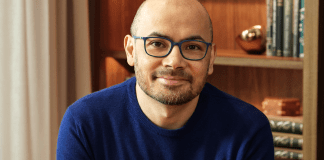
A bill introduced by Sarahana Shrestha, a democratic socialist assemblywoman in Assembly District 103 in the Mid-Hudson Valley, and her state senate colleague, Michelle Hinchey, calls for a state takeover of the utility company serving the area. A feasibility study by NewGen Strategies and Solutions, commissioned by Shrestha’s office, says a public takeover would provide millions in savings to New York State and its ratepayers.
According to the study’s projections, a publicly owned utility — unlike a private company — would no longer have to pay state and local taxes or make profit for its shareholders, allowing it to save $15.2 million in its first year alone. After that, the savings keep growing: $34.4 million by year five, $56.2 million by year ten, $116.8 million by year twenty, and $210.5 million by year thirty. These savings would allow the utility to lower costs to ratepayers. It would also allow for more stability, making billing more predictable for consumers and fund much-needed repairs to infrastructure.
Energy affordability is a matter of serious urgency in the area. In 2024, Central Hudson had to settle a $60 million class action lawsuit over a billing fiasco. One of Shrestha’s constituents, who lives in a recreational vehicle, didn’t get a bill for more than a year. When they did, it was for $6,000.
Shrestha, who was a climate organizer and active in Mid-Hudson Valley Democratic Socialists of America before her election in 2022, ran for office on energy affordability, finding that, when she talked with neighbors, it was one of their top concerns. Some ratepayers were finding thousands of dollars incorrectly overdrawn from their bank accounts. Shrestha has held some eighteen town halls on the idea of a takeover of the utility.
“There are certain things that are just not designed for the private sector,” Shrestha says, and energy delivery “is, for me, at the top of that list.” (She notes that health care is another example.) While the model has always depended on fleecing the ratepayer, she points out some recent developments that make it especially untenable.
One is aging infrastructure, which a for-profit company doesn’t have the incentive to fix, like “leak-prone pipes, things that are very expensive to fix when you are using that capital investment to also increase your profits,” Shrestha describes. That model, she says, “is spiraling the rates out of control at a time when we do have real supply chain issues.” In addition to the aging infrastructure, she continues, utilities also need to build resiliency against new threats bombarding contemporary life like cyberterrorism and extreme weather. They also need to create grids that can deliver renewable energy, reduce emissions, and avoid worsening the climate crisis. All of that, Sreshtha says, can be done better outside a for-profit model.
The utilities depend on consumers’ revenues for the whole system to function, but this model is extremely expensive, unpredictable, and burdensome for the very consumers on which it depends. “That’s an insane catch-22 for somebody who’s just trying to have the lights or fridge on,” Shrestha exclaims. “We don’t need investors to be owners here. We can own this ourselves.”
In 1932, Franklin D. Roosevelt gave a speech on precisely this issue, in Portland, Oregon, declaring,
I therefore lay down the following principle: That where a community — a city or county or a district is not satisfied with the service rendered or the rates charged by the private utility, it has the undeniable basic right, as one of its functions of Government, one of its functions of home rule, to set up, after a fair referendum to its voters has been had, its own governmentally owned and operated service.
Shreshtha, working within the tradition of community-driven energy democracy that FDR championed, has been less focused on the Albany side of the legislative process than on building local support. “I don’t think anybody in the campaign really believes the top-down approach makes sense or is even feasible,” she says, explaining that the campaign has focused on local elected officials like town supervisors as well as city councils and county legislatures — and, most of all, the public. Mid-Hudson Valley DSA and its partners in the Hudson Valley Public Power Coalition have been tabling, phone banking, and holding town halls. The next town hall is in Poughkeepsie, which just elected a democratic socialist town councilor, on January 22.
One finding from the feasibility study affirms Sreshtha’s (and FDR’s) emphasis on public support. Shreshta points to “delightful lessons” from Massena, a tiny conservative North Country town of about ten thousand, whose public utility takeover Shrestha calls “one of the great success stories of recent times.” For years, Massena fought a privately owned utility company that, in her telling, “kept screwing them over.” The town repeatedly voted to spend the money to acquire the utility. They quickly made that money back. In its feasibility study, NewGen says, “the one fundamental lesson” from Massena is that “a high level of enduring public commitment to the formation of a municipal utility is probably the single most indispensable ingredient in that process.”
Legislative momentum is building. In a recent New York Times article, Democrats in Albany sounded ready to introduce her bill, which the assemblywoman notes with some surprise. She remarks, too, that Antonio Delgado, New York’s current lieutenant governor, who is launching a primary challenge to Governor Kathy Hochul, also recently tweeted his support of the idea.
All that is encouraging, but Shrestha says there is much work to do on the local level. The utility will put out extensive misinformation and will fight hard. Before the legislative fight begins in earnest, she says, “we want our information to be familiar to people before they start getting the utility’s information.”
The stakes are high for the ratepayers of the Hudson Valley, but they’re also bigger than that: Shrestha is hoping that if a public takeover works in Central Hudson, it will lend support to the fight for public energy elsewhere. Rochester, New York, has been fighting for energy municipalization for a long time, while in Tucson, Arizona, the idea is just taking root. There’s also an effort brewing on Long Island, where there is little left-wing political leadership. But as the Massena experience shows, experiments of this kind can succeed in politically unexpected places.
Shrestha and I discuss the issue in the context of the cost-of-living crisis that’s hitting many Americans so hard. “The rate increases being requested at a time of affordability crisis are scary,” says Shrestha. And other than a public takeover, “there seems to be no solution. We can’t say, ‘Do not replace the leak because it’s too expensive.’ We can’t say, ‘Don’t hook up renewables because it’s too expensive.’ So nobody has a solution, I believe, outside of our proposal.”
Great Job Liza Featherstone & the Team @ Jacobin Source link for sharing this story.