When comparing bone broth and chicken broth, “key differences in nutritional profiles make one a superior choice regarding health benefits,” says Dr. Myers.
Bone Broth
Bone broth is a nutrient-packed liquid that’s made by simmering animal bones in water with vegetables, spices, and herbs for up to 24 hours — sometimes even longer. During that long cooking time, nutrients from the bones, including collagen, calcium, phosphorus, and amino acids, make their way into the liquid.
“These nutrients are known for supporting joint health and promoting skin elasticity,” says Mary Sabat, RD, a nutritionist based in Alpharetta, Georgia. Collagen in particular promotes these health benefits and is one of the key nutrients in bone broth that sets it apart from chicken broth. However, there isn’t much research supporting the idea that consuming collagen-rich foods can directly benefit joints or skin.
That said, bone broth also contains amino acids like glutamine and arginine, which have been linked to reduced inflammation and improved gut health in certain studies.
Bone broth is best made at home so you know it’s been simmered for long enough to gain these potential health benefits. If you’re buying it at the grocery store, keep in mind that refrigerated bone broth should have a gel-like texture — that’s proof it contains collagen.
Chicken Broth
Chicken broth is made by simmering chicken meat (and possibly some bones) over a shorter period of time than bone broth. As a result, “it lacks the depth of nutrients and beneficial compounds found in bone broth,” Sabat says.
But it can still be nutritious. “Chicken broth is hydrating and contains essential vitamins, minerals, and protein,” Sabat says. It’s also lighter than bone broth, which may also make it more easily digestible, Myers says.
In general, the benefits of chicken broth just aren’t as plentiful as you’ll find in bone broth.
That said, chicken broth may be easier to come by because it takes a shorter amount of time to make. You can make it yourself, too, to ensure all of the vitamins and nutrients are preserved without the additives, artificial ingredients, or excess sodium, says Myers.
Great Job Moira Lawler & the Team @ google-discover Source link for sharing this story.
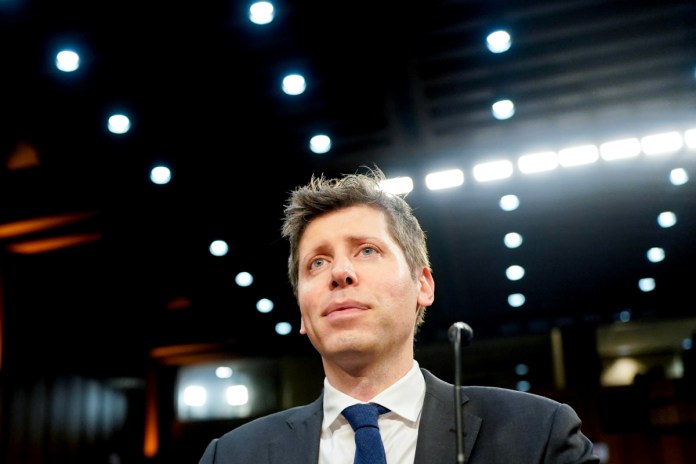
OpenAI has reorganized some of its leadership and picked a familiar face to lead its push into selling AI to business customers as the company looks to catch up to its rivals in 2026.
The company appointed Barret Zoph to lead its efforts to sell its AI to enterprises, according to reporting from The Information, citing an internal OpenAI memo.
TechCrunch reached out to OpenAI for confirmation and more information.
Zoph returned to OpenAI last week after leaving Thinking Machine Labs, former OpenAI co-founder Mira Murati’s AI startup where Zoph had served as a co-founder and chief technology officer since October 2024.
The exact circumstances of his departure aren’t clear, with rumors swirling about whether Zoph and a few other former OpenAI employees were fired or left on their own accord, possibly with plans to return to OpenAI all along.
Zoph was previously the vice president of post-training inference at OpenAI from September 2022 to October 2024. He’s stepping into a very different position and will likely play an important role at the company as it looks to grow its enterprise business — an area where it is losing ground to competitors.
OpenAI launched its enterprise-focused ChatGPT Enterprise product in 2023 more than a year before Anthropic and multiple years before Google launched their enterprise offerings. The company claims the product has more than 5 million business users and counts companies including SoftBank, Target, and Lowe’s as customers.
Techcrunch event
San Francisco | October 13-15, 2026
But its market share is falling while its rivals are climbing.
Anthropic holds a dominant lead over its AI rivals when it comes to enterprise large language model usage. The AI research lab holds a 40% market share, according to a December report from VC firm Menlo Ventures (which, it should be noted, has invested aggressively in Anthropic). In July, the startup’s market share was estimated to be 32%.
Google’s Gemini adoption has been steadier, says Menlo Ventures. The company released its enterprise product last fall and has seen its enterprise LLM usage market share largely stay the same, growing from 20% in July to 21% at the end of the year.
OpenAI on the other hand has seen its usage market share drop from 50% in 2023 to 27% at the end of 2025 — a trend that appears to concern the company. OpenAI CEO Sam Altman expressed concern that Google Gemini’s growth was starting to encroach on OpenAI in an internal memo a few months ago.
Enterprise growth is an area of focus for the company in 2026, OpenAI’s CFO Sarah Friar wrote in a blog post on Sunday.
The company has since announced an expanded multi-year partnership with ServiceNow that will give ServiceNow customers access to OpenAI models.
Great Job Rebecca Szkutak & the Team @ TechCrunch Source link for sharing this story.
Consumers can expect their energy bills to jump in the next billing cycle and even months down the road as a major winter storm brews across the country.
The National Weather Service said “widespread heavy snow, sleet, and freezing rain” are expected in a large part of the country starting Friday and carrying through the weekend.
Disruptive winter weather, like what many U.S. households are about to experience, can send bills immediately jumping because of surges in demand.
“Everybody is racing to their thermostat to crank up the heat all at once — there’s just a tremendous demand pull that happens,” said Eli Rubin, a senior energy analyst at EBW AnalyticsGroup.
It’s cold outside, which means your energy bills will start heating up. Here are five easy tricks to cool off your utility bills this winter.
In the short term, households’ prices will spike for both natural gas and electricity because of an increase in usage, he said, but electric heating is likely to experience a larger surge in demand because “electric heaters are not as efficient as gas heaters.”
“They’re typically designed for regions like the Southeast that do not see the same sustained prolonged cold as, say, Minnesota,” Rubin said. “And so when we do get these severe cold spikes in those regions, the total amount of demand can absolutely skyrocket as a result.”
A storm of this anticipated magnitude can also cause long-term increases in consumers’ energy bills.
Natural gas prices have been soaring in the days leading up to the forecast winter storm, and they have risen about 63% since Monday, the most since December.
But residential households won’t feel the price hikes immediately. Instead, the increases will gradually trickle down into their energy bills.
“What happens with these huge price increases is that they’re absorbed slowly,” Rubin said. “State regulatory commissions and your local utilities are not going to suddenly double the rate you’re paying for natural gas overnight — but you will be paying. They’re going to phase it in over time.”
Avoid leaving these five items in your car when the temperature dips below freezing.
Consumers who heat their homes with electricity will see a similar impact on their long-term bills, he said, adding that the longer-term price increases for both heating sources could take six months to a year, or even longer, to show up in utility bills.
Increased electricity demand has already been on the rise because of the expansion of artificial intelligence data centers in the U.S., which consume large quantities of energy and have affected residential energy bills.
As for natural gas, Henry Hofmann, a co-portfolio manager of the Catalyst Energy Infrastructure Fund, wrote in an email to NBC News that “inventories are ok currently, but the combination of freeze-offs and increased heating demand should cause a significant draw in the weeks ahead.”
Freezing temperatures can cause equipment used in natural gas production and transportation not to work properly, or at all, as well as lead to power outages causing what is referred to as “freeze-offs,” according to the U.S. Energy Information Administration.
“We’d also expect some gas to be diverted from LNG facilities in the short-term to help balance the market,” Hofmann added, referring to liquefied natural gas.
EIA projected in its Short-Term Energy Outlook released Jan. 13 that natural gas costs will go down this year but rise in 2027 because of “growth in demand—led by expanding liquefied natural gas exports and more natural gas consumption in the electric power sector—will outpace production growth.”
Rubin said: “So we have some of these supply-side impacts that reduce supply at the same time we have demand surging. That creates a tremendous bullish impact on price.”
Great Job Hannah Parker | NBC News & the Team @ NBC 5 Dallas-Fort Worth for sharing this story.
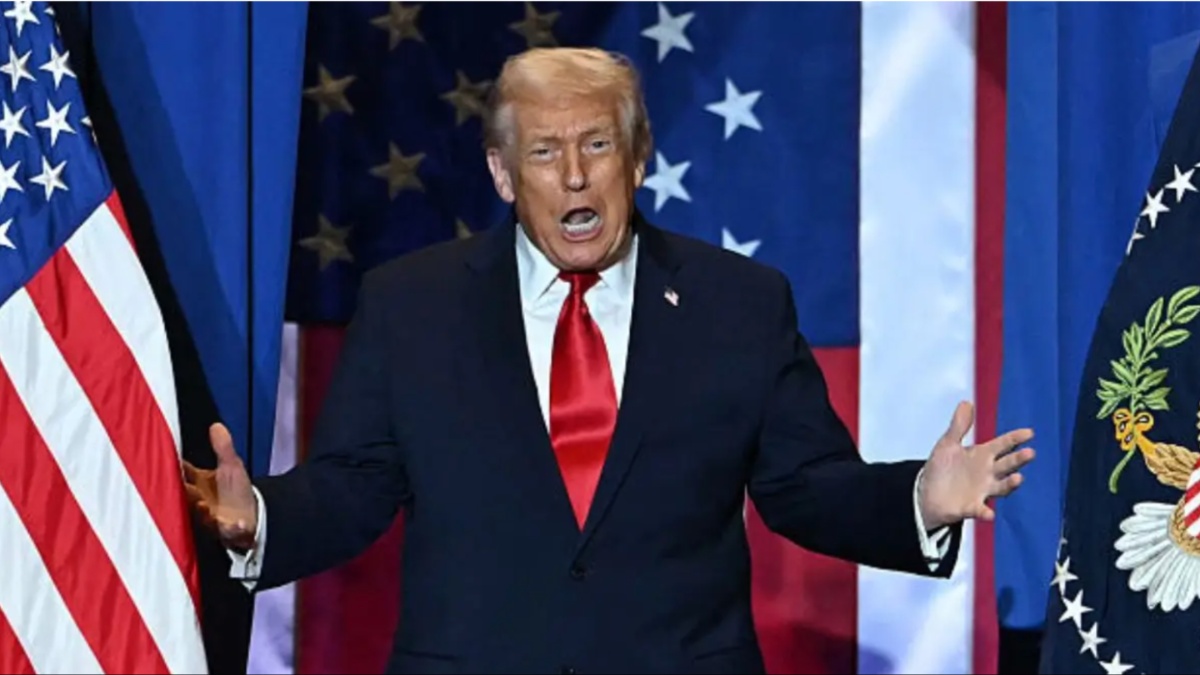
President Donald Trump has a long history of using social media to provoke reactions, but this time the response arrived almost instantly — and not in the way he likely intended. A single repost set off confusion, disbelief, and then something darker, as users tried to make sense of what he appeared to be signaling.
Trump reposted an image without explanation or commentary — a grainy photo involving the White House roof and a single, ominous word — allowing the internet to interpret the moment on its own.
Trump’s White House meeting was hijacked after an unexplained sound during his speech led many online to speculate that he might have passed gas. (Photo credit: Brendan Smialowski / AFP via Getty Images )
The fuzzy, black-and-white photo of Trump standing on the roof of the White House was only accompanied by the caption “Soon.” The jokes nearly wrote themselves, but the origin of the meme told a different story.
The original version of the photograph was taken in August, as Trump stood on the roof of the West Wing, above the Press Briefing Room, discussing plans to construct a ballroom and complete other renovations to the White House with reporters. Considered a bizarre move at the time.
The photo was edited into a meme and posted to X under the account @ThomasA137 on Jan. 8 in response to a post from conservative Washington Post columnist Marc Thiessen that read, “The Cuban regime has survived every president since Eisenhower. Wouldn’t it be something if that streak ended with Donald Trump?”
To some social media users, Thiessen’s post might imply that Cuba’s government, perhaps, could fall under Trump. With the mysterious meme added to the equation, Thiessen’s question could hold an entirely different meaning.
But by reposting the meme without context or caption, the president allowed the joke to land squarely on himself.
Social media users were quick to point out the irony, mocking the president, and bringing attention to the absurdity of his obliviousness.
One Threads user shared a screenshot of Trump’s screenshot, writing, “Trump seems to be reposting death threats. Lol.”
Another added, “He’s not intelligent enough to know what that guy is implying. He probably thinks it’s a compliment about the White House being renamed the Trump White House.”
One commenter was filled with confusion, “What is this supposed to mean? “Soon” what—an announcement, an operation, a threat, or just the usual authoritarian mood-board? And why does the photo of Trump look like a Loch Ness sighting?”
Most of the response were morbid wishful thinking. From, “Maybe he’ll jump,” and If only he fell ” to “I think we’re hoping he’ll jump soon. While sundowning.”
The president has long used memes as a weapon, or at least a megaphone. But this time, the tactic not only spread like wildfire online, it backfired significantly. And is just the latest example of how sharing visual content without context, especially coming from a sitting U.S. president, can mislead, and leave the public wondering.
A 2025 report published by Poynter on the president’s use of “AI-driven political messaging,” notes that since Trump began his second stint in the White House, the MAGA administration’s X account had created “at least 14 posts” using AI.
“While presidents have been known to distort reality in the past, there is no precedent for this regular dissemination of deepfakes from the Oval Office. This lack of concern matches President Trump’s general approach to AI — hands-off, anti-regulation,” Rutgers University associate professor of communication Katherine Ognyanova told Poynter.
Great Job Maya Boddie & the Team @ Atlanta Black Star Source link for sharing this story.
Despite Elon Musk’s multiple proclamations that he is an alien—something he reiterated on the stage of the World Economic Forum on Thursday—the billionaire SpaceX CEO thinks it’s very unlikely there is intelligent life beyond Earth.
In a conversation in Davos, Switzerland, with BlackRock CEO and World Economic Forum interim chair Larry Fink, Musk said this belief is the framework of his technology ventures and $600 billion of wealth. Because there’s a small likelihood of life outside of Earth, Musk said the project of preserving humanity becomes more urgent.
I’m often asked, ‘Are there aliens among us?’ And I’ll say that I am one. They don’t believe me,” Musk said, unclear if he was joking or what particular point he was trying to make by asserting his alienness.
“The bottom line is, I think we need to assume that life and consciousness is extremely rare and it might only be us,” Musk added. “And if that’s the case, then we need to do everything possible to ensure that the light of consciousness is not extinguished.”
Musk’s vision of protecting humanity manifested more than a decade ago, when he founded OpenAI alongside Sam Altman in 2015 with the hopes of addressing the existential risks and safety concerns associated with the budding technology. He told Fink that Tesla and SpaceX, worth $1.4 trillion and $800 billion, respectively, were an extension of this belief, with the purpose not only to create sustainable technology, but “sustainable abundance.”
Musk’s vision for the future of humanity
Musk reiterated his vision of an abundance of humanoid robotics that would make work optional, claiming technology would ease the burden of humans to have jobs or even have money.
“With robotics and AI, this is really the path to abundance for all,” Musk said. “People often talk about solving global poverty, or essentially, how do we make everyone have a very high standard of living? I think the only way to do this is AI and robotics.”
The billionaire describes a world with billions of robots—which would outnumber humans—and would serve to complete tasks including caring for children and elderly parents. He predicted that there would be functional humanoid robot technology by the end of the year, and said he expected those robots to be retail available in the next couple of years.
To be sure, Tesla’s own Optimus robots have hit snags, continuously falling behind production schedule, with Musk saying as recently as Tuesday that manufacturing for the bots, as well as the Tesla Cybercab, would be “agonizingly slow” before production eventually ramped up.
Musk has previously said humans would be able to sustain themselves without work through a universal basic income, but did not provide details on the political steps needed to provide that income to humans.
These missions to preserve humanity extend beyond earth. Musk has described his goals as “Mars-shot,” alluding to his hopes to put human life on Mars, efforts he has even touched on in Tesla’s financial filings. The CEO has previously said he envisions Mars as an insurance policy for the future of humanity, wanting to use it as a jumping off point to expand resources to explore human consciousness.
“I’ve been asked a few times like, ‘Do I want to die on Mars?’” Musk said on Thursday. “And I’m like, ‘Yes, but just not on impact.’”
The Fermi Paradox, according to Musk
Musk’s philosophy regarding extraterrestrial life has previously engaged with the Fermi Paradox, a theory positing that there’s both a high change of intelligent life outside of earth—and scant evidence to prove it.
In 1950, Italian-American physicist Enrico Fermi, an architect of the atom bomb, asked a question in a conversation with colleagues at the Los Alamos National Laboratory in New Mexico: “Where is everybody?”
The three-word inquiry launched a 1963 paper by American astronomer Carl Sagan and proliferated in the scientific community, and the popularized Fermi Paradox soon emerged.
Musk said in an X post in 2023 that humans “are the only tiny candle of consciousness in an abyss of darkness.”
“The scariest answer to the Fermi Paradox is that there are no aliens at all,” he said.
In 2022, Musk even commissioned a sculpture depicting the “Fermi Great Filter,” a potential resolution to the Fermi Paradox hypothesizing that intelligent life must face and overcome a series of challenges, including the Great Filter which only few evolved species are able to overcome. The statue shows a giant fork with two diverging paths, indicating the choices a civilization must make to survive: a fork in the road, a motive Musk has oft drawn on.
Critiques of Musk’s philosophy
The high-stakes nature associated with Musk’s philosophy has drawn concern, with some arguing this effort to preserve humanity is actually threatening it. Rebecca Charbonneau, a historian at the American Institute of Physics, had a different interpretation of Musk’s philosophy as it pertained to work. In a piece published in Scientific American in February 2025, Charbonneau said Musk’s beliefs around preserving humanity reflected a bigger ideology in the world of tech.
Roots in vestiges of Cold War anxieties (the same time period in which the Fermi Paradox emerged), tech leaders often saw a false binary of either limitless prosperity or complete societal collapse, Charbonneau argued. As a result, many in the field, including Musk, are willing to go to extreme measures in the name of avoiding what they perceive as humanity’s demise.
“Proponents of this survivalist mindset see it as justifying particular programs of technological escalation at any cost, framing the future as a desperate race against catastrophe rather than a space for multiple thriving possibilities,” Charbonneau wrote.
She noted that Musk’s “Fork in the Road,” a strategy he employed both in culling staff at X and in the federal government as de facto leader of DOGE, was reflective of this. Musk called DOGE the “chainsaw of bureaucracy,” promising to shave $2 trillion in federal spending. Instead, the advisory eliminated about $150 billion in spending through headcount reductions and contract cancellations. Federal workers said the cuts made their jobs harder, eliminating valuable resources that resulted in their jobs taking longer, with the quality of the government’s work suffering.
Charbonneau argued Musk’s philosophy eliminates opportunities for nuance, making institutions—and humanity—vulnerable to often extreme responses to delicate situations.
“By framing humanity’s challenges as simple engineering problems rather than complex systemic ones, technologists position themselves as decisive architects of our future, crafting grand visions that sidestep the messier, necessary work of social, political and collaborative change,” she said.
Great Job Sasha Rogelberg & the Team @ Fortune | FORTUNE Source link for sharing this story.
Forward Trinity Rodman has agreed to a three-year contract to remain with the Washington Spirit, ending months of speculation about the Olympic gold medalist’s future in the National Women’s Soccer League.
“I think I’ve always had a vision and an idea of what I wanted my legacy to be,” Rodman said at an event announcing her new deal on Thursday in Los Angeles. “We’re doing that and I’m so grateful for that.”
The speculation over Rodman’s future with the Spirit spurred criticism of the NWSL salary cap and whether it hampered the league from attracting and maintaining top players.
Rodman, 23, became a free agent at the end of last season after five years with the Spirit. One of the biggest stars in the NWSL, keeping her in the league was considered vitally important as other U.S. national team stars, including Naomi Girma and Alyssa Thompson, opted to play in Europe.
Rodman, who won a gold medal with the United States at the Paris Olympics, has been drawn interest from European teams that don’t have a salary cap.
The Spirit and Rodman struck a multi-year deal that both parties maintained was in compliance with the salary cap, but it was rejected by the league because it went against the spirit of the rules.
The National Women’s Soccer League Players Association filed a grievance claiming that the NWSL’s rejection of the contract violated Rodman’s free agency rights and violated the collective bargaining agreement.
To address the salary cap issue, the NWSL in late December adopted a “High Impact Player” mechanism that allowed teams to spend up to $1 million over the cap to sign players that meet certain criteria. Those included metrics like national team minutes, inclusion among the 30 candidates for the Ballon d’Or or player rankings by outlets like the Guardian or ESPN.
The NWSLPA filed a grievance over the rule, claiming it violated the collective bargaining agreement and federal labor law because player compensation must be negotiated. The NWSLPA maintains the league had no authority to “unilaterally create a new pay structure.”
The NWSL’s salary cap is $3.5 million for each team for the 2026 season, although it will increase each year until it hits $5.1 million in 2030.
Rodman is currently with the national team in their annual January training camp in Carson, California. The team plays a match there against Paraguay on Saturday and then plays Chile on Tuesday in Santa Barbara.
Rodman has 47 appearances and 11 goals with the national team, more than any other player on the latest roster. She played in one U.S. match last year, a 2-0 victory over Brazil in April, because of injuries.
Copyright 2026 The Associated Press. All rights reserved. This material may not be published, broadcast, rewritten or redistributed without permission.
Great Job Anne M. Peterson, Associated Press & the Team @ KSAT San Antonio Source link for sharing this story.
No Prison: Billionaire fugitive Roger Ver avoided prison by hiring a defense attorney whom DOJ prosecutors label one of the “Friends of Trump.”
White-Collar Whitewash: The story of “Bitcoin Jesus” highlights the extent that white-collar criminal enforcement has eroded under Trump.
Gift to Crypto: Prosecutors had hoped to make Ver a marquee example amid concerns about widespread cryptocurrency tax evasion.
These highlights were written by the reporters and editors who worked on this story.
Days into President Donald Trump’s second term in the White House, a cryptocurrency billionaire posted a video on X to his hundreds of thousands of followers. “Please Donald Trump, I need your help,” he said, wearing a flag pin askew and seated awkwardly in an armchair. “I am an American. … Help me come home.”
The speaker, 46-year-old Roger Ver, was in fact no longer a U.S. citizen. Nicknamed “Bitcoin Jesus” for his early evangelism for digital currency, Ver had renounced his citizenship more than a decade earlier. At the time of his video, Ver was under criminal indictment for millions in tax evasion and living on the Spanish island of Mallorca. His top-flight legal defense team had failed around half a dozen times to persuade the Justice Department to back down. The U.S., considering him a fugitive, was seeking his extradition from Spain, and he was likely looking at prison.
Once, prosecutors hoped to make Ver a marquee example amid concerns about widespread cryptocurrency tax evasion. They had spent eight painstaking years working the case. Just nine months after his direct-to-camera appeal, however, Ver and Trump’s new Justice Department leadership cut a remarkable deal to end his prosecution. Ver wouldn’t have to plead guilty or spend a day in prison. Instead, the government accepted a payout of $49.9 million — roughly the size of the tax bill prosecutors said he dodged in the first place — and allowed him to walk away.
Ver was able to pull off this coup by taking advantage of a new dynamic inside of Trump’s Department of Justice. A cottage industry of lawyers, lobbyists and consultants with close ties to Trump has sprung up to help people and companies seek leniency, often by arguing they had been victims of political persecution by the Biden administration. In his first year, Trump issued pardons or clemency to dozens of people who were convicted of various forms of white-collar crime, including major donors and political allies. Investigations have been halted. Cases have been dropped.
Within the Justice Department, a select club of Trump’s former personal attorneys have easy access to the top appointees, some of whom also previously represented Trump. It has become a dark joke among career prosecutors to refer to these lawyers as the “Friends of Trump.”
The Ver episode, reported in detail here for the first time, reveals the extent to which white-collar criminal enforcement has eroded under the Trump administration. The account is based on interviews with current and former Justice Department officials, case records and conversations with people familiar with his case.
The Trump administration has particularly upended the way tax law violators are handled. Late last year, the administration essentially dissolved the team dedicated to criminal tax enforcement, dividing responsibility among a number of other offices and divisions. Tax prosecutions fell by more than a quarter, and more than a third of the 80 experienced prosecutors working on criminal tax cases have quit.
But even amid this turmoil, Ver’s case stands out. After Ver added several of these new power brokers to his team — most importantly, former Trump attorney Chris Kise — Trump appointees commandeered the case from career prosecutors. One newly installed Justice Department leader who had previously represented Trump’s family questioned his new subordinates on whether tax evasion should be a criminal offense. Ver’s team wielded unusual control over the final deal, down to dictating that the agreement would not include the word “fraud.”
It remains the only tax prosecution the administration has killed outright.
Roger Ver in 2018Paul Yeung/Bloomberg/Getty Images
Ver did not reply to an extensive list of questions from ProPublica. In court filings and dealings with the Justice Department, Ver had always denied dodging his tax bill intentionally — a key distinction between a criminal and civil tax violation — and claimed to have relied on the advice of accountants and tax attorneys.
“Roger Ver took full responsibility for his gross financial misconduct to the tune of $50 million because this Department of Justice did not shy away from exposing those who cheat the system. The notion that any defendant can buy their way out of accountability under this administration is not founded in reality,” said Natalie Baldassarre, a Justice Department spokesperson.
In response to a list of detailed questions, the White House referred ProPublica to the Justice Department.“I know of no cases like this,” said Scott Schumacher, a former tax prosecutor and the director of the graduate program in taxation at the University of Washington. It is nearly unheard of for the department to abandon an indicted criminal case years in the making. “They’re basically saying you can buy your way out of a tax evasion prosecution.”
Roger Ver is not a longtime ally of Trump’s or a MAGA loyalist. He renounced his U.S. citizenship in 2014, a day he once called “the happiest day of my entire life.” In the early days of bitcoin, he controlled about 1% of the world’s supply.
Ver is clean-cut and fit — he has a black belt in Brazilian jujitsu. In his early 20s, while he was a libertarian activist in California, Ver was sentenced to 10 months in prison for illegally selling explosives on eBay. He’s often characterized that first brush with the law as political persecution by the state. After his release, he left the U.S. for Japan.
Ver in Tokyo in 2014Tomohiro Ohsumi/Bloomberg/Getty Images
Ver became a fixture in the 2010s on the budding cryptocurrency conference circuit, where he got a kick out of needling government authority and arguing that crypto was the building block of a libertarian utopia. At a 2017 blockchain conference in Aspen, Colorado, Ver announced he had raised $100 million and was seeking a location to create a new “non-country” without any central government. For years, Ver has recommended other wealthy people consider citizenship in the small Caribbean nation of Saint Kitts and Nevis, which has no individual income tax.
“Bitcoin completely undermines the power of every single government on the entire planet to control the money supply, to tax people’s income to control them in any way,” he told a gathering of anarcho-capitalists in Acapulco, Mexico, in 2016. “It makes it so incredibly easy for people to hide their income or evade taxes.” More than one friend, he said with a smirk, had asked him how to do so: They “say, ‘Roger, I need your help. How do I use bitcoins to avoid paying taxes on it?’”
Renouncing U.S. citizenship isn’t a magic get-out-of-tax-free technique. Since 2008, the U.S. has required expatriates with assets above $2 million pay a steep “exit tax” on the appreciation of all their property.
In 2024, the Justice Department indicted Ver in one of the largest-ever cryptocurrency tax fraud cases. The government accused Ver of lying to the IRS twice. After Ver renounced his citizenship in 2014, he claimed to the IRS that he personally did not own any bitcoin. He would later admit in his deal with the government to owning at least 130,664 bitcoin worth approximately $73.7 million at the time. Then in 2017, the government alleged, Ver tried to conceal the transfer of roughly $240 million in bitcoin from U.S. companies to his personal accounts. In all, the government said he had evaded nearly $50 million in taxes.
Ver’s defense was that his failure to pay taxes arose from a lack of clarity as to how tax law treated emerging cryptocurrency, good-faith accounting errors and reliance on his advisors’ advice. He claimed it was difficult to distinguish between his personal assets and his companies’ holdings and pinpoint what the bitcoin was actually worth.
The Biden administration’s Justice Department dismissed this legal argument. Prosecutors had troves of emails that they said showed Ver misleading his own attorneys and tax preparers about the extent of his bitcoin holdings. (Ver’s team accused the government of taking his statements out of context.) The asset tracing in the case was “rock solid,” according to a person familiar with the investigation who spoke on the condition of anonymity for fear of retaliation. A jury, prosecutors maintained, was unlikely to buy Ver’s defense that he made a good-faith error.
By the time of Trump’s election, Ver had been arrested in Spain and was fighting extradition. He was also the new owner of a sleek $70 million yacht that some law enforcement officials worried he might use to escape on the high seas.
In Trump, Ver saw a possible way out. After the 2024 election, he was “barking up every tree,” said his friend Brock Pierce, a fellow ultrawealthy crypto investor who tried to gin up sympathy for Ver in Trump’s orbit.
Ver had initially gone the orthodox route of hiring tax attorneys from a prestigious law firm, Steptoe. Like many wealthy people in legal jeopardy, Ver now also launched a media blitz seeking a pardon from the incoming president.“If anybody knows what it’s like to be the victim of lawfare it’s Trump, so I think he’ll be able to see it in this case as well,” Ver said in a December 2024 appearance on Tucker Carlson’s show. On Charlie Kirk’s show, Ver appeared with tape over his mouth with the word “censored” written in red ink. Laura Loomer, the Trump-friendly influencer, began posting that Ver’s prosecution was unfair. Ver paid Trump insider Roger Stone $600,000 to lobby Congress for an end to the tax provision he was accused of violating.
A dress at the New York Young Republican Club’s annual gala in 2024 shows an image of Ver.Adam Gray/AFP/Getty Images
Ver’s pardon campaign fizzled. His public pressure campaign — in which he kept comparing himself to Trump — was not landing, according to Pierce. “You aren’t doing yourself any favors — shut up,” his friend recalled saying.
One objection in the White House, according to a person who works on pardons, may have been Ver’s flamboyant rejection of his American citizenship. Less than a week after Trump was inaugurated, Elon Musk weighed in, posting on X, “Roger Ver gave up his US citizenship. No pardon for Ver. Membership has its privileges.”
But inside the Justice Department, Ver found an opening. The skeleton key proved to be one of the “Friends of Trump,” a seasoned defense lawyer named Christopher Kise. Kise is a longtime Florida Republican power player who served as the state’s solicitor general and has argued before the U.S. Supreme Court. He earned a place in Trump’s inner circle as one of the first experienced criminal defenders willing to represent the president after his 2020 election loss. Kise defended Trump in the Justice Department investigation stemming from the Jan. 6, 2021, attack on the U.S. Capitol and against charges that Trump mishandled classified documents when leaving the White House.
Kise had worked shoulder-to-shoulder on Trump’s cases with two lawyers who were now leaders in the Trump 2.0 Justice Department: Todd Blanche, who runs day-to-day operations at the department as deputy attorney general, and his associate deputy attorney general, Ketan Bhirud, who oversaw the criminal tax division prosecuting Ver. Kise reportedly helped select Blanche to join Trump’s legal team in the documents case, and he and Bhirud had both worked for Trump’s family as they fought civil fraud charges brought by New York Attorney General Letitia James in 2022.
On Ver’s legal team, Kise worked the phones, pressing his old colleagues to rethink their prosecution against Ver.
Kise scored the legal team’s first big victory in years: a meeting with Bhirud that cut out the career attorneys most familiar with the merits of the case.
In that meeting, however, it wasn’t clear that the new Justice Department leadership would be willing to interfere with the trajectory of Ver’s case. While the Trump administration had backed off aggressive enforcement of white-collar crimes writ large, the administration said it was still pursuing most criminal cases that had already been charged.
Bhirudinitiallyexpressed skepticism that Ver accidentally underpaid his taxes. It was “hard to believe” that a man going by “Bitcoin Jesus” would have no idea how much bitcoin he owned, Bhirud said, according to a person familiar with the case.
Bhirud and Blanche did not respond to detailed questions from ProPublica.
The Justice Department stuck to its position that either Ver would plead guilty to a crime, or the case would go to trial.
But Kise would not stop lobbying his former colleagues to reconsider. Blanche and Bhirud had already demanded that career officials justify the case again and again. Over the course of the summer, Kise wore down the Trump appointees’ zeal for pursuing Ver on criminal charges.
Kise and the law firm of Steptoe did not respond to questions.
“While there were meetings and conversations with DOJ, that is not uncommon. The line attorneys remained engaged throughout the process, and the case was ultimately resolved based on the strength of the evidence,” said Bryan Skarlatos, one of Ver’s tax attorneys and a partner at Kostelanetz.
It was a chaotic moment at the Justice Department, an institution that Trump had incessantly accused of being “weaponized” against him and his supporters. After Trump took office, the department was flooded with requests to reconsider prosecutions, with defendants claiming the Biden administration had singled them out for political persecution, too.
While many cases failed to grab the administration’s attention, Kise got results. Last week, Kise’s client Julio Herrera Velutini, a Venezuelan-Italian billionaire accused of trying to bribe the former governor of Puerto Rico, received a pardon from Trump.
“Every defense attorney is running the ‘weaponization’ play. This guy gets an audience because of who he is, because his name is Chris Kise,” said a person who recently attended a high-level meeting Kise secured to talk the Justice Department down from prosecuting a client.
As Kise stepped up the pressure, Ver’s case ate up a significant share of Bhirud’s time, despite his job overseeing more than 1,000 Justice Department attorneys, according to people familiar with the matter. Ordinarily, it would be rare for a political appointee to be so involved, especially to the exclusion of career prosecutors who could weigh in on the merits.
Bhirud began to muse to coworkers about whether failure to pay one’s taxes should really be considered a crime. Wasn’t it more of a civil matter? It seemed to a colleague that Bhirud was aware Ver’s advocates could try to elevate the case to the White House.
The government ceded ground and offered to take prison time off the table. Eventually, Ver’s team and Bhirud hit on the deal that would baffle criminal tax experts. They agreed on a deferred prosecution agreement that would allow Ver to avoid criminal charges and prison in exchange for a payout and an agreement not to violate any more laws. The government usually reserves such an agreement for lawbreaking corporations to avoid putting large employers out of business — not for fugitive billionaires.
By the time fall approached, Kise and Bhirud, with Blanche’s blessing, were negotiating Ver’s extraordinary deal line by line. Once more, career prosecutors were cut out from the negotiations.
Ver’s team enjoyed a remarkable ability to dictate terms. They rejected the text of the government’s supposed final offer because it required him to admit to “fraud,” according to a person familiar with the negotiations. In the end, Ver agreed to admit only to a “willful” failure to report and pay taxes on all his bitcoin and turned over the $50 million.
The government arrived at that figure in a roundabout manner. It dropped its claim that Ver had lied on his 2017 tax return. The $50 million figure was based on how much he had evaded in taxes in 2014 alone, plus what the government asserted were interest and penalties. In the end, the deal amounted to the sum he allegedly owed in the first place. He never even had to leave Mallorca to appear in a U.S. court.
Under any previous administration, convincing the leadership of the tax division to drop an indicted criminal case and accept a monetary penalty instead would be a nonstarter. While the Justice Department settles most tax matters civilly through fines, when prosecutors do charge criminal fraud, their conviction rate is over 90%.
People “always ask you, ‘Can’t I just pay the taxes and it’ll go away?’” said Jack Townsend, a former federal tax prosecutor. “The common answer that everybody gave — until the Trump administration — was that, no, you can’t do that.”
When the Justice Department announced the resolution in October, it touted it as a victory.
“We are pleased that Mr. Ver has taken responsibility for his past misconduct and satisfied his obligations to the American public,” Bhirud said in the Justice Department’s press release announcing the deferred prosecution agreement. “This resolution sends a clear message: whether you deal in dollars or digital assets, you must file accurate tax returns and pay what you owe.”
Inside the Justice Department, the resolution was demoralizing: “He’s admitted he owes money, and we get money, but everything else about it stinks to high heaven,” said a current DOJ official familiar with the case. “We shouldn’t negotiate with people who are fugitives, as if they have power over us.”
Among the wealthy targets of white-collar criminal investigations, the Ver affair sent a different message. Lawyers who specialize in that kind of work told ProPublica that more and more clients are asking which of the “Friends of Trump” they should hire. One prominent criminal tax defense lawyer said he would give his clients a copy of Ver’s agreement and tell them, “These are the guys who got this done.”
The only one of Ver’s many lawyers to sign it was Christopher Kise.
Great Job Avi Asher-Schapiro & the Team @ ProPublica Source link for sharing this story.
MIAMI GARDENS, Fla., Jan. 21, 2026 /PRNewswire/ — Jazz in the Gardens (JITG) Music Festival, named one of the nation’s top festivals by Newsweek and Miami New Times’ Best Music Festival for 2025, returns to Hard Rock Stadium March 7-8, 2026. In its 19th year, JITG Music Fest celebrates Black music and culture, uniting icons for a dynamic weekend. Hosted by the City of Miami Gardens and produced by the Black Promoters Collective (BPC).
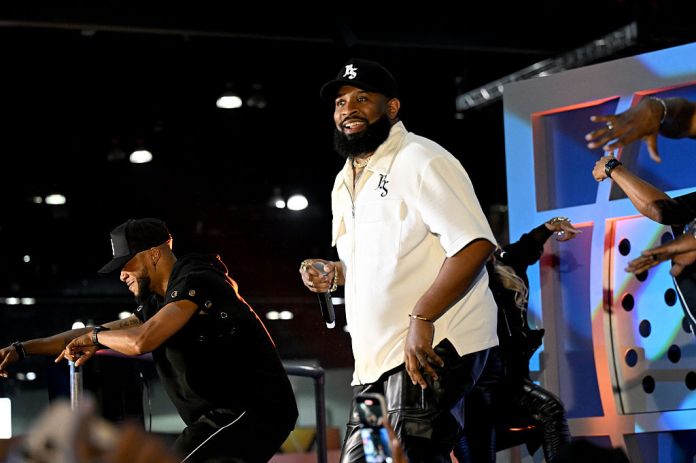
Jhené Aiko, renowned for her soulful and transcendent sound, will headline on Saturday, March 7. Ludacris is the Grammy-winning superstar celebrated for his high-energy performances and era-defining hits. He will take center stage on Sunday, March 8 with a special 25th anniversary set. Aiko joins the JITG Music Fest after acclaimed appearances on a much-talked-about fall tour with Chris Brown and Bryson Tiller. Ludacris follows up on his recent anniversary celebration earlier this year. His show featured surprise guests like Usher, Fergie, Jermaine Dupri, and LL Cool J, creating a viral cultural moment. Now, Ludacris brings that excitement to Miami Gardens. His set promises to be one of the festival’s standout performances.
Nelly & Ashanti, two of the most influential artists of the 2000s, join the JITG Music Fest as headliners, bringing a dynamic blend of hip-hop and R&B to the 2026 lineup. Together, their catalog spans decades of chart-topping hits and unforgettable collaborations, including their era-defining chemistry on fan favorites that helped shape a generation of music. Their joint presence at JITG Music Fest promises a high-energy, nostalgia-filled performance celebrating legacy, longevity, and undeniable star power.
Love Local? Get more! Join the Black America Web Newsletter
The 2026 Jazz in the Gardens lineup has expanded to include The Isley Brothers, Stephanie Mills, and El DeBarge, adding three iconic acts whose catalogs have shaped generations of R&B and soul. The festival also features a wide range of music, including GloRilla, Ella Mai, Mýa, Joe, Syd, Pastor Mike Jr., Tonio Armani, King George, Boney James, and Damien Escobar. Highlights include D-Nice & Friends and appearances by SWV, Robin Thicke, Case, Sunshine Anderson, and Kenny Burns.
Last year’s festival solidified JITG Music Fest as one of the country’s top live-music experiences. The event drew widespread praise from outlets such as People, Rolling Stone, VIBE, Black Enterprise, Blavity, and Bossip. The weekend was filled with viral moments, most notably Doechii’s powerhouse performance during Lauryn Hill’s set. This performance set social media abuzz and made headlines. By blending legacy acts with rising stars, JITG continues to embody the spirit of contemporary Black culture more than most live events do.
“Our community looks forward to Jazz in the Gardens every year because it brings people together in a powerful, joyful way,” said Mayor Rodney Harris. “This festival is a celebration of art, culture, and connection, and we are thrilled to welcome visitors from near and far for another incredible weekend in Miami Gardens.”
Troy Brown, Partner and CMO of the Black Promoters Collective, added, “Collaborating with the City of Miami Gardens to elevate JITG is an honor. We strive to push the festival’s creative boundaries, and the 2026 lineup reflects the depth and impact of Black music. This year will be exceptional.”
Join JITG Music Fest—Miami Gardens’ signature event—and experience world-class music, top vendors, and the vibrant spirit of Florida’s largest Black city. Don’t miss your chance to be part of this unforgettable celebration!
The ICE “surge” that cost the life of Renee Nicole Good on Wednesday, January 7th is violating the Constitutional and human rights of Americans and our neighbors here in Minnesota.This killing is part of a broader pattern of unchecked violence, impunity, and abuse carried out by federal immigration enforcement agencies against members of our communities.
A broad coalition of groups across the country is calling for a coordinated Ice Out For Good actions on Friday, January 23rd in solidarity for Minnesota, and to demand accountability, honor the life lost, and make visible the human cost of ICE’s actions.
(We would love to have in-person event, but due to the freezing cold weather anticipated, please stay indoors and stay safe. We can be just as effective from home. 🙂)
We are demanding:
*ICE must leave Minnesota now.
*The officer who killed Renee Good must be held legally accountable. That starts with a legitimate investigation with state involvement.
*No additional federal funding for ICE in the upcoming Congressional budget and ICE should be investigated for human and Constitutional violations of Americans and our neighbors.
*We call upon MN and National Companies to become 4th Amendment businesses, cease economic relations with ICE and refuse ICE entry or using their property for staging grounds.
We are calling for your help. Together we’ll build a drumbeat of support for the people of Minnesota, and for all communities in America.
On Jan. 23, 2026, dozens of unions, activists, community and faith organizations are calling on every American to take a stand with a unified, statewide pause in economic activity. Don’t go into work or school, or organize a walkout (except for emergency services). Don’t shop or engage in consumer spending. This is an opportunity to flex our nation’s unified opposition to ICE and their economic power.
All actions under this banner are nonviolent, lawful, community-led, and grounded in moral witness, public accountability, and collective care.
A core principle behind all ICE Out For Good events is a commitment to nonviolent action and no civil disobedience. We expect all participants to seek to de-escalate any potential confrontation with those who disagree with our values, and to act lawfully at these events. Weapons of any kind, including those legally permitted, should not be brought to events.
Nonviolent at all times and lawful activities only Community-led and locally grounded Respectful of those grieving Focused on accountability, not spectacle
Houston City officials have confirmed the possibility of freezing weather throughout this weekend.
A winter storm watch has been issued for many Houston counties, including Harris, Fort Bend, Montgomery, Walker, San Jacinto, Polk, Brazos, Washington, Grimes, Liberty, Colorado, Austin, Waller, Chambers, Wharton and Liberty.
Although the freeze isn’t expected until Saturday morning, it is important to start preparing.
Here is a list of what to do ahead of the freezing weather.
Protecting the four P’s
When expecting harsh weather conditions the city is often told to protect the four P’s: People, Pets, Pipes and Plants.
People
Stay safe and warm. Exposure to freezing weather can lead to frostbite, hypothermia and can place you in dangerous situations.
Stay indoors as much as possible.
Icy roads will make driving dangerous, make sure to avoid unnecessary travel.
If you need to go outside, dress in layers.
Make sure to have blankets, flashlights and batteries easily accessible in case of a power outage.
Be prepared for icy roads and stock up on supplies like food, water, medicine and batteries.
If you have access to a power generator, make sure to stock up on the necessary fuels, depending on the generator, such as gasoline, propane, natural gas or diesel.
Do not use ovens or grills to provide warmth in your home, this can cause carbon monoxide poisoning.
Pets
If you’re cold, your pets are too. Keep them inside to stay warm.
Pets can suffer from cold stress, look out for warning signs such as shivering and stiffness.
If pets need to go outside, dress them in a thick coat and boots to protect their paws.
Pipes
A common issue many households face are frozen pipes. Protect pipes around your house to avoid costly repairs.
Insulate exposed pipes and outdoor faucets.
Leave faucets dripping slowly to keep water moving and avoid bursts.
If you will not be staying at your home during the freeze, shut off the water valve completely.
Plants
Protect your greenery, cold weather can damage or kill plants.
Bring potted plants inside.
Cover garden beds and bushes with thick cloths or blankets to keep warm.
The University is actively monitoring the winter weather conditions. As of now, there are no changes to UH operations, including campuses in Sugar Land and Katy. All facilities are currently open. Any changes and updates will be made here.
news@thedailycougar.com
Great Job Wendolee T. Garcia Martinez & the Team @ The Cougar for sharing this story.