
The December 2023 flood. The 2022 Halloween storm. The Patriots Day storm of 2007. The Great Ice Storm of 1998.
These dates are shared memories in the Appalachian foothills of western Maine. Not every resident believes in climate change but nearly all can recount days and weeks of weather extremes in their hometowns—and know the economic pain of recovery.
At the nonprofit Center for an Ecology-Based Economy (CEBE), such stories and common burdens are a starting point. They serve as real-life prompts for CEBE to work with communities on climate resilience and green-energy approaches.
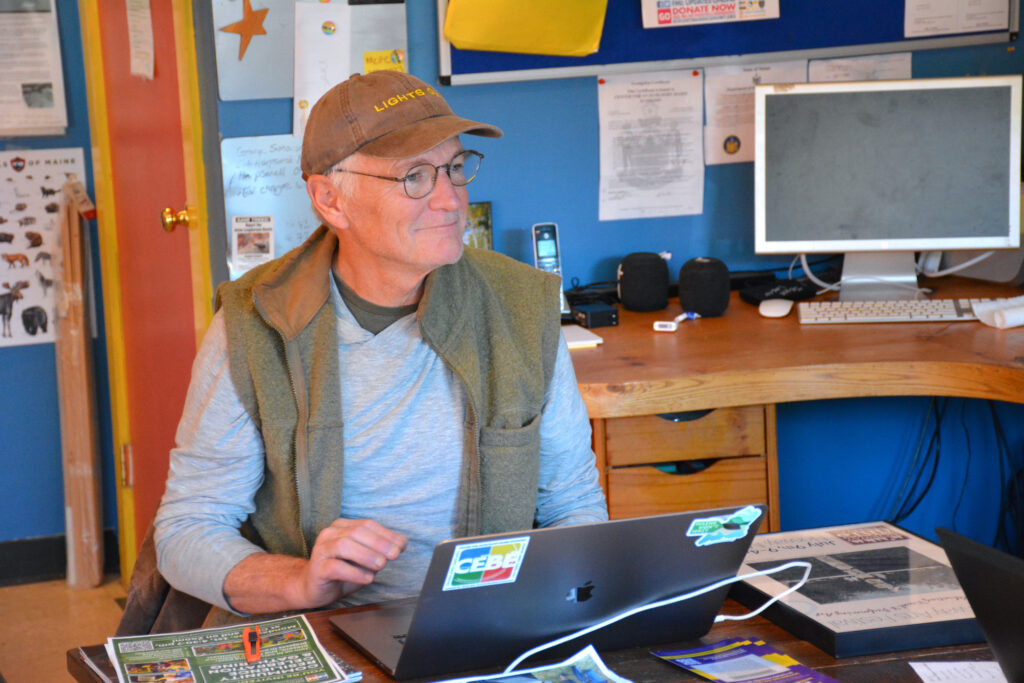
“A few local people can get together and make a significant change in their community over time,” said Scott Vlaun, who recently retired as CEBE’s executive director and helped found the group more than a decade ago. Its six-person staff, based in the small town of Norway, Maine, has led the charge for building solar and electric vehicle infrastructure in the region and helped neighboring rural areas apply for grants to bolster their defenses.
Vlaun, a photographer and environmentalist for decades, said the group has grappled with dynamic differences in the politically divided purple state over the causes and realities of climate change. He said he has met a lot of people who recognize the problems that their towns face but balk over how to describe or define the changes. Many more, he said, just want to know how best to respond when disaster strikes.
People are eager for guidance. “People out in areas like this are like, ‘What do we do? Where do we even start?’” Vlaun said.
Small-Town Vulnerabilities
For western Maine, weather extremes are apparent. The area is experiencing more days above 90 degrees in the summer, earlier spring thaws and less snowfall in the winter, Oxford County Emergency Management Agency Director Allyson Hill said. The region is facing a warmer, wetter future.
Oxford County, which includes much of the state’s western border with New Hampshire, has dealt with floods repeatedly in the past 25 years, 12 of which were designated as disasters by the Federal Emergency Management Agency. The county’s geography, with lakes, rivers and tributaries, make it especially vulnerable, Hill said. Several towns now have formed “resilience committees” to help sort through vulnerabilities in their terrain and infrastructure.
Western Maine experienced major flooding throughout 2023 with damaging events in May, June and December. The December rainfall, in particular, caused a 500-year flood disaster across much of the state. Maine is particularly prone to power outages, given its terrain. “That year was brutal for Oxford County, and nobody could really catch up. Nobody could even get repairs done before we were inundated again,” Hill said.
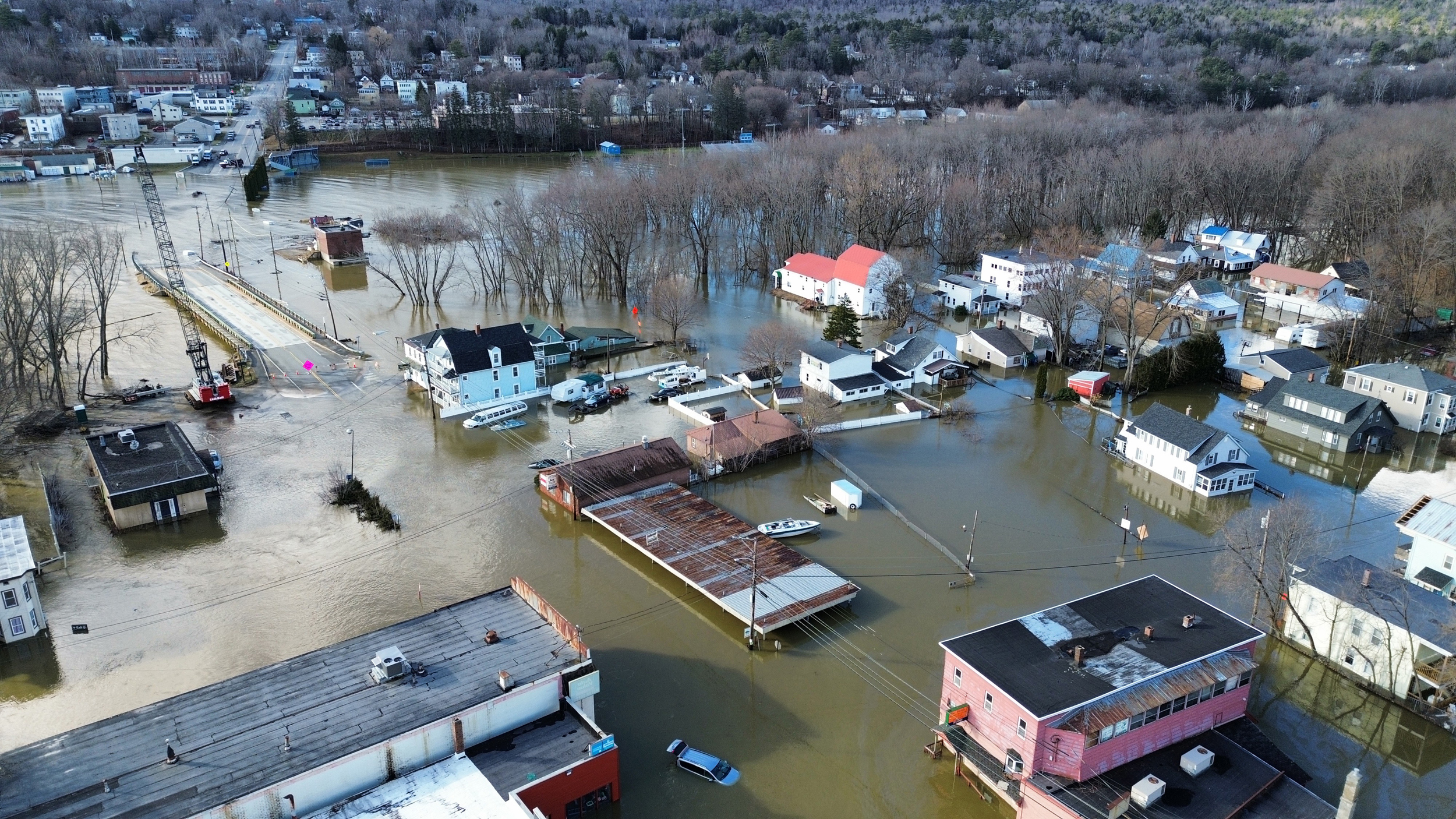
That December flood swamped one of the primary highways in the county and downtown business areas. With each flood, roads and culverts get washed out or eroded, cutting off important access routes and temporarily stranding some isolated homes. Earlier floods during the summer of 2023 essentially rerouted rivers over roadways in some towns, and storms knocked out electricity for days in some areas.
Hollie Hazzard has lived in tiny Brownfield, with a population of about 1,600 residents, for 20 years. During heavy spring rains, she regularly sees water backing up in stormwater ditches and nearly level with her road.
”The edges of the roads are washed away in a lot of places,” Hazzard, who is a member of her town’s resilience committee, said about the spring downpours. “It is becoming more and more common for us to have to rebuild portions of roadways and come back and re-fill in the dirt.”
Floods are not the only sign of climate change. The region has also been experiencing summer droughts. In November, the U.S. Department of Agriculture declared a natural disaster in Maine related to sparse rainfall since August. There have been multiple reports of water wells running dry, Hill said, and homes with low water levels will be in trouble.
“Once the ground freezes, that’s how much water you have until the ground unfreezes,” she said.
Finances Stretched by Weather Events
Tourism and vacation homes are economic pillars for many western Maine small towns, including Norway, home to 987-acre Lake Pennesseewassee, and Bethel, with nearby Sunday River Ski Resort.
Vlaun said vacation and second homes around Norway, with 5,000 residents, are “the tax base for this town.” About 2,500 people live in Bethel but that population can easily triple on a winter weekend with sports lovers. There are worries that towns like these could experience what happened in nearby China Lake, northeast of the state capital of Augusta, which deteriorated from too much development.
Construction along China Lake’s shoreline infused sediment, particularly phosphorus, into the water basins, sparking algae blooms that depleted oxygen levels, killed fish and reduced water clarity during the 1980s.
China Lake’s community is still working to raise oxygen levels and repair the lake. It was one of the first to experience this phenomenon, and environmentalists still warn about the “China Lake Syndrome.”
Vlaun said communities have to be vigilant about lake life and consider how flood and drought can spur pollutants or invasive plant growth and harm popular recreation spots.
“Once one of these lakes goes upside down, then the tax base will fail because everyone will sell out and leave,” he said.
Towns have had trouble keeping up with increasing unpredictable weather and communicating with and even warning residents. Hazzard said budgets and staff are stretched thin in most towns and there are meager resources for climate-related needs.
“It’s just going to cost more and more money,” Hazzard said about the repeated weather events. “People don’t want to spend more on taxes. People are resistant to spending money, and yet money is what it takes to get things done.”
Floods and other extreme weather have also revealed the changing nature of the towns, Vlaun said. In 1998, when power was out for around three weeks after a particularly rough ice storm, neighbors rallied to keep each other safe.
“People chipped in, helped out,” Vlaun said. That social fabric has frayed. Fewer people know their neighbors now, he said, and infrastructure failures are often not met with community-minded spirit.
Facebook has become a way for people to share boil-water notices or pleas for generators, but that is not an equitable or ideal way to spread public information, he said.
Newer residents or second-home owners “just count on the fact that their cell phones are going to work and their lights are going to go on and their water pump’s going to work. And when it doesn’t, they come to the town hall and are like, ‘What the hell?’ That’s just the way it is out here,” Vlaun said. CEBE is trying to fill in those gaps, he said, and draw in community members who want to be part of the solution.
Climate Change as Local Risk
CEBE tries to focus on local climate action and practical ways to adapt.
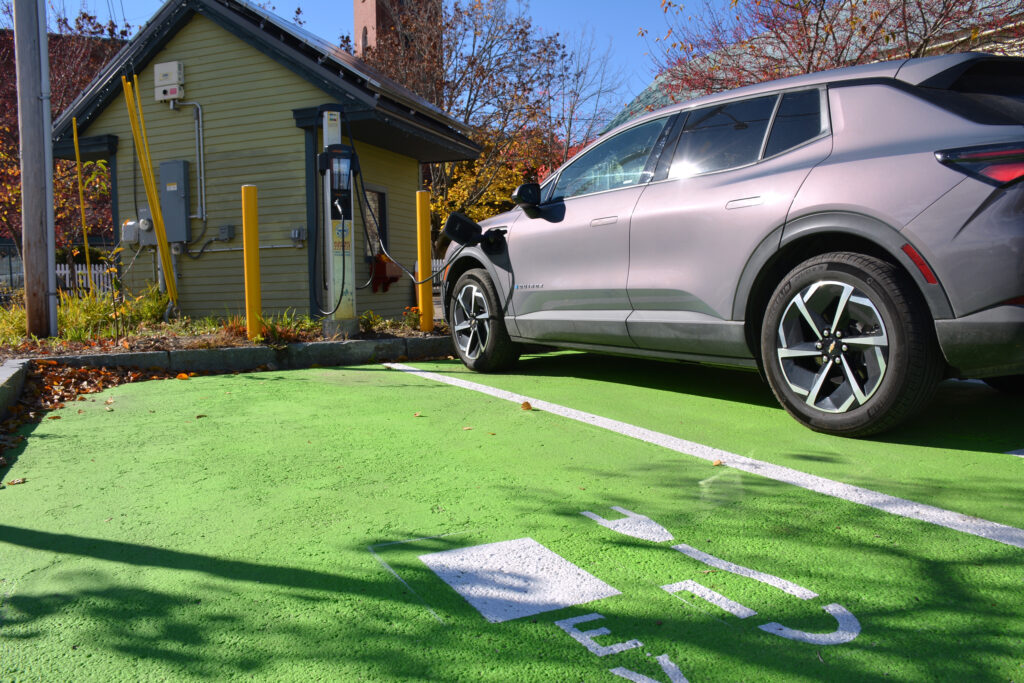
Its staff runs a community garden and host energy efficiency workshops and repair cafes, where people can bring items that need mending. The group has insulated windows in area homes and held classes on basic repair skills. It has helped install more than a dozen public electric vehicle chargers in the region and supported the creation of a local solar power cooperative.
The organization itself sets an example: It is based in a cheerful green building on Main Street in Norway, with raised garden beds with edible plants, free for the picking, and a rack of bicycles available to borrow. An EV charger is in the parking lot around the corner.
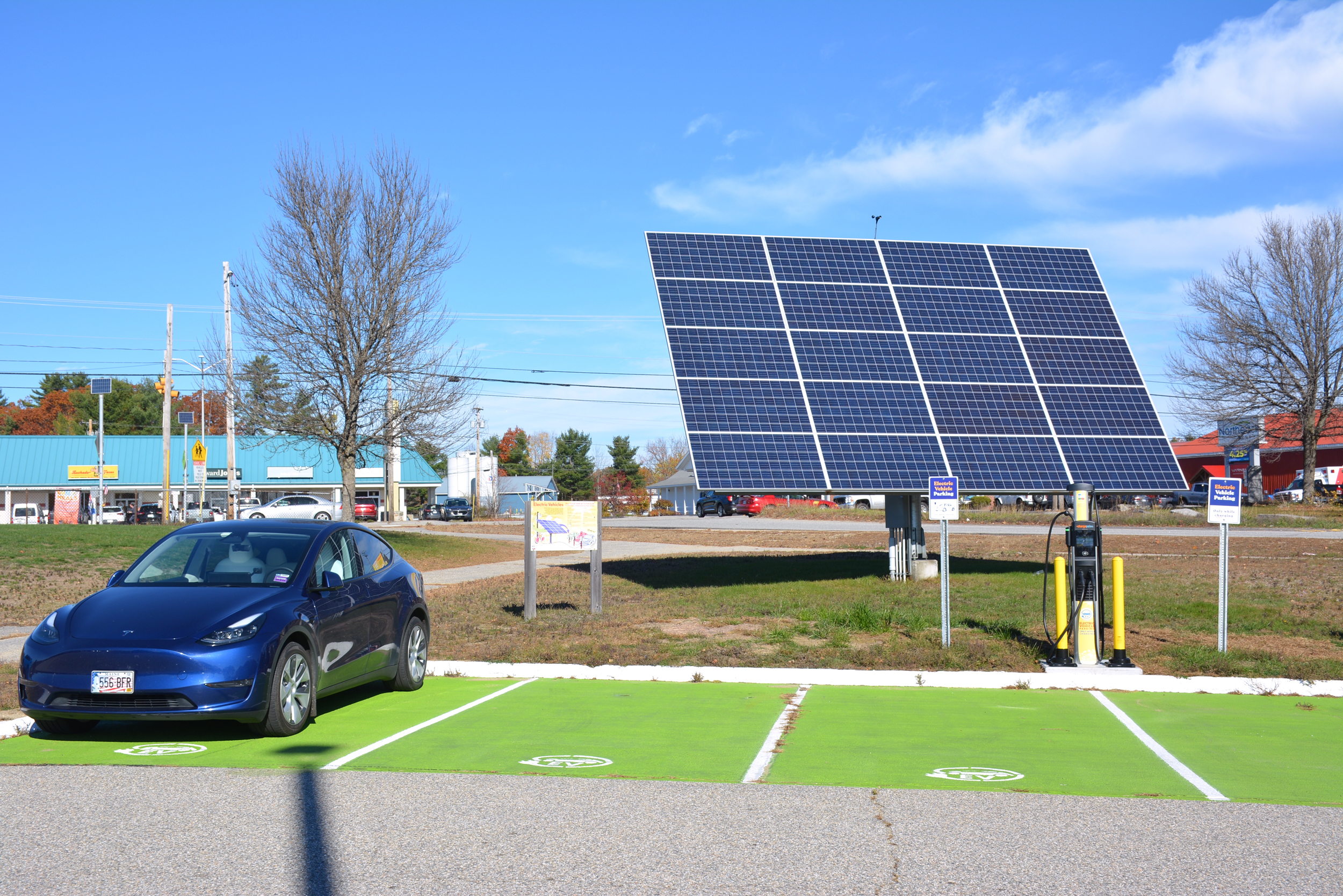
CEBE is partnering with Oxford County, the Gulf of Maine Research Institute and other groups to collect inland flooding data that can improve the region’s emergency preparedness and track climate disasters’ impact.
The group’s biggest impact so far is probably through the state’s Community Resilience Partnership (CRP) grant program, which funds projects related to climate response, clean energy, environmental protection and community resilience.
For towns that don’t have the municipal staff or know-how to chase grant dollars, CEBE steps in. The organization will guide towns toward enrollment in CRP, host public information meetings, suggest policy priorities and assist in grant applications.
“It allows us opportunities to access funding for things that we wouldn’t necessarily vote to spend money on,” said Hazzard, who relied on CEBE to help Brownfield’s resilience committee write a grant proposal. “I was surprised at how easy it was to do it.”
Since 2022, CEBE has helped 16 western Maine towns secure nearly $1 million in grant funds for requests to assess roads, study the health of a nearby lake or audit the energy efficiency of city-owned buildings.
Grants have paid for rooftop solar on municipal buildings, geothermal heat pumps, fiber networks and weatherization improvements. In Brownfield, Hazzard said a plan to add heat pumps at town hall isn’t just a budget line item. The improvement means residents who attend meetings won’t face temperature extremes in the depths of winter or summer.
Communities choose their own projects when applying for CRP grants. The town of Otisfield, home to 1,800 residents, is a “shining star” in the CRP program, Vlaun said, and “they’ve done a little bit of everything” with their grant funds.
Maureen Mooney Howard, the chair of Otisfield’s community resilience committee, attributes progress to a supportive town select board, a spirit of volunteerism and a dose of stubbornness in the community.
“This is a town that people volunteer in,” said Howard, who has lived in Otisfield for 45 years. “I don’t think that’s the case anymore in every town.”
Through a series of three grants, Otisfield has completed an energy audit of town buildings, created a booklet on watershed quality for lakeside residents, purchased heat pumps, built a pollinator garden, distributed winter supply kits to older and low-income residents, hosted an energy efficiency fair and installed solar panels on the town hall.
“All these things are something that our town would have done little by little…but now they won’t have to,” she said.
Otisfield has applied for a fourth grant to bolster the town hall’s insulation, heat pumps and water heater. Howard also wants to see how much heating oil the town hall uses now that it has solar power. “I’m hoping that the answer is just about nothing,” she said.
These days, Otisfield applies for grants on its own with a paid grant writer, but Howard said CEBE remains a resource and cheerleader.
“We’ve got our feet under us now. We know what we’re doing,” she said. “We absolutely could not have done it without them in the beginning.”
Purple Politics
Vlaun said his most effective climate model for convincing skeptics isn’t based on national or international methods. It’s rooted in the work of a social club with about 200 members just down the street from CEBE’s office.
The Weary Club—so named by the group of whittlers who started it—was officially incorporated in the 1920s. Its hand-written records of Lake Pennesseewassee’s ice-out dates, the day each spring that the ice melts at the center of the lake, go back to 1874.
When the club started, the lake’s ice-out date was usually in mid- to late April, occasionally even in May, and that trend would continue for several decades. But that stopped around 40 years ago. Lake Pennesseewassee hasn’t been iced over in May since 1978.
This story is funded by readers like you.
Our nonprofit newsroom provides award-winning climate coverage free of charge and advertising. We rely on donations from readers like you to keep going. Please donate now to support our work.
In 2006, a thaw happened in March for the first time—and it’s happened five times since according to the Weary Club records, Vlaun said. “You can’t argue with the Weary Club. It’s not NOAA, it’s not NASA. And as soon as people see that, they say, ‘Oh yeah, I remember when,’” he said.
In some meetings, he said, the term “climate change” barely gets used. But a grandparent’s stories about snowfalls from their childhood often provide an opening to talk about how temperature and weather patterns are changing. Maine has some clear political divides, Vlaun said, and science can be challenged in discussions.
But nearly everyone will listen to stories about how their homes or families’ property have been threatened by increasingly unpredictable weather events, Vlaun said.
“It’s the stories often from the old folks, the old ladies, that are kind of unassailable. Nobody’s going to start giving them a hard time because they’re worried about climate change,” Vlaun said.
A memorable conflict for CEBE staff was over the installation of solar panels and EV chargers at the high school near Norway, Vlaun said. On social media and in public meetings, some residents claimed that such panels didn’t work and would be dangerous for children, often repeating false information they found online.
It took a lot of one-on-one discussions, Vlaun said, to break the tension and convince some people to moderate their positions.
Even though some parents were misinformed, their fears were genuine and couldn’t be brushed off, said Ania Wright, who was named as Vlaun’s successor in August. “They deserve to have those explanations and those deep conversations, and they deserve to be listened to,” she said. Wright, a founding member of Maine Youth for Climate Justice, had previously worked on policy and legislative issues at Maine Audubon and Sierra Club Maine.
By the time the solar project was complete, around 300 people—several who had once opposed the project—showed up for the ribbon-cutting, Vlaun said.
The Future is Regional
Wright said she is focused on finding new ways to make those all-important community connections.
Local initiatives and regional coordination—particularly as federal funding for climate and green energy work has dried up and governments, from states to the international level, have scaled back their commitments—are pivotal now, she said.
CEBE lost $80,000 of federal funds this year because of clawbacks by the Trump administration. Private donors have partially filled the gap.
Local stuff matters more than ever, Wright said, and organizations such as CEBE can spur innovation. People in the community can see what is happening, and they want good advice and planning to face their changing landscapes and fortunes. They have a common cause, she said, in that all want stability, for their families, their businesses and their neighbors.
“The world that we want to create at CEBE is not just one where the climate crisis does not exist,” Wright said. The hope is that CEBE can foster cooperative solutions on the ground that are climate-focused but will help other vulnerabilities. The climate crisis is a “chance to address a lot of systemic issues that we have, whether it’s food insecurity or housing insecurity or racial justice issues.”
About This Story
Perhaps you noticed: This story, like all the news we publish, is free to read. That’s because Inside Climate News is a 501c3 nonprofit organization. We do not charge a subscription fee, lock our news behind a paywall, or clutter our website with ads. We make our news on climate and the environment freely available to you and anyone who wants it.
That’s not all. We also share our news for free with scores of other media organizations around the country. Many of them can’t afford to do environmental journalism of their own. We’ve built bureaus from coast to coast to report local stories, collaborate with local newsrooms and co-publish articles so that this vital work is shared as widely as possible.
Two of us launched ICN in 2007. Six years later we earned a Pulitzer Prize for National Reporting, and now we run the oldest and largest dedicated climate newsroom in the nation. We tell the story in all its complexity. We hold polluters accountable. We expose environmental injustice. We debunk misinformation. We scrutinize solutions and inspire action.
Donations from readers like you fund every aspect of what we do. If you don’t already, will you support our ongoing work, our reporting on the biggest crisis facing our planet, and help us reach even more readers in more places?
Please take a moment to make a tax-deductible donation. Every one of them makes a difference.
Thank you,

Contributor
Sydney Cromwell is a freelance journalist based in Maine. She has a bachelor’s in journalism and mass communication from Samford University. Sydney previously founded Southern Science, which covers environmental issues in Alabama. Her work has appeared in The New York Times and in local publications around Birmingham, Ala.
Great Job By Sydney Cromwell & the Team @ Inside Climate News Source link for sharing this story.