

A Black man who served 25 years in prison for a murder he was later found to be wrongfully convicted of now faces a court order to repay $1.25 million he received as compensation from the state of Michigan.
Desmond Ricks, who was convicted of fatally shooting a friend outside a restaurant in 1992, always insisted he was innocent.
He was freed from state prison in 2017 after the Innocence Project at the University of Michigan Law School uncovered new evidence showing that bullets recovered from the victim used to convict him didn’t match the gun police had seized from his mother’s house and which prosecutors had identified as the murder weapon, AP Moneywise reported.
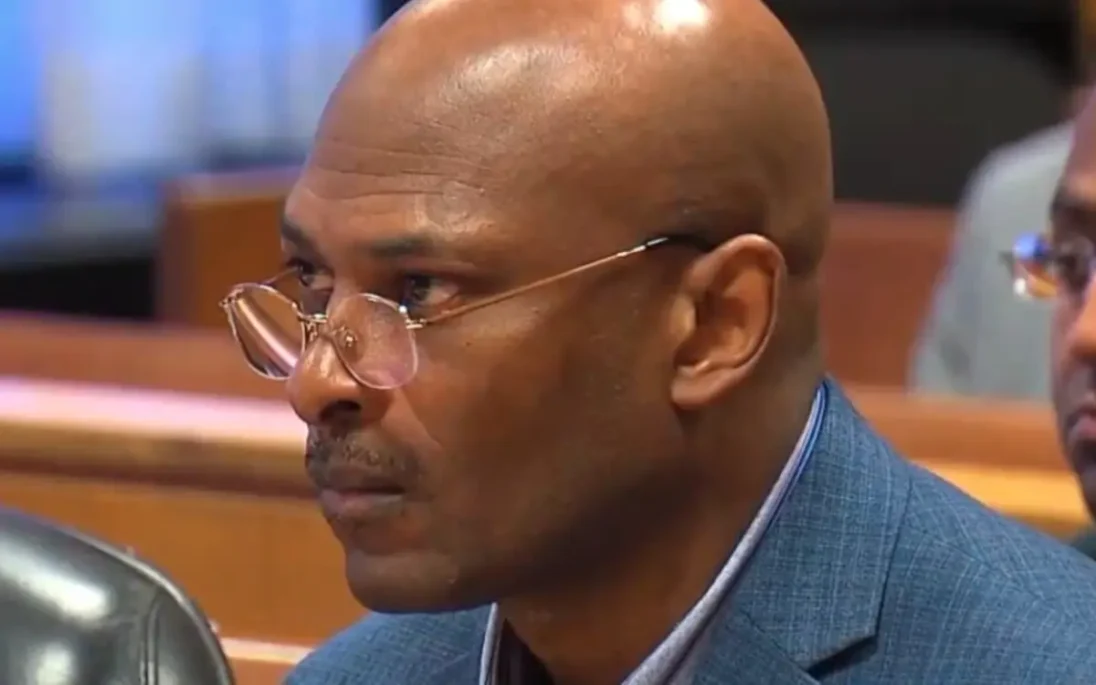
Through the state’s Wrongful Imprisonment Compensation Act (WICA) which took effect that year, Ricks received roughly $50,000 for each year he was incarcerated, or $1.25 million.
After his release, Ricks, then 51, said, “It’s a blessing to be alive with my children and grandchildren. It was a blessing not to lose my life in there.”
But Ricks wasn’t done pursuing justice and recompense for all the time he lost in prison. He filed a lawsuit against the city of Detroit and two officers, accusing them of falsifying evidence involving the bullets to frame him. The city agreed to pay him $7.5 million to settle the case in 2022.
“It was layer upon layer of police misconduct. It was a truly egregious case,” said David Moran, director of the Innocence Project.
During depositions in the lawsuit, Jay Jarvis, a crime expert in Detroit and a 32-year veteran at the Georgia State Crime Laboratory, said the bullet analysis by the police lab was suspicious, reported the Black Wall Street Times.
“It’s one of two things. It was a horrible mistake or it was deliberate, I don’t know,” Jarvis said.
Now the state of Michigan is asking Ricks to return the money they paid him.
Under Michigan law, exonerees must repay compensation received through the WICA fund if they later recover damages from a third party tied to the same conviction, AP explained. Ricks sued to keep the WICA money, but the state appeals court ruled in December that he must repay it.
His attorney numbers among prisoner advocates who say it’s time for the rules around compensating wrongfully convicted prisoners to be amended to allow former inmates to keep what they get from the state as well as any other funds they receive through litigation.
“Desmond Ricks endured the worst harm and suffering you can imagine,” said Wolf Mueller, one of his attorneys. “25 years in a cage for a crime he didn’t commit. The compensation under the state, a million and a quarter, doesn’t come close to the harm he suffered.”
But state Sen. Joe Bellino, a Republican from Monroe, said the rule requiring the return of money exists to make sure the state’s WICA fund, which ran low years ago, is not depleted so there is enough to pay future exonerees.
Ricks is one of 77 exonerees who have received compensation under the law through July 2024, with claims so far totaling $52 million.
“The state isn’t a huge bucket to double-dip when there is a mistake made,” Bellino told WXYZ in Detroit.
“No amount of money can make up for harm of a quarter century and your entire adult life lost, so to say $50K a year was paid is peanuts compared to the harm,” said Mueller.
The order by the Michigan appellate court to return the money has provoked mostly negative reactions among people online.
“That’s not right,” said @Aaron-lx2og on YouTube. “If the fund is running out of money, it’s either being transferred somewhere else or we are incarcerating too many innocent people.”
Another, @dougbotimer8005, noted that one of the payments Ricks received “is ‘compensation’ for time wrongfully incarcerated and the other is ‘damages’ awarded for wrongful prosecution. He suffered both, not one or the other.”
“Double dip??” wrote @Erakius323. “You kidnapped an innocent man for 25 years, and you dismiss it as double dipping?? That senator is a disgrace. Vote him out of office.”
Great Job Jill Jordan Sieder & the Team @ Atlanta Black Star Source link for sharing this story.