

Forever War, Part 3: This story is the third in a series of stories about the PFAS crisis in North Carolina.
FORT FISHER, N.C.—On a sunny, brisk afternoon in mid-December, Kerri Allen peers from the deck of a ferry, crossing the Cape Fear River from Fort Fisher, on a coastal barrier island, to Southport, a small town on the mainland, near where the river meets the sea.
Allen has lived near the water all of her 30-plus years. She competes in outrigger canoe races and calls herself an “East Coast mermaid.” She knows how to read a river, and at times her life has depended on that skill. She has paddled this rugged stretch of the Cape Fear River when winds were wailing and whitecaps were walloping her boat. She now works as coastal management program director for the N.C. Coastal Federation.
On this day, from the port side of the ferry, the river looks as deep and dark as midnight. A light southwest wind pushes serrated waves against the hull.
“There is a lot going on under the water,” Allen says, as she scans the horizon. “Tidal currents, river currents, basin currents.”
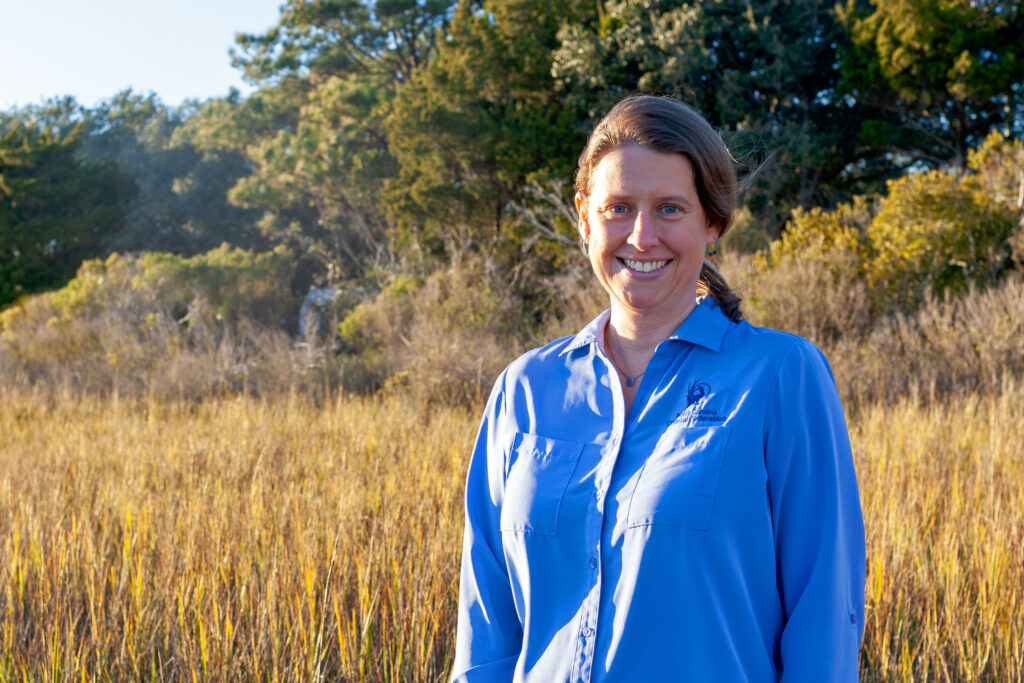
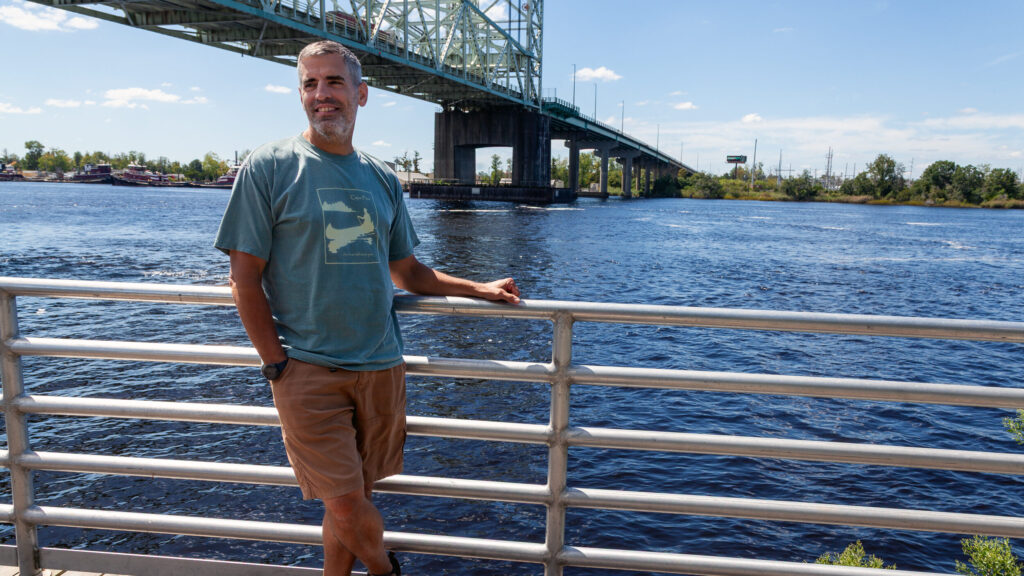
Allen is taking the 35-minute ride with her fellow environmental advocates: Lindsay Addison, a coastal biologist with the Audubon Society, and Kemp Burdette, the Cape Fear Riverkeeper. They’re showing me the potential impacts of a proposed federal dredging project: Shorelines and beach spits that are buffeted by wakes of enormous container ships, and vulnerable bird habitats on barrier islands that could be coated with PFAS-contaminated silt.
And, of course, the Cape Fear River itself. It’s a repository for industrial chemicals and fertilizers that have drained from farms and lawns, and microplastics that have invaded every aspect of human existence, even our brains.
The advocates have spent the last year fending off myriad environmental assaults under the Trump administration, including the loss of wetlands protections, the weakening of the Endangered Species Act and the rollback of PFAS regulations in drinking water.
These threats—and many others—are now weighing on the advocates’ minds as they fight a different battle, the billion-dollar, six-year dredging project proposed by the U.S. Army Corps of Engineers.
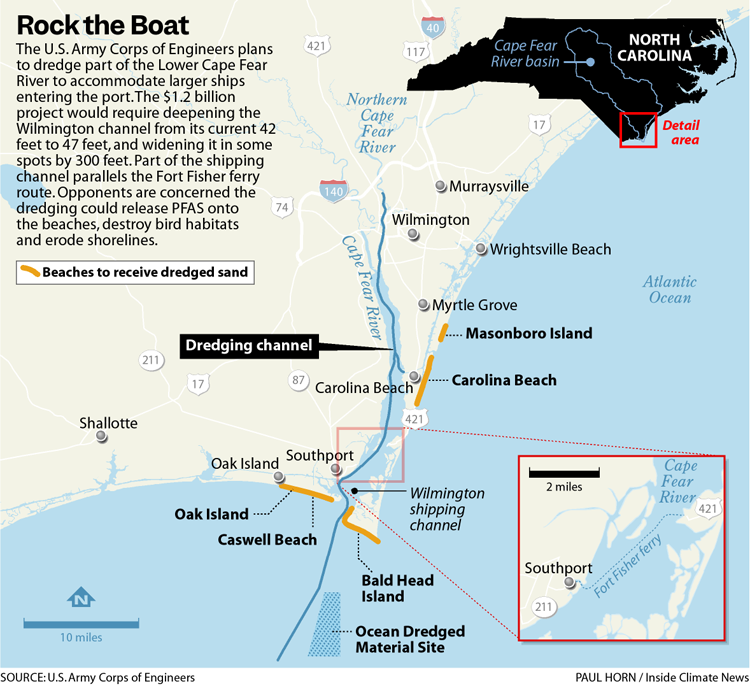
To accommodate larger ships heading up the Cape Fear River to the Port of Wilmington, the Corps would dredge 28 miles of the river up from its mouth near Bald Head Island, north along the Fort Fisher ferry route and upstream to the port. The dredging would deepen the shipping channel to 47 feet, from its current depth of 42 feet, federal records show, and widen some segments by as much as 500 feet—equivalent to one and a half football fields.
By the time the Corps is finished, 35 million cubic yards of silt and sand, plus the creatures that live in it, would be scraped and slurped from the riverbed.
The Corps would dispose of roughly half the material at a permitted ocean disposal site; the rest—sand and silt likely contaminated with PFAS—would be slathered on hundreds of acres of public beaches, bird-nesting islands and imperiled wetlands.
From the ferry deck, the Military Ocean Terminal Sunny Point comes into view across the vast river expanse. Operated by the U.S. Army, it is the world’s largest military terminal. It stores and ships explosives, artillery shells, Howitzers, grenades and other ammunition. If the United States is embroiled in a conflict—or assisting with one—the weapons likely ship from Sunny Point.

Parts of the terminal are contaminated with toxic PFAS found in firefighting foam, military testing has shown. Studies have also found contaminants from terminal seeping from the groundwater into tributaries of the Cape Fear.
University scientists and state environmental regulators have also found the forever chemicals in river water, fish, birds and alligators, as well as in sediment north of the port.
Despite the likelihood of contamination, the Corps doesn’t intend to test the dredging material for PFAS, according to a Draft Environmental Impact Statement released in September. In fact, the 260-page document doesn’t mention PFAS at all.
Even if the Corps did find PFAS in the dredging material, it’s unclear if they would be prohibited from disposing of it. There are currently no federal standards or regulations to guide decisions related to PFAS contamination in sediment, a Corps spokesman said.
Because sediment tests have a limited shelf life, the spokesman said, samples collected now would be outdated by the time the Corps would begin dredging the river in five to 10 years.
If the dredging project comes to fruition, the spokesman said, the Corps would test the sediment in the engineering and design phase “to meet all applicable requirements” and guide decisions about where to place the material.
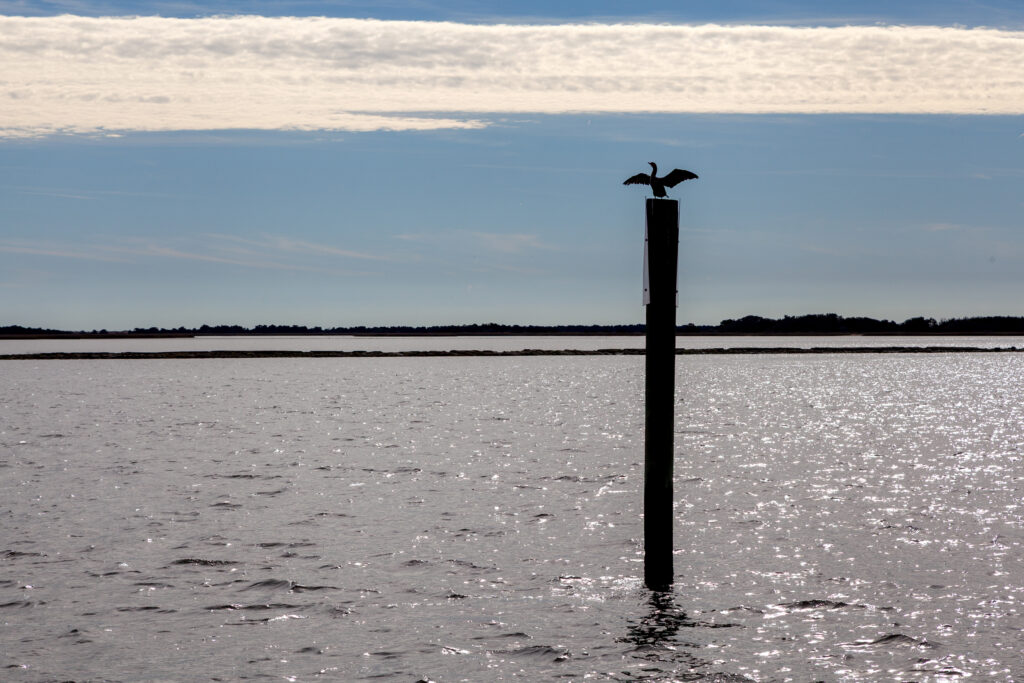
Gulls soar overhead. A cormorant perches on a channel marker and spreads its wings. As the ferry lumbers downriver, the issue takes on an urgency that’s tinged with exasperation.
Burdette has battled for PFAS regulations since the compounds were detected in the Cape Fear River in 2017. He’s from Wilmington and unknowingly drank contaminated water much of his life. His two children, now in their teens, drank it. His father drank it and died of kidney cancer, which research has linked to exposure to GenX, a PFAS compound.
Burdette has wrestled alligators so scientists could take their blood. His organization, Cape Fear River Watch, sued the state and Chemours, the chemical manufacturer responsible for discharging GenX and other forever chemicals into the Cape Fear. The state and Chemours agreed to a consent order that required the company to stop its contaminated discharges into the waterway.
Last fall, Burdette paddled an aluminum rowboat to Chemour Fayetteville Works on the river to test whether a PFAS compound called TFA was in water outfalls from the plant. He found disturbingly high levels of the ultra-short chain compounds.
Now Burdette is again fighting for the river he knows so well, and on behalf of the people who depend on it.
A Gritty, Loud, Noxious Port
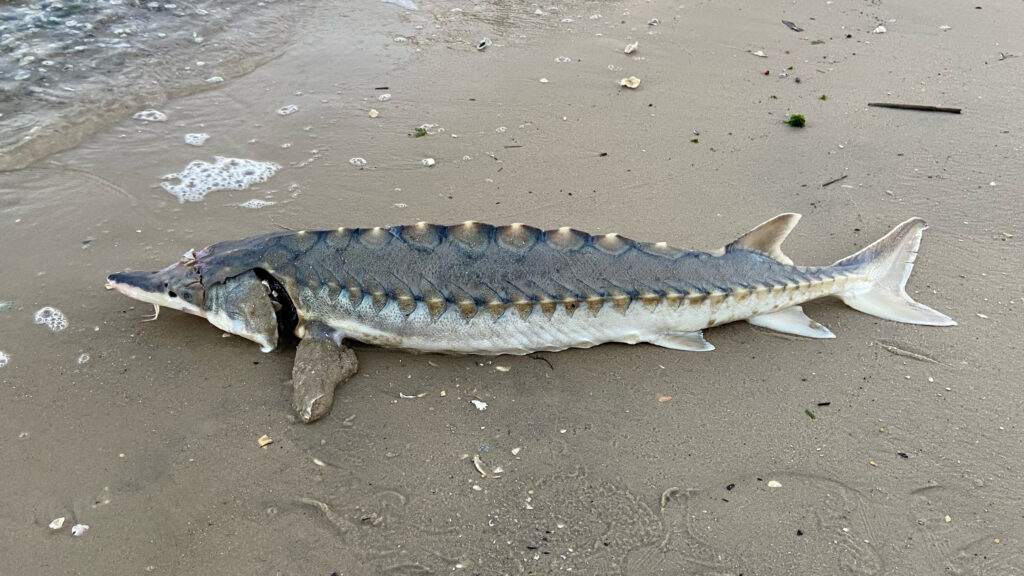
The ferry turns gently toward the west as the advocates aboard rattle off additional probable harms from the dredging: The increased wake and wave action from the enormous ships would erode shorelines and drown bird eggs and chicks in their nests. Roughly 1,000 acres of wetlands would be permanently lost. Endangered Atlantic Sturgeon, which live on the river bed, would be dismembered by the ships’ sharp keels.
Allen is concerned that there is no monitoring plan for the environmental impacts. The Cape Fear River is so impaired, she says, that crabbers describe the river as dead.
Allen, in her mid-30s, is blond and athletic with a wide smile. She was born in Raleigh, but moved to Wilmington as a teenager. She originally planned to become an artist, and her creative streak manifests in her Coastal Federation office at Wrightsville Beach.
Not only does she have a graceful array of seashells, but also a collection of sand: Black sand, white sand, sand from Hawaii, sand from San Francisco, sand from Costa Rica, sand with large grains, sand with small grains, even sea glass, all housed in 100 small antique bottles with cork stoppers.
Had it not been for a high school oceanography class, Allen could be painting ocean scenes. But as part of the class, she visited a marsh where she retrieved the shell of a tulip mollusk, a type of large sea snail. She was hooked. Now she’s a coastal geologist.
Allen and her fellow advocates have scrutinized the economics of the proposal. Federal documents show the financial benefits of the $1.2 billion proposed project are few and barely meet the Corps’ benefit-cost threshold for reasonableness. The state legislature would have to appropriate $339 million to cover a quarter of the costs.
The total cargo volume flowing through the port is expected to remain steady with or without a harbor improvement project, according to the Corps’ analysis. Yet, the Corps, and before it, the State Ports Authority, justified deepening the shipping channel to accommodate larger vessels. Otherwise, ships would have to “light load”—carry less weight to the port, which could entail more river traffic.
In other words, fewer trips, but bigger ships.
The 284-acre Port of Wilmington lies just two miles south of downtown. Unlike the city’s waterfront promenade, restaurants and tourist shops, the port is gritty, loud and noxious.
Along Burnette Boulevard, Kinder Morgan, the Houston-based pipeline company, operates a chemical, petroleum and asphalt storage terminal. EcoLab injects shipping containers with the neurotoxin methyl bromide to fumigate logs. In the backyards of Sunset Park residents looms Enviva’s dome of wood pellets, sourced from North Carolina forests and bound for Europe to be burned as fuel.
The port is crucial to Wilmington’s economy, but receives just 1.3 percent of the nation’s marine shipping traffic. It handled about 7 million tons of cargo in 2022, most of it container shipments, according to State Port Authority figures.
In February 2020, the State Port Authority released a feasibility study about improving the shipping channel, which, unsurprisingly, found it would benefit the port.
The findings have since prompted accusations of self-dealing, especially in light of an eviscerating federal review. After the state submitted it to the assistant secretary of the Army for Civil Works, that office identified more than two dozen major weaknesses and unresolved issues.
The state Department of Transportation, which oversees the port, did not respond to emails from Inside Climate News seeking comment.
The Port Authority underestimated the project’s impact on river flooding associated with sea-level rise, failed to account for the effects of climate change, and claimed, without evidence, that unless the shipping channel was deepened and widened, the port would close.
“As written, the planning objectives are unclear and could potentially lead to the pre-selection of an alternative plan,” Corps documents read. “In many cases, the report uses qualifying words, such as may, potentially, and just, to lessen the description of project impacts.”
Nonetheless, Congress authorized more than $839 million for the project, but with a caveat: The study’s shortcomings had to be fixed before lawmakers would consider releasing the funding.
In 2022, the task fell to the Corps.
PFAS in the Fish
The ferry docks at the Southport terminal after crossing the river in about 35 minutes, and the trio of environmental advocates heads for the fishing pier. It’s nearly empty in December, but during high season, the pier is jammed with anglers eager to catch a red drum or Atlantic croaker for dinner.
Those fish are among seven saltwater species that contained PFAS in their tissues, according to sampling conducted by the state Department of Environmental Quality.
In 2023 and 2024, DEQ tested 77 fish caught between Wilmington and Southport—the same stretch of the river that the Corps would deepen and widen—for the compounds. DEQ presented preliminary data to the state Secretaries’ Science Advisory Board last October that showed PFAS were present in all seven saltwater species sampled, as well as in river water.
The agency found 13 types of PFAS disbursed among the fish. PFOS, which the chemical industry phased out in 2002, was detected in all of the samples.
Two compounds found in several fish, PFMOAA and PFO5DA, can be traced back to Chemours, 100 miles upstream.
The saltwater fish findings build on previous DEQ sampling that detected high levels of PFOS in eight species of freshwater fish commonly caught in the river segment upstream of Wilmington, between Chemours and the Bluffs on the Cape Fear.
The results compelled state health officials in 2023 to issue a fish consumption advisory for those species, recommending that pregnant women eat none and that others limit their intake to no more than seven meals in a year.
The state health department is evaluating options for future fish advisories, including consideration of guidelines proposed last September by the Great Lakes Consortium for Fish Advisories.
Research on PFAS and Birds
Addison is in her 40s and, in the winter, wears flannel and a knit toboggan to protect against the wind. She has been a coastal biologist with the Audubon Society in Wilmington for 15 years and grew up in Florida, surrounded by nature and books. Her father was a biologist, and she spent her childhood playing outside, roaming the woods behind her elementary school while she waited for her mother, a teacher, to finish working.
“Outside, you might go to the same place over and over,” she says, “but you don’t know what you’re going to see or what’s going to happen. It’s never the same.”
Even her hobbies dovetail with her professional life. Like the protagonists in the British mysteries she reads, Addison observes the natural world, what belongs and what seems out of place.
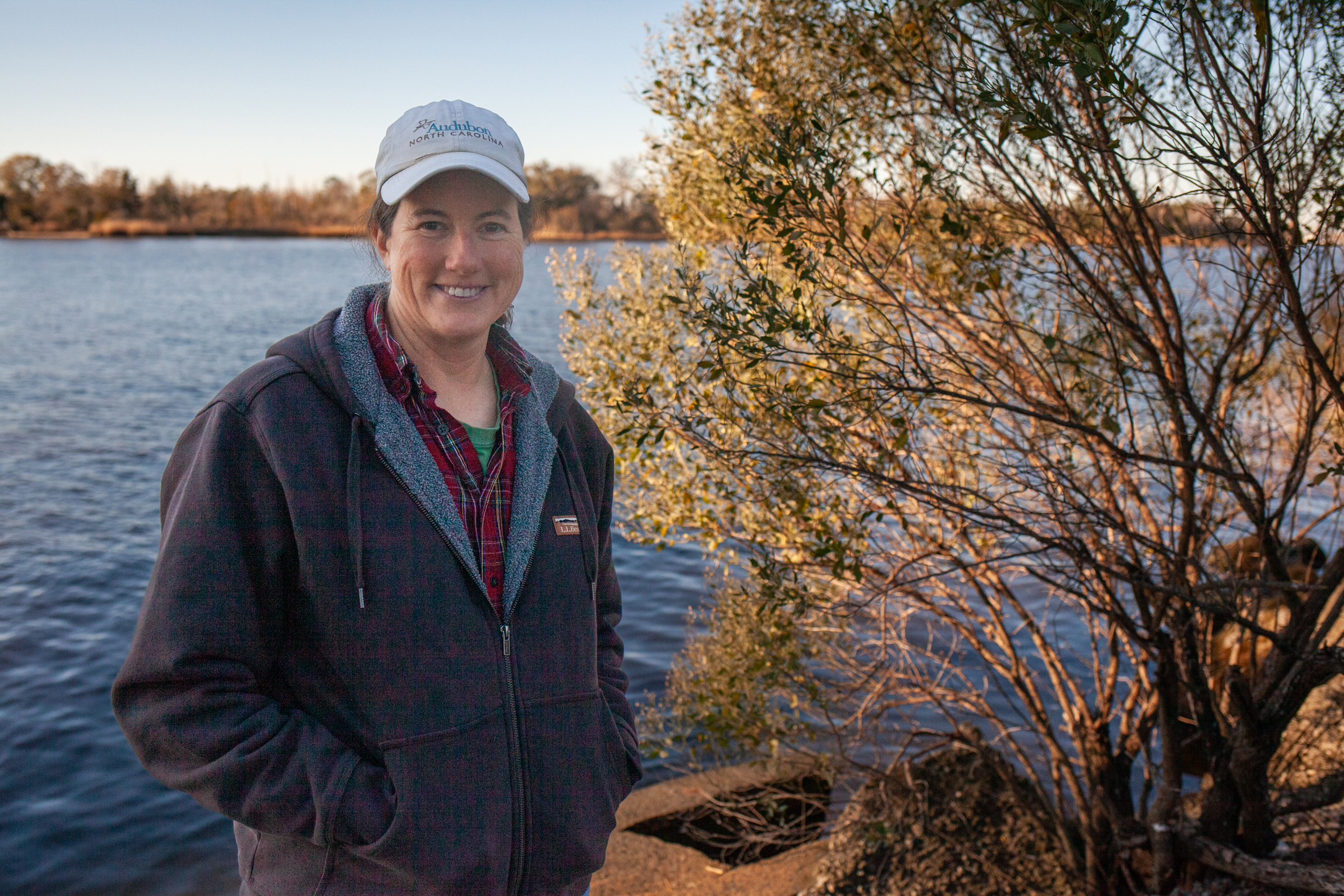
Addison loves birds. She has a figurine of a killdeer in her office—but if she had to name a favorite shorebird, it would be the American oystercatcher. (The Carolina wren, a yardbird, is second, Addison says. “They’re pert.”)
“Birds are a thing that everyone can get behind,” she says. “They are a great uniter.”
American oystercatchers live on coastal salt marshes, mudflats, and islands. They are sociable introverts who are loyal to their mates and will return to the same spot to nest every year. If an island were a parking lot, Addison says, an American oystercatcher would return not just to the same lot, but “to the same parking space.”
American oystercatchers, as their name suggests, eat oysters. And scientists have found oysters contaminated with the compounds along the Southeast Atlantic Coast..
Some birds living along the Cape Fear River have also been contaminated with PFAS. In 2017, Addison, EPA scientists and University of Rhode Island researchers tested chicks that had died of natural causes from three locations: Massachusetts Bay, Narragansett Bay in Rhode Island, and the Cape Fear River Estuary in North Carolina.
They found 16 types of PFAS in the livers of royal terns, sandwich terns, laughing gulls and brown pelicans from the Cape Fear River Estuary. These included PFOS and two compounds associated with Chemours.
Chicks from the Cape Fear Estuary contained significantly greater concentrations and numbers of PFAS than juveniles from Massachusetts Bay or Narragansett Bay, researchers found. A royal tern chick from the estuary had the highest total of PFAS of all the birds tested: 390 parts per trillion.
Over the past two years, Addison, along with the U.S. Geological Survey and the University of North Carolina, Wilmington, conducted a second study. They took blood samples from living brown pelican chicks to see if their immune systems have been affected by exposure to PFAS. The results are pending.
If the Corps places contaminated dredge material on the bird nesting islands, that could further expose them to compounds. The “likely presence of PFAS is a major concern” for DEQ, according to an agency spokesperson.
“We need to find out before we do it,” Addison says. “You can’t un-ring the bell.”
Back Before the House
Emily Donovan, co-founder of the environmental group Clean Cape Fear, couldn’t make the ferry trip. Instead, she prepared to testify before the U.S. House Environment Subcommittee.
Donovan routinely speaks in public; sometimes it seems like she’s on tour. Seven years ago, she first appeared before the House Environment Subcommittee, where she pleaded with federal lawmakers to authorize and fund a comprehensive, nationwide PFAS Human Exposure Study and to regulate all of the compounds, not piecemeal, but as a class.
Last May, she addressed 100 people from the pulpit of Ocean View United Methodist Church in Oak Island, North Carolina, to unveil findings about PFAS in sea foam along the state’s beaches. Coincidentally, that was the day EPA Administrator Lee Zeldin announced he would roll back drinking water regulations for GenX and four other PFAS chemicals—regulations Donovan and other North Carolina environmentalists had fought for more than a decade.
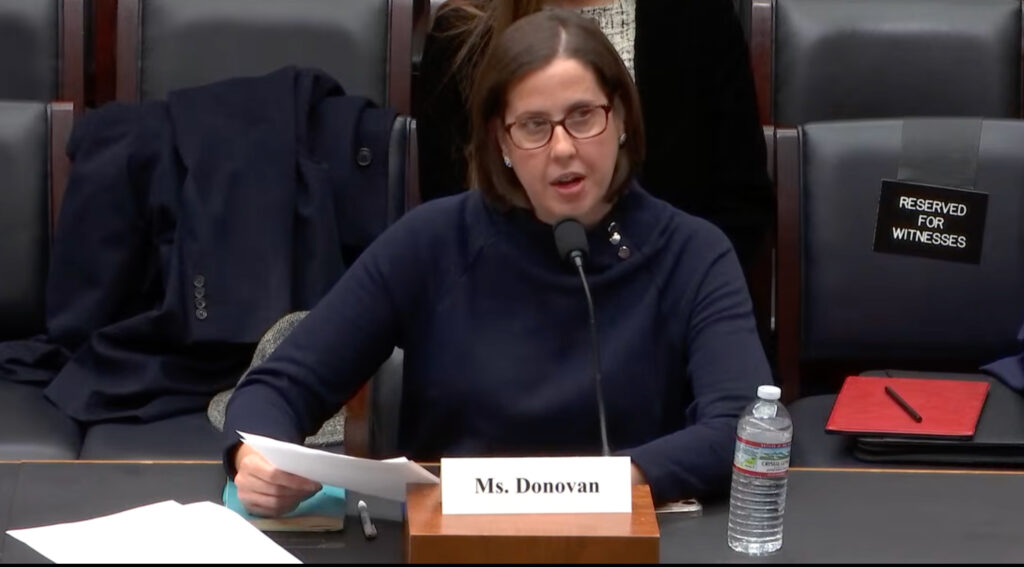
This time, though, Donovan felt nervous. She had little time to finesse her remarks. House Democrats had contacted her on short notice to appear before the committee about proposed PFAS exemptions under the Superfund law, which governs hundreds of sites nationwide that are contaminated by hazardous waste.
The hearing at the Rayburn Building in Washington, D.C., was on the 18th of December: A week before Christmas, in the middle of Hanukkah and on the final day of Congress in 2025. She wondered if anyone was listening or even cared.
Clad in a black turtleneck sweater, Donovan sat at a hearing table with three other witnesses, all of whom represented industries that favored the Superfund exemption.
The Trump administration had kept the hazardous materials designation for PFOA and PFOS, enacted under President Biden. That classification places those compounds under the purview of the Superfund program, which allows the EPA to force polluters to pay for cleanups, rather than taxpayers.
Now, Congress was weighing a legal exemption for “passive receivers,” entities that didn’t produce the compounds but had unknowingly accepted contaminated material: farmers, wastewater treatment plants, even seaside beach towns.
Initially, the proponents’ arguments seemed reasonable. But as the hearing wore on, observers learned the EPA already absolves passive receivers from governmental liability. However, proponents say that without the exemption, they are still vulnerable to third-party lawsuits.
Those claims are disingenuous, Donovan told the committee, whose Democratic members agreed. The passive receiver exemption could shield polluters from accountability, she said. For example, in North Carolina, the state regulates water and wastewater utilities. In turn, the utilities often end up processing discharges of toxic chemicals from industries like plastics manufacturers and textile companies,
This gives polluting industries cover: the utility is on the hook to DEQ, not them, Donovan said.
“Our beaches are coated in an atrocious amount of PFAS in sea foam.”
— Emily Donovan, Clean Cape Fear
“Yet here we are debating whether to weaken accountability for two types of PFAs that haven’t been in commercial use for over a decade,” she said.
Donovan was part of a research team that found PFAS-contaminated sea foam along several Brunswick County beaches in southern North Carolina. Of the 12 sea foam samples, Caswell Beach and nearby Oak Island had some of the highest levels. These are the same places where the Corps could soon place 2 million cubic yards of dredge material from the Cape Fear River.
“Our beaches are coated in an atrocious amount of PFAS in sea foam, the highest ever recorded in literature to date,” she told the committee. “The discovery of these toxic levels of PFAS contaminating our local beaches is yet another public health threat lawmakers and regulators have no idea how to address.”
Seaside Towns Divided on Dredging
Sand is existential for coastal communities. Without a steady replenishment, the sand is carried to sea by storms—some of them supercharged by climate change—and the constant barrage of wakes and waves. Without sand, there are no tourists. And without tourists, the coastal economy folds like a beach chair.
Beach renourishment can cost seaside towns tens of millions of dollars. This is why the prospect of the Corps delivering free sand from the dredging project is nearly irresistible.
The Corps is required under federal law to evaluate whether to test dredge material for contaminants of concern, such as pesticides, metals and PCBs. If the material is in an area with a history of spills or known contamination, the Corps is required to test it for a list of chemicals before disposing of it either inland or at a designated ocean site. PFAS are not on that list.
In the Draft Environmental Impact Statement, the Corps bases its conclusions that sediment contains “acceptable concentrations” of toxic contaminants on tests conducted from 2013 to 2016. Those tests did not include PFAS; not until 2017 did the public know PFAS had contaminated the Cape Fear River.
Scientists have already shown that PFAS can settle in sediment in rivers and lakes worldwide, from Michigan to China. Ralph Mead, a scientist at UNC Wilmington, found the compounds in sediment samples in the Cape Fear River at the dam 39 miles north of Wilmington. Eleven PFAS were found in estuarine sediments in Charleston, S.C.
Erin Carey is the deputy director and director of coastal programs for the North Carolina chapter of the Sierra Club. She lives in Wilmington with her husband and stepson, and grew up in rural Vermont, where, as a child, she became an environmental advocate.
In third grade, she started a petition to bring a rock, about the size of a loaf of bread, into the classroom where she could store it at her desk. All of her classmates signed the petition, which did not sway the teacher. “Not only did it not work,” she says. “But I didn’t get the rock and I had to stay in for recess.”
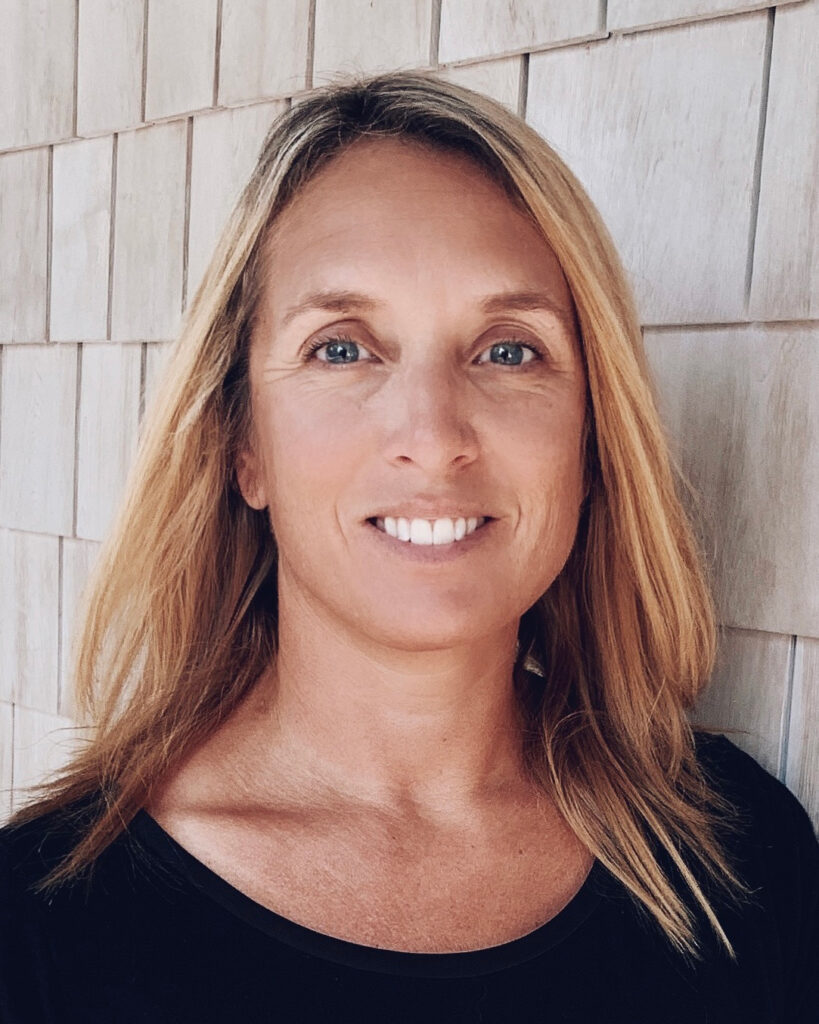
In sixth grade, she started a boycott to advocate for dolphin-safe tuna. Carey wanted to “save the world” and become a marine biologist. She moved to Wilmington, where she earned two degrees in environmental science.
But “there weren’t a lot of ‘save the world jobs’ out there,” Carey says, so she took whatever science job she could.
She worked at the microbiology lab at Wilmington’s Sweeney water treatment plant years before scientists discovered PFAS entering and leaving the facility. In Carteret County, she inspected small wastewater treatment plants, where her job entailed peering into vats of raw sewage. At DEQ’s shellfish sanitation program, she pureed oysters to test them for E. coli bacteria.
Finally, one day when she was surfing in Costa Rica, she got the call that she’d been hired at the Sierra Club in North Carolina. Since then, she’s seen some environmental victories—state rules on emissions of methyl bromide, a neurotoxin—and losses. Under Trump, millions of acres of wetlands, including thousands in North Carolina, are losing protection. “The wetlands fight will be, [and] is, the most daunting and most terrifying change we’ve seen come out of the Trump administration.”
Polling shows that the environment falls below the economy in importance, she says. “It may, but I don’t think that that’s a full picture of how emotionally connected people are to the environment. Despite the body blows that we take, the energy from the public, love for the environment and for nature, the need to protect it, that seems intrinsic to being human. That makes it worth it.”
Carey says environmental groups have spoken with the Corps about their PFAS concerns, but “they’re taking the stance that it’s not regulated and we don’t have to do anything about it.”
“No, you don’t have to,” Carey says of the Corps, “but you could do your job and protect people.”
“Despite the body blows that we take, the energy from the public, love for the environment and for nature, the need to protect it, that seems intrinsic to being human.”
— Erin Carey, Sierra Club
Caswell Beach Mayor George Kassler said he is unaware “that anyone is concerned with PFAS from material placed on the beach.” He said the town is relying on the “Corps’ assurance” that chemical testing of the material would occur as outlined in the Draft Environmental Impact Statement.
In Oak Island, elected officials haven’t taken a public stand on whether it would accept sand from the dredging project. The Town Council “has not yet had the chance to discuss this topic in an open meeting,” a town spokesman said.
Other municipalities, though, have either opposed the project or asked for concessions similar to those made when the Georgia Ports Authority expanded the Savannah Harbor.
The Southport Board of Alderman passed a resolution earlier this month that urged state and federal policymakers to require a “comprehensive, long-term, and fully-funded environmental mitigation and adaptive management plan.”
This would require the State Port Authority to deposit $500 million in an escrow account to fund future mitigation projects to address as-yet-unknown environmental harms caused by the dredging.
Kure Beach officials passed a similar resolution. They also urged the relevant agencies to protect Battery Island and the surrounding Cape Fear River islands “as irreplaceable ecological assets,” ensuring that mitigation measures “fully safeguard the habitats supporting nearly a third of North Carolina’s coastal shorebird population.”
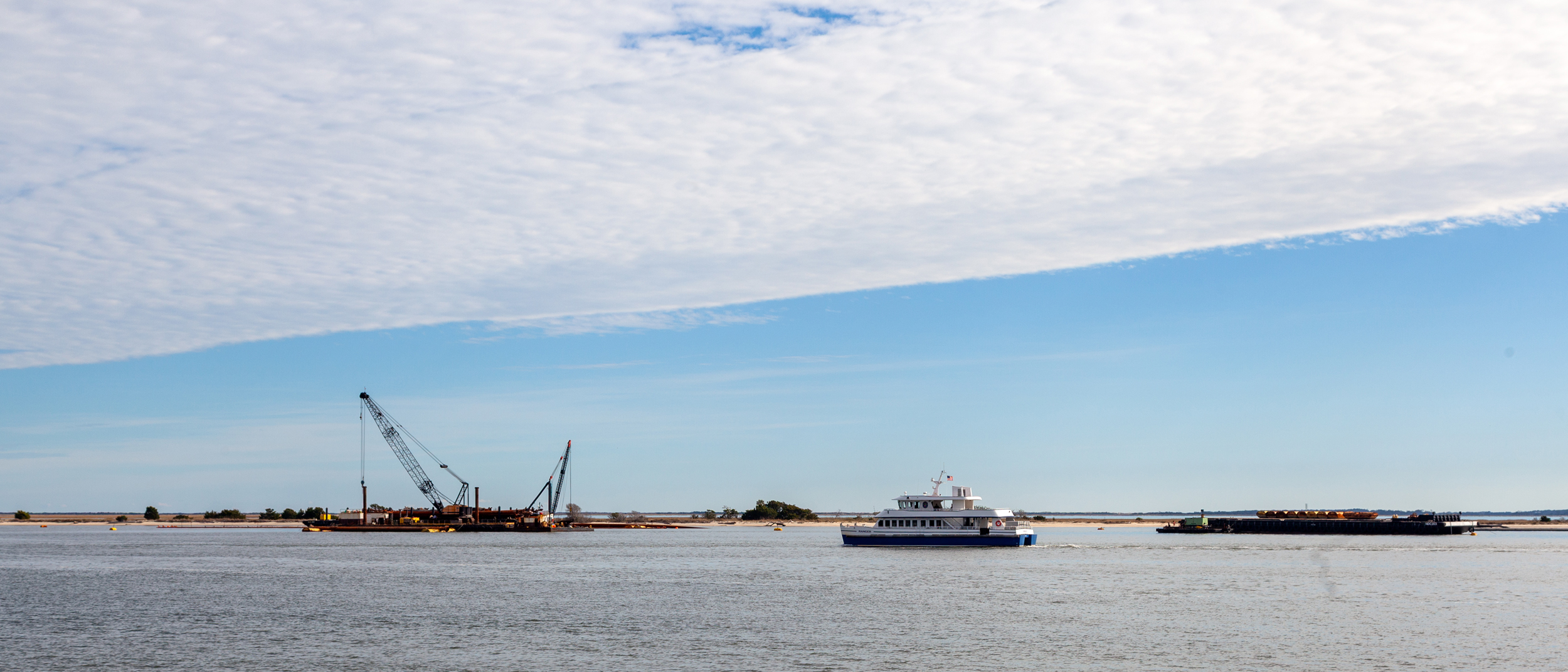
The Village of Bald Head Island, a wealthy enclave in and near a maritime forest four miles from the mainland, would receive 1.6 million cubic yards of dredged sand. But that offer isn’t enticing enough to counter the potential environmental and property damages; in mid-December, village officials voted unanimously to oppose the project.
Bill Cary, an attorney with the powerful law firm Brooks Pierce, which is representing Bald Head Island, wrote to the Corps that the village is still recovering 25 years after the previous dredging project. It has spent more than $2.8 million a year addressing the damages, including shoreline erosion.
Brooks Pierce also hired ports and shipping expert Asaf Ashar, a University of New Orleans research professor emeritus, who, in 40 pages of analysis, concluded that the Corps’ economic projections are incorrectly calculated and unsupported.
“Considering the size of the projected expenditures, the environmental impacts, the prior criticisms and the time and expense of the new analysis,” Cary wrote, “one would expect the 2025 economic considerations to be thorough, well-documented, supported by available data, and based on sound, consistent analytical principles. It is none of those things.”
What’s Next
A motorboat passes by the Southport pier. Its wake travels beneath the pilings and thwacks the stone rip-rap that protects the waterfront from flooding. Multiply the power of that wake by 1,000, even 10,000, from ships traveling the river, and the force of the water can annihilate a shoreline.
Addison points out Battery Island, which lies about a half mile across the river from the Southport pier. At 100 acres, it is one of the largest wading-bird areas in the state, as well as a sanctuary for chicks because no mammals, other than the occasional unfortunate deer, can swim there.
Many of the birds “read” the island for the high tide line and build their nests above it, she says. But sometimes the incoming water, whether from gusty winds or big boats, tops the line and drowns birds in their nests.
When ferries and ships pass the island, they create a tsunami effect: Water is sucked from the shore, but then slams back and gradually sloughs off the shoreline. The birds are running out of higher ground. Thirty-year-old cedars are falling into the sea.
“It’s one of the islands we’re most concerned about,” Addison says. “There’s a pretty wicked current. It’s striking how far a boat wake can travel.”
The state Wildlife Resources Commission owns two islands near the river, which the Audubon Society manages. The commission is also concerned about the damage wakes could inflict on birding islands from large ships, especially on Battery Island.
“There was no information on wave heights and how far wakes would progress onshore,” the WRC wrote in its public comments to the Corps. “A single overwash causes a nest to be lost. This permanent loss of nesting and roosting habitats along with potential site abandonment by birds should be considered and mitigated appropriately.”
The project would alter 1,000 acres of wetlands from freshwater to saltwater, which supports entirely different ecosystems. The Corps would be required to mitigate those impacts at other locations within the river subbasin, but the harm—including inundation of some wetlands and wake erosion of others—would be extensive and permanent.
“This project will increase salinity up the river,” said Carey of the Sierra Club. “It will change the nature of ecosystems and forests. The idea of killing off wetlands and then just assuming that they will become just a different kind of wetland—eventually—there’s no analysis behind that. It’s just an assumption.”
Carey likens the project to a scene in the film Jurassic Park: “Jeff Goldblum says, ‘your scientists were so focused on whether they could do something, they didn’t think about whether they should.’”
An Uncertain Fate
On the pier, Burdette scrolls on his phone, searching for photos of Atlantic sturgeon. They are endangered in North Carolina and, because they live on the river bottom, can be mowed down by the sharp keels of ships.
He points to the shoreline where the boat’s wake just dissipated. “This one I found right over there,” he says, having found the photo of a sturgeon on his phone. “And this one—is missing part of himself.”
Cars and trucks line up to load onto the ferry back to Fort Fisher. It is mid-afternoon but already the sun is nodding toward the horizon. Burdette glances at his watch, 30 minutes until high tide. The ferry heads up and then back across the river to Fort Fisher. Even though the advocates know the area by heart, there is always something beautiful to see.
“Wow, look at that boat,” Allen says, pointing ahead.
The long fingers of the sun have bathed the vessel in hues of butter.
The conversation turns to what could happen next. Under state law, DEQ must conduct a consistency review for federal projects that could affect the coastal zone. The agency’s Division of Coastal Management analyzes the project to evaluate whether it complies with the state’s approved coastal management program, including the dredge and fill law.
Coastal Management officials are expected to complete the review by Jan. 20.
The division has three choices: It could issue a letter of “concurrence,” which allows the project to continue. A letter of “conditional concurrence,” requires changes to the project for it to proceed. An “objection” cancels the project unless the Corps appeals to the U.S. Department of Commerce or enters into mediation with the state.
The Corps could issue its Final Environmental Impact Statement as early as next spring. Even if the project clears the regulatory hurdles, it’s unclear if Congress and the state legislature will appropriate the funds—and when.
The ferry heads north and east. From the starboard side, Burdette points to a dredging barge, slouched in the water, laden with dirt. The barge is headed south, and likely out to sea, to dump it.
Out here on the water, I feel small, humble, inconsequential. “Ecosystems, the ocean, the tides, hurricanes, these are not things you can negotiate with,” Addison says. “We can, we can observe them and appreciate their beauty, but we do not control them. The forces are big and impersonal, and that, to me, is comforting instead of intimidating.”
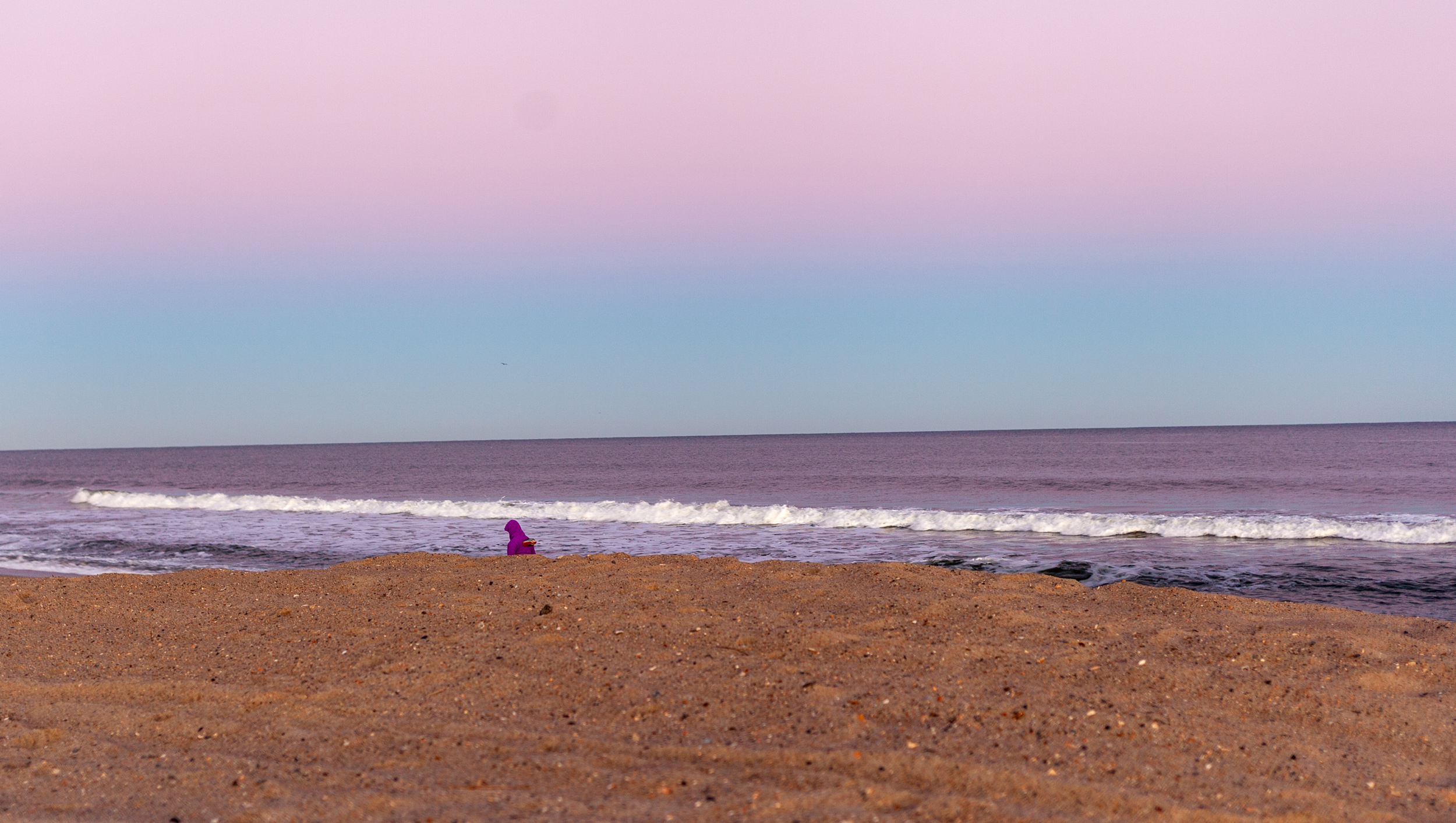
Ten minutes after sunset at Kure Beach, just north of Fort Fisher, the skies have turned from indigo to lilac. The sand is damp and cold. A half dozen hardy tourists take selfies against the backdrop of ocean waves breaking on the shore.
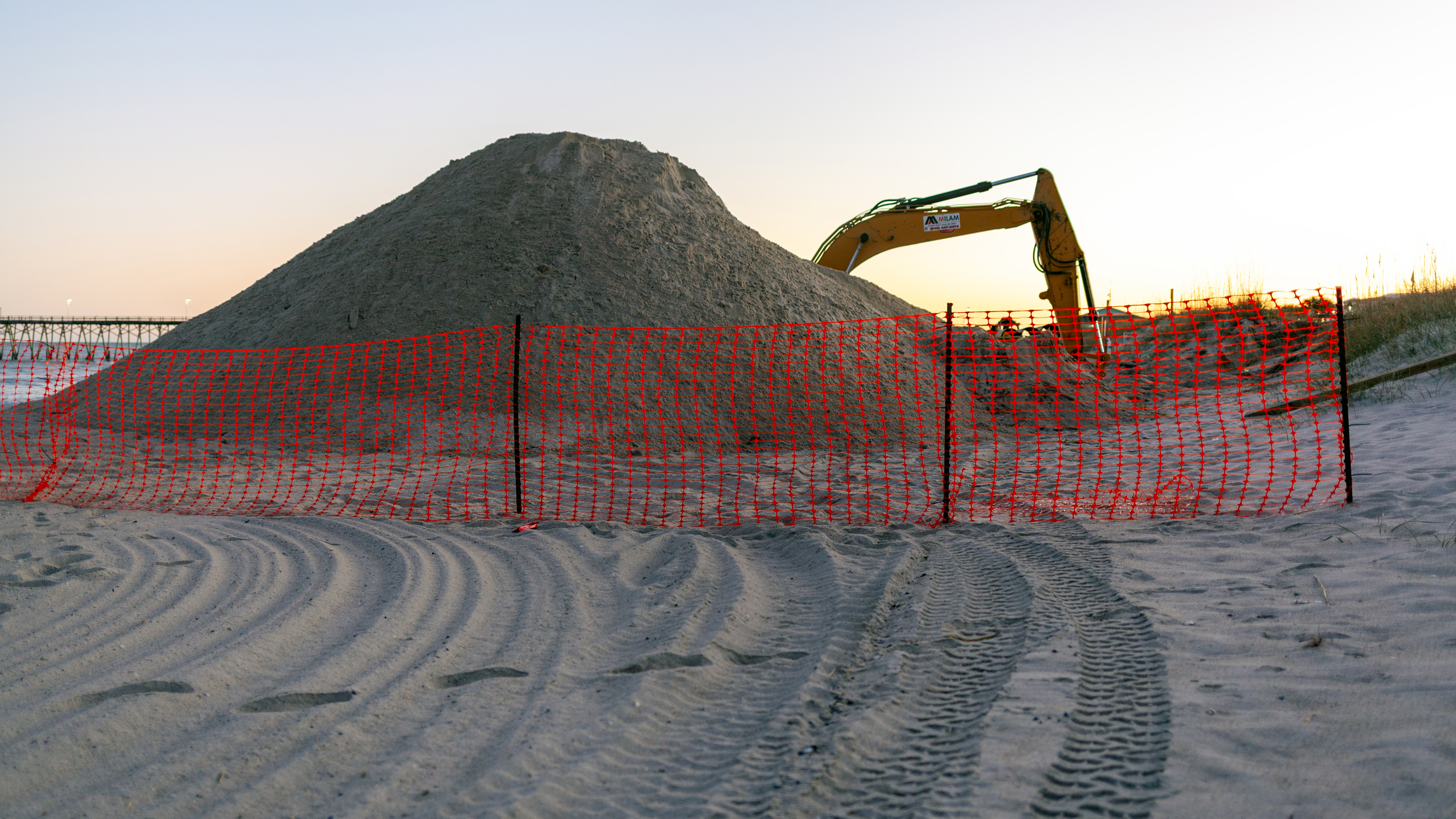
Those forces require beaches to be routinely smoothed and mended. Behind the orange snow fence, slumps a backhoe and a heap of sand.
About This Story
Perhaps you noticed: This story, like all the news we publish, is free to read. That’s because Inside Climate News is a 501c3 nonprofit organization. We do not charge a subscription fee, lock our news behind a paywall, or clutter our website with ads. We make our news on climate and the environment freely available to you and anyone who wants it.
That’s not all. We also share our news for free with scores of other media organizations around the country. Many of them can’t afford to do environmental journalism of their own. We’ve built bureaus from coast to coast to report local stories, collaborate with local newsrooms and co-publish articles so that this vital work is shared as widely as possible.
Two of us launched ICN in 2007. Six years later we earned a Pulitzer Prize for National Reporting, and now we run the oldest and largest dedicated climate newsroom in the nation. We tell the story in all its complexity. We hold polluters accountable. We expose environmental injustice. We debunk misinformation. We scrutinize solutions and inspire action.
Donations from readers like you fund every aspect of what we do. If you don’t already, will you support our ongoing work, our reporting on the biggest crisis facing our planet, and help us reach even more readers in more places?
Please take a moment to make a tax-deductible donation. Every one of them makes a difference.
Thank you,

Reporter, North Carolina
Lisa Sorg is the North Carolina reporter for Inside Climate News. A journalist for 30 years, Sorg covers energy, climate environment and agriculture, as well as the social justice impacts of pollution and corporate malfeasance.
She has won dozens of awards for her news, public service and investigative reporting. In 2022, she received the Stokes Award from the National Press Foundation for her two-part story about the environmental damage from a former missile plant on a Black and Latinx neighborhood in Burlington. Sorg was previously an environmental investigative reporter at NC Newsline, a nonprofit media outlet based in Raleigh. She has also worked at alt-weeklies, dailies and magazines. Originally from rural Indiana, she lives in Durham, N.C.
Great Job By Lisa Sorg & the Team @ Inside Climate News Source link for sharing this story.