

Sope Adelaja‘s relationship with light began in the densely built Lagos neighbourhoods of his childhood, where narrow alleys framed shifting rays and power cuts meant evenings spent under moonlight. Light, he learned young, doesn’t simply illuminate — it remembers and welcomes, weaving meaning into the mundane. Now, in Threads of Light, Threads of Us, the Nigerian-born photographer returns to light as both subject and methodology, travelling across Africa with only natural illumination to guide his lens. For this project, Adelaja worked primarily in Nigeria and Senegal, moving away from his established documentary practice to create something more introspective: a meditation on how light connects us to place, heritage and each other.
Light is a multifaceted creature in Adelaja’s work, at times crystallising striking beauty, at others wrapping around the human form like something protective and tender. In some photographs, light remains just out of reach, belonging entirely to its subjects in ways we can only witness but never possess. What threads these images together is light’s capacity to bring beings closer to themselves: cities become more familiar to their inhabitants, individuals inch nearer to their own essence, and communities discover the fabric that binds them.
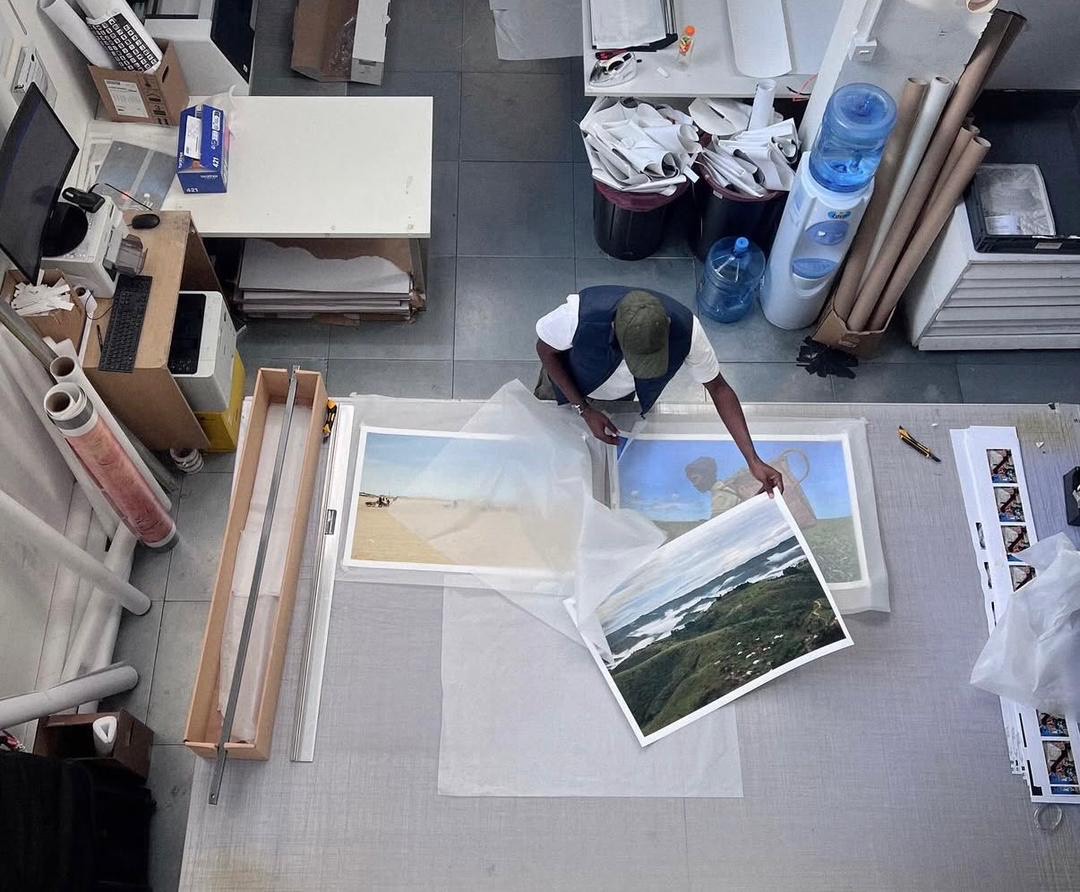
The choice to work exclusively with natural light seems at once practical and philosophical. Rejecting the controlled precision of studio lighting or flash, Adelaja grants the sun the authority to dictate mood and timing. This approach is rooted in patience. It relies on waiting for the right hour, the right angle, light naturally falling across skin, stone, water. The methodology is rooted in trust, both in his subjects and the environment; trust that authenticity emerges when you work with what’s already there rather than imposing artificial conditions. His travels confirm that light can make even distant places feel like home, that familiar warmth can emerge in unfamiliar landscapes, extending visual threads across borders.
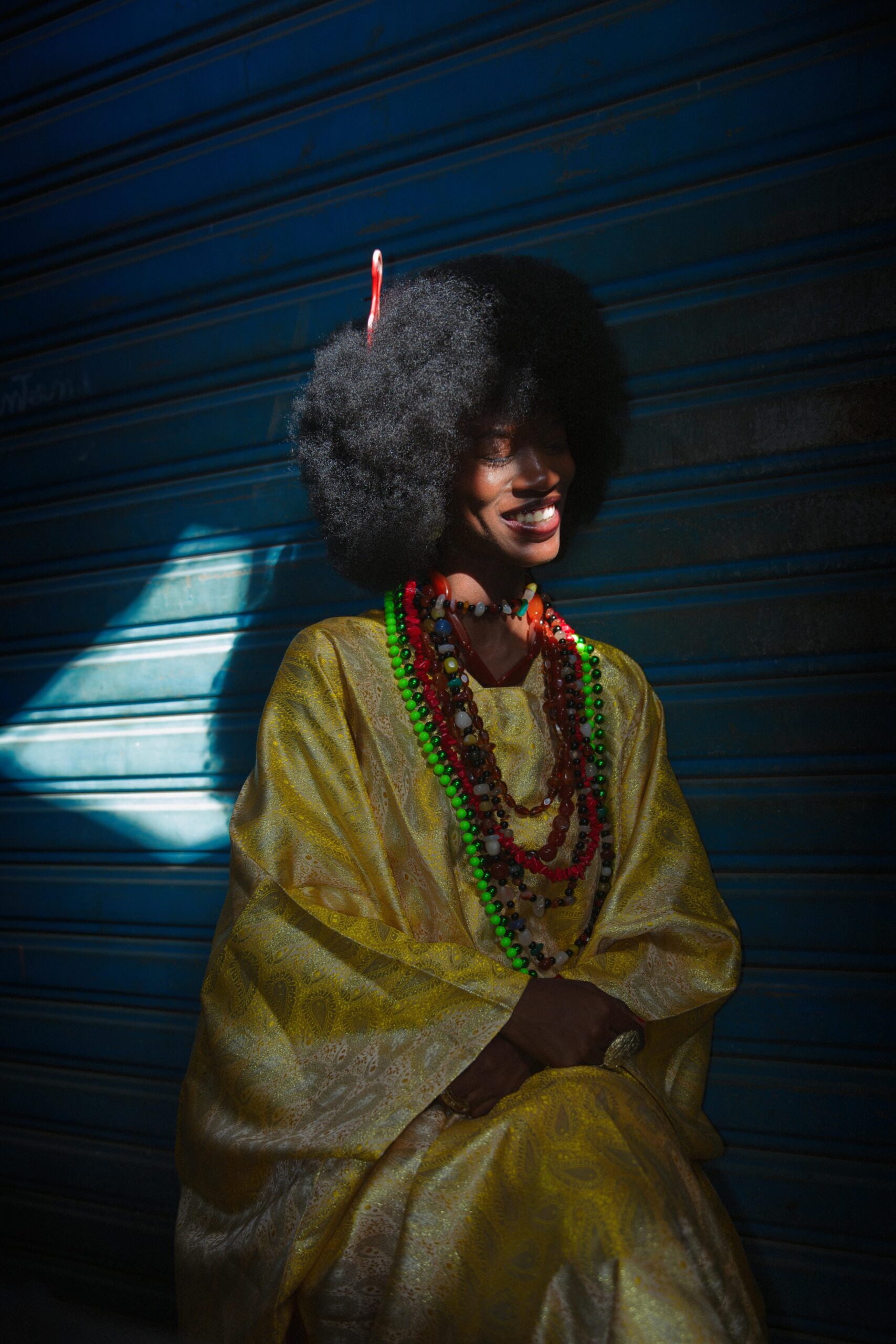
Adelaja’s portraits radiate intimacy, signalling relationships built beyond the lens. In one striking image, a sliver of light catches one side of a woman’s face: her skin, hair and smile illuminated, while the rest sits in shadow. The light and woman seem to animate each other: she glows more radiantly, the light seems warmer for touching her. It’s a celebration of her beauty, yes, but more significantly a capture of character and the fullness of being. The light reads as almost parental, gently cradling half of her face as if calling that smile into being.
That same thin ray illuminates just a fraction of her outfit: a few beads from the many vibrant necklaces draped over her shoulders, a section of her golden robe rich with texture and intricate detail. Most of it remains untouched by light. Still, the garment creates its own subtle gleam, inviting our eyes to rest in the darkness and linger there with equal attention. What is hidden holds as much gravity as what is revealed.
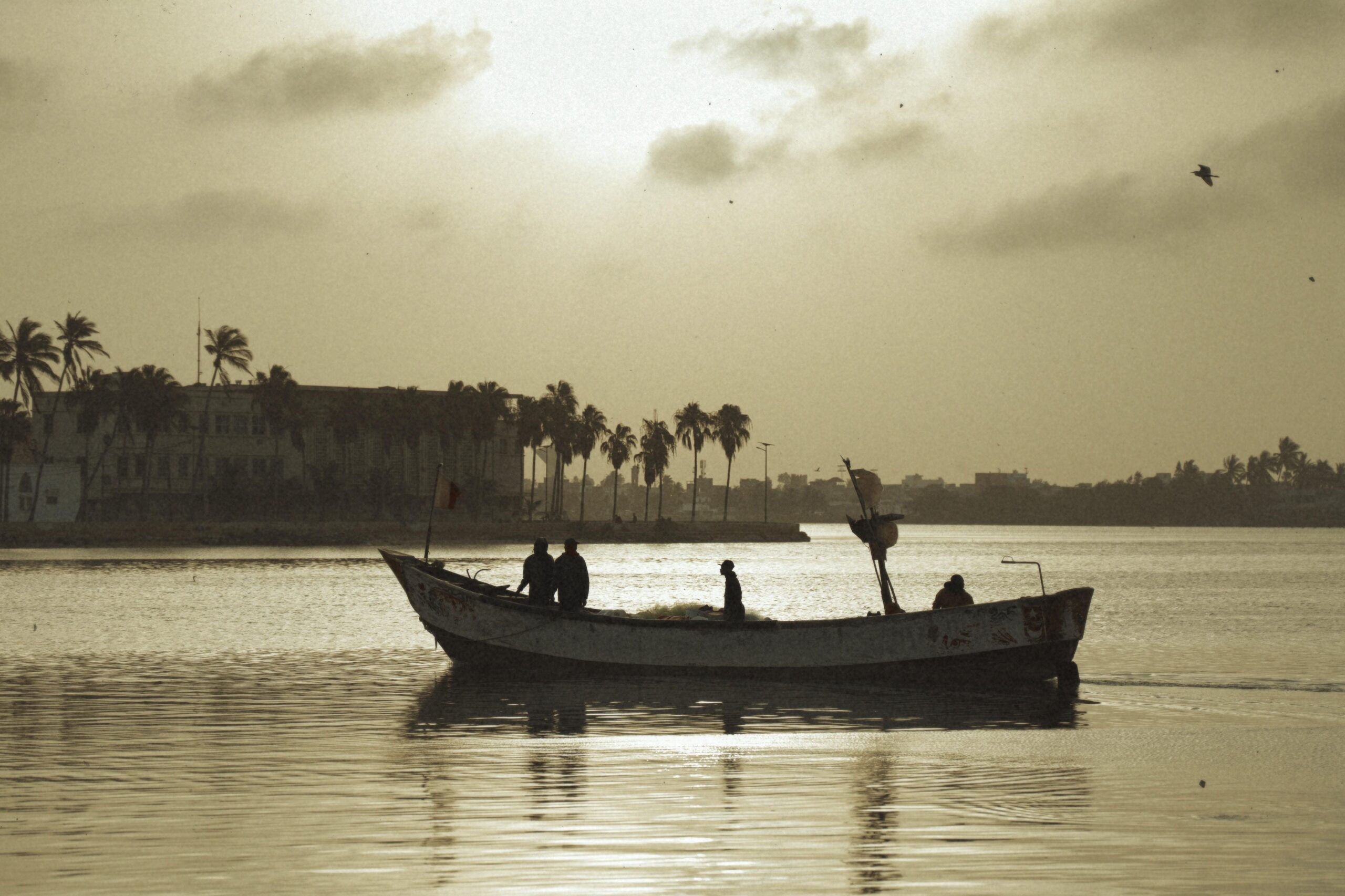
While close portraiture comes naturally to Adelaja, the artist also excels at capturing the expansive, traversing landscapes and cityscapes that speak to collective memory. Silhouetted against a misty waterscape, a fishing boat carries several figures across calm water, palm trees and waterfront buildings visible in the distance. The scene is drenched in sepia tones, as if light itself is remembering rather than illuminating. What is captured is daily labour and ancient practice coexisting — fishing methods passed down through generations continue against a backdrop of shifting histories. The image reflects continuity, portraying cultures rooted in the past yet fully alive in the present, where tradition and modernity are in quiet conversation.
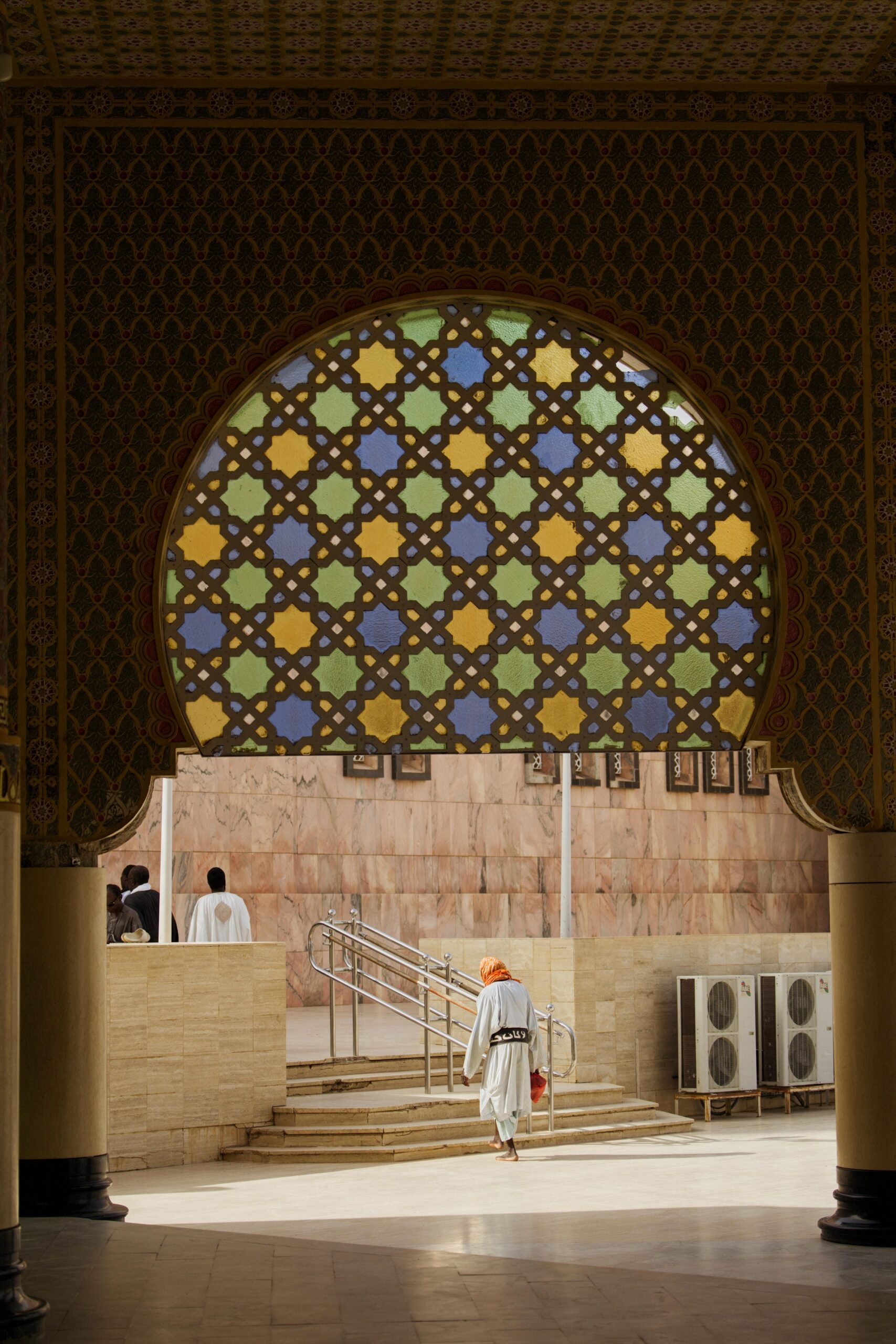
In another image, Adelaja photographs from within shadow, looking through a columned archway toward light and community beyond. The composition is architectural and deliberate. Ornate geometric patterns frame the upper portion of the entrance, leading our eyes toward the glowing centrepiece — a circular window of stained glass in gold, blue and pale green. The dynamic, repetitive pattern energises the eye, while the interplay of colours offers visual balance. Below, warm stone and a lone figure in white ascending stairs roots the celestial beauty in human scale. Two figures ahead of him traverse the same shadowed path, suggesting a shared journey from darkness toward light, from solitude toward gathering. The viewer is reminded that beauty and connection are amplified when approached from a place of quiet observation.
Elsewhere, light is something that does not belong to the viewer, nor even to the eye behind the camera, but rather entirely to the subject. A woman sits centred in the frame, hugging her chest, backlit by a sun we never directly see. Light drapes across her, illuminating her kufi’s golden threads, resting on her face, pooling in her lap. We see only a gentle suggestion of dimming golden rays and can only guess at how they adhere to her body. Her posture, back straight with legs extended toward the light source, suggests serene absorption in this private moment. The light is hers, and hers alone; we’re only permitted to witness its effects.
This withholding becomes an act of respect, a photographic gesture that honours the boundaries between observer and observed. Such restraint acknowledges that not everything ought to be revealed, that certain experiences transcend documentation. Some moments of connection with light — and with oneself — deserve to remain beautifully uninterrupted.
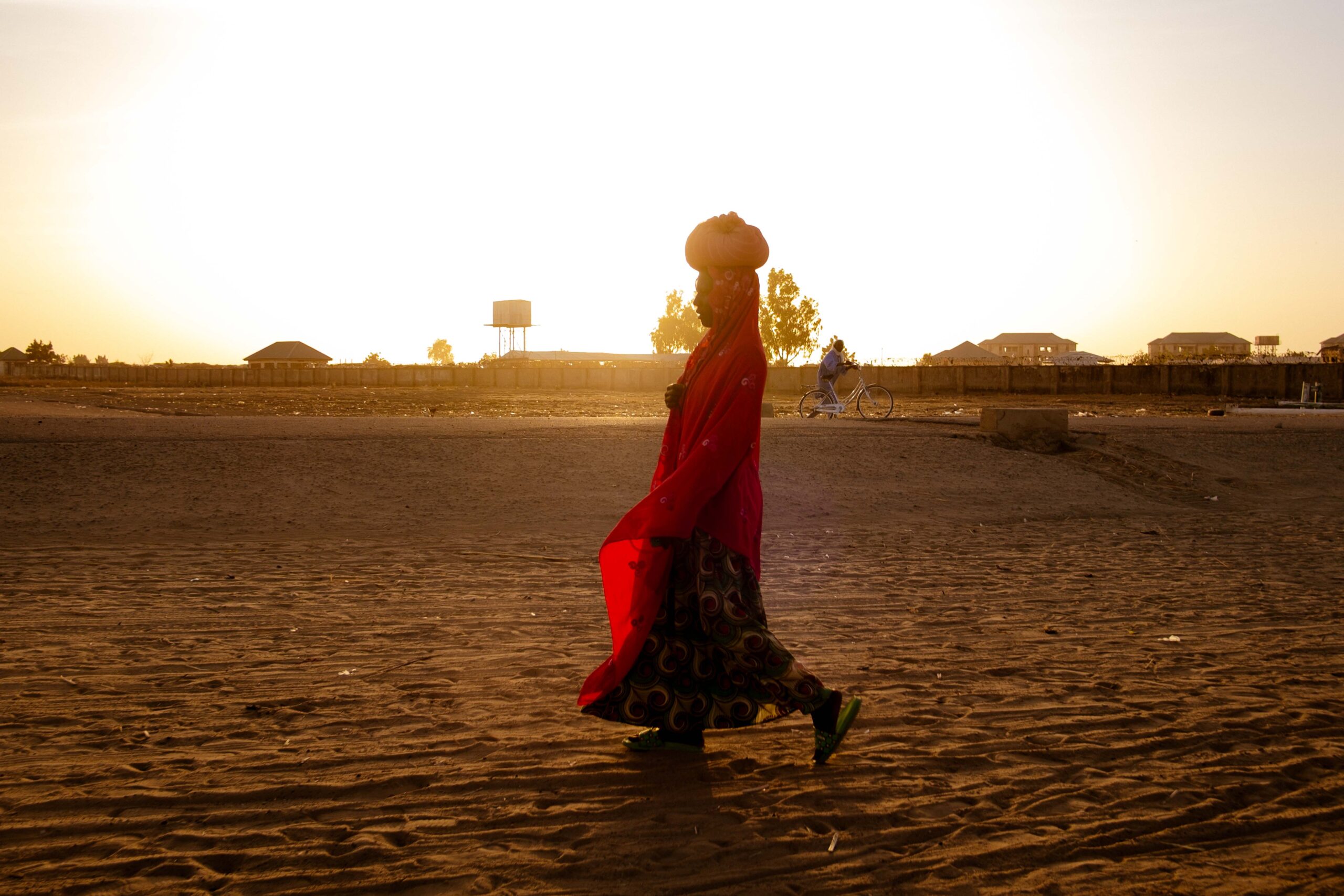
Threads of Light, Threads of Us represents both a homecoming and an expansion for Adelaja. This work will be open to viewers in both London (6-7 December) and Lagos (20-22 December), two cities that anchor his artistic life. Beyond his near-decade career documenting humanitarian crises and underrepresented communities — from northeastern Nigeria’s conflict zones to climate-affected regions — this time Adelaja turns his lens inward, asking questions about his own connection to African heritage and about the ways light can elucidate what is shared across borders. His commitment remains: to craft narratives that challenge dominant media frames and to spend time truly listening before translating stories into image. In doing so, he crafts an atmosphere so resonant that even when the light dims, an afterglow lingers.
Great Job Gerda Krivaite & the Team @ Our Culture Source link for sharing this story.