

Trump’s seizure and sale of Venezuelan oil reveal a dangerous bid to shore up dollar dominance amid global challenges to U.S. economic power.
It’s time to talk about women’s economics with attitude. It’s time to laugh at what is often absurd and call out what is dangerous. By focusing on voices not typically part of mainstream man-to-man economic discourse, Women Unscrewing Screwnomics will bring you news of hopeful and practical changes and celebrate an economy waged as life—not as war.
President Donald Trump’s second administration has been genuinely farcical. It’s also real and murderous. This contradiction is on full display at events like the president’s New Year’s Eve party at Mar-a-Lago—where a painting of Jesus, completed in just 10 minutes by a “Christian worship painter,” was auctioned off for $2.75 million, and where Kristi Noem, head of Homeland Security and ICE forces, danced to Vanilla Ice’s “Ice, Ice Baby.” (Because ICE is fun!)
You and I survived New Year’s Eve, and we tried to look forward to a better 2026. Then came the invasion of Venezuela—along with a giant serving of lies. Trump is not the president of that country, nor is the U.S. now running Venezuela, nor did he ever deserve the Nobel Peace Prize, nor did he ever talk to oil industry leaders before he invaded: not about fentanyl, not about Maduro, not about Venezuelan oil being his real mission.
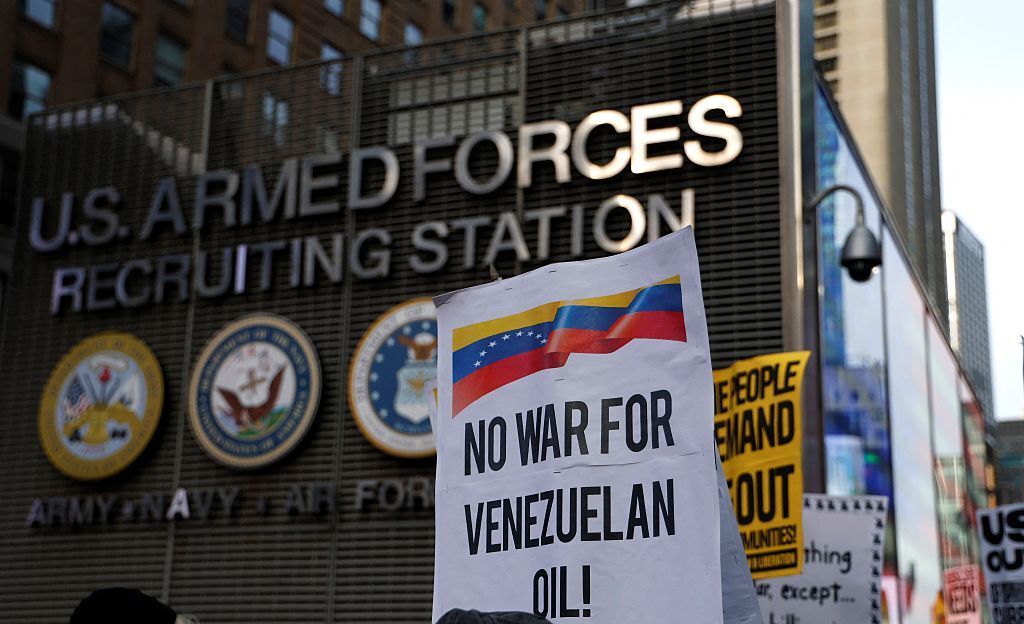
When reporters asked what the United States planned to do with all that Venezuelan oil from a seized tanker off the Venezuelan coast, Trump’s response was revealing in its casualness: “Well, we keep it, I guess.”
And who is “we” exactly? Post-invasion, he gathered U.S. oil executives—who, as it turns out, are not eager to put billions into “getting the oil,” inconveniently still in the ground. The infrastructure isn’t there. Exxon’s CEO told Trump the Venezuelan market is “uninvestable” in its current state. Several U.S. companies have litigation seeking compensation for losses caused by Venezuela’s nationalizing its oil in 1976.
And yet here “we” are: The U.S. military has captured Caracas, and “we’ve” already completed the first sales of captured and canned Venezuelan oil worth $500 million, with additional sales expected in coming weeks. U.S. Energy Secretary Chris Wright claimed prices were “about 30 percent higher,” but didn’t name who was buying, or what the price was.
These most current sales were made with American dollars.
Venezuela’s previous biggest customer had been China, who purchased their oil with the yuan. Not anymore. Only dollars can be used.
So while officials initially framed operations as law-enforcement or anti-drug efforts, the practical outcome appears to be a direct effort to commandeer and repurpose Venezuela’s most valuable resource—oil—for U.S. use or sale, with little transparency about buyers, legal justification or international oversight.
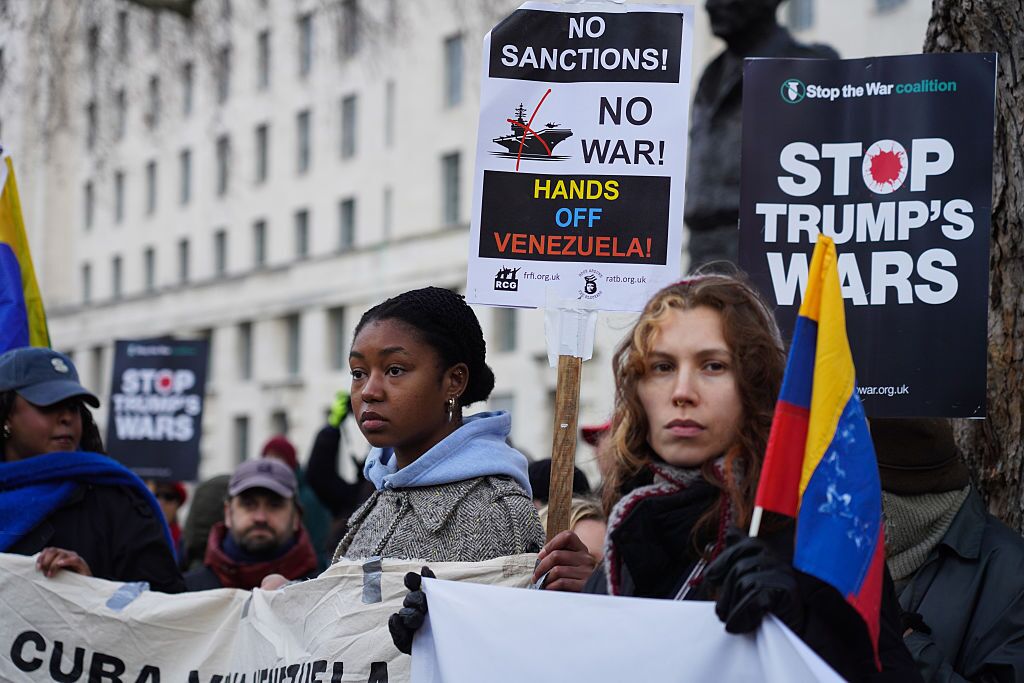
Since the 1973 OPEC deal, our petrodollar has dominated oil purchases, which ensured our dollars were in demand worldwide for oil and reserves. Dollar dominance was important for supporting our huge debt.
Does this really matter? Well, Iraq’s Saddam Hussein and Libya’s Muammar Gaddafi both had begun accepting other currencies for their oil sales—and you know what happened to them. Those Middle East invasions were not about “weapons of mass destruction,” but about protecting our petrodollar.
But now the BRICS—an alliance of Brazil, Russia, India, China and South Africa—are developing a new gold-backed digital trade currency: “the Unit.” It’s designed to reduce dollar reliance around the globe. Small countries now cheer for that too.
The U.S. economy is in big trouble if they succeed.
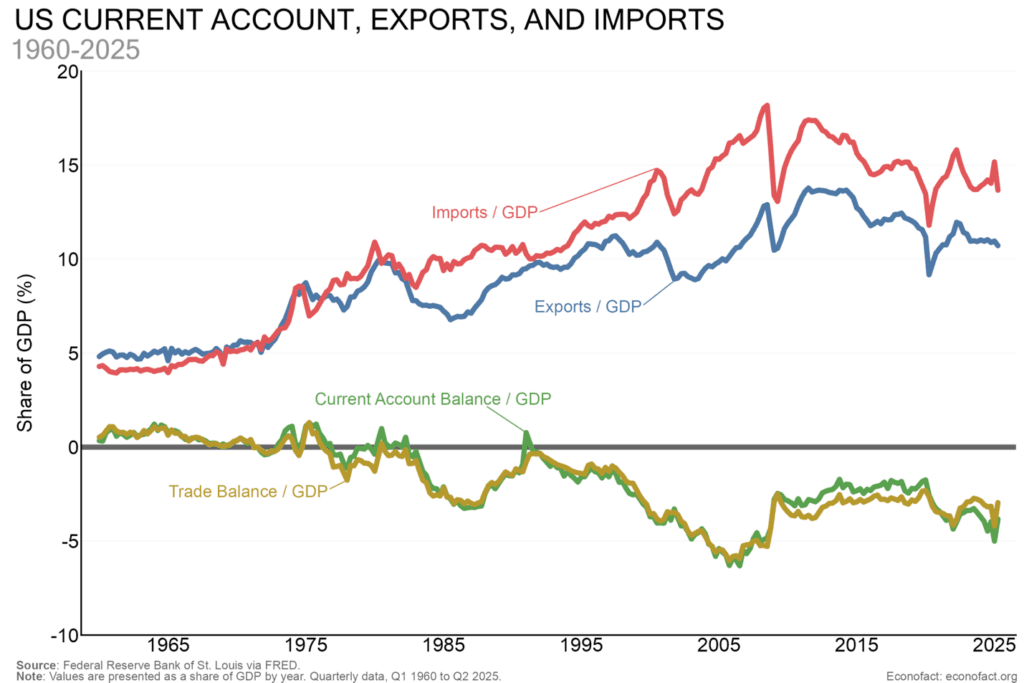
Trump needs to increase demand for dollars. The trade balance he’s sought and achieved in 2025 also increases our dollar amounts, boosting demand for U.S. currency, making it stronger. But also making exports more expensive, affecting demand long term. While more dollars are potentially good for the economy, it substantially depends on where you invest those dollars over the long term. It can indicate a low domestic demand (affordability) and can cause trade tensions, in addition to those caused by tariffs.
Last year’s increased balance isn’t the result of our shipping out new U.S. products we’ve manufactured. Jobs in that realm continue to dwindle.
The biggest reason for this new surge in 2025’s exports is gold. High gold prices that grew by more than 2,000 percent increased demand, adding billions to overall U.S. exports.
So, who’s buying it? Uh-oh. The BRICS’ nations bought massive amounts of gold from the international market, as part of their de-dollarization “Unit” goal.
Supposedly the “U.S. government” is now “in charge” of the $500 million from Venezuela’s canned oil sales, newly deposited in a bank in Qatar, about 9,000 miles away. Sen. Elizabeth Warren (D-Mass.) says putting money “offshore” is the sort of thing dictators like to do. She’s among those Democrats who’ve written a letter to major American banks, asking if they were ever approached about this deposit.
Meanwhile Trump threatens to end the independence of the Federal Reserve (translate: our biggest banks). He sicced the FBI on Jerome Powell, its chief, and one of its governors, Lisa Cook, the first Black woman to sit on the Fed board. Never really “independent” of politics, the Fed and Powell’s advisors do know something about monetary policy and the dangers of inflation when borrowed dollars come cheap.
Some days I think Trump is too stupid and distracted to think about dollar valuations. But I do believe China—which is now making new trade deals with Canada and talking about international cooperation—knows a great deal about outlasting its enemies.
Trump has plans for storing 80,000 immigrants in seven warehouses we’d pay for with our weakened dollars, having already lost 10 percent on the Dollar Index in 2025. Yet dollars may be the least of our problems, in the light of all our people’s grief and anger over ICE murders. Our media overflows with video clips of masked bullies and MAGA-induced chaos.
All of this prompted The New York Times to ask Trump if there were anything that could stop him. “Yeah, my own morality,” he answered. This is the guy who decades ago bragged he could shoot someone on Fifth Avenue and get away with it. Maybe The Times should have asked him back then: Why, oh why, would you want to?
Great Job Rickey Gard Diamond & the Team @ Ms. Magazine Source link for sharing this story.