
Richard Reeves and Michelle Harrison discuss shifting attitudes toward leadership, young men and the future of gender equality.
At this year’s Reykjavík Global Forum in November, where 500 global leaders from public and private sectors convened in Iceland, the mood around gender equality was both urgent and reflective. Progress that once felt inevitable now looks fragile. The Reykjavík Index for Leadership reveals concerning declines in how women are perceived for leadership roles across major economies, while conversations about young men and boys have become more heated, polarized and emotionally charged.
While at the forum, I spoke with Richard Reeves, an author and researcher focused on boys and men, and Michelle Harrison, the founding force behind the Reykjavík Index for Leadership, about what’s really going on—and what comes next. Their insights help clarify the current backlash, the urgency of centering young people, and why gender equality must remain a shared project—one that includes all of us.
Katie Usalis: We’re seeing backlash across democracies and worrying data on attitudes toward women’s leadership. What are you seeing in the Reykjavík Index this year?
Michelle Harrison: When we first started tracking the Reykjavík Index for Leadership—which measures how suitable women and men are perceived to be for leadership positions—we saw two fairly stable groups within the G7.
In the higher performing group were the U.K., Canada, France and the U.S. The lower performers were Japan, Italy and Germany. That basic structure held for a while. But now, the picture is shifting—and not in a good way.
Nothing is getting better across the G7, with two exceptions: Italy and Japan have actually improved and moved up in the rankings. That’s important good news. But elsewhere:
- The U.S. has fallen from the top three to sixth, and the drop is significant.
- The U.K. only remains near the top because it started so high; it has also seen a major decline.
- France and Canada stay near the top, but their scores are also falling.
- Germany, which was already near the bottom, has now dropped to the bottom and deteriorated further.
Overall, we’re looking at a significant regression.
What’s truly new is what we see among young people. Across the G7, we’re witnessing something we haven’t seen before in social history since we started tracking: young people pushing back culturally against the progressive values of their parents. That backlash is strongest among young men—but we see it among young women too.
And it’s polarized. There are very progressive young people who believe in equality wholeheartedly, and there are young people moving in the opposite direction. That split, and how fast it is widening, is deeply alarming.
Usalis: When you look at the backlash against progressive values and a growing generational split—especially from young men—what do you think is driving it?
Harrison: I think we have to see it in context. There’s a wider story here about economic stagnation, lack of growth and lack of opportunity.
The post-war generations—especially the Boomers—experienced rising living standards as almost a given. That’s starting to look like the exception instead of the rule. For many young people now, the path ahead is unclear. What does it mean to be young when you can’t see a route to security, let alone prosperity? That’s a huge part of this.
We also see strong links with loneliness, which we used to associate with older people. Now it’s increasingly a young person’s problem. When you combine economic insecurity, loneliness, and rapid technological and cultural change, you create a kind of vulnerability. And in that space, other voices stepped in—especially online.
Technology has enabled entire alternative narratives about gender and power to flourish. Many of us were slow to see just how powerful those messages were for young people. So we have to understand this backlash not just as ideological, but as a symptom of deeper distress.
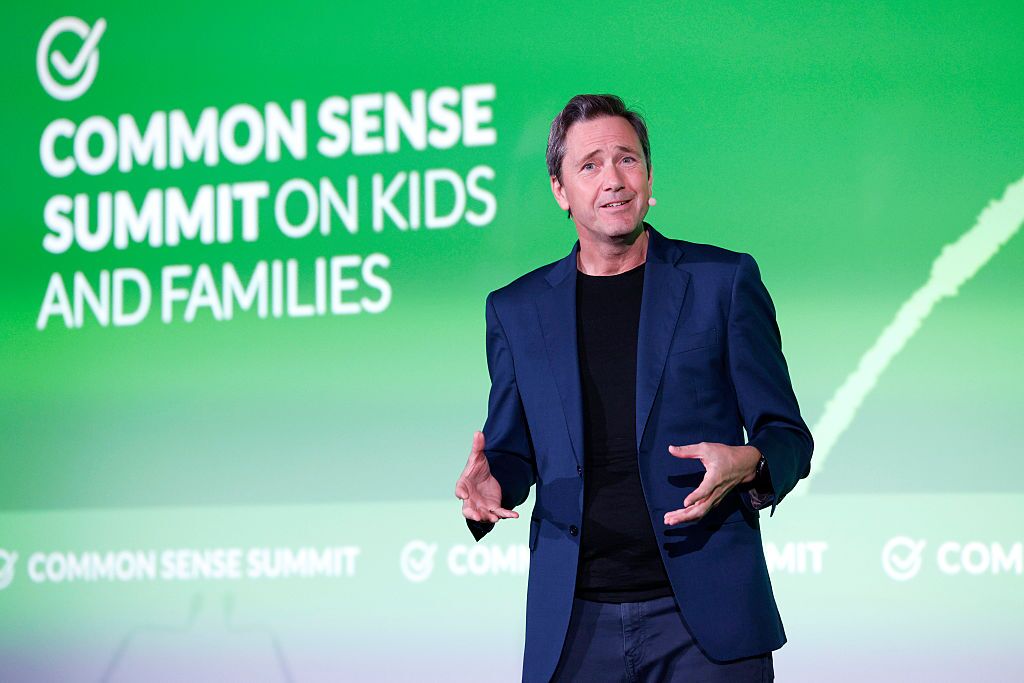
Usalis: Richard, when we talk about reaching young men and boys, especially in the context of women’s representation, a lot of women feel wary—like, “Really? We’re talking about men again?” How do you think we should talk about women’s representation with men and boys?
Richard Reeves: I’d start by saying: Make it personal, not abstract.
If you ask young men in the abstract about “gender representation in leadership” or “women on AI boards,” you’re likely to get confusion, defensiveness or just a sense of distance. It feels very elite, very remote. Most people aren’t thinking about who sits on the global AI governance council.
But if you ask:
- “Do you think your sister should have the same chance to be the boss as you?”
- “Do you think your mom should get passed over for promotion at the DMV just because she’s a woman?”
- “Should your local school board or council be all men?”
Almost no young men will say, “Yes, I think my sister should have worse opportunities.” Framed at the level of their mom, their sister, their local school, it’s very difficult to be against fairness. That’s the lived reality.
The second piece is: assume they’re on-side, instead of treating them as the enemy to be converted. If we speak as if every man is a latent misogynist, they will hear that. Many men actually do care about equality—and many are struggling themselves in other ways.
This leads to the third point, which I know is controversial: if we say we care about gender representation, we have to show that we care when it goes the other way too.
Do we care that:
- The share of male teachers has dropped by about 10 percentage points?
- The share of men in mental health professions has roughly halved over the last couple of decades?
- Some professions and institutions have become almost entirely female?
If we only use the phrase “gender representation” when we’re talking about women’s underrepresentation, many men will reasonably conclude that we actually just mean women’s advancement, full stop. That doesn’t make them anti-woman—but it makes them feel that this conversation is not about them, or even allowed to include them.
Usalis: That can feel uncomfortable for some activists who’ve spent their lives fighting for women and girls. Why is it so important, in your view, to recognize representation “both ways”?
Reeves: Because either we believe balance matters, or we don’t.
Take a national youth-serving organization that historically worked with boys and young men. Its executive team is now six women—no men at all, and all white women at that. When I publicly called that out, they were furious with me. And I had this moment of doubt—should I have said anything?
But if that leadership team were all men, we would absolutely call that out. We’d say: How can an organization historically serving boys and young men now claim to speak for all youth with this leadership profile?
If representation matters when women are missing, it has to matter when men are missing too. Otherwise we’re not arguing for a principle—we’re arguing for a side.
This isn’t because women make “bad” decisions without men or vice versa. It’s because, on average, men and women bring different experiences and emphases. That’s the whole argument for balance.
A simple example:
- Women legislators are more likely to foreground issues like street lighting and childcare, because their embodied experience of walking home at night or trying to juggle work and caregiving is different.
- In an all-female leadership team of a youth mental health organization, you might miss some of the subtle ways that young men externalize distress as “bad behavior,” and end up punishing symptoms rather than recognizing a gendered pattern of mental health.
None of that is a moral failing. It just reflects lived experience. So if we say these differences are meaningful—and that’s the core of the case for women’s representation—then men’s experience matters too where they’re underrepresented.
Usalis: Michelle, given the data you’re seeing, if you could ask our readers to take just one step, what would it be?
Harrison: I would ask readers to focus on the conditions our young people are living in—not just their attitudes.
When we see young people pulling away from equality, I think we should read that as a signal of distress before we read it as an ideological statement. That means:
- Taking seriously the economic reality: many young people see no obvious path to a secure, dignified adulthood.
- Recognizing the emotional reality: loneliness is rising, especially among the young.
- Understanding the informational reality: many of the messages shaping their view of gender and power are coming from corners of the internet we’ve barely engaged with.
So one step is: Become more intentional about how we nurture boys and young men, alongside girls and young women. Make sure they feel genuinely seen, cared for and included in the story of progress—not cast as the obstacle to it.
That doesn’t mean diverting resources away from women; it means designing a future in which young men also see themselves as having a stake in equality.
Usalis: If you had one closing message for women readers who care deeply about equality, what would it be?
Reeves: If you are a woman who is fighting every day for women’s representation and equality—and at the same time you are looking at the boys and men in your life and worrying about them—you are not confused. You are right.
You are allowed to care about both. In fact, we need you to care about both.
My ask is: Don’t let anger close the door on empathy. Keep your anger at injustice. But also keep your compassion and your willingness to think structurally about the challenges facing boys and men.
We will not get to a healthy, equal society by having men and women in a permanent emotional standoff. We have to emotionally de-escalate, even when it feels hardest, and find ways to make progress together.
Harrison: And I would add: don’t lose sight of what’s possible. We’ve already changed the world once. We can do it again—this time with a clearer understanding that our daughters and our sons need to see themselves in the story of equality.
Great Job Katie Usalis & the Team @ Ms. Magazine Source link for sharing this story.