
Home News Page 100

DeBriefed 9 January 2026: US to exit global climate treaty; Venezuelan oil ‘uncertainty’; ‘Hardest truth’ for Africa’s energy transition – Carbon Brief

DeBriefed 9 January 2026: US to exit global climate treaty; Venezuelan oil ‘uncertainty’; ‘Hardest truth’ for Africa’s energy transition – Carbon Brief

Welcome to Carbon Brief’s DeBriefed. 
An essential guide to the week’s key developments relating to climate change.

US to pull out from UNFCC, IPCC

CLIMATE RETREAT: The Trump administration announced its intention to withdraw the US from the world’s climate treaty, CNN reported. The move to leave the UN Framework Convention on Climate Change (UNFCCC), in addition to 65 other international organisations, was announced via a White House memorandum that states these bodies “no longer serve American interests”, the outlet added. The New York Times explained that the UNFCCC “counts all of the other nations of the world as members” and described the move as cementing “US isolation from the rest of the world when it comes to fighting climate change”.

MAJOR IMPACT: The Associated Press listed all the organisations that the US is exiting, including other climate-related bodies such as the Intergovernmental Panel on Climate Change (IPCC) and the International Renewable Energy Agency (IRENA). The exit also means the withdrawal of US funding from these bodies, noted the Washington Post. Bloomberg said these climate actions are likely to “significantly limit the global influence of those entities”. Carbon Brief has just published an in-depth Q&A on what Trump’s move means for global climate action. 

Oil prices fall after Venezuela operation

UNCERTAIN GLUT: Global oil prices fell slightly this week “after the US operation to seize Venezuelan president Nicolás Maduro created uncertainty over the future of the world’s largest crude reserves”, reported the Financial Times. The South American country produces less than 1% of global oil output, but it holds about 17% of the world’s proven crude reserves, giving it the potential to significantly increase global supply, the publication added.

TRUMP DEMANDS: Meanwhile, Trump said Venezuela “will be turning over” 30-50m barrels of oil to the US, which will be worth around $2.8bn (£2.1bn), reported BBC News. The broadcaster added that Trump claims this oil will be sold at market price and used to “benefit the people of Venezuela and the US”. The announcement “came with few details”, but “marked a significant step up for the US government as it seeks to extend its economic influence in Venezuela and beyond”, said Bloomberg.

  • MONSOON RAIN: At least 16 people have been killed in flash floods “triggered by torrential rain” in Indonesia, reported the Associated Press.
  • BUSHFIRES: Much of Australia is engulfed in an extreme heatwave, said the Guardian. In Victoria, three people are missing amid “out of control” bushfires, reported Reuters.
  • TAXING EMISSIONS: The EU’s landmark carbon border levy, known as “CBAM”, came into force on 1 January, despite “fierce opposition” from trading partners and European industry, according to the Financial Times.
  • GREEN CONSUMPTION: China’s Ministry of Commerce and eight other government departments released an action plan to accelerate the country’s “green transition of consumption and support high-quality development”, reported Xinhua.
  • ACTIVIST ARRESTED: Prominent Indian climate activist Harjeet Singh was arrested following a raid on his home, reported Newslaundry. Federal forces have accused Singh of “misusing foreign funds to influence government policies”, a suggestion that Singh rejected as “baseless, biased and misleading”, said the outlet. 
  • YOUR FEEDBACK: Please let us know what you thought of Carbon Brief’s coverage last year by completing our annual reader survey. Ten respondents will be chosen at random to receive a CB laptop sticker.

The share of the UK’s electricity supplied by renewables in 2025, more than any other source, according to Carbon Brief analysis.


  • Deforestation due to the mining of “energy transition minerals” is a “major, but overlooked source of emissions in global energy transition” | Nature Climate Change
  • Up to three million people living in the Sudd wetland region of South Sudan are currently at risk of being exposed to flooding | Journal of Flood Risk Management
  • In China, the emissions intensity of goods purchased online has dropped by one-third since 2000, while the emissions intensity of goods purchased in stores has tripled over that time | One Earth

(For more, see Carbon Brief’s in-depth daily summaries of the top climate news stories on Monday, Tuesday, Wednesday, Thursday and Friday.)

Captured

The US, which has announced plans to withdraw from the UNFCCC, is more responsible for climate change than any other country or group in history, according to Carbon Brief analysis. The chart above shows the cumulative historical emissions of countries since the advent of the industrial era in 1850.

How to think about Africa’s just energy transition
DeBriefed 9 January 2026: US to exit global climate treaty; Venezuelan oil ‘uncertainty’; ‘Hardest truth’ for Africa’s energy transition – Carbon Brief

African nations are striving to boost their energy security, while also addressing climate change concerns such as flood risks and extreme heat.

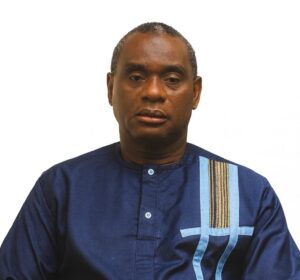
This week, Carbon Brief speaks to the deputy Africa director of the Natural Resource Governance Institute, Ibrahima Aidara, on what a just energy transition means for the continent.

Carbon Brief: When African leaders talk about a “just energy transition”, what are they getting right? And what are they still avoiding?

Ibrahima Aidara: African leaders are right to insist that development and climate action must go together. Unlike high-income countries, Africa’s emissions are extremely low – less than 4% of global CO2 emissions – despite housing nearly 18% of the world’s population. Leaders are rightly emphasising universal energy access, industrialisation and job creation as non-negotiable elements of a just transition.

They are also correct to push back against a narrow narrative that treats Africa only as a supplier of raw materials for the global green economy. Initiatives such as the African Union’s Green Minerals Strategy show a growing recognition that value addition, regional integration and industrial policy must sit at the heart of the transition.

However, there are still important blind spots. First, the distributional impacts within countries are often avoided. Communities living near mines, power infrastructure or fossil-fuel assets frequently bear environmental and social costs without sharing in the benefits. For example, cobalt-producing communities in the Democratic Republic of the Congo, or lithium-affected communities in Zimbabwe and Ghana, still face displacement, inadequate compensation, pollution and weak consultation.

Second, governance gaps are sometimes downplayed. A just transition requires strong institutions (policies and regulatory), transparency and accountability. Without these, climate finance, mineral booms or energy investments risk reinforcing corruption and inequality.

Finally, leaders often avoid addressing the issue of who pays for the transition. Domestic budgets are already stretched, yet international climate finance – especially for adaptation, energy access and mineral governance – remains far below commitments. Justice cannot be achieved if African countries are asked to self-finance a global public good.

CB: Do African countries still have a legitimate case for developing new oil and gas projects, or has the energy transition fundamentally changed what ‘development’ looks like?

IA: The energy transition has fundamentally changed what development looks like and, with it, how African countries should approach oil and gas. On the one hand, more than 600 million Africans lack access to electricity and clean cooking remains out of reach for nearly one billion people. In countries such as Mozambique, Nigeria, Senegal and Tanzania, gas has been framed to expand power generation, reduce reliance on biomass and support industrial growth. For some contexts, limited and well-governed gas development can play a transitional role, particularly for domestic use.

On the other hand, the energy transition has dramatically altered the risks. Global demand uncertainty means new oil and gas projects risk becoming stranded assets. Financing is shrinking, with many development banks and private lenders exiting fossil fuels. Also, opportunity costs are rising; every dollar locked into long-lived fossil infrastructure is a dollar not invested in renewables, grids, storage or clean industry.

Crucially, development today is no longer just about exporting fuels. It is about building resilient, diversified economies. Countries such as Morocco and Kenya show that renewable energy, green industry and regional power trade can support growth without deepening fossil dependence.

So, the question is no longer whether African countries can develop new oil and gas projects, but whether doing so supports long-term development, domestic energy access and fiscal stability in a transitioning world – or whether it risks locking countries into an extractive model that benefits few and exposes countries to future shocks.

CB: What is the hardest truth about Africa’s energy transition that policymakers and international partners are still unwilling to confront?

IA: For me, the hardest truth is this: Africa cannot deliver a just energy transition on unfair global terms. Despite all the rhetoric, global rules still limit Africa’s policy space. Trade and investment agreements restrict local content, industrial policy and value-addition strategies. Climate finance remains fragmented and insufficient. And mineral supply chains are governed largely by consumer-country priorities, not producer-country development needs.

Another uncomfortable truth is that not every “green” investment is automatically just. Without strong safeguards, renewable energy projects and mineral extraction can repeat the same harms as fossil fuels: displacement, exclusion and environmental damage.

Finally, there is a reluctance to admit that speed alone is not success. A rushed transition that ignores governance, equity and institutions will fail politically and socially, and, ultimately, undermine climate goals.

If Africa’s transition is to succeed, international partners must accept African leadership, African priorities and African definitions of development, even when that challenges existing power dynamics in global energy and mineral markets.

CRISIS INFLAMED: In the Brazilian newspaper Folha de São Paulo, columnist Marcelo Leite looked into the climate impact of extracting more oil from Venezuela.

BEYOND TALK: Two Harvard scholars argued in Climate Home News for COP presidencies to focus less on climate policy and more on global politics.

EU LEVIES: A video explainer from the Hindu unpacked what the EU’s carbon border tax means for India and global trade.

Pick of the jobs

DeBriefed is edited by Daisy Dunne. Please send any tips or feedback to [email protected].

This is an online version of Carbon Brief’s weekly DeBriefed email newsletter. Subscribe for free here.

Great Job Solomon Elusoji & the Team @ Carbon Brief Source link for sharing this story.

Head Start can still use words like ‘race’ and ‘women’ for federal funding, judge says

Head Start can still use words like ‘race’ and ‘women’ for federal funding, judge says

A federal judge has blocked efforts by the Trump administration to curb diversity, equity and inclusion (DEI) initiatives within Head Start early child care programs, which included attempts to revoke funding from providers who use words like “women” and “race” on grant applications. 

Wednesday’s temporary injunction, which also prevented mass layoffs for the program, is the latest development in a legal battle between Head Start programs and the Trump administration, as the president continues his attempts to erase DEI and accessibility measures across federally supported programs. 

In December, Head Start providers and two advocacy groups said in a court filing that the Trump administration had threatened to withhold funding for Head Start programs that use certain language — including words like “race,” “bias,” and “equitable” — on grant applications.

Plaintiffs, including Head Start programs in Pennsylvania, Washington, Wisconsin and Illinois, argue that the removal of DEI initiatives and inclusive language is contradictory to Head Start’s mission.

The ban on language “that they have been trying to implement really is contrary to what the Head Start providers are required to do under federal law, under the Head Start Act,” said Jennesa Calvo-Friedman, senior staff attorney at the ACLU Women’s Rights Project, which filed the lawsuit. 

In May, HHS Secretary Robert F. Kennedy Jr. outlined his plans to preserve Head Start programs in a letter to congressional lawmakers, assuring that they would receive funding as long as they remained “consistent with Administration priorities” — as the administration was cracking down on DEI measures. This promise came after a leaked HHS budget draft reportedly suggested eliminating program funding altogether amid extreme health cuts

The administration’s attempts to restrict Head Start have faced previous setbacks in the courts. In September, a judge ruled that HHS could not exclude families from receiving Head Start services on account of their immigration status. 

For more than 60 years, Head Start has served economically disadvantaged families, disproportionately  Black or Latinx. Trump’s proposed conditions for funding will affect program directors’ ability to adequately serve these communities, particularly people with disabilities.

Calvo-Friedman shared that one Head Start Director in Washington was forced to remove from a grant proposal a plan to provide educators specialized training in teaching children diagnosed with autism. Children with autism account for at least 10 percent of the kids the director serves.

“The director of the program was like, ‘I need my teachers to have training in this so that these kids can be able to get equal access to education’ and they put that in their grant application and were told that they had to take it out,” Calvo-Friedman said. “And so I think it creates this absurd situation where it’s like, how do you serve kids with disabilities if you can’t use the word disability?”

The administration’s efforts could significantly undermine the program, which already faced a major setback in November during the federal government funding freeze when it was forced to close sites in 17 states and Puerto Rico.

“It would be absolutely devastating on children, on families and on the economics in entire communities,” Calvo-Friedman said. “For children, it would mean immediate loss of early childhood education, which has been shown to be critical in being ready for school and then having opportunities to succeed for the rest of their life in the future because they were able to be prepared to succeed in school. So it really would be cutting off opportunities to children.”

The program can also provide critical support for parents, who especially in rural areas may lack other options for child care, Calvo-Friedman said. 

“What they’re trying to do by making it impossible for Head Start programs to do what they’re legally required to do is one, make it more difficult to run the program,” Calvo-Friedman said, “but two, erase entire communities from those that are being served.”

Great Job Lauren Nutall & the Team @ The 19th Source link for sharing this story.

Celebrities With Insomnia: 11 Stars Who Live With the Sleep Condition

Celebrities With Insomnia: 11 Stars Who Live With the Sleep Condition

In an article he wrote for the Guardian, the author Chuck Palahniuk shared his theory about insomnia being a sort of muse for creative people like himself. Palahniuk, well-known for his novel Fight Club, whose protagonist who suffers from insomnia because of job stress and frequent travel for work, suggests that writers are inspired by things that are related to shock or suffering. “Fasting works. Rejection, too. Insomnia works wonderfully,” Palahniuk wrote.

According to Palahniuk, Fight Club was inspired by his own insomnia. “In 1993, I found myself stranded in Reno, Nevada, with no money and nowhere to stay,” Palahniuk wrote. “At night I wandered sleepless through the empty all-night casinos and restaurants, exhausted, delirious, and inventing a story about a man who thought he had insomnia but was actually living a double life: whenever he thought he was asleep, his alter ego would venture forth to have all the adventures he, himself, could never consciously dare.”

Palahniuk recognized, though, that the insomnia lifestyle is not a healthy one. “To be honest, Ambien helps me sleep more nights than I care to admit — although I’m uncertain about the quality of that sleep,” he wrote.

Great Job Katherine Lee & the Team @ google-discover Source link for sharing this story.

I met a lot of weird robots at CES — here are the most memorable | TechCrunch

I met a lot of weird robots at CES — here are the most memorable | TechCrunch

CES has always been a robot extravaganza, and this year’s event saw the announcement of a number of important robotics developments, including the new, production-ready debut of Atlas, the humanoid from Boston Dynamics. Then there were all the robots on the showroom floor, where bots often serve as good marketing for the companies involved. If they don’t always give a totally accurate representation of where commercial deployment is at the moment, they do give visitors a peek at where it might be headed. And, of course, they sure are fun to look at. I spent a decent amount of time perusing the bots on display this week. Here are some of the most memorable ones I encountered.

The ping pong player

The movie Marty Supreme just came out a month ago, so I guess it’s only appropriate that there was a ping-pong-playing robot at this year’s convention. The Chinese robotics firm Sharpa had rigged up a full-bodied bot to play some competitive table tennis against one of the firm’s staff. When I stopped by the Sharpa booth, the robot was losing to its human competitor, 5-9, and I would not characterize the game that was occurring as particularly fast-paced. Still, the spectacle of seeing a robot play ping pong was impressive enough on its own, and I’m sure I have known some humans whose paddle skills were basically equivalent to (or slightly worse than) the bot’s. A Sharpa rep told me that the company’s main product is its robotic hand, and that the full-bodied bot had been debuted at CES to demonstrate the hand’s dexterity.

The boxer

One of the exhibits that drew the largest crowds involved robots from the Chinese company EngineAI, which is developing humanoid robots. The bots, dubbed the T800 (a nod to the Terminator franchise), were in a mock boxing ring and were styled as fighting machines. That said, I never saw any of the bots actually hit each other. Instead, they would sort of shadowbox near each other, never actually making contact. They were also a little unpredictable. One kept walking out of the ring and into the audience, which naturally got a rise out of onlookers. At another point, one of the bots tripped over its own feet and then face-planted on the floor, where it lay for awhile before it decided to get up again. So, not exactly a Mike Tyson situation, but the machines still managed to evoke a spooky kind of humanoid behavior that made for high-quality entertainment. I overheard an observer quip: “That’s too much like Robocop.”

The dancer

Dancing robots have long been a staple at CES, and this year was no different. This year, the dance-move torch was carried by bots from Unitree, a major Chinese robotics manufacturer that has been scrutinized for potential ties to the Chinese military. Unitree has made a number of impressive announcements about its product base, including a humanoid bot that can supposedly run at speeds of up to 11 mph. I didn’t see any evidence of anything nefarious at Unitree’s booth this week—just a lot of bots that were feeling the groove.

Techcrunch event

San Francisco
|
October 13-15, 2026

The convenience store clerk

I stopped by the booth for Galbot, another Chinese company that says it is focused on multi-modal large language models and general purpose robotics. Galbot’s booth had been styled to look like a convenience store, and its bot appeared to have been synched with a menu app. A customer would come to the booth, select an item from the menu, and then the bot would go and fetch the selected merch for them. After I chose Sour Patch Kids, the bot dutifully retrieved a box off the shelf for me. According to the company’s website, the robot has been deployed in a number of real-world settings, including as an assistant at Chinese pharmacies.

The housekeeper

Creating a machine that can fold laundry has long been one of the core ambitions of the commercial robotics community. The ability to pick up a T-shirt and fold it is considered a fundamental test of automated competence. For that reason, I was fairly impressed by the display over at Dyna Robotics, a firm that develops advanced manipulation models for automated tasks. There, a pair of robotic arms could be seen efficiently folding laundry and placing it in a pile. A Dyna representative told me that the firm had already established partnerships with a number of hotels, gyms, and factories.

One of those businesses, the rep told me, is Monster Laundry, based in Sacramento, California. Monster integrated Dyna’s shirt-folding robot into its operations late last year and now describes itself as the “first laundry center in North America to debut a state-of-the-art robotic folding system from Dyna.” 

Dyna also has some impressive backing. It concluded an $120 million Series A fundraising round in September that included funding from Nvidia’s NVentures, as well as from Amazon, LG, Salesforce, and Samsung.

The butler

I also stopped by LG’s section of CES to take a look at its new home robot, CLOid. It was cute but was not the fastest bot on the block. You can read my full review of that experience here.

Great Job Lucas Ropek & the Team @ TechCrunch Source link for sharing this story.

Jennifer Mathieu: When A YA Author Grows Up

Jennifer Mathieu: When A YA Author Grows Up

“I still understand adolescents. I work with them every day, but I was in my 30s when my first book was published. I’m firmly in mid-life right now, and my own adolescence seems weird to me.”

Jennifer Mathieu: When A YA Author Grows Up
Photo by Susan Q Yin / Unsplash

Houston’s Jennifer Mathieu is arguably the most successful young adult author in the region thanks to her hit novel Moxie, which was made into a Netflix film in 2021. In 2024, she released her first work for adult audiences, The Faculty Lounge, an engaging story of how the stages of adulthood are often as trying and scary as those of adolescence.

“I’ve written seven books for young people, but in my last novel, I was like, I found myself getting like more curious about the parents in the book,” she said in a phone interview. “I still understand adolescents. I work with them every day, but I was in my 30s when my first book was published. I’m firmly in mid-life right now, and my own adolescence seems weird to me.”

The Faculty Lounge is an unconventional novel in that it’s more of a collection of short stories from different teachers’ point of view over the course of a school year. When an elderly substitute teacher dies during a nap on third floor faculty lounge couch, his death unleashes a bizarre set of consequences that affects the staff of the fictional Houston campus of Baldwin High in a myriad of ways. Some of them are funny, some are tragic, but none will leave a reader unmoved.

The subject is hardly surprising. Mathieu has been a teacher in Houston for decades. She moved to the city in 2000 to work as a journalist for the Houston Press while also helping with the Infernal Bridegroom theater company. After journalism became harder to make a living at, she transitioned to being an English teacher. And she has stayed as a teacher ever since despite her success as an author. 

Some might say that writing an adult fiction novel that centers around a high school is slightly cheating when it comes to transitioning out of the YA genre, but Mathieu uses the inherently liminal space of public education to tackle the sheer awkwardness of adulthood. Her characters are in constant flux in ways that mirror teenage protagonists, just with a mature twist. Two young teachers sheltering in a disused book closet during a shooter lockdown unexpectantly fall in love, an aging principle ruminating on his punk rock days deals with a workplace crush, and there’s even a Very Special Episode about drinking.

The genius of The Faculty Lounge is how it looks at the perpetual arrested development of Gen X and Millennials without judgment. Having survived numerous apocalypses at this point, a lot of adults simply don’t know what the grown-up thing to do is. Watching the characters of The Faculty Lounge navigate their flaws with the same type of understanding they would probably use on their students is comforting, even when some of the subjects are quite grim.

Photo courtesy of Jennifer Mathieu

Mathieu has always used literature to help people broaden their horizons. One fan of hers is Erin Rodgers, a multi-instrumentalist avant garde musician, teacher, and lawyer in Houston. By the time Rodgers started her own work with Infernal Bridegroom, Mathieu was a “legend” there. Mathie loaned Rodgers a copy of her anti-bullying and slut shaming YA novel The Truth About Alice, and Rodgers has been a fan ever since. 

“I don’t teach at the same level as Jennifer, but I do think that no matter what or where you teach, it’s universally true that schools have two completely separate civilizations within them,” said Rodgers in an email interview about The Faculty Lounge. “It’s like a cruise ship: there are the passengers, there is the crew, and never the twain shall meet, socially. I haven’t read another book that captures this so well – that teachers are people too; complicated, drunk, horny, and generally trying their best.”

Humanizing teachers is, sadly, much needed in Texas at the moment. The culture wars have opened multiple fronts. School board elections are some of the most consequential decisions in the state. Teachers at all levels are also facing restrictions on what can or cannot be taught. Fights like these form some of the best chapters of The Faculty Lounge, such as when a school nurse must decide what to do to help a pregnant student in a state that has all but banned reproductive choice. And Matheiu frames choices like these as similar for adolescents and adults, seamlessly bridging the generational gap.

So far, Mathieu has been able to keep her writing life, under what some would consider progressive content, separate form her teaching career. She teaches under her married name, and every district has been supportive. That said, she moved from Houston ISD to Fort Bend ISD when the state took over the former, worried about what it would mean for her.

“All I can do is go to work and teach my students and uphold my professional standards at work,” said Mathieu. “I think I’m a respected teacher. I think parents and students think that I’m fair. They think that I’m kind. They think that I’m approachable. And so because they’re mostly happy with me, I don’t think they go looking for any problems. I suspect if I were maybe a different kind of teacher that wasn’t relatively well-liked, maybe there would be more reason for them to poke around and look for some reason to burn me at the stake.” 

Hopefully, they never do because if The Faculty Lounge is any indication. Mathieu has a lot of teaching left in her both in the classroom and on the bookshelf.

Great Job Jef Rouner & the Team @ The Texas Signal for sharing this story.

What’s the W.O.R.D.? ‘Conservation’s Impact on Recreation’

What’s the W.O.R.D.?  ‘Conservation’s Impact on Recreation’

Join us for a discussion with Mike Dussere the General Manger of the Water Oriented Recreation District. Mike and his team manage a large stretch of the Guadalupe River and work to preserve the river’s iconic ecosystem and recreation economy.

“New Video Appears to Show ICE Agent’s Perspective on Minneapolis Shooting”.

“New Video Appears to Show ICE Agent’s Perspective on Minneapolis Shooting”.

New video courtesy of Alpha News in Minneapolis of Ice Agent’s perspective on the Minneapolis shooting.

WATCH IT HERE: https://tinyurl.com/54z724k3

Video courtesy of Alpha News in Minnesota’s X account.

Great Job & the Team @ News Talk WBAP-AM for sharing this story.

How Trump’s offshore wind halt is derailing his party’s energy agenda

How Trump’s offshore wind halt is derailing his party’s energy agenda

President Donald Trump’s sweeping freeze on offshore wind construction is starting to hurt his own party’s energy ambitions.

Just days before Christmas, the Trump administration halted work on all five large-scale offshore wind farms under construction in the U.S, citing unspecified national security concerns. The order may have come as a shock to the project developers, who received letters from the Interior Department only after Fox News publicly reported on the move, as Canary Media’s Clare Fieseler reported at the time.

All but one of the targeted developers have since sued the Trump administration. Danish developer Ørsted filed two separate suits over pauses to its nearly complete Revolution Wind — which the Interior already halted for a month last fall — and to Sunrise Wind. In another lawsuit, Equinor warned that the freeze would result in the likely termination” of its Empire Wind project off New York, which also suffered a monthlong stop-work order last spring. And Dominion Energy is asking a judge to let construction resume on the utility’s Virginia project, once considered safe because it had the backing of the state’s outgoing Republican governor.

The halts are also sparking backlash on Capitol Hill that could derail some of the White House’s other energy plans. In the weeks leading up to the holidays, Congress had taken up what seemed like the millionth round of negotiations to reform energy-project permitting. Reforms are essential to Republicans’ goal of speeding fossil-fuel construction, and this time around, they’d actually made progress with the House’s passage of the SPEED Act, which had support from a handful of Democrats.

That bill requires 60 votes to clear the Senate, but with Republicans holding just 53 seats, it would need significant Democratic support. That won’t happen while the Interior’s stop-work order remains in place, two high-ranking Senate Democrats say.

The illegal attacks on fully permitted renewable energy projects must be reversed if there is to be any chance that permitting talks resume,” Sens. Sheldon Whitehouse (D-R.I.) and Martin Heinrich (D-N.M.) said in a late December statement calling out the offshore wind halts. There is no path to permitting reform if this administration refuses to follow the law.”

Congress reconvened this week, but Whitehouse affirmed that permitting talks won’t go anywhere until offshore wind construction is free to proceed.

More big energy stories

Venezuela is dominating the energy discussion

While the Trump administration used allegations of narcoterrorism to justify its invasion of Venezuela and seizure of leader Nicolás Maduro, pretty much every conversation since has revolved around the country’s oil resources. In his first news conference after Maduro’s capture, President Donald Trump said the U.S. would run” Venezuela and control its oil production, and he has been pressuring American oil companies to reinvest in the South American nation.

But it’s not just oil that the White House is eyeing. An administration official told Latitude Media that Trump and the private sector may also target Venezuela’s critical mineral resources, though experts warn that little reliable data exists on those deposits and that the country’s mining sectors are in disarray.

Great Job Kathryn Krawczyk & the Team @ Canary Media Source link for sharing this story.

Greg Gutfeld says ICE shooting “was a set up” by the left but “they were hoping for a Black woman”

Greg Gutfeld says ICE shooting “was a set up” by the left but “they were hoping for a Black woman”

GREG GUTFELD (CO-HOST): The real compassion comes from the people who’ve been pointing this out, who’ve been warning that this was going to happen. It doesn’t matter to the people — clearly, it’s not going to change the mind of people on the left. You can show them any video they want. They’re going to sit there and meticulously do all the stuff, “Oh, but did you see this? Oh, but did you see that?” Then you show them another video — don’t waste your breath. 

They are selling you a lie. It’s been around forever. This was all a set up. It may not have been her — maybe they were hoping for a Black woman, probably. It would have been better — believe me, they are not unhappy this mother is dead. She is being used. The goal was to get somebody killed, create a spectacle that explodes, so you have riots, so you have protests, and hopefully, in some minds, revolution. A lot of these people, they’re not against ICE, they are against all law enforcement. They will not change their mind. They will continue to do this.

Great Job Media Matters for America & the Team @ Media Matters for America Source link for sharing this story.

Secret Link