

Home News Page 11

House committee votes to hold Bill and Hillary Clinton in contempt of Congress | Fortune

House committee votes to hold Bill and Hillary Clinton in contempt of Congress | Fortune

A House committee advanced resolutions Wednesday to hold former President Bill Clinton and former Secretary of State Hillary Clinton in contempt of Congress over the Jeffrey Epstein investigation, opening the prospect of the House using one of its most powerful punishments against a former president for the first time.

In bipartisan votes, the Republican-controlled House Oversight Committee approved the contempt of Congress charges, setting up potential votes in the House early next month. In a rare departure from party lines, some Democrats supported the contempt measures against the Clintons, with several progressive lawmakers emphasizing the need for full transparency in the Epstein investigation.

The votes were the latest turn in the Epstein saga as Congress investigates how the late financier was able to sexually abuse dozens of teenage girls for years.

“No witness, not a former president or a private citizen, may willfully defy a congressional subpoena without consequence. But that is what the Clintons did and that is why we are here,” Rep. James Comer, the chairman, said at the session on Wednesday.

The repercussions of contempt charges loomed large, given the possibility of a substantial fine and even incarceration. Still, there were signs of a potential thaw as the Clintons appeared to be searching for an off-ramp to testify. In addition, passage of contempt charges through the full House was far from guaranteed, requiring a majority vote — something Republicans increasingly struggle to achieve.

The Clintons have said they had nothing to do with Epstein for decades and are seeking a resolution to the dispute. This week, they offered to have the committee leadership and staff interview Bill Clinton in New York.

Comer rejected that offer Tuesday, insisting that any interview also have an official transcript.

What do lawmakers want to know from the Clintons?

The push in Washington for a reckoning over Epstein has shown details of the connections between the wealthy financier and both Bill Clinton and Trump, among many other high-powered men. Epstein killed himself in 2019 in a New York jail cell while awaiting trial.

Bill Clinton, President Donald Trump and many others connected to Epstein have not been accused of wrongdoing. Yet lawmakers are wrestling over who receives the most scrutiny.

A spokesman for the Clintons, Angel Ureña, said on social media that the Clintons are trying to help the Epstein investigation but that “both Clintons have been out of office for over a decade. Neither had anything to do with him for more than 20 years.”

Behind the scenes, longtime Clinton lawyer David Kendall has tried to negotiate an agreement with Comer for months. Kendall raised the prospect of having the Clintons testify on Christmas and Christmas Eve, according to the committee’s account of the negotiations.

The Clintons, who contend the subpoenas are invalid because they do not serve any legislative purpose, have also offered the committee written declarations about their interactions with Epstein.

How Democrats are approaching the issue

Democrats have largely been focused on advancing the investigation into Epstein rather than mounting a defense of the Clintons, who led their party for decades. They agreed that Bill Clinton should inform the committee if he has any pertinent information about Epstein’s abuses.

A wealthy financier, Epstein donated to Bill Clinton’s 1992 presidential campaign and Hillary Clinton’s joint fundraising committee ahead of her 2000 Senate campaign in New York.

“No president or former president is above the law,” the top Democrat on the House Oversight Committee, Rep. Robert Garcia, said at the hearing.

On Wednesday, Democrats tried to advance several changes to the contempt of Congress charges. Several argued that Hillary Clinton should be exempted because she has said she had very little personal interaction with Epstein. Democratic lawmakers also tried to downgrade the contempt of Congress resolution to a civil rather than criminal offense.

Democrats spent the hearing criticizing Comer for focusing on the Clintons when the Justice Department is running a month late on a congressionally-mandated deadline to publicly release its case files on Epstein. Comer has also allowed several former attorneys general to provide the committee with written statements attesting to their limited knowledge of the case.

The committee had also subpoenaed Ghislaine Maxwell, Epstein’s longtime confidant, who is serving a lengthy prison sentence for a conviction on sex trafficking charges. But Comer declined to press for the interview after Maxwell’s attorney indicated she would invoke Fifth Amendment rights in any deposition.

“It’s interesting that it’s this subpoena only that Republicans and the chairman have been obsessed about putting all their energy behind,” Garcia said.

Comer said the committee will interview Maxwell next month. Attorney General Pam Bondi will also appear before the House Judiciary Committee in February.

In the end, nine Democrats voted with all Republicans on the committee to advance contempt against Bill Clinton, and three Democrats — Reps. Summer Lee of Pennsylvania, Melanie Stansbury of New Mexico and Rashida Tlaib of Michigan — joined in the vote to advance the contempt resolution for Hillary Clinton.

Democrats embraced the call for full transparency on Epstein after Trump’s return to the White House, particularly after Bondi stumbled on her promise to release the entirety of the unredacted Epstein files to the public. The backlash scrambled traditional ideological lines, leading Republicans to side with Democrats demanding further investigation.

The pressure eventually resulted in a bipartisan subpoena from the committee that ordered the Justice Department and Epstein’s estate to release files related to Epstein. Republicans quickly moved to include the Clintons in the subpoena.

Comer has indicated that he will insist that the subpoena be fulfilled by nothing less than a transcribed deposition of Bill Clinton.

“They’re going to have two weeks until this bill is on the floor,” he said Wednesday

How contempt proceedings have been used

Contempt of Congress proceedings are rare, used historically as a last resort when lawmakers are trying to force testimony for high-profile investigations, such as the infamous inquiry during the 1940s into alleged Communist sympathizers in Hollywood or the impeachment proceedings of President Richard Nixon.

Most recently, Trump’s advisers Peter Navarro and Steve Bannon were convicted of contempt charges for defying subpoenas from a House panel investigating the Jan. 6, 2021, riot by a mob of the Republican president’s supporters at the Capitol. Both Navarro and Bannon spent months in prison.

The Jan. 6 committee also subpoenaed Trump in its inquiry. Trump’s lawyers resisted the subpoena, citing decades of legal precedent they said shielded ex-presidents from being ordered to appear before Congress. The committee ultimately withdrew its subpoena.

No former president has ever been successfully forced to appear before Congress, although some have voluntarily appeared.

But some Republicans said they should face the same consequences for refusing to testify as Bannon and Navarro.

Rep. Andy Biggs, an Arizona Republican, said on social media that if the Clintons “aren’t perp walked, we will have failed the American people.”

Great Job Stephen Groves, Matt Brown, The Associated Press & the Team @ Fortune | FORTUNE Source link for sharing this story.

Economic Interests Drive Chinese Climate Leadership Amid U.S. Retreat – Inside Climate News

Economic Interests Drive Chinese Climate Leadership Amid U.S. Retreat – Inside Climate News

As the United States retreats from climate policy, China signaled its rising intent to lead a transition away from fossil fuels and toward Chinese-made renewable energy technologies in remarks to world leaders on Tuesday. 

Speaking at the World Economic Forum in Davos, Switzerland, Chinese Vice Premier He Lifeng cast China as a beacon of stability as he touted the economic potential of wind, solar and battery power. 

“China has put in place the world’s largest renewable energy system and the most complete new-energy industrial chain,” He said. “We invite entreprises from all over the world to embrace the opportunities from the green and low-carbon transition, and work closely with China.”

For China, which emits more greenhouse gases, burns more coal and imports more oil than any country in the world, this energy transition isn’t all about climate. A global shift to low-carbon power also poses substantial economic benefits to China, the world’s top manufacturer of batteries, solar panels and electric cars. 

As energy appetites grow quickly across developing countries, China hopes to move them onto its new systems of solar, wind and battery power rather than fossil fuel technologies and markets still dominated by the U.S. 

“They see oil and gas as far too dependent on foreign powers,” said Steven Lewis, C.V. Starr transnational China fellow at Rice University’s Baker Institute for Public Policy in Houston. “They are building a fleet of electric vehicles and they’ve already made a big dent in their oil imports for that reason alone.” 

China’s state-backed overseas investment program has also poured hundreds of billions of dollars into energy projects in developing countries around the world. Its investments in renewable energy sources overtook fossil fuels around 2023 for the first time since the program began in the early 2000s, according to reporting from Inside Climate News.

“China will pursue green development and share with the world the opportunities from green and low-carbon transition,” He said at Davos. 

These sorts of economic forces are increasingly shaping the politics of the energy transition, rather than diplomatic discourse at international forums, said Li Shuo, China Climate Hub director at the Asia Society Policy Institute. 

“It is becoming less about what governments say and more about which companies are putting EVs on the road and solar panels on rooftops,” he said. “On that front, China’s lead is not only intact, but widening.”

China, home to 1.4 billion people, accounted for about a third of global greenhouse gas emissions in 2024. Its emissions plateaued in 2025, suggesting a possible peak after decades of steep growth. Last September, at a U.N. summit on climate change, Chinese President Xi Jinping announced plans to begin reducing overall emissions by 2030.

These and other steps position China to fill voids in energy transition leadership left by the U.S. and other Western countries. 

This story is funded by readers like you.

Our nonprofit newsroom provides award-winning climate coverage free of charge and advertising. We rely on donations from readers like you to keep going. Please donate now to support our work.

Donate Now

Last year, U.S. president Donald Trump told the U.N. general assembly, “If you don’t get away from the green energy scam, your country is going to fail.”  

Trump has also withdrawn the U.S. from the 2015 Paris Accords and from the U.N. Framework Convention on Climate Change, two global agreements to reduce carbon emissions. 

China will work with all parties to “fully and effectively implement” those agreements, He said at Davos. 

“They have the ability to use opportunities like the U.S. retreat in these sectors and these diplomatic arenas to their own advantage,” said Jackson Ewing, director of energy and climate policy at Duke University’s Nicholas Institute for Energy, Environment & Sustainability. “They are taking these measures that have real climate importance, even if the drivers of those measures aren’t always primarily climate change.”

About This Story

Perhaps you noticed: This story, like all the news we publish, is free to read. That’s because Inside Climate News is a 501c3 nonprofit organization. We do not charge a subscription fee, lock our news behind a paywall, or clutter our website with ads. We make our news on climate and the environment freely available to you and anyone who wants it.

That’s not all. We also share our news for free with scores of other media organizations around the country. Many of them can’t afford to do environmental journalism of their own. We’ve built bureaus from coast to coast to report local stories, collaborate with local newsrooms and co-publish articles so that this vital work is shared as widely as possible.

Two of us launched ICN in 2007. Six years later we earned a Pulitzer Prize for National Reporting, and now we run the oldest and largest dedicated climate newsroom in the nation. We tell the story in all its complexity. We hold polluters accountable. We expose environmental injustice. We debunk misinformation. We scrutinize solutions and inspire action.

Donations from readers like you fund every aspect of what we do. If you don’t already, will you support our ongoing work, our reporting on the biggest crisis facing our planet, and help us reach even more readers in more places?

Please take a moment to make a tax-deductible donation. Every one of them makes a difference.

Thank you,

Great Job By Dylan Baddour & the Team @ Inside Climate News Source link for sharing this story.

District victories for Roosevelt, Clark highlight girls basketball action

District victories for Roosevelt, Clark highlight girls basketball action

SAN ANTONIO – At Northside Gym, the Roosevelt Rough Riders picked up a district victory over the Brandeis Broncos, using strong defense and balanced offense to pull away in the second half.

Roosevelt held a slim lead coming out of halftime, leading 34-29 after Jayda Thompson passed up a good look to find Mary Nguyen in the paint for an easy basket.

The Rough Riders maintained control heading into the fourth quarter, leading 56-48 as their defense stepped up. Destinee Sanchez helped extend the lead with a scoop-and-score off a strong defensive stand.

Consistent ball movement on offense and solid team defense sealed the win for Roosevelt, as the Rough Riders closed out the Broncos 64-48 for their latest district victory.

“We’ve struggled a little as a team, bonding and being a little selfish with each other. Today, we were super happy. I told them, ‘Celebrate each other,’” said Robert Rheinberger, the Rough Riders head girls basketball coach.

After the Roosevelt and Brandeis game, the Clark Cougars, ranked second in the district, faced Reagan, which entered the matchup looking to climb from fourth place.

Clark wasted no time getting the offense going in the first quarter. Reese Adams drove into the lane and kicked the ball out to Jordon Rosenthal, who knocked down a 3-pointer to open the scoring. Moments later, the duo connected again, with Adams finding Rosenthal for another triple, giving Clark an early 6-0 lead.

The early chemistry between Adams and Rosenthal helped set the tone offensively, as Clark controlled the pace for much of the game.

The Cougars went on to defeat Reagan 44-33, strengthening their position near the top of the district standings.


Read also:

Copyright 2026 by KSAT – All rights reserved.

Great Job Ashley Gonzalez & the Team @ KSAT San Antonio Source link for sharing this story.

Trump Talks Greenland at Davos, Announces ‘Framework’ Deal

Trump Talks Greenland at Davos, Announces ‘Framework’ Deal

Welcome back to World Brief, where we’re looking at Trump’s efforts to acquire Greenland at the World Economic Forum in Davos, a fragile cease-fire in Syria, and the United States’ latest seizure of a Venezuela-linked oil tanker.


 Trump Pursues His Greenland Ambitions

Global leaders watched with bated breath on Wednesday as U.S. President Donald Trump gave a speech at the World Economic Forum in Davos, Switzerland. Amid escalating tensions over Trump’s desire for the United States to take ownership of Greenland, the U.S. president said that while he views the semi-autonomous Danish territory as necessary for U.S. security and called for immediate negotiations to acquire it, he would not attempt to seize it by force.

Welcome back to World Brief, where we’re looking at Trump’s efforts to acquire Greenland at the World Economic Forum in Davos, a fragile cease-fire in Syria, and the United States’ latest seizure of a Venezuela-linked oil tanker.


 Trump Pursues His Greenland Ambitions

Global leaders watched with bated breath on Wednesday as U.S. President Donald Trump gave a speech at the World Economic Forum in Davos, Switzerland. Amid escalating tensions over Trump’s desire for the United States to take ownership of Greenland, the U.S. president said that while he views the semi-autonomous Danish territory as necessary for U.S. security and called for immediate negotiations to acquire it, he would not attempt to seize it by force.

Trump outlined his vision to use Greenland as part of a “Golden Dome” of protection that he aims to construct around the United States and Canada and insisted that “no nation or a group of nations is in any position to be able to secure Greenland other than the United States.” He repeated his claim that he has done more for NATO than any other U.S. president, saying the alliance wouldn’t exist if he didn’t “get involved” during his first term.

“All we’re asking for is to get Greenland, including right, title, and ownership, because you need the ownership to defend it,” Trump said. “We’ve never asked for anything. It’s always a one-way street,” he added.

Meanwhile, European leaders appeared to be moving quickly to demonstrate resolve and solidarity with Denmark’s resistance to Trump’s threats, from exploring the potential use of the European Union’s emergency Anti-Coercion Instrument—nicknamed the “trade bazooka”—to sending military personnel to Greenland. On Wednesday, the European Parliament suspended progress on a trade deal reached between Brussels and Washington last summer, citing Trump’s announcement on Saturday that he would impose additional tariffs on Denmark and seven other NATO countries if they refused to allow the United States to buy Greenland.

However, in a surprise development late Wednesday, Trump posted on Truth Social that he and NATO Secretary-General Mark Rutte “have formed the framework of a future deal with respect to Greenland and, in fact, the entire Arctic Region” that “if consummated, will be a great one for the United States of America, and all NATO Nations.”

“Based upon this understanding, I will not be imposing the Tariffs that were scheduled to go into effect on February 1st. Additional discussions are being held concerning The Golden Dome as it pertains to Greenland. Further information will be made available as discussions progress,” Trump wrote, adding that U.S. Vice President J.D. Vance, Secretary of State Marco Rubio, and special envoy Steve Witkoff would be among the officials involved in those talks.

Though Trump has seemingly taken the use of U.S. military force off the table in his quest for Greenland, the U.S. Congress has avoided taking significant steps to constrain the possibility in the future. FP’s Rachel Oswald reports that the text of the final package of Congress’s fiscal 2026 spending bills, released Tuesday, does not prohibit the use of federal funds to attack a NATO ally—indeed, it does not even mention NATO or Greenland at all, though the defense spending measure’s accompanying joint explanatory statement does reaffirm “ironclad” congressional support for the alliance.

Still, Trump’s speech reinforced the seriousness of his ambitions to acquire Greenland. “[W]e want a piece of ice for world protection, and they won’t give it,” Trump said. “They have a choice. You can say yes, and we will be very appreciative, or you can say no, and we will remember.”


Today’s Most Read


What We’re Following

A fragile cease-fire. On Tuesday, a four-day cease-fire took effect between the Kurdish-led Syrian Democratic Forces (SDF) and the Syrian government after government forces made significant territorial gains in the country’s northeast over the weekend.

The cease-fire is intended to facilitate negotiations on integrating Kurdish-controlled areas and forces into the Syrian state—a central goal of President Ahmed al-Sharaa’s interim government since the fall of Bashar al-Assad’s regime in December 2024. Under the terms of the cease-fire agreement, Damascus has said that its troops will not enter the cities of Hasakah or Qamishli while a plan is discussed. However, reports of violence continued on Wednesday, including claims from Damascus that an SDF drone strike killed seven of its soldiers—threatening the prospects for a longer-term agreement between the two sides. (The SDF has denied responsibility for the strike.)

Detention camps holding thousands of prisoners linked to the Islamic State also pose major security concerns as control transitions from the SDF to the Syrian government. Both sides have traded accusations over the escape of around 120 detainees from Shaddadi prison on Monday; Syrian forces have since taken control of the al-Hol detention camp after the SDF withdrew. On Wednesday, U.S. forces transferred 150 detainees from a detention facility in Hasakah to a secure location in Iraq as part of a broader mission to transport up to 7,000 prisoners, according to the U.S. Central Command.

The SDF has been Washington’s principal partner for combating the Islamic State since 2015, but Tom Barrack—the U.S. special envoy for Syria—said Tuesday that the SDF’s role as the primary anti-Islamic State force has “largely expired.” Barrack expressed U.S. support for the integration of Kurdish forces and communities into a unified Syrian state, warning that prolonged separation could fuel an Islamic State resurgence.

Oil crackdown. U.S. military forces seized yet another oil tanker with ties to Venezuela on Tuesday, marking the seventh time that the United States has done so since such operations began in December. The Trump administration has said it has been targeting oil tankers that are under U.S. sanctions or are operating as part of a shadow fleet to transport oil from sanctioned producers such as Venezuela.

“The apprehension of another tanker operating in defiance of President Trump’s established quarantine of sanctioned vessels in the Caribbean demonstrates our resolve to ensure that the only oil leaving Venezuela will be oil that is coordinated properly and lawfully,” U.S. Southern Command said in a post on X, adding that the apprehension occurred “without incident.”

This tanker seizure represents the latest move in the White House’s campaign to take control of Venezuela’s oil industry, an effort that has only intensified since the Trump administration ousted Venezuelan President Nicolás Maduro earlier this month.—Christina Lu

Another sentencing in Seoul. Former South Korean Prime Minister Han Duck-soo was sentenced on Wednesday to 23 years in prison for playing a key role in former President Yoon Suk-yeol’s imposition of martial law in December 2024. The Seoul Central District Court found Han guilty of engaging in an insurrection that “could have pushed South Korea back into dictatorship,” according to presiding judge Lee Jin-kwan.

Han became acting president after Yoon was impeached by South Korea’s National Assembly. Han was then briefly suspended and later reinstated during a Constitutional Court investigation that found no evidence against him. He later failed to secure the presidential nomination from Yoon’s People Power Party ahead of the June 2025 presidential election. In November, a special counsel appointed to investigate Yoon’s declaration of martial law brought charges against Han.

Han is the first official to be convicted on charges directly related to Yoon’s martial law decree, and he received a sentence eight years longer than the 15 years sought by prosecutors. The ruling could signal further trouble for Yoon, who was sentenced on Friday to five years in prison for charges that included obstructing investigators’ attempts to detain him last year and is set to face final judgement on charges of attempted insurrection—for which prosecutors have requested the death penalty—on Feb. 19.


Odds and Ends

Your name could orbit the Moon this spring. NASA is offering free sign-ups to join an SD card aboard the Orion spacecraft as part of the Artemis II mission, the second in a series of “increasingly complex missions that will enable human exploration at the Moon and future missions to Mars,” according to NASA.

More than 2 million people have received digital boarding passes to (symbolically) join three NASA astronauts and one Canadian Space Agency astronaut for 10 days in space. Orion, which reached its launchpad at NASA’s Kennedy Space Center in Florida on Jan. 17, is scheduled to launch no later than April.

Great Job Maxine Davey & the Team @ World Brief – Foreign Policy Source link for sharing this story.

7 Fun Things to Do in Austin This Weekend: Jan. 22-25

7 Fun Things to Do in Austin This Weekend: Jan. 22-25

*Note: With freezing temperatures and inclement weather likely in Austin this weekend, check for potential event cancellations before you go. 


1 / Shop at Le Garage Sale

For those who love a good deal, Le Garage Sale is a beloved biannual two-day event in Austin where shoppers can snag incredible bargains from independent boutiques and local labels. Nab one-of-a-kind apparel, jewelry, and more at the Palmer Events Center on Saturday and Sunday (see the full vendor list here). Pro tip: To get the best picks of the weekend, get a VIP Pre-Sale ticket for Saturday morning. Jan. 24-25, 11 a.m., 900 Barton Springs Road


2 / Foster Dogs During the Cold Front

As freezing weather makes its way to the capital city this weekend, Austin Pets Alive! is asking the community for support. The nonprofit has put out a call for people to stop by its Town Lake Animal Center location between noon and 6 p.m. daily by Friday to pick up a dog to foster until Jan. 28. Seventy-five dogs need temporary warm homes through Austin Pets Alive! during the cold front. The rescue nonprofit is also asking locals to donate supplies such as crates and dog toys. Through Jan. 23, 1156 W. Cesar Chavez St.


3 / Hang Out with
Brie Larson & Courtney McBroom

To celebrate the release of their new cookbook, Party People, Oscar-winning actor Brie Larson and chef Courtney McBroom (former Culinary Director of Milk Bar) are throwing a bash at Hotel Saint Cecilia. Guests will enjoy drinks and bites inspired by the book, plus receive a signed copy to take home. Jan. 23, 5 p.m., 112 Academy Drive


4 / Experience Witness by Tamir Kalifa 

Savor a truly immersive experience as photojournalist and musician Tamir Kalifa presents “Witness” at the Long Center’s Rollins Studio Theatre. Through live projections and music, Kalifa fuses his original songs with his images to reveal powerful stories of migration, survival, loss, and hope. The lauded creative splits his time between Austin and Berlin and has been featured in the New York Times, Texas Monthly, and NPR. Jan. 23, 7:30 p.m., 701 W. Riverside Drive


5 / View Vis-à-Vis at Cloud Tree Studios and Gallery

Don’t miss Angélique Ferrão’s debut solo exhibition, Vis-à-Vis, which presents large-scale paintings of Black male subjects, rooted in contemporary figurative abstraction. The opening party is Saturday night from 7 p.m. to 10 p.m., and the exhibition will be on view through Feb. 14. Jan. 24, 7 p.m., 3411 E. Fifth St.


6 / Chow Down on Torchy’s Double Feature

In honor of its 20th anniversary year, Austin-based brand Torchy’s Tacos is offering one of the best deals in town: The Double Feature includes a meal for two featuring six street tacos, classic sides, and drinks for $20. Through March 3, various locations


7 / See Nathaniel Rateliff at the Hi, How Are You Day Concert

Back for the eighth year in a row, this annual event celebrates mental health awareness and the late Austin icon Daniel Johnston. Catch a memorable show by Nathaniel Rateliff, who will honor Johnston’s legacy during his performance. Jan. 23, 8 p.m., 713 Congress Ave.


► Get our picks of the best things to do in Austin every weekend delivered straight to your inbox by signing up for The Scoop newsletter.


Great Job Austin Monthly Staff & the Team @ Austin Monthly Magazine Source link for sharing this story.

What Is Bile Reflux? And Can Diet Help?

What Is Bile Reflux? And Can Diet Help?

Understanding Bile and Bile Reflux

Bile consists of water, electrolytes, cholesterol, and phospholipids. Your gallbladder stores it until you eat, then secretes bile into your small intestine to help you digest the fat in your food.

Bile helps your body break down fat by emulsifying it and making it more soluble for digestion. Once the digestive system has processed your food, the body either recycles or eliminates the by-products of stomach bile, like cholesterol.

Great Job Adam Felman & the Team @ google-discover Source link for sharing this story.

What Type of Mattress Should You Choose? Hybrid, Latex, Foam Explained

What Type of Mattress Should You Choose? Hybrid, Latex, Foam Explained

Fun fact: You do not need a box spring with a hybrid mattress. This is a recurring question I see, and pocketed coils in hybrids eliminate the need for one. Box springs were designed to give more support and elevate performance to traditional coil beds, which would align certain sections of coils to yield more support. Nowadays, you may actually void your warranty if you use a box spring with a hybrid mattress—be sure to check that fine print.

Our favorite hybrid we’ve tested is the Helix Midnight Luxe, which happens to be our top overall pick in our best mattresses guide. It also utilizes pressure-relieving foams and pocketed coils to provide targeted lumbar support.

Helix Sleep

Midnight Luxe with ErgoAlign

Another awesome hybrid mattress, the Nolah Evolution, seamlessly puts together some superb memory foam and pocketed coils, both of which counteract tension buildup for pressure points. I love it as an option for side sleepers for this reason, but it also works for back and stomach sleepers. The coils also make it easy to move around on, which is helpful for co-sleepers.

Innerspring

This is more of a history lesson than a type of mattress you want to shop for (unless you really love this kind of mattress; to each their own). “Traditional” innerspring mattresses are the firm-feeling beds you probably have early memories of, given that the makeup is just innerspring coils wrapped in a cover. It’s just as squeaky as you probably remember, too, as the coil type used involves connecting every coil to work as one unit.

These are Bonnell coils, and they connect both laterally and vertically. All to say, when you lie down and your weight is pressed into the mattress, all those coils act as “one for all and all for one” and simultaneously compress down. It’s not going to work wonders for pressure relief like modern hybrids will, but it is highly responsive, which means it’ll pop back into its original shape as you move around. So if you’re a sleeper who moves around between sleeping positions, coils are a good feature to have, so you’re getting near-instantaneous support.

Why aren’t traditional coils in the works with mattresses nowadays? According to Merwin, upgraded pocketed coils far outperform traditional ones. “Unlike traditional coils that are wired together and move as a unit, pocketed coils are encased individually, which allows each coil to respond independently to movement and pressure,” he said. “This design minimizes motion transfer, so when one person moves or gets out of bed, their partner feels far less disruption. It also provides more targeted support, contouring to the body in a way that improves spinal alignment and overall comfort.” While you can still find innerspring mattresses with traditional coils out there, they’re typically getting phased out in favor of hybrids. Truth be told, I’ve only tested less than a handful of them over the years. If you’re dead set on this mattress type, all power to you, and have fun on your personal mattress treasure hunt.

The Saatva Classic is one of those modern, rarer beds that rely on traditional coils in the secondary coil layer on the very bottom of the bed. This is to help with overall durability and support, which WIRED tester Nena Farrell has mentioned could be beneficial for those with back pain.

Memory Foam

We actually have NASA to thank for this one. If you google images of those early space missions, it’s no wonder that something was needed to keep astronauts from being jostled around inside rockets; hence, memory foam was born. It’s evolved quite a bit from those initial iterations, especially when Tempur-Pedic came onto the scene in the ’80s with a vision for it to become the basis of sleep products. Today, memory foam stands in a league of its own when it comes to the unique, compressive feel.

Memory foam is more of an umbrella term for all the iterations mattress brands have come up with today, but let’s refer to the mattress manufacturing expert for this one.

“Memory foam is produced by combining liquid polyurethane with various chemicals, like polyols and isocyanates, to enhance its viscosity and density,” says Merwin. Without whipping out the periodic table of elements and giving you a science lesson in the chemical components of this material, here’s the need-to-know: These compounds form a malleable foam that holds teeny-tiny bubbles within it. How it works is, as you lie on it, your body imparts heat onto the surface, flowing into these air pockets, which in turn allows it to become softer to contour around your body.

But for the science enthusiasts reading this, Merwin’s got you covered: “The key ingredient is a polymer that creates an open-cell structure, which allows the material to respond to heat and pressure. This is what gives memory foam its signature contouring or ‘hugging’ feel. During the manufacturing process, the liquid foam mixture is poured onto a moving line, where it expands and solidifies into large foam blocks, which we call ‘buns.’ At a high level, it’s a blend of chemistry and precision that transforms raw materials into a high-quality product.”

To say it’s a natural fit for those who need pressure relief from their mattress may be a bit too on the nose, but it’s arguably the most standout feature of this material. It also lessens the feeling of movement for the most restless of sleepers, which also makes it an attractive option for couples. Arguably, the biggest issue that plagues memory foam is heat retention, since once the heat has entered into these air chambers, it turns into something akin to microscopic saunas that can make the overall mattress into a nightmare for those who sleep warm. This is where the various iterations of foam come into play, as some brands infuse elements like graphite, copper, gel, or more advanced cooling technology like phase-change materials into the foams that they use.

Three layers of foam make up the Bear Original, but its certifications and cooling cover are here to help dispel any rumors that circulate about the downsides of memory foam. You won’t find any eyebrow-raising chemicals here thanks to CertiPur-US and GreenGuard Gold certifications. Plus, you can add on a Celliant cover for a cooler feel.

Bear

Original Foam Mattress

The Nectar Premier is another memory foam option we’ve tested and liked, especially for side sleepers. Its foam layers are stacked so that you feel more pressure relief on top, but get more than enough support via a firmer foam layer at the bottom.

Nectar Sleep

Nectar Premier

Latex

The same stuff that goes into tires, balloons, and sports equipment can also be used for mattresses—and it’s the good stuff, too. Latex acts similarly to memory foam when it comes to pressure relief, but is far more reactive to you moving around. Think of a rubber band snapping back into shape when released; it’s pretty dang close to that. Many brands rely on organic rubber sap to create latex as we know it, and there are two categories of latex foam you’ll usually find with mattresses: Dunlop and Talalay. These names refer to the production process and resulting product, as liquid rubber is poured into molds, torched at high temperatures (called “vulcanization” and yes, I have to resist doing Spock’s “live long and prosper” hand signal every time), and flash-frozen to retain the feel. Dunlop is a firmer latex foam, and hence, firmer feel. Talalay yields a more plush feel. Latex is generally pretty even-keeled when it comes to temperature, too, keeping heat from accumulating within your mattress to maintain a nice, room-temperature feel.

WIRED reviewer Scott Gilbertson has applauded the organic latex construction of the Birch Luxe Natural, citing great support for the lower back region and good temperature regulation.

Birch

Luxe Natural Mattress

Smart Beds

Smart mattresses offer the ability to adjust their firmness level with the press of a button. They do this via internal air chambers or sensors that adjust coil firmness. To make your bed softer or firmer, you use a remote control or the brand’s accompanying app.

That’s not the only thing that sets this mattress type apart. Some are also outfitted with tech features such as sleep trackers and auto-adjusting pressure relief layers, as in the case of the Sleep Number p6 smart bed. Smart beds are becoming more refined as sleep tech evolves.

Great Job Julia Forbes & the Team @ WIRED Source link for sharing this story.

How Texas is getting ready for this weekend’s winter storm

How Texas is getting ready for this weekend’s winter storm

DALLAS – Nearly five years after Winter Storm Uri sparked widespread power outages and killed hundreds of Texans, officials and residents are once more girding for a round of severe winter weather that will blanket large parts of the state.

Dangerously cold temperatures from an arctic blast will descend upon the state beginning Friday morning, and with the cold come chances of wintry precipitation in the form of snow, sleet and freezing rain. That winter blast is expected to grip the state from Friday evening to early next week.

Officials don’t expect widespread power outages, though Texans could still see local power outages if ice or falling tree branches knock out power lines.

Officials this week have set about making preparations for the weather. Gov. Greg Abbott announced a series of steps state departments are taking that include working with local governments to update local warming center maps and monitor water and wastewater. State officials are also helping set up teams of firefighters, state patrol agents and the National Guard.

Additionally, crews with the Texas Department of Transportation began treating roadways on Wednesday to prevent them from accumulating ice, though state and local officials told Texans they should stay home during the worst of the winter weather if they can help it.

“If you don’t have to go outside, please don’t,” Dallas Police Chief Daniel Comeaux said during a news conference Wednesday afternoon.

Is the Texas grid ready for ice and cold?

Years after Uri dropped record amounts of snow onto the state, left millions of Texans without power and killed at least 246 people, officials say Texas is better prepared to handle winter weather.

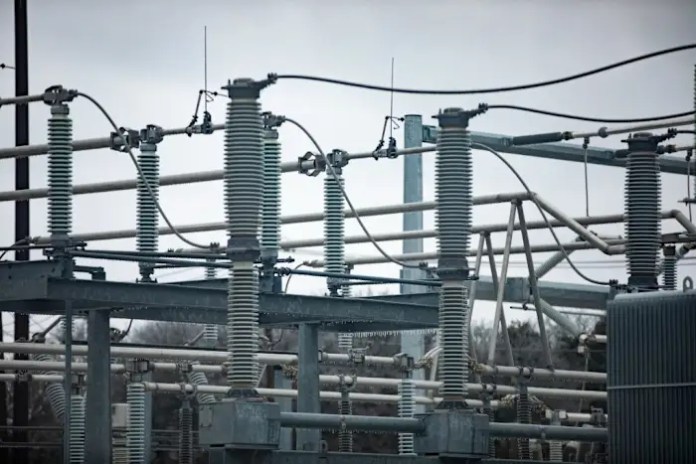
Perhaps the most crucial part of that preparedness is the stability of the state’s electrical grid. The grid, managed by the Electric Reliability Council of Texas, failed catastrophically during the February 2021 storm. Questions about whether the grid will hold up come up any time the state faces severe weather, hot or cold. Texans have grown particularly attentive to how the grid will hold up in a cold snap.

The grid is in better shape than it was in February 2021, state officials and energy experts have said. So far, the agency is projecting that Texas will have enough power to meet demand throughout the weekend.

“Based on expected weather conditions, ERCOT anticipates there will be sufficient generation to meet demand this winter,” the agency said in a statement.

That’s owing to two factors, said Matthew Boms, executive director of the Texas Advanced Energy Business Alliance, an industry trade group. For one, there’s more power on the grid than there was in 2021, and most of that new generation is in the form of solar panels, wind turbines and battery storage, Boms said.

“That’s a gigantic change,” Boms said. “We didn’t really have battery storage on the grid during Winter Storm Uri, and now we have thousands of megawatts of batteries. That’s a huge asset when we have this kind of winter event.”

Texas lawmakers also forced natural gas plants to harden their facilities against severe cold, Boms noted.

Natural gas is the backbone of Texas electricity, especially during extreme cold. More than half of the state’s power comes from natural gas. When gas production freezes, power plants lose fuel and shut down. At the same time, winter storms drive up demand for both heating and electricity. If gas facilities aren’t running, the electricity simply can’t be generated.

After Winter Storm Uri in 2021, the Texas Legislature directed the Railroad Commission of Texas, which oversees the state’s oil and gas industry, to strengthen how the state prepares natural gas facilities for weather emergencies and power outages. That directive led to the creation of the Critical Infrastructure Division, which focuses on identifying key natural gas facilities as critical and making sure they’re ready for all-weather emergencies, including winter storms. This designation also ensures these facilities receive power first in hopes it will prevent blackouts like those from Winter Storm Uri.

The agency inspected more than 7,400 natural gas facilities last year, the agency said.

Are cities and other utilities prepared?

Just because there’s more power on the grid doesn’t mean there won’t be any power outages, officials caution. The storm brings a strong chance of ice for most of the state, which can build up on power lines and tree branches, causing lines to break and people to lose power. Utilities said Wednesday they have crews at the ready to restore power as quickly as possible.

Mark Bell, president of the Association of Electric Companies of Texas, which represents companies like Oncor, El Paso Electric and CenterPoint Energy, said his members were ready.

“In areas that will be affected by the winter storm, electric generating companies and utilities are implementing their emergency operations plans, mobilizing staff, re-checking weatherization measures, procuring needed fuel and equipment, among other activities,” he said.

Even a thin layer of ice can add several hundred pounds of weight to a power line, causing it to sag and break. Ice buildup can even bring down utility poles.

“In a worst-case scenario with ice loading, you’ll get a domino effect with poles,” said Chester Brown, an operations director for Xcel Energy in Amarillo. “One finally gives up and breaks, and then you’ll have a whole string of poles that could break it at a certain time.”

The year before Uri, a winter storm brought heavy ice to the Panhandle, bringing down power lines and causing widespread power outages. Xcel in the years since has continually replaced poles with ones made of stronger material, Brown said.

That ice buildup was a key factor in leaving tens of thousands of Austin households and businesses without power in the wake of a severe winter storm in early 2023.

That’s a tough problem to fix, officials and experts said Wednesday. Cities and utilities in the past several years have tried to beef up their vegetation management to pare tree branches to prevent them from falling on power lines during severe weather.

The most straightforward solution, officials have said, would be to bury above-ground power lines. But doing so would be enormously costly. Burying Austin’s city-owned network of above-ground power lines would cost $50 billion, according to a city-commissioned estimate published last year. Instead of burying every power line, utilities in Houston and Austin have focused on burying lines in places most at risk of power outages, Homs said.

“If you did it everywhere, that would cost tens of billions of dollars and ultimately raise electric bills,” Homs said.

Austin Energy, the city’s publicly owned utility, doesn’t expect widespread power outages, General Manager Stuart Reilly told Austin City Council members this week, though the utility continues to monitor the situation and prepare for the ice storm, KUT reported.

“A lot can move between now and Friday night, and so we’ll just keep an eye on it,” he said. “But so far, the predictions aren’t for the worst-case scenario.”

Other preparations abound. In Dallas, officials will open up facilities at Fair Park, the site of the State Fair of Texas, to shelter folks experiencing homelessness from the cold. If the city sees widespread power outages caused by the storm, officials plan to open up additional facilities for people to get warm and charge their phones, they said Wednesday.

Those facilities didn’t have backup power to open as warming centers during Uri, Dallas City Manager Kimberly Bizor Tolbert said Wednesday. In the years since, the city drew down federal dollars to outfit them with generators in the case of severe cold weather, she said.

What’s next?

Abbott is expected to hold a news conference on Thursday with several other state officials, including Texas Division of Emergency Management Chief Nim Kidd, Texas Department of Public Safety Colonel Freeman Martin, Texas Department of Transportation Executive Director Marc Williams, and Electric Reliability Council of Texas CEO Pablo Vegas.

— Camila Beraldo Maia contributed.

Disclosure: CenterPoint Energy, El Paso Electric Company and Oncor have been financial supporters of The Texas Tribune, a nonprofit, nonpartisan news organization that is funded in part by donations from members, foundations and corporate sponsors. Financial supporters play no role in the Tribune’s journalism. Find a complete list of them here.

Great Job Texas Tribune, Joshua Fechter And Alejandra Martinez & the Team @ KSAT San Antonio for sharing this story.

Jury acquits former Uvalde school officer in first criminal trial tied to Robb Elementary shooting | Houston Public Media

Jury acquits former Uvalde school officer in first criminal trial tied to Robb Elementary shooting | Houston Public Media

Former Uvalde school district police officer Adrian Gonzales leaves the courtroom as the jury goes back to deliberate during his trial at the Nueces County Courthouse on Wednesday, Jan. 21, 2026, in Corpus Christi, Texas. (Sam Owens/AP | Pool The San Antonio Express-News)

Sign up for TPR Today, Texas Public Radio’s newsletter that brings our top stories to your inbox each morning.

A Nueces County jury on Wednesday acquitted former Uvalde CISD police officer Adrian Gonzales of all charges in the first criminal trial tied to the 2022 Robb Elementary School shooting that killed 19 children and two teachers.

After the verdict was read, several family members of the victims appeared visibly upset in the courtroom, some wiping away tears.

Jury acquits former Uvalde school officer in first criminal trial tied to Robb Elementary shooting | Houston Public Media
Jesse Rizo and his wife Juanita Cazares-Rizo listen to the prosecution and defense deliver their closing statements to the jury on the 11th day of the trial for former Uvalde school district police officer Adrian Gonzales at the Nueces County Courthouse on Wednesday, Jan. 21, 2026, in Corpus Christi, Texas. (Sam Owens/AP | Pool The San Antonio Express-News)

The verdict ends the first attempt to hold a law enforcement officer criminally responsible for the delayed police response to the massacre, in which nearly 400 officers waited more than an hour to confront the gunman.

Prosecutors had argued Gonzales, one of the first officers on scene, failed to act quickly enough to stop or delay the shooter. Defense attorneys said Gonzales never saw the gunman and acted reasonably given the limited information available to him at the time.

During closing arguments earlier Wednesday, attorneys on both sides told jurors their verdict would send a message to law enforcement officers across Texas — though they disagreed sharply on what that message should be.

Uvalde County District Attorney Christina Mitchell urged jurors to hold Gonzales accountable, arguing that officers are trained to move toward gunfire without waiting for backup.

“We cannot continue to let children die in vain,” Mitchell said, asking jurors to return a guilty verdict.

Defense attorney Nico LaHood urged jurors to reject what he described as an effort to single out one officer for systemic failures.

Defense attorney Nico LaHood delivers a closing statement to the jury on the 11th day of the trial for former Uvalde school district police officer Adrian Gonzales at the Nueces County Courthouse on Wednesday, Jan. 21, 2026, in Corpus Christi, Texas.
Defense attorney Nico LaHood delivers a closing statement to the jury on the 11th day of the trial for former Uvalde school district police officer Adrian Gonzales at the Nueces County Courthouse on Wednesday, Jan. 21, 2026, in Corpus Christi, Texas. (Sam Owens/AP | Pool The San Antonio Express-News)

“Send a message to the government that it wasn’t right to concentrate on Adrian Gonzales,” LaHood told the jury. “You can’t pick and choose.”

A key point of disagreement centered on timing. Prosecutors said Gonzales waited roughly three and a half minutes before entering the school hallway. The defense said there were fewer than two minutes between Gonzales’ arrival and the shooter entering the fourth-grade classrooms where the victims were killed.

Gonzales was charged with 29 counts of child endangerment — one count for each of the 19 children who were killed and the 10 who were injured but survived. The jury found him not guilty on all counts.

The trial had been moved from Uvalde County to Corpus Christi after defense attorneys argued Gonzales could not receive a fair trial in Uvalde.

Former Uvalde CISD Police Chief Pete Arredondo, who investigators have described as the incident commander during the response, is awaiting a separate trial on charges connected to the shooting.

Great Job & the Team @ Houston Public Media for sharing this story.

This health insurance alternative could leave pregnant patients footing the bill

This health insurance alternative could leave pregnant patients footing the bill

Alycin Berry’s husband had just started a new job in early 2018 when the couple started to dig into his benefits. The amount they’d have to pay for health insurance, they realized, was “ridiculously expensive” — more than they could reasonably afford.

Neither Berry, a stay-at-home mom, nor her husband had any major health conditions. They didn’t use medical care often. She had just had her first child and hoped to get pregnant soon with another. She just wanted to make sure they could get coverage for her maternity care. 

The couple looked for something cheaper, ultimately settling on a health care sharing ministry. They would contribute hundreds of dollars per month, which was still less than the insurance premium. With major medical bills, participants in the ministry paid upfront, seeking discounts medical providers often offer to people who don’t have insurance. The health care sharing ministry would reimburse them after the fact.

The benefits weren’t as generous as health insurance, but the ministry fit better in Berry’s family budget. The organization advertised its maternity benefits, specifically, and more broadly promised coverage for hospital visits and surgeries. There were stipulations: To enroll, members had to sign a declaration that they would align their lifestyles with its Catholic values. Those religious views played out in policy too: The health share wouldn’t cover a pregnancy conceived through in vitro fertilization, for instance. But Berry, a Catholic herself, wasn’t worried. 

“It did feel like it was comparable to health insurance if not better than health insurance. They pitched it that way,” she said. 

Then she tried to use it. 

In 2019, Berry, now 37, miscarried at home, her first of three lost pregnancies. After visiting a doctor for follow-up care, Berry sought reimbursement from her health share. She was eventually able to get payment, but doing so required reams of paperwork, she said, including verifying that her pregnancy was conceived without fertility treatment. The process took several months.

“It was kind of like, ‘What? This is crazy. We’re grieving this loss, we’re jumping through hoops to get this miscarriage care covered,’” she recalled. 

Ministries like the one Berry joined are part of a constellation of alternatives to health insurance, cheaper and less regulated than those covered by the Affordable Care Act, and with far fewer consumer protections. Now, as Congress struggles to make a deal to extend subsidies for plans offered via the health law’s individual marketplace, those alternatives could see a surge in interest and enrollment.

Tax credits used to help lower what consumers pay for marketplace insurance, which covered about 25 million Americans last year. But those credits expired at the end of 2025. Without them, marketplace premiums skyrocketed — many are more than doubling. 

Final figures won’t be available for months, but preliminary government data suggests that enrollment in health insurance has fallen as a result, down by at least 1.4 million. A December survey from KFF, the nonpartisan health policy research, polling and journalism group, found that 1 in 4 marketplace enrollees said they would go without insurance if their premiums doubled. And historical trends suggest that some will try to fill in the gaps with skimpier but cheaper alternatives, including ministries like the one Berry used.

“Whenever the costs go up, it’s just a golden marketing opportunity for sellers of anything other than comprehensive coverage to make the pitch they have a more affordable option,” said JoAnn Volk, a research professor at Georgetown University’s Center for Health Insurance Reforms, who has studied these organizations extensively. ”Health care sharing ministries are one of those.”

Under the Affordable Care Act, health insurance is required to cover particular sets of benefits, including preventive care, maternity, mental health. Plans cannot impose lifetime caps on coverage. They can’t discriminate against preexisting conditions. They must spend at least 80 or 85 percent of premiums on medical care, depending on the type of plan. Insurance offerings that could violate those requirements face government scrutiny or even penalties.

Those requirements don’t exist for health care sharing ministries, and there is no regulatory body tasked with overseeing them. Health care sharing ministries work on a theoretical sharing model: members pool resources, and the ministry decides what health expenses to cover. Ministries or health shares are usually religious, and allowed to deny coverage if it doesn’t align with their stated values. That in practice means significant limitations for women and queer people: Ministries typically don’t cover contraception or pregnancies that are not conceived by a heterosexual couple. Many won’t cover injuries or illnesses they deem the result of immoral choices —  including drug and alcohol use, which is more common among LGBTQ+ people. And ministries often exclude coverage for mental health needs, another area where LGBTQ+ people and women are more likely to require care.

The Alliance of Health Care Sharing Ministries, a trade group that represents the vast majority of these groups, declined to comment.

Enrollment in these ministries has soared since the passage of the Affordable Care Act, more than 15 years ago. The health law, which required individuals to have insurance, included an explicit carveout for these ministries. People wouldn’t be subject to the mandate if they used a ministry, so long as it existed prior to 1999. The idea was to accommodate small religious cost-sharing arrangements, which at the time only counted maybe 200,000 members.

A 2023 report published by the Colorado Department of Insurance identified at least 1.7 million people across the country using ministries for their health coverage, though the authors said that was likely an undercount. Many of these arrangements instructed members to first ask medical providers for charity care — free or discounted treatment, which is reserved for those who don’t have health insurance, typically lower-income people — before submitting bills for reimbursement. A report that same year from the Government Accountability Office suggested that a disproportionate share of participants are from low-income households. National data is difficult to come by because no federal body tracks health care sharing ministries. 

“There’s an ongoing affordability crisis in health care that is being made worse by the lapse of this extra premium help, so people are looking for options,” said Katie Keith, who heads the Center for Health Policy and the Law at Georgetown University’s O’Neill Institute. “People don’t realize what they’re getting. It’s the marketing materials, it’s the way these are being advertised. Some brokers sell ministries, and people don’t understand that it is not a typical health insurance product.”

Thirty states have explicitly passed laws saying ministries aren’t the same as insurance and don’t need to be held to the same standards, freeing them from some government scrutiny. Some lawmakers have made an effort to regulate individual ministries. Both Massachusetts and Colorado have passed laws requiring ministries to share data on their enrollment, finances and marketing with the state insurance departments. 

Washington state’s insurance commissioner blocked one ministry from selling its products in the state, arguing that the company was selling illegal insurance that did not cover particular preexisting conditions. The state of California has entered a settlement with a ministry accused of “creating, operating and selling sham insurance.” The Department of Justice has settled with another one, based in Missouri, that was accused of fraud

In one 2020 class action, three plaintiffs alleged that their health share had falsely represented itself as insurance and then refused to pay for medical expenses it had promised to cover, including one who said she could not receive reimbursement for bills related to pregnancy and childbirth. (The lawsuit was closed when the health share declared bankruptcy.) A report from NBC News identified four families who struggled to receive reimbursement for their pregnancy-related medical bills.

In some cases, members pay their medical costs upfront with the promise of reimbursement from their ministry. Receiving payment can be straightforward. But if it isn’t denied completely, it can also resemble Berry’s experience — taking months of back-and-forth.

Pregnancy is of particular concern. In its 2023 report, the GAO found that every health care sharing ministry it reviewed required new members undergo a waiting period before qualifying for pregnancy-related health coverage. A 2018 review from the Commonwealth Fund, which studies health policy, found that many large ministries only covered pregnancy-related costs under particular circumstances, including requiring members wait a set number of months, that pregnancies be conceived in wedlock, or that members be enrolled in more expensive cost-sharing options.

The costs of childbirth are steep. An analysis by KFF, the nonpartisan health policy research, polling and journalism organization, found that a privately insured birth costs more than $20,000, with about $2,700 in out-of-pocket expenses. Someone without insurance or seeking future reimbursement could pay less than that; hospitals and health providers typically charge less for people who are uninsured. 

By the time Berry got pregnant, in the fall of 2021, she was able to avoid that risk.  After years of negotiating for reimbursements, a process that often took months, she and her husband decided that January to switch to insurance. 

Still, seeking payments to cover the maternity expenses she’d incurred before changing — particularly an approximately $4,000 global fee from her birth center — took more than a year of emails and phone calls, per communications she shared with The 19th. 

Her experience since switching to health insurance has been far simpler, she said, adding that she would never recommend the health share to anyone else. Since leaving her health share, she has joined several Facebook groups devoted to sharing experiences from others who have navigated health shares like hers. She’s spoken to many who struggled to receive reimbursement for much larger maternity bills.

“The way they marketed it was this is an alternative to insurance and so it seemed like it was just a different way to get the same kind of coverage — and obviously that’s not true,” she said.

Great Job Shefali Luthra & the Team @ The 19th Source link for sharing this story.

Secret Link