

Home News Page 175

Concerns over roads in Nigeria after crash that injured Anthony Joshua and killed 2 associates

Concerns over roads in Nigeria after crash that injured Anthony Joshua and killed 2 associates

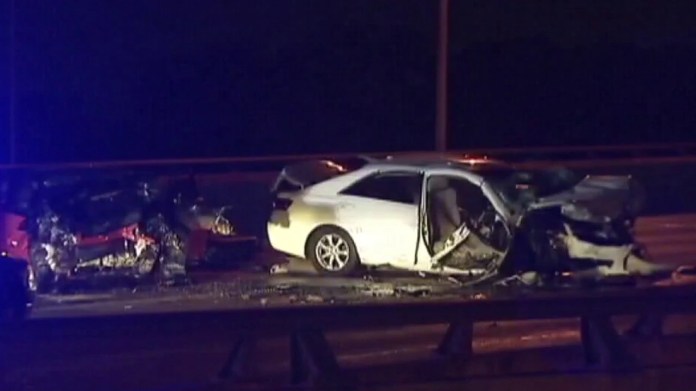
LAGOS – Tributes have been paid after the crash that injured British former heavyweight champion Anthony Joshua and killed two close associates on Monday, amid growing concern over Nigeria’s roads following the deadly incident near Lagos.

Joshua, a two-time heavyweight champion and an Olympic gold medalist, was under “observation” while recovering from minor injuries, his promoter said Monday.

Nigeria’s Federal Road Safety Corps said the accident along a major highway connecting Lagos, the country’s economic hub, and Ogun state was a result of “excessive speed and wrongful overtaking,” which had caused the car to collide with a stationary truck by the roadside. Eyewitnesses say the vehicle’s tire had burst at high speed.

Joshua had recently won a bout against Youtuber-turned-boxer Jake Paul on Dec. 19, a fight he used to improve fitness in a bid to contest future top-flight boxing titles.

The former world heavyweight champion, who also holds Nigerian nationality, is in “stable condition” and would remain in hospital for further “observation” according to his promoter, Matchroom Boxing. Joshua’s long-term friends and team members, Sina Ghami and Latif Ayodele, were killed in the crash, the promoter said in a statement posted on X.

Ghami was Joshua’s strength and conditioning coach while Ayodele was a trainer. Just hours before the crash, Joshua and Ayodele posted clips on social media playing table tennis together.

Mustafa Briggs, a friend of Ayodele, described him as pure-hearted and sincere. “He had not a bad intention or a bad bone in his body,” Briggs told U.K. broadcaster Sky News. “He loved life, he enjoyed life,” he said.

Outside a gym owned by Ghami in London, bouquets of flowers have been left at the entrance. Evolve Gyms was temporarily closed on Tuesday to mourn the loss of its “beloved owner,” according to a statement posted on the building.

Concerns over frequent road crashes in Nigeria

The high-profile accident has prompted serious concerns about road safety on Nigerian highways, where accidents are common.

The West African nation recorded 5,421 deaths in 9,570 road accidents in 2024, according to data by the country’s Federal Road Safety Corps. Its data showed 340 more people were killed in road accidents last year compared to 2023.

Experts say a combination of factors including a network of dilapidated roads, lax enforcement of traffic laws, and indiscipline by drivers, produces the grim statistics.

The stationary truck that Joshua’s vehicle hit is a fixture of Nigeria’s thoroughfares, often causing massive gridlocks. Goods and food are transported across Nigeria’s vast geographical reach via these trucks, which experts say tend to be in poor condition and are responsible for many accidents.

“The prevalence of accidents in Nigeria is a serious issue,” Ache Ogu, the CEO of the Road Accident Prevention Network Centre, an Abuja-based nongovernmental organization, told The Associated Press. “Most of the trucks are not in order, and the law enforcement agency needs to step up its efforts.”

Monisola Abosede, a 27-year-old marketer who lives in Lagos and commutes several kilometers every weekday for work, has been involved in two accidents in December alone.

“In Lagos, everyone is in a rush to get somewhere; people are always on the move,” she told The AP, blaming crashes on the city’s heavy traffic combined with the bad state of its road network.

The boxing world reacts

British heavyweight star Tyson Fury has led the tributes from the boxing community in the aftermath of the crash. “This is so sad. May god give them a good bed in heaven,” he posted on Instagram.

Boxer Chris Eubank Jr, who last month fought a high-profile middleweight bout, expressed his support and condolences. “Thank god our heavyweight champ survived that horrible car crash. And pray for the two fallen soldiers Latz & Sina & their families,” Eubank Jr posted on X. “I knew both … they were genuinely good men. Rest in Peace boys.” British boxer Shannon Courtenay, a women’s bantamweight fighter who fought earlier this month in the build-up to the Joshua-Paul fight in Miami, Florida, posted a photo of her with Joshua on Instagram. “As well as Sina and Latz please keep the big man (Joshua) in your prayers,” she wrote, adding. “No man should have to go through and witness what he went through today losing his two best friends.”

Former world champion Wladimir Klitschko, who was stopped in the 11th round by Joshua at Wembley Stadium in 2017, wrote on X: “I’m deeply saddened to hear about AJ and his close-knit group of friends.

“Having had the pleasure of engaging in an unforgettable battle with AJ, I’ve always regarded him as a true class act who commands my utmost respect.

“My heart goes out to him, and I wish him and his loved ones all the best during this difficult time.”

Copyright 2025 The Associated Press. All rights reserved. This material may not be published, broadcast, rewritten or redistributed without permission.

Great Job Ope Adetayo, Associated Press & the Team @ KSAT San Antonio Source link for sharing this story.
Oregon Faced a Huge Obstacle in Adding Green Energy. Here’s What Changed This Year.

Oregon Faced a Huge Obstacle in Adding Green Energy. Here’s What Changed This Year.

A few months ago, Oregon’s green energy outlook was bleak.

The state Legislature and Gov. Tina Kotek had repeatedly failed to address a huge obstacle that has held back wind and solar projects in the Northwest for years: aging electrical lines too jammed up to handle more renewable power.

A series of articles by Oregon Public Broadcasting and ProPublica identified barriers in the federal and state bureaucracies that delayed improvements to the beef up the grid. The failure to complete upgrades is the main reason Oregon, like its fellow progressive state and neighbor Washington, has lagged most of the nation in the growth of clean energy despite an internal mandate to go green.

Bills to tackle the transmission problem continued to languish and die in the Oregon Legislature as recently as this spring.

But there has been a groundswell of urgency since the stories were published.

Kotek, a Democrat, has now issued two executive orders mandating that state agencies speed up renewable energy development by any available means, including fast-tracking permits and directly paying for new transmission lines.

Those efforts could eventually be backed up by money. The state’s energy department, in a first, recommended lawmakers consider creating a state entity to finance, plan and build transmission lines. A lawmaker whose bill to create such an authority failed this year suddenly has hope for getting it done, and he said the governor’s office is working with him to make it happen.

What was essentially an unacknowledged problem among many Oregon policymakers now has the full attention of the governor and the key agencies that report to her. There has been new attention on electrical transmission in Washington state, as well.

The shift comes as President Donald Trump has created new obstacles to ramping up renewable energy. This year, he removed tax credits that made wind and solar cheaper to build, blocked new wind permits and fired employees of the federal agency that reviews them.

This was the year “where you’ve seen all these factors coming together — we know that our outdated grid is choking our ability to grow across the state, and we’re already paying more for electricity,” Kotek said in an interview last week.

Kotek acknowledged the role of OPB and ProPublica’s reporting when asked what prompted the changes.

“You’ve been doing some great stories,” she said.

In May, OPB and ProPublica showed that the state ranked 47th in renewable energy growth over the past decade. Washington is 50th.

An analysis by the news organizations found that Northwest wind and solar farms face the longest odds in the country for successfully connecting to the power grid, under a process heavily controlled by the Bonneville Power Administration. The federal agency’s transmission lines and substations constitute 75% of the region’s electrical network.

Out of 469 large renewables projects that have sought access to Bonneville’s system since 2015, only one was successful. Backers of the other projects either abandoned their requests or were still waiting on studies and necessary upgrades to power lines and substations.

Northwest utilities fear rolling blackouts within the decade unless transmission capacity is expanded to meet surging energy demand, particularly from data centers that support artificial intelligence.

Kotek said she hadn’t seen the numbers on Oregon’s stagnant renewable energy growth before OPB and ProPublica reported them.

“I hope — and we will be planning — to make our numbers look better and better in the coming years,” she said.

In 2021, when lawmakers enacted Oregon’s plan to eliminate the use of fossil fuels in electrical generation by 2040, they failed to account for transmission and the glacial pace set by Bonneville for improvements. (The agency has said previously its project approval decisions are guided by financial prudence.)

Oregon leaders also did not address the state’s slow process for evaluating energy projects, with appeals that can prolong permit decisions on new power lines or wind and solar farms for years. The rules originated with the 1970s antinuclear movement. Foes say rural transmission and wind projects blight the landscape, and they have used the permitting system as a means of delay.

Bills to smooth out the state permitting process, even those supported by rural interests, went nowhere. Efforts to bypass Bonneville also withered. Advocates proposed a state financing authority for new transmission lines and substations as recently as this year. The legislation, which lacked the endorsement of either Kotek or the Oregon Department of Energy, died.

Emily Moore, director of climate and energy for the Seattle-based think tank Sightline Institute, called OPB and ProPublica’s reporting “invaluable” in prompting change.

“It has motivated policymakers and advocates alike to try to find solutions to get Oregon and Washington unstuck and is recruiting new people to the effort,” Moore said.

Kotek’s latest executive order calls for a wide array of state agencies to recommend ways to overcome obstacles to clean energy development. This followed her October order for state agencies to take “any and all steps necessary” to fast-track solar and wind permits.

Separately, the energy department recommended lawmakers look into creating a new entity like state authorities in Colorado and New Mexico, which plan transmission routes, partner with transmission developers and issue bonds to finance construction. The agency’s strategic plan, finalized in November, said the state must streamline clean energy development and take a more active role in getting regional transmission lines built.

Similar findings emerged in a Dec. 1 report by a state working group created by Washington Gov. Bob Ferguson, which called for a dedicated state entity focused on increasing transmission capacity. The authors cited OPB and ProPublica’s 2025 coverage in stating that Washington is falling behind on infrastructure needed to hit its green energy goals. (Ferguson requested the report following reporting by The Seattle Times and ProPublica last year on the energy consumed by data centers, which receive generous state tax breaks.)

“This would be something that could potentially really help move the needle,” said Joni Sliger, a senior policy analyst with the Oregon energy department.

The governor has also ordered the department and Oregon utilities regulators to designate physical paths through the state in which permitting for transmission lines can be streamlined and to gather financial support for projects that serve the public interest.

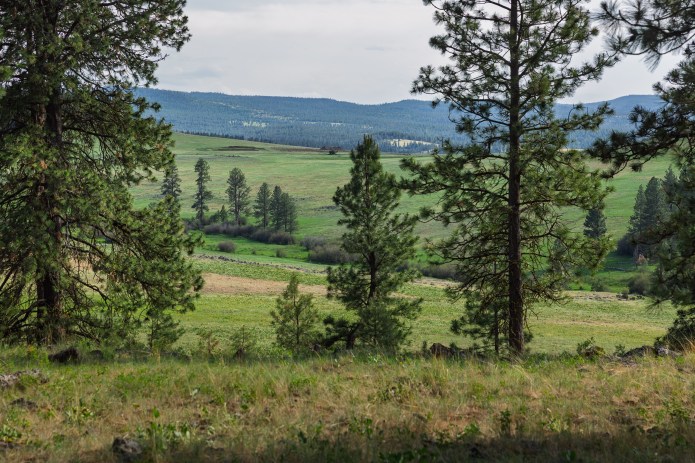
A proposed Eastern Oregon transmission line was stuck in the permitting process for nearly two decades. The line is expected to run through this stretch of La Grande, Oregon. Steve Lenz for ProPublica

Kotek cited the Boardman to Hemingway transmission line in Eastern Oregon that got caught in permitting limbo for nearly 20 years, an episode highlighted in OPB and ProPublica’s reporting. The governor called the state’s handling of the project a “red flag.”

“We have to get out of our own way,” she said.

Kotek’s executive orders drew praise from a range of organizations who appeared with the governor when she announced her most recent moves in November.

“It makes our energy system stronger and more reliable, enhancing grid resilience, expanding storage and bolstering transmission to keep electricity affordable and dependable for every Oregonian,” Nora Apter, Oregon director for the clean energy advocacy group Climate Solutions, said at the time.

The head of Oregon Business for Climate, which represents interests including real estate developers, wineries and coffee roasters, also spoke at the event.

Tim Miller, the group’s director, said that although Oregon has put in place an energy permitting system to ensure siting is done right, Kotek’s order “reminds the state that we also have to get things done.”

Lawmakers now are working on a plan to enact a state transmission financing authority during the next full legislative session, in early 2027.

Rep. Mark Gamba, the Portland-area Democrat whose effort to create such an agency last year failed, said the governor’s office is in discussions with him about the new legislation and that he expects it to pass thanks to her involvement.

“Her leaning in the way she has is what we needed,” he said.

Gamba said he’s seeing newfound support for expanding transmission from across the political spectrum.

“I’ve gotten calls from interests that typically I’m on the other side of the fight with,” Gamba said, “because they recognize that this is an economic development issue as well.”

Great Job Tony Schick & the Team @ ProPublica Source link for sharing this story.
Soul Legend Don Bryant Passes Away at 83

Soul Legend Don Bryant Passes Away at 83

Source: Jean-Pierre BOUCHARD / Getty

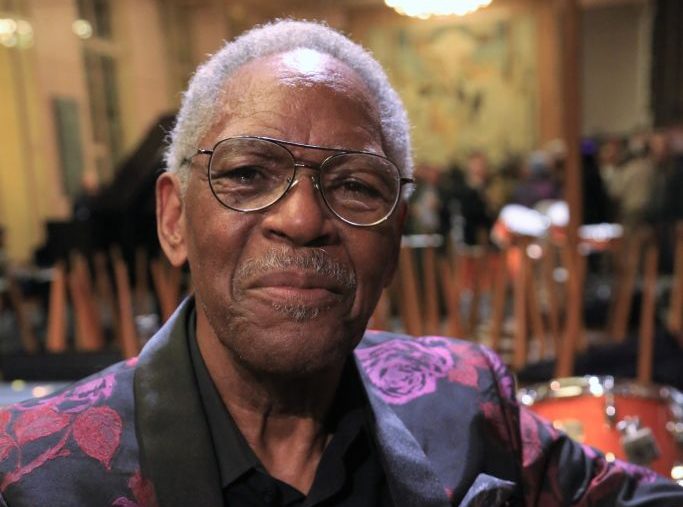
The world of soul music is mourning the loss of one of its most cherished voices and songwriters, Don Bryant. The legendary Memphis artist passed away on December 26 at the age of 83. His family confirmed his death in a heartfelt announcement on social media, sharing a message that captured his spirit.

“Don loved sharing his music and songs with all of you and it gave him such great joy to perform and record new music,” the post read. “He was so appreciative of everyone who was part of his musical journey and who supported him along the way.”

Born in Memphis, Tennessee, in April 1942, Bryant’s musical education began early, singing in his father’s vocal group. By his teenage years, his talent for songwriting was undeniable. He began penning tracks for other artists, including the song “I Got To Know” for the influential R&B group The 5 Royales. This early success set the stage for a career defined by powerful lyrics and unforgettable melodies.

RELATED STORIES: Rest In Power: Notable Black Folks Who We’ve Lost In 2025

RELATED STORIES: 10 R&B Artists On The Rise: Destin Conrad, Leon Thomas III, Dijon, Laila!, SAILORR & More

Bryant’s most iconic work came in collaboration with the gifted singer Ann Peebles, who would later become his wife. Together, they wrote the timeless 1973 hit “I Can’t Stand the Rain.” The track became a global sensation, so powerful that Beatles legend John Lennon once declared it “the best song ever.” Their creative partnership was a force, producing other beloved songs like “99 Pounds” and “Do I Need You” before they married.

READ MORE STORIES

For many years, Bryant focused on writing and producing, stepping back from his own recording career. However, his journey was far from over. After Peebles suffered a stroke in 2012 and had to step away from performing, Bryant returned to the studio. He released two critically acclaimed solo albums, Don’t Give Up on Love in 2017 and You Make Me Feel in 2020. These projects, his first in nearly five decades, were a triumphant return, proving his voice and creative fire were as strong as ever. In 2021 Bryant was featured on NPR’s popular digital musical feature Tiny Desk, delivering a soul-stirring performance for new and longtime fans.

Don Bryant’s contributions are woven into the fabric of soul music. His ability to craft stories of love, heartbreak, and resilience resonated deeply within our community and across the world. While he may be gone, his powerful legacy will continue to live on, inspiring new generations of artists and music lovers for years to come.

LIKE US ON FACEBOOK. FOLLOW US ON INSTAGRAM & TWITTER. SUBSCRIBE TO OUR YOUTUBE.

STAY INFORMED! CLICK HERE TO SIGN UP FOR OUR NEWSLETTER!

HEAD TO THE BLACKAMERICAWEB.COM HOMEPAGE

Great Job Nia Noelle & the Team @ Black America Web Source link for sharing this story.
Climate change could cost businesses big time » Yale Climate Connections

Climate change could cost businesses big time » Yale Climate Connections

Transcript:

For companies around the world, the financial risks of climate change are growing fast.

As seas rise, coastal factories face a growing risk of flooding. As droughts intensify, crops could become more expensive to grow. And as storms and fires get more extreme, insurance premiums are rising.

Madera: “We should be talking about climate change impacts as being business impacts.”

That’s Sherry Madera of CDP, a nonprofit that helps companies worldwide measure and disclose data about their environmental impacts and risks.

According to a CDP report, the roughly 4,000 large companies that disclose data to the group identified climate risks totaling more than $6 trillion.

Madera: “And of course, that is shocking in terms of its size.”

But she says companies can invest in solutions that reduce these risks.

For example, flood-proofing buildings, relocating facilities, or planning for supply chain disruptions could make businesses less vulnerable to climate change impacts.

According to the CDP report, taking these and other steps would cost about $1.4 trillion.

So acting to reduce climate risks may be costly in the short-term, but the long-term cost of inaction could be far greater.

Reporting credit: Sarah Kennedy / ChavoBart Digital Media

Great Job YCC Team & the Team @ Yale Climate Connections Source link for sharing this story.

For Nicolas Sarkozy, Far-Right Rule Is Tolerable

For Nicolas Sarkozy, Far-Right Rule Is Tolerable

This fall, France’s former president Nicolas Sarkozy was briefly imprisoned in a criminal case involving alleged corruption and illegal campaign financing by Muammar Gaddafi. Sarkozy’s three weeks in a Paris jail were a major political event — the first instance of a French head of state being imprisoned since the collaborationist Marshal Philippe Pétain’s conviction after World War II.

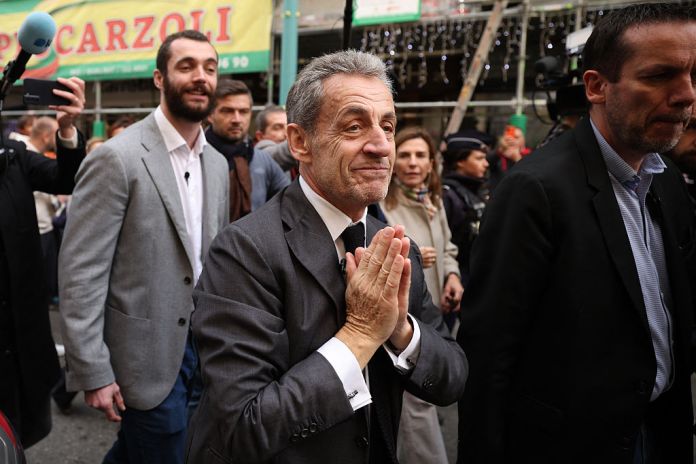
Now Sarkozy has written a book about the experience. He used the moment not just to talk about prison life but to declare an end to the cordon sanitaire that has informally proscribed mainstream parties from allying with Marine Le Pen’s Rassemblement National (RN). If conservatives long pledged opposition to this party’s fascist heritage and politics, they are now weakening this stance.

“When the time comes, I’ll take a public position on the subject,” Sarkozy writes in Le journal d’un prisonnier (Prisoner’s Journal), calling for an end to the “artificial” cordon and emphasizing that the RN is not a danger to the Republic.

After Sarkozy’s conviction and imprisonment, right-wingers of all flavors jumped to the former president’s defense. They insisted that the prosecution was the fruit of a leftist witch hunt against Sarkozy, who remains a potent symbol of the mid-2000s counterrevolution led by a muscular French conservatism.

“That a former president, who has appealed his conviction, finds himself subject to a deferred detention order which is being executed [in advance], as normally used in cases of possible recidivism or threat to public order, appears to me to correspond to a desire to humiliate the former president,” the RN’s party president, Jordan Bardella, commented.

On general grounds, Sarkozy may have had a fair case against being imprisoned before his appeal. A court ultimately accepted his argument that he could be expected not to flee the country or intimidate witnesses. Yet many of those bewailing Sarkozy’s ill-treatment are also hypocritical. Some 58 percent of penalties in criminal case come into effect immediately; for prison sentences of over five years like Sarkozy’s, that’s true 85 percent of the time. Sarkozy himself made tough-on-crime rhetoric a centerpiece of his political career. If it’s true that a prisoner can’t fairly prepare their defense from prison, that’s true of everyone. Sarkozy’s special treatment is an example of how the French justice system is deeply distorted by class.

During Sarkozy’s first night in prison, a video went viral of prisoners insulting the former president through the bars of their prison cells. They cried promises of vengeance for Gaddafi, who was killed after a French plane shot his fleeing convoy.

“I have no doubt that certain people will rejoice at this situation,” Le Pen reacted. “But I would hope that millions of French people, like me, feel disgust.”

In his new book, Sarkozy praises Le Pen for publicly supporting him and says he called her to talk while he was imprisoned.

Sarkozy insists that, while he welcomes Le Pen’s principled support, they remain political enemies. But he is also quick to mention that while he was leader of France’s conservative party (today renamed Les Républicains), no candidate of Le Pen’s party ever made it to the second round of the presidential election.

“Many of Marine Le Pen and Jordan Bardella’s current voters were by my side when I was active in politics,” Sarkozy says proudly.

That certainly wasn’t by accident.

One of Sarkozy’s closest advisers was the late Patrick Buisson, a popular reactionary essayist still oft-cited by young French right-wingers. Buisson was often painted as Sarkozy’s master of the dark arts, and his background in neofascist groupuscules added to this toxic but seductive reputation. But his approach wasn’t so complicated: he believed that Sarkozy could reinvigorate French conservatism by tapping into the forgotten lower-middle-class voters to whom the RN appeals. Sarkozy did this through forthright reactionary rhetoric. One representative anecdote, always repeated when discussing Sarkozy’s conservatism, was his promise to “clean up” the working-class suburbs where many immigrants live using a pressure washer.

In that statement was the kernel of both Sarkozy’s and the RN’s vote: their voters believe that France is being dirtied and defiled by lazy immigrants, benefits-scroungers, and the cultural and institutional left that supports these groups. Voting for the RN now, or Sarkozy then, is a vote against these people and a mark of self-identification for those who see themselves as hardworking and virtuous and define themselves against a lazy underclass.

Buisson also pushed for Sarkozy to launch a referendum on immigration in 2012 — a longtime RN campaign promise. The fascistic pundit Éric Zemmour would later criticize Sarkozy for refusing to go ahead with it because — Zemmour said — he worried too much about being liked by the Left.

In 2007, Jean-Marie Le Pen’s presidential election campaign was hobbled in part by Sarkozy appealing to those voters, charging to a first-round score of 31 percent. Where five years earlier Le Pen had shocked France by making it to the presidential runoff, this time about a quarter of his previous voters said they’d vote for Sarkozy in the first round. Their ideological motivations hadn’t changed, but many saw Sarkozy — the eventual winner — as having more presidential qualities.

“Part of the loss of appeal, in the case of the Front National, was linked to the borrowing of their programme by their opponents,” researcher Aurelien Mondon wrote in 2013. “Thus an electoral defeat proved an ideological victory.”

Throughout his career, Sarkozy showed a consistent openness to adopting far-right ideas and rhetoric.

“We need to react, and I will lead the reaction,” Sarkozy said in one speech in Toulouse in 2003. One of Sarkozy’s most enduring legacies was his success in transforming what is considered commonsense in French political life, shifting it far to the right.

Sarkozy was by no means the first conservative politician to makes appeals to the far right and their themes. Yet “none did so in such a consistent and open manner as Sarkozy,” Mondon writes. Sarkozy was the prototypical representative of the mainstream “Right that would do everything required to reclaim the [FN] electorate.”

Buisson played a critical ideological role here as well as a practical one. In 2008, he conducted 134 opinion polls for Sarkozy, and on this basis crystallized a pitch based on reactionary appeals to workers’ feelings of a loss of status. It focused on the damage done by multicultural dogma and ongoing economic decline. Such polling was, according to Buisson, Sarkozy’s way of staying connected with the common man. He not only tried to reflect popular sentiment but also helped mold it. 

Many onetime conservative voters, mostly now rallying behind Le Pen’s RN, adopted harsher opinions on questions of racism and immigration under Sarkozy. As discourses of multiculturalism and tolerance have receded in conservative circles, Sarkozy played a critical role in granting legitimacy to hard-line ideas that were previously outside the mainstream.

While Sarkozy once campaigned against Le Pen’s party as a political adversary, he adopted its common sense — a worldview extremely familiar to anybody paying attention to French media today. Sarkozy pitched himself as a president who would protect and defend those who worked hard from those who didn’t, who could be open to outsiders willing to become French and subscribe fully to its unique civilizational values, and completely closed and actively exclusionary to those not grateful enough to accept them. An excess of empathy toward criminals would be excised from his France. Uncontrolled immigration and — even worse — immigrants unwilling to assimilate had France “facing one of the most serious crises of its history.” Action was needed to stop it.

Buisson cherished the idea of a pact among all right-wing forces — l’union des droites. It was in this vein that he backed Zemmour’s 2022 presidential run, which called for an alliance between the bourgeois right and the more working-class parts of Le Pen’s electorate. While Zemmour couldn’t achieve that, such an alliance is closer than ever to coming to fruition.

In the ideological field, there is little difference between the policies of the mainstream conservative parties and the RN. Indeed, mainstream conservatives have in recent years tried to differentiate themselves from Le Pen’s party by claiming that the RN is to their left on economic issues.

The shrinking margins of victory for Emmanuel Macron in 2017 and 2022, when he was elected almost solely as a rejection of Le Pen’s party, is a clear illustration of the disappearance of the cordon sanitaire. More and more conservative voters backed Le Pen.

This is also evidenced by personnel defecting from the one camp to the other. The trajectory of Sébastian Chenu, another RN leader who wrote to Sarkozy while he was in prison, illustrates this well.

“We were no longer involved in the habitual confrontation between members of opposing political formations,” Sarkozy writes as he recounts good memories of Chenu, who was a member of Sarkozy’s party when he was its leader.

Chenu campaigned for Sarkozy in 2007 and 2012 and was a leading figure for the conservative party in the Paris region. It was after the former president stopped being leader, Sarkozy himself notes, that Chenu left for the RN.

Excluding RN and people like Chenu from political life, Sarkozy argues, would be a mistake.

“They represent so many French people, they respect the results of elections, and they participate in the functioning of our democracy,” Sarkozy says. Evoking the threat of Jean-Luc Mélenchon’s La France Insoumise (LFI), as he does often in the book, he says that he won’t demonize these voters like the Left does.

“The French people find it more and more difficult to bear the outrages of LFI and the phony ‘cordon sanitaire’ around the Rassemblement National, which does not constitute a danger to the Republic,” Sarkozy declares definitively.

In Chenu’s letters, Sarkozy says, the RN parliamentarian asks him not to turn his back on politics, and on France. “We need your experience,” Chenu concludes.

Sarkozy doesn’t say no.

Outside the Lamartine bookstore in Paris in the beginning of September, I talked with Sarkozy supporters who’d come out to meet him and get their books signed. Why was Sarkozy now so open and gentle with the RN, I asked, where he’d once campaigned hard against them? 

It was “maturity,” said one woman who had come to Paris for the occasion — and a recognition of the fact that coming together was the only way for the Right to win.

Was it Sarkozy who had changed, or the Rassemblement National, I asked others. A few agreed that it was Le Pen’s party that had changed its spots.                 

But one man, whose son had brought a Swiss watch to gift to Sarkozy, said it was neither.

“It’s France that’s changed,” he said, then repeated: “It’s France that’s changed.”

Great Job Marlon Ettinger & the Team @ Jacobin Source link for sharing this story.

Will we see our first freeze of the season before New Year’s Eve?

Will we see our first freeze of the season before New Year’s Eve?

New year’s eve suggests a chilly night for outdoor festivities

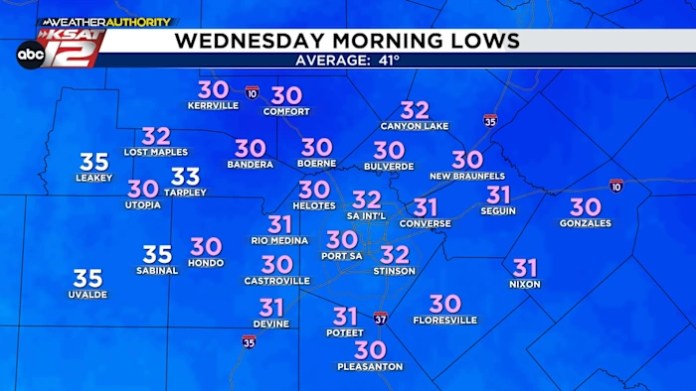
We could see our first freeze of the season Wednesday morning (Copyright KSAT-12 2025 – All Rights Reserved)

FORECAST HIGHLIGHTS

  • CHILLY: A light freeze is possible as end 2025 & start 2026

  • WARMER: A warm up begins near 80° Friday

  • MORE OF THE SAME: Dry and sunny pattern continues into the weekend

FORECAST

TODAY

Expect a chilly start in the 30s/40s, then mostly sunny skies with highs near 60°. It’ll turn cold again after sunset. Keep this in mind if you’re going out to the Alamo Bowl today!

Cool but above freezing with mostly sunny skies for the Alamo Bowl (Copyright KSAT-12 2025 – All Rights Reserved)

GOODBYE 2025, HELLO 2026

Wednesday brings a light freeze for some areas in the morning, then highs in the 60s. We could potentially see our first official freeze of the season around San Antonio.

We could see our first freeze of the season Wednesday morning (Copyright KSAT-12 2025 – All Rights Reserved)

By midnight on New Year’s Eve, temps fall into the upper 40s—bundle up if you’re celebrating outdoors! New Year’s Day will feel completely different: sunny and pleasant with highs in the low to mid-70s.

We’ll quickly cool as we get ready to ring in the new year (Copyright KSAT-12 2025 – All Rights Reserved)

THIS WEEK

A strong warming trend kicks in Friday with highs near 80°, possibly challenging daily records. The weekend stays dry and warm under high pressure—perfect for outdoor plans.

7 Day Forecast (Copyright KSAT-12 2025 – All Rights Reserved)

QUICK WEATHER LINKS


Great Job Shelby Ebertowski & the Team @ KSAT San Antonio for sharing this story.

Here’s what you should know about the US TikTok deal | TechCrunch

Here’s what you should know about the US TikTok deal | TechCrunch

TikTok, owned by the Chinese company ByteDance, has been at the center of controversy in the U.S. for four years now due to concerns about user data potentially being accessed by the Chinese government.

As a result, U.S. users have often found themselves caught in the middle of this tension. Earlier this year, the app experienced a temporary outage in the U.S. that left millions of users in suspense before it was quickly restored. TikTok returned to the App Store and Google Play Store in February. 

A number of investors competed to purchase the app, and after Trump extended the TikTok ban deadline for the fourth time, the battle is finally over. As of last week, TikTok officially signed a deal to divest a portion of its U.S. entity to a group of American investors.

This comes nearly three months after President Donald Trump signed an executive order that approves the sale of TikTok’s U.S. operations to an American investor group.

A week prior, President Trump announced that President Xi Jinping of China had given his approval of a TikTok deal, which would allow a consortium of U.S. investors to control the platform. ByteDance stated publicly that it would ensure the platform remains available to American users.

Who owns TikTok in the U.S.?

Image Credits:Bryce Durbin / TechCrunch

According to a memo viewed by TechCrunch, the investor group consists of Oracle, private equity firm Silver Lake, and investment firm MGX. Collectively, they will hold 45% of the U.S. operation, with ByteDance keeping nearly a 20% stake. Axios first reported the news, citing sources who estimate TikTok U.S. is valued at approximately $14 billion—a figure also mentioned by Vice President JD Vance.

In September, a report indicated that a “framework” deal was established between the U.S. and China, with a consortium of investors— including Oracle, Silver Lake, and Andreessen Horowitz—overseeing TikTok’s U.S. operations. These investors were expected to hold an 80% stake, and the remaining shares would belong to Chinese stakeholders.

Techcrunch event

San Francisco
|
October 13-15, 2026

The newly formed “TikTok USDS Joint Venture LLC” will oversee the app’s operations, including data protection, algorithm security, content moderation, and software assurance.

Oracle will serve as the trusted security partner, responsible for auditing and ensuring compliance with National Security Terms, according to the memo. The company already provides cloud services for TikTok and manages user data in the U.S. Notably, Oracle previously made a bid for TikTok back in 2020.

A White House official previously said Oracle would replicate and secure a new U.S. version of the algorithm, and the U.S.-based TikTok owners could lease the algorithm from ByteDance, which Oracle will then retrain. 

ByteDance will not have access to information about TikTok’s U.S. users or any influence over the U.S. algorithm.

​The deal is scheduled to close on January 22, 2026.

What users in the U.S. should know

Reports from Bloomberg indicate that when the deal is finalized, the TikTok app will be discontinued in the U.S. and users will need to transition to a new platform. However, the specifics of this platform remain largely unclear, including its features and how it will differ from the original app. 

How did we get here?

Here’s what you should know about the US TikTok deal | TechCrunch
Image Credits:Mandel Ngan (opens in a new window) / Getty Images

To fully understand this high-stakes drama, we’ll first revisit the timeline of TikTok’s tumultuous relationship with the U.S. government, which resulted in various legal battles and negotiations. 

The drama first began in August 2020, when Trump signed an executive order to ban transactions with parent company ByteDance. 

A month later, Trump’s administration sought to force a sale of TikTok’s U.S. operations to a U.S.-based company. The leading contenders included Microsoft, Oracle, and Walmart. However, a U.S. judge temporarily blocked Trump’s executive order, allowing TikTok to continue operating while the legal battle unfolded. 

Things began to progress even more last year following the transition to the Biden administration.  After the Senate passed the bill against TikTok, President Joe Biden signed it.

In response, TikTok sued the U.S. government, challenging the constitutionality of the ban and arguing the app and its American users were having their First Amendment rights violated. The company has consistently denied that it poses a security threat, asserting that its data stored in the U.S. complies with all local laws.

Fast-forward to today: Trump has had a change of heart since his first term and is trying to achieve a 50-50 ownership arrangement between ByteDance and a U.S. company. 

There have been several contenders, including The People’s Bid for TikTok , a consortium organized by Project Liberty founder Frank McCourt. This group has the support of investment firm Guggenheim Securities and the law firm Kirkland & Ellis. Supporters include Reddit co-founder Alexis Ohanian, TV personality and investor Kevin O’Leary, inventor of the World Wide Web Tim Berners-Lee, and senior research scientist David Clark.

Image Credits:Justin Sullivan / Getty Images

Another group, called the American Investor Consortium, is led by Employer.com founder Jesse Tinsley and includes Roblox co-founder David Baszucki, Anchorage Digital co-founder Nathan McCauley, and famous YouTuber MrBeast.

Others in the running included Amazon, AppLovin, Microsoft, Perplexity AI, Rumble, Walmart, Zoop, former Activision CEO Bobby Kotick, and former U.S. Treasury Secretary Steven Mnuchin.

The story has been updated after publication.

Great Job Lauren Forristal & the Team @ TechCrunch Source link for sharing this story.

Video: Blazers narrowly defeat Mavericks in exciting duel

Video: Blazers narrowly defeat Mavericks in exciting duel

 Deni Avdija had 27 points, 11 assists and nine rebounds, and Shaedon Sharpe added 24 points as the Portland Trail Blazers defeated the Dallas Mavericks 125-122 on Monday night.

Caleb Love also scored 24 for the Blazers off the bench, including six 3-pointers and the go-ahead free throws with under a minute remaining.

Klay Thompson’s 3-point attempt to tie the game at the buzzer missed as Portland avoided blowing a 17-point lead.

Max Christie led the Mavericks with 25 points and Brandon Williams scored 22. Cooper Flagg had 15 points, eight assists and six rebounds.

The teams exchanged the lead eight times in the fourth quarter.

Portland led 95-84 with 1:30 left in the third before the Mavericks went on a 9-2 run, capped by a running 3 with 0.7 seconds left by Thompson to make it 97-93.

Thompson then tied the game at 99 on a 3 with 9:35 remaining. Christie gave the Mavericks their first lead of the second half at 106-105 on a 3-pointer with 6:56 to play.

Dallas led by four before Avdija’s layup and a 3 by Love put Portland back ahead 118-117 with 2 1/2 minutes left.

Christie’s 3-pointer gave Dallas a 122-121 edge with 1:09 remaining, but the Mavericks never scored again. Love sank two free throws with 53.2 seconds left, Naji Marshall missed a pair of 3s for Dallas, and Sharpe added two foul shots with three seconds remaining for the final margin.

Portland pushed its lead to 17 multiple times in the second quarter before taking a 75-63 advantage into halftime.

Up next

Dallas hosts Philadelphia on Thursday.
Portland visits Oklahoma City on Wednesday.

Great Job Erik Garcia Gundersen | The Associated Press & the Team @ NBC 5 Dallas-Fort Worth for sharing this story.

Trump’s year of offshore wind carnage

Trump’s year of offshore wind carnage

When Donald Trump won the presidential election last November, it wasn’t totally clear how serious he was about dismantling offshore wind. Sure, he liked to rant about turbines making the whales crazy, and there was the infamous legal fight over a wind farm off the coast of his golf course in Scotland. But would he really try to cut down an entire energy sector? Did he even have the power to do so?

The answers, as we found out in this decisive and devastating year, are yes and pretty much.

On his first day in office, Trump issued an executive order that froze offshore wind permitting and ordered the Interior Department to review the projects it had already approved. The move immediately gummed up any developments that didn’t have federal permits, but the upshot was murkier for the nine projects with approvals in hand. (In mid-December, a federal court struck down that executive order.)

The first already-permitted undertaking to crumble was the Atlantic Shores installation in New Jersey. In late January, Shell — one of the two developers — announced it was pulling out. Then New Jersey backed away from buying power from the turbines. Weeks later came the sea salt in the wound: The Environmental Protection Agency revoked a Clean Air Act permit for Atlantic Shores.

The administration halted work on New York’s 810-megawatt Empire Wind 1 project in April; construction resumed after about a month and nearly $1 billion in costs for the developer. The budget law passed by Republicans in July killed tax credits for wind farms that don’t come online ASAP. The 704-megawatt Revolution Wind installation near Rhode Island got a stop-work order, too; that one was also lifted after about a month. The Transportation Department yanked funding for a bunch of infrastructure projects related to offshore wind in September. Then Trump told a half-dozen agencies to root around for reasons to oppose installing turbines out at sea.

Just for good measure, the administration is still trying — and sometimes failing — to revoke permits for approved but earlier-stage installations that would likely struggle to begin construction anyway, given the, uh, inhospitable climate.

Great Job Dan McCarthy & the Team @ Canary Media Source link for sharing this story.

Texas officials warn of DWI dangers around holidays

Texas officials warn of DWI dangers around holidays

With New Year’s around the corner, millions across Central Texas are getting ready to ring in 2026. 

Beyond the celebrations, this time of year is also known for a spike in DWI-related crashes, say state officials.

Two deadly weekend crashes

Local perspective:

Investigations continue into two deadly crashes from over the weekend in which substance use may have played a large role.

The first happened in Austin on Sunday morning in the northbound lanes of the 3100 block of South US 183.

Investigators say the crash involved an SUV, a hatchback, and a sedan. The driver of the hatchback died at the scene.

27-year-old Angelicque Bramlett was arrested for second-degree felony intoxication manslaughter for her role in the crash and is currently being held on a $50,000 bond.

Just hours later that night, San Marcos police responded to a separate DWI-related crash.

30-year-old Amy Blackwell was driving into San Marcos when she ran her SUV into a traffic pole. Her passenger got out and began walking along the highway when they were hit by a passing truck and pronounced dead at the scene.

Blackwell was taken to the hospital and later arrested for DWI for the SUV crash. She has since been released on bond.

Officials urge using rideshares, public transit, other transportation

What they’re saying:

“Too many of us perceive that drunken driving is a victimless crime. The reality is drunken driving impacts lives forever,” Stan Standridge, the Chief of the San Marcos Police Department, told FOX 7. 

He says that driving under the influence seems to be a steady issue across the community.

“Cities like the city of San Marcos are experiencing a remarkable amount of fatality investigations of which many can be attributed to alcohol and/or the induction of any type of drug,” said Standridge.

Data from the Texas Department of Transportation shows that the holiday season can be an especially dangerous time to be on the roads. From December 1, 2024, to January 1, 2025, there were:

  • 2,213 DWI-alcohol related crashes in Texas
  • 96 fatalities and 201 serious injuries
  • 11% decrease in DWI-related crashes from 2023

“Make sure that you plan ahead, make sure you have that plan in place,” said Jeff Barker of the Texas Department of Transportation, which has launched its ‘Drive Sober. No Regrets.’ Campaign to combat holiday impaired driving.

“It’s an important time to remind people that it’s never worth it to get behind the wheel when drinking and driving,” said Barker.

What you can do:

When talking about alternative methods. Barker says one of the best ways to stay safe is to use rideshare apps like Uber or Lyft, even if prices may be higher than normal during the holiday season.

“We promise that the shock of what you might have to pay to get home after too much drink, the cost of that will be less than the consequences,” he said.

CapMetro public transit services

CapMetro is also offering some extra incentives to make sure everyone has a choice when it comes to getting home safely. 

On New Year’s Eve, CapMetro will offer free rides after 5 p.m. on all services except Bikeshare. CapMetro Rail service will also operate late on Dec. 31, running until after 2 a.m. The last train will leave Downtown Station at 2:22 a.m.

Austin’s Get Home Safely ticket waiver program

If you end up driving to your celebration and later think you may have had too much to get behind the wheel, then you might not have to worry about parking tickets. 

Through the City of Austin’s Get Home Safely Ticket Waiver Program, if you leave your vehicle overnight at a City of Austin parking meter and seek a responsible ride home and then receive a parking ticket, you are eligible to have the parking ticket waived. 

All you have to do is upload a photo of your parking ticket and proof of a responsible ride home such as a taxi or ride-share receipt, and your ticket could be dropped.

The Source: Information in this report comes from reporting by FOX 7 Austin’s Marco Bitonel.

Crime and Public SafetySan MarcosAustinHolidaysTransportationCapital Metro

Great Job & the Team @ Latest & Breaking News | FOX 7 Austin for sharing this story.

Secret Link