
Home News Page 177

Trump Was 35 When Melania Was 10: Trump Draws Gasps as Critics Examine His Marriage and a Melania Family Detail Stops Them Cold

Trump Was 35 When Melania Was 10: Trump Draws Gasps as Critics Examine His Marriage and a Melania Family Detail Stops Them Cold

President Donald Trump has been in Florida for the holiday hosting dinner parties and world leaders. Recently, he was spotted at a holiday gathering, but video from the evening paints a far less festive picture. The 79-year-old billionaire appeared withdrawn and visibly irritated, lingering on the sidelines as attention drifted elsewhere.

Photos and video from Mar-a-Lago show Trump seated alongside his wife, Melania Trump as they dined with a member of her immediate family. But instead of engaging with her husband, Melania appeared far more focused on a man seated nearby — someone just two years older than Trump — leaving the former president looking isolated as the moment unfolded.

Trump Was 35 When Melania Was 10: Trump Draws Gasps as Critics Examine His Marriage and a Melania Family Detail Stops Them Cold
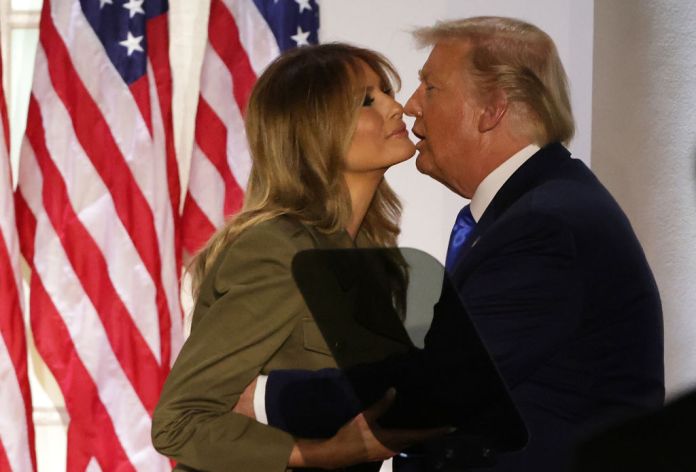
WASHINGTON, – AUGUST 25: U.S. President Donald Trump kisses first lady Melania Trump after her address to the Republican National Convention from the Rose Garden at the White House on August 25, 2020 in Washington, DC. The convention is being held virtually due to the coronavirus pandemic but will include speeches from various locations including Charlotte, North Carolina and Washington, DC. (Photo by Alex Wong/Getty Images)

‘This Clip Says Everything’: Barron Trump Humiliates Melania in Viral Video, With Fans Claiming It’s Payback for How She Treats Trump

Melania’s 81-year-old father, Viktor Knavs, sat beside her at the table that was sectioned off from other diners inside Trump’s estate. Her husband was seated across the table from Knavs and next to Barron’s mother.

Trump appeared visibly withdrawn as a smiling Melania chatted with her dad in one clip from a Fox News broadcast circulating online. He then began pumping his fist in the air, making circling motions with his hands, and waving toward the television cameras in the room. 

After pausing for a moment, he leaned over in the direction of his wife and his father-in-law to start a conversation. That exchange ended with Melania nodding and Trump chuckling.

Footage and images of that awkward interaction between the Trumps quickly spread across the internet, igniting critics of the president to revel in his apparent discomfiture.

“Imagine how miserable he must be when the only folks spending the holidays with you are there to get something from you. I love this for him!” a Threads user exclaimed.

A second person replied, “All alone with a wife who hates him.” A third poster on the social media platform pointed out, “She doesn’t even sit close to him.”

“Could she get any further away?” someone jokingly asked. Another jokester wrote, “He would have been less grumpy if they had put him at the kids’ table.”

A Yahoo reader zeroed in on the small age difference between Trump and Melania’s father with a comment that read, “His father-in-law is only two years older than he is. Trump is an old, old man.”

“I bet Melania and her father were talking in their native tongue so Donnie couldn’t understand them ripping him,” suggested one commenter. However, the entire trio was blasted when an observer expressed, “What a miserable-looking group that is.”

Still others revisited the couple’s age gap, resurfacing old timelines that critics say have long made the dynamic uncomfortable. One commenter wrote, “Yikes. Donald Trump is 79 and Melania is 54. Revealing that Trump would have been 35 years old when Melania was 10 years old.

At the same time, another critic pointed out that “Trump, 79, spent Christmas Eve at Mar-a-Lago alongside Melania, 55, and her father, Viktor Knavs who is only two years older than the former president.”

The math continued to fuel debate, with one person scoffing, “Trump is 79. Melania is 55. That’s 24 years. ‘Hollywood,’ huh?” Another user even turned to X’s AI tool, Grok, to verify the ages.

The response confirmed that as of Dec. 28, 2025, Trump is 79, born June 14, 1946, while Melania is 55, born April 26, 1970 — a numerical breakdown that only reignited the long-running scrutiny

This year’s yuletide photo portrait of Trump and Melania had a dark undertone. The married couple wore Black outfits and presented straight-faced, dour expressions in the picture that some fault-finders described as having a “funeral” vibe.

Melania has faced accusations of being a Grinch when it comes to holiday decorating. The former fashion model was caught on a secret recording from 2018 saying, “Who gives a f— about the Christmas stuff and decorations?”

In 2022, Melania’s office released a statement about the leaked audio. She responded, “Christmas is an important time for me, my family, and the American people, and my devotion to the holiday is personal and profoundly serious.”

Trump made Melania his third wife when he married the European immigrant in 2005. They share a 19-year-old son, Barron Trump. Previously, the president was married to Ivana Trump from 1977 to 1992 and Marla Maples from 1993 to 1999.

Ivana is the mother of Trump’s three oldest children; Donald Trump Jr. was born in 1977, followed by Ivanka Trump in 1981 and Eric Trump in 1984. Maples gave birth to Trump’s second daughter, Tiffany Trump, in 1993. As of this writing, Trump has 11 grandchildren.

Great Job Y. Kyles & the Team @ Atlanta Black Star Source link for sharing this story.

Why Singapore is the only Southeast Asian country in Pax Silica, the U.S.’s new AI ‘inner circle’ | Fortune

Why Singapore is the only Southeast Asian country in Pax Silica, the U.S.’s new AI ‘inner circle’ | Fortune

With its new Pax Silica Declaration, Washington has picked its most trusted partners in the AI sector: An array of close U.S. allies, including Australia, the U.K., and Israel. 

Yet despite deepening trade relations between the U.S. and ASEAN nations like Thailand, Malaysia and Vietnam, Singapore remains the agreement’s only Southeast Asian signatory. That decision comes even as ASEAN nations like Malaysia are investing in their own AI industries, like semiconductors and data centers.

Singapore is “precisely the kind of ‘trusted node’ the U.S. is seeking to anchor AI-era supply chains,” says Ruben Durante, a professor of economics and Provost’s Chair at the National University of Singapore (NUS). Singapore “offers strong governance, regulatory credibility, capital markets, logistics, and advanced data center and connectivity infrastructure.”

The country has a long history with chips. U.S.-based National Semiconductor set up a plant there in 1968, followed by the government’s creation of Chartered Semiconductor Manufacturing in 1987. Singapore now accounts for around 10% of all chip production. 

More recently, Singapore has strived to become an “AI nation,” investing in skilling programs to train its workforce and encouraging local AI development. The country has also attracted billions of dollars’ worth in cloud computing and data centers, including from Big Tech companies like Amazon and Google

While the U.S. is trying to shore up its AI supply chain, Singapore might also benefit from being part of Pax Silica, Atreyi Kankanhalli, a computing professor from NUS, suggests. Being part of Pax Silica gives the country—which has less land area than New York City—a seat at the table when the U.S. discusses joint ventures in chip production and logistics. It also gives the resource-poor city-state a safety net to ward off future supply shocks, while enabling access to the latest AI technologies. 

Both the U.S. and China are trying to leverage their dominance in particular industries against each other. 

Washington has blocked the sale of advanced processors, key to training and running AI models, to China since 2022. Beijing, in turn, has slapped export controls on rare earth minerals, a crucial component used for semiconductors and magnets in the AI supply chain. (China has a stranglehold on rare earths, supplying 90% of the world’s processed rare earths and rare earth magnets.)

“The AI race is often framed as a battle over data or models, but the real constraints are increasingly physical—chips, energy and supply chains,” says Simon Chesterman, a law professor from NUS and the senior director of AI governance at research institute AI Singapore.

In addition to Singapore, the U.S. included several close allies in the Pax Silica agreement: Japan, South Korea, Australia, the U.K. and Israel.

Japan and South Korea were chosen as they anchor advanced semiconductor manufacturing, says Durante of NUS. Additionally, Australia is central for critical minerals, the U.K. contributes standards-setting and intelligence alignment, and Israel brings high-end AI and defense-related innovation.

Experts think that the U.S.’s inner circle on AI will soon expand. Durante, from NUS, argues that a small founding group will facilitate early coordination on sensitive issues. Several non-signatories, like the Netherlands and the United Arab Emirates, were involved in initial discussions of the Pax Silica, which Durante sees as an “outer ring” of contributors, even if they’re not yet fully aligned with the U.S.

“Expansion will depend on whether Pax Silica develops concrete mechanisms, such as financing, standards, or procurement coordination,” he says, adding that countries which combine industrial relevance with willingness to align on economic-security priorities are the most likely candidates for addition. 

While other Southeast Asia countries could eventually become important nodes in the AI supply chain, they still face constraints like a lack of infrastructure and dispersed talent, explains Anant Shivraj, a managing director and partner at Boston Consulting Group (BCG). 

Yet this could soon change, as Vietnam and Malaysia strive to become key hubs in the region, particularly in semiconductors and data centers.

“Pax Silica’s first wave is more focused on countries that can anchor long-term control, governance, and security across the AI stack,” says Shivraj. “Many countries play essential roles, and even if they are not part of the inner circle yet, that circle may well expand.”

Great Job Angelica Ang & the Team @ Fortune | FORTUNE Source link for sharing this story.

Robinson runs for 195 yards as Falcons recover to upset Rams 27-24 on 51-yard field goal by Gonzalez

Robinson runs for 195 yards as Falcons recover to upset Rams 27-24 on 51-yard field goal by Gonzalez

ATLANTA – A Los Angeles Rams team that spent most of the season competing for the best record in the NFL now is third in its division, saddled with a two-game losing streak and bound to open the playoffs on the road.

“This is a humbling league and we got humbled tonight,” Rams coach Sean McVay said after a 27-24 loss to the Atlanta Falcons on Monday night.

Bijan Robinson rushed for 195 yards, including a 93-yard touchdown, and Zane Gonzalez kicked a 51-yard field goal with 21 seconds remaining as the Falcons recovered after blowing two 21-point leads.

Robinson’s 93-yard touchdown run was the longest in Atlanta history and Jessie Bates III scored on a 34-yard interception return. Bolstered by those big plays, the Falcons led 21-0 at halftime and 24-3 early in the second half.

Matthew Stafford recovered from throwing three interceptions to help the Rams (11-5) pull even at 24. Stafford’s 11-yard touchdown pass to Puka Nacua with 2:46 remaining tied the game.

“I love the way that we found a way to get back in the game, but we weren’t able to close it out,” McVay said.

The Falcons (7-9) extended their winning streak to three games as Robinson also set the team record for most scrimmage yards in a season.

The Rams began the week leading the NFL in scoring and yards and were shut out in the first half. After trailing 21-0 at halftime, the Rams were kept out of the end zone until Stafford’s 27-yard touchdown pass to Terrance Ferguson late in the third quarter.

Los Angeles cut Atlanta’s lead to 24-17 when Jarred Verse blocked a 37-yard field goal attempt by Gonzalez and returned the recovery 76 yards for a touchdown. It was the Rams’ first blocked kick returned for a touchdown since 1986.

Stafford’s second interception, on a throw picked off by Atlanta rookie Xavier Watts, gave the Falcons the ball at their 7 in the second quarter. Robinson broke through the line and took off down the sideline, outrunning the Los Angeles defense for the NFL’s longest run of the season.

“He’s a special player,” Falcons quarterback Kirk Cousins said. “What he can do in both the run game and pass game is very unique.”

Watts’ second interception, the third thrown by Stafford, stopped the Rams on a fourth-down play from the Atlanta 27 with 9:04 remaining.

Falcons coach Raheem Morris credited cornerback A.J. Terrell and the defense for limiting Nacua to five catches for 47 yards.

“I think the defensive staff did a great job again, limiting a great football player,” Morris said.

Scrimmage yards record

Robinson needed 151 rushing and receiving yards to break William Andrews’ team scrimmage yards record of 2,176 set in 1983. Robinson had five catches for 34 yards, including a 4-yard touchdown reception, to finish with 229 scrimmage yards in the game and 2,255 for the year.

Sudden surge of interceptions

Stafford, who earned his third Pro Bowl honor this season, began the week leading the NFL in touchdown passes and passing yards. He had thrown only five interceptions before his turnover-plagued effort against the Falcons.

Stafford completed 22 of 38 passes for 269 yards with two touchdowns and three interceptions. He has a career-best 42 touchdown passes this season.

It was his first three-interception game since Week 1 of 2022.

“It boils down to execution every week, right?” Stafford said. “Either you execute and make the throws or you don’t. And I didn’t do that tonight, so it hurt us and we weren’t able to overcome it.”

Credit to the blockers

Robinson gave thanks to his line and wide receiver Drake London for the key blocks on his 93-yard scoring run. London had a downfield block on a defensive back to help clear Robinson’s path.

“It takes everybody for those kind of runs to happen,” Robinson said.

Rams starters will play

McVay didn’t hesitate when asked if his starters would rest in Sunday’s final regular-season game against Arizona.

“No, we’re playing,” McVay said. “We were playing anyway. We need to play.”

The Rams will open the playoffs on the road, an outcome that was set after NFC West rivals Seattle and San Francisco both won on Sunday. They entered the night as the No. 5 seed.

Injury report

Rams: WR Davante Adams (hamstring) and two starting offensive linemen __ RG Kevin Dotson (ankle) and LT Alaric Jackson (ankle) __ were held out. Adams participated in pregame drills. RB Blake Corum limped off with a right ankle injury in the second quarter and did not return. … S Jaylen McCollough (hip) was questionable to return. … CB Roger McCreary (hip) was active as he came off injured reserve.

Falcons: DL Brandon Dorlus (left knee) needed help leaving the field in the third quarter and did not return. … CB Mike Ford Jr. (ankle) was questionable. … CB Mike Hughes missed his second consecutive game with an ankle sprain. ILB Josh Woods was inactive due to a personal matter.

Up next

Rams: The Rams will try to build on their 6-1 home record when they play the Arizona Cardinals on Sunday in their final regular-season game.

Falcons: Atlanta closes its season at home on Sunday against New Orleans. The Falcons took a 24-10 win at New Orleans on Nov. 23.

___

This story has been corrected to show that Jarred Verse blocked the field goal attempt. A previous version stated that it was Emmanuel Forbes Jr.

___

AP NFL: https://apnews.com/hub/nfl

Copyright 2025 The Associated Press. All rights reserved. This material may not be published, broadcast, rewritten or redistributed without permission.

Great Job Charles Odum, Associated Press & the Team @ KSAT San Antonio Source link for sharing this story.

Daily Show for December 29, 2025

Daily Show for December 29, 2025

We need a media that covers power, not covers for power. Democracy Now!’s independent journalism has done exactly that for 30 years. Please donate today, so we can ensure that our daily news and extensive archive remain freely accessible for everyone.
Every dollar makes a difference. Thank you so much!

Democracy Now!


Amy Goodman

We rely on contributions from you, our viewers and listeners to do our work. If you visit us daily or weekly or even just once a month, now is a great time to make your monthly contribution.

Please do your part today.

Great Job Democracy Now! & the Team @ Democracy Now! Audio Source link for sharing this story.

The Best Free Voice Changers & Soundboards for Valorant – Our Culture

The Best Free Voice Changers & Soundboards for Valorant – Our Culture

In the high-stakes tactical world of Valorant, communication is everything. Whether you are shot-calling as Brimstone or celebrating a clutch ace with your team, your voice is your primary tool for coordination. However, adding a layer of entertainment or anonymity can make the experience even better.

Whether you want to troll your friends with a hilarious meme soundboard, maintain your privacy, or roleplay as your favorite Agent, a high-quality voice changer is the perfect companion. In this guide, we explore the top 5 voice changers and soundboards for Valorant, with a deep dive into why EaseUS VoiceWave stands out as the premier choice.

Why Use a Voice Changer in Valorant?

Valorant is more than just a shooter; it is a social hub. Players use voice changers for several reasons:

  • Entertainment: Using a soundboard to play iconic “thwack” sounds or meme audio during the buy phase.
  • Privacy: Masking your natural voice to protect your identity in public lobbies.
  • Immersive Roleplay: Using high-quality filters to sound like a robot, a monster, or a specific character.

If you are also a fan of other gaming platforms, you might want to check out this guide on Roblox voice changers to keep the fun going across all your favorite titles.

Top 5 Voice Changers for Valorant

1. EaseUS VoiceWave (Recommended)

EaseUS VoiceWave is a professional-grade, AI-powered voice changer designed specifically for gamers and content creators. It offers a seamless experience with Valorant, providing real-time voice transformation without causing significant CPU lag—a crucial factor for a game that relies heavily on frame rates.

It features an intuitive interface and a massive library of voices ranging from “Male to Female” to “Deep Robot” and “Cartoon.” Its AI integration ensures that your transformed voice sounds natural and clear, avoiding the “tinny” distortion found in lesser software.

Key Features:

  • Real-time AI Processing: Negligible latency during live matches.
  • Massive Library: Over 100+ voice effects and 200+ online games supported.
  • Built-in Soundboard: High-quality sound packs for instant memes and reactions.
  • Customization: Advanced sliders to adjust pitch, tone, and timbre.

Pros:

  • Extremely user-friendly interface for beginners.
  • Crystal-clear output that doesn’t sound “robotic” unless you want it to.
  • Compatible with Discord, Steam, and Valorant’s in-game VC.

Cons:

  • Advanced AI features may require a stable internet connection for initial setup.

2. Voicemod

Voicemod is perhaps the most well-known name in the voice-changing world. It is a “freemium” software that offers a rotating selection of free voices every day. It is highly compatible with Valorant and offers a robust soundboard feature that allows you to map audio clips to your keyboard.

Key Features:

  • Voicelab: A workspace to create your own unique voice filters.
  • Meme Soundboard: Thousands of community-uploaded sounds.
  • Tuna Integration: Connects to a massive database of sound clips.

Pros:

  • Massive community support and tutorials.
  • Great soundboard customization options.

Cons:

  • The free version is quite limited, with many voices locked behind a “Pro” paywall.
  • Can be heavy on system resources during intense gameplay.

3. Clownfish Voice Changer

If you are looking for something lightweight and “no-frills,” Clownfish is the classic choice. Unlike other apps that act as a virtual audio device, Clownfish operates at the system level, meaning it sits on your microphone driver and changes your voice across every app automatically.

Key Features:

  • System-wide Integration: Works on everything from Valorant to Skype.
  • Music Player: Built-in player to manage background audio.
  • Simple Presets: Includes Alien, Atari, Clone, and Pitch Shift.

Pros:

  • Incredibly lightweight; won’t affect your Valorant FPS.
  • Completely free to use.

Cons:

  • Very basic interface that looks outdated.
  • Fewer voice options and lacks advanced AI-based filters.

4. MorphVOX Junior/Pro

MorphVOX is known for its high-quality voice-learning technology. It “learns” your voice to provide the best possible translation. The “Junior” version is free, while the “Pro” version offers more professional tools for streamers.

Key Features:

  • Voice Learning: Calibrates to your specific vocal frequency.
  • Background Cancellation: Filters out your mechanical keyboard clicks.
  • Quick Effects: Hotkeys for quick voice changes mid-combat.

Pros:

  • Excellent audio quality.
  • Good at removing background noise, which is great for loud gaming environments.

Cons:

  • The free (Junior) version is very limited.
  • The setup process can be slightly more complex than EaseUS VoiceWave.

5. Soundpad

While primarily a soundboard rather than a voice changer, Soundpad is an essential mention for Valorant players. It allows you to play sounds through your microphone signal in high digital quality, making it the king of “mic-spamming” (in a fun way!).

Key Features:

  • Audio Normalization: Ensures your sounds aren’t too loud or too quiet for your teammates.
  • Recorder: Record what you hear and play it back instantly.
  • Hotkeys: Bind sounds to your Numpad for instant access.

Pros:

  • Extremely stable and lightweight.
  • High audio fidelity.

Cons:

  • Does not offer actual voice transformation (pitch shifting only).
  • The free trial has a limit on how many sounds you can play per restart.

How to Set Up EaseUS VoiceWave for Valorant

Getting started is simple. Follow these steps to transform your Valorant experience:

  1. Download and Install: Visit the official EaseUS website and install VoiceWave.
  2. Configure Input: Open the software and select your main microphone as the input device and your headphones as the output.
  3. Choose a Voice: Select a voice filter (e.g., “Dread Knight” or “Female”) and turn on the “Voice Changer” toggle at the bottom.
  4. Launch Valorant: Open Valorant and go to Settings > Audio > Voice Chat.
  5. Change Input Device: Set the Input Device to “EaseUS VoiceWave Virtual Microphone.”
  6. Test: Use the “Loopback” test in Valorant to ensure your teammates hear the transformed voice.

Conclusion: Which One Should You Choose?

If you want the best balance of performance, variety, and ease of use, EaseUS VoiceWave is our top recommendation. While Clownfish is great for low-end PCs and Voicemod offers a great community, EaseUS VoiceWave provides the most modern AI filters that actually sound realistic in the heat of a tactical shooter.

Whether you want to hide your identity or just bring a smile to your teammates’ faces during a stressful ranked match, these tools will help you stand out. Just remember: always use voice changers responsibly and keep the community positive!

Great Job Our Culture Mag & Partners & the Team @ Our Culture Source link for sharing this story.

New Year’s Day callers – Sophienburg Museum and Archives

New Year’s Day callers – Sophienburg Museum and Archives

New Year’s Day callers – Sophienburg Museum and Archives

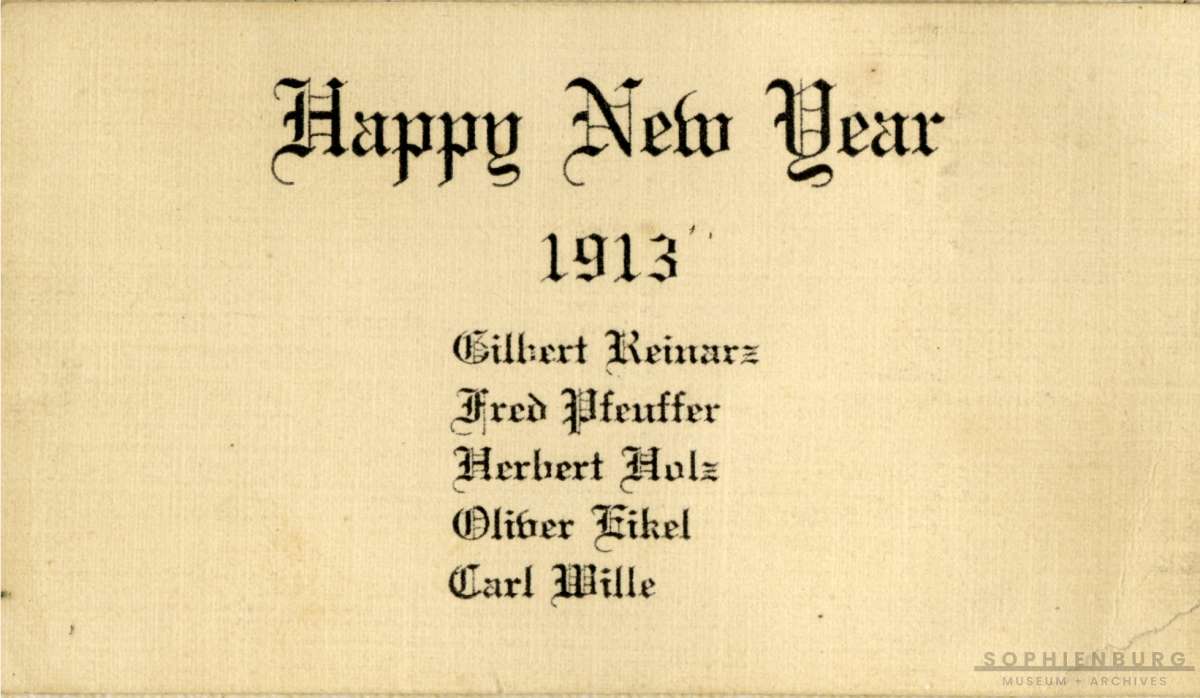
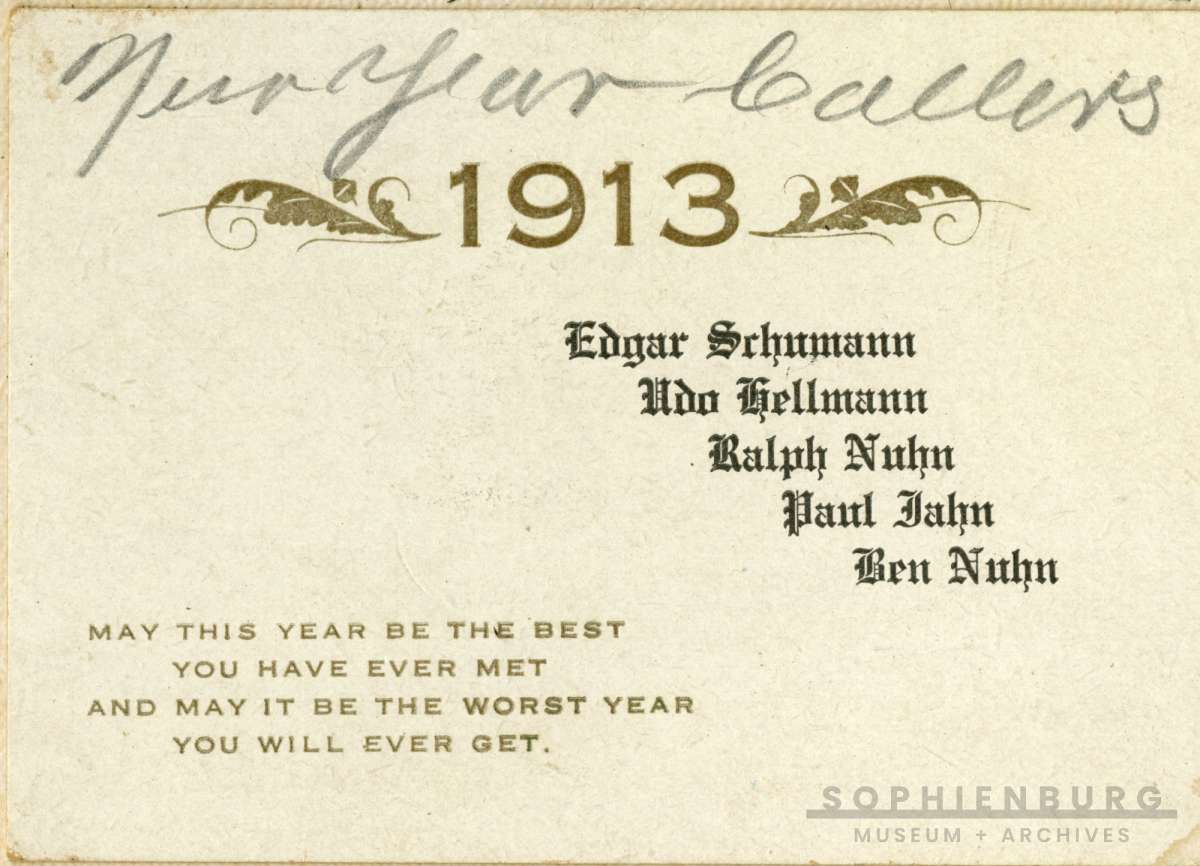
Captions: Three 1913 New Year’s Caller cards given to Emma Roth Wille who was a friend of both Kola Zipp and Erna Rhode. Note that the names on the cards are some of the men the women talk about in their recorded stories. Emma Roth married one of her callers — the destined to be Dr. Carl Wille. His name is the last name on the bottom of the plain card. New Year’s Day Calling worked for this couple!

By Keva Hoffmann Boardman —

“There was a little custom that, I think, has completely died out. It’s called New Year’s Callers.” So began a story told by local New Braunfels resident, Kola Albrecht Zipp. She was born in 1899 and remembered her older sisters participating in New Year’s Day Calling in the early 1900s.

Like me, you may wonder just what New Year’s Day Calling is. “Calling”, an old custom, was when one paid an informal visit to family friends and acquaintances. Its purpose was to renew old friendship ties or settle family differences. It required a calling card which announced the visitor’s name. It was rather restrained and elegant. Think about the young heroines meeting men in Jane Austen’s novels.

In the mid-1800s, it seems that the “Dutch” population in New York began a new custom which combined this old one of “calling” with what can only be described as the equivalent of a 19th-century dating app. Let me explain.

It became a New Year’s Day tradition for young single men to “call” on young single women during the afternoon. Often, a group of two to four men would visit a home where two or more women had gathered in anticipation. The men were welcomed into the best room of the house and served refreshments. The visit only lasted 10 to 15 minutes because there were a lot of “calls” to make. And that meant, there were more eligible young women with whom you made acquaintances. Yes, the guys were checking out the girls and vice versa. The calling cards made perfect tour tickets into the ladies’ homes. They would be left at the home and remind the women who had made the visit.

By the late 1800s, the New York New Year’s Calling scene began to look a lot like “speed dating.” It became a competition between the men as to who could visit the most houses and between the women as to see who would collect the most calling cards.

So, back to Kola Zipp and the New Braunfels rendition of New Year’s Callers. “The young men would hire a carriage from the livery stable and they’d go out on New Year’s afternoon and they’d go calling. The girls would stay home to welcome them and they just made the rounds of their girlfriends … the girls sort of expected them, you know?”

As for refreshments, “The girls would offer the boys wine. Mother always bought a gallon of wine for Christmas and a case of ginger ale. Oh, that was a treat, you know! And the New Year’s Callers would come in, and oh, they were a happy lot. Of course, by the time they’d get all around, they had a lot to be happy about!” (Wink wink!)

“This was from the time of my very oldest sisters … and some of their friends that came were Udo Hellmann, Herbert Voss, Ben Nuhn and Paul Jahn.” Check out the photo of the card to see their names.

Erna Heidemeyer Rhode, born in 1896, was also a local lady who remembered this interesting custom. “I was thinking back on an activity which happened on New Year’s afternoon. A boyfriend, of course — by that time we were teenagers and we each had a boyfriend — would rent a buggy or surrey from the livery stable. There were no cars at that time; maybe one or two boys had them. They would bunch up in fours or fives or whatever amount they could get into the rental buggy and they would come to the different houses and call on the girls. Usually, two or three girls would go together and be at somebody’s house. [The boys] would stay for maybe an hour or so, and if the house had a piano and one of the girls could play the piano, then we’d sing and we’d have refreshments for the boys. They’d stay for about an hour and then they’d go back … I mean, they’d leave and would go back to somebody else’s house where they got the same courtesy and entertainment.”

“I have pictures of two or three of these boys who used to come: Julius Voelcker, Erwin Shaw, Herbert Haus, Paul Young and Oliver Eikel. We’d dress up in long dresses, evening dresses, because it was a very special occasion. The house was decorated, flowers and everything, and it was quite an event.” If you look at the photo of the card with young men, you will find Julius Voelcker on the far right.

I wondered if these were chaperoned events for the young ones. It was a time when stricter conventions were in place for the interactions of men and women. Erna Rhode answered my question. “They might come in and shake hands and say hello … maybe bring in the refreshments, but it was all very permissible. This was the New Year’s custom.”

New Year’s customs sure have changed.

This year, while munching on snacks and watching football games, think back on those gentle times when young men and women set their sights on new relationships in the new year. Not a bad idea.

FYI: These memories and others have been collected and recorded at the Sophienburg Museum & Archives through the “Reflections” oral history program and can be accessed at the Sophienburg or the New Braunfels Public Library.


Sources: Sophienburg Museum’s “Reflections” programs #8 and #202; https://friendsppm.wordpress.com/2019/12/09/the-long-lost-custom-of-new-years-day-calling/; https://nycpast.org/2016/12/29/calling-in-new-york-a-new-years-day-tradition/.


“Around the Sophienburg” is published every other weekend in the New Braunfels Herald-Zeitung.

Great Job Alan King & the Team @ Sophienburg Museum and Archives for sharing this story.

Trump administration rolls out rural health funding, with strings attached

Trump administration rolls out rural health funding, with strings attached

States will share $10 billion for rural health care next year in a program that aims to offset the Trump administration’massive budget cuts to rural hospitals, federal officials announced Monday.

But while every state applied for money from the Rural Health Transformation Program, it won’t be distributed equally. And critics worry that the funding might be pulled back if a state’s policies don’t match up with the administration’s.

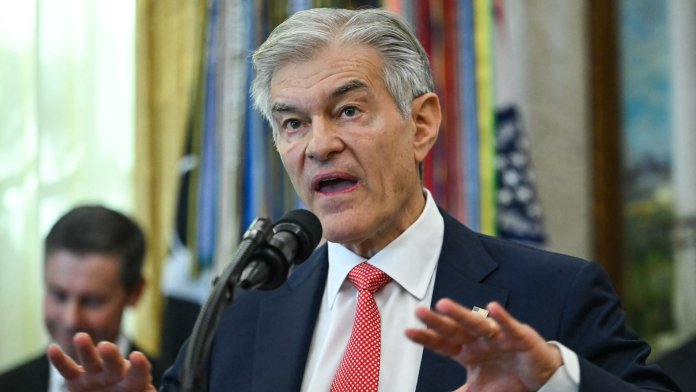
Officials said the average award for 2026 is $200 million, and the fund puts a total of $50 billion into rural health programs over five years. States propose how to spend their awards, and the Centers for Medicare and Medicaid Services assigns project officers to support each state, said agency administrator Dr. Mehmet Oz.

“This fund was crafted as part of the One Big Beautiful Bill, signed only six months ago now into law, in order to push states to be creative,” Oz said in a call with reporters Monday.

Under the program, half of the money is equally distributed to each state. The other half is allocated based on a formula developed by CMS that considered rural population size, the financial health of a state’s medical facilities and health outcomes for a state’s population.

The formula also ties $12 billion of the five-year funding to whether states are implementing health policies prioritized by the Trump administration’s “Make America Healthy Again” initiative. Examples include requiring nutrition education for health care providers, having schools participate in the Presidential Fitness Test or banning the use of SNAP benefits for so-called junk foods, Oz said.

Several Republican-led states — including Arkansas, Iowa, Louisiana, Nebraska, Oklahoma and Texas — have already adopted rules banning the purchase of foods like candy and soda with SNAP benefits.

The money that the states get will be recalculated annually, Oz said, allowing the administration to “claw back” funds if, for example, state leaders don’t pass promised policies. Oz said the clawbacks are not punishments, but leverage governors can use to push policies by pointing to the potential loss of millions.

“I’ve already heard governors express that sentiment that this is not a threat, that this is actually an empowering element of the One Big Beautiful Bill,” he said.

Carrie Cochran-McClain, chief policy officer with the National Rural Health Association, said she’s heard from a number of Democratic-led states that refused to include such restrictions on SNAP benefits even though it could hurt their chance to get more money from the fund.

“It’s not where their state leadership is,” she said.

Experts say fund is inadequate in face of other cuts

Oz and other federal officials have touted the program as a 50% increase in Medicaid investments in rural health care. Rep. Don Bacon, a Republican from Nebraska who has been critical of many of the administration’s policies but voted for the budget bill that slashed Medicaid, pointed to the fund when recently questioned about how the cuts would hurt rural hospitals.

“That’s why we added a $50 billion rural hospital fund, to help any hospital that’s struggling,” Bacon said. “This money is meant to keep hospitals afloat.”

But experts say it won’t nearly offset the losses that struggling rural hospitals will face from the federal spending law’s $1.2 trillion cut from the federal budget over the next decade, primarily from Medicaid. Millions of people are also expected to lose Medicaid benefits.

Estimates suggest rural hospitals could lose around $137 billion over the next decade because of the budget measure. As many as 300 rural hospitals were at risk for closure because of the GOP’s spending package, according to an analysis by The Cecil G. Sheps Center for Health Services Research at the University of North Carolina at Chapel Hill.

“When you put that up against the $50 billion for the Rural Health Transformation Fund, you know — that math does not add up,” Cochran-McClain said.

She also said there’s no guarantee that the funding will go to rural hospitals in need. For example, she noted, one state’s application included a proposal for healthier, locally sourced school lunch options in rural areas.

And even though innovation is a goal of the program, Cochran-McClain said it’s tough for rural hospitals to innovate when they were struggling to break even before Congress’ Medicaid cuts.

“We talk to rural providers every day that say, ‘I would really love to do x, y, z, but I’m concerned about, you know, meeting payroll at the end of the month,’” she said. “So when you’re in that kind of crisis mode, it is, I would argue, almost impossible to do true innovation.”


The Associated Press Health and Science Department receives support from the Howard Hughes Medical Institute’s Department of Science Education and the Robert Wood Johnson Foundation. The AP is solely responsible for all content.

Great Job Devi Shastri and Margery A. Beck | The Associated Press & the Team @ NBC 5 Dallas-Fort Worth for sharing this story.

Meta just bought Manus, an AI startup everyone has been talking about | TechCrunch

Meta just bought Manus, an AI startup everyone has been talking about | TechCrunch

Mark Zuckerberg has struck again.

Meta Platforms is acquiring Manus, a Singapore-based AI startup that’s become the talk of Silicon Valley since it materialized this spring with a demo video so slick it went instantly viral. The clip showed an AI agent that could do things like screen job candidates, plan vacations, and analyze stock portfolios. Manus claimed at the time that it outperformed OpenAI’s Deep Research.

By April, just weeks after launch, the early-stage firm Benchmark led a $75 million funding round that assigned Manus a post-money valuation of $500 million. General partner Chetan Puttagunta joined the board. Per Chinese media outlets, some other big-name backers had already invested in Manus at that point, including Tencent, ZhenFund, and HSG (formerly known as Sequoia China) via an earlier $10 million round.

Though Bloomberg raised questions when Manus started charging $39 or $199 a month for access to its AI models (the outlet noted the pricing seemed “somewhat aggressive . . . for a membership service still in a testing phase,”) the company recently announced it had since signed up millions of users and crossed $100 million in annual recurring revenue.

That’s when Meta started negotiating with Manus, according to the WSJ, which says Meta is paying $2 billion — the same valuation Manus was seeking for its next funding round.

For Zuckerberg, who has staked Meta’s future on AI, Manus represents something new: an AI product that’s actually making money (investors have grown increasingly twitchy about Meta’s $60 billion infrastructure spending spree).

Meta says it’ll keep Manus running independently while weaving its agents into Facebook, Instagram, and WhatsApp, where Meta’s own chatbot, Meta AI, is already available to users.

Techcrunch event

San Francisco
|
October 13-15, 2026

There is one wrinkle, however, which is that Manus, which launched eight months ago, has Chinese founders who founded parent company Butterfly Effect in Beijing in 2022 before decamping to Singapore in the middle of this year. Whether that raises flags in Washington remains to be seen, but Senator John Cornyn already dragged Benchmark for its investment in the company, asking back in May on X who thought it was “a good idea for American investors to subsidize our biggest adversary in AI, only to have the CCP use that technology to challenge us economically and militarily? Not me.”

Cornyn, a Texas Republican and senior member of the Senate Intelligence Committee, has long been one of Congress’s most vocal hawks on China and technology competition, but he’s hardly alone. Being tough on China has become one of the genuinely bipartisan issues in Congress.

Unsurprisingly, Meta has already told Nikkei Asia that after the acquisition, Manus won’t have any ties to Chinese investors and will no longer operate in China. “There will be no continuing Chinese ownership interests in Manus AI following the transaction, and Manus AI will discontinue its services and operations in China,” a Meta spokesperson told the outlet.

Great Job Connie Loizos & the Team @ TechCrunch Source link for sharing this story.

How Wiess Park Changed Into A Houston Outdoor Art Garden

How Wiess Park Changed Into A Houston Outdoor Art Garden

Wiess Park is one of the strangest parks in Houston, and it just got a bit more delightfully weird. Thanks to some recent investments from the Houston Parks Board, who has their headquarters there, it’s now also an open-air sculpture garden for seven Texas artists.

The park is a long, thin piece of land nestled between 610-W and Post Oak Boulevard that the city took over in 1941. In practice, it’s more of a miniature arboretum than a traditional park, though the wild part of the land isn’t quite thick enough to dampen the ever-present sound of the afternoon traffic along one of the city’s busiest highways. However, if you pack a set of earbuds and jog or walk the trails on a nice winter day, it’s quite magical. 

In early December, the Houston Parks Board unveiled a set of seven sculptures displayed between the walking trails and the sidewalks on Post Oak where drivers could also see them. It’s part of the Parks Board’s commitment to enriching the green community spaces around the city.

“The Art Trail at Wiess Park began with the vision of civic leader and our longtime board member Don Aron,” said Beth White, President & CEO, Houston Parks Board, in an email interview. “He saw an opportunity to bring art into the everyday experience of parkgoers in this neighborhood. As he shared the idea with neighbors, it quickly gained momentum, reflecting how deeply people value this park and the role public art plays in enriching daily life. What you see today is the result of true community collaboration. Houston Parks Board was honored to facilitate the partnership and process between Don Aron and Redbud Art Gallery, as this project was a natural fit for all partners involved.” 

The seven artists who contributed works are an eclectic lot. One is Michelle Matthews, a New Jersey-born artist that moved to Houston in 1981. Her sculpture is part of her Houston Monarch Story project. Monarch butterflies pass through Houston on their yearly migration. But a combination of habitat loss, pesticides, and climate change means the species is officially listed as endangered.

Photo courtesy of Jef Rouner

Matthews began installing her butterfly sculptures along Buffalo Bayou in 2024 and has been steadily expanding to other venues like Wiess Park. The eye-catching giant butterflies have a QR code near them that can be used to find out more about Monarchs and how people can help the species.

“The Monarch butterfly is a marvel of nature that flutters through our backyards every spring and fall,” said Matthews in an email interview. “Their bodies are the width of a pencil, with paper-thin wings that span about 4 inches. Responding to cues from nature, they make a 6,000-mile round-trip journey from Mexico to Canada. On the journey north, the Monarchs search for native milkweed, its host plant, the sole food source for its caterpillars, and the only plant where it will lay its eggs to produce the next generation that will continue the journey north. As the days become shorter and food sources disappear, the milkweed and pollinator plants go dormant, and the Monarch knows it is time to head back to Mexico. On the return journey, the Monarchs are in diapause. The same butterfly that arrived in Canada will make the trip south, fattening up for the 3,000-mile journey, feasting on nectar-rich plants as it goes. Once it reaches Mexico in late November, the Monarchs roost in Oyamel fir forests until nature cues it is time to fly south. This is just one fact that intrigues me about the Monarch. Art is my way of spreading awareness about the Monarch butterfly.”

Paul Kittelson’s contribution is less ecological, but no less striking. Cowboy Shiva mixes the multi-faceted portrayals of Buddhist and Hindu deities with classic cowboy iconography, giving the statue a kind of down-home extra-dimensionality. 

Kittelson is one of the city’s most prolific public artists. His statues and creations can be found all over Houston, even adorning the freeways. Born in Minnesota before heading to Houston to complete his MBA in 1985, Kittelson has wandered across the nation absorbing the various symbols and imagery. The cowboy is one of his favorites.

“I’ve spent most of my life in the west, traveling between California, Houston and the Black Hills of South Dakota,” he said in an email interview. “The cowboy cutout is as much a part of the western landscape as Dairy Queens and bales of hay. Americans love cowboy mythology and everything it represents. Like most myths the image of the cowboy is not all it seems. In fact, it is as much of an illusion as the silhouette itself.”

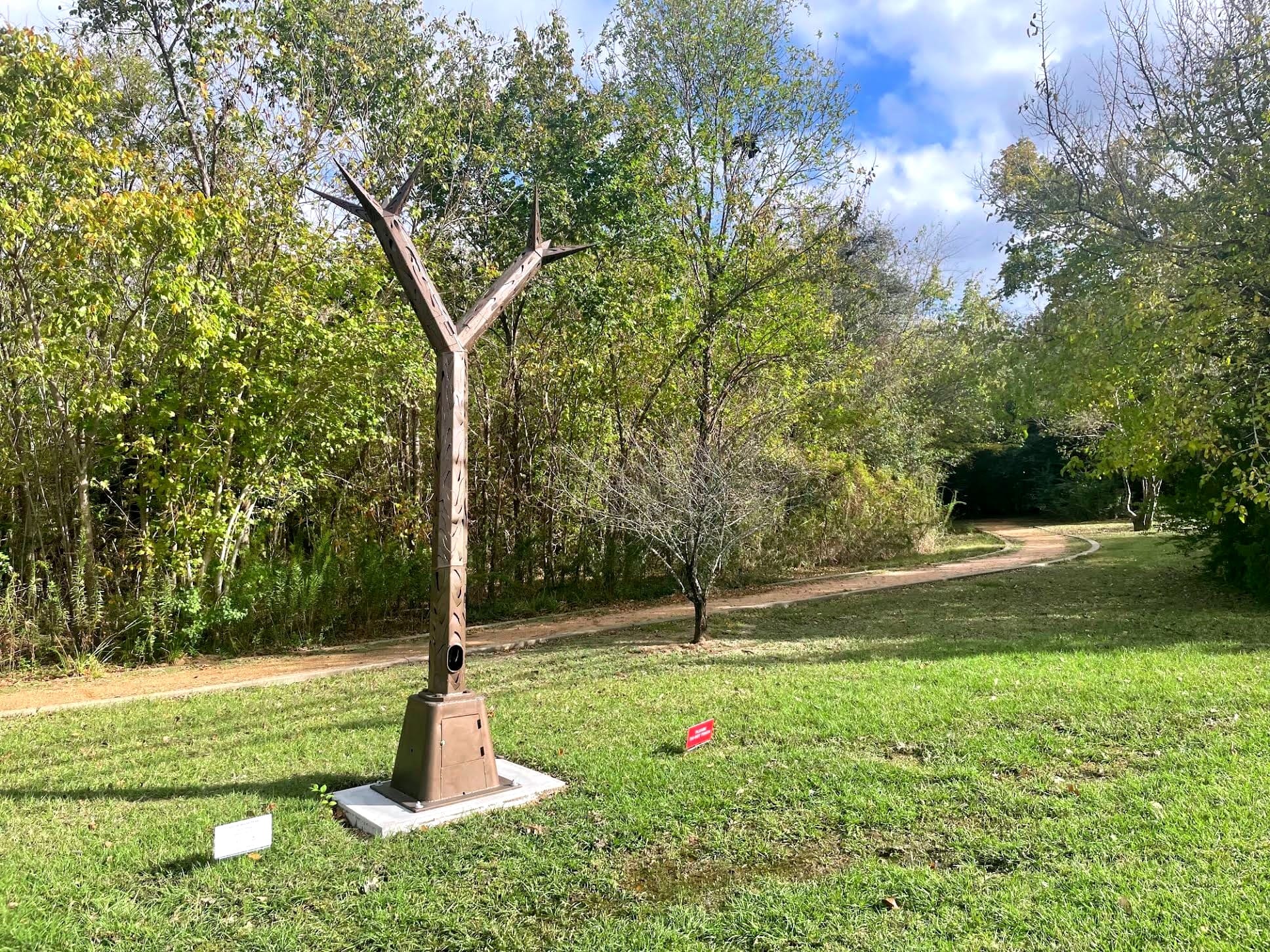
Wandering through the trails, the easiest statue to miss is that of Tim Glover. This is not an accident. Liberty Tree is a strange mix of the industrial and the natural, a perfect piece for something that is supposed to be both part of the tree-strewn park and one of the priciest neighborhoods in Houston. In some ways, it serves as a barrier marker.

How Wiess Park Changed Into A Houston Outdoor Art Garden
Photo courtesy of Jef Rouner

Made from a reclaimed telephone pole, Liberty Tree looks like a small, denuded tree at first glance. It’s only when you get close that the industrial lines get clearer. Is it a mechanical mind’s mockery of the world we paved over, or a tribute to trees from the orphaned inheritors of the natural space? Hard to tell, but it fits right in at Wiess Park, sparking conversations about the need for green spaces and the role of art in them.

“I am fascinated with found objects, especially industrial surplus which is abundant in Houston,” Glover said in an emailed interview. “I find all kinds of associations in these treasures. They also ground my sculpture to the region where they are created. I have had the privilege of contributing my artwork to many community projects in Houston over the years.  Although each project has been different in design and scope, they all used art as a way to engage the community in a sense of place, pride and togetherness. Public art can provide an uplifting experience in an outdoor setting.”

Great Job Jef Rouner & the Team @ The Texas Signal for sharing this story.

‘What the Hell’: The White House Claims Trump’s Measurements Match Pro Athletes, but a New Photo Is About to Ruin That Theory

‘What the Hell’: The White House Claims Trump’s Measurements Match Pro Athletes, but a New Photo Is About to Ruin That Theory

The White House has repeatedly issued official reports detailing Donald Trump’s health and weight, often alongside his own comparisons to professional athletes. But as images of the president circulate, many viewers say the figures don’t seem to match what they’re seeing.

While hosting Ukrainian President Volodymyr Zelenskyy at Mar-a-Lago, a single image, taken from behind, circulated online, drawing renewed focus to Trump’s appearance and his noticeable weight change over the years.

‘What the Hell’: The White House Claims Trump’s Measurements Match Pro Athletes, but a New Photo Is About to Ruin That Theory
A single photo from Trump’s Zelenskyy meeting reignited online debate over his actual weight. (Photo by Win McNamee/Getty Images)

‘He’s Done with Trump Lying’: Trump Tried to Power Over Zelensky But He Shut It Down with One Sentence and the Cameras Caught the Awkward Fallout

Trump has long been known for managing his image closely, even blasting Time magazine for showing off his fleshy neckline, which made the unguarded angle stand out. What might have otherwise been a routine photo from a high-profile meeting instead became a visual many felt clashed with the version of Trump typically presented by his team.

When Threads posted the image, many people weighed in. The reactions that followed were immediate and blunt.

“Trump looks like a WHALE,” one commenter said.

Another user framed the moment as unavoidable, writing, “When your own propaganda photographer is like ‘Gah, can’t find an angle.’”

As the photo circulated, attention narrowed to Trump’s build and proportions.

“What the hell is going on with his shoulders? He looks like a comic book villain,” one person wrote, while others leaned into comparisons rather than commentary.

Some said the silhouette reminded them of “The Penguin,” while another compared him to “that character from Into the Spider-Verse.”

The remarks focused less on policy and more on how dramatically the image differed from Trump’s usual presentation.

The renewed attention fed into a long-running debate over Trump’s height and weight. For years, official health reports have listed him at 6 feet 3 with a weight that places him just below clinical obesity. Those numbers have repeatedly been met with skepticism, especially when paired with photographs critics argue tell a different story. The Mar-a-Lago image gave fresh momentum to doubts that had never fully gone away.

Online comparisons quickly resurfaced, placing Trump beside professional athletes who share similar reported measurements.

Side-by-side images circulated widely, with viewers pointing out stark contrasts between Trump’s physique and the muscular builds of strength-trained players. One comparison that gained traction involved an NFL wide receiver, prompting renewed ridicule over how identical numbers on paper could translate into such visibly different bodies.

The scrutiny hasn’t been limited to candid photographs. Trump’s official portrait has also come under fire, particularly after a recently unveiled White House portrait drew criticism.

Intended as an honor, supporters praised the portrait as powerful, pointing out his noticeably slimmer depiction, but critics argued it appeared aspirational rather than realistic, reinforcing concerns about image management.

Health assessments have done little to quiet the discussion.

Trump’s doctor has repeatedly declared him to be in excellent condition, including claims that his heart functions significantly younger than his actual age. While meant to reassure, those reports have often fueled further skepticism when paired with recent photos. Online, medical summaries were quickly weighed against visual evidence, with many concluding the images carried more weight than written evaluations.

The Zelenskyy visit photo landed at the intersection of these ongoing conversations. It wasn’t dramatic or confrontational. Its impact came from its simplicity. Shot from behind, it captured Trump without the familiar front-facing control, allowing viewers to form their own conclusions.

“Wow….Donnie looks like he’s 350 at least…. #IMPEACHDonnie,” one person wrote, summing up a sentiment that spread rapidly as the image continued circulating.

Ultimately, the reaction wasn’t about a single photograph or a single meeting. It reflected a broader tension between curated presentation and unfiltered visuals.

Trump’s team continues to stand by specific measurements and glowing assessments, while candid images repeatedly challenge those claims. In an era where photos travel faster than explanations, perception often solidifies before clarification arrives.

That is why the image lingered. Not because it revealed something new, but because it revived a debate Trump has never been able to put to rest. When the camera catches an angle he can’t control, the conversation inevitably follows.

Great Job Nicole Duncan-Smith & the Team @ Atlanta Black Star Source link for sharing this story.

Secret Link