Two things I always watch for with supplements, even with guidance from my doctor: Does it have a CGMP certification, and is there any data to back up the marketing claims? CGMP stands for “Current Good Manufacturing Process,” which are FDA guidelines put in place for a product’s safety. This includes where and how it was made, as well as what it was made of. But even with this kind of baseline, it’s hard to tell what additives are used in a supplement and how that can counteract its effects or react with your body chemistry.
So, Can I Take Melatonin or Not?
I tell you these things out of an abundance of caution. If your doctor gives you the go-ahead to use melatonin, follow their advice. Kuhlmann says he advises his patients to start at 3 milligrams but to never take more than 10 milligrams. For kids, he also urges speaking to a pediatrician and/or a sleep medical professional.
Melatonin also can’t do all the heavy lifting, and timing is crucial. As part of maintaining good bedtime habits, he also emphasizes the importance of taking it on time, at the same time, nightly. This will help establish the wind-down routine your brain follows via its circadian rhythm; as we established earlier, melatonin is supposed to lead this process.
Photograph: Molly Higgins
Onnit
Instant Melatonin Mist
If you’re keen on keeping melatonin in your bedtime routine, WIRED reviewer Molly Higgins tested and recommends Onnit’s Instant Melatonin Spray, which comes in two flavors: mint and lavender. (She tested the latter.) The standard serving size—six oral sprays—equals 3 milligrams of melatonin, which she found immediately made her sleepy. She did find she needed to increase her dosage over time to attain the same result, but, as we established above, it’s best to stay within the 10 milligram threshold.
For those of you who are just researching options, consider these alternatives. Diet and exercise, as tired as you may be of hearing that, really are essential to getting good, quality sleep. Case in point: You took a CrossFit class for the first time and are ready to conk out right after you manage to get dinner and a shower. Something else to consider: Perhaps relying on melatonin or a sleep supplement is treating a symptom you’re dealing with, as opposed to the actual issue impacting your sleep.
Bedtime Habits
Photograph: Martin Cizmar
LectroFan
High Fidelity White Noise Machine
It’s hard to overstate the importance of sleep hygiene and bedtime routine habits—a sleep supplement won’t be the end-all and be-all. Also, no caffeine after a certain time of day—you know your body best, but I’d say early afternoon at the very latest. Also, I’m sorry to my fellow readers and late-night scrollers, but devices need to be put away an hour or more before bedtime. Blue light that radiates from devices’ screens mimics that of sunlight, and your brain can’t discern the difference. All it knows is there’s still “daylight” that you need to be awake for, and that prolongs the falling-asleep process.
Other alternatives to supplements in the pursuit of better sleep can include sound machines (my favorite is above), where various frequencies of noise lull you to sleep. We’ve also tested sleep gadgets pretty extensively to not only get us to sleep, but also maintain deep sleep.
And maybe melatonin is a different sort of band-aid over the reality of your sleep situation, meaning that your mattress may need to be replaced. We have plenty of mattresses we’ve tested for every kind of sleeper, along with the best sheets and pillows. Supplements may not be the answer, after all, but more of a sleep space upgrade—all things to consider!
Great Job Julia Forbes & the Team @ WIRED Source link for sharing this story.
Secure yard decorations, winds can gust up to 40 mph
A Wind Advisory is in effect for gusty winds as the front approaches (Copyright KSAT-12 2025 – All Rights Reserved)
FORECAST HIGHLIGHTS
WIND ADVISORY: Wind gusts up to 45 mph
RAIN CHANCES: Minimal but still present
COOLER MORNINGS: Near freezing morning temps
FORECAST
Get ready San Antonio, the cold front arrives today!
TONIGHT’S COLD FRONT
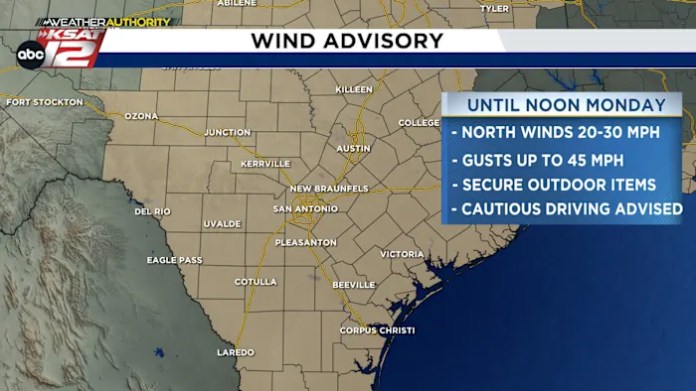
A Wind Advisory is in effect for all of South-Central Texas, starting tonight at 6 p.m. through noon Monday. North winds will increase to 20-30 mph with gusts up to 45 mph behind the front. Secure loose yard items and be cautious if traveling.
A Wind Advisory is in effect for gusty winds as the front approaches (Copyright KSAT-12 2025 – All Rights Reserved)
The cold front isn’t only bringing the winds, it’s also bringing a brief chance at some rain! Scattered rain is likely during the front’s arrival late tonight for most of us, with a 20 to 30 percent chance. Near the coastal plains however, the rain could linger a little longer. Don’t be surprised if the roads are damp.
A small chance of rain is possible tonight (Copyright KSAT-12 2025 – All Rights Reserved)
TEMPERATURES
Thanks to the cold front moving through, we will see cooler air will settle over the region. Specifically for the first half of the week. Chilly temperatures will combine with breezy winds to produce wind chills in the mid-20s to upper 30s Monday morning. A light freeze is possible Tuesday and Wednesday mornings.
7 Day Forecast (Copyright KSAT-12 2025 – All Rights Reserved)
Daily Forecast
KSAT meteorologists keep you on top of the ever-changing South Texas weather.
Shelby Ebertowski joined KSAT 12 News in January 2025. She came to San Antonio from Fargo, North Dakota via the University of North Dakota, where she learned the ropes as a weekend forecaster over two years at KVLY. Her love of weather love began after experiencing Hurricane Harvey in 2017.
Great Job Shelby Ebertowski & the Team @ KSAT San Antonio for sharing this story.
by The FWR Staff, Fort Worth Report December 27, 2025
By Matthew Eubanks
I moved to Fort Worth about five years ago, during the peak of the COVID-19 pandemic. I was still in my senior year of high school, which made the transition especially difficult. Adjusting was overwhelming, but Fort Worth slowly began to feel like home.
Fast forward to 2025, and I can honestly say this past year has been one of the hardest I’ve experienced.
I was living in The Cooper apartment complex on Rosedale Street when a devastating fire broke out, causing massive damage to the complex and displacing over 800 residents, including me. In a matter of hours, I lost nearly everything I owned.
All of my furniture and personal belongings were destroyed, including some items that held deep sentimental value. One of the hardest losses for me was my acoustic guitar, something I cherished and still miss to this day.
I was present when the fire first started and witnessed firsthand how terrifying and traumatic an event like that can be. I vividly remember residents screaming and crying as they stood in the grass, helplessly watching their homes burn.
It was a scene I will never forget. Once the initial shock wore off, I had to quickly shift into survival mode and figure out my next steps. For the first few nights, I stayed in a hotel before temporarily moving in with my dad. Eventually, I found a studio apartment downtown, where I currently live.
While I am thankful to have a roof over my head, the experience at The Cooper left a lasting impact on me. To be honest, it has made me uneasy about apartment living in general. I still struggle to feel fully safe and comfortable in my current studio, as it resembles The Cooper in some ways. I am looking forward to my lease ending next year, and I hope to rent a house with roommates where I can finally feel more secure and settled.
Despite everything, my experience living in the Near Southside had its positives. The area has a unique charm that I truly miss.
There are so many cute local shops and amazing restaurants along Rosedale Street and Magnolia Avenue that make the neighborhood feel vibrant, welcoming and family-driven. Parents with their kids walk around, visiting the small mom-and-pop restaurants and shops.
If you ever have the chance to explore the area, I highly recommend it. One of my personal favorite spots is Pie Tap Pizza.
From communications support, to financial aid, to free meals, to opening up their homes, the neighborhood quickly came together after the fire to support us victims. Through multiple Facebook groups and in-person meetings, The Cooper residents also united in being there for each other. The Red Cross was another huge help for me personally, as they took direct action to help immediately after the fire.
Living in the Near Southside challenged me in ways I never expected, but it also taught me resilience and adaptability. While my journey included loss and hardship, it also helped shape who I am today.
I am hopeful for what the future holds and grateful for the lessons I’ve learned along the way.
Matthew Eubanks is a barista at a coffee shop near downtown Fort Worth. He’s lived in Fort Worth for about five years.
Education No degree: 18% High school: 22% Some college: 20% Bachelor’s degree: 26% Post-graduate: 15%
Race White: 58% | Asian: 4% | Hispanic: 26% | Black: 10% | Two or more: 2%
Click on the link to view the schools’ Texas Education Agency ratings:
This <a target=”_blank” href=”https://fortworthreport.org/2025/12/27/where-i-live-former-cooper-resident-recovering-from-tragic-loss-in-fire/”>article</a> first appeared on <a target=”_blank” href=”https://fortworthreport.org”>Fort Worth Report</a> and is republished here under a <a target=”_blank” href=”https://creativecommons.org/licenses/by-nd/4.0/”>Creative Commons Attribution-NoDerivatives 4.0 International License</a>.<img src=”https://i0.wp.com/fortworthreport.org/wp-content/uploads/2021/04/cropped-favicon.png?resize=150%2C150&quality=80&ssl=1″ style=”width:1em;height:1em;margin-left:10px;”>
The past year had a combination of policy fiascos, natural disasters and a steady march toward a future that is too hot.
Many of the major events of 2025 flowed from the decision by U.S. voters to return Donald Trump to the White House with Republican majorities in Congress. The Trump administration’s dismantling of environmental protection rules was more far-reaching than even some of the most pessimistic expectations.
On the world stage, the United States largely ceded its leadership role in climate policy, and, by its absence, helped solidify China’s status as the ascendant power.
It wasn’t all bad. The world took significant steps forward with growing market share for solar power and electric vehicles. China led the way on both fronts.
Here is what happened through the lens of Inside Climate News reporting:
January
The year began with wildfires in the Los Angeles area, displacing thousands of people. California Gov. Gavin Newsom declared a state of emergency.
The warm and dry conditions that increased the fire risk were linked to ongoing increases in global temperatures. Early in the month, international agencies reported that the world’s average surface temperature in the previous year was the highest on record and that the temperature was more than 1.5 degrees Celsius above the pre-industrial average, as Bob Berwyn reported. These were grim findings, given that global organizations had worked for years to avoid this threshold of warming because of fears of irreversible damage.
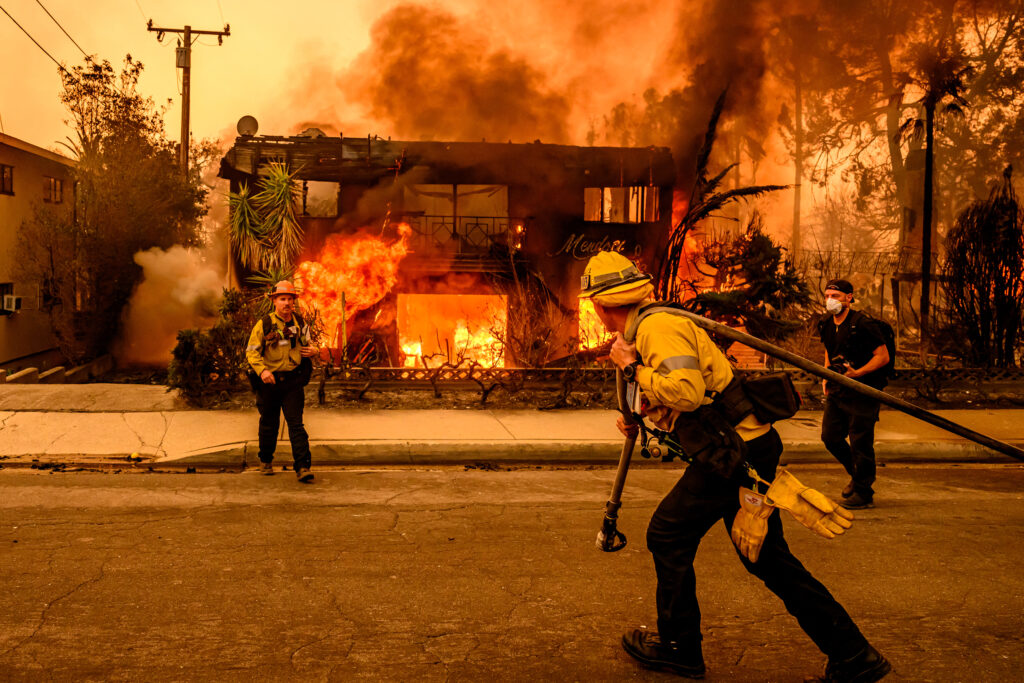
Firefighters work to extinguish flames as an apartment building burns during the Eaton Fire in Altadena on Jan. 8. Credit: Josh Edelson/AFP via Getty Images
Khaled Fouad (left) and Mimi Laine embrace as they inspect a family member’s property that was destroyed by the Eaton Fire. Credit: Justin Sullivan/Getty Images
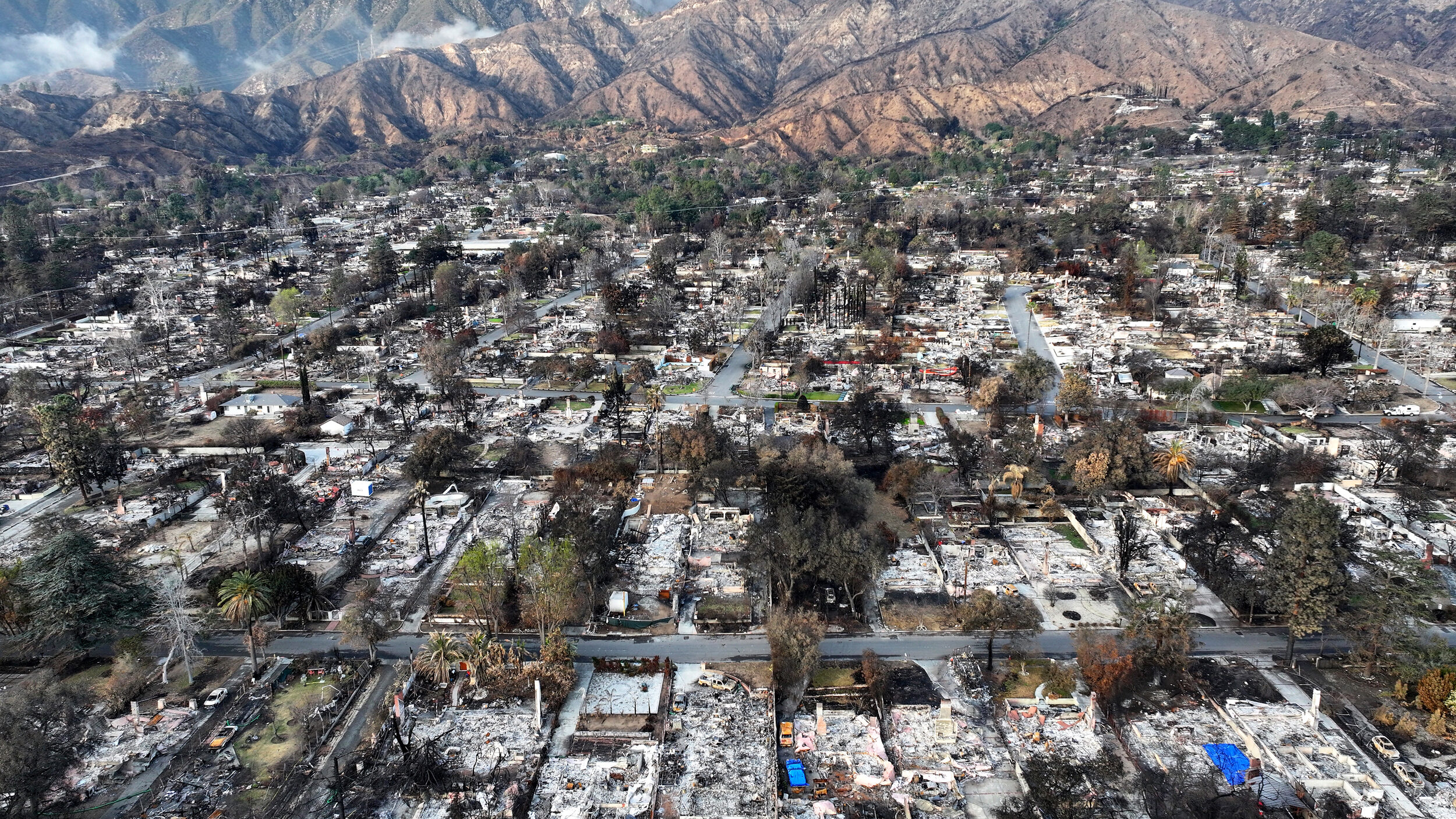
An aerial view shows homes burned in the Eaton Fire on Feb. 5 in Altadena, Calif. Credit: Mario Tama/Getty Images
On Jan. 20, Donald Trump took office and immediately issued executive orders to kickstart his agenda of expanding the use of fossil fuels, discouraging renewable energy and weakening environmental regulations. The scope of the orders turned out to be an accurate indication of what lay ahead.
For environmental advocates, one of the tragedies was that the outgoing administration of President Joe Biden had taken many steps to embrace a clean energy economy and combat climate change, but its efforts had barely begun by the time Trump returned to office, as Marianne Lavelle reported.
“Two things are true,” said Stevie O’Hanlon, spokesman for the climate advocacy group Sunrise Movement. “One is that President Biden did more than any other president to tackle the climate crisis and really kick-start development of a renewable energy economy. That is historic and really game-changing. And at the same time, oil and gas production is at record highs, and the policies that Donald Trump is foreshadowing spell out the worst reality for our generation’s future.”
President Donald Trump holds his signed executive order announcing the U.S. withdrawal from the Paris Agreement during the inaugural parade inside Capital One Arena on Jan. 20 in Washington, D.C. Credit: Jim Watson/AFP via Getty Images
February
After the initial executive orders, the Trump administration barely paused before moving on to make deeper cuts and reshape the government. Tesla CEO Elon Musk joined the administration to lead the newly formed Department of Government Efficiency, which oversaw widespread layoffs and the rescission of previously approved grants.
The Environmental Protection Agency was hit especially hard, including mass layoffs of staff members hired during the Biden administration to lead climate and pollution programs, as Aman Azhar reported. Groups representing federal employees would later sue to stop some of the layoffs, leading to ongoing legal challenges.
Interior Secretary Doug Burgum issued an order on his first day on the job to expand the parcels of public land available for oil and gas drilling, weaken protections for migratory birds and make it more difficult to develop wind and solar power.
EPA Administrator Lee Zeldin talks with reporters on Feb. 18 at the agency’s headquarters in Washington, D.C. Credit: om Williams/CQ-Roll Call, Inc via Getty Images
Some of the changes verged on the absurd, such as when federal employees arrived at work and found that their preferred pronouns had been removed from email signatures and federal websites, part of the administration’s desire to combat what it called “gender ideology extremism.”
“Folks are afraid to turn their computers on,” said Marie Owens Powell, president of the American Federation of Government Employees, Council 238, a union that represents more than 8,000 EPA employees. “They don’t know what message will be coming out next.”
March
Opponents of Trump’s agenda, with few allies in positions of power, devoted much of their energy to lawsuits and public demonstrations.
Scientists gathered to protest across the country and in Europe as part of a campaign called Stand Up for Science. Participants sought to highlight the human harm of cutting scientific research funding. Among the signs in the crowd in San Francisco: “Up and atom. Stand up for science.” “It’s time to react.” “We want scientific data not alternative facts.”
“This is going to affect everybody, whether you have a loved one who is sick and is waiting for the cures of tomorrow, if you benefit from vaccines or from being able to get good, up-to-date information on the CDC website about a flu outbreak,” Amanda Rabinowitz, a neuropsychologist and federally funded researcher, said at an event in Philadelphia.
Protesters outside Philadelphia’s City Hall watch speeches during a Stand Up for Science rally on March 7. Credit: Kiley Bense/Inside Climate News
In Texas, local governments went to court to try to prevent a company from pumping massive amounts of groundwater to help support rapid residential development. This was part of a broader trend across the country, underscoring how water scarcity could shape the economy in the near future, as Dylan Baddour reported.
“Water is the new oil,” said Alan Day, manager of Brazos Valley Groundwater Conservation District.
ICN launched its Project China series, tracing that country’s growing influence on worldwide infrastructure construction, including energy projects. The series began with a report from Katie Surma that documented the scope of China’s Belt and Road Initiative and the environmental harm of a dam in Argentina.
A wild guanaco stands before the halted construction site of the Néstor Kirchner (Condor Cliff) dam on Feb. 1 in Argentina. Credit: Katie Surma/Inside Climate News
April
The Trump administration reached the 100-day mark, traditionally a period when a president takes credit for a long list of accomplishments. There was little doubt that Trump had succeeded in disrupting the government through layoffs, budget cuts and regulatory changes. But he struggled to demonstrate that the changes were producing tangible benefits for the country, especially when it came to climate and the environment.
“It is not an overstatement to say that the Trump administration has launched the worst White House assault in history on the environment and public health. Day by day and hour by hour, the administration is destroying one of the signature achievements of our time,” said Manish Bapna, the president and CEO of the environmental nonprofit Natural Resources Defense Council, referring to Biden’s Inflation Reduction Act. “If this assault succeeds, it could take a generation or more to repair the damage.”
The EPA and National Park Service were among the several government agencies affected by budget cuts and layoffs in the early months of the Trump administration. Al Drago and David Calvert/Getty Images
ICN highlighted the harm of the administration’s support for liquified natural gas exports. Phil McKenna and Peter Aldhous analyzed data showing that a single year of greenhouse gas emissions from tankers carrying LNG from the United States was enough to offset the annual emissions reductions attributable to all electric vehicles on U.S. roads.
The Trump administration proposed a rule to rescind many of the habitat protections for species listed under the Endangered Species Act. The new rule would open the door for development in places that would significantly disrupt critical habitat for species listed under the act, as Kiley Price and Wyatt Myskow reported.
A logging operation on a patch of the White Mountain National Forest in New Hampshire. Credit: Andrew Lichtenstein/Corbis via Getty Images
The administration’s deregulatory agenda extended to the oceans with an executive order promoting deep-sea mining. The order applied to U.S. and international waters, raising fears from scientists who warned of risks to fragile ecosystems, as Teresa Tomassoni reported.
Pope Francis, who made climate and environmental stewardship a key part of his papacy, died at 88, as Kiley Bense reported. In a 2015 letter, Francis wrote that climate change is a “global problem with grave implications,” and he wrote about the disproportionate harm to people living in poverty. Climate activist and author Bill McKibben called Francis “perhaps our greatest environmental leader.”
May
The growth of data centers was one of the factors leading to a nationwide surge in electricity demand. Companies invested heavily so they could increase capacity for cloud computing and artificial intelligence. But the public was largely left in the dark.
In Bessemer, Alabama, residents couldn’t get answers to seemingly reasonable questions about what a large new data center would mean for the community, as reported by Lee Hedgepeth and Lanier Isom.
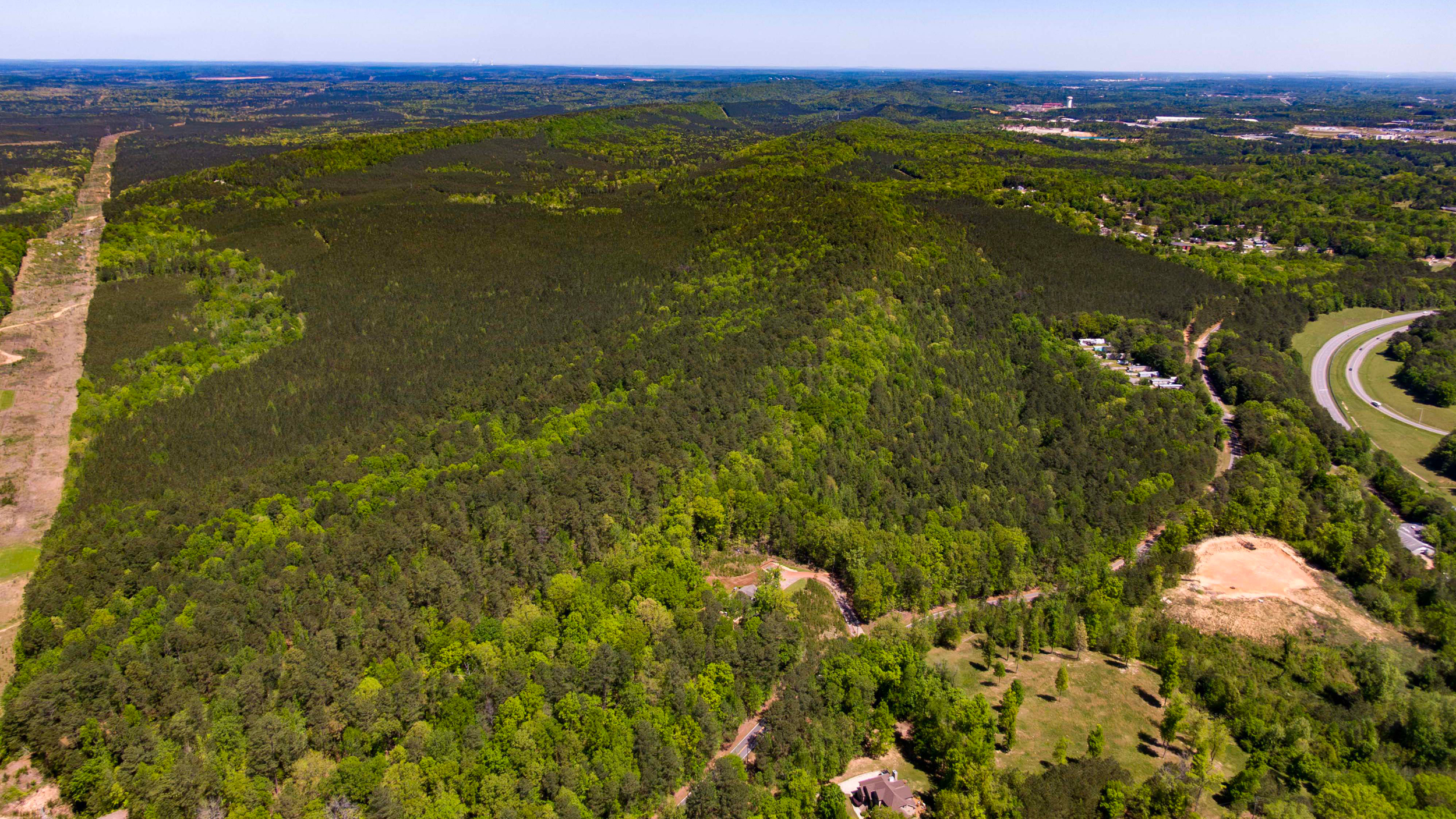
The site of a proposed data center in Bessemer, Ala., is currently a nearly 700-acre wooded plot. Construction would require the clear-cutting of more than 100 acres. Credit: Lee Hedgepeth/Inside Climate News
“This is about protecting property owners’ rights to protect their land from money-grabbing AI developers who have devastated many, many communities across the country,” said Reginald McDaniel, the residents’ attorney.
As summer approached, much of the country suffered from drought. In Texas, oil and gas companies used billions of gallons of water from the Rio Grande and Pecos rivers over the last four years to support drilling, a fact revealed through reporting by Martha Pskowski. This use of scarce resources infuriated people who depend on the rivers.
A view an offshore wind turbine installation jack-up vessel called the Sea Installer on Aug. 17, 2023, in New Bedford, Mass. Credit: David L. Ryan/The Boston Globe via Getty Images
Climate activists march across the Brooklyn Bridge on Aug. 9 to demand that New York Gov. Kathy Hochul stop the construction of the Williams Northeast Supply Enhancement pipeline. Credit: Michael Nigro/Pacific Press/LightRocket via Getty Images
One recurring theme in the first few months of the Trump administration was an attempt to slow or stop offshore wind energy development. Among the few bright spots for offshore wind happened when New York Gov. Kathy Hochul, a Democrat, persuaded the administration to lift a stop-work order for the Empire Wind project south of Long Island.
Observers at the time speculated that Hochul had agreed to allow for natural gas pipeline infrastructure to be built in the state in exchange for action on Empire Wind, which Hochul’s staff denied. And yet, months later, the state took steps to allow a gas pipeline project to proceed.
June
For the first time in decades, the United Nations held climate talks without an official delegation from the United States. The United Nations Framework Convention on Climate Change, held in Bonn, Germany, was a round of meetings for technical groups ahead of COP30 to be held in Brazil a few months later.
But a coalition called American Is All In, which includes cities, states, faith groups, tribes, universities and others, attended the conference with the goal of contributing to progress, as Bob Berwyn reported.
Delegates gather at the World Conference Center for a U.N. Framework Convention on Climate Change meeting in Bonn, Germany. Credit: Lara Murillo/U.N. Climate Change
Sweltering weather arrived in much of the country. Rising heat has included hotter nights, which can be harmful to human health. The level and duration of heat were unusual for June and posed a threat to anyone without adequate cooling or hydration, said an advisory from the National Weather Service.
Aman Azhar reported on extreme heat from Karachi, Pakistan. He described a city in which the rich live in temperature-controlled mansions while millions of the poor endure exposure to the elements and weather-related turmoil. Urban centers such as Karachi are vulnerable to extreme heat because of scorching summertime temperatures and clusters of heat-retaining structures.
“Winters used to mean sweaters,” said Sherry Rehman, a longtime Pakistani senator and former federal minister for climate change. “Now it’s summer nearly all year.”
A child pours water over himself to cool off during a heat wave at a cattle market in Karachi on May 31. Credit: Rizwan Tabassum/AFP via Getty Images
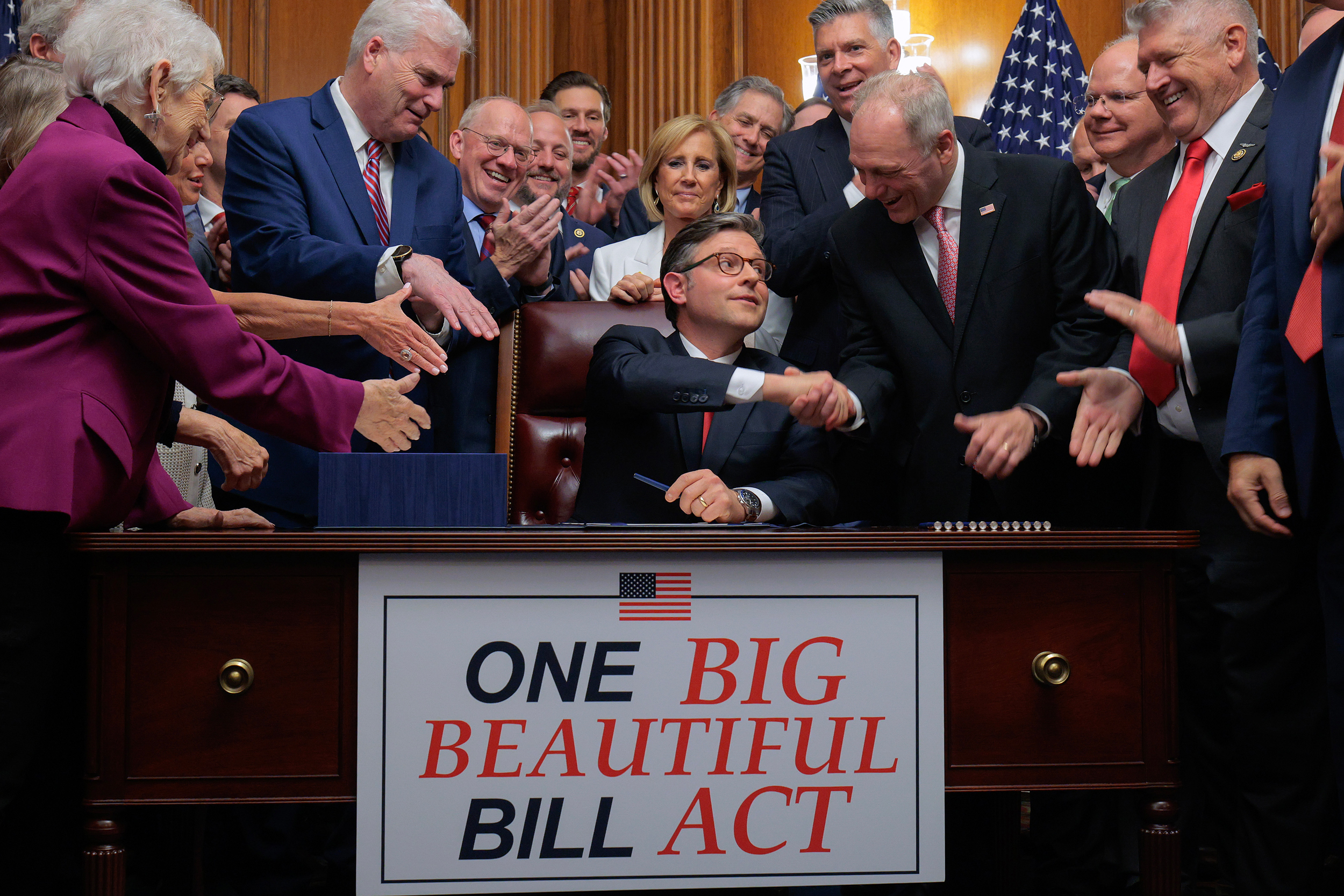
That gave the Trump administration a major legislative accomplishment that seemed to signal that the energy transition had hit a speed bump and fossil fuels would have an advantage in the U.S. market for the foreseeable future.
Production line workers assemble EV parts at the Ford Rouge Electric Vehicle Center in Dearborn, Michigan. Credit: Jeff Kowalsky/AFP via Getty Images
A view of Warrior Met’s Coal Mine No. 5 in Brookwood, Ala. Credit: Andrew Lichtenstein/Corbis via Getty Images
Speaker of the House Mike Johnson (center) is congratulated by his fellow Republicans after signing the One Big Beautiful Bill Act at the U.S. Capitol on July 3. Credit: Chip Somodevilla/Getty Images
But some Republicans raised concerns that the bill didn’t go far enough to hinder development of wind and solar. They sought assurances from Trump, who responded by issuing an executive order saying the country would “end taxpayer support for unaffordable and unreliable ‘green’ energy sources.” It wasn’t clear how the order did anything different from what the bill had done, and it remains unclear.
For many analysts, it made little sense to slow the development of certain energy resources at a time when the country needed a rapid build-out of power plants to meet projected demand, as Aidan Hughes reported.
The consequences of demand growth came into focus when PJM Interconnection, the company that oversees the country’s largest grid region, held an auction that led to higher prices to obtain enough power plant capacity, as Rambo Talabong reported. Consumers in PJM’s territory, which stretches from New Jersey to Chicago, would soon see some of the ramifications in the form of higher electricity bills.
A view of the PJM Interconnection control room in Valley Forge, Pa. Credit: PJM Interconnection
Meanwhile, the Trump administration continued to weaken environmental protection rules. The EPA announced plans to revoke the “endangerment finding,” which is the legal underpinning of the agency’s ability to regulate climate-warming gases, as Wyatt Myskow reported. The rule change marks a significant shift in EPA’s role, one that environmental advocates say is likely to embolden polluters.
Tropical Depression Chantal dumped water in North Carolina, leading to severe flooding. The state worked to recover at the same time that the legislature was pushing through a bill that would weaken climate and clean energy regulations, as Lisa Sorg reported. Scientists have shown a relationship between global warming and an increasing severity of storms.
“I can’t overstate how removing our carbon goal is not a good idea,” said Rep. Pricey Harrison, a Democrat from Guilford County. “This bill promotes natural gas and nuclear at the expense of cleaner energy sources. It’s not balancing environmental goals.”
August
In Geneva, Switzerland, United Nations talks on reducing plastic pollution ended without an agreement. The participants found little common ground in assessing the scale of the problem and determining enforceable solutions. The result was a disappointment to advocates and others who have grave concerns about the climate and health effects of vast quantities of plastic waste.
The Trump administration and Florida Gov. Ron DeSantis drew criticism over the hastily constructed Everglades detention site for undocumented migrants, called Alligator Alcatraz. Federal and state officials characterized the area as a treacherous swamp. But this remote region of the Everglades is home to the Miccosukee people who view the land as sacred, as Amy Green reported.
Delegates rest outside of the assembly hall in Geneva, after talks aimed at striking a landmark treaty on plastic pollution ended with no consensus. Credit: Fabrice Coffrini/AFP via Getty Images
Miami-Dade County Mayor Daniella Levine Cava speaks to the media at the entrance to Alligator Alcatraz on Friday in Ochopee, Fla. Credit: Joe Raedle/Getty Images
In Colorado, regulators considered how to handle water left over from oil and gas drilling. Environmental advocates raised concerns that this water is unsafe and would contribute to an increase in emissions, as Jake Bolster reported.
In California, Liza Gross took a critical look at Los Angeles County’s Chiquita Canyon Landfill, which has emitted high levels of toxic gases and climate super pollutants. Residents have asked for help for years, but state officials are doing little to respond.
Andrew Klooster, a Colorado field advocate with Earthworks, surveys oil and gas infrastructure near Rifle, Colo. Credit: Lee Pruitt/Inside Climate News
Residents call for the Chiquita Canyon Landfill to be closed during a protest in Castaic, Calif., on Feb. 22, 2024. Credit: Allen J. Schaben/Los Angeles Times via Getty Images
Chicago has a big problem with lead pipes. A team of reporters from ICN, WBEZ radio and Grist collaborated to unearth the extent and help residents determine their level of risk. The reporting showed how the unsafe conditions intersect with poverty and race. Keerti Gopal, one of the reporters on the team, discussed the project in a video interview, including how Chicago is struggling to replace lead pipes.
ICN’s Nicholas Kusnetz reported from Indonesia about an endangered orangutan species and the threat posed by a Chinese hydropower dam. Scientists and advocates tried to stop the project and faced a heavy-handed government response. Some of them lost their jobs and one died following head injuries that colleagues say was likely retaliation, although local authorities said the injuries were related to a motorbike accident.
“I’ve been right about everything, and I’m telling you if you don’t get away from the green energy scam, your country is going to fail,” he said in a rambling address.
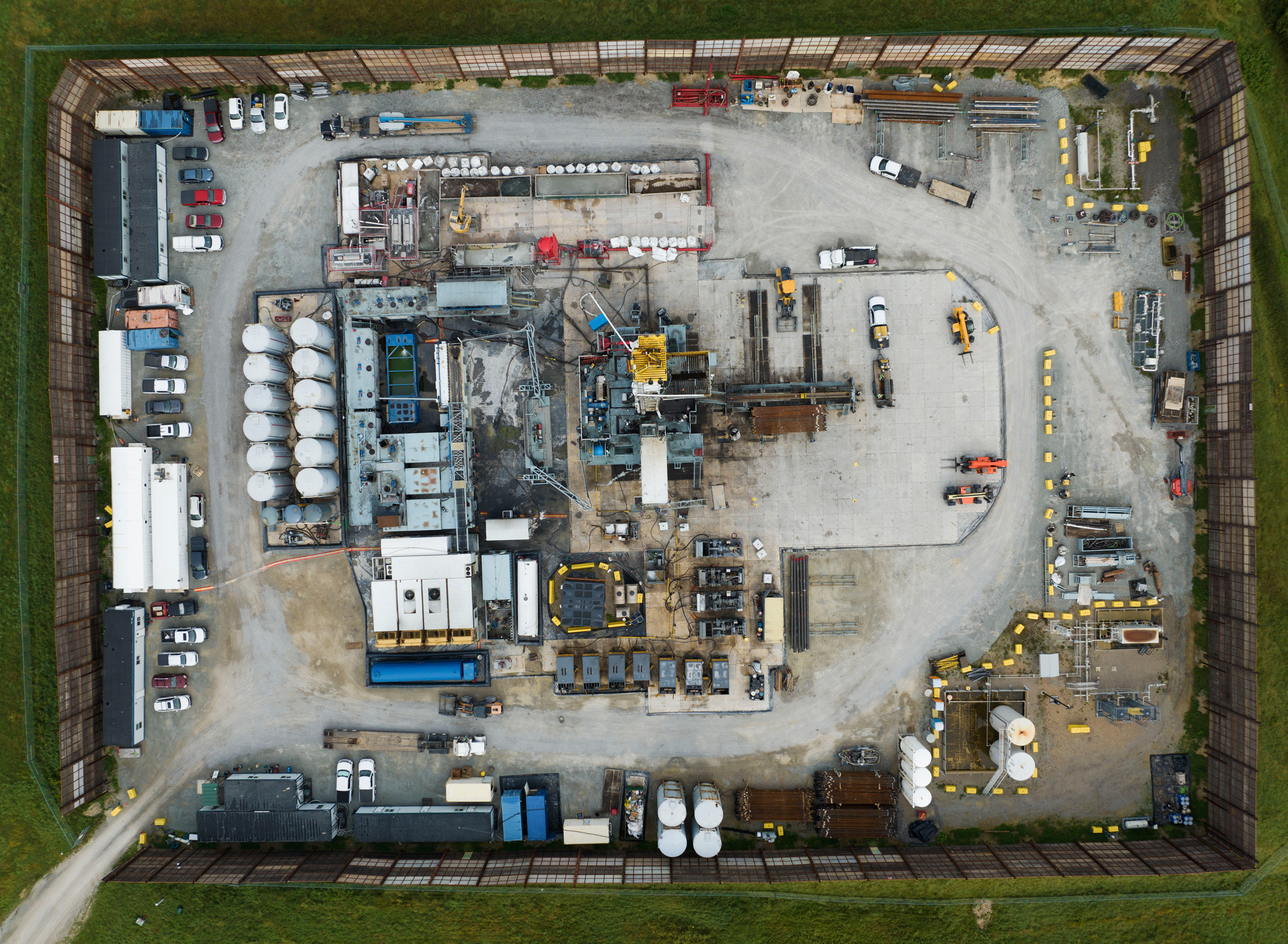
The Trump administration has continued to encourage states to look to fossil fuels to meet rising electricity demand. The consequences of this approach are evident in Pennsylvania, where a fracking boom has largely failed to fulfill its promise to reduce electricity bills.
An aerial view of a fracking pad in Westmoreland County, Pa. Credit: Ted Auch/FracTracker Alliance
While Trump hadn’t had much time to fulfill his promise of cutting electricity prices, he was off to a bad start. ICN’s Inside Clean Energy looked at which states had the largest increases so far in 2025 and over the last five years. The largest percentage increase so far in 2025 was in Missouri, with 38 percent. The rest of the top five were North Dakota, New Jersey, Iowa and Montana.
October
The rise of artificial intelligence was transforming the U.S. economy and raising fears of an investment bubble. But AI technologies also showed promise to advance discussions about the rights of nature. Scientists from an international nonprofit are using some of the new tools to help understand sperm whale communications, which could be used to argue that the whales are entitled to legal rights, as Katie Surma reported.
The expansion of AI also is fueling a boom in data centers. Northern Virginia is the world’s leading market for data centers and is poised to grow substantially in the coming years. Dan Gearino and Charles Paullin reported on how and why Northern Virginia gained this status as the global leader.
Amazon data centers are seen next to Loudoun Meadows houses in Aldie, Va. Credit: Jahi Chikwendiu/The Washington Post via Getty Images
While data centers received much of the blame for rising electricity prices, the reality wasn’t so simple. Blanca Begert examined research that quantifies which factors are driving prices. One important driver was the price of natural gas, which had risen from the lows of the early days of the fracking boom.
The need for lithium has inspired a push to expand mining in Texas, as Dylan Baddour reported. The emergence of a lithium industry in the state is part of a broader effort to secure domestic production of materials needed for batteries, solar panels, microchips and advanced weapons.
This story is funded by readers like you.
Our nonprofit newsroom provides award-winning climate coverage free of charge and advertising. We rely on donations from readers like you to keep going. Please donate now to support our work.
In Peru, Teresa Tomassoni reported on a little-known species of stingless bees that are under threat from climate change and deforestation. Scientists are working with Indigenous Asháninka communities to protect the bees and assert that the insects have legal rights.
Pope Leo, whose papacy began in May, made clear that he could continue his predecessor’s legacy of speaking out on the need to preserve the environment and fight climate change, as Carl David Goette-Luciak reported. Leo spoke before a melting chunk of ice in Vatican City and called on citizens across the globe and their governments to work together to mitigate environmental damage.
November
Democrats dominated in off-year elections, including winning the governor’s races in New Jersey and Virginia and gaining two seats on the Georgia Public Service Commission.
Zohran Mamdani was elected mayor of New York City following a campaign that emphasized affordability along with environmental issues, as Lauren Dalban reported.
New Jersey Democratic gubernatorial candidate Mikie Sherrill (center-left) celebrates her election night win during a watch party at the Hilton East Brunswick Hotel on Tuesday. Credit: Eduardo Munoz Alvarez/Getty Images
Mayor-elect Zohran Mamdani speaks during his election night watch party at the Brooklyn Paramount Theater on Tuesday in New York City. Credit: Andrew Lichtenstein/Corbis via Getty Images
Massachusetts considered a bill that would have rolled back climate policy gains, but decided to postpone the discussion until 2026. The state has long been a leader on climate and renewable energy, and could have been trend-setting if it had reduced its ambitions. Several other states chose different paths, with Arizona, Connecticut and North Carolina all passing bills this year that could be viewed as backsliding on renewable energy.
COP30 ended in disappointment for anyone who wanted to see a step forward on phasing out fossil fuels. The climate talks, held in Brazil, failed to produce a road map for addressing global warming.
Read More
Scenes From an Unfolding Climate Drama
Story and photos by Bob Berwyn
The results were a “theater of delay” with endless discussions, and the creation of yet more administrative duties, “solely to avoid the actions that matter—committing to a just transition away from fossil fuels and putting money on the table,” said Harjeet Singh, founding director of the Satat Sampada Climate Foundation in India.
December
The Trump administration saved one of its most significant attacks on environmental rules for near the end of the year, announcing a rollback of the Biden administration’s fuel economy standards. This unsurprising action will be followed by a lengthy rulemaking process, as Arcelia Martin reported.
“If there’s one thing you can count on, it’s that this administration will never act in the best interest of our health or the environment,” stated Gina McCarthy, a former White House national climate advisor. “The rest of the world will continue to innovate and create cleaner cars that people want to buy and drive, while we’re forced to sit in our clunkers, paying more for gas and pumping out more tailpipe emissions.”
The policy change bodes poorly for the competitiveness of the U.S. auto industry. While the United States sought to prolong the era of the internal combustion engine, China made significant strides to increase EV adoption within its borders and expand its global footprint for making and selling cars in other countries.
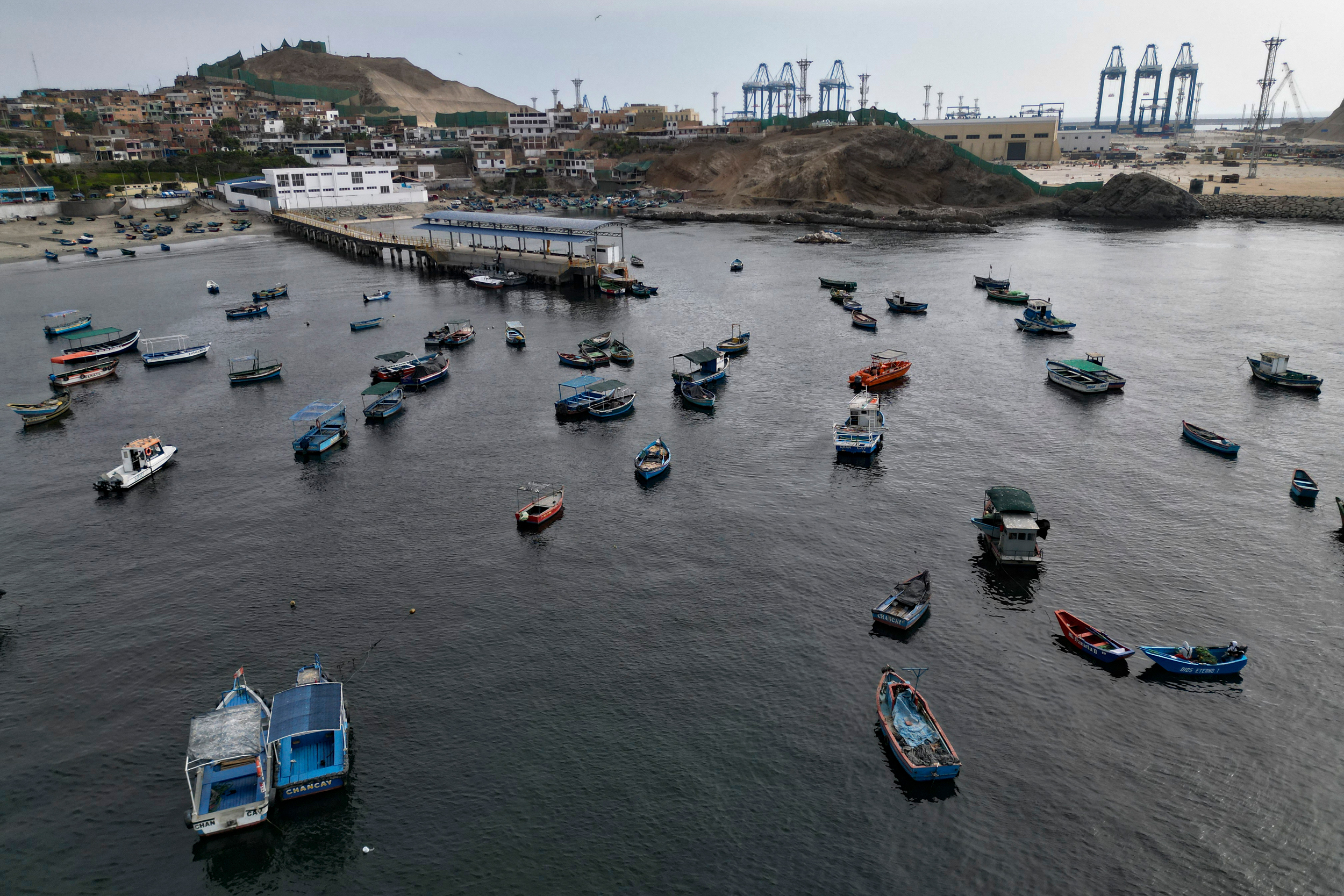
Fishing boats sit anchored in a harbor with a new megaport’s cranes in the background in Chancay, Peru. Credit: Cris Bouroncle/AFP via Getty Images
China’s infrastructure investments have included a large new port in Peru. For ICN’s Planet China series, Georgina Gustin reported that the port and its accompanying economic activity threaten the Amazon ecosystem, one of the world’s most crucial regions for managing climate change.
As the year drew to a close the Trump administration’s attacks on renewable energy continued. The Department of Energy said it was renaming the National Renewable Energy Laboratory to reduce the emphasis on wind, solar and other renewables. Now, it’s the National Laboratory of the Rockies. If the name change indicates a shift in the lab’s work, it would be a serious blow to the United States’ status as a leader in renewable energy research.
But, as with so many actions by this administration in 2025, it wasn’t clear whether the renaming had any substance to it or whether the change would endure.
About This Story
Perhaps you noticed: This story, like all the news we publish, is free to read. That’s because Inside Climate News is a 501c3 nonprofit organization. We do not charge a subscription fee, lock our news behind a paywall, or clutter our website with ads. We make our news on climate and the environment freely available to you and anyone who wants it.
That’s not all. We also share our news for free with scores of other media organizations around the country. Many of them can’t afford to do environmental journalism of their own. We’ve built bureaus from coast to coast to report local stories, collaborate with local newsrooms and co-publish articles so that this vital work is shared as widely as possible.
Two of us launched ICN in 2007. Six years later we earned a Pulitzer Prize for National Reporting, and now we run the oldest and largest dedicated climate newsroom in the nation. We tell the story in all its complexity. We hold polluters accountable. We expose environmental injustice. We debunk misinformation. We scrutinize solutions and inspire action.
Donations from readers like you fund every aspect of what we do. If you don’t already, will you support our ongoing work, our reporting on the biggest crisis facing our planet, and help us reach even more readers in more places?
Please take a moment to make a tax-deductible donation. Every one of them makes a difference.
Dan Gearino covers the business and policy of renewable energy and utilities, often with an emphasis on the midwestern United States. He is the main author of ICN’s Inside Clean Energy newsletter. He came to ICN in 2018 after a nine-year tenure at The Columbus Dispatch, where he covered the business of energy. Before that, he covered politics and business in Iowa and in New Hampshire. He grew up in Warren County, Iowa, just south of Des Moines, and lives in Columbus, Ohio.
Great Job By Dan Gearino, ICN Staff & the Team @ Inside Climate News Source link for sharing this story.
Over the course of this year, people have gone through A LOT. Work stress, family obligations, money pressure, relationships, health scares, personal losses, societal expectations – it all stacks up fast. Even the good stuff can be draining when it never stops. You’re constantly showing up, holding it together, being dependable, being “strong,” and by the time you finally get a moment to breathe, you realize how tired you really are. Not just physically, but mentally and emotionally too.
Burnout is real, and it doesn’t always announce itself loudly. Sometimes it shows up as irritability, procrastination, numbness, or that feeling of being checked out, even when life is moving fast around you. Most people try to push through it because slowing down feels irresponsible or impossible. But ignoring burnout doesn’t make it disappear – it just makes it louder later. That’s why the idea of a reset matters, even if it’s not some dramatic life overhaul.
The end of the year hits different because it naturally creates space. Things slow down a bit. Schedules loosen. There’s a pause built into the calendar that doesn’t exist anywhere else. It’s one of the few times where reflecting doesn’t feel forced. You can look back at what drained you, what stretched you, what broke you down, and what surprised you – without immediately needing to fix everything. That pause is powerful.
Love MadameNoire? Get more! Join the MadameNoire Newsletter
Resetting doesn’t mean erasing the year or pretending it didn’t hurt. It means acknowledging that you made it through and deciding how you want to move forward. The end of the year gives you permission to release what no longer fits and realign without pressure. Not to become a “new person” overnight, but to step into the next chapter a little lighter, clearer, and more intentional than before.
Source: Mariia Vitkovska / Getty
WAYS TO ACTUALLY RESET AFTER A LONG, TRYING YEAR:
Start with a mental reset before a physical one
Before cleaning your space or changing habits, take time to quiet your thoughts. Rest your mind first so your actions come from clarity, not exhaustion.
Clean something small
Delete old emails, clear your camera roll, or organize one folder. Small wins create momentum and make your brain feel less cluttered.
Unplug from scrolling
Step away from endless timelines and comparisons. Silence helps you hear your own thoughts again.
Release and reflect
Let yourself feel the year – the good, the bad, and the ugly. Reflection isn’t about judgment, it’s about understanding.
Reset your body
Drink more water, stretch, sleep in, and eat something nourishing. Your body remembers stress even when your mind ignores it.
Close a few open loops
Send the message, give the apology, say what you meant to say. Closure frees up more mental space than you realize.
Revisit your boundaries
What drained you this year? Adjust access accordingly. Protecting your energy isn’t selfish.
Create a soft re-entry into the new year
Don’t pressure yourself to go full speed on January 1st. Ease into routines and expectations.
Let go of the year without rushing gratitude
You don’t have to be thankful for everything that hurts. It’s okay to just release it.
Choose a word for how you want to feel
Not a goal – a feeling. Peace. Stability. Freedom. Joy. Let that guide your decisions moving forward.
2026 will be the year when US dollar dilution—the quiet erosion of its global dominance as countries trade and pay in alternatives—starts to build momentum. The more Washington uses the dollar as a weapon, the more the world builds ways to circumvent it.
America’s share of global trade has fallen from one-third in 2000 to just one-quarter today. As emerging economies trade more with each other, the dollar is less central to the flow of goods. Indian and Russian trade now settles in rupees, dirhams, and yuan. More than half of China’s trade now moves through CIPS, China’s own cross-border payment system, instead of SWIFT—the global messaging network long dominated by Western banks. Other trading partnerships like Brazil-Argentina, UAE-India, and Indonesia-Malaysia are also piloting local currency settlements.
At the same time, central banks around the world are starting to accumulate currencies other than the dollar as reserves. The dollar made up 72 percent of global reserves in 1999. Today, it’s down to 58 percent—and falling. A currency is safe only if it’s perceived to be safe. But perceptions are shifting.
Ballooning US fiscal deficits—projected at $1.9 trillion in 2025—together with a widening current-account gap, estimated at 6 percent of GDP, are adding pressure to the dollar. On top of this is the overuse of the “printing press,” meaning the creation of large amounts of new money to finance spending. Once cushioned by the dollar’s “exorbitant privilege” as the world’s dominant reserve currency, these trends now raise questions about global confidence in the greenback.
Even the US Treasury market, once assumed to be infinitely liquid and universally acceptable as pristine collateral, has lost its luster. As of now, there is over $27 trillion in US Treasury bonds—loans from investors to the government, backed by the full faith and credit of the United States—circulating in the global financial system. That means more bonds to trade, more to settle, more to repo, and more to absorb on dealer balance sheets. But large financial institutions like JPMorgan, Citi, and Goldman that have been primary dealers providing liquidity, haven’t scaled accordingly. Currently, if everyone wants to sell, there are not enough balance sheets to absorb the selling—unless the Fed steps in. This has been the case since the March 2020 Treasury market meltdown, which marked a historic failure of the world’s most liquid and trusted market—US Treasuries—to function in a moment of stress without central bank intervention.
In 2026, the real threat to the dollar may not come from a single rival currency. Instead, it will come from alternative payment and settlement systems built to bypass dollar-based channels—especially in emerging markets that never fully enjoyed the security of dollar liquidity or reliable access to dollar networks.
The race to design alternatives is taking off. One such alternative is mBridge—a project where central banks in China, Hong Kong, Thailand, and the United Arab Emirates are working with the Bank for International Settlements to build a system that lets countries pay each other instantly using their own digital versions of national currencies. Another is BRICS pay, which would allow BRICS+ countries—Brazil, Russia, India, China, South Africa, and their new members—to send money to each other for trade and investment directly in their own currencies. These are meant to make trade faster, cheaper, and less dependent on the dollar.
Great Job Keyu Jin & the Team @ WIRED Source link for sharing this story.
BANGUI – Voters in the Central African Republic are electing a new president and federal lawmakers Sunday, with incumbent President Faustin Archange Touadéra seen as likely to win a third term after trying to stabilize the country with the help of Russian mercenaries.
Touadéra is one of Russia’s closest allies in Africa and analysts say a third term win for him would likely consolidate Russia’s security and economic interests in the country even as Moscow faces growing scrutiny over its mercenaries’ roles in Africa.
The Central African Republic was among the first in Africa to welcome Russia-backed forces, with Moscow seeking to help protect authorities and fight armed groups. Tensions, though, have grown this year over Moscow’s demand to replace the private Wagner mercenary group with the Russian military unit Africa Corps.
Some 2.4 million voters are registered to vote in Sunday’s national elections, which is unprecedented in scope as it combines the presidential, legislative, regional and municipal ballots.
There were initial delays with voting starting an hour late in some polling stations mostly in outlying districts of the capital, Bangui. Some voters also said they couldn’t find their names on the electoral rolls, or where they are to vote.
“When we arrived, no one was ready. With these delays, we risk voting until 8 p.m.,” said Barthélemy Wadenguende, a voter in Bangui.
Provisional results are expected in a week’s time. A runoff will be held if no presidential candidate gets more than 50% of the votes cast.
Touadéra faces challenges from six candidates, including prominent opposition figures Anicet-Georges Dologuélé and Henri-Marie Dondra, both former prime ministers. The election is being held without the main opposition coalition, the Republican Bloc for the Defense of the Constitution, which said in October that it will boycott the election after denouncing what it called an unequal political environment. Neither Dologuélé nor Dondra are part of it.
Analysts say Touadéra is a clear favorite after consolidating his control of state institutions in recent years, and due to the absence of strong opposition.
Backed by Russia, he has hinged his campaign on efforts to achieve peace, stability and economic recovery in the country of about 5.5 million people, long battered by conflict.
The landlocked country has been plagued by fighting between pro-government forces and armed groups, particularly since 2013 when predominantly Muslim rebels seized power and forced then President François Bozizé from office. A 2019 peace deal only partially lessened the fighting, and some of the 14 armed groups that signed it later withdrew from the agreement and continued their fighting.
“Our country has suffered greatly from brutal regime changes, a cycle that repeats itself every ten years. I call on the people of the Central African Republic to choose the stability of institutions and a prosperous Central African Republic,” Touadéra told The Associated Press in a recent interview.
Touadéra’s closest challenger is believed to be Dologuélé, a candidate in the 2016 and 2020 elections who has promised in his campaigns to “restore a damaged Central African Republic.” His priorities include sustained peace and economic recovery based on agriculture and other key sectors.
“President Touadéra destroyed everything. Our programme is a solid summary to get the country out of poverty. What country is this that produces nothing and exports almost nothing, except beer? We must revive the economy,” he said in a recent interview.
Analysts say the most important factor for voters is the country’s security situation.
The United Nations peacekeeping mission, MINUSCA, present in the country since 2014, has been crucial with election logistics in the past. It currently has around 14,000 military personnel and 3,000 police members who will help guard election sites.
The vast but sparsely populated nation is crisscrossed by dense forests, rivers and bad roads, and the electoral body faced challenges getting election materials to some hard-to-reach communities.
In November, the U.N. Security Council extended the mission by a year but said its presence would scale down due to budget constraints.
“Because of the peace deals, United Nations peacekeeping efforts and security support from Wagner and from the Rwandans, the country is in a more secure place than it was during the last electoral cycle in 2020,” said Lewis Mudge, the Central Africa director at Human Rights Watch.
Copyright 2025 The Associated Press. All rights reserved. This material may not be published, broadcast, rewritten or redistributed without permission.
Great Job Associated Press & the Team @ KSAT San Antonio for sharing this story.
It hasn’t been the easiest year to land a job, and in 2026, the employment landscape will likely remain just as volatile. Managers will be grappling with how to deploy AI in their businesses and what skills they really need on the team to bring about efficiencies. Companies will also be wrangling with policy headwinds such as tariffs and the normalization of the base rate, as well as how consumer spending will hold up through the rest of the year.
So far, it’s been younger workers who have struggled the most. According to a November note from Oxford Economics, Gen Z job seekers—currently aged 13 to 28—are facing multiple barriers to landing a role. With hiring tracking downward, unemployment has risen particularly fast among those with less experience, so while America’s overall unemployment rate has sat around 4%, those in the 16 to 19 age bracket are contending with a 14% rate, while 19 to 24-year-olds average around 9%.
Education is a significant factor in the job prospects of young people: Those who have a college degree face a fractionally lower unemployment rate at the time of writing (a little over 6%) than peers with a high school diploma or some level of college training. While debate is rife about whether college degrees are worth the financial burden, it’s evident that employers want to hire people who have demonstrated a commitment to learning.
Enter the trend of “microcredentials,” professional certificates that demonstrate a candidate is pursuing additional training or qualifications to support the roles they’re applying for. According to $1.3 billion learning platform Coursera, more than 90% of employers would rather hire a candidate with a microcredential on their CV than one without.
According to Coursera’s CEO, Greg Hart, the most popular programs on the site revolve around technology and, more specifically, AI. Particular professional certificates that stand out are two from Google: ‘Foundations of Data Science’ and an analytics program called ‘Data, Data, Everywhere.’ Also popular is Google’s project management certificate, as well as a ‘Foundations of Cybersecurity’ course.
The platform’s Jobs Skills report for 2025 found that employers’ priorities for applicants align with the skills individuals are developing: GenAI and HR technology are the most in-demand skills, followed by soft skills such as assertiveness and stakeholder communications.
While a cynic might argue that the CEO of an education platform would recommend learning as a way to get a foot on the career ladder, Hart’s take is shared by some of the world’s most famous CEOs. JPMorgan Chase CEO, Jamie Dimon, advises young people to ditch social media and “learn, learn, learn, learn, learn, learn, learn” instead. Citadel CEO, Ken Griffin, advises to never stop learning, and Bridgewater Associates founder Ray Dalio advises youngsters to “realize that you know virtually nothing.”
“We do see a big spike in enrolments, typically, in January,” Hart tells Fortune in an exclusive interview. “It’s sort of like gym enrolments, people are thinking new year, new you, that kind of thing, and education is obviously one of the best ways to refashion oneself.”
Looking ahead, generative AI will continue to be the expertise of the moment: “It’s the most in-demand skill in our history as a company right now,” Hart says.
However, that’s not to the exclusion of soft skills and insight into other sectors. Healthcare, for instance, is experiencing an increase in interest. That aligns with the employment picture in the U.S., with the Bureau of Labor Statistics reporting that the industry is one of the few sectors experiencing employment growth at present.
A lack of soft skills is also presenting barriers for young people to get hired. Last year, a report from technology education provider General Assembly found that fewer than half of workers (48%) and just 12% of mid-level executives think today’s entry-level workers are adequately prepared for the workforce. Among the key factors adding to the lack of confidence was that managers felt new workforce entrants lacked skills like communication, collaboration, and adaptability needed to succeed in their organizations.
“I do think that as people recognize that AI is enabling technology to do more and more of people’s jobs, the value of the human side of the equation actually increases,” added Hart. “Your functional knowledge in a world where AI is now doing more of the function, it’s not that it’s less important, it’s that it’s not as much of a distinguisher anymore.”
‘The courses I told my sons to take’
Hart practises what he preaches, revealing the courses he advises his two Gen Z sons, aged 22 and 21, to take.
Hart’s elder son is a finance major, and as such, “I told him to take Gen AI for finance. It’s highly convenient, it’s directly relevant, and after he finished that—he liked it—the next question was ‘What should I take next?’
“I said, ‘Go look through the Gen AI-related certifications and figure out which one you think is most relevant. I can tell you that being facile with data is going to be useful in your career, so look at how Gen AI can help you be really good at data analytics. What finance majors used to do is just spend time on spreadsheets, so figure out how you can use Gen AI to do that more effectively and put it on your resume.”
Hart’s younger son is a video game design major, and Gen AI was again recommended for capabilities like project management. But Hart added: “I said to him: ‘You need to develop as many skills related to game design as you possibly can, so not just your hard skills around coding or around multimedia, but how you knit all of that together. Project management, regardless of what you do in life, is a hugely effective and useful skill, so look at some of the things that are around project management, look at some of the things around entrepreneurship as well.”
Great Job Eleanor Pringle & the Team @ Fortune | FORTUNE Source link for sharing this story.
Kickoff is set for 8 p.m. Tuesday at the Alamodome.
SAN ANTONIO – Texas Christian and No. 16 Southern California arrived in the Alamo City on Friday, kicking off festivities for the 33rd annual Valero Alamo Bowl.
Players were welcomed into San Antonio’s rich culture with a mariachi performance and cowboy hats.
Both teams said they appreciate the special bonding moments offered by the bowl while preparing to play in the Alamodome on Tuesday.
The Horned Frogs and Trojans attended a Spurs game at the Frost Bank Center and made a visit out to SeaWorld on Saturday ahead of scheduled practices.
“What a great city,” TCU coach Sonny Dykes said. “I know the hospitality is going to be incredible. Our guys have really been looking forward to getting here.”
The Alamo Bowl kicks off at 8 p.m. Tuesday.
KSAT Sports Now will have a special pregame show at 6:30 p.m. Tuesday on KSAT 12 and KSAT+.
Mary Rominger is KSAT 12 Sports’ first full-time female sports anchor and reporter.
She came to San Antonio from Mankato, Minn., where she worked as a weekend sports anchor at KEYC News Now. She has a journalism degree from Iowa State University and grew up in Southern California.
Mary enjoys golfing, sports and finding new spots around town.
Great Job Ashley Gonzalez, Mary Rominger & the Team @ KSAT San Antonio Source link for sharing this story.
We need a media that covers power, not covers for power. Democracy Now!’s independent journalism has done exactly that for 30 years. Please donate today, so we can ensure that our daily news and extensive archive remain freely accessible for everyone. Every dollar makes a difference. Thank you so much!
Democracy Now!
Amy Goodman
We need a media that covers power, not covers for power. Democracy Now!’s independent journalism has done exactly that for 30 years. Please donate today, so we can ensure that our daily news and extensive archive remain freely accessible for everyone. Every dollar makes a difference. Thank you so much!
Democracy Now!
Amy Goodman
We rely on contributions from you, our viewers and listeners to do our work. If you visit us daily or weekly or even just once a month, now is a great time to make your monthly contribution.
Please do your part today.
Great Job Democracy Now! & the Team @ Democracy Now! Audio Source link for sharing this story.