Home News Page 2532

Black Kids Are 2x More Likely To Drown. This Organization is Offering Free Swim Lessons. 

Black Kids Are 2x More Likely To Drown. This Organization is Offering Free Swim Lessons. 

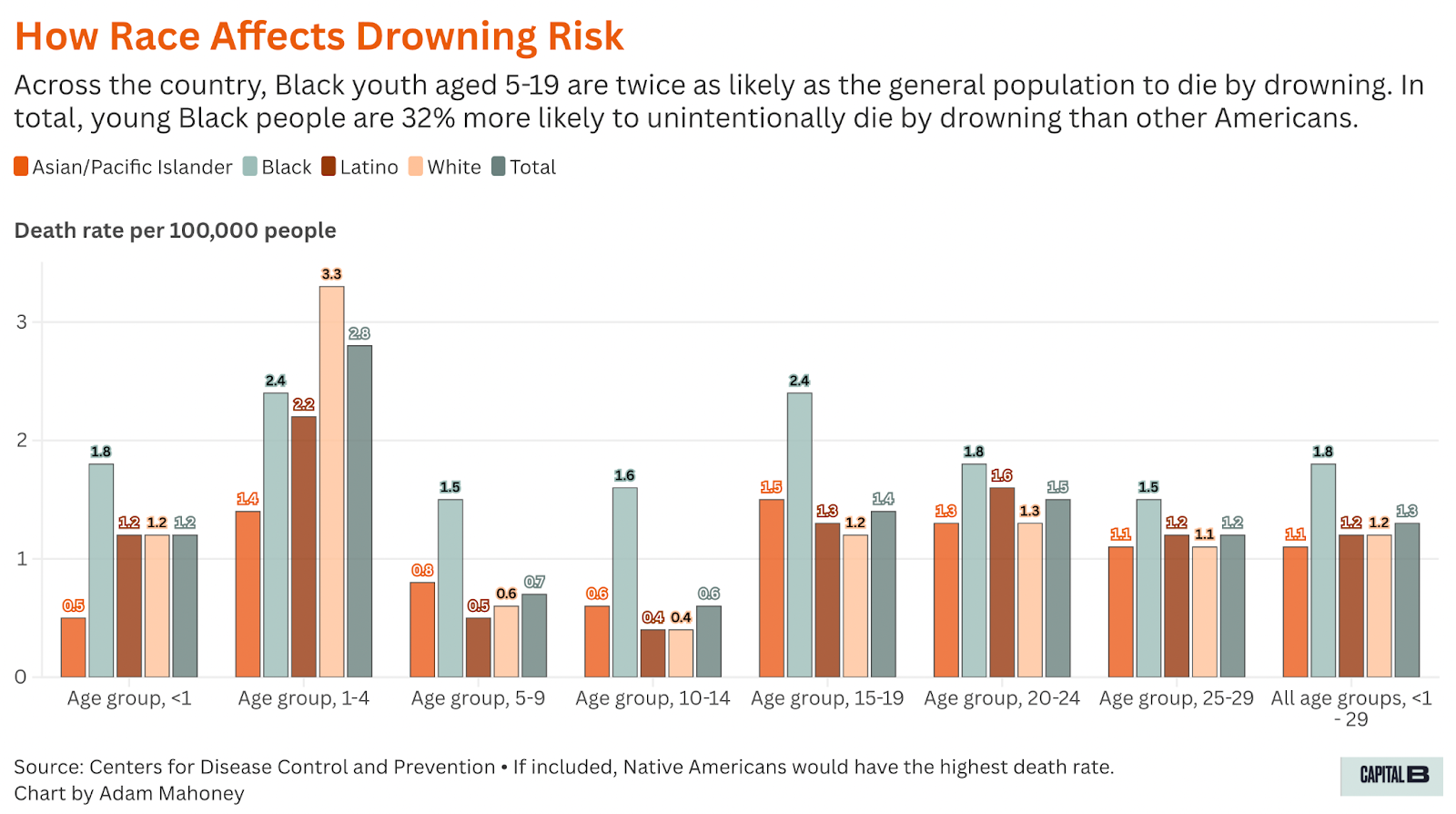
Across the country, Black children and youth are twice as likely as the general population to die by drowning, according to the Centers for Disease Control and Prevention

And this crisis is compounded by the fact that their parents are 20% more likely to be non-swimmers, creating a cycle that perpetuates the problem across generations, according to researchers from the CDC and Lurie Children’s Hospital in Chicago.

As climate threats continue to intensify, so does the need for water safety knowledge to navigate emergency flood situations. In addition, there’s a growing need to learn ways to cool off during extreme heat. Outdoor Afro, a national Black environmental organization, is attempting to tackle both of these swimming disparities. 

The organization is providing up to $400 per family for beginner swim lessons through an app-based application process that connects Black children and caregivers with providers nationwide. 

Outdoor Afro’s Making Waves program, launched in 2019, partners with organizations like Foss Swim School, which has already taught hundreds of students across 29 locations. This year, they are committing to supporting 2,000 Black families in learning life-saving swimming skills for free. Applicants are also able to receive reimbursements if they’ve already signed up for lessons.

“Knowing how to swim is a key lever to saving lives, but really also unlocking the joy that a relationship with water can bring in an individual’s lives and that our planet needs,” said Rue Mapp, founder of Outdoor Afro.

Mapp was inspired to start the program after witnessing a young boy unable to join his friends in the water during one of her events. 

“I can’t have any child in an Outdoor Afro event not feel the freedom to choose, without fear of embarrassment, to have a relationship with water,” Mapp added.

Why it matters

Black children and youth are more likely to drown in public pools. Black children aged 10 to 14 drown at rates 7.6 times higher than white children, according to CDC data.

Earlier this year, the Trump administration gutted the CDC’s Injury Prevention Center, which eliminated teams that focused on drowning deaths and prevention nationwide. Advocates said these changes make this issue even more critical as the growing threats of natural disasters continue to increase because of climate change. 

Already, Black neighborhoods face more major flooding events than non-Black ones and by 2050, the number is expected to rise. Black neighborhoods will face twice as many flood events as non-Black areas, making the survival skill of swimming even more important.  

The issues persist even in recreational settings. In the beginning of the 1900s, Black people swam at higher rates than white people. By the end of the century, however, white people had much higher swim rates than Black people because segregation led to Black Americans not having equal access to swimming grounds.

What’s next

Learning how to swim, whether in a pool or a river, Mapp said, is the perfect place to reconnect Black joy with the natural world.

This year, Outdoor Afro is committing to supporting 2,000 Black families in learning life-saving swimming skills for free. (Spencer Platt/Getty Images)

“We have to make sure that our approach to climate and our overall environmental health is balanced with concern, as well as joy and opportunity,” Mapp said. 

“Because I find that if we were talking about water in only fear-based terms, that is not the pathway towards helping people to develop the kind of care and action that we all need to be on board for as climate change makes the relationship with water more necessary.”

If you already know how to swim, you can help support the program by donating to their “swimmership” fund or sign up as a swim lesson provider. 

Black Kids Are 2x More Likely To Drown. This Organization is Offering Free Swim Lessons. 

Great Job Adam Mahoney & the Team @ Capital B News Source link for sharing this story.

Bad Bunny’s ‘NUEVAYol’ Video Arrives on Fourth of July With Pro-Immigrant Message: ‘Together We Are Stronger’

Bad Bunny’s ‘NUEVAYol’ Video Arrives on Fourth of July With Pro-Immigrant Message: ‘Together We Are Stronger’

Bad Bunny has dropped a powerful political statement on Friday (July 4) with the release of his new video “NUEVAYol.”

In the video, which celebrates Latin culture in New York, the global superstar pays tribute to the Puerto Rican diaspora and delivers a sharp critique of Donald Trump’s anti-immigrant policies.

One of the most striking moments in the video happens when a voice that sounds like Trump echoes through a vintage ’70s radio. The message is clear and direct: “I made a mistake. I want to apologize to the immigrants in America,” says the AI-powered Trump voice. “I’m in the United States. I know America is the whole continent. I want to say that this country is nothing without the immigrants. This country is nothing without Mexicans, Dominicans, Puerto Ricans, Colombians, Venezuelans, Cubans…”

Aside from being an artistic gesture, it is a Fourth of July statement at a time when immigrant communities in the United States are the target of an aggressive deportation campaign. Just Thursday, Congress passed Trump’s “Big Beautiful Bill,” which bolsters ICE’s power with 10,000 new agents and 100,000 additional detention center beds.

This is not the first time Bad Bunny has spoken out against the inhumane treatment of immigrants. In June, the artist slammed ICE in a video recorded in Carolina, Puerto Rico, where officers are seen detaining several people in the streets. “Those mother—-ers are in these cars, RAV4s. They came here… sons of bi—es, instead of letting the people alone and working,” Benito says in the video.

In the “NUEVAYol” video, directed by Renell Medrano, Bad Bunny not only critiques anti-immigrant policies, but also proudly celebrates his Puerto Rican heritage. In one standout scene, the Statue of Liberty’s forehead is draped with a massive Puerto Rican flag. The video closes with a powerful message in Spanish: “Together We Are Stronger.”

Watch the video for “NUEVAYol” below:

Great Job Isabela Raygoza & the Team @ Billboard Source link for sharing this story.

Kalief Browder: A Decade Later

Kalief Browder: A Decade Later

Listen and subscribe: Apple | Spotify | Google | Wherever You Listen

Sign up for our daily newsletter to get the best of The New Yorker in your inbox.


Kalief Browder was jailed at Rikers Island at the age of sixteen; he spent three years locked up without ever being convicted of a crime, and much of that time was spent in solitary confinement. In 2014, the New Yorker staff writer Jennifer Gonnerman wrote about Browder and the failings of the criminal-justice system that his case exposed: unconscionable delays in the courts, excessive use of solitary confinement, teen-agers being charged for crimes as adults, brutality on the part of correction officers. Ten years ago, on June 6, 2015, Browder died by suicide. On The New Yorker Radio Hour, Gonnerman shares excerpts from the interviews she recorded with Browder, in which he described the psychological toll of spending years in a twelve-by-seven cell.

This segment originally aired on June 3, 2016.

New episodes of The New Yorker Radio Hour drop every Tuesday and Friday. Follow the show wherever you get your podcasts.

The New Yorker Radio Hour is a co-production of WNYC Studios and The New Yorker.

Great Job & the Team @ Everything Source link for sharing this story.

Trump signs One Big Beautiful Bill: What that means for your money

Trump signs One Big Beautiful Bill: What that means for your money

President Donald Trump signed the so-called One Big Beautiful Bill (OBBB) into law Friday, a budget that will have far-reaching repercussions on millions of Americans’ bank accounts, for better and worse.

The legislation is extensive, including hundreds of provisions that touch everything from individual rates to student loans to the estate tax. It attempts to pay for the included tax breaks by slashing spending on social safety net programs like Medicaid and nutritional benefits, as well as green energy programs. Even with these cuts, it is expected to add $3.1 to $3.5 trillion to the national debt over the next 10 years.

Along with provisions directly affecting Americans’ personal finances, it earmarks hundreds of billions of dollars for the president’s deportation efforts. It also creates a dual-class tax structure: one for citizens and their families, and another for those with at least one immigrant member, regardless of whether they are documented or not.

Various analyses of the bill’s provisions find it will benefit wealthy Americans far more than lower-income earners. In fact, after-tax-transfer income for the lowest-earning 20% of Americans drops by an estimated $245 next year, increasing to a loss of $1,385 annually by 2033, according to the Penn Wharton Budget Model (PWBM). Future generations are also “uniformly worse off,” according to PWBM.

“All future generations experience one-time welfare losses, ranging from -$22,000 for the lowest income quintile to -$5,700 for the highest,” the analysis reads. “A middle-income child born today would see a $9,800 loss.”

The Yale Budget Lab finds similar outcomes: It estimates changes to taxes and Medicaid and SNAP would lead to a $700 decrease in income for the lowest 20% of earners, while the top 1% would see a $30,000 increase. Republicans say it will have positive effects throughout the economy.

“There’s a view that there’s a lot of potential economic growth from the bill that will have a positive impact on the economy,” says Marc Gerson, member at Miller & Chevalier and former majority tax counsel for the U.S. Ways and Means Committee.

The legislation, which totals almost 1,000 pages, is far-reaching, and the details of how many provisions will be implemented still need to be worked out. For example, while it calls for no federal taxes on some tips and overtime, the IRS still needs to write those regulations for businesses and individual taxpayers to follow. All that said, exactly how it will affect people is unknown at this time.

Additionally, many of the individual tax cut provisions are temporary, lasting generally through 2028 (this differs by provision, though, and will be noted if the information is available).

Here’s what financial advisors and experts say Americans need to know about the OBBB now.

Income tax cuts

The bill makes permanent certain provisions from the 2017 Tax Cuts and Jobs Act (TCJA), including lower individual tax rates compared to what was in place before then: 10%, 12%, 22%, 24%, 32%, 35%, 37%. That said, these rates have been in place since the 2018 tax year, so many taxpayers are already accustomed to them.

It also eliminates personal and dependent exemptions, and some itemized deductions while keeping the doubled standard deduction (compared to pre-TCJA). Under the bill, the standard deduction for 2025 is $15,750 for single taxpayers, $31,500 for joint filers, and $23,625 for heads of household.

“If you don’t qualify for new tax benefits, your tax outcome may look similar to last year’s since many provisions under the TCJA are being made permanent,” notes TurboTax.

Estate tax exemption

For the super wealthy, the bill makes permanent the doubling of the estate tax exemption from the TCJA. For decedents dying in 2026 and beyond, up to $15 million (and $30 million for couples) is exempt from the federal estate tax, and this exemption will be indexed for inflation.

That mostly benefits individuals with estates in excess of $7.5 million, says Jane Ditelberg, director of tax planning at Northern Trust Wealth Management, the old exemption amount.

“Locking in the $15 million exemption indefinitely brings certainty to families planning major wealth transfers,” says Ditelberg. “For more than two decades, taxpayers have faced a moving target, with the applicable rules changing depending on the year of death. This takes that risk off the table.”

Child tax credit

Under the bill, the child tax credit is increased from $2,000 per child to $2,200, and is subject to annual inflation increases. The bill requires the taxpayer claiming the credit, the taxpayer’s spouse, and the child to have Social Security numbers.

Senior tax deduction

In place of eliminating taxes on Social Security, Americans 65 or older will see a temporary “bonus” deduction of up to $6,000 on their income taxes. This will be available to single filers making a modified adjusted gross income up to $75,000, or couples making up to $150,000, for tax years 2025 to 2028.

Car interest deduction

Car buyers will be able to deduct up to $10,000 of interest per year on new auto loans. This is limited by income: it phases out for single filers with incomes above $100,000 (and $200,000 for married couples). It also only applies to cars assembled in the United States. This is available for those who itemize and those who do not.

Tip and overtime tax deductions

The bill provides above-the-line deductions for some tip income and overtime pay for certain workers, fulfilling one of Trump’s campaign promises.

That said, there are important restrictions to keep in mind about both. Those with tip income can deduct up to $25,000 for qualified tips from their federal tax bill, phasing out for those with income above $150,000. This is in place for tax years 2025 to 2028.

“It’s essential to understand that this deduction doesn’t directly reduce your taxes dollar-for-dollar, and your actual tax savings will depend on your tax rate,” notes TurboTax.

Those earning overtime pay can deduct up to $12,500 ($25,000 for married couples filing jointly), depending on income. Like the tipped income provision, this is available for tax years 2025 through 2028 and phases out for income above $150,000. 

Because many tipped workers are low-income, almost 40% already don’t pay federal taxes on their tips, says Meg Wheeler, certified public accountant and founder of The Equitable Money Project. Additionally, tipped workers should know they will still technically owe state and employment taxes like Social Security and Medicare on their tips—it’s still reportable income. This is not a total exclusion from paying taxes.

“We know that lots of tipped workers don’t necessarily report all of their tips. So just even right there, that will be an interesting shift,” says Wheeler. “I also am curious about whether or not this pushes more employers or even more employees to want to move to a tipped model, because they think this is helpful.”

Gerson says these provisions—which the IRS will need to write guidance on before they are implemented—may create additional discrepancies on how workers are taxed in the same workplace. That can lead to headaches for business owners, as well as create tension among employees who are compensated differently.

“If you take a restaurant, you have some people who are tipped and will benefit from the exclusion, and then you have people that aren’t tipped and won’t benefit from it,” he says. “It just has an impact on workforce dynamics. Some people [may] no longer want to be salaried because they can get in overtime.”

Student loans

The bill makes a number of changes to the federal student loan program starting in 2026, many of which will make payments higher for borrowers.

The bill reduces the number of income-based repayment plans, phasing out the Income-Contingent Repayment (ICR), Pay As You Earn (PAYE) and Saving on a Valuable Education (SAVE) plans starting in July 2026. Current borrowers will have two years to switch to a version of the Income-Based Repayment (IBR) plan, the standard repayment plan, or the Repayment Assistance Plan (RAP), a new offering. New borrowers, meanwhile, will only be able to enroll in the RAP.

“Many existing borrowers will see higher monthly payments under these new plans, though the current iteration of the bill at least allows more time to change plans,” says Kate Wood, loans expert and writer at NerdWallet. “As of now, student loan forgiveness still appears to be on the table, though RAP requires up to 30 years of repayment first, a longer repayment timeline than any current plan.”

One of the big differences, says Wheeler, is that RAP has a minimum monthly payment. This is different from some of the current income-based repayment plans, which allow some borrowers to pay very low amounts or nothing at all, depending on their earnings.

“Now, all of a sudden they have to jump up to this minimum just because that’s the rule, that’s the law,” says Wheeler. “I think that’s going to be, right off the bat, a huge issue.”

It also lowers the limits on graduate school loans, eliminates the federal Grad PLUS program altogether, and caps Parent PLUS borrowing. These changes apply to new loans starting July 1, 2026.

While the high cost of graduate school has been a target of people who want to reform the student loan system in the U.S., experts say limiting how many federal loans borrowers can take out won’t solve much. Instead, it means they will have to rely on private loans—which have fewer protections for borrowers and potentially higher interest rates—or skip higher education altogether. Those attending professional school for law or medicine may have the most to lose.

SALT Cap

One of the more contentious aspects of passing the bill was what to do with the cap on state and local tax deductions, or the SALT cap. Trump’s 2017 tax bill put a cap of $10,000 on it; that cap has been increased to $40,000.

This is one of the most expensive provisions in the bill. Taxpayers in California, Illinois, New Jersey, and New York stand to benefit the most: They account for 40 of the 50 top congressional districts affected by the cap. The cap reverts to $10,000 in 2030.

“It’s increased relief, but it is temporary,” says Gerson. “And so it’s something that Congress will have to revisit.”

“Trump accounts”

The bill establishes so-called Trump accounts, which are a new type of tax-favored account for newborns. Children born between 2025 and 2028 will receive $1,000.

Medicaid cuts

The bill makes dramatic cuts to Medicaid, which is the health care program for low-income, disabled, and some senior Americans. It will also affect those who have Affordable Care Act (ACA) health care coverage.

People on Medicaid will face strict new work requirements for able-bodied adults, and eligibility checks will increase from every 12 months to every six months. Estimates put the number of those losing health coverage at around 16 million Americans.

“It’s very likely that people will lose coverage even if they still qualify, just due to the administrative burden,” says Kate Ashford, investing specialist at NerdWallet. “It’s also likely that some hospitals in rural areas that rely on Medicaid funding will reduce services or close, meaning that people in those communities may have to travel far or go without care if they get sick or injured.”

Americans with ACA health insurance coverage will have to re-verify eligibility for tax credits each year, adding an additional hurdle to renewing. It also does not extend the ACA subsidies that help many Americans afford their coverage.

“If those expire, ACA health insurance costs will go up substantially, placing real stress on people’s budgets and potentially resulting in people dropping health insurance,” says Ashford. “Many immigrants who are legally residing in the U.S. will also lose access to ACA subsidies, forcing many of them to end coverage and raising rates for people who remain on plans.”

Allowing the subsidies to expire will also raise costs substantially on small business owners who rely on ACA coverage, says Ashford, as will the Medicaid cuts. She says small business owners and other entrepreneurs may find that health insurance coverage is now too expensive to enter the field.


Great Job Alicia Adamczyk & the Team @ Fortune | FORTUNE Source link for sharing this story.

Black Kids Are 2x More Likely To Drown. This Organization is Offering Free Swim Lessons. 

Black Kids Are 2x More Likely To Drown. This Organization is Offering Free Swim Lessons. 

Across the country, Black children and youth are twice as likely as the general population to die by drowning, according to the Centers for Disease Control and Prevention

And this crisis is compounded by the fact that their parents are 20% more likely to be non-swimmers, creating a cycle that perpetuates the problem across generations, according to researchers from the CDC and Lurie Children’s Hospital in Chicago.

As climate threats continue to intensify, so does the need for water safety knowledge to navigate emergency flood situations. In addition, there’s a growing need to learn ways to cool off during extreme heat. Outdoor Afro, a national Black environmental organization, is attempting to tackle both of these swimming disparities. 

The organization is providing up to $400 per family for beginner swim lessons through an app-based application process that connects Black children and caregivers with providers nationwide. 

Outdoor Afro’s Making Waves program, launched in 2019, partners with organizations like Foss Swim School, which has already taught hundreds of students across 29 locations. This year, they are committing to supporting 2,000 Black families in learning life-saving swimming skills for free. Applicants are also able to receive reimbursements if they’ve already signed up for lessons.

“Knowing how to swim is a key lever to saving lives, but really also unlocking the joy that a relationship with water can bring in an individual’s lives and that our planet needs,” said Rue Mapp, founder of Outdoor Afro.

Mapp was inspired to start the program after witnessing a young boy unable to join his friends in the water during one of her events. 

“I can’t have any child in an Outdoor Afro event not feel the freedom to choose, without fear of embarrassment, to have a relationship with water,” Mapp added.

Why it matters

Black children and youth are more likely to drown in public pools. Black children aged 10 to 14 drown at rates 7.6 times higher than white children, according to CDC data.

Earlier this year, the Trump administration gutted the CDC’s Injury Prevention Center, which eliminated teams that focused on drowning deaths and prevention nationwide. Advocates said these changes make this issue even more critical as the growing threats of natural disasters continue to increase because of climate change

Already, Black neighborhoods face more major flooding events than non-Black ones and by 2050, the number is expected to rise. Black neighborhoods will face twice as many flood events as non-Black areas, making the survival skill of swimming even more important.  

The issues persist even in recreational settings. In the beginning of the 1900s, Black people swam at higher rates than white people. By the end of the century, however, white people had much higher swim rates than Black people because segregation led to Black Americans not having equal access to swimming grounds.

What’s next

Learning how to swim, whether in a pool or a river, Mapp said, is the perfect place to reconnect Black joy with the natural world.

This year, Outdoor Afro is committing to supporting 2,000 Black families in learning life-saving swimming skills for free. (Spencer Platt/Getty Images)

“We have to make sure that our approach to climate and our overall environmental health is balanced with concern, as well as joy and opportunity,” Mapp said. 

“Because I find that if we were talking about water in only fear-based terms, that is not the pathway towards helping people to develop the kind of care and action that we all need to be on board for as climate change makes the relationship with water more necessary.”

If you already know how to swim, you can help support the program by donating to their “swimmership” fund or sign up as a swim lesson provider. 

Great Job Adam Mahoney & the Team @ Capital B News Source link for sharing this story.

#FeliciaRayOwens #TheFeliciaFiles #FROUSA #LocalVoices #IndependentMedia #HerSheSquad

Great Job Felicia Ray Owens & the Team @ Felicia Ray Owens Source link for sharing this story.

‘Is That a BBL on Her?’: Keke Wyatt’s Curvaceous New Look on Stage Leaves Fans So Distracted Her Vocals Take a Back Seat

‘Is That a BBL on Her?’: Keke Wyatt’s Curvaceous New Look on Stage Leaves Fans So Distracted Her Vocals Take a Back Seat

When it comes to Keke Wyatt, two things have always stood out: her powerhouse vocals and her striking, voluptuous figure.

The R&B singer recently performed in Georgia at the City Winery Atlanta, flexing those strong and unique vocals But for some people her voice was overshadowed by her appearance during the performance after a clip from the June 30 show went viral online.

‘Is That a BBL on Her?’: Keke Wyatt’s Curvaceous New Look on Stage Leaves Fans So Distracted Her Vocals Take a Back Seat
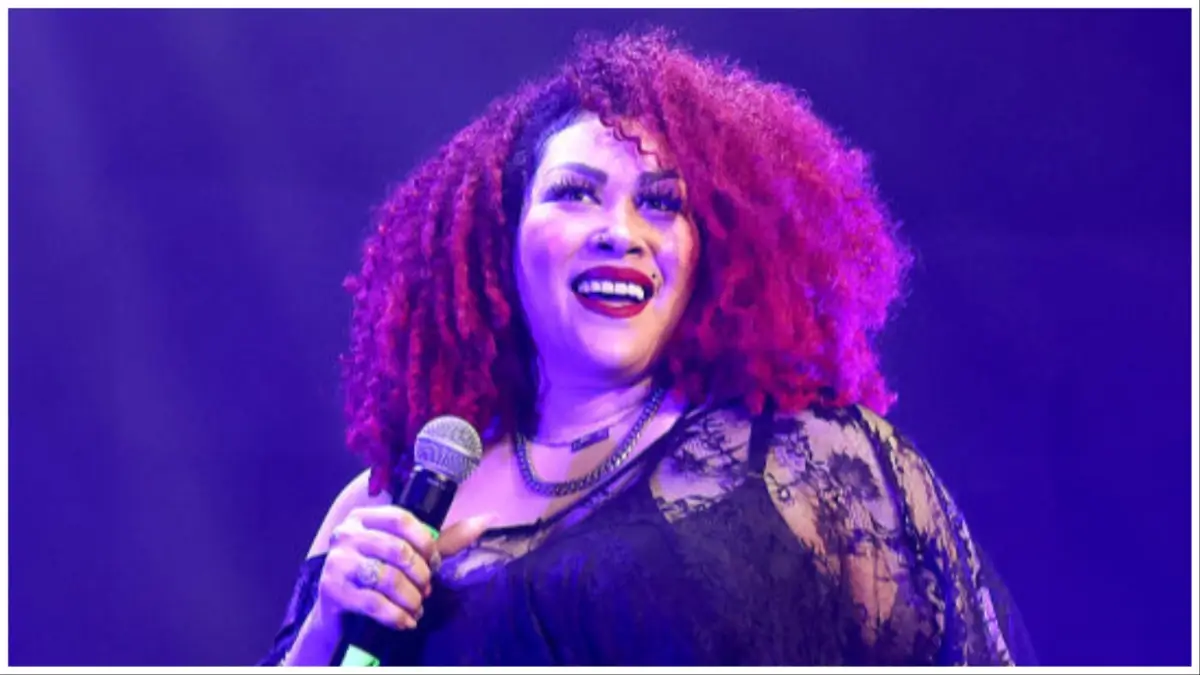
Keke Wyatt’s performance overshadowed by voluptuous figure during recent performance. (Photo by Gary Miller/Getty Images)

In the video shared on The Neighborhood Talk, the 45-year-old was seen performing her song “Nothing in This World” while wearing a long sleeved black crop top that was bedazzled with sequins. She paired that shirt with a pair of sleek, hip-hugging leather pants and heels, keeping the rest of her look simple as she belted out lyrics to what appeared to be a packed room. 

Wyatt’s curvaceous figure was obvious in the tight fit, and some fans praised her for it.

One fan wrote, “KeKe Wyatt is beautiful and has always been a gifted and talented singer. Is that a BBL on her?

A second said, “It’s giving great vocals bad bbl.”

A third commented, “Love my girl but that bbl is wild.”

Someone else joked, “Keke said I have 11 kids, working on 12, I must sing for my supper and not care how I look doing it.”

It’s unclear whether Keke Wyatt has undergone a Brazilian butt lift, but some fans are convinced she’s had cosmetic enhancements over the years. In 2021, she shared a boomerang post on Instagram with celebrity surgeon Dr. Curves, captioning it, “Sometimes you deserve to treat yourself.”

While she didn’t specify what procedure—if any—she had done, Dr. Curves offers everything from buttocks and breast surgeries to full-body contouring, facial work, and even hair restoration.

Wyatt’s figure has fluctuated throughout the years, which could also be attributed to her multiple pregnancies.

In February 2024, she performed in Arkansas at the Simmons Banks Arena. Around that time, she had shaved her head and she looked more slender than she did at City Winery Atlanta. 

Fans also speculated she may have removed her alleged BBL after seeing her at the Birthday Bash 2024: Ladies Edition in January. The concert was held in Jacksonville, Florida, with other performers like Keyshia Cole, Monica, and Tank.

Again Wyatt wore black leather pants and a black bedazzled shirt and her derrière looked about the same as it did in the February show. 

Back in 2023, she was filming for her reality TV series “Keke Wyatt’s World” and she looked thicker in her backside region than she did at the Simmons Banks Arena performance. In one clip of the show, she is singing to her then infant son Ke’Zyah Jean Darring at City Winery Atlanta. The child was born with a rare genetic disorder called trisomy 13. While on stage, fans noticed her butt was looking extra plump, which fueled more BBL speculations.

She kept a similar body shape in 2022 when she had a performance in Georgia for Ebony Akira’s 40 Shades of Black Birthday Celebration. Akira is the owner of an Atlanta restaurant called Nouveau Bar & Grill and was able to get both Wyatt and Lil Mo to perform. Wyatt was again wearing a form-fitting sparkly outfit that showed off her curves at that show. 

While it’s uncertain why the “My First Love” singer figure has changed throughout recent years, what is certain is her vocal quality has remained the same.

Wyatt’s next performance is slated for July 5 at the R&B Soul Experience in Virginia. 

Great Job J. Jones & the Team @ Atlanta Black Star Source link for sharing this story.

Mets' Jeff McNeil hits go-ahead two-run HR to take lead vs. Yankees

Mets' Jeff McNeil hits go-ahead two-run HR to take lead vs. Yankees

Jeff McNeil hit a go-ahead two-run HR that gave the New York Mets a 6-5 lead against the New York Yankees.

Great Job & the Team @ FOX Sports Digital Source link for sharing this story.

How AI can help you navigate layoffs, according to one executive producer at Xbox

How AI can help you navigate layoffs, according to one executive producer at Xbox

It’s been a rough week at Microsoft. Following the news that at the company, one Xbox executive offered some questionable words of advice for people on their way out: Find solace in Microsoft Copilot.

, Matt Turnbull, an executive producer at Xbox Game Studios Publishing who clearly did not lose his job recently, took to LinkedIn to let folks know, “You’re not alone and you don’t have to go it alone.” In the same breath as acknowledging that AI evokes “strong feelings in people,” Turnbull suggested that LLMs like ChatGPT and Copilot could “help reduce the emotional and cognitive load that comes with job loss.”

Turnbull went on to provide specific AI prompts that he recommended for recently laid-off people, including, “Write a warm intro message for reaching out to someone at [studio name] about a job posting.” He explained how an LLM could aid overwhelmed developers in planning their careers and punching up their resumés, and also help with “emotional clarity and confidence.”

The post was circulated by Necrosoft Games director and host Brandon Sheffield, where it received a predictably negative reaction. According to Video Games Chronicle, LinkedIn users were similarly unimpressed. Turnbull deleted the post a few hours later. Here’s the full text from the LinkedIn post:


These are really challenging times, and if you’re navigating a layoff or even quietly preparing for one, you’re not alone and you don’t have to go it alone.

I know these types of tools engender strong feelings in people, but I’d be remiss in not trying to offer the best advice I can under the circumstances. I’ve been experimenting with ways to use LLM Al tools (like ChatGPT or Copilot) to help reduce the emotional and cognitive load that comes with job loss.

Here are some prompt ideas and use cases that might help if you’re feeling overwhelmed:

Career Planning Prompts:
“Act as a career coach. I’ve been laid off from a [role] in the game industry. Help me build a 30-day plan to regroup, research new roles, and start applying without burning out.”
“What kinds of game industry jobs could I pivot to with experience in [Production/Narrative/LiveOps/etc.]?”

Resume & Linkedin Help
“Here’s my current resume. Give me three tailored versions: one for AAA, one for platform/publishing roles, and one for startup/small studio leadership.”
“Rewrite this resume bullet to highlight impact and metrics.”
“Draft a new LinkedIn ‘About Me’ section that focuses on my leadership style, shipped titles, and vision for game development.”

Networking & Outreach
“Draft a friendly message I can send to old coworkers letting them know I’m exploring new opportunities.”
“Write a warm intro message for reaching out to someone at [studio name] about a job posting.”

Emotional Clarity & Confidence
“I’m struggling with imposter syndrome after being laid off. Can you help me reframe this experience in a way that reminds me what I’m good at?”

No Al tool is a replacement for your voice or your lived experience. But at a time when mental energy is scarce, these tools can help get you unstuck faster, calmer, and with more clarity.

If this helps, feel free to share with others in your network.

Stay kind, stay smart, stay connected.

Turnbull’s post, however earnest, comes at a time when Microsoft is seemingly all-in on both AI and layoffs. The 9,000 job losses this week add to over . Microsoft President Brad Smith began 2025 by committing to spend around $80 billion on AI infrastructure through the year, and CEO Satya Nadella recently shared that is now authored by AI.

Just last week, Business Insider reported on another executive telling employees that using Copilot is “” in an internal memo. One developer at Halo Studios, which was affected by the layoffs, told Engadget’s Jessica Conditt that they felt Xbox leadership was looking to “replace as many jobs as they can with AI agents.”

If you buy something through a link in this article, we may earn commission.

Great Job Aaron Souppouris & the Team @ Engadget is a web magazine with obsessive daily coverage of everything new in gadgets and consumer electronics Source link for sharing this story.

WATCH LIVE: Trump plans on signing controversial bill at White House Fourth of July picnic

WATCH LIVE: Trump plans on signing controversial bill at White House Fourth of July picnic

The legislation extends Trump’s 2017 multi-trillion dollar tax cuts and cuts Medicaid and food stamps by $1.2 trillion.

WASHINGTON — President Donald Trump is expected to sign his package of tax breaks and spending cuts into law Friday after his cajoling produced almost unanimous Republican support in Congress for the domestic priority that could cement his second-term legacy.

Against odds that at times seemed improbable, Trump achieved his goal of celebrating a historic — and divisive — legislative victory in time for the nation’s birthday. Fighter jets and stealth bombers are to streak the sky over the annual White House Fourth of July picnic where Trump plans to sign the bill.

The legislation, the president said, is “going to make this country into a rocket ship. It’s going to be really great.” Democrats assailed the package as a giveaway to the rich that will rob millions more lower-income people of their health insurance, food assistance and financial stability.

“I never thought that I’d be on the House floor saying that this is a crime scene,” Democratic leader Hakeem Jeffries of New York said during a record-breaking speech that delayed the bill’s passage by eight-plus hours. “It’s a crime scene, going after the health, and the safety, and the well-being of the American people.”

The legislation extends Trump’s 2017 multi-trillion dollar tax cuts and cuts Medicaid and food stamps by $1.2 trillion. It provides for a massive increase in immigration enforcement. Congress’ nonpartisan scorekeeper projects that nearly 12 million more people will lose health insurance under the law.

The legislation passed the House on a largely party-line vote Thursday, culminating a months-long push by the GOP to cram most of its legislative priorities into a single budget bill that could be enacted without Senate Democrats being able to block it indefinitely by filibustering.

It passed by a single vote in the Senate, where North Carolina Republican Thom Tillis announced he would not run for reelection after incurring Trump’s wrath in opposing it. Vice President JD Vance had to cast the tie-breaking vote.

In the House, where two Republicans voted against it, one, conservative maverick Tom Massie of Kentucky, has also become a target of Trump’s well-funded political operation.

The legislation amounts to a repudiation of the agendas of the past two Democratic presidents, Barack Obama and Joe Biden, in rolling back Obama’s Medicaid expansion under his signature health law and Biden’s tax credits for renewable energy.

The Congressional Budget Office estimates the package will add $3.3 trillion to the deficit over the decade and 11.8 million more people will go without health coverage.

Trump exulted in his political victory Thursday night in Iowa, where he attended a kickoff of events celebrating the country’s 250th birthday next year.

“I want to thank Republican congressmen and women, because what they did is incredible,” he said. The president complained that Democrats voted against the bill because “they hate Trump — but I hate them, too.”

The package is certain to be a flashpoint in next year’s midterm elections, and Democrats are making ambitious plans for rallies, voter registration drives, attack ads, bus tours and even a multiday vigil, all intended to highlight the most controversial elements.

Upon his return to Washington early Friday, Trump described the package as “very popular,” though polling suggests that public opinion is mixed at best.

For example, a Washington Post/Ipsos poll found that majorities of U.S. adults support increasing the annual child tax credit and eliminating taxes on earnings from tips, and about half support work requirements for some adults who receive Medicaid.

But the poll found majorities oppose reducing federal funding for food assistance to low-income families and spending about $45 billion to build and maintain migrant detention centers. About 60% said it was “unacceptable” that the bill is expected to increase the $36 trillion U.S. debt by more than $3 trillion over the next decade.

Copyright 2025 Associated Press. All rights reserved. This material may not be published, broadcast, rewritten, or redistributed.     

Great Job & the Team @ WFAA RSS Feed: news Source link for sharing this story.

Busch hits 3 homers and Cubs set club record with 8 in 11-3 rout of Cardinals

Busch hits 3 homers and Cubs set club record with 8 in 11-3 rout of Cardinals

CHICAGO – Michael Busch hit three home runs, Pete Crow-Armstrong connected twice and the Chicago Cubs went deep a franchise-record eight times in pounding the St. Louis Cardinals 11-3 on Friday for their fourth straight victory.

Busch finished 4 for 4 with five RBIs. Crow-Armstrong also went 4 for 4 and Dansby Swanson launched a two-run homer during a Cubs power barrage that had the crowd of 40,038 at Wrigley Field roaring.

Seiya Suzuki and Carson Kelly added solo shots as the NL Central leaders hit six homers in the first three innings off Miles Mikolas (4-6), a record for most home runs off a Cardinals pitcher in one game. The eight longballs allowed by St. Louis also broke a club mark.

Brendan Donovan led off the fourth with a home run against Colin Rea, ending a 31-inning scoreless streak for the Cardinals. St. Louis, which dropped its fourth straight, was shut out in its three previous losses.

That was the only hit Rea (6-3) allowed in 6 2/3 innings, matching his longest outing this season.

Mikolas (4-6) was tagged for eight runs and 10 hits over six innings in losing his fourth in a row.

Suzuki drilled his team-leading 24th homer and Crow-Armstrong followed with his first of the game in the first. Busch and Kelly hit consecutive drives in the second, giving Chicago nine sets of back-to-back homers this season and a 4-0 lead.

Crow-Armstrong launched his 23rd homer off Wrigley Field’s right-field video board in the third. After Swanson singled, Busch hit the board with a two-run shot that made it 7-0.

Cubs infielder Jon Berti pitched the ninth and allowed two runs.

Key moment

Busch pumped his hands to the crowd as he circled the bases after going deep in the seventh for his first career three-homer game.

Key stat

It was Crow-Armstrong’s fourth multihomer game this season and the fifth of his career. The 23-year-old center fielder was elected this week to start the All-Star Game.

Up next

LHP Matthew Libertore (6-6, 3.70 ERA) pitches Saturday for the Cardinals. The Cubs hadn’t announced a scheduled starter to replace injured Jameson Taillon.

___

AP MLB: https://apnews.com/hub/mlb

Copyright 2025 The Associated Press. All rights reserved. This material may not be published, broadcast, rewritten or redistributed without permission.

Great Job Matt Carlson, Associated Press & the Team @ KSAT San Antonio Source link for sharing this story.

Secret Link