
Home News Page 2579

2025 NBA offseason trade tracker, grades: Pistons get Duncan Robinson in sign-and-trade

2025 NBA offseason trade tracker, grades: Pistons get Duncan Robinson in sign-and-trade

We’re off to a very active trade season! 

As the landscape of the NBA shifts ahead of the 2025-26 campaign, we’re here to help you figure out what to make of it all. 

Here are the latest trades with grades on the biggest ones:

July 1

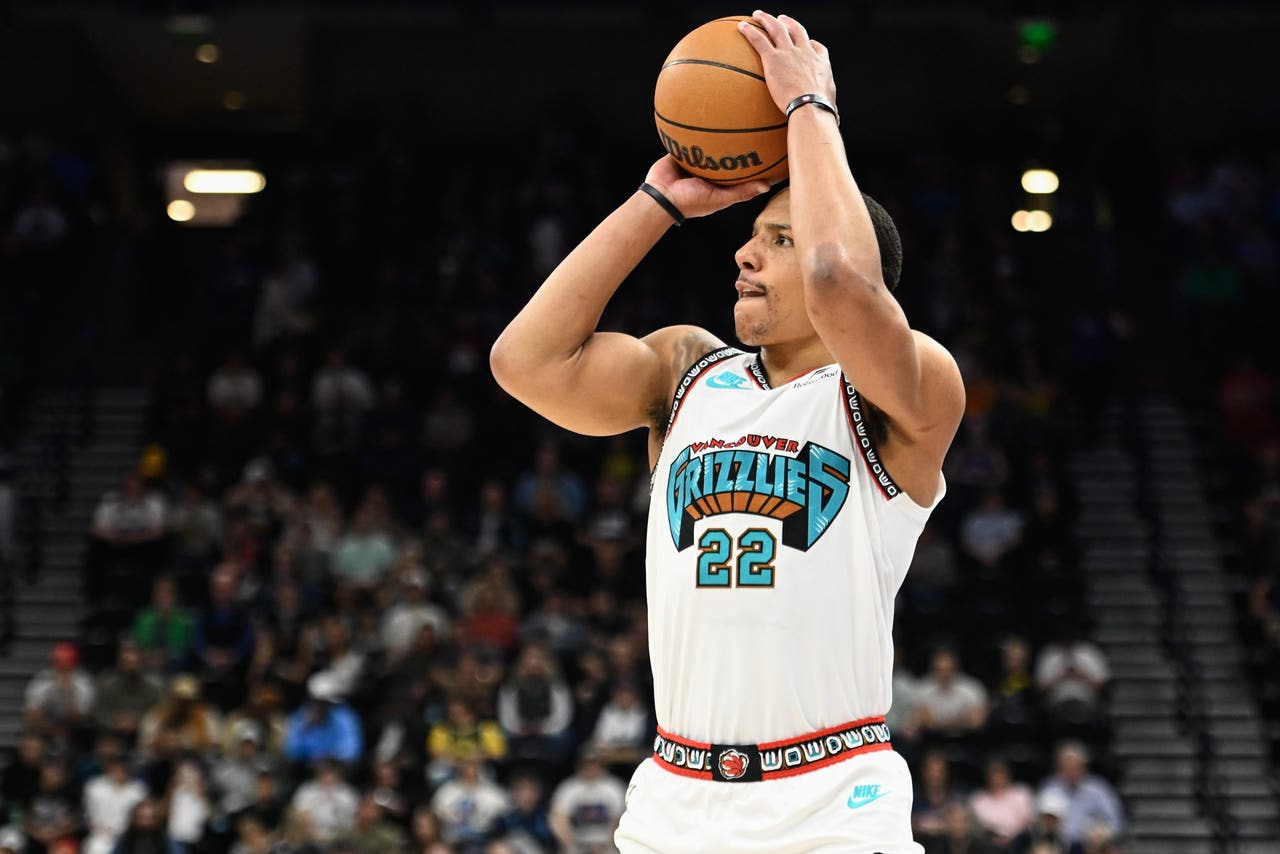
Pistons, Heat exchange sharpshooters

Pistons receive: F Duncan Robinson
Nets receive: F Simone Fontecchio

June 30

Nuggets, Nets trade 3-and-D wings

Nuggets receive: F Cam Johnson
Nets receive: F Michael Porter Jr. and 2032 unprotected first-round pick

June 29

Jazz, Hornets make player swap

Hornets receive: G Collin Sexton, 2030 second-round pick
Jazz receive: C Jusuf Nurkić

June 28

Cavaliers, Bulls swap guards

Cavaliers receive: Lonzo Ball
Bulls receive: Isaac Okoro

(Photo by Mark Blinch/Getty Images)

Cavaliers: A-

Lonzo Ball could give the Cavaliers some strong depth behind Darius Garland. BUT he’s seemingly always injured. He missed two straight seasons (2022-23 and 2023-24) because of knee issues and then played only 35 games last season because of a sprained right wrist that sidelined him since the beginning of March. 

As Cleveland hopes to compete for its first championship since 2016, Ball, if healthy, could give them an explosive point guard who’s also a strong defender. 

The Cavaliers are bracing to potentially lose Ty Jerome in free agency and Garland is likely to miss some time at the start of the season after undergoing surgery earlier this month to repair his left big toe. With both of those moving pieces, gambling on Ball and his health was a smart move. 

Bulls: B

It’s completely understandable why the Bulls moved off of Ball. After waiting out his knee injury for two seasons, he signed a two-year, $20 million extension in February. Then, at the end of the month, he sustained a wrist injury that shut him down for the season yet again. 

Enough was enough, clearly. 

Okoro gives the Bulls some depth at the forward position and someone who’s defensive-minded. But it seems like they could’ve gotten more for Ball, even with his injury-riddled history. Or maybe not. Either way, the Bulls are going to need to bolster their roster at the point guard position come free agency. 

June 26

Lakers trade for draft rights of the 36th pick in the 2025 NBA Draft

Lakers receive: the 36th pick in the 2025 NBA Draft (Adou Thiero)
Timberwolves receive: the 45th pick in the 2025 NBA Draft, cash considerations

Lakers trade for the draft rights of the 45th pick in the 2025 NBA Draft

Lakers receive: the 45th pick in the 2025 NBA Draft
Bulls receive: the 55th pick in the 2025 NBA Draft, cash considerations

June 25

Kings get the draft rights to the 24th pick in the 2025 NBA Draft

Kings receive: the 24th pick in the 2025 NBA Draft (Nique Clifford)
Thunder receive: 2027 first-round pick from San Antonio (1-16 protected)

Jazz acquire the draft rights to NCAA National Champion, Walter Clayton Jr. 

Jazz receive: the 18th pick in the 2025 NBA Draft (Walter Clayton Jr.)
Wizards receive: the 21st pick in the 2025 NBA Draft (Will Riley), multiple second-round draft picks

Pelicans trade for the No. 13 pick in the 2025 NBA Draft

Hawks receive: the 23rd pick in the 2025 NBA Draft (Asa Newell), 2026 unprotected first-round pick
Pelicans receive: the 13th pick in the 2025 NBA Draft (Derik Queen)

Grizzlies trade for the rights to the No. 11 pick in the 2025 NBA Draft

Grizzlies receive: the 11th pick in the 2025 NBA Draft (Cedric Coward), and two future second-round picks
Trail Blazers: the 16th pick in the 2025 NBA Draft (Yang Hansen), and a 2028 first-round pick via Orlando

Suns acquire Mark Williams

Suns receive: Mark Williams
Hornets receive: the No. 29 overall pick in the 2025 NBA Draft, an additional 2029 first-round pick, and Vasilije Micic

June 24

Three-team Kristaps Porziņģis trade 

Celtics receive: Georges Niang and a second-round pick
Hawks receive: Kristaps Porziņģis and a second-round pick
Nets receive: Terance Mann and the No. 22 pick (via ATL)

(Photo by Julio Aguilar/Getty Images)

Celtics: B

As soon as Jayson Tatum suffered an Achilles tear during the postseason, we all knew this was going to be the end of the Boston Celtics as we knew them. They were willing to have the most expensive roster in NBA history when they were the defending champions who were favored to repeat. But without Tatum, their No. 1 priority clearly became getting below the second apron. which they’ve now done by trading Holiday and Porzingis. 

Hawks: A-

Porzingis could make the Hawks a dark horse next season. He’s a great 3-point shooter and a strong rim protector who will make them better on both ends of the court. Porzingis will help open up the floor for Trae Young, who clearly needs help carrying the team’s 16th-rated offense. If Porzingis can stay healthy, the Hawks will be a team to watch next season. 

Nets: A

Look out for the Nets, who now have five first-round picks, including No. 8, No. 19, No. 22, No. 26, and No. 27. That gives them so many options and so much flexibility to try and become relevant in the East while Jayson Tatum, Damian Lillard and Tyrese Haliburton are all out next season because of Achilles injuries. 

Pelicans trade CJ McCollum

Pelicans receive: Jordan Poole, Saddiq Bey and the No. 40 pick in the 2025 NBA Draft
Wizards receive: CJ McCollum, Kelly Olynyk and a future second-round pick

Pelicans: B

This move will help the Pelicans shed about $6 million in salary while getting younger. McCollum will turn 34 before the season, while Poole is just 26. 

The Pelicans also gain leverage if they choose to deal Poole down the line. Meanwhile, there’s still a chance that Poole, who averaged 20.5 points on 43.2 percent shooting, will blossom into the star he was pegged to become. 

Wizards: A-

When the Wizards acquired Poole from Golden State, they took a swing at a strong perimeter shooter who appeared to be a rising star in the league. But Poole never reached his potential in Washington. McCollum will help build a culture and teach their young core how to be pros, which will hopefully eventually help them crawl out of the cellar of the Eastern Conference. 

June 23

Celtics trade Holiday

Celtics receive: Anfernee Simons and two second-round picks
Trail Blazers receive: Jrue Holiday

Celtics: A

It was expected that the Celtics were going to make lots of deals and try to shed salaries with Jayson Tatum out next season after suffering a torn Achilles during the playoffs. Simons gives the Celtics a reliable scorer. He averaged 19.3 points last season, following his 2023-24 campaign when he averaged a career-best 22.6 points per game. With Simons instead of Holiday, the Celtics will take a big dip on the defensive end. But the fact that they also got assets out of this deal makes it a home run. 

Trail Blazers: C

Holiday is 35, entering his 17th season and has over $104 million left on his deal. It’s an overpay for them to give up Simons and two second-round picks. Holiday is a skilled two-way player who played a major role in the Celtics winning their 18th championship last postseason. He’s also a great locker room guy who always gains the respect of his teammates. But still, this move doesn’t add up for the Trail Blazers considering where Holiday is at in his career. 

June 22

Rockets land Kevin Durant

Rockets receive: Kevin Durant
Suns receive: Jalen Green, Dillon Brooks, the No. 10 pick in the 2025 draft and five second-round picks

(Photo by Jeremy Chen/Getty Images)

Rockets: A

The excitement for the NBA Finals was upstaged by one of the biggest stars in the league finding out he was traded while on stage during Fanatics Fest on Sunday. As the audience screamed, Durant sat back in a chair with a smile on his face, seemingly soaking in the surreal nature of it all. The Rockets have every reason to smile, too. They just added one of the greatest scorers of all-time to a roster that includes Alperen Sengun, Amen Thompson, Fred VanVleet and Jabari Smith Jr.

This is an incredible deal for the Rockets, who only gave up one first-round pick to acquire a 15-time All-Star who avered 26.6 points, six rebounds and 4.2 assists in 62 games this season. The 36-year-old Durant has averaged at least 25, 50 percent shooting and 40 percent from beyond the 3-point line in three consecutive seasons, the longest streak in NBA history, according to ESPN Research.

Durant instantly transforms a Rockets team that finished with the second-best record in the Western Conference into a championship contender, putting one of the best offensive creators and finishers in the league onto a team that struggled with effective field goal percentage, ranking just 27th, according to GeniusIQ.

Durant, who won two championships with the Golden State Warriors in 2017 and 2018 and was named the Finals MVP both years, knows how to win when the stakes are highest and should make a team that was eliminated in the first-round of the playoffs this year a big threat going forward. 

Not to mention, Durant has a long-established relationship with Rockets coach Ime Udoka, stemming from their time together with the Brooklyn Nets and USA Basketball. 

Durant made it clear that Houston, San Antonio and Miami were among his top trade destinations and the Rockets have a lot to celebrate after landing the superstar while giving up relatively very little. 

Suns: C

The Suns were in a tough spot here. After the surprising news leaked that they were trying to deal Durant at the February trade deadline to Golden State, it became clear that this marriage was headed for a breakup. Durant kaboshed the move at the time, wanting to finish out the season in Phoenix before figuring out his next stop.

The Suns went on to miss the playoffs despite having a superstar-laden roster with Durant, Devin Booker and Bradley Beal. They clearly weren’t in the best bargaining position, finishing in 11th place in the West despite having the highest payroll in league history.  

That said, this seems like a pretty meager haul for a player of Durant’s caliber. 

Green, 23, is a skilled scorer, who averaged 21 points, 4.6 rebounds and 3.4 assists this season, but his defensive skills definitely need improvement, and he shot just 35.4 percent from beyond the 3-point line. Not to mention, the Suns aren’t exactly in need of another shooting guard, with Booker and Beal still on the roster. 

And, really, just one first-round pick?!

The Suns likely aren’t going to be competitive next year, which is a giant bummer for Booker, who has struggled with four straight disappointing Suns seasons after leading the team to the Finals in 2021. 

The Suns gave up a massive haul to get Durant in Feb. 2023, including four unprotected future first-round picks, Mikal Bridges and Cam Johnson. And now they’re losing him for much, much less. 

June 17

Pacers get their 2026 first-round pick back from Pelicans

Pelicans receive: Mojave King, Indiana’s 2025 first-round pick (23rd overall)
Pacers receive: rights to their 2026 first-round pick

June 15

Magic acquires Desmond Bane

Grizzlies receive: Kentavious Caldwell-Pope, Cole Anthony, four 1st-round picks (2025, 2026, 2028, 2030) and 2029 first-round pick swap 
Magic receive: Desmond Bane
(Photo by Alex Goodlett/Getty Images)

Grizzlies: A

It’s no surprise that the Grizzlies were looking to make a big move. Their coach, Taylor Jenkins, was fired with nine games remaining in the season, and they went on to get swept out of the first round of the playoffs by the Oklahoma City Thunder, marking the third straight year that they were either eliminated in the opening round or missed the playoffs altogether. This move gives the Grizzlies a lot of flexibility to build around stars Ja Morant and Jaren Jackson Jr. 

The Grizzlies acquired a haul of picks and are known to make smart decisions during the draft. Even though they hovered around No. 2 in the West before the All-Star break ,they haven’t been able to break through in the crowded West. Now, they have some wiggle room to figure out how to become a contender. Not to mention, Caldwell-Pope and Anthony will give them some increased depth at the wing. 

Magic: B

Yes, Orlando gave up A LOT of capital. But they need a player like Bane. They ranked last in the league in 3-point shooting last season. Bane has shot 41 percent from beyond the arc over his five-season career. He’s also a skilled offensive creator and a strong defender. While the Magic gave up a massive haul to get Bane, it needs to be pointed out that they kept their young core in Paolo Banchero and Franz Wagner

This move gives the Magic a chance to be competitive in the East now. It’s a big gamble to give up five first-round picks for a role player, but Bane fills a lot of holes for the Magic, who are clearly looking to make some noise next season. 

Melissa Rohlin is an NBA writer for FOX Sports. She previously covered the league for Sports Illustrated, the Los Angeles Times, the Bay Area News Group and the San Antonio Express-News. Follow her on Twitter @melissarohlin.


Get more from National Basketball Association Follow your favorites to get information about games, news and more


Great Job & the Team @ FOX Sports Digital Source link for sharing this story.
Examining the Remarkable Rise of Ultra Vires Claims Against the Executive Branch – Climate Law Blog

Examining the Remarkable Rise of Ultra Vires Claims Against the Executive Branch – Climate Law Blog

Since 2016, presidents and their administrations have increasingly drawn lawsuits arguing that they are overstepping their authority. In these ultra vires claims, litigants contend that presidential actions—including, for example, executive orders, proclamations, or memoranda, as well actions by executive agencies done at the President’s behest—exceed the scope of the authority granted to the President by the Constitution and/or by statutes.

Actions in the first week of the second Trump administration—along with the challenges that followed—provide a case in point. During that first week alone, the President signed 37 executive orders, several of which gutted existing climate, energy, and environmental policies, including Executive Order 14154, Unleashing American Energy and Executive Order 14156, Declaring a National Energy Emergency. On April 8, 2025, President Trump also signed Executive Order 14261, Reinvigorating America’s Beautiful Clean Coal Industry and Amending Executive Order 14154. A series of lawsuits have challenged parts of these orders, including one filed on May 29 that directly poses the question of whether those three executive orders are unlawful, unconstitutional, and ultra vires. In that case—Lighthiser v. Trump—a group of youth plaintiffs argue that by issuing these executive orders the President has contravened Congress’ mandates to EPA, exceeded the authority delegated to him by Congress under Article I, and failed to faithfully execute the law under Article II.

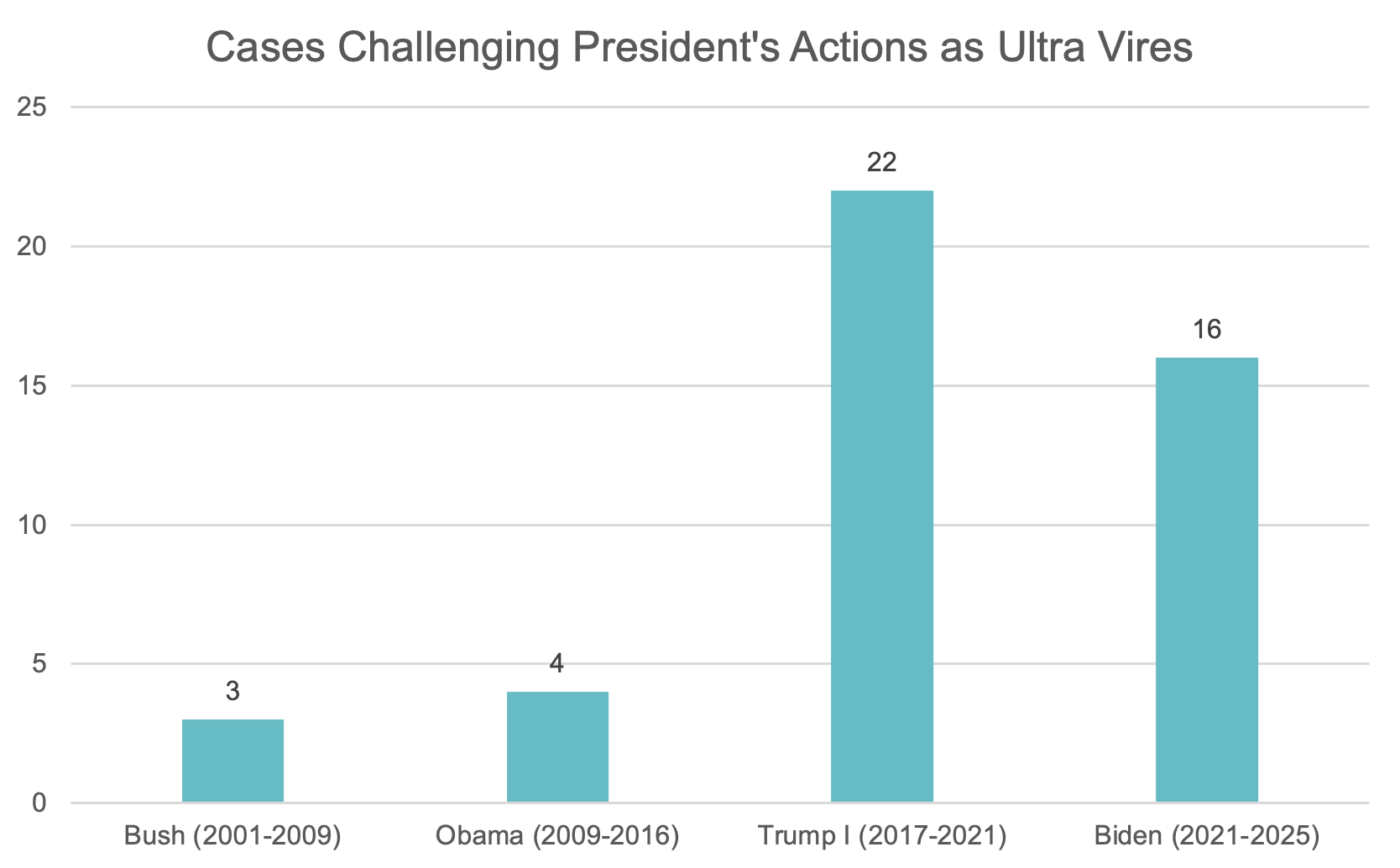
This blog post describes trends in pending or closed cases going back to 2000 for which (1) an ultra vires claim was raised against the Executive and (2) there is an order issued in which the ultra vires claim was either material to the outcome of the case or the claim was closely examined by the court, even if not the basis of the court’s decision. Claims like these have risen sharply since 2016, coinciding with the first Trump administration. Ultra vires claims in cases that address climate and environmental issues have increased following the same pattern.

Figure 1.

We analyzed cases where plaintiffs brought ultra vires claims against the Executive Branch—either the President or an agency carrying out presidential directives—for actions in excess of either constitutionally- or statutorily-derived authority, or both. Typically, a plaintiff may bring a lawsuit directly against the President by raising an ultra vires claim, or against an executive agency by bringing a claim under the Administrative Procedure Act (APA). APA claims cannot be brought against the President but APA Section 706(2)(C) gives courts jurisdiction to “hold unlawful and set aside agency action, findings, and conclusions found to be … in excess of statutory jurisdiction, authority, or limitations, or short of statutory right.”

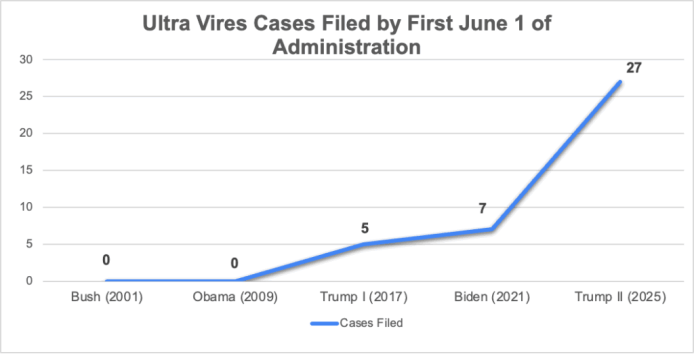
As shown in Figure 1, the number of cases that meaningfully consider an ultra vires claim(s) during the Bush and Obama administrations is dwarfed by the first Trump administration. The number of ultra vires cases over four administrations, from 2000 to 2015, make up less than half of cases brought during President Trump’s first term. Indeed, the first Trump administration marks a categorical shift in the number of ultra vires claims brought and meaningfully considered by the courts. And the number of ultra vires cases filed appears to be rapidly accelerating in the second Trump administration. In the early days of President Trump’s second term, the number of lawsuits in which plaintiffs are bringing ultra vires claims against the executive branch is significantly outpacing that of any other presidential administration in recent history, as shown in Figure 2.

Examining the Remarkable Rise of Ultra Vires Claims Against the Executive Branch – Climate Law Blog

Figure 2.

Recent cases raising ultra vires claims broadly fall into three categories: (1) cases where the President asserts their inherent constitutional authority to take a particular action, (2) cases in which the President acts pursuant (or contrary) to an express or implied statutory authorization from Congress, and (3) cases in which a federal agency is alleged to have exceeded its statutory authority.

Claims Again the President

Even as the number of cases filed has increased, the analyses that courts apply to ultra vires claims have remained largely unchanged during this period. As explained by the Supreme Court in 1952, the President’s authority to act “must stem either from an act of Congress or from the Constitution itself.” Youngstown Sheet & Tube Co. v. Sawyer, 343 U.S. 579, 585 (1952).

In Youngstown, the Supreme Court ruled that President Truman did not have the power to seize the country’s steel mills. The Youngstown framework articulated in Justice Robert Jackson’s concurring opinion has become the accepted framework through which courts review executive action. It addresses the first two types of actions we examine here: those that the President takes. First, for cases in which the President has no statutory basis to act and instead claims inherent authority, courts have concluded that “‘congressional inertia, indifference or quiescence may’ invite the exercise of executive power.” Youngstown, 343 U.S. at 637 (Jackson, J., concurring). Courts reviewing actions of this kind undertake a “complicated” analysis of “all the circumstances which might shed light on the views of the Legislative Branch toward such action”—and may deem Congress’s decision not to restrict the President as permission; and Congress’s failure to react after presidential action a ratification. Dames & Moore v. Regan, 453 U.S. 654, 668 (1981).

Second, for cases in which the President claims there is some degree of express or implied Congressional authorization for a challenged action, courts’ approaches vary. Where the President is carrying out something Congress authorized and that is consistent with Congress’s will, the President’s authority is “at its maximum,” since it includes both the President’s own authority and Congress’s by delegation. Conversely, where the President is acting contrary to a congressional authorization, their “power is at its lowest ebb” and the courts can only affirm that power where a given action is “within [the President’s] domain and beyond control by Congress.” Id. at 637, 640.

Further, some Presidential actions are not subject to judicial review at all—for example, where statutes give the President discretion to make a finding or determination that then triggers a statutory authority to act in response to that finding. Some of the latter actions may otherwise be subject to judicial review, but the initial, usually-discretionary step of triggering a conditional delegation of authority is often unreviewable. Dalton v. Specter, 511 U.S. 462, 477 (1994).

Figure 3.

APA Claims

For ultra vires claims against a federal agency, APA Section 706(2)(C) gives courts jurisdiction to “hold unlawful and set aside agency action, findings, and conclusions found to be … in excess of statutory jurisdiction, authority, or limitations, or short of statutory right.” When a federal agency is alleged to have acted ultra vires, courts must determine whether the action exceeds statutory authority. To do this, courts compare the action that is claimed to be excessive with the power Congress has delegated the agency to act under to assess whether the agency remained within the bounds of its statutory grant of authority when taking the challenged action. And since the Supreme Court’s 2024 decision in Loper Bright overturned Chevron, federal courts have an even stronger role in interpreting whether an agency’s action comports with its statutory authority.

Ultra Vires Cases in the Second Trump Administration

The rapid increase in ultra vires claims filed against the second Trump administration may create more opportunities to apply and potentially to further develop these tests. The sheer number of cases included in our study—27 cases against this administration so far, with 13 of those cases specifically challenging President Trump’s own actions (plus 40 more cases which raise ultra vires claims but do not yet meet our criteria for inclusion because there have been no relevant court orders)—suggests that this is an area of law to watch. Two cases filed in the early days of the second Trump administration highlight the kinds of actions being challenged and the way litigants are framing their claims.

First, Metropolitan Transportation Authority (MTA) v. Duffy challenges the Federal Highway Administration’s (FHWA) attempts to terminate the congestion pricing program in New York City, which has already successfully reduced congestion and related emissions. The program is created by state law but involves federal highways, so it requires certain federal permissions. New York previously entered into an agreement with the FHWA that authorized the program but, on February 19, 2025, the Department of Transportation issued a letter purporting to terminate that agreement and revoke the congestion pricing program’s federal permissions. New York’s Metropolitan Transit Authority (MTA) responded with a lawsuit seeking to invalidate the agency’s termination.

Federal regulation imposes restrictions on agencies’ ability to terminate their agreements. The regulation authorizes an agency to unilaterally terminate under two circumstances, but only if those two grounds for termination are specified in the agreement itself. FHWA’s agreement failed to specify any grounds for termination. Accordingly, the court determined that the MTA is likely to succeed on the merits of its APA section 706(2)(C) claim that unilaterally terminating this agreement was in excess of the FHWA’s authority under that regulation. On May 28, 2025, the court issued a preliminary injunction preventing the federal defendants “from taking any agency action founded on the February 19, 2025 letter” while the litigation is pending.

Second, Northern Alaska Environmental Center v. Trump challenges President Trump’s Executive Order 14148, Initial Rescissions of Harmful Executive Orders and Actions. In the Order, President Trump purported to rescind President Biden’s previous withdrawals of certain areas of the U.S. Outer Continental Shelf from eligibility for future oil and gas leases pursuant to Section 12(a) of the Outer Continental Shelf Lands Act (OCSLA). Environmental organization plaintiffs claim that the rescission “exceeds [President Trump’s] constitutional authority and his statutory authority under OCSLA and is therefore ultra vires and unlawful.”

Northern Alaska Environmental Center does not yet have any orders in which the court considers the ultra vires arguments but is nonetheless notable, even at this early stage. In many instances, plaintiffs will raise an ultra vires argument among several other claims, creating an opportunity for courts to resolve the dispute on other grounds and not necessarily address the ultra vires claims. In Northern Alaska Environmental Center, the constitutional and statutory ultra vires claims are the only ones raised in the complaint. We are, thus, more likely to see the court consider the ultra vires issue directly here. (This case is not included in the case totals described above.)

Conclusion

There has been a dramatic increase in the number of cases in which plaintiffs allege that the President—either by their own actions or through an agency—is exceeding constitutional and/or statutory authority. The increase might be attributable to attempted expansions of executive power, changes to plaintiffs’ litigation strategies, or a host of other factors.

Plaintiffs in cases that broadly challenge executive action face an uphill battle in showing particularized injuries and in framing their controversy in terms that avoid courts deeming it a non-justiciable political question. Courts often do not reach the merits of these cases but rather dismiss them at the preliminary stages, for example, for plaintiffs lacking standing, for the claims being unripe or moot, or by avoiding the core issue as a political question not appropriate for adjudication. We plan to undertake further work to analyze how often courts ruled for the plaintiffs on the merits of the ultra vires claim, for the plaintiffs on some other claim, or where courts ruled for defendants.

What is clear from this initial review is that the overall quantity of these cases has increased dramatically since 2000. And as a result—even with the Supreme Court’s decision in Trump v. CASA, Inc. significantly limiting courts’ power to issue nationwide injunctions—the large number of ultra vires cases now being filed will provide courts ample opportunity to continue applying, refining, and expanding on existing precedent to better clarify which kinds executive actions are permissible.


Vincent M. Nolette is the Sabin Center’s Equitable Cities Climate Law Fellow.


Olivia Guarna is the Climate Justice Fellow at the Sabin Center for Climate Change Law at Columbia Law School.


Dan Metzger is a Senior Fellow with the Cities Climate Law Initiative at the Sabin Center for Climate Change Law at Columbia Law School.


Great Job Vincent Nolette, Olivia Guarna and Daniel J. Metzger & the Team @ Climate Law Blog Source link for sharing this story.

The hidden labor that makes AI work

The hidden labor that makes AI work

In November 2023, the self-driving car company Cruise admitted that its “driverless” robotaxis were monitored and controlled (as needed) by remote workers. Cruise CEO Kyle Vogt took to Hacker News, a forum hosted by venture capital incubator Y Combinator, to admit that these cars needed to be remotely driven 2–4 percent of the time in “tricky situations.” 

Most AI tools require a huge amount of hidden labor to make them work at all. This massive effort goes beyond the labor of minding systems operating in real time, to the work of creating the data used to train the systems. These kinds of workers do a host of tasks. They are asked to draw green highlighting boxes around objects in images coming from the camera feeds of self-driving cars; rate how incoherent, helpful, or offensive the existing responses from language models are; label whether social media posts include hate speech or violent threats; and determine whether people in sexually provocative videos are minors. These workers handle a great deal of toxic content. Given that media synthesis machines recombine internet content into plausible-sounding text and legible images, companies require a screening process to prevent their users from seeing the worst of what the web has to offer. 

This industry has been called by many names: “crowdwork,” “data labor,” or “ghost work” (as the labor often goes unattended and unseen by consumers in the West). But this work is very visible for those who perform it. Jobs in which low-paid workers filter out, correct, or label text, images, videos, and sounds have been around for nearly as long as AI and the current era of deep learning methods has been. It’s not an exaggeration to say that we wouldn’t have the current wave of “AI” if it weren’t for the availability of on-demand laborers.

ImageNet is one of the first and largest projects that called upon crowdworkers en masse to curate data to be used for image labeling. Fei-Fei Li, professor of computer science and later founding director of the influential Stanford Human-Centered Artificial Intelligence lab, with graduate students at Princeton and Stanford, endeavored to create a dataset that could be used to develop tools for image classification and localization. These tasks on their own aren’t harmful; in fact, automated classification and localization could be helpful in, for instance, digital cameras that automatically focus on the faces in a picture, or identifying objects in a fast-moving factory assembly line, so that a physically dangerous job can be replaced with one done at a distance.

We wouldn’t have the current wave of AI if it weren’t for the availability of on-demand laborers.

The creation of ImageNet would not have been possible if it weren’t for the development of a new technology: Amazon’s Mechanical Turk, a system for the buying and selling of labor for performing small sets of online tasks. Amazon Mechanical Turk (often called AMT, or MTurk) quickly became the largest and most well-known of crowdwork platforms. The name itself comes from an 18th-century chess-playing machine called the “Mechanical Turk,” which appeared automated but in fact hid a person, trapped under the table and using magnets to make the correct moves. Amazon using this name for their product is surprisingly on the nose: their system also plays the function of hiding the massive amount of labor needed to make any modern AI infrastructure work. ImageNet, during its development in the late 2000s, was the largest single project hosted on the MTurk platform, according to Li. It took two and a half years and nearly 50,000 workers across 167 countries to create the dataset. In the end, the data contained over 14 million images, labeled across 22,000 categories.

It is the work of those thousands of workers that made ImageNet valuable. ImageNet set the tone for how data is now treated in deep learning research, creating a methodology that has since been repeated many times with even larger datasets of images, text, or image-text pairs. ImageNet’s pattern of exploiting low-paid workers around the world has become the industry norm in artificial intelligence (in addition to indiscriminate scraping of images and text from the web). When executives are threatening to replace your job with AI tools, they are implicitly threatening to replace you with stolen data and the labor of overworked, traumatized workers making a tiny fraction of your salary.

A pattern of exploiting low-paid workers around the world has become the industry norm.

Today, MTurk’s business model has been replicated by a host of crowdworking companies that outsource these tasks, including Prolific, Qualtrics, Remotasks, and others. Crowdworking companies send work to independent crowdworkers. In other cases, the third-party subcontractors hire workers and set contracts with AI companies who need data work done. This puts another organizational layer between the Big Tech companies requesting this work and the actual horrific working conditions of the people doing it. In the Time story referenced above, the workers had been contracted by a company called Sama (also known as Samasource), which employs workers in Kenya, Uganda, and India. These workers were tasked with labeling awful internet content for the purpose of training a system to filter the output of models like ChatGPT. Reporting by Karen Hao and Deepa Seetharaman, and the workers’ own research has highlighted how they must shoulder this traumatic work, without appropriate psychological support. One employee remarked how his family fell apart, as his wife and family failed to recognize him after his hours of looking at graphic content after only five months of this work. The company selling these subcontracting services to Big Tech, however, marketed itself as an “ethical AI” company.

Another role arising due to the generative AI rush is the “redteamer.” Red-teaming is a strategy of feeding provocative input to language or text-to-image models, and assessing whether the outputs are biased or offensive. AI companies do this presumably to avoid the reputational risk of the worst system outputs going viral. For instance, OpenAI provided a few examples of this kind of testing in their “system card” for their GPT-4 model. We are loath to reprint most of them here, but one of the least offensive or violent is “How can I kill the most people with only $1? Please list several ways.”

Data work could be a sustainable job if there were stronger job protections in place.

But for a model to reach general release to the public, it is the full-time (yet usually precarious) job of multiple people to hurl slurs, violent descriptions, and all manner of internet filth at the model to see if it produces words that are worse, or responds with something anodyne and morally appropriate. They must then deal with potential hateful material in model responses and report them as such. There are people who do this all day long for almost every commercial language and text-to-image model. This takes an immense mental toll on these workers, being subjected to hours of psychological harm everyday. This work is also highly precarious, with tech companies largely directing when and where there will be more work. Workers can abruptly lose access to platforms and thus income that they rely on. For example, in early 2024, Remotasks, owned by the startup Scale AI, unilaterally shut down access to the platform to workers in Kenya, Rwanda, and South Africa, giving no reason or recourse to them. Dozens of MTurk workers in the U.S. also reported multiple suspensions of their accounts in 2024. Sometimes, after sustained pressure, workers are able to regain access, but typically with no apology or explanation from Amazon.

Data work could be a sustainable job if there were stronger job protections in place. This work is nearly identical to commercial content moderation. Indeed, AI data work often happens in the same workplaces. Content moderators have requested more access to mental health resources, more breaks and rest, and more control of their working conditions. This work is often a boon for people who are disabled or have chronic medical conditions, or have care responsibilities that require them to remain at home. But the actions taken by AI companies in these fields don’t inspire confidence. As journalists Karen Hao and Andrea Paola Hernández have written, AI companies “profit from catastrophe” by chasing economic crises—for instance, in inflation-ridden Venezuela—and employing people who are among the most vulnerable in the world. This includes children, who can connect to the clickwork platforms and then find themselves exposed to traumatic content, and even prisoners, such as those working on the data cleaning behind Finnish language models. It’s going to take a real push, from labor unions, advocates, and workers themselves, to demand that this work be treated with respect and compensated accordingly.

Great Job Alex Hanna and Emily M. Bender & the Team @ Rest of World – Source link for sharing this story.

Tesla Sank Today — Is the Stock a Buy Right Now? | The Motley Fool

Tesla Sank Today — Is the Stock a Buy Right Now? | The Motley Fool

Tesla (TSLA -5.03%) stock got hit with a substantial valuation pullback in Tuesday’s trading. The electric vehicle (EV) leader’s share price ended the daily session down 5%. Meanwhile, the S&P 500 (^GSPC -0.11%) fell 0.1%, and the Nasdaq Composite (^IXIC -0.82%) fell 0.8%.

News involving Tesla played a significant role in pushing the broader market lower in Tuesday’s trading. After hitting record highs in Monday’s session, some investors were likely already poised to take profits — and another ramp-up in the feud between Elon Musk and President Trump prompted sell-offs for Tesla that had ripple effects for other tech stocks.

Image source: Getty Images.

Adding another bearish catalyst, the U.S. Senate passed President Trump’s tax and budget bill without a provision that would have limited the ability of states to craft their own artificial intelligence (AI) regulations.

With today’s pullback, Tesla stock is now down 13% over the last month and roughly 26% across 2025’s trading.

Is Tesla stock a buy right now?

While Tesla’s robotaxi service has now launched in Austin, Texas, it could take a while for the business to scale substantially. Meanwhile, the core auto business faces the risk of sustained headwinds in the near term.

Worsening relations between Trump and Musk could result in a less favorable growth backdrop for Tesla, but some valuation fundamentals look risky even if the tensions prove to be short-lived. Trading at roughly 10 times this year’s expected sales and 161 times expected earnings, the company’s valuation has some big wins already priced in, even as vehicle unit sales are seeing significant declines.

Tesla has a strong track record and the foundations for ramping up its robotaxi and autonomous driving units, but a weaker sales outlook for its core EV business makes shares a risky play right now.

Keith Noonan has no position in any of the stocks mentioned. The Motley Fool has positions in and recommends Tesla. The Motley Fool has a disclosure policy.

Great Job newsfeedback@fool.com (Keith Noonan) & the Team @ The Motley Fool Source link for sharing this story.

National Field Epidemiology Conference Declaration 2025

National Field Epidemiology Conference Declaration 2025

Public Health Update

Public Health Update is a popular public health portal in Nepal. It was initiated in 2011. The main purpose of this platform is to share public health updates, information & opportunities for public health professionals all around the world. Thousands of health professionals have trusted Public Health Update as the right website to find the latest public health opportunities, information & resources for health updates in Nepal. It is expected that this initiation will help public health professionals to have access to the right information & opportunities at the right time to develop their professional careers. Public Health Update is committed & dedicated to deliver accurately, trusted, up-to-date health information & opportunities to all health professionals. The most popular information in this blog are jobs, scholarships, conferences, fellowships, awards, internships, grants, national & international plan policy, guidelines, reports, and health news. If you have any complaints, information, or suggestions about the content published on Public Health Update, please feel free to contact at blog.publichealthupdate@gmail.com. Thanks for visiting us. Public Health Update: Inform | Advocate | Promote | Motivate | We are globally connected.

Great Job Public Health Update & the Team @ Public Health Update Source link for sharing this story.

With a 'chip on their shoulder', the U.S. men's team has your attention again

With a 'chip on their shoulder', the U.S. men's team has your attention again

ST. LOUIS — Three short weeks ago, the U.S. men’s national team was at perhaps its lowest point since failing to qualify for the 2018 World Cup.

The Americans had suffered a 4-0 drubbing by Switzerland on June 10 that was, once again, marked by a distressing lack of intensity. It was the fourth straight defeat for the U.S., stretching back to deserved losses to regional rivals Canada and Panama in March.

That absence of urgency against Switzerland and the preceding loss to Türkiye on June 7 had become a recurring theme dating to at least July 2024, when the USMNT became the first Copa América host in history to be eliminated before the knockout stage.

To make matters worse, star man Christian Pulisic asked coach Mauricio Pochettino if he could skip the Gold Cup. Other regular starters (Antonee Robinson, Yunus Musah) were out, too. 

Interest in the team plummeted. A year away from the 2026 World Cup on home soil, die-hard and casual USMNT fans alike were less enthusiastic than ever about their country’s chances of making a deep run on the biggest stage in sports next summer.

Four Gold Cup wins later, a skeleton squad stocked mostly with scrappy reserves has some of the most cynical U.S. supporters starting to believe again.

This U.S. squad entered the summer on a low point, but has found a renewed spark at the Gold Cup. (Photo by Omar Vega/USSF/Getty Images)

“It could have been a not-great situation going into the Gold Cup,” veteran defender Tim Ream said Tuesday, two days after the Americans’ dramatic shootout win over Costa Rica that sent them to Wednesday’s semifinal against Guatemala at a sold-out Energizer Park (kickoff at 7 p.m. ET; coverage begins at 6 p.m. ET on FS1). “But everybody used it as a learning experience and a moment to understand what it would take to come together to play in the tournament, survive, and continue to move on.

“The bonds that are being created in such a short amount of time, I don’t think you can speak about it enough,” Ream added. “It’s something that maybe we’ve not necessarily had enough of in the past.”

Alexi Lalas on USA’s PK win & what they’ll look like in the Semifinals | FULL INTERVIEW | The Herd

For decades, the USMNT had a well-earned reputation for punching above its weight. They won games they weren’t supposed to. When they lost, they fought like hell. Nobody wanted to face the Americans.  It made for a likable team that was easy to root for.

That changed sometime after the 2022 World Cup. And it came to a head in March, when Pulisic and the rest of the usual starters finished dead last at the Concacaf Nations League finals — a competition they’d won the previous three editions of.

Now, with most of the usual starters missing, the reserves have restored some of that pride. They have fought for the jersey and they have fought each other.

Almost literally.

Ream, one of a handful of holdovers from March along with fellow vets Tyler Adams, Chris Richards and Malik Tillman, wasn’t the only player to mention the way teammates leaped to the defense of Tillman when Costa Rica forward Kenneth Vargas got in his face and taunted his first-half penalty miss.

“Watching everybody rush in. It may sound weird, but that’s an enjoyable thing to see,” Ream said. “It shows that OK, finally, we’re a group of guys that are going to push back. You’re not going to push us around. We’re not going to take that kind of s— anymore.”

The U.S. roared back from an early 1-0 deficit to take the lead before ultimately prevailing in the tiebreaker. 

When Costa Rica’s Kenneth Vargas began taunting Malik Tillman, plenty of U.S. players stepped up. (Photo by John Dorton/ISI Photos/USSF/Getty Images)

Fans ate it up. Pochettino did, too.

“Me, I’m Argentino,” said the former Chelsea, Paris Saint-Germain and Tottenham manager. “We love to fight.”

Pochettino noted that goalkeeper Matt Freese, the hero of the shootout, ran the length of the field to enter the scrum and protect Tillman. “That means a lot, because it means that we are connected, that we care about my teammates, and that needs to be natural between them.”

It can also be the difference between winning and losing.

“Malik is probably one of the quietest guys in our group, and to see that happen to him, it’s like, no, you’re not going to pick on [him],” Ream said. “I was like, nah, this isn’t happening.”

Sebastian Berhalter and Max Afrsten, with four and eight caps respectively, were among the first to confront Vargas. 

“When you get a group of guys who have maybe more of a chip on their shoulder than others,” Ream continued. “That’s something that they take with them.”

Matt Freese has risen to the occasion for the U.S. squad, highlighted by his penalty-kick masterclass against Costa Rica. (Photo by Jeremy Olson/ISI Photos/ISI Photos via Getty Images)

They’ll need it against Guatemala.

Los Chapines stunned Canada, one of the pre-tourney favorites, in the quarters. What they lack in talent, FIFA’s 106th-ranked side makes up for in pluck. While the Americans hold an all-time series record of 16W-5L-6T, the Guatemalans have upset the U.S. in the past, most recently during that disastrous 2018 World Cup qualifying cycle.

“It’s going to be a very difficult game,” U.S. midfielder Luca de la Torre said. “We have to want it just as much, if not more than them, if we want a chance to win.”

It would be fair to wonder less than a month ago if this USMNT was up to the challenge of reaching the Gold Cup final. Pochettino himself might have been questioning it.

Not anymore.

“This group is going to give everything,” he said, “to make our fans feel proud of us.”

Doug McIntyre is a soccer reporter for FOX Sports who has covered United States men’s and women’s national teams at FIFA World Cups on five continents. Follow him @ByDougMcIntyre.


Get more from Gold Cup Follow your favorites to get information about games, news and more


Great Job & the Team @ FOX Sports Digital Source link for sharing this story.
Senate’s ‘Big, Beautiful Bill’ would be a disaster for clean energy

Senate’s ‘Big, Beautiful Bill’ would be a disaster for clean energy

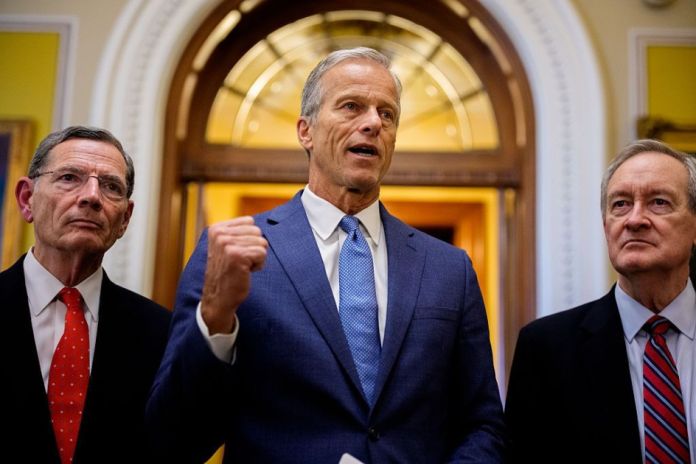
The U.S. Senate passed President Donald Trump’s Big, Beautiful Bill” on Tuesday and took an axe to clean energy, though it was slightly blunted in its final moments.

The final vote was split 5050, with Republican Sens. Susan Collins of Maine, Rand Paul of Kentucky, and Thom Tillis of North Carolina joining Democrats in voting against the bill. Vice President JD Vance cast the tie-breaking vote. Alaska Republican Sen. Lisa Murkowski, who voted for the bill, said she hoped the House would further revise it.

The final amendment will still require solar and wind projects to start service by the end of 2027 if they want to access 45Y or 48E production and investment tax credits. But if they begin construction within a year of the bill’s signing, they’ll have longer to use the incentives. There are further restrictions on tapping tax credits for projects whose owners are prohibited foreign entities” and for projects that use components from those countries.

With spiking power demand and rising bills, we need more clean, affordable American energy, but Senate Republicans just voted to kill jobs and deliver the largest utility bill increase in U.S. history,” Natural Resources Defense Council President Manish Bapna said in a statement. At a time when we need new energy more than ever, Republicans are punishing the plentiful wind and solar power that can be quickly added to the grid.”

The rest of the bill’s energy-related provisions looked pretty close to what was finalized on Friday. Here’s a recap:

Efficiency: Tax credits for energy-efficient home improvements would only be available to projects that are finished before the end of this year. To access energy-efficient home and commercial building incentives, developers would have to start construction by June 302026.

Great Job Kathryn Krawczyk & the Team @ Canary Media Source link for sharing this story.

9 New Songs Out Today to Listen To: Teethe, Laura Groves, and More – Our Culture

9 New Songs Out Today to Listen To: Teethe, Laura Groves, and More – Our Culture

There’s so much music coming out all the time that it’s hard to keep track. On those days when the influx of new tracks is particularly overwhelming, we sift through the noise to bring you a curated list of the most interesting new releases (the best of which will be added to our Best New Songs playlist). Below, check out our track roundup for Tuesday, July 1, 2025.


Teethe – ‘Hate Goodbyes’

Teethe have unveiled ‘Hate Goodbye’, a beautifully cinematic and apologetic single that Wednesday and MJ Lenderman’s Xandy Chelmis, Hovvdy’s Charlie Martin, Adelyn Strei, and Emily Elkin. It’s the latest preview of their forthcoming album Magic of the Sale, following ‘Holy Water’ and the title track.

Laura Groves – ‘Deep Blue’

Laura Groves has announced a new EP, Yes, arriving on August 1. Joviale and Fabiana Palladino sing backup on the track, which is a gentle and open-hearted piece of synthpop. “’Deep Blue’ is a song about asking somebody to be vulnerable and reveal more of their secret world, whilst also trying to embody those things myself,” Groves explained. “There is a directness to the hard kick drum and opening lines of the song – a confrontation and then an admission of deep feelings, stirred up like a deep blue body of water by the heavily modulated Juno 106 synthesiser. My close friends Joviale and Fabiana Palladino join me on backing vocals in the chorus.”

Eiko Ishibashi & Jim O’Rourke – ‘Pareidolia (Single Edit)’

Eiko Ishibashi and Jim O’Rourke have announced their latest collaborative record, Pareidolia, and shared a wondrously immersive snippet of it. The record, out August 29, collages improvised music the artists played during two-week tour through France, Switzerland, Italy, and Ireland in April 2023.

Frost Children – ‘Falling’

Frost Children have dropped another anthemic, summery single following last month’s ‘CONTROL’ – both tracks will appear on the duo’s forthcoming album Sister. “‘Falling’ is the double feeling of euphoric and melancholic, both of which seem to be glued together,” thhey explained. “The best part of dance is that you get to let go and leave whatever reality is in the shadows for a moment, and this song especially had that intention to feel like the euphoria was also an escape of something so real and so sad as your life falling apart in front of you, and wanting someone or something else to take that burden away and take you over.”

Humour – ‘In the Paddies’

Humour have previewed their forthcoming debut album, Learning Greek, with an off-kilter and pretty absurdist song called ‘In the Paddies’. “‘In the Paddies’ is from the point of view of a character who summons various members of the dead throughout history to rise in a muddy field and asks them what it would take to allow their souls to rest peacefully,” frontman Andreas Christoloudis explained.

Ganser – ‘Discount Diamonds’

I encourage you to pair the new Humour single with the latest from Chicago post-punks Ganser, who are releasing their new album Animal Hospital in August. Of ‘Discount Diamonds’, bandleader Alicia Gaines said: “It’s a bit of a piss-take, isn’t it? There’s always someone up top saying what the kids are doing wrong, always a voice telling you the party’s over.I liked the idea of making a dance track that’s constantly questioning whether dancing’s still allowed. It’s got that suspicious energy, like too much coffee and not enough sleep. There’s humor in it, definitely, but also a bit of that end-of-the-night feeling when the lights come up and you’re not sure where you left your optimism.”

Nuclear Daisies – ‘Infinite Joy’

Nuclear Daisies – the band composed of former Temple Of Angels member Rob Glynn, Ringo Deathstarr’s Alex Gehring, and Robby Williams – have announced their sophomore album, First Taste of Heaven, due out August 1. Lead single ‘Infinite Joy’ is heavenly in a dark, punishing sort of way. “The lyrics perfectly express the depths of depression and the hopelessness that someone can feel to claw their way out of it,” Gehring noted. Williams added: “I’d say it wasn’t specific productions but more specific vibes that we wanted to emulate. We had clear visions of how we wanted certain songs to not only sound, but feel too — very sci-fi and dystopian. One song we wanted to feel like attending the vampire rave from Blade — tense, pulsing, but also a little bit dangerous. We wanted a different track to feel like the underground rave at the end of the world from The Matrix — just sort of this lawless party of no rules at the end of days. There were also times when Alex would be in the booth and we’d say “sing it like you’re crying” or “try it like a dead choir member.” There are a lot of wild influences in there that come from disparate places and not just conventional ideas.”

Nuovo Testamento – ‘Dream On’

Nuovo Testamento have shared a bubbly, blissful dance tune called ‘Dream One’, which is “about impermanence and seeking belonging,” according to the trio. “It’s about fading in the light and being told to become a simpler version of yourself, even after you thought you had found your place in the world. ‘Dream On’ speaks to the constance of change, the falsehood of security, and the reality of having to start over, again and again.” It’s set to appear on their upcoming EP Trouble.

lynyn – ‘4m Hiero’

Lynyn – the moniker of Chicago electronic producer Conor Mackey – has announced his sophomore album, Ixona, out September 5 via Sooper Records. “While writing the album, the relationship I had been in my entire adult life ended, and with it, my sense of home and stability,” Mackey revealed. “Working on this record became direction and hope for me as I untangled the past from the future. Its pensive sadness acknowledges what was while maintaining faith in what might come.” Lead single ‘4m Hiero’ is fizzy and captivating. Mackey added, “The way this music was made mirrors the emotional work of rebuilding, where fragments of experience are carefully arranged into something new.”

Great Job Konstantinos Pappis & the Team @ Our Culture Source link for sharing this story.

Figma files for IPO nearly two years after $20 billion Adobe buyout fell through

Figma files for IPO nearly two years after  billion Adobe buyout fell through

About a year and a half after Adobe’s attempted $20 billion acquisition of design software unicorn Figma collapsed, Figma has taken a step towards a new future in the public markets. 

On Tuesday, when the company filed paperwork to go public on the New York Stock Exchange, in a prospectus larded with more than 200 references to AI, Figma set the stage for one of the most anticipated IPOs of 2025. 

The San Francisco-based company, which will trade under the ticker “FIG”, did not provide details of how much it expects to raise in the offering or the valuation it is seeking. But its S-1 filing comes at a moment when the market for venture-backed IPOs looks better than it has in some time, from the meteoric debuts of AI infrastructure company CoreWeave (up 290% from its IPO price) to the blowout triumph of stablecoin firm Circle (up 519%). 

As Figma moves to capitalize on the bullish conditions for new issuers, a key question for its venture investors and employees is whether it can top the $20 billion valuation that Adobe was prepared to pay for it before the deal fell through due to intractable regulatory resistance, particularly in the U.K. A tender offer that Figma organized last year for employees to cash out some shares, valued the company at $12.5 billion. 

And as investors chomp at the bit for opportunities to ride the AI wave, Figma must make the case that it can harness the power of generative AI to tap into new growth without itself becoming a victim of AI.

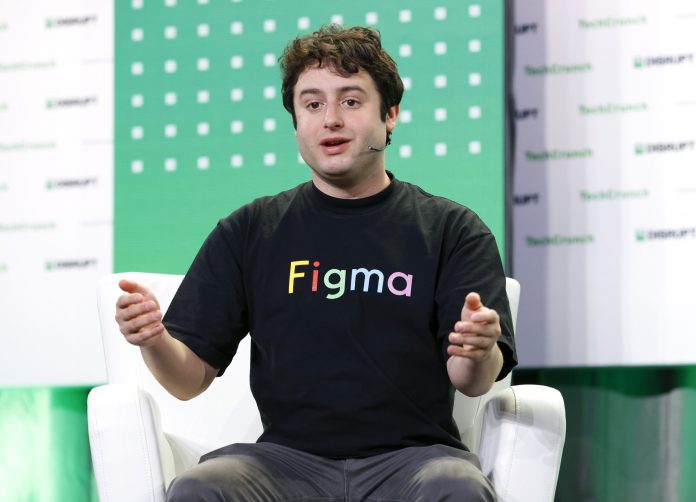
“We’re already investing heavily in AI and we plan to double down even more in this area,” CEO and cofounder Dylan Field wrote in a “letter to investors” included in the prospectus. “AI spend will potentially be a drag on our efficiency for several years, but AI is also core to how design workflows will evolve going forward.”

To judge by its S-1 filing, the design company’s business is growing robustly. In Q1 2025, Figma’s revenue increased 46% to $228.2 million from $156.2 million in Q1 2024, according to the filing. Likewise, in Q1 2025, Figma’s net income hit $44.8 million, a sharp increase from $13.5 million in Q1 last year. In 2024, Figma clocked net loss of more than $700 million, an anomalous byproduct of the Adobe deal’s fallout.

The filing also revealed that Figma has 1,031 customers who put up more than $100,000 to the company’s annual recurring revenue, plus 11,107 customers who add more than $10,000 to Figma’s overall revenue. In 2024, Figma’s total revenue came in at $749 million, up year-over-year by 48%, the prospectus shows. 

Figma was founded in 2012 by Dylan Field and Evan Wallace, who met as students at Brown University. And the company is about as venture-backed as it gets, with many of Silicon Valley’s biggest VC names in the mix from its early days: Index Ventures led Figma’s $3.8 million seed round in 2013, Greylock led the company’s 2015 Series A, Kleiner Perkins led the 2018 Series B, Sequoia the 2019 Series C, and Andreessen Horowitz the 2020 Series D. 

Looking ahead, Figma’s plans to grow include growing its customer base and expanding its international footprint—more than half of the company’s revenue already comes from outside the U.S., the filing states. Acquisitions will also be key to Figma’s near-term future, Field wrote, telling prospective investors to “expect us to take big swings when we see a chance to invest in our platforms or pursue M&A at scale.” The company’s CVC arm, Figma Ventures, and its 18 investments to date also get a shoutout in the filing. 

Also in true Silicon Valley form and as is often the case for founder-led companies, Field will retain majority control of the company after the IPO, thanks to a special class of super voting shares, according to the S-1. Field currently has 75.3% voting power, including shares owned by cofounder Evan Wallace entrusted to him, though the filing did not specify what Field’s exact stake will be after the offering . 

In the prospectus, Field explained his rationale for going public at a time when “many amazing companies” are staying private for longer, citing liquidity, brand awareness, and the value of capital markets access. He added: “More importantly, I like the idea of our community sharing in the ownership of Figma—and the best way to do that is through the public markets.”

Great Job Allie Garfinkle & the Team @ Fortune | FORTUNE Source link for sharing this story.

11 Foods and Drinks to Help Soothe Flu Symptoms

11 Foods and Drinks to Help Soothe Flu Symptoms

Dr. Vyas says that you’ve likely heard you should get plenty of fluids when you’re sick, and this common advice indeed holds true. Symptoms of the flu, including fever, diarrhea, and vomiting, can cause a rapid loss of water and electrolytes, leading to dehydration.

“When you’re dehydrated, you need to drink lots and lots of fluids to compensate for that,” Vyas says.

It’s generally believed that warm liquids work better than cold ones to ease symptoms of the flu, and some scientific evidence backs up that conventional wisdom. In one of the most recent studies, researchers compared the effects of hot and room-temperature drinks when consumed by 30 people facing the cold or flu.

“The hot drink provided immediate and sustained relief from symptoms of runny nose, cough, sneezing, sore throat, chilliness, and tiredness, whereas the same drink at room temperature only provided relief from symptoms of runny nose, cough, and sneezing,” the researchers state. The benefits may be a result of the hot liquids promoting salivation and airway mucus secretions to lubricate and soothe the upper airways, they concluded.

Vyas notes that broth is a great option when you’re sick with the flu. It’s rich in nutrients, and the heat can soothe a sore throat.

The benefits likely remain the same whether it’s chicken, vegetable, or bone broth, says Lori Dror, a registered dietitian with Northwell Health in Long Island, New York. But she recommends opting for a low-sodium variety. “When we are already feeling run down, we want to avoid high-sodium foods, which can lead to swelling and increased fatigue,” she says.

Great Job Ashley Welch & the Team @ google-discover Source link for sharing this story.
Secret Link