Home News Page 2589

This is how insurance is changing for gig workers and freelancers

Last week, news broke that James Dean will star in a new movie-64 years after his death. A production company called Magic City got the rights to Dean’s image from the late actor’s estate and plans to bring him to the silver screen again thanks to the wonder (or terror) of CGI. Now, Dean, or the digitally resurrected version of Dean or whatever, will play the second lead in a Vietnam War movie called Finding Jack, with a living actor standing in as his voice.

Unsurprisingly, the announcement inspired a wave of immediate backlash around Hollywood.

Chris Evans called it “awful” and “shameful,” and Elijah Wood said, simply, “NOPE.” But it turns out the intense reaction was surprising to at least one person: Magic City’s Anton Ernst, the Finding Jack director.

Ernst told the Hollywood Reporter in a new interview that he’s gotten “positive feedback” about the movie and that the Dean estate has been “supportive,” saying it will inspire “a whole new generation of filmgoers to be aware of James Dean.” He didn’t see the overwhelming negativity coming. Per the Reporter:

Ernst spoke with The Hollywood Reporter about the criticisms on social media, saying he was “saddened” and “confused” over the overwhelmingly negative comments. “We don’t really understand it. We never intended for this to be a marketing gimmick,” he said.

He also brought up Carrie Fisher’s appearance in the new Star Wars as an example of a way this posthumous CGI work can be done well, apparently missing the difference between honoring Fisher’s legacy in a role she was already scheduled to play and plopping James Dean in some random war movie half a century after his death.

When discussing whether resurrecting Dean digitally crosses a line with regards to posthumous casting, Ernst explained, “Anyone that is brought back to life – you have to respect them.” He noted Fisher’s posthumous appearances in the Star Wars franchise, saying that if the actress had expressed never wanting to be in a film after her death, or if her legacy or that of the franchise could be “tarnished” because of her casting, “then that should be a line.”

“I think the line should be … you must always honor the deceased’s wishes and try to act in a way that is honorable and full of dignity,” Ernst said.

Again, this is extremely different, since Dean could never have stated he didn’t want to appear in a film after his death because, uh, how would he have imagined that was even a possibility-but whatever. Finding Jack is still headed into production with an expected release on November 11, 2020, whether we like it or not.

The Tea Party Is Back (Maybe)

The Tea Party Is Back (Maybe)


This is an edition of The Atlantic Daily, a newsletter that guides you through the biggest stories of the day, helps you discover new ideas, and recommends the best in culture. Sign up for it here.

Signs were all around, but the clinching evidence that the Tea Party is back came this week in New Hampshire, where the Republican Scott Brown announced that he’d be running for U.S. Senate.

Fifteen years ago, in January 2010, Brown, a state senator in Massachusetts, defeated the Democrat Martha Coakley in a special election to fill the Senate seat vacated by the late liberal icon Ted Kennedy. Brown’s victory was a landmark for conservative opposition to Barack Obama’s administration, and in particular to his attempt to overhaul health insurance.

Protests in the streets and angry crowds at legislators’ town-hall meetings had given a taste of the brewing voter anger, but Democratic leaders dismissed demonstrators as rabble-rousers or astroturfers. Brown’s victory in deep-blue Massachusetts proved that the Tea Party was a real force in politics. Brown turned out to be somewhat moderate—he was, after all, representing the Bay State—and his time in the Senate was short because Elizabeth Warren defeated him in 2012. But in the midterm elections months after his win, a big group of fiscally conservative politicians were elected to Congress as anti-establishment critics of the go-along-to-get-along GOP, which they felt wasn’t doing enough to stand up to Obama.

Led by Tea Party activists and elected officials, Republicans managed to narrow but not stop the Affordable Care Act, which Obama signed in March 2010; they briefly but only fleetingly reduced federal spending and budget deficits. By 2016, the Tea Party was a spent force. Its anti-establishment energy became the basis for Donald Trump’s political movement, with which it shared a strong element of racial backlash. Trump provided the pugilistic approach that many Republican voters had demanded, but without any of the commitment to fiscal discipline: He pledged to protect Medicare and Social Security, and in his first term hugely expanded the deficit.

But now there’s a revival of Tea Party ideas in Washington, driven by some of the same elected officials. Trump’s One Big Beautiful Bill Act follows the long-running Republican principle of reducing taxes, especially on the wealthy, but it doesn’t even pretend to cut spending commensurate with the reductions in revenue those tax cuts would produce. This is standard for Republican presidents: Ronald Reagan, George H. W. Bush, George W. Bush, and Trump all ran for office railing against deficits, and then increased them while in office. They were eager to lower taxes, but not to make the politically unpopular choices necessary to actually reduce federal spending. In theory, at least, the Tea Party represented a more purist approach that insisted on cutting budgets, even if that meant taking on politically dangerous tasks such as slashing entitlements. (Republicans could also produce a more balanced budget by increasing revenue through taxes, but they refuse to seriously consider that.)

Some of the Tea Party OGs are striking the same tones today. Senator Rand Paul of Kentucky, elected in the 2010 wave, has emerged as the foremost Republican critic of the GOP bill. “The math doesn’t really add up,” he said on Face the Nation earlier this month. Trump called Paul’s ideas “crazy” and, according to Paul, briefly uninvited him from an annual congressional picnic at the White House.

Senator Ron Johnson of Wisconsin, another member of the class of 2010, has also demanded more spending cuts and described the bill’s approach as “completely unsustainable.” “I’m saying things that people know need to be said,” he told The Wall Street Journal. “The kid who just exposed that the king is butt-naked may not be real popular, because he kind of made everybody else look like fools, but they all recognize he was right.” (The White House has lately been working to court Johnson.)

Standing alongside these senators are representatives such as Andy Harris of Maryland, who was elected in 2010; Paul’s fellow Kentuckian (and fellow Trump target) Thomas Massie, who arrived in the House in 2012; and Chip Roy, a Texan who first came to Washington in 2013 as chief of staff for Tea Party–aligned Senator Ted Cruz. Staring them down is Speaker Mike Johnson. Like Paul Ryan, who was a role model for many Tea Partiers but clashed with the hard right once he became speaker of the House, Johnson has frustrated former comrades by backing off his former fiscal conservatism in the name of passing legislation. As my colleague Jonathan Chait has written, this has led Johnson and his allies to brazenly lie about what the bill would do.

The neo–Tea Partiers are not the only challenge for the One Big Beautiful Bill Act. More mainstream and moderate GOP members are skittish about a bill that is deeply unpopular and will cut services that their constituents favor or depend on. Nor is fiscal conservatism the only revival of Tea Party rhetoric. Zohran Mamdani’s victory in the New York City Democratic mayoral primary has elicited a new burst of bigotry, sometimes from the same exact people. Meanwhile, Democrats are experiencing their own echoes of 2010, as voters demand more from elected officials, and anti-establishment candidates such as Mamdani win.

The 2025 Tea Party wave faces difficulties the first wave didn’t. Rather than being able to organize Republicans against a Democratic president, Paul, Johnson, and company are opposing a Republican president who is deeply popular with members of Congress and primary voters. Roy threatened to vote against the bill in the House but then backed down. Now he says he might vote against the Senate bill when the two are reconciled. “Chip Roy says he means it this time,” snickered Politico this week, noting that he and his allies have “drawn and re-drawn their fiscal red lines several times over now.” Then again, how better to honor their predecessors than to back down from a demand for real fiscal discipline?

Related:


Here are three new stories from The Atlantic:


Today’s News

  1. President Donald Trump said that he had cut off trade negotiations with Canada because of Canada’s tax on tech companies that would also affect those based in America.
  2. The Supreme Court limited federal courts’ ability to implement nationwide injunctions in a decision that left unclear the fate of Trump’s executive order restricting birthright citizenship.
  3. The Supreme Court ruled that parents can withdraw their children from public-school classes on days that storybooks with LGBTQ themes are discussed if they have religious objections.

Dispatches

Explore all of our newsletters here.


Evening Read

Bryan Dozier / Middle East Images / AFP / Getty

The Three Marine Brothers Who Feel ‘Betrayed’ by America

By Xochitl Gonzalez

The four men in jeans and tactical vests labeled Police: U.S. Border Patrol had Narciso Barranco surrounded. Their masks and hats concealed their faces, so that only their eyes were visible. When they’d approached him, he was doing landscape work outside of an IHOP in Santa Ana, California. Frightened, Barranco attempted to run away. By the time a bystander started filming, the agents had caught him and pinned him, face down, on the road. One crouches and begins to pummel him, repeatedly, in the head. You can hear Barranco moaning in pain. Eventually, the masked men drag him to his feet and try to shove him into an SUV. When Barranco resists, one agent takes a rod and wedges it under his neck, attempting to steer him into the vehicle as if prodding livestock.

Barranco is the father of three sons, all of them United States Marines. The eldest brother is a veteran, and the younger men are on active duty. At any moment, the same president who sent an emboldened ICE after their father could also command them into battle.

Read the full article.

More From The Atlantic


Culture Break

The Tea Party Is Back (Maybe)
Photo-illustration by The Atlantic

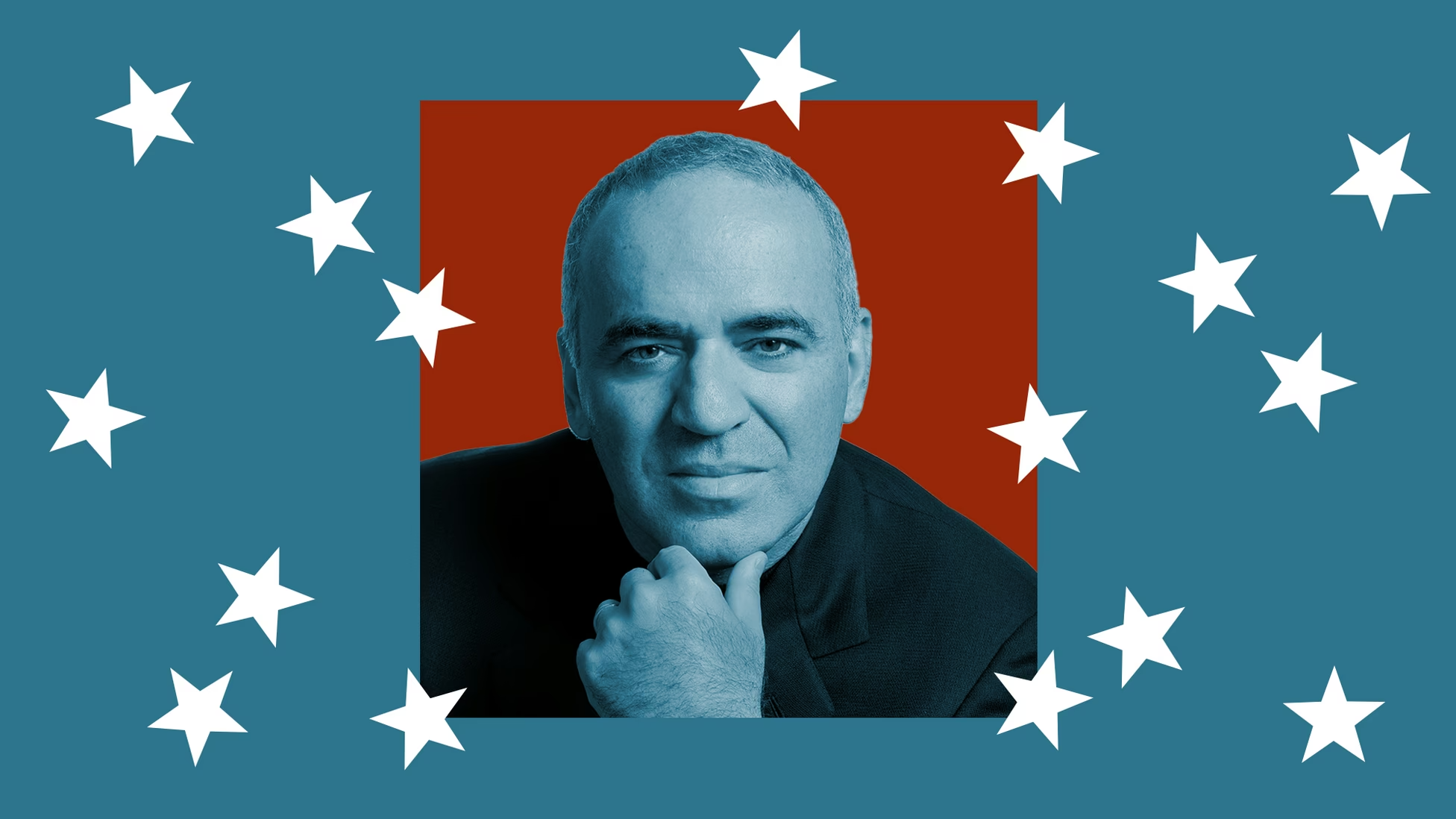
Coming soon. A new season of the Autocracy in America podcast, hosted by Garry Kasparov, a former world chess champion and democracy activist.

Watch (or skip). Squid Game’s final season (out now on Netflix) is a reminder of what the show did so well, in the wrong ways, Shirley Li writes.

Play our daily crossword.


P.S.

Tuesday was a red-letter day for blue language in the Gray Lady. The New York Times is famously shy about four-letter words; the journalist Blake Eskin noted in 2022 that the paper had published three separate articles about the satirical children’s book Go the Fuck to Sleep, all without ever printing the actual name of the book. An article about Emil Bove III, which I wrote about yesterday, was tricky for the Times: The notable thing about the story was the language allegedly used. In its second paragraph, the Times used one of its standard circumlocutions: “In Mr. Reuveni’s telling, Mr. Bove discussed disregarding court orders, adding an expletive for emphasis.” It printed the word itself in the 16th paragraph, perhaps because any children reading would have gotten bored and moved on by then. The same day, the Times reported, unexpurgated, on Trump’s anger at Iran and Israel: “We basically have two countries that have been fighting so long and so hard that they don’t know what the fuck they’re doing,” the president told reporters.

I was curious about the discussions behind these choices. In a suitably Times-y email, the newspaper spokesperson Danielle Rhoades Ha told me: “Editors decided it was newsworthy that the president of the United States used a curse word to make a point on one of the biggest issues of the day, and did so in openly showing frustration with an ally as well as an adversary.” It’s another Trumpian innovation: expanding the definition of news fit to print.

— David


Stephanie Bai contributed to this newsletter.

When you buy a book using a link in this newsletter, we receive a commission. Thank you for supporting The Atlantic.

Great Job David A. Graham & the Team @ The Atlantic Source link for sharing this story.

Kenzo brings mischief back to Paris’ iconic Maxim’s with a riot of color and clash

PARIS – Few Paris addresses conjure myth quite like Maxim’s, the gilded Belle Époque haunt where artists and aristocrats once jostled for a seat at dinner, and a place immortalized in Cole Porter’s lyrics and classic Hollywood films as the very symbol of Parisian chic. On Friday night, at Paris Fashion Week the renowned restaurant-turned-nightclub became the improbable stage for Kenzo’s latest co-ed show — a riot of pop color, celebrity and cultural collision served tableside.

Guests perched around white tablecloths as Nigo, the first Japanese designer to helm Kenzo since the late, great Kenzo Takada, set out to prove the house can still surprise. What unfolded was a knowingly playful mash-up of preppy classics and off-kilter eveningwear: eye-popping pink dresses loosely gathered and knotted, each one tossed with a Left Bank silk scarf; a slinky tuxedo jacket paired with a blaring urban-printed tee in wild color, topped with a cartoon bunny in intentional clash. Think cocktail hour by way of Shibuya street style.

Tongue-in-cheek references ran rampant — a circus master’s striped waistcoat here, sheeny tiger-motif pants there, all nodding to Kenzo’s signature mix of high craft and subcultural wink. If the goal was to recapture the house’s historic sense of fun, Nigo went all in.

While the creativity on display was undeniable, the sheer abundance of ideas sometimes made it hard for a single vision to shine through. With so many bold references and layers echoing recent seasons’ spirit of collaboration and eclecticism, the collection sometimes felt more like a lively collage than a focused statement. Still, there were moments where the craftsmanship and playful accessories truly stood out, offering glimpses of the distinct Kenzo spirit that Nigo has made his own.

Since joining Kenzo, Nigo has brought a fresh spirit of collaboration and cross-cultural exchange, most visibly in his headline-grabbing work with Pharrell Williams at Louis Vuitton and his frequent partnerships with artists from across the globe. That outward-looking energy has helped pull Kenzo back into the pop-culture conversation, blending the house’s playful legacy with new momentum. As part of the LVMH stable, Kenzo now enjoys the reach and resources of the world’s largest luxury group, giving Nigo freedom to experiment, push boundaries and reawaken the brand’s irreverent roots.

It was a night that nodded to both past and future. After a string of worn years under the previous design duo, Kenzo seems determined to shake off old dust and reclaim its seat at Paris’ most storied table. The show at Maxim’s — equal parts fashion circus and cultural memory — was a reminder that Paris style is best served with a wink, a clash and more than a little mischief.

Copyright 2025 The Associated Press. All rights reserved. This material may not be published, broadcast, rewritten or redistributed without permission.

Great Job Thomas Adamson, Associated Press & the Team @ KSAT San Antonio Source link for sharing this story.

Arizona governor approves up to $500M in taxpayer funds to upgrade home of Diamondbacks

PHOENIX – Arizona Gov. Katie Hobbs signed legislation Friday that funds up to $500 million in renovations to Chase Field, home of the Arizona Diamondbacks.

The bill, which won bipartisan support in both of the state’s GOP-controlled chambers, will use sales tax revenue from the stadium and nearby buildings for infrastructure upgrades over the next 30 years, including improvements to air conditioning systems and the stadium’s retractable roof.

The team said it will also contribute $250 million for the renovations at the stadium, which is located in downtown Phoenix and is surrounded by small businesses and restaurants that see a boost of activity during the baseball season.

The legislation is one of a handful of bipartisan deals that Hobbs, a Democrat, prioritized negotiating during the session. She says the funding is a responsible use of taxpayer dollars, will provide good-paying jobs and ensure the Diamondbacks do not leave Phoenix.

Attendance at games has increased since the team’s 2023 run to the World Series, where the Diamondbacks lost to the Texas Rangers. This season they are averaging 31,420 fans per game — the highest in two decades.

“Without the Diamondbacks in Chase Field, there wouldn’t be the tax revenue that’s being used,” said Hobbs spokesperson Christian Slater, who confirmed that the governor signed the bill Friday.

The bill cleared the Legislature June 23 after months of debate that included the question of whether the Diamondbacks could potentially leave unless a public funding deal was reached.

Other MLB teams have threatened to leave host cities if they did not get public financing.

The Oakland A’s, for example, complained for years about the Oakland Coliseum and an inability to gain government assistance for a new ballpark. Now the team is bound for Las Vegas, where a groundbreaking ceremony was held this month for a $1.75 billion ballpark that is expected to be completed in time for the 2028 season. Nevada and Clark County approved up to $380 million in public funds for the project.

And last year voters in Jackson County, Missouri, rejected an attempt to extend a sales tax that would have helped fund a ballpark for the Kansas City Royals and stadium renovations for the Kansas City Chiefs. Lawmakers in Kansas are trying to lure the teams with government subsidies, and Missouri is trying to keep them with its own financial incentives.

The Diamondbacks have spent nearly three decades in their downtown ballpark, which is owned by the Maricopa County Stadium District. In 2017, the team sued the district over funding for repairs and sought to remove a contractual clause preventing the team from looking into other stadium options.

A perennial problem has been the park’s air conditioning system and its ability to keep it cool in triple-digit summer heat, team president Derrick Hall said. Fans of country music star Morgan Wallen bemoaned the heat at a concert there last July, despite the retractable roof being closed. Concession stands ran out of water, and some people simply left.

Chase Field was one of the first MLB stadiums to have a retractable roof. Now seven out of the 30 teams play under one, including the Brewers, Blue Jays, Rangers, Marlins, Astros and Mariners. Chase Field also has a small swimming pool in right field, one of its most recognizable features.

The funding from the Legislature will not mean upgrades to the pool or to stadium suites, the latter of which was a sticking point for Phoenix Mayor Kate Gallego. She got on board after the bill was updated to prevent funds from being used for suites and a cap was placed on how much money the city would contribute for a land deal should the Diamondbacks break from the Stadium District, according to Gallego chief of staff Seth Scott.

Hobbs is running for reelection, and while it’s too early to say whether the Diamondbacks funding will be part of her campaign messaging, it’s another bipartisan win, her communications director Michael Beyer said.

Democratic state Sen. Mitzi Epstein, who voted against the funding, said Hobbs’ support for the bill was wrong and hurtful for Arizonans. She said she was disappointed that amendments to create public benefits such as free streaming of games failed.

___

Associated Press sports writer David Brandt in Phoenix contributed.

___

The Associated Press’ women in the workforce and state government coverage receives financial support from Pivotal Ventures. AP is solely responsible for all content. Find AP’s standards for working with philanthropies, a list of supporters and funded coverage areas at AP.org.

Copyright 2025 The Associated Press. All rights reserved. This material may not be published, broadcast, rewritten or redistributed without permission.

Great Job Sejal Govindarao, Associated Press & the Team @ KSAT San Antonio Source link for sharing this story.

NASCAR’s Cup Series to debut In-Season Challenge as $1 million backdrop to points race for title

HAMPTON, Ga. – The debut of NASCAR’s In-Season Challenge in Saturday night’s Cup Series race in Atlanta generated differing opinions and expectations from drivers.

After all, there’s a points race to attend to. Every team’s top priority is qualifying for the playoffs and trying to win the championship. Some drivers acknowledge they simply haven’t paid attention to the new race within the race.

Joey Logano says he sees no reason to view the new tournament as a distraction.

“If there’s something to win, you want to go win it,” Logano said Friday before winning the pole for Saturday night’s race in his Team Penske Ford.

Denny Hamlin is the No. 1 seed in the 32-driver In-Season Challenge, a five-race, bracket-style tournament. Chase Briscoe, who held off Hamlin for his first win for Joe Gibbs Racing last week at Pocono Raceway, is the No. 2 seed. A $1 million prize awaits the winner as part of a new media rights deal that includes TNT.

Briscoe said Friday he felt “definitely a sigh of relief, you know, just a weight off your shoulders” following last week’s win. He said that sense of relief was shortlived.

“I’m expected to win multiple races, not just one,” Briscoe said. “It’s a sense of relief, but also more pressure because now they know you can win.”

NASCAR hopes the tournament generates mid-season interest. The single-elimination format cuts the field to 16 at Chicago, eight at Sonoma, four at Dover and the final two at Indianapolis Motor Speedway.

Many drivers expect their interest in the tournament will increase after Saturday night’s race.

“I think some of the drivers have been kind of dismissive over the bracket challenge,” said Brad Keselowski, who enters the race No. 30 in the points standings and in need of a win in Atlanta to earn a playoff spot in his RFK Racing Ford.

“I think it’ll become a lot more real, whether it be for the drivers or for the media or the fans, as it progresses into the later rounds over the next few weeks,” Keselowski said.

Added Ricky Stenhouse, who is 24th in the points race, of the new tournament: “It’s cool. I think after this weekend you’ll have a little better idea of what you have. Our main goal in Atlanta is winning and getting into the playoffs.”

Team Penske dominates qualifying

Team Penske claimed four of the top five qualifying positions and Ford claimed all of the top five spots.

Logano was first at 178.960 mph, tying Josh Berry, who drives for Wood Brothers but has a technical alliance with Team Penske. Ryan Blaney qualified third and Austin Cindric was one spot back for Team Penske, while Ryan Preece, in another Ford for RFK Racing, was fifth.

“It definitely helps at the start for sure,” Logano said. “Being at the front and controlling the race is the thing for sure.”

Drawing ‘Uncle’ Noah

Briscoe is facing No. 31 seed Noah Gragson in the first bracket. He says it’s a difficult matchup, in part because “he’s actually probably my best friend on the circuit … and my son’s favorite driver.”

Briscoe said his 3-year-old son, Brooks, thinks of Gragson “like that uncle that just you take your kid to, and he has Pop-Tarts and ice cream and everything else when he’s with them.”

Added Briscoe: “Hopefully I’ll win. If not I’ll never here the end of it from Noah or my son.”

Briscoe posted a photo on his X account of his son’s bracket. The photo shows the smiling Brooks holding a bracket with his father’s No. 19 winning every round of the tournament.

Racing for Rhealynn

Chase Elliott has a special paint scheme on his No. 9 Hendrick Motorsports Chevrolet that was designed by 11-year-old cancer patient Rhealynn Mills. Elliott chose Mills’ design to highlight his foundation’s efforts to raise money for Children’s Healthcare of Atlanta.

Elliott said the “Design to Drive” program has raised $500,000 for the children’s hospital.

“The only bad thing is I feel like we’ve crashed every time we’ve done it,” Elliott said, adding his sponsor, NAPA Auto Parts, deserved credit “for giving up the car” so the paint scheme could instead feature Mills’ design.

New name for Atlanta track

EchoPark Speedway is the new name for the track that was still known as Atlanta Motor Speedway in February when Christopher Bell won while leading only the final lap in overtime. It’s the home track for Elliott, from Dawsonville, Georgia, and he acknowledged seeing the name change and the new green paint “was different for me. I think it’s fine.”

Odds and ends

Ryan Blaney is the favorite (+800) to win the race, per BetMGM Sportsbook. Joey Logano and Austin Cindric, each at +1000, were next.

___

AP auto racing: https://apnews.com/hub/auto-racing

Copyright 2025 The Associated Press. All rights reserved. This material may not be published, broadcast, rewritten or redistributed without permission.

Great Job Charles Odum, Associated Press & the Team @ KSAT San Antonio Source link for sharing this story.

Bexar County robbery suspect arrested after fleeing out of state while on bond, BCSO says

BEXAR COUNTY, Texas – A Bexar County man was re-arrested after allegedly fleeing out of state while out on bond for an aggravated robbery charge, according to the sheriff’s office.

The charge stemmed from a home invasion on April 13, 2023, in east Bexar County.

The sheriff’s office said multiple people were tied up and held at gunpoint during a “violent” home invasion.

Armed suspects assaulted a 19-year-old man and forced him to open safes containing firearms, BCSO said.

A female and a juvenile male were also restrained and threatened before the suspects fled in a white truck, the sheriff’s office said.

William Best, later identified as one of the suspects, was booked on aggravated robbery charges, BCSO said.

Best was supposed to appear in court two years later while out on bond. However, deputies said he removed his GPS monitor and told his attorney he wouldn’t show up.

A warrant was issued for his arrest, and he was located a month later in Fayette County, Kentucky, by the U.S. Marshals, deputies said.

Best is now scheduled to appear in trial on July 30 for the aggravated robbery charges.


READ ALSO:

Copyright 2025 by KSAT – All rights reserved.

Great Job Rocky Garza & the Team @ KSAT San Antonio Source link for sharing this story.

What’s next for birthright citizenship after the Supreme Court’s ruling


WASHINGTON – The legal battle over President Donald Trump’s move to end birthright citizenship is far from over despite the Republican administration’s major victory Friday limiting nationwide injunctions.

Immigrant advocates are vowing to fight to ensure birthright citizenship remains the law as the Republican president tries to do away with more than a century of precedent.

The high court’s ruling sends cases challenging the president’s birthright citizenship executive order back to the lower courts. But the ultimate fate of the president’s policy remains uncertain.

Here’s what to know about birthright citizenship, the Supreme Court’s ruling and what happens next.

What does birthright citizenship mean?

Birthright citizenship makes anyone born in the United States an American citizen, including children born to mothers in the country illegally.

The practice goes back to soon after the Civil War, when Congress ratified the Constitution’s 14th Amendment, in part to ensure that Black people, including former slaves, had citizenship.

“All persons born or naturalized in the United States and subject to the jurisdiction thereof, are citizens of the United States,” the amendment states.

Thirty years later, Wong Kim Ark, a man born in the U.S. to Chinese parents, was refused re-entry into the U.S. after traveling overseas. His suit led to the Supreme Court explicitly ruling that the amendment gives citizenship to anyone born in the U.S., no matter their parents’ legal status.

It has been seen since then as an intrinsic part of U.S. law, with only a handful of exceptions, such as for children born in the U.S. to foreign diplomats.

Trump has long said he wants to do away with birthright citizenship

Trump’s executive order, signed in Januar,y seeks to deny citizenship to children who are born to people who are living in the U.S. illegally or temporarily. It’s part of the hardline immigration agenda of the president, who has called birthright citizenship a “magnet for illegal immigration.”

Trump and his supporters focus on one phrase in the amendment — “subject to the jurisdiction thereof” – saying it means the U.S. can deny citizenship to babies born to women in the country illegally.

A series of federal judges have said that’s not true, and issued nationwide injunctions stopping his order from taking effect.

“I’ve been on the bench for over four decades. I can’t remember another case where the question presented was as clear as this one is. This is a blatantly unconstitutional order,” U.S. District Judge John Coughenour said at a hearing earlier this year in his Seattle courtroom.

In Greenbelt, Maryland, a Washington suburb, U.S. District Judge Deborah Boardman wrote that “the Supreme Court has resoundingly rejected and no court in the country has ever endorsed” Trump’s interpretation of birthright citizenship.

Is Trump’s order constitutional? The justices didn’t say

The high court’s ruling was a major victory for the Trump administration in that it limited an individual judge’s authority in granting nationwide injunctions. The administration hailed the ruling as a monumental check on the powers of individual district court judges, whom Trump supporters have argued want to usurp the president’s authority with rulings blocking his priorities around immigration and other matters.

But the Supreme Court did not address the merits of Trump’s bid to enforce his birthright citizenship executive order.

“The Trump administration made a strategic decision, which I think quite clearly paid off, that they were going to challenge not the judges’ decisions on the merits, but on the scope of relief,” said Jessica Levinson, a Loyola Law School professor.

Attorney General Pam Bondi told reporters at the White House that the administration is “very confident” that the high court will ultimately side with the administration on the merits of the case.

Questions and uncertainty swirl around next steps

The justices kicked the cases challenging the birthright citizenship policy back down to the lower courts, where judges will have to decide how to tailor their orders to comply with the new ruling. The executive order remains blocked for at least 30 days, giving lower courts and the parties time to sort out the next steps.

The Supreme Court’s ruling leaves open the possibility that groups challenging the policy could still get nationwide relief through class-action lawsuits and seek certification as a nationwide class. Within hours after the ruling, two class-action suits had been filed in Maryland and New Hampshire seeking to block Trump’s order.

But obtaining nationwide relief through a class action is difficult as courts have put up hurdles to doing so over the years, said Suzette Malveaux, a Washington and Lee University law school professor.

“It’s not the case that a class action is a sort of easy, breezy way of getting around this problem of not having nationwide relief,” said Malveaux, who had urged the high court not to eliminate the nationwide injunctions.

Justice Sonia Sotomayor, who penned the court’s dissenting opinion, urged the lower courts to “act swiftly on such requests for relief and to adjudicate the cases as quickly as they can so as to enable this Court’s prompt review” in cases “challenging policies as blatantly unlawful and harmful as the Citizenship Order.”

Opponents of Trump’s order warned there would be a patchwork of polices across the states, leading to chaos and confusion without nationwide relief.

“Birthright citizenship has been settled constitutional law for more than a century,” said Krish O’Mara Vignarajah, president and CEO of Global Refuge, a nonprofit that supports refugees and migrants. “By denying lower courts the ability to enforce that right uniformly, the Court has invited chaos, inequality, and fear.”

____

Associated Press reporters Mark Sherman and Lindsay Whitehurst in Washington and Mike Catalini in Trenton, New Jersey, contributed.

Copyright 2025 The Associated Press. All rights reserved. This material may not be published, broadcast, rewritten or redistributed without permission.

Great Job Tim Sullivan And Alanna Durkin Richer, Associated Press & the Team @ KSAT San Antonio Source link for sharing this story.


Atascosa County couple indicted in connection with death of 12-year-old girl, records show

ATASCOSA COUNTY, Texas – The stepfather and mother arrested and charged in connection with the death of the woman’s 12-year-old daughter face indictments, according to Atascosa County court records.

Gerald Gonzales, 41, and Denise Balbaneda, 37, were both arrested on Aug. 13, 2024, and booked into the Atascosa County Jail on a charge of injury to a child causing serious bodily injury by omission. Their bonds were set at $200,000 each.

Gonzales and Balbaneda knowingly caused serious injuries to Miranda Sipps and failed to seek medical attention, the indictments stated.

Both appeared in court on Dec. 4, 2024, and were appointed separate attorneys. Neither the pair nor their attorneys answered questions after the hearing.

Records show Balbaneda is due back in court on July 15. She previously appeared in court earlier in June, and no action was taken.

It remains unclear how Gonzales and Balbaneda plan to plead their case.

BACKGROUND

Atascosa County Sheriff David Soward said Balbaneda called 911 from her home in Christine at 8:20 p.m. on Aug. 12, 2024, to report that Sipps was not breathing.

Balbaneda put Sipps in her vehicle and started driving toward a hospital in Jourdanton.

Dispatchers advised Balbaneda to stop her vehicle and meet EMS at the intersection of State Highway 16 and Farm-to-Market 140, Atascosa County deputies said.

EMS treated Sipps as she was transported to Methodist Hospital Atascosa, where she was treated for an hour; however, medical staff were unable to improve her condition. Sipps was pronounced dead at 9:55 p.m.

Investigators questioned Balbaneda and learned that Sipps received serious, life-threatening injuries on the afternoon of Aug. 8, Soward said.

The sheriff said Sipps’ injuries put her in a state of unconsciousness. An autopsy indicated that Sipps “experienced trauma to her neck.”

Soward said the parents “failed to act.”

The sheriff’s office said, “Sipps was kept on a homemade bedding area in an environment that was not kept to a reasonable standard of cleanliness.”

The parents tried to give Sipps smoothies, vitamins, and supplements, and may have gotten oxygen for her at one point, Soward said, but Miranda could only flutter her eyes and move her hands.

“Someone who is unconscious is not able to swallow,” Soward said. “She’d been in that situation, laying on the floor for four days.”

Sipps, a Jourdanton Independent School District student, would have turned 13 later that month.

Gonzales and Balbaneda were released on bond a few days after their arrests.

Balbaneda was ordered to wear an ankle monitor following her release, as required by her bail bondsman.


More coverage of this story on KSAT

Copyright 2024 by KSAT – All rights reserved.

Great Job Spencer Heath, Zaria Oates & the Team @ KSAT San Antonio Source link for sharing this story.

Southwest flight to Kansas City diverted back to San Antonio after possible tire issue

The airline said it removed the aircraft from service to inspect the problem

FILE – Southwest Airlines Boeing 737 lands at Manchester Boston Regional Airport, June 2, 2023, in Manchester, N.H. (AP Photo/Charles Krupa, File) (Charles Krupa, Copyright 2023 The Associated Press. All rights reserved.)

SAN ANTONIO – A flight intended for Kansas City returned back to San Antonio on Friday morning after it experienced a possible tire issue, Southwest Airlines confirmed to KSAT.

According to flight tracking data obtained from FlightAware, Southwest Flight 507 took off around 11:19 a.m. and was in the air for about 20 minutes heading northwest before turning around.

Officials said the Boeing 737-800 “returned safely” to San Antonio International Airport after the crew learned of a possible tire issue during takeoff.

The aircraft has since been removed from its active fleet while Southwest Airlines inspects any potential errors.

In a statement, Southwest Airlines told KSAT it was accommodating customers on another aircraft.

“Nothing is more important to Southwest than the safety of our customers and employees,” the airline said, in part.


Read more on KSAT:


Great Job Christian Riley, Sandra Ibarra & the Team @ KSAT San Antonio Source link for sharing this story.

‘Rust’ crew settles lawsuit against film producers and Alec Baldwin in fatal shooting


SANTA FE, N.M. – A settlement has been reached in the civil lawsuit alleging negligence in the fatal shooting of a cinematographer on the set of the Western movie “Rust”, according to court documents released Friday.

The lawsuit was brought by three “Rust” crew members seeking compensation for emotional distress from producers of “Rust,” including Alec Baldwin as co-producer and lead actor.

The civil suit accused producers of failing to follow industry safety rules — allegations they denied.

Terms of the settlement were not available. Attorneys for “Rust” producers and the plaintiffs could not immediately be reached by phone or email.

Plaintiffs to the lawsuit included Ross Addiego, a front-line crew member who witnessed at close range the fatal shooting of Halyna Hutchins at close during a rehearsal on October 2021 on a filmset ranch on the outskirts of Santa Fe.

A charge of involuntary manslaughter against Baldwin was dismissed at trial last year on allegations that police and prosecutors withheld evidence from the defense.

Separately, “Rust” armorer Hannah Gutierrez-Reed was convicted of involuntary manslaughter and completed an 18-month sentence in May. Prosecutors accused Gutierrez-Reed of unwittingly bringing live ammunition on set and failing to follow basic gun safety protocols.

Baldwin was pointing a gun at Hutchins during a rehearsal on a movie set outside Santa Fe when the revolver went off, killing Hutchins and wounding director Joel Souza.

Addiego testified at Gutierrez-Reed’s trial and appeared before the grand jury that indicted Baldwin.

The filming of “Rust” was completed in Montana. The Western was released in theaters in May.

Copyright 2025 The Associated Press. All rights reserved. This material may not be published, broadcast, rewritten or redistributed without permission.

Great Job Morgan Lee, Associated Press & the Team @ KSAT San Antonio Source link for sharing this story.
Secret Link