Home News Page 2595

San Antonio students dive into robotics at Harlandale ISD Camp

The Texas Workforce Commission is paving the way for young students to explore STEM careers through an exciting robotics camp at Harlandale ISD.

This week, elementary and middle school students are getting hands-on experience in the Best of Texas robotics camp, where they’re learning to build and program their own robots.

Photojournalist Azian Bermea captures sights and sounds from the camp. Watch in the player above.


Great Job Azian Bermea & the Team @ KSAT San Antonio Source link for sharing this story.

Senators Demand Investigation Into Canceled VA Contracts, Citing “Damning Reporting From ProPublica”

What Happened

Senators this week called for a federal investigation into the Trump administration’s killing of hundreds of contracts for the Department of Veterans Affairs. Democrat Richard Blumenthal of Connecticut and Angus King, a Maine independent, wrote to the agency’s inspector general on Monday asking for an investigation into the administration’s cancellation of the contracts and the consequences for veterans.

The senators highlighted “damning reporting from ProPublica” on the cancellations, including how the Department of Government Efficiency used an artificial intelligence tool that marked contracts as “MUNCHABLE.”

The senators wrote that DOGE’s use of AI to scrutinize contracts “adds an entire new level of unease connected to the decision-making, security, governance, and quality control of the entire process.”

VA officials have said they’ve killed nearly 600 contracts after DOGE’s review but have declined requests by lawmakers and ProPublica for details.

“Despite repeated requests in letters to the Secretary, questions at hearings, and dozens of emails to VA officials,” the senators wrote, “the Department has not provided a single briefing or a complete and accurate list of the contracts it has cancelled.”

Blumenthal and King wrote that the VA shared a list of contracts in May, but it was “riddled with errors and inaccuracies.”

What They Said

Amid the administration’s “stonewalling,” Blumenthal said in a statement, “ProPublica’s reporting revealed these cancelled contracts were delivering essential services to veterans and exposed the cruel and dumb AI formulas DOGE bros used to cancel contracts.”

Blumenthal added, “Veterans and all Americans deserve transparency around decisions being made at VA.”

Background

As ProPublica detailed, a DOGE staffer with no background in government or health care created the AI tool used to mark contracts as “munchable.” Among the contracts that were tagged and later killed was one to maintain a gene sequencing device for improving cancer treatment. Another was for blood sample analysis in support of a VA research project. And a third was to help measure and improve nursing care.

In another story, we reported how VA doctors and other staffers across the country have raised alarms about how the killing of contracts could threaten veterans’ care. In internal emails, hospital staffers warned about canceled contracts to maintain cancer registries, where information on the treatment of patients is collected and analyzed. DOGE had marked one such contract “for immediate termination.”

Why it Matters

The VA is one of the nation’s largest health care providers, charged with the care of more than 9 million veterans. President Donald Trump has long promised to prioritize former service members. “We love our veterans,” he said in February. “We are going to take good care of them.”

The administration has reiterated that stance even as the VA has been shedding employees and contracts. Amid the cutbacks, Trump’s pick to run the agency, Secretary Doug Collins, said earlier this year, “Veterans are going to notice a change for the better.”

Response

The VA has not responded to our request for comment about the senators’ letter. Previously, press secretary Pete Kasperowicz said that decisions to cancel or reduce the size of contracts are made after multiple reviews by VA employees, including agency contracting experts and senior staff.

He also said the VA has not canceled contracts that provide services to veterans or work that the agency cannot do itself without a contingency plan in place.

Great Job by Eric Umansky and Vernal Coleman & the Team @ ProPublica Source link for sharing this story.

Supreme Court Allows States to Exclude Reproductive Health Clinics From Medicaid


Abortion-rights protesters demonstrate outside the Supreme Court during oral arguments in Medina v. Planned Parenthood South Atlantic on April 2, 2025. (Kayla Bartkowski / Getty Images)

In a landmark decision released Thursday morning, the U.S. Supreme Court ruled 6-3 in favor of South Carolina in Medina v. Planned Parenthood South Atlantic, granting states the authority to exclude reproductive health clinics from their Medicaid programs—even when those clinics provide essential care such as cancer screenings, birth control and STI testing. This decision could embolden Republican-led states to “defund” Planned Parenthood across the country.

The ruling marks a significant setback for reproductive health advocates, who warn it will disproportionately impact low-income women, especially in rural areas where health services are already limited.

“This is not just about abortion. This is about blocking low-income women from basic reproductive care—just because their provider also happens to offer abortions,” said Ellie Smeal and Kathy Spillar of the Feminist Majority Foundation (publisher of Ms.) in a joint statement.

At the center of the case was whether states can defund Planned Parenthood and similar clinics under Medicaid, the federal-state program that provides healthcare for millions of low-income Americans. While federal law guarantees Medicaid patients the right to see “any qualified provider,” Justice Neil Gorsuch, writing for the majority, argued that patients do not have the right to sue states that violate this provision.

“Translation: States can now discriminate—and patients are left with no legal recourse,” according to Smeal and Spillar. “Planned Parenthood and hundreds of independent reproductive health clinics have been a lifeline for millions. And now, states have a green light to cut that lifeline off.”

In her dissent, Justice Ketanji Brown Jackson, joined by Justices Elena Kagan and Sonia Sotomayor, blasted “the majority’s effort to resist the natural and obvious rights-creating reading of the Medicaid Act’s free-choice-of-provider provision.”

“Today’s decision is likely to result in tangible harm to real people,” they continued. “At a minimum, it will deprive Medicaid recipients in South Carolina of their only meaningful way of enforcing a right that Congress has expressly granted to them. And, more concretely, it will strip those South Carolinians—and countless other Medicaid recipients around the country—of a deeply personal freedom: the ‘ability to decide who treats us at our most vulnerable.’”

The ruling could open the door for other states to follow South Carolina’s lead, effectively shutting down access to trusted reproductive healthcare providers for Medicaid patients. Clinics that serve low-income women—particularly Black and brown women, young women, mothers and survivors—may now face state-level exclusion solely because they also offer abortion services, even if those services are funded separately.

Over 60 percent of reproductive health clinics in rural areas have already closed or reduced services in recent years, according to the American College of Obstetricians and Gynecologists. Advocates warn this ruling could accelerate that trend.

“This is a calculated attack—part of a sweeping plan to dismantle every last safeguard for reproductive freedom,” Smeal and Spillar said.

In response, reproductive rights organizations are urging the public to mobilize. Calls to action include contacting members of Congress to pass federal protections for Medicaid patients, signing petitions and spreading awareness through social media.

“We will never accept a country where a woman’s healthcare is decided by partisan judges,” said Spillar. “We are the majority. And we are not done.”

Senate Parliamentarian Decision Complicates GOP Push to Restrict Abortion Coverage

The Court’s ruling comes on the same day the Senate parliamentarian issued a consequential decision on Republicans’ sweeping One Big Beautiful Bill Act. In a critical procedural victory for reproductive rights advocates, the parliamentarian ruled that several provisions in the bill—most notably, a ban on federal cost-sharing reduction payments to health plans that cover abortion—would be subject to a 60-vote threshold in the Senate. That hurdle could make it significantly harder for antiabortion measures to advance.

“Republicans tried to effectively ban healthcare plans on the ACA marketplaces from covering abortion altogether, which would have put abortion care out of reach for millions of women in states where abortion is legal,” said Sen. Patty Murray (D-Wash.). “This effort was part of Republicans’ plan to institute a backdoor nationwide abortion ban by making abortion care inaccessible for everyone, everywhere. Democrats challenged this attack on women’s healthcare under Senate rules and won—and we will keep fighting every Republican attempt to rip away abortion access every way we can.”

Still, the bill contains far-reaching proposals that would strip healthcare from millions, cut food assistance to the most vulnerable and attack Medicaid and Medicare—all while delivering massive tax breaks to corporations and the wealthiest Americans.

!function(f,b,e,v,n,t,s)
{if(f.fbq)return;n=f.fbq=function(){n.callMethod?
n.callMethod.apply(n,arguments):n.queue.push(arguments)};
if(!f._fbq)f._fbq=n;n.push=n;n.loaded=!0;n.version=’2.0′;
n.queue=[];t=b.createElement(e);t.async=!0;
t.src=v;s=b.getElementsByTagName(e)[0];
s.parentNode.insertBefore(t,s)}(window,document,’script’,
‘https://connect.facebook.net/en_US/fbevents.js’);
fbq(‘init’, ‘200522034604820’);
fbq(‘track’, ‘PageView’);

Great Job Ms. Editors & the Team @ Ms. Magazine Source link for sharing this story.

Suspect flees on bike after shooting victim 3 times in East Side, SAPD says

SAN ANTONIO – San Antonio police officers said they are searching for a suspect accused of shooting another male three times on the East Side.

According to an SAPD preliminary report, two males were arguing at approximately 7:30 p.m. Wednesday near the intersection of Jenull Avenue and Monson Street before one of them opened fire.

Officers later learned that the suspect shot the victim three times in his upper torso and then fled the scene on a bicycle.

The victim, a 30-year-old man, was rushed to a local hospital in critical condition, authorities said.

SAPD said it has not located the suspect. The department’s investigation is ongoing.

More recent crime coverage on KSAT:

Copyright 2025 by KSAT – All rights reserved.

Great Job Nate Kotisso & the Team @ KSAT San Antonio Source link for sharing this story.

Fever’s Caitlin Clark ruled out of Thursday night matchup vs Sparks with groin injury

Indiana Fever guard Caitlin Clark claps from the bench during the second half of a WNBA basketball game against the Seattle Storm, Tuesday, June 24, 2025, in Seattle. (AP Photo/Lindsey Wasson) (Lindsey Wasson, Copyright 2025 The Associated Press. All rights reserved.)

INDIANAPOLIS – The Indiana Fever will be without star Caitlin Clark against the Los Angeles Sparks on Thursday night, the team announced.

The former No. 1 pick is battling a groin injury and will miss at least one game.

Clark had recently returned from a quad injury that kept her sidelined for five games. She returned to action June 14 and helped the Fever to a 102-88 victory against the Liberty with an explosive 32-point performance.

The Fever are currently 7-7. Clark is averaging 18.2 points, 8.9 assists and 5.0 rebounds on the season.

The Fever last played the Sparks in September 2024 and won 93-86. Clark matched Aliyah Boston for a team-high 24 points and had 10 rebounds and assists each.

___

AP WNBA: https://apnews.com/hub/wnba-basketball


Great Job Associated Press & the Team @ KSAT San Antonio Source link for sharing this story.

Supreme Court has 6 cases to decide, including birthright citizenship

WASHINGTON – The Supreme Court is in the final days of a term that has lately been dominated by the Trump administration’s emergency appeals of lower court orders seeking to slow President Donald Trump’s efforts to remake the federal government.

But the justices also have six cases to resolve that were argued between January and mid-May. One of the argued cases was an emergency appeal, the administration’s bid to be allowed to enforce Trump’s executive order denying birthright citizenship to U.S.-born children of parents who are in the country illegally.

The remaining opinions will be delivered Friday, Chief Justice John Roberts said. On Thursday, a divided court allowed states to cut off Medicaid money to Planned Parenthood amid a wider Republican-backed push to defund the country’s biggest abortion provider.

Here are some of the biggest remaining cases:

Trump’s birthright citizenship order has been blocked by lower courts

The court rarely hears arguments over emergency appeals, but it took up the administration’s plea to narrow orders that have prevented the citizenship changes from taking effect anywhere in the U.S.

The issue before the justices is whether to limit the authority of judges to issue nationwide injunctions, which have plagued both Republican and Democratic administrations in the past 10 years.

These nationwide court orders have emerged as an important check on Trump’s efforts and a source of mounting frustration to the Republican president and his allies.

At arguments last month, the court seemed intent on keeping a block on the citizenship restrictions while still looking for a way to scale back nationwide court orders. It was not clear what such a decision might look like, but a majority of the court expressed concerns about what would happen if the administration were allowed, even temporarily, to deny citizenship to children born to parents who are in the country illegally.

Democratic-led states, immigrants and rights groups who sued over Trump’s executive order argued that it would upset the settled understanding of birthright citizenship that has existed for more than 125 years.

The court seems likely to side with Maryland parents in a religious rights case over LGBTQ storybooks in public schools

Parents in the Montgomery County school system, in suburban Washington, want to be able to pull their children out of lessons that use the storybooks, which the county added to the curriculum to better reflect the district’s diversity.

The school system at one point allowed parents to remove their children from those lessons, but then reversed course because it found the opt-out policy to be disruptive. Sex education is the only area of instruction with an opt-out provision in the county’s schools.

The school district introduced the storybooks in 2022, with such titles as “Prince and Knight” and “Uncle Bobby’s Wedding.”

The case is one of several religious rights cases at the court this term. The justices have repeatedly endorsed claims of religious discrimination in recent years. The decision also comes amid increases in recent years in books being banned from public school and public libraries.

A three-year battle over congressional districts in Louisiana is making its second trip to the Supreme Court

Lower courts have struck down two Louisiana congressional maps since 2022 and the justices are weighing whether to send state lawmakers back to the map-drawing board for a third time.

The case involves the interplay between race and politics in drawing political boundaries in front of a conservative-led court that has been skeptical of considerations of race in public life.

At arguments in March, several of the court’s conservative justices suggested they could vote to throw out the map and make it harder, if not impossible, to bring redistricting lawsuits under the Voting Rights Act.

Before the court now is a map that created a second Black majority congressional district among Louisiana’s six seats in the House of Representatives. The district elected a Black Democrat in 2024.

A three-judge court found that the state relied too heavily on race in drawing the district, rejecting Louisiana’s arguments that politics predominated, specifically the preservation of the seats of influential members of Congress, including Speaker Mike Johnson. The Supreme Court ordered the challenged map to be used last year while the case went on.

Lawmakers only drew that map after civil rights advocates won a court ruling that a map with one Black majority district likely violated the landmark voting rights law.

The justices are weighing a Texas law aimed at blocking kids from seeing online pornography

Texas is among more than a dozen states with age verification laws. The states argue the laws are necessary as smartphones have made access to online porn, including hardcore obscene material, almost instantaneous.

The question for the court is whether the measure infringes on the constitutional rights of adults as well. The Free Speech Coalition, an adult-entertainment industry trade group, agrees that children shouldn’t be seeing pornography. But it says the Texas law is written too broadly and wrongly affects adults by requiring them to submit personal identifying information online that is vulnerable to hacking or tracking.

The justices appeared open to upholding the law, though they also could return it to a lower court for additional work. Some justices worried the lower court hadn’t applied a strict enough legal standard in determining whether the Texas law and others like that could run afoul of the First Amendment.

Copyright 2025 The Associated Press. All rights reserved. This material may not be published, broadcast, rewritten or redistributed without permission.


Great Job Mark Sherman And Lindsay Whitehurst, Associated Press & the Team @ KSAT San Antonio Source link for sharing this story.

Kaila Adia Story on Why Queer Liberation Must Center Black Feminism

In her call toward more inclusive rainbows, Kaila Adia Story argues that true queer liberation must center Black feminism and confront racism within LGBTQ+ spaces.

Black Feminist in Public is a series of conversations between creative Black women and Janell Hobson, a Ms. scholar whose work focuses on the intersections of history, popular culture and representations of women of African descent.


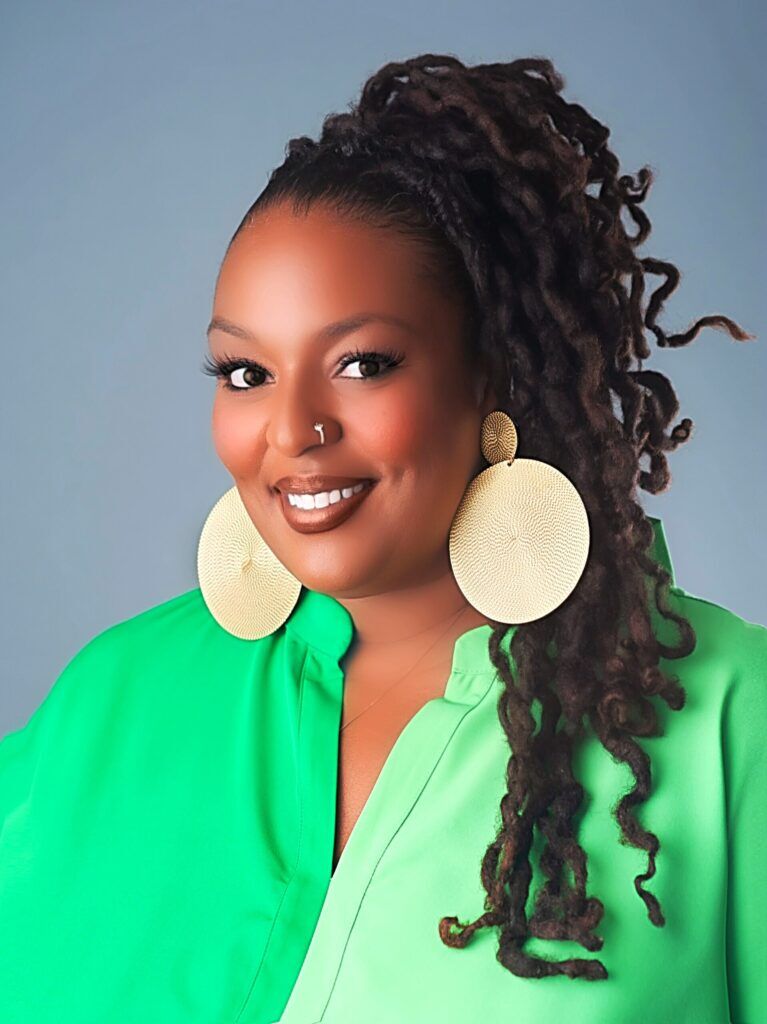
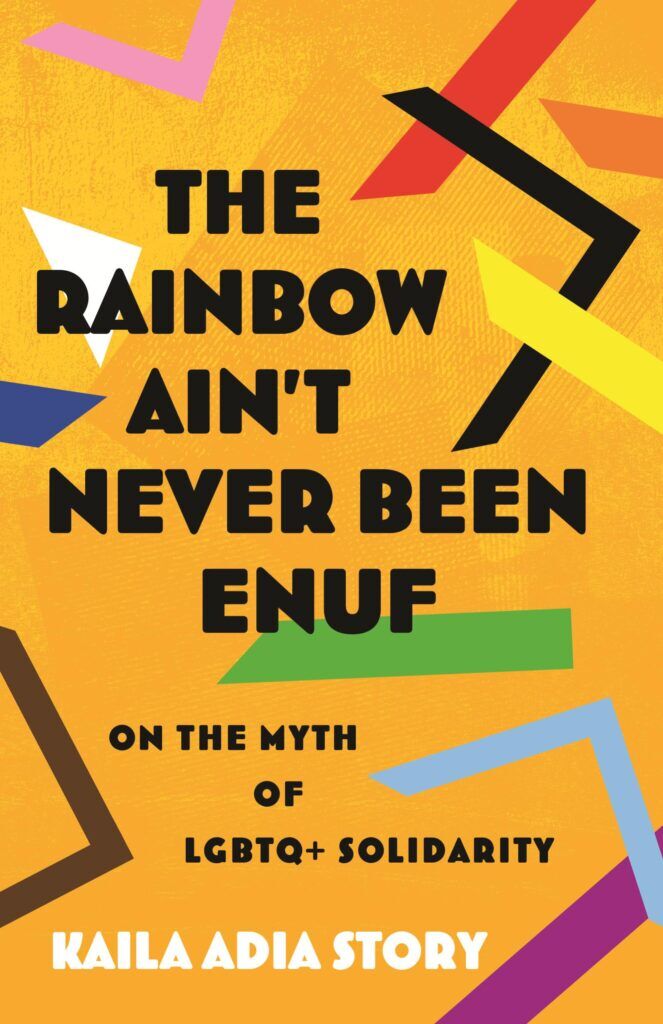
The series continues with a conversation this Pride Month with Kaila Adia Story, the Audre Lorde endowed chair and associate professor of women’s, gender and sexuality studies at the University of Louisville. Dr. Story is co-host of the award-winning podcast Strange Fruit and the author of the recently published The Rainbow Ain’t Never Been Enuf: On the Myth of LGBTQ+ Solidarity (2025).

I recently spoke with Kadia Adia Story for this series about her latest work.

“Black feminist thinkers and scholars are the blueprint for not only Black feminist liberation but queer liberation, trans liberation,” said Kaila Adia Story.

Janell Hobson: What was the inspiration behind writing The Rainbow Ain’t Never Been Enuf?

Story: I wanted to write the book because of the different types of racist microaggressions I would encounter, or overt acts of racism when I entered LGBTQ spaces.

I came out when I was 16, I started sneaking into gay clubs when I was about 17 in Ann Arbor, Michigan, where I lived. I’ve been to these clubs ever since—Chicago, Philly and now Louisville.

When I first got the job here at the University of Louisville, a particular incident happened at a local gay bar up the street from campus in which my group that was made up of minoritized folk—women, femmes, Black gay men—were called the N-slur and the C- and the B-slur. That was the first time anyone had ever used the N-slur against me in any kind of way in all the cities I had lived in, and it was in a gay space by a gay white man.

The Rainbow Ain’t Never Been Enuf: On the Myth of LGBTQ+ Solidarity was published May 13, 2025.

Hobson: Was it particularly jarring for you that it occurred in a gay space?

Story: My experience through media and through popularized conversations around queer and trans liberation suggested a different perception of what LGBTQ communities represent—that somehow, because of gender and sexual tyranny, they are absolved of any acts of racism and misogyny and that they’re more sophisticated as a community. They’re supposedly above trivial things such as racism, misogyny. But this is completely contradictory to what happens in queer spaces. Hence, the creation of the ball scene, the creation of Black drag networks, the creation of Black Pride and Latinx Pride.

I wrote this book because I didn’t see anyone talking about it in a way in which they related their direct experiences with bias and bigotry to larger social political issues within LGBTQ communities.

Hobson: How does that differ from homophobia and transphobia in Black communities, if you were to compare the two?

Story: I have not encountered vehement acts of homophobia in my experience from Black folk.

I’ve had a pretty privileged experience. My parents and family were very accepting. My wife’s family was accepting. We had five generations of her family at our wedding. My wife came out when she was young as well, and so the encounters that we’ve experienced have been racism and misogyny in queer spaces more so than we’ve experienced homophobia in Black spaces.

There’s been extensive conversations by many Black feminists around Black homophobia, from Barbara Smith to Audre Lorde, and how it’s short-sighted, how it needs to end and how it’s a symptom of white supremacy.

The only time I did encounter Black homophobia and anti-feminist stuff was as a grad student at Temple University when it was Afrocentric and taught that queerness was white and/or European, and that feminism was for white women, and that I should focus on Africana womanism.

Hobson: What to you is the difference between “Africana womanism” and Black feminism?

Story: Black feminist thinkers and scholars are the blueprint for not only Black feminist liberation but queer liberation, trans liberation. Their theory and practice are diligently tied to intersectionality and what human beings experience through multiple forms of identity. And that’s why I start the book off with Pat Parker and her poem about not having to choose identities. Not having to tell one identity to stay home that night. Because that’s when we would really have a revolution, when we can bring our whole selves into a space and be celebrated and welcomed.

Hobson: Is that why you chose to title your book after Ntozake Shange, a recognized Black feminist?

Story: The reason why I call the book The Rainbow Ain’t Never Been Enuf is because I love the way Ntozake Shange uses the rainbow as a metaphor to highlight the differences between intimate partner violence, domestic violence and state violence that Black girls and women experience at the hands of multiple people and communities. I draw a connection to the rainbow that was created by Gilbert Baker in the seventies that’s supposed to highlight all of our gender identities and sexualities. That was the symbol that got me into the gay bookstore when I was 16 and trying to figure out how I was going to explain my lesbian identity to folks. I saw the rainbow as a welcoming symbol for myself, but in actuality, it became a symbol that represented some of the most racialized and gendered harm that I’ve experienced.

Hobson: Your book is subtitled On the Myth of LGBTQ+ Solidarity. What does that mean to you, especially within our current political climate? 

Story: I feel as if the media characterizes and portrays LGBTQ communities in a very narrow, siloed way. So, all we care about is being able to marry, being able to serve in the military and that’s it. When queer liberation was thought of historically, because of all the cross-pollination between feminist groups and civil rights groups, you had Sylvia Rivera working with the Young Lords and working with the Black Panther Party for Self-Defense. They had different ideas of queer liberation. It meant unionizing sex workers. It meant feeding people. Pride festivals used to be resource fairs that gave key resources to people in LGBTQ communities, but now they’ve turned into this consumerist capitalist marketplace. There’s this idea that LGBTQ communities have one vision for freedom, one vision for liberation, and we’re all solidified together against gender and sexual tyranny. And that’s not the case.

Hobson: What are some examples of this lack of solidarity?

Story: You have groups now like the Log Cabin Gays, you have these Republican conservative gays who basically feel as if the T confuses cisgender folk, and we should get rid of it. We should sever the T, we should get rid of the queer and just be a “normal gay person,” which means being committed to capitalism, patriarchy, racism. Except you just happen to be gay. 

Hobson: I appreciate how you revisit LGBTQ history, specifically concerning the Stonewall protests. You highlight the Black LGBTQ+ individuals who were important to this history, especially someone like Stormé DeLarverie, who I believe doesn’t get the same attention as Marsha P. Johnson and Sylvia Rivera. How can we bring more attention to her history?

Story: I wanted to highlight Stormé because she showed us that we can protect our own spaces and that we can keep our own selves safe. Stormé noticed that there was constant harassment not only from law enforcement, but just from people walking in Greenwich Village in New York City who would see trans women or people who wore gender transgressive outfits, and they would harass them. Stormé decided that she’ll protect them along with a group of other Black butch lesbians, and they would patrol the streets to keep the girls—what she calls her “baby girls”—safe.

On the one hand, as a feminist, I thought, “Baby girls? These are grown ass women!” But I think Stormé said that to hint at the preciousness of the people in her community, and coming from the experience of anti-Blackness, anti-queerness, anti-woman, she wanted to let the girls know, to let the dolls know, to let the baby girls know, that they’re precious and deserve protection and safety. And I just love that.

I think it’s something that we should go back to honestly. Because I’ll go to Pride festivals, mainstream ones now, and there’s nothing but troops of police. And I get that it’s under the auspices of our own protection, but law enforcement is unnerving to me. It scares me. That’s why I wanted to talk about how LGBTQ communities can respond to the direct need of their communities. 

Hobson: What gives you hope in this moment?

Story: What gives me hope is the resistance that I’m seeing. Other Black feminist thinkers and writers, queer and trans thinkers and writers, these new books and writings that are coming out on the multiplicity and complexity of LGBTQ communities. And my students who continue to fight at the legislative level, they’re fighting at the state level, they’re fighting at federal levels. They give me hope.

Every time I get on Threads or Instagram, all I’m seeing in my algorithm are people fighting this tyrannical authoritarianism every single day in all these little ways that they can. That’s what’s giving me hope in this moment. Not that somehow we’re winning, not that things are getting better for Black women or LGBTQ people, but just that those groups are not taking it. They’re standing up for what’s right and what’s true. We keep advocating for a more inclusive future. 

!function(f,b,e,v,n,t,s)
{if(f.fbq)return;n=f.fbq=function(){n.callMethod?
n.callMethod.apply(n,arguments):n.queue.push(arguments)};
if(!f._fbq)f._fbq=n;n.push=n;n.loaded=!0;n.version=’2.0′;
n.queue=[];t=b.createElement(e);t.async=!0;
t.src=v;s=b.getElementsByTagName(e)[0];
s.parentNode.insertBefore(t,s)}(window,document,’script’,
‘https://connect.facebook.net/en_US/fbevents.js’);
fbq(‘init’, ‘200522034604820’);
fbq(‘track’, ‘PageView’);

Great Job Janell Hobson & the Team @ Ms. Magazine Source link for sharing this story.

What to know about the next James Bond movie now that Denis Villeneuve will direct it

In the 50-plus years of James Bond, the wait between films has never gone longer than six years. The next entry, and first since Daniel Craig’s dramatic exit, may test that — but things are speeding up.

On Wednesday, Amazon MGM Studio announced that Denis Villeneuve will direct the 26th Bond movie, putting the franchise in the hands of one of the most respected big-budget filmmakers. Here’s what to know about that decision, and where things stand for 007.

From ‘Dune’ to Bond

Villeneuve, the 57-year-old French Canadian director, edged out other filmmakers who were reportedly eyed for the gig, including Edward Berger (“Conclave”) and Paul King (“Paddington 2”). Since emerging with 2010’s “Incendies,” Villeneuve has established himself as a steward of cinematic IP (“Blade Runner 2049,” “Dune”) and a specialist in dark, doom-laden spectacle (“Sicaro,” “Arrival”).

“James Bond is in the hands of one of today’s greatest filmmakers,” said Mike Hopkins, head of Prime Video and Amazon MGM Studios.

The culmination for Villeneuve has been the “Dune” films. His first two entries have surpassed $1 billion in box office and gathered a combined 15 Academy Award nominations, winning seven. Villeneuve is expected to begin shooting the third “Dune” film this summer, with a cast including Timothée Chalamet, Florence Pugh, Zendaya and Javier Bardem.

“I’m a die-hard Bond fan. To me, he’s sacred territory,” said Villeneuve. “I intend to honor the tradition and open the path for many new missions to come. This is a massive responsibility, but also, incredibly exciting for me and a huge honor.”

What’s the timetable?

Amazon, which bought MGM Studios in 2022 for $8.5 billion, hasn’t set a release date yet or announced a screenwriter. Producers Amy Pascal and David Heyman are shepherding the movie for the first time. In February, Amazon MGM Studios secured creative control of the franchise from Michael G. Wilson and Barbara Broccoli, whose family has presided over Bond since the first film, 1962’s “Dr. No.”

The most likely timing would be production starting in 2026 and the film being released sometime in 2027.

Who’s in the mix?

No new 007 has been named, but that hasn’t stopped rumors and conjecture from running rampant.

It’s pure speculation buts oddsmakers have a few expected contenders for the martini-sipping role. Those include Aaron Taylor-Johnson, Theo James, Aaron Pierre, Henry Cavill, James Norton and Jack Lowden. Expectations are that the new Bond will remain male and British, but producers have said nothing publicly to tip their hand.

Whoever it is will have big shoes to fill. In his five-film, 15-year stretch in the tuxedo, Daniel Craig was widely seen as one of the best Bonds, including the high point of “Skyfall” (2012) and the swan song of “No Time to Die” (2021).

New corporate overloads with something to prove

Since Albert “Cubby” Broccoli obtained the movie rights to Ian Fleming’s books, James Bond has been a family business. That didn’t change after Amazon bought MGM, but it did earlier this year when Michael G. Wilson and Barbara Broccoli agreed to let the studio take creative control.

That handoff stoked concern from many Bond fans that 007 would be picked apart for spinoffs, series and the kind of intellectual property strip mining Hollywood has been known for in other franchises like “Star Wars.” So far, though, Amazon MGM has made no announcement about any spinoffs, and is prioritizing the 26th Bond movie.

Copyright 2025 The Associated Press. All rights reserved. This material may not be published, broadcast, rewritten or redistributed without permission.
Great Job Associated Press & the Team @ KSAT San Antonio Source link for sharing this story.

T.J. Puchyr agrees to buy Rick Ware Racing with plans to build a 3-car NASCAR team

CHARLOTTE, N.C. – One of the founders of Spire Motorsports has entered an agreement to purchase the NASCAR team owned by Rick Ware and is jumping back into the stock car series because he believes the current charters are grossly undervalued.

T.J. Puchyr, who in 2018 alongside Jeff Dickerson launched the Spire team to take over the charter that Furniture Row Racing could not unload, told The Associated Press on Thursday he and Rick Ware Racing have a deal for him to take over Ware’s organization next season.

When Puchyr and Dickerson bought the Furniture Row charter, the market for NASCAR’s version of franchise models was essentially dead. Their agency had been hired by Furniture Row owner Barney Visser to sell the charter and when they couldn’t find a buyer, the two decided to purchase it themselves for $6 million and launch their own team.

That decision jump-started the charter market and the most recent charters sold — when Stewart-Haas Racing went out of business at the end of last season — went for approximately $30 million. Puchyr and Dickerson are largely credited with pumping life and value into an otherwise dormant charter system.

Puchyr last year sold his shares of Spire to Dan Towriss, the CEO of TWG Motorsports and header of the new Cadillac F1 team. Puchyr has spent 2025 consulting with various teams, including RWR and Legacy Motor Club. He’s watched the market closely and has attended several of the recent court hearings involving NASCAR against 23XI Racing and Front Row Motorsports, who have filed an antitrust lawsuit over the charter agreement those two teams refused to sign last September.

There are only 36 Cup Series charters, which guarantee a team entry into every NASCAR race and a steady revenue stream. Puchyr believes they are greatly undervalued and in one of his final deals with Spire, he helped acquire a charter from Live Fast Motorsports for $40 million.

“I am bullish on wanting to build a three-car team. I believe in the France family and the direction of the sport and I want the rest of the shareholders and industry to know that I believe the charters are worth $75 million or more,” he told AP.

What about Ware’s second charter?

In his deal with Ware, Puchyr will keep Ware on board as a partner, also keep Ware’s son, Cody, in the No. 51 Ford, and retain all of the current RWR employees. Ware’s current second charter is leased to RFK Racing, but Legacy Motor Club made a legal claim that it had entered an agreement to buy that charter next season.

A judge did not agree with Legacy, and said Ware has a lease deal with RFK for 2026 on a second charter. Puchyr believes none of the parties can perform to Legacy-RWR contract — which he said was written by Legacy — and there is no charter available from Ware for Legacy for either lease or purchase in 2026. Ware has filed a countersuit against Legacy.

Legacy, a two-car Cup team, is currently owned by seven-time NASCAR champion and Hall of Famer Jimmie Johnson. He has recently taken on partnership from private equity firm Knighthead Capital Management, which alongside Johnson is exploring expansion into several other motorsports series.

“If anybody deserves a pass it is Jimmie and if he wants to sit down and talk about it like men, I’d entertain the conversation,” said Puchyr, who was offended that Legacy sued Ware.

“I don’t think Jimmie has all the facts, doesn’t understand the deal we had, and they tried to humiliate Rick publicly. We don’t do business that way.”

Now, Puchyr and Ware are confident the second charter currently leased to RFK will be returned to their team in 2027, allowing Puchyr to expand the organization. He wants to buy a third charter that makes the organization a three-car Cup team by 2027.

Can Puchyr build a winning team?

Ware has done the second-most charter transactions in the industry only to Spire and at one point held four. Now he’s trying to rebuild his organization and win races with his son as the driver, something Puchyr wants to help him achieve.

“I’ve won at everything I’ve done at every level and I think we can compete with these guys,” Puchyr said. “I think we can build it brick-by-brick and it’s going to take people, money and time. It’s not lost on me that (RWR) is the 36th-place car in the garage, we all see it. But I believe we can make this a competitive organization, even a winner.

“And I believe we can get these charters valued at their true worth.”

Ware fields winning organizations in other motorsports series, including NHRA with Clay Millican, who won the 2024 American Flat Track championship, the 2022 FIM World Supercross Championship and the 2019-2020 Asian Le Mans Series prototype title.

Puchyr did not reveal to the AP how much he’s paying for Ware’s organization, which technically only holds the charter for Cody Ware’s car this season and runs Corey Lajoie in a second “open” car in select races. Once it gets its leased charter back from RFK in 2027, the team will have at least two cars with the focus on purchasing a third.

Purchasing charters is not easy at this time as multiple teams have interest but lack the monetary funds to buy them at the ever-increasing rates. Among this is Hall of Famer Dale Earnhardt Jr., who has not been able to get his hands on charters to take his Xfinity Series team to NASCAR’s top Cup Series level.

___

AP auto racing: https://apnews.com/hub/auto-racing

Copyright 2025 The Associated Press. All rights reserved. This material may not be published, broadcast, rewritten or redistributed without permission.
Great Job Jenna Fryer, Associated Press & the Team @ KSAT San Antonio Source link for sharing this story.

Prosecutor casts Sean ‘Diddy’ Combs as a criminal who abused others through power, violence and fear

NEW YORK – Two days of closing arguments in Sean “Diddy” Combs ’ sex trafficking trial began on Thursday with a prosecutor telling the jury the hip-hop mogul used “power, violence and fear” to rule a criminal enterprise that facilitated kidnapping, arson and brutal sex crimes that she said were at the heart of the case.

Assistant U.S. Attorney Christy Slavik provided the jury with a road map for a closing argument expected to last several hours.

She described Combs as someone “who doesn’t take no for an answer,” while he committed crimes of sex trafficking and racketeering conspiracy for two decades.

Combs “counted on silence and shame” to enable and prolong his abuse, Slavik said. He used a “small army” of employees — an inner circle that included personal assistants and bodyguards — to harm women and cover it up, she said.

The theory of racketeering law is that “when someone commits crime as part of a group, they’re more powerful and dangerous,” Slavik said. “The defendant was a powerful man, but he became more powerful and dangerous because of his inner circle, his businesses — the enterprise.”

Prosecutors say Combs coerced and abused women for years as he used his “power and prestige” as a music star to enlist a network of associates and employees to help him while he silenced victims through blackmail and violence, including kidnapping, arson and physical beatings.

They say the Bad Boy Records founder induced female victims into drugged-up, elaborately produced sexual performances with male sex workers in events dubbed “Freak Offs.”

Defense lawyers have argued that Combs was involved in domestic violence but committed no federal crimes.

They built their case for acquittal through lengthy cross-examinations of most of the government’s 34 witnesses. Some witnesses testified only in response to subpoenas and made it clear to the jury that they didn’t want to be there.

Before Slavik began her closing, Judge Arun Subramanian told the jury they would hear a closing argument from a defense lawyer on Friday and a rebuttal by a prosecutor before he instructs them on the law and allows them to begin deliberating as early as late afternoon.

Copyright 2025 The Associated Press. All rights reserved. This material may not be published, broadcast, rewritten or redistributed without permission.

Great Job Michael R. Sisak And Larry Neumeister, Associated Press & the Team @ KSAT San Antonio Source link for sharing this story.

Secret Link