Home News Page 62

The French Cowboys are Transforming Hotels Across the Hill Country

The French Cowboys are Transforming Hotels Across the Hill Country

Reviving forgotten hotels into charming stays, two French-American friends are working to reshape hospitality in the Hill Country. Co-founders Dylan Petrich and Franklin Dusserre are the duo behind French Cowboys, a vertically integrated hospitality company which touches every step of the process.

Both sons of French fathers and American mothers, Dylan was raised in London and Paris, while Franklin grew up in Paris. The two met as students enrolled in University of Pennsylvania’s prestigious Huntsman Program, graduating with dual degrees from Wharton before forging separate careers — Dylan in banking and Franklin in real estate. Eventually, they reunited in Austin to start what became known as French Cowboys.

In many ways, it seems like French Cowboys was inevitable.


Blacksmith Quarters, an 11-room property in Fredericksburg.


An interior living room.

Sprinkled across the region, each of their eight hotels is a unique endeavor designed to preserve the local legacy while fostering positive community impact. From the newly unveiled Hacienda del Rio in New Braunfels, which underwent a two-year renovation, to the recently acquired Heidelberg Lodges surrounded by pecan trees on the unforgettable Comal River, French Cowboys are on the move. The goal? To deliver boutique design-driven escapes at accessible prices that, according to Franklin, exude a touch of French and a whole lot of cowboy.


Communal table at Camp Comfort.

Vision & Approach

In 2020, Dylan and Franklin started pivoting from one major ground-up build to focus instead on restoring boutique hotels, lodges, and inns of up to 100 rooms. Dylan says they spent a lot of time in the Hill Country, driving around and meeting with business owners and brokers because the gems they look for aren’t listed for sale. Franklin recalls how they’d discovered weary properties in iconic towns with beautiful views—but with musty carpets, old bathrooms, no food and beverage service, and no amenities or marketing. Among their finds were inns occupying a historic stagecoach shop and an old German bowling alley. The challenge lay in injecting a dash of cool and sexy while preserving authenticity and affordability.

To build trust, they conduct a charm offensive, a slow approach brimming with TLC. They engage with residents, stressing their desire to partner and fit into the neighborhood — not to disrupt or displace anyone. Dylan recalls that some property owners are simply relieved to sell while for others the decision is bittersweet — especially when repeat guests have been coming for 40 years. Though the properties may be tired, they’re memory-soaked and welcoming. “You can feel the magic,” Dylan says.


Hacienda Del Rio communal pool.

Design Ethos & Craft

After an acquisition, French Cowboys sit and listen. “When we purchase these properties, we deliberately do not start making improvements right away,” Franklin emphasizes. Instead, they take about six months to observe the asset and listen to the guests to learn what’s working and what’s not. Dylan believes their collaborative approach is essential to building a sustainable brand.

The process means each project looks different. Though the brand is anchored in an eclectic mix of high design with lived-in comfort, hotel to hotel, the design aesthetic varies to seamlessly cohere with the character of each place. “We don’t want a rinse-and-repeat model so every room looks the same,” Franklin says. “Every hotel has a different story, bones, guest demographic, and tone, so we curate to that.” Instead, they find one-of-a-kind pieces from small-scale vendors and antique shops on main street. As a result, every hotel pops with personality and tells a layered story of past, present and future.


A guest bedroom of Gruene River Inn.

Community & Economic Impact

Franklin cautions against thinking of Hill Country as one market; it’s a diverse collection of small towns, each with a unique feel. Understanding what’s appealing to each locale guides their approach. “We’re building [each property] in a way that it can hopefully be an extension of the local community center,” Dylan explains. So, neighbors are always welcome to make use of the amenities, whether it’s having coffee or happy hour, a pickleball game or pool play.

French Cowboys is a job-generator, from low-wage workers to six-figure salaried managers. “When we come in, we’re creating jobs because we are looking for new employees on the housekeeping side, on the front desk side, and, we’re [also] looking for managers,” Franklin says. It’s an unmistakable win for everyone when they come to town and hire townsfolk.

“We’re always looking for ways to collaborate with locals, because the only way that we succeed is if these places become a foothold within the community,” Franklin says. They bring in Hill Country talent like artists and musicians for live music, gallery shows and paint-sip parties. To power their culinary program, they tap nearby farms, local food trucks and source from one-of-a-kind artisans like OroBianco, Texas’ only Italian-inspired water buffalo dairy which produces decadent gelato. The vibe created is a genuine expression of Hill Country culture.


Heidelberg Lodges sits on the Comal River in New Braunfels, Texas, and has hosted visitors since the 1930s.

Looking Ahead

French Cowboys aspires to create iconic hangouts, a la Hotel San José on South Congress, but with rates in the Courtyard Marriott range. Dylan says they can borrow from these places which see a beehive of business from Austinites who drop in for a drink at the poolside bar. Recognizing they’re part of something bigger, they work closely with local tourism offices to help the area grow more prosperous.

In the future, French Cowboys hope to continue growing, working on slightly larger projects, and collaborating with hotel owners and real estate companies who like the look and feel of their platform. “They’re going to seek us out because they see we’re good managers, but also because the brand speaks to them,” Dylan says. In fact, this is already happening: they were approached to manage and operate projects like Blacksmith Quarters on Main Street in Fredericksburg and Webber East in East Austin.

One property at a time, the signature blend of French flair and cowboy swagger is reimagining Hill Country hospitality.


French Cowboys Current Portfolio


Heidelberg Lodges

New Braunfels, TX

48 rooms. Mid-renovation.


The Meyer Hotel

Comfort, TX

38 rooms. An old stagecoach stop on Cypress Creek.


Webber East

East Austin, TX

6 Rooms. Wellness retreat with sauna, plunge, hot tub.


Blacksmith Quarters

Fredericksburg. TX

11 Rooms. Property on Main Street.


Gruene River Inn

New Braunfels. TX

14 Rooms. Rebranding into the Moon Wrangler. On the Guadalupe River.


Camp Comfort

Comfort, TX

17 Rooms. German community center with bowling alley, cabins + airstream.


Hacienda Del Rio

New Braunfels, TX

48 Rooms. Fully renovated and on the River.


This article originally appeared in the Winter 2025 issue of Austin Home.

Great Job Kathryn Streeter & the Team @ Austin Monthly Magazine Source link for sharing this story.

Bessemer Data Center Developer to Request Rezoning for Additional 900 Acres – Inside Climate News

Bessemer Data Center Developer to Request Rezoning for Additional 900 Acres – Inside Climate News

BESSEMER, Ala.—Logistic Land Investment LLC, the developer behind Project Marvel, a $14.5 billion proposed data center project in central Alabama, will request the rezoning of an additional 900 acres of land from agricultural to light industrial use, according to a Bessemer city council member. 

Cleo King, who represents District 7, said in an interview Wednesday that city attorney Aaron Killings informed the city council at Tuesday’s meeting about the request. Killings said the newly rezoned land would allow the developer to assuage concerns over a possible conflict with the Northern Beltline, a road project that may impact the project site.

In November, a majority of the Bessemer City Council approved the rezoning of nearly 700 acres of agricultural land in the city, which is located just southwest of Birmingham.

Logistic Land Investment is owned by TPA Group, an Atlanta-based developer.

Residents who live near the proposed data center site have been nearly universally opposed to the project, which if built to full capacity would include 18 buildings the size of Walmart Supercenters and consume a massive amount of water and electricity.

King said that he is wary of the project and its impacts; he was one of two council members to vote against the previous rezoning. 

“I continue to be skeptical of this process,” he said. 

King said that instead of pushing through rezoning proposals without engaging meaningfully with residents, Bessemer should be taking a more thoughtful, measured approach to vetting Project Marvel. He pointed to Birmingham, which is considering a moratorium on data center development, as a better example of how local governments should approach the issue. 

“Birmingham officials are doing their due diligence,” he said. “I think that’s something that we should have done as well.”

Bessemer Data Center Developer to Request Rezoning for Additional 900 Acres – Inside Climate News
Bessemer City Council member Cleo King explains his vote against rezoning for Project Marvel in a November meeting. Credit: Lee Hedgepeth/Inside Climate News

Mary Rosenboom, a resident who lives near the proposed data center site, said that any attempt by the developer to acquire and rezone additional land is deeply troubling. 

“It terrifies me about what will come,” she said. “These developers have no regard for the people who live here.”

Residents like Rosenboom have opposed Project Marvel from its inception, arguing that the construction and operation of a hyperscale data center would be detrimental to their quiet enjoyment of their homes and lead to significant economic and environmental problems. 

“All this does is put money in big tech’s pockets at the expense of the people,” she said. “I think this is something where every resident needs to standing up and screaming ‘No, no, no.’”

In November, the Alabama Department of Transportation wrote to the project developers to express concern over a potential conflict between the siting of Project Marvel and the eventual construction of the Northern Beltline, a $5 billion road project some have described as a “road to nowhere.”

Developers quickly said they’d do whatever was necessary to avoid any conflict with the beltline project, which has been repeatedly lauded by political insiders like Sen. Katie Britt, who previously served as chief of staff for Sen. Richard Shelby, a longtime supporter of the Northern Beltline. 

At Tuesday’s meeting, Killings also suggested that the rezoning of additional land would provide the developer the opportunity to avoid some of the potential environmental impacts of the project. 

Rosenboom said that argument doesn’t fly with her. Developers have previously said the data center’s construction would cause no environmental impacts, though experts have disagreed. 

“If there’s no environmental impact, how would this newly rezoned land mitigate an impact that doesn’t exist?” Rosenboom asked. “It doesn’t make any sense.” 

Charles Miller, policy director for the Alabama Rivers Alliance, an environmental nonprofit that’s followed the evolution of Project Marvel closely, said Wednesday that the organization will continue to support residents however it can. 

“We will continue to help the residents of Red Mountain Heights and Rock Mountain Lakes get answers about this misguided and ill-considered proposal,” Miller said. “Now that the proposed footprint of this project has apparently doubled overnight, without advance warning or public notice, it is even more critical for the Bessemer City Council and TPA Group to respond to residents’ concerns.”

Representatives of Logistic Land Investment did not respond to a request for comment. 

Inside Climate News has requested a copy of the entity’s new application for rezoning from city officials but has not yet heard back. 

About This Story

Perhaps you noticed: This story, like all the news we publish, is free to read. That’s because Inside Climate News is a 501c3 nonprofit organization. We do not charge a subscription fee, lock our news behind a paywall, or clutter our website with ads. We make our news on climate and the environment freely available to you and anyone who wants it.

That’s not all. We also share our news for free with scores of other media organizations around the country. Many of them can’t afford to do environmental journalism of their own. We’ve built bureaus from coast to coast to report local stories, collaborate with local newsrooms and co-publish articles so that this vital work is shared as widely as possible.

Two of us launched ICN in 2007. Six years later we earned a Pulitzer Prize for National Reporting, and now we run the oldest and largest dedicated climate newsroom in the nation. We tell the story in all its complexity. We hold polluters accountable. We expose environmental injustice. We debunk misinformation. We scrutinize solutions and inspire action.

Donations from readers like you fund every aspect of what we do. If you don’t already, will you support our ongoing work, our reporting on the biggest crisis facing our planet, and help us reach even more readers in more places?

Please take a moment to make a tax-deductible donation. Every one of them makes a difference.

Thank you,

Great Job By Lee Hedgepeth & the Team @ Inside Climate News Source link for sharing this story.

Progressive Democratic women take the lead in reviving ‘abolish ICE’ messaging

Progressive Democratic women take the lead in reviving ‘abolish ICE’ messaging

A week after an agent with Immigration and Customs Enforcement (ICE) fatally shot a Minneapolis woman, half of American women are in favor of abolishing the law enforcement agency altogether, according to one new poll

Dismantling ICE was a policy embraced by a number of Democratic politicians under President Donald Trump’s first administration, particularly the progressive Squad made up largely of women of color legislators. But whether to double down on a renewed push to abolish the agency is a divisive issue within the party. 

Congress is gearing up for another spending battle this month, and Democrats have limited leverage ahead of a complex midterm landscape, especially within the Senate — so the bulk of messaging on abolishing the department has fallen on House lawmakers, including an already vocal contingent of women.

“I want everybody to understand: the cuts to your health care are what’s paying for this. All of that extra money … was taken out and given to ICE,” New York Rep. Alexandria Ocasio-Cortez told reporters this week. “You get screwed over to pay a bunch of thugs in the street that are shooting mothers in the face.”

Democrats who spoke with The 19th all highlighted the urgency to do something to limit ICE and the Department of Homeland Security (DHS) after 37-year-old Renee Good was shot by an officer on camera while in her car. They said the video was an alarming reminder that the agency needs more restrictions, though there is still internal disagreement about how far Congress should go.

Polling out this week from YouGov and The Economist found that for the first time, more Americans support than oppose abolishing the agency. Support is higher among women, with 50 percent backing abolishment, up from just 28 percent in June. This and other recent survey results represent a significant turn for the public, which historically has not backed ICE’s elimination even when approval for its actions has been lower.

Illinois Rep. Delia Ramirez, long a vocal opponent of Trump’s mass deportation plans, referenced the new polling that showed a plurality or majority of respondents specifically calling for abolishing the agency: “Not defund [or] take some money from them — completely get rid of ICE as an organization. It now requires members of Congress to reckon with, what does that mean?”

Members of the Congressional Progressive Caucus Reps. Ilhan Omar, Delia Ramirez, and Maxwell Frost, conduct a news conference on funding and accountability for the Department of Homeland Security, with an image of Renee Good, in the Capitol Visitor Center on January 13, 2026.
(Tom Williams/CQ-Roll Call/Getty Images)

Democrats have put forward a number of proposals to rein in ICE. In addition to an upcoming proposal to eliminate the agency coming from Michigan Rep. Shri Thanedar, lawmakers have also suggested curbing “excessive force” from federal immigration officers and requiring officers to be more easily identifiable. The Congressional Progressive Caucus nearly unanimously voted to oppose new DHS funding without reforms, while Illinois Rep. Robin Kelly and over 50 colleagues filed articles of impeachment against DHS Secretary Kristi Noem on Tuesday.

But the appetite for a full defunding or dismantling of the agency is still low among most Democrats, much less the Republicans who currently control Congress and the White House.

Abolishing ICE became a central campaign issue for progressive congressional candidates in 2018, which solidified following Trump’s family separation policies during his first administration. Ocasio-Cortez became one of the most vocal proponents of eliminating the agency, and some presidential hopefuls joined calls to seriously reconsider ICE’s role within immigration enforcement ahead of launching their national campaigns. 

Much has changed politically since the House last officially took up the issue in 2018, when more than 130 Democrats voted “present” to avoid publicly opening themselves up to more criticism during a contentious midterms year — in which they won dozens of seats and turned the House blue. Since then, the party has struggled to unify around messaging as anti-immigrant sentiment grew leading up to the 2024 election, but the administration’s aggressive enforcement techniques have renewed a sense of urgency to address the agency’s role. 

House Speaker Mike Johnson has repeatedly faced defections within his caucus on votes, and his already slim majority has shrunk further, so Democrats might get closer margins on reforms than they previously anticipated. But Republicans still are the majority in Congress and the White House, and the GOP already appropriated a historic $178 billion for DHS funding last year.

On the Senate side, Chris Murphy, the top Democrat on the Appropriations subcommittee on Homeland Security, has proposed additional restrictions on ICE and has also been trying to build a coalition for voting leverage down the line. But Minority Leader Chuck Schumer and others are unlikely to hold up government negotiations again this year when they need to flip key GOP seats to remain competitive. 

The party’s more centrist wing is warning against speaking in extreme terms about dismantling the department on the campaign trail, with center-left think tank Third Way calling the position “politically lethal” and “emotional” in a memo on Tuesday. 

Some Democrats are making clear that they don’t want to get rid of immigration enforcement itself, and that discussions should avoid getting swept up in pithy slogans in the wider momentum of anger toward DHS. Even Ocasio-Cortez was noncommittal about any widespread use of the phrase “Abolish ICE” across her colleagues’ 2026 campaigns, saying, “It’s really about who you are and what you’re running for.”

Over the last week, Democratic messaging has focused on Good’s status as an American citizen, reinforced that ICE has existed since just 2003, and stressed that immigration enforcement can be accomplished by other means. But Ramirez and other members said outside of phrasing semantics, Congress needs to address the growing discontent with ICE in some way or another.

“People keep arguing, ‘Is it a bad hashtag? Is it going to lose elections? Is it going to kill us in 2026?’” Ramirez told The 19th. “People, regardless of whatever you call it, are saying we need serious accountability. ICE cannot continue to exist as it stands today, and members of Congress have to figure out what the actual language looks like for them, but they have to demonstrate to their constituents that we’re doing something about it.”

Great Job Marissa Martinez & the Team @ The 19th Source link for sharing this story.

7 Winter Foods for Cancer Prevention

7 Winter Foods for Cancer Prevention

Reyna Franco, RDN, is a New York City–based dietitian-nutritionist, certified specialist in sports dietetics, and certified personal trainer. She is a diplomate of the American College of Lifestyle Medicine and has a master’s degree in nutrition and exercise physiology from Columbia University.

In her private practice, she provides medical nutrition therapy for weight management, sports nutrition, diabetes, cardiac disease, renal disease, gastrointestinal disorders, cancer, food allergies, eating disorders, and childhood nutrition. To serve her diverse patients, she demonstrates cultural sensitivity and knowledge of customary food practices. She applies the tenets of lifestyle medicine to reduce the risk of chronic disease and improve health outcomes for her patients.

Franco is also a corporate wellness consultant who conducts wellness counseling and seminars for organizations of every size. She taught sports nutrition to medical students at the Albert Einstein College of Medicine, taught life cycle nutrition and nutrition counseling to undergraduate students at LaGuardia Community College, and precepts nutrition students and interns. She created the sports nutrition rotation for the New York Distance Dietetic Internship program.

She is the chair of the American College of Lifestyle Medicine’s Registered Dietitian-Nutritionist Member Interest Group. She is also the treasurer and secretary of the New York State Academy of Nutrition and Dietetics, having previously served in many other leadership roles for the organization, including as past president, awards committee chair, and grant committee chair, among others. She is active in the local Greater New York Dietetic Association and Long Island Academy of Nutrition and Dietetics, too.

Great Job Cathy Garrard & the Team @ google-discover Source link for sharing this story.

Texas students compete for $2,500 scholarships in environmental video contest

Texas students compete for ,500 scholarships in environmental video contest

Take Care of Texas is running a contest for middle school and high school students to help protect the environment, offering scholarships and gift cards for the winners of the statewide contest.

What we know:

Students were asked to create an engaging 30-second video showing how to protect our environment and, ultimately, Take Care of Texas. 

The organization is looking for a positive and creative video that grabs and maintains the audience’s attention, with a persuasive environmentally-friendly theme. Each video must include the slogan, “Take Care of Texas. It’s the only one we’ve got,” or features the Take Care of Texas logo.

The top three videos will win prizes provided by Waste Management of Texas, Inc. Prizes can vary depending on the student classification of the winner. High school winners will win up to $2,500 in college scholarships, while middle school students can win gift cards up to $800 for camera equipment.

2026 student video contestants

What you can do:

Voting is available HERE and will run through Sunday, Jan. 25, at 11:59 p.m.

Individuals are able to vote once and must select their favorite videos among the six in each of the high school and middle school categories. The three videos with the most votes, from each age category, will go on to our final round of voting where they will be awarded first, second, and third place.

Texas students compete for ,500 scholarships in environmental video contest

9th – 12th grade candidates

  • Natalie Cardenas at Young Women’s Steam Academy in El Paso, Texas
  • Baylee Osborne at Lovelady High School in Lovelady, Texas
  • Karen Telenko at the School for the Talented and Gifted at Townview Magnet Center in Dallas, Texas
  • Yein Lee at Paschal High School in Fort Worth, Texas
  • Meera Radhakrishnan at Cypress Ranch High School in Cypress, Texas
  • Clara “Reagan” Norman at Samuel Clemens High School in Schertz, Texas

6th – 8th grade candidates

  • Marlowe Barnes at Talkington School for Young Women Leaders in Lubbock, Texas
  • Indiana Hopkins, a homeschool student in Kemp, Texas
  • Madison Holcombe at Spring Forest Middle School in Houston, Texas
  • Wade Clark at Bradley Middle School in San Antonio, Texas
  • Jaya Modi at Spring Forest Middle School in Houston, Texas
  • Annalee Wirth at Stevenson Middle School in San Antonio, Texas

About Take Care of Texas

Dig deeper:

Take Care of Texas is a statewide campaign from the Texas Commission on Environmental Quality (TCEQ). TCEQ, the state’s environmental agency, created Take Care of Texas in 2007 to provide helpful information about our collective role in environmental protection in our homes, workplaces, and communities. 

The Source: Information in this article was provided by Take Care of Texas.

EnvironmentTexasEducation

Great Job & the Team @ Latest & Breaking News | FOX 7 Austin for sharing this story.

Mira Murati’s startup, Thinking Machines Lab, is losing two of its co-founders to OpenAI | TechCrunch

Mira Murati’s startup, Thinking Machines Lab, is losing two of its co-founders to OpenAI | TechCrunch

Former OpenAI exec Mira Murati’s startup, Thinking Machines Lab, is saying goodbye to two of its co-founders, both of whom are headed back to OpenAI. Another former OpenAI staffer who went to work for Murati’s startup is also headed back to the company.

On social media on Wednesday, Murati announced the departure of Barret Zoph, the company’s co-founder and CTO. “We have parted ways with Barret,” Murati said in a post on X. “Soumith Chintala will be the new CTO of Thinking Machines. He is a brilliant and seasoned leader who has made important contributions to the AI field for over a decade, and he’s been a major contributor to our team. We could not be more excited to have him take on this new responsibility.”

Murati’s announcement made no mention of co-founder Luke Metz or other departures.

Just 58 minutes after Murati’s announcement of Zoph’s departure, Fidji Simo, OpenAI’s CEO of applications, announced that Zoph would be headed back to OpenAI. “Excited to welcome Barret Zoph, Luke Metz, and Sam Schoenholz back to OpenAI! This has been in the works for several weeks, and we’re thrilled to have them join the team,” Simo wrote on X.

Metz, who is a co-founder of Thinking Machines, previously worked for OpenAI for a number of years on the company’s technical staff. So did Schoenholz, whose LinkedIn profile still lists him as working for Thinking Machines.

Zoph previously worked for OpenAI as VP of research, and before that, worked for six years at Google as a research scientist. Murati, who served as the CTO of OpenAI until September 2024, left the company and co-founded Thinking Machines with Zoph and Metz. The startup, where Murati serves as CEO, has amassed significant financial support since then, closing a $2 billion seed round last July, with participation from Andreessen Horowitz, which led the round, as well as Accel, Nvidia, AMD, and Jane Street, among others. The round valued the company at $12 billion.

TechCrunch has reached out to both Thinking Machines and OpenAI for comment. Wired reports that the split between Zoph and Thinking Labs wasn’t amicable. Certainly, it’s telling that Murati didn’t write more about him in her public messaging about his departure from the company.

Techcrunch event

San Francisco
|
October 13-15, 2026

While talent moves between AI giants are common in Silicon Valley, the departure of co-founders from a startup less than a year after its founding is particularly notable. The loss of two co-founders simultaneously — especially when one served as CTO — could be perceived as a particularly meaningful setback for Thinking Machines, which had assembled a high-profile team of former OpenAI, Meta, and Mistral AI researchers.

The company has also lost other key personnel, including co-founder Andrew Tulloch, who left to join Meta in October. OpenAI itself has seen numerous co-founders depart to launch or join competing ventures, including John Schulman, who left for Anthropic in August 2024 before joining Thinking Machines Lab as Chief Scientist as its launch in February of last year.

Great Job Lucas Ropek & the Team @ TechCrunch Source link for sharing this story.

On Campus: Gov. Abbott appoints 2 from Tarrant-area to state higher ed board

On Campus: Gov. Abbott appoints 2 from Tarrant-area to state higher ed board

by McKinnon Rice, Fort Worth Report
January 14, 2026

Editor’s note: Welcome to On Campus: A roundup of what’s new and notable across Tarrant County’s colleges and universities.

Last week, Gov. Greg Abbott appointed Darryl Heath of Colleyville and Colt McCoy of Aledo to the Texas Higher Education Coordinating Board, the oversight body for the state’s public colleges and universities.

Heath, a graduate of Texas A&M University, previously chaired the school’s College of Engineering Advisory Council and serves on the board of trustees for the Texas Higher Education Foundation, the coordinating board’s nonprofit sidekick. 

Locally, Heath is the executive director of the Fort Worth-Tarrant County Innovation Partnership. He retired in 2015 after more than three decades at the consulting firm Accenture. 

McCoy is best known for his 13-season career as an NFL quarterback and college football career at the University of Texas, where he earned a bachelor’s degree in sports management.

He currently works in real estate and is the Fort Worth partner for the real estate advisory firm HPI. He also serves on the advisory board of the University of Texas Real Estate Center. 

The Carnegie Foundation for the Advancement of Teaching and American Council on Education awarded the University of Texas at Arlington this national distinction that recognizes how community engagement is a part of everyday life at the school, according to a university news release.

Community engagement is integrated into student learning and research at UTA, the release read. 

“Community engagement is a core theme of our strategic plan, and this designation is a recognition of our commitment. I’m proud we have achieved it,” President Jennifer Cowley said in the release.

UTA frequently highlights its Carnegie R1 status that designates the institution as having “the highest level” of research activity.

UTA students volunteer at a Super Service Saturday event. (Courtesy photo | UTA)

Former T3 CEO takes on college advising in Dallas

Natalie Young Williams, who formerly served as president and CEO of the Tarrant To & Through Partnership, is now chief impact officer for the Dallas college and career advising organization Education is Freedom, according to a release from EIF.

T3 and EIF are nonprofits that guide students in obtaining postsecondary credentials, such as college degrees or career-related certifications. 

Williams came to T3 in 2021 and departed in November. T3 is under the leadership of interim CEO David Saenz, who previously served as a senior education adviser.

Former UTA assistant police chief steps into TCC chief role

Jay Tillerson began his role as the new chief of police at Tarrant County College this week. 

Tillerson previously served as an assistant chief at UTA. That university instituted body-worn cameras and launched the Students on Patrol program under his leadership, according to a news release.

He earned a bachelor’s degree from Dallas Baptist University and a master’s degree from UTA. the latter of which he earned during his time as assistant chief.

Teddy Wong’s announces NIL partnership with TCU tennis player

Teddy Wong’s Dumplings & Wine and TCU tennis player Duncan Chan are now NIL partners.

NIL is an arrangement that allows college athletes to profit from sponsorships using their “name, image and likeness.”

The junior student-athlete and teammates are often patrons of the restaurant, and the restaurant’s values align with Chan’s, according to a release from Teddy Wong’s.

“It means a lot to partner with a restaurant that values dedication and growth the way TCU Tennis does,” Chan said in the release. “Their support motivates me to keep pushing forward.”

McKinnon Rice is the higher education reporter for the Fort Worth Report. Contact her at mckinnon.rice@fortworthreport.org

The Fort Worth Report partners with Open Campus on higher education coverage.

At the Fort Worth Report, news decisions are made independently of our board members and financial supporters. Read more about our editorial independence policy here.

This <a target=”_blank” href=”https://fortworthreport.org/2026/01/14/on-campus-gov-abbott-appoints-2-from-tarrant-area-to-state-higher-ed-board/”>article</a> first appeared on <a target=”_blank” href=”https://fortworthreport.org”>Fort Worth Report</a> and is republished here under a <a target=”_blank” href=”https://creativecommons.org/licenses/by-nd/4.0/”>Creative Commons Attribution-NoDerivatives 4.0 International License</a>.<img src=”https://i0.wp.com/fortworthreport.org/wp-content/uploads/2021/04/cropped-favicon.png?resize=150%2C150&amp;quality=80&amp;ssl=1″ style=”width:1em;height:1em;margin-left:10px;”>

<img id=”republication-tracker-tool-source” src=”https://fortworthreport.org/?republication-pixel=true&post=368566&amp;ga4=2820184429″ style=”width:1px;height:1px;”><script> PARSELY = { autotrack: false, onload: function() { PARSELY.beacon.trackPageView({ url: “https://fortworthreport.org/2026/01/14/on-campus-gov-abbott-appoints-2-from-tarrant-area-to-state-higher-ed-board/”, urlref: window.location.href }); } } </script> <script id=”parsely-cfg” src=”//cdn.parsely.com/keys/fortworthreport.org/p.js”></script>

Great Job McKinnon Rice & the Team @ Fort Worth Report for sharing this story.

Cropped 14 January 2026: Wildfires scorch three continents; EU trade; Food and nature in 2026 – Carbon Brief

Cropped 14 January 2026: Wildfires scorch three continents; EU trade; Food and nature in 2026 – Carbon Brief

We handpick and explain the most important stories at the intersection of climate, land, food and nature over the past fortnight.

This is an online version of Carbon Brief’s fortnightly Cropped email newsletter. Subscribe for free here. This is the last edition of Cropped for 2025. The newsletter will return on 14 January 2026.

EU trade impacts

AG EXCEPTION: France and Italy are “at least temporarily” seeking a carve-out for fertilisers from the EU’s carbon border tax in order to “protect struggling European farmers”, reported Reuters. The first-of-its-kind levy, which came into effect on 1 January, “imposes CO2 emissions fees on imports…to ensure they do not have an unfair advantage over products made in Europe”, the newswire explained. Following the “fertiliser backlash”, the European Commission said it will assess a temporary suspension if the tax leads to “significant inflationary pressure on food prices”, said S&P Global.

MERCOSUR IMMINENT: The EU is set to sign the Mercosur trade deal – an agreement “more than 25 years in the making” – in Paraguay on 17 January, reported the Buenos Aires Times. The deal will create a free trade zone between the EU and the five Mercosur countries: Argentina, Bolivia, Brazil, Paraguay and Uruguay. Bloomberg wrote that the deal is “meant to signal independence from the world’s two largest economies [the US and China] – and to show that broad multilateral deals remain possible in a global order upended by Donald Trump”.

  • Sign up to Carbon Brief’s free “Cropped” email newsletter. A fortnightly digest of food, land and nature news and views. Sent to your inbox every other Wednesday.

FARMERS FUMING: Meanwhile, “dozens” of farmers in France and Greece have been protesting the trade deal, “halting traffic and blocking key roads with tractors”, according to the Associated Press. Farmers in Greece “halt[ed] all traffic except emergency vehicles”, the newswire said, while French farmers “set up roadblocks across the country”. French farmers also drove into Paris yesterday, reported Reuters, warning that the trade deal “threatens local agriculture by creating unfair competition with cheaper South American imports”. Greek farmers have been protesting “delayed EU subsidy payments, rising production costs and other grievances” for more than a month, according to Kathimerini.

DEFORESTATION LAW ‘HOLLOWED OUT’: The EU deforestation regulation has been “hollowed out”, the architect of the original legislation told the Guardian. Hugo Schally told the newspaper that the removal of reporting obligations from traders “will make enforcement and eventual prosecution more difficult”. The Guardian noted that the law had come under “intense pressure” from rightwing groups, as well as “some of the biggest exporters to the EU”. A spokesperson for the commission told the newspaper that the law “has already led to positive developments and action on the ground to fight deforestation, climate change and biodiversity loss”.

Wildfires worldwide

‘MAJOR FIRES’ IN OZ: Nearly a dozen “major fires” burned across the Australian state of Victoria over the weekend, according to the Sydney Morning Herald. The newspaper reported that more than 130 structures have been destroyed and more than 400,000 hectares of land have been “blackened in the fires”. A separate Sydney Morning Herald article noted that the fires had “prompt[ed] grave fears for vulnerable animals”, such as dingoes, critically endangered frogs and several endangered bird species. 

WESTERN CAPE WILDFIRES: Thousands of people were also displaced following wildfires in South Africa’s Western Cape, according to Xinhua News Agency. The Daily Maverick wrote that “homes and farms were consumed within minutes, while neighbours and volunteers scrambled to protect property”. Several factors may have contributed to the blazes, including exceptionally dry weather, strong winds, unmanaged vegetation and invasive tree species, the newspaper said.

CRITICAL SITUATION: In Argentine Patagonia, tourists were evacuated and homes burned as fires “scorched more than 15,000 hectares” of forest, reported Agence France-Presse. Rain on Sunday afternoon provided “relief” to some residents of the Chubut region, but the province’s governor, Ignacio Torres, said that the situation “remains very critical”. Torres said that people should “never again…downplay the implications of climate change”, the newswire reported.

BRAZIL FIRES FALL: The number of wildfires in the Brazilian Amazon dropped by 69% in 2025, compared to the previous year, reaching the lowest level in 28 years, reported EFE Verde. The newswire said the decline was “attributed by specialists to less severe climatic conditions than in 2024 [and] to shorter and less rigorous periods of drought”.

SOYA MORATORIUM ‘ENDED’: A major Brazilian soya industry association has announced it will “withdraw” from the “soya moratorium” – an agreement to refrain from selling soya grown on recently deforested land, reported the Associated Press. The newswire noted that the moratorium “has been widely credited with helping curb rainforest loss”. It added: “Environmentalists and government officials said the withdrawal essentially ended the agreement, even though no participant has formally declared it over.”

US TREATY RETREAT: US president Donald Trump announced that the country will withdraw from 66 international bodies, including the UN Framework Convention on Climate Change, saying these bodies “no longer serve US interests”, reported Politico. Among the other organisations are two major scientific bodies – the Intergovernmental Panel on Climate Change (IPCC) and the Intergovernmental Science-Policy Platform on Biodiversity and Ecosystem Services (IPBES), reported Carbon Brief. Several legal experts told the Guardian that the move to withdraw from the treaties “may be illegal”.

ALTERNATIVES FOR ENGLAND: Seven out of England’s 10 wildlife targets under the Environment Act 2021 are unlikely to be met by 2030, reported the Guardian. The outlet added that some of the targets could be hindered by the proposed planning and infrastructure bill. Elsewhere, English livestock farmers could profit more from improving the environment than producing meat, according to analysis by thinktank Green Alliance covered by the Grocer.

DIETARY CHANGE: The Trump administration released new dietary guidelines that “take a dramatic turn toward encouraging the consumption of animal protein, including red meat”, said Inside Climate News. It added that the “meat industry celebrated the new guidelines”, while health and environmental groups “called them a dangerous reversal of science-based health advice that could worsen the climate and ecological impacts of livestock”. Previous iterations of the dietary guidelines have not directly considered environmental sustainability, but have encouraged plant-based proteins from a health perspective.

LARGE SEIZURE: Indonesia is planning to reclaim millions of hectares of land it believes are being used illegally, reported Bloomberg. The country has so far seized 4m hectares of palm oil plantations, mining concessions and processing facilities, and officials say this could soon double. The outlet added that much of the land has been given to a state-owned company responsible for managing palm oil plantations, as part of Indonesian president Prabowo Subianto’s efforts to combat “malfeasance in the commodities sector”. Palm oil traders fear land seizures could hurt Indonesia’s palm oil supply, reduce investment and impact smallholder plantations, the article said.

FOOD SECURITY RISK: The head of Iran’s meteorological organisation warned that climate change is becoming a serious threat to the country’s food security, according to NatureNews Africa. The official said that sea level rise in the Persian Gulf could cause flooding and saltwater seep into coastal provinces of south-western Iran, damaging soil and food production. The official also pointed out that high temperatures are already reducing crop yields, damaging soil and harming marine life, the outlet reported, and called for “urgent” policy changes and climate adaptation strategies.

2026 FLAN moments to watch out for 

This week, Carbon Brief compiles a non-exhaustive list of international policies and negotiations in 2026 that concern food systems, biodiversity and climate change, as well as major reports expected this year.

The coming year is another “triple COP” year, as countries will meet to negotiate outcomes under three major environmental treaties – the UN Framework Convention on Climate Change (UNFCCC), the UN Convention on Biological Diversity (CBD) and the UN Convention to Combat Desertification (UNCCD). 

The world is coming out of an “intense period on the climate policy side”, Oliver Camp, an environment and food systems advocacy advisor at the Global Alliance for Improved Nutrition (GAIN), told Carbon Brief. Following 2025, which saw many – but not all – countries update their climate pledges (“nationally determined contributions”, or NDCs), Camp said he expects new focus on accelerating implementation in the coming year. 

This means “moving from what and why to how”, he continued. On the policy front, countries need to begin implementing high-level plans, such as their NDCs, national adaptation plans (NAPs), food system pathways and national nutrition plans, he added.

Policies

Regarding global agricultural policies, Camp said he expects the focus to shift towards food-based dietary guidelines, national agroecology transition plans, livestock strategies and food loss and waste reduction roadmaps.

On nature, a key moment will be the delivery of countries’ biodiversity plans (NBSAPs) and national reports, the latter of which must be submitted to the CBD by 28 February. 

At the EU level, countries are required to submit their national restoration plans to the European Commission by mid-2026, which detail how they will meet their targets for restoring ecosystems. This is part of the Nature Restoration Law, which the bloc approved in 2024. This aims to restore at least 20% of EU land and sea by 2030, and all ecosystems in need of restoration by 2050.

Several global and regional agreements and policies focus on the ocean.

The High Seas Treaty, also known as the agreement on “biodiversity beyond national jurisdiction”, will enter into force on 17 January. The treaty – already ratified by 81 of 145 signing countries – aims to govern the conservation and sustainable use of the world’s oceans outside of national waters and was agreed upon in March 2023. 

The first conference of parties to the treaty is supposed to take place within one year after the treaty enters into force and will address the rules of procedure, permanent bodies and rules of funding and budget, as well as priorities for implementing the treaty.

The European Ocean Act is planned for adoption by the end of this year and will seek to improve the implementation of marine governance at EU level by structuring all the marine conservation and sustainable use targets adopted by the bloc. The act also aims to streamline EU ocean policies and reporting.

Reports

The Intergovernmental Science-Policy Platform on Biodiversity and Ecosystem Services (IPBES) will release its “business and biodiversity assessment” in February. This report will examine the impacts and dependence of companies on nature and the methods they use to measure and report their impacts. The report is expected to be adopted at the IPBES 12th plenary session, held from 3 to 8 February 2026 in Manchester, UK.

Marie Cosquer, food systems and climate advocacy analyst for Action against Hunger, told Carbon Brief that she is looking forward to an upcoming report on Indigenous peoples’ food and knowledge systems. That report will be produced by the High Level Panel of Experts on Food Security and Nutrition of the UN Committee on World Food Security and released in October.

International negotiations 

The first of the UN conventions to meet will be the UNCCD, which will convene COP17 from 17 to 28 August in Ulaanbaatar, the capital of Mongolia. It is expected to deliver solutions for land restoration, sustainable land use, resilience and mitigation of climate impacts. This occurs during the International Year of Rangelands and Pastoralists, which will gather efforts for the conservation, restoration and sustainable use of rangelands.

COP17 of the CBD will be held from 19 to 30 October in Armenia’s capital Yerevan. It will deliver the first global review of nations’ progress in the implementation of the Kunming-Montreal Global Biodiversity Framework.

Finally, COP31 of the UNFCCC will be held in Antalya, Turkey from 9 to 20 November, with rival bidder Australia acting as “president of negotiations”. In its coverage of COP30 in Belém last November, Carbon Brief compiled a list of the key meetings and milestones leading up to the summit in Turkey.

LAST BAOBAB STANDING: The Guardian asked whether the city of Kinshasa – the capital of the Democratic Republic of the Congo – can save its sole remaining baobab tree.

BEAVER HEROES: A National Geographic video explored how beaver dams can be beneficial to ecosystems and other species.

‘MICRO-FOREST’ MOVEMENT: NPR’s Short Wave podcast discussed the rise of “micro-forests” – small forests that can help restore degraded lands, take up CO2 and preserve biodiversity. 

THE LIVING RIVER: The story of how Indigenous knowledge of New Zealand’s Māori community helped grant recognition of legal rights to the Whanganui River was told by Inside Climate News.

  • Dog food accounts for around 1% of total greenhouse gas emissions in the UK, with a “65-fold variation” between different foods due to their meat content and composition | Journal of Cleaner Production
  • Deforestation leads to more intense drought in “more than half” of the Earth’s climate zones – particularly in the boreal forests of the far northern hemisphere | Science Advances
  • Around one-third of terrestrial vertebrates in protected areas are projected to be subjected to increased human land-use pressures by 2050 | Nature Ecology & Evolution

Cropped is researched and written by Dr Giuliana Viglione, Aruna Chandrasekhar, Daisy Dunne, Orla Dwyer and Yanine Quiroz.  Ayesha Tandon also contributed to this issue. Please send tips and feedback to [email protected]

Great Job Carbon Brief Staff & the Team @ Carbon Brief Source link for sharing this story.

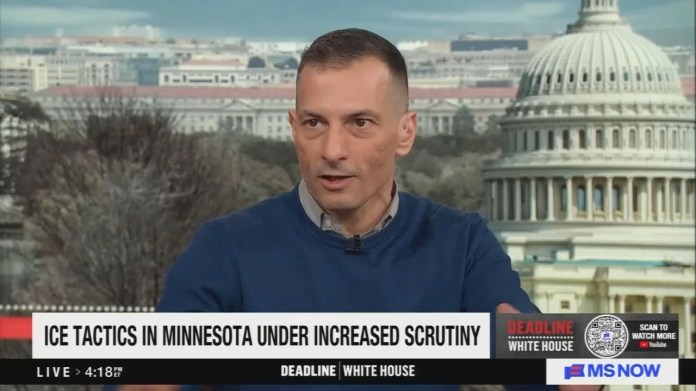
On MS NOW’s Deadline: White House, Angelo Carusone discusses MAGA podcasters breaking with Trump over ICE

On MS NOW’s Deadline: White House, Angelo Carusone discusses MAGA podcasters breaking with Trump over ICE

ANGELO CARUSONE (MEDIA MATTERS PRESIDENT): Trump built and organized power on the fringes, and his vehicle for doing it was this coalition, this constellation of media entities. There was no longer just Fox and Rush Limbaugh. You know, he used online entities. We use Rogan as an example, but obviously it’s a lot of other voices just like that, who sort of glommed onto the MAGA train and were reinforcing a pro-Trump narrative. But they’re not — you know, Fox is out there saying, this is great, right? They’re toeing the line. Newsmax is saying, you want affordability, let ICE deport. They’re pro-Trump. 

But a big part of MAGA media is shifting on this. They’re being much softer. They’re questioning whether or not this is appropriate. They’re even expressing outright criticism. You don’t get that outright criticism unless, one, you get the raw material like these clips that then, as you pointed out earlier, it’s not a left right issue, it’s are we American or not? Are we going to sort of live in the environment that Stephen Miller is defining for all of us, or are we going to live something much more similar to what we thought America was? And that’s where you’re starting to see the cracks form. So that’s what it all means. The swing is because it’s, you can’t ignore it. You have people’s own perception, and then you have validators like the Tim Dhillons, like the Joe Rogans, like the Shawn Ryans of the world that supported Trump, that are saying, no, I’m no longer a part of the pro-Trump train. Not on this. This is too far.

NICOLLE WALLACE (HOST): And it’s a business decision, perhaps, not to give them any more credit than they deserve. But it’s a generational divide where the people still getting all their information from Fox News’ broadcasts are not the future voters, they’re not the future podcast streamers, they’re not the people that will go to any live shows of any of these sort of manosphere figures. And so they’re betting on sort of their future, not the past.

CARUSONE: Yeah, that’s I think, you know, these are savvy business people. They’re very sensitive to their audiences, the same way anyone in media is, you know where your audience is and where they’re going, you try to respond to them. And their audiences when they’re not listening to their podcasts are consuming raw video content, they’re seeing the clips in their feeds. So they have to respond. They can’t do what Trump does. They actually have to in some way engage with reality. And this is reality coming home.

WALLACE: Well, I guess the bad news is they’re not doing it for the right reasons.

Great Job Media Matters for America & the Team @ Media Matters for America Source link for sharing this story.

The 10 Best Frozen Meals for Weight Loss

The 10 Best Frozen Meals for Weight Loss

Healthy frozen meals can be more convenient than cooking from scratch, and they can even help you lose weight — if you know which ones to buy. “For many people, frozen meals can absolutely offer a healthy option for any meal throughout the day,” says Kristen Smith, RDN , the Atlanta-based creator of 360 Family Nutrition. While you might think of frozen food as chicken fingers or pot pies, frozen meals can help you stick to healthier fare and avoid overfilling your plate. “What I love most is that frozen meals contain built-in portion control — that is important for many people,” says Amy Shapiro, RDN , founder of Real Nutrition in New York City. There are other perks too, if you make healthy choices. “They’re often easier and healthier than ordering in, because takeaway can have more fat and sodium than you might have planned on,” Shapiro says, adding that frozen meals can be loaded with important vegetables that provide valuable vitamins, minerals, and fiber. Plus, they don’t require you to have to do any complicated nutrition tabulations. “Frozen meals provide an option that takes the guesswork out of calculating calories and other macronutrients, and lower-calorie frozen meals provide a convenient, calorie-controlled option that may aid with weight loss,” adds Smith. Here are top choices from the freezer case. default
Kashi Sweet Potato Quinoa Bowl Calling all quinoa fans! This bowl from Kashi features a bed of quinoa and brown rice with roasted sweet potatoes , black beans, and kale piled on top. If you aren’t a fan of quinoa yet, know this: While quinoa is technically a seed, it’s classified as a whole grain, and it is a good source of plant protein and fiber .e60dc2a1-f33c-4a05-9b50-8e3e8e5976299440da8c-09a7-4fe4-9231-b331c3418473 Fiber, which adds bulk to your diet and promotes fullness, is jam-packed into this meal, with 12 grams (g), making it an excellent source of the nutrient.e60dc2a1-f33c-4a05-9b50-8e3e8e5976297a6c1c05-24e3-4d58-bf83-514c671542b4 “Look for meals with at least 5 g of fiber to help keep you full,” advises Carol Aguirre, RDN , owner of Nutrition Connections in Fort Lauderdale, Florida. A heads-up: This meal contains 270 calories, and Aguirre recommends that most people aim for roughly 350 to 600 calories per meal. Pair this option with a plant-based side dish to up your calories and protein , so that you’re not hungry an hour later. Calories: 270 Fat : 6 g Sodium: 280 milligrams (mg) Carbohydrates : 48 g Protein: 9 g Total sugar: 11 g (4 g from added sugar) Fiber: 12 g
Performance Kitchen Mediterranean-Style Salmon Pasta You get to reap all the health benefits of salmon with this frozen meal, courtesy of Performance Kitchen. Salmon contains omega-3 fatty acids , which offer a number of health perks, from making your blood less likely to form clots to helping to decrease your triglyceride levels (a fat in your blood).e60dc2a1-f33c-4a05-9b50-8e3e8e597629f258ffc1-7902-4a67-92b4-1dddf7f01dfe Salmon also provides protein — and this meal has a decent amount of it, with 15 g, making it an excellent source. And the amount of protein in your meal is important. “Ideally a meal should have 15 grams of protein per serving,” says Aguirre. Eating protein from healthy sources like salmon can decrease your odds of developing diseases and an early death.e60dc2a1-f33c-4a05-9b50-8e3e8e597629b1db1657-de6e-49d6-bb83-2314227ce979 Calories: 400 Fat: 26 g Sodium: 590 mg Carbs: 29 g Protein: 15 g Total sugar: 5 g Fiber: 5 g
Saffron Road Thai Red Curry Chicken This Thai curry dish via Saffron Road comes loaded with flavor — and nutrition. Win-win! The red peppers and green beans deliver fiber and vitamins, while the chicken ups the meal’s protein. And although the fiber is on the lower side, there’s a fix for that. “Don’t stress if the frozen meal does not contain an adequate amount of veggies — you can always add raw veggies, like carrots or broccoli , or a small salad on the side,” says Smith. For example, try pairing this meal with a walnut-topped salad, since walnuts contain both protein and fiber, or a piece of fruit.e60dc2a1-f33c-4a05-9b50-8e3e8e59762911282cc8-2394-4c49-a28e-1b1b935a9fcf Calories: 350 Fat: 13 g Sodium: 580 mg Carbs: 45 g Protein: 14 g Total sugar: 5 g Fiber: 1 g
Evol Foods Balance Bowl If you love ordering grain bowls, consider an at-home version by Evol Foods. It’s made with grilled chicken, red rice, and half a cup of vegetables (including asparagus ) in a basil pesto sauce. And it falls in the nutritionist-approved sodium range. “Try to stick with frozen meals that contain less than 700 mg of sodium per serving,” advises Smith. “If you have been given a more severe sodium restriction, try to find a frozen meal closer to 500 mg per serving, and limit yourself to only one frozen meal per day.” Decreasing your sodium may help lower your blood pressure or prevent you from developing high blood pressure .e60dc2a1-f33c-4a05-9b50-8e3e8e59762942ba66cc-a9d7-4684-808a-72845e9901bc The American Heart Association recommends no more than 1,500 mg of sodium per day for most adults, especially those with high blood pressure. To up this meal’s protein, try topping your bowl with a hard-boiled egg (6 g protein) and half a cup of broccoli for extra fiber (2.5 g).e60dc2a1-f33c-4a05-9b50-8e3e8e597629368f8541-c53f-4519-976c-7b882c7d7cc5e60dc2a1-f33c-4a05-9b50-8e3e8e597629a8e8bac3-bb30-4bb7-959f-729e40122936 Calories: 460 Fat: 27 g Sodium: 350 mg Carbs: 43 g Protein: 13 g Total sugar: 4 g Fiber: 3 g
Daily Harvest Sweet Potato and Wild Rice Hash Harvest Bowl You’ll get your fill of veggies from this Daily Harvest bowl , which comes with tomato, avocado , sweet potatoes, and mushrooms, plus beans and wild rice. Shapiro loves Daily Harvest , a company that delivers ready-to-make meals made with whole foods, for their simple and veggie-forward ingredient list. “I love to encourage individuals to enjoy frozen meals that are filled with plants,” says Shapiro, adding that Daily Harvest offers everything from smoothies to harvest bowls to flatbreads, and it is all organic and vegan . Because this meal doesn’t hit that 15 g protein target, think about adding more beans or an animal protein. Calories: 330 Fat: 11 g Sodium: 470 mg Carbs: 50 g Protein: 8 g Total sugar: 11 g Fiber: 9 g
Amy’s Mexican-Inspired Veggies and Black Beans This dish from Amy’s Kitchen delivers on veggies: Zucchini, sweet potatoes, and corn on a bed of riced cauliflower make it a fiber-packed pick. The meal has a simple ingredient list as well, which is key, says Shapiro. “Just because the nutrition facts label looks good doesn’t mean there aren’t less healthy ingredients included like some artificial sweeteners, stabilizers, and fillers,” she cautions. Be sure to always check a frozen meal’s ingredient list. Because this dish doesn’t reach 15 g of protein, you might want to consider adding another source, like leftover grilled chicken, or if you’re vegetarian or vegan, consider sprinkling on cashews, which may complement the dish’s chipotle and cashew cream sauce. Calories: 270 Fat: 10 g Sodium: 590 mg Carbs: 36 g Protein: 9 g Total sugar: 8 g (no added sugar) Fiber: 7 g
Lean Cuisine Korean-Style Rice and Vegetables Bowl You’ll get plenty of fiber (7 g) from this Lean Cuisine bowl that contains 1 whole cup of veggies, including shiitake mushrooms, bok choy, carrots, and kale. You’ll also score protein from the edamame soybeans , which are a healthy plant-based protein source. To up the protein total of 12 g, you may want to add tofu . Calories: 370 Fat: 7 g Sodium: 450 mg Carbs: 64 g Protein: 12 g Total sugar: 7 g Fiber: 7 g
Green Giant California-Style Harvest Protein Bowl Although this bowl by Green Giant also doesn’t contain meat, you’ll still receive big rewards when it comes to the protein content (14 g). The dish includes edamame soybeans, lentils, sunflower seeds, and quinoa, which all provide protein, plus veggies including grilled red bell peppers, corn, carrots, peas, and kale. Also, this meal has only 1.5 g of saturated fat. “Ideally you’ll want no more than 5 g of saturated fat,” says Shapiro. Overall, the less fat, the better. Saturated fat is an unhealthy fat that in excess can harm the heart.e60dc2a1-f33c-4a05-9b50-8e3e8e597629f1cc75db-f23f-455a-ba79-b63f9dfe07ac Calories: 290 Fat: 9 g Sodium: 540 mg Carbs: 39 g Protein: 14 g Total sugar: 8 g Fiber: 9 g
Gardein Chick’n Fajita Bowl Not only is this vegan fajita bowl from Gardein on the lower end of the sodium spectrum — it also contains a solid amount of protein (15 g, making it an excellent source). What’s more, you’ll land 4 g of fiber, thanks in part to the black beans. Beans are a rich source of both soluble and insoluble fiber, and a high-fiber diet can help you maintain a healthy weight.e60dc2a1-f33c-4a05-9b50-8e3e8e59762990338eb2-eeb1-412f-a3a8-0d86331f8ad5e60dc2a1-f33c-4a05-9b50-8e3e8e597629ddbb795a-59e8-4217-ab3a-72608822251d To get an even bigger fiber punch from this meal, top the dish with avocado slices: Half an avocado contains 5 g of fiber, making it a good source.e60dc2a1-f33c-4a05-9b50-8e3e8e597629e609697c-c131-4bf9-a2e0-18a7b3278777 Calories: 250 Fat: 3.5 g Sodium: 360 mg Carbs: 41 g Protein: 15 g Total sugar: 7 g Fiber: 4 g
Healthy Choice Barbecue Seasoned Steak With Red Potatoes You get the decadent taste of barbecued steak, plus an impressive 16 g of protein, for only 300 calories in total with this Healthy Choice meal . To get the fiber up to the 5 g mark, think about adding a plant-based side, like green beans (1 cup contains 3 g of fiber).e60dc2a1-f33c-4a05-9b50-8e3e8e597629c244b4fb-611d-4cc8-915d-52ce9ccd04a6 Also worth noting: The meal’s whiskey BBQ sauce adds flavor but also increases the sugar total. Shapiro advises looking for meals that are less than 11 g of sugar, and the American Heart Association recommends no more than 25 g of added sugar per day.e60dc2a1-f33c-4a05-9b50-8e3e8e597629af271ae1-d923-4d2b-a184-e18ae6398ed0 So, if you do go for this option, you’ll likely want to skip dessert. Calories: 300 Fat: 4 g Sodium: 450 mg Carbs: 49 g Protein: 16 g Total sugar: 16 g (all from added sugar) Fiber: 4 g
The Takeaway Frozen meals can support weight loss when they’re balanced, portion-controlled, and rich in protein and fiber. Choosing options with whole ingredients and minimal added sugar or sodium can improve overall nutrition. High-protein frozen meals can help promote fullness and preserve muscle while you’re losing weight. Reading nutrition labels carefully is key to finding frozen meals that align with your weight loss goals.

Great Job Leslie Barrie & the Team @ google-discover Source link for sharing this story.

Secret Link