Home News Page 82

Anthropic’s new Cowork tool offers Claude Code without the code | TechCrunch

Anthropic’s new Cowork tool offers Claude Code without the code | TechCrunch

On Monday, Anthropic announced a new tool called Cowork, designed as a more accessible version of Claude Code. Built into the Claude Desktop app, the new tool lets users designate a specific folder where Claude can read or modify files, with further instructions given through the standard chat interface. The result is similar to a sandboxed instance of Claude Code, but requires far less technical savvy to set up.

Currently in research preview, Cowork is only available to Max subscribers, with a waitlist available for users on other plans.

The new tool is inspired in part by the growing number of subscribers using Claude Code to achieve non-coding tasks, treating it as a general-purpose agentic AI tool. Cowork is built on the Claude Agent SDK, which means it’s drawing on the same underlying model as Claude Code. The folder partition gives an easy way to manage what files Cowork has access to, and because the app doesn’t require command-line tools or virtual environments, it’s less intimidating for non-technical users.

That opens up a new world of potential use cases. Anthropic gives the example of assembling an expense report from a folder of receipt photos — but Claude Code users have also put the system to work managing media files, scanning social media posts, or analyzing conversations.

Similar to Claude Code, Cowork is designed to take strings of actions without user input — a potentially dangerous approach if the tool is given vague or contradictory instructions. In a blog post announcing the new tool, Anthropic explicitly warns about the risk of prompt injection or deleted files, recommending that users make instructions as clear and unambiguous as possible.

“These risks aren’t new with Cowork,” the post reads, “but it might be the first time you’re using a more advanced tool that moves beyond a simple conversation.”

Launched as a command-line tool in November 2024, Claude Code has become one of Anthropic’s most successful products, leading the company to launch a string of new interfaces in recent months. A web interface launched in October, followed by a Slack integration just two months later.

Techcrunch event

San Francisco
|
October 13-15, 2026

Great Job Russell Brandom & the Team @ TechCrunch Source link for sharing this story.

Caldwell County deputy constable deadly shooting: Funeral information

Caldwell County deputy constable deadly shooting: Funeral information

Caldwell County Deputy Aaron Armstrong

Officials have announced the visitation and funeral information for the Caldwell County deputy constable who was killed in a shooting in North Austin.

Timeline:

Visitation and funeral services for Deputy Constable Aaron Armstrong will be held on Tues. Jan. 13 at Shoreline Church – North Campus located at 15201 Burnet Road.

The hours for visitation will be 9:30 a.m. to 11 a.m. 

The funeral service will be held from 11 a.m. to 12 p.m.

Police honors will be held in the church parking lot from 12:10 p.m. to 12:30 p.m.

Interment will immediately follow the funeral service at North Belton Cemetery in Belton.

Dig deeper:

The Caldwell County Constable’s Office, Precinct 3 says Armstrong served with the agency for more than a year and had previously served with the Smithville Police Department.

Armstrong is survived by his father, James J. Armstrong; his mother, Stephanie Layne Wiley Armstrong; and his brother, Jason Armstrong, and sister in law, Tiffany Armstrong.

What they’re saying:

In a news release, officials say, “The Caldwell County Constable’s Office, Precinct 3 extends its deepest condolences to Deputy Armstrong’s family, loved ones, and fellow Law Enforcement Officers. We will honor his service, his sacrifice, and his commitment to duty.”

The backstory:

Two men were arrested in connection to Armstrong’s death.

38-year-old Thomas Vances has been charged with capital murder of a peace officer and is facing four other unrelated felonies and one misdemeanor.

22-year-old Ronaldo Ernesto Colindres-Simon has been charged with second-degree felony assault on a peace officer.

Arrest paperwork filed for Colindres-Simon gives a timeline of the investigation into the shooting.

On Jan. 4, just after 2 a.m., APD responded to an “assist agency hotshot” call saying a constable had been shot at Club Rodeo, at 9515 N. Lamar Boulevard.

When officers arrived, they were flagged down by pedestrians in the parking lot and pointed towards two parked cars where they found a uniformed deputy constable, later identified as Caldwell County Pct 3 deputy constable Aaron Armstrong, on the ground. A bystander had started a tourniquet and told police they had seen at least one gunshot wound to his upper right arm.

The bystander told police that a man had been in an altercation inside the bar and was escorted out by the deputy. The man left the parking lot, but then returned and was told by the deputy that if he kept causing issues, he would go to jail.

The man appeared agitated and was held back by two other men and a woman. One of the men was later identified by police as Colindres-Simon.

The bystander said the man had retrieved a gun from one of the cars. An expletive was yelled and the bystander said he heard a gunshot. He helped the deputy constable to the ground and began life-saving measures, including the tourniquet.

He told police that he saw Colindres-Simon get into one of the cars and try to leave. Colindres-Simon told the bystander he didn’t want anything to do with this and wanted to leave. Despite the bystander’s protests, Colindres-Simon got in the car and reversed over the deputy constable’s arm with one tire.

The bystander prevented him from doing it to the deputy constable’s other arm and yelled at him that he was running him over. The car then drove off.

Officers were able to identify the sedan Colindres-Simon was driving through a social media post, which showed a license plate not belonging to the sedan. Officers also determined two other vehicles had been involved; two of the three vehicles did not have license plates.

Officers did a traffic stop on the sedan for not having a license plate and matching the description of the vehicle that had fled the scene and run over the deputy constable’s arm.

The driver of the sedan was identified as Colindres-Simon, who told police he was parked at Club Rodeo but left because he heard gunshots. However, footage from Armstrong’s body camera showed Colindres-Simon as one of the men holding back the shooting suspect. He also matched the description given to police by the bystander.

The Source: Information from Caldwell County Constable’s Office, Precinct 3 and pervious reporting by FOX 7 Austin.

AustinCaldwell County

Great Job & the Team @ Latest & Breaking News | FOX 7 Austin for sharing this story.

‘What an EFFING Idiot’: Rudy Giuliani Loses His Cool at Mar-a-Lago Party, and What Happens Next Has People Saying He’s Hit ‘Rock Bottom’

‘What an EFFING Idiot’: Rudy Giuliani Loses His Cool at Mar-a-Lago Party, and What Happens Next Has People Saying He’s Hit ‘Rock Bottom’

Rudy Giuliani thought he had control of the room when he went to capture the scene at Donald Trump’s party by recording video — but things immediately went off the rails.

Fans ended up viewing a mug they never wanted to after viral clips of the former New York City mayor struggling with his phone caused quite the stir online. Many noticed he struggled for so long while the Mar-a-Lago celebration continued without him.

‘What an EFFING Idiot’: Rudy Giuliani Loses His Cool at Mar-a-Lago Party, and What Happens Next Has People Saying He’s Hit ‘Rock Bottom’
Rudy Giuliani went viral on New Year’s Eve after seemingly going live at Trump’s party and struggling to use his phone, a moment many online framed as a stark symbol of his public downfall. (Photo by Alex Kent/Getty Images)

‘What the Hell’: Folks Say Trump Took Things Too Far After Signing His Name on a Pic of ‘Jesus’ — Then the Mic Catches a Slick Remark He Tries to Fix

At 81, Giuliani looked determined to show viewers the scene but instead delivered a viral social media clip of himself struggling to flip the phone screen that was instantly framed as emblematic of his public decline.

In the roughly 30-second video, rapper Vanilla Ice’s “Ice Ice Baby” blares as guests dance in the background.

Giuliani begins by addressing viewers directly, saying, “What you’re seeing is me. What I’d like to do now is show you some of the very nice parts…” before trailing off mid-sentence. He then taps and swipes at his phone screen, unable to switch the camera to face the room.

The feed then locks him into an unflattering, purple-lit close-up.

Squinting behind rimless glasses, mouth slightly open, Giuliani appears to mouth, “I don’t know how…” as the phone shakes in his hand. Moments later, the view abruptly changes again, landing on a short tumbler filled with amber liquor and ice on a white tablecloth, suggesting the live attempt had gone off the rails.

The footage spread rapidly on X, where users wasted no time piling on.

One person wrote, “OMG!!! While Zohran Mamdani begins to run NYC, broke and disgraced Rudy Giuliani can’t even run his own iPhone. This is what rock bottom looks like.”

Another mocked, “The only thing flipped faster than that camera is Rudy’s legacy.”

A third focused on the drink in frame, adding, “That is a STIFF drink. If I’m doing anything other than playing cards with my neighbors when I’m 81 or hanging out with my grandkids, then put a fork in me. ESPECIALLY if I’m trying to go live on ANY social media app. What a disgrace.”

Others were blunter.

“What an EFFING idiot,” one user wrote.

Another summed up the moment by saying, “Rudy’s tech skills are about as sharp as his legal advice — accidentally starring in his own horror show. From 9/11 hero to 2026 zero. Pathetic, but poetic.”

The ridicule comes at a moment when Giuliani’s legal and financial collapse is no longer abstract — it’s documented. The former lawyer has acknowledged making false and defamatory statements about Georgia election workers Ruby Freeman and Shaye Moss, triggering a $148 million judgment that symbolized just how steep the consequences had become.

He remains suspended from practicing law in New York and is still facing the possibility of permanent disbarment tied to his efforts to overturn the 2020 presidential election results.

Behind the scenes, Giuliani quietly moved to limit the damage.

According to ABC News, in January 2025, he reached a settlement agreeing to pay an undisclosed amount, clear up contempt issues, and stop defaming the women in exchange for having the judgment dropped. Court records filed the following month confirmed the dismissal, ending a high-stakes battle that once threatened his New York City apartment, luxury watches, and what remained of his public standing.

The timing only sharpened the contrast.

As Giuliani struggled through what appeared to be a live broadcast in Palm Beach, Zohran Mamdani was being sworn in as New York City’s new mayor, promising a “new era” and quoting rapper Jadakiss to say his administration would “be outside” and accessible to the public.

Despite the online ridicule, Giuliani appeared unfazed. Photos circulating from Mar-a-Lago show him smiling beside a younger woman, grinning from ear to ear, relaxed and unbothered.

Regardless of how silly he looked with his camera snafu, Giuliani’s New Year’s Eve Mar-a-Lago sighting is a snapshot of the political world we currently live in.

Great Job Nicole Duncan-Smith & the Team @ Atlanta Black Star Source link for sharing this story.

Jeff Bezos tells Gen Z entrepreneurs to gain work experience before launching new companies: ‘I started Amazon when I was 30’ | Fortune

Jeff Bezos tells Gen Z entrepreneurs to gain work experience before launching new companies: ‘I started Amazon when I was 30’ | Fortune

Some of Big Tech’s greatest success stories are from college dropouts. Mark Zuckerberg launched Facebook in 2004 from his Harvard University dorm room (and later dropped out). Bill Gates also left Harvard and cofounded Microsoft with Paul Allen in 1975. 

But Jeff Bezos, founder of the world’s largest online retailer Amazon, said Zuckerberg and Gates are the “exception” to the idea that all major tech companies were founded by college dropouts and that a degree doesn’t matter as much these days. 

While it’s “possible” to be 18, 19, or 20 years old and drop out of college to become a great entrepreneur, Bezos said these tech leaders are an exception.

“I always advise to young people: Go work at a best-practices company somewhere where you can learn a lot of basic fundamental things [like] how to hire really well, how to interview, etc.,” Bezos said during an interview at Italian Tech Week last fall. “There’s a lot of stuff you would learn in a great company that will help you, and then there’s still lots of time to start a company after you have absorbed it.”

Working at a company, instead of immediately trying to start one, “increases your odds” of being successful, he added. 

Bezos, now the third-richest person in the world at a $268 billion net worth, founded Amazon when he was 30 years old after about a decade of work experience. Both Gates and Zuckerberg, on the other hand, were just 19 years old when they launched Microsoft and Facebook, respectively. Still, Zuckerberg is the sixth-wealthiest person in the world with a $231 billion net worth, and Gates is the 16th-richest at a $118 billion net worth. 

But Bezos says that “extra 10 years of experience actually improved the odds that Amazon would succeed.” And succeed it did: Today, the online retailer has a whopping $2.64 trillion market cap.

Not only did Bezos have work experience, but he also finished college. He graduated summa cum laude—the highest honors—from Princeton University in 1986 with a bachelor’s degree in engineering. 

He was also elected to honor societies Phi Beta Kappa and Tau Beta Pi, and also served as president of the Princeton chapter of the Students for the Exploration and Development of Space. That academic focus later came to fruition in 2000 with Bezos’s aerospace-tech company Blue Origin, which he’s described as the “most important work” he does. Blue Origin is a private company, so its valuation has never been disclosed, but Bezos has said he thinks it will eventually be bigger than Amazon.

“That would always be my advice: I finished college, and I enjoyed college,” Bezos said. “I think it’s been helpful to me.”

Still, younger generations continue to question the value of a college degree. As the cost of college continues to grow and available jobs for newer grads shrink, many are starting to question the real return on investment for a degree. Even Jim Farley, the CEO of Ford, said during a recent company conference last week, going to college “should be a debate.”

“Nothing in the history of Western civilization has gotten more expensive, more quickly,” added Mike Rowe, a longtime vocational advocate. “Not energy, not food, not real estate, not even health care, [nothing has been inflated more] than the cost of a four-year degree.”

A version of this story was published on Fortune.com on October 6, 2025.

More on entrepreneurship:

Join us at the Fortune Workplace Innovation Summit May 19–20, 2026, in Atlanta. The next era of workplace innovation is here—and the old playbook is being rewritten. At this exclusive, high-energy event, the world’s most innovative leaders will convene to explore how AI, humanity, and strategy converge to redefine, again, the future of work. Register now.

Great Job Sydney Lake & the Team @ Fortune | FORTUNE Source link for sharing this story.

How Should QBs Throw Footballs Into the Wind? Tom Brady Is Here to Help

How Should QBs Throw Footballs Into the Wind? Tom Brady Is Here to Help

Listen up, quarterbacks. Professor Tom Brady provides a lesson in how to throw the football in windy conditions.

Great Job & the Team @ FOX Sports Digital Source link for sharing this story.

War Powers, Venezuela, Drug Boats, and Congress

War Powers, Venezuela, Drug Boats, and Congress

With the U.S. maritime bombing campaign against suspected drug boats and the Jan. 2-3 military incursion into Venezuela that resulted in the capture of its leader Nicolás Maduro and his wife Cilia Flores, the Trump administration is now involved in two sets of hostilities governed by the War Powers Resolution (WPR) in Latin America. In this essay, we explain the implications of these ongoing hostilities for both the legal requirement to terminate fighting not authorized by Congress, as well as the tools available to Congress to push back against uses of force it has not authorized. 

Legal Background: The War Powers Resolution

The War Powers Resolution provides the statutory framework for the unilateral use of military force by a president, such as the ongoing maritime strikes and the U.S. operations in Venezuela. Congress enacted this law over President Richard Nixon’s veto in 1973 to reassert the body’s constitutional prerogatives with respect to war and peace. In essence, Congress sought to forestall any president from taking the country to war without congressional authorization or even without congressional awareness (as had allegedly been the case for aspects of the wars in South-East Asia, such as the incursion into Cambodia). Congress attempted to do this through a framework requiring transparency before forces are in harm’s way, and mechanisms for automatic termination of unilateral presidential uses of force absent specific congressional authorization. 

Reporting: To this end, Section 4(a) of the Resolution establishes reporting requirements to prevent the president from taking the country to war in secret. In the absence of a declaration of war or other statutory authorization, the executive branch is subject to multi-tiered obligations to report to Congress within 48 hours of certain activities by U.S. armed forces. 

First, under subsection 4(a)(1) the Executive must report when U.S. military forces are introduced into “hostilities” or introduced into “situations where imminent involvement in hostilities is clearly indicated by the circumstances.” Such hostilities reports are the focus of this essay. 

Second, even if U.S. forces are not engaging in hostilities, subsection 4(a)(2) requires the Executive to report the introduction of “combat equipped” forces into a country (the executive branch defines “combat-equipped” as forces equipped with crew-served weapons such as machine guns requiring more than one person to operate and mortars). The goal of this provision is essentially to avoid putting U.S. forces into a position that could lead to imminent hostilities without congressional awareness.

Third, pursuant to subsection 4(a)(3), the president must also report a substantial enlargement of such combat equipped forces in a country where such forces are already present.

Two mechanisms to terminate unilateral deployments into hostilities or imminent hostilities: Notably, under Section 5(b) of the 1973 Resolution, the submission of a report under the first of these scenarios — introduction of U.S. forces into hostilities or situations of imminent hostilities — starts a 60-day clock for the withdrawal of U.S. armed forces from such situations unless Congress declares war or otherwise enacts specific statutory authorization for the use of force. No further action needs to be taken by Congress for the termination to become effective (though in practice, presidents have found numerous ways to try to circumvent the termination requirement or argue its inapplicability). 

When enacted, the War Powers Resolution provided a mechanism in section 5(c) for Congress to order the removal of U.S. forces from hostilities through a concurrent resolution—that is, a resolution passed by both houses of Congress but not presented to the president for his or her signature or veto. Particularly following the Supreme Court’s 1983 decision in INS v. Chadha that ruled unconstitutional the so-called legislative veto, section 5(c) is widely viewed as unconstitutional. Following Chadha, Congress enacted expedited procedures for joint resolutions requiring the removal of U.S. armed forces from hostilities, which does require presentment to the president.

As one of us previously wrote (with Stephen Pomper), one of the consequences of Chadha was to “encourage[] a lingering (and in our view incorrect) impression that other provisions of the War Powers Resolution are constitutionally infirm — an impression that the executive branch has sometimes encouraged.” It is to that issue that we now turn. 

Constitutionality of the War Powers Resolution

Although it is sometimes asserted (including recently by Vice President J.D. Vance) that every presidential administration has claimed the War Powers Resolution is unconstitutional, that claim is inaccurate. (Charlie Savage recently wrote in the New York Times about the administration’s misleading claims on this front.) 

Although it is true that prior to Chadha, the executive branch regarded the concurrent resolution mechanism for terminating introductions into hostilities as unconstitutional based on the Supreme Court’s analysis of the Presentment Clause (Article I § 7 of the Constitution), that is distinct from claims regarding the constitutionality of the resolution as a whole, or any of its other specific provisions. As the Department of Justice’s Office of Legal Counsel (OLC) noted in 1979, “the only provision that this Administration has suggested presents constitutional problems related to the right of Congress to act by concurrent resolution.” 

Under administrations of both political parties, OLC has repeatedly accepted that other provisions of the resolution are constitutional at least on their face, including the reporting requirements, 60-day clock, and the revised joint resolution mechanism for withdrawing U.S. armed forces from hostilities. Harold Hongju Koh, Legal Adviser to the Department of State during the Obama administration, testified with reference to the War Powers Resolution that “[t]he Administration recognizes that Congress has powers to regulate and terminate uses of force.”

What’s more, in practice presidents have endeavored to comply with these requirements. First, all presidents since Ford have submitted the 48-hour reports described above. Second, while presidents have certainly stretched or narrowed their interpretations of the statute’s terms to avoid the termination requirement, they have attempted to make arguments under the law for why it does not constrain their activity in a given case, rather than arguing that the law itself is unconstitutional. 

In our view, the constitutionality of the War Powers Resolution is on firm ground. Congress holds the preponderance of the war-making, and war-adjacent, powers in the Constitution. Moreover, Congress has since the founding regulated when and how the United States may use force abroad (from the late 1700s to the frameworks in place today that are the subject of this essay). In sum, both the text and historical and modern practice make the statute’s constitutionality clear. 

Multiple Hostilities (and 60-Day Clocks Running) in Latin America

The first set of hostilities involves the administration’s campaign of lethal strikes against suspected drug ferrying boats in the Caribbean and eastern Pacific—Operation Southern Spear—in which the administration claims (erroneously) that it is involved in non-international armed conflicts against an unreleased list of 24 criminal gangs and drug cartels but, paradoxically, that it is not in “hostilities’ for WPR purposes (despite submitting a report implying that it was so involved 48 hours after the first Sept. 2 strike, as required by the WPR). These hostilities appear to be ongoing following 35 strikes and over 100 people killed. On Jan. 4, Secretary of State Rubio stated that “we continue to reserve the right to take strikes against drug boats that are bringing drugs towards the United States that are being operated by transnational criminal organizations.”

The other set of hostilities involves the administration’s unlawful use of force against Venezuela—Operation Absolute Resolve—including the seizure of its president and commander in chief, Nicolás Maduro, and his wife, Cilia Flores, in a military raid. That operation took place in the context of an immense military build-up in the region, continued threats of military force, and a naval blockade against U.S. sanctioned oil shipments from the country that remains ongoing. 

Congress has already voted on a series of measures under the War Powers Resolution that would require President Trump to remove U.S. forces from hostilities related to the boat strikes as well as in or against Venezuela. Another such vote is expected this week in the Senate. 

We now turn to explaining the two sets of hostilities, how each is governed by the War Powers Resolution, and what opportunities this creates for Congress. 

The Maritime Strikes Termination Clock

Consistent with section 4(a)(1) of the War Powers Resolution, the White House reported the first maritime strike (which occurred on Sept. 2, 2025) to Congress in a Sept. 4 letter. This report triggered the start of the Resolution’s 60-day clock—which was due to expire on Nov. 3.

But as this deadline approached, the Trump administration shifted its view on whether these strikes constitute “hostilities” under the 1973 law. The head of the OLC reportedly informed a small group of lawmakers that the maritime strikes did not constitute “hostilities” despite having initially reported them under the law. 

An anonymous senior administration official told the Washington Post that the War Powers Resolution doesn’t apply to the maritime strikes because, “even at its broadest … [it] has been understood to apply to placing U.S. service-members in harm’s way.” According to this official, “[t]he operation comprises precise strikes conducted largely by unmanned aerial vehicles launched from naval vessels in international waters at distances too far away for the crews of the targeted vessels to endanger American personnel.” Thus, “the kinetic operations underway do not rise to the level of ‘hostilities,’” according to the administration.

Contrary to the administration’s arguments, the War Powers Resolution’s clock has been ticking since Sept. 4th of last year, and exceeded the 60 day deadline in early November. Based on the text, legislative history, and past executive branch practice, the better view is that airstrikes, even when U.S. armed forces are not exposed to significant risk, are hostilities under the Resolution.

As one of us (Finucane) has previously explained:

There are many flaws with the Trump administration’s reported interpretation of hostilities. As indicated in the legislative history, Congress understood the term “hostilities” to apply broadly, more broadly than “armed conflict.” The Obama administration’s prior attempt to restrictively interpret the term garnered strong bipartisan congressional opposition.

Moreover, the War Powers Resolution was enacted not only against the general backdrop of the Vietnam War, but more specifically President Nixon’s legally contested aerial bombing of Cambodia in 1973 (Operation Freedom Deal) which Congress sought to terminate through funding restrictions. As Representative Zablocki (a key architect of the War Powers Resolution) explained, “[w]hat really helped the war powers legislation was the arrogance of the executive branch in saying ‘We’ll bomb Cambodia as long as we desire, regardless of what Congress says.’” It thus beggars belief that Congress somehow intended the War Powers Resolution not to cover U.S. airstrikes.

Indeed, in October 1973, to prevent a resumption of the Cambodia aerial bombing, Congress enacted (just weeks before the War Powers Resolution itself) a funding restriction barring “the involvement of United States military forces in hostilities in or over or from off the shores of North Vietnam, South Vietnam, Laos, or Cambodia, unless specifically authorized hereafter by the Congress.” (emphasis added) On November 16th—a week after the War Powers Resolution was enacted over Nixon’s veto—the Defense Appropriations Act of 1974 was signed into law with the exact same prohibition on “hostilities” but effective upon enactment. From this context, it appears clear that Congress meant to capture aerial bombing within the scope of the term “hostilities” and thus the restrictions of the War Powers Resolution. 

Although the Trump administration’s attempt to circumvent the 60-day clock is legally unconvincing, it is hardly the first administration to resort to “creative” lawyering to continue hostilities past the deadline. In recent years, both the Obama administration (in Libya) and the Biden administration (in Yemen) relied on strained interpretations of the War Powers Resolution to continue hostilities notwithstanding the law’s restrictions and the absence of congressional authorization. 

But the Trump administration’s reported theory goes even further than the arguments from past administrations in suggesting that any standoff airstrike by the United States is outside the scope of the War Powers Resolution by claiming that the resolution is inapplicable even when the president believes the strikes are part of an ongoing armed conflict, which purportedly includes hostile actions against the United States (the notion of an armed conflict with cartels and gangs and of hostilities against the United States by such groups are both facts we dispute, but which the administration has consistently claimed). Such an interpretation would allow the United States to wage an air war indefinitely without congressional authorization. 

The Venezuela Hostilities – Operation Absolute Resolve

There is no doubt that Operation Absolute Resolve constitutes “hostilities” within the meaning of the WPR. And while WPR reports to Congress have almost never specifically stated so, this was implied in the report President Trump sent to Congress. In the context of explaining why the president needed congressional authorization to undertake the operation, one of us (Bridgeman) recently outlined (with Brian Egan and Ryan Goodman) the extensive nature of the military engagement:

On Jan. 3, President Donald Trump ordered a military operation that bombed Venezuelan air defenses and other targets in the country, seized Venezuelan president Nicolás Maduro and his wife Cilia Flores from their home, killed approximately 75 or 80 people, caused the injury of around six or seven U.S. service members, and potentially resulted in regime change Venezuela. As described in the War Powers Report subsequently provided to Congress, “the Armed Forces of the US conducted targeted and limited military strikes within the territory of the Bolivarian Republic of Venezuela.” The operation was more extensive than this brief sentence would indicate, distinguishing it from other contested unilateral uses of force that relied on unmanned “over-the-horizon” strikes (Syria in 2017 and 2018) or other types of one-off kinetic strikes (Iran in summer 2025). 

Numerous officials in the Trump administration have publicly acknowledged that this named military operation was inherently risky (calling it “very dangerous” and “audacious”). It involved approximately 200 U.S. personnel on the ground in Caracas. There were, as would be expected in an operation of this nature, fire fights between U.S. forces and opposing forces, involving both Venezuelan and Cuban military forces. What’s more, the operation took place in the context of an extensive military build-up in the region, coupled with threats against Maduro to cede power, as well as an ongoing U.S. naval blockade of Venezuelan oil tankers. (The threats and blockade continue today.)

These facts are also important for the analysis of whether the operations constituted “hostilities” for WPR purposes. Based even on OLC’s exceedingly narrow view (a view contrary to the statute’s legislative history) on what types of military engagements constitute “hostilities” for WPR purposes, all of the hallmarks are present. To focus on the most salient and long-held criterion for the executive branch as to what constitutes hostilities – actual “exchanges of fire” between U.S. and hostile forces – this operation clearly did so. Indeed, the combat resulted in dozens of fatalities amongst Venezuelan and Cuban combatants as well as Venezuelan civilians, and injuries to seven U.S. servicemembers. Reportedly, one of the U.S. helicopters that took hostile fire during the operation almost didn’t make it out of Caracas. 

The U.S. Senate also took the position that the military incursion into Venezuela constituted “hostilities.” On January 8th, the Senate voted 52-47 to advance a joint resolution to block further U.S. military action in Venezuela. That resolution specified in pertinent part that “use of military force by the United States Armed Forces within or against Venezuela constitutes the introduction of United States Armed Forces into hostilities.” 

The Venezuela Termination Clock

At a minimum, the 60-day clock started running on Sunday Jan. 5th—48 hours after the operation to capture Maduro occurred. (Depending on the facts, there may be an argument that the clock should have started earlier in connection with the drone strike on Venezuela disclosed by President Trump.) 

The Trump administration will most likely argue that there are no ongoing hostilities. Unlike the argument advanced in relation to the strikes on suspected drug trafficking vessels, which rested on the idea that the hostilities were essentially not intense enough insofar as they did not pose risks to U.S. personnel, in the Venezuela context the administration is instead likely to argue that Operation Absolute Resolve was a one-time engagement that ended as soon as US aircraft left Venezuelan airspace, taking all US personnel with them.

There are reasons to contest any such claims. 

The U.S. military incursion into Venezuela, aerial bombardment of the country, attacks on Venezuelan and Cuban forces, and seizure of the commander in chief of Venezuela’s armed forces constitutes an “international armed conflict.” In contrast to the standard for a non-international armed conflict, the standard for an international armed conflict under international law is low. As explained by the International Committee of the Red Cross in its 1952 commentary on the Geneva Conventions, “Any difference arising between two States and leading to the intervention of armed forces is an [international] armed conflict within the meaning of Article 2, even if one of the Parties denies the existence of a state of war.”

This international armed conflict appears to be ongoing, including the prospect for further hostilities. Rather than proclaim the attack of January 2nd/3rd a “one and done affair,” President Trump has threatened another round of airstrikes, threatened the acting Venezuelan president with a fate “worse” than Maduro, and left open the possibility of U.S. “boots on the ground” in Venezuela. Notably, the War Powers report submitted by the White House to Congress in connection with the raid does not specify that U.S. military operations have concluded, as most reports of limited engagements (such as hostage recoveries, evacuations, rescue missions, and the like) have in the past. Instead, it is silent on the expected duration of the operations, although the president is statutorily required to provide that information. Moreover, U.S. armed forces remain stationed in the region and continue to support the interdiction of sanctioned oil tankers

For these reasons, the 60-day clock for Operation Absolute Resolve appears to still be ticking.

How Should Congress Respond?

The Senate has now voted to discharge Senator Kaine’s joint resolution from the Senate Foreign Relations Committee, teeing up a floor vote on the resolution itself as well as potential amendments. In the House, Congressman McGovern has also introduced a concurrent resolution to remove U.S. armed forces from Venezuela without specific congressional authorization. (As a concurrent resolution would not be presented to the President for signature or veto, the Supreme Court’s decision in Chadha renders it highly unlikely it could be binding even if passed by both houses of Congress.) 

In addition, measures in both the House and Senate have been introduced to exercise Congress’s ultimate war power—the power of the purse—to block funding for U.S. military operations in or against Venezuela. At present, it is unlikely that Congress could muster the votes for these various measures to overcome presidential vetoes even if they passed both houses. 

Longer term, both sets of unauthorized hostilities and the willingness of the White House to disregard the 60-day clock with respect to the boat strikes should serve as a forceful reminder that Congress needs to reassert its constitutional prerogatives and responsibilities over the use of military force. Among other things, such congressional action should entail reforming the 1973 War Powers Resolution to close loopholes in that law and give it more teeth. Such reforms would include defining key terms, shortening the termination deadline for any unauthorized hostilities, enhancing transparency requirements, and, crucially, imposing mandatory funding cutoffs. 

Regardless of the near term prospects for meaningful legislative reform, Congress must also engage in more rigorous oversight. This should include using all of the tools at its disposal (from the nominations process to use of its subpoena power, among others) to demand that the administration answer for its unilateral uses (and abuses) of U.S. armed forces and shine a spotlight for the American people on the gravity of the situation. 

Conclusion

The U.S. Constitution assigns the power to Declare War and related war powers to the Congress for good reasons that remain as relevant today as ever. It is precisely because going to war is one of the most consequential choices a country can make that decisions on resorting to the use of force were intended to be difficult—to be made after public debate and deliberation by the people’s elected representatives. Although the President would have authority as commander in chief to repel sudden attack, other military actions would require the collective decisionmaking of the legislature. The Constitution does not authorize one person taking the country to war based solely on that individual’s policy or personal preferences.

Obviously, presidential administrations of both parties have departed from this constitutional model by using military force without congressional authorization in situations outside of immediate self-defense. But even by the standards of prior executives, the flurry of unilateral military actions by this administration is striking and deeply troubling to members of Congress and the public across ideological lines. Since returning to office, President Trump has overseen military strikes in Yemen (against the Houthis), Iran, the Caribbean, the Pacific, and Venezuela, all without any plausible congressional authorization (Nigeria might be added to that list, depending on the administration’s justification). (This is an addition to military actions in Syria, Iraq, and Somalia notionally pursuant to the 2001 Authorization for Use of Military Force.)

The last year of unauthorized, discretionary military interventions and the president’s threats of more to come—including even against a NATO ally—should spur the Article I branch of the U.S. government to reassert its constitutional prerogatives and indeed constitutional responsibilities over the use of force.

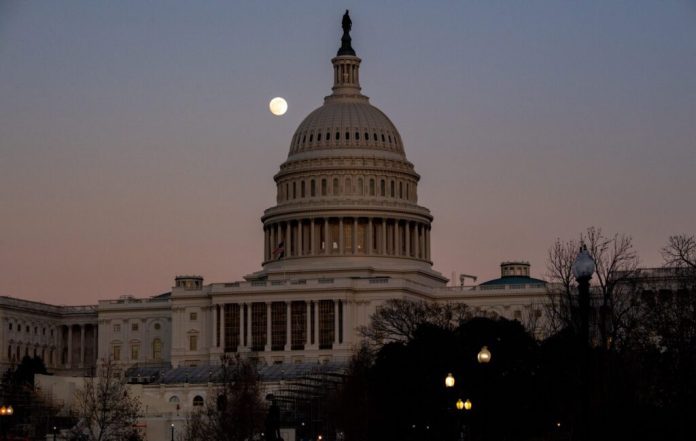
FEATURED IMAGE: The moon rises over the US Capitol Dome at sunset in Washington, DC, December 28, 2020. (Photo by SAUL LOEB/AFP via Getty Images)


Great Job Tess Bridgeman & the Team @ Just Security Source link for sharing this story.

Sybil Wilkes Breaks Down What We Need to Know: January 12, 2026

Sybil Wilkes Breaks Down What We Need to Know: January 12, 2026

Source: Reach Media / Radio One

Sybil Wilkes delivers the latest on “What We Need to Know,” keeping our community informed and empowered. From a range of critical issues, from voting rights battles to economic proposals that could touch our walletS here is the breakdown of the top stories impacting Black America today.

Voter Privacy Concerns

Democrats have issued a stern warning to election officials in ten states regarding agreements to share sensitive voter data with the Justice Department. The Democratic National Committee (DNC) argues that these arrangements may violate the National Voter Registration Act. However, the response from Washington was swift. Harmeet Dhillon, head of the DOJ Civil Rights Division, pushed back against these warnings, suggesting that Democratic interference could be construed as obstruction of justice. As we look toward future elections, the protection of our voter data remains a top priority for advocates ensuring fair and open access to the ballot box.

Tragic Shootings in Mississippi

Tragic news from the South, a rural community in Clay County, Mississippi, is reeling from a devastating act of violence. Authorities have arrested 24-year-old Derek Amore in connection with a shooting spree across three locations that left six people dead, including a seven-year-old girl. Officials report that the victims were family members of the suspect. Prosecutors are moving quickly to upgrade the charges to capital murder and have indicated they will seek the death penalty if additional evidence warrants it. It is a heartbreaking reminder of the fragility of life and the need to support our neighbors in times of unthinkable grief.

Trump’s Proposal to Cap Credit Card Interest Rates

There is a new proposal on the table aiming to tackle the high cost of living. Eligible President Trump is calling on major credit card companies to cap interest rates at 10%, a significant drop from the crippling 30% rates many Americans currently face. In a social media announcement, he stated his desire for this one-year cap to take effect on January 20, 2026. This push comes as Republicans urge action on affordability issues ahead of the midterm elections, recognizing that debt relief is a major concern for working families trying to make ends meet.ause and menopause.

The Tradition of New Year Resolutions

Wisdom from Willie Mae McIver on new year resolutions, while resolutions to improve health and finances date back thousands of years, the focus for many in the Christian community goes deeper. We aren’t just setting goals for the gym or the bank account; we are making spiritual commitments. Whether it’s dedicated prayer time, Bible study, or acts of service, these resolutions are about strengthening the spirit just as much as the body.

Great Job Nia Noelle & the Team @ Black America Web Source link for sharing this story.

Clean energy will take center stage in Virginia’s legislature this…

Clean energy will take center stage in Virginia’s legislature this…

Voters worried about rising electricity prices and the onslaught of power-hungry data centers helped Democrats earn a governing trifecta in Virginia last year.

Now, as state lawmakers prepare for a breakneck, 60-day legislative session that begins this Wednesday, clean energy is emerging as a key strategy for dealing with those challenges.

Oftentimes, I go into a legislative session sort of just guessing what people are going to care about,” said Kendl Kobbervig, advocacy and communications director for the nonprofit Clean Virginia. Not this year, she said. No. 1 is affordability, and second is data center reform.”

The concerns come as Virginia, the world’s data center capital, is at a crossroads on its quest for 100% clean energy. The commitment began in earnest in 2020, when the state enacted a measure requiring its two investor-owned utilities — Dominion Energy and Appalachian Power Co. — to convert to carbon-free electricity by midcentury. The law also prevents new construction of fossil fuel–burning plants, with some exceptions.

These demand pressures are one reason Virginians face rising energy bills.

Republicans and even some Democrats have said the way to cost-effectively meet ballooning power needs is to back away from the clean energy transition and the 2020 law, the Virginia Clean Economy Act. But multiple Democratic lawmakers are pushing bills this year that do just the opposite in an effort to save consumers money and increase electricity generation.

The name of the game this session is affordability,” Democrat Del. Phil Hernandez of Norfolk said at a news conference last week.

Lowering costs by expediting clean power

One proposal to lower costs, offered by Hernandez and Sen. Schuyler VanValkenburg of Henrico, is dubbed the Facilitating Access to Surplus Transmission, or FAST, Act.

The bill is made possible by a new rule at PJM Interconnection, the multistate entity that manages Virginia’s grid: Facing lengthy backlogs for new grid hookups, PJM said last year it could connect some sources on an expedited basis so long as they didn’t trigger meaningful upgrades to the transmission grid.

There are miles and miles of our current transmission infrastructure that are not being used at nearly their full capacity,” said Jim Purekal, a director at Advanced Energy United who heads the organization’s legislative work in Virginia. A traditional peaker plant only operates at various points around the year. The rest of the time, it’s essentially dormant.”

The FAST Act, Hernandez said, will lay out a process to help get these new energy projects up and running.” 

The PJM surplus interconnection rule is a permission structure, not a mandate. And utilities may be tempted to use the regulation to build expensive new fossil fuel plants. The bill would set up a study of how much headroom is on the grid and create a procedure to allow only the most cost-effective resources to utilize it.

Let’s make sure that if you’re going to be using this capacity,” Purekal said, you’re using the most affordable assets on the commercial market today: solar, onshore wind, and battery storage.”

Advanced Energy United expects 2 to 3 gigawatts of such resources could be colocated with existing power plants of all types within four years. That’s about two times faster than it has taken a project to get through PJM’s queue in recent years.

We believe this could be one of the fastest, lowest-cost ways to add power to the grid,” Hernandez said.

A complementary effort, to be introduced by Sen. Lamont Bagby of Richmond and Del. Rip Sullivan of Fairfax, would increase grid battery targets in the 2020 law and help ensure energy storage projects are cost-effective for ratepayers. 

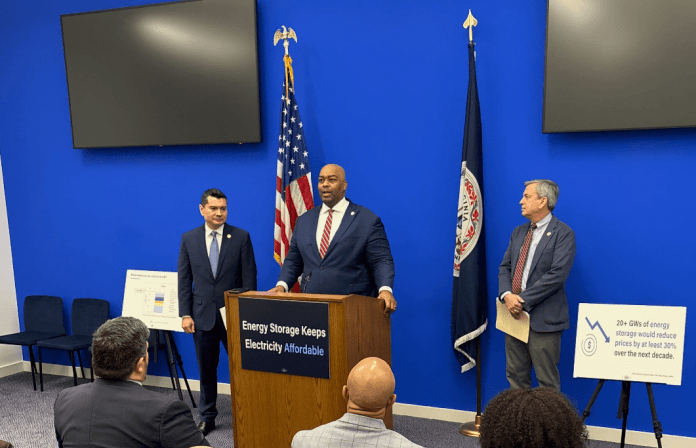
From left, Democrats Del. Phil Hernandez, Sen. Lamont Bagby, and Del. Rip Sullivan promote their 2026 energy storage bills at a press conference last week. (Courtesy of Rip Sullivan)

With Hernandez, the lawmakers promoted it at last week’s press event behind a podium sign that read, Energy Storage Keeps Electricity Affordable.” One reason that’s true, Sullivan noted at the conference, is that batteries can charge when electricity prices are low and supply is abundant — as on a mild, sunny afternoon — and discharge when demand is high and hourly prices go up. We can store energy when it’s cheap,” he said, adding that this is the best energy storage bill in the country.”

Great Job Elizabeth Ouzts & the Team @ Canary Media Source link for sharing this story.

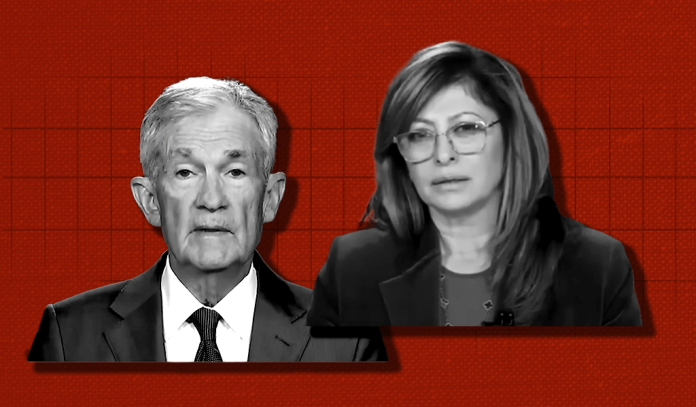
Even Maria Bartiromo isn’t onboard with Trump strong-arming the Fed

Even Maria Bartiromo isn’t onboard with Trump strong-arming the Fed

“It just feels like most on Wall Street do not want to see this kind of fight,” Bartiromo said. “I mean, you know, you’ve got a chairman who is at odds with the president of the United States. The president has very good points, certainly. But Wall Street doesn’t want to see this kind of investigation because it looks like the president is actually, you know, shoehorning rates, and now doing it through the DOJ.”

Bartiromo’s panelists were even more open in decrying the move.

Fox contributor Liz Peek said of the probe, “I don’t like it. I think it’s a unforced error by the Trump administration,” She explained that she agreed with the president on the cost of the Fed renovations and Powell’s performance, but added, “I don’t really know what this is supposed to accomplish.”

“The president needs to kind of step back, quite honestly,” offered financial services consultant Kenny Polcari. “It’s not in his job description to control interest rates. The Fed is an independent agency. We understand that. We know that. And I think that’s what’s causing a little bit of nervousness in the markets this morning, just about the fact that what could he really do, how could he really push this? I think he needs to back off and leave the Fed alone.”

Bartiromo then hedged, saying, “I know, but if he lied, he lied,” and suggesting it was important to get to the bottom of Powell’s comments to Congress.

Ken Mahoney, a financial asset manager, replied that while the cost of the renovations is sizable, this is “bad timing” given “the president’s other priorities,” noting that “most people probably wake up hoping that  [Minnesota Gov.] Tim Walz was the one that was being indicted, not Jerome Powell.”

While Bartiromo’s willingness to use her Fox News and Fox Business shows to peddle insane conspiracy theories on Trump’s behalf has cost her network dearly, the president has rewarded her with multiple interviews and personal access, including an invitation to a splashy White House banquet honoring Saudi Crown Prince Mohammed bin Salman in November.

Great Job Media Matters for America & the Team @ Media Matters for America Source link for sharing this story.

Your CDK4/6 Inhibitor Treatment Cycle for Metastatic Breast Cancer: A Practical Guide

Your CDK4/6 Inhibitor Treatment Cycle for Metastatic Breast Cancer: A Practical Guide

During the first three weeks of the four-week cycle, you’ll take Ibrance or Kisqali every day. You take Verzenio every day as well.

The following is the dosing schedule for each drug.

  • Ibrance: 125 milligrams (mg) (one pill) once a day for three weeks, then one week off

  • Kisqali: 600 mg (three pills) three times a day for three weeks, then one week off

  • Verzenio: 150 mg or 200 mg (one pill) twice every day

Like any other cancer drug, CDK 4/6 inhibitors have possible side effects, but there are things you can do to manage them. “We have the ability to decrease the dose if their initial dose is high, and give them supportive medication,” says Neelam Desai, MD, a breast medical oncologist at Atrium Health Levine Cancer Institute in Matthews, North Carolina.

Neutropenia

Neutropenia is the name for a low white blood cell count, and it’s one of the most common side effects seen with CDK4/6 inhibitors — especially Ibrance and Kisqali. In a long-term safety analysis of three studies looking at Ibrance, more than 80 percent of participants who were taking Ibrance developed neutropenia.

 Studies of Kisqali found that neutropenia affected around 75 percent of people who took it.

Neutropenia may occur because these medications reduce many cells in your body that need CDK 4/6 proteins to divide, not just cancer cells. “These drugs can lower blood counts, including white blood cells, which are your infection-fighting blood cells,” says Dr. Desai. CDK4/6 inhibitors also reduce the number of red blood cells that carry oxygen to your tissues (causing anemia), and platelets that help your blood clot, she says.

People with neutropenia are at higher risk for infections.

 The most common infections linked to CDK4/6 inhibitors are respiratory tract infections, urinary tract infections, colds, and gastroenteritis (“stomach flu”), says Dr. Callahan.

You don’t have to live in a bubble, but do avoid close contact with anyone who is sick, says Callahan. Wash your hands often with warm water and soap. Watch for symptoms of infections and report them to your doctor.

“We generally tell our patients to call us if they have any signs of fever, congestion, cough, trouble breathing, burning during urination, increased frequency of urination, cloudy or foul-smelling urine, or diarrhea that’s significant,” Desai says.

Neutropenia will usually improve on its own within a few weeks. You’ll get regular blood tests to check for this side effect. If you have severe neutropenia, your doctor can lower the CDK4/6 inhibitor dose, stop it temporarily, or delay the next cycle until your white blood cell count goes back up.

Fatigue

Tiredness is a possible side effect with all three drugs. Neutropenia and anemia are two of the main causes of fatigue. For severe fatigue you may need to talk to your oncologist about lowering the medication dose.

Mild fatigue is usually easy to manage on your own at home. “People who do some sort of exercise, even if it’s a small amount but they do it consistently on most days, have a better chance of fighting the fatigue,” Desai says. “Good nutrition helps, although it’s not specifically going to increase blood counts.”

A diet rich in these foods is helpful for fighting fatigue:

  • Colorful fruits and vegetables like oranges, berries, spinach, and broccoli
  • Whole grains like oats and brown rice
  • Omega-3 fats from oily fish like salmon, walnuts, and flaxseeds
  • Lean protein from chicken, beef, beans, or tofu

Diarrhea

Any of the CDK4/6 inhibitors can cause diarrhea, but especially Verzenio, says Desai. Up to 90 percent of people who take Verzenio get diarrhea, most within the first week of treatment.

The first treatment to try is an anti-diarrhea drug like Imodium. Drink more water and other fluids to prevent dehydration.

A change in diet is also helpful. “The introduction of yogurt, probiotics, or banana flakes, and the avoidance of spicy, greasy, and heavy foods works really well,” says Callahan.

Depending on how severe the diarrhea is, your doctor might lower the CDK4/6 inhibitor dose or ask you to stop taking the drug until this side effect resolves.

Liver Damage

Liver damage is a possible but rare side effect of Verzenio.

Kisqali is more likely to harm the liver, as well as the bile ducts.

You’ll have tests to check your liver function before you start taking Verzenio or Kisqali. Then you’ll get tested every two weeks for the first two months on the medicine, and once a month after that. If you have abnormal results, your doctor might lower the dose, delay the next treatment cycle, pause the drug, or stop it altogether.

Lung Disease

Interstitial lung disease and pneumonitis can happen with any of the CDK4/6 inhibitors. These lung conditions are rare, affecting fewer than 1 percent of people who take these medicines, but they can be serious.

Tell your doctor right away if you have symptoms like shortness of breath or a cough. Imaging tests diagnose interstitial lung disease and pneumonitis. If you have lung disease, your doctor will have you pause the medicine right away. For severe pneumonitis or interstitial lung disease, you’ll need to permanently stop taking the CDK4/6 inhibitor.

Prolonged QT Interval

The QT interval is how long it takes an electrical signal to travel through your heart’s lower chambers and make it beat, then relax. Rarely, Kisqali prolongs the QT interval, which increases the risk for a life-threatening irregular heart rhythm.

“I don’t consider this dangerous for the overwhelming majority of patients, but it does require monitoring of EKGs [electrocardiograms],” says Callahan. Your doctor will do a baseline EKG when you start taking Kisqali, repeat it in two weeks, and then as needed, says Desai. “Once you have determined that this [medicine] is not causing any issue with the electrical activity, then you don’t need to check additional EKGs,” says Callahan.

If you do develop a prolonged QT interval, stopping Kisqali should reverse this side effect.

Blood Clots

Between 2 percent and 5 percent of people who took Verzenio in studies developed blood clots such as deep vein thrombosis (DVT) and pulmonary embolism.

Because a blood clot could be very serious, report symptoms like these to your doctor:

  • Swelling, pain, redness, or warmth in an arm or leg

  • Belly or side pain

  • Shortness of breath

  • Chest pain that gets worse when you exercise or take a breath

Great Job Stephanie Watson & the Team @ google-discover Source link for sharing this story.

Secret Link