Home News Page 110

Yogurt in Keto Diets: Tips and Best Low-Carb Options

Yogurt in Keto Diets: Tips and Best Low-Carb Options

Yogurt is a go-to breakfast (and snack!) staple. And while yogurt bowls may provide an opportunity to get in some good-for-you foods, such as fruit and nuts, they’re also a base for higher-carb toppings, such as granola. Here’s what you need to know about yogurt if you’re on a keto diet or are interested in another low-carb diet. Yogurt Nutrition Facts Yogurt has carbohydrates because it contains lactose, a type of sugar found in milk, as research notes. One look at the dairy case and you’ll see that there are many varieties of yogurt (such as traditional, Greek, Skyr), made with different milks (cow, nondairy), fat content (whole, 2 percent, nonfat), and flavors (plain, fruit, dessert). The amount of lactose varies by yogurt type as well. Macronutrients in Yogurt The following is the nutrition for a 6-ounce container of plain, whole-milk yogurt, according to the U.S. Department of Agriculture (USDA) : Carbs in yogurt: 8 grams (g) Net carbs in yogurt: 8 g Net carbs is a measurement determined by total carbs minus fiber and sugar alcohols, according to Atkins . Net carbs provides a rough estimate of the amount of carbohydrates that are digested and thus affect blood sugar. (Some fiber and sugar alcohols are partially digested, too, per the American Diabetes Association .) Net carbs isn’t an official macronutrient (like carbs, fat, and protein) with a legal definition by the U.S. Food and Drug Administration, but people following a keto diet often use this number as a guide to help them stay in their carb range. Because plain yogurt contains neither fiber nor sugar alcohols, the net carbs are the same as total carbs. Fat in yogurt: 5.5 g Protein in yogurt: 6 g Other Nutrients in Yogurt Yogurt provides the bone-building minerals calcium and phosphorus, and dairy-based yogurts offer B vitamins such as riboflavin, according to Harvard Health . Riboflavin helps metabolize food into energy , and another B vitamin, B12, is necessary for maintaining energy , as the National Institutes of Health points out. Can You Eat Yogurt on Keto? Yes. But because the lactose in milk will break down into sugar that will go into your bloodstream, “if you’re going to eat yogurt, it will have to be somewhat minimized in your diet,” says Scott Keatley, RDN , of Keatley Medical Nutrition Therapy in New York City. Read the nutrition label on your yogurt and determine what portion will fit into your carbohydrate limit. Also important is to spread out your carbs throughout the day to stay in ketosis, he says. So also make sure that any yogurt toppings are not high in carbs, like traditional grain-based granola. So, what kind of yogurt can I eat on keto? Go for plain, whole-milk yogurt, says Diana Rodgers, RD, of Sustainable Dish in Concord, Massachusetts. She recommends it with “a handful of berries and nuts as a snack or dessert.” When it comes to other types of yogurt, you may ask is Greek yogurt okay on keto? The answer is yes, especially if you need a higher source of protein. Be sure to choose plain Greek yogurt. This type of yogurt is slightly lower in carbs (7 g per 6-oz container), has more fat, and packs more than double the protein (15 g), per the USDA . Is Yogurt Healthy? Yes. A large amount of research suggests that yogurt delivers health benefits. One review of more than 100 studies spanning almost 40 years suggests consuming “fermented milk products,” which includes yogurt, is associated with a reduced risk of breast cancer, colorectal cancer, and type 2 diabetes; healthier weights; and better heart, bone, and GI health. The fermentation creates health-promoting compounds that may help reduce blood pressure, enhance the immune system, and act as an antioxidant and an anti-inflammatory agent, says research. Keto Recipes With Yogurt When you need inspiration for how to incorporate yogurt in delicious and keto-friendly ways, check out these recipes: The Best Low Carb Keto Yogurt Recipe If you want to make your own almond milk yogurt, the recipe from Wholesome Yum will teach you how. If not, skip the keto yogurt steps and add her recommended toppings: hemp hearts, sliced almonds, coconut chips, berries, and sugar-free jam to store-bought yogurt. Low Carb ‘Yogurt’ The recipe from Hey Keto Mama is perfect if your carb limit is tighter and regular yogurt just won’t cut it. Rather than using yogurt, this combines sour cream and heavy whipping cream for a high-fat, low-carb, and lower protein “yogurt.” Chocolate Strawberry Greek Yogurt Blissfully Low Carb’s take on a yogurt bowl combines Greek yogurt with chocolate, strawberries, and flavorings like monk fruit for a decadent dessert-in-a-bowl. Summary Yogurt can fit into a keto diet, but watch your portion size, read labels to make sure you’re getting a plain, unflavored version, and add lower-carb toppings, such as berries and nuts or seeds.

Great Job Jessica Migala & the Team @ google-discover Source link for sharing this story.

CES 2026: Everything revealed, from Nvidia’s debuts to AMD’s new chips to Razer’s AI oddities  | TechCrunch

CES 2026: Everything revealed, from Nvidia’s debuts to AMD’s new chips to Razer’s AI oddities  | TechCrunch

CES 2026 is in full swing in Las Vegas, with the show floor open to the public after a packed couple of days occupied by press conferences from the likes of Nvidia, Sony, and AMD and previews from Sunday’s Unveiled event. 

As has been the case for the past two years at CES, AI is at the forefront of many companies’ messaging, though the hardware upgrades and oddities that have long defined the annual event still have their place on the show floor and in adjacent announcements. We’ll be collecting the biggest reveals and surprises here, though you can still catch the spur-of-the-moment reactions and thoughts from our team on the ground via our live blog right here

Let’s dive right in, starting with some of Monday’s biggest players. 

Nvidia reveals AI model for autonomous vehicles, showcases Rubin architecture

Nvidia CEO Jensen Huang delivered an expectedly lengthy presentation at CES, taking a victory lap for the company’s AI-driven successes, setting the stage for 2026, and yes, hanging out with some robots

The Rubin computing architecture, which has been developed to meet the increasing computation demands that AI adoption creates, is set to begin replacing Blackwell architecture in the second half of this year. It comes with speed and storage upgrades, but our senior AI editor Russell Brandom goes into the nitty-gritty of what distinguishes Rubin

And Nvidia continued its push to bring the AI revolution into the physical world, showcasing its Alpamayo family of open source AI models and tools that will be used by autonomous vehicles this year. That approach, as senior reporter Rebecca Bellan notes, mirrors the company’s broader efforts to make its infrastructure the Android for generalist robots

AMD’s keynote highlights new processors and partnerships 

AMD chair and CEO Lisa Su delivered the first keynote of CES, with a presentation that featured partners, including OpenAI president Greg Brockman, AI legend Fei-Fei Li, Luma AI CEO Amit Jain, and more. 

Techcrunch event

San Francisco
|
October 13-15, 2026

Beyond the partner showcases, senior reporter Rebecca Szkutak detailed AMD’s approach toward expanding the reach of AI through personal computers using its Ryzen AI 400 Series processors. 

The standout oddities of CES

Let’s face it, by this point in the show the major announcements have been made, products have been showcased, and it’s time to eye some of the most brow-raising reveals from CES. We started our list of what stood out to us as odd and noteworthy, but we’re open to more suggestions! 

Highlights from CES breakout sessions

CES isn’t all hardware showcases and show floor attractions — there are plenty of additional industry panels and speakers drawing eyeballs. We kept tabs on a few notable highlights, ranging from Palmer Luckey pushing retro aesthetics, to why the “learn once, work forever” era may be over, to previews of the new Silicon Valley-based series “The Audacity,” to the expansion of Roku’s $3 streaming service, to All-In host Jason Calacanis putting a $25,000 bounty on an authentic Theranos device

Ford’s AI assistant debuts

Ford is launching its assistant in the company’s app before a targeted 2027 release in its vehicles, with hosting managed by Google Cloud and the assistant itself built using off-the-shelf LLMs. As we noted in our coverage of the news, however, few details were offered around what drivers should expect from their experience with the assistant. 

Caterpillar, Nvidia partner on automated construction equipment

As part of the ever-present push for AI’s impact on the physical world, Caterpillar and Nvidia announced a pilot program, “Cat AI Assistant,” which was demonstrated at CES Wednesday. This system, coming to one of Caterpillar’s excavator vehicles, is happening alongside another project to use Nvidia’s Omniverse simulation resources to help with construction project planning and execution. 

Hands-on with Clicks Communicator

Image Credits:TechCrunch

One of the buzziest reveals of the show is the debut phone from Clicks Technology, the $499 Communicator, which brings back BlackBerry vibes with its physical keyboard, plus a separate $79 slide-out physical keyboard that can be used with other devices.

Check out our full rundown from the show floor here, but the Communicator makes a good first impression, per Consumer Editor Sarah Perez:

“In our hands-on test, the phone felt good to hold — not too heavy or light, and was easy to grip. Gadway told me the company settled on the device’s final form after dozens of 3D-printed shapes. The winning design for the phone features a contoured back that makes it easy to pick up and hold.

“The device’s screen is also somewhat elevated off the body, and its chin is curved up to create a recess that protects the keys when you place it face down.”

Check out the Skylight Calendar 2

CES 2026: Everything revealed, from Nvidia’s debuts to AMD’s new chips to Razer’s AI oddities  | TechCrunch
Image Credits:Sarah Perez

This family planning tool caught our eyes on the show floor, not just for its calendar and planning capabilities, but for its AI capabilities that are able to sync calendars from different sources, create new to-dos based off of messages or photos, appointment reminders, and more. Check out our full impressions here

Boston Dynamics and Google partner on Atlas robots 

Hyundai’s press conference focused on its robotics partnerships with Boston Dynamics, but the companies revealed that they’re working with Google’s AI research lab rather than competitors to train and operate existing Atlas robots, as well as a new iteration of the humanoid robot that was shown onstage. Transportation editor Kirsten Korosec has the full rundown

Amazon’s AI-centric update with Alexa+ is getting the kind of push you’d expect at CES, with the company launching Alexa.com for Early Access customers looking to use the chatbot via their browsers, along with a similar, revamped bot-focused app. Consumer editor Sarah Perez has the details, along with news on Amazon’s revamp to Fire TV and new Artline TVs, which have their own Alexa+ push. 

On the Ring front, consumer reporter Ivan Mehta runs through the many announcements, from fire alerts to an app store for third-party camera integration, and more. 

Razer joins the AI deluge with Project AVA and Motoko 

In the past, Razer has been all about ridiculous hardware at CES, from three-screen laptops to haptic gaming cushions to a mask that landed the company a federal fine. This year, its two attention-grabbing announcements were for Project Motoko, which aims to function similarly to smart glasses, but without the glasses. 

Then there’s Project AVA, which puts the avatar of an AI companion on your desk. We’ll let you watch the concept video for yourself. 

Lego Smart Bricks mark the company’s first CES appearance 

Lego joined CES for the first time to hold a behind-closed-doors showcase of its Smart Play System, which includes bricks, tiles, and Minifigures that can all interact with each other and play sounds, with both the debut sets having a Star Wars theme. Senior writer Amanda Silberling has all the details here

Great Job Morgan Little & the Team @ TechCrunch Source link for sharing this story.

How to audition for Universal Kids Park’s new Frisco theme park

How to audition for Universal Kids Park’s new Frisco theme park

As construction continues on Universal Kids Resort in North Texas, the park is looking to hire performers for its opening season. Auditions are set for next month at the Frisco Performing Arts Center.

Who Universal is looking for

Metropolis Productions, which is casting for the park, is seeking high-energy, professional performers who can engage family audiences in a theme park setting.

Audition categories include:

  • Dancers
  • Animated costume characters
  • Live microphone performers
  • Puppeteers
  • Character actors for scripted and improvisational roles

Some roles may require performers to appear in multiple shows per day, deliver lines on a mic and interact directly with the audience.

“We are seeking energetic, professional performers for multiple live entertainment productions featuring music, dance, and interactive storytelling,” the casting announcement states. “Performers should be comfortable engaging family audiences and performing multiple sets daily in a high-energy theme park environment.”

When will auditions begin in Frisco?

Live auditions will be held Feb. 13‑14 at the Frisco Performing Arts Center:

  • Tuesday, Feb. 13 (10 a.m. – 4 p.m.): Dancers and animated costume characters
  • Wednesday, Feb. 14 (12 p.m. – 6 p.m.): Character actors and puppeteers

Callbacks will be held Friday, Feb. 16, from 10 a.m. to 4 p.m.

What to expect at auditions

Dancers will learn a choreographed combination and freestyle to highlight their style. Those auditioning for character roles will also be assessed on storytelling ability and stage presence. Some may be asked to read a script during the audition.

Performers auditioning as animated costume characters must meet a strict height requirement of 5 feet to 5 feet 2 inches.

Character actors must submit a self-tape before callbacks. Roles include:

  • Mama Luna – a warm, protective, comedic character
  • Governor of Del Mar – a bold, theatrical authority figure
  • Lead host roles – for performers who can guide audience participation and storytelling

How to apply

Performers who have not pre-registered should bring a résumé and headshot to the in-person audition. Self-tape instructions and submission forms for character actors are provided online through Metro Talent Casting.

For more information or to submit, contact:
castingukr@metrotalentcasting.com
casting@metrotalentcasting.com

The new theme park is scheduled to open this summer. It is owned by Comcast, the parent company of NBC 5.

Great Job Ahraya Burns & the Team @ NBC 5 Dallas-Fort Worth for sharing this story.

Fatal ICE shooting sparks jurisdiction clash between state and federal authorities

Fatal ICE shooting sparks jurisdiction clash between state and federal authorities

A day after a federal immigration officer fatally shot a woman in Minneapolis, the case escalated sharply Thursday when federal authorities blocked state investigators from accessing evidence and declared that Minnesota has no jurisdiction to investigate the killing.

Legal experts said the dispute highlights a central question raised repeatedly as federal agents are deployed into cities for immigration enforcement: whether a federal officer carrying out a federally authorized operation can be criminally investigated or charged under state law.

The FBI told Minnesota law enforcement officials they would not be allowed to participate in the investigation or review key evidence in the shooting, which killed 37-year-old Renee Good on Wednesday. Local prosecutors said they were evaluating their legal options as federal authorities asserted control over the case.

Minnesota Gov. Tim Walz urged federal officials to reconsider, saying early public statements by Homeland Security Secretary Kristi Noem and other federal leaders defending the agent risked undermining confidence in the investigation’s fairness.

Experts say there’s narrow precedent for state charges. And sometimes attempts at those charges have been cut short by claims of immunity under the Constitution’s Supremacy Clause, which protects federal workers performing federally sanctioned, job-related duties. But that immunity isn’t a blanket protection for all conduct, legal experts said.

What is the standard for immunity?

If charges are brought, the federal agent is likely to argue he is immune from state prosecution under the Supremacy Clause of the U.S. Constitution.

“The legal standard basically is that a federal officer is immune from state prosecution if their actions were authorized by federal law and necessary and proper to fulfilling their duties,” said Robert Yablon, a professor at the University of Wisconsin Law School.

Yablon, who is the faculty co-director of the school’s State Democracy Research Initiative, said state prosecutors would have to consider both state and federal laws to overcome the hurdles of immunity. They would first need to show a violation of state statutes to bring charges, but also that the use of force was unconstitutionally excessive under federal law.

“If the actions violated the Fourth Amendment, you can’t say those actions were exercised under federal law,” he said, referring to the constitutional protection against unreasonable searches and seizures by the government.

Hurdles to state charges

The whole endeavor is made more complicated if there is not cooperation between federal and state authorities to investigate the shooting.

Walz said federal authorities rescinded a cooperation agreement with the Minnesota Bureau of Criminal Apprehension, and he urged them to reverse course, warning that Minnesotans were losing confidence in the investigation’s independence. Noem confirmed the decision, saying: “They have not been cut out; they don’t have any jurisdiction in this investigation.”

State officials have been vocal about finding a way to continue their own parallel investigation.

Minnesota Attorney General Keith Ellison said during an interview on CNN that the move by federal authorities to not allow state participation does not mean state officials can’t conduct their own investigation.

But local officials in Hennepin County said they’d be in the dark if the FBI chose not to share their findings. Hennepin County Attorney Mary Moriarty said in a statement that her office is “exploring all options to ensure a state level investigation can continue.”

“If the FBI is the sole investigative agency, the state will not receive the investigative findings, and our community may never learn about its contents,” she said.

Deputy Attorney General Todd Blanche defended federal agents’ use of force, saying Thursday that officers often must make split-second decisions in dangerous and chaotic situations. In a statement posted on social media, Blanche said the law does not require officers “to gamble with their lives in the face of a serious threat of harm,” and added that standard protocols ensure evidence is collected and preserved following officer-involved shootings.

In many cases involving use-of-force, investigators examine how the specific officer was trained, if they followed their training or if they acted against standard protocol in the situation. It’s unclear if state investigators will be granted access to training records and standards or even interviews with other federal agents at the scene Wednesday, if they continue a separate investigation.

During the prosecution of former Minneapolis police officer Derek Chauvin in the killing of George Floyd, prosecutors called one of the department’s training officers to testify that Chauvin acted against department training.

Precedents and other legal issues

Samantha Trepel, the Rule of Law program director at States United Democracy Center and a former prosecutor with the Justice Department’s civil rights division, wrote a guest article for Just Security Wednesday in the wake of the fatal shooting. The piece focused on the Department of Justice silence in the face of violent tactics being used in immigration enforcement efforts.

Trepel, who participated in the prosecution of officers involved in Floyd’s death, told AP Thursday that the current DOJ lacks the independence of previous administrations.

“In previous administrations, DOJ conducted independent and thorough investigations of alleged federal officers’ excessive force. Even though the feds were investigating feds, they had a track record of doing this work credibly,” Trepel said. “This included bringing in expert investigators and civil rights prosecutors from Washington who didn’t have close relationships and community ties with the individuals they were investigating.”

Trepel said in a standard federal investigation of alleged unlawful lethal force, the FBI and DOJ would conduct a thorough investigation interviewing witnesses, collecting video, reviewing policies and training, before determining whether an agent committed a prosecutable federal crime.

“I hope it’s happening now, but we have little visibility,” she said. “The administration can conduct immigration enforcement humanely and without these brutal tactics and chaos. They can arrest people who have broken the law and keep the public safe without sacrificing who we are as Americans.”

Questions about medical aid after the shooting

In other high-profile fatal police shootings, officers have faced administrative discipline for failing to provide or promptly secure medical aid after using force.

Video circulating from Wednesday’s shooting shows a man approaching officers and identifying himself as a physician, asking whether he could check Good’s pulse and provide aid. An agent tells him to step back, says emergency medics are on the way, and warns him that he could be arrested if he does not comply.

Witness video later showed medics unable to reach the scene in their vehicle, and people carrying Good away. Authorities have not said whether actions taken after the shooting, including efforts to provide medical assistance, will be reviewed as part of the federal investigation.

In other cases, including the 2023 death of Tyre Nichols in Memphis, Tennessee, failures to render medical aid were cited among the reasons officers were fired and later charged.

Copyright 2026 The Associated Press. All rights reserved. This material may not be published, broadcast, rewritten or redistributed without permission.

Great Job Claudia Lauer, Associated Press & the Team @ KSAT San Antonio for sharing this story.

Mi experiencia con el dengue fue insoportable. Lo que resulta aún más aterrador es la rapidez con la que se está propagando. » Yale Climate Connections

Mi experiencia con el dengue fue insoportable. Lo que resulta aún más aterrador es la rapidez con la que se está propagando. » Yale Climate Connections

Cuando los escalofríos, los temblores corporales y el dolor de cabeza punzante se apoderaron de mi cuerpo por primera vez, estaba a 30,000 pies sobre el océano Pacífico, a mitad de un vuelo de 14 horas hacia Manila, en Filipinas. Mi hogar en Baja California Sur, México, quedaba a unos 5,000 kilómetros detrás de mí. Y no tenía idea de qué patógeno se había escondido en mi sangre antes de mi partida.

Cuatro días después —tras múltiples visitas a farmacias y a una pequeña clínica en una isla— una batería de análisis de sangre finalmente reveló qué estaba devastando mi cuerpo: dengue, también conocido como la fiebre quebrantahuesos.

Fiel a su nombre común, fueron los dolores corporales agudos y casi paralizantes en los tobillos, las pantorrillas e incluso entre los dedos los que llevaron a mi equipo médico filipino a realizar la prueba de dengue.

El virus tiene una larga historia tanto en Filipinas como en México. Pero el dengue apenas había pasado por mi mente mientras vivía el último año en el árido desierto subtropical de Baja California Sur. Aun así, justo antes de mi infección en septiembre de 2025, una serie de tormentas tropicales empapó el paisaje, volviéndolo verde y propicio para la propagación de mosquitos.

El séptimo día desde el inicio de mis síntomas, fui hospitalizado cuando el conteo de plaquetas en mi sangre cayó a niveles peligrosamente bajos.

Las huellas del cambio climático

El dengue se ubica ahora como la enfermedad transmitida por mosquitos de crecimiento más rápido y una de las más comunes en el mundo. En los últimos años, los casos se han acelerado en partes de México, América Latina y el sudeste asiático, impulsados por la globalización y el cambio climático, según múltiples estudios recientes.

Las investigaciones climáticas ahora pronostican un aumento significativo en la exposición y transmisión del dengue para mediados de siglo, a medida que aumentan las temperaturas globales, afectando tanto a las regiones donde ya circula como a zonas más frías donde históricamente los brotes han sido menos comunes.

“El cambio climático permite que los mosquitos puedan moverse a lugares donde antes no podían subsistir”, dijo José Ramos-Castañeda, experto en dengue del Centro de Investigación sobre Enfermedades Infecciosas de México, en Cuernavaca.

Los mosquitos que propagan el dengue

Los responsables de la propagación del virus son el mosquito común Aedes aegypti y, en algunos lugares, el Aedes albopictus.

Ambas especies transmiten el virus a los humanos a través de picaduras en la piel. Aunque una persona con dengue no puede infectar directamente a otra, los mosquitos propagan la enfermedad cuando pican a una persona infectada y luego a otra víctima.

Ambas especies prefieren entornos urbanos y pican durante el día. También transmiten los virus de la fiebre amarilla, el Zika y el chikunguña.

Las hembras se alimentan de sangre humana y animal para obtener proteínas que sostengan la producción de huevos (los machos no pican). Depositan sus huevos en agua estancada, a menudo en pequeños recipientes como llantas o escombros. Un solo mosquito puede vivir hasta ocho semanas y alimentarse de múltiples personas durante ese tiempo.

A nivel mundial, los mosquitos causan más de 700,000 muertes al año, lo que los convierte en los animales más letales del planeta. Y, en ciertos sentidos, nuestro planeta se está volviendo más hospitalario para ellos.

Cómo el calentamiento global favorece el dengue

La transición hacia un mundo con más dengue ya está en marcha.

En 2024, los aproximadamente 14 millones de casos registrados de dengue marcaron un récord mundial, más del doble del récord de cerca de siete millones establecido el año anterior, según un estudio de 2025 publicado en el International Journal of Infectious Diseases.

Muchos casos no se reportan, por lo que los expertos estiman que el número real oscila entre 100 millones y 400 millones al año.

Un análisis publicado en otoño de 2025 en Proceedings of the National Academy of Sciences presentó la estimación más completa hasta ahora de cómo los cambios de temperatura afectan la propagación del dengue.

La investigación muestra que las temperaturas más altas derivadas del cambio climático contribuyeron en promedio al 18% de los casos de dengue en 21 países de Asia y América entre 1995 y 2014. Esto se traduce en millones de nuevas infecciones cada año.

Combinado con modelos climáticos futuros, el estudio también mostró que los casos de dengue probablemente aumenten entre un 49% y un 76% a nivel mundial durante los próximos 35 años, dependiendo de cuánto aumente la contaminación que atrapa el calor en la atmósfera.

Para México, un escenario climático intermedio resultaría en un aumento del 147% de dengue en el estado de Jalisco, hogar de Guadalajara, la segunda ciudad más poblada del país. Se prevén incrementos similares en Chihuahua y Baja California, mientras que el Estado de México, en el centro del país, experimentaría un aumento del 267%.

Un patrón importante surgió en múltiples países y continentes: las regiones de mayor altitud y más alejadas del ecuador, donde el dengue ya aparece de forma ocasional, comenzarán a registrar aumentos significativos en la transmisión.

“Los lugares más fríos realmente destacaron”, dijo Kelsey Lyberger, ecóloga cuantitativa de la Universidad Estatal de Arizona y coautora del estudio.

La combinación de variables climáticas y transmisión

En el estado de Baja California Sur, un brote de dengue en 2013-2014 provocó un aumento del 650% en las infecciones registradas.

Con más de 8,000 casos reportados, fue una epidemia sorprendente para el estado más seco de México, donde el promedio histórico de lluvias es inferior a siete pulgadas (176 milímetros) al año.

Aunque los datos científicos son limitados y contradictorios sobre la relación exacta entre las lluvias y las tendencias del dengue, los avisos de salud y las alertas comunitarias en México y otros países suelen seguir a huracanes y tormentas tropicales que traen lluvias estacionales.

También se registraron brotes anuales en Baja California Sur en 2023 y 2024, afectando particularmente a Los Cabos y La Paz, donde pasé la mayor parte de mi tiempo justo antes de mi infección.

Los expertos saben que los cambios en los patrones de lluvia, las tormentas tropicales, los huracanes y las inundaciones influyen en la actividad de los mosquitos y en la transmisión del dengue. Sin embargo, es difícil precisar el papel exacto del cambio climático en estos factores.

Lyberger señala ejemplos de cómo las tormentas pueden influir de manera compleja en la transmisión del dengue: huracanes más frecuentes y destructivos pueden romper mosquiteros, permitiendo que los mosquitos entren en las viviendas. Las tormentas también pueden destruir hogares, dejando a las personas desplazadas más expuestas a las picaduras.

Además de las variables climáticas, el crecimiento exponencial del comercio y los viajes globales en las últimas décadas también está transportando huevos de mosquitos y personas infectadas con dengue a través de las fronteras a un ritmo sin precedentes.

Las llantas, por ejemplo, son un hábitat ideal para los huevos de Aedes aegypti, que pueden permanecer inactivos durante meses durante el transporte. De manera similar, yo mismo me convertí en un posible vector internacional de dengue cuando viajé de México a Filipinas y fui picado por mosquitos locales.

Este tránsito global es relevante porque existen cuatro subtipos del virus del dengue (dengue-1, dengue-2, dengue-3 y dengue-4).

Aunque una persona suele adquirir inmunidad de por vida a un subtipo tras la primera infección, sigue siendo vulnerable a los otros tres. Además, una segunda o tercera infección puede ser más peligrosa que la primera, aumentando el riesgo de dengue hemorrágico potencialmente mortal, caracterizado por fuga de plasma y hemorragias. La globalización parece estar exponiendo a las personas a múltiples subtipos con mayor frecuencia.

“Probablemente aún existan algunos lugares con un solo serotipo, pero esto es cada vez más raro con la globalización, el transporte y los viajes”, señaló Lyberger.

Hoy en día, los cuatro serotipos están presentes en México.

La bacteria que combate el dengue dentro del mosquito

Una estrategia comunitaria de defensa contra el dengue que está creciendo a nivel mundial suena contraintuitiva: liberar millones de nuevos mosquitos en regiones donde el dengue se está propagando. Pero no se trata de mosquitos comunes.

Los mosquitos liberados son machos infectados con una bacteria natural llamada Wolbachia. Cuando estos mosquitos se reproducen con hembras silvestres de Aedes aegypti, transmiten la Wolbachia, que reduce la transmisión del dengue a los humanos al dificultar que el virus se reproduzca dentro del mosquito, según el Programa Mundial de Mosquitos, que lanzó este método en 2011.

Solo este año, México ha liberado decenas de millones de mosquitos con Wolbachia en zonas específicas donde se han registrado brotes de dengue.

Muchas de estas comunidades también fumigan las calles, llenando el aire con una niebla de insecticida dirigida a matar mosquitos adultos. Las agencias de salud también recomiendan el uso generoso de repelente.

Lyberger afirma que el método de “voltear y desechar” el agua estancada es efectivo para quienes buscan eliminar mosquitos peligrosos o sus huevos en sus hogares o propiedades. Consiste en identificar y eliminar el agua acumulada en recipientes, superficies y otros posibles criaderos del Aedes aegypti.

Tratamiento médico del virus

Desde el punto de vista médico, no existe un medicamento específico aprobado para tratar el dengue. Varios antivirales se encuentran en fases de prueba y muestran resultados prometedores.

También han surgido vacunas, incluida Dengvaxia, que fue aprobada en México y otros países en 2015. Sin embargo, los riesgos médicos y el acceso limitado dificultaron su distribución y efectividad, lo que llevó al fabricante a suspender su producción el año pasado.

Ramos-Castañeda señaló que una estrategia farmacéutica más viable podría ser determinante en los próximos años.

“No creo que [el dengue] sea una cuestión catastrófica a largo plazo”, dijo. “Yo creo que la vacuna va a ser un factor determinante en el control del dengue en el futuro”.

Una recuperación prolongada

En el hospital donde fui tratado por dengue, líquidos intravenosos las 24 horas y una leve mejora en mis resultados sanguíneos tras dos noches me permitieron salir de allí con un régimen de medicamentos básicos, suplementos y una dieta estricta.

Mi recuperación total tomó más de seis semanas, especialmente en lo que respecta a la función hepática, ya que mis niveles de enzimas se dispararon un 2,000% por encima de lo normal. Los médicos recomendaron vitaminas, hidratación, descanso y restricciones dietéticas, como evitar el alcohol.

Cuando mi último análisis de sangre finalmente salió normal, ya estaba de regreso en Baja California Sur y recibiendo mensajes semanales de amigos que me decían que habían contraído dengue.

Para una amiga, fue su tercera infección desde la juventud. Ella no sabía que una segunda o tercera infección podía ser más peligrosa que la primera.

Otra amiga, que estaba embarazada, también se infectó, lo que representó riesgos particulares para su feto.

Lo único que pude ofrecer fue llevarle comida, un abrazo y un resumen de los consejos médicos que aprendí a partir de mi experiencia: evitar la aspirina, que puede afectar la sangre y empeorar los síntomas; realizar múltiples hemogramas completos para entender qué ocurre en el organismo (especialmente los niveles de plaquetas); y evaluar la función hepática, que puede deteriorarse más de una o dos semanas después del inicio de los síntomas.

Difundir este conocimiento básico podría ser un paso práctico y clave para enfrentar nuestro probable futuro con una mayor exposición al dengue.


Mi experiencia con el dengue fue insoportable. Lo que resulta aún más aterrador es la rapidez con la que se está propagando. » Yale Climate Connections

Republish our articles for free, online or in print, under a Creative Commons license.

Great Job Tree Meinch & the Team @ Yale Climate Connections Source link for sharing this story.

A look at how Fox used its coverage of the Minneapolis ICE shooting to push the administration’s propaganda

A look at how Fox used its coverage of the Minneapolis ICE shooting to push the administration’s propaganda

On January 7, an Immigration and Customs Enforcement officer fatally shot a woman, Renee Nicole Good, in Minneapolis, Minnesota, during an immigration crackdown on the city. Homeland Security Secretary Kristi Noem described the incident as an “act of domestic terrorism” against ICE officers and said the victim “attempted to run them over and rammed them with her vehicle. An officer of ours acted quickly and defensively, shot, to protect himself and the people around him.”  

State and local officials disputed the accounts, and The New York Times and The Washington Post later reported that videos of the shooting countered Noem’s claims.

But Fox was quick to push dubious claims from the administration, saying that “we have more facts now” while suggesting that what happened was a “ramming incident” and that the woman was using the car as a “deadly weapon.” According to a Media Matters review, Fox News aired clips or read quotes from statements made by Noem in press conferences at least 17 times during its January 7 coverage of the incident. 

As videos of the events started to emerge, some Fox figures briefly tempered their language, saying people should “let the facts come in” and noting that “we don’t know everything that has happened.” In some instances, they noted that there is a “shifting narrative” and that some Trump administration claims might have been “bad information.”

The moderation didn’t last long. Fox’s evening programming went back to toeing the administration’s line, framing the incident as the woman “blocking” the ICE agents, refusing to comply, and trying “to ram them with her car.”

State and local officials have called the administration’s claims that were parroted by Fox a “garbage narrative” by a “propaganda machine.” CNN reported that multiple Department of Homeland Security officials have “privately expressed shock” over the agency’s “immediate response” to the shooting. A New York Times analysis of the incident stated that “the vehicle appears to be turning away” from the officer involved and that he was “standing to the left of the SUV” at the time he opened fire, while the SUV’s wheels are “pointing to the right, away from the agent.” And as The Washington Post notes, “As the vehicle moves forward, video shows, the agent moves out of the way and at nearly the same time fires his first shot. The footage shows that his other two shots were fired from the side of the vehicle.”

This isn’t the first time the administration has been caught being dishonest about ICE actions. In October 2025, Noem claimed that “no American citizens have been arrested or detained” by ICE, but according to a ProPublica investigation published the same month, more than 170 U.S. citizens had been detained at raids and protests. In October, The Daily Beast reported that DHS Assistant Secretary Tricia McLaughlin was “caught posting inaccurate information about the violent arrest of an American teen girl.” In November, as the Chicago Sun-Times reported, a federal judge found that Border Patrol Cmdr. Gregory Bovino — who led raids in Chicago and its suburbs — had “lied in a court deposition … about his own use of tear gas in a confrontation with protesters in Little Village.” 

Here’s a timeline of Fox’s coverage of the January 7 Minneapolis shooting, which shows that the network largely pushed the administration’s propaganda:

Great Job Media Matters for America & the Team @ Media Matters for America Source link for sharing this story.

Seven Ways the Trump Administration Has Made Pregnancy More Dangerous

Seven Ways the Trump Administration Has Made Pregnancy More Dangerous

As Trump fuels international chaos and headline-grabbing threats abroad, his administration has quietly hollowed out abortion rights at home … often with deadly consequences for women.

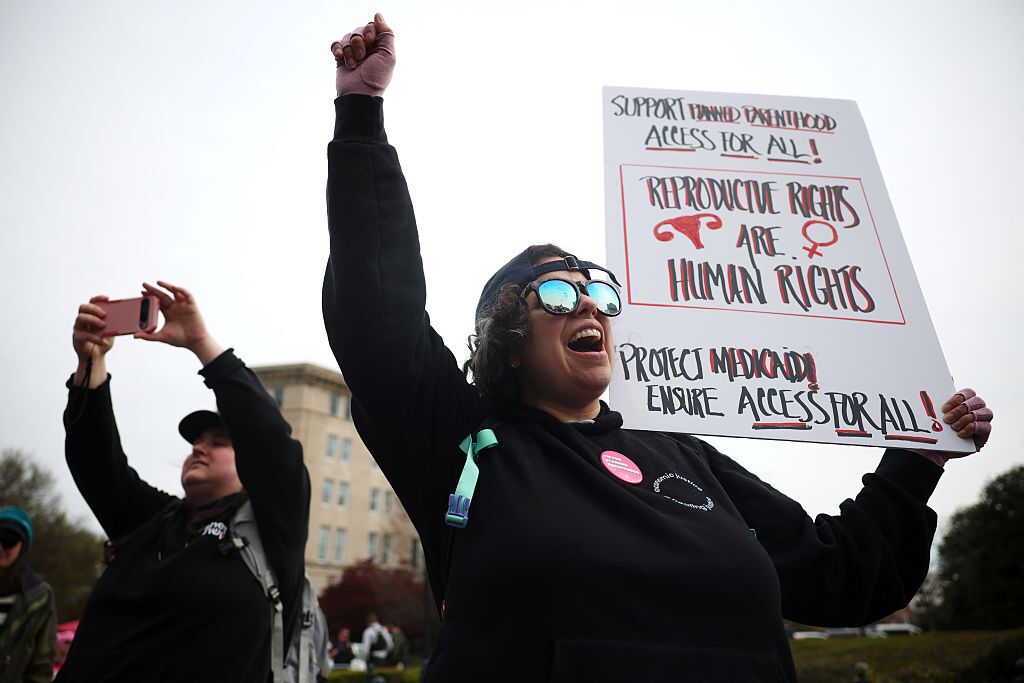
Abortion-rights protesters demonstrate outside the U.S. Supreme Court during oral arguments in Medina v. Planned Parenthood South Atlantic on April 2, 2025. In the end, the Court ruled to allow the state of South Carolina to exclude Planned Parenthood from its Medicaid program because it provides abortions—part of a broader effort by antiabortion policymakers to eliminate all federal payments to Planned Parenthood centers. (Kayla Bartkowski / Getty Images)

Originally published in Jill Filipovic’s Substack Throughline, under the headline, “A Year of Trump Administration Attacks on Abortion Rights.”

Trump has been in office for less than a year. The Supreme Court killed Roe v. Wade less than three years ago. And today, if you are a woman in the United States, your rights change when you cross state lines—men’s rights do not. 

It’s easy to lose sight of just how debilitating this administration has been for reproductive rights, because they are doing so much else so loudly. (Apologies to Greenland.) But this administration has quietly attacked abortion rights from just about every angle. 

A new report from the Center for Reproductive Rights makes clear just how aggressive they’ve been. A few highlights:

1. The Trump administration has effectively told emergency rooms and hospitals that they do not have to save pregnant women’s lives or preserve their health. 

Under a long-standing federal law, emergency rooms have to stabilize patients regardless of whether or not those patients can pay; if the hospital cannot provide the care the patient needs, they are required to stabilize them and then transfer them somewhere that can. For pregnant patients, this means that hospitals and ERs may sometimes have to provide abortion care: If a pregnant woman is in a health- or life-threatening emergency, in some cases, the only way to stabilize her is to end the pregnancy. But “pro-life” groups don’t like this law; they prefer to let women lose their uteruses, or hemorrhage, or wind up on a ventilator or nearly die of sepsis or other infection—they claim that abortion is never medically necessary, and threaten to prosecute any doctor who deems it so.

The result is that some women are dying; many more are nearly dying, particular women in the midst of miscarriages. In Texas, rates of sepsis infection among miscarrying women increased by more than 50 percent after their abortion ban—doctors are waiting until pregnant women have serious potentially deadly infections before giving them the care they need. And they’re doing this because new Trump administration rules do not require them to treat pregnant patients like all other people; pregnant women are a legal sub-category of person, not entitled the same requirement of care as everyone else. 

2. The Trump administration has launched a politically-motivated safety review of mifepristone, “the abortion pill,” seeking to challenge its approval by the FDA. 

Mifepristone is overwhelmingly safe, and has been used all over the world for decades now—for safe abortions, but also for a variety of other indications. The drug’s safety record is excellent, and the only reason to have the FDA review its approval is because it’s used for abortion—not because there are any real safety concerns. If the review results in a change to the FDA’s approval of mifepristone, it would leave millions of women without access to a safe abortion option. 

3. The Trump administration destroyed millions of dollars of contraceptives bound for women in Africa, because antiabortion extremists claim that modern birth control is “abortifacient.” 

Millions of U.S. dollars were basically set on fire so that some of the world’s poorest women wouldn’t be able to plan their pregnancies. The result? A projected 1.5 million unplanned pregnancies. And that is in addition to the millions of people, including children, who lost basics like HIV treatment, contraception, prenatal care and infant care with the demise of USAID.

Today, starving women are birthing premature babies, and the U.S. has barely saved a cent. (The “pro-life” movement is also nowhere to be found when it comes to saving the lives of these babies.) 

4. The Trump administration froze contraceptive funding for American women. 

Millions of women have lost access to contraception and reproductive healthcare between Trump’s Medicaid cuts in the Big Beautiful Bill and his stripping of Title X family planning funds from clinics across the country. 

5. The Trump administration stripped reproductive healthcare from veterans—including rape victims. 

Veterans who are pregnant from rape, or face severe risks to their health from carrying a pregnancy to term, can no longer get safe abortions through their VA health insurance thanks to new Trump administration rules. These are women who have served our country, and have been targeted by Trump’s team. 

6. Trump pardoned violent antiabortion criminals. 

Some two dozen people who had been criminally prosecuted for attacking patients and healthcare workers, vandalizing abortion clinics, and stealing fetal tissue were pardoned by Trump. Several are already back in court for further criminal acts. And since the Trump administration announced it basically wouldn’t prosecute antiabortion protesters so long as they didn’t kill or seriously injure someone (keyword there is “seriously”), antiabortion extremists have gotten more aggressive and more violent

7. “Pro-life” prosecutors have brought more than 400 cases against pregnant women, new mothers or women who lost pregnancies. 

The details of these cases vary, but they include criminal prosecutions of women who they suspected were seeking abortions; women who possessed abortion medication; women who miscarried and didn’t dispose of fetal remains in ways prosecutors deemed acceptable; women who were suspected of using drugs while pregnant (even if there was no evidence of harm to the baby); and women who didn’t get prenatal care. These are overwhelmingly poor women, and overwhelmingly women who need help, not jail time. 


There is much more to come. Donald Trump does not really care about abortion one way or the other, but he is happy to let the antiabortion extremists in his administration and in his party do what they like, so long as it doesn’t blow back on him. And right now, the public is either tuned out of the overwhelming craziness, or focused on the shock-and-awe distraction tactics: invading Venezuela, threatening to take Greenland, all steering our eyeballs away from the president’s own corruption and criminality. 

Antiabortion groups are working hard to get the federal government to pull abortion pills from the market. They are trying to get those drugs deemed “forever chemicals” so they might use environmental regulations to ban them. They continue to scheme on the Comstock Act, a century-old anti-obscenity law that could regulate abortion-related speech. They are continuing to make health care more expensive and less accessible, leaving pregnant women and newborns particularly vulnerable. Women have already died thanks to abortion bans. That was a known, predicted, baked-in outcome. And the “pro-life” movement, empowered by the Trump administration, is gunning for more.

Great Job Jill Filipovic & the Team @ Ms. Magazine Source link for sharing this story.

Governments grapple with the flood of non-consensual nudity on X | TechCrunch

Governments grapple with the flood of non-consensual nudity on X | TechCrunch

For the past two weeks, X has been flooded with AI-manipulated nude images, created by the Grok AI chatbot. An alarming range of women have been affected by the non-consensual nudes, including prominent models and actresses, as well as news figures, crime victims, and even world leaders

A December 31 research paper from Copyleaks estimated roughly one image was being posted each minute, but later tests found far more. A sample gathered from January 5-6 found 6,700 per hour over the 24-hour period

But while public figures from around the world have decried the choice to release the model without safeguards, there are few clear mechanisms for regulators hoping to rein in Elon Musk’s new image-manipulating system. The result has become a painful lesson in the limits of tech regulation — and a forward-looking challenge for regulators hoping to make a mark.

Unsurprisingly, the most aggressive action has come from the European Commission, which on Thursday ordered xAI to retain all documents related to its Grok chatbot. The move doesn’t necessarily mean the commission has opened up a new investigation, but it’s a common precursor to such action. It’s particularly ominous given recent reporting from CNN that suggests Elon Musk may have personally intervened to prevent safeguards from being placed on what images could be generated by Grok.

It’s unclear whether X has made any technical changes to the Grok model, although the public media tab for Grok’s X account has been removed. In a statement, the company specifically denounced the use of AI tools to produce child sexual imagery. “Anyone using or prompting Grok to make illegal content will suffer the same consequences as if they upload illegal content,” the X Safety account posted on January 3, echoing a previous tweet by Elon Musk.

In the meantime, regulators around the world have issued stern warnings. The United Kingdom’s Ofcom issued a statement on Monday, saying it was in touch with xAI and “will undertake a swift assessment to determine whether there are potential compliance issues that warrant investigation.” In a radio interview on Thursday, U.K. Prime Minister Keir Starmer called the phenomenon “disgraceful” and “disgusting,” saying “Ofcom has our full support to take action in relation to this.”

In a post on LinkedIn, Australian eSafety Commissioner Julie Inman-Grant said her office had received a doubling in complaints related to Grok since late 2025. But Inman-Grant stopped short of taking action against xAI, saying only, “We will use the range of regulatory tools at our disposal to investigate and take appropriate action.”

Techcrunch event

San Francisco
|
October 13-15, 2026

By far the largest market to threaten action is India, where Grok was the subject of a formal complaint from a member of Parliament. On January, India’s communications regulator MeitY ordered X to address the issue and submit an “action-taken” report within 72 hours — a deadline that was subsequently extended by 48 hours. While a report was submitted to the regulator on January 7, it’s unclear whether MeitY will be satisfied with the response. If not, X could lose its safe harbor status in India, a potentially serious limitation on its ability to operate within the country.

Great Job Russell Brandom & the Team @ TechCrunch Source link for sharing this story.

Texas universities revamp courses to follow new laws

Texas universities revamp courses to follow new laws

Hundreds of changes are underway at Texas A&M University and other public universities across the state as schools work to comply with controversial new state laws affecting curriculum.

According to reporting by the Texas Tribune and The New York Times, several courses at Texas A&M University have been canceled, while many others have been revised to remove or limit discussion of race and gender.

Similar changes are happening at universities statewide.

Dr. Leonard Bright, a professor at Texas A&M, said the shift reflects broader power dynamics in higher education, with long-standing strategies and subject matter being pushed aside.

“That is what higher education is, challenging students with a range of viewpoints. I mean, I would be more concerned if one viewpoint was being discussed. When there’s other viewpoints there, they should learn. That is where we should be concerned,” Bright said.

The changes extend well beyond Texas A&M. The author of the new law, Brandon Creighton, is now the chancellor of the Texas Tech University System. Creighton has said the focus is on prioritizing coursework that prepares students for jobs after college.

Creighton said curricula will be reviewed to determine whether courses are of value and if they are necessary to earn a degree, license or credential.

He also said students interested in gender studies should look elsewhere.

“They can pursue any other learning avenue or path online or within some other medium that they choose to. But no,” Creighton said.

The curriculum overhaul follows the resignation of Texas A&M President Mark A. Welsh III, who announced in September 2025 he was stepping down after the firing of a professor who was secretly recorded during a children’s literature class.

Students across the state are set to begin the new semester next week, amid what some see as a shifting political landscape in higher education leadership. Many chancellors at major Texas university systems — including the University of Texas, Texas A&M, Texas Tech, and Texas State University — are former Republican lawmakers.

Great Job Phil Prazan & the Team @ NBC 5 Dallas-Fort Worth for sharing this story.

‘Trump Has Been Obese for Decades Himself’: Trump Takes a Hit After RFK Jr.’s Obesity Chat as Critics Pull Brutal Photos of His Larger Than Life Frame

‘Trump Has Been Obese for Decades Himself’: Trump Takes a Hit After RFK Jr.’s Obesity Chat as Critics Pull Brutal Photos of His Larger Than Life Frame

Irony hung over yesterday’s health briefing as President Donald Trump’s weight became part of the broader discussion, arriving just as Robert F. Kennedy Jr. laid out an aggressive push against obesity.

The United States Secretary of Health and Human Services held a press conference at the White House, where the administration unveiled new dietary guidelines.

Kennedy praised Trump for ending the negative stigma attached to saturated fats in his “Make America Healthy Again.”

‘Trump Has Been Obese for Decades Himself’: Trump Takes a Hit After RFK Jr.’s Obesity Chat as Critics Pull Brutal Photos of His Larger Than Life Frame
(Photos by Celal Gunes/Anadolu via Getty Images; Mandel Ngan-Pool/Getty Images)

‘This Is a Joke’: Donald Trump’s Doctor Declares He’s in ‘Excellent’ Shape as Fans Point to Recent Photos That Tell a Very Different Story

The disconnect wasn’t lost on critics, who pointed to the awkward overlap in the administration’s health messaging, while Trump’s well-documented fondness for double-fisting Big Macs and Quarter Pounders from McDonald’s continues to fuel jokes.

Kennedy explained that fruits, vegetables, red meat, and cheese at the top of the new food pyramid, while whole grains have now shifted to the bottom of the pyramid. “Protein and healthy fats are essential and were wrongly discouraged in prior dietary guidelines,” he said after noting that “President Trump has ordered it to end.”

“As Secretary of Health and Human Services, my message is clear — eat real food,” he continued. The new guidelines also limit sugar and processed foods, and Kennedy claimed the guidelines are the country’s “most significant reset of federal nutrition policy in history.”

Video clips of his remarks at the press conference went viral after many noted the audacity of with viewers zeroing in on the audacity of linking Trump to healthy eating. The internet’s disbelief quickly turned into jokes, as critics pointed to years of anecdotes about Trump’s obsession with fast food and eating in bed.

One user wrote, “Trump has been obese for decades himself.”

“Trump the Obese has ordered obesity to end,” joked another. “This message sponsored by the McDonald’s double cheeseburger deluxe, now with more cheese than ever.”

One user shared a picture of Trump, Kennedy, Elon Musk, and Donald Trump Jr., eating McDonald’s aboard Air Force One with the caption, “This you bro?”

“Even being generous about what his height and weight are (he’s not over 6 feet and he’s at least 275 lbs): that’s a BMI of 38.4. Not morbidly obese but certainly not a healthy weight.

Another user summed things up by writing, “Horrifyingly laughable every f’ing day. The outrageous irony & stunning projection has been normalized to the point of numbness.”

Trump has previously listed his height at 6 feet 3 inches and his weight at around 215 pounds in official medical disclosures, figures that would place him just above the normal BMI range for his height.

Those numbers resurfaced as a point of contrast during a White House health briefing where Robert F. Kennedy Jr. outlined a forceful campaign against obesity and promoted new dietary guidelines.

Kennedy’s remarks, which framed obesity as a national crisis that needed to be confronted head-on, drew attention back to Trump’s own reported measurements and physical condition, placing the president’s health profile squarely alongside the administration’s broader messaging on nutrition and weight.

Great Job Niko Mann & the Team @ Atlanta Black Star Source link for sharing this story.

Secret Link