Good morning. The current travails of Saks Global, the one-year old holding company of Saks Fifth Avenue, Neiman Marcus and Bergdorf Goodman, are a timely reminder that the key to success in business is often quite simple: focus on your core business, not on financial engineering.
In late 2024, Saks Global executive chair and controlling shareholder Richard Baker, a real estate scion, landed his dream trophy in Neiman Marcus (which also owned Bergdorf), achieving his long-held ambition to combine the U.S.’s fanciest luxury department stores into one company. To pull this off, Saks Global borrowed $2.7 billion, an untenable debt load that has put the company on the precipice of a bankruptcy protection filing, or at least a major refinancing. (No one thinks Saks Global is going under, but this can only hurt its prospects as a retailer.)
The Saks-Neiman tie-up was the culmination of a plan Baker hatched in 2005 to snap up retailers with valuable real estate. Over the years, different iterations of the company, known for years as HBC, have included Lord & Taylor (his first big acquisition), and Canada’s Hudson’s Bay.
His bet was that the value of iconic properties like the Saks and Lord & Taylor flagships in Manhattan or The Bay in Toronto could be monetized so long as the underlying retail business remained steady.
But nothing about retail, especially department stores, has been stable. Lord & Taylor shut all its stores in 2019 after HBC sold the weakened retailer, and Hudson’s Bay in Canada liquidated last year, ending its 355-year run.
To be fair, Baker has made some good deals in the world of retail. (He sold Target the locations of its ill-fated Canadian expansion in 2011.) And department stores have been cratering for decades.
But a constant churn of financial maneuvers (spinning off Saks’ e-commerce, creating co-working spaces in underutilized stores, all while being highly leveraged) brought some benefit but never obviated the need to invest more in basics. Saks Global has said it’s poured tons of money into its retailers, but it has not been enough. Its cash crunch has led some vendors to stop shipping to Saks: it’s very hard to sell merchandise you don’t have, ergo a 13% drop in sales last quarter.
A few months ago, I chronicled the comebacks at Macy’s, Bloomingdale’s, Nordstrom (all benefiting from Saks’ problems) alongside the consistent performance of Belk and Dillard’s. Such retailers have improved customer service, renovated stores, and stocked ample and new merchandise. A strong business boosts the value of their underlying real estate.
All that will be key for Baker to consider since he’s just become the new CEO of Saks Global, giving him a direct hand in running the company, not just yanking its financial levers. You can read my full story on the Saks saga here.
Video of an ICE agent shooting and killing a woman during an encounter in Minnesota spread rapidly online Wednesday. The incident stoked national tensions over the Trump administration’s immigration raids and sparked protests as far away as New York City.
JPMorgan’s proxy platform
JPMorgan’s asset management unit, one of the world’s largest with more than $7 trillion in client assets, is ditching proxy-advisory firms in favor of an internal AI-enabled platform called Proxy IQ that will help cast votes on shareholder resolutions.
Trump goes after big single-family home investors
In a post on Truth Social Wednesday, President Trump suggested that he will ban institutional investors and Wall Street firms from buying single-family homes as young people are finding it harder and harder to purchase homes. Analysts say the biggest investors in the space collectively own hundreds of thousands of homes.
Accessing Greenland’s minerals could take decades—and billions
Alexander Gray, who worked in President Trump’s first administration, recently told Fortune that the president’s threats to take over Greenland should be taken very seriously. Mineral experts, on the other hand, say that targeting the island’s natural resources will take billions of dollars across decades to see any return.
The great private equity consolidation
Nearly half of all U.S. private equity capital raised last year through September went to the top 10 funds, their largest share in a decade, as institutional investors favor the top managers amid weak distributions.
Are layoffs really because of AI?
A new report from Oxford Economics suggests that companies aren’t laying off workers and replacing them with AI, instead using the technology as a cover for standard headcount reductions. “We suspect some firms are trying to dress up layoffs as a good news story rather than bad news, such as past over-hiring,” the authors of the report wrote.
The markets
S&P 500 futures were down 0.2% this morning. The last session closed down 0.34%. STOXX Europe 600 was down 0.3% in early trading. The U.K.’s FTSE 100 was down 0.33% in early trading. Japan’s Nikkei 225 was down 1.63%. China’s CSI 300 was down o.82%. The South Korea KOSPI was flat. India’s NIFTY 50 was down 1.01%. Bitcoin was down to $90K.
SAN ANTONIO – Keldon Johnson had 27 points, Victor Wembanyama added 16 points and 14 rebounds, and the San Antonio Spurs overcame 38 points, 10 rebounds and 10 assists from Luka Doncic to beat the Los Angeles Lakers 107-91 on Wednesday night.
San Antonio moved into second place in the Western Conference despite shooting 4 for 25 on 3-pointers.
LeBron James didn’t play due to arthritis and sciatica as Los Angeles’ three-game winning streak came to an end.
Calf strains also sidelined Austin Reaves and Rui Hachimura for the Lakers.
Jake LaRavia, with 16 points, and Jaxson Hayes, with 10, were the only other Lakers to score in double figures against the Spurs.
Wembanyama was listed as questionable after returning Tuesday from a two-game absence due to a hyperextended left knee. He had 30 points in 20 minutes in a 106-105 loss at Memphis and followed that up with his 15th double-double this season.
San Antonio went on an 11-4 run midway through the third quarter for a 71-59 lead. Johnson and Stephon Castle combined for nine points in the run.
Castle finished with 15 points and De’Aaron Fox added 14.
Both teams were on the second night of a back-to-back game.
The Lakers disrupted alley-oop attempts to Castle and Luke Kornet in the opening minutes.
While the Spurs struggled to complete what has become a go-to move this season, Hayes threw in a reverse dunk in front of Wembanyama off a half-court, alley-oop pass from Doncic.
Doncic had 22 points, seven rebounds and seven assists while playing all but four minutes in the first half. He finished with his 86th career triple-double in the regular season, which is seventh in league history.
Copyright 2026 The Associated Press. All rights reserved. This material may not be published, broadcast, rewritten or redistributed without permission.
Great Job Raul Dominguez, Associated Press, Mary Rominger & the Team @ KSAT San Antonio Source link for sharing this story.
When SpaceX CEO Elon Musk chose a remote Texas outpost on the Gulf Coast to develop his company’s ambitious Starship, he put the 400-foot rocket on a collision course with the commercial airline industry.
Each time SpaceX did a test run of Starship and its booster, dubbed Super Heavy, the megarocket’s flight path would take it soaring over busy Caribbean airspace before it reached the relative safety of the open Atlantic Ocean. The company planned as many as five such launches a year as it perfected the craft, a version of which is supposed to one day land on the moon.
The FAA, which also oversees commercial space launches, predicted the impact to the national airspace would be “minor or minimal,” akin to a weather event, the agency’s 2022 approval shows. No airport would need to close and no airplane would be denied access for “an extended period of time.”
But the reality has been far different. Last year, three of Starship’s five launches exploded at unexpected points on their flight paths, twice raining flaming debris over congested commercial airways and disrupting flights. And while no aircraft collided with rocket parts, pilots were forced to scramble for safety.
A ProPublica investigation, based on agency documents, interviews with pilots and passengers, air traffic control recordings and photos and videos of the events, found that by authorizing SpaceX to test its experimental rocket over busy airspace, the FAA accepted the inherent risk that the rocket might put airplane passengers in danger.
And once the rocket failed spectacularly and that risk became real, neither the FAA nor Secretary of Transportation Sean Duffy sought to revoke or suspend Starship’s license to launch, a move that is permitted when “necessary to protect the public health and safety.” Instead, the FAA allowed SpaceX to test even more prototypes over the same airspace, adding stress to the already-taxed air traffic control system each time it launched.
The first two Starship explosions last year forced the FAA to make real-time calls on where to clear airspace and for how long. Such emergency closures camewith little or no warning, ProPublica found, forcing pilots to suddenly upend their flight plans and change course in heavily trafficked airspace to get out of the way of falling debris. In one case, a plane with 283 people aboard ran low on fuel, prompting its pilot to declare an emergency and cross a designated debris zone to reach an airport.
The world’s largest pilots union told the FAA in October that such events call into question whether “a suitable process” is in place to respond to unexpected rocket mishaps.
“There is high potential for debris striking an aircraft resulting in devastating loss of the aircraft, flight crew, and passengers,” wrote Steve Jangelis, a pilot and aviation safety chair.
The FAA said in response to questions that it “limits the number of aircraft exposed to the hazards, making the likelihood of a catastrophic event extremely improbable.”
Yet for the public and the press, gauging that danger has been difficult. In fact, nearly a year after last January’s explosion, it remains unclear just how close Starship’s wreckage came to airplanes. SpaceX estimated where debris fell after each incident and reported that information to the federal government. But the company didn’t respond to ProPublica’s requests for that data, and the federal agencies that have seen it, including the FAA, haven’t released it. The agency told us that it was unaware of any other publicly available data on Starship debris.
In public remarks, Musk downplayed the risk posed by Starship. To caption a video of flaming debris in January, he wrote, “Entertainment is guaranteed!” and, after the March explosion, he posted, “Rockets are hard.” The company has been more measured, saying it learns from mistakes, which “help us improve Starship’s reliability.”
For airplanes traveling at high speeds, there is little margin for error. Research shows as little as 300 grams of debris — or two-thirds of a pound — “could catastrophically destroy an aircraft,” said Aaron Boley, a professor at the University of British Columbia who has studied the danger space objects pose to airplanes. Photographs of Starship pieces that washed up on beaches show items much bigger than that, including large, intact tanks.
Debris washed up on a beach in Mexico following a SpaceX explosion.Courtesy of Jesus Elias Ibarra Rodriguez
“It doesn’t actually take that much material to cause a major problem to an aircraft,” Boley said.
In response to growing alarm over the rocket’s repeated failures, the FAA has expanded prelaunch airspace closures and offered pilots more warning of potential trouble spots. The agency said it also required SpaceX to conduct investigations into the incidents and to “implement numerous corrective actions to enhance public safety.” An FAA spokesperson referred ProPublica’s questions about what those corrective actions were to SpaceX, which did not respond to multiple requests for comment.
Experts say the FAA’s shifting approach telegraphs a disquieting truth about air safety as private companies increasingly push to use the skies as their laboratories: Regulators are learning as they go.
During last year’s Starship launches, the FAA was under pressure to fulfill a dual mandate: to regulate and promote the commercial space industry while keeping the flying public safe, ProPublica found. In his October letter, Jangelis called the arrangement “a direct conflict of interest.”
In an interview, Kelvin Coleman, who was head of FAA’s commercial space office during the launches, said his office determined that the risk from the mishaps “was within the acceptable limits of our regulations.”
But, he said, “as more launches are starting to take place, I think we have to take a real hard look at the tools that we have in place and how do we better integrate space launch into the airspace.”
“We Need to Protect the Airspace”
On Jan. 16, 2025, as SpaceX prepared to launch Starship 7 from Boca Chica, Texas, the government had to address the possibility the giant rocket would break up unexpectedly.
Using debris modeling and simulations, the U.S. Space Force, the branch of the military that deals with the nation’s space interests, helped the FAA draw the contours of theoretical “debris response areas” — no-fly zones that could be activated if Starship exploded.
With those plans in place, Starship Flight 7 lifted off at 5:37 p.m. EST. About seven minutes later, it achieved a notable feat: Its reusable booster rocket separated, flipped and returned to Earth, where giant mechanical arms caught it as SpaceX employees cheered.
But about 90 seconds later, as Starship’s upper stage continued to climb, SpaceX lost contact with it. The craft caught fire and exploded, far above Earth’s surface.
A pilot on a flight from Miami to Santo Domingo, Dominican Republic, recorded video of space debris visible from the cockpit while flying at 37,000 feet.Provided to ProPublica
Air traffic control’s communications came alive with surprised pilots who saw the accident, some of whom took photos and shot videos of the flaming streaks in the sky:
Another controller warned a different pilot of debris in the area:
Two FAA safety inspectors were in Boca Chica to watch the launch at SpaceX’s mission control, said Coleman, who, for Flight 7, was on his laptop in Washington, D.C., receiving updates.
As wreckage descended rapidly toward airplanes’ flight paths over the Caribbean, the FAA activated a no-fly zone based on the vehicle’s last known position and prelaunch calculations. Air traffic controllers warned pilots to avoid the area, which stretched hundreds of miles over a ribbon of ocean roughly from the Bahamas to just east of St. Martin, covering portions of populated islands, including all of Turks and Caicos. While the U.S. controls some airspace in the region, it relies on other countries to cooperate when it recommends a closure.
The FAA also cordoned off a triangular zone south of Key West.
When a pilot asked when planes would be able to proceed through the area, a controller replied:
There were at least 11 planes in the closed airspace when Starship exploded, and flight tracking data shows they hurried to move out of the way, clearing the area within 15 minutes. Such maneuvers aren’t without risk. “If many aircraft need to suddenly change their routing plans,” Boley said, “then it could cause additional stress” on an already taxed air traffic control system, “which can lead to errors.”
That wasn’t the end of the disruption though. The FAA kept the debris response area, or DRA, active for another 71 minutes, leaving some flights in a holding pattern over the Caribbean. Several began running low on fuel and some informed air traffic controllers that they needed to land.
“We haven’t got enough fuel to wait,” said one pilot for Iberia airlines who was en route from Madrid with 283 people on board.
The controller warned him that if he proceeded across the closed airspace, it would be at his own risk:
The plane landed safely in San Juan, Puerto Rico.
Iberia did not respond to requests for comment, but in statements to ProPublica, other airlines downplayed the launch fallout. Delta, for example, said the incident “had minimal impact to our operation and no aircraft damage.” The company’s “safety management system and our safety culture help us address potential issues to reinforce that air transportation remains the safest form of travel in the world,” a spokesperson said.
After the incident, some pilots registered concerns with the FAA, which was also considering a request from SpaceX to increase the number of annual Starship launches from five to 25.
“Last night’s Space X rocket explosion, which caused the diversion of several flights operating over the Gulf of Mexico, was pretty eye opening and scary,” wrote Steve Kriese in comments to the FAA, saying he was a captain for a major airline and often flew over the Gulf. “I do not support the increase of rocket launches by Space X, until a thorough review can be conducted on the disaster that occurred last night, and safety measures can be put in place that keeps the flying public safe.”
Kriese could not be reached for comment.
The Air Line Pilots Association urged the FAA to suspend Starship testing until the root cause of the failure could be investigated and corrected. A letter from the group, which represents more than 80,000 pilots flying for 43 airlines, said flight crews traveling in the Caribbean didn’t know where planes might be at risk from rocket debris until after the explosion.
“By that time, it’s much too late for crews who are flying in the vicinity of the rocket operation, to be able to make a decision for the safe outcome of the flight,” wrote Jangelis, the pilot and aviation safety chair for the group. The explosion, he said, “raises additional concerns about whether the FAA is providing adequate separation of space operations from airline flights.”
In response, the FAA said it would “review existing processes and determine whether additional measures can be taken to improve situational awareness for flight crews prior to launch.”
According to FAA documents, the explosion propelled Starship fragments across an area nearly the size of New Jersey. Debris landed on beaches and roadways in Turks and Caicos. It also damaged a car. No one was injured.
Three months later, the National Oceanic and Atmospheric Administration, which was evaluating potential impacts to marine life, sent the FAA a report with a map of where debris from an explosion could fall during future Starship failures. The estimate, which incorporated SpaceX’s own data from the Starship 7 incident, depicted an area more than three times the size of the airspace closed by the FAA.
In a statement, an FAA spokesperson said NOAA’s map was “intended to cover multiple potential operations,” while the FAA’s safety analysis is for a “single actual launch.” A NOAA spokesperson said that the map reflects “the general area where mishaps could occur” and is not directly comparable with the FAA’s no-fly zones.
Nevertheless Moriba Jah, a professor of aerospace engineering at the University of Texas, said the illustration suggested the no-fly zones the FAA activated may not fully capture how far and wide debris spreads after a rocket breakup. The current predictive science, he said, “carries significant uncertainty.”
Debris from the Jan. 16, 2025, Starship rocket explosion left a trail of fire and smoke visible from Port-au-Prince, Haiti.Reuters/via Reuters TV
At an industry conference a few weeks after the January explosion, Shana Diez, a SpaceX executive, acknowledged the FAA’s challenges in overseeing commercial launches.
“The biggest thing that we really would like to work with them on in the future is improving their real time awareness of where the launch vehicles are and where the launch vehicles’ debris could end up,” she said.
“We’re Too Close to the Debris”
On Feb. 26 of last year, with the investigation into Starship Flight 7 still open, the FAA cleared Flight 8 to proceed, saying it “determined SpaceX met all safety, environmental and other licensing requirements.”
The action was allowed under a practice that began during the first Trump administration, known as “expedited return-to-flight,” that permitted commercial space companies to launch again even before the investigation into a prior problematic flight was complete, as long as safety systems were working properly.
Coleman, who took a voluntary separation offer last year, said that before granting approval, the FAA confirmed that “safety critical systems,” such as the rocket’s ability to self-destruct if it went off course, worked as designed during Flight 7.
By March 6, SpaceX was ready to launch again. This time the FAA gave pilots a heads-up an hour and 40 minutes before liftoff.
“In the event of a debris-generating space launch vehicle mishap, there is the potential for debris falling within an area,” the advisory said, again listing coordinates for two zones in the Gulf and Caribbean.
The FAA said a prelaunch safety analysis, which includes planning for potential debris, “incorporates lessons learned from previous flights.” The zone described in the agency’s advisory for the Caribbean was wider and longer than the previous one, while the area over the Gulf was significantly expanded.
Flight 8 launched at 6:30 p.m. EST and its booster returned to the launchpad as planned. But a little more than eight minutes into the flight, some of Starship’s engines cut out. The craft went into a spin and about 90 seconds later SpaceX lost touch with it and it exploded.
SpaceX’s eighth Starship test launched from a launchpad in Boca Chica, Texas, on March 6, 2025, before blowing up 90 miles above Earth.Joe Skipper/Reuters
The FAA activated the no-fly zones less than two minutes later, using the same coordinates it had released prelaunch.
Even with the advance warning, data shows at least five planes were in the debris zones at the time of the explosion, and they all cleared the airspace in a matter of minutes.
A pilot on one of those planes, Frontier Flight 081, told passengers they could see the rocket explosion out the right-side windows. Dane Siler and Mariah Davenport, who were heading home to the Midwest after vacationing in the Dominican Republic, lifted the window shade and saw debris blazing across the sky, with one spot brighter than the rest.
“It literally looked like the sun coming out,” Siler told ProPublica. “It was super bright.”
They and other passengers shot videos, marveling at what looked like fireworks, the couple said. The Starship fragments appeared to be higher than the plane, many miles off. But before long, the pilot announced “I’m sorry to report that we have to turn around because we’re too close to the debris,” Siler said.
Cuba
Dominican Republic
Haiti
Caribbean Sea
FAA’s Debris Zone
Cellphone video from passengers aboard Frontier Flight 081 shows debris in the sky about a minute after the FAA alerted the flight crew to exit the debris zone on March 6, 2025.
Sources: Flight data from OpenSky Network. Video courtesy of Dane Siler and Mariah Davenport.
Frontier did not respond to requests for comment.
The FAA lifted the restriction on planes flying through the debris zone about 30 minutes after Starship exploded, much sooner than it had in January. The agency said that the Space Force had “notified the FAA that all debris was down approximately 30 minutes after the Starship Flight 8 anomaly.”
But in response to ProPublica’s questions, the Space Force acknowledged that it did not track the debris in real time. Instead, it said “computational modeling,” along with other scientific measures, allowed the agency to “predict and mitigate risks effectively.” The FAA said “the aircraft were not at risk” during the aftermath of Flight 8.
Experts told ProPublica that the science underlying such modeling is far from settled, and the government’s ability to anticipate how debris will behave after an explosion like Starship’s is limited. “You’re not going to find anybody who’s going to be able to answer that question with any precision,” said John Crassidis, an aerospace engineering professor at the University of Buffalo. “At best, you have an educated guess. At worst, it’s just a potshot.”
Where pieces fall — and how long they take to land — depends on many factors, including atmospheric winds and the size, shape and type of material involved, experts said.
During the breakup of Flight 7, the FAA kept airspace closed for roughly 86 minutes. However, Diez, the SpaceX executive, told attendees at the industry conference that, in fact, it had taken “hours” for all the debris to reach the ground. The FAA, SpaceX and Diez did not respond to follow-up questions about her remarks.
It’s unclear how accurate the FAA’s debris projections were for the March explosion. The agency acknowledged that debris fell in the Bahamas, but it did not provide ProPublica the exact location, making it impossible to determine whether the wreckage landed where the FAA expected. While some of the country’s islands were within the boundaries of the designated debris zone, most were not. Calls and emails to Bahamas officials were not returned.
The FAA said no injuries or serious property damage occurred.
FAA Greenlights More Launches
By May, after months of Musk’s Department of Government Efficiency slashing spending and firing workers at federal agencies across Washington, the FAA granted SpaceX’s request to exponentially increase the number of Starship launches from Texas.
Starship is key to “delivering greater access to space and enabling cost-effective delivery of cargo and people to the Moon and Mars,” the FAA found. The agency said it will make sure parties involved “are taking steps to ensure the safe, efficient, and equitable use” of national airspace.
The U.S. is in a race to beat China to the lunar surface — a priority set by Trump’s first administration and continued under President Joe Biden. Supporters say the moon can be mined for resources like water and rare earth metals, and can offer a place to test new technologies. It could also serve as a stepping stone for more distant destinations, enabling Musk to achieve his longstanding goal of bringing humans to Mars.
Trump pledged last January that the U.S. will “pursue our Manifest Destiny into the stars, launching American astronauts to plant the Stars and Stripes on the planet Mars.”
But with experimental launches like Starship’s, Jangelis said, the FAA should be “as conservative as possible” when managing the airspace below them.
“We expect the FAA to make sure our aircraft and our passengers stay safe,” he said. “There has to be a balance between the for-profit space business and the for-profit airlines and commerce.”
A More Conservative Approach
Crowds flocked to South Padre Island, Texas, to watch Starship’s ninth test launch on May 27.Gabriel V. Cardenas/Reuters
In mid-May, United Kingdom officials sent a letter to their U.S. counterparts, asking that SpaceX and the FAA change Starship’s flight path or take other precautions because they were worried about the safety of their Caribbean territories.
The following day, the FAA announced in a news release that it had approved the next Starship launch, pending either the agency’s closure of the investigation into Flight 8 or granting of a “return to flight” determination.
A week later, with the investigation into Flight 8 still open, the agency said SpaceX had “satisfactorily addressed” the causes of the mishap. The FAA did not detail what those causes were at the time but said it would verify that the company implemented all necessary “corrective actions.”
This time the FAA was more aggressive on air safety.
The agency preventively closed an extensive swath of airspace extending 1,600 nautical miles from the launch site, across the Gulf of Mexico and through part of the Caribbean. The FAA said that 175 flights or more could be affected, and it advised Turks and Caicos’ Providenciales International Airport to close during the launch.
The FAA Closed a Heavily Trafficked Air Corridor Prior to Flight 9
Flight data from the day before Starship Flight 9’s launch shows just how busy the area around the FAA’s no-fly zone could be around the time of the launch.
Visual description: A red area labeled “FAA’s no-fly zone for Starship Flight 9” is overlaid on a map of the portion of the Caribbean directly north of Haiti and Cuba. A timestamp starts at 7:00 p.m. and animates to 8:00 p.m. over the course of 20 seconds. As the time advances, dozens of lines representing flight paths are drawn across the screen.
FAA’s No-Fly Zone for Starship Flight 9
Cuba
Dominican Republic
Haiti
Puerto Rico
Caribbean Sea
Replay
Note: ProPublica connected gaps in some flight paths to create continuous lines.
Source: OpenSky Network
The agency said the move was driven in part by an “updated flight safety analysis” and SpaceX’s decision to reuse a previously launched Super Heavy booster — something the company had never tried before. The agency also said it was “in close contact and collaboration with the United Kingdom, Turks & Caicos Islands, Bahamas, Mexico, and Cuba.”
Coleman told ProPublica that the concerns of the Caribbean countries, along with Starship’s prior failures, helped convince the FAA to close more airspace ahead of Flight 9.
On May 27, the craft lifted off at 7:36 p.m. EDT, an hour later than in March and two hours later than in January. The FAA said it required the launch window to be scheduled during “non-peak transit periods.”
This mission, too, ended in failure.
Starship’s Super Heavy booster blew up over the Gulf of Mexico, where it was supposed to have made what’s called a “hard splashdown.”
In response, the FAA again activated an emergency no-fly zone. Most aircraft had already been rerouted around the closed airspace, but the agency said it diverted one plane and put another in a holding pattern for 24 minutes. The FAA did not provide additional details on the flights.
According to the agency, no debris fell outside the hazard area where the FAA had closed airspace. Pieces from the booster eventually washed up on Mexico’s beaches.
Starship’s upper stage reached the highest planned point in its flight path, but it went into a spin on the way down, blowing up over the Indian Ocean.
The Path Ahead
A map released by the FAA shows potential no-fly zones planned for future Starship launches that would cross over a portion of Florida. Air hazard areas — the AHAs on this map — are paths that would be cleared of air traffic before launches. Federal Aviation Administration
SpaceX launched Starship again in August and October. Unlike the prior flights, both went off without incident, and the company said it was turning its focus to the next generation of Starship to provide “service to Earth orbit, the Moon, Mars, and beyond.”
But about a week later, Transportation Secretary Sean Duffy said he would open up SpaceX’s multibillion-dollar contract for a crewed lunar lander to rival companies. SpaceX is “an amazing company,” he said on CNBC. “The problem is, they’re behind.”
Musk pushed back, saying on X that “SpaceX is moving like lightning compared to the rest of the space industry.” He insulted Duffy, calling him “Sean Dummy” and saying “The personresponsible for America’s space program can’t have a 2 digit IQ.”
The Department of Transportation did not respond to a request for comment or make Duffy available.
In a web post on Oct. 30, SpaceX said it was proposing “a simplified mission architecture and concept of operations” that would “result in a faster return to the Moon while simultaneously improving crew safety.”
SpaceX is now seeking FAA approval to add new trajectories as Starship strives to reach orbit. Under the plan, the rocket would fly over land in Florida and Mexico, as well as the airspace of Cuba, Jamaica and the Cayman Islands, likely disrupting hundreds of flights.
In its letter, the pilots’ union told the FAA that testing Starship “over a densely populated area should not be allowed (given the dubious failure record)” until the craft becomes more reliable. The planned air closures could prove “crippling” for the Central Florida aviation network, it added.
Still, SpaceX is undeterred.
Diez, the company executive, said on X in October, “We are putting in the work to make 2026 an epic year for Starship.”
Great Job Heather Vogell & the Team @ ProPublica Source link for sharing this story.
Reinventing is hard. And perhaps not always necessary. Who even needs new designs when you can successfully just repeat the same logo for over a century? Those Ls, Vs, and little flowers outlived both World Wars, the Great Depression, and Covid-19, I thought my great-grandma had seen it all, but Louis Vuitton has seen more. By January 11th, the monogram turns 130, and I’m sure we’ll keep counting, so what better way to celebrate than a new, a very flexible definition of new by the way, mini bag collection?
Back in the day, 1896 to be exact, Vuitton had one tiny problem. Everyone and their dog kept copying their trunks. So naturally, Georges Vuitton did what any logical heir to a trunk empire would. Endlessly slap letters and flowers on everything. And just to be thorough, he made sure the monogram could go on any material imaginable, from leather to paper. The guy basically patented what every brand now calls “logo placement strategy”. Years down the line, creatives poked that tradition awake and gave it a few of their own spins. Like Takashi Murakami’s brightness, Pharrell Williams’ colorways, Nicolas Ghesquière’s shapes, Richard Prince’s beat-up jokes, Stephen Sprouse’s graffiti, Marc Jacobs’ silvers, and the list goes on.
The anniversary collection brings us three special-edition bags, the “Origine”, the “VVN”, and the “Time Trunk”. Speedy, Noé, and friends are back, now dressed in a linen-cotton jacquard blend with a trompe-l’oeil print. In other words, a 21st-century salute to the original trunk textures. And that’s the thing about Louis Vuitton, a 130-year-old past including a never-ending parade of “fresh” designs and slightly tweaked classics, and sometimes this is still exciting. Not because it’s revolutionary, it’s not, but because we’re kind of hardwired to admire old charm when modernized, especially if it stings the wallet.
Great Job Vera Adamidou & the Team @ Our Culture Source link for sharing this story.
Sign up for TPR Today, Texas Public Radio’s newsletter that brings our top stories to your inbox each morning.
It’s been 32 years since the Soli Chamber Ensemble was created in San Antonio. Over the years, Ertan Torgul has developed multiple duties with the group.
“First, I play the violin, and then I try to actually run the group. You know, arrange concerts and book guest artists and arrange their stays,” Torgul said.
For their next performance, they will feature guest artist mezzo-soprano Kelley O’Connor for an event on Tuesday, Jan. 15, at the Ruth Taylor Recital Hall at Trinity University, as part of their “Future Focus” series.
“’Future Focus’ is designed to bring guest artists from … it could be San Antonio, it could be Texas, it could be the whole nation or the world for that matter,” Torgul said. “Bringing guest artists — whether they’re composers or performers — and have them engage with us in a maximum way, whether that’s a new commission that they write for Soli, whether we record that for a future release, they will be involved in creating concerts with us.”
Emma Kruch and Ben Dashwood
Kelley O’Connor
Grammy-winning Kelley O’Connor is the singer who is Soli’s next guest, for a free concert.
Torgul said the “Future Focus” programs put master musicians in the presence of young musicians who are trying to find their footing in the musical world.
Torgul added that the program is designed to bring the greats to the Alamo City for performances and workshops with high school and college students.
Over O’Connor’s 10-day stay here, she’ll be giving workshops at high schools and colleges.
“Maybe the most important part of it is the aspect that we’re taking them out to the community, to the students, to the adult learners and to the young students, to expose them to what these artists have achieved throughout their lives,” he said. “Have them give advice. Have them do workshops and teach them things that they might not know yet.”
SOLI Chamber Ensemble, DISCOVER SOLI
Singer Kelley O’Connor will perform with Soli for free on Tuesday, January 20, at Trinity University. There will also be a pre-concert talk where attendees can learn more about the music and its significance.
Great Job Jack Morgan & the Team @ Texas Public Radio for sharing this story.
I joined DSA in the aftermath of Donald Trump’s election in 2016, like many other people trying to find a place to put their energy and focus. I wasn’t a super active member early on, in part because I was so used to the UNITE HERE New Haven organizing culture. If you don’t attend a meeting, you’re getting phone calls. And if you don’t pick up the phone, your door is getting knocked on, and you’re gonna have a conversation about how you’re prioritizing your life and what you’re putting first. NYC-DSA doesn’t work that way. So when I joined and skipped my second branch meeting, I was disappointed when no one came knocking on my door saying, “Where are you, Andrew?”
I was something more than a paper member but not somebody who was on any organizing committees or deeply involved in any working group stuff. It was in 2018 that I started canvassing. I actually started with Alexandria Ocasio-Cortez, mostly in Elmhurst, Queens. I was there on primary night in her Elmhurst office when she won. I looked back years later at photos, and I was like, “Oh, there’s Jabari Brisport in that photo,” and there’s all these other people I’d come to know later on. And then, there was Julia Salazar‘s campaign later that year. But this was always something I did on the side here and there. About a year later I was between jobs. I had left a job thinking another one was lined up and it fell through. I was unemployed, and I really wanted to do the kinds of things I’d seen happening and had only dipped my toes in with the New York City DSA electoral project.
At the time, there was a buzz around New York City politics at the time — the defeat of the Independent Democratic Caucus, the challenge that Cynthia Nixon gave to Andrew Cuomo. It felt like things were in motion in a real way for the first time in a long time in New York City and New York State. So when I was unemployed in summer 2019, I was looking to work in politics and kind of just raising my hand and saying, “What can I do? Where can I go?”
I think it was through a combination of Nikhil Goyal, who I knew from Twitter, and Seth Pollak, an NYC-DSA member, that I was put in touch with a Greenpoint community activist named Emily Gallagher. She was looking to run against a forty-eight-year incumbent named Joe Lentol and was looking for a campaign manager. This was somebody who had gone through the waves of millennial left politicization. She was very involved with Occupy and community organizing and all the rest of it.
She had come to this moment where she wanted to actually run for office and challenge power in a direct way. I joined her campaign about two weeks before NYC-DSA officially declined to endorse in that race. I had signed up thinking, “Okay, this is going to be a DSA race.” They declined. But Emily and I had already found a connection around politics and sensibility.
For me, this district was an early lesson that I took to the Mamdani campaign: not believing what passes for commonsense wisdom among consultants and political writers. To the degree that anybody was thinking about Joe Lentol and that assembly seat, the assumption was that he was untouchable. He was an institution. But I was looking at a district that went for Bernie, went for Cynthia Nixon. Most eligible voters in the district didn’t even know what the New York State Assembly was. If we ran on a real agenda in a really energetic way that used every kind of comms tool available to us and took nothing for granted, we could break through.
And we did — without, in that case, NYC-DSA. Actually without a single elected official endorsing us. The Working Families Party had endorsed the incumbent. No labor union, nothing. It was a core group of organizers and a district that was ready for it.
Andrew snaps a selfie with Zohran. (Andrew Epstein)
Then COVID-19 hit. It upended the field program. The George Floyd uprising and protests were also, I think, crucial to the surge in turnout that eventually led us to win. It was on the course of that campaign that I met a young man named Zohran Mamdani. We shared an election lawyer, the great Ali Nazmi. I remember meetings in Ali’s office: Zohran coming out, us going in, probably around petitioning. I immediately thought, this guy’s got rizz — who is this guy?
We weren’t part of the same slate. But in some ways our race in 2020 was not totally dissimilar from his. He was also running against an incumbent who was understood to be good enough for New York State politics. It wasn’t somebody who was considered a big, bad enemy of progressive groups or the Left. But people like Emily and Zohran wanted to raise the expectations people had about what politics and government could deliver. Good enough wasn’t good enough.
Both races were extremely tight. They were won in the recount phase — fighting over ballots with gloves and masks on in the summer of 2020 at the Board of Elections. We had that shared affinity.
In the months between the Democratic primary win in June and July 2020 and Emily being sworn in in January 2021, we started having conversations with leaders in New York City DSA about Emily joining the Socialists in Office committee. That was driven in no small part by my relationship with Tascha Van Auken, which had developed even though she was managing Phara Souffrant Forrest’s campaign, which was part of the DSA slate, while we were not.
Emily and Phara had become friends. That led, in the fall, to conversations with a whole number of people: Cea Weaver, Jeremy Cohan, and others. By January 2021, Emily was sworn in and almost immediately joined the Socialists in Office committee — the first iteration of it in Albany. That included Emily, Marcela Mitaynes, Phara Souffrant Forrest, Julia Salazar (who had been there for a couple of years), and Jabari Brisport.
Great Job Andrew Epstein & the Team @ Jacobin Source link for sharing this story.
El gobierno federal ha reducido drásticamente la cantidad de vacunas infantiles recomendadas, dejando fuera seis inmunizaciones de rutina que han protegido a millones de personas de enfermedades graves, discapacidades a largo plazo y muertes.
Solo tres de las seis vacunas que los Centros para el Control y la Prevención de Enfermedades (CDC, por sus siglas en inglés) dejarán de recomendar de manera rutinaria —contra la hepatitis A, hepatitis B y el rotavirus— han prevenido casi 2 millones de hospitalizaciones y más de 90.000 muertes en los últimos 30 años, según publicaciones de la misma entidad.
Las vacunas contra esas tres enfermedades, así como contra el virus respiratorio sincitial (VRS), la enfermedad meningocócica, la gripe y covid, ahora solo se recomiendan para niños con alto riesgo de enfermedad grave o luego de “tomar decisiones clínicas de manera compartida”, es decir, una consulta entre médicos y padres.
Los CDC mantienen sus recomendaciones para 11 vacunas infantiles: contra el sarampión, las paperas y la rubéola; la tos ferina, el tétanos y la difteria; la enfermedad bacteriana conocida como Hib; la neumonía; la polio; la varicela; y el virus del papiloma humano (VPH).
Según una hoja informativa del Departamento de Salud y Servicios Humanos (HHS, por sus siglas en inglés), los seguros médicos públicos y privados seguirán cubriendo las vacunas contra las enfermedades que los CDC ya no recomiendan de manera universal; los padres que quieran vacunar a sus hijos contra esas enfermedades no tendrán que pagar las dosis de su bolsillo.
Expertos en enfermedades infantiles se mostraron desconcertados ante el cambio en la guía. El HHS explicó que las modificaciones se hicieron tras “una revisión científica de la evidencia” y que están alineadas con programas de vacunación de otros países desarrollados.
El secretario del HHS, Robert F. Kennedy Jr., un activista antivacunas, señaló a Dinamarca como modelo. Sin embargo, los calendarios de vacunación de la mayoría de los países europeos son más parecidos al estándar estadounidense que acaba de modificarse.
Por ejemplo, Dinamarca, que no vacuna contra el rotavirus, registra cerca de 1.200 hospitalizaciones al año por esta infección en bebés y niños pequeños. Esa tasa, en un país de 6 millones de habitantes, es similar a la que tenía Estados Unidos antes de introducir la vacuna.
“Ellos aceptan tener 1.200 o 1.300 niños hospitalizados, lo cual es solo la punta del iceberg en cuanto al sufrimiento infantil”, dijo Paul Offit, director del Centro de Educación sobre Vacunas del Hospital Infantil de Philadelphia y coinventor de una vacuna contra el rotavirus aprobada. “Nosotros no lo aceptamos. Deberían tratar de imitarnos a nosotros, no al revés”.
Funcionarios de salud pública señalaron que la nueva guía pone sobre los padres la responsabilidad de investigar y comprender cada vacuna infantil y por qué es importante.
El siguiente es un resumen de las enfermedades que previenen las vacunas que se han dejado de lado:
VRS. El virus respiratorio sincitial es la causa más común de hospitalización en bebés en Estados Unidos.
Este virus respiratorio suele circular en otoño e invierno y provoca síntomas parecidos a los de un resfriado, aunque puede ser mortal para los niños pequeños. Cada año causa decenas de miles de hospitalizaciones y cientos de muertes. Según la Fundación Nacional de Enfermedades Infecciosas (National Foundation for Infectious Diseases), aproximadamente el 80% de los niños menores de 2 años hospitalizados con el VRS no tienen factores de riesgo identificables. Las esperadas vacunas contra esta enfermedad se introdujeron en 2023.
Hepatitis A. La vacunación contra la hepatitis A, que se empezó a aplicar gradualmente a finales de los años 90 y se recomendó para todos los niños pequeños a partir de 2006, ha provocado una reducción de más del 90% de los casos desde 1996. Este virus transmitido por alimentos causa una enfermedad muy desagradable que aún afecta a adultos, especialmente personas sin hogar o que consumen drogas o alcohol. En 2023 se reportaron un total de 1.648 casos y 85 muertes.
Hepatitis B. Esta enfermedad provoca cáncer de hígado, cirrosis y otros padecimientos graves, y es particularmente peligrosa cuando la contraen bebés o niños pequeños. El virus de la hepatitis B se transmite por sangre y otros fluidos corporales, incluso en cantidades microscópicas, y puede sobrevivir en superficies durante una semana. Entre 1990 y 2019, la vacunación generó una reducción del 99% en los casos reportados de hepatitis B aguda en niños y adolescentes. El cáncer de hígado en menores también ha disminuido considerablemente gracias a la vacunación infantil universal. Sin embargo, el virus sigue presente, con entre 2.000 y 3.000 casos agudos reportados cada año entre adultos no vacunados. En 2023 se diagnosticaron más de 17.000 casos de hepatitis B crónica. Los CDC estiman que cerca de la mitad de las personas infectadas no saben que lo están.
Rotavirus. Antes de que comenzara la administración rutinaria de las actuales vacunas contra el rotavirus, en 2006, cada año se internaban a unos 70.000 niños pequeños, y morían alrededor de 50 a causa del virus. “Se conocía como el síndrome del vómito invernal”, explicó Sean O’Leary, pediatra de la Universidad de Colorado. “Era una enfermedad terrible, que casi ya no vemos”.
Sin embargo, el virus sigue siendo común en las superficies que tocan los bebés, y “si bajan las tasas de vacunación, habrá de nuevo niños hospitalizados”, advirtió Offit.
Vacunas meningocócicas. Estas vacunas han sido requeridas principalmente para adolescentes y estudiantes universitarios, quienes son especialmente vulnerables a enfermedades graves causadas por esta bacteria. En Estados Unidos se reportan entre 600 y 1.000 casos al año, pero más del 10% de los enfermos mueren, y 1 de cada 5 sobrevivientes queda con discapacidades permanentes.
Gripe y covid. Estos dos virus respiratorios han causado la muerte de cientos de niños en años recientes, aunque suelen ser más graves en adultos mayores. Actualmente hay un repunte de la gripe en el país, y durante la temporada pasada murieron 289 menores por esta causa.
¿Qué es la toma de decisiones clínicas compartida?
Con los nuevos cambios, la decisión de vacunar a los niños contra la gripe, covid, el rotavirus, la enfermedad meningocócica y las hepatitis A y B dependerá ahora de lo que las autoridades llaman “toma de decisiones clínicas compartida”, es decir, que las familias deberán consultar con un proveedor de salud para determinar si la vacuna es apropiada para sus hijos.
“Significa que el proveedor debe tener una conversación con el paciente para explicar los riesgos y beneficios y tomar una decisión personalizada”, dijo Lori Handy, especialista en enfermedades infecciosas pediátricas del Hospital Infantil de Philadelphia.
Antes, los CDC usaban ese término solo en circunstancias muy específicas, como al decidir si una persona en una relación monógama necesitaba la vacuna contra el VPH, que previene una infección de transmisión sexual y ciertos tipos de cáncer.
Según Handy, el nuevo enfoque de los CDC no se alinea con la evidencia científica, dado el beneficio protector comprobado que las vacunas ofrecen a la gran mayoría de la población.
En su informe justificando los cambios, los funcionarios del HHS Tracy Beth Høeg y Martin Kulldorff afirmaron que el sistema de vacunación de Estados Unidos requiere más investigación sobre seguridad y mayor elección por parte de los padres. Dijeron que la pérdida de confianza en la salud pública, causada en parte por un calendario de vacunación demasiado extenso, ha llevado a más familias a rechazar vacunas contra amenazas importantes como el sarampión.
Las vacunas en el calendario que fue modificado por los CDC ya contaban con amplia investigación sobre seguridad cuando fueron evaluadas y aprobadas por la Administración de Alimentos y Medicamentos (FDA, por sus siglas en inglés).
“Estas vacunas tienen un estándar de seguridad más alto que cualquier otra intervención médica que tenemos”, dijo Handy. “El valor de las recomendaciones rutinarias es que ayudan al público a entender que estas vacunas han sido examinadas por todos lados”.
Eric Ball, pediatra en el condado de Orange, California, apuntó que el cambio en la guía provocará más confusión entre los padres, quienes podrían pensar que es la seguridad de una vacuna lo que está en duda.
“Para la salud pública, es fundamental que las recomendaciones sobre vacunas sean muy claras y precisas”, dijo Ball. “Cualquier cosa que genere confusión solo llevará a que más niños se enfermen”.
Ball explicó que, en lugar de enfocarse en las necesidades médicas del niño, muchas veces tiene que usar el tiempo limitado de consulta para asegurar a los padres que las vacunas son seguras. El hecho de que una vacuna quede bajo “toma de decisiones clínicas compartida” no tiene nada que ver con preocupaciones de seguridad, pero muchos padres podrían interpretarlo así.
Los cambios del HHS no afectan las leyes estatales de vacunación y, por lo tanto, deberían permitir que los médicos responsables sigan recomendando las vacunas como hasta ahora, según Richard Hughes IV, abogado y profesor en la Universidad George Washington, quien lidera demandas contra Kennedy por los cambios en materia de vacunas.
“Uno puede esperar que cualquier pediatra siga la evidencia científica sólida y recomiende que sus pacientes se vacunen”, dijo. La ley protege a los proveedores que siguen las pautas profesionales de atención, agregó, y “el VRS, la enfermedad meningocócica y las hepatitis siguen siendo amenazas graves para la salud de los niños en este país”.
Apple announced Wednesday that JPMorgan Chase is the new issuer of the Apple Card, replacing Goldman Sachs. Apple said that the transition will likely take up to 24 months.
While Apple is changing its banking partner, the Apple Card will continue to use the Mastercard network for payments. For consumers, nothing is changing at the moment, including for those applying for new cards.
JPMorgan said that the deal would bring over $20 billion in card balances to Chase. The Wall Street Journal noted that Goldman Sachs is offloading this amount at a $1 billion discount. Goldman Sachs said that for the fourth quarter of 2025, it expects a $2.2 billion provision for credit losses related to the forward purchase commitment.
Apple launched its credit card in 2019 in partnership with Goldman Sachs without late fees or penalty interest rates. The card offers up to 3% daily cashback on purchases from Apple and other select partners; 2% from using Apple Pay; and 1% from using the physical card.
Great Job Ivan Mehta & the Team @ TechCrunch Source link for sharing this story.
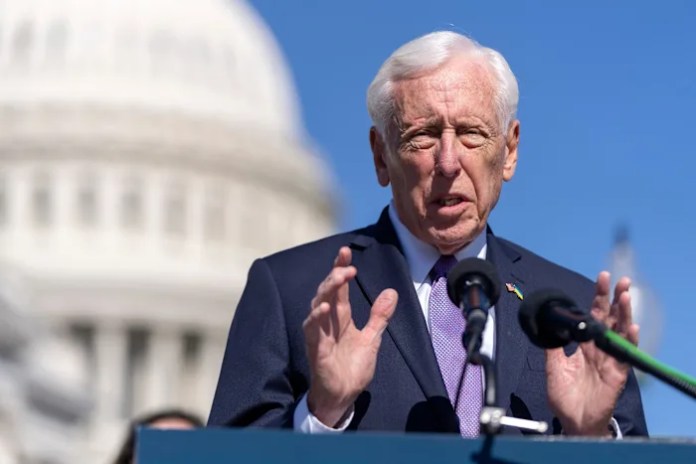
WASHINGTON – Rep. Steny Hoyer of Maryland, the longest-serving Democrat in Congress and once a rival to become House speaker, will announce Thursday he is set to retire at the end of his term.
Hoyer, who served for years in party leadership and helped steer Democrats through some of their most significant legislative victories, is set to deliver a House floor speech about his decision, according to a person familiar with the situation and granted anonymity to discuss it.
“Tune in,” Hoyer said on social media. He confirmed his retirement plans in an interview with The Washington Post.
At 86, Hoyer is the latest in a generation of senior-most leaders stepping aside, making way for a new era of lawmakers eager to take on governing. Retirements have been high in the political parties, Democrats and Republicans, ahead of the midterm elections in November that will determine control of Congress.
First arriving in the House in 1981 after a special election, Hoyer’s reach extended beyond his Chesapeake Bay-area district, and he quickly climbed the leadership ranks to become the No. 2 Democrat. He served as majority leader after Democrats swept to power after the 2006 election, and again in 2019 after they regained control during President Donald Trump’s first term.
Through those years Hoyer worked as a partner and sometimes rival to Speaker Emerita Nancy Pelosi, part of a trio of top Democrats alongside Rep. James Clyburn of South Carolina.
That was the era when Democrats, with President Barack Obama, ushered the Affordable Care Act and other signature legislation to law.
During the Trump era, as Democrats worked to win back House control, Hoyer campaigned to court blue-collar voters outside of party strongholds and positioned himself as a potential alternative to Pelosi. For years, Hoyer championed what he called his “Make it in America” agenda to boost industry, production and jobs.
But the leaders have often moved in tandem, and when Pelosi announced last fall she would end her own storied career after this term, Hoyer’s next step was widely watched.
Copyright 2026 The Associated Press. All rights reserved. This material may not be published, broadcast, rewritten or redistributed without permission.
Great Job Lisa Mascaro, Associated Press & the Team @ KSAT San Antonio for sharing this story.
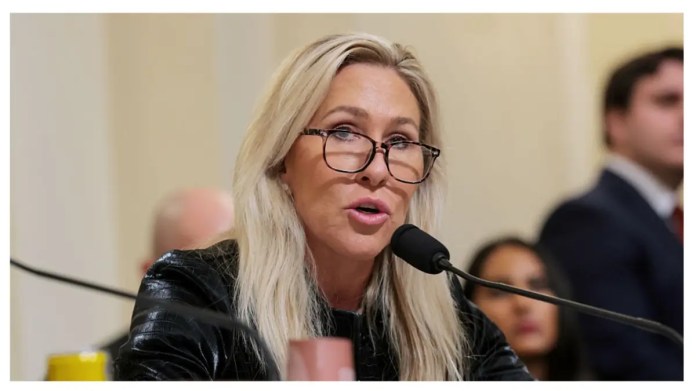
Marjorie Taylor Greene’s final days in Congress were always going to be loud — but few expected the exit to unravel the way it did. As she prepared to leave the House, a moment meant to pass quietly instead ignited outrage online, with MAGA allies debating whether President Donald Trump delivered one last slight on her way out while others were angered by the timing of Greene’s exit.
The Georgia politician officially resigned her 14th District seat Monday, Jan. 5 at 11:59 pm, announcing her resignation several months ago after a very public rift with her former ally, Trump.
Rep. Marjorie Taylor Greene (R-GA) speaks during a hearing with the House Committee on Homeland Security in the Cannon House Office Building on December 11, 2025 in Washington, DC. (Photo by Anna Moneymaker/Getty Images)
Greene got on the wrong side of Trump after signing a Congressional petition in support of releasing all the Epstein files, something the President was vehemently opposed to until the bitter end when he was essentially forced to sign the Epstein bill mandating the release of all the files into law after the legislation passed both the House and Senate, no doubt blaming Greene in part.
MAGA world seems glad to see her go. A photo circulating online and posted by close Trump confidant author and filmmaker Michael Caputo appears to show Greene leaving the House in a freight elevator.
Caputo captioned the photo, “Today, Marjorie Taylor Greene departed the House of Representatives forever. Appropriately, they made her take the freight elevator to the exit. Irrelevance awaits her at the door.”
The post was flooded with laughing memes against Greene. “Two faced back stabbing drama queen good riddance,” one person fumed.
But at least one MAGA supporter wasn’t buying the purported false information.
“Good riddance, but I don’t think this is true. They put padding up when they move furniture to avoid damaging elevators and she’s free to use any elevator she wants, including the ones for the public. They couldn’t ‘make her take’ any elevator, she likely wanted to avoid people,” X user Derek Hunter said in calling out Caputo.
But the viral photo was the least of MAGA’s worry, many were also upset that the 51-year-old Greene stayed on the job just long enough to collect a pension when she turns 62, but why they’re so angry is unclear because she’ll only receive $8,700 a year, according to news reports.
Good riddance, but I don’t think this is true. They put padding up when they move furniture to avoid damaging elevators and she’s free to use any elevator she wants, including the ones for the public. They couldn’t “make her take” any elevator, she likely wanted to avoid people. https://t.co/jBcuOYv3jr
Greene will also be eligible to buy medical insurance from the Federal Employees Health Benefits Program if she got her federal insurance as a congresswoman through the Affordable Care Act.
It didn’t matter to this Threads user that she’s getting such a small annual pension.
“SAD-5yrs worked lifetime pension by TAXPAYERS! we have to put in 35-50yrs, think about that GREENE.”
YouTube viewer Dorothy Lucer was also angry and glad to see Greene go. “Good riddance!!!!!!!! You got your money!!!!!
Another agreed, “Lets hope she goes away and never heard from agin.”
Others accused her of making millions through illicit means, “Good riddance! She made her millions from insider trading, like so many of them!”
Trump has spent months now calling her “a traitor,” refusing to endorse her for a Senate run this year in her home state, and threatening to “primary her.” Greene has said Trump’s brutal vitriol toward her caused an increase in death threats, not just against her, but her family members, too.
In fact, she mentioned the threats in a parting message to Republicans during a CNN interview Monday, Jan. 5.
She told host Kaitlan Collins that the GOP needs to work with Democrats to “put America first.” Greene also said she’s “tired of the toxic nature of politics” and that the “division is causing us more problems.”
“It isn’t fixing any of our problems. … I would encourage all lawmakers to look within themselves, examine their job title, which is representative, and work together to do good for the American people because of the American people that elects them, the American people that pay taxes, that pay for our government, and it’s the American people that they swear an oath to serve,” she pontificated.
Still not a fan of MTG. We all know who she is.
But it is INSANE to me that she, one of trump’s loudest supporters, told trump that people were threatening her son after trump publicly targeted her…
She told Collins, as she’s said before, she has no plans to run for any other office right now, even implying it’s dangerous for her.
“Politics has not been a safe place for me. Today, on my last day in office, we received another death threat on my life,” she continued. “It’s something that I brought up over and over again how many death threats that I’ve had, not only on myself, but also on my family, swatting, pipe bomb threats.”
Georgia Gov. Brian Kemp has set a March 10 date for a special election to fill Greene’s seat. The person elected will serve until November’s mid-term election, when voters will select a permanent replacement.
Great Job Shelby E. & the Team @ Atlanta Black Star Source link for sharing this story.