

Home News Page 116

Las enfermedades y muertes que previenen las vacunas que los CDC han dejado de recomendar – KFF Health News

Las enfermedades y muertes que previenen las vacunas que los CDC han dejado de recomendar – KFF Health News

El gobierno federal ha reducido drásticamente la cantidad de vacunas infantiles recomendadas, dejando fuera seis inmunizaciones de rutina que han protegido a millones de personas de enfermedades graves, discapacidades a largo plazo y muertes.

Solo tres de las seis vacunas que los Centros para el Control y la Prevención de Enfermedades (CDC, por sus siglas en inglés) dejarán de recomendar de manera rutinaria —contra la hepatitis A, hepatitis B y el rotavirus— han prevenido casi 2 millones de hospitalizaciones y más de 90.000 muertes en los últimos 30 años, según publicaciones de la misma entidad.

Las vacunas contra esas tres enfermedades, así como contra el virus respiratorio sincitial (VRS), la enfermedad meningocócica, la gripe y covid, ahora solo se recomiendan para niños con alto riesgo de enfermedad grave o luego de “tomar decisiones clínicas de manera compartida”, es decir, una consulta entre médicos y padres.

Los CDC mantienen sus recomendaciones para 11 vacunas infantiles: contra el sarampión, las paperas y la rubéola; la tos ferina, el tétanos y la difteria; la enfermedad bacteriana conocida como Hib; la neumonía; la polio; la varicela; y el virus del papiloma humano (VPH).

Según una hoja informativa del Departamento de Salud y Servicios Humanos (HHS, por sus siglas en inglés), los seguros médicos públicos y privados seguirán cubriendo las vacunas contra las enfermedades que los CDC ya no recomiendan de manera universal; los padres que quieran vacunar a sus hijos contra esas enfermedades no tendrán que pagar las dosis de su bolsillo.

Expertos en enfermedades infantiles se mostraron desconcertados ante el cambio en la guía. El HHS explicó que las modificaciones se hicieron tras “una revisión científica de la evidencia” y que están alineadas con programas de vacunación de otros países desarrollados.

El secretario del HHS, Robert F. Kennedy Jr., un activista antivacunas, señaló a Dinamarca como modelo. Sin embargo, los calendarios de vacunación de la mayoría de los países europeos son más parecidos al estándar estadounidense que acaba de modificarse.

Por ejemplo, Dinamarca, que no vacuna contra el rotavirus, registra cerca de 1.200 hospitalizaciones al año por esta infección  en bebés y niños pequeños. Esa tasa, en un país de 6 millones de habitantes, es similar a la que tenía Estados Unidos antes de introducir la vacuna.

“Ellos aceptan tener 1.200 o 1.300 niños hospitalizados, lo cual es solo la punta del iceberg en cuanto al sufrimiento infantil”, dijo Paul Offit, director del Centro de Educación sobre Vacunas del Hospital Infantil de Philadelphia y coinventor de una vacuna contra el rotavirus aprobada. “Nosotros no lo aceptamos. Deberían tratar de imitarnos a nosotros, no al revés”.

Funcionarios de salud pública señalaron que la nueva guía pone sobre los padres la responsabilidad de investigar y comprender cada vacuna infantil y por qué es importante.

El siguiente es un resumen de las enfermedades que previenen las vacunas que se han dejado de lado:

VRS. El virus respiratorio sincitial es la causa más común de hospitalización en bebés en Estados Unidos.

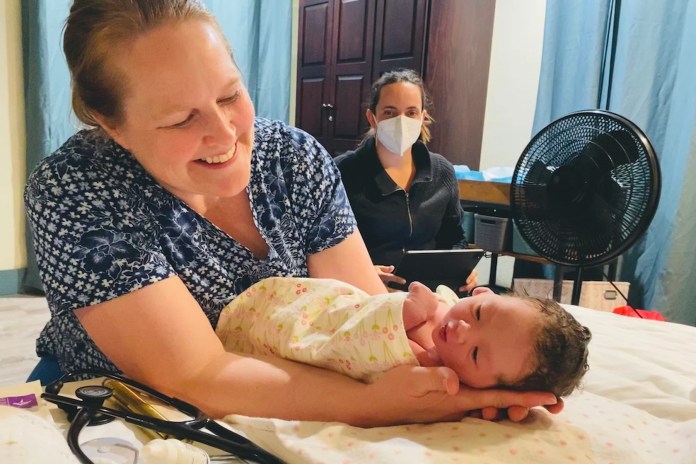
Este virus respiratorio suele circular en otoño e invierno y provoca síntomas parecidos a los de un resfriado, aunque puede ser mortal para los niños pequeños. Cada año causa decenas de miles de hospitalizaciones y cientos de muertes. Según la Fundación Nacional de Enfermedades Infecciosas (National Foundation for Infectious Diseases), aproximadamente el 80% de los niños menores de 2 años hospitalizados con el VRS no tienen factores de riesgo identificables. Las esperadas vacunas contra esta enfermedad se introdujeron en 2023.

Hepatitis A. La vacunación contra la hepatitis A, que se empezó a aplicar gradualmente a finales de los años 90 y se recomendó para todos los niños pequeños a partir de 2006, ha provocado una reducción de más del 90% de los casos desde 1996. Este virus transmitido por alimentos causa una enfermedad muy desagradable que aún afecta a adultos, especialmente personas sin hogar o que consumen drogas o alcohol. En 2023 se reportaron un total de 1.648 casos y 85 muertes.

Hepatitis B. Esta enfermedad provoca cáncer de hígado, cirrosis y otros padecimientos graves, y es particularmente peligrosa cuando la contraen bebés o niños pequeños. El virus de la hepatitis B se transmite por sangre y otros fluidos corporales, incluso en cantidades microscópicas, y puede sobrevivir en superficies durante una semana. Entre 1990 y 2019, la vacunación generó una reducción del 99% en los casos reportados de hepatitis B aguda en niños y adolescentes. El cáncer de hígado en menores también ha disminuido considerablemente gracias a la vacunación infantil universal. Sin embargo, el virus sigue presente, con entre 2.000 y 3.000 casos agudos reportados cada año entre adultos no vacunados. En 2023 se diagnosticaron más de 17.000 casos de hepatitis B crónica. Los CDC estiman que cerca de la mitad de las personas infectadas no saben que lo están.

Rotavirus. Antes de que comenzara la administración rutinaria de las actuales vacunas contra el rotavirus, en 2006, cada año se internaban a unos 70.000 niños pequeños, y morían alrededor de 50 a causa del virus. “Se conocía como el síndrome del vómito invernal”, explicó Sean O’Leary, pediatra de la Universidad de Colorado. “Era una enfermedad terrible, que casi ya no vemos”.

Sin embargo, el virus sigue siendo común en las superficies que tocan los bebés, y “si bajan las tasas de vacunación, habrá de nuevo niños hospitalizados”, advirtió Offit.

Vacunas meningocócicas. Estas vacunas han sido requeridas principalmente para adolescentes y estudiantes universitarios, quienes son especialmente vulnerables a enfermedades graves causadas por esta bacteria. En Estados Unidos se reportan entre 600 y 1.000 casos al año, pero más del 10% de los enfermos mueren, y 1 de cada 5 sobrevivientes queda con discapacidades permanentes.

Gripe y covid. Estos dos virus respiratorios han causado la muerte de cientos de niños en años recientes, aunque suelen ser más graves en adultos mayores. Actualmente hay un repunte de la gripe en el país, y durante la temporada pasada murieron 289 menores por esta causa.

¿Qué es la toma de decisiones clínicas compartida?

Con los nuevos cambios, la decisión de vacunar a los niños contra la gripe, covid, el rotavirus, la enfermedad meningocócica y las hepatitis A y B dependerá ahora de lo que las autoridades llaman “toma de decisiones clínicas compartida”, es decir, que las familias deberán consultar con un proveedor de salud para determinar si la vacuna es apropiada para sus hijos.

“Significa que el proveedor debe tener una conversación con el paciente para explicar los riesgos y beneficios y tomar una decisión personalizada”, dijo Lori Handy, especialista en enfermedades infecciosas pediátricas del Hospital Infantil de Philadelphia.

Antes, los CDC usaban ese término solo en circunstancias muy específicas, como al decidir si una persona en una relación monógama necesitaba la vacuna contra el VPH, que previene una infección de transmisión sexual y ciertos tipos de cáncer.

Según Handy, el nuevo enfoque de los CDC no se alinea con la evidencia científica, dado el beneficio protector comprobado que las vacunas ofrecen a la gran mayoría de la población.

En su informe justificando los cambios, los funcionarios del HHS Tracy Beth Høeg y Martin Kulldorff afirmaron que el sistema de vacunación de Estados Unidos requiere más investigación sobre seguridad y mayor elección por parte de los padres. Dijeron que la pérdida de confianza en la salud pública, causada en parte por un calendario de vacunación demasiado extenso, ha llevado a más familias a rechazar vacunas contra amenazas importantes como el sarampión.

Las vacunas en el calendario que fue modificado por los CDC ya contaban con amplia investigación sobre seguridad cuando fueron evaluadas y aprobadas por la Administración de Alimentos y Medicamentos (FDA, por sus siglas en inglés).

“Estas vacunas tienen un estándar de seguridad más alto que cualquier otra intervención médica que tenemos”, dijo Handy. “El valor de las recomendaciones rutinarias es que ayudan al público a entender que estas vacunas han sido examinadas por todos lados”.

Eric Ball, pediatra en el condado de Orange, California, apuntó que el cambio en la guía provocará más confusión entre los padres, quienes podrían pensar que es la seguridad de una vacuna lo que está en duda.

“Para la salud pública, es fundamental que las recomendaciones sobre vacunas sean muy claras y precisas”, dijo Ball. “Cualquier cosa que genere confusión solo llevará a que más niños se enfermen”.

Ball explicó que, en lugar de enfocarse en las necesidades médicas del niño, muchas veces tiene que usar el tiempo limitado de consulta para asegurar a los padres que las vacunas son seguras. El hecho de que una vacuna quede bajo “toma de decisiones clínicas compartida” no tiene nada que ver con preocupaciones de seguridad, pero muchos padres podrían interpretarlo así.

Los cambios del HHS no afectan las leyes estatales de vacunación y, por lo tanto, deberían permitir que los médicos responsables sigan recomendando las vacunas como hasta ahora, según Richard Hughes IV, abogado y profesor en la Universidad George Washington, quien lidera demandas contra Kennedy por los cambios en materia de vacunas.

“Uno puede esperar que cualquier pediatra siga la evidencia científica sólida y recomiende que sus pacientes se vacunen”, dijo. La ley protege a los proveedores que siguen las pautas profesionales de atención, agregó, y “el VRS, la enfermedad meningocócica y las hepatitis siguen siendo amenazas graves para la salud de los niños en este país”.

Great Job Arthur Allen and Jackie Fortiér & the Team @ Public Health Archives – KFF Health News Source link for sharing this story.

JPMorgan Chase becomes the new issuer of the Apple Card | TechCrunch

JPMorgan Chase becomes the new issuer of the Apple Card | TechCrunch

Apple announced Wednesday that JPMorgan Chase is the new issuer of the Apple Card, replacing Goldman Sachs. Apple said that the transition will likely take up to 24 months.

While Apple is changing its banking partner, the Apple Card will continue to use the Mastercard network for payments. For consumers, nothing is changing at the moment, including for those applying for new cards.

JPMorgan said that the deal would bring over $20 billion in card balances to Chase. The Wall Street Journal noted that Goldman Sachs is offloading this amount at a $1 billion discount. Goldman Sachs said that for the fourth quarter of 2025, it expects a $2.2 billion provision for credit losses related to the forward purchase commitment.

News that the Apple-Goldman partnership would end has been swirling around for a few years now. Last year, the Wall Street Journal reported that JPMorgan was in line to become Apple’s new partner.

Apple launched its credit card in 2019 in partnership with Goldman Sachs without late fees or penalty interest rates. The card offers up to 3% daily cashback on purchases from Apple and other select partners; 2% from using Apple Pay; and 1% from using the physical card.

Great Job Ivan Mehta & the Team @ TechCrunch Source link for sharing this story.

Rep. Steny Hoyer, the longest-serving House Democrat, to retire at the end of term

Rep. Steny Hoyer, the longest-serving House Democrat, to retire at the end of term

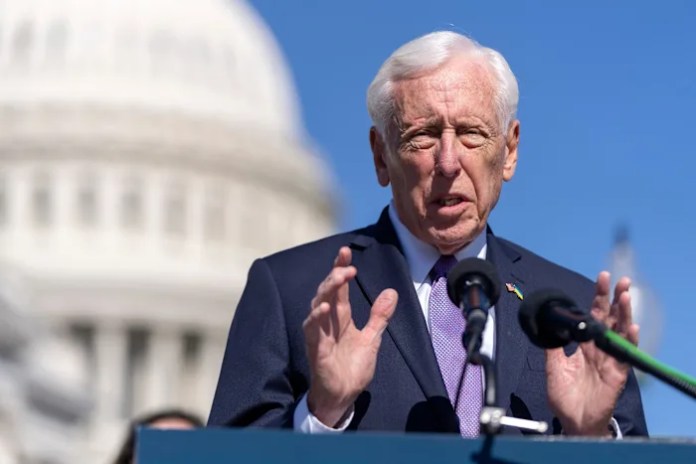
WASHINGTON – Rep. Steny Hoyer of Maryland, the longest-serving Democrat in Congress and once a rival to become House speaker, will announce Thursday he is set to retire at the end of his term.

Hoyer, who served for years in party leadership and helped steer Democrats through some of their most significant legislative victories, is set to deliver a House floor speech about his decision, according to a person familiar with the situation and granted anonymity to discuss it.

“Tune in,” Hoyer said on social media. He confirmed his retirement plans in an interview with The Washington Post.

At 86, Hoyer is the latest in a generation of senior-most leaders stepping aside, making way for a new era of lawmakers eager to take on governing. Retirements have been high in the political parties, Democrats and Republicans, ahead of the midterm elections in November that will determine control of Congress.

First arriving in the House in 1981 after a special election, Hoyer’s reach extended beyond his Chesapeake Bay-area district, and he quickly climbed the leadership ranks to become the No. 2 Democrat. He served as majority leader after Democrats swept to power after the 2006 election, and again in 2019 after they regained control during President Donald Trump’s first term.

Through those years Hoyer worked as a partner and sometimes rival to Speaker Emerita Nancy Pelosi, part of a trio of top Democrats alongside Rep. James Clyburn of South Carolina.

That was the era when Democrats, with President Barack Obama, ushered the Affordable Care Act and other signature legislation to law.

During the Trump era, as Democrats worked to win back House control, Hoyer campaigned to court blue-collar voters outside of party strongholds and positioned himself as a potential alternative to Pelosi. For years, Hoyer championed what he called his “Make it in America” agenda to boost industry, production and jobs.

But the leaders have often moved in tandem, and when Pelosi announced last fall she would end her own storied career after this term, Hoyer’s next step was widely watched.

Copyright 2026 The Associated Press. All rights reserved. This material may not be published, broadcast, rewritten or redistributed without permission.

Great Job Lisa Mascaro, Associated Press & the Team @ KSAT San Antonio for sharing this story.

‘Get the Hell Out’: MAGA Says Trump Found One Last Way to Embarrass MTG on Her Way Out as a Viral Photo Surfaces — But What Came Next Angered Them Even More

‘Get the Hell Out’: MAGA Says Trump Found One Last Way to Embarrass MTG on Her Way Out as a Viral Photo Surfaces — But What Came Next Angered Them Even More

Marjorie Taylor Greene’s final days in Congress were always going to be loud — but few expected the exit to unravel the way it did. As she prepared to leave the House, a moment meant to pass quietly instead ignited outrage online, with MAGA allies debating whether President Donald Trump delivered one last slight on her way out while others were angered by the timing of Greene’s exit.

The Georgia politician officially resigned her 14th District seat Monday, Jan. 5 at 11:59 pm, announcing her resignation several months ago after a very public rift with her former ally, Trump.

‘Get the Hell Out’: MAGA Says Trump Found One Last Way to Embarrass MTG on Her Way Out as a Viral Photo Surfaces — But What Came Next Angered Them Even More
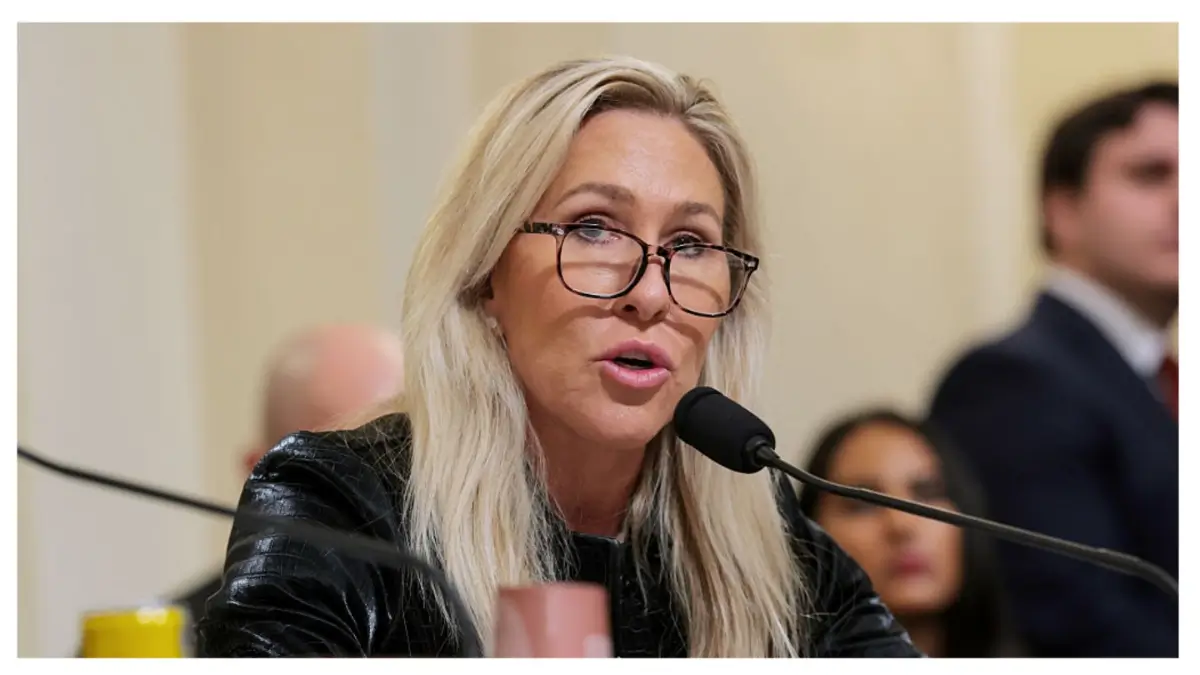
Rep. Marjorie Taylor Greene (R-GA) speaks during a hearing with the House Committee on Homeland Security in the Cannon House Office Building on December 11, 2025 in Washington, DC. (Photo by Anna Moneymaker/Getty Images)

Greene got on the wrong side of Trump after signing a Congressional petition in support of releasing all the Epstein files, something the President was vehemently opposed to until the bitter end when he was essentially forced to sign the Epstein bill mandating the release of all the files into law after the legislation passed both the House and Senate, no doubt blaming Greene in part.

‘Say What!!!’: Karoline Leavitt Just Fumbled the Script While Defending Trump, Lets Something Slip She Can’t Take Back — and Somehow Makes It Worse Seconds Later

MAGA world seems glad to see her go. A photo circulating online and posted by close Trump confidant author and filmmaker Michael Caputo appears to show Greene leaving the House in a freight elevator.

Caputo captioned the photo, “Today, Marjorie Taylor Greene departed the House of Representatives forever. Appropriately, they made her take the freight elevator to the exit. Irrelevance awaits her at the door.”

The post was flooded with laughing memes against Greene. “Two faced back stabbing drama queen good riddance,” one person fumed.

But at least one MAGA supporter wasn’t buying the purported false information.

“Good riddance, but I don’t think this is true. They put padding up when they move furniture to avoid damaging elevators and she’s free to use any elevator she wants, including the ones for the public. They couldn’t ‘make her take’ any elevator, she likely wanted to avoid people,” X user Derek Hunter said in calling out Caputo.

But the viral photo was the least of MAGA’s worry, many were also upset that the 51-year-old Greene stayed on the job just long enough to collect a pension when she turns 62, but why they’re so angry is unclear because she’ll only receive $8,700 a year, according to news reports.

Greene will also be eligible to buy medical insurance from the Federal Employees Health Benefits Program if she got her federal insurance as a congresswoman through the Affordable Care Act.

It didn’t matter to this Threads user that she’s getting such a small annual pension.

“SAD-5yrs worked lifetime pension by TAXPAYERS! we have to put in 35-50yrs, think about that GREENE.”

YouTube viewer Dorothy Lucer was also angry and glad to see Greene go. “Good riddance!!!!!!!! You got your money!!!!!

Another agreed, “Lets hope she goes away and never heard from agin.”

Others accused her of making millions through illicit means, “Good riddance! She made her millions from insider trading, like so many of them!”

Trump has spent months now calling her “a traitor,” refusing to endorse her for a Senate run this year in her home state, and threatening to “primary her.” Greene has said Trump’s brutal vitriol toward her caused an increase in death threats, not just against her, but her family members, too.

In fact, she mentioned the threats in a parting message to Republicans during a CNN interview Monday, Jan. 5.

She told host Kaitlan Collins that the GOP needs to work with Democrats to “put America first.” Greene also said she’s “tired of the toxic nature of politics” and that the “division is causing us more problems.”

“It isn’t fixing any of our problems. … I would encourage all lawmakers to look within themselves, examine their job title, which is representative, and work together to do good for the American people because of the American people that elects them, the American people that pay taxes, that pay for our government, and it’s the American people that they swear an oath to serve,” she pontificated.

She told Collins, as she’s said before, she has no plans to run for any other office right now, even implying it’s dangerous for her.

“Politics has not been a safe place for me. Today, on my last day in office, we received another death threat on my life,” she continued. “It’s something that I brought up over and over again how many death threats that I’ve had, not only on myself, but also on my family, swatting, pipe bomb threats.”

Georgia Gov. Brian Kemp has set a March 10 date for a special election to fill Greene’s seat. The person elected will serve until November’s mid-term election, when voters will select a permanent replacement.

Great Job Shelby E. & the Team @ Atlanta Black Star Source link for sharing this story.

Local fears rise after billion-dollar data center moves forward

Local fears rise after billion-dollar data center moves forward

Company Black Mountain is seeking another rezoning request for its campus which is causing concern in Forest Hill.

“It’s been stressful for us. It’s been really stressful for us,” said Helen Collins Epps.

She lives off LonStephenson Road, the only thing separating her Forest Hill home from Fort Worth across the street, where a new, $10 billion data center will be taking shape.

Collins Epps said she didn’t find out about the project until she went to a community meeting held by the developer, Black Mountain, just before Christmas.

“We all flipped out. All of us flipped out. We didn’t know what to do,” Collins Epps said.

She said she and other neighbors have concerns.

“Electricity’s going to be an issue. Water’s going to be an issue,” she said.

Forest Hill’s mayor and city manager have concerns, too.

“The uses of the electric grid. We’ve had issues with losing power during cold storms, or with—when the weather was really, extremely hot. And we were under the impression that that was fixed for what we have now,” said Mayor Stephanie Boardingham.

She also mentioned flooding and noise concerns, as well as the condition of LonStephenson Road, which is already rundown and riddled with traffic.

“Are they going to be good partners with us on Lon Stephenson for the safety of the community? because there will be increased traffic,” Boardingham said.

These are questions Boardingham said she thought they had answers to, after Black Mountain won approval from the Fort Worth City Council to rezone most of its 450-acre campus.

Now, the developer is seeking to change nearly 40 more acres from agricultural to light industrial use. That particular parcel of land butts up right to Forest Hill.

This map from Black Mountain’s rezoning request application shows their data center campus.

“What’s really going to go in there on that additional land? Because this data center’s going to be huge, I get it, but why is it such zoning to hold so many different things?” Boardingham questioned.

According to the zoning application, the company lists the land primarily for a data center, as well as “supporting uses,” including “health care facilities, recreational, religious uses, utilities, grocery store, office or retail sales.”

In an email to NBC 5, founder and CEO of Black Mountain, Rhett Bennett, said almost all of their campus has passed the same rezoning request, so “the land will all have common zoning.”

When asked how much more the company is seeking to rezone, Bennet replied, “Not much more. Why is important – the bigger the campus is, the more our buildings can be offset into the interior and away from any neighbors. So, most new data center campuses that are being built these days are several hundred acres in size.”

Bennett did not address electricity use but said traffic is an existing problem in the area and “our project will bring dollars for road upgrades to existing problems.”

“The Black Mountain project is one of the largest economic developments to ever come to Fort Worth. We are proud to be bringing this to our community where we live.  This is the type of digital infrastructure project that will keep our community from being left behind as the world continues to progress into the digital era,” Bennett added.

But Boardingham and some of her constituents are asking: What about Forest Hill?

“You know, we have this data center that’s running all this electricity and we don’t know what other buildings we’re putting there–there’s no Fort Worth fire station there,” she said. “Is it going to be put on Everman and Forest Hill? Or do they have that in the plan to maybe put a substation in that area–I don’t know.”

It’s also why she said Forest Hill leaders need a seat at Fort Worth’s table during this process.

“If they mitigate these problems for Fort Worth, then it actually benefits Everman and Forest Hill,” Boardingham said.

She also said a tour of an existing data center might help answer some questions for her and her citizens.

“So that we can be in the area and hear and see. Maybe seeing exactly what goes on in the process of one that’s already established would be great to help satisfy the needs of our community,” Boardingham said.

For Collins Epps, she’s almost past the point of wanting answers.

“I think that they have been as open as large corporations are,” she said.

She wants a feasible way out of her neighborhood–once an idyllic retirement home.

“I’ve been frustrated. I’ve been angry. I’ve been disappointed, and I’ve been confused. Because if I put this house up for sale, if any of us do, I have to tell them about the data center,” she said.

And, the former realtor said, that means her home has already lost value.

“It’s just been a hot mess, you know, what do we do? We’re senior citizens, we can’t start all over like these young people can,” she said. “It’s been stressful for us. It’s been really stressful for us.”

“You read these stories, you read about them, but you never think they’re going to come home,” Collins Epps added.

Black Mountain’s latest rezoning request is set to go before the zoning commission on January 14, then to
City Council on February 10, according to the application.

Boardingham said she and her city manager plan to be there.

Great Job Tahera Rahman & the Team @ NBC 5 Dallas-Fort Worth for sharing this story.

More Americans will die than be born in 2030, CBO predicts—leaving immigrants as the only source of population growth | Fortune

More Americans will die than be born in 2030, CBO predicts—leaving immigrants as the only source of population growth | Fortune

For the first time in modern history, the United States is on the brink of losing its most basic engine of growth: more births than deaths.

According to the Congressional Budget Office’s (CBO) Demographic Outlook, released Tuesday, the year 2030 marks a tipping point that will fundamentally reshape the  economy and social fabric. That’s the year the “natural” U.S. population—the balance of births over deaths—is projected to vanish. 

“Net immigration (the number of people who migrate to the United States minus the number who leave) is projected to become an increasingly important source of population growth in the coming years, as declining fertility rates cause the annual number of deaths to exceed the annual number of births starting in 2030,” the CBO writes. “Without immigration, the population would begin to shrink in 2030.”

From that point on, every additional person added to the U.S. population will come from immigration, a demographic milestone once associated with aging countries like Italy and Japan

The shift is striking not only for what it says about America’s rapidly aging society, but also for how soon it is expected to arrive. Just a year ago, many demographic forecasts—including the CBO’s own forecast—placed this crossover well into the late 2030s or even the 2040s. The updated outlook from CBO moves the timeline forward by nearly a decade.

This rapid acceleration, the CBO said, is driven by the “double squeeze” of declining fertility and an aging populace, combined with recent policy shifts on immigration. CBO analysts have drastically lowered their expectations for the total fertiility rate, now projecting it to settle at just 1.53 births per woman — well below the 2.1 “replacement rate” needed for a stable population. At the same time, the massive “Baby Boomer” generation is reaching ages with higher mortality rates, causing annual deaths to climb.

The timeline further compressed following the passage of the 2025 Reconciliation Act, which increased funding for more ICE agents and immigration judges to process cases faster, resulting in approximately 50,000 immigrants in detention daily through 2029, CBO said. The office calculated that these provisions will result in roughly 320,000 fewer people in the U.S. population by 2035 than previously estimated.

The new projections show that U.S. population growth will steadily decelerate over the next three decades until it finally hits zero in 2056. For most of the 20th century, the population grew at close to 1% a year: a flat population would represent a historic break from that norm. 

The economic consequences of this shift are hard to overstate. While the number of retirees swells, the pool of workers funding the social safety net — and caring for the aging population —  is narrowing. Americans aged 65 and older are the fastest-growing segment of the population, pushing the “old-age dependency ratio” sharply higher. In 1960, there were about five workers for every retiree. Today, that ratio is closer to three-to-one. By the mid-2050s, the CBO projects it will fall to roughly two workers per retiree. The contraction will have “significant implications” on the federal budget, including outsized effects on Social Security and Medicare, placing pressure on those trust funds which rely on a robust base of payroll taxes that a stagnant population cannot easily provide.

Further, because national GDP is essentially the product of the number of workers multiplied by their individual productivity, the loss of labor force growth means the American economy will have to rely almost entirely on technological breakthroughs and AI to drive future gains. This may be happening ahead of schedule, as continued weak employment growth in December showed a “jobless expansion,” in the words of KPMG chief economist Diane Swonk, as Fortune previously reported.

Great Job Eva Roytburg & the Team @ Fortune | FORTUNE Source link for sharing this story.

No. 4 UConn rallies past Providence late for 103-98 victory in overtime

No. 4 UConn rallies past Providence late for 103-98 victory in overtime

PROVIDENCE, R.I. – Braylon Mullins scored eight of his career-high 24 points in overtime and fourth-ranked UConn rallied past Providence 103-98 on Wednesday night for its 11th consecutive victory.

Silas Demary Jr. had 23 points, 15 assists and five steals for the Huskies (15-1, 5-0 Big East), who trailed by 11 with under three minutes remaining in regulation. But they went on a 9-0 run and then tied it at 89 on a putback by Tarris Reed Jr. with 13 seconds left.

Alex Karaban also scored 23 for UConn, which shot 18 of 32 from 3-point range (56%).

Mullins, a freshman guard, scored the first five Huskies points in overtime before his sixth 3-pointer made it a two-possession game with less than two minutes to play. Reed, who had 20 points and eight rebounds, and Demary added baskets in the final minute to help Connecticut hang on despite getting outscored 41-3 in bench points.

Reserve guard Ryan Mela paced the Friars (8-7, 1-3) with 19 points and Jamier Jones added 18. Providence led 47-37 at halftime and finished the game shooting 50% from the field — including 14 for 24 (58%) on 3s.

UConn opened 8 of 13 from beyond the arc but went into halftime trailing by double digits for the first time this season. Providence took control behind an 11-0 run and kept attacking, as a 3 from Corey Floyd Jr. (12 points) with 54 seconds left in the first period gave the Friars a 47-34 advantage.

Before play resumed coming out of halftime, Providence shot free throws after Huskies coach Dan Hurley was whistled for a technical foul.

UConn never led in the second half.

Up next

UConn hosts DePaul on Saturday.

Providence visits Xavier on Saturday.

___

Get poll alerts and updates on the AP Top 25 throughout the season. Sign up here and here (AP News mobile app). AP college basketball: https://apnews.com/hub/ap-top-25-college-basketball-poll and https://apnews.com/hub/college-basketball

Copyright 2026 The Associated Press. All rights reserved. This material may not be published, broadcast, rewritten or redistributed without permission.

Great Job Brendan Mcgair, Associated Press & the Team @ KSAT San Antonio Source link for sharing this story.

NATO Leaders Push Back Against Trump’s Greenland Threats

NATO Leaders Push Back Against Trump’s Greenland Threats

Welcome back to World Brief, where we’re looking at escalating tensions over U.S. President Donald Trump’s threats against Greenland, Venezuela’s crackdown on political dissent, and sweeping protests in Iran.


The Fight Over Greenland

The leaders of seven NATO members issued a joint statement on Tuesday pushing back against U.S. ambitions to annex Greenland, which is a semi-autonomous region of Denmark.

“The Kingdom of Denmark — including Greenland — is part of NATO. Security in the Arctic must therefore be achieved collectively, in conjunction with NATO allies including the United States, by upholding the principles of the UN Charter, including sovereignty, territorial integrity and the inviolability of borders,” wrote the leaders of Denmark, France, Germany, Italy, Poland, Spain, and the United Kingdom.

“Greenland belongs to its people,” they added. “It is for Denmark and Greenland, and them only, to decide on matters concerning Denmark and Greenland.”

The rebuke echoes some of the strongest statements yet made by Danish Prime Minister Mette Frederiksen, who told local broadcasters on Monday that NATO must take Trump’s annexation threats seriously or else risk the alliance’s very survival.

“If the United States were to choose to attack another NATO country, then everything would come to an end,” Frederiksen said. “The international community as we know it, democratic rules of the game, NATO, the world’s strongest defensive alliance—all of that would collapse if one NATO country chose to attack another.”

Trump has long expressed interest in acquiring Greenland. “We need Greenland from the standpoint of national security,” Trump told reporters aboard Air Force One on Sunday. The island is known for its vast critical mineral deposits and its strategic location in the Arctic.

Throughout 2025, the White House exerted a pressure campaign on both Greenland and Denmark to pursue its goals. In March, a high-level U.S. delegation traveled to the island to showcase Trump’s eagerness to acquire the territory. In August, Danish media reported that individuals with ties to Washington appeared to be attempting to “infiltrate Greenlandic society” to try to weaken its relationship with Denmark. And last month, Trump appointed Louisiana Gov. Jeff Landry, a MAGA loyalist, to be a special envoy to Greenland.

Under a 1951 agreement between the United States and Denmark, Washington already has expansive access to the territory, including the presence of a U.S. military base on the island.

Still, though, the Trump administration has refused to rule out using military force or economic coercion to achieve its aims. And with the United States deposing Venezuelan President Nicolás Maduro on Saturday and threatening intervention in several other countries, many NATO members are concerned that Trump is pushing a new world order that would allow the United States to seize foreign territory and resources—while only being beholden to the whims of its own national interests.

“We live in a world … that is governed by strength, that is governed by force, that is governed by power,” U.S. deputy chief of staff Stephen Miller told CNN on Monday. “Nobody’s going to fight the United States militarily over the future of Greenland.”

That appears to directly contradict Tuesday’s joint statement, in which NATO members demanded that Washington uphold the principles of the United Nations Charter. “These are universal principles, and we will not stop defending them,” the leaders wrote.


Today’s Most Read


What We’re Following

Crushing dissent. Tensions appear to be escalating in Venezuela following the U.S. capture of Maduro over the weekend. Under interim leader Delcy Rodríguez, Maduro’s No. 2, government authorities published a decree expanding the presidency’s powers and ordering security forces to detain “any person involved in the promotion or support” of the U.S. operation.

Across the country, Rodríguez has deployed police officers, military troops, and pro-Maduro armed groups known as “colectivos” to execute the government crackdown, including with armed checkpoints and forced searches. Already, at least 14 journalists working inside or near the country’s National Assembly in Caracas have been temporarily detained—eliciting condemnation from rights activists and media professionals.

“Delcy Rodriguez … is one of the main architects of torture, persecution, corruption, narcotrafficking,” Venezuelan opposition figure María Corina Machado said in an interview with Fox News on Monday, calling the crackdown “really alarming.” Machado has vowed to return to Venezuela as soon as possible to help establish free and fair elections.

Machado went into hiding—and eventually, self-imposed exile—after being barred from running in the 2024 presidential election; independent vote monitors argue that her ally Edmundo González rightfully won that contest.

Deadly protests in Tehran. Iranian protesters clashed with security forces on Tuesday over the country’s ailing economy. Demonstrations first erupted on Dec. 28, 2025, at Tehran’s Grand Bazaar after inflation rates soared and the country’s currency plummeted; on Tuesday, the rial hit a record low of 1.46 million to the U.S. dollar. In an effort to appease Iranians, Tehran announced plans on Monday to give most citizens a monthly stipend equivalent to roughly $7.

At least 36 people have been killed since the demonstrations began, and more than 1,200 others have been detained. Iranian President Masoud Pezeshkian ordered the government on Tuesday to investigate one protest incident but has otherwise appeared to imply that the situation was progressing out of his control. “We should not expect the government to handle all of this alone,” Pezeshkian said. “The government simply does not have that capacity.”

On Friday, Trump threatened U.S. intervention in Iran if government authorities used force against the demonstrators. “If Iran shots and violently kills peaceful protesters, which is their custom, the United States of America will come to their rescue,” the U.S. president wrote on Truth Social. Iranian officials have denounced any U.S. involvement.

Seeking security guarantees. Ukraine’s Western allies convened in Paris on Tuesday to propose binding security guarantees for Kyiv. According to a statement prepared ahead of the session, “these commitments may include the use of military capabilities, intelligence and logistical support, diplomatic initiatives, adoption of additional sanctions.”

The draft text exhibits a shift in the focus of the coalition of the willing, a group of more than 30 nations committed to Ukraine’s security. Whereas past meetings have prioritized military aid pledges, many European leaders are now arguing that greater importance should be placed on security guarantees, as these will be necessary to prevent Russia from attacking Ukraine in the future or expanding its aggression farther into the continent.

France has tried to paint the presence of U.S. special envoy Steve Witkoff and Trump’s son-in-law Jared Kushner at Tuesday’s session as a sign of U.S. support for the coalition’s plans. However, the White House’s often temperamental attitude toward Ukraine suggests that it may take more for the United States to fully sign off.


Odds and Ends

New year, new prices. Beginning Jan. 1, Chinese authorities imposed a value-added tax to contraceptive drugs and devices, including condoms, in an effort to reverse low birthrates that are threatening to slow the country’s already sluggish economy. The 13 percent levy is the first of its kind in more than 30 years. And it adds to a series of other government measures aimed at countering population decline caused by Beijing’s decades-long one-child policy. That’s one way of doing it, pun intended.

Great Job Alexandra Sharp & the Team @ World Brief – Foreign Policy Source link for sharing this story.

Freestanding birth centers are closing as maternity care gaps grow

Freestanding birth centers are closing as maternity care gaps grow

Dr. Heather Skanes opened Alabama’s first freestanding birth center in 2022 in her hometown of Birmingham. Skanes, an OBGYN, wanted to improve access to maternal health care in a state that’s long had one of the nation’s highest rates of maternal and infant mortality.

Those rates are especially high among Black women and infants. Skanes’ Oasis Family Birthing Center opened in a majority-Black neighborhood, offering midwifery services as well as medical care.

But about six months after the center’s first delivery — a girl who was Alabama’s first baby born in a freestanding birth center — the state health department ordered Skanes to shut it down. A department representative informed her that by holding deliveries at the birth center, she was operating an “unlicensed hospital,” she said.

Hospital labor and delivery units are shuttering across the nation — including more than two dozen in 2025 alone. Freestanding birth centers like Skanes’ could help fill the gaps, but they too are struggling to stay open.

They face some of the same financial pressures that bedevil hospitals’ labor and delivery units, including payments from insurers that don’t cover the full cost of providing maternity care.

Birth center owners also must contend with arcane state rules and antipathy from politically powerful hospitals that view them as competition, especially in rural areas with few births.

Nationwide, the number of freestanding birth centers doubled between 2012 and 2022, but more recently the pressures have taken a toll: About two dozen centers have closed since 2023, bringing the total number down to about 395, according to the most recent data from the American Association of Birth Centers.

In November, Pennsylvania Lifecycle Wellness and Birth Center announced it would shut down birth center services, citing pressure from regulatory challenges and sharp surges in malpractice premiums. It had served Philadelphia for 47 years. And New Mexico’s longest-operating freestanding birth center stopped delivering babies in December.

“When a new business opens, within the first three to five years you expect a certain number will close,” said Kate Bauer, executive director of the American Association of Birth Centers. “But we’ve had several long-standing birth centers close [in 2025] and that hits particularly hard.”

In California, which has some of the strictest birth center licensing rules in the country, concern over the closure of at least 19 birth centers between 2020 and 2024 prompted the state legislature to pass a law in October to streamline birth center licensure.

An appealing alternative

Freestanding birth centers are not attached to hospitals and aim to provide a more homelike, less traditional medical setting. They employ midwives and focus on low-risk pregnancies and births. Some also have an OBGYN or family medicine doctor on staff, and they often have partnerships with nearby hospitals and doctors if more specialized care is required.

Some Black and Indigenous midwives and doulas say birth centers can be helpful alternatives to their community members, many of whom have had experiences in more medicalized settings that left them feeling marginalized, dismissed or unsafe.

Midwife Jamarah Amani, executive director of Southern Birth Justice Network, runs a mobile midwifery clinic serving majority-Black and Latino neighborhoods in Miami-Dade County, Florida. The nonprofit, which aims to make midwife and doula care more accessible, recently bought a building for a freestanding birth center it aims to open in 2027.

“[Midwifery] presents like a luxury concierge-type of service, and our goal is to really change that and to bring it back to the community in a very grassroots way,” Amani said. She added that expanding access to prenatal care could help address inequities in maternal health, as maternal death rates among Black women are three times higher than those among White women.

Freestanding birth centers also can be a solution for communities without a hospital nearby.

The closest hospital to the Colville Indian Reservation, located in northern Washington state, is half an hour away, said Faith Zacherle-Tonasket, founder of the nonprofit Indigenous Birth Justice.

So far, the group has trained nearly a dozen tribal doulas and midwives to serve the area. In the next few years, it plans to open a freestanding birth center. Zacherle-Tonasket said Indigenous-run birth centers are crucial alternatives for tribal women, who also have some of the highest maternal mortality rates in the nation and often face prejudice in clinical settings.

“They don’t feel safe. So a lot of them just don’t get prenatal care,” said Zacherle-Tonasket. “Bringing traditional midwives that are from our own communities, that were born and raised in our communities, that know the families — we know that those babies will be birthed with love.”

Regulatory hurdles

When the Georgia legislature relaxed state health care regulations in 2024, it felt like a long-awaited win for Katie Chubb. A registered nurse and mother of three who’s worked in health and nonprofits, Chubb has spent years trying to open a birth center in Augusta.

The state denied her application to open the center in 2021. Georgia, like many states, requires health care providers to get state approval, called a certificate of need, before they can build a new facility or expand services. Rival providers, like other hospitals, can challenge an application, effectively vetoing their local competition.

That happened in Chubb’s case: Two local hospitals filed letters of opposition against her and refused to say they’d accept emergency transfers from her birth center, another requirement for opening.

Georgia currently has three freestanding birth centers, a fraction of the more than two dozen that operate in neighboring Florida.

“We’re seeing women giving birth in hospital hallways or at home unassisted, because there’s no in-between option like a birth center,” Chubb said. In October, Georgia lost another labor and delivery unit at a rural hospital two hours north of Augusta.

“Women are just left to figure things out.”

In Kentucky, the Republican-controlled legislature passed a bill in March that aimed to clear the way for freestanding birth centers by exempting them from the certificate of need process.

But Republican lawmakers attached a last-minute anti-abortion amendment to the bill, prompting Democratic Gov. Andy Beshear to veto it. The legislature eventually overrode his veto. Midwifery advocates hope the new law will help make it easier to open a birth center in the state.

Georgia legislators similarly revised Georgia’s certificate of need rules in 2024, exempting freestanding birth centers. Chubb, who championed the new law, hoped it would clear the path for herself and others.

But they hit another roadblock. The state still requires birth centers to secure a written agreement with a local hospital to accept transfers of clients in emergencies. Chubb and at least one other prospective birth center owner have been unable to get their local hospitals to sign such transfer agreements.

“We’re still fighting,” Chubb said. “Behind closed doors we’re still working very hard on getting legislation and regulations changed to make opening birth centers more equitable.”

Some hospitals view birth centers as a threat to the viability of their labor and delivery units, siphoning off patients and revenue from a service that’s already unprofitable for most hospitals.

Daniel Grigg, CEO of Wallowa Memorial Hospital, a 25-bed critical access hospital in northeast Oregon, said there aren’t enough births in the area for both hospitals and birth centers.

“When you’ve got a small-volume community like we have, every birth helps the providers keep their skills up and their competency,” he said. “When you’ve got a midwife taking, say, 10 patients out of that pool,” it can have an impact on physicians and hospitals.

Alabama lawsuit

After the Alabama Department of Public Health shut down Skanes’ birth center in 2023, she joined with two other women who had also been attempting to open birth centers in Alabama: Dr. Yashica Robinson, an OBGYN in North Alabama, and Stephanie Mitchell, a licensed midwife in Alabama’s rural and economically disadvantaged Black Belt region. Together they sued the Alabama Department of Public Health over what they called a de facto ban on birth centers.

The state insisted its tighter regulations would ensure that birth center facilities are safe. The birth center owners said the state’s rules were overly burdensome and clinically unnecessary for the low-risk, nonsurgical births that are attended by midwives. And, they said, the rules prevented more families from accessing care where it’s desperately needed. The state has lost at least three hospital labor and delivery units since 2020.

“Entire swaths of the state are maternity care deserts without access to essential health care,” said Whitney White, a staff attorney with the American Civil Liberties Union, which is representing the birth center owners and their co-plaintiff, the Alabama affiliate of the American College of Nurse-Midwives.

“Hospital labor and delivery units are closing, and pregnant folks are reporting they’re really struggling to access the care they need, struggling to get appointments, struggling to find a provider,” White said.

Last May, an Alabama trial court permanently blocked the state from regulating freestanding birth centers as hospitals. Birth center staff are still overseen by state boards of midwifery and nursing.

All three Alabama centers are now open. But their licensed midwives are delivering babies under a cloud of uncertainty about the future.

The state appealed the ruling in November. The case is ongoing.

Struggles and solutions

Bauer, of the American Association of Birth Centers, said many centers face the same financial barriers. Uncomplicated births at freestanding birth centers cost less than they do at hospitals, but research has shown that insurers, including Medicaid, reimburse centers at lower rates. Some state Medicaid programs don’t cover some of the nonclinical services, such as lactation consultants and doulas, that birth centers may provide. And malpractice premiums are rising.

“We’re volunteering our time, essentially, to keep the birth center open as a service to the community,” said Sarah Simmons, co-owner of Maple Street Birth Center in rural Okanogan County, Washington. The center can’t afford to hire a front-desk staffer or another midwife, Simmons said. She added that on average, the center makes less than a third of what the local hospital makes for providing the same obstetric service.

But there may be solutions to some of these financial problems. For example, the Center for Healthcare Quality and Payment Reform, a national health care policy center, has recommended that health insurance plans, both Medicaid and commercial, pay hospitals and birth centers monthly or quarterly “standby capacity payments” per woman of childbearing age covered by that health plan in the facility’s service area. It also recommends that plans pay a separate delivery fee for each birth.

In 2024, Democratic U.S. senators proposed a bill to allow for a similar payment model.

Standby payments could help freestanding birth centers, especially those that fill gaps in maternity care deserts — but not unless centers receive payments that are comparable to those that hospitals get, said Simmons, whose center serves four sparsely populated counties along with the Colville tribal communities.

“This would be most beneficial to freestanding birth centers if pay parity laws were enforced, so rural freestanding birth centers were paid the same rates for the same services as rural hospitals, ” she said.

State grants also can help, but birth centers say a one-time infusion won’t be enough. In 2024, Washington opened grant applications for distressed hospital labor and delivery units and freestanding birth centers.

Ashley Jones, of True North Birth Center and president of the Washington chapter of the American Association of Birth Centers, said the grant has helped keep their doors open.

Meanwhile, Chubb, the Georgia nurse, recently had to take another job to support her family while her birth center remains in legal limbo.

“I’m just waiting until the government figures out what they’re doing.”

Stateline reporter Anna Claire Vollers can be reached at [email protected]. Stateline reporter Nada Hassanein can be reached at [email protected].

Great Job Ajohnston & the Team @ The 19th Source link for sharing this story.

Virginia Regulators Approve New Dominion Rates, Assign More Costs to Data Centers – Inside Climate News

Virginia Regulators Approve New Dominion Rates, Assign More Costs to Data Centers – Inside Climate News

RICHMOND, Va.—The State Corporation Commission in November approved a new Dominion Energy rate increase for 2026 that will add $16 a month to the typical residential bill and assign more costs to data center operators to cover necessary grid upgrades the following year. 

After months of legal filings and a hearing that lasted nearly two weeks, instead of the typical few days, the SCC took what lawmakers from both parties and consumer advocates considered a good first step toward deciding what is a fair way to pay grid upgrades needed to accommodate the giant server farms that power Silicon Valley’s race to develop energy-intensive artificial intelligence systems. 

The $16 monthly would make the total average residential electric about $165 a month for the next two years. The increase includes a .1 percent increase in the utility’s allowed profit margin to 9.8 percent, which is less than the 10.4 percent Dominion requested. The total amount Dominion is allowed to recover from ratepayers through the profit margin and bill increases is $775.6 million, about $500 million less than Dominion’s about $1.2 billion request. 

“There’s broad, bipartisan recognition that the protections approved by the SCC are a win for consumers. I’ve seen nothing but positive reactions from environmental and consumer advocacy groups,” said Aaron Ruby, a Dominion spokesperson. “These protections will ensure that data centers continue paying their fair share of power costs, and they will prevent data center costs from being passed onto residential customers.”

Peter Anderson, director of state energy policy with the nonprofit environmental group Appalachian Voices, lauded the SCC for engaging with the data center issue. “Residential customers should not be subsidizing these wealthy companies, and Virginians are relying on the commission to address these fundamental questions of fairness,” he said. 

The Piedmont Environmental Council, another environmental nonprofit, said the proposal didn’t go far enough in protecting consumers. A 14-year contract term data center operators must agree to when buying power from Dominion—covering the costs of grid investments necessary to serve their interests—should have been 20 years, it said. The group’s analysis showed that the SCC decision would still put 61 percent of the costs of those grid upgrades onto individual ratepayers after the 14-year period ends.

“The SCC’s decision to continue the current allocation of costs among rate classes for the next two years is still unfair and does not go far enough to protect the average Virginian ratepayer,” said Chris Miller, president of the Piedmont Environmental Council. “During a time when families are struggling to make ends meet, the SCC is asking their constituents to continue to subsidize the energy needs of the richest companies in the world. It doesn’t make sense.”

A Class for Data Center Customers

A new GS-5 rate class will start Jan. 1, 2027 to include data center customers with a demand of 25 megawatts and a 75 percent load factor, the rate at which a customer requires its maximum demand. 

Data center customers for Dominion previously had an average size of 13 megawatts, the equivalent of 3,250 homes, in 2013 but have grown to a typical 300-megawatt size and sometimes even 7,000 megawatts in size. Their load factor is higher than that of residential, industrial or commercial customers, because of the data centers’ need to constantly process data, instead of using electricity for more defined portions of the day.

The GS-5 customers’ will be subject to 14-year contracts that come with demand charges to pay for a minimum of 85 percent of the transmission and distribution costs and a minimum of 60 percent of the generation costs of what they need. 

Virginia Regulators Approve New Dominion Rates, Assign More Costs to Data Centers – Inside Climate News
A view of a data center, one of several in Loudoun County, Virginia. Credit: Charles Paullin/Inside Climate News

Before this change, a data center could, for example, enter into an agreement for 100 megawatts of electricity, but only use 20 megawatts as the facility is built to its full capacity. That meant Dominion would build grid upgrades for the full agreement amount, and the charges would be passed onto ratepayers based on their need. Meaning, the data center customer would pay for only 20 megawatts worth of what is built. 

The change means data centers will be on the hook for larger portions of what it costs to serve them, regardless of how much they actually use and without saddling the rest of the customer base with as much of the costs to serve the full agreement amount.

Unprecedented Energy Demand Challenges

In its decision, the SCC acknowledged concerns about affordability. “The concern…is understandable,” the three SCC judges wrote. But “inflationary, economic, and policy impacts that have affected other segments of the economy,” are things that “the Company is not immune from,” they said.

The SCC said it will more specifically evaluate how transmission costs are assigned to the customer classes in a future hearing and debate the allocation methodology to be used in the next rate case in two years. The current methodology, which assigns costs to the customer classes based on when peak demand occurs, favors data centers’ more steady, albeit constant, usage that avoids use spikes that lead to larger shares of the costs, consumer advocates say.

This story is funded by readers like you.

Our nonprofit newsroom provides award-winning climate coverage free of charge and advertising. We rely on donations from readers like you to keep going. Please donate now to support our work.

Donate Now

“The size of individual large-load customers, their number, and the speed with which they are seeking to connect to the system, jointly present challenges for [Dominion], existing customers, and the grid at large not seen in decades, if ever,” the judges wrote in their order.

What drove Dominion to seek the new increased rates was its lack of changing base rates for several years. Bills have gone up through other increases in rate adjustment clauses, or riders, tacked onto utility bills to recover costs for more specific sets of projects, but those methods cannot take the place of an overarching rate increase indefinitely.

Grid Upgrades 

Now, as more and more data centers are built in Virginia—which has more of the giant server farms than any other jurisdiction in the world—Dominion needs to spend money to upgrade all aspects of the state’s electric grid. That includes more electricity generation sources, transmission cables to deliver power across vast distances and distribution equipment “to reliably serve a growing customer base,” a Dominion news release said.

A view of Dominion Energy’s offices in downtown Richmond, Va. Credit: Charles Paullin/Inside Climate NewsA view of Dominion Energy’s offices in downtown Richmond, Va. Credit: Charles Paullin/Inside Climate News
A view of Dominion Energy’s offices in downtown Richmond, Va. Credit: Charles Paullin/Inside Climate News

That growing customer base for data centers led the SCC to assign more costs to them and to include some provisions in the rate decision to get better estimates of how much, and when, power needs will grow by. Those forecasts are used by Dominion to justify its upgrades, which were recently expanded to include a polluting natural gas plant

Money to upgrade the grid is what is recovered from ratepayers through the base rates, which contribute to the profits the utility distributes with shareholders. The expected data center customer estimates have been constantly disputed, and similar ratemaking measures in Ohio have already yielded reductions in prospective projects.

Data Center Speculation 

As both the SCC and Dominion weigh how best to allocate costs among classes of customers, another quandary involves how much new data center capacity—and all of the related grid updates—will actually be needed as the AI race unfolds. 

Data center customers under the new GS-5 rate class taking electricity from Dominion must pay upfront collateral payments to ensure grid upgrade costs, largely driven by the data centers, are covered. In Virginia, there are limited allowances for large electricity users to shop for deals for electricity from third-party independent sources while still using Dominion’s grid to have it delivered.

Collateral payments would offset the expenses the rest of the ratepayers would be saddled with if a data center leaves and no longer buys electricity from the utility, providing revenue to cover the costs of upgrades. There are also exit fees if a data center shops for electricity before their contract term is up.

“These financial commitments are really the best way to shake out that speculative load,” said Nate Benforado, a senior attorney with the Southern Environmental Law Center that represented Appalachian Voices in the most recent rate case. 

Often, data center projects will be submitted in multiple jurisdictions as they work to find the best electricity, water source and tax break deal they can, or are incrementally built without a need for the full amount of electricity they request. In Ohio, data center requests fell from 30 gigawatts to 13 gigawatts after utility regulators there adopted ratemaking provisions similar to Virginia’s new provisions. 

“You really saw that substantial reduction in growth projection pretty quickly,” Benforado said. “We will see what the impact is in Dominion territory. It’s certainly a good start, a good way to go.”

The SCC judges took notice of the speculative nature of some projects by removing about $350 million in revenue that Dominion could recover from ratepayers for data center projects that were in the less costly first phase of Dominion’s three-phased contract process. Staff and Dominion also agreed to better track projects in each of the contract phases to inform future customer projections and spending needed if they’re actually connected.

“In 2027, all participants will have the benefit of two more years’ experience with these large-load customers, any initial impacts of the tariff design that we approve today, and potential technological innovations and other developments that could all impact the rate of growth of the projected load forecast,” the SCC judges wrote.

About This Story

Perhaps you noticed: This story, like all the news we publish, is free to read. That’s because Inside Climate News is a 501c3 nonprofit organization. We do not charge a subscription fee, lock our news behind a paywall, or clutter our website with ads. We make our news on climate and the environment freely available to you and anyone who wants it.

That’s not all. We also share our news for free with scores of other media organizations around the country. Many of them can’t afford to do environmental journalism of their own. We’ve built bureaus from coast to coast to report local stories, collaborate with local newsrooms and co-publish articles so that this vital work is shared as widely as possible.

Two of us launched ICN in 2007. Six years later we earned a Pulitzer Prize for National Reporting, and now we run the oldest and largest dedicated climate newsroom in the nation. We tell the story in all its complexity. We hold polluters accountable. We expose environmental injustice. We debunk misinformation. We scrutinize solutions and inspire action.

Donations from readers like you fund every aspect of what we do. If you don’t already, will you support our ongoing work, our reporting on the biggest crisis facing our planet, and help us reach even more readers in more places?

Please take a moment to make a tax-deductible donation. Every one of them makes a difference.

Thank you,

Great Job By Charles Paullin & the Team @ Inside Climate News Source link for sharing this story.
Secret Link