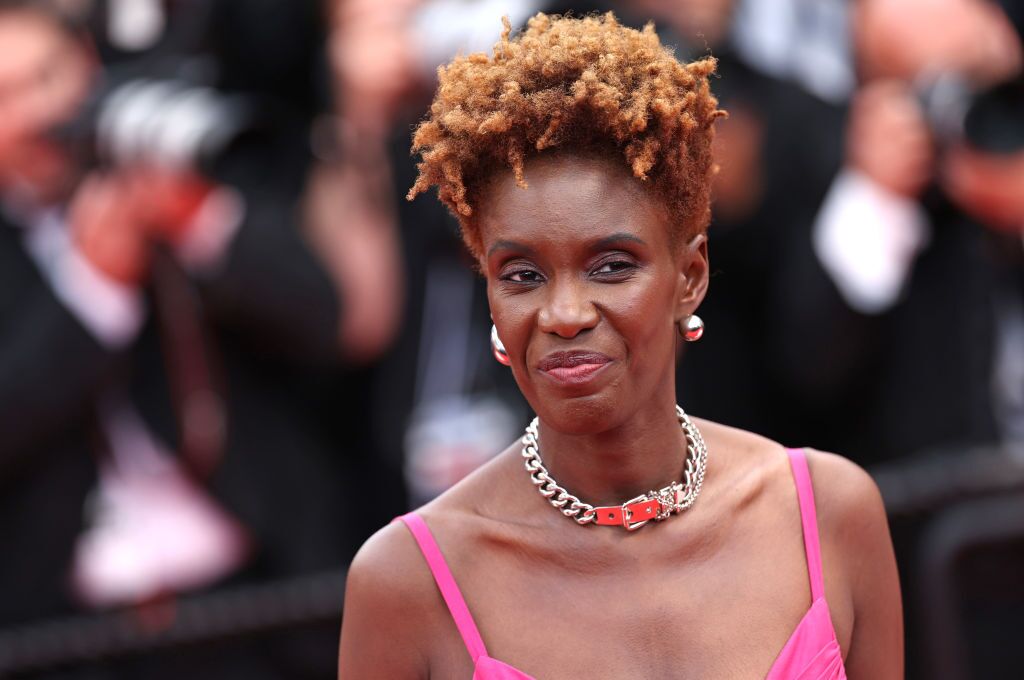
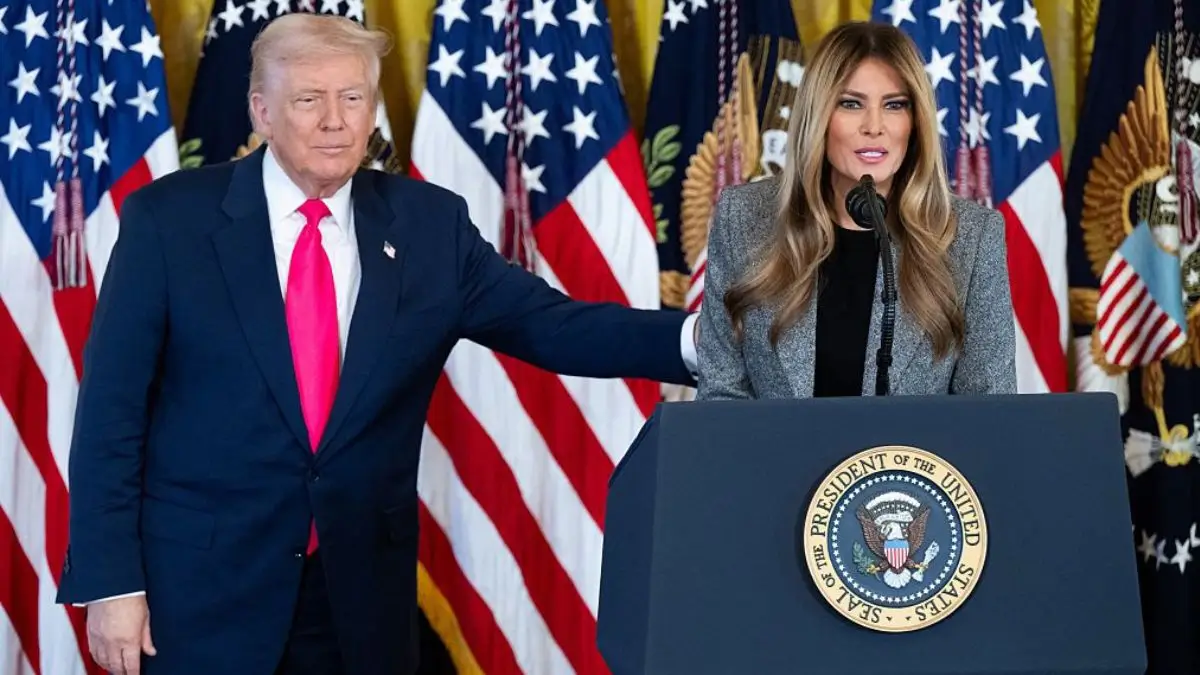
In 2017, as political outsider Donald Trump headed to Washington, Delcy Rodríguez spotted an opening.
Then Venezuela’s foreign minister, Rodríguez directed Citgo — a subsidiary of the state oil company — to make a $500,000 donation to the president’s inauguration. With the socialist administration of Nicolas Maduro struggling to feed Venezuela, Rodríguez gambled on a deal that would have opened the door to American investment. Around the same time, she saw that Trump’s ex-campaign manager was hired as a lobbyist for Citgo, courted Republicans in Congress and tried to secure a meeting with the head of Exxon.
The charm offensive flopped. Within weeks of taking office, Trump, urged by then-Sen. Marco Rubio, made restoring Venezuela’s democracy his driving focus in response to Maduro’s crackdown on opponents. But the outreach did bear fruit for Rodríguez, making her a prominent face in U.S. business and political circles and paving the way for her own rise.
“She’s an ideologue, but a practical one,” said Lee McClenny, a retired foreign service officer who was the top U.S. diplomat in Caracas during the period of Rodríguez’s outreach. “She knew that Venezuela needed to find a way to resuscitate a moribund oil economy and seemed willing to work with the Trump administration to do that.”
Nearly a decade later, as Venezuela’s interim president, Rodríguez’s message — that Venezuela is open for business — seems to have persuaded Trump. In the days since Maduro’s stunning capture Saturday, he’s alternately praised Rodríguez as a “gracious” American partner while threatening a similar fate as her former boss if she doesn’t keep the ruling party in check and provide the U.S. with “total access” to the country’s vast oil reserves. One thing neither has mentioned is elections, something the constitution mandates must take place within 30 days of the presidency being permanently vacated.
This account of Rodríguez’s political rise is drawn from interviews with 10 former U.S. and Venezuelan officials as well as businessmen from both countries who’ve had extensive dealings with Rodríguez and in some cases have known her since childhood. Most spoke on the condition of anonymity for fear of retaliation from someone who they almost universally described as bookishly smart, sometimes charming but above all a cutthroat operator who doesn’t tolerate dissent. Rodríguez didn’t respond to AP requests for an interview.
Father’s murder hardens leftist outlook
Rodríguez entered the leftist movement started by Hugo Chávez late — and on the coattails of her older brother, Jorge Rodríguez, who as head of the National Assembly swore her in as interim president Monday.
Tragedy during their childhood fed a hardened leftist outlook that would stick with the siblings throughout their lives. In 1976 — when, amid the Cold War, U.S. oil companies, American political spin doctors and Pentagon advisers exerted great influence in Venezuela — a little-known urban guerrilla group kidnapped a Midwestern businessman. Rodriguez’s father, a socialist leader, was picked up for questioning and died in custody.
McClenny remembers Rodríguez bringing up the murder in their meetings and bitterly blaming the U.S. for being left fatherless at the age of 7. The crime would radicalize another leftist of the era: Maduro.
Years later, while Jorge Rodríguez was a top electoral official under Chávez, he secured for his sister a position in the president’s office.
But she advanced slowly at first and clashed with colleagues who viewed her as a haughty know-it-all.
In 2006, on a whirlwind international tour, Chávez booted her from the presidential plane and ordered her to fly home from Moscow on her own, according to two former officials who were on the trip. Chávez was upset because the delegation’s schedule of meetings had fallen apart and that triggered a feud with Rodriguez, who was responsible for the agenda.
“It was painful to watch how Chávez talked about her,” said one of the former officials. “He would never say a bad thing about women but the whole flight home he kept saying she was conceited, arrogant, incompetent.”
Days later, she was fired and never occupied another high-profile role with Chávez.
Political revival and soaring power under Maduro
Years later, in 2013, Maduro revived Rodríguez’s career after Chávez died of cancer and he took over.
A lawyer educated in Britain and France, Rodríguez speaks English and spent large amounts of time in the United States. That gave her an edge in the internal power struggles among Chavismo — the movement started by Chávez, whose many factions include democratic socialists, military hardliners who Chávez led in a 1992 coup attempt and corrupt actors, some with ties to drug trafficking.
Her more worldly outlook, and refined tastes, also made Rodríguez a favorite of the so-called “boligarchs” — a new elite that made fortunes during Chávez’s Bolivarian revolution. One of those insiders, media tycoon Raul Gorrín, worked hand-in-glove with Rodríguez’s back-channel efforts to mend relations with the first Trump administration and helped organize a secret visit by Rep. Pete Sessions, a Texas Republican, to Caracas in April 2018 for a meeting with Maduro. A few months later, U.S. federal prosecutors unsealed the first of two money laundering indictments against Gorrin.
After Maduro promoted Rodríguez to vice president in 2018, she gained control over large swaths of Venezuela’s oil economy. To help manage the petro-state, she brought in foreign advisers with experience in global markets. Among them were two former finance ministers in Ecuador who helped run a dollarized, export-driven economy under fellow leftist Rafael Correa. Another key associate is French lawyer David Syed, who for years has been trying to renegotiate Venezuela’s foreign debt in the face of crippling U.S. sanctions that make it impossible for Wall Street investors to get repaid.
“She sacrificed her personal life for her political career,” said one former friend.
As she amassed more power, she crushed internal rivals. Among them: once powerful Oil Minister Tareck El Aissami, who was jailed in 2024 as part of an anti-corruption crackdown spearheaded by Rodríguez.
In her de-facto role as Venezuela’s chief operating officer, Rodríguez proved a more flexible, trustworthy partner than Maduro. Some have likened her to a sort of Venezuelan Deng Xiaoping — the architect of modern China.
Hans Humes, chief executive of Greylock Capital Management, said that experience will serve her well as she tries to jump-start the economy, unite Chavismo and shield Venezuela from stricter terms dictated by Trump. Imposing an opposition-led government right now, he said, could trigger bloodshed of the sort that ripped apart Iraq after U.S. forces toppled Saddam Hussein and formed a provisional government including many leaders who had been exiled for years.
“We’ve seen how expats who have been outside of the country for too long think things should be the way it was before they left,” said Humes, who has met with Maduro as well as Rodríguez on several occasions. “You need people who know how to work with how things are not how they were.”
Democracy deferred?
Where Rodríguez’s more pragmatic leadership style leaves Venezuela’s democracy is uncertain.
Trump, in remarks after Maduro’s capture, said Nobel Peace Prize winner Maria Corina Machado lacks the “respect” to govern Venezuela despite her handpicked candidate winning what the U.S. and other governments consider a landslide victory in 2024 presidential elections stolen by Maduro.
Elliott Abrams, who served as special envoy to Venezuela during the first Trump administration, said it is impossible for the president to fulfill his goal of banishing criminal gangs, drug traffickers and Middle Eastern terrorists from the Western Hemisphere with the various factions of Chavismo sharing power.
“Nothing that Trump has said suggests his administration is contemplating a quick transition away from Delcy. No one is talking about elections,” said Abrams. “If they think Delcy is running things, they are completely wrong.”