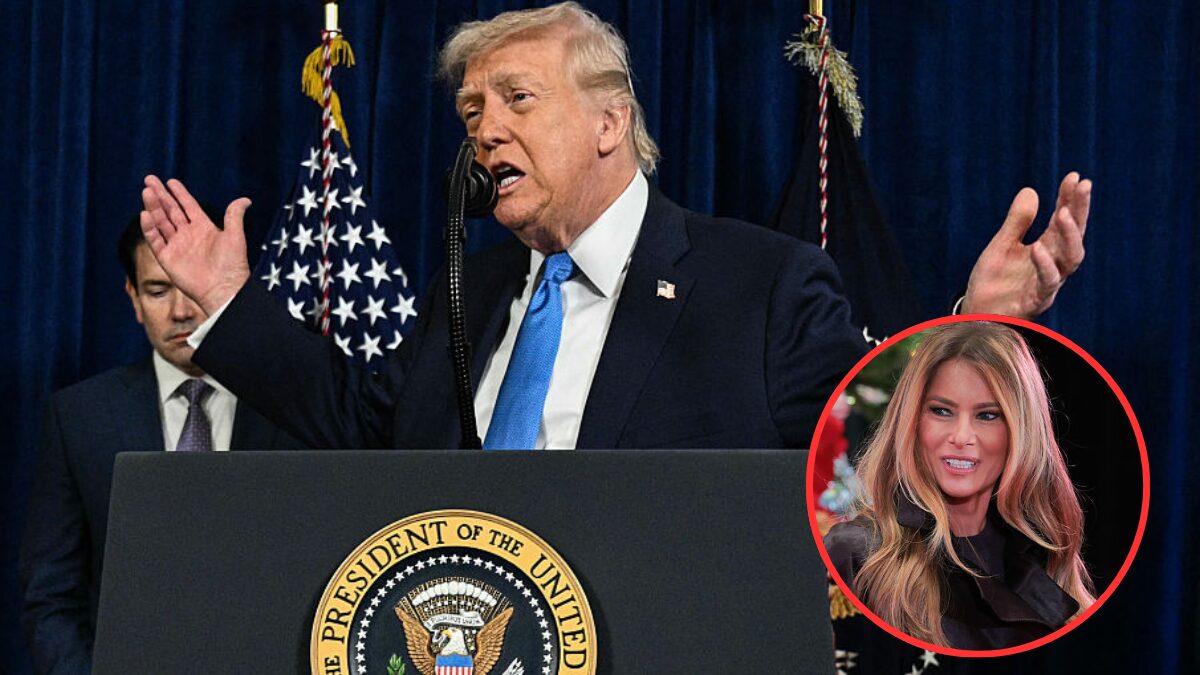
President Donald Trump says American Big Oil “want to go in so badly” into Venezuela and spend billions of dollars, but the reality is U.S. oil producers are hesitant, and it will take many years and many tens of billions of dollars to rebuild Venezuela’s decimated oil sector after the U.S forcibly removed and arrested leader Nicolás Maduro during a string of attacks on Jan. 3.
More than doubling Venezuela’s current oil production likely would take until 2030 and cost about $110 billion, said research firm Rystad Energy, arguing that bringing Venezuela—home to the world’s largest known oil reserves—back to its previous highs would take even longer. Venezuela’s current oil flows of roughly 900,000 barrels daily are about one-third of its volumes at the turn of the century thanks to mismanagement, labor strikes, sanctions, and financial woes.
“We’re not waving a magic wand here and, all of a sudden, more oil starts flowing out of Venezuela,” said Dan Pickering, founder and chief investment officer for Pickering Energy Partners consulting and research firm.
“You’re not going to bully Exxon [Mobil] and Chevron into spending a bunch of money in a risky spot,” Pickering said. “Trump says, ‘Drill, baby, drill,” and the industry didn’t listen to it. They’re not going to blindly deploy capital because the U.S. government says they should.”
Oil prices remain low—they ticked up less than 2% on Jan. 5—because the world is awash in oil, making it harder to justify costly and risky new foreign investments. “All of the excitement and hype surrounding Venezuela’s future really deserves a reality check. The hype and reality are very far apart,” said Matt Reed, vice president of the geopolitical and energy consultancy Foreign Reports.
“If you’re talking about building up Venezuela, you’re talking about bringing in [oil] companies that need real certainty. They need the situation to stabilize. They need to be confident it’s going to stay stable if they’re going to assume the risk and invest. At this point, no one is going to rush in,” Reed said.
“Who is going to run Venezuela next year or the year after that?” Reed asked. “The Trump administration says, ‘Well, we’ll deal with that later.’ In the meantime, the oil companies are not going to assume the best-case scenario is going to unfold and commit to anything.”
As the U.S. focused in the fall on bombing boats from Venezuela—killing more than 100 people to date—the Trump administration cited narco-terrorism and stemming immigration problems. When the U.S. began seizing oil tankers in December and launched a pseudo-oil blockade, Trump began talking more and more about oil and the 2007 Venezuelan expropriation of oil assets from U.S. companies as justification for the Jan. 3 attacks and arrests. Every U.S. company except Chevron has left Venezuela. Chevron operates under a special license and produces nearly 20% of Venezuela’s oil.
“The oil companies are going to go in and rebuild their system,” Trump said Jan. 4. “They’re going to spend billions of dollars, and they’re going to take the oil out of the ground, and we’re taking back what they stole. Remember, they stole our property. It was the greatest theft in the history of America.”
Ironically, Trump is essentially using oil to argue that Venezuela is not like the 2003 Iraq invasion under George W. Bush that critics claimed was about oil, Reed said. “When Trump talks about oil, he’s talking about money. He’s making the argument that any reconstruction is going to pay for itself … and the U.S. can avoid the endless, messy, costly regime change wars that have defined the War on Terror.”
“A lot of Americans find it distasteful that the U.S. might be waging wars for oil. That’s not a winning argument for politicians,” Reed added.
What comes next?
Wood Mackenzie and other energy research firms believe—within a year—Venezuela could spike its oil volumes from less than 1 million barrels daily to about 1.2 million barrels with U.S. cooperation, and the state-owned oil company PDVSA and Chevron tackling the so-called low-hanging fruit.
Anything else is a lot more complicated to rebuild much of the production, pipeline, and processing infrastructure to get a lot more oil out of the ground and shipped to countries around the world, primarily China and the U.S.
Still, Chevron’s stock jumped 5% on Jan. 5, while Exxon Mobil and ConocoPhillips ticked up by more than 2%. Two of the biggest oilfield services players best positioned to work in Venezuela again, Halliburton’s stock rose by almost 8%, and SLB by nearly 9%.
The oil companies are reluctant to comment publicly, wanting to avoid upsetting either the Trump administration or the remaining Maduro regime, currently led by Maduro’s vice president, Delcy Rodríguez, who is striking a more conciliatory tone with the U.S. after her initially defiant rhetoric that Maduro was illegally kidnapped and must be released back into power.
Exxon, Halliburton, and SLB declined comment for now. ConocoPhillips said it is monitoring the situation and that it is “premature” to speculate on future investments.
Chevron said it is focused on the safety of its employees in Venezuela and the integrity of its oil assets, declining any commentary on the future.
In a Washington, D.C. conference in November, Chevron Chairman and CEO Mike Wirth said the geopolitical circumstances are difficult, but Venezuela’s potential is worth the effort. “The kinds of swings that you see in places like Venezuela are challenging. But we play a long game. Venezuela is blessed with a lot of geologic resource and bounty. And we are committed to the people of the country and would like to be there as part of rebuilding Venezuela’s economy in time when circumstances change.”
Most oil refineries around the world are not configured to process the extra heavy grades of crude that come from Venezuela, but China has many refineries that can and, thus, receives about 80% of Venezuela’s oil exports. Energy analysts said controlling Venezuelan oil could give the U.S. more negotiating leverage with China on the rare earths processing industry dominated by the country.
Most of the rest of the oil exports head to the U.S. Gulf Coast, where several refineries thirst for more of the heavy volumes and have increasingly needed to rely instead on heavy Canadian oil sands barrels.
And, in the short term, Venezuela’s oil output could drop further before it rebounds or is rebuilt.
“What matters right now for the oil market is the [naval] blockade. And the blockade is going to stay in place for as long as it takes to get results,” Reed said, arguing that the Venezuelan leadership will need to comply with U.S. demands. “That could be months. That’s a lot of oil the Venezuelans will not be able to export until Trump is satisfied.”
Great Job Jordan Blum & the Team @ Fortune | FORTUNE Source link for sharing this story.
NASHVILLE, Tenn. – Montana State finally found a way to answer when it mattered most for the program’s first national championship since 1984.
A year ago, Montana State missed winning its first title in 40 years when a slow start doomed it in a shootout loss to North Dakota State. Two years ago, the Bobcats’ season ended in Bozeman in the quarterfinals on a blocked extra point in overtime against the Bison.
They started this season losing the first two — at Oregon and a double- overtime loss at home to South Dakota State.
So when Myles Sansted’s extra point went through the uprights in overtime for a 35-34 victory over Illinois State on Monday night in the Football Championship Subdivision title game, the Bobcats chucked helmets in the air while sprinting around with a heavy contingent of Montana State fans celebrating with them.
“To be able to clear that hurdle and know that yes this ’25 group accomplished what hadn’t been done in a long time …,” said coach Brent Vigen, who’s already thinking ahead with a young, Montana-laden team featuring only nine seniors. “You know, we’re building for more.”
The Bobcats (14-2) capped a season that featured not one, but two wins over in-state rival Montana over a four-week span. Beating Montana in the semifinals put Montana State back into the title game for the second straight season, third in five years under Vigen and the fourth berth overall.
Montana State topped that accomplishment with its 14th straight win in a thrilling finish in the first overtime in the 48 years of this title game. The Bobcats led 21-7 at halftime and 28-14 in the third. They needed Jhase McMillan’s block of Michael Cosentino’s 38-yard field goal attempt with 57 seconds left in regulation to keep it tied at 28.
In overtime, Justin Lamson tied it with a 14-yard touchdown pass to Taco Dowler on fourth-and-10. Hunter Parsons blocked the extra point attempt after Tommy Rittenhouse threw a 10-yard TD pass to Dylan Lord to give Illinois State its only lead at 34-28 to open overtime.
Stansted’s kick started the celebration of the end of a long title drought. Along with the 1984 I-AA championship, Montana State also won the 1976 NCAA Division II title and 1956 NAIA championship.
“What a hard fought game, and these things aren’t supposed to come easily I guess,” Vigen said.
Lamson, who didn’t join the Bobcats until June, said the OT touchdown was a great play call.
“Taco was wide open,” Lamson said. “I got hit so I was just trying to give him a chance and the rest is history, and Myles did his thing and that was the game.”
Illinois State (12-5) already made history as the first FCS team to win four straight road games to advance through the playoffs to this championship game. That included a win over this postseason’s No. 1 seed and North Dakota State — winners of 10 of the last 14 FCS championships including last year.
This was the Redbirds’ first time in this game since 2014, and they leave empty-handed.
“Just couldn’t find one more play,” Illinois State coach Brock Spack said. “We needed to make one more play to win. When you look at a game that’s a one-point loss like that, there’s probably 10, 15, maybe 20 plays in the game if you make just one of them, you win. Wasn’t able to do that, and we came up short.”
Lamson finished with 280 yards passing and two TDs. He also ran for two more scores. Dowler had eight catches for 111 yards.
Rittenhouse finished with 311 yards passing and four TDs. Victor Dawson ran for 126 yards, and Lord had 13 catches for 161 yards receiving and two TDs.
The takeaway
Illinois State made big defensive plays to give the Redbirds a chance. They forced Montana State three-and-out on consecutive drives in the fourth for a chance at the win and had three sacks.
Montana State won its 14th straight game despite too many self-inflicted mistakes. The Bobcats were flagged 14 times for 93 yards. “We offensively showed flashes, but it was one step forward, maybe sometimes two steps back,” Vigen said.
Blocked kicks
Spack said he thought ball-handling issues might be why both the field goal and extra point attempts were blocked. Cosentino has the ability to get the ball up in the air, which is why Spack decided to go for the lead with the field goal attempt.
“It’s very disappointing,” Spack said.
Up next
Illinois State has to replace Rittenhouse. Leading tackler Tye Niekamp has another season to play for his father Travis, the defensive coordinator and inside linebackers coach.
Montana State should get Lamson back. He joined the Bobcats after stints at Syracuse and Stanford.
Copyright 2026 The Associated Press. All rights reserved. This material may not be published, broadcast, rewritten or redistributed without permission.
Great Job Teresa M. Walker, Associated Press & the Team @ KSAT San Antonio Source link for sharing this story.
Sign up for TPR Today, Texas Public Radio’s newsletter that brings our top stories to your inbox each morning.
A jury has been selected in the trial of a former Uvalde school district police officer charged in connection with the law enforcement response to the 2022 Robb Elementary School shooting.
On Monday, more than 400 potential jurors were questioned about their knowledge of the failed police response to one of the worst school shootings in U.S. history. From that pool, 12 jurors and four alternates were selected for the trial. Opening statements are set for Tuesday morning.
The trial was moved from Uvalde to Nueces County, where it is being held in Corpus Christi, after a judge determined it would be difficult to seat an impartial jury in Uvalde.
During jury selection, presiding Judge Sid Harle acknowledged that, given the case’s national attention, there was likely no one in the pool who had not already heard about the shooting.
Former Uvalde CISD officer Adrian Gonzales faces 29 felony counts of abandoning or endangering a child for his alleged inaction during the response. Prosecutors say Gonzales failed to “engage, distract, or delay the shooter” and did not follow his active-shooter training to confront the gunman. Gonzales has pleaded not guilty to all charges.
Several victims’ family members are expected to attend the trial in Corpus Christi, including Manuel Rizo, the uncle of 9-year-old fourth grader Jackie Cazares, who was killed in the attack.
“We’re going to hope that the prosecution – the district attorney and the people who owe this to their constituents – do their job, and do a damn good job of it,” Rizo told TPR.
Former Uvalde CISD police officer Adrian Gonzales’ trial—connected to the Uvalde Robb Elementary School shooting—is moved to Nueces County and is set to begin on Jan. 5, 2026.
The Cazares family is one of 21 families who sued the City of Uvalde over the shooting, which killed 19 students and two teachers.
Hundreds of law enforcement officers from multiple agencies responded to the scene, but federal and state reviews later described the response as a failure, citing a delay of more than an hour before officers confronted the gunman.
“This police officer, in essence, is being charged with not taking action when prosecutors say he had a duty to act,” said Kirk Burkhalter, a professor of law at New York Law School.
“We’ve seen police officers charged for not doing their duty to the fullest extent. We’ve seen them be charged with standing by while another officer acted,” Burkhalter said. “This is very different. I can’t recall another case where a police officer was charged with simply not doing their job when it comes to a member of the public.”
That context is especially notable following the Parkland school shooting, where a former Broward County sheriff’s deputy was later acquitted of criminal charges tied to his failure to confront the gunman during the 2018 attack at Marjory Stoneman Douglas High School.
Burkhalter added that, in the public’s mind, the case is also about bravery.
“Bravery isn’t the absence of fear,” he said. “It’s being afraid and still taking action.”
Prosecutors have issued 75 subpoenas, underscoring the scope of testimony expected during the trial.
Rizo said he hopes the proceedings will bring accountability and closure.
“We want them to highlight every single opportunity Adrian had to protect the children and teachers – and the survivors,” he said.
Former Uvalde CISD police chief Pete Arredondo is the only other officer to be indicted. He is awaiting a separate trial.
Great Job Jerry Clayton & the Team @ Texas Public Radio for sharing this story.
No Agreement on Standards: Drug test results are often based on discretionary standards. The level of drugs at which a test is considered positive varies from test to test and lab to lab.
Big Disparities: Child welfare systems’ thresholds for positives vary widely. One state’s level is so low, an Air Force pilot can fly with up to 400 times more opiates in their system.
Path Forward Is Unclear: There’s no consensus on what should be done. The Trump administration disbanded the expert panel that was in charge of proposing scientifically valid levels.
These highlights were written by the reporters and editors who worked on this story.
Kaitlin spent the first weeks of her newborn son’s life in a panic. The hospital where she gave birth in October 2022 had administered a routine drug test, and a nurse informed her the lab had confirmed the presence of opiates. Child welfare authorities opened an investigation.
Months later, after searching her home and interviewing her older child and ex-husband, the agency dropped its investigation, having found no evidence of abuse or neglect, or of drug use.
The amount of opiates that upended Kaitlin’s life — 18.4 nanograms of codeine per milliliter of urine, according to court documents — was so minuscule that if she were an Air Forcepilot, she could have had 200 times more in her system and still have been cleared to fly.
But for Kaitlin, the test triggered an investigation with potentially life-altering consequences. (ProPublica is using Kaitlin’s first name because her full name has been redacted from court documents. She declined to be interviewed for this story.)
The ordeal “tempered what was otherwise supposed to be a joyous occasion” for the family, according to a lawsuit filed in 2024 by New Jersey’s attorney general against the hospital system, Virtua Health.
The hospital said in a statement that it has “a relentless commitment to evidence-based, equitable care for every family.” In court documents, it denied the lawsuit’s allegation that it discriminated against pregnant patients and noted that Kaitlin consented to the test. It also said that New Jersey law mandates it to submit reports of “substance-affected infants” to the state’s Division of Child Protection and Permanency. The lawsuit is pending and a judge has referred it to mediation.
Drug-testing labs typically report results in black and white: positive or negative. But a little-known fact about the industry is that those results are often based on standards that are wholly discretionary. For example, nearly all states use a threshold of 0.08% blood alcohol content to decide if a motorist is intoxicated. But for other drugs detected in urine, saliva and hair, cutoff levels vary from test to test and lab to lab — including Kaitlin’s test for opiates.
There’s no consensus among labs on what level should confirm the presence of codeine in urine, said Larry Broussard, a toxicologist who wrote an academic journal article on “growing evidence” that poppy seeds in bagels and muffins provoke positive test results. (Kaitlin ate a bagel shortly before taking her drug test, according to court documents.) There’s more consensus for some other drugs, but labs still disagree on appropriate cutoff levels for common drugs such as THC (the compound in marijuana that creates a high) and meth, said Broussard.
A Hospital Said Kaitlin Tested Positive for Codeine, But the Military Would Have Said the Test Was Negative Even at Levels 200 Times as High
18 ng/ml
Kaitlin’s results
2,000 ng/ml
Federal workers cutoff
4,000 ng/ml
Department of Defense cutoff
4,000 ng/ml
Department of Defense cutoff
2,000 ng/ml
Federal workers cutoff
18 ng/ml
Kaitlin’s results
Note: Ng/ml is nanograms per milliliter. Cutoffs are the level at which each organization considers the presence of codeine in urine to be confirmed by mass spectrometry (gas or liquid chromatography).
In 2022, the same year Kaitlin tested positive for codeine, the Department of Defense noticed a surge in personnel on military bases blaming positive tests on poppy seeds. Scientists at the military’s labs concluded that a change in the manufacturing process of some poppy seeds had led to contamination, causing service members to be falsely accused of abusing drugs.
So far, 62 positive tests for codeine have been “overturned and adjusted in Army records,” an Army spokesperson told ProPublica. In response, the Department of Defense in March 2024 doubled the military’s cutoff level for codeine tests to avoid false positives triggered by poppy seed muffins, bagels and other foods. Service members are now cleared for duty with up to 400 times more codeine in their urine than is used to justify child welfare investigations in some states, ProPublica found.
ProPublica reviewed cutoff levels used to confirm the presence of common drugs, including opiates, meth, THC and cocaine, as cited in court records, labs’ contracts with government agencies and scientific journals, as well as in interviews with toxicologists. We found that the cutoff levels used by the child welfare systems vary widely from jurisdiction to jurisdiction. One large state agency, Michigan’s Department of Health and Human Services, contractually required a lab to use levels that it later acknowledged were “scientifically unsupportable.”
Ted Simon, an expert toxicology witness and a board member of the nonprofit Center for Truth in Science, which advocates for objectivity in research, said agencies are better off consulting with labs to set cutoff levels. That’s because “some labs do validation testing to ensure the accuracy of their cutoffs based on knowledge of human biology.” But even when labs set levels, they don’t always get them right. Some labs “just use the sensitivity of the chemical analysis to measure vanishingly tiny concentrations with no way to assess the relevance to humans,” Simon said. This can result in situations like Kaitlin’s, where the hospital’s cutoff was near the lower limit of what sophisticated lab instruments can detect, he said after reviewing her case.
Meanwhile, “labs tell their clients what they want to hear and are hesitant to disclose the uncertainty inherent in their methods,” Simon said.
There’s no industry consensus on what, or if anything, should be done about the differing standards. Some experts see a need for uniform levels but acknowledge it would require lengthy vetting before toxicologists and other stakeholders agree on what’s appropriate. Others maintain that as long as labs are transparent and support their decisions with research, they should continue choosing their own levels. “The labs do what works for the instruments that they have,” said Simon.
Child welfare agencies employ a patchwork of drug testing standards, according to contracts and procurement documents.
Some, like Los Angeles County’s Department of Children and Family Services, require labs to use high cutoff levels that protect against false positives. Other agencies’ contracts with their drug testing services do not specify cutoff levels, leaving the decision to the lab.
A few large agencies require labs to use ultra-low levels, which catch more users but come with risks. Incidental exposure to a substance in the environment and over-the-counter medications can trigger positives. “The smaller the concentration that you try to detect, the more likely you are to get false positive results,” said toxicologist Paul Cary, who wrote a guide to testing for drug courts, which aim to address the addictions of people accused of drug-related crimes and avoid incarceration.
Some Child Welfare Agencies’ Thresholds for a Positive Drug Test Are Lower Than the Federal Government’s
The levels at which various agencies consider a drug test positive for meth vary widely. “The smaller the concentration that you try to detect, the more likely you are to get false positive results,” said toxicologist Paul Cary.
250 ng/ml meth
125 ng/ml
100 ng/ml
0
Federal workers cutoff
Los Angeles County Dept. of Children and Family Services
Orange County, California, Social Services Agency
Utah Division of Child and Family Services
Georgia Division of Family and Children Services
Less meth needed to trigger positive result ↓
Note: Ng/ml is nanograms per milliliter. Squares show the level at which each organization considers the presence of meth in urine to be confirmed by mass spectrometry (liquid or gas chromatography).
The federal government sets standards for drug testing 14 million people. These include public-sector employees as well as workers whose performance affects the safety of others, known as safety-sensitive roles, like airline pilots, truck drivers and those working in nuclear facilities. For decades, the program was known for a rigorous scientific review and inspection process to ensure accuracy.
In 2025, President Donald Trump’s second administration overhauled the Substance Abuse and Mental Health Services Administration, the federal agency responsible for the testing standards program, and dismissed half of its staff. It also disbanded the expert panel that proposed scientifically valid cutoff levels, the Drug Testing Advisory Board. “There could be issues for national security or safety sensitive issues that might be impacted given the recent changes,” said Hyden Shen, former regulatory and policy oversight lead at the health agency’s division of workplace programs. In the spring, Shen resigned alongside almost half of his division. He spoke to ProPublica after leaving federal employment.
Private labs have long been free to set their own standards, independent of the federal government’s recommended levels. The CEO of a laboratory company specializing in testing for probation departments, child welfare agencies and courts testified in a lawsuit that in 2018 the lab had lowered cutoff levels for cocaine in hair follicle tests by a factor of five without amending its contract with the state child welfare agency. The company said that the change was to align its levels with scientific updates and that state agencies were made aware of the new cutoffs when it reported test results. The lawsuit was settled with the lab denying wrongdoing.
Federal workers who test positive for drugs can’t be punished until their results are scrutinized by medical review officers, physicians who verify that positive drug test results aren’t being triggered by legitimate medications. (For example, without a special follow-up called an isomer test, over-the-counter Vicks VapoInhaler is indistinguishable from street drugs in multiple types of drug tests.) But medical review of test results is expensive, and few state agencies require it for child welfare cases or for testing people on probation. One lab competing for a contract to test probationers and juveniles in a residential facility in Kansas discouraged the use of medical review officers, saying it would “result in extra expense and extra time for results delivery.” Other state agencies, especially those that oversee parole, probation or prisons, skip confirmation testing entirely and rely instead on cheaper, less accurate immunoassay tests, unless someone contests their result and can afford to pay out of pocket for a follow-up, according to contracts between state courts and labs.
Agencies “are effectively saying, ‘Most of these people probably did use drugs. And, yeah, OK, there’s a handful that didn’t. But it would bankrupt us to have to confirm all of these,’” said Karen Murtagh, executive director of Prisoners’ Legal Services of New York, which has represented inmates in drug testing cases.
Marie Herrera at the park where she used to take her children to playLiz Moughon/ProPublica
In the spring of 2019, Marie Herrera was working to reunite with her four kids in Michigan’s foster care system. (ProPublica is referring to Herrera by her middle name at her request, to maintain her privacy as she moves forward with her life.) At a hearing on her case, a foster care worker testified that it was going well, according to a filing from her attorney: “Mother had attended all eleven parenting times, had procured employment, was in therapy, lived in three-quarters housing, and tested negative for illegal drugs during the current reporting period.”
Then that July, Herrera’s saliva tested positive for cocaine. Herrera admitted to being in recovery from an addiction but denied using the drug. Over the next eight months, two more of her drug tests were confirmed positive for cocaine by the state’s lab. She sought testing from an outside lab, which didn’t detect illegal drug use.
According to her test results from the state’s lab, which Herrera shared with ProPublica, the levels of cocaine and its metabolite in her system ranged from 1.065 to 1.774 ng/ml, just above the state’s cutoff of 1 ng/ml in saliva. If the positive-test threshold for federal workers had been applied to Herrera’s tests, she could have had more than four times as much of the drug in her saliva and still been cleared to fly a plane.
But Herrera’s positive test from December 2019 caused the judge to take away her unsupervised parenting time, according to court records.
“The positive drug tests turned my world upside down and ruined my life,” said Herrera. What she didn’t know is that behind the scenes, Michigan’s child welfare agency was reviewing — and preparing to raise — its cutoff levels.
Michigan’s levels for cocaine and other drugs in saliva had been set by its drug testing vendor, Forensic Fluids, in 2018, according to public records. (Forensic Fluids did not respond to a request for comment.) Michigan contractually required the same levels when it signed with a new lab, Averhealth, in 2019.
But the child welfare agency noticed conflicting results between its tests and those ordered by law enforcement agencies, according to public records. Some individuals who tested positive for a drug with one agency tested negative with another.
In November 2020, at the urging of its new lab, the agency raised its levels. Communications between the agency and Averhealth show both were concerned that low cutoffs might not be “forensically defensible” due to “uncertainty around environmental exposure.”
“Current levels … are scientifically unsupportable,” Michigan’s child welfare agency wrote in a memo about the change.
A 2020 memo from Michigan’s Department of Health and Human Services to its Children’s Services Agency recommends raising agency drug testing levels because current levels are “scientifically unsupportable.”Obtained by ProPublica. Highlight added by ProPublica.
In a statement, Averhealth, the lab that processed Herrera’s tests, said the mismatch in results that concerned Michigan administrators “in no way calls into question the accuracy or reliability” of its testing. “Inconsistencies occurred when different types of tests were conducted (saliva or hair) or when the individual was tested days later,” the company said, noting that “different types of testing have different limitations.” The company said its test results “simply attest to whether a drug is present in a specimen and, if so, in what quantity. It is left to the courts to decide what, if any consequences, follow.”
In Herrera’s case, the lab said, low-level cocaine positives “likely represent ingestion of cocaine” and that “passive exposure as an explanation is highly doubtful.” The company also pointed out that Herrera had several high-level positive tests for methamphetamine in the fall of 2020, nine months after the court took away her unsupervised parenting time.
Herrera admits she’s relapsed at times. But she also says that being labeled a cocaine user early on in her case, when she says she wasn’t using, derailed her recovery. Herrera believes it set her up to fail by creating an adversarial relationship with her caseworker and judge. “I wasn’t grateful about what they were doing to me,” she says.
Herrera’s parental rights were terminated in 2021, less than a year after Michigan raised its cutoff levels for cocaine in saliva. In denying Herrera’s appeal, a judge cited her refusal to participate in further drug tests, additional failed tests when she did comply, and her lack of housing and income, among other things.
When Herrera was told she could never again see her kids, she said, she was devastated and relapsed again. “Fuck it, if they say I’m an addict, then I’ll numb the pain.”
“I think about my kids every single day,” she said. “It’s affected me completely.”
Even after raising its cutoffs, Michigan’s levels were still far lower than those used for federal workers. The state declined to comment, but a memo stated that officials considered the federal levels inappropriate because they “do not assess the impacts of how those substances may affect a person’s behavior” or “how that use may impact child safety.”
Drug testing policy experts say it’s not possible for any test, no matter the cutoff level, to reliably predict child safety.
“A drug test doesn’t tell you if a person has a substance use disorder, if they are in recovery, or whether a child is safe,” said Nancy K. Young, executive director of Children and Family Futures, which consults for child welfare agencies, and co-author of a Substance Abuse and Mental Health Services Administration policy paper on drug testing for child welfare agencies. Young said administrators should consider test results as “just one data point” and rely more on “casework and a relationship with the family” to determine whether a child is safe and well.
Great Job Alice Hines & the Team @ ProPublica Source link for sharing this story.
MTV launched in 1981 with a simple but revolutionary idea: play music videos around the clock. Its first broadcast, “Video Killed the Radio Star,” felt prophetic, as the network quickly transformed how audiences discovered music and how artists built their images. MTV wasn’t just a channel, it was a cultural engine that blended sound, fashion, and attitude into a new visual language, turning musicians into global stars and making youth culture the center of pop conversation.
For hip hop, MTV’s rise was complicated but ultimately transformative. In its early years, the network was slow to embrace rap, reflecting broader industry resistance to the genre. But once shows like Yo! MTV Raps arrived, hip hop exploded into the mainstream. The platform helped turn regional scenes into national movements, introducing artists, styles, and slang to suburban living rooms around the world. MTV gave hip hop a visual identity, amplifying its storytelling, fashion, and political edge, and helping cement the genre as the dominant cultural force it would become.
What once defined popular culture now reacts to it from the sidelines, overshadowed by YouTube, TikTok, and streaming platforms. MTV’s decline marks the end of a shared musical experience, a time when millions watched the same videos, felt the same moments, and learned the culture together in real time.
Let’s look back at 25 moments, shows and controversies we’ll never forget.
Tupac Addresses Hughes Brothers on Yo MTV Raps
That Time Ol’ Dirty Bastard Took MTV to Pick Up His Food Stamps
Eminem Trolls Mark Wahlberg
Beyonce Reveals Her 1st Pregnancy at 2011 MTV Video Music Awards
Lil Mama Crashes The Stage
“Come On Be My Baby Tonight” (The Real World New Orleans)
I’mma Let You Finish… Kanye Rushes The Stage
Diana Ross Taps Lil Kim’s Boob
Pedro’s Battle with AIDS (The Real World San Francisco)
Redman Keeps it REAL on MTV Cribs
Pimp My Ride Turning Cars into Mobile Abominations
Tupac Takes on Trump and Greed in America
Snooki’s Bar Brawl (Jersey Shore)
Lauryn Hill’s MTV Unplugged
Jay-Z and Nas Come Together After Their Iconic Beef
The Rise of Beavis and Butt-head
Daria Becomes Pop Culture’s Favorite Animated Introvert
The ORIGINAL Slap Heard Around The World (The Real World Seattle)
“Billie Jean” Becomes The First Video By a Black Artist To Get Mainstream Rotation on MTV
Mic Geronimo Moves in with His Girlfriend on MTV’s Sex in the 90s
News of Tupac’s Passing
TRL Caller Asks Ol’ Dirty Bastard What He’s Done for the Community
Folks Finding Out They’ve Been Catfished by a Lover
Madonna’s Controversial “Like a Virgin” Performance
Great Job J. Bachelor & the Team @ Black America Web Source link for sharing this story.
WASHINGTON – Secretary of State Marco Rubio and other top officials briefed leaders in Congress late Monday on the striking military operation in Venezuela amid mounting concerns that President Donald Trump is embarking on a new era of U.S. expansionism without consultation of lawmakers or a clear vision for running the South American country.
Republican leaders entered the closed-door session at the Capitol largely supportive of Trump’s decision to forcibly remove Venezuela’s president Nicolás Maduro from power, but many Democrats emerged with more questions as Trump maintains a fleet of naval vessels off the Venezuelan coast and urges U.S. companies to reinvest in the country’s underperforming oil industry.
A war powers resolution that would prohibit U.S. military action in Venezuela without approval from Congress is heading for a vote this week in the Senate.
“We don’t expect troops on the ground,” said House Speaker Mike Johnson, R-La., said afterward.
He said Venezuela’s new leadership cannot be allowed to engage in narcoterrorism or the trafficking of drugs into the U.S., which sparked Trump’s initial campaign of deadly boat strikes that have killed more than 115 people.
“This is not a regime change. This is demand for a change in behavior,” Johnson said. “We don’t expect direct involvement in any other way beyond just coercing the new, the interim government, to get that going.”
Johnson added, “We have a way of persuasion — because their oil exports as you know have been seized, and I think that will bring the country to a new governance in very short order,” he said.
But Sen. Jeanne Shaheen of New Hampshire, the ranking Democrat on the Senate Foreign Relations Committee, emerged saying, “There are still many more questions that need to be answered.”
“What is the cost? How much is this going to cost the United States of America?” Rep. Gregory Meeks of New York, the top Democrat on the House Foreign Affairs Committee, said afterward.
Lawmakers were kept in the dark
The briefing, which stretched for two hours, came days after the surprise military action that few, if any, of the congressional leaders, knew about until after it was underway — a remarkable delay in informing Congress, which has ultimate say over matters of war.
Administration officials fielded a range of questions — from further involvement of U.S. troops on the ground to the role of the Venezuelan opposition leadership that appeared to have been sidelined by the Trump administration as the country’s vice president, Maduro ally Delcy Rodriguez, swiftly became the country’s interim president.
Defense Secretary Pete Hegseth, Joint Chiefs of Staff chairman Air Force Gen. Dan Caine and Attorney General Pam Bondi, who brought drug trafficking charges against Maduro, all joined the classified session. It was intended for the so-called “gang of eight” leaders, which includes Intelligence committee leadership as well as the chairmen and ranking lawmakers on the national security committees.
Asked afterward if he had any more clarity about who is actually running Venezuela, Sen. Mark Warner, the top Democrat on the Intelligence Committee, said, “I wish I could tell you yes, but I can’t.”
Leaders of the Senate Judiciary Committee — Republican chairman Sen. Chuck Grassley of Iowa and ranking Democrat Sen. Richard Durbin of Illinois — said they should have been included in the classified briefing, arguing they have oversight of the Justice Department under Bondi.
Earlier in the day, Senate Democratic leader Chuck Schumer warned that Trump’s action in Venezuela is only the beginning of a dangerous approach to foreign policy as the president publicly signals his interests in Colombia, Cuba and Greenland.
“The American people did not sign up for another round of endless wars,” Schumer said.
Afterward, Schumer said the briefing, “while extensive and long, posed far more questions than it answered.”
Republicans hold mixed views reflective of the deepening schism within Trump’s “Make America Great Again” movement as the president, who vowed to put America first, ventures toward overseas entanglements many lawmakers in both parties want to avoid — particularly after the long wars in Iraq and Afghanistan.
No clarity on what comes next
Next steps in the country, and calls for elections in Venezuela, are uncertain.
The Trump administration had been in talks with Rodríguez, who took the place of her ally Maduro and offered “to collaborate” with the Trump administration. Meanwhile, Trump has been dismissive of Venezuelan opposition leader María Corina Machado, who last month won the Nobel Peace Prize for her struggle to achieve a democratic transition in her nation. Trump has said Machado lacks the “support” or “respect” to run the country.
But Sen. Rick Scott, R-Fla., a staunch Trump ally, said he plans to speak soon with Machado, and called her “very popular if you look at what happened in the last election.”
“She eventually, I think, will be the president of Venezuela,” Scott said. “You know, this is going to be a process to get to a democracy. It’s not easy. There’s a lot of bad people still there, so it’s going to take time. They are going to have an election and I think she will get elected.”
Sen. Rand Paul, R-Ky., who has been a leading critic of the Trump campaign of boat strikes against suspected drug smugglers, said there are probably a dozen leaders around the world who the U.S. could say are in violation of an international law or human rights law.
“And we have never gone in and plucked them out the country. So it sets a very bad precedent for doing this and it’s unconstitutional,” Paul told reporters. “There’s no way you can say bombing a capital and removing the president of a foreign country is not an initiation of war.”
__
Associated Press writer Kevin Freking contributed to this story.
Copyright 2026 The Associated Press. All rights reserved. This material may not be published, broadcast, rewritten or redistributed without permission.
Great Job Lisa Mascaro, Joey Cappelletti And Matt Brown, Associated Press & the Team @ KSAT San Antonio for sharing this story.
Organic foods can provide a number of benefits for your health, the well-being of the animals your food is coming from, and the protection of our global environment.
Health Benefits
Organic food can reduce your exposure to synthetic fertilizers and pesticides. According to research published in the journal Foods, there are regulations on organic farming operations that food manufacturers and agricultural workers must follow. These rules have helped decrease the risk of allergic reactions, lung damage, nervous system problems, birth defects, and chronic health conditions such as cancer. More research is still needed to understand the comprehensive benefits of switching your current diet to an entirely organic one.
Organic farming rules also prohibit the use of antibiotics in animals. This regulation helps reduce the global threat of antimicrobial resistance that’s tied to conventional animal farming practices that use antibiotics, according to research published in Microorganisms. But why exactly is this important? Well, the World Health Organization (WHO) explains that antimicrobial resistance happens when pathogens like bacteria and viruses evolve and become ineffective in fighting infections. This results in an increased risk of illness and disease spread.
Instead of turning to antibiotics to keep their animals healthy, organic farmers are required by the USDA to use preventive measures, such as giving the animals appropriate space to roam, which in turn cuts down on the transmission of infections and other diseases they may be carrying or spreading to other animals near them.
Certified organic foods also exclude the use of genetic engineering practices. While research on genetically modified foods is limited and still being studied, some experts worry that genetic engineering may cause unexpected side effects that aren’t fully understood yet.
Animal Welfare
Many people who choose to eat organic meat and dairy do so to support better treatment standards of animals that ultimately serve as a food source. According to the USDA, organically farmed animals must be raised on organic land in ways that accommodate their health and natural behavior. Agricultural workers also need to feed animals 100 percent organic feed, allow year-round access to the outdoors, and raise them without antibiotics or growth hormones.
Environmental Sustainability
Research also explains that by prohibiting the use of pesticides, industrial solvents, and synthetic chemicals, organic farming practices help prevent additional environmental pollution. When farmers and ranchers follow sustainable farm management practices, they help preserve and improve the ecosystem’s health, promote biodiversity, support natural biological cycles, and encourage important biological activity in the soil, one study states.
Great Job Lisa Maloney, CPT & the Team @ google-discover Source link for sharing this story.
Robot vacuum maker Narwal unveiled its new set of smart vacuum cleaners at the Consumer Electronics Show (CES) with AI-powered features such as monitoring pets, finding valuable objects, and notifying users about misplaced toys.
The company said that its new flagship Flow 2 robot vacuum has a rounded design and easy-lift tanks for better cleaning. The device uses two 1080p RGB cameras with a 136-degree field of view to map out the area and recognize different kinds of objects using AI models.
Narwal said that through this tech stack, the vacuum cleaner has the ability to identify an unlimited number of objects. The device first tries to identify an object locally, but in case there are no matches, it sends the data to the cloud for further processing.
Image Credits: Narwal
The Flow 2 has three key modes called pet care mode, baby care mode, and AI floor tag mode. With pet care mode, you can define zones where pets usually rest or hang out to clean them. Plus, it can monitor pets and also check in on your pets via two-way audio (there is no guarantee that they would listen to you, though). In the baby care mode, the vacuum switches to quiet mode near the crib and notifies you of misplaced toys. In the AI floor tag mode, the vacuum recognizes valuable items like jewelry, avoids them, and alerts you.
Narwal said that its newest vacuum cleaner has four cleaning modes that can identify different types of dirt. The device can also return to its base to wash the mop and then re-mop a certain area if it is dirty. The company noted that the Flow 2’s design allows for a higher hot water washing temperature for better cleaning.
Image Credits: Narwal
Along with the Flow 2, the company also showed off a handheld vacuum called the U50 that weighs 1.41kg (3.1 lbs) and has UV-C sterilization along with heat treatment for allergen removal. The company also demoed an unnamed cordless vacuum with a slim design, 360-degree swivel, and up to 50 minutes of run time. The cordless vacuum also has an auto-empty station that can support up to 60 days of dust disposal.
Great Job Ivan Mehta & the Team @ TechCrunch Source link for sharing this story.
BEIRUT (AP) — Israel’s air force struck areas in southern and eastern Lebanon on Monday, saying they are home to infrastructure for the militant groups Hezbollah and Hamas.
The strikes came a few days before Lebanon’s army commander is scheduled to brief the government on its mission of disarming Hezbollah in areas along the border with Israel.
The strikes took place nearly two hours after Israel’s military Arabic language spokesman Avichay Adraee posted warnings on X that the military would strike targets for Hezbollah and the Palestinian Hamas groups in two villages in the eastern Bekaa Valley and two others in southern Lebanon.
Lebanon’s state-run National News Agency said a home struck in the village of Manara in the Bekaa Valley belonged to Sharhabil al-Sayed, a Hamas military commander who was killed in an Israeli drone strike in May 2024.
The Lebanese army last year began the disarmament process of Palestinian groups while the government has said that by the end of 2025 all the areas close to the border with Israel — known as the south Litani area — will be clear of Hezbollah’s armed presence.
The Lebanese government is scheduled to discuss Hezbollah’s disarmament during a meeting Thursday that will be attended by army commander Gen. Rudolph Haikal.
Monday’s airstrikes were in villages north of the Litani river and far from the border with Israel.
The disarmament of Hezbollah and other Palestinian groups by the Lebanese government came after a 14-month war between Israel and Hezbollah in which much of the political and military leadership of the Iran-backed group was killed.
The latest Israel-Hezbollah war began Oct. 8, 2023, a day after Hamas attacked southern Israel, when Hezbollah fired rockets into Israel in solidarity with Hamas. Israel launched a widespread bombardment of Lebanon in September 2024 that severely weakened Hezbollah, followed by a ground invasion.
The war ended in November 2024 with a ceasefire brokered by the U.S.
Israel has carried out almost daily airstrikes since then, mainly targeting Hezbollah members but also killing 127 civilians, according to the office of the U.N. High Commissioner for Human Rights.
Lebanon’s Health Ministry said a drone strike on a car in the southern village of Braikeh earlier Monday wounded two people. The Israeli military said the strike targeted two Hezbollah members.
(Copyright, All Rights Reserved, WBAP/KLIF 2026)
Great Job & the Team @ News Talk WBAP-AM for sharing this story.
Melania Trump may know her husband better than almost anyone, but Donald Trump still manages to catch her off guard. The first lady couldn’t hide her surprise after he gave an interesting answer to a reporter’s question.
The couple, who will celebrate their 21st wedding anniversary on Jan. 22, were walking into a Mar-a-Lago party when a reporter asked Trump, “Mr. President, do you have a New Year’s resolution?”
Trump and Melania. (Photo by Jim WATSON / AFP via Getty Images)
The suited businessman responded, “l have — peace, peace on earth. Peace on earth.” What exactly “peace on earth” looks like, only Trump knows. Three days later, on Jan. 3, Trump announced the capture of Venezuelan leader Nicolás Maduro, inciting concerns about the next chapter of the U.S. military adventures abroad.
Melania, dressed in a fitted silver-sequined gown, wore a frozen smile plastered across her face as photographers captured their every move. When Trump uttered his pageant response, she looked at him and grimaced for a split second before resuming her performance as his doting plus-one.
The public caught the very moment the former model let her mask slip, exposing “the shock on her face.” On Instagram, a user simply laughed, “hahaha.” While another person mentioned that it was “absolutely crazy how fast she put that fake smile back on.” Several onlookers read into the shift in her facial expression, suggesting her true feelings about the president were revealed.
A second user commented, “She always looks so pained when she’s next to him.” A third person quipped, “She caught his lie then had to catch her own reaction to that lie.” A fourth noted, “One thing about Melania, is she can’t hide her disgust for him.”
A grim reaction alluded to the senior citizen’s eventual demise being a bright spot in Melania’s life when they wrote, “She’s counting the days. You think Erika Kirk is a happy widow? Just wait.”
Trump and his Cabinet herald themselves as being America’s most transparent administration ever, though critics rightfully doubt that is true.
Regarding matters of the president’s health, he has revealed that he has undergone multiple visits to the doctor and advanced imaging, as well as at least three cognitive tests — all of which he claims he passed with flying colors, since he took office in January 2025.
Yet, hardly anyone has overlooked the chronic bruising of Trump’s hands — which White House Press Secretary Karoline Leavitt initially claimed was a result of excessive handshaking — his inability to stay awake during meetings, or the cadence of his speech. Even on New Year’s Eve, folks were puzzled by his lack of clear diction.
A commenter wrote, “His speech is definitely slurred.” Another individual remarked, “Melania heard him slurring his words. She looked concerned for a split second.”
One user proposed, that he was “either drunk or stroking out… you pick!” However, the Republican figure has long boasted that he does not consume alcohol, leaving folks to assume he was “stroking out.”
Trump has denied having suffered a stroke for years. In a new Wall Street Journal interview, he admitted to taking a 325 mg dose of aspirin every day. “They say aspirin is good for thinning out the blood, and I don’t want thick blood pouring through my heart,” he said.
That same article exposed his frat boy diet that consists of McDonald’s Big Macs, Quarter Pounders, Filet-O-Fish sandwiches, fries, and Diet Coke.
Great Job Angelina & the Team @ Atlanta Black Star Source link for sharing this story.