President Donald Trump’s fans like to cheer on his most audacious moves by declaring, “I voted for this.” It is safe to assume, though, that very few people who pulled the lever for Trump in 2024 expected that he would soon announce that he had seized control over Venezuela. One of Trump’s most popular qualities has always been his supposed opposition to foreign wars, his anti-imperialist isolationism. Yet J. D. Vance, who once wrote an op-ed headlined “Trump’s Best Foreign Policy? Not Starting Any Wars,” now declares the new war in Venezuela to be a glorious and necessary exercise of America Firstism.
MAGA is primarily a personality cult, the objectives of which evolve to suit Trump’s capricious moods. Yet his pivot to new wars of conquest is not some shocking reversal. The “Donroe Doctrine,” as he calls his assertion of regional supremacy—a Trumpian extension of the 19th-century Monroe Doctrine, which established the United States’ claim over the Americas in order to keep Europeans out—is in fact consistent with his deepest beliefs. In some ways, it represents the ultimate expression of the world order he hopes to engineer.
A desire to dominate—an eagerness to bully his counterparties into submission—is perhaps the essence of Trump’s character. Trump’s unexpected political resurrection and return to the White House have emboldened his ambitions, which have spread outward. His threats against Canada, Panama, and Greenland, and his renaming of the Gulf of Mexico, have little to do with national interest and everything to do with reifying a new order in which he’s the boss and the leaders of neighboring countries are his cowering subordinates.
Other administration officials have tried to depict the Venezuela intervention as a limited operation, but Trump’s constant claims that these moves are about oil, and his constant boasts that he is “in charge” of the country, clarify his motives. In invading Venezuela and capturing its president, Trump is asserting dominance not only over the hemisphere, but also over energy resources.
This is in keeping with Trump’s view that wealth and power are always zero-sum contests, and his belief that control of natural resources will dictate who wins. “The future will be determined by the ability to protect commerce and territory and resources that are core to national security,” he announced in his prepared remarks on Saturday. “These are the iron laws that have always determined global power, and we’re going to keep it that way.”
Trump’s faith that controlling Venezuela’s oil fields will deliver wealth and power to the U.S. is so profound that he has ignored all evidence to the contrary. For starters, oil prices are currently low—a fact that Trump is fond of pointing out in other contexts, but that limits the financial upside of opening more oil for development. Trump insists that Venezuela’s oil fields will provide a windfall to the United States (“It won’t cost us anything, because the money coming out of the ground is very substantial”). Yet analysts project that any profit from Venezuelan oil will require a massive up-front investment.
Trump’s conviction that American wealth demands siphoning or stealing natural resources from other countries is of a piece with his winner-takes-all worldview. But this rather retro understanding of economics is readily defied by examples around the world. Many of the nations that have seen the fastest economic growth in recent decades have few natural resources, such as Japan, Israel, and the “Asian Tigers.” Meanwhile many of the nations that are richest in resources remain trapped in poverty, such as Venezuela.
This paradox is so long-standing that economists have coined the term resource curse to describe it. According to this theory, natural resources perversely impoverish nations by concentrating economic and political power in the hands of a kleptocratic elite. This discourages the formation of liberal democratic systems with accountable governments that follow the rule of law, which in turn discourages investment and entrepreneurialism.
A kleptocracy does, however, seem in line with Trump’s Donroe Doctrine. Asked by reporters what the main priority should be for Venezuela’s new government, Trump replied, “We need total access. We need access to the oil.” When another reporter wondered whether the new government should liberalize opposition or free political prisoners, he demurred: “Right now what we want to do is fix up the oil, fix up the country.”
To the extent that Trump intuits an inverse relationship between wealth extraction and liberal democracy, he may see it as a benefit rather than a cost. The countries he most admires around the world, including Russia and the Gulf kingdoms, are neither the most affluent nor the most free. But their leaders are disproportionately wealthy and powerful. What economists call the resource curse seems, to Trump, to be a resource blessing.
Trump thinks about economics less like a businessman, as some of his supporters say, than like a warlord or a gangster: He imagines wealth as something to be plundered and hoarded by the strong. As a formula for amassing a personal fortune, this view has delivered beyond his wildest dreams. As a blueprint for national success, however, his crude ideas offer little more than an outdated fantasy of hemispheric supremacy.
Great Job Jonathan Chait & the Team @ The Atlantic Source link for sharing this story.
As we kick off the new year, we also celebrate the birthdays of some of the most influential Black figures in entertainment, sports, and culture. January has given us a host of icons whose talents have shaped generations and continue to inspire. From groundbreaking actors to legendary musicians and trailblazing athletes, let’s honor the stars who started their lives in the first month of the year.
One of the most revered figures born in January is the legendary Dr. Martin Luther King Jr. (January 15). While known globally for his monumental leadership in the Civil Rights Movement, his powerful oratory and unwavering commitment to justice continue to be a guiding light for activists and communities fighting for equality everywhere. His legacy is a cornerstone of American history and a profound source of inspiration.
In the world of acting, January has blessed us with immense talent. The iconic James Earl Jones (January 17) is celebrated for his distinguished career on stage and screen, with a commanding voice recognized worldwide as Darth Vader and Mufasa. We also celebrate the versatile Regina King (January 15), an Academy Award-winning actress and director whose powerful performances in projects like If Beale Street Could Talk and Watchmen have solidified her as one of Hollywood’s most respected artists. The music industry wouldn’t be the same without the contributions of January babies. The smooth, soulful voice of the late, great Aaliyah (January 16) defined a generation of R&B and continues to influence artists today. Her innovative sound and style made her a true cultural phenomenon.
These are just a few of the many brilliant Black celebrities born in January. Their work has not only entertained but has also broken barriers, challenged norms, and enriched our cultural landscape. As we celebrate their birthdays, we also recognize the lasting impact they have made on the world. Their legacies are a powerful reminder of the excellence that this month has brought into our lives. Join us in wishing all these incredible individuals a happy birthday
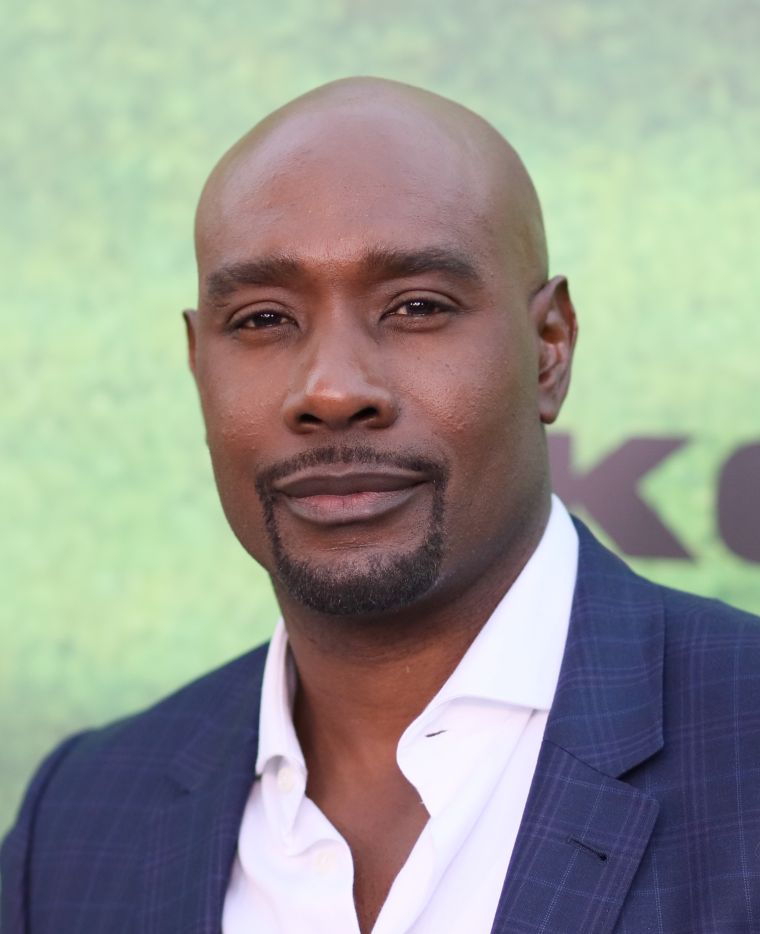
Morris Chestnut – January 1st
Source: Getty
Born on New Year’s Day, this California native has been captivating audiences for over three decades with his undeniable charisma, intense acting chops, and that signature smile.
Chestnut first stole our hearts as Ricky Baker in the seminal classic Boyz n the Hood, a role that cemented his place in Black cinema history right out of the gate. He didn’t stop there. He evolved into the quintessential romantic lead in favorites like The Best Man franchise and The Brothers, proving he could balance vulnerability with strength.
Beyond the big screen, Chestnut has dominated television, bringing authority and depth to roles in series like Rosewood and The Resident.
Cuba Gooding Jr. – January 2nd
Source: WENN
Born in the Bronx to a musical family—his father was the lead vocalist of The Main Ingredient—entertainment is clearly in his DNA. Gooding burst onto the scene in the early ’90s, delivering a raw and powerful performance as Tre Styles in the groundbreaking film Boyz n the Hood. This role not only showcased his dramatic range but also helped define a new era of Black cinema.
However, it was his electrifying portrayal of Rod Tidwell in Jerry Maguire that catapulted him to superstardom. That iconic performance earned him the Academy Award for Best Supporting Actor and gave the world the unforgettable catchphrase, “Show me the money!”
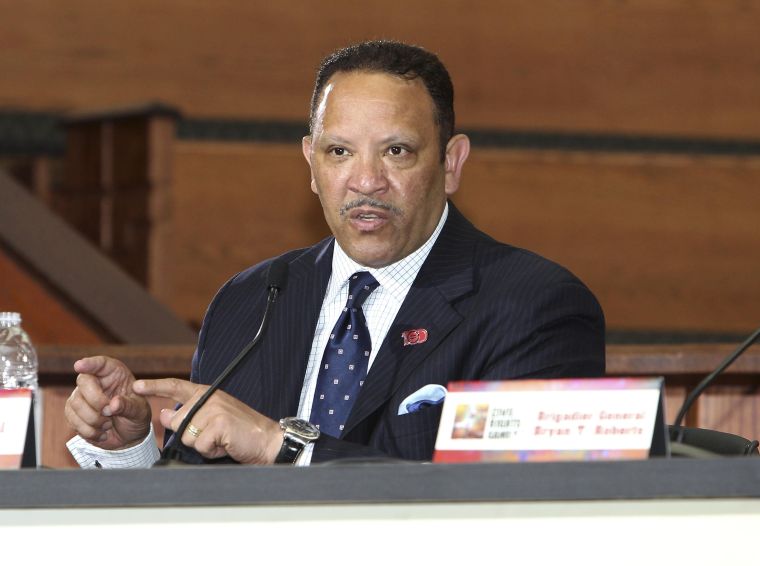
Marc Morial – January 3rd
Source: Getty
Born into a legacy of public service in New Orleans, Morial has dedicated his life to empowering Black America and fighting for economic justice.
As the President and CEO of the National Urban League, Morial has revitalized one of the nation’s oldest civil rights organizations. Under his guidance, the League has expanded its reach, launching initiatives that focus on jobs, housing, and voting rights, ensuring that the promise of democracy is accessible to everyone. Before leading the League, he served as a dynamic Mayor of New Orleans, where he successfully tackled crime and reformed the police department, leaving a lasting impact on the city.
John Singleton – January 6th
Source: WENN
At just 24 years old, John Singleton exploded onto the scene with his directorial debut, Boyz n the Hood, a raw and poignant look at life in South Central Los Angeles. This masterpiece earned him Academy Award nominations for Best Director and Best Original Screenplay, making him the youngest person and the first African American ever nominated for Best Director.
Singleton’s genius was his ability to tell our stories with unapologetic authenticity. He didn’t just direct films; he created worlds that were deeply familiar to the Black experience. Through iconic works like Poetic Justice, Higher Learning, and Baby Boy, he gave a powerful voice to a generation and mentored a new wave of Black actors and creators. His legacy is not just in the films he made but in the doors he kicked open for others to walk through, solidifying his status as a true Hollywood legend and a hero to our community. John Singleton passed away on April 28, 2019, but his influence continues to inspire filmmakers and storytellers everywhere.
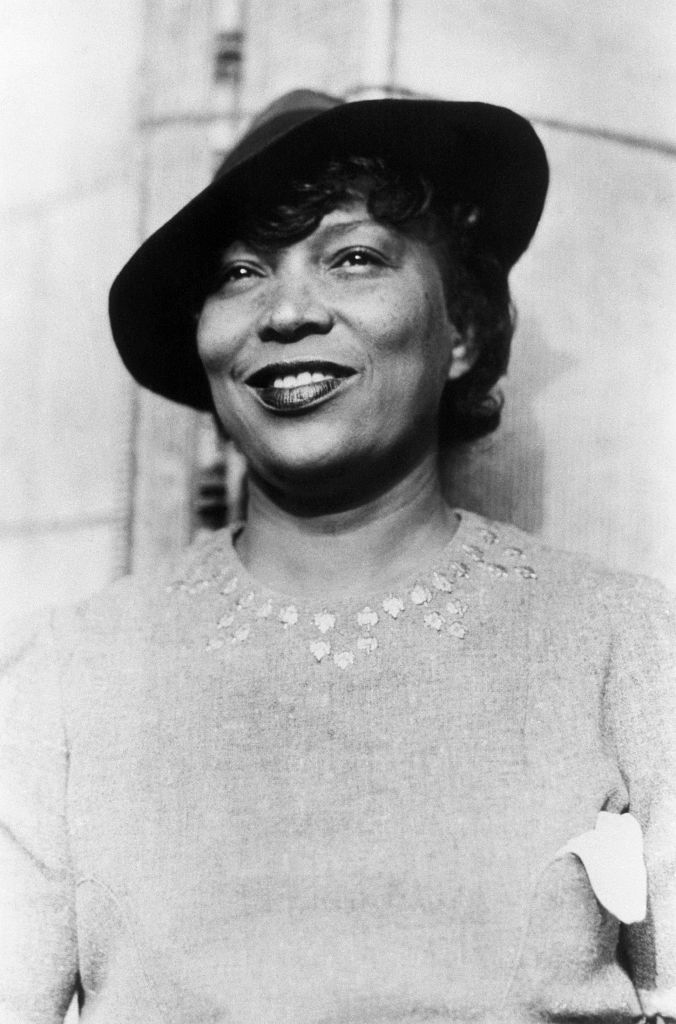
Zora Neale Hurston – January 7th
Source: Getty
Zora Neale Hurston was a literary powerhouse and cultural anthropologist who celebrated Blackness with a boldness that was ahead of her time. A central figure of the Harlem Renaissance, Hurston didn’t just write about Black life; she immersed herself in it, using her anthropologist’s eye to capture the authentic dialect, folklore, and spirit of the rural Black South. While others sought to polish the image of African Americans for white audiences, Zora was dedicated to portraying our people exactly as we were—vibrant, complex, and full of soul.
Her masterpiece, Their Eyes Were Watching God, remains a timeless classic, gifting literature with the unforgettable journey of Janie Crawford and asserting that Black women’s quest for self-realization is a story worthy of the world’s stage. Although she passed away on January 28, 1960, her light was never truly extinguished. Rediscovered by later generations, Hurston stands today as a literary ancestor who taught us the power of owning our own narratives and the beauty of our own voices.
Max Roach – January 10th
Source: Getty
Max Roach was more than just a drummer; he was a master innovator who revolutionized the rhythm of jazz. As one of the chief architects of bebop, Roach transformed the role of the drums from a simple timekeeping device into a dynamic, melodic instrument. His lightning-fast rhythms, complex patterns, and ability to “play the melody” on the drum kit set a new standard for drummers everywhere and defined the sound of a new, rebellious era in music.
Roach’s brilliance wasn’t confined to the bandstand. He was a gifted composer and a passionate activist who used his music as a powerful tool for social commentary, most notably on his groundbreaking album We Insist! Freedom Now Suite. His influence is felt in every corner of modern music, from jazz to hip-hop. Although the world lost this titan on August 16, 2007, his inventive spirit and percussive genius beat on. Max Roach didn’t just play the drums; he made them speak, sing, and shout, forever changing the way we hear music.
Mary J. Blige – January 11th
Source: Getty
Born in the Bronx and raised on the rhythms of the city, Mary didn’t just enter the music scene; she kicked the door down. With her groundbreaking debut, What’s the 411?, she seamlessly fused the gritty beats of hip-hop with the soulful melodies of R&B, creating a brand-new sound that earned her the title “Queen of Hip-Hop Soul.”
For over three decades, Mary has been the soundtrack to our lives. Her music—raw, honest, and deeply personal—speaks directly to our pain, our joy, and our resilience. Hits like “Real Love,” “Not Gon’ Cry,” and “Family Affair” are timeless anthems that bring us together at every cookout and family reunion. Beyond the microphone, she has conquered Hollywood, earning two Academy Award nominations for her powerful performance in Mudbound and delivering memorable roles in Power Book II: Ghost.
Mary J. Blige is a survivor and a trailblazer who turned her struggles into strength, showing us all that no matter where you start, you can rise to the top. She remains a vital voice in our community, continuing to empower and inspire us with every note she sings.
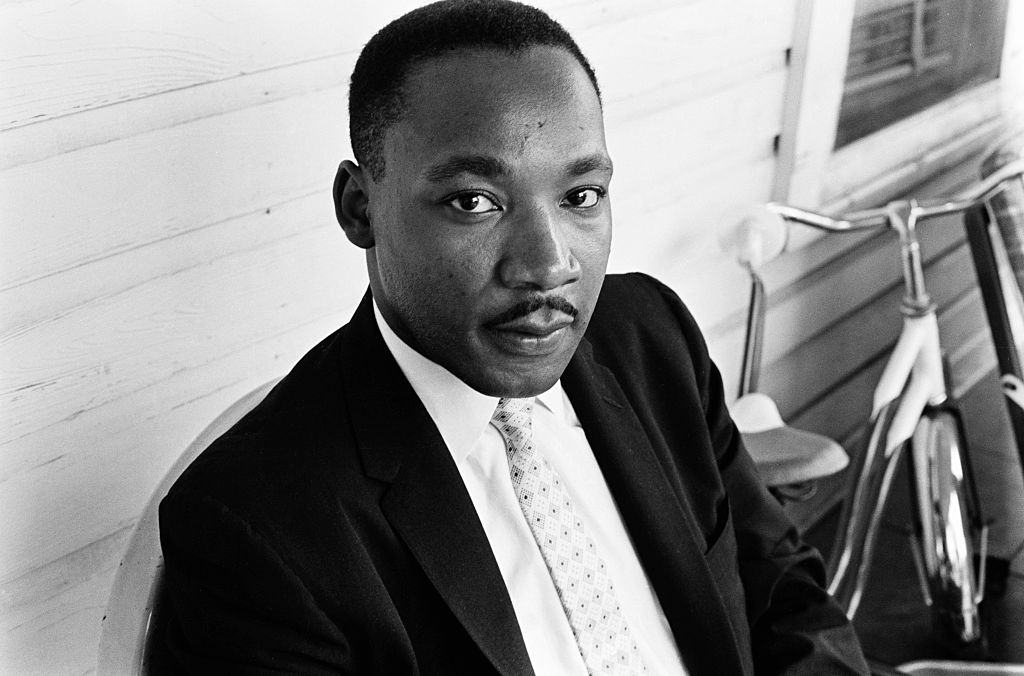
Dr. Martin Luther King Jr. – January 15th
Source: Express / Getty
Dr. Martin Luther King Jr. stands as a titan of American history, a Baptist minister who became the conscience of a nation and the leading voice of the Civil Rights Movement. With a powerful vision of equality and justice, he championed a revolutionary strategy of nonviolent civil disobedience to dismantle the brutal systems of segregation and racial discrimination. His leadership inspired ordinary people to perform extraordinary acts of courage, from the Montgomery Bus Boycott to the historic march from Selma.
On August 28, 1963, from the steps of the Lincoln Memorial, Dr. King delivered his iconic “I Have a Dream” speech, a soaring call for freedom and unity that continues to echo through generations. Though his life was tragically cut short, his work fundamentally changed the fabric of America, leading to the passage of landmark legislation like the Civil Rights Act of 1964. Dr. King’s legacy is not just in the laws he helped change, but in the enduring dream of a world where people are judged not by the color of their skin, but by the content of their character.
Regina King – January 15th
Source: Getty
From her early days winning our hearts in classics like 227 and Friday, she has evolved into one of the most respected and versatile artists of her generation. Her journey is a masterclass in longevity and grace, marked by an unwavering commitment to her craft.
As an actress, she delivers performances that are nothing short of breathtaking. Her powerful, soul-stirring role in If Beale Street Could Talk earned her a well-deserved Academy Award, cementing her status as acting royalty. But she didn’t stop there. King stepped behind the camera, proving her visionary talent as a director with the critically acclaimed film One Night in Miami….
Aaliyah – January 16th
Source: Barry King / Getty
Aaliyah Dana Haughton, known to the world simply as Aaliyah, was a true original whose influence on music, fashion, and culture continues to resonate deeply. From her debut with “Age Ain’t Nothing but a Number,” she redefined the sound of R&B with her smooth, futuristic production and whisper-soft vocals. With each album, from “One in a Million” to her self-titled masterpiece, Aaliyah pushed the boundaries of the genre, creating a timeless sound that still feels ahead of its time.
More than a singer, she was a style icon. Her signature look—the baggy pants, crop tops, and side-swept hair—shaped the aesthetic of a generation and remains a blueprint for artists today. She seamlessly transitioned to the big screen with starring roles in “Romeo Must Die” and “Queen of the Damned,” proving her star power was limitless.
Tragically, her journey was cut short on August 25, 2001, when she died in a plane crash at the age of 22. Though her time with us was brief, Aaliyah left an everlasting legacy as the “Princess of R&B,” a visionary artist whose spirit continues to inspire.
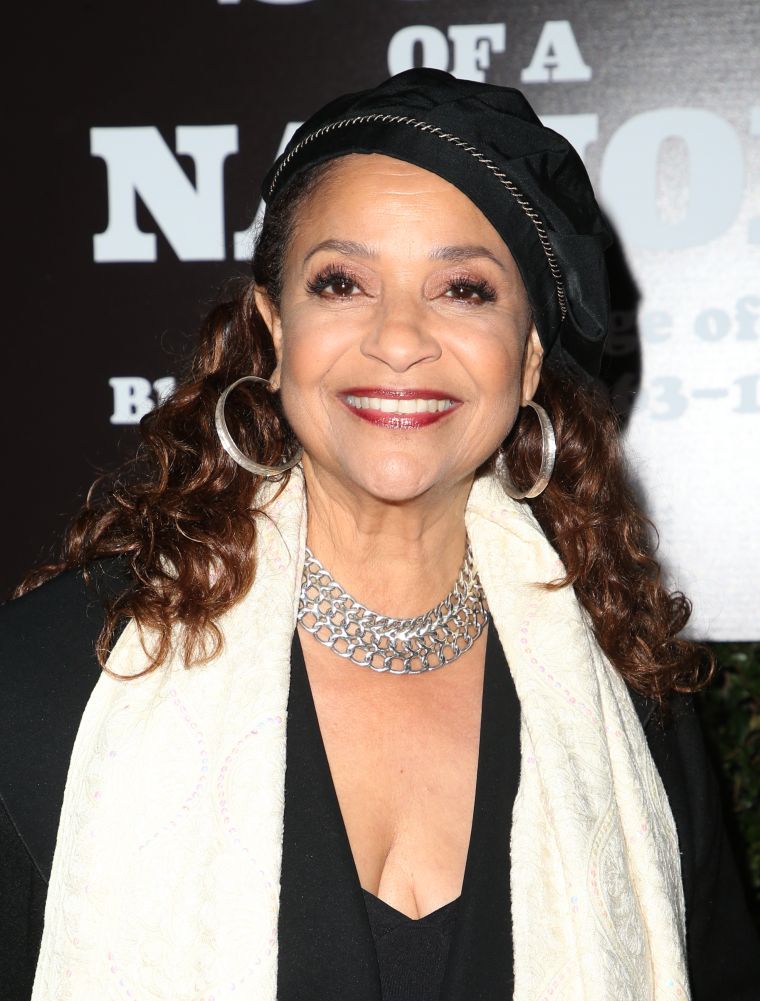
Debbie Allen – January 16th
Source: WENN
A true renaissance woman, Allen has spent decades shattering glass ceilings as a dancer, choreographer, actress, director, and producer. She danced her way into our hearts and history books with her breakout role as Lydia Grant in the hit series Fame, where her command of the room—and that famous cane—became iconic. Her declaration, “You’ve got big dreams? You want fame? Well, fame costs,” became a mantra for generations of aspiring artists.
Beyond the stage and screen, Allen is a powerhouse behind the camera. She has directed and produced for hit shows like A Different World, Grey’s Anatomy, and Scandal, ensuring that Black stories are told with authenticity and depth. However, her greatest legacy might be her unwavering commitment to mentorship. Through the Debbie Allen Dance Academy, she has opened doors for thousands of young Black and Brown dancers, nurturing the next generation of talent and proving that the arts are a vital lifeline for our community.
Michelle Obama – January 17th
Source: Getty
As the first African American First Lady of the United States, she didn’t just occupy the White House; she transformed it into a “People’s House” where everyone felt welcome. A lawyer, writer, and mother raised on the South Side of Chicago, she brought an authentic voice to Washington that resonated deeply with our community and families across the nation.
During her time at 1600 Pennsylvania Avenue, she launched powerful initiatives that changed lives. Through Let’s Move!, she tackled childhood obesity, while Reach Higher inspired young people to pursue education past high school. Her Joining Forces program rallied support for service members, veterans, and their families, ensuring those who serve are never forgotten.
Beyond policy, Michelle Obama remains a global icon and a beacon of hope. Her memoir, Becoming, wasn’t just a bestseller; it was a cultural phenomenon that invited us all to embrace our own stories. Whether she is speaking out on social issues or empowering the next generation of leaders, our Forever First Lady continues to show us that there is no limit to what we can achieve when we go high.
Muhammed Ali – January 17th
Source: Getty
Born Cassius Clay, he floated like a butterfly and stung like a bee, capturing the heavyweight title three times and delivering some of the most memorable bouts in sports history. But his fight outside the ring was even more significant.
Ali was a fearless voice for civil rights and religious freedom, famously refusing the Vietnam draft because of his convictions. At the height of his career, he sacrificed everything to stand tall for his beliefs, becoming a beacon of courage for Black people everywhere. His sharp wit, poetic trash talk, and undeniable charisma made him a cultural icon who transcended sports.
Though the world lost “The Greatest” on June 3, 2016, his spirit remains undefeated. Ali taught us that greatness isn’t just about winning titles; it’s about the courage to be yourself and the strength to fight for others. His legacy as a champion of the people will live on forever.
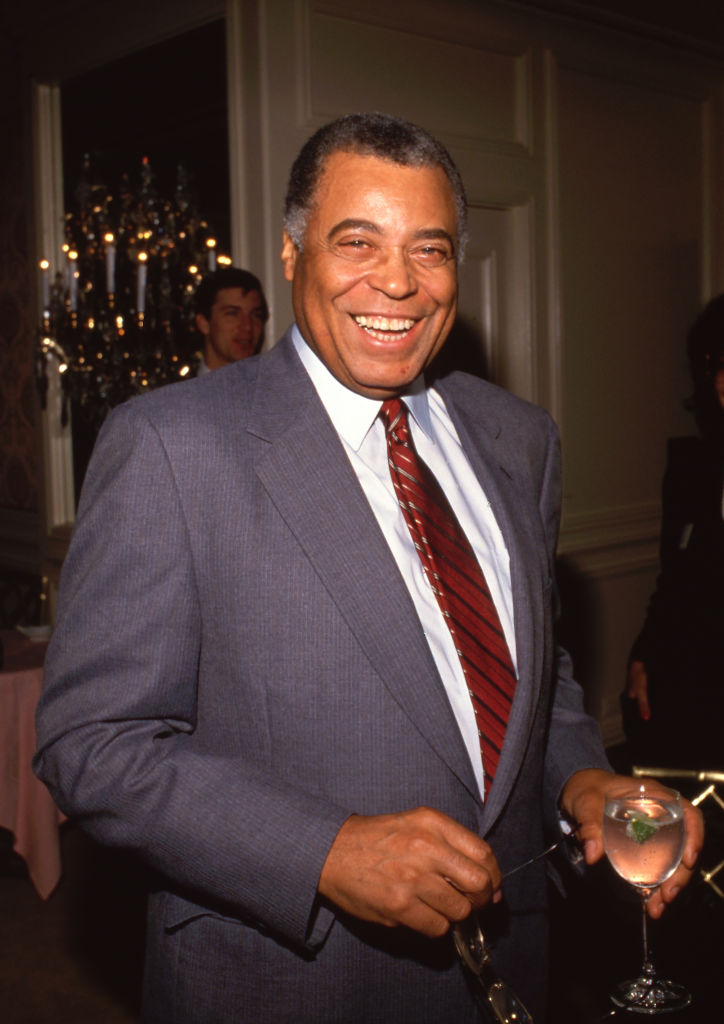
James Earl Jones – January 17th
Source: MediaPunch / Getty
James Earl Jones was a true national treasure whose work left an indelible mark on stage, screen, and our collective consciousness. His was the voice that commanded a galaxy as Darth Vader in Star Wars and the one that guided a young prince as Mufasa in The Lion King. These two roles alone define him as an icon, providing the definitive voice of both a formidable villain and a beloved father for generations of fans.
But Jones’s talent extended far beyond the recording booth. He was a titan of the theater, a Tony Award-winning actor who mastered Shakespeare and commanded Broadway. His powerful on-screen presence graced countless films, including the classic comedy Coming to America, where he played the unforgettable King Jaffe Joffer. A trailblazer who overcame a childhood stutter to become one of the most celebrated actors of our time, James Earl Jones’s legacy lives on in every voice that soars with purpose and pride.
James Earl Jones passed away in 2024, leaving behind a legacy of excellence and inspiration. His artistry and presence will always be celebrated, reminding us that his voice—both in sound and spirit—will never fade from our hearts.
Ray J. – January 17th
Source: Getty
First stepping onto the scene as a singer, he gave us undeniable R&B hits like “One Wish” and “Sexy Can I,” creating a smooth sound that became a staple of the 2000s. His musical journey proved his staying power and ability to craft a hit that sticks.
But Ray J’s hustle didn’t stop at music. He became a reality television mainstay, starring in shows like For the Love of Ray J and Love & Hip Hop: Hollywood, where his personality and real-life drama kept audiences locked in. Beyond the screen, he has shown a sharp mind for business, most notably with his successful electronics brand, Raycon. From music to reality TV to tech entrepreneurship, Ray J has continuously reinvented himself, proving he is a multifaceted entertainer and businessman.
Tatyana Ali – January 24th
Source: Getty
For millions, Tatyana Ali will forever be Ashley Banks, the sweet and talented youngest daughter from the iconic sitcom The Fresh Prince of Bel-Air. We watched her grow up on our screens, evolving from a pre-teen into a young woman with a powerful singing voice. Her character’s journey into music was a seamless transition into her own real-life recording career, which gave us the timeless R&B hit “Daydreamin’.”
But Ali’s talent extends far beyond Bel-Air. A Harvard graduate, she has built a lasting career as a versatile actress in film and television, consistently delivering memorable performances.
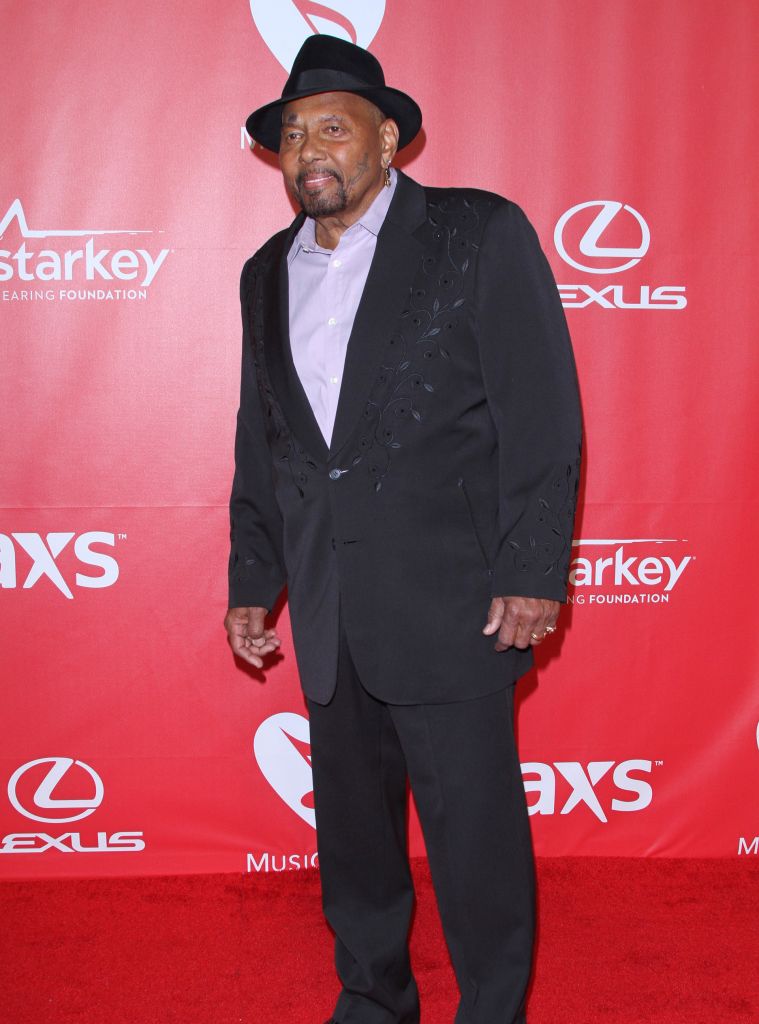
Aaron Neville – January 24th
Source: WENN
Aaron Neville is a true legend of New Orleans soul and R&B. Whether performing solo or harmonizing with his brothers as part of the iconic Neville Brothers, Aaron has carried the rich musical heritage of his hometown to the world stage, blending funk, soul, and gospel into a sound that is uniquely his own.
His 1966 classic, “Tell It Like It Is,” remains a timeless anthem of vulnerability and soul, cementing his place in the pantheon of great vocalists. But Neville didn’t stop there. He found massive crossover success through unforgettable collaborations, most notably his Grammy-winning duets with Linda Ronstadt, like “Don’t Know Much.” His voice is a testament to resilience and beauty, proving that true soul music knows no boundaries.
Alicia Keys – January 25th
Source: Getty
Alicia Keys is a 15-time Grammy Award-winning artist who redefined the landscape of modern R&B with her raw talent and authentic soul. Bursting onto the scene with her debut album, Songs in A Minor, she captivated the world not with flashy gimmicks, but with her classical piano skills, braids, and a voice that felt both timeless and fresh. Hits like “Fallin’” and “If I Ain’t Got You” aren’t just songs; they are anthems that showcase her unique ability to blend classical training with the gritty, heartfelt essence of New York City soul.
Beyond the charts, Alicia is a powerful force for good. She has consistently used her platform to uplift our community, most notably through her work with the Keep a Child Alive foundation, which provides life-saving treatment to families affected by HIV/AIDS in Africa and India. Whether she is hosting the Grammys with grace, empowering women through her She Is the Music initiative, or penning her truth in her memoir More Myself, Alicia Keys remains a shining example of artistry, activism, and Black excellence.
Etta James – January 25th
Source: Getty
As one of the most dynamic singers in music history, she bridged the gap between rhythm and blues, rock and roll, and jazz, earning her a rightful place as a matriarch of the blues. With a career spanning six decades, “Miss Peaches” didn’t just sing songs; she lived them, pouring her triumphs and struggles into every gritty, soulful note.
Her signature hit, “At Last,” remains the ultimate anthem of romance and resilience, played at weddings and celebrations across our community for generations. But her range went far beyond ballads. Songs like “Tell Mama” and “I’d Rather Go Blind” showcased a raw, emotional power that influenced everyone from Tina Turner to Beyoncé. Etta James was unapologetically herself—bold, brash, and brilliantly talented. She left an indelible mark on the music industry, reminding us all that true soul comes from deep within. Her legacy continues to resonate, proving that a voice like hers never truly fades away. Etta James passed away on January 20, 2012, leaving the music world mourning the loss of a true icon whose influence is still felt in every note of soul, blues, and R&B today.
Oprah Winfrey – January 29th
Source: Theo Wargo / Getty
From humble beginnings in rural Mississippi, she rose to become the undisputed Queen of Media, reshaping the landscape of television forever. For 25 years, The Oprah Winfrey Show was a daily gathering place for millions, where she didn’t just interview guests—she touched souls. Her ability to connect, listen, and share stories of triumph and struggle made her a trusted sister to us all.
But Oprah’s impact goes far beyond the talk show stage. She shattered glass ceilings as the first Black female billionaire in North America, building a media empire that includes the OWN network and O, The Oprah Magazine. A true mogul, she has used her immense platform to empower others, turning books into bestsellers and launching careers with a single endorsement.
Her heart for giving is just as legendary as her business acumen. Through the Oprah Winfrey Leadership Academy for Girls in South Africa and countless other initiatives, she has dedicated her life to education and lifting others up.
Jackie Robinson – January 31st
Source: Getty
Jackie Robinson was more than just a baseball player; he was a revolutionary who changed the face of America forever. On April 15, 1947, he stepped onto Ebbets Field as a Brooklyn Dodger and shattered the Major League Baseball color barrier. With the number 42 on his back, he carried the hopes and dreams of Black America on his shoulders, facing down racism with dignity, discipline, and undeniable talent.
Robinson’s athleticism was unmatched—he was the Rookie of the Year in 1947 and MVP in 1949—but his true legacy lies in his resilience. By excelling on the diamond despite immense pressure and hostility, he challenged segregation and paved the way for the Civil Rights Movement. He proved that excellence knows no color.
Off the field, Robinson was a tireless advocate for justice, working alongside leaders like Dr. Martin Luther King Jr. to fight for equality. Today, his legacy is celebrated every year when every player in the league wears number 42, a powerful reminder that his courage opened doors for generations of athletes to come.
Kerry Washington – January 31st
Source: Getty
Kerry Washington is a powerhouse actress, producer, and activist who has masterfully redefined what it means to be a leading lady in Hollywood. While she has delivered acclaimed performances in films like Ray and Django Unchained, it was her groundbreaking role as Olivia Pope in the hit series Scandal that cemented her icon status. For seven seasons, she commanded our attention as a brilliant, complex, and powerful Black woman, proving that our stories deserve to be at the center of the narrative.
As the first Black woman to headline a network drama in nearly four decades, Washington didn’t just play a character; she opened doors. Her production company, Simpson Street, continues to champion diverse stories and creators, ensuring that more voices are heard.
Beyond the screen, she is a fierce advocate for social justice, using her platform to fight for everything from voting rights to gender equality.
AUSTIN, Texas – An off-duty Caldwell County deputy constable is dead, and two men are in custody after a shooting outside an Austin bar early Sunday morning.
38-year-old Thomas Vances has been charged with capital murder of a peace officer and is facing four other unrelated felonies and one misdemeanor.
22-year-old Ronaldo Ernesto Colindres-Simon has been charged with second-degree felony assault on a peace officer and is being held in the Travis County Jail on a $100,000 bond.
Suspect in shooting arrested for capital murder
What we know:
Vances is currently in the Travis County Jail for:
Capital murder of a peace officer
Third-degree felony assault on a family or household member with previous conviction (from 2017)
Second-degree felony burglary of a habitation (from 2024)
Second-degree felony burglary of a habitation (from 2020)
Third-degree felony assault on a family or household member with previous conviction (from 2019)
Misdemeanor criminal trespass (from 2024)
Man arrested for running over deputy constable’s arm after he was shot
Timeline:
Arrest paperwork filed for Colindres-Simon gives a timeline of the investigation into the shooting.
On Jan. 4, just after 2 a.m., APD responded to an “assist agency hotshot” call saying a constable had been shot at Club Rodeo, at 9515 N. Lamar Boulevard.
When officers arrived, they were flagged down by pedestrians in the parking lot and pointed towards two parked cars where they found a uniformed deputy constable on the ground. A bystander had started a tourniquet and told police they had seen at least one gunshot wound to his upper right arm.
The bystander told police that a man had been in an altercation inside the bar and was escorted out by the deputy. The man left the parking lot, but then returned and was told by the deputy that if he kept causing issues, he would go to jail.
The man appeared agitated and was held back by two other men and a woman. One of the men was later identified by police as Colindres-Simon.
The bystander said the man had retrieved a gun from one of the cars. An expletive was yelled and the bystander said he heard a gunshot. He helped the deputy constable to the ground and began life-saving measures, including the tourniquet.
He told police that he saw Colindres-Simon get into one of the cars and try to leave. Colindres-Simon told the bystander he didn’t want anything to do with this and wanted to leave. Despite the bystander’s protests, Colindres-Simon got in the car and reversed over the deputy constable’s arm with one tire.
The bystander prevented him from doing it to the deputy constable’s other arm and yelled at him that he was running him over. The car then drove off.
Officers were able to identify the sedan Colindres-Simon was driving through a social media post, which showed a license plate not belonging to the sedan. Officers also determined two other vehicles had been involved; two of the three vehicles did not have license plates.
Officers did a traffic stop on the sedan for not having a license plate and matching the description of the vehicle that had fled the scene and run over the deputy constable’s arm.
The driver of the sedan was identified as Colindres-Simon, who told police he was parked at Club Rodeo but left because he heard gunshots. However, footage from Armstrong’s body camera showed Colindres-Simon as one of the men holding back the shooting suspect. He also matched the description given to police by the bystander.
The Source: Information in this report comes from arrest paperwork, Travis County jail records, reporting by FOX 7 Austin’s Meredith Aldis and Marco Bitonel, and previous reporting by FOX 7 Austin
Kris Mayes believes in the lost art of the town hall.
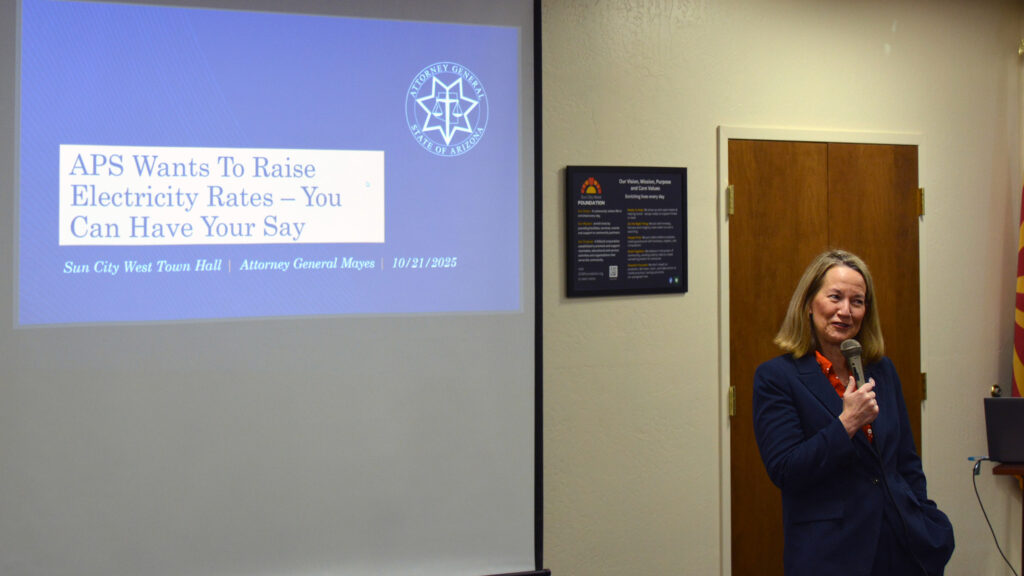
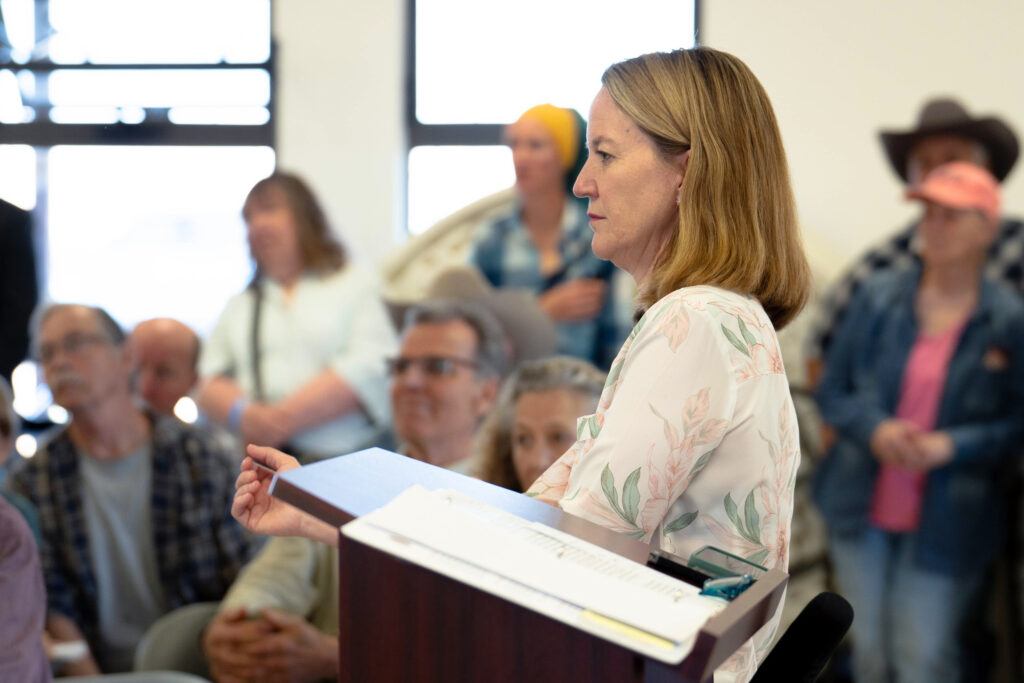
That conviction recently brought the Arizona attorney general before a group of a few dozen residents of Sun City, Arizona, a far-flung suburb for retirees in the Phoenix area’s West Valley, to hear from residents how a proposed rate hike from the state’s largest utility, Arizona Power Service (APS)—its third in four years—would affect them.
Mayes came with a deeper understanding of energy issues than many who serve in her role.
She once served on the Arizona Corporation Commission (ACC)—the utility regulator known as Arizona’s “fourth” branch of government—then became a professor of energy law at Arizona State University and a mom. Then, by a margin of 280 votes, state residents elected her to be the Arizona attorney general (“They don’t call me landslide Mayes for nothing,” she joked).
When she was on the ACC, the commissioners would travel the state to hear from the people affected by issues like rate hikes. Mayes worries they won’t in this case due to the unpopularity of APS’s latest price increase.
If APS’s latest rate increase is approved, its customers’ rates would go up 14 to 16 percent, netting the company another $662 million a year; last year, APS reported a profit of just over $600 million.
PowerPoint presentation behind her, Mayes did what an ex-energy law professor does best: Present a lesson on how a rate case works, and how she believes “this is nothing more than a case of blatant corporate greed.”
That’s why she is intervening in the case, she said, signing up the state’s largest law firm tasked with enforcing Arizona’s laws to argue that the rate case should not go through.
“I believe Arizonans deserve a voice,” she told the audience. “These utilities are greedy. They’re asking for too much, and they’re overreaching.”
Arizona Attorney General Kris Mayes speaks before residents of Sun City about a proposed rate increase from APS, which she opposes. Credit: Wyatt Myskow/Inside Climate News
It’s the first time in state history that the state attorney general has intervened in a rate case, and the latest example of Mayes using her office to wade into environmental and energy issues to protect Arizonans. At a time when climate issues have faded from the vocabulary of many federal and state politicians across the country, Mayes has continued to prioritize them.
She’s sued a controversial industrial farming operation under Arizona’s nuisance laws for causing water wells in rural areas to go dry, fought a mining company’s plan in Chino Valley and filed 30 lawsuits against the Trump administration, many of which have implications for the climate and environmental work in Arizona and across the country. And now she’s intervening in multiple cases before the ACC, from APS and other utilities’ proposed rate increases to opposing plans to repeal the state’s energy efficiency and renewable energy standards, both of which she helped co-author and pass while serving as a commissioner.
These are not the typical fights of an attorney general, Mayes conceded in an interview with Inside Climate News. But they should be, she said. She believes the Arizona Corporation Commission “is basically controlled by the utilities”—APS and its parent company, Pinnacle West, have spent millions to elect corporation commission members. Mayes doesn’t believe “the people of Arizona have anybody that’s really fighting for them.”
She knows utility law as well as anyone, and it empowers her to take action in the courts against corporations, “so why wouldn’t I do that?”
She believes these water and energy and environmental issues are not just winning ones, but righteous ones, ones that impact everyday Arizonans. Can a family continue to afford their utility bill in the midst of inflation? Will they still have water coming out of their well?
“My north star is standing up for the people against big corporations when they can’t do it themselves,” she said. “We’re living in a time when more and more people are finding themselves harmed by big corporations and by the consolidation of power among a few corporations, and I don’t know, for whatever reason, not very many politicians seem willing to get in there and lead the fight. I don’t have any problem with doing that. I feel like it’s my duty. If that means I lose an election down the road, so be it. I mean, the people of Arizona put me here by 280 votes, and I want to spend every precious minute fighting for them.”
Mayes is up for reelection next year, when voters will decide if a state politician in the political battleground of Arizona focused on rural groundwater issues and fighting utility rate increases can hold on to office.
Deep Roots in the Arizona Environment
Mayes grew up with her hands in the dirt.
Growing up on a tree farm in Prescott, Arizona, her job was watering the garden and the freshly potted ponderosas, honey locusts and willows. Many of the trees in Prescott today are from the nursery owned by her father, a founding member of the Yavapai County chapter of the Sierra Club. For vacations, the family took the “yellow banana”—an “ugly, old” yellow Mazda station wagon, as Mayes describes it—and headed to the Santa Maria River. The ponderosa pine the family selected as its Christmas tree every year was a “scraggly little sucker.”
“I learned at an early age—helping my dad with the tree farm, watering trees, going to the Santa Maria river, going over on the other side of the county to where the headwaters of the Verde River are—about the value of water and the beauty of our state and the need to conserve it,” Mayes said. “I think that was pretty much drilled into me from day one.”
She attended Arizona State University in Phoenix, where she had a dual-major in politics and journalism, graduating in 1994. As a political reporter for the Arizona Republic at the start of her career, she was barred from the late Sen. John McCain’s presidential campaign bus in 2000 for asking inappropriate questions—like why he wasn’t way ahead in the polls in the state where he was a senator.
Mayes was the press secretary for Janet Napolitano’s successful gubernatorial campaign in 2001. In 2003, when a member of the ACC, Jim Earvin, resigned to avoid impeachment after being accused of trying to influence a bidding war for the Southwest Gas Corporation, The law required Napolitano to appoint a Republican replacement. Mayes, who had her own political ambitions, was a Republican.
While she ended up on the commission by chance, the position matched her interests and she ran to keep the seat in 2004 and 2006, serving on the ACC until 2009. Along the way she helped pen Arizona’s energy efficiency and renewable energy standards.
After her time on the commission, she spent a decade at Arizona State University teaching utility and energy law before running for attorney general as a Democrat on a platform to protect Arizonans’ abortion access and address climate change in the state. She’s the only Arizona politician to win statewide office as both a Republican and a Democrat.
“She can go toe-to-toe with anyone on this energy stuff,” said Bill Mundell, a former corporation commissioner who served with Mayes and is now her chief deputy.
“She’s a force of nature,” said Dru Bacon, a retiree who has spent his time advocating for solar energy and has worked with Mayes since her days on the ACC.
Confronting Growth and Diminishing Water Supplies
Arizona is facing an “obvious crisis,” Mayes said.
“We are quickly outstripping our natural resources,” she told Inside Climate News.
The Phoenix area, with its sprawling highways and suburbs, consistently ranks among the country’s worst for air quality. And the water that enabled the nation’s fifth-largest city to rise is rapidly disappearing. From Phoenix to Arizona’s rural stretches, aquifers are vastly overtapped. Planned suburbs on the outskirts of the Phoenix area are on hold asdevelopers search for water. Wells are running dry at churches and homes near industrial farming operations.
This story is funded by readers like you.
Our nonprofit newsroom provides award-winning climate coverage free of charge and advertising. We rely on donations from readers like you to keep going. Please donate now to support our work.
Meanwhile, Arizona’s share of the Colorado River has been cut as the waterway that provides the lifeblood of the Southwest declines due to climate change and vast overconsumption of its water, with the state facing even steeper cuts in tense, ongoing negotiations about how to use less. The Colorado River is split into the Upper Basin states of Wyoming, Colorado, Utah and New Mexico, and the Lower Basin states of Arizona, California and Nevada. The two sides are deadlocked over how cuts should be distributed between the seven states.
“We need an adult, serious conversation about how much and how fast we can grow, and where our water supplies are going to come from,” Mayes said.
That conversation, she said, needs to prioritize rural Arizona, where the impacts of the region’s drought are already playing out.
“I think Phoenix politicians think that we’re going to solve this problem on the backs of rural Arizonans by bringing water in from Western Arizona, in part,” she said, referring to deals buying up rural farms to use their water rights to supply cities. Other schemes pump groundwater from unregulated rural aquifers to transfer to cities. “Phoenix politicians are doing some magical thinking about the Colorado River that is just not reality,” she said. “We have a battle royale brewing with the Upper Basin states who, I can tell you, have no intention of backing down.”
Nature, she said, has a way of telling you when your time is up. “And the Colorado River and our groundwater our screaming at us, and they are telling us: ‘You need to get your act together.’”
There are limits to what can be done, Mayes said, and Arizona politicians have to confront that. And it has to be done in a way that doesn’t sacrifice rural Arizonans for the “explosive growth” in places like Phoenix and Tucson. “We have some hard choices ahead of us,” she said.
Arizona Attorney General Kris Mayes listens to residents from Cochise County talk about their concerns regarding groundwater. Credit: Courtesy of the Arizona Attorney General’s Office
Mayes’s comments on Arizona’s water future are remarkably blunt for a state-level politician. Gone are the days when some of the state’s politicians would deny Arizona had a water problem, but even now, after two decades of drought and its fallout, few local leaders will say the region’s growth is unsustainable. In the Phoenix area, its far-flung suburbs like Buckeye are betting on water transfers from rural Arizona to save them. Meanwhile, wells are running dry in rural stretches of La Paz and Cochise counties after decades of overconsumption caused almost exclusively by agriculture.
Since taking office, Mayes has held over 40 town halls across the state. There is no substitute, she said, for physically being in person with people affected by an issue, trying to find ways to help. Often, she’s fighting for Arizonans in rural parts of the state who did not vote for her. She’s had members of the Democratic Party tell her she’s wasting her time on them.
“It’s an incredibly offensive question, because these people deserve my time just as much as somebody living down here in one of these high rises,” she said, gesturing towards the apartment complexes surrounding the AG’s downtown Phoenix office.
In Sun City, retirees on fixed incomes spoke about the challenges of keeping up with costs as inflation rises. A 16 percent increase to their electricity bill would only make it worse, and would be done so that APS can build more power plants for the increasing number of data centers in the state, they fear.
For utilities, it used to be industrial use subsidized residential use, Mayes said. The APS rates have flipped that.
“Data centers are the cotton candy of economic development, but to the degree that we want to facilitate data centers, they definitely should be paying for themselves,” Mayes said. “That burden should not be put on residential consumers.”
“I don’t personally think that Arizona wants to be the data center capital of the world,” she said.
It just might be a politically winning position. Across Arizona, local communities are fighting back against proposed data centers. In Tucson, a local coalition’s critique of a proposed data center backed by Amazon Web Services led the city council to reject the proposal and pass new water restrictions for large users; the project’s developers have continued their push to build it on county land outside the city, but recently Amazon pulled out of the project.
Teri Huff and Susan Colvin, retired Sun City residents who attended the town hall there and are both Republicans, said it was refreshing to have an attorney general like this who shows up to listen. They might just have to vote for her—even if she’s a Democrat.
About This Story
Perhaps you noticed: This story, like all the news we publish, is free to read. That’s because Inside Climate News is a 501c3 nonprofit organization. We do not charge a subscription fee, lock our news behind a paywall, or clutter our website with ads. We make our news on climate and the environment freely available to you and anyone who wants it.
That’s not all. We also share our news for free with scores of other media organizations around the country. Many of them can’t afford to do environmental journalism of their own. We’ve built bureaus from coast to coast to report local stories, collaborate with local newsrooms and co-publish articles so that this vital work is shared as widely as possible.
Two of us launched ICN in 2007. Six years later we earned a Pulitzer Prize for National Reporting, and now we run the oldest and largest dedicated climate newsroom in the nation. We tell the story in all its complexity. We hold polluters accountable. We expose environmental injustice. We debunk misinformation. We scrutinize solutions and inspire action.
Donations from readers like you fund every aspect of what we do. If you don’t already, will you support our ongoing work, our reporting on the biggest crisis facing our planet, and help us reach even more readers in more places?
Please take a moment to make a tax-deductible donation. Every one of them makes a difference.
Wyatt Myskow covers drought, biodiversity and the renewable energy transition throughout the Western U.S. Based in Phoenix, he previously reported for The Arizona Republic and The Chronicle of Higher Education. Wyatt has lived in the Southwest since birth and graduated from Arizona State University with his bachelor’s degree in journalism.
Great Job By Wyatt Myskow & the Team @ Inside Climate News Source link for sharing this story.
BEN SHAPIRO (HOST): Now, there are some people who have asked the legal question, what is the legal basis for this? So let’s be clear. When people say there is a violation of international law, no one cares. There is no such thing as international law. It is nonsense.
It is nonsense because there is no enforcement mechanism. You know what international law really is? The law of the jungle. The reality is that the strong do what they will and the weak do what they must. That is the law of international relations. There is no alternative to it.
All attempts to establish some alternative to it have failed, which is why self-defense is necessary and why a strong military is necessary for powerful Western states and why a stronger America in the world is better for the world.
I saw a hilarious post by somebody who said, well, now that we’ve done this, what’s to stop China from morally attempting to take Taiwan? I wasn’t aware that China was bound by our moral strictures. If they were, I don’t think that they would be China, actually. I don’t think that Russia is waiting around for our opinions. They’re just doing what they want, and the thing that stops them is us, not our moral suasion.
On a moral level, by the way, taking out a communist dictator who has impoverished his people and destroyed his country is, in fact, morally superior to taking out, say, a democratic leader in another country who is not doing any of those things. Some bizarre moral relativism that is set in on both the horseshoe left and the isolationist right is pretty astonishing to watch.
Great Job Media Matters for America & the Team @ Media Matters for America Source link for sharing this story.
A hacktivist remotely wiped three white supremacist websites live on stage during their talk at a hacker conference last week, with the sites yet to return online.
The pseudonymous hacker, who goes by Martha Root — dressed as Pink Ranger from the Power Rangers — deleted the servers of WhiteDate, WhiteChild, and WhiteDeal in real-time at the end of a talk at the annual Chaos Communication Congress in Hamburg, Germany.
As of this writing WhiteDate, which Hoffmann described as a “Tinder for Nazis”; WhiteChild, a site that claimed to match white supremacists’ sperm and egg donors; and WhiteDeal, a sort-of Taskrabbit-esque labor marketplace for racists, are all offline.
The administrator of the three websites confirmed the hack on their social media accounts.
“They publicly delete all my websites while the audience rejoices. This is cyberterrorism,” the administrator wrote on X on Sunday, vowing repercussions.
The administrator also claimed that Root deleted their X account before it was restored.
A German hacker known as “Martha Root” dressed as a pink Power Ranger and deleted a white supremacist dating website live onstage
This happened during the recent CCC conference.
Martha had infiltrated the site, ran her own AI chatbot to extract as much information from users… pic.twitter.com/vpTEoFR8JR
— International Cyber Digest (@IntCyberDigest) January 2, 2026
Root also published the data allegedly scraped from WhiteDate online.
The hacker said that they scraped WhiteDate’s public data and found “poor cybersecurity hygiene that would make even your grandma’s AOL account blush.” Root said that users’ images included precise geolocation metadata that “practically hands out home addresses with a side of awkward selfies.”
“Imagine calling yourselves the ‘master race’ but forgetting to secure your own website — maybe try mastering to host WordPress before world domination,” Root wrote.
The leaked data includes users’ profiles with name, pictures, description, age, location (both containing precise coordinates and user-set country and state), gender, language, race, and other personal information that users uploaded. Root wrote on the site that “for now” there are no emails, passwords or private conversations.
According to the leaked data, WhiteData had more than 6,500 users, of which 86% men and 14% women. “A gender ratio that makes the Smurf village look like a feminist utopia,” Root wrote.
Root infiltrated the sites using AI chatbots that bypassed verification processes and were verified as “white,” according to the talks’ abstract.
DDoSecrets, a nonprofit collective that stores leaked datasets in the public interest, announced that it has received “files and user information” from the three white supremacist websites. The collective, which calls this release “WhiteLeaks,” has not publicly released the data, but is instead asking verified journalists and researchers to request access to the full 100 gigabyte dataset.
The administrator of the three websites did not immediately respond to TechCrunch’s request for comment sent to an email address shown during the conference talk. TechCrunch also sent an email to an address that appears on the public domain records of two of the three websites. The person behind that address also did not immediately respond to our email.
Root, Hoffmann, and Fuchs claim to have identified the real identity of the websites’ administrator as a woman from Germany. TechCrunch could not independently confirm the identity of the administrator.
Great Job Lorenzo Franceschi-Bicchierai & the Team @ TechCrunch Source link for sharing this story.
WASHINGTON – Defense Secretary Pete Hegseth on Monday announced that he is issuing a letter of censure to Democratic Sen. Mark Kelly of Arizona over the lawmaker’s participation in a video that called on troops to resist unlawful orders.
Hegseth said that the censure was “a necessary process step” to proceedings that could result in a demotion from Kelly’s retired rank of captain in the U.S. Navy.
In a lengthy post on X, Kelly said he “never expected” what he called an “attack” from Trump and Hegseth, recounting his 25 years of Navy service, as well as combat and space missions. Calling Hegseth’s move “outrageous” and “un-American,” Kelly said he would fight the censure “with everything I’ve got — not for myself, but to send a message back that Pete Hegseth and Donald Trump don’t get to decide what Americans in this country get to say about their government.”
The move comes more than a month after Kelly participated in a video with five other Democratic lawmakers in which they called on troops to defy “illegal orders.” President Donald Trump accused the lawmakers of sedition “punishable by DEATH” in a social media post days later.
Senate Democratic leader Chuck Schumer of New York called Hegseth’s action against Kelly “a despicable act of political retribution.”
“Mark Kelly is a hero and a patriot committed to serving the American people,” Schumer said on social media. “Pete Hegseth is a lap dog committed to serving one man – Donald Trump.”
In November, Kelly and the other lawmakers — all veterans of the armed services and intelligence community — called on U.S. military members to uphold the Constitution and defy “illegal orders.”
The 90-second video was first posted from Sen. Elissa Slotkin’s X account. In it, the six lawmakers — Slotkin, Kelly and Reps. Jason Crow, Chris Deluzio, Maggie Goodlander and Chrissy Houlahan — speak directly to U.S. service members, whom Slotkin acknowledges are “under enormous stress and pressure right now.”
The Pentagon announced that it began an investigation of Kelly late in November while citing a federal law that allows retired service members to be recalled to active duty on orders of the defense secretary for possible court martial or other measures.
While all six lawmakers served in the military or the intelligence community, Hegseth made clear in previous remarks that Kelly was the only one facing investigation because he is the only one of the lawmakers who formally retired from the military and is still under the Pentagon’s jurisdiction.
Kelly said that the investigation was part of an effort to silence dissent within the military.
“This is just about sending a message to retired service members, active duty service members, government employees — do not speak out against this president or there will be consequences,” Kelly told reporters in mid-December.
In his post Monday, Hegseth charged that Kelly’s remarks in the video and afterward violated the Uniform Code of Military Justice provisions against conduct unbecoming an officer and violating good order and discipline.
Kelly, along with some of the other Democrats in the initial video, have also sent out fundraising messages based off the Republican president’s reaction to their comments, efforts that have gone toward filling their own campaign coffers and further elevating their national-level profiles.
In recent months, Kelly — whose name has frequently been mentioned as a potential 2028 Democratic presidential contender — has made several trips to South Carolina, traditionally an early primary state that kicked off its party’s nominating calendar in 2024. Appearing with his wife, former Rep. Gabby Giffords, at events calling for stricter gun control measures, Kelly met during those trips with local lawmakers, stakeholders whose early support can be critical as national-level hopefuls attempt to make inroads in the critical state.
Hegseth said Monday that “Captain Kelly’s status as a sitting United States Senator does not exempt him from accountability, and further violations could result in further action.”
Todd Huntley, a retired Navy captain and judge advocate general, said that this is a “novel” situation that raises legal questions.
One issue, according to Huntley, is whether Kelly’s comments fall under the constitutional protections of the speech or debate clause.
The clause is intended to protect members of Congress from questioning about official legislative acts, and a 1968 Supreme Court decision wrote that the provision’s intent was “to prevent legislative intimidation by and accountability to the other branches of government.”
Huntley also said that while the type of process Hegseth is using here, known as a retirement grade determination, is fairly routine, “as far as I know, they’ve always been based on conduct during the individual’s active duty service, even if it only came to light after retirement.”
“So, I don’t know if conduct totally after retirement would fit the requirement for such a determination,” he added.
According to Hegseth, Kelly now has 30 days to submit a response to the proceedings that will decide if he is demoted. The decision will be made within 45 days, Hegseth’s post added.
___
Kinnard reported from Columbia, S.C. Associated Press writer Stephen Groves contributed to this report.
Copyright 2026 The Associated Press. All rights reserved. This material may not be published, broadcast, rewritten or redistributed without permission.
Great Job Associated Press & the Team @ KSAT San Antonio for sharing this story.
Tichina Arnold shared a blunt piece of her dating history while chatting with comedian Deon Cole, revealing that she once dated an actor from the popular series, “90210” — and that the relationship ended exactly when she realized it wasn’t built for the long haul.
It was her first time dating a white man, and although she had no regrets, she understood when it was her time to walk away.
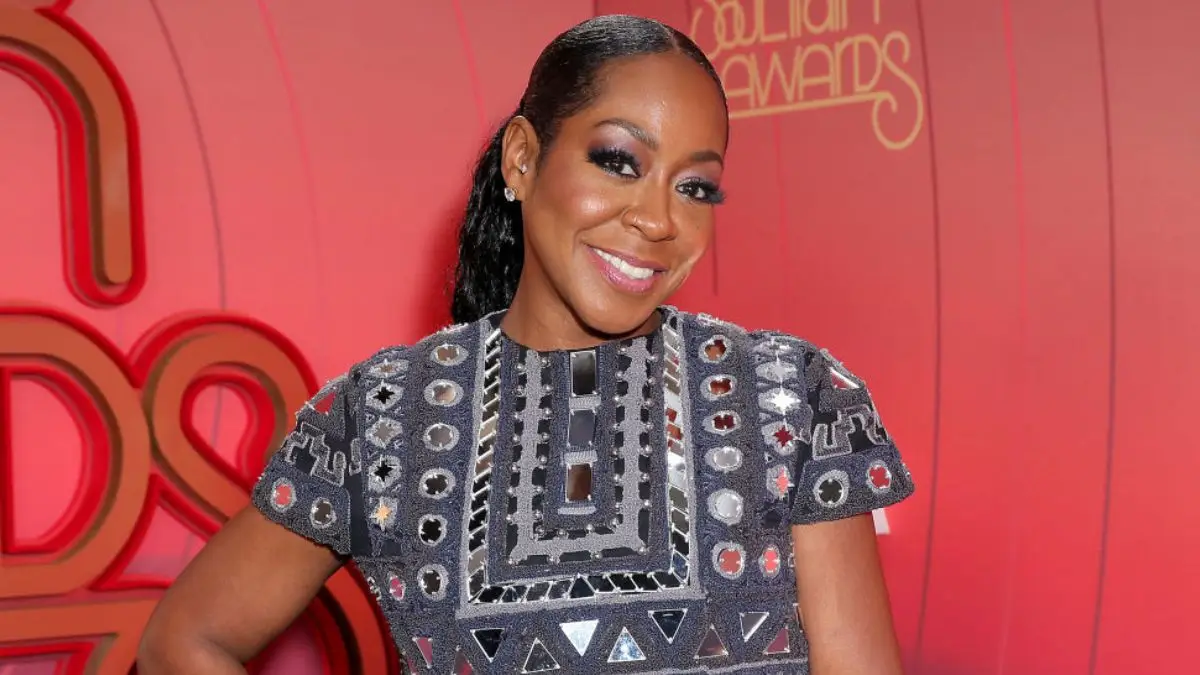
Tichina Arnold reflects on briefly dating Brian Austin Green and explains why the experience confirmed her preference to date within her race. (Photo: @tichinaarnold/Instagram)
The reveal came during a New Year’s Eve episode of Cole’s podcast, “Funny Knowing You,” as the two talked openly about attraction, relationships, and knowing when to walk away.
When Cole asked if she had ever dated a white man, Arnold answered without hesitation: “I sure did, yeah.”
Tichina Arnold talks about her first and only time dating a white man, actor Brian Austin Green, which reassured her that dating outside her race isn’t for her
— Block Topickz (formerly Glock Topickz) (@BlockTopickz) January 1, 2026
Asked what the experience was like, Arnold kept it simple.
“It was nice. He was different,” she said, before explaining why she ended it.
According to Arnold, she paid attention to patterns. She saw Green dating Black women, including her, but didn’t believe that was where his life was ultimately headed.
“You’re not going to end up with a Black woman,” she recalled telling him. Adding, “You’re going to share your riches and your legacy with someone white. So I’m getting off this train.”
Arnold made a point to remove any bitterness from the story. She described Green as kind and said the relationship mattered because it helped her understand what wasn’t for her.
“It wasn’t going anywhere,” she told Cole, adding that she needed to experience that dynamic. “But it was a great experience cuz he was a good human being. He was a good human being. And I think in life I had to experience that, so I know what the other side is. And you know, it’s just not something that I want. I just really love … I’m just attracted to black men.”
It wasn’t until much later in the interview that Arnold said the actor’s full name, Brian Austin Green, who played David Silver, the aspiring musician and DJ who often pursued Donna Martin, on the iconic teen drama Beverly Hills, 90210 (1990-2000).
Reunión de Beverly Hills 90210 en la 90sCon! Se acuerdan de Donna (Tori Spelling) y de David (Brian Austin Green)? pic.twitter.com/1QFmpE5KQI
The “Martin” alum explained how Green “pursued” her, detailing how he took her on dates that included red carpets and impressed her creatively as he could rap. Still, she emphasized, he remains the only white man and the only actor she has ever dated.
Once clips from the podcast circulated, reactions on X followed quickly.
“She understood he was a white guy going through a black girl phase. Brian was a handsome white dude back in the day tho,” one user wrote.
“Damn she called it, bro was just going through a phase because he’s been with nothing but white women since lol,” another added.
Another post read, “Pam tried a little cream in her coffee for awhile – and then decided her coffee should stay black. I respect her journey. Didn’t bash NO men!!!!”
“In a world where B.A.G. was involved with Tichina Arnold, Tiffani Thiessen, Vanessa Marcil and Megan Fox!” one person wrote, calling him a “Very Lucky Man.”
And one user admitted, “I might’ve folded for the B.A.G. Not eeeeeeeeen gone lie.”
Arnold’s assessment proved accurate. Green went on to have a son with Vanessa Marcil, three sons with Megan Fox, and another child with dancer Sharna Burgess.
In recent years, he also made headlines for stepping up for his ex, the “Transformers” actress, when he feels she’s been disrespected. In February 2025, he publicly checked rapper-turned-actor Machine Gun Kelly when he commented online about Fox.
According to People, Green posted an Instagram Story telling him to “be honest for once in your life” and stop trying to “drag other people.” He later said MGK should “grow up,” especially considering Fox was pregnant at the time, and added that his focus was on Megan, their children, and the baby.
MGK responded privately. According to Green, the rapper slid into his Instagram DMs, accusing him of “contacting media” and telling him to “focus on other things” instead of commenting on Fox and their situation.
The back and forth made both men look petty to some online critics.
While Green’s personal life continues to unfold publicly, Arnold has been equally candid on her own terms. During a recent appearance on The Jennifer Hudson Show, she spoke openly — and comedically — about dating while going through menopause. Arnold joked that being unable to get pregnant makes her the “best date ever,” explaining that she went through menopause early, had her daughter, and is happily “one and done.”
Taken together, Arnold’s comments — about Green, dating, and menopause—tell the same story. She doesn’t romanticize uncertainty. She doesn’t stay where the future feels mismatched. And she doesn’t soften her truth to make anyone else more comfortable.
Her Brian Austin Green confession wasn’t nostalgia or shade. It was clarity — delivered calmly, laughed about publicly, and backed up by time.
Since then, she has been divorced twice from: former UCLA coach Rico Hines (2012 – 2016) and former heavyweight boxer Lamon Brewster (1992 – 1995). Arnold has a daughter, Alijah Kai Haggins, born in 2004, with music producer Carvin Haggins.
Great Job Nicole Duncan-Smith & the Team @ Atlanta Black Star Source link for sharing this story.
It’s like a new telling of the “Tortoise and the Hare”: A group of experienced software engineers entered into an experiment where they were tasked with completing some of their work with the help of AI tools. Thinking like the speedy hare, the developers expected AI to expedite their work and increase productivity. Instead, the technology slowed them down more. The AI-free tortoise approach, in the context of the experiment, would have been faster.
The results of this experiment, part of a recent study, came as a surprise to the software developers tasked with using AI—and to the study’s authors, Joel Becker and Nate Rush, technical staff members of nonprofit technology research organization Model Evaluation and Threat Research (METR).
The researchers enlisted 16 software developers, who had an average of five years of experience, to conduct 246 tasks, each one a part of projects on which they were already working. For half the tasks, the developers were allowed to use AI tools—most of them selected code editor Cursor Pro or Claude 3.5/3.7 Sonnet—and for the other half, the developers conducted the tasks on their own.
Believing the AI tools would make them more productive, the software developers predicted the technology would reduce their task completion time by an average of 24%. Instead, AI resulted in their task time ballooning to 19% greater than when they weren’t using the technology.
“While I like to believe that my productivity didn’t suffer while using AI for my tasks, it’s not unlikely that it might not have helped me as much as I anticipated or maybe even hampered my efforts,” Philipp Burckhardt, a participant in the study, wrote in a blog post about his experience.
Why AI is slowing some workers down
So where did the hares veer off the path? The experienced developers, in the midst of their own projects, likely approached their work with plenty of additional context their AI assistants did not have, meaning they had to retrofit their own agenda and problem-solving strategies into the AI’s outputs, which they also spent ample time debugging, according to the study.
“The majority of developers who participated in the study noted that even when they get AI outputs that are generally useful to them—and speak to the fact that AI generally can often do bits of very impressive work, or sort of very impressive work—these developers have to spend a lot of time cleaning up the resulting code to make it actually fit for the project,” study author Rush told Fortune.
Other developers lost time writing prompts for the chatbots or waiting around for the AI to generate results.
The results of the study contradict lofty promises about AI’s ability to transform the economy and workforce, including a 15% boost to U.S. GDP by 2035 and eventually a 25% increase in productivity. In fact, many companies have yet to see a return on AI investments. An MIT report published in August found out of 300 AI deployments, only 5% achieved rapid revenue acceleration. Only 6% of companies fully trust AI to run core business practices, according to a Harvard Business Review Analytic Services research report published last month.
But Rush and Becker have shied away from making sweeping claims about what the results of their study mean for the future of AI.
For one, the study’s sample was small and non-generalizable, including only a specialized group of people to whom these AI tools were brand new. The study also measures technology at a specific moment in time, the authors said, not ruling out the possibility that AI tools could be developed in the future that would indeed help developers enhance their workflow.
The purpose of the study was, broadly speaking, to pump the brakes on the torrid implementation of AI in the workplace and elsewhere, acknowledging more data about AI’s actual effects need to be made known and accessible before more decisions are made about its applications.
“Some of the decisions we’re making right now around development and deployment of these systems are potentially very high consequence,” Rush said. “If we’re going to do that, let’s not just take the obvious answer. Let’s make high-quality measurements.”
AI’s broader impact on productivity
Economists have already asserted that METR’s research aligns with broader narratives on AI and productivity. While AI is beginning to chip away at entry-level positions, according to LinkedIn chief economic opportunity officer Aneesh Raman, it may offer diminishing returns for skilled workers such as experienced software developers.
“For those people who have already had 20 years, or in this specific example, five years of experience, maybe it’s not their main task that we should look for and force them to start using these tools if they’re already well functioning in the job with their existing work methods,” Anders Humlum, an assistant professor of economics at the University of Chicago’s Booth School of Business, told Fortune.
Humlum has similarly conducted research on AI’s impact on productivity. He found in a working study from May that among 25,000 workers in 7,000 workplaces in Denmark—a country with similar AI uptake as the U.S.—productivity improved a modest 3% among employees using the tools.
Humlum’s research supports MIT economist and Nobel laureate Daron Acemoglu’s assertion that markets have overestimated productivity gains from AI. Acemoglu argues only 4.6% of tasks within the U.S. economy will be made more efficient with AI.
“In a rush to automate everything, even the processes that shouldn’t be automated, businesses will waste time and energy and will not get any of the productivity benefits that are promised,” Acemoglu previously wrote for Fortune. “The hard truth is that getting productivity gains from any technology requires organizational adjustment, a range of complementary investments, and improvements in worker skills, via training and on-the-job learning.”
The case of the software developers’ hampered productivity points to this need for critical thought on when AI tools are implemented, Humlum said. While previous research on AI productivity has looked at self-reported data or specific and contained tasks, data on challenges from skilled workers using the technology complicate the picture.
“In the real world, many tasks are not as easy as just typing into ChatGPT,” Humlum said. “Many experts have a lot of experience [they’ve] accumulated that is highly beneficial, and we should not just ignore that and give up on that valuable expertise that has been accumulated.”
“I would just take this as a good reminder to be very cautious about when to use these tools,” he added.
A version of this story originally published on Fortune.com on July 20, 2025.
More on AI adoption in the workplace:
Join us at the Fortune Workplace Innovation Summit May 19–20, 2026, in Atlanta. The next era of workplace innovation is here—and the old playbook is being rewritten. At this exclusive, high-energy event, the world’s most innovative leaders will convene to explore how AI, humanity, and strategy converge to redefine, again, the future of work. Register now.
Great Job Sasha Rogelberg & the Team @ Fortune | FORTUNE Source link for sharing this story.