Home News Page 142

Trump Wants Venezuela’s Oil. Getting It Might Not Be So Simple

Trump Wants Venezuela’s Oil. Getting It Might Not Be So Simple

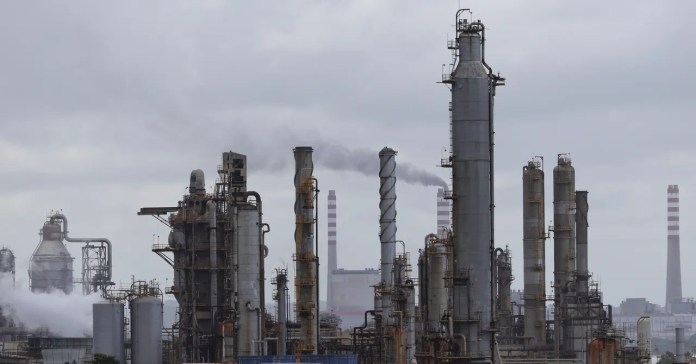
President Donald Trump has made it clear: His vision for Venezuela’s future involves the US profiting from its oil.

“We’re going to have our very large United States oil companies—the biggest anywhere in the world—go in, spend billions of dollars, fix the badly broken infrastructure, the oil infrastructure,” the president told reporters at a news conference Saturday, following the shocking capture of Venezuelan president Nicolás Maduro and his wife.

But experts caution that a number of realities—including international oil prices and longer-term questions of stability in the country—are likely to make this oil revolution much harder to execute than Trump seems to think.

“The disconnect between the Trump administration and what’s really going on in the oil world, and what American companies want, is huge,” says Lorne Stockman, an analyst with Oil Change International, a clean energy and fossil fuels research and advocacy organization.

Venezuela sits on some of the largest oil reserves in the world. But production of oil there has plummeted since the mid 1990s, after President Hugo Chávez nationalized much of the industry. The country was producing just 1.3 million barrels of oil each day in 2018, down from a high of more than 3 million barrels each day in the late 1990s. (The US, the top producer of crude oil in the world, produced an average of 21.7 million barrels each day in 2023.) Sanctions placed on Venezuela during the first Trump administration, meanwhile, have driven production even further down.

Trump has repeatedly implied that freeing up all that oil and increasing production would be a boon for the oil and gas industry—and that he expects American oil companies to take the lead. This kind of thinking—a natural offshoot of his “drill, baby, drill” philosophy—is typical for the president. One of Trump’s main critiques of the Iraq war, which he first voiced years before he ran for office, was that the US did not “take the oil” from the region to “reimburse ourselves” for the war.

The president views energy geopolitics “almost like the world is a Settlers of Catan board—you kidnap the president of Venezuela and, ipso facto, you now control all the oil,” says Rory Johnston, a Canadian oil market researcher. “I do think he legitimately, to a degree, believes that. It’s not true, but I think that’s an important frame for how he’s justifying and driving the momentum of his policy.”

Great Job Molly Taft & the Team @ WIRED Source link for sharing this story.

Celebrations, protests across Houston after U.S. operation in Venezuela | Houston Public Media

Celebrations, protests across Houston after U.S. operation in Venezuela | Houston Public Media

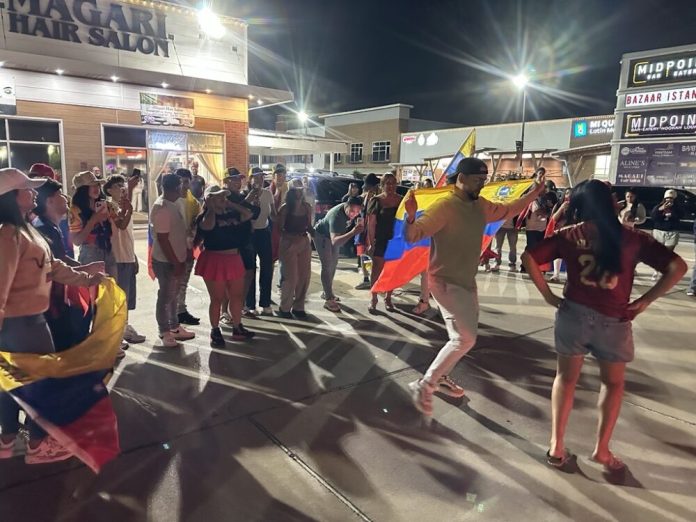
Venezuelan immigrants gather in Katy to celebrate the U.S. overthrow of Venezuelan President Nicolás Maduro on Saturday, Jan. 3, 2026.

Surrounded by a sea of Venezuelan flags, Miluixsy Miranda led a congo line in the parking lot of a Katy strip mall Saturday night as music blared from a speaker system tucked in the trunk of a car.

Early that morning, the U.S. carried out a large-scale strike against Venezuela, according to President Donald Trump, and detained Venezuelan President Nicolás Maduro and his wife, Cilia Flores. The two are now facing criminal charges.

Miranda, 27, came to the U.S. about two and a half years ago, after spending seven years as an immigrant in Panama. She was among the dozens of Venezuelans who gathered outside a Latin American grocery store in Katy on Saturday to celebrate Maduro’s capture.

“Being an immigrant is something that has been really difficult for many of us, but we’re happy – it’s a miracle from God,” she said in Spanish.

Celebrations, protests across Houston after U.S. operation in Venezuela | Houston Public Media
Venezuelan immigrants gather in Katy to celebrate the U.S. overthrow of Venezuelan President Nicolás Maduro on Saturday, Jan. 3, 2026.

Houston has deep ties to Venezuela. It’s home to the third-largest population of Venezuelan immigrants in the U.S., according to Migration Policy Institute, with more than 50,000 migrants in the greater metropolitan region. As the headquarters for many major energy companies, the city could be at the center of American efforts to tap Venezuelan oil reserves in the wake of U.S. intervention.

In the immediate aftermath of Maduro’s capture, many Venezuelans in Houston remained cautiously optimistic.

“It’s a lot of emotions, you know, altogether happiness, but at the same time, a little worry and we’re a little nervous,” said Hector Machuca, who moved to the U.S. in 2016 with his wife and two kids.

The 44-year-old joined the celebration in Katy on Saturday with the hope that Maduro’s ousting will lead to a better future for both his home country and the region.

“We’re excited because this is the beginning of the end,” Machuca said. “This all just the starting of something that is going to be bigger than us.”

Protesters line the intersection of Westheimer Road and Post Oak Boulevard to demonstrate against U.S. intervention in Venezuela.

Natalie Weber / Houston Public Media

Protesters line the intersection of Westheimer Road and Post Oak Boulevard on Sunday, Jan. 4, 2026, to demonstrate against U.S. intervention in Venezuela.

Exactly how that transition will play out remains to be seen.

Trump said the U.S. would “run” Venezuela for a time and American companies would take over the country’s oil infrastructure. However, Venezuelan Vice President Delcy Rodríguez, who was sworn in as interim president, said she rejected U.S. control over the country.

Many people in Houston said they also rejected U.S. involvement in Venezuela.

On Sunday, protesters lined an intersection across the street from the Galleria Mall, waving signs that read “No blood for oil” and “Hands off Venezuela.”

“Not a penny, not a dollar. We won’t pay for war and slaughter,” the protesters chanted.

A Houston protester holds signs at a demonstration against U.S. intervention in Venezuela on Sunday, Jan. 4, 2026.

Natalie Weber / Houston Public Media

A Houston protester holds signs at a demonstration against U.S. intervention in Venezuela on Sunday, Jan. 4, 2026.

Caleb Kurowski, an organizer with the Party for Socialism and Liberation – which coordinated the protest – drew comparisons to U.S. involvement in Iraq and Afghanistan.

“I think we already can see the results of U.S. interventions across the world and we don’t think that Venezuela will end up any different,” Kurowski said.

Andres Gomez said he came to the protest to learn more about different viewpoints as a neutral party. Gomez, whose parents are from Colombia, said he knows many Venezuelans both in Colombia and the U.S. who fled Maduro’s government.

“This is a very complicated issue,” Gomez said. “Seeing all the different reactions got me wanting to just come out and see what everybody’s talking about.”

Gomez came to the protest with a friend, Travis Lejune, who had a different opinion.

Lejune said he understands why many Venezuelans are celebrating Maduro’s removal. But he opposes U.S. intervention, which he says is to blame for dictators like Maduro.

“U.S. intervention is what’s causing this,” he said. “And so, us coming in and illegally kidnapping the dictator isn’t the answer.”

Great Job & the Team @ Houston Public Media for sharing this story.

Voices from inside Venezuela after the U.S. attack

Voices from inside Venezuela after the U.S. attack

Sign up for TPR Today, Texas Public Radio’s newsletter that brings our top stories to your inbox each morning.

Elio Mendoza was woken up in his home near Caracas Saturday morning by the sound of airplanes and explosions.

Mendoza said he imagined he was awakened by what has been happening in the news. “And then,” he said in Spanish, “when I turned on the television, it was confirmed.”

The United States had launched a military assault on Venezuela. President Nicolás Maduro and his wife were captured and taken to the United States.

Mendoza teaches Spanish online and lives on the outskirts of Venezuela’s capital city.

He said that hours later, the streets in his neighborhood were deserted and tense.

“And well, just like today, there is no one out and about. Everything is closed. No one is around,” he said.

Mendoza said people are staying informed and finding out what’s happening by getting their news on YouTube. He said they also gets some information from the internet.

They were even able to watch President Trump deliver remarks after the attack.

Mendoza heard Trump say there will be a government run by the United States while the situation stabilizes. And elections will be called again. But Mendoza said new elections aren’t necessary.

He said that opposition leaders Maria Corina Machado and Edmundo Gonzalez Urrutia were already elected.

Leonardo Fernandez Viloria

/

REUTERS

People charge their phones, as several neighborhoods remain without electricity after the U.S. launched a strike on Venezuela, capturing its President Nicolas Maduro and his wife Cilia Flores, in Caracas, Venezuela January 4, 2026.

In a small town eight hours from Caracas, Marian Garcia says she hasn’t been able to sleep since the attack.

“I have not slept at all,” she said in Spanish.

She was at a street party when suddenly the music was turned off, and everyone was told to go home.

She said that she and her friends don’t take their cellphones when they go out at night because they fear they will be mugged.

“Everyone was confused,” she said. “When I got home, my mother showed me (on her cellphone) what was going on.”

Garcia said her family in Caracas have told her they are safe. But one of her neighbors, a member of the Venezuelan military, was killed.

“There are photos of him,” she said. “We don’t know how he died, but we know he died in that situation,” she added, referring to the attack.

Garcia said life in Venezuela has been difficult for years. Food is expensive — when you can find it. Health care isn’t available. Poverty is widespread.

“I am not going to forgive this government, no. They have caused so much harm to families and young people.”

Garcia said if President Trump is seeking access to the country’s oil, she believes that could be beneficial.

“I think it can be beneficial for both countries,” she said. “Both the United States and Venezuela.”

A woman prays outside Vice-presidency building, after U.S. President Donald Trump said the U.S. has struck Venezuela and captured its President Nicolas Maduro, in Caracas, Venezuela, January 3, 2026.

A woman prays outside Vice-presidency building, after U.S. President Donald Trump said the U.S. has struck Venezuela and captured its President Nicolas Maduro, in Caracas, Venezuela, January 3, 2026. REUTERS/Gaby Oraa TPX IMAGES OF THE DAY

Metsly Rodriguez had already given up on Venezuela. She has dual citizenship, and six months ago, she moved to Bogatá Colombia. Saturday morning, she was surprised that the U.S. attack happened, but she understood why it did.

“It’s because in Venezuela, we live in a dictatorship,” she said in Spanish.

But now things are going to change.

“It’s a big change,” she said. “It fills me with happiness after so many years of repression— 25 years. But I remain worried—because we just don’t know what can happen next.”

Great Job David Martin Davies & the Team @ Texas Public Radio for sharing this story.

Can a social app fix the ‘terrible devastation’ of social media? | TechCrunch

Can a social app fix the ‘terrible devastation’ of social media? | TechCrunch

Twitter co-founder Biz Stone and Pinterest co-founder Evan Sharp have raised new funding for their social media startup West Co.

The startup launched an invite-only version of its first app, Tangle, in November. Now the Financial Times has pieced together more details from comments made by Stone and Sharp, as well as from regulatory filings and job listings.

The company has reportedly raised $29 million, with Spark Capital leading its seed round.

Sharp — the company’s CEO — described West Co as emerging from the question, “What could I build that might help address just some of the terrible devastation of the human mind and heart that we’ve wrought the last 15 years?”

The answer, at least in its initial form, is an app that asks users, “What’s your intention for today?” Users can share their goals with friends, hopefully helping them “plan with intention, capture the reality of their days, and see the deeper threads that shape their life.”

Stone told the FT that the app could change significantly before fully launching to the public.

Great Job Anthony Ha & the Team @ TechCrunch Source link for sharing this story.

‘Appalling’: Managers at Little Caesars Pizza In Washington Called Black Employees ‘Slaves’ and Other Racial Slurs, Then Got Rewarded, Lawsuit Says

‘Appalling’: Managers at Little Caesars Pizza In Washington Called Black Employees ‘Slaves’ and Other Racial Slurs, Then Got Rewarded, Lawsuit Says

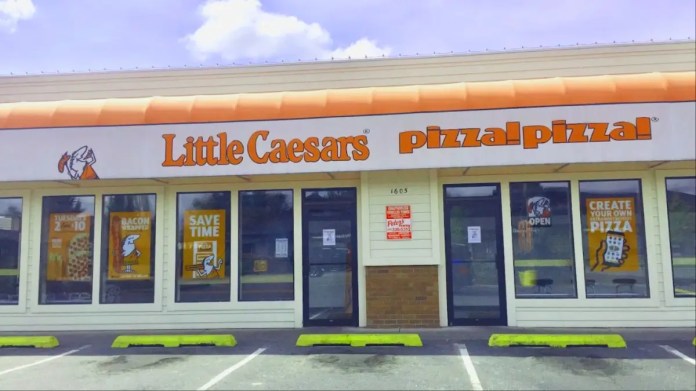
Three Black workers at a Little Caesars Pizza in Mount Vernon, Washington, were called racial slurs, including “darky” and “slaves,” and endured other racial harassment from white managers, according to a federal lawsuit filed by the Equal Employment Opportunity Commission against the franchise owner.

The EEOC is suing Target Market Enterprises, Inc., which owns nine Little Caesars Pizza restaurants in western Washington, on behalf of Brethny Espinosa and two other Black crew workers at the Mount Vernon Little Caesars who allege they faced a hostile work environment and retaliation for speaking up about it in the complaint, obtained by Atlanta Black Star.

‘Appalling’: Managers at Little Caesars Pizza In Washington Called Black Employees ‘Slaves’ and Other Racial Slurs, Then Got Rewarded, Lawsuit Says
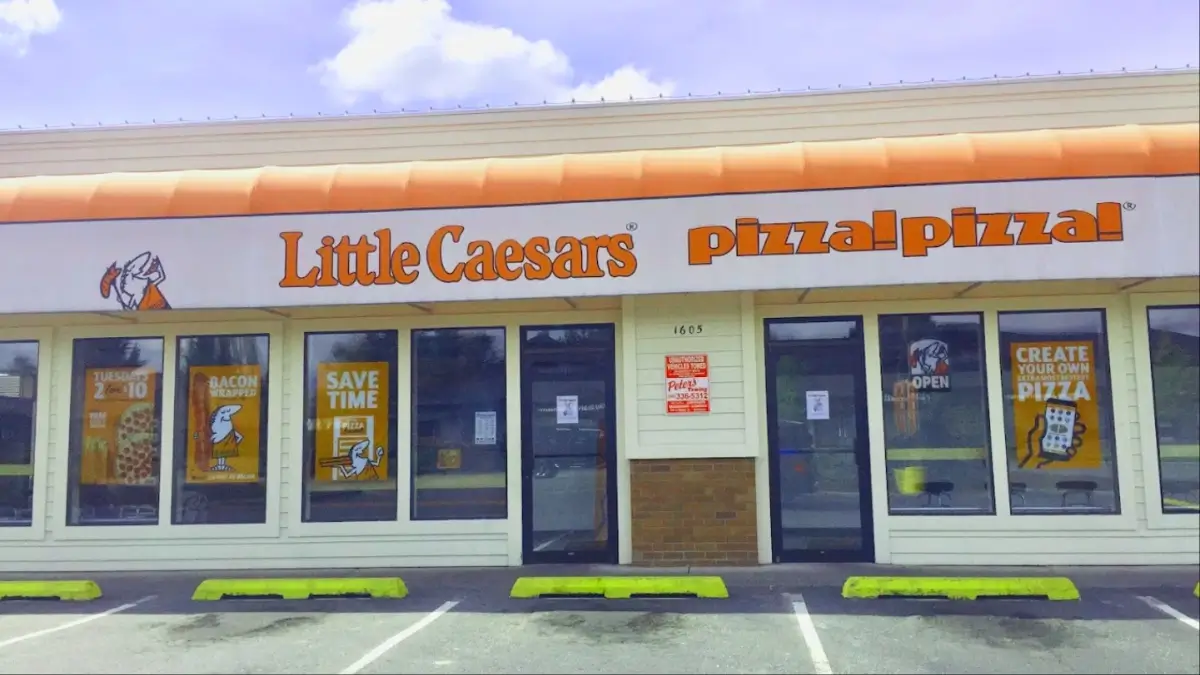
Little Caesars Pizza in Mount Vernon, Washington, in 2019 (Photo: Myly Perez, Google Review)

When she was hired in August 2024, Espinosa’s daily tasks included making and preparing pizza dough and cleaning up the restaurant, where she and other crew workers were supervised by the general manager, and when he left for the day, the shift lead, the lawsuit explains.

One shift lead identified in the lawsuit as “J.G.” and a crew member “A.G.,” who were both “non-Black,” subjected Espinosa and two Black employees to frequent, offensive, and unwelcome race-based conduct including calling or referring to them as: ”the N-Word,” “slaves, “blacky,” “darky,” and “monkey,” the complaint alleges.

‘It’s Just Open Season on Our Kids’: Racist Harassment of Black Students Surges as Trump’s Education Department Looks the Other Way

J.G. also allegedly made two Black workers do “the most menial tasks,” such as washing dishes for their entire shift.

The Little Caesars general manager, who is white, was already aware that an employee had previously complained that J.G. had used the “N-Word” at the Mount Vernon restaurant in September 2022, when he was not disciplined, and that he again used the slur “loud enough to be heard by customers” twice in March 2024, when she issued him a written warning, but didn’t inform the regional manager, the lawsuit says.

By August 2024, a white co-worker in the restaurant was so offended by J.G.’s use of racial slurs directed at Espinosa and the two other Black workers that she complained to the general manager. When J.G. continued to spew the slurs unabated, she complained again and was allegedly told by the general manager that she “would just need to deal with it.”

Meanwhile, in September 2024, one of the Black employees told J.G. that they were offended by their coworker A.G.’s repeated use of the N-word, but J.G. took no action to stop A.G.’s use of the slur. That same month the general manager promoted A.G. to be a shift lead.

On Sept. 27, 2024, Espinosa also complained to the general manager about J.G and A.G.’s racist comments to her and two other Black employees. When he took no action to investigate it or stop their behavior, Espinosa complained about J.G. to the regional manager three days later.

The regional manager investigated Espinosa’s complaint and fired J.G. the same day, on Sept. 30, 2024.

But one of the Black workers continued to be called racial epithets by A.G. at the Mount Vernon restaurant in October 2024, despite that worker asking him to stop and complaining to two other shift leaders, the lawsuit says.

Frustrated by the Little Caesars management’s failure to take any steps to stop his harassment, the Black employee wrote a Post-It note that said, “[A.G.] hates Black people” and put it in “a private area of the restaurant accessible only to employees.”

That Black employee who complained was swiftly fired due to “using inappropriate language” in “a note left on a desk,” according to a written warning from the franchisee management issued the day before. The plaintiffs’ lawyers now deem that termination to be unlawful retaliation based on race.

The lawsuit also accuses Bellingham, Washington-based Target Market Enterprises, doing business as Little Caesars Pizza, of violating federal civil rights law by subjecting Espinosa and her two Black coworkers to racial harassment and a hostile work environment. It does not name the global pizza chain’s corporate franchisor, Little Caesars Enterprises, based in Detroit, as a targeted party.

The plaintiffs seek a jury trial to determine compensatory damages for past and future monetary losses of the Black employees resulting from the alleged unlawful practices, including emotional pain and suffering, as well as punitive damages.

The EEOC also asks the U.S. District Court judge for the Western District of Washington to order the restaurant group to correct its “offensive, abusive, intimidating and hostile work environment” and to institute policies and practices that provide equal opportunity for all employees and eradicate the effects of its past and present unlawful employment practices.

“Federal law requires employers to promptly investigate any incident where an employee has been targeted with slurs based on his or her race, and to take immediate steps to stop such offensive conduct,” said Elizabeth Cannon, director of the EEOC’s Seattle Field Office, adding that the restaurant franchisee’s “failure to consider the harasser’s prior use of this highly offensive racial slur in the restaurant is appalling.” 

The lawsuit was filed on Sept. 30, but action in the litigation was then held up by a lack of funding for the EEOC due to the federal government shutdown, which began at midnight on that date. The order lifting the stay in the case was issued on Dec. 3.

Target Market Enterprises now has until Feb. 2, 2026, to respond to the complaint. The company and its attorney did not immediately respond to requests for comment from Atlanta Black Star.

Great Job Jill Jordan Sieder & the Team @ Atlanta Black Star Source link for sharing this story.

Rubio suggests the U.S. won’t govern Venezuela day-to-day and will use oil quarantine to exercise control | Fortune

Rubio suggests the U.S. won’t govern Venezuela day-to-day and will use oil quarantine to exercise control | Fortune

 Secretary of State Marco Rubio suggested Sunday that the United States would not govern Venezuela day-to-day other than enforcing an existing “oil quarantine” on the country, a turnaround after President Donald Trump announced a day earlier that the U.S. would be running Venezuela following its ouster of leader Nicolás Maduro.

Rubio’s statements on TV talk shows seemed designed to temper concerns about whether the assertive American action to achieve regime change might again produce a prolonged foreign intervention or failed attempt at nation-building. They stood in contrast to Trump’s broad but vague claims that the U.S. would at least temporarily “run” the oil-rich nation, comments that suggested some sort of governing structure under which Caracas would be controlled by Washington.

Rubio offered a more nuanced take, saying the U.S. would continue to enforce an oil quarantine that was already in place on sanctioned tankers before Maduro was removed from power early Saturday and use that leverage as a means to press policy changes in Venezuela.

“And so that’s the sort of control the president is pointing to when he says that,” Rubio said on CBS’ “Face the Nation.” “We continue with that quarantine, and we expect to see that there will be changes, not just in the way the oil industry is run for the benefit of the people, but also so that they stop the drug trafficking.”

The blockade on sanctioned oil tankers — some of which have been seized by the U.S. — “remains in place, and that’s a tremendous amount of leverage that will continue to be in place until we see changes that not just further the national interest of the United States, which is number one, but also that lead to a better future for the people of Venezuela,” he added.

Leaders in Venezuela have so far pushed back, at least publicly, calling on the Trump administration to release Maduro.

Even before the operation that nabbed Maduro, experts were already questioning the legality of aspects of the administration’s pressure campaign on Venezuela, including the deadly bombing of boats accused of trafficking drugs that some scholars said stretched the boundaries of international law.

Trump repeated vow US would ‘run’ Venezuela

Trump’s vow to “run” Venezuela, repeated more than half a dozen times at a news conference in Florida on Saturday, sparked concerns among some Democrats. It also drew unease from parts of his own Republican coalition, including an “America First” base that is opposed to foreign interventions, and also from observers who recalled past nation-building efforts in Iraq and Afghanistan.

Rubio dismissed such criticism, saying that Trump’s intent had been misunderstood.

“The whole foreign policy apparatus thinks everything is Libya, everything is Iraq, everything is Afghanistan,” Rubio said. “This is not the Middle East. And our mission here is very different. This is the Western Hemisphere.”

Rubio also suggested the U.S. would give Maduro’s subordinates now in charge time to govern, saying, “We’re going to judge everything by what they do.” And though he did not rule out boots on the ground in Venezuela, Rubio said the U.S, which has built up its presence in the region, was already capable of stopping drug boats and sanctioned tankers.

A day earlier, Trump told reporters, “We’re going to run the country until such time as we can do a safe, proper and judicious transition.” He later pointed to his national security team with him, including Rubio and Defense Secretary Pete Hegseth, and said it would be done for a period of time by “the people that are standing right behind me. We’re gonna be running it we’re gonna be bringing it back.”

The White House declined to comment beyond what Trump said Saturday.

Maduro’s arrival

Maduro landed late Saturday afternoon at a small airport in New York City’s northern suburbs following the middle-of-the-night operation that extracted him and his wife, Cilia Flores, from their home in a military base in the capital city of Caracas — an act that Maduro’s government called “imperialist.” The couple faces U.S. charges of participating in a narco-terrorism conspiracy.

The dramatic seizure of the Maduros capped an intensive Trump administration pressure campaign on Venezuela’s autocratic leader and months of secret planning, resulting in the most assertive American action to achieve regime change since the 2003 invasion of Iraq. Legal experts raised questions about the lawfulness of the operation, which was done without congressional approval.

Venezuela’s vice president, Delcy Rodriguez, demanded that the U.S. free Maduro and called him the country’s rightful leader as her nation’s high court named her interim president. So did the country’s defense minister, General-in-Chief Vladimir Padrino López, who said Sunday that the country’s armed forces “categorically reject the cowardly kidnapping.”

Maduro is due to make his first appearance Monday in Manhattan’s federal court.

Maduro and other Venezuelan officials were indicted in 2020 on narco-terrorism conspiracy charges, and the Justice Department released a new indictment Saturday of Maduro and his wife that painted his administration as a “corrupt, illegitimate government” fueled by a drug-trafficking operation that flooded the U.S with cocaine. The U.S. government does not recognize Maduro as the country’s leader.

The Trump administration spent months building up American forces in the region and carrying out attacks on boats in the Caribbean Sea and eastern Pacific Ocean for allegedly ferrying drugs. Last week, the CIA was behind a drone strike at a docking area believed to have been used by Venezuelan drug cartels — the first known direct operation on Venezuelan soil since the U.S. campaign began in September.

Quiet falls in Venezuela after US operation

Venezuela’s capital remained unusually quiet Sunday with few vehicles moving around and convenience stores, gas stations and other businesses closed. A road typically filled with runners, cyclists and other fitness enthusiasts on Sundays only had a handful of people working out.

The presidential palace was guarded by armed civilians and members of the military. At a nearby plaza, only a street sweeper and a soldier stood, and across the street, a church remained close for a second day in a row.

Under Venezuelan law, Rodríguez would take over from Maduro. Rodriguez, however, stressed during a Saturday appearance on state television that she did not plan to assume power, before Venezuela’s high court ordered that she assume the interim role. Trump told The Atlantic in an interview Sunday that Rodríguez could “pay a very big price” if she doesn’t do what he thinks is right for Venezuela.

That contrasted with the Republican president’s comments about Rodríguez on Saturday when he said Rubio had spoken with her and she was willing to do what the U.S. thinks is needed to improve the standard of living in Venezuela.

Trump told the magazine that “if she doesn’t do what’s right, she is going to pay a very big price, probably bigger than Maduro.”

Trump told the New York Post in an interview Saturday that the U.S. wouldn’t need to station troops in Venezuela if she “does what we want.”

Caracas resident David Leal arrived to the lot where he parks vehicles for a living only to quickly realize that he would likely not see any clients for a second day.

“People are still shaken,” said Leal, 77.

This story was originally featured on Fortune.com

Great Job Regina Garcia Cano, Matthew Lee, Will Weissert, Eric Tucker, The Associated Press & the Team @ Safe Apps Politics | FORTUNE Source link for sharing this story.

Jaxson Dart throws 2 TD passes as the Giants beat the Cowboys 34-17 in season finale

Jaxson Dart throws 2 TD passes as the Giants beat the Cowboys 34-17 in season finale

EAST RUTHERFORD, N.J. – Jaxson Dart threw the 14th and 15th touchdown passes of his rookie year and the New York Giants ended their lost season on a two-game winning streak by beating the Dallas Cowboys 34-17 on Sunday.

That and other results around the NFL took the Giants (4-13) out of the running for a top-two pick and clinched No. 1 for Las Vegas. New York routed the Raiders last week to end a nine-game skid.

Dart has said he cares more about winning than draft position and played like it in his 12th professional start. He was 22 of 32 for 231 yards with TD passes to Daniel Bellinger — on a shovel pass-and-run — and Tyrone Tracy.

While the Giants were shorthanded because of injuries and illnesses, they treated this like any other game with their starters going the distance. Dallas (7-9-1) took it more like an exhibition game, including Dak Prescott exiting after halftime.

Prescott completed seven of 11 passes for 70 yards and lost a fumble off a botched snap before being replaced at quarterback by Joe Milton to begin the third quarter. Prescott finished the season with 4,552 yards passing, the second most of his decade-long career behind only 4,902 in 2019.

Jaydon Blue and Phil Mafah each rushed for their first NFL touchdowns for the Cowboys, who lost to the Giants for the first time since the 2020 season finale on Jan. 3, 2021. They had won nine consecutive meetings and Prescott had won 17 in a row as the starter.

Heated rivalry

After the Dart-to-Tracy TD connection early in the third quarter, tempers flared between lineman on both sides. New York guard Greg Van Roten held on to Sam Williams’ facemask, and Dallas’ Donovan Ezeiruaku followed suit and then some as flags flew.

Ezeiruaku ripped Van Roten’s helmet off and was ejected. The Giants made the ensuing 2-point conversion, giving kicker Ben Sauls a breather during a game in which he made all four of his field goal attempts.

Injuries

Cowboys: S Markquese Bell was ruled out before halftime with a concussion. … S Alijah Clark was a late scratch for personal reasons.

Giants: LB Darius Muasau left with an ankle injury in the third quarter. … CB Rico Payton was evaluated for a concussion.

Up next

Cowboys: Brian Schottenheimer is expected to return for a second season as coach, though defensive coordinator Matt Eberflus and other assistants could be gone.

Giants: A coaching search is in the offing, with the question of whether general manager Joe Schoen will oversee it.

___

AP NFL: https://apnews.com/hub/NFL

Copyright 2026 The Associated Press. All rights reserved. This material may not be published, broadcast, rewritten or redistributed without permission.

Great Job Stephen Whyno, Associated Press & the Team @ KSAT San Antonio Source link for sharing this story.
The Biggest Question About Venezuela

The Biggest Question About Venezuela

Now that the United States has snatched Nicolás Maduro from his presidential compound, there are questions to ask about Venezuela: Will this lead to a return to democratic order in the country, a new dictatorship, or mere chaos? There are also new questions about the United States: Was this an unconstitutional act of war? Will it lead to more violent acts in the Western Hemisphere? Will it fracture MAGA’s foreign-policy consensus? It is too early to answer those questions, but a prior one can be addressed.

The first strategic question is not What are we trying to do? or even Who is our enemy? It is What else is going on? Strategists who fail to understand the context in which they operate come to grief. In this case, because Venezuela is part of a larger set of failed or failing dictatorships, and the intervention itself will cause reactions in many other countries, context is the first thing to think about.

To paraphrase Tolstoy, all stable liberal democracies have a family resemblance; all failing dictatorships have maladies of their own. Geography, culture, recent and distant history, and personalities shape their particular course. But the commonalities in regimes that are staggering or have recently crumpled are striking: Iraq, Libya, Syria, Cuba, Iran, Russia, and, before them, the Communist dictatorships of Eastern Europe shared broadly similar experiences.

They were all decades from their founding. Early revolutionary fervor had given way to rule by a deeply corrupt and brutal nomenklatura. Economies rotted under the weight of crony capitalism or the various lies, cheats, and inefficiencies of socialism, unless temporarily sustained by external aid (Cuba) or oil (Iraq, Libya, Iran). Whereas the first generation of leaders—Hugo Chávez, Ruhollah Khomeini, Hafez al-Assad—was murderous but adroit, highly intelligent, and politically supple when they had to be, the next generation—Maduro, Ali Khamenei, Bashar al-Assad—was less so. Or, the first generation simply declined from senescence and the debilitating effects of power long exercised without check.

The ancient Greeks called this anacyclosis, the cycle of regimes. What is unusual and distinct in the current circumstances, however, is the extent to which modern dictatorships can hang on even as their economy crumbles, their leaders decline mentally, and their populations cease to believe the propaganda stuffed down their throats.

In the past, a popular uprising or a coup could bring tyranny to an end. That was the fate of the East European Communist dictatorships, in a variety of ways—Wojciech Jaruzelski of Poland reluctantly ceding power to Lech Wałęsa and Polish democrats, or Nicolae Ceauşescu ending up riddled with his soldiers’ bullets. In both cases, at a certain point, the forces of order—the police or the military—refused to put down an uprising and turned on the regime.

Today, however, overthrowing a failing dictatorship is much more difficult. The techniques of repression have become so refined that, as in Iran thus far, popular uprisings have been suppressed by efficient riot control and selective arrests and murders. Coup-proofing is an art, and many dictators now spend a great deal of effort making sure that their own generals will not attempt to overthrow them. The techniques are varied, but today’s authoritarians are assisted by a kind of Comintern of tyrannies. Cuba, for example, has provided thousands of advisers to Venezuela, including some who helped refashion the Venezuelan General Directorate of Military Counterintelligence. Iran has benefited from Chinese technology, including facial recognition and riot-police kits. No failing dictator, or very few of them, need stand against their people entirely on their own.

Their regimes are still fragile, as Vladimir Putin learned, to his horror, in 2023, when his former caterer, Yevgeny Prigozhin, with only a few thousand mercenaries, launched a coup that met almost no opposition before it collapsed. But for the most part, now only a hard knock from the outside brings dictators down. Libya’s Gaddafi succumbed to an American and European bombing campaign as he was brutally suppressing a rebellion. Syria’s al-Assad went down after Israel gutted Lebanese Hezbollah, following which Turkish aided and directed insurgents representing a minority of the country marched into Damascus. American soldiers, not insurgent Shiites or disaffected Iraqi generals, got rid of Saddam Hussein. And it now appears that American commandos have ended the rule of Nicolás Maduro, though not necessarily that of his regime.

Unfortunately, it is much easier to create a stable and more liberal new order from the ruins of a dictatorship brought down by the people or the army than one taken down by a foreigner. An air of illegitimacy, particularly in the face of febrile nationalism, will undermine the new rulers. No matter how unpopular a modern dictator might be, there will be an important percentage of his population who have benefited from his rule, who will be aggrieved by his overthrow, and who, exposed to revenge from the rest, will attempt to preempt it. Moreover, because one of the means of defeating popular revolts and coups is the use of a large, ideologically based militia—the Basij of Iran or the colectivos of Venezuela—there are bound to be plenty of angry young men with weapons that they are ready to use.

On top of this, when a multi-decade dictatorship falls, it leaves behind a society that has been atomized and brutalized in ways that are difficult to undo. One of the mistakes Americans made in Iraq was to believe that the Iraq of the 1970s—highly educated, generally secular, with functioning bureaucracies—still existed. Instead, they encountered a society stripped of much of its potential leadership by exile, prisons, and firing squads. In the case of Venezuela, despite the country’s democratic history and aspirations, something similar may be true.

The international repercussions of the Maduro raid will be a second crucial piece of context. There are those who are excited or even relieved by Maduro’s removal—on the conservative end of the political spectrum in Colombia and Argentina, for example. Others in Latin America, such as Brazil’s Lula, are angry at Yankee interventionism. But other reactions will be even deeper.

Cuba’s government must be thinking that its country is next on the list. Not only does it stand to lose a quarter of its oil supply; it faces a bitterly anti-communist U.S. secretary of state and national security adviser whose stock has risen with Donald Trump. For China, Maduro’s removal is a major setback; for Russia, too, which has provided some modest help to Maduro (a Russian aircraft linked to the former Wagner group landed, possibly carrying military goods, in October of last year). The various narco-trafficking groups have reason to be alarmed as well, particularly after the targeted killing of more than 100 suspected drug smugglers by U.S. forces. Farther away, leaders of the Iranian regime should fear similar campaigns of kidnapping or targeted killing directed by a president who has already threatened to act if they continue shooting their own civilians.

Maduro’s kidnapping involved the bombing of multiple military sites and the killing of scores of Venezuelan and possibly Cuban personnel. It was an act of war, not law enforcement. It is reasonable to expect asymmetric but warlike responses. Many actors, in Central and Latin America and beyond, have an interest in making this experience a protracted and painful one for the United States. An insurgency that ties the United States down in Venezuela would delight Beijing and Russia. Drug cartels that have been able to make the Mexican state back down through their violence might be tempted to try their luck with Trump by staging drone attacks on sporting events or clogged highways in the United States, or by even more spectacular acts such as driving an explosive-packed submersible into the hull of a cruise ship in the Caribbean.

In war, the other side always thinks that it has some choices, and, worse, that it might have a chance. All may turn out for the best here—a free, prosperous, law-abiding, and America-aligned Venezuela, and a set of dictatorships abroad eager to reform and accommodate the United States. But the other possibilities deserved meticulous consideration before the order to remove Maduro was given. One doubts they received it at Mar-a-Lago.

Great Job Eliot A. Cohen & the Team @ The Atlantic Source link for sharing this story.

‘I Know My Body Tea’: Chloe Bailey Responds To Troll Who Commented That She Was ‘Getting Big’ During A Livestream

‘I Know My Body Tea’: Chloe Bailey Responds To Troll Who Commented That She Was ‘Getting Big’ During A Livestream

Source: Jerritt Clark / Getty

Chloe Bailey knows exactly what she’s working with and, during a recent livestream, she made sure to remind a troll that her “body is tea” when they tried claiming she was “getting big.”

Chloe was busy putting together furniture in her place when a commenter came into her stream with bad energy about her weight. The Trouble In Paradise singer was not here for it and quickly gathered the hater.

“No, I’m not. I’m actually losing weight. And even if I was getting big, and? What about it?” she said. “Why you talking about my body? What [does] your body look like? Send me a picture, let me judge it.”

She continued,

“Yeah, they trying to rage bait me because I know my body tea. And I don’t really say that often but the stress got my waist snatched.”

A lot has been said about Chloe but there are seldom any complaints about her au natural body. She’s definitely one of the celebs whose curves regularly set the internet on fire.

However, this isn’t the first time she’s dealt with body issues. During a sit-down on Latto’s former Apple Music show, 777 Radio, Chloe opened about struggling with body dysmorphia over her fluctuating weight.

“I think sometimes I have body dysmorphia because there’ll be times I look and I’ll feel way bigger than I was,” she said at the time. “And I look back at pictures, I’m like, Chloe, you were snatched. Even right now, I gained a couple pounds and I’m like, It looks good on me, instead of beating myself up about it, because I will.”

Her sister Halle Bailey recently shared similar struggles as she’s still learning to embrace her postpartum body after giving birth to her son, Halo, in 2023.

“Right now, currently I am a little bit thicker than I usually am and I feel really insecure about it, a little bit,” she said in a Snapchat post. “Because all my life, I’ve been like 120 pounds, really skinny. And then I had my baby and then when I was breastfeeding, I lost a bunch of weight. So I felt like my body sort of snapped back to where I thought it did, at the time, but it still was very off.”

She continued,

“So, I’m a little fluffy right now because I’ve kinda fell off of my consistent workouts. But I do feel a little insecure about it and yesterday, me and Chloe were on the beach and we made a TikTok and I got very, very insecure about it after. And I texted her like ‘hey can you just take it down because I feel bad about my body’ and so people were asking why we deleted it and it’s because of me. I felt insecure about it.”

The Bailey sisters are further proof that women have it so hard because they’re two of the most talented, beautiful, and SNATCHED women in the industry, and even they have to fight to silence the noise around their bodies.

Great Job imannmilner & the Team @ Bossip Source link for sharing this story.

NFL playoff bracket: Scenarios, seeding, schedule and more

NFL playoff bracket: Scenarios, seeding, schedule and more

The road to the Super Bowl is nearly paved.

The final Sunday of the NFL’s regular season began with three division titles, two playoff spots and a bye up for grabs.

The Pittsburgh Steelers and Baltimore Ravens compete in a win-and-in game during Sunday Night Football on NBC and Peacock. The winning team secures the AFC North division title and a playoff spot.

Another essential win-and-in game played out Sunday afternoon between two teams long eliminated from playoff contention. The result of the matchup between the Atlanta Falcons and New Orleans Saints determined whether the Tampa Bay Buccaneers or Carolina Panthers would win the NFC South division and head to the postseason. The Falcons’ 19-17 win created a three-way tie of 8-9 teams atop the division, giving the tiebreaker and the playoff berth to the Panthers.

The Jaguars wrapped up the AFC South title with a rout of the Tennessee Titans, making the second-place Houston Texans a wild-card team.

The Denver Broncos can lock up the No. 1 seed with a win over a Los Angeles Chargers team expected to rest many starters. If the Broncos lose, the New England Patriots can claim the top spot with a win over the Miami Dolphins. If both the Broncos and Patriots lose, the Jaguars take the No. 1 seed.

Here’s everything to know so far…

Who’s going to the NFL playoffs?

AFC

  • New England Patriots (AFC East champions)
  • Denver Broncos (AFC West champions)
  • Pittsburgh Steelers or Baltimore Ravens (AFC North champions)
  • Jacksonville Jaguars (AFC South champions)
  • Houston Texans (wild card)
  • Buffalo Bills (wild card)
  • Los Angeles Chargers (wild card)

NFC

How do the NFL playoffs work?

Seven teams from each conference make the playoffs. The four division winners in each conference are ranked No. 1 to No. 4 by regular-season record followed by the three wild-card teams ranked by regular-season record.

Who gets a bye in the NFL playoffs?

The top seed in each conference gets a bye to the Divisional Round. In the NFC, the Seattle Seahawks secured the top seed on Saturday with a 13-3 win over the 49ers.

The Broncos can clinch the No. 1 seed in the AFC on Sunday with a win over the Chargers. A loss opens the door for the Patriots or Jaguars to take the top spot.

What’s the AFC playoff bracket?

Here’s the full AFC bracket:

1. TBD

2. TBD

3. TBD

4. Steelers or Ravens

5. Texans

6. TBD

7. TBD

What’s the NFC playoff bracket?

Here’s a look at the NFC bracket:

1. Seahawks

2. TBD

3. TBD

4. Panthers

5. TBD

6. TBD

7. Packers

When do the NFL playoffs start?

The NFL postseason opens with Super Wild Card Weekend from Saturday, Jan. 10, to Monday, Jan. 12. There will be two Saturday games, three Sunday games and one Monday game.

What’s the NFL playoff schedule?

Here’s a look at the Super Wild Card Weekend schedule:

Saturday, Jan. 10

Sunday, Jan. 11

  • TBD vs. TBD
  • TBD vs. TBD
  • TBD vs. TBD

Monday, Jan. 12

The Divisional Round is set for Saturday, Jan 17, to Sunday, Jan. 18, followed by the AFC and NFC Championship Games on Sunday, Jan. 25.

Does the NFL reseed in the playoffs?

Yes, the NFL reseeds in the playoffs. That means the Seahawks and the AFC’s top-seed will face the lowest-seeded teams left in their respective conferences following the opening round.

When is the Super Bowl 2026?

The AFC and NFC champions will square off in Super Bowl LX on Sunday, Feb. 8.

Where is the Super Bowl 2026?

Super Bowl LX will be played at Levi’s Stadium, home of the San Francisco 49ers, in Santa Clara, California.

What channel is the Super Bowl on?

Super Bowl LX will be broadcasted on NBC and streamed on Peacock.

Great Job Mike Gavin & the Team @ NBC 5 Dallas-Fort Worth for sharing this story.

Secret Link