
Home News Page 144

International Law and the U.S. Military and Law Enforcement Operations in Venezuela

International Law and the U.S. Military and Law Enforcement Operations in Venezuela

President Nicolás Maduro has arrived in New York City to be tried by the U.S. Department of Justice on criminal charges related to drug trafficking and weapons possession. His capture began early Saturday morning with multiple explosions reported in Caracas, Venezuela, including at military installations. It soon became clear that the United States was attacking targets in the city. In the immediate aftermath of the operation, which lasted fewer than 30 minutes, senior Venezuelan officials stated that they did not know the whereabouts of President Nicolás Maduro and First Lady Ilia Flores, and demanded proof of life. Reportedly, the U.S. Army’s Delta Force and the 160th Special Operations Aviation Regiment carried out the capture mission during what has been labeled Operation Absolute Resolve. Venezuelan officials have said at least 40 people, civilians and military personnel, were killed in the attacks.  

President Donald Trump quickly took to Truth Social to announce, “The United States of America has successfully carried out a large scale strike against Venezuela and its leader, President Nicolas Maduro, who has been, along with his wife, captured and flown out of the country. This operation was done in conjunction with U.S. Law Enforcement.” For his part, Secretary of State Marco Rubio explained that Maduro “has been arrested by U.S. personnel to stand trial on criminal charges in the United States, and that the kinetic action we saw tonight was deployed to protect and defend those executing the arrest warrant.” Attorney General Pam Bondi characterized the operations as law enforcement conducted by the armed forces.

Nicolas Maduro and his wife, Cilia Flores, have been indicted in the Southern District of New York.  Nicolas Maduro has been charged with Narco-Terrorism Conspiracy, Cocaine Importation Conspiracy, Possession of Machineguns and Destructive Devices, and Conspiracy to Possess Machineguns and Destructive Devices against the United States.  They will soon face the full wrath of American justice on American soil in American courts. 

She went on to thank “our brave military who conducted the incredible and highly successful mission to capture these two alleged international narco traffickers.” President Trump has since said the United States is going to “run” Venezuela “until such time as we can do a safe, proper and judicious transition.” 

The operation follows on the heels of 35 boat strikes that have killed at least 115, which the United States has justified based on self-defense, and a CIA drone strike in late December on a docking facility in Venezuela alleged to have been used by drug cartels. Presumably, the United States likewise justifies, in part, Saturday’s operation on the same basis, self-defense against drug trafficking into the United States.

In this article, we explain several international law issues raised by the operation, some of which have been addressed in greater depth in the Just Security collection of articles on the drug boat strikes and other operations dealing with Venezuela. In particular, Operation Absolute Resolve implicates the prohibition on the use of force against other States (e.g., under the UN Charter), extraterritorial law enforcement, and initiation of an international armed conflict (e.g., under the Geneva Conventions).

The bottom line is, unlike the boat strikes the U.S. military has carried out to date that have occurred in international waters against stateless vessels, this operation, striking Venezuela and abducting its president, is clearly a violation of the prohibition on the use of force in Article 2(4) of the UN Charter. That prohibition is the bedrock rule of the international system that separates the rule of law from anarchy, safeguards small States from their more powerful neighbors, and protects civilians from the devastation of war. The consequences of flouting this rule so brazenly are likely to extend well beyond the case of Maduro’s forcible ouster. Likewise, the initiation of an armed conflict – triggering the application of the law of armed conflict, including all four Geneva Conventions – has meaningful consequences, ranging from the protections now owed to Venezuelan nationals in the United States, to the application of rules governing treatment of Maduro and his wife while in U.S. custody, to accountability for any war crimes committed in the course of the conflict. 

An Unlawful Use of Force

The prohibition on the use of force: First and foremost, the U.S. operation striking Venezuela and abducting its president is a clear violation of the prohibition on the use of force except in self-defense against armed attack or with U.N. Security Council authorization, both of which are explained further below. The prohibition is set forth in Article 2(4) of the U.N. Charter, which provides, “All Members shall refrain in their international relations from the threat or use of force against the territorial integrity or political independence of any state, or in any other manner inconsistent with the Purposes of the United Nations.” Both the United States and Venezuela are Parties to the Charter, so the prohibition is undoubtedly binding under treaty law. Moreover, as the United States has long held and the International Court of Justice has noted, the prohibition reflects customary international law, which likewise binds the United States (Paramilitary Activities, ¶ 190). 

Any forcible action by one State against another triggers the prohibition. Accordingly, the U.S. operations constituted a prima facie breach unless justified by one of two narrow exceptions: 1) authorization by the U.N. Security Council under Chapter VII of the U.N. Charter; or 2) the inherent right of self-defense provided for in Article 51 of the Charter and customary international law. There being no Security Council authorization, the sole possible legal basis for the operation would be self-defense. 

In relevant part, Article 51 provides, “Nothing in the present Charter shall impair the inherent right of individual or collective self-defense if an armed attack occurs against a Member of the United Nations.” Thus, the legality of the U.S. operation turns on whether Venezuela has engaged in an “armed attack” against the United States (or an armed attack is imminent), triggering the right of self-defense, and, if so, whether the U.S. response was both “necessary and proportionate,” the two conditions for the use of force in self-defense (Paramilitary Activities, paras. 194, 237; Nuclear Weapons, para. 41; Oil Platforms, paras. 43, 73-74, 76). The conditions are relevant only if the first hurdle is crossed. As will be explained, it is clearly not.

No self-defense justification: The Trump administration has repeatedly justified its strikes on boats allegedly carrying drugs (largely involving cocaine, much of which is likely bound for Europe) on the basis of self-defense. For instance, early on, a White House spokesperson claimed they were “conducted against the operations of a designated terrorist organization and was taken in defense of vital U.S. national interests and in the collective self-defense of other nations.” Along these lines, a classified Justice Department memo apparently argues that force may be used against cartels because they pose an “imminent threat to Americans.” For these assertions to make any sense, the drug activity must be characterized as an “armed attack” against the United States. Indeed, in a statement to the UN Security Council in October, the U.S. representative said, “President Trump determined these cartels are non-state armed groups, designated them as terrorist organizations, and determined that their actions constitute an armed attack against the United States.”

It is on this basis that the United States may attempt to assert self-defense against Venezuela. As evidenced by the charges against Maduro both in 2020 and in the new superseding indictment, the administration links him and other government officials to the activities of drug cartels. For instance, in August, the State Department alleged,

Maduro helped manage and ultimately lead the Cartel of the Suns, a Venezuelan drug-trafficking organization comprised of high-ranking Venezuelan officials. As he gained power in Venezuela, Maduro participated in a corrupt and violent narco-terrorism conspiracy with the Revolutionary Armed Forces of Colombia (FARC), a designated Foreign Terrorist Organization. Maduro negotiated multi-ton shipments of FARC-produced cocaine; directed the Cartel of the Suns to provide military-grade weapons to the FARC; coordinated with narcotics traffickers in Honduras and other countries to facilitate large-scale drug trafficking; and solicited assistance from FARC leadership in training an unsanctioned militia group that functioned, in essence, as an armed forces unit for the Cartel of the Suns.

We have refuted the self-defense argument vis-à-vis the cartels in earlier articles (see, e.g., here and here). Drug trafficking simply does not qualify as, and has never been considered, an “armed attack.” In brief, the relationship between drug trafficking and the deaths that eventually result from drugs being purchased and used in the United States is far too attenuated to qualify as an armed attack. The drugs must be successfully transported into the country, where they are distributed to various drug organizations, and subsequently sold on the streets, in most cases by individuals who are unrelated to the original drug cartels. Willing buyers then purchase them; almost all survive. In fact, those deaths that occur run contrary to the interests of the cartels because they deprive the drug market of customers and risk deterring others from buying the drugs. 

It is indisputable that drug trafficking is condemnable criminal activity, but it is not the type of activity that triggers the right of self-defense in international law. It is not a use of force, it is not “hostilities,” and it is not “combat,” despite Trump administration officials using these labels when describing drug trafficking activity. 

The connection is even more attenuated in the case of Maduro and other members of the Venezuelan government who may be involved in drug activity. After all, the sole purpose of the cartels is to traffic drugs, whereas, if the allegations are true, the Venezuelan government’s involvement, albeit also condemnable, is less direct. Accordingly, if the self-defense argument does not work for drug cartels, asserting that it applies to Maduro and the Venezuelan government is even less plausible. Simply put, there is no basis for suggesting that any Venezuelan government involvement in drug activity rises to the level of an armed attack against the United States, giving it the right to resort to force against Venezuela to defend itself. This being so, the Operation Absolute Resolve was a clear violation of the international law prohibition on the use of force.

Distinguishing past practice – the Noriega case: Three points should be made about the closest historical example in U.S. practice: the 1989 U.S. operation to capture General Manuel Noriega in Panama and bring him to the United States to face drug smuggling and other charges. First, reaffirming the prohibition against the use of force, the U.N. General Assembly condemned the U.S. operation. The General Assembly stated that it “strongly deplores the intervention in Panama by the armed forces of the United States of America, which con­stitutes a flagrant violation of international law.” 

Second, the U.S. justifications for the Noriega-Panama operation distinguish it from the Maduro-Venezuela case. Most importantly, in the former case, the United States claimed to be acting by invitation of the rightful Head of State. “It was welcomed by the democratically elected government of Panama,” President George H.W. Bush informed the U.S. Congress in a War Powers Resolution report. Likewise, U.S. Ambassador Thomas Pickering told the U.N. Security Council, “United States action in Panama has been approved, applauded and welcomed by the democratically elected Government of Panama.” 

Third, as noted by President George H.W. Bush, the United States acted after the Panamanian National Assembly declared a state of war against the United States, and after forces under Noriega’s command “killed an unarmed American serviceman; wounded another; arrested and brutally beat a third American serviceman; and then brutally interrogated his wife, threatening her with sexual abuse.” Bush added that “General Noriega’s reckless threats and attacks upon Americans in Panama created an imminent danger to the 35,000 American citizens in Panama.” Secretary of State James A. Baker also stated, “We received an intelligence report that General Noriega was considering launching an urban commando attack on American citizens in a residential neighborhood.” None of those factors is present here.

Venezuela may use necessary and proportionate force in self-defense: Finally, based on the U.S. position that all wrongful uses of force are armed attacks, Venezuela has the right to use necessary and proportionate force against the United States’ armed attack to defend itself (DoD, Law of War Manual, §1.11.5.2; but see Paramilitary Activities, ¶ 191). Additionally, as provided for in Article 51 of the Charter, Venezuela may seek the assistance of other States acting in collective self-defense. 

Intervention into Venezuela’s Internal Affairs: Finally, we note that in addition to a violation of the use of force prohibition, the U.S. action to remove Maduro as Head of State amounts to an unlawful intervention into Venezuela’s internal affairs (“choice of political system,” Paramilitary Activities, ¶ 205). Regime change by one State in another amounts to intervention when it is “coercive” (¶ 206), which Saturday’s operation obviously was. 

Extraterritorial Law Enforcement

The administration has framed the operation on Saturday and the seizure of Maduro and his wife in the context of law enforcement. The key international law issue in the case is the extraterritorial exercise of “enforcement jurisdiction,” specifically, the power to arrest. (One of us, Ryan, has explained why the administration’s reliance on a 1989 DOJ Office of Legal Counsel memo erroneously concluding that the president may, as a domestic law matter, “override” art. 2(4) of the UN Charter is flawed.). 

No enforcement jurisdiction in the territory of other States without their consent: There are three types of jurisdiction under international law: prescriptive (legislative), adjudicative (judicial), and enforcement (executive). International law allows a degree of prescriptive jurisdiction (the power to pass laws) over offences committed abroad, as perhaps alleged here. However, the exercise of enforcement jurisdiction is strictly limited to a State’s own territory (or in limited cases, in the commons, as in the case of jurisdiction aboard a flag state vessel). But on another State’s territory, the consent of that State is required (S.S. Lotus, PCIJ, page 18; Restatement Third of Foreign Relations, § 432). Without it, the action violates the territorial State’s sovereignty on two grounds. First, it is a violation of that State’s territorial sovereignty; this has clearly occurred. Second, it is an “usurpation” of an “inherently governmental function” by another State. In other words, the United States has engaged in governmental activity in Venezuela – law enforcement – that is exclusively the domain of the Venezuelan government.

A leading precedent involves the U.N. response to an extraterritorial law enforcement operation: the forcible apprehension of Nazi fugitive Adolph Eichmann in Argentina by Israeli agents in May 1960, and bringing him to trial in Israel for war crimes. With support from the United States, the U.N. Security Council passed a resolution stating:

Considering that the violation of the sovereignty of a Member State is incompatible with the Charter of the United Nations …
Noting that the repetition of acts such as that giving rise to this situation would involve a breach of the principles upon which international order is founded, creating an atmosphere of insecurity and distrust incompatible with the preservation of peace …
Requests the Government of Israel to make appropriate reparation in accordance with the Charter of the United Nations and the rules of international law.

In 1989, the State Department’s legal adviser, Abe Sofaer, stated in written congressional testimony, “The United States has repeatedly associated itself with the view that unconsented arrests violate the principle of territorial integrity.” He added, “Arrests in foreign States without their consent have no legal justification under international law aside from self-defense.”

The United States claims, rightfully so, that Maduro’s presidency is not “legitimate.” However, that has no bearing on this situation. Even though the United States does not recognize the Maduro government as legitimate, international law provides that the relevant officials to grant consent are those of the government that exercises “effective control” over the territory, in this case, officials in the Maduro administration (Tinoco Arbitration, pages 381-82). Obviously, no such consent has been granted.

Head of state immunity and inviolability: Moreover, Maduro enjoyed immunity (known as “immunity ratione personae”) from foreign enforcement jurisdiction under customary international law. As noted by the International Court of Justice in its Arrest Warrant judgement, “it is firmly established that … certain holders of high-ranking office in a State, such as the Head of State, Head of Government and Minister for Foreign Affairs, enjoy immunities from jurisdiction in other States, both civil and criminal” (¶ 51; see also Certain Questions of Mutual Assistance, ¶¶ 170-174). 

Relatedly, the United States has observed that “in addition to immunity from criminal jurisdiction, heads of state, heads of government, and foreign ministers who enjoy personal immunity also benefit from personal inviolability, a protection that informs their treatment in the criminal context.” Such inviolability includes protection from arrest by other States while in office. ( Comments from the United States on the International Law Commission’s Draft Articles on Criminal Immunity).

While in office, this immunity and inviolability is absolute and bars any form of enforcement jurisdiction by another State. The purpose of the immunity, as noted by the Court, is to “ensure the effective performance of their functions on behalf of their respective States” (¶ 53). It is a manifestation of the Principle of “sovereign equality” in international law (UN Charter, art. 2(1)). Where some might argue that an exception exists for Heads of State who commit serious war crimes and other atrocities, that is not relevant to the U.S. case against Maduro.

The Trump administration may argue that Maduro was not, in fact, the Head of State, given that his most recent re-election was neither free nor fair (we agree with that as a factual matter), and that the United States does not recognize his government. Similarly, following the Saturday swearing-in as interim President of Delcy Rodriguez, the United States may argue that he is no longer Head of State, even if he was previously so. Both arguments fail. First, withdrawing recognition of a government does not remove the personal immunity that the incumbent head of state enjoys under customary international law. Second, Rodriguez has said (post swearing in) that Maduro is “the only President of Venezuela,” and is calling for the release of Maduro and his wife.   

Unlawful use of lethal force: Even if international law permitted the United States to exercise enforcement jurisdiction in Venezuela, which it does not, the use of lethal force to do so was self-evidently unlawful. During law enforcement operations, resort to deadly force is lawful only when necessary in the face of an immediate threat of death or grievous bodily injury to the law enforcement officials or others (Basic Principles on the Use of Force and Firearms by Law Enforcement Officials; see also UN Human Rights Committee, General Comment 36, para 12). 

Secretary Rubio claims that the kinetic operations mounted by the U.S. armed forces were necessary to protect those taking custody of Maduro, presumably by preventing the Venezuelan armed forces from responding. However, the threat must be immediate and strictly necessary. The strikes were, instead, primarily preventive and anticipatory in character; they fall far outside the scope of permissible lethal measures during a law enforcement operation. If at least 40 people were killed, including civilians, that would be strong evidence that Rubio’s asserted justification is without legal merit. 

Moreover, it should be self-evident that “unit self-defense” (i.e., defense of a contingent of armed forces in a foreign country, as opposed to self-defense of the United States as a nation) cannot be the lawful basis for the use of force when any potential need for unit self-defense is only itself created in the first instance by the insertion of the U.S. forces.  

Recovery of Unlawfully Expropriated Oil Assets 

We also note that Trump has claimed that Venezuela has “stolen” U.S. oil and assets and demanded their return. In 2007, Venezuela, under President Hugo Chavez, converted existing oil extraction contracts into State-controlled joint ventures. When some major foreign oil companies rejected these terms, their assets were expropriated without the required prompt, adequate, and effective compensation. Although Venezuela had previously nationalized the oil industry in 1976, these 2007 actions targeted foreign investors specifically and amounted to unlawful expropriations under international law. Trump is now offering to help American oil companies recover their wrongfully seized assets, reportedly contingent on compliance with U.S. policy priorities, although the nature and legality of these conditions remain unclear. 

However, one thing is clear from the outset: using force to acquire those assets is unlawful, as the action does not qualify as self-defense, no matter how unlawful the expropriation may have been. And even if it did, the forcible U.S. action does not comport with the necessity condition for self-defense because there are non-forcible avenues that could be pursued. Examples include retorsion, arbitration, and countermeasures under the law of State responsibility (Articles on State Responsibility, art. 22). Simply put, the United States may not simply seize back the assets by force.

We do not address here the potential violation, if not war crime, of the law of armed conflict for pillaging another State’s natural resources. Readers may wish to consult James Stewart’s prior analysis in a 2016 essay at Just Security.

Armed Conflict

Putting aside the issue of whether the U.S. operation violated international law, which it undoubtedly did, it also initiated an “international armed conflict” between the United States and Venezuela. This is so regardless of how the United States might characterize the operations. Under Common Article 2 of the 1949 Geneva Conventions, the existence of an international armed conflict is a question of fact. In other words, if there are hostilities between the States, there is an international armed conflict even if one of them does not formally recognize its existence. Common Article 2 is universally accepted as reflective of customary international law.

There are numerous challenging issues regarding the classification of conflicts, such as the precise threshold at which they are triggered and whether another State’s support of a non-State organized armed group that is engaged in hostilities with a State suffices to initiate an armed conflict between the two States. Those thornier issues are not relevant to these strikes and the Maduro capture operation. The intensity of the U.S. operations directed at Venezuela clearly crossed any conceivable threshold necessary to trigger an international armed conflict. To be clear, the operations put the United States and Venezuela in armed conflict as a matter of fact and of law. 

(Note: If the United States began “running the country,” as President Trump suggested, an enduring international armed conflict may exist. That’s because a military occupation of another country, even if it meets with no armed resistance, is classified as an “international armed conflict.” More on the law of occupation is below.)

The consequences are profound. To begin with, the law of armed conflict, including all four of the Geneva Conventions, now applies. Of particular note, the rules for targeting permit Venezuelan forces to attack U.S. forces anywhere in Venezuelan or U.S. territory, and on the high seas, in international airspace, or in outer space (so-called “status-based targeting”). The law of armed conflict also prohibits targeting civilians and civilian objects (DoD Law of War Manual (§ 5.5). This is especially relevant to the issue of whether operations may now be directed at drug-related targets in Venezuela. 

Targeting individuals involved in drug trafficking: Individuals involved in drug activities do not qualify as lawful targets unless they are members of the armed forces or “directly participating in the hostilities.” As explained in the DoD Law of War Manual (§ 5.8.3): “At a minimum, taking a direct part in hostilities includes actions that are, by their nature and purpose, intended to cause actual harm to the enemy.”

As is apparent, drug-related activities do not satisfy this standard (see our fuller explanation here). Accordingly, attacking those involved in such activities in the context of this armed conflict would violate the law of armed conflict prohibition and constitute a war crime, so long as those civilians do not separately participate in the armed hostilities (in the absence of an armed conflict between the United States and Venezuela, those killings constituted murder, and extrajudicial killings under international human rights law, but were not war crimes because that body of law clearly did not apply). More difficult questions arise as to whether an attack on non-state actors ferrying drugs on the high seas would be related enough to the war between the United States and Venezuela (an armed conflict “nexus” requirement) to be governed by the law of armed conflict, and thus constitute a war crime. 

Targeting drug-related assets and facilities: Whether drug-related assets and facilities may be attacked depends on whether the U.S. position on so-called war-sustaining (or revenue-generating) targets is correct and the factual extent to which Venezuela relies on drug proceeds to fund its war effort. The same is true of its oil production and exports. 

A war-sustaining entity “indirectly, but effectively supports and sustains the belligerents’ warfighting capability,” such as “exports of products the proceeds of which are used by the belligerent to purchase arms and armaments” (Commander’s Handbook, § 7.4).  The prevailing view in international law is that war-sustaining objects do not qualify as targetable military objectives. However, the United States has, for decades, claimed that war-sustaining objects are legitimate military objectives. It is a position with which one of us agrees, but the others do not (DoD Law of War Manual, § 5.6.8). 

To the extent neutrality law survives the U.N. Charter era (a much-debated question), it also now applies. Since the United States is the aggressor in this situation, under the “qualified neutrality” interpretation of neutrality law asserted by the United States, all States would be prohibited from providing it any assistance. Yet, they could come to Venezuela’s assistance without violating their neutrality law obligations. 

The law of occupation would apply if the United States exercises “effective control”: In light of President Trump’s claim that “we are going to run the country now,” the law of occupation outlined in the Fourth Geneva Convention (GCIV) will apply if the United States exerts “effective control” of Venezuela. For now, it seems unlikely, based on the current facts (no U.S. troops on the ground, the swearing in of Vice President Rodriguez as interim President), that this situation will develop. Thus, while Trump has essentially used the rhetoric of occupation through coercion of proxy officials, the United States has not attempted to control territory itself, nor is it at all clear that officials who do exercise governmental authority will act as directed by the United States.

Prisoner of war and “protected person” status under the Geneva Conventions: As a civilian captured by attacking forces in an international armed conflict, Maduro’s wife is entitled to a robust set of protections afforded to captured civilians in GCIV.  Indeed, Flores qualifies as a “protected person,” as defined in art. 4(1) of that treaty:

Persons protected by the Convention are those who, at a given moment and in any manner whatsoever, find themselves, in case of a conflict or occupation, in the hands of a Party to the conflict or Occupying Power of which they are not nationals.

Arguably, Maduro also qualifies as a protected person. Given his status as commander-in-chief of Venezuela’s armed forces, he might also be considered a prisoner of war entitled to the extensive protections of the Third Geneva Convention on the Protection of Prisoners of War (GCIII). In the 1992 case of U.S. v. Noriega, a federal district court found that General Noriega was “entitled to the full range of rights under the [POW] treaty, which has been incorporated into U.S. law.” However, in that case, which involved Noriega’s seizure by U.S. forces during the 1989 invasion of Panama, the general was the military dictator of Panama and also commanded the Panama Defense Forces.

A suite of protections also kicks in for other civilians who are nationals of one party to the conflict and find themselves in the hands of the adverse State. Accordingly, Venezuelans in the United States are now “protected persons” under the Fourth Geneva Convention, as are Americans inside Venezuela. This has far-ranging implications for U.S. immigration and related policies. For example, Venezuelans who are protected persons have rights including protection against “brutality” (GC IV art. 32), against collective punishment and reprisals (GC IV art. 33); parity of employment opportunities (GC IV art. 39), rules for return of detainees transferred to a third State as in CECOT/El Salvador (GC IV art. 45), and family unity in detention (GC IV art. 82).

Concluding Thoughts

The operation against Venezuela, which culminated in the capture of President Maduro and his wife, amounts to a severe breach of foundational principles of international law. It constitutes a clear violation of the prohibition on the use of force enshrined in Article 2(4) of the UN Charter. The claim that drug trafficking, or State involvement in such trafficking, constitutes an “armed attack” sufficient to justify a forcible response in self-defense has no support in customary international law or State practice.

Nor can the exercise of extraterritorial enforcement of domestic criminal law, even against narco- traffickers or indicted heads of State, be justified in the absence of Venezuela’s consent. By exercising enforcement jurisdiction there, the United States has violated Venezuelan sovereignty both because the operation occurred on its territory and because it has usurped an inherently governmental function (law enforcement) exclusively enjoyed by Venezuela. Moreover, despite any crimes he may have committed, Maduro’s seizure violates the long-standing rule of immunity ratione personae for heads of State.

In addition to violating bedrock jus ad bellum rules governing the resort to force and the sovereignty of Venezuela, the operation has triggered an international armed conflict between the United States and Venezuela. The legal consequences are immediate and sweeping – the whole body of the law of armed conflict now applies, including the law governing detention, the conduct of hostilities, protected persons, and war crimes.

The U.S. operation has long-term implications for the integrity of the international legal order, including the systems put in place to prevent war and protect States from using their criminal enforcement powers to intrude on other countries’ sovereign prerogatives.

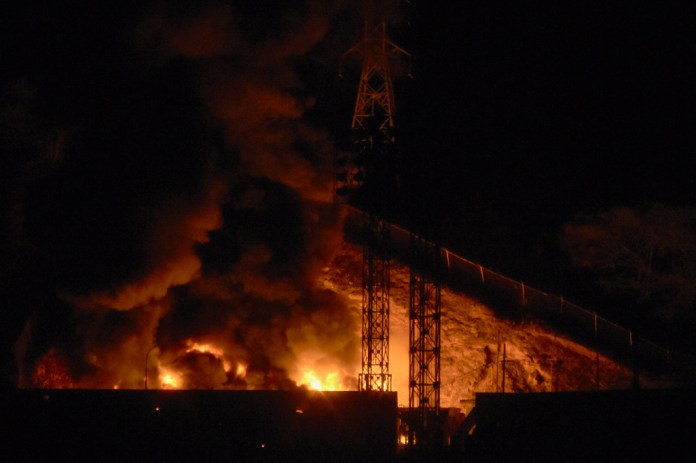
FEATURED IMAGE: Picture of fire at Fuerte Tiuna, Venezuela’s largest military complex, after a series of explosions in Caracas on January 3, 2026. Loud explosions, accompanied by sounds resembling aircraft flyovers, were heard in Caracas around 2:00 am (0600 GMT) on January 3, an AFP journalist reported. (Photo by Luis JAIMES / AFP via Getty Images)

Great Job Michael Schmitt & the Team @ Just Security Source link for sharing this story.

Anthony Joshua’s Driver Charged With ‘Reckless’ And ‘Dangerous Driving’ After Fatal Car Crash

Anthony Joshua’s Driver Charged With ‘Reckless’ And ‘Dangerous Driving’ After Fatal Car Crash

Source: Anadolu / Getty

UK boxing champion Anthony Joshua experienced the highest of highs and the lowest of lows in a short span of time. Now, the man responsible for the death of two of his close friends, Adenyi Mobalaji Kayode, has been charged by Nigerian police with “dangerous driving causing death.”

As BOSSIP previously reported, on Dec. 29, Kayode, 46, was driving Joshua and two other men—Latif Ayodele and Sina Ghami—in a SUV when he collided into the back of a stationary vehicle. Ayodele and Ghami were pronounced dead at the scene, while Joshua and the driver both sustained minor injuries. Joshua was reportedly released from a hospital in Lagos on New Year’s Eve and visited the funeral home to view the bodies of his deceased friends before flying back to the UK.

Videos from the scene showed Joshua being treated for his injuries on the side of a busy road with broken glass littered across the backseat of the vehicle. According to CBS News, vehicle-related accidents resulting in fatalities are common in Nigeria, with the West African nation recording 5,421 deaths in 9,570 road accidents in 2024 alone.

Kayode is expected to appear in court on Jan. 20 to face the charges and his bail has been set to five million naira, equaling around $3500 USD. He will remain detained until he has met his bail conditions. Preliminary investigations into the crash showed that the 46-year-old driver was operating the vehicle well above the speed limit causing the tire to burst before the crash.

Though a former two-time world heavyweight champion since 2019, Joshua recently stole American hearts when he defeated Jake Paul in a jaw-dropping performance that brought in 33 million views on Netflix. From thirsty diatribes on his physical appearance to all out drooling over his boxing prowess, Black women decided that Joshua was welcome here anytime. Our condolences go out to the boxing champ and the families of Ayodele and Ghami at this difficult time.

Great Job imannmilner & the Team @ Bossip Source link for sharing this story.

Texas’ new bail laws could increase Harris County’s jail population, court case backlog | Houston Public Media

Texas’ new bail laws could increase Harris County’s jail population, court case backlog | Houston Public Media

“A-Way-Out! Bail Bonds” is one of many locations of its kind in downtown Houston. Taken on October 17, 2019.

A state constitutional amendment approved by Texas voters last year gives judges the authority to deny bail to more criminal defendants while they await trials.

Harris County prosecutors have already started to use the new tool — which is backed by law enforcement leaders — but some criminal justice experts say it could exacerbate jail overcrowding and carry far-reaching consequences for people who are legally presumed innocent while their cases are pending.

Following a landmark hearing on Dec. 17 in Harris County, District Court Judge Michele Oncken granted prosecutors’ request to deny bail for Angel Adonis Saldivar-James, a man accused in the shooting death of a 36-year-old Houston food truck owner. In court documents, lawyers cite a public safety threat and the man’s likelihood of appearing in court if bail were to be granted.

Several other defendants in Harris County facing high-level felony charges have also had their bond denied under Proposition 3, according to a review of district clerk records.

The judge’s ruling in the case involving Saldivar-James marked one of the first requests to deny bail under the state’s new bail legislation — which targeted bail practices in Harris County and was championed by the state’s top Republicans.

Senate Bill 9, signed into law on Sept. 1, prohibits magistrate judges from granting bail under certain circumstances.

Proposition 3, which was passed by state lawmakers as Senate Joint Resolution 5 and then approved by voters across Texas in November, amends the state constitution by giving judges more authority to deny bail for defendants accused of certain felonies until they go to trial. It requires that prosecutors present clear and convincing evidence in their pleas for no bail against people accused of violent and other high-level crimes, such as murder, aggravated assault and indecency with a child.

Supporters of the legislation said it aims to reduce repeat offending and crack down on lenient bail settings, particularly in Harris County. Texas Gov. Greg Abbott, flanked by crime victims and their families, signed the bail reform legislation in a visit to Houston over the summer, when he called on Texans to approve the constitutional amendment and said existing bail practices were a “revolving door” for criminals.

Opponents, including civil rights advocates and Democratic lawmakers, say the measure presents sweeping implications for defendants’ rights to due process.

Though the new legislation specifically targets felony defendants, Harris County was viewed as a national trendsetter in reforming misdemeanor bail practices following a 2016 class action lawsuit that argued Houston-area defendants were penalized for being unable to afford cash bail. The federal case found violations of the defendants’ constitutional rights, and Harris County entered into a consent decree which since 2019 has given most misdemeanor defendants the opportunity to be released from jail before trial without first paying cash bail.

Crackdown on repeat offenders

Texas’ new bail laws could increase Harris County’s jail population, court case backlog | Houston Public Media

Renee Dominguez / KUT News

State Sen. Joan Huffman has thrown her name into the ring to succeed Attorney General Ken Paxton.

A GOP-backed effort to crack down on cash bail was led by Houston-based state Sen. Joan Huffman in 2021, and then again in 2023. It wasn’t until 2025 that the bail changes met the two-thirds threshold in the Texas Legislature that’s required to refer a constitutional amendment to voters for final approval.

Republicans framed the legislation as common-sense reform that would curb instances of defendants being charged with additional felonies and misdemeanors while out of jail on bond. Houston Mayor John Whitmire — a former chair of the state’s Senate Criminal Justice Committee — echoed similar assertions last year when he inflated the number of murder and capital murder defendants who were out on bond in Harris County.

In a statement to Houston Public Media, Harris County District Attorney Sean Teare, a Democrat, backed the reformed bail practices.

“Harris County has spoken,” he said. “With the passage of Proposition 3, judges will now have greater discretion to deny bond for certain violent crimes, while maintaining key safeguards that protect the rights of the accused. Prop 3 equips our prosecutors with more tools to keep dangerous offenders off our streets. But, there is more work to be done to keep Texans safe.”

Since taking office last January, Teare has touted a 14% reduction in the population of the Harris County Jail, crediting the drop to faster case disposals and pretrial diversion programs aimed at steering low-level offenders away from incarceration. He didn’t say in his statement whether he thought the new bail practices could damage the county’s efforts to reduce the jail population.

Teare’s office didn’t respond to additional questions about whether county prosecutors will use the tool more frequently to request that defendants are held in jail and denied bail.

In a February letter in support of Senate Joint Resolution 5, Harris County Sheriff Ed Gonzalez, a Democrat whose office operates and oversees the jail, said he believes judges must have clear and convincing evidence that denying a person bail is the only viable option for ensuring they don’t harm anyone while awaiting their day in court. He said the decision of whether a person belongs in jail should be based on public safety and not the amount of money a person can pay.

“For some people, there is no amount of money that can justify allowing that person to walk freely among our society,” Gonzalez wrote. “I believe SJR 5 makes our community safer by giving judges more discretion to deny bail to defendants charged with the most serious violent crimes who pose a clear threat of continued violence.”

The population of the Harris County Jail could grow by more than 1,900 inmates by the end of 2026 if defendants accused of certain crimes outlined in the new bail legislation are denied bail, according to a recent presentation to Harris County Commissioners Court. It’s unlikely, though, officials said, that prosecutors will feel empowered to request that most defendants be denied bail.

RELATED: The Harris County Jail population has declined this year. Will the trend continue?

While Proposition 3 sets a standard that prosecutors must present sufficient evidence that a person poses a danger if they are to be released, it figures to create longer jail stays for those accused of violent offenses and add upward pressure on jail capacity, according to the presentation. About 2,400 defendants with a criminal charge specified under the proposition were released on bond throughout 2025.

In the Harris County Jail, the average length of stay — a measurement that directly affects the jail’s population and its standing with a state-appointed oversight committee — is 165 days. For defendants charged with crimes outlined in the new bail legislation, that number is 280 days.

Despite quicker case dispositions and efforts to stagger the average length of stay, 19 people — nearly twice as many as the year before — have died in the jail’s custody this year, many of whom suffered medical emergencies inside the facility, according to the Harris County Sheriff’s Office.

‘Time will tell’

Veteran inmates at the unveiling of the "Brothers in Arms" program at Harris County Jail. Taken on July 25, 2019.
Veteran inmates at the unveiling of the “Brothers in Arms” program at Harris County Jail. Taken on July 25, 2019.

Miltonette Craig, an assistant criminal justice professor at Sam Houston State University, said longer jail stays create worse outcomes for defendants who are presumed innocent before their trial, and could pressure some to hastily accept plea agreements.

“You can’t really be your own zealous advocate when you are locked up,” she said. “You are in jail. Now you can’t work, and that money could be used to retain an attorney who could help you fight your case better. If you can’t work then all of the other things in your life really fall apart.”

While the state’s new constitutional changes create a wider scope of charges under which a defendant could be denied bail, Senate Bill 9 creates a mechanism for prosecutors to also appeal a judge’s bail setting. That means a defendant whose bail was considered insufficient and appealed by the state could languish in jail pending the outcome of a hearing, when their bail could potentially be outright denied by a judge. If a defendant is already out on bail at the time of the appeal, they are permitted to remain at large.

Since the passing of new bail legislation last year, several felony defendants in Harris County have had their bail denied pending the outcome of a hearing.

“I definitely think there’s going to be issues with jail capacity because it’s already difficult to house everyone, and when you approximate limits on how many people can actually be in a jail facility, then now the county has to start paying other cities or counties to house people in jail,” Craig said. “Then that contributes to spending more money.”

Outsourcing Harris County Jail inmates to other detention facilities has been a point of contention for years, coming at a cost of about $48 million to Harris County in 2025.

While county leaders recently ended one of the outsourcing contracts — bringing about 300 inmates back to Harris County and shaving millions of dollars off costs — nearly 1,000 people in the jail’s custody remain outsourced under other lucrative contracts with private, out-of-state detention facilities.

A spokesperson for the Harris County Sheriff’s Office told Houston Public Media that its focus is ensuring that people who pose a demonstrable, ongoing threat to public safety remain in jail until their cases are adjudicated.

RELATED: State jail commission commends Harris County for outsourcing, staffing improvements

Ashley Blackburn, a criminal justice professor at the University of Houston-Downtown, said time will ultimately tell whether the new bail rules prolong court case delays and exacerbate the county’s jail population. She said they also raise questions about how judges will determine if prosecutors’ arguments for no bail meet the high evidentiary standard for denying someone’s right to be released.

“I think you could see cases where court backlogs are then impacting longer stays,” she said. “If it is taking longer because they are having more of these hearings, then it’s going to take longer for cases to get on the docket, to then have these individuals who are there pretrial get into court to have their cases determined.”

Before the state’s new legislation was passed, only some defendants, including those charged with capital murder and some accused of violating the conditions of their bond, could be denied bail.

In a similar process, prosecutors must show strong evidence of a defendant’s likely guilt in a capital case. But in some high-profile cases, Harris County judges have opted to set exceptionally high bail amounts to prevent a defendant’s release or when prosecutors declined to move forward with a proof-evident hearing to deny a defendant’s potential pretrial release.

Dremone Francis, one of the men accused in the ambush shooting death of 28-year-old Harris County Sheriff’s Office deputy Fernando Esqueda in 2024, posted a combined $1 million bail in February after prosecutors failed to follow through with a proof-evident hearing that may have prevented Francis’ release. Though the judge asserted in docket sheets that the decision came from prosecutors’ failure to move forward with the hearing, while noting that state law required bail to be set, it ignited criticisms among law enforcement organizations and elected officials who used the instance to advocate for stricter bail measures.

Other defendants, like those accused of killing 12-year-old Jocelyn Nungaray in Houston last year — igniting a national debate about immigration policies and drawing the attention of U.S. President Donald Trump — have been subject to prosecutors’ requests to deny bail. Despite that request, Harris County District Court Judge Josh Hill said at the time that state law prevented him from outright denying bail to Franklin Peña and Johan Jose Martinez-Rangel. They are each being held in the Harris County Jail on a $10 million bond.

Another proposed legislative measure, deemed Jocelyn’s Law, sought a constitutional amendment that would deny bail for undocumented immigrants charged with felonies. The measure fell flat following Democratic opposition.

Krish Gundu, co-founder of the nonprofit Texas Jail Project, told Houston Public Media that Proposition 3 gives magistrate judges a broader pass to set extremely high bonds while prosecutors “continue to shirk their responsibility and rarely, if ever, present clear and convincing evidence to a judge that a defendant must be held without bond.”

“With high bonds remaining effective detention orders, Prop 3 will only increase the leverage prosecutors have over defendants who cannot afford their bail and incentivize coercive plea deals,” Gundu said. “Worse yet, the likely increase in bond amounts set by magistrates will create a tremendous amount of revenue for the bail bond industry while still doing nothing to prevent the release of any defendant who can afford to pay.”

Great Job & the Team @ Houston Public Media for sharing this story.

The US Is a Weakened and Dangerous Empire

The US Is a Weakened and Dangerous Empire

In the depths of a winter night, US airborne forces scream over Caribbean waters. Jets rain fire on key infrastructure, while attack helicopters deliver raiding parties of special operatives to targets on the ground. Amid the spectacle of shock and awe, a president is kidnapped and indicted on drug-trafficking charges. It’s a key test case for how an ambitious Republican administration intends to handle an era of seismic change.

This was December 20, 1989; the operation in question was the ouster of strongman Panamanian leader and erstwhile CIA asset Manuel Noriega. But there’s an unmistakable parallel with Donald Trump’s kidnapping of Venezuelan president Nicolás Maduro and his wife. It illustrates everything that has changed, and stayed the same, in the three decades separating these two acts of aggression. The first occurred at the start of a new age of American hyperpower. The second is a symptom of that age’s chaotic and violent decline.

George H. W. Bush’s deposition of Noriega signaled a new, post–Cold War age of American world-making. Within a few years, the United States let rip in the Persian Gulf (like Noriega, Iraq’s Saddam Hussein would quickly learn that serving US interests is no guarantee of protection), alongside new wars on three continents.

The collapse of the Soviet Union surely watered down the appeal of anti-communism as a rationale for constant warfare. But the War on Drugs had already been built up as a replacement justification for forever wars, devouring lives and resources on a global scale. Soviet retreat brought Latin America little peace from US militarism. If anything, the reverse was true, with Washington playing a key role in feeding Colombia’s civil war.

The region also provided a unique study in leftist resurgence during a period of neoliberal dominance. Venezuela’s barrios delivered Hugo Chávez to power in 1998 and a new, indigenous-led alliance brought Evo Morales and the Movement Toward Socialism (MAS) to power in Bolivia in 2005, in the continent’s so-called Pink Tide.

That project saw a revival at the start of the 2020s but has faced severe setbacks: the collapse of MAS rule in Bolivia; economic and political fragility in Venezuela producing one of the world’s largest displacement crises; and the victories of staunch Trump backers such as José Antonio Kast in Chile, Nayib Bukele in El Salvador, and Javier Milei in Argentina. US support is just one variable in these complex processes, but a significant one.

In this context, Trump’s attack on Venezuela looks like a fairly straightforward piece of imperial theater. The abduction of a president, smoke rising from ports, ships held in place, and the lack of likelihood of Venezuelan capability to retaliate even if its government holds firm, all bring succor to Washington’s reactionary friends and fear to its enemies.

This is part of what’s happening, but not all of it.

In Colombian capital Bogotá two years ago, while researching US foreign policy in the region, I had a long conversation with a former immigration official.

While not necessarily an enthusiastic supporter of Gustavo Petro’s leftist administration, the official heralded a possible new era of strategic independence. The government had just refused a deportation flight returning Colombians accused of illegally entering the United States. While Bogotá was still cooperating with US attempts to prevent migration across the deadly Darien Gap at its Panama border, it was willing to show an independent streak.

When Trump took power, the limits of this approach were tested. Petro’s renewed attempt to refuse flights was quickly battered by punitive tariff threats. He appeared to have overplayed his hand, which undoubtedly informed the more cautious approach to handling Washington taken by Mexico’s president Claudia Sheinbaum.

This controversy reflects the extent to which immigration control has supplanted specters such as communism, drugs, and terror as the justification du jour for US warmongering. The Beltway foreign-policy industry’s lurid tales of a “narco-terrorism” spanning Hezbollah, drug gangs, and the Venezuelan state may have anchored Washington’s Caribbean buildup in recent months. But hawks’ attribution of blame to Caracas for irregular migrant flows has been central to selling war, both within the Trump administration and to the US public.

There is a strangely European air to all this. The claim that hostile actors are using migration as an undermining tactic has been central to developing a regime of militarized human rights abuses at the EU’s eastern borders. Meanwhile, impunity for lethal conduct at sea — as seen in US strikes on alleged drug boats — has echoes in European backing for militias that attack migrant boats and rescue ships, or attacks on vessels bringing aid to Palestine.

More directly, the United States is pursuing deportation deals with a variety of countries where European states have long been active, like Uganda, Kosovo, and Libya. But it’s now going further than Europe. After being forced to accept the return of a Salvadoran man illegally deported last spring, the United States has embarked on a spree of hyperactive deal-making with dozens of African countries, strong-arming some of the poorest places in the world into accepting ICE deportees.

This isn’t really about immigration numbers. None of these deals involve especially large numbers of deportees. Evidence suggests that Trump ignored warnings that US intervention in Venezuela is a driver of refugee arrivals at the southern border.

Nor is it solely about the appearance of being tough on migration, although this does play a role. Trump’s Africa strategy has been accompanied by broader weight-throwing in the region, from Christmas Day airstrikes in Nigeria to a fictive campaign against “white genocide” in South Africa. There is a strong correlation between countries where deportation arrangements (and presumably lucrative contracts for US carceral firms) have taken place, and where the United States has interests in critical minerals, as Washington overtakes Beijing in African investments. As Trump’s fixation with Venezuelan oil demonstrates, resource control remains fundamental.

The totemic focus on immigration reflects a more underlying evolution of US thinking. The vision of Washington as a guarantor of world order — so central to both liberal and conservative Cold War and War on Terror politics — no longer inspires at either the public or even the strategic level. It has been replaced with something far more parochial and defensive. External aggression is still painted as a threat, but it is sold primarily as a method of drawing higher walls around a fragile, threatened state.

This is not only about the border so much as a wider sense of strategic threat. Immigration control has become central because it is one of few points of foreign policy unity in a government that lacks a shared mental model for strategy and is lurching between different attempts to reconcile its fantastical ambitions and a striking reduction in its material capacities.

Trump’s approach to international strategy seems to contain two key elements.

The first is an acceleration of a George W. Bush–era approach where small units of key personnel rush through legal, political, and military interventions while bypassing institutions. In the Venezuelan case, this has led to a series of extrajudicial executions on the high seas condemned as war crimes by a medley of officials.

The second is a dynamic redolent of kings who allowed courtiers to fight about strategy so that the best option could emerge through a form of Darwinian selection. In the Venezuelan case, this seems to have led to a confluence of interests emerging around a Caribbean center of gravity. Immigration hawks spied an opportunity to escalate mass deportations to a post-intervention Venezuela, oil watchers saw profit and energy security, and ideologues saw an opportunity to remove a long-standing thorn in their side. For Trump, it is a chance to do what Karl Rove might have called “making our own reality” — establishing circumstances where Washington does whatever, wherever, whenever it pleases.

A convenient concordance over Venezuela belies a deep disunity between camps. There remains a tendency that genuinely objects to “globalism” as a liberal conceit and shares some ground with the antiwar left in believing that putting “America First” means pulling back from “forever wars.” Other and larger camps are animated by a desire to focus on one particular area over another. The Latin America hawks, those staunchly obsessed with arming Israel and shredding Iran, and those who have clashed over Russia, policy are the most obvious examples. While his methods have frustrated administration insiders, Elbridge Colby has attempted to provide a bridging logic for internal compromises on Russia and the Middle East — a relentless focus on containing China.

Such zero-sum framing has intensified for a reason. In the waning days of Joe Biden’s administration, it became clear that simultaneous arming of Ukraine and Israel was stretching US military-industrial capacity to its limit, despite absurdly bloated military budgets. The rapid redeployment of the Gerald R. Ford, the world’s largest aircraft carrier, from the Middle East to the Caribbean last autumn underscores this impression of a flailing empire running from place to place putting out (or in reality, starting) fires.

So, too, does the United States’ willingness to tear up its traditional social-military contract with Europe, where it contributed disproportionately in return for European acceptance of its strategic priorities and dependence on its matériel.

This reckoning with shrinking power emerged during the Biden administration, in its attempt at a “foreign policy for the middle class” characterized by increased “friend-shoring” and industrial strategy (the inverse of Trump’s trade wars with allies) and in its chaotic Afghanistan drawdown.

A common critique of the attack on Venezuela is that the United States has given up on any pretense at maintaining the liberal world order. This is true but misses the point. That order, where the United States promises steadfast support for allies, economic aid when needed, and the maintenance of global financial and political architecture, in exchange for consent for its preeminence, is no longer structurally capable of existing.

The question is what comes next. The attack on Venezuela provides many of the answers.

While as a piece of operational art the attack superficially resembles the Panama invasion, its intellectual roots are closer to the unhinged Venezuela coup attempt undertaken by a collection of freelancers in 2020. It’s short-termist and haphazard. It doesn’t look especially “strategic” in the grand scheme of things — and that’s the point.

The Trump administration has found an answer to the problem of constraints on its global power, by “flooding the zone with sh-t”, as Steve Bannon called it. Like the prison guard in Michel Foucault’s Panopticon, Washington lacks the resources to lash out everywhere, but it might unpredictably lash out anywhere. Nigeria and Venezuela today; tomorrow, who knows? The message is: brace for more random kidnappings and bombings.

Much of US foreign policy can now be read as an attempt to manage decline through ambiguity and threats. Its unyielding fealty to Israel as that state trashes the foundations of international humanitarian law should be seen, at least partially, as a signal of commitment to clients elsewhere. Washington is intentionally flexing a lack of moral restraint. Its preoccupation with resources is nothing new, but in the context of climate stressors and new geoeconomic competitions, it is likely to take on more frenzied and existential dynamics. The beleaguered US economy’s Hail Mary on the AI revolution and the subordination of the state to millenarian tech oligarchs and the prison-military-border-industrial complex is almost certainly framing its carceral deportation deals in Africa, and probably much more.

Empires do not go gently into the good night. The European imperial age was cut decisively short by World War II–era destruction. Even then, its exit was decades-long, bloody, and in many places remains unresolved. It’s de rigueur among leftists to talk about the decline and fall of the US empire, but that decline is relative to others and descends from an age of historically unprecedented hyperpower. Even US strategic defeats such as Vietnam and Afghanistan shattered the countries they took place in.

Meanwhile, the United States does not exist in a vacuum. Clearly, Trump faces few internal constraints, and many of his opponents fall in line on foreign affairs. For all of Brussels’s carping, the EU cannot and will not exert a moderating influence. Among everyone else, this will inevitably strengthen the incentive for a cynical, Hobbesian view of international relations, where constant imitative displays of aggression and unpredictability are necessary for survival. Through the fires in Caracas, myriad bleak futures can be glimpsed.

Amid such bleakness, it’s worth mentioning something else that has happened in the United States in the last few days — new democratic-socialist local leaders like Zohran Mamdani and Katie Wilson taking office, based on stridently internationalist campaigns. In the United States and beyond, the forces of rampant militarism have attempted to insist that their destructive, nihilistic approach to the world is the only thing that can protect people at home in dangerous times. It will take locally rooted leadership with a firm grasp of the national and international dimensions to prove that the opposite is true, to provide better ways of navigating the world’s rapid and traumatic convulsions, and to imagine a different world order.

Great Job Nathan Akehurst & the Team @ Jacobin Source link for sharing this story.
National Standard Operating Procedure for Early Warning, Alert and Response System (EWARS), 2025

National Standard Operating Procedure for Early Warning, Alert and Response System (EWARS), 2025

Overview

The Epidemiology and Disease Control Division (EDCD) has released the updated National Standard Operating Procedure (SOP) for the Early Warning, Alert and Response System (EWARS) 2025. It incorporates critical lessons learned from recent global and national health emergencies, notably the COVID-19 pandemic, and aligns Nepal’s disease surveillance framework with the core capacities mandated under the International Health Regulations (IHR, 2005).

Previous version: A Guide to Early Warning and Reporting System (EWARS) 2019

The EWARS SOP 2025 provides a comprehensive and practical operational guide for Nepal’s disease surveillance system. It clearly outlines mechanisms for early warning, alert generation and verification, and coordinated response, ensuring alignment with national health priorities and internationally accepted standards. The revised SOP strengthens the linkage between surveillance and response, thereby supporting rapid, evidence-based public health action.

Related: Community Based Disease Surveillance Guideline, 2082

This edition introduces standardized case definitions, clarifies institutional roles and responsibilities, and integrates digital innovations to improve data quality, timeliness, and system interoperability. The SOP serves both as a policy reference and an operational manual for sentinel hospitals, laboratories, and health authorities involved in disease surveillance and outbreak response at all levels of the health system.

Rationale for the Revision

Purpose

This SOP serves as an operational document for health professionals and sentinel hospitals involved in EWARS in Nepal. It aims to:

  • Provide a standardized framework for the effective implementation and operation of the EWARS in Nepal.
  • Enhance timely detection, generating early alerts, reporting, and response to epidemic-prone and notifiable diseases.
  • Update procedures, roles, and responsibilities to align with current national priorities and international best practices.
  • Integrate modern digital platforms (e.g., LIS, HMIS, SORMAS, EMR) to improve data flow, interoperability and real-time reporting.

Priority Diseases/Syndromes/Events to be reported in EWARS

  • Though 52 notifiable infectious diseases have been identified for national surveillance, only 18 selected priority diseases, 8 syndromes, and public health events, as listed in Annexes III, IV and V, shall be reported through the EWARS system.
  • The list of reportable conditions may be reviewed and updated periodically by DoHS based on public health importance and evolving disease trends.

Download: National Standard Operating Procedure for Early Warning, Alert and Response System (EWARS), 2025

Related documents

You Might Be Interested In

Great Job Public Health Update & the Team @ Public Health Update Source link for sharing this story.

Subtle releases ear buds with its noise cancelation models | TechCrunch

Subtle releases ear buds with its noise cancelation models | TechCrunch

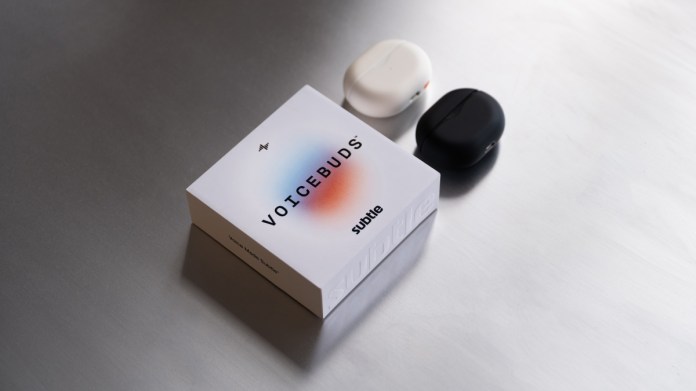
Voice AI startup Subtle, which creates voice isolation models to have computers understand you better in loud environments, today launched a new pair of wireless earbuds that help users sound clear in calls and get clear transcription for notes.

The company unveiled these earbuds ahead of the Consumer Electronics Show (CES) in Las Vegas and said that it plans to ship them in the U.S. in the next few months. The buds cost $199 and will come with a year-long subscription to the iOS and Mac app. The app will let users take voice notes or chat with AI without pressing any keys. The company said it is using a chip that allows it to wake the iPhone while it is locked.

The startup is also trying to compete with AI-powered voice dictation apps such as Wispr Flow, Willow, Monolouge, and Superwhisper by allowing users to dictate in any app using the voice buds. The company claimed that buds would deliver five times fewer errors than AirPods Pro 3 combined with OpenAI’s transcription model.

In a demo seen by TechCrunch, the voice buds were able to capture audio in a noisy background. The buds also managed to capture the text for a voice note when Subtle’s co-founder and CEO, Tyler Chen, was speaking in a whispering tone.

“We are seeing that there is a huge move towards voice as a new interface that a lot of folks are adopting. You can do much more with voice in a natural way than with a keyboard. However, we saw that voice is rarely an interface people use when others are around. So that using our noise isolation model, we will give consumers a way to experience a voice interface in the form of our earbuds,” Chen told TechCrunch over a call.

Last year, companies like Sandbar and Pebble launched rings for note-taking. Chen said that with its buds combined with app, it wants to provide functionalities of different tools like dictation, AI chat, and voice notes in one package.

Users can place a pre-order of these buds using the startup’s site. The Voicebuds are available in black and white colorways.

Techcrunch event

San Francisco
|
October 13-15, 2026

Subtle has raised $6 million in funding to date, and has been working with consumer companies like Qualcomm and Nothing to deploy their models for noise isolation.

Great Job Ivan Mehta & the Team @ TechCrunch Source link for sharing this story.
Beautiful Weather to Wrap Up the Weekend

Beautiful Weather to Wrap Up the Weekend

FORECAST HIGHLIGHTS

  • TODAY: Chilly start, sunny and mild afternoon (highs mid-70s)

  • EARLY WEEK: Foggy mornings, warm afternoons

  • LATE WEEK: Humidity builds, slight rain chance Wednesday with Cooler, drier air next weekend

FORECAST

TODAY

South Central Texas is enjoying fantastic weather to close out the weekend! Sunday will start off chilly, with morning lows in the upper 40s to low 50s, but expect a gorgeous afternoon as temperatures climb into the mid-70s under abundant sunshine. Winds will stay light, making it a perfect day to get outdoors.

A cooler but sunny Sunday (Copyright KSAT-12 2026 – All Rights Reserved)

MUGGY MORNINGS

The warming trend continues into next week, but changes are on the horizon. Southerly winds will bring back moisture, leading to patchy fog Monday and Tuesday mornings—so plan for a slower commute. Afternoon highs will reach the mid to upper 70s Monday, then climb even higher Tuesday and Wednesday, with some spots nearing the low 80s.

Muggy Meter (Copyright KSAT-12 2026 – All Rights Reserved)

Humidity will steadily increase through midweek, making things feel a bit muggy. There’s a slight chance (20–30%) of showers late Wednesday as a weak disturbance moves through, but most areas will stay dry.

LATE WEEK COOL DOWN

Another cold front arrives Thursday night, dropping humidity significantly. Temperatures won’t fall right away, but by next weekend, highs will settle back into the 60s—bringing a refreshing change after the warm stretch.

7 Day Forecast (Copyright KSAT-12 2026 – All Rights Reserved)

QUICK WEATHER LINKS

Copyright 2026 by KSAT – All rights reserved.

Great Job Shelby Ebertowski & the Team @ KSAT San Antonio for sharing this story.

U.S. government’s capture of Venezuelan president reverberates across Houston area | Houston Public Media

U.S. government’s capture of Venezuelan president reverberates across Houston area | Houston Public Media

AP Photo/Evan Vucci

Republican presidential nominee former President Donald Trump comforts Alexis Nungaray and Joamel Guevara, mother and uncle of Jocelyn Nungaray, during an event along the southern border with Mexico, Thursday, Aug. 22, 2024, in Sierra Vista, Ariz.

After months of escalating tension, the United States captured Venezuelan President Nicolás Maduro and his wife following a military operation in the South American country. It has deep and complex ties to the greater Houston area, where news of the capture reverberated Saturday.

“Harris County has the fourth largest Venezuelan population in the U.S., and a majority Latin American population,” Harris County Judge Lina Hidalgo, a native of Colombia, said in a statement. “Our energy industry, with obvious ties to Venezuela, is a major part of our economy, jobs, and the stability of energy prices nationally. I know that folks in Harris County are watching President Trump’s actions regarding Venezuela this morning.”

At approximately 2 a.m. local time Saturday in Venezuela, the U.S. carried out a “large-scale strike” against Venezuela, according to comments by President Donald Trump on social media. During the strike, the U.S. detained Maduro and his wife, Cilia Flores. Maduro and his wife were reportedly being transported to New York and have been indicted on drug, arms and conspiracy charges.

Speaking at a Saturday press conference about the military actions in Venezuela, Trump mentioned the 2024 murder of Jocelyn Nungaray, a 12-year-old Houston girl. He accused the two Venezuelan men who have been charged in her death of being part of Tren De Aragua — a Venezuelan gang.

“For years, I’ve highlighted the stories of those innocent Americans whose lives were so heartlessly robbed by this Venezuelan terrorist organization,” Trump said Saturday. “Americans like 12-year-old Jocelyn Nungaray from Houston. Beautiful Jocelyn Nungaray … kidnapped, assaulted and murdered by Tren De Aragua. Animals, they murder Jocelyn and left her dead under the bridge.”

RELATED: President Donald Trump to rename Anahuac wildlife refuge after Jocelyn Nungaray

The capital murder case against Johan Jose Rangel Martinez and Franklin Peña is ongoing. Prosecutors in Harris County have not said the men are connected to the Venezuelan gang.

Some Democrats have questioned the Trump administration’s legal authority to intervene in Venezuela’s government without approval from Congress.

U.S. Secretary of State Marco Rubio, Trump’s national security advisor, indicated during a news conference Saturday that Congress was not given notice of the strike in advance, calling it “largely a law-enforcement” operation, according to the New York Times.

Oil industry ties

U.S. government’s capture of Venezuelan president reverberates across Houston area | Houston Public Media

Lucio Vasquez / Houston Public Media

Pictured is Chevron gas station located on the Eastex Freeway in Houston. Taken on December 3, 2019.

Following Maduro’s capture, Trump said American companies will take over oil operations in Venezuela.

Houston is a hub for the oil and gas industry. Houston-based Chevron is the only American oil producer still operating in Venezuela.

“Chevron remains focused on the safety and well-being of our employees, as well as the integrity of our assets,” Chevron spokesperson Bill Turenne said in a statement. “We continue to operate in full compliance with all relevant laws and regulations.”

Francisco Monaldi is the director of the Latin America Energy Program at Rice University’s Baker Institute for Public Policy. He said Houston has deep ties with Venezuela and many oil firms direct their Latin American operations from the city.

“Houston is going to be the center of a lot of the potential activity of investment in Venezuela,” he said. “It has a long history of connection to Venezuela.”

Citgo and the Citgo 6

Citgo
Amber Energy, an affiliate of Elliott Investment Management L.P., will acquire Citgo for nearly $5.9 million.

In November 2017, brothers Alirio Jose Zambrano and Jose Luis Zambrano — who both lived in the Katy suburb west of Houston — were among six U.S.-based executives at Citgo — a Houston-based company that is a subsidiary of Petroleos de Venezuela (PDVSA), Venezuela’s state-run petroleum company — who were arrested by the regime of Maduro after attending a meeting in Caracas.

The men, who became known as the “Citgo 6,” were accused of attempting to refinance corporate debt without authorization, convicted of crimes by a Venezuelan judge and sentenced to lengthy prison sentences before eventually being released. Five of them were freed in October 2022 as part of a prisoner swap between Venezuela and the United States. The other man had previously been released in March of 2022.

Jorge Toledo Citgo

Carlos Anez

Jorge Toledo, a Sugar Land resident, is one of six U.S.-based Citgo executives who were imprisoned by the Venezuelan government in 2017. The men have all been released.

Alexandra Forseth, a Houston-area resident who is Alirio Zambrano’s daughter and Jose Luis Zambrano’s niece, was a leading advocate for the men’s release. In a statement to Houston Public Media on Saturday, she said she and her family were praying for those wrongfully held in Venezuela.

“We are praying for the safety of all who remain wrongfully detained and continue to urge for their prompt release, so they can be reunited with their families,” she said.

Several Americans still remain in Venezuelan custody, according to the New York Times.

In May 2024, the Zambrano brothers sued Citgo for $400 million over their Venezuelan imprisonment.

Early last month, a judge approved the sale of Citgo to Amber Energy following a years-long legal battle. A court previously found that Citgo’s shares could be auctioned to pay off the debts that its state-owned parent company, PDVSA, owed to a Canadian mining company.

Shortly after the ruling, Venezuela’s Vice President and Oil Minister Delcy Rodriguez reportedly said the country rejected Citgo’s sale and filed an appeal in the court case.

Seized oil tanker

Oil Tanker Venezuela

U.S. Attorney General’s Office/X via AP

This image from video posted on Attorney General Pam Bondi’s X account, and partially redacted by the source, shows an oil tanker being seized by U.S. forces off the coast of Venezuela, Wednesday, Dec. 10, 2025.

On Dec. 10, an oil tanker known as the Skipper was seized near Venezuela by the U.S amid escalating tensions between Trump and Maduro. As of Saturday, the tanker still appeared to be sitting approximately 40 miles of the Galveston coast, where it has been for several weeks.

Ed Hirs, an energy fellow at the University of Houston, said in December that the tanker was likely sent to the Galveston area because of its oil infrastructure.

Several weeks after seizing the Skipper, the U.S. announced that it had seized a second tanker as it was departing from Venezuela.

The U.S. has reportedly been pursuing a third oil tanker that was heading to Venezuela. According to Reuters, Russia had asked the U.S. on New Year’s Day to stop pursuing it. The tanker was still reportedly being pursued by the U.S. as of Saturday.

Hidalgo, the elected official in the Houston area, said “many are rightly celebrating the removal of the top leader of a truly terrible autocratic regime. Not only could this morning’s actions help improve the lives of Venezuelans, but on a numbers-and-cents basis, they could lead to better outcomes for our residents, our energy industry, and the nation.”

She also said that Houston-area residents, along with the oil and gas industry, only stand to gain if Venezuela and its government are stabilized.

“As President Trump’s ‘takeover’ proceeds, on behalf of community and economic interests in Harris County – the third largest county in the nation and home to a massive energy industry with national ramifications – I call for the President to usher in stability and success by ensuring a prompt democratic transition in Venezuela. And I call for Congress to reclaim its power and hold the President’s actions accountable, ensuring they bring about a prompt transition to the elected Venezuelan leadership and their winning coalition. This necessitates transparency and respect for the rule of law on the part of our federal leadership.”

Great Job & the Team @ Houston Public Media for sharing this story.

Ten Million Corals Are in the Path of a Federal Dredging Project in Florida – Inside Climate News

Ten Million Corals Are in the Path of a Federal Dredging Project in Florida – Inside Climate News

Beneath the surface of one of South Florida’s busiest maritime hubs, Port Everglades, scientists found 10 million corals thriving in and around the main channel traversed daily by cargo and cruise ships, now threatened by a major federal dredging project. 

The discovery, detailed in a new scientific analysis by the National Oceanic and Atmospheric Administration (NOAA) and the Shedd Aquarium, shows that coral populations near the port in Fort Lauderdale have persisted, and in some cases grown over the past decade, even as most reefs across Florida have collapsed from disease, coastal development and rising ocean temperatures.

“There are still a lot of corals out there, and they need to be protected,” said Ross Cunning, a research biologist at the Chicago-based Shedd Aquarium who co-authored the study.

Thousands of them are endangered staghorn corals—fast-growing reef builders that create habitat for marine life and help protect coastlines from storm surge. According to another recent study, also co-authored by Cunning, staghorn corals have all but vanished elsewhere in the region and are considered functionally extinct. 

Most were wiped out in the Florida Keys and Dry Tortugas during a marine heat wave in 2023 when prolonged high temperatures triggered the ninth mass coral bleaching event on Florida’s coral reef, forcing the corals to expel the algae that fuels them and turn white. For more than 40 consecutive days, ocean temperatures exceeded 85 degrees Fahrenheit, exposing reefs to heat stress two to four times greater than in all prior years on record, the study found. 

In some cases, it was so hot, Cunning said, that the corals’ tissue “just started kind of melting off before they really even had a chance to bleach other places.”

Now, only small pockets of staghorn colonies remain farther north, including near Fort Lauderdale, where reefs around Port Everglades now represent one of the species’ last natural strongholds in the continental United States.

The millions of corals documented in the analysis by NOAA Fisheries and the Shedd Aquarium lie in, or near, the path of a proposed federal dredging project. The plan, known as the Port Everglades Navigation Improvements Project, is a major federal initiative, led by the U.S. Army Corps of Engineers, aimed at deepening and widening the port’s shipping channels to accommodate newer cargo ships and bulk carriers that transport raw materials, including oil, gas, coal and grain. 

Ten Million Corals Are in the Path of a Federal Dredging Project in Florida – Inside Climate News
Staghorn coral are fast-growing, reef-building species that form tangled, antler-like thickets on the seafloor, providing habitat for marine life. Credit: Liv Williamson

If approved, federal scientists and local conservation groups warn the construction could cause unprecedented damage to corals within the channel and beyond. 

“The project would result in the largest impact to coral reefs permitted in U.S. history,” Andy Strelcheck, NOAA Fisheries’ Southeast regional administrator, wrote in a letter to the U.S. Army Corps of Engineers, obtained by Inside Climate News. 

Army Corps officials say the project is necessary to relieve mounting pressure on Florida’s already constrained ports. In an email to Inside Climate News, they said neither Port Everglades nor Port Miami alone can handle the region’s growing population and energy needs, noting that Port Everglades supplies nearly all of South Florida’s petroleum. 

Still, they have acknowledged some of the risks. In their email, corps officials said the project “has the potential to impact corals both directly, in the proposed new channel, and indirectly through turbidity and sedimentation caused by construction.” 

To dredge the channel, heavy machinery will be used to cut through rock and seafloor, breaking it into rubble that creates clouds of fine sediment. That material will then be suctioned up along with seawater and loaded onto large barges, known as scows, which carry a slurry of sediment, rocks and debris. Depending on where that sediment-laden water is released, it can create sediment plumes that can smother corals and possibly even trigger disease, Cunning said. 

“These are precious resources,” he said. “We can’t afford to just dump dredging sediments on them.”

The project could also harm other vulnerable marine life, including endangered species such as mountainous star coral and the last known U.S. breeding populations of queen conch—a large marine snail prized for its meat and pink shell that was recently listed as threatened under the Endangered Species Act after decades of overfishing and habitat loss. 

A colony of great star coral in Port Everglades in September 2024. Credit: Amalia Seigel/University of MiamiA colony of great star coral in Port Everglades in September 2024. Credit: Amalia Seigel/University of Miami
A colony of great star coral in Port Everglades in September 2024. Credit: Amalia Seigel/University of Miami

“They’re actually even more sensitive than coral might be to having sediment fall onto them,” said Rachel Silverstein, a marine biologist and CEO of Miami Waterkeeper, a nonprofit dedicated to preserving South Florida’s watershed, including Biscayne Bay, the Everglades and coral reefs. 

The Port Everglades expansion has been under development for more than a decade, with repeated delays due to concerns from federal scientists and conservation groups about the scale of environmental damage the dredging could cause. 

In 2016, Miami Waterkeeper and partner organizations, including the Center for Biological Diversity, sued the Army Corps to halt the dredging project until the agency could demonstrate it would not harm endangered species or destroy critical coral reef habitat. The lawsuit cites violations of federal environmental laws, including the Endangered Species Act and the National Environmental Policy Act, which requires agencies to fully assess environmental impacts before approving major projects.

“They have to make sure that whatever they do isn’t going to cause the species extinction and isn’t going to prevent the species from recovering to a point where we no longer need to protect it under the act,” said Elise Bennett, Florida and Caribbean director and a senior attorney at the Center for Biological Diversity. “They can’t go forward with the project that’s going to jeopardize the species.”

The groups have since agreed to temporarily pause the lawsuit while the Corps conducts additional environmental studies before any dredging begins. But they continue to speak out against the proposed construction’s potential impacts on marine life. 

Last fall, Miami Waterkeeper and other plaintiffs sent a letter to NOAA Fisheries objecting to the Army Corps’ request for authorization to incidentally harm more than 100 dolphins over the course of the project, including three species—the common bottlenose dolphin, Atlantic spotted dolphin and Tamanend dolphin—due to behavioral disturbance and permanent hearing loss resulting from construction activities.

“The Corps plans to use high explosives to remove rock in the Project area, creating large underwater blasts, which can harm marine mammals due to noise impacts,” the authors of the letter, including Silverstein, wrote. According to the letter, the Army Corps estimates the project would require roughly 280 blast events over its anticipated five-year duration, with construction expected to begin within the next three years. 

A Lesson in History

For conservation advocates, their concern is grounded in recent history. Between 2013 and 2015, the Army Corps led a similar expansion of Port Miami. 

Throughout the dredging project, Silverstein said, she went diving in the channel several times to observe how the reef was being impacted. “When I got to the bottom, I thought that I was on the sandbar. I couldn’t see any corals,” she said. 

As Silverstein continued to swim, she began to see the tips of sea fans and seaweed poking out of the sediment. “Then I realized we were on the reef, but it had been buried,” she said.

This story is funded by readers like you.

Our nonprofit newsroom provides award-winning climate coverage free of charge and advertising. We rely on donations from readers like you to keep going. Please donate now to support our work.

Donate Now

Consultants hired by the Army Corps initially reported that just six corals were killed. But Silverstein said, “the impacts to corals was far greater than what was being reported.”

A 2019 study that assessed the full extent of the damage later found that more than 560,000 corals were killed during the project. “These are animals that are attached to the bottom, and they can’t move,” Cunning said. “So when they’re buried by sediment, they die.”

The analysis, co-authored by Silverstein and Cunning, also concluded that harmful impacts likely extended up to six miles beyond the immediate dredging site.

With Port Everglades supporting an even higher density of coral, scientists say they are determined to avoid a repeat of that outcome.

Cunning and a team of other scientists, including several from NOAA Fisheries, conducted a series of dives in Port Everglades in 2024 to establish a detailed baseline of coral abundance and health. The goal, Cunning said, was to capture the clearest possible picture of what exists now, before any dredging begins, to inform mitigation plans and accurately assess damage if the project moves forward.

Cunning was surprised, he said, by what they found. An estimated 10 million corals live within about a mile of the proposed dredging site. That total includes hard corals of all sizes and species, including more than 40,000 colonies listed under the Endangered Species Act (ESA), such as staghorn corals. 

Some of them could be decades, even centuries old, said Andrew Baker, a professor of marine biology and ecology at the University of Miami’s Rosenstiel School of Marine, Atmospheric and Earth Science and director of the school’s Coral Reef Futures Lab, where he researches coral adaptation to climate change. 

It is impossible to save all 10 million corals, he said. The process would need to prioritize species already on the brink.“I think you need to go through an exercise of figuring out which corals are the most important to save,” he said. “That might include all the ESA-listed species.”

 Beyond that, Baker said he would recommend focusing rescues on older, reproductively mature corals that could be used to spawn in land-based facilities and “produce new recruits that could then be used to replenish the area afterwards.”

So far, Army Corps officials say they are committed to relocating all corals larger than 3 centimeters before dredging begins and outplanting them at nearby natural reef enhancement sites and artificial reefs. Mitigation efforts of this scale, Baker said, will require careful planning well before any construction starts and years of active rescue efforts. 

“The scale of that project is so massive that unless we begin it now, we’re going to just narrow the window of available time to rescue corals and not be able to get enough of them,” he said. 

Even with that level of preparation, scientists caution that relocation is no guarantee. 

“The fate of relocated corals is still not always great,” Cunning said. “We can’t just assume that all the corals that are relocated are going to survive.”

About This Story

Perhaps you noticed: This story, like all the news we publish, is free to read. That’s because Inside Climate News is a 501c3 nonprofit organization. We do not charge a subscription fee, lock our news behind a paywall, or clutter our website with ads. We make our news on climate and the environment freely available to you and anyone who wants it.

That’s not all. We also share our news for free with scores of other media organizations around the country. Many of them can’t afford to do environmental journalism of their own. We’ve built bureaus from coast to coast to report local stories, collaborate with local newsrooms and co-publish articles so that this vital work is shared as widely as possible.

Two of us launched ICN in 2007. Six years later we earned a Pulitzer Prize for National Reporting, and now we run the oldest and largest dedicated climate newsroom in the nation. We tell the story in all its complexity. We hold polluters accountable. We expose environmental injustice. We debunk misinformation. We scrutinize solutions and inspire action.

Donations from readers like you fund every aspect of what we do. If you don’t already, will you support our ongoing work, our reporting on the biggest crisis facing our planet, and help us reach even more readers in more places?

Please take a moment to make a tax-deductible donation. Every one of them makes a difference.

Thank you,

Great Job By Teresa Tomassoni & the Team @ Inside Climate News Source link for sharing this story.
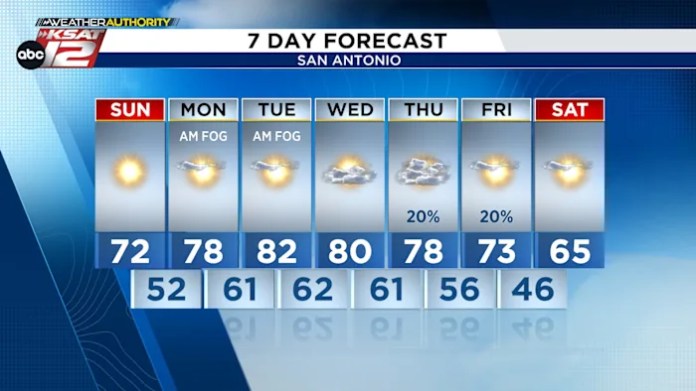
Top Womanizer Coupons for December 2025

Top Womanizer Coupons for December 2025

Since 2014, Womanizer has been satisfying people with vulvas all over the world. Thanks to its revolutionary Pleasure Air Technology that mimics the feeling of oral sex, not only has Womanizer discovered a way to stimulate the 10,000+ nerve endings in the clitoris in a way that hadn’t been done by a sex toy before—yes, they were the first—but the brand can even boast a 100% orgasm rate among users.

As a company that puts sexual pleasure front and center, Womanizer has continued to add to their very impressive lineup of orgasm-inducing toys. They’ve even branched out by creating products like the Womanizer Duo and Womanizer Duo 2, both of which stimulate the clitoris and G-spot simultaneously. (Blended orgasm, anyone?) As recently as March 2025, Womanizer launched their latest toy, Womanizer Enhance, the first toy of its kind because it allows the user to choose between the Pleasure Air Technology or traditional vibrations. I was fortunate enough to review the Enhance for WIRED, giving it a 7/10 because of its ability to stand by its word and deliver me one heck of an orgasm.

But because the Enhance is just one of dozens of Womanizer products that have hit the market in the last 11 years, I’m the first to admit that it can be difficult to choose which one is best for you. That’s where Womanizer coupons come into play—because no one should have to decide on just one of their fantastic sex toys.

Save 12% on Everything With Our Exclusive Womanizer Coupon

If you’ve been wanting to try Womanizer, but you were holding out for a sale or deal, then I’m happy to announce that we have a great one for you. At checkout, use the Womanizer promo code and you’ll score 12% off everything sitewide, including sale products.

What Makes the Womanizer Premium 2 so Popular?

Overwhelmed and not sure where you should begin your Womanizer journey? Womanizer Premium 2 is the perfect start to a life-long love affair with Womanizer. It’s easy to use, has 12 intensity levels, and you can even set it to Womanizer Autopilot so you can focus 100% on being in the moment. It’s also waterproof should you want to experiment with its sensations in the shower or bathtub.

Get 15% off Sitewide With a Womanizer Coupon Code

Looking to level up on the Womanizer deals? If you sign up on the website, you’ll get a Womanizer coupon code emailed directly to you. Valid for seven days, this unique code will get you 15% off everything on the site and can even be combined with other Womanizer discounts.

This gives you a great opportunity to purchase the Womanizer Premium 2, so your original Premium has a buddy. If you travel a lot for work or for pleasure and need something smaller, but just as powerful, then put that promo code toward the Womanizer Liberty 2 or Womanizer Starlet Snow. Both are ideal for the person who’s always on the go, but also prioritizes sexual pleasure.

Shop Womanizer Sales and Get up to 50% off Sex Toys

Womanizer isn’t just great at keeping people with vulva knee-deep in orgasms, but doing so with your budget in mind. Because sexual pleasure should be affordable and accessible for everyone, the Womanizer sale offers up to 50% off certain products at all times. It’s a great selection of Womanizer sale items that showcase just how diverse the brand is. On the sale page, you won’t just find Pleasure Air Technology sex toys, but vibrators and penis strokers too. It’s a great way to get yourself a little something and feel good knowing that it was a total bargain.

How to Get a Free Toy With Purchase

Let’s be honest: the best things in life are free. Because Womanizer knows that and realizes we all deserve a freebie from time-to-time, they want to make your day. With every Womanizer order over $199, you get a free Womanizer toy at checkout. Choose between the Womanizer OG, the Womanizer Classic 2, or We-Vibe Bond. All of which make a fabulous gift for yourself from Womanizer or a gift for someone you love.

Enjoy Free Shipping on Your Womanizer Order

No matter what coupon code you’re using, sale items you’re purchasing, or discounts you have, every Womanizer order over $30 gets you free shipping all year round. If you don’t like your product for whatever reason, know that as a Womanizer customer you can shop for sex toys risk-free thanks to their 100 Day Pleasure Guarantee. Also, all products include a 5-year warranty, so that you can be assured of their quality.

Save 15% With a Womanizer Student Discount

If you’re still in school, Womanizer offers 15% off all products with its student discount. You just need to register your phone number to verify your student status. If you’re no longer a student, but are a graduate, teacher, healthcare worker, first responder, low-income, military personnel, a parent, or a charity worker, you too can enjoy 15% off everything. Womanizer has teamed up with Student Beans and Beans iD to offer exclusive discounts for a range of different groups. Sexual pleasure is a human right and Womanizer wants all of us to exercise that right with the help of discounts and coupon codes.

Great Job Amanda Chatel & the Team @ WIRED Source link for sharing this story.

Secret Link