Home News Page 155

‘Unfit and Unwell’: Trump Attempts Damage Control in Exclusive Interview, But His Unhinged Answers Send It Off the Rails

‘Unfit and Unwell’: Trump Attempts Damage Control in Exclusive Interview, But His Unhinged Answers Send It Off the Rails

President Donald Trump’s physical and mental health have been making headlines for months, leading to constant speculation about his fitness for office.

Now the president is trying to regain control of the narrative in an extensive interview on his health, from his bruised hands to nodding off in public, but Trump’s admittedly wild approach to his health and shocking responses in the interview have fueled concerns.

‘Unfit and Unwell’: Trump Attempts Damage Control in Exclusive Interview, But His Unhinged Answers Send It Off the Rails
U.S. President Donald Trump speaks to reporters after a ceremony for the presentation of the Mexican Border Defense Medal in the Oval Office of the White House on December 15, 2025 in Washington, DC. During the ceremony, Trump recognized the first 13 service members to receive the recently established Mexican Border Defense Medal (MBDM), which recognizes service members supporting Customs and Border Protection on the U.S.-Mexico border. (Photo by Anna Moneymaker/Getty Images)

Trump, at 79, is the oldest person ever to start a term as president. His persistent health issues in recent months are no secret.

He’s had swollen ankles from a chronic venous insufficiency diagnosis and persistent bruises on his hands. He’s also seemed out of touch and confused at times over the past months and often loses his train of thought during speeches, meandering off topic in senseless diatribes.

When reporters noticed the dark bruises on one of Trump’s hands earlier this year, White House Press Secretary Karoline Leavitt insisted it was from “frequent handshaking.” His discolored and bruised hand was on display again last month at the Kennedy Center Honors.

His doctors and White House staffers have also insisted that the president is in “exceptional health and perfectly suited to execute his duties as Commander in Chief,” pointing to his busy and active schedule, The Wall Street Journal reported.

‘Beyond Embarrassing’: Trump Fumbles a Simple Question, Then Blames the Reporter — Until a World Leader Calls Him Out

Trump revealed he takes large doses of aspirin daily against his doctor’s advice and has for a quarter century. He says he has no plans to stop.

“I’m a little superstitious,” he said, despite doctors’ recommendations that he take a smaller dose.

“They say aspirin is good for thinning out the blood, and I don’t want thick blood pouring through my heart,” Trump said. “I want nice, thin blood pouring through my heart. Does that make sense?” 

Trump’s doctor said the president uses aspirin for “cardiac prevention.” Trump reportedly takes 325 milligrams of aspirin a day, which is four times the recommended low dosage amount. In the WSJ interview, the president attributed the bruising on his hand to his aspirin use.

Trump admitted to wearing makeup on his hands after he gets “whacked again by someone.”

“I have makeup that’s, you know, easy to put on, takes about 10 seconds.”

It’s also common knowledge that Trump sleeps very little, and he’s often up late, posting on social media for hours. He doesn’t like to exercise, except for playing golf. He called it “boring” in the WSJ interview. And he loves a high-fat, salty diet of hamburgers and French fries but says he doesn’t worry because of “good genetics.”

 “To walk on a treadmill or run on a treadmill for hours and hours like some people do, that’s not for me,” he reportedly said.

In another phone interview with the WSJ, Trump appeared frustrated with ongoing questions about his health.

“Let’s talk about health again for the 25th time,” he complained, adding that, “My health is perfect.” 

Trump expressed regret for going public with the results of a cardiovascular and abdominal CT scan in October, which the White House first described as a “routine MRI,” but MRIs, or body imaging tests, are not part of any routine physical exam.

“In retrospect, it’s too bad I took it because it gave them a little ammunition,” Trump whines to the WSJ.

“I would have been a lot better off if they didn’t, because the fact that I took it said, ‘Oh gee, is something wrong?’ Well, nothing’s wrong,” he insisted.

Trump addressed several incidents of sleeping during White House events. Cameras caught him apparently nodding off in November and a December cabinet meeting, but he claims video and photos of him repeatedly dozing in public actually caught him “blinking” or in between blinks.

“I’ll just close. It’s very relaxing to me,” he said, referring to his shuttered eyes. “Sometimes they’ll take a picture of me blinking, blinking, and they’ll catch me with the blink.”

Trump staffers said they believe the president gets bored and has reportedly asked cabinet members to speak loudly, even though they dispute any claims that Trump has issues hearing.

Social media had a field day responding to Trump’s comments in the interview.

“Those are some long blinks,” Threads poster ML Daugherty stated. “He’s been in serious decline for YEARS!” this Threads user proclaimed. “Dozing, Diapered Donald,” another one joked.

Great Job Shelby E. & the Team @ Atlanta Black Star Source link for sharing this story.

Michael Saylor’s Strategy flirts again with the danger threshold at which his company is worth less than his Bitcoin | Fortune

Michael Saylor’s Strategy flirts again with the danger threshold at which his company is worth less than his Bitcoin | Fortune

Stock in Michael Saylor’s Bitcoin treasury company Strategy was up 1.22% in early trading today, giving the company a brief period of relief. The stock has declined 66% since its high last July, and this morning its “mNAV”—a technical gauge of whether the company is worth more or less than the Bitcoin it holds—was at 1.02. 

If that gauge falls below 1, then technically the company is worth less than the Bitcoin it owns. At that point, the stock would be sold off by many investors because there is no point in owning a stock whose value is based on Bitcoin if the stock is worth less than the Bitcoin. 

The stock has been sitting above this danger zone since November.

Already, the market cap of the company is worth less than its Bitcoin. Its market cap was $47 billion today; the Bitcoin held by the company is worth just under $60 billion. That on its own is a perilous position. But if the company’s mNAV (“market-to-net asset value”) falls below 1 then the stock potentially enters a new world of pain. mNAV is a measure of the company’s total market cap plus its debt, minus its cash, divided by its total Bitcoin reserve. If that value is worth less than 1 then the case for owning Strategy stock becomes harder to argue.

Fortune contacted the company for comment.

Saylor, as usual, has been tweeting bullishly about MSTR shares, including this chart showing that “open interest” (investor positions that have not been closed out) are the equivalent of 87% of the company’s market value. The implication is that the stock is highly traded (although many of those positions are undoubtedly short bets against the company). He also posted an AI-generated picture of him taming a polar bear.

Below the level of mNAV at 1 lies another dangerous threshold for Strategy: the average price at which Strategy has historically accumulated Bitcoin. Over the years, that price was about $74,000 per coin. Currently, Bitcoin trades at $89.6K. If the price were to fall below $74K it would imply that Strategy’s Bitcoin stash was worth less than what Saylor has paid for it.

Strategy fans would argue that might be a time to buy—if the stock was worth less than its Bitcoin then the price per share might rise to meet the price of Bitcoin; it might rise even more if Bitcoin resumed its march higher.

But that, again, would be a sore test for traders who are not true believers. Why hold a stock that is worth less than the underlying asset it represents?

Join us at the Fortune Workplace Innovation Summit May 19–20, 2026, in Atlanta. The next era of workplace innovation is here—and the old playbook is being rewritten. At this exclusive, high-energy event, the world’s most innovative leaders will convene to explore how AI, humanity, and strategy converge to redefine, again, the future of work. Register now.

Great Job Jim Edwards & the Team @ Fortune | FORTUNE Source link for sharing this story.

Chelsea’s interim coach says players ‘really focused’ on Man City after Maresca exit

Chelsea’s interim coach says players ‘really focused’ on Man City after Maresca exit

LONDON – Calum McFarlane said he’s had a “whirlwind” 24 hours at Chelsea since being elevated from Under-21s coach to interim manager and then tasked with facing Pep Guardiola and Manchester City on Sunday.

The Englishman was put in charge while Chelsea finds a replacement for Enzo Maresca. McFarlane led team training Friday after his security pass was upgraded so he could access the first-team building.

“It’s been a crazy 24 hours, a whirlwind as you can imagine, but it’s also been really enjoyable and exciting,” McFarlane said.

The London club announced on Thursday that Maresca left his position as manager — following a reported deterioration in his relationship with the team’s hierarchy.

Liam Rosenior, who coaches French team Strasbourg — a club in the same ownership group as Chelsea, has been reported to be a leading contender for the job.

On Sunday, though, McFarlane will lead the Blues at Etihad Stadium against a manager who has surpassed the 1,000-game mark in charge.

“The energy and enthusiasm in training was exceptional today,” said McFarlane, who worked in City’s academy in the 2020-21 season before moving to Southampton and then Chelsea. “They seem really focused, they’re really driven, hungry. They know we’ve got a massive game on Sunday, and were going to have to be at our best.”

Chelsea starts the second half of the Premier League season in fifth place. The Blues are three points back of fourth-place Liverpool but also just three points ahead of 11th-place Fulham.

The game at City is the first of nine matches for Chelsea this month in all competitions.

Chelsea is seeking a fifth full-time manager since the takeover of the club by American investors, fronted by Todd Boehly, in May 2022.

Maresca was in charge for 18 months and won the Conference League and Club World Cup in his first season at Chelsea.

___

AP soccer: https://apnews.com/hub/soccer

Copyright 2026 The Associated Press. All rights reserved. This material may not be published, broadcast, rewritten or redistributed without permission.

Great Job Associated Press & the Team @ KSAT San Antonio Source link for sharing this story.

What Dante Is Trying to Tell Us

What Dante Is Trying to Tell Us

The Divine Comedy is more than 14,000 lines long and is divided into three parts, but it’s the first part, the Inferno, that gets all the attention. For centuries, readers have preferred the horrors of hell to the perfection of heaven. Gustave Doré, the celebrated French illustrator, did elaborate engravings for the three canticles in the mid-19th century and devoted 99 out of 135 of them to Dante Alighieri’s darkest scenes.

Who can blame Dante’s admirers when hell is filled with so many beautifully flawed characters: Francesca da Rimini, the eloquent adulteress; Farinata, the proud heretic; Ulysses, the defiant king; Ugolino, the father turned cannibal who ate his own sons? And then there are the infernal workers who make sure that Lucifer’s realm runs smoothly, among them farting devils, giants in chains, and a flying monster with the body of a serpent and the face of an honest man. Most readers see little reason to continue with the poem once Dante, guided by Virgil, has safely exited “to once again catch sight of the stars.”

Explore the February 2026 Issue

Check out more from this issue and find your next story to read.

View More

But Dante’s journey has just begun. In Purgatorio, he must summit a massive mountain. Success in that struggle leaves him facing, along with other sinners, a wall of flames that inflict purifying pain but not death. Only then does Paradise await—and it’s not just around the corner. He must travel past the planets and fixed stars to a rose-shaped empyrean. Tackling this culminating challenge in the company of his beloved Beatrice, who inspired the poem, Dante must trasumanar, a magnificent word that he invents to describe the experience of passing beyond what’s human.

Dante volunteers to guide us on this last leg, warning in Paradiso’s Canto II that “if you lose sight of me, you’ll be totally lost. // The waters I’m sailing have never been crossed.” Many readers certainly do struggle with the epic’s final part, which has its share of dense theological disquisitions. It is filled with vivid scenes, too, which stretch the human imagination about as far as it can go. At one point, Dante’s ears are unable to make out divine music, because of his “mortal hearing.” But later, when his ears are opened, he comes upon a legion of angels resembling a “swarm of bees,” moving back and forth from flower to hive, singing “the glory” of God. Beatrice’s beauty only increases as they ascend, her “holy” smile indescribable even if he had “all that eloquence” of the ancient Greek muse of poetry to assist him.

Upon witnessing the Ascension of Jesus Christ surrounded by all of the souls he has redeemed, Dante marvels at how his mind “was released from itself.” Put another way, his mind was blown. After that, in a reversal of chronology signaling that we are in a place where sequential time doesn’t matter, he watches the Annunciation unfold as “a crown-shaped circular form” haloed the Virgin Mary, “then whirled around her.” As if that weren’t enough, Dante envisions an eagle in the sky made up of souls that change shape in mid-air, and he identifies a point in the universe that is both center and circumference; that’s where God resides. “Nowhere in poetry,” T. S. Eliot wrote about this last scene, “has experience so remote from ordinary experience been expressed so concretely.”

The earthly experience of personal grief and privation that inspired such transcendent beauty is mind-bending in its own way. During the years that Dante worked on the Divine Comedy—1307 to 1321, the last decade and a half of his life—he was exiled from his faction-ridden hometown of Florence. Dante, who vehemently opposed the papacy’s desire for secular power, had been charged with financial corruption, a politically motivated accusation, and the threat of being burned at the stake if he returned hung over him. A party of one, as he later called himself, he wandered from court to court, living off the generosity of a few patrons. He never set foot in Florence again.

Roughly half a millennium after Dante’s death, his poem received an ecstatic welcome in the United States, where Henry Wadsworth Longfellow embarked on the first American translation of all three parts in the early 1860s, as the Civil War raged. A poet and a retired professor of modern languages at Harvard, he made his way through Paradiso, publishing three of its cantos in The Atlantic, and then turned to the Inferno, finishing up with a revision of Purgatorio.

Italian nationalists had recently laid claim to Dante’s epic as an expression of shared cultural identity for the country’s warring city-states. Longfellow was a supporter of the so-called Risorgimento and of Dante, whose optimistic message he was keen to mobilize against the tragic events in his own country. Dante’s “medieval miracle of song,” as Longfellow called it, could be reimagined as an allegory for the cleansing of the original sin of slavery and the restoration of a broken democratic union.

Thankfully, Longfellow avoided trying to reproduce Dante’s original terza-rima scheme (in which the last word in the second line of a tercet provides the first and third rhyme of the next tercet). Instead he chose the more forgiving blank verse, which works much better in English, a rhyme-poor language without Italian’s abundance of vowel sounds at the end of words. His translation, published in 1867, was wildly popular.

Since then, about 50 other American renditions of the entire poem have appeared. None is as provocative as the one that Mary Jo Bang, a poet, has been working on for the better part of two decades. And none is as attuned to Longfellow’s democratic urge to spread Dante’s message of unity either. Following on her Inferno (2012) and Purgatorio (2021), Bang’s Paradiso has arrived at a moment of national turmoil, and sets out to make a vision of hope and humility accessible to all in an unusual way.

Bang’s unconventional approach was inspired by an encounter with a medley of 47 different English translations of the Inferno’s famous first three lines assembled by the poet Caroline Bergvall. Never having studied Italian, Bang saw a chance to try her hand by relying on those variations, along with Charles S. Singleton’s translation (already on her shelf). The 47 variations mostly struck her as formal and “elevated,” and she was curious to discover how contemporary English would sound. In the process, she arrived at something fresh. “Stopped mid-motion in the middle / Of what we call our life,” her tercet began, conveying an abrupt jolt, as if a roller coaster was kicking into gear, and then went on: “I looked up and saw no sky— / Only a dense cage of leaf, tree, and twig. I was lost.”

By Dante Alighieri, translated by Mary Jo Bang

Her experience with these three lines was enough to convince Bang that she wanted to carry on at least with the Inferno. She now gathered an array of esteemed English translators to keep her company. (To Singleton and Longfellow, she added William Warren Vernon, John D. Sinclair, and Robert and Jean Hollander, among others.) Whether she would make it through Paradiso, which she had until now found “unreadable,” was still up in the air.

Her perspective shifted mid-motion, as it were, when the pandemic hit. Colloquially rich translations of the other two canticles behind her, and with the world in lockdown, the time was right to contemplate the afterlife—and undertake the extra challenge of rescuing this last part from unreadability by making it, as she’d done with the preceding canticles, more readily intelligible to 21st-century American readers. “While translating the poem,” she said in an interview, “I would ask myself how Dante might say something if he were speaking American English at this moment in time. And, additionally, how would he say it if he knew everything that I know.”

By deciding to use a living language, the kind that real people use, she was following Dante’s lead. He had chosen his native Tuscan dialect over literary Latin because it was sensory, ever-evolving, and intimate in the way that it could speak to readers. Phrases such as “I was a sad sack” and “love-struck” are plentiful in Bang’s Inferno, and when Dante meets his great-great-grandfather in Paradiso, they use words such as shout-out and lowlife. Dante incorporated cultural allusions familiar to his audience. So does Bang, in both her text and her notes. In the Inferno, you’ll even find the obese Eric Cartman, from South Park, substituted for Ciacco, the gluttonous Florentine whose name means “little piggy.”

In Paradiso, she takes fewer liberties with the text. But in her notes, instead of limiting herself to the dense scholarly glosses on obscure words and the thousands of literary and historical references that are the standard apparatus of translated editions of the Divine Comedy, Bang mixes in nods to the more contemporaneous references she’s used. An image of reflecting light that “bounces up, / Like a rocket man who longs to come back” is accompanied, for example, by a citation to both a 1951 Ray Bradbury short story and the Elton John song “Rocket Man.” Commenting on the line “Don’t be like a feather in each wind” as a metaphor for inconstancy, she refers to an echo not just in Shakespeare’s The Winter’s Tale but also in Led Zeppelin’s “All My Love.” This poem, she conveys, isn’t frozen in time; even updated references will lose their cultural currency and need identifying.

To purists who fantasize about the fullest possible immersion in the original text, creative adaptation of this sort sounds like heresy. These same purists would likely be even more horrified to discover something else: By the time Bang was working on Purgatorio, she had begun using Google Translate to render lines in the original, getting “a basic scaffold” as she made her way along. She also sometimes consulted Wiktionary, the collaboratively edited multi-language dictionary. With her English editions of Dante still by her side, Bang was at work on an artistic venture very much of the digital age. But for her, translation remained an act of working through and against multiple interpretations and responding by reordering, amending, and substituting, all guided by poetic decisions—weighing what struck her ear, eye, and mind as most suitable.

A great deal of Dante’s remarkable repertoire of technical tricks will get lost in translation, whatever the language and whoever the translator: the chiasmuses, the neologisms, the numerical correspondences, the wordplay, all of the dazzling rhymes necessary to keep the engine of terza rima going. To appreciate just one example of Dante’s feats, here is Bang’s rendition of the tercet from Paradiso’s final canto, in which he is now face-to-face with God: “O Eternal Light, You who alone exist within / Yourself, who alone know Yourself, and self-known / And knowing, love and smile on Yourself!” It flows, but what Dante does can’t be matched. The pileup of you and yourself and alone is meant to approximate something extraordinary that is happening in the Italian words: Etterna, intendi, intelletta, and intendente are infused with the pronoun te, “you,” which is directed toward God. He is everywhere, present in the very language being employed to address him at this moment.

Still, readers needn’t be aware of Dante’s acrobatics to discover that the poem in English provides imaginative explosions that can stun in mid-sentence. Take the moment in Paradiso when Dante sees the unity of the universe in an instant. It is an experience that he can never fully transcribe. Yet he tries to convey the miraculous insight by emphasizing its awesome fleetingness. “That single instant is more a blank to me,” is how Bang phrases it, “than / The twenty-five centuries since the feat that made / Neptune marvel at the shadow of the Argo.”

The contemporary ring of “a blank to me” collides with the ancient allusion that immediately follows. And then in the concrete image itself, time and space dilate and compress simultaneously: A god deep in the sea stares upward at an extraordinary event, the mythic first sea-crossing in a boat—an event that seems so small compared with what Dante has just witnessed in heaven.

Throughout the decades when he was barred from going home, and surrounded by chaotic political infighting, Dante kept his eye fixed on the sky above. He stared upward long enough, in fact, to imagine the reverse, looking downward. In Paradiso, his last glimpse of Earth pays tribute to all of the wonder he sees below:

Since the time I’d looked before,
I saw that I’d moved through the entire arc
That the first zone makes from its middle to its end,

So that I could now see the mad path of Ulysses
On the far side of Cadiz, and on the near,
The shore where sweet Europa was carried off.

I would have recognized more of that
Little patch of land, except that beneath my feet
The sun was setting a sign or more away.

That last tercet, though, also conveys a different perspective: For all its marvels, Earth doesn’t look like much from such an immense distance. Bang calls it “that little patch of land.” Other translators have opted for the phrase “threshing floor,” which has archaic biblical overtones, but Bang’s choice is, I think, the best. It both captures the earthiness and emphasizes the disorienting scale of Dante’s perception. Long before there was an image from outer space of our pale blue dot, he produced one of his own. Earth seems small, fragile, lonely, way out on the edge of the universe, a place populated by a species convinced that it is at the center of everything. Dante had suffered and seen enough to know that it was not.

Now is a good time to pick up Paradiso. Some readers might be looking for salvation along the way, but the message is even more universal than that. When the world feels out of control, you can still use your imagination to ascend above the noise, the havoc. Doing so, you might realize just how small you are: small, but far from alone. There are billions and billions of others just like you, trying to navigate “the middle of what we call our life.”

Dante’s Divine Comedy almost joined the ranks of the great unfinished poems in literary history. After his death, in 1321, from malaria contracted on the way back from a diplomatic mission to Venice, the last 13 cantos from Paradiso went missing. His sons Jacopo and Pietro looked everywhere but came up empty-handed. And then, so the story goes, Dante appeared to Jacopo in a dream, and led him to his room in Ravenna. Dante pointed to a hidden recess in the wall: Paradiso lost was found, moldy but intact. Seven centuries later, it has been found again.


This article appears in the February 2026 print edition with the headline “What Dante Is Trying to Tell Us.”


​When you buy a book using a link on this page, we receive a commission. Thank you for supporting The Atlantic.


Great Job Eric Bulson & the Team @ The Atlantic Source link for sharing this story.

CeCe Winans Praises Sister’s Performance At Trump-Hosted Kennedy Center Honors, Sparks Mixed Reactions

CeCe Winans Praises Sister’s Performance At Trump-Hosted Kennedy Center Honors, Sparks Mixed Reactions

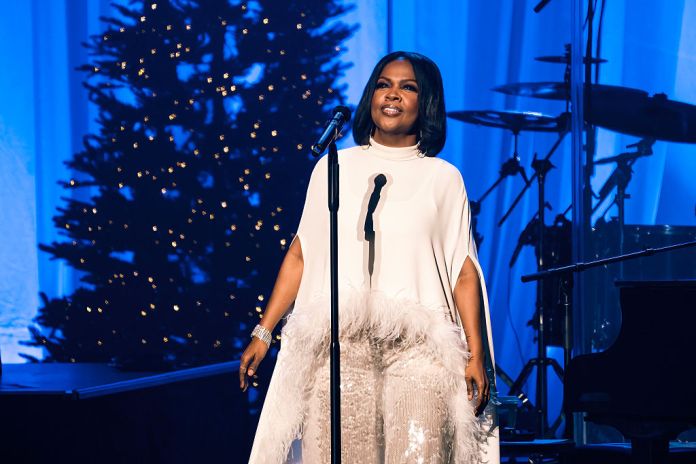
Source: Eugenia R. Washington / Getty

Some fans expressed disappointment with legendary gospel singer CeCe Winans after she shared a video of her sister, Debbie Winans, performing at the 2025 Kennedy Center Honors on Dec. 23. Critics took issue with the “Goodness of God” singer praising the annual event, which was hosted this year by President Donald Trump and honored artists such as country music legend George Strait and Grammy-winning singer Gloria Gaynor, among others.

Seemingly innocent, Winans, 61, took to X on Dec. 29 to congratulate her baby sister, Debbie, 53, on an incredible performance during the ceremony. In the short clip, Debbie could be seen singing to a packed audience at the Kennedy Center Honors, channeling big vocals like her older sister. 

“The Kennedy Honors were awesome! Great job, Robert Deaton! And my baby sister @debbie.winans was incredible!!! Praise God,” CeCe wrote in the caption.

RELATED CONTENT: Whitney Houston Flaunts Her 17-Year-Old Vocal Skills In New Gospel Single ‘Testimony.’

CeCe Winans’ celebratory post on Debbie Winans’ performance drew negative and positive reactions.

Sadly, the post drew mixed reactions from fans and critics alike. Some felt that CeCe was showing support for the Trump-led event, while others criticized her younger sister for participating, accusing her of “doing anything for a check,” given that the Kennedy Center is now under President Trump’s control. In December, a board voted to rename the iconic center, which was originally called The John F. Kennedy Center for the Performing Arts, to the “Trump Kennedy Center,” according to theGrio. 

One user asked, “I grew up on the Winans, and this is sad. Why not decline the invite?” 

Another penned, “CeCe, as much as I have loved you and your music, nothing about what’s happening at the Kennedy Center should be celebrated.”

But the negative comments were quickly drowned out by positivity, with many praising CeCe for supporting her little sister’s performance.

“Beautiful voice! Looks & sounds like her beautiful sister CeCe,” wrote one user. 

Another penned, “Continue TO IGNORE them all, CeCe. God knows and sees your heart and will continue to use you.”

A third user added, “Love The Winans Family and their support for each other.”

A fourth fan chimed in with a positive and holy affirmation for the singer.

“CeCe the Lord God has your back! It’s not about these worldly people; it’s about you showing the love of Jesus. Jesus Christ is not about hatred. Jesus Christ is about loving each other. Pray for them and let the Lord deal with hatred. Love you, my sister in Christ!”

CeCe appears to be laser-focused on positivity, too. The gospel legend took to Instagram on Dec. 30 to drop new music, a soul-stirring rendition of Bill Withers’ “Lean on Me,” that will fill anyone up with inspiration and faith.

Listen to the full track below. 

RELATED CONTENT: Mary Mary Will Go Hit For Hit With Bebe And CeCe Winans For Verzuz On Easter Sunday

The post CeCe Winans Praises Sister’s Performance At Trump-Hosted Kennedy Center Honors, Sparks Mixed Reactions appeared first on MadameNoire.


CeCe Winans Praises Sister’s Performance At Trump-Hosted Kennedy Center Honors, Sparks Mixed Reactions
was originally published on
madamenoire.com

Great Job Shannon Dawson & the Team @ Black America Web Source link for sharing this story.

Confusing food labels are costing Americans a lot of money » Yale Climate Connections

Confusing food labels are costing Americans a lot of money » Yale Climate Connections

Transcript:

When a box of cereal says “best before July third,” that does not mean it will go bad on July third.

Food date labels vary, and in most cases, they do not indicate that food is unsafe to eat. For example, the label “best before” marks when food is at peak quality, and the label “sell by” indicates when stores should take it off the shelf.

But in a recent survey, Roni Neff of Johns Hopkins University found that many Americans mistakenly believe that they should immediately throw food out after its labeled date.

And according to the nonprofit ReFED, a partner on the survey, this causes a lot of food waste.

Neff: “They estimated that confusion about date labels is leading U.S. consumers to discard about 3 billion pounds of food … per year.”

That’s a problem for the climate. Growing and shipping all that wasted food emits carbon pollution. And as it rots in a landfill, it emits climate-warming methane.

Neff: “That’s a lot of greenhouse gas emissions that didn’t need to happen.”

ReFED estimates that standardizing food date labels to clarify their meaning could save over 400,000 tons of food each year. And that could prevent as much carbon pollution as taking half a million gas cars off the road.

Reporting credit: Ethan Freedman / ChavoBart Digital Media

Confusing food labels are costing Americans a lot of money » Yale Climate Connections

Republish our articles for free, online or in print, under a Creative Commons license.

Great Job YCC Team & the Team @ Yale Climate Connections Source link for sharing this story.

TPR News Now: Friday, January 2, 2026

TPR News Now: Friday, January 2, 2026

Listen to TPR’s morning newscast for a roundup of the latest headlines and news developments.

This morning’s headlines:

  • Local nonprofit dedicated to improving health equity to get its first headquarters
  • Prayer vigil will be held tomorrow for Camila Mendoza Olmos
  • New detection of New World Screwworm confirmed near Texas-Mexico border
  • Several new TX laws took effect Jan. 1
  • The impact of two now-expired energy tax credits for homeowners

Today’s weather in San Antonio: It’s going to be sunny today with a high near 85. Mostly clear tonight with a low around 59.

Great Job Marian Navarro & the Team @ Texas Public Radio for sharing this story.

Mayor Zohran Mamdani Will Usher in a New Era of Excellence

Mayor Zohran Mamdani Will Usher in a New Era of Excellence

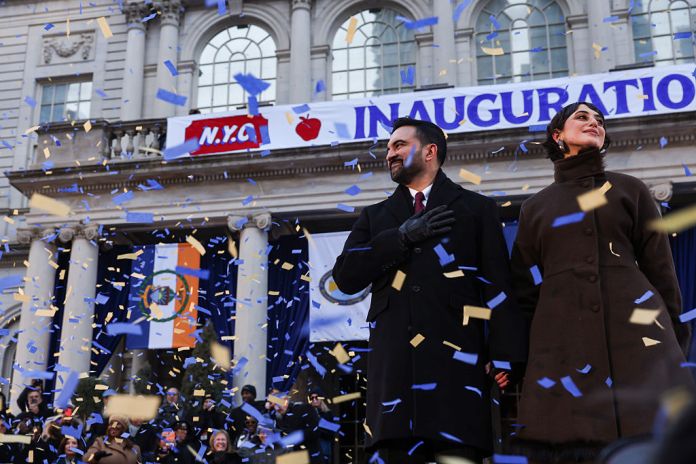
Speaking at Zohran Mamdani’s inauguration as mayor today, Imam Khalid Latif invoked the phrase “moral imagination.” Those of you historically inclined and theoretically attuned will instantly recognize the term. It was coined by Edmund Burke in the eighteenth century and beloved by mid-century writers like Lionel Trilling and Gertrude Himmelfarb.

So we now have, in the twenty-first century, at the invocation for a Muslim political leader, a Muslim religious leader repurposing the words of two of New York’s greatest Jewish intellectuals from the twentieth century, who had repurposed the words of an Irishman from a Catholic family who had converted to Anglicanism in the eighteenth century.

That’s quite a historical and political tapestry being woven here, no?

If you stayed to listen to Mamdani’s inaugural address, your ears might have perked up at this:

To those who insist that the era of big government is over, hear me when I say this: No longer will City Hall hesitate to use its power to improve New Yorkers’ lives.

For too long, we have turned to the private sector for greatness, while accepting mediocrity from those who serve the public. I cannot blame anyone who has come to question the role of government, whose faith in democracy has been eroded by decades of apathy. We will restore that trust by walking a different path: one where government is no longer solely the final recourse for those struggling, one where excellence is no longer the exception.

We expect greatness from the cooks wielding a thousand spices, from those who stride out onto Broadway stages, from our starting point guard at Madison Square Garden. Let us demand the same from those who work in government. In a city where the mere names of our streets are associated with the innovation of the industries that call them home, we will make the words “City Hall” synonymous with both resolve and results.

Readers may remember that just after Mamdani’s victory on November 4, I noticed a similar, briefer yet deft, rhetorical turn in his election night address: “Excellence will become the expectation across government, not the exception,” said Mamdani. “We will leave mediocrity in our past.” I argued in that post that this was a new move on the Left, this embrace of excellence over mediocrity, and that it had a history going back to Karl Marx, who argued for the excellence of modern production techniques over older techniques, and who also saw excellence in the division of labor among chefs, and that this was related to Mamdani’s focus on immigrant workers in restaurants.

Before Mamdani’s inauguration, I expanded a bit on this theme in the New York Review of Books.

Since the French Revolution, professions of excellence and proscriptions of mediocrity have been mostly the preserve of the Right. “To obey a real superior,” declared the English conservative (and uncle of Virginia Woolf) James Fitzjames Stephen, is “a virtue absolutely essential to the attainment of anything great and lasting.” True to form, Mamdani’s conservative opponents have warned that socialism will send the city slouching toward shabbiness.

Since the 1970s, Democrats have largely ceded this rhetorical ground to the Right. Instead of offering an alternative vision of excellence or mounting a robust case for different values, they have adopted the private sector as the gold standard of performance. Like Republicans, they have promised to run the government as if it were a business or corporation or bragged that they already have.

Mamdani is not the first Democrat to want to toss aside that playbook. He is the first to act as if it’s already been trashed. As he made clear on election night and in the composition of his transitional committees, his perspective is populated by workers, commuters, tenants, organizers, civil servants, and elected leaders. They are the people who get things done. All capitalism does is build oligarchy and crap. The lords of enshittification shouldn’t set the standard of society. Politics and government must supply the agents and the actions, the expectations and criteria for the excellence that Mamdani promises…

It’s no accident, as I wrote after the election last month, that Mamdani has made the food of immigrant restaurants the centerpiece of his vision. He understands that the division of labor among immigrant workers doesn’t bring greater productivity. It brings greater variety, making for not one universal excellence but many excellences — democratic excellence. There’s a lesson there not just about immigrants but about how to argue for progressive values, not just in New York City but across the country.

In a way I’ve never experienced in my life, I feel in sync with a political turn, felt by millions of voters, that’s now being reflected in the voice of one of the most dynamic leaders we’ve seen in a long time.

This leads me now to a bit of a personal/political memoir, which may resonate with other leftists of my age, with those of us who are part of lost generation of progressives, the Gen X leftists, who’ve mostly felt out of step for virtually every political development of our adult lives.

In the last few years, I’ve noticed a change in my political writing, prompted by the surge of enshittification, the rise of AI, and the concomitant erosion of academic and cultural standards. I found myself increasingly focusing my political writing on the importance of excellence for the Left, on pushing for the highest standards of teaching and writing and work, not as a punishment for the poor or as an excuse for excluding subjugated groups, but as an aspiration of a genuinely democratic society, as something everybody wants for themselves and the people around them.

If you’ve read Samuel Moyn’s book Liberalism Against Itself, which is mostly an autopsy of what happened to liberalism with the Cold War, he mentions this point briefly, though it’s the beating heart of his analysis. Once upon a time, he says, leftists and left liberals were inspired by a perfectionist vision of human improvement, of the flourishing of all people, through social, cooperative action. For all its problems, and there were many, that vision drove everything from the formation of the Labour Party in Britain to the German Social Democrats (before World War I) to the experimental aesthetics of Bolshevism to the push for decolonization. And then, for a thousand different reasons (the Cold War being one of them), that vision got lost.

That lost vision of perfection, of moving toward excellence, should be at the core of the socialism we seek to build. In schools, in health care, in housing, in work, in government, in childcare, in universities, in green energy projects, in democracy itself. It is the reason we value human freedom, not just for ourselves but for everyone. Equal freedom for all, as it used to be known.

I got truly involved with the Left, beyond the usual student activism, in the early 1990s as a union member, then leader, in grad school. One of the reasons I got involved in the union was my sense that the university was destroying the kind of work I wanted to do, and that the university claimed to be doing. I felt the threatened destruction in teaching — with speedups in graduate student instruction of undergraduates and an increasing use of adjunct labor — and in research, as the university pushed to crunch out PhDs faster, with less training in foreign languages and other fields and fewer prospects, long-term, for permanent employment of academics.

I was the classic kind of union worker, you might say, defending the guild against the firm, the craft of work against the pace of profit. I remember arguing with fellow graduate students, with faculty and administrators, all of whom opposed the union on the grounds that it, not the university, threatened the great traditions of learning and teaching and scholarship.

Initially, I marveled at their misperception, which I took as an opportunity for conversation, organizing, and transformation — on the assumption that we all ultimately cared about the same thing. With time, I grew more cynical about the institution and its defenders. I came to think that the faculty and the administration were either besotted by a romantic fantasy of a world that was no more or cynically using the language of the past as a cover for the present.

I began arguing for unions not as a defense of craft and quality but as a way of dismantling the whole university-industrial complex. And whenever anyone got misty-eyed about teaching students and writing books, I rolled my eyes — which eventually turned me from an effective organizer into a not terribly effective organizer. I could no longer believe in the object of our efforts, save the union itself, which is not how nonmembers become members of any movement.

Yet here I am, at the age of fifty-eight, and suddenly I find myself returning to arguments about the importance of teaching and scholarship, about craft and knowledge, about caring about the work we actually do. I can’t say I’ve come full circle — I think there was a lot of useful knowledge gained by my disenchantment with the academy — but I’ve returned to where I began, albeit outfitted with some tools and perspective. I feel like I’m now fighting for a Left that is more than the Left fighting for itself but a Left that is arguing for a genuinely better society. Not just one where people can feel safe and secure, but one where they can grow and expand, perfecting themselves and the world around them.

One of the reasons I’m so excited about Zohran is that I feel like he gets this in his bones. As I’ve been arguing here, on my blog, and at the New York Review of Books, he doesn’t see socialism and government as the last stop before penury and poverty, as a way of catching people who would otherwise fall, as a safety net. He sees it as a launching pad, as a way of doing great things, great things that all of us can do together, cooperatively, or when necessary, that many of us can do through confrontation.

It feels like coming home.

Great Job Corey Robin & the Team @ Jacobin Source link for sharing this story.

In 2026, AI will move from hype to pragmatism | TechCrunch

In 2026, AI will move from hype to pragmatism | TechCrunch

If 2025 was the year AI got a vibe check, 2026 will be the year the tech gets practical. The focus is already shifting away from building ever-larger language models and towards the harder work of making AI usable. In practice, that involves deploying smaller models where they fit, embedding intelligence into physical devices, and designing systems that integrate cleanly into human workflows. 

The experts TechCrunch spoke to see 2026 as a year of transition, one that evolves from brute-force scaling to researching new architectures, from flashy demos to targeted deployments, and from agents that promise autonomy to ones that actually augment how people work. 

The party isn’t over, but the industry is starting to sober up.

Scaling laws won’t cut it

Image Credits:Amazon

In 2012, Alex Krizhevsky, Ilya Sutskever, and Geoffrey Hinton’s AlexNet paper showed how AI systems could “learn” to recognize objects in pictures by looking at millions of examples. The approach was computationally expensive, but made possible with GPUs. The result? A decade of hardcore AI research as scientists worked to invent new architectures for different tasks.

That culminated around 2020 when OpenAI launched GPT-3, which showed how simply making the model 100 times bigger unlocks abilities like coding and reasoning without requiring explicit training. This marked the transition into what Kian Katanforoosh, CEO and founder of AI agent platform Workera, calls the “age of scaling”: a period defined by the belief that more compute, more data, and larger transformer models would inevitably drive the next major breakthroughs in AI.

Today, many researchers think the AI industry is beginning to exhaust the limits of scaling laws and will once again transition into an age of research.

Yann LeCun, Meta’s former chief AI scientist, has long argued against the over-reliance on scaling, and stressed the need to develop better architectures. And Sutskever said in a recent interview that current models are plateauing and pre-training results have flattened, indicating a need for new ideas.  

Techcrunch event

San Francisco
|
October 13-15, 2026

“I think most likely in the next five years, we are going to find a better architecture that is a significant improvement on transformers,” Katanforoosh said. “And if we don’t, we can’t expect much improvement on the models.”

Sometimes less is more

Large language models are great at generalizing knowledge, but many experts say the next wave of enterprise AI adoption will be driven by smaller, more agile language models that can be fine-tuned for domain-specific solutions. 

“Fine-tuned SLMs will be the big trend and become a staple used by mature AI enterprises in 2026, as the cost and performance advantages will drive usage over out-of-the-box LLMs,” Andy Markus, AT&T’s chief data officer, told TechCrunch. “We’ve already seen businesses increasingly rely on SLMs because, if fine-tuned properly, they match the larger, generalized models in accuracy for enterprise business applications, and are superb in terms of cost and speed.”

We’ve seen this argument before from French open-weight AI startup Mistral: it argues its small models actually perform better than larger models on several benchmarks after fine-tuning. 

“The efficiency, cost-effectiveness, and adaptability of SLMs make them ideal for tailored applications where precision is paramount,” said Jon Knisley, an AI strategist at ABBYY, an Austin-based enterprise AI company. 

While Markus thinks SLMs will be key in the agentic era, Knisley says the nature of small models means they’re better for deployment on local devices, “a trend accelerated by advancements in edge computing.”

Learning through experience

In 2026, AI will move from hype to pragmatism | TechCrunch
Space ship environment created in Marble with text prompt overlayed. Note how the lights are realistically reflected in the hub’s walls.Image Credits:World Labs/TechCrunch

Humans don’t just learn through language; we learn by experiencing how the world works. But LLMs don’t really understand the world; they just predict the next word or idea. That’s why many researchers believe the next big leap will come from world models: AI systems that learn how things move and interact in 3D spaces so they can make predictions and take actions. 

Signs that 2026 will be a big year for world models are multiplying. LeCun left Meta to start his own world model lab, and is reportedly seeking a $5 billion valuation. Google’s DeepMind has been plugging away at Genie, and in August launched its latest model that builds real-time interactive general-purpose world models. Alongside demos by startups like Decart and Odyssey, Fei-Fei Li’s World Labs has launched its first commercial world model, Marble. Newcomers like General Intuition in October scored a $134 million seed round to teach agents spatial reasoning, and video generation startup Runway in December released its first world model, GWM-1

While researchers see long-term potential in robotics and autonomy, the near-term impact is likely to be seen first in video games. PitchBook predicts the market for world models in gaming could grow from $1.2 billion between 2022 and 2025 to $276 billion by 2030, driven by the tech’s ability to generate interactive worlds and more life-like non-player characters. 

Pim de Witte, founder of General Intuition, told TechCrunch virtual environments may not only reshape gaming, but also become critical testing grounds for the next generation of foundation models.

Agentic nation

Agents failed to live up to the hype in 2025, but a big reason for that is because it’s hard to connect them to the systems where work actually happens. Without a way to access tools and context, most agents were trapped in pilot workflows. 

Anthropic’s Model Context Protocol (MCP), a “USB-C for AI” that lets AI agents talk to the external tools like databases, search engines and APIs, proved the missing connective tissue, and is quickly becoming the standard. OpenAI and Microsoft have publicly embraced MCP, and Anthropic recently donated it to the Linux Foundation’s new Agentic AI Foundation, which aims to help standardize open-source agentic tools. Google also has begun standing up its own managed MCP servers to connect AI agents to its products and services. 

With MCP reducing the friction of connecting agents to real systems, 2026 is likely to be the year agentic workflows finally move from demos into day-to-day practice. 

Rajeev Dham, a partner at Sapphire Ventures, says these advancements will lead to agent-first solutions taking on “system-of-record roles” across industries. 

“As voice agents handle more end-to-end tasks such as intake and customer communication, they’ll also begin to form the underlying core systems,” Dham said. “We’ll see this in a variety of sectors like home services, proptech, and healthcare, as well as horizontal functions such as sales, IT, and support.” 

Augmentation, not automation

Image Credits:Photo by Igor Omilaev on Unsplash

While more agentic workflows might raise worries that layoffs may follow, Katanforoosh of Workera isn’t so sure that’s the message. 

“2026 will be the year of the humans,” he said. 

In 2024, every AI company predicted they would automate jobs out of needing humans. But the tech isn’t there yet, and in an unstable economy, that’s not really a popular rhetoric. Katanforoosh says next year, we’ll realize that “AI has not worked as autonomously as we thought,” and the conversation will focus more on how AI is being used to augment human workflows, rather than replace them. 

“And I think a lot of companies are going to start hiring,” he added, noting that he expects there to be new roles in AI governance, transparency, safety, and data management. “I’m pretty bullish on unemployment averaging under 4% next year.”

“People want to be above the API, not below it, and I think 2026 is an important year for this,” de Witte added.

Getting physical

Mark Zuckerberg wears a pair of Meta Oakley Vanguard AI glasses during the Meta Connect event, Sept. 17, 2025. Image Credits:David Paul Morris/Bloomberg / Getty Images

Advancements in technologies like small models, world models, and edge computing will enable more physical applications of machine learning, experts say. 

“Physical AI will hit the mainstream in 2026 as new categories of AI-powered devices, including robotics, AVs, drones and wearables start to enter the market,” Vikram Taneja, head of AT&T Ventures, told TechCrunch. 

While autonomous vehicles and robotics are obvious use cases for physical AI that will no doubt continue to grow in 2026, the training and deployment required is still expensive. Wearables, on the other hand, provide a less expensive wedge with consumer buy-in. Smart glasses like Meta’s Ray Bans are starting to ship assistants that can answer questions about what you’re looking at, and new form factors like AI-powered health rings and smart watches are normalizing always-on, on-body inference.

“Connectivity providers will work to optimize their network infrastructure to support this new wave of devices, and those with flexibility in how they can offer connectivity will be best positioned,” Taneja said.

Great Job Rebecca Bellan & the Team @ TechCrunch Source link for sharing this story.

Thousands take the Polar Bear Plunge at Barton Springs Pool

Thousands take the Polar Bear Plunge at Barton Springs Pool

Thousands of people jumped into Barton Springs Pool for the annual Polar Bear Plunge. 

It’s a time-honored tradition to wash off the old and dive into the new year.

What they’re saying:

FOX 7 Austin caught up with one group of ladies who were very dressed up at the pool.

Debra Flanagan, Jeannie Hopper, Rita Hersey, Martha Bauer, Alexa Riley, and Janis, who didn’t want to share her last name, range in age from their 50s to their 80s. They met playing mahjong and working at a church kitchen. They also regularly come to the Polar Plunge.

“I hope that the joy that I’m feeling here today just really has a lot of people look at Barton Springs and want to keep it beautiful and natural and supported. It’s the jewel of our city,” Janis said.

The Save Our Springs Alliance, which organizes the event, has the same message.

“The springs are still beautiful, crystal clear, and clean because of the community effort that’s been made, but the threats are still here. We’re at almost record low flows, so we have to be protecting our springs and keeping people mindful of being judicious and conservative in their water use,” executive director Bill Bunch said.

High schoolers Clyde Cowan, Max Neale, and Diego Shtraikh also took part in the Polar Plunge.

“I always enjoy it. It’s a good way to start the morning after being up late for New Year’s,” Cowan said.

We asked what their goals are for the new year.

“I’m actually going to move back to Australia in June, so I’m trying to hang out with as many people as I can,” Neale said.

“Trying to cut back on some sugar,” Cowan said.

“I’m designing a fashion line right now, and so my goal is to get it done by the end of the school year,” Shtraikh said.

The Source: Information in this report comes from reporting/interviews by FOX 7 Austin’s Angela Shen

Barton Springs PoolHolidays

Great Job & the Team @ Latest & Breaking News | FOX 7 Austin for sharing this story.

Secret Link