The first nationwide randomized study of children enrolled in public Montessori preschools found that students showed stronger learning outcomes by the time they reached kindergarten. Compared with children who attended non-Montessori programs, Montessori students performed better in reading, memory, and executive function. The results also carry clear implications for education policy, since the Montessori programs produced these gains while operating at significantly lower cost. The study followed 588 children across two dozen programs in different parts of the country, underscoring the importance of tracking these outcomes through later grades and into adulthood.
Stronger Outcomes at Lower Cost
Researchers from the University of Virginia, the University of Pennsylvania, and the American Institutes for Research led the new national analysis. Their findings show that public Montessori preschool programs serving children ages 3 to 6 deliver stronger early learning outcomes than traditional preschool options, while also reducing costs for school districts and taxpayers. The research represents the first randomized controlled trial of public Montessori education and was published in the Proceedings of the National Academy of Sciences. Nearly 600 children were followed across 24 public Montessori programs nationwide.
By the end of kindergarten, children who were randomly selected through a lottery to attend Montessori preschools outperformed their peers in reading, executive function, short-term memory, and social understanding. At the same time, Montessori programs cost about $13,000 less per child than conventional preschool programs. This figure does not include additional savings that may come from higher teacher satisfaction and lower turnover, trends supported by other research. These results stand in contrast to earlier preschool studies, which often found short-term benefits that faded by kindergarten.
Researchers Highlight Enduring Benefits
“These findings affirm what Maria Montessori believed over a century ago — that when we trust children to learn with purpose and curiosity, they thrive,” said Angeline Lillard, Commonwealth Professor of Psychology at the University of Virginia. “Public Montessori programs are not only effective but cost-efficient.”
Karen Manship, coauthor and Managing Director at the American Institutes for Research, noted that Montessori programs are already widespread in public education. “Montessori preschool programs are already being used in hundreds of U.S. public schools, and our research shows that they are having a positive impact in key areas of early learning,” she said. “These findings provide valuable evidence to policymakers and educational leaders who are seeking to deliver better outcomes with increasingly limited resources.”
David Loeb of the University of Pennsylvania emphasized the historical roots of the approach. “Montessori began in the low-income housing of early 20th century Rome,” he said. “This research shows it still delivers on that promise for America’s children today.”
Key Findings From the National Trial
Stronger early learning: By the end of kindergarten, children in Montessori programs scored higher in reading, memory, executive function, and the ability to understand others’ perspectives.
Sustained benefits: Unlike many preschool programs where early gains fade, Montessori students continued to improve relative to their peers over time.
Cost savings: Compared with traditional public preschool, Public Montessori programs cost $13,000 less per child across the three years from ages 3-6. Savings were driven largely by efficient classroom structures, including the benefits of mixed-age learning.
Teacher morale and retention: Actual savings may be even greater, since prior evidence shows Montessori teachers tend to report higher job satisfaction and lower turnover.
Benefits for all children: While the strongest effects were seen among children from lower-income families, children from all backgrounds experienced positive outcomes. This aligns with Montessori’s original goal of serving underserved communities.
A Century-Old Model With Modern Impact
Dr. Maria Montessori opened her first classroom in 1907 in the working-class neighborhoods of Rome, introducing an educational approach built around children’s natural motivation to learn. Today, more than 600 public schools in the United States offer Montessori education. This national study reinforces the idea that Montessori’s century-old model remains a powerful tool for early education, producing lasting benefits for children and communities.
The findings are especially relevant for policymakers, since they show that public Montessori programs can deliver stronger outcomes while lowering costs. Additional research also points to improved teacher morale and retention in Montessori settings.
The paper’s coauthors include researchers from the American Institutes for Research (Juliette Berg, Maya Escueta, Alison Hauser) and University of Virginia graduate student Emily Daggett.
Great Job & the Team @ Public Health News — ScienceDaily Source link for sharing this story.
Fizz is betting that Gen Z is tired of performing their lives on Instagram and TikTok.
What started as a pandemic-era group chat frustration has turned into the dominant social platform on college campuses across the US, focused on the 99% of life that doesn’t make it into a highlight reel. Capturing the attention of a demographic typically glued to Instagram and TikTok, the app’s hybrid anonymous model and hyperlocal focus has made it what Solomon calls “the biggest college social app since Facebook.”
NEW YORK – Zohran Mamdani became mayor of New York City just after midnight Thursday, taking the oath of office at an historic, decommissioned subway station in Manhattan.
Mamdani, a Democrat, was sworn in as the first Muslim leader of America’s biggest city, placing his hand on a Quran as he took his oath.
“This is truly the honor and the privilege of a lifetime,” Mamdani said in a brief speech.
The private ceremony, administered by New York Attorney General Letitia James, a political ally, took place at the old City Hall station, one of the city’s original subway stops that is known for its stunning arched ceilings.
In Mamdani’s first remarks as mayor, he said the old subway station was a “testament to the importance of public transit to the vitality, the health and the legacy of our city” as he announced the appointment of his new Department of Transportation commissioner, Mike Flynn.
The new mayor then closed: “Thank you all so much, now I will see you later,” he said with a smile before heading up a flight of stairs.
Mamdani will be sworn in again, in grander style, in a public ceremony at City Hall at 1 p.m. by U.S. Sen. Bernie Sanders, one of the mayor’s political heroes. That will be followed by what his office is billing as a public block party on a stretch of Broadway known as the “Canyon of Heroes,” famous for its ticker-tape parades.
In addition to being the city’s first Muslim mayor, Mamdani is also its first of South Asian descent and the first to be born in Africa. At 34, Mamdani is also the city’s youngest mayor in generations.
In a campaign that helped make “affordability” a buzzword across the political spectrum, the democratic socialist promised to bring transformative change with policies intended to lower the cost of living in one of the world’s most expensive cities. His platform included free child care, free buses, a rent freeze for about 1 million households, and a pilot of city-run grocery stores.
But he will also have to face other responsibilities: handling trash and snow and rats, while getting blamed for subway delays and potholes.
Mamdani was born in Kampala, Uganda, the son of filmmaker Mira Nair and Mahmood Mamdani, an academic and author. His family moved to New York City when he was 7, with Mamdani growing up in a post-9/11 city where Muslims didn’t always feel welcome. He became an American citizen in 2018.
He worked on political campaigns for Democratic candidates in the city before he sought public office himself, winning a state Assembly seat in 2020 to represent a section of Queens.
Mamdani inherits a city on the upswing, after years of slow recovery from the COVID-19 pandemic. Violent crime has dropped to pre-pandemic lows. Tourists are back. Unemployment, which soared during the pandemic years, is also back to pre-COVID levels.
Yet deep concerns remain about high prices and rising rents in the city.
He’ll also have to deal with Republican President Donald Trump.
During the mayoral race, Trump threatened to withhold federal funding from the city if Mamdani won and mused about sending National Guard troops to the city.
But Trump surprised supporters and foes alike by inviting the Democrat to the White House for what ended up being a cordial meeting in November.
“I want him to do a great job and will help him do a great job,” Trump said.
Still, tensions between the two leaders are almost certain to resurface, given their deep policy disagreements, particularly over immigration.
Mamdani also faces skepticism and opposition from some members of the city’s Jewish community over his criticisms of Israel’s government.
The new mayor and his team have spent the weeks since his election victory preparing for the transition, surrounding Mamdani with seasoned hands who have worked inside or alongside city government.
That included persuading the city’s police commissioner, Jessica Tisch, to remain in her position — a move that helped calm fears in the business community that the administration might be planning radical changes in policing strategy.
Copyright 2026 The Associated Press. All rights reserved. This material may not be published, broadcast, rewritten or redistributed without permission.
Great Job Anthony Izaguirre, Associated Press & the Team @ KSAT San Antonio for sharing this story.
There is a place in the world, one that is among the most vulnerable as the global climate warms, where an extraordinary gesture of hope has endured for a quarter century.
The scope of the effort is almost incomprehensible, both for its sheer size and persistence on a low-lying peninsula, where the delineation between land and sea has always been somewhat unclear and is becoming less so. Here, sea level rise is accelerating at some of the most extreme rates on Earth, while hurricanes increasingly are swirling ashore with an unprecedented ferociousness.
The focal point for all this hope—and work—is the Florida Everglades, where a $27 billion restoration effort is among the most ambitious of its kind in human history. More is at stake than preserving the singular beauty of the sawgrass prairies of Everglades National Park or cypress swamps of the Big Cypress National Preserve. Or the many other protected lands here, including the Everglades Headwaters National Wildlife Refuge, Arthur R. Marshall Loxahatchee National Wildlife Refuge or Fakahatchee Strand Preserve State Park. Or the more than 70 endangered and threatened species that reside within the watershed.
At the heart of the vast effort is the Everglades’ lifeblood water. In a state bounded on three sides by seawater, where water courses through underground aquifers and some 50 inches of rain falls annually, a series of historic efforts to drain the Everglades have made modern Florida possible. They have also pushed the state’s most important freshwater resource to the brink.
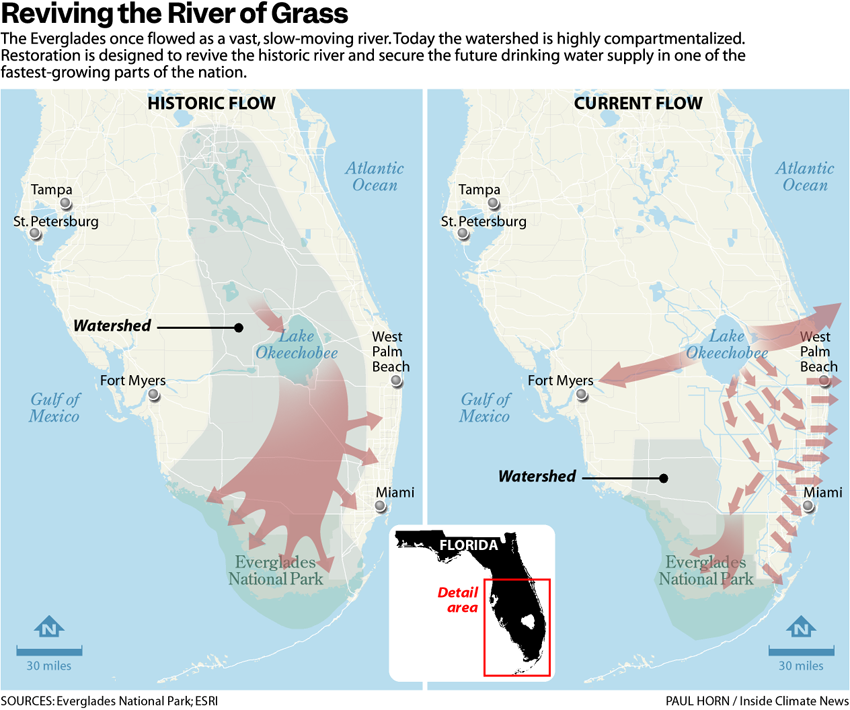
Every day, some 1.7 billion gallons of freshwater that once spilled over the southern shore of Lake Okeechobee and eventually flowed into the sawgrass marshes of the river of grass instead are carried through a series of canals and out to sea. That amount exceeds what is consumed in South Florida daily, and during times of high water the state’s flood control procedures require that even more freshwater be discharged to the coasts. The waste of so much freshwater would be problem enough. But the discharges also can overwhelm the delicate estuaries east and west of the state’s largest lake and, during the warm summer months, spread blooms of toxic algae, an issue that has become more persistent in recent years.
Everglades restoration is designed to recapture this freshwater and revive the watershed where it once flowed, with the overarching goal of securing the future drinking water supply in one of the fastest-growing parts of the nation. In this sense, the effort represents a remarkable investment in the future in a place where the future can feel less certain because of climate change.
“You can’t have a failure of imagination when you’re trying to address these issues. You’ve got to be operating at an appropriate scale,” said Shannon Estenoz, chief policy officer at the Everglades Foundation, an advocacy group.
“Don’t look at infrastructure as permanent,” she said. “The worst failure is you can’t imagine a landscape re-engineered. Or you can’t imagine an engineered landscape re-engineered.”
When former President Bill Clinton signed the Comprehensive Everglades Restoration Plan (CERP) into law in December 2000, the culmination of many years of scientific study and at times acrimonious political advocacy, nothing like it had ever been attempted anywhere.
Over the intervening 25 years, the landscape across an 18,000-square-mile expanse, larger than the state of Maryland, has undergone an extensive reshaping. Hundreds of miles of canals have been backfilled, enormous new reservoirs excavated and water control structures blown up, all to restore a more natural flow of water where for more than a half century some of the most complex water management infrastructure in the world has allowed for the urban jungles of South Florida to flourish alongside the wild Everglades.
The effort consists of dozens of massive infrastructure projects. The largest and most expensive is a $3.5 billion reservoir to be situated among sprawling sugarcane fields south of Lake Okeechobee, in a 1,100-square-mile region called the Everglades Agricultural Area (EAA). Once complete, the reservoir, designed to help reconnect the lake with the sawgrass marshes to its south, will be the largest of its kind that the U.S. Army Corps of Engineers has constructed anywhere in the country.
The Everglades Agricultural Area is situated south of Lake Okeechobee, where the river of grass once flowed. The region now raises vegetables, rice and sugarcane. Credit: Jose Iglesias/Miami HeraldThe construction site of the Everglades Agricultural Area reservoir, to the right, lies alongside a flow equalization basin, designed to store stormwater. Credit: Jose Iglesias/Miami Herald
Even partially built, the 16-square-mile reservoir is so big that it is impossible to see from one end to the other. The project also includes a 10-square-mile engineered wetland, or stormwater treatment area in the bureaucratic parlance of Everglades restoration, composed of lush vegetation that will serve as a natural water filter, with plant tissues absorbing nutrient pollution flowing from nearby farms.
Farther south, more stormwater treatment areas, 97 square miles of them in all, are scattered between the sugarcane and vegetable fields that make the EAA among the most bountiful regions in the nation and the fragile Everglades. Resembling nature but hardly natural, the wetlands are designed to replicate the filtering ability of the river of grass. The project, mandated under the Everglades Forever Act, which the state legislature approved in 1994, falls outside the scope of CERP, comprehensive as it is. Nowhere else on Earth have human-engineered wetlands like these ever been implemented at this scale.
Now the region faces another mounting threat. Temperatures and sea levels are rising and storm events are becoming more severe. The effort to rescue the river of grass has assumed an added responsibility: to save South Florida from the worst repercussions of climate change.
“If we don’t move on Everglades restoration, we’re not going to be able to address the issues and risks facing the built environment,” said Tom Van Lent, senior scientist at Friends of the Everglades, an advocacy group. “It’s more than just hope. It’s a necessity.”
A Pinball Machine of a River
The Everglades were formed from sea level rise. Over thousands of years, the tides built up the soil until it formed a gentle delineation between land and sea. The shallow freshwater coursed lazily among the sawgrass, the water stretching from the Atlantic Coastal Ridge to the east to the highlands of what is now part of the Big Cypress National Preserve to the west.
“The very mechanisms of sea level rise created the Everglades,” Van Lent said. “So we have to accelerate the efforts to get those back, because that’s what built the Everglades … but it’s not going to happen naturally. It’s probably too slow for that. But we have some tools, the very same tools you need to fight climate change or sea level rise.”
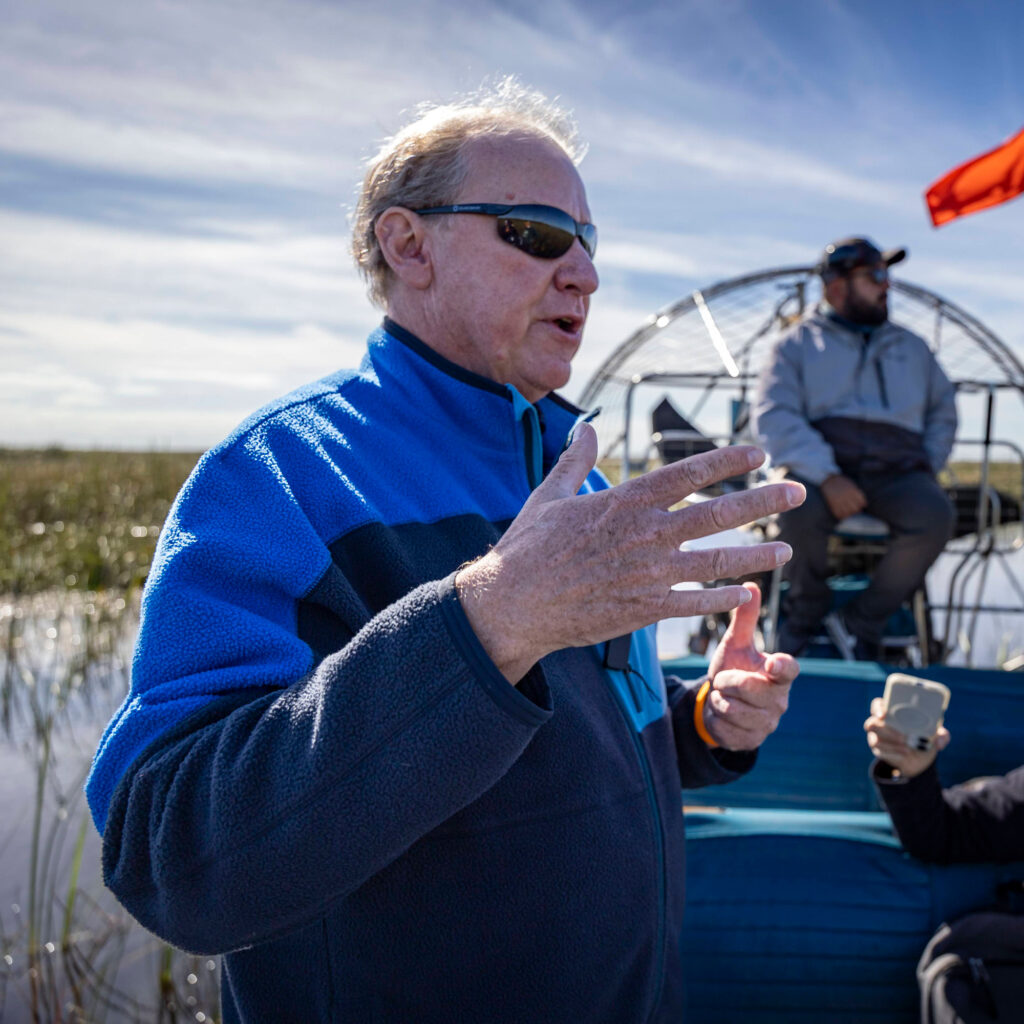
Tom Van Lent, senior scientist at Friends of the Everglades, says the river of grass remains highly compartmentalized and that more water storage is needed to revive the river of grass. Credit: Jose Iglesias/Miami Herald
Today, one could characterize the river of grass as a series of lakes, or reservoirs if you want to acknowledge the entirely artificial aspect of the reservoirs’ existence. The Everglades have been divvied up into a series of components: the Kissimmee River to the north, whose bends have been straightened and restored to their natural condition; Lake Okeechobee, which has been fully contained by the Herbert Hoover Dike; stormwater treatment areas, which cleanse the water; and water conservation areas, which were constructed for flood control, water supply and recreation.
Like a ball passing through the barriers of a pinball machine, the water flows among the components as directed by 2,200 miles of canals, 2,100 miles of levees and berms, 84 pump stations and 778 water control structures. The infrastructure, its efficacy a marvel on such flat terrain, began with a desire to drain or “reclaim” the Everglades, converting backwater Florida into a sunny paradise of agriculture, growth and development. Later attention turned to flood control after a hurricane in the 1920s caused Lake Okeechobee to overflow, killing thousands.
The situation is not all that different from that along the Mississippi, Missouri or Tennessee rivers, where a series of dams controls water flow. Everglades restoration involves removing as many of these dams as possible without risking flood control, while adding more reservoirs for water storage, all to revive a river of grass that flows once more.
One of these water conservation areas, 164-square-mile Water Conservation Area 2A west of Fort Lauderdale, resembles what one might imagine the Everglades to be. The sunshine sparkles upon the ripples of the gently moving water, which is clear and colored like tea by natural plant tannins. Patches of sawgrass and cattails are interspersed among the shrubby bayhead willows. A shiny black anhinga dives for a fish. But signs of trouble abound.
In the past, water levels were managed at depths that were too high, which obliterated tree islands that served as important habitat for wildlife such as alligators and deer. To address the problem, water managers many years ago lowered the levels, but the tree islands never recovered, leaving ghosts of islands that lack the elevation to support the majestic hardwoods found in other parts of the Everglades, such as cypress, pond apple and pop ash trees.
“This is an example of one of our first disasters in the Everglades,” Van Lent said. He was pointing from an idle airboat on a particularly mild November morning toward a cluster of bayhead willows, a marker of one of the tree island ghosts.
Cattails in Water Conservation Area 2A west of Fort Lauderdale signal trouble in the Everglades. They are a sign of nutrient pollution from the sugarcane fields to the north. Credit: Iglesias/Miami Herald
Cattails are native to Florida, but in the Everglades they have been characterized as another tombstone, a sign that nutrient pollution from sugarcane farms to the north has transformed the ecosystem into something else. Fish populations have thinned; alligators have become scrawny.
“It looks beautiful, and the quiet is wonderful, but it’s not a very productive area,” Van Lent said. “The landscape you see here is a direct consequence of converting the Everglades, river of grass, into a lake.”
Everglades restoration is designed to solve these problems by lowering water levels in places like the water conservation area where levels have been too high and delivering water to locations where levels have been too low, such as Everglades National Park.
A lack of funding during the first five to seven years after CERP was signed into law slowed progress, but record federal and state funding in recent years has propelled the effort forward at an unprecedented pace. Projects are complete or under construction in nearly every region of the Everglades, according to a 2024 report from the National Academies of Sciences, Engineering, and Medicine, the most recent available. The National Academies, a private nonprofit organization, has issued biennial reports on the effort’s progress since 2004, under a congressional mandate.
One project and two major project components are complete, another is essentially finished and six are under construction, according to the report. Already, the river of grass is showing signs of improvement. The National Academies characterized increased flows into northeast Shark River Slough, part of Everglades National Park, as the “largest step yet toward restoring the hydrology and ecology of the central Everglades.” Investments in controlling invasive species have led to a 75 percent reduction in the area overtaken by melaleuca, a particularly thirsty tree species introduced in the river of grass near the turn of the 20th century to help drain it.
Reservoirs are located east and west of Lake Okeechobee and are intended to help protect the fragile estuaries from nutrient pollution and toxic algae. An area of wetlands the size of the District of Columbia, called the Picayune Strand, has been rehydrated. But CERP is only one notable restoration effort underway in the Everglades. A substantial restoration of the Kissimmee River is complete. Refurbishment of the dike around the lake is finished, and a revision of the lake management rules went into effect in 2024. Sections of the Tamiami Trail, a scenic highway that crosses the Everglades, have been elevated to allow water to flow.
“We’re really in a heyday of Everglades restoration,” said Paul Gray, science coordinator for Audubon Florida’s Everglades restoration program.
The work is not done. The river of grass remains highly compartmentalized, and more water storage is needed before additional dams can be removed without risking flood-control problems, Van Lent said.
“We’ve scaled back every opportunity to create storage,” he said.
A New Water Standard
Crucial to Everglades restoration is clean freshwater. Historically, the water’s purity was singular, giving life to a watershed that flourished because of a unique paucity of nutrients, a situation that hindered the pursuit of any single species that would dominate the rest.
This changed with the draining and containing of the Everglades and explosive growth and development that followed. The extensive waterworks also made way for sprawling sugarcane fields in the Everglades Agricultural Area, where farmers tended their crops with nutrient-rich fertilizers. The fertilizers engorged the Everglades on nutrients, especially phosphorus, leading to the widespread proliferation of cattails. By the late 1980s, the river of grass was at risk of becoming a river of cattails.
“We’ve always held the importance of water quality as paramount to any other issue,” said Curtis Osceola, senior policy advisor for the Miccosukee Tribe of Indians of Florida, longtime environmental stewards for whom the Everglades are sacred. “For us it’s always been about keeping the water as pure as possible.”
Water Conservation Area 2A west of Fort Lauderdale looks natural, but problems abound. Everglades restoration is designed to address some of these problems. Credit: Jose Iglesias/Miami Herald
Several years of bitter litigation between the federal and state governments over the farmers’ pollution led to the Everglades Forever Act, a historic plan to clean up the water based largely on the construction of the stormwater treatment areas. The farmers also pitched in with efforts of their own, including adjusting fertilizer methods, controlling soil erosion and increasing on-site water retention. The plan for the most part has been successful. Pollution has declined at more than twice the rate mandated by state law. Today, at least 90 percent of the water meets the state standard. The Everglades Forever Act focuses on water quality, while CERP, which came later, encompasses water quality, storage and flow.
Although Everglades restoration is now moving greater volumes of water south into fragile areas such as Everglades National Park, there are fresh concerns about the potential spread of phosphorus pollution.
This year, a new standard will take effect. Called the Water Quality-Based Effluent Limitation (WQBEL), the standard is designed to shift scrutiny from protected areas of the Everglades to the stormwater treatment areas. The standard also is poised to affect CERP projects, particularly the mammoth reservoir under construction in the Everglades Agricultural Area, a project Gov. Ron DeSantis has described as “the crown jewel of Everglades restoration.”
After its scheduled completion in 2029, the reservoir is projected to provide approximately 370,000 acre-feet of “new” freshwater, diverted from the network of canals that would carry the water out to sea. That amount is enough to flood 578 square miles with a foot of water. DeSantis, a Republican, has prioritized Everglades restoration and pushed to expedite the reservoir’s construction during his two terms in office. But under an agreement between the Army Corps and the South Florida Water Management District, the federal and state agencies overseeing Everglades restoration, water managers will not be able to operate the reservoir at full capacity until all stormwater treatment areas have demonstrated compliance with the WQBEL for at least five years.
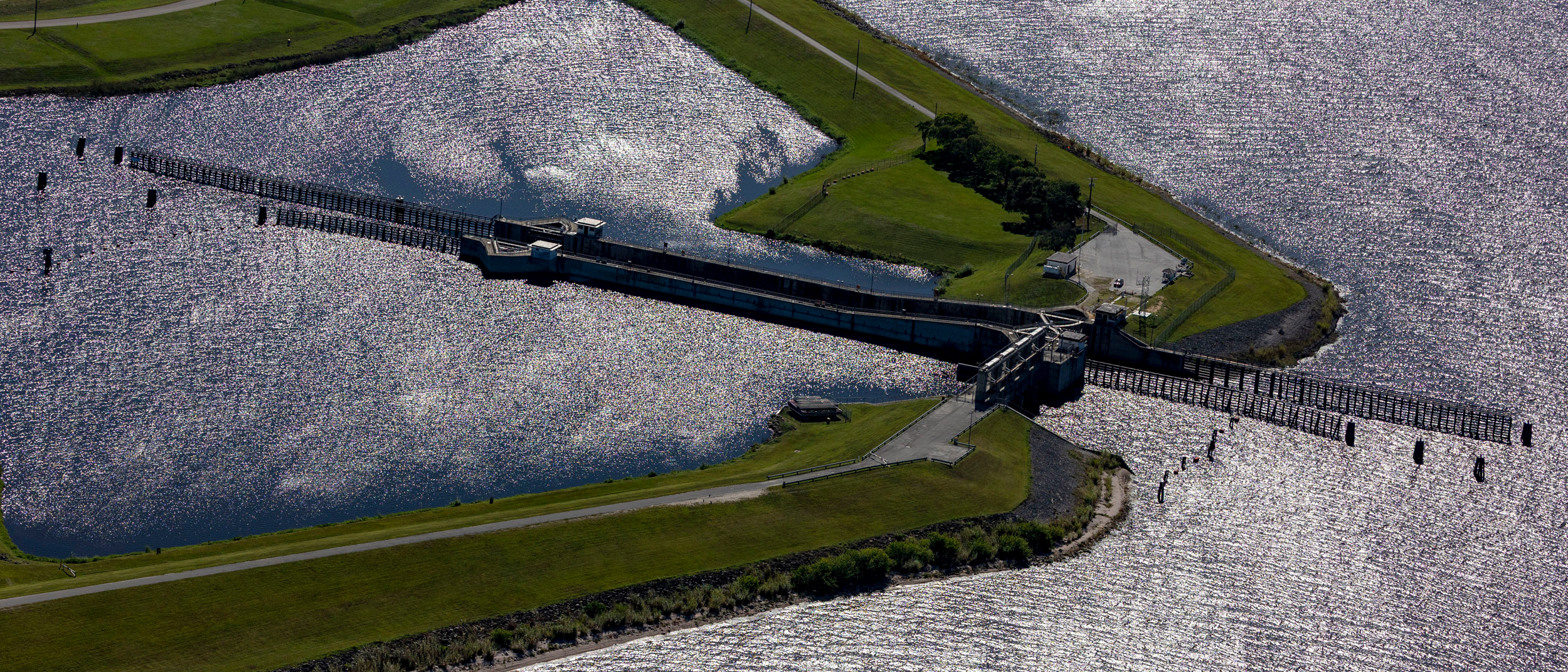
A lock and dam on Lake Okeechobee feeds the C-44 reservoir, an Everglades restoration project designed to spare the delicate estuary to the east of the lake of harmful nutrient pollution and toxic algae. Credit: Jose Iglesias/Miami Herald
As recently as 2024 only one stormwater treatment area met the standard, according to the National Academies. In 2022, the scientists said meeting the WQBEL by 2027 would be a “significant challenge,” although they noted phosphorus levels in the stormwater treatment areas were trending in the right direction. Noncompliance with the new standard would affect how much water could flow south into the reservoir, following the river of grass’ historic path, rather than east and west, threatening the estuaries that have been hammered by toxic algae, an issue that was central to DeSantis’ 2018 gubernatorial campaign.
“Fundamentally there is no Everglades restoration unless the water is clean,” said Eve Samples, executive director of Friends of the Everglades. She said if the reservoir “can’t effectively hold and flow as much water as was promised to the public then that raises very serious questions about whether the public has been served by the project.”
Friends of the Everglades and other groups, such as the Sierra Club in Florida, have raised concerns about the reservoir’s design, which they say does not meet restoration requirements. The organizations have voiced reservations about water quality and whether the reservoir will deliver enough water south. The groups also say the project’s designers failed to factor in the consequences of climate change. Friends of the Everglades is pushing for 160 square miles of additional conservation land in the Everglades Agricultural Area, to create space for 1 million more acre-feet of water storage.
“All of the other projects in most cases are, for me, mitigation,” said Cris Costello, senior organizing manager at the Sierra Club in Florida. “ I don’t think anybody, any of us, the organizations and the people in the state of Florida who embarked on this road 25 years ago, thought that CERP would become mitigation projects rather than actual restoration.”
Estenoz, a former assistant secretary for fish and wildlife and parks in the Biden administration before joining the Everglades Foundation, said operating the reservoir at less than its full capacity would not be an option, but she believes water quality standards, including the WQBEL, would be met.
“They have to be met. That’s the commitment,” she said. “It’s not an acceptable outcome that, ‘We’re done. We don’t meet the water quality standards therefore hydrology projects can’t be operated.’ That’s not the way the program is set up.”
This story is funded by readers like you.
Our nonprofit newsroom provides award-winning climate coverage free of charge and advertising. We rely on donations from readers like you to keep going. Please donate now to support our work.
Everglades restoration has always enjoyed remarkable bipartisan support, but like other environmental programs under the second Trump administration the effort has faced new challenges. One such development was the hastily assembled Everglades detention site called Alligator Alcatraz, where the Trump administration incarcerated thousands of undocumented migrants.
The facility’s existence alongside protected lands perpetually leased to the Miccosukee Tribe and are part of the Big Cypress National Preserve tested federal policies, including the National Environmental Policy Act (NEPA). Environmental groups and the tribe are pursuing litigation against the federal and state governments over the site, which the groups say was rushed to completion without any opportunity for public comment or environmental review as required by NEPA. The government agencies say the site does not threaten the environment.
“Alligator Alcatraz is perhaps the most stark example of the administration’s disregard for this fabric of environmental protections that were woven together a half-century ago, but it certainly doesn’t stand alone,” said Samples of Friends of the Everglades, one of the groups involved in the litigation. “If we continue to see an attack on NEPA it could affect things like Everglades restoration projects themselves, which have to comply with the NEPA process.”
What Comes After
Already there are spots where the Everglades are slipping away into the rising seas. The soil is collapsing, leaving something resembling large puddles among the freshwater marshes.
“It’s like Swiss cheese, round-type holes in the landscape that are filled with water,” said Steve Davis, chief science officer at the Everglades Foundation. “The rate of loss is very rapid. It’s on the order of a decade or two that these wetlands can be lost.”
The river of grass is vulnerable to climate change in various ways. Rising temperatures increase evaporation, further stressing a watershed already under pressure from growth and development. The hotter temperatures are sparking changes in precipitation—rainier rains and drier droughts. The watershed also is situated on relatively flat, low-lying and porous terrain, enabling higher tides to penetrate deeper into the freshwater marshes through the vast network of canals that holds the watershed together.
The Everglades are an important draw for tourists and recreationists, such as these children at Sawgrass Recreation Park in Weston, Fla. Credit: Jose Iglesias/Miami Herald
The National Academies, in its 2024 report, called for a strategy to understand how climate change may affect the massive effort to restore the Everglades. The report suggested developing a series of projected scenarios, based on variables such as hotter temperatures and rising seas, to layer with the models used to plan projects. The scenarios would help planners identify vulnerabilities that could affect the wildlife and habitats the projects are meant to preserve. Davis said it was too soon to cede South Florida to the rising seas.
“That notion of just throwing in the towel and giving up on Florida is really kind of reckless, because there is so much and so many that depend and will continue to depend on this system for decades to come,” Davis said.
Everglades restoration can help fortify the region as the climate warms by carving out space for more freshwater to remain on the landscape. That would encourage new peat accumulation and carbon sequestration.
But for all the billions of dollars spent, all the bipartisan support and dirt bulldozed, the grand gesture of hope may not be enough to fully address South Florida’s complex predicament, which begins with population growth that continues to stress the natural resources vital to sustaining that development, at a time when climate change is poised to further complicate the region’s plight. As profound as the hopeful gesture has been, Van Lent said another will likely be necessary once this one is deemed complete.
“The question becomes, what comes after CERP? What do we have to do so that we can really address the actual problems that South Florida faces?” he asked.
“How do we supply enough water to everybody? How do we maintain and improve the ecological function of the Everglades? All those things are important to our future, and CERP was never designed to cover them all,” he said. “It was never designed to really handle large-scale problems like ecosystem restoration or climate change. It’s designed to boil it down into very small, discrete doable project elements, and that’s not going to get us where we need to be.”
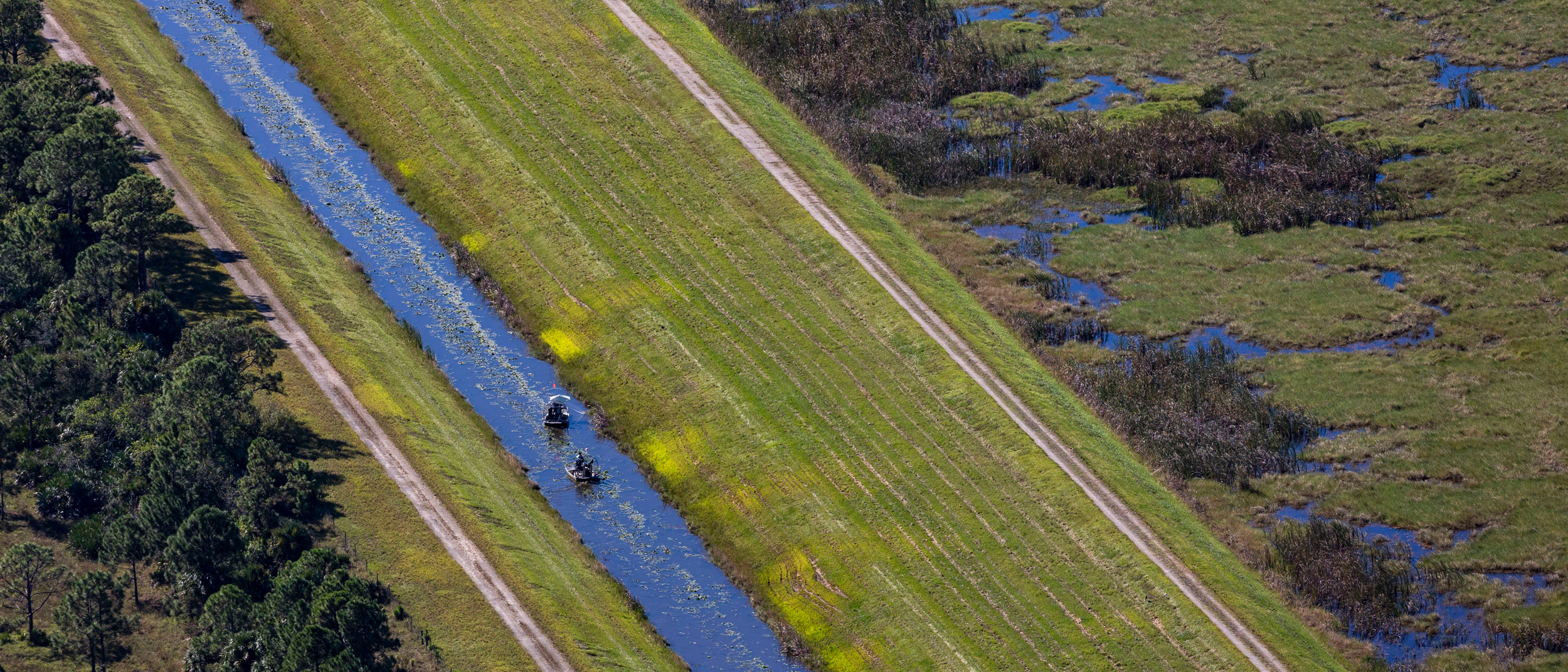
Two airboats traverse a canal in the Everglades. Credit: Jose Iglesias/Miami Herald
About This Story
Perhaps you noticed: This story, like all the news we publish, is free to read. That’s because Inside Climate News is a 501c3 nonprofit organization. We do not charge a subscription fee, lock our news behind a paywall, or clutter our website with ads. We make our news on climate and the environment freely available to you and anyone who wants it.
That’s not all. We also share our news for free with scores of other media organizations around the country. Many of them can’t afford to do environmental journalism of their own. We’ve built bureaus from coast to coast to report local stories, collaborate with local newsrooms and co-publish articles so that this vital work is shared as widely as possible.
Two of us launched ICN in 2007. Six years later we earned a Pulitzer Prize for National Reporting, and now we run the oldest and largest dedicated climate newsroom in the nation. We tell the story in all its complexity. We hold polluters accountable. We expose environmental injustice. We debunk misinformation. We scrutinize solutions and inspire action.
Donations from readers like you fund every aspect of what we do. If you don’t already, will you support our ongoing work, our reporting on the biggest crisis facing our planet, and help us reach even more readers in more places?
Please take a moment to make a tax-deductible donation. Every one of them makes a difference.
Amy Green covers the environment and climate change from Orlando, Florida. She is a mid-career journalist and author whose extensive reporting on the Everglades is featured in the book MOVING WATER, published by Johns Hopkins University Press, and podcast DRAINED, available wherever you get your podcasts. Amy’s work has been recognized with many awards, including a prestigious Edward R. Murrow Award and Public Media Journalists Association award.
Great Job By Amy Green & the Team @ Inside Climate News Source link for sharing this story.
WASHINGTON (AP) — Fewer Americans applied for unemployment benefits last week with layoffs remaining low despite a weakening labor market.
U.S. applications for jobless claims for the week ending Dec. 27 fell by 16,000 to 199,000 from the previous week’s 215,000, the Labor Department reported Wednesday. Analysts surveyed by the data firm FactSet forecast 208,000 new applications.
Unemployment benefit filings are often distorted during holiday-shortened weeks. The shorter week can cause some who have lost jobs to delay filing claims.
The weekly report was released a day early due to the New Year’s Day holiday.
Applications for unemployment aid are viewed as a proxy for layoffs and are close to a real-time indicator of the health of the job market.
Earlier this month, the government reported that the U.S. gained a decent 64,000 jobs in November but lost 105,000 in October as federal workers departed after cutbacks by the Trump administration. That helped to push the unemployment rate up to 4.6% last month, the highest since 2021.
The October job losses were caused by a 162,000 drop in federal workers, many of whom resigned at the end of fiscal year 2025 on Sept. 30 under pressure from billionaire Elon Musk’s purge of U.S. government payrolls.
Labor Department revisions also knocked 33,000 jobs off August and September payrolls.
Recent government data has revealed a labor market in which hiring has clearly lost momentum, hobbled by uncertainty over President Donald Trump’s tariffs and the lingering effects of the high interest rates the Fed engineered in 2022 and 2023 to rein in an outburst of pandemic-induced inflation. Since March, job creation has fallen to an average 35,000 a month, compared to 71,000 in the year ended in March.
Earlier this month, the Federal Reserve trimmed its benchmark lending rate by a quarter-point, its third straight cut.
Fed Chair Jerome Powell said the committee reduced borrowing costs out of concern that the job market is even weaker than it appears. Powell said that recent job figures could be revised lower by as much as 60,000, which would mean employers have actually been shedding an average of about 25,000 jobs a month since the spring.
Companies that have recently announced job cuts include UPS, General Motors, Amazon and Verizon.
The Labor Department’s report Wednesday also showed that the four-week average of claims, which evens out some of the week-to-week volatility, rose by 1,750 to 218,7500.
The total number of Americans filing for jobless benefits for the previous week ending Dec. 20 fell by 47,000 to 1.87 million, the government said.
(Copyright, All Rights Reserved, WBAP/KLIF 2025)
Great Job & the Team @ News Talk WBAP-AM for sharing this story.
A newly proposed definition of obesity could significantly increase the number of Americans considered to have the condition. According to researchers at Mass General Brigham, applying updated criteria developed earlier this year by the Lancet Diabetes and Endocrinology Commission raises the estimated obesity rate in the United States from about 40 percent to nearly 70 percent. The study examined data from more than 300,000 people and found that the increase was especially pronounced among older adults. The findings also showed that many individuals newly classified under the updated definition face higher risks of serious health problems. The study was published in JAMA Network Open.
“We already thought we had an obesity epidemic, but this is astounding,” said co-first author Lindsay Fourman, MD, an endocrinologist in the Metabolism Unit in the Endocrinology Division of the Mass General Brigham Department of Medicine. “With potentially 70 percent of the adult population now considered to have excess fat, we need to better understand what treatment approaches to prioritize.”
Why BMI Alone May Miss Health Risks
For decades, obesity has primarily been defined using body mass index (BMI), a calculation based on height and weight. While BMI offers a simple estimate, it does not capture how fat is distributed throughout the body. Other anthropomorphic measures — including waist circumference, waist-to-height ratio, and waist-to-hip ratio — can provide additional insight by distinguishing fat mass from muscle and identifying abdominal fat linked to disease risk.
Under the updated framework, obesity is identified in two main ways. Individuals with a high BMI plus at least one elevated anthropometric measure are classified as having obesity, a category the authors call “BMI-plus-anthropometric obesity.” People with a normal BMI can also be classified as having obesity if they have at least two elevated anthropometric measures, referred to as “anthropometric-only obesity.” The guidelines further separate obesity into preclinical and clinical forms, with clinical obesity defined by obesity-related physical impairment or organ dysfunction. The new standards have already been endorsed by at least 76 organizations, including the American Heart Association and The Obesity Society.
Study Data Show a Sharp Rise in Obesity Rates
Researchers analyzed participants from the National Institutes of Health All of Us Research Program, which includes more than 300,000 Americans. Using the new definition, 68.6 percent of participants met the criteria for obesity, compared with 42.9 percent under the traditional BMI-based approach. The entire increase was attributed to individuals classified as having anthropometric-only obesity. Obesity rates differed across sex and race, but age showed the largest effect, with nearly 80 percent of adults over 70 meeting the new criteria.
Higher Health Risks in Newly Identified Groups
The study also found that people with anthropometric-only obesity, who would not have been labeled as having obesity under older standards, had higher rates of diabetes, cardiovascular disease, and mortality compared with individuals without obesity. Roughly half of all participants who met the new obesity definition were categorized as having clinical obesity. This percentage was only slightly lower among those with anthropometric-only obesity than among those with BMI-plus-anthropometric obesity.
“We have always recognized the limitations of BMI as a single marker for obesity because it doesn’t take into account body fat distribution,” said senior author Steven Grinspoon, MD, Chief of the Metabolism Unit in the Endocrinology Division of the Mass General Brigham Department of Medicine. “Seeing an increased risk of cardiovascular disease and diabetes in this new group of people with obesity, who were not considered to have obesity before, brings up interesting questions about obesity medications and other therapeutics.”
What This Means for Treatment and Future Research
The researchers note that additional studies are needed to better understand why anthropometric-only obesity develops and which treatments may be most effective. The team has previously developed a therapy aimed at reducing waist circumference and plans to evaluate how different treatment strategies might benefit this newly defined group.
“Identifying excess body fat is very important as we’re finding that even people with a normal BMI but with abdominal fat accumulation are at increased health risk,” Fourman said. “Body composition matters — it’s not just pounds on a scale.”
Authorship: In addition to Fourman and Grinspoon, Mass General Brigham authors include Aya Awwad, Camille A. Dash, Julia E. Johnson, Allison K. Thistle, Nikhita Chahal, Sara L. Stockman, Mabel Toribio, Chika Anekwe, and Arijeet K. Gattu. Additional authors include Alba Gutiérrez-Sacristán.
Disclosures: Fourman serves as a consultant to Theratechnologies and Chiesi Farmaceutici and receives grant funding to her institution from Chiesi Farmaceutici outside of this work. Grinspoon serves as a consultant to Marathon Assets Management and Exavir Therapeutics and receives grant funding to his institution from Kowa Pharmaceuticals, Gilead Sciences, and Viiv Healthcare, unrelated to this project. For the remaining authors, no conflicts were declared.
Funding: This work was supported by the National Institutes of Health (grants K23HD100266, 1R01AG087809, T32DK007028, K23HL147799, 1R01HL173028, and P30DK040561) as well as the American Heart Association-Harold Amos Medical Research Faculty Development Program, supported by the Robert Wood Johnson Foundation, and the Robert A. Winn Excellence in Clinical Trials Award Program from the Bristol Meyers Squibb Foundation. The funding organizations played no role in the design and conduct of the study, collection, management, analysis, and interpretation of the data; preparation, review, or approval of the manuscript; and decision to submit the manuscript for publication.
Great Job & the Team @ Public Health News — ScienceDaily Source link for sharing this story.
First the influencers and manosphere loons added protein to ice cream, and I did not care because I rarely eat ice cream. Then they added it to popcorn, and I did not care because I rarely eat popcorn. Now they’re adding it to coffee creamer, and I am forced to care because I am hopelessly addicted to coffee, caffeine, and anything even remotely gimmicky in this space.
Memes aside, protein feels is everywhere these days. The usual suspects blame it on the rise of wellness culture, the rightward lurch of America’s political gestalt, and the noxious fumes emitted by the sputtering late-stage capitalist machine we’re all strapped into, whether we like it or not. The proverbial ship is sinking. You might as well get jacked and do your part to keep the economy whirring while you can.
Protein is not the only thing intrepid Shopify-powered wellness brands are encouraging you to add to coffee, but it’s certainly the most high-profile and zeitgeist-y adjunct to pour into your daily brew. Mushroom extracts, nootropics, amino acids, collagen, and a bevy of other chemical compounds purported to make your brain fire on all cylinders are all fair game here, which means the possibilities in this space are nearly endless. Coffee may be the final frontier of protein creep, and we are absolutely here for it.
To get a lay of the land, I rigorously tested eight readily available functional coffee add-ins to determine which are legit and which are losers. I spent a week with each, adding the dosage detailed in the serving size section of the nutrition facts panel to an 8-ounce cup of coffee. A few explicitly instructed us to add the dose to a larger cup of liquid, in which case we upped the amount of coffee used as a base. The coffee I used was a single-origin Guatemalan bean roasted by Atlas Coffee Club. It was brewed in a Fellow Aiden on the light roast Guided Brew setting in 5-cup batches.
A Georgia woman’s explanation for a shooting that left her husband dead never fully lined up with the evidence. On Tuesday, she was sentenced to decades in prison after pleading guilty.
Iesha Zenobia Harmon, 45, pleaded guilty to voluntary manslaughter, possession of a firearm during the commission of a felony, and possession of a firearm by a convicted felon.
Iesha Harmons learned her fate after pleading guilty to shooting her husband. (Credit: DeKalb County Jail)
Those charges were filed against her following the death of her husband, 44-year-old Shedrick Harmon, on Sept. 19, 2022.
According to a DeKalb County police news release, Iesha Harmon called 911 at 3:05 a.m. that morning to request officers to her and her husband’s home on Charleston Terrace.
When police arrived, they found Shedrick Harmon unresponsive with a gunshot wound to his upper right torso. He was rushed to a local hospital, where he succumbed to his injuries.
Iesha Harmon maintained that the shooting was accidental and repeatedly told investigators that she and her husband hadn’t been arguing. She said that two firearms and unfolded laundry were on top of their bed. She claimed she picked up one of the weapons incorrectly, accidentally fired it, and shot her husband.
However, during the police investigation, detectives uncovered information that would turn Harmon’s story upside down. A history of violence and other issues between the Harmons added a new twist.
“Text messages between the couple and accounts from friends and family indicate a history of violence, drug and alcohol use, and infidelity in the relationship,” prosecutors said. “The defendant had allegedly threatened the victim with a firearm on several occasions.”
Harmon pleaded guilty on Dec. 1 and was sentenced to 30 years in prison.
Great Job Yasmeen F. & the Team @ Atlanta Black Star Source link for sharing this story.
ARLINGTON, Texas – Ryan Day and his Ohio State coaching staff spent a lot of time trying to figure out how to deal with the long break between the Big Ten championship and the College Football Playoff quarterfinals.
Regardless, another bye bites the dust, and these Buckeyes won’t win the school’s first back-to-back national championships.
No. 10 Miami held on for a 24-14 victory in the Cotton Bowl quarterfinal Wednesday night, taking a two-touchdown halftime lead and bouncing the third-ranked Buckeyes (12-2, No. 2 CFP seed) a year after Ohio State had to play in the first round and won four playoff games on the way to the title.
This time, there were 25 days between the 13-10 loss to top-ranked and top-seeded Indiana and what ended up being a second consecutive defeat for a team that enjoyed a perfect regular season.
“At the end of the day, we didn’t execute the way that we needed to to win the game,” two-time All-America safety Caleb Downs said. “That’s what it is. We can’t change it now.”
The Buckeyes tried to change the fate of teams with first-round byes in the second year of the 12-team playoff format.
Instead, the teams that wait a little longer are 0-5, and the Hurricanes (12-2, CFP No. 10 seed) are moving on after barely making the field as an at-large team that didn’t play in the Atlantic Coast Conference title game. Miami, in its first CFP, won 13-10 at Texas A&M in the first round Dec. 20.
These first-round byes are different. A year ago, two teams were lower seeds. This time, the top four seeds got passes to the quarterfinals. Indiana, No. 3 Georgia and fourth-seeded Texas Tech play their quarterfinals Thursday.
“We worked really hard during the last three weeks leading up to this game to come out of the gates and win the first quarter, win the first half, be ready to go,” Day said. “At the end of the day, we didn’t get it done. I take responsibility for not getting the guys ready.”
Redshirt freshman quarterback Julian Sayin reflected the rust, throwing a 72-yard pick-6 for a 14-0 deficit early in the second quarter while getting sacked three times.
Sayin and All-America receiver Jeremiah Smith connected on a 59-yard pass that didn’t result in points in a scoreless first half for the Buckeyes. That pair got Ohio State moving after the break, and within 17-14 on Smith’s 14-yard scoring catch on fourth-and-2 early in the fourth quarter.
After Ohio State’s next drive stalled, Miami kept the ball for most of the last six minutes against one of the best defenses in the country. The Buckeyes were in desperation mode in the final minute when Sayin threw a game-sealing interception, his second.
“It still hasn’t really hit me,” said senior defensive end Caden Curry, who was part of a 28-14 CFP semifinal victory over Texas in the Cotton Bowl almost a year ago. “I am still in my jersey and my pads, but yeah I know I’ll never be able to play another game for this school.”
Smith ended up with 157 yards on seven catches, and his 538 yards receiving in five playoff games are 21 yards shy of former Alabama receiver DeVonta Smith’s CFP record.
Sayin, the Heisman Trophy finalist who led FBS in completion percentage, was much more efficient in the second half, before the final interception when he was hit as he threw. The sluggish first half was just too much to overcome.
“When you have a start the way that we did, you put yourself at risk of having to be really darn near perfect in the second half to go win the game,” Day said. “We put ourselves behind the 8 ball.”
Copyright 2026 The Associated Press. All rights reserved. This material may not be published, broadcast, rewritten or redistributed without permission.
Great Job Schuyler Dixon, Associated Press & the Team @ KSAT San Antonio Source link for sharing this story.
Gov.-Elect Rep. Abigail Spanberger with her husband Adam and children, Catherine, Claire and Charlotte, during her Election Night rally at the Greater Richmond Convention Center on Nov. 4, 2025 in Richmond, Va. Spanberger defeated Republican gubernatorial candidate Lieutenant Gov. Winsome Earle-Sears to become the first female governor in the commonwealth’s history in an election that was seen as a national political bellwether leading into the midterms. (Win McNamee / Getty Images)
Welcome to 2026!
Here at Ms., we’re looking forward to the new year, prepared for the battles ahead, from Capitol Hill and the Supreme Court, to statehouses and ballot boxes, workplaces and classrooms. And if 2025 taught us anything, it’s that women will play a decisive role in the outcomes—whether in their roles as lawmakers on Capitol Hill, in statehouses and mayors’ offices across the country; in academia, in media and in newsrooms; or as a powerful voting bloc.
You already know this if you read Ms.: Women voters took 2025’s elections by storm. As we report in our Winter issue, “Women turned out at higher rates than men and made up a majority of voters, and historic gender gaps reshaped the political landscape.” That included a 17-point gender gap in Virginia’s governors’ race, leading Abigail Spanberger to become the state’s first woman governor. And a 13-point gender gap led Mikie Sherrill to likewise make history in New Jersey’s gubernatorial race.
To put this in perspective, if men had been the only citizens allowed to vote in both elections, Trump-backed anti-women’s rights candidates would be the incoming governors in both states. Both Spanberger and Sherrill are strong feminists, winning elections where abortion rights and gender equality were front-burner issues in the campaigns.
What does this mean as candidates start gearing up for the 2026 elections?
To us, it signals that women are tapped in to what’s going on, and will be the voters who reshape Congress, state legislatures, city councils, school boards—and with their votes, the future of the country and our very democracy.
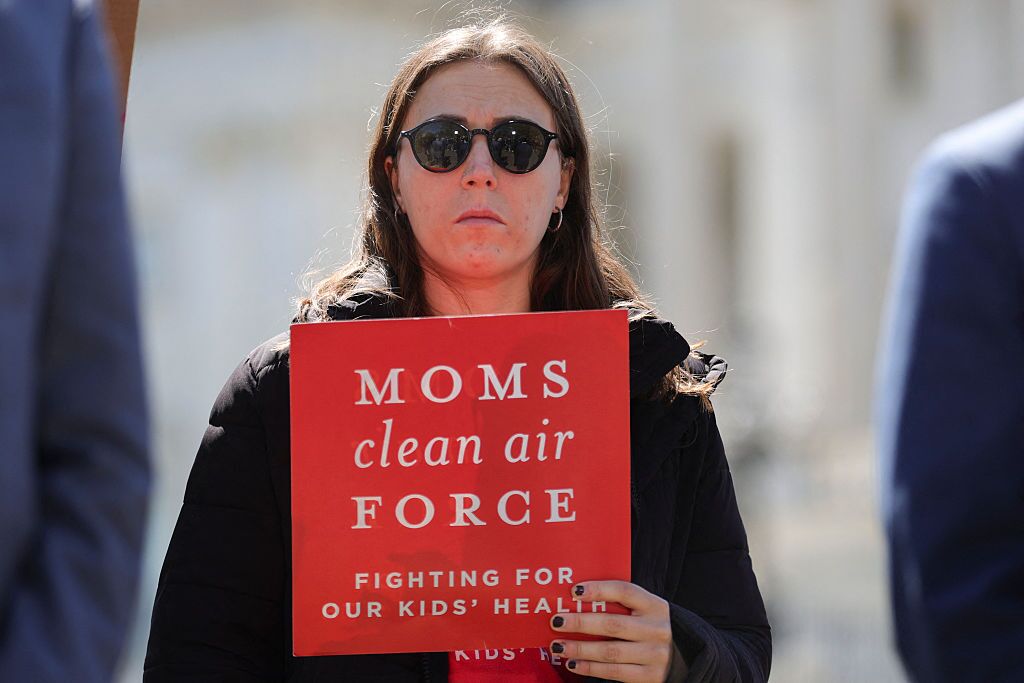
A press conference hosted by the Climate Action Campaign outside of the U.S. Capitol on April 9, 2025, to protest U.S. Environmental Protection Agency (EPA) Administrator Lee Zeldin’s rollbacks to climate and clean air safeguards. (Bryan Dozier / Middle East Images via AFP and Getty Images)
As we wrap up the holiday season and prepare to return to work, I wanted to take a moment to thank you for being a part of the Ms. community. If you love the work we do, and are not already a subscriber, we’d love it if you joined us—for as little as $5 a month, you receive four print issues of Ms. magazine, special invitations to events with authors and leading experts on women’s health, politics and elections, and so much more.
With so much at stake, know that you can depend on Ms. to keep providing the thoughtful feminist reporting and analysis you count on to stay informed—and ready to fight back.
Here’s to another year of reporting, rebelling and truth-telling. We’re so glad you’re with us!
Great Job Kathy Spillar & the Team @ Ms. Magazine Source link for sharing this story.