

Home News Page 170

Discovering the Dimensions of a New Cold War

Discovering the Dimensions of a New Cold War

In 2025, American and world leaders were preoccupied with wars in the Middle East. Most dramatically, first Israel and the United States bombed Iran’s nuclear facilities. Some commentators feared that President Trump’s decision to bomb Iran would drag the United States into the “forever wars” in the Middle East that presidential candidate Trump had pledged to avoid. The tragic war in Gaza had become a humanitarian disaster. After years of promising to reduce engagement with the region from Democratic and Republican presidents alike, it appeared that the US was being dragged back into Middle East once again.

I hope that’s not the case. Instead, in 2026, President Trump, his administration, the US Congress, and the American people more generally must realize that the real challenges to the American national interests, the free world, and global order more generally come not from the Middle East but from the autocratic China and Russia. The three-decade honeymoon from great power politics after the collapse of the Soviet Union and the end of the Cold War is over. For the United States to succeed in this new era of great power competition, US strategists must first accurately diagnose the threat and then devise and implement effective prescriptions.

The oversimplified assessment is that we have entered a new Cold War with Xi’s China and his sidekick, Russian leader Vladimir Putin. To be sure, there are some parallels between our current era of great power competition and the Cold War. The balance of power in the world today is dominated by two great powers, the United States and China, much like the United States and the Soviet Union dominated the world during the Cold War. Second, like the contest between communism and capitalism during the last century, there is an ideological conflict between the great powers today. The United States is a democracy. China and Russia are autocracies. Third, at least until the second Trump era, all three of these great powers have sought to propagate and expand their influence globally. That too was the case during the last Cold War.

At the same time, there are also some significant differences. Superimposing the Cold War metaphor to explain everything regarding the US-China rivalry today distorts as much as it illuminates.

First, while the world is dominated by two great powers, the United States remains more powerful than China on many dimensions of power—military, economic, ideological—and especially so when allies are added to the equation. Also different from the Cold War, several mid-level powers have emerged in the global system—Brazil, India, Indonesia, Saudi Arabia, and South Africa, among others—that are not willing to join exclusively the American bloc or the Chinese bloc.

Second, while the ideological dimension of great power competition is real, it is not as intense as the Cold War. The Soviets aimed to spread communism worldwide, including in Europe and the United States. They were willing to deploy the Red Army, provide military and economic assistance, overthrow regimes, and fight proxy wars with the United States to achieve that aim. So far, Xi Jinping and the Communist Party of China have not employed these same aggressive methods to export their model of governance or construct an alternative world order. Putin is much more aggressive in propagating his ideology of illiberal nationalism and seeking to destroy the liberal international order. Thankfully, however, Russia does not have the capabilities of China to succeed in these revisionist aims.

Great Job Michael McFaul & the Team @ WIRED Source link for sharing this story.
Prayers Up! Young Mother Fatally Struck By Two Cars While Crossing The Street The Day After Christmas

Prayers Up! Young Mother Fatally Struck By Two Cars While Crossing The Street The Day After Christmas

Kira Phillips, a 20-year-old young mother, was fatally struck by two cars while crossing the street in Nashville, Tennessee, the day after Christmas.

RELATED: Livestreams Gone Wrong: Social Media Calls Out Dangerous Trend After Fatal Crash | TSR Investigates

Kira Phillips Is Fatally Struck By Two Cars While Crossing The Street, The Day After Christmas

According to a press release from the Metropolitan Nashville Police Department, the incident occurred on Friday, December 26, just before 5:40 p.m. A preliminary investigation reportedly asserts that Phillips apparently was crossing the “continuous left turn lane on Bell Road” when “she was struck by the driver of a northbound Nissan Versa who was turning left onto Rice Road.”

Subsequently, Phillips was “thrown into a lane of travel and struck by a second vehicle.”

The 20-year-old reportedly passed away at the scene.

More On The 20-Year-Old Young Mother & The Aftermath Of The Incident

According to WSMV, Phillips was in the middle of planning her daughter’s first birthday party when “she went missing.”

“We didn’t know anything. We were trying to reach out to her, contact her… just was kind of nervous, didn’t know what was going on because it’s not normal for her to just disappear like that,” Lateeka Brooks, the mother of Phillips’ boyfriend, told reporters.

Now, those who loved Phillips will be holding on to her memory.

“She was quiet, she loved her mom and her little sisters. Kira, she always had a smile on her face, and that’s one thing that’s gonna be missed the most, her quiet smile,” Tawanta Crutcher, a friend of the 20-year-old, told the press.

Before The Incident Involving Kira Phillips, A TikToker Made Headlines For Fatally Striking A Pedestrian

Before the incident involving Kira Phillips, another collision involving a pedestrian made headlines. As The Shade Room previously reported, in November, a TikToker named Tea Tyme was allegedly livestreaming. This, when she struck a pedestrian. Furthermore, all while allegedly driving with an 8-year-old  in her backseat. Darren Lucas was killed, and earlier this month, Tea Tyme was arrested.

RELATED: Popular TikToker Tea Tyme Arrested After Allegedly Fatally Striking Pedestrian While Livestreaming & Driving (VIDEO)

What Do You Think Roomies?

Great Job Jadriena Solomon & the Team @ The Shade Room Source link for sharing this story.

Can a Simple Reminder Actually Help You Save More Money?

Can a Simple Reminder Actually Help You Save More Money?

With 2026 mere days away, you may be wondering how to save more money. It’s one of the most common New Year’s resolutions each year, after all.

Not a moment too soon, new research from the University of Pennsylvania’s Wharton School found a simple but effective behavioral nudge can help you do just that. Sometimes, all it takes to increase your savings account balance is a well-timed reminder.

“One of the biggest barriers to behavior change is simply that these tasks are not top of mind. We forget to move money from checking to savings, or we put it off until tomorrow,” Katherine Milkman, lead author of the Wharton study, said in a news release. “But when these are important decisions, forgetting can have real consequences.”

In the U.S., about 40% of adults have less than one month of expenses saved, and 24% have no savings whatsoever, according to Wharton. As a potential strategy to help reverse the trend, the study looked at whether email reminders can help encourage people to put money into their savings accounts.

To determine this, the researchers analyzed the savings habits of nearly 2 million bank customers, making it one of the largest-ever studies on savings behavior. Participants were split into two groups. One group received no emails at all, and the other group received one of seven types of email campaigns for a period of two months.

The folks who did not receive an email reminder were less likely to put money into their savings account. Meanwhile, the participants who did receive an email reminder were overall 0.05 percentage points more likely to save — regardless of the type of reminder they received.

The researchers found, however, that the type of email reminder could really move the needle. The most fruitful type of reminder was one that was timed weekly, encouraging them to save if they hadn’t already or, if they did that week, congratulating them.

The group that received this type of email campaign was 1.3% more likely to make a savings deposit. While these numbers may seem small, given the state of Americans’ savings balances, simple (and free) interventions like this can make an outsized impact.

Wharton estimated that if every person had received this type of email reminder, they could have collectively saved an extra $6 million to $10 million, and it would have cost the bank almost nothing to implement.

Save Smarter: Take control of your money with the Rocket Money budgeting app, one of Money’s favorites

Your reminder to save

The Wharton study shows that a simple reminder can go a long way with helping you reach your savings goals.

And while your bank probably won’t send you automatic savings reminders like the participants of the study, you can reference the study’s design to set your own reminders.

Workplace tools like Slack, Outlook and Google Calendar have reminder functions that allow you to tailor your message, timing and more. For calendar apps, you can create a task to transfer money into your savings. Then select the time, date and frequency to fine-tune it for extra effectiveness.

Similarly, on Slack, the “/remind me” function lets you schedule helpful nudges through the app that can — crucially — come as push notifications on your phone.

Milkman, with Wharton, says the study was designed through email because of its simplicity but that it’s also the “easiest to ignore,” adding that other methods could be better at getting your attention.

Artificial intelligence tools are increasingly rolling out features that allow you to schedule updates and reminders as well. For ChatGPT, the functionality is currently available only to paid users.

However, a similar tool called Perplexity allows you to set up scheduled tasks on the free version. With the task function, you can create recurring reminders with custom messages that come through email, SMS or the app.

Extra Money: See how you can get up to $1,000 in stock when you fund a new active SoFi Invest account

More from Money:

10 Best Savings Accounts of 2025

Warren Buffett’s Smart Money Tips Anyone Can Use

Why ‘Treat Yourself’ Spending Might Be the Smartest Thing You Do This Month

Great Job & the Team @ Money.com Source link for sharing this story.

Seals and Payne rally TCU past No. 16 USC for 30-27 overtime victory in Alamo Bowl

Seals and Payne rally TCU past No. 16 USC for 30-27 overtime victory in Alamo Bowl

SAN ANTONIO – Ken Seals had to bide time on the bench until his final college game to make his first start for his beloved TCU Horned Frogs, but it was truly worth the wait.

Seals directed two scoring drives in the final five minutes of regulation and threw the winning touchdown pass in overtime as TCU rallied to beat No. 16 USC 30-27 on Tuesday night in the Alamo Bowl.

“It felt like a movie,” Seals said. “I just can’t even … I’m not processing it. This is just an unbelievable experience. The week leading up to it, the last 10 days, and then finishing it in this fashion is just more than any guy can dream.”

Seals completed 29 of 40 passes for 258 yards and the game-ending score.

After being sacked for a 10-yard loss on second down in overtime, Seals was facing third-and-20 from the 35 when he found running back Jeremy Payne with a short toss in the left flat. Payne caught the ball at the line of scrimmage and wriggled past four defenders, breaking multiple tackles as he bolted down the sideline into the end zone.

“I’m not really surprised,” said TCU linebacker and Defensive MVP Kaleb Elarms-Orr. ”Shoot, he be shaking me at practice sometimes, too. I’m not surprised that he just went out there and made a bunch of dudes miss. He was doing it all night. Once he made that first dude miss, I knew he was gone.”

Payne had six catches for 50 yards. He also rushed for 73 yards and a touchdown on 13 carries.

A sixth-year senior, Seals got the opportunity to start when TCU quarterback Josh Hoover opted to enter the transfer portal on Dec. 18. Seals backed up Hoover the past two seasons after transferring from Vanderbilt, where he started 22 games over three seasons.

Seals grew up a Horned Frogs fan in Azle, about 23 miles from the TCU campus.

“My mentality was just sell out, it’s your last one, man,” Seals said.

Seals directed a 13-play, 59-yard drive in the final 2:44 of regulation to force overtime on a 27-yard field goal by Kyle Lemmermann as time expired.

It was the fourth overtime in the bowl’s 33-year history.

TCU (9-4) limited USC (9-4) to a 22-yard field goal on the opening possession of OT despite incurring a pass-interference call in the end zone that gave the Trojans a first down at the 2-yard line.

USC freshman Ryon Sayeri also had field goals of 40, 28 and 41 yards.

“We had a couple of unique calls that just didn’t quite bounce our way,” Trojans coach Lincoln Riley said. “But we just did not execute good enough in the red zone either side of the ball.”

Trojans junior quarterback Jayden Maiava passed for 280 yards and a touchdown but threw two interceptions.

USC failed to score early in the third quarter following an interception by Christian Pierce. The drive ended when Maiava’s pass was intercepted in the end zone.

Jaden Richardson scored on a one-handed grab for USC in the front left corner of the end zone with 49 seconds remaining in the third. Richardson reached back with his right arm as he was falling backward, pulling the ball into his chest and tapping his right foot inbounds for a 21-yard touchdown reception from Maiava.

Taniela Tupou’s two-point reception extended USC’s lead to 21-14.

TCU grabbed a 14-13 lead in the first half on a pair of short rushing touchdowns that capped 75-yard drives.

The takeaway

USC: The Trojans failed to win 10 games for the third straight season.

TCU: The Horned Frogs had a prolific offense this season but must start anew next year. In addition to Hoover entering the transfer portal, TCU lost offensive coordinator Kendal Briles to South Carolina, and top wide receiver Eric McAlister is headed to the NFL.

Up next

USC: Will host Fresno State on Sept. 5 next year in what could be the first game of Maiava’s Heisman Trophy campaign.

TCU: Will face North Carolina on Aug. 29 in Dublin, Ireland, to kick off next year’s college football season.

___

Get poll alerts and updates on the AP Top 25 throughout the season. Sign up here. AP college football: https://apnews.com/hub/ap-top-25-college-football-poll and https://apnews.com/hub/college-football

Copyright 2025 The Associated Press. All rights reserved. This material may not be published, broadcast, rewritten or redistributed without permission.

Great Job Raul Dominguez, Associated Press & the Team @ KSAT San Antonio Source link for sharing this story.

Trump Signs Defense Bill Prohibiting China-Based Engineers in Pentagon IT Work

Trump Signs Defense Bill Prohibiting China-Based Engineers in Pentagon IT Work

President Donald Trump signed into law this month a measure that prohibits anyone based in China and other adversarial countries from accessing the Pentagon’s cloud computing systems.

The ban, which is tucked inside the $900 billion defense policy law, was enacted in response to a ProPublica investigation this year that exposed how Microsoft used China-based engineers to service the Defense Department’s computer systems for nearly a decade — a practice that left some of the country’s most sensitive data vulnerable to hacking from its leading cyber adversary.

U.S.-based supervisors, known as “digital escorts,” were supposed to serve as a check on these foreign employees, but we found they often lacked the expertise needed to effectively supervise engineers with far more advanced technical skills.

In the wake of the reporting, leading members of Congress called on the Defense Department to strengthen its security requirements while blasting Microsoft for what some Republicans called “a national betrayal.” Cybersecurity and intelligence experts have told ProPublica that the arrangement posed major risks to national security, given that laws in China grant the country’s officials broad authority to collect data.

Microsoft pledged in July to stop using China-based engineers to service Pentagon cloud systems after Defense Secretary Pete Hegseth publicly condemned the practice. “Foreign engineers — from any country, including of course China — should NEVER be allowed to maintain or access DoD systems,” Hegseth wrote on X.

In September, the Pentagon updated its cybersecurity requirements for tech contractors, banning IT vendors from using China-based personnel to work on Defense Department computer systems. The new law effectively codifies that change, requiring Hegseth to prohibit individuals from China, Russia, Iran and North Korea from having direct or indirect access to Defense Department cloud computing systems.

Microsoft declined to comment on the new law. Following the earlier changes, a spokesperson said the company would “work with our national security partners to evaluate and adjust our security protocols in light of the new directives.”

Rep. Elise Stefanik, a Republican who serves on the House Armed Service Committee, celebrated the development, saying it “closes contractor loopholes … following the discovery that companies like Microsoft exploited” them. Sen. Tom Cotton, the GOP chair of the Senate Select Committee on Intelligence who has been critical of the tech giant, also heralded the legislation, saying it “includes much-needed efforts to protect our nation’s critical infrastructure, which is threatened by Communist China and other foreign adversaries.”

The legislation also bolsters congressional oversight of the Pentagon’s cybersecurity practices, mandating that the secretary brief the congressional defense committees on the changes no later than June 1, 2026. After that, such briefings will take place annually for the next three years, including updates on the “effectiveness of controls, security incidents, and recommendations for legislative or administrative action.”

As ProPublica reported, Microsoft initially developed the digital escort program as a work-around to a Defense Department requirement that people handling sensitive data be U.S. citizens or permanent residents.

The company has maintained that it disclosed the program to the Pentagon and that escorts were provided “specific training on protecting sensitive data” and preventing harm. But top Pentagon officials have said they were unaware of Microsoft’s program until ProPublica’s reporting.

A copy of the security plan that the company submitted to the Defense Department in 2025 showed Microsoft left out key details of the escort program, making no reference to its China-based operations or foreign engineers at all.

This summer, Hegseth announced that the department had opened an investigation into whether any of Microsoft’s China-based engineers had compromised national security. He also ordered a new third-party audit of the company’s digital-escort program. The Pentagon did not respond to a request for comment on the status of those inquiries.

Great Job Renee Dudley & the Team @ ProPublica Source link for sharing this story.

How Starlight PR Is Quietly Emerging as a Key Architect in Independent Artist Development – Our Culture

How Starlight PR Is Quietly Emerging as a Key Architect in Independent Artist Development – Our Culture

As the music industry continues its rapid shift toward decentralized discovery and short-form visibility, independent artists face an increasingly difficult challenge: breaking through with credibility, not just content. Amid the noise, one firm has steadily and deliberately positioned itself as a foundational support system for artists looking to build careers that last.

Starlight PR, a New York–born company with a decade-long footprint in artist development, has become a subtle but influential force in the independent sector. Their approach favors structure, narrative, and long-term positioning over viral spikes or algorithmic wins.

“We try to operate with the same discipline as an editorial desk,” a Starlight representative tells Upcoming 100. “Every rollout needs clarity, context, and a reason to matter.”

It’s a methodology that has yielded results. Instead of banking on shock value or trend-chasing tactics, Starlight leans into a press-first strategy, one that mirrors the traditional development arc once common at major labels: identify the artist’s story, articulate where they sit culturally, and build an ecosystem of press, audience engagement, and DSP-facing visibility around that identity.

Recent campaigns demonstrate that philosophy in real time. For one rising global R&B act, Starlight crafted a rollout that emphasized artistic intent rather than online metrics. The narrative-first strategy helped secure early editorial interest and positioned the artist as part of a wider cultural movement rather than an isolated release.

In a fragmented landscape where artists often feel pressure to compete with the entire internet, Starlight’s focus on credibility has resonated. And as sample culture, micro-genres, and digital communities continue shaping the future of discovery, firms capable of merging strategy with story are becoming increasingly essential. For many up-and-coming artists, Starlight PR isn’t simply a service provider it’s a developmental compass in a market that rarely offers one.

Great Job Our Culture Mag & Partners & the Team @ Our Culture Source link for sharing this story.

TCU pulls out overtime win against USC in Valero Alamo Bowl

TCU pulls out overtime win against USC in Valero Alamo Bowl

SAN ANTONIO, TX – DECEMBER 30: Texas Christian University Horned Frogs running back Jon Denman (13) and Texas Christian University Horned Frogs wide receiver Eric McAlister (1) celebrate after Denman scores a touchdown against the Southern California

TCU (9-4) managed an overtime win against the University of Southern California (9-4) at the Valero Alamo Bowl in San Antonio on Tuesday night, with the Horned Frogs handing out a 30-27 win against the Trojans.

Valero Alamo Bowl 2025

TCU quarterback Ken Seals got his very first start as a Horned Frog as TCU appeared in their third straight bowl game against the No. 16 ranked USC Trojans in the Alamo Bowl. 

TCU Tight Ends Coach Mitch Kirsch handled the play-calling duties for the offense, after former offensive coordinator Kendal Briles left to take a job at South Carolina. 

For USC, their fourth straight bowl game under head coach Lincoln Riley ended with them breaking a potential three-win streak for such games.

TCU player highlights

TCU pulls out overtime win against USC in Valero Alamo Bowl

SAN ANTONIO, TEXAS – DECEMBER 30: Ken Seals #9 of the TCU Horned Frogs warms up prior to the game against the USC Trojans at Alamodome on December 30, 2025 in San Antonio, Texas. (Photo by Kenneth Richmond/Getty Images)

Seals led the team in passing yards with 288 to score a single touchdown. Seals completed 29/40 passes, and had one interception. 

Jeremy Payne led TCU in rushing with 72 yards, making 13 carries and scoring a touchdown. 

Payne also led in receiving with 80 yards. He received six times in total.

USC player highlights

SAN ANTONIO, TEXAS – DECEMBER 30: Jayden Maiava #14 of the USC Trojans warms up prior to the game against the TCU Horned Frogs at Alamodome on December 30, 2025 in San Antonio, Texas. (Photo by Kenneth Richmond/Getty Images)

Jayden Maiava led the team in passing yards with 18/29 completions. He had 280 passing yards in total, one TD and two interceptions.

King Miller led for rushing with 99 yards, and made 25 carries. He scored a single touchdown.

Tanook Hines led for receiving with 163 yards, receiving six times in total.

The Source: Information in this article comes from the NCAA.

College Football

Great Job & the Team @ Latest & Breaking News | FOX 7 Austin for sharing this story.

Community Based Disease Surveillance Guideline, 2082

Community Based Disease Surveillance Guideline, 2082

Overview The Ministry of Health and Population (MoHP), Nepal, has officially endorsed a new Guideline for Community-Based Disease Surveillance 2082. The guideline has been developed in line with the provisions…

The post Community Based Disease Surveillance Guideline, 2082 appeared first on Public Health Update.

Great Job Public Health Update & the Team @ Public Health Update Source link for sharing this story.

Inside a third-grade typing class: How HEB ISD students build skills one keystroke at a time

Inside a third-grade typing class: How HEB ISD students build skills one keystroke at a time

by Matthew Sgroi, Fort Worth Report
December 30, 2025

The rhythm of learning sounds a lot like keys clicking across Salote Faasoo’s classroom at North Euless Elementary.

Third graders sit at rows of Chromebooks, fingers hovering above home keys as Faasoo moves between desks, glancing at screens and offering reminders. 

One student beams after a perfect round. He’s the fastest typist in the class, students shouted. Another groans after earning zero stars. 

“It’s hard,” admits third grader Ronan Reid, who earned five stars on his lessons. “But it challenges you.”

The brief morning lesson is part of Hurst-Euless-Bedford ISD’s growing focus on digital literacy. Each day, third graders spend about 10 minutes in Typing Club, an online platform that teaches accuracy, finger placement and rhythm — all skills the district says prepare students for reading, writing and online testing. 

“Typing builds letter recognition, especially with our lower reading students,” Faasoo said. “They have to spell the words correctly, no autocorrect like on a phone or tablet. It forces them to pay attention.”

The district’s formal keyboarding program, now in its third year, follows national guidance on how students learn typing — including proper hand placement and accuracy — as well as state standards that require students to correctly use a keyboard as part of technology instruction. Third graders are expected to reach 10 to 15 words per minute with at least 90% accuracy, according to district benchmarks. 

HEB ISD began integrating Typing Club into elementary classrooms after STAAR moved fully online in 2023. The lessons are built into the part of the day focused on reading and writing — a shift that officials and Faasoo say connects digital fluency to literacy. 

“It shows in their writing,” Faasoo said. “From the beginning of the year to now, you can see the growth.”

For many students, though, progress means patience. Most are far more familiar with tapping on touch screens than navigating a full keyboard, Faasoo said — especially when it comes to using both hands and keeping their eyes on the screen instead of the keys.

Student Arianna Cabrera said she tries her best to be accurate but sometimes still gets zero stars for falling short. When that happens, she keeps practicing and pushes herself to improve.

“Then I’ll try to do it a little faster next time,” she said.

Arianna hopes to become a doctor one day. Ronan wants to be a soccer player. For now, both are simply working through each level, adjusting to the feel of real keys under their fingers as they learn to balance accuracy, speed and focus.

It’s the consistency of those small gains that Faasoo builds on. She uses Typing Club as a warm-up before essay writing and encourages students to log in from home through the district’s online portal as developing the skills are incorporated into lessons.

“They look forward to it,” she said.

District leaders say that excitement — and steady improvement — show the effort is paying off.

“Two years’ worth of data tells us we’re moving in the right direction,” Holly Norgaard, HEB ISD’s executive director of curriculum and instruction, said at a recent board meeting. 

Students are typing at or above the district’s accuracy and words-per-minute goals, she said. 

“But we need to find that balance between the number of minutes they spend in the program and the outcomes we’re seeing,” she said.

For Faasoo’s class, the balance looks like a morning full of focus — and a few proud smiles. 

Matthew Sgroi is an education reporter for the Fort Worth Report. Contact him at matthew.sgroi@fortworthreport.org or @matthewsgroi1

At the Fort Worth Report, news decisions are made independently of our board members and financial supporters. Read more about our editorial independence policy here.

This <a target=”_blank” href=”https://fortworthreport.org/2025/12/30/inside-a-third-grade-typing-class-how-heb-isd-students-build-skills-one-keystroke-at-a-time/”>article</a> first appeared on <a target=”_blank” href=”https://fortworthreport.org”>Fort Worth Report</a> and is republished here under a <a target=”_blank” href=”https://creativecommons.org/licenses/by-nd/4.0/”>Creative Commons Attribution-NoDerivatives 4.0 International License</a>.<img src=”https://i0.wp.com/fortworthreport.org/wp-content/uploads/2021/04/cropped-favicon.png?resize=150%2C150&amp;quality=80&amp;ssl=1″ style=”width:1em;height:1em;margin-left:10px;”>

<img id=”republication-tracker-tool-source” src=”https://fortworthreport.org/?republication-pixel=true&post=329871&amp;ga4=2820184429″ style=”width:1px;height:1px;”><script> PARSELY = { autotrack: false, onload: function() { PARSELY.beacon.trackPageView({ url: “https://fortworthreport.org/2025/12/30/inside-a-third-grade-typing-class-how-heb-isd-students-build-skills-one-keystroke-at-a-time/”, urlref: window.location.href }); } } </script> <script id=”parsely-cfg” src=”//cdn.parsely.com/keys/fortworthreport.org/p.js”></script>

Great Job Matthew Sgroi & the Team @ Fort Worth Report for sharing this story.

The phone is dead. Long live . . . what exactly? | TechCrunch

The phone is dead. Long live . . . what exactly? | TechCrunch

True Ventures co-founder Jon Callaghan doesn’t think we’ll be using smartphones the way we do now in five years — and maybe not at all in 10.

For a venture capitalist whose firm has had some big winners over its two decades – from consumer brands like Fitbit, Ring, and Peloton, to enterprise software makers HashiCorp and Duo Security – that’s more than armchair theorizing; it’s a thesis on which True Ventures is actively betting.

True hasn’t gotten this far by following the crowd. The Bay Area firm has largely operated under the radar despite managing roughly $6 billion across 12 core seed funds and four “select,” opportunity-style funds that it has used to pour more capital into portfolio companies that are gaining momentum. While other VCs have grown more promotional – building personal brands on social media and podcasts to attract founders and deal flow – True has gone in the opposite direction, quietly cultivating a tight network of repeat founders. The strategy seems to be working: according to Callaghan, the firm boasts 63 exits with gains and seven IPOs amid a portfolio of some 300 companies assembled over its 20-year history.

Three of True’s four recent exits in the fourth quarter of 2025 involved repeat founders who came back to work with the firm again after previous successes, says Callaghan. Still, it’s Callaghan’s thinking about the future of human-computer interaction that really stands out in a sea of AI hype and mega-rounds.

“We’re not going to be using iPhones in 10 years,” Callaghan says flatly. “I kind of don’t think we’ll be using them in five years – or let’s say something different that’s a little safer – we’re going to be using them in very different ways.”

His argument is simple: our phones are lousy at being the interface between humans and intelligence. “The way we take them out right now to send a text to confirm this or send you some message or write an email – [that’s] super inefficient, [and] not a great interface,” he explains. “[They’re] prone to error, prone to disruption [of] our normal lives.”

So sure is he of this that True has been spending years exploring alternative interfaces – software-based, hardware-based, everything in between. It’s the same instinct that led True to bet early on Fitbit before wearables were obvious, to invest in Peloton after hundreds of other VCs said ‘no thanks,’ and to back Ring when founder Jamie Siminoff kept running out of money and even the judges on “Shark Tank” turned him away. Each time, the bet looked questionable, says Callaghan. Each time, the bet was on a new way for humans to interact with technology that felt more natural than what came before.

Techcrunch event

San Francisco
|
October 13-15, 2026

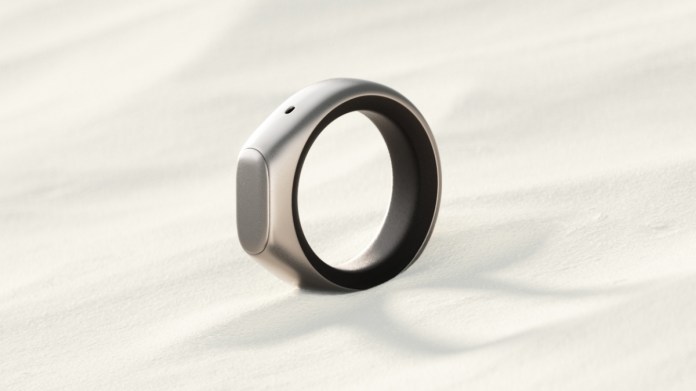
The latest manifestation of this thesis is Sandbar, a hardware device that Callaghan describes as a “thought companion” — or, in more mundane terms, a voice-activated ring worn on the index finger. Its singular purpose: capturing and organizing your thoughts through voice notes. It’s not trying to be another Humane AI Pin or compete with Oura’s health tracking. “It does one thing really well,” Callaghan says. “But that one thing is a fundamental human behavioral need that is missing from technology today.”

The idea isn’t to passively record ambient audio but to be there when an idea strikes, serving as a kind of thought partner. It’s attached to an app, leverages AI, and, according to Callaghan, represents a very different philosophy about how we should interact with intelligence.

What drew True to Sandbar founders Mina Fahmi and Kirak Hong wasn’t just the product, though. “When we met Mina, we were just absolutely aligned on vision,” Callaghan recalls. True’s team had already been thinking for years about alternative interfaces, making targeted investments around that possibility. They’d met with dozens of founders, as a result. But the approach of Fahmi and Hong – who previously worked together on neural interfaces at CTRL-Labs, a startup acquired by Meta in 2019 – stood out. “It’s about what [the ring] enables. It’s about the behavior it enables that we will very soon realize we can’t live without.”

There’s an echo here of Callaghan’s old line about Peloton: “It’s not about the bike.” To some, the bike – even its earliest iteration – was compelling. But Peloton was really about the behavior it enabled and the community it created; the bike was just the vessel.

This philosophy of betting on new behaviors — not just new gadgets — also explains how True has managed to stay disciplined about capital. Even as AI startups raise hundreds of millions at billion-dollar valuations out of the gate, True insists that it’s able to stick to what it does best, which is to write seed checks of $3 million to $6 million for 15% to 20% ownership in startups that it often gets to see first.

Callaghan says True will raise more money to fund what’s working, but he’s not interested in raising billions of dollars. “Like, why? You don’t need that to build something amazing today.”

That same measured approach colors his view of the broader AI boom. While he says (when asked) that he believes OpenAI could soon be worth a trillion dollars, and while he calls this the most powerful compute wave we’ve seen, Callaghan sees warning signs in the circular financing deals backing hyperscalers and their $5 trillion in projected CapEx spending on data centers and chips. “We’re in a very capital intense part of the cycle, and that is worrisome,” he notes.

That said, he’s optimistic about where the real opportunities lie. Callaghan thinks the greatest value creation is ahead of us – not in the infrastructure layer but in the application layer, where new interfaces will enable entirely new behaviors.

It all comes back to his core investing philosophy, which sounds almost romantic — the kind of pitch-perfect VC wisdom that would ring hollow from most people: “It should be scary and lonely and you should be called crazy,” Callaghan says about early-stage investing done right. “And it should be really blurry and ambiguous, but you should be with a team that you really believe in.” Five to ten years later, he says, you’ll know if you were on to something.

Either way, based on True’s track record of betting on hardware that many others missed – fitness trackers, connected bikes, smart doorbells, and now thought-capturing rings – it’s worth paying attention when Callaghan says the phone’s days are numbered. Being early is the whole point — and the trend lines support his thesis: the smartphone market is effectively saturated, growing at barely 2% annually, while wearables — smartwatches, rings, and voice-enabled devices — are expanding at double-digit rates.

Something’s shifting in how we want to interact with technology, and True is placing its bets accordingly.

Pictured above, Sandbar’s Stream ring. For much more from our conversation with Callaghan, tune in to the StrictlyVC Download podcast next week; new episodes drop every Tuesday.

Great Job Connie Loizos & the Team @ TechCrunch Source link for sharing this story.

Secret Link