Home News Page 181

Holiday gift return guide: What to know before you return

Holiday gift return guide: What to know before you return

While gift-giving is a big part of the Christmas holiday, so too is gift returning, but before you head to the store to bring back your unwanted gifts, there are some things experts say you should know.

Store policies and exchanges aren’t what they used to be, according to the Better Business Bureau, which notes that the previous idea of “the customer is always right” may no longer be the case.

According to the National Retail Federation, almost 20% of gifts will be returned or exchanged after the holidays.

So how can you avoid some of the common pitfalls?

Here are some tips suggested by the BBB:

Know the policies

The BBB suggests customers check return policies for various stores and recognize that holiday return policies may differ from a store’s regular policy. There are things like restocking fees that could apply. Some may offer exchanges only or store credit only.

“The fact is – now it’s a matter of goodwill and customer service. However, stores are not legally required to accept exchanges or give refunds unless the merchandise was defective or misrepresented,” Steve J. Bernas, president and CEO of the Better Business Bureau, said in a statement. “While most retailers offer refund and exchange programs, how and when they do is strictly up to them. Be sure to double-check policies this holiday season, even if you are familiar with the brand, as stores can change their policies whenever they want.”

Check online policies

“If you are shopping online, search for the seller’s return policy and read it through before clicking ‘buy,'” the group says. “Find out if they accept returns or exchanges and who pays for the shipping when an item is returned. In some cases, you can save on shipping fees by returning an online purchase to the local brick-and-mortar store.”

Find the warranty

For those who may have received electronics or appliances, many come with a warranty, but those likely won’t come from the retailer where the item was purchased. Instead, they come from the manufacturer.

“Find out how returns and repairs are handled if an item stops working or needs replacement parts. Will the retailer ship the item to the manufacturer for you? Or will you need to deal with the manufacturer directly? Knowing the answers will leave you well-prepared for any future issues,” the BBB said.

Keep receipts

Some stores will only accept returns and exchanges with an item’s receipt and original packaging, according to the BBB.

“Always include a gift receipt with items you give and hold on to any gift receipts you receive,” the group said.

Bring your ID

In some cases, stores will ask to see a customer’s ID as they return an item, or the original form of payment.

“If this is the policy of the store where your gift is from, you may need the assistance of the gift giver in order to be reimbursed,” the BBB said.

Do it sooner than later

The BBB advises shoppers to “make returns in a timely fashion.”

“Almost all return policies are valid during a specific time period,” the group said. “Some stores modify their return period during the holidays, so don’t risk missing your chance to make your return. Take the item back to the store without delay.”

Great Job NBC Staff & the Team @ NBC 5 Dallas-Fort Worth for sharing this story.

‘This Man Has Absolutely No Brains’: Trump Tries to Impress World Leader, Veers Off Script Into a Shockingly Disrespectful Rant — and the Room Just Freezes

‘This Man Has Absolutely No Brains’: Trump Tries to Impress World Leader, Veers Off Script Into a Shockingly Disrespectful Rant — and the Room Just Freezes

President Donald Trump opened a high-stakes meeting by trying to project command and confidence, but quickly drifted into familiar grievances, personal score-settling, and a rambling detour that left onlookers stunned by how little he seemed to grasp the weight of the moment.

Trump and Ukrainian President Volodymyr Zelensky spent more than three hours in talks Sunday on ending the war with Russia — before veering off script to relitigate the 2020 election, praise his relationship with President Vladimir Putin, and undercut the seriousness of the discussion in real time.

‘This Man Has Absolutely No Brains’: Trump Tries to Impress World Leader, Veers Off Script Into a Shockingly Disrespectful Rant — and the Room Just Freezes
U.S. President Donald Trump speaks during the meeting with Ukrainian President Volodymyr Zelensky at his Mar-a-Lago club on December 28, 2025 in Palm Beach, Florida. (Photo by Joe Raedle/Getty Images)

“We went through the Russia, Russia, Russia hoax together,” Trump said of Putin, referring to investigations into Russian interference in the 2016 election.

“Russia wants to see Ukraine succeed,” Trump said, as Zelensky raised an eyebrow. Trump then added, “It sounds a little strange,” to which Zelensky smiled, nodded, and replied dryly, “Yeah.”

‘Is He Drunk Right Now?’: Hegseth Clings to Two-Word Script Under Brutal Questioning — Until One Curveball Breaks It and Viewers Say the Rumors Suddenly Click

Trump told reporters that he had already made similar comments privately. “I was explaining to the president [Zelensky], President Putin was very generous in his feeling toward Ukraine succeeding,” Trump said, glossing over the fact that Putin launched a full-scale invasion of Ukraine in 2022.

At several points, Zelensky appeared to struggle to conceal his disbelief. As Trump continued revisiting his claims about election interference and his rapport with Putin, Zelensky twiddled his thumbs, rolled his eyes, and shifted his feet behind the podium. When Trump repeated his suggestion that Putin’s intentions were misunderstood, Zelensky let out an incredulous laugh.

The meeting at Trump’s Mar-a-Lago resort came amid renewed U.S.-led diplomatic efforts and just a day after Russia struck Kyiv with ballistic missiles and drones, killing at least one person in Ukraine’s capital and injuring 27 others. 

Both leaders said progress had been made, but Trump repeatedly stressed the complexity of negotiations while attributing the war itself to his false claim that the 2020 U.S. election had been “rigged and stolen.”

“If the election weren’t rigged and stolen, 2020, you wouldn’t’ve had this war, would’ve never happened. And it didn’t happen for four years, never was even thought to happen,” Trump said, suggesting the 4-year gap between his first and second terms had caused the conflict. “And I spoke with President Putin, I got along with him very well, despite the Russia, Russia, Russia hoax, which was a total hoax.”

On social media, critics seized on the contrast between Trump’s remarks Sunday and his repeated campaign promises to end the war within 24 hours. Influencers urged followers to “watch Zelenskyy’s face” as Trump launched into what they described as his typical dog-and-pony show.

“This man has absolutely no brains no class. Always living in the past always about him,” fumed one viewer.

Another added, “He just cannot help playing his greatest hits of bs at every opportunity to plump up his self gratifying fragile ego. Absolutely everything has to be about him.”

Despite describing himself as “on the side of peace,” Trump said he understood Putin’s resistance to a ceasefire sought by Ukraine.

“He feels that look, you know, they’re fighting and to stop, and if they have to start again, which is a possibility, he doesn’t want to be in that position—I understand that position,” Trump said.

Asked whether he had set a deadline, Trump demurred.

“I don’t have deadlines,” he said. “You know what my deadline is? Getting the war ended.”

On X, a viral montage posted by Call to Activism highlighted Trump’s past pledges, including: “Before I even arrive at the Oval Office, shortly after I win the presidency, I will have the horrible war between Russia and Ukraine settled … And we’ll do it quickly… I will fix that within 24 hours … 100 percent sure.”

Back at Sunday’s press conference, a reporter pressed Trump on what would happen if negotiations collapsed, asking “what happens in a few weeks if things sputter, what are you prepared to do?”

Trump raised both his hands in a palms-up shrug. “They keep fighting, and they keep dying. No good. But if things don’t happen, they keep fighting, and they keep dying. And we don’t want that to happen. He doesn’t want it to happen,” Trump said, pointing toward Zelensky. “President Putin doesn’t want it to happen either.”

The lack of decorum sent viewers over the edge.

“Decorum level negative 5 billion,” said one viewer. Another added, “Zelenskyy’s reaction is in his body language.”

“The President of the United States sounds like an idiot,” said JK while another keenly observed, “Putin doesn’t care if people keep dying. He wants the territories, so he will kill as many as possible to get it.”

Both leaders acknowledged that major obstacles remain, particularly over territory. Russia currently controls about 20% of Ukraine, including most of the Donbas region.

“You know our position,” Zelensky said. “We have to respect our law and our people. We respect the territory which we control.”

Trump acknowledged the difficulty. “Some of that land has been taken,” he said. “Some of that land is maybe up for grabs, but it may be taken over the next period of a number of months.”

Zelensky later said U.S. and Ukrainian teams would meet again next week. European leaders echoed cautious optimism, with European Commission President Ursula von der Leyen praising “good progress” while calling for “ironclad security guarantees from day one,” and French President Emmanuel Macron announcing a meeting in Paris next month to finalize commitments.

Great Job A.L. Lee & the Team @ Atlanta Black Star Source link for sharing this story.

Every year, a billionaire CEO doles out $1,000 checks to local college grads—with a catch: They have to give half the money to charity | Fortune

Every year, a billionaire CEO doles out ,000 checks to local college grads—with a catch: They have to give half the money to charity | Fortune

One of the best gifts you can give a recent college grad is cold, hard cash. It can serve as a launching pad for establishing themselves as an adult, equipping them to get their first apartment, start paying off those sky-high student loans, and maybe enough to get them some well-earned drinks at their favorite local watering hole. 

And one billionaire makes that wish come true each year: Rob Hale, founder and CEO of telecommunications company Granite Communications, annually doles out $1,000 checks to local recent college graduates in Massachusetts. He’s worth about $6 billion and helms the $1.8 billion company that provides voice, data, internet, mobile, and video services for businesses and government clients. 

But these college graduates don’t just get to take the money and run. They have to pledge they’ll give at least half of it away to charity. 

“The turmoil in our country has increased the need for caring, sharing and compassion,” Hale said during a commencement address at Bridgewater State University in May. “Our community needs—needs—your help, your leadership and your empathy more than ever.”

Hale started this annual tradition in 2021, so he’s been able to see how some of his beneficiaries used their gift. His ritual began at Quincy College in 2021, and he’s also donated to students at Roxbury Community College, UMass Boston, and UMass Dartmouth. 

“These are students who are busting their butts to earn a diploma, and I am so proud to be able to support them,” Hale told Leaders Magazine in October.

One beneficiary, now 24, donated half of her cash to Northeast Arc, an organization helping individuals with disabilities.

“There were some pretty significant federal funding cuts right around the time of my graduation,” Gene Symonds told local news publication WBUR. “A lot of the people they serve, they rely on that federal funding. I really wanted to contribute to that.” Others gave back to local schools and youth organizations.

And while students can spend their remaining $500 how they choose, many use it toward paying off student loans. The cost of higher education is rapidly increasing and the average student loan balance amounts to $28,775 (public school) and $42,449 (private school), according to the Education Data Initiative. So being able to make a dent in those can be beneficial for recent grads. 

Why Hale is instilling a philanthropic habit

Hale’s motive isn’t just to get these students to donate to charities once and forget about it. Instead, he told Leaders Magazine he hopes to pass on the spirit of philanthropy.

“When you look at the backdrop of who these kids are, many of them have most likely not had the chance to do this before,” he said. 

And there’s evidence that starting to donate to charity early in one’s career can be habit-forming. A 2013 study by Jonathan Meer at Texas A&M University shows how people who give small, frequent gifts when they’re young make them more likely to keep giving—and giving more—later in life, regardless of gift size.

Connie Collingsworth, former COO and chief legal officer of the Gates Foundation, also said during Fortune’s Most Powerful Women conference in Washington, D.C. this fall role-modeling is important in instilling habits of charitable giving and financial planning.

“[If] we show [our daughters], and we talk to them about these issues, I think they will have a sea change,” Collingsworth said. “They want to listen. They want to be like the women that have independence and the power that comes from knowing what your plans are. The key to all of this really is intentional.”

Storied billionaire philanthropist MacKenzie Scott—who donated billions to charity this year alone—also said she was inspired by her college years to donate the vast majority of her wealth. Her college roommate loaned her $1,000 so she wouldn’t have to drop out, which she says inspired her pattern of philanthropic giving.

“It is these ripple effects that make imagining the power of any of our own acts of kindness impossible,” Scott wrote of giving in an Oct. 15 essay published to her Yield Giving site. “Whose generosity did I think of every time I made every one of the thousands of gifts I’ve been able to give?

“It was the local dentist who offered me free dental work when he saw me securing a broken tooth with denture glue in college. It was the college roommate who found me crying, and acted on her urge to loan me a thousand dollars to keep me from having to drop out in my sophomore year.”

Great Job Sydney Lake & the Team @ Fortune | FORTUNE Source link for sharing this story.

Former heavyweight champion Anthony Joshua involved in a car accident in Nigeria

Former heavyweight champion Anthony Joshua involved in a car accident in Nigeria

LAGOS – Anthony Joshua, the Nigerian-British boxer and former world heavyweight champion, was involved in a car accident that killed two other passengers in Nigeria on Monday.

The Lagos state commissioner for information, Gbenga Omotoso, confirmed the accident in a post on X, adding that the government had sent ambulances to the crash site. Local media reports say the boxer has been transferred to a hospital.

According to a statement by Olusegun Ogungbemide, spokesperson for the Federal Road Safety Corps, preliminary investigations indicate the vehicle “to be travelling beyond the legally prescribed speed limit on the corridor, lost control during an overtaking manoeuvre and crashed into a stationary truck well packed by the side of the road.”

Photos on social media show the boxer being extricated from a wrecked vehicle while he was wincing in pain.

The accident occurred on a major thoroughfare linking Ogun state, a nearby city, to Lagos, the country’s economic center.

“Anthony Joshua is in an undisclosed hospital being treated for his injuries,” Lanre Ogunlowo, the commissioner of police for Ogun state, told the AP. He said he has no further information on the injuries.

Nigeria is the homeland of Joshua’s parents and where he briefly went to boarding school at the age of 11.

Joshua had recently beaten YouTuber-turned-boxer Jake Paul in a bout in Miami on Dec. 19, which he was using to regain sharpness in the ring ahead of an attempt to reclaim the world heavyweight title, which he lost in 2021 to Oleksandr Usyk.

He has been in talks to fight fellow Briton Tyson Fury in 2026.

Copyright 2025 The Associated Press. All rights reserved. This material may not be published, broadcast, rewritten or redistributed without permission.

Great Job Associated Press & the Team @ KSAT San Antonio Source link for sharing this story.

Medical Examiners Warn That Controversial Lung Float Test Could Be Dangerous

Medical Examiners Warn That Controversial Lung Float Test Could Be Dangerous

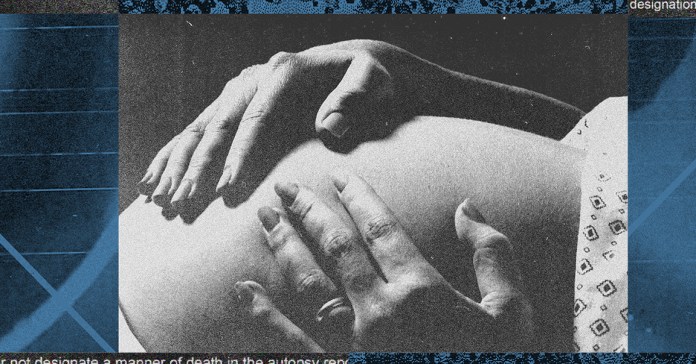
The nation’s largest organization for medical examiners has issued a warning about a controversial, centuries-old forensic test that has contributed to cases in which pregnant women have been charged with murder.

The premise behind the lung float test is simple: If a baby was born alive and then died, air from its first breaths would cause its lungs to float in a jar with water. If the baby was stillborn, the lack of air in the lungs would cause them to sink. But the many critics of the test have long labeled it junk science and drawn parallels between the test and witch trials, where women were deemed witches based on whether they floated or sank.

The National Association of Medical Examiners addressed the lung float test as part of a larger position paper released in October on investigating perinatal deaths, including stillbirths. A panel of 11 experts said the test has “known pitfalls” and is of “questionable value” and “without clearly defined error rates.” 

“Those who use the lung float should be wary of accepting the results when it conforms to their summation of the findings and rejecting the result if it conflicts; a ‘test’ used in such fashion inevitably becomes more dangerous than useful,” the authors wrote. 

The paper follows a 2023 investigation by ProPublica into the use of the lung float test in cases where women were charged with murder despite their claims that they had a stillbirth. ProPublica found that the test was deeply flawed, lacked the basic standardization of trusted forensic disciplines and did not have full support from any of the country’s 12 largest medical examiners’ offices.

The test is typically used where someone gives birth outside of a hospital or without medical supervision. But the paper cautioned that the distinction between a liveborn and stillborn infant can be very difficult to discern. Other than food in the stomach, the authors wrote, there is no diagnostic tool or finding that can “stand alone as the sole determinant of whether an infant was liveborn or stillborn.”

Because a determination of livebirth or stillbirth may result in criminal charges, the paper’s authors wrote that a high degree of certainty is required. They concluded that if the autopsy and investigative findings do not provide “clear and convincing evidence of live birth, it is recommended to default to a designation of fetal death (stillbirth).”

Dr. Reade Quinton, the president of National Association of Medical Examiners and an associate professor of pathology at the Mayo Clinic, said he thinks this is the first time in the association’s nearly 60 years that it has issued a position paper that includes a statement on the lung float test. The paper is expected to be published next year in the American Journal of Forensic Medicine and Pathology.

“We hope that this paper will provide guidance on how to address these complex cases,” he said.

In another response to ProPublica’s investigation, a group of medical and legal experts convened a study group to examine the lung float test and determine whether it should be used in court. That effort is ongoing. 

At the time of ProPublica’s investigation, Dr. Odey Ukpo, the chief medical examiner in Los Angeles County, said his department did not use the lung float test because it was “unreliable and inaccurate.” He said this month that his office remains committed to “evidence-based medicine” and that the position paper “exemplifies that forensic medicine is aligned with those practices.”

Some medical examiners who use the test have said they worry they will be criticized for not doing it since it is often included in forensic pathology training. The paper makes clear that there is “no reason to mandate its performance.” It also underscores the lack of data around the test and the wide variation in how it is performed. 

The paper’s findings are particularly relevant in the wake of a growing concern around criminalizing pregnancy loss following the U.S. Supreme Court’s decision to eliminate a constitutional right to abortion.

In September, the New York-based nonprofit Pregnancy Justice released a report that examined prosecutions in the two years after the Dobbs decision. During that time, more than 400 people were charged with pregnancy-related crimes, including 31 who had a pregnancy loss. That, according to a release about the report, treated “miscarriage and stillbirth as suspicious events rather than personal, medical experiences.” 

ProPublica’s 2023 investigation examined the case of Moira Akers, a Maryland mother who was charged with murder and child abuse. She was sentenced to 30 years in prison after prosecutors cited a lung float test as part of the evidence against her. Akers had insisted that her baby was stillborn.

“These lungs floated,” the prosecutor said during closing arguments. “They floated because this child had breathed and was alive after he was delivered at home that day.”

In February, the Maryland Supreme Court granted Akers a new trial, though it didn’t rule on the use of the lung float test and instead focused on Akers’ abortion search history and lack of prenatal care. A spokesperson for the Howard County state’s attorney’s office did not answer questions about the position paper or whether prosecutors plan to use the results of the lung float test at Akers’ new trial, which is scheduled for June. 

ProPublica also wrote about Latice Fisher, who had delivered her baby in the toilet and told her husband, who then called 911. The medical examiner in Fisher’s case performed the lung float test. Parts of the lungs floated and parts didn’t. The medical examiner ruled that the baby was born alive and died from asphyxiation. A grand jury indicted Fisher on second-degree murder charges.

Fisher’s attorneys wrote to Scott Colom, district attorney for the 16th Circuit Court of Mississippi, about the test’s shortcomings, prompting Colom to do more research. He dismissed the charges against Fisher in 2019 and then presented the case and details about the lung float test to another grand jury, which chose not to indict her. 

The position paper, Colom said, provides much-needed guidance around the test, especially in areas like his, where people have been wrongfully prosecuted and medical examiners are not always forensic experts. 

“It’s important that we now have clarity on it,” he said. “Once the momentum gets towards a prosecution, it does take a bit of courage to stop that train and go back in another direction.”

Great Job Duaa Eldeib & the Team @ ProPublica Source link for sharing this story.

Sybil Wilkes Breaks Down What We Need to Know: December 29, 2025

Sybil Wilkes Breaks Down What We Need to Know: December 29, 2025

Source: Reach Media / Radio One

When it comes to keeping our community informed and ready for action, few voices resonate quite like Sybil Wilkes. A trusted veteran in broadcasting, Wilkes has always been a beacon of truth, cutting through the noise to deliver the stories that impact Black America directly.

In her latest segment, she breaks down critical updates ranging from shifting political landscapes to the celebration of Black excellence. Here is the breakdown of the vital information she shared.

A Hard Look at Political Climate

It’s a hard look at the political climate, specifically regarding Donald Trump and the controversial Project 2025. While the former president frequently denied connections to this initiative on the campaign trail, tracking data suggests a different story. Wilkes reports that his administration previously implemented nearly half of the agenda found in this 920-page far-right Christian nationalist blueprint. The implications for Black America are serious. The plan aggressively targets equity efforts, seeking to eliminate DEI programs and strip language protecting diversity from federal rules. Beyond a hard look at the political climate, specifically regarding Donald Trump and the controversial Project 2025. While the former president frequently denied connections to this initiative on the campaign trail, tracking data suggests a different story. Wilkes reports that his administration previously implemented nearly half of the agenda found in this 920-page far-right Christian nationalist blueprint. The implications for Black America are serious. The plan aggressively targets equity efforts, seeking to eliminate DEI programs and strip language protecting diversity from federal rules. Beyond social issues, it proposes dismantling the Department of Education—a vital institution for our children’s future—and politicizing the FBI, signaling a major shift in how justice and education could operate in this country.

The War in Ukraine

Conversations are heating up regarding the war in Ukraine. A significant phone call took place involving Ukrainian President Volodymyr Zelenskyy, Donald Trump, and several key European leaders from nations like France, Germany, and Great Britain. The discussion, lasting over an hour, focused on a new peace proposal aimed at ending the conflict. European officials are reportedly seeing “good progress” toward what they call a just and lasting peace. The dialogue emphasized the urgent need to stop the fighting while establishing strong security guarantees for Ukraine, marking a pivotal moment in conversations are heating up regarding the war in Ukraine. A significant phone call took place involving Ukrainian President Volodymyr Zelenskyy, Donald Trump, and several key European leaders from nations like France, Germany, and Great Britain. The discussion, lasting over an hour, focused on a new peace proposal aimed at ending the conflict. European officials are reportedly seeing “good progress” toward what they call a just and lasting peace. The dialogue emphasized the urgent need to stop the fighting while establishing strong security guarantees for Ukraine, marking a pivotal moment in global foreign policy.

Black America 250

It’s a moment of celebration with “Black America 250,” turning the spotlight on a true pioneer. December 29th marks the birthday of Thomas “Tom” Bradley, born in 1917. His story is one of incredible resilience and triumph. Born in Calvert, Texas, as the son of sharecroppers and the grandson of enslaved people, Bradley moved to Los Angeles and grew up in the tight-knit Black community on Central Avenue. He shattered barriers in 1973 by becoming the first Black mayor of Los Angeles. Bradley didn’t just hold the seat; he served five historic terms leading a predominantly white city, proving to the wo a moment of celebration with “Black America 250,” turning the spotlight on a true pioneer. December 29th marks the birthday of Thomas “Tom” Bradley, born in 1917. His story is one of incredible resilience and triumph. Born in Calvert, Texas, as the son of sharecroppers and the grandson of enslaved people, Bradley moved to Los Angeles and grew up in the tight-knit Black community on Central Avenue. He shattered barriers in 1973 by becoming the first Black mayor of Los Angeles. Bradley didn’t just hold the seat; he served five historic terms leading a predominantly white city, proving to the world that lasting change is possible through tenacity and vision.

Great Job Nia Noelle & the Team @ Black America Web Source link for sharing this story.

La postura del papa León ante el cambio climático cobra protagonismo » Yale Climate Connections

La postura del papa León ante el cambio climático cobra protagonismo » Yale Climate Connections

Tras la muerte del papa Francisco y el inicio del pontificado del papa León XIV, los ambientalistas se han estado preguntando si el nuevo pontífice asumiría la cruzada por un clima saludable como lo hizo su predecesor. “Si me hubieras dicho hace 20 años que la Iglesia católica romana se convertiría quizá en la institución global más grande y progresista, me habría reído”, dijo el ambientalista y escritor Bill McKibben en su boletín informativo de Substack. “Pero a partir de los nobles gestos de Francisco y continuando con su poderosa encíclica Laudato Si’—una crítica profunda y contundente de la modernidad, y probablemente el documento más importante de lo que va de este milenio—, el Vaticano ha estado a la vanguardia en muchos sentidos.

En el marco de la Conferencia Sembrando Esperanza, organizada por el Movimiento Laudato si’, el papa León XIV recordó a los participantes que el compromiso con la creación es una responsabilidad de fe y de justicia. La conferencia fue celebrada el 1ero de octubre en el Centro Mariápolis en la localidad de Castel Gandolfo, Italia. El pontífice planteó un desafío directo a los creyentes: “Dios nos preguntará si hemos cultivado y cuidado el mundo que Él creó, y si hemos cuidado de nuestros hermanos y hermanas. ¿Cuál será nuestra respuesta?”. 

El Movimiento Laudato si’ es una red católica global que nació tras la encíclica Laudato si’ del papa Francisco en 2015. Su misión es movilizar a comunidades y fieles en más de 150 países para cuidar la “casa común” con acciones de fe, educación y justicia climática.

La elección de León XIV en 2024 marcó un hito en la historia de la Iglesia católica: el primer pontífice estadounidense asumió la responsabilidad de guiar a más de 1,406 millones de fieles en un tiempo en que el mundo enfrenta también una crisis climática sin precedentes. Su experiencia latinoamericana le ha dado una sensibilidad particular hacia los pueblos que sufren los efectos del cambio climático, algo que se ha reflejado en la prioridad que concede al cuidado de la creación. Aunque heredero de una tradición reciente de la preocupación ecológica en la Iglesia católica que comenzó con San Juan Pablo II y se consolidó con Benedicto XVI y Francisco, León XIV ha aportado un nuevo acento: la justicia ambiental como condición indispensable para la paz y la dignidad humana.

“Parece que aún no se tiene conciencia de que destruir la naturaleza no perjudica a todos del mismo modo: pisotear la justicia y la paz significa afectar sobre todo a los más pobres, a los marginados, a los excluidos. En este contexto, es emblemático el sufrimiento de las comunidades indígenas”, advirtió en su Mensaje para la X Jornada Mundial de Oración por el Cuidado de la Creación 2025, que ofreció el 1 de septiembre de 2025. Con estas palabras, el pontífice recordó que la crisis climática no es un problema lejano ni técnico, sino una injusticia que profundiza la desigualdad.

La herencia de Laudato si’ y Laudate Deum

Las palabras de León XIV retoman la senda trazada por Francisco, quien en 2015 publicó la encíclica Laudato si’ , considerada el documento más influyente de la Iglesia sobre ecología. En ella, Francisco afirmó: “No hay dos crisis separadas, una ambiental y otra social, sino una sola y compleja crisis-socioambiental”.

Ocho años después, en 2023, el mismo pontífice lanzó la exhortación Laudate Deum, donde insistió en el marco de la COP 28: “Solo cabe esperar formas vinculantes de transición energética que tengan tres características: que sean eficientes, que sean obligatorias y que se puedan monitorear fácilmente. Esto para lograr que se inicie un nuevo proceso destacado por tres aspectos: que sea drástico, que sea intenso y que cuente con el compromiso de todos”.

Él explicó que esto no es lo que ha occurido en el camino recorrido hasta ahora, y para poder recuperar la credibilidad de la política internacional, hay que hacerla ahora, “porque únicamente de esa manera concreta será posible reducir notablemente el dióxido de carbono y evitar a tiempo los peores males”.

León XIV ha retomado este legado, pero con un matiz espiritual que interpela a la conciencia de los creyentes: “Para los creyentes, esta conversión no es, en realidad, distinta de aquella que nos orienta hacia el Dios vivo. No podemos amar a Dios, a quien no vemos, mientras despreciamos a sus criaturas. Tampoco podemos llamarnos discípulos de Jesucristo sin participar de su mirada sobre la creación y de su cuidado por todo lo que es frágil y está herido”. 

El papa señaló que la verdadera raíz de la conversión ecológica no se encuentra en las estadísticas ni en los discursos técnicos, sino en el corazón de las personas. Enfatizó que “solo volviendo al corazón puede darse una verdadera conversión ecológica”, un cambio que debe expresarse en lo concreto: “Debemos pasar de recopilar datos a cuidar; y del discurso medioambiental a una conversión ecológica que transforme tanto los estilos de vida personales como los comunitarios”.

Cuidar la creación como un acto de fe

En el mismo mensaje del 1 de septiembre, León XIV dijo con claridad: “Trabajando con dedicación y ternura se pueden hacer germinar muchas semillas de justicia, contribuyendo así a la paz y a la esperanza.” Para el pontífice, proteger la naturaleza es también una forma de prevenir tensiones y garantizar condiciones de vida más justas para los pueblos.

León XIV sostiene que el compromiso ecológico no es un añadido opcional al mensaje cristiano, sino parte esencial de la fe, y subraya que proteger el planeta es un acto de amor hacia Dios y hacia el prójimo. “En un mundo en el que los más frágiles son los primeros en sufrir los efectos devastadores del cambio climático, la deforestación y la contaminación, el cuidado de la creación se convierte en una cuestión de fe y de humanidad”, afirmó en su mensaje.

Su énfasis recuerda el mensaje de Juan Pablo II en 1990 sobre una renovación moral y espiritual en la relación del ser humano con la creación. Sin embargo, León XIV la actualiza en un contexto marcado por fenómenos extremos, migraciones climáticas y un debate global sobre energías limpias.

Mensaje a las Naciones Unidas: repensar el sistema alimentario

En junio de 2025, León XIV dirigió un mensaje a los participantes del encuentro de la Organización de las Naciones Unidas para la Alimentación y la Agricultura. Allí advirtió que los sistemas alimentarios globales no pueden seguir basados en la explotación indiscriminada de recursos: “Por tanto, se trata de repensar y renovar nuestros sistemas alimentarios desde una perspectiva de solidaridad, superando la lógica de la explotación salvaje de la creación y orientando mejor nuestros esfuerzos para cultivar y cuidar el medio ambiente y sus recursos, a fin de garantizar la seguridad alimentaria y avanzar hacia una nutrición suficiente y saludable para todos”. Con ello, vinculó la crisis climática al hambre y la inseguridad alimentaria, señalando que el futuro de la humanidad depende de la capacidad de reorganizar la producción agrícola de manera sostenible.

Castel Gandolfo se convierte en escuela de sostenibilidad

En Castel Gandolfo, el proyecto Borgo Laudato si’ ha empezado a cobrar vida como un espacio emblemático de educación ecológica integral, inspirado en el legado de Francisco. Es un proyecto del Vaticano que transforma la antigua residencia papal en un centro de educación y sostenibilidad inspirado en la encíclica Laudato si’. Castel Gandolfo fue durante siglos la casa de verano de los papas, pero Francisco dejó de usarla en 2016. Desde entonces se abrió al público como museo y hoy es también un centro cultural y ecológico. Durante su inauguración en septiembre de 2025, el papa León XIV describió el Borgo como una “una semilla que puede dar frutos de justicia y de paz” para promover la conversión ecológica. 

El complejo incluye aulas solares, invernaderos, huertos y edificios destinados a la formación en economía circular y sostenibilidad, con el objetivo de articular la fe, educación y acción ambiental.

Uno de los componentes destacados del Borgo es la Exhibición “Earth Partner”, que reúne obras de jóvenes artistas de 28 países para expresar los desafíos ecológicos actuales. 

Jóvenes seminaristas de México, como Porfirio, Sergio e Israel, han ofrecido su tiempo como voluntarios en el Borgo y han sido identificados en medios del Vaticano como rostros vivos de la misión de educación ambiental del proyecto. “Es una experiencia única en mi formación”, comentó Porfirio Ramírez Méndez, de la Arquidiócesis de Huajuapan de León, Oaxaca en un artículo del periódico Vatican News. “Después de tanto tiempo cerrado, este lugar ahora está abierto al público. Es una bendición”, dijo.

Jesús Israel Aguirre Legaria de la Arquidiócesis de Huajuapan de León, Oaxaca, explicó el verdadero sentido de su presencia en este lugar: “Es un regalo de Dios inmenso. Trabajar aquí implica muchas cosas: cuidar la creación, ayudar en las celebraciones, atender a los peregrinos… Es vivir la ecología integral que el Papa tanto nos pide”.

Así, Borgo Laudato si’ no es solo un centro educativo, sino un laboratorio de comunidad, arte y sostenibilidad que busca traducir la teoría ecológica en experiencias concretas, respaldadas por testimonios genuinos y compromiso juvenil.

Una línea de continuidad con nuevo énfasis

El magisterio ambiental de León XIV se inserta en una línea de continuidad bien definida: san Juan Pablo II habló de “crisis ecológica” en 1990, Benedicto XVI de “ecología humana” en 2009 y Francisco de “ecología integral” en 2015 y 2023. León XIV aporta ahora un énfasis particular en la justicia ambiental y la paz social, subrayando que la destrucción de la creación tiene un rostro humano: el de quienes pierden sus hogares por inundaciones, el de los migrantes obligados a abandonar sus tierras por motivos climáticos o el de los agricultores que ven arruinadas sus cosechas por la sequía. Con este enfoque, el Papa propone que el cuidado de la creación deje de percibirse como un asunto meramente ambiental y se asuma como una cuestión de derechos humanos fundamentales.


La postura del papa León ante el cambio climático cobra protagonismo » Yale Climate Connections

Republish our articles for free, online or in print, under a Creative Commons license.

Great Job Pearl Marvell & the Team @ Yale Climate Connections Source link for sharing this story.

Felicia’s Action Network Endorses Regina Vanburg for Congress

Felicia’s Action Network Endorses Regina Vanburg for Congress

Felicia’s Action Network (F.A.N.), through its Indivisible Comal County program, is proud to formally endorse Regina Vanburg for the United States Congress in Texas’ 21st Congressional District.

This endorsement reflects our commitment to people-powered leadership, accountable governance, and representation that is rooted in lived experience and community connection. Regina Vanburg has demonstrated a clear understanding of the issues facing families across Central Texas — from access to healthcare and economic stability to protecting democratic institutions and respecting the dignity of every person.

Our endorsement process centers on values, alignment, and a candidate’s willingness to listen to and serve the people they seek to represent. Regina Vanburg’s campaign reflects those principles through its emphasis on transparency, inclusion, and policy solutions that put people first.

Felicia’s Action Network exists to support civic engagement and voter participation across Comal County and beyond. Through Indivisible Comal County, we work to ensure voters have clear information about candidates whose leadership aligns with our shared values and the future our communities deserve.

We encourage voters in Texas’ 21st Congressional District to learn more, engage in the democratic process, and participate fully in this election.

Felicia’s Action Network (F.A.N.), Inc.

Indivisible Comal County is a program of Felicia’s Action Network.

#FeliciaRayOwens #TheFeliciaFiles #FROUSA #LocalVoices #IndependentMedia #HerSheSquad

Great Job Felicia Ray Owens & the Team @ FAN | Felicia Ray Owens Source link for sharing this story.

OSHA Wants to Cancel Protections for “Inherently Risky” Work

OSHA Wants to Cancel Protections for “Inherently Risky” Work

Fifteen years ago, a little-known federal judge named Brett Kavanaugh argued that the country’s top workplace regulator overstepped when it cited an aquatic theme park for a gruesome worker death because viewers enjoy seeing “these amazing feats of competition and daring.”

Now Kavanaugh is a US Supreme Court justice, and the workplace-safety agency wants to codify his argument into law. The move would strip basic workplace safety protections from potentially hundreds of thousands of employees.

In July, the Occupational Safety and Health Administration (OSHA) announced a proposal to exclude “inherently risky professions,” including those in sports and entertainment, from the agency’s General Duty Clause. The agency explicitly references Kavanaugh’s dissent in the proposal, saying it “preliminarily concurs with the dissent’s concerns.”

The proposed rollback came amid dozens of agency proposals to curtail worker protections. These include proposals to rescind requirements for adequate lighting on construction sites, eliminating medical evaluations for employees using respirators, and reducing coordinated enforcement for migrant farmworkers, among others.

President Donald Trump, meanwhile, has issued a “Regulatory Freeze Pending Review,” effectively pausing several other pending regulations — including prior rulemaking that would have strengthened workers’ heat injury protections and illness prevention.

As the Lever has documented, helming OSHA is David Keeling, a former safety executive at UPS and Amazon. Under his leadership, the two companies were fined a collective $2 million for more than three hundred workplace safety violations.

The General Duty Clause serves as a catch-all provision under the 1970 OSH Act, which first established a federal workplace safety program.

It requires employers to provide a safe and healthy workplace for their employees when no specific standard is in place. To enforce a violation of the clause, the agency must show that workers face a serious, recognized hazard, and that employers have a feasible way to eliminate or reduce it.

Past enforcement actions under the clause include a citation against a Broadway studio after employees were injured performing aerial routines and, more recently, a citation against Rust Movie Productions after actor Alec Baldwin accidentally shot and killed a crew member on a movie set with a loaded prop gun.

But now, the agency wouldn’t issue such citations, since it deems such professions “inherently risky.” According to Jordan Barab, former deputy assistant secretary for the agency, the affected sections would include performing arts, motorsports, combat simulation training, and “hazard-based media and journalism activities,” among others.

Industry groups representing other high-risk sectors like construction and steel manufacturing are also pushing to be covered by the rollback.

“They’re kneecapping themselves on what they can do under the general duty clause,” Katie Tracy, senior regulatory policy advocate at Public Citizen, told the Lever. 

This carve-out would mean that when a worker in these industries experiences an injury or accident not already covered by a specific regulatory standard, they’d be left without any agency protections.

By the agency’s own estimates, the new interpretation could immediately affect more than 115,000 athletes, musicians, and other entertainment workers.

This interpretation of the General Duty Clause can be traced back to a 2014 case involving the death of Dawn Brancheau, a Sea World whale trainer who was drowned and dismembered in 2010 by a killer whale.

In response to Brancheau’s death, the Occupational Safety and Health Administration issued a $70,000 citation against Sea World and ordered the company to physically separate trainers and whales. They argued that because of the whale’s history of dangerous interactions with trainers, a General Duty citation was justified.

Sea World contested the citation, and the dispute eventually reached an appeals court, which ruled in favor of the agency in a two-to-one ruling, rejecting Sea World’s argument that workers in dangerous occupations should be exempt from the General Duty Clause.

The lone dissenting opinion came from then appeals judge Brett Kavanaugh, who argued that the agency was overreaching and that the decision to enforce the rule was “paternalistic.”

“To be fearless, courageous, tough — to perform a sport or activity at the highest levels of human capacity, even in the face of known physical risk — is among the greatest forms of personal achievement for many who take part in these activities,” Kavanaugh wrote in his dissent. “American spectators enjoy watching these amazing feats of competition and daring, and they pay a lot to do so.”

Opponents of OSHA’s proposed General Duty Clause rollback have criticized the agency’s reference to Kavanaugh’s dissent.

“OSHA suggests that then-Judge Kavanaugh’s dissent stands for the proposition that the ‘General Duty Clause does not authorize OSHA to regulate hazards arising from normal activities that are intrinsic to professional, athletic, or entertainment occupations,’” according to a comment on the regulatory change from the United Automobile, Aerospace and Agricultural Implement Workers of America. “But this argument is illogical and is not based in the text of the Act.”

The appeals court’s majority ruling against Sea World echoed a similar sentiment. “Many traditional industries can be extremely dangerous to their employees: construction, metalpouring, logging,” the judges wrote in 2013. “Yet these industries have been regulated pursuant to the Occupational Safety and Health Act, notwithstanding that employers could claim . . . that the employees were taking part in ‘the ‘normal activities’ intrinsic to the industry.’”

Now the agency wants to codify Kavanaugh’s dissenting position into law. And some labor experts say the move can be traced back to the so-called Department of Government Efficiency (DOGE), Trump and Elon Musk’s initiative to target federal agencies and spending.

The American Federation of Labor and Congress of Industrial Organizations (AFL-CIO), the largest federation of unions in the United States, alleged in a press release that the proposal, along with the proposal to remove requirements for construction illumination, which could increase trips and falls on the jobsite, came from the department.

“From what we have heard, [the decision to limit the General Duty Clause] was a DOGE pick, and the construction illumination deregulatory action was a DOGE pick,” a policy expert at the labor federation who requested anonymity to protect their sources’ identities told the Lever. “These were both ideological proposals versus DOGE telling the staff, ‘Go find things to deregulate.’”

Though the proposal indicates that it’s written to apply specifically to workers like athletes, actors, and dancers, it also notes that the outlined industries are a “non-exhaustive list of sectors where this limitation may apply.”

The proposal also solicits recommendations from other industries where the new interpretation could apply. Numerous industry groups and trade associations have commented with their own requests for other rules they’d like removed or how they’d like to see the General Duty Clause further limited.

The American Road and Transportation Builders Association, the Associated General Contractors of America, and the National Asphalt Pavement Association, for example, issued a joint statement to the agency arguing that workers exposed to moving traffic during highway construction should not be protected under the General Duty Clause.

“In highway construction, exposure to moving traffic is an inherent hazard that cannot be fully eliminated without closing down large portions of critical roadways,” the group commented. Though transportation-related incidents are a leading cause of fatal injuries in construction, the group argues that “the overwhelming majority of these incidents involve impaired, distracted, or reckless drivers — behaviors entirely outside the employer’s control.”

Some groups argued that the new interpretation still doesn’t relax the standards enough. The Steel Manufacturers Association made a comment urging the agency to “more comprehensively prevent the misuse and misapplication of the General Duty Clause that we observed under previous administrations.”

Multiple labor organizations representing construction workers have decried the proposal.

“For the workers in the construction and manufacturing industries that we represent, the General Duty Clause is essential,” noted a comment by the International Union of Painters and Allied Trades. “Weakening the requirement for workers in inherently dangerous industries is, we believe, contrary to the initial intent as well as subsequent interpretations of the OSH Act.”

Labor groups have also sounded the alarm about the new rule’s potential to be expanded to other industries.

“Although the preamble to [the proposal] suggests that the sports and entertainment industries are the intended targets of this rulemaking effort, the text of the proposed rule sets forth a non-exhaustive list of industries that may be subject to the proposed carveout,” noted a comment from North America’s Building Trades Union, a labor organization representing construction workers.

And at the same time the agency seeks to limit the scope of the General Duty Clause, it’s using the clause as a justification for weakening other workplace safety laws.

That includes its efforts to roll back construction illumination requirements, arguing that the General Duty Clause renders the rule unnecessary.

“A specific standard for illumination is not necessary because a lack of illumination is a prototypical “recognized hazard . . . likely to cause serious death or serious physical injury” under the General Duty Clause,” the agency argued.

Great Job Brock Hrehor & the Team @ Jacobin Source link for sharing this story.

Vaccines You Need for Psoriatic Arthritis

Vaccines You Need for Psoriatic Arthritis

Beth Biggee, MD, is medical director and an integrative rheumatologist at Rheumission, a virtual integrative rheumatology practice for people residing in California and Pennsylvania. This first-of-its-kind company offers whole person autoimmune care by a team of integrative rheumatologists, lifestyle medicine practitioners, autoimmune dietitians, psychologists, and care coordinators.

Dr. Biggee also works as a healthcare wellness consultant for Synergy Wellness Center in Hudson, Massachusetts. Teamed with Synergy, she provides in-person lifestyle medicine and holistic consults, and contributes to employee workplace wellness programs. She has over 20 years of experience in rheumatology and holds board certifications in rheumatology and integrative and lifestyle medicine. Dr. Biggee brings a human-centered approach to wellness rather than focusing solely on diseases.

Dr. Biggee graduated cum laude with a bachelor’s degree from Canisius College, and graduated magna cum laude and as valedictorian from SUNY Health Science Center at Syracuse Medical School. She completed her internship and residency in internal medicine at Yale New Haven Hospital, completed her fellowship in rheumatology at Tufts–New England Medical Center, and completed training in integrative rheumatology at the University of Arizona Andrew Weil Center for Integrative Medicine. Following her training, she attained board certification in rheumatology and internal medicine through the American Board of Internal Medicine, attained board certification in integrative medicine through the American Board of Physician Specialties, and attained accreditation as a certified lifestyle medicine physician through the American College of Lifestyle Medicine. She is certified in Helms auricular acupuncture and is currently completing coursework for the Aloha Ayurveda integrative medicine course for physicians.

In prior roles, Dr. Biggee taught as an assistant clinical professor of medicine at Mary Imogene Bassett Hospital (an affiliate of Columbia University). She was also clinical associate of medicine at Tufts University School of Medicine and instructed “introduction to clinical medicine” for medical students at Tufts. She was preceptor for the Lawrence General Hospital Family Medicine Residency.

Dr. Biggee has published in Annals of Rheumatic Diseases, Arthritis in Rheumatism, Current Opinions in Rheumatology, Journal for Musculoskeletal Medicine, Medicine and Health Rhode Island, and Field Guide to Internal Medicine.

Great Job Laurie Tarkan & the Team @ google-discover Source link for sharing this story.

Secret Link