
Home News Page 184

It Was a Bad Year for the American Military

It Was a Bad Year for the American Military

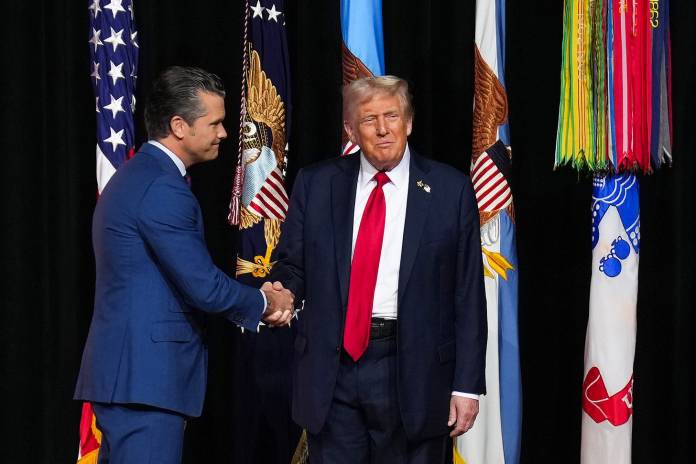
President Donald Trump greets Secretary of Defense Pete Hegseth as he arrives to speak to senior military leaders at Marine Corps Base Quantico on September 30, 2025. (Photo by Andrew Harnik/Getty Images)

EVERY ADMINISTRATION LEAVES ITS MARK on the U.S. military. Some do so quietly, through budgetary or force-structure transformations. Others do so through the conduct of wars, or the conclusion of wars, or personnel reforms. But this past year will be remembered for something different: an erosion of the professional, legal, and ethical guardrails that have guided, protected, and enhanced America’s armed forces for generations.

None of this should come as a surprise.

Before this administration took office, I wrote that the job of secretary of defense is among the most demanding in government—requiring not just good intentions or battlefield experience, but deep institutional fluency, a sixth sense for organizational and bureaucratic dynamics, and an appreciation for how law, strategy, politics, alliances, and civil-military norms intersect. Very few people, even the most experienced and accomplished business or government leaders, arrive ready for that responsibility.

Last January, my questions were prospective. Would any new secretary be prepared for the challenges facing the U.S. military in 2025? Those challenges included a grinding war in Ukraine with direct implications for European security; sustained strategic competition with China across military, economic, and technological domains; persistent instability in the Middle East; a recruiting and retention crisis across the all-volunteer force; aging platforms, strained resources, and a defense industrial base under stress; and tenuous civil-military trust after two decades of war. The office of the secretary of defense does not compensate for the person who occupies it, and the world does not slow down to accommodate inexperience.

My observations were not about personalities. They were about the nature of the office. Nearly a year into Secretary Pete Hegseth’s tenure, these questions are no longer hypothetical.

Over the past year, we have seen what happens when the demands of that job outpace preparation, management, or leadership. What we have seen is not a single controversy or isolated misjudgment, but rather a pattern: the normalization of behavior that previous administrations—Republican and Democratic alike—understood instinctively to be out of bounds when leading the world’s best military.

There is now a record—not of intentions or rhetoric, but of outcomes. Over the past year, the Department of Defense’s public posture—and much of its internal energy—has been consumed by issues that do little to address the challenges our military faces, while several of the rules and norms that helped make the American military the best in the world have been weakened, ignored, or broken.

The secretary of defense is the civilian authority who translates the president’s orders to the Joint Staff and the combatant commanders worldwide. That role requires precise language and orders, meticulous operational planning, adherence to legal authorities, control over the escalation of force, and an understanding of the strategic consequences of military action. The Department of Defense is a vast professional institution governed by law, tradition, and process for a reason. Those mechanisms exist to prevent error, abuse, and miscalculation—and to protect civilian leaders as much as the force itself.

Effective secretaries empower senior military leaders to provide candid advice. They expect disagreement. They understand that professional tension is not insubordination; it is a safeguard within the relationship between appointed civilian leaders and those in the profession of arms. That applies as much to the chairman of the Joint Chiefs and service chiefs as to judge advocates general and inspectors general. They are not political actors. They are statutory advisors, obligated to provide their best military and legal judgment, they are not there to simply confirm civilian preferences. Effective secretaries empower senior leaders to provide candid advice. They expect disagreement and contrary opinions.

The dismissal or sidelining of senior military leaders by the secretary—often without clear explanation—began from the very beginning of this year, and it sent a troubling signal throughout the force that professional disagreement may carry extreme personal risk. That perception alone is corrosive.

Historically, secretaries of defense have been sparing and deliberate when relieving general and flag officers. Secretary Robert Gates, in his memoir Duty, explains the decision to replace a single senior officer early in his tenure. He was explicit about why he did it, what failure it addressed, and what message he intended to send. Such actions are rare, but when clearly explained, they reinforce standards rather than sow uncertainty. Removing a senior officer without a clearly articulated cause sends a message far beyond the individual involved.

Whatever the internal justifications, the absence of transparency has had predictable second-order effects. Officers do not see standards being enforced; they see uncertainty. And uncertainty breeds caution—not the kind that prevents recklessness, but the kind that discourages candor. When senior leaders cannot discern whether a firing is tied to competence, disagreement, optics, or politics, history shows that professional advice is silenced, as silence becomes safer than dissent. This dynamic does not show up immediately in the headlines. It shows up later—in flawed planning, risk avoidance, institutional silence, casualties on the battlefield, and lost wars.

Over the past year, U.S. forces have been employed episodically across multiple theaters—through maritime and air strikes, special operations, limited small-scale attacks, and even deployments of troops on American soil. Some of these actions are normal. What isn’t normal is how many of those have occurred without a clear articulation of strategic objectives or legal frameworks.

In several of these cases, military force has been used to “solve” problems that were historically managed through other means: law enforcement, diplomacy, or intelligence cooperation. This is not an argument against the use of force; it is a caution about the expansion of military authorities into non-traditional missions. Designating fentanyl as a “weapon of mass destruction,” followed by lethal military action against suspected traffickers beyond U.S. borders, represents a profound shift in how military power is justified and applied. Similarly, repeated rhetoric about domestic deployments of military forces for “law and order” missions strains civil-military norms when both governors and courts object. These guardrails exist not to weaken the military, but to preserve legitimacy. Once eroded, they are tough to rebuild.

A third troubling development of the past year has been the normalization of behavior that previous administrations of both parties understood to be unacceptable and damaging. When generals, admirals, and senior enlisted leaders hear the secretary’s emphasis on speed, aggressiveness, and lethality, while downplaying concerns about legal constraints or rules of engagement, such guidance falls flat with career professionals. That’s because rules of engagement and legal frameworks are not bureaucratic hurdles but operational tools providing clarity, predictability, and protection—for civilians, partners, and U.S. forces alike. These guardrails are how commanders ensure unity of effort and prevent tactical actions from creating negative strategic consequences.

Military forces know that a force that operates within clear legal and ethical boundaries is more disciplined, more predictable, and more effective over time. This is not academic theory; it is operational reality learned through painful experience. Legal standards are not a hindrance to military effectiveness but an element of it. Law is not a brake on combat power—it is an enabler of legitimacy, alliance cohesion, and successful operations. It is what separates a professional fighting force from a gang of thugs.

The tensions between the secretary of defense and the military have been particularly visible in recent operations in the Caribbean, where military assets have been employed in roles that sit uncomfortably between law enforcement, counter-narcotics, and armed conflict. It doesn’t help that various members of the administration inconsistently imply that the overall objective is the most challenging possible mission, regime change. When civilian leaders emphasize lethality while remaining ambiguous about objectives and legal boundaries, commanders become risk managers rather than mission leaders. They spend time protecting their people—not from the adversary, but from uncertainty from above. We’re seeing the effects of that daily.

Share

Adding to that uncertainty, the 2025 National Security Strategy (and the soon-to-be-published National Defense Strategy) signals monumental changes in alliance management, burden-sharing rhetoric, potential command structures, and even the positioning of forces. While strategies inevitably evolve, this one did so without the gradual alignment of planning assumptions, coordination, or allied consultation that typically precede such change. The result has left combatant commanders and their subordinate commanders to reconcile new strategic language with existing plans, and has caused service chiefs to scramble to rebalance their forces. Just as importantly, allies—who have been nurtured over decades of tough military engagement and multinational training with U.S. forces—are also left to interpret whether rhetorical changes reflect policy, posture, or transient politics. Long-term deterrence depends on consistency, alliances depend on predictability, and institutions depend on continuity. Because the secretary of defense is also one of America’s most important diplomats, his words and actions should contribute to, not detract from, the shaping of allied confidence and adversary calculations.

Nowhere is this clearer than in Europe, a place where I spent most of my career and where NATO allies have watched U.S. policy toward Ukraine fluctuate—aid slowed, reframed, conditioned, or rhetorically minimized—often without strategic explanation. European leaders understand burden-sharing, and many have dramatically increased defense spending and readiness since 2022. What unsettles them is not disagreement, but inconsistency. Persistent discussion of force withdrawals from Europe, casual questioning of alliance obligations, or proposals to restructure long-standing command arrangements without coordination do not look like efficiency to allies. They look like decoupling.

Adversaries, meanwhile, are also disciplined observers. They note when professional advice is sidelined, when decisions appear impulsive, and when institutional safeguards are treated as obstacles rather than strengths. This is how miscalculation often begins—not with confrontation, but with altered expectations.

The most consequential choice of the past year has been where the secretary has directed his attention. The U.S. military faces genuine readiness challenges: recruiting shortfalls, retention stress, aging platforms, depleted munitions stockpiles, industrial-base fragility, cyber vulnerabilities, and the evolution of war itself, informed by lessons from various foreign conflicts. Yet disproportionate energy has been devoted to symbolic cultural battles. Culture matters, but it isn’t shaped by edicts, slogans, or pull-ups. It is shaped by trust, competence, fairness, caring for the whole force, and leadership by example. When senior leaders focus on ideological signaling instead of institutional performance, they risk undermining both.

Morale is not measured in press releases. It is felt in formations, command posts, and quiet conversations. The U.S. military remains resilient and professional, and the force continues to serve honorably. But professional behavior is discouraged when disagreement feels unsafe, when missions aren’t clear, when legal and ethical standards appear negotiable, when allies question U.S. reliability, and when leaders appear more focused on politics than on the institution’s health.

The most troubling aspect of this year is not any single operation or policy. It is the normalization of conduct that once would have caused a rapid readjustment, the quiet assumption that someone else will raise the legal concern, the belief that standards and professional norms have become optional.

Unless the guardrails are assessed and rebuilt—deliberately and soon—the damage will not be confined to this first year. If Pentagon civilian leadership continues to use the military as a plaything to pose with or deploy in political contests, it will cease to be a professional force.

Share

Great Job Mark Hertling & the Team @ The Bulwark Source link for sharing this story.

Book Review: Long Take – Our Culture

Book Review: Long Take – Our Culture

When it comes to literature on the acclaimed Japanese filmmaker Akira Kurosawa, the English language market is blessedly rich—with texts ranging from career studies (e.g., Donald Richie’s The Films of Akira Kurosawa) to biographical tomes (Stuart Galbraith IV’s The Emperor and the Wolf: The Lives and Films of Akira Kurosawa and Toshiro Mifune). Other releases include translations of Japanese books offering glimpses into the minds of not only the director in question but his collaborators; among these are screenwriter Shinobu Hashimoto’s Compound Cinematics: Akira Kurosawa and I and—of course—Kurosawa’s own memoir, Something Like an Autobiography. Not as well-known among Occidental readers, however, is another tome wherein the great director wrote about himself. It was published in Japan shortly after his 1998 death and comes to us now under the title Long Take.

For personal reasons, Kurosawa chose to end Something Like an Autobiography with the making of his 1950 film Rashomon, before he’d achieved international fame. The book told the story of a misfit whose childhood and early adult experiences included surviving the Great Kanto Earthquake and World War II; whose career began with him advancing through the directorial apprentice program at P.C.L. (Photo Chemical Laboratory—one of the entities that’d later merge into the studio Toho) and helming eleven early-career movies*; and who in that span of time never set foot outside Japan. Long Take, recently converted into English by Anne McKnight for University of Minnesota Press, follows a mature filmmaker with several masterpieces to his credit, who’s now seeing the world, and whose continued career and recognition has taken him to new places—and to new people.

Long Take is not a traditional memoir—rather, it is a collection of essays (some by Kurosawa, others by his daughter Kazuko) mixed with roundtable conversations with writer Hisashi Inoue and fellow director Yoji Yamada. Looking back on a post-Rashomon time, the director remembers attending international festivals and mingling with filmmakers from other countries—while his fellow Japanese artisans kept to themselves. Subsequent travels result in rendezvous with contemporaries like Andrei Tarkovsky, Sidney Lumet, John Cassavetes, and Werner Herzog. A missed encounter with John Ford on the set of 1945’s The Men Who Tread on the Tiger’s Tail pays off with multiple meetings outside Japan. All the while, Kurosawa describes his impressions of the filmmakers he meets and occasionally shares opinions of their works from other Japanese—such as close friend Ishiro Honda’s reverent words for Satyajit Ray’s Pather Panchali (1955).

Which is not to say Kurosawa neglects discussing his own filmography; one of the book’s highlights is his transcribed conversation with Yamada and Inoue wherein he recalls challenges endured on Seven Samurai (1954)’s mud-soaked finale. And in what makes for a pleasurable read, Kurosawa assumes a humble, unpretentious demeanor, noting his preference to be labeled an artisan rather than an artist and expressing distaste for films that have no function but to talk down to the viewer. (He argues great movies should, first and foremost, entertain and make audiences feel something as they watch.) As in Something Like an Autobiography, the director offers industry insights—e.g., how television negatively impacted the film business—and contrasts the rewards afforded to Japanese makers of hit movies versus their Hollywood counterparts. Honda, he remarks, should’ve lived in a castle after Godzilla (1954), a film Kurosawa includes in a list of 100 favorites.

Said list is published in Long Take and derives from conversations between Kurosawa and his daughter Kazuko. The latter writes in her own essays about working on her father’s later movies (she sometimes doubled as a mediator during moments of tension), discusses veteran members of the crew, and documents how she became a caretaker after a fall left the great director chairbound. Kazuko likewise paints an intimate portrait of who Akira Kurosawa was outside the studio, revealing his at times charming naïveté (there’s a funny bit stemming from him being tasked with fetching rice for dinner) and his forward-thinking attitude about life. The latter is particularly inspiring, as it comes from a man who survived not only the earlier mentioned calamities in Japan’s history but also the loss of a spouse and a failed suicide attempt in 1971. Long Take doesn’t answer the long-asked question of why Kurosawa slashed his wrists and throat that day (it’s a secret he seemingly kept to himself), but the philosophy behind how he moved on from it—and from other tough moments—is one the reader can take and apply to their own life. And that makes this newly translated tome equally inspiring as it is informative.

Like all worthwhile texts on film artists—sorry, artisans!—Long Take delivers behind-the-scenes information while simultaneously probing its subject’s mind and heart. Readers will surely come for stories from the set but will walk away feeling they got to know Akira Kurosawa: a man who made extraordinary films and had extraordinary experiences, but who felt the emotions we’ve all felt, who loved movies (as we do) for the reactions they produce within us, and who was—as he would’ve been first to point out—every bit as human as everyone who will read this book.

* I’m counting the early-career pictures that Kurosawa included in his official filmography: Sanshiro Sugata (1943), The Most Beautiful (1944), Sanshiro Sugata Part II (1945), The Men Who Tread on the Tiger’s Tail (1945), No Regrets for Our Youth (1946), One Wonderful Sunday (1947), Drunken Angel (1948), The Quiet Duel (1949), Stray Dog (1949), Scandal (1950), and Rashomon (1950). I am not counting the 1941 picture Horse, which was technically directed by his mentor Kajiro Yamamoto (even though Kurosawa took charge of large sections) or the 1945 labor union film Those Who Make Tomorrow, of which he only directed a part and completely disowned.

Great Job Patrick Galvan & the Team @ Our Culture Source link for sharing this story.
SB 38: How a new property rights law changes the game for Texas renters

SB 38: How a new property rights law changes the game for Texas renters

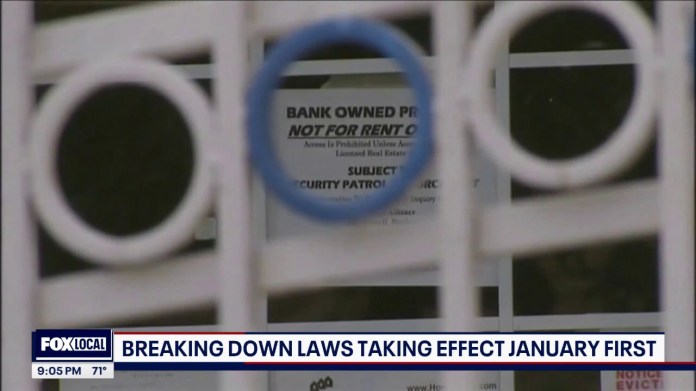
Senate Bill 38 is set to go into effect on Jan. 1, 2025, after Governor Greg Abbott signed it into law earlier this year as a way to defend property owners’ rights. 

Tenants’ rights advocates say the new law may make it more challenging for renters to understand and exercise their own rights. 

What is Senate Bill 38?

Local perspective:

“The passage of SB 38, which is a bill that the Texas Apartment Association really advocated to pass and erodes some tenant protections, will make the eviction process faster,” said Shoshana Krieger, project director for local tenants’ rights group Building and Strengthening Tenant Action (BASTA). 

Krieger says evictions in Texas already happen fast. 

“This can be a very fast process in Texas,” said Krieger. “It’s supposed to happen in 21 days.”

New Appeals Process Under SB 38

Big picture view:

Senate Bill 38 maintains that timeline, stipulating that courts hold a trial between 10 and 21 days after a petition is filed, but the new law now allows for a summary judgement process where landlords can ask the court to rule without a trial if there are no legitimate factual disputes. 

Tenants have four days to respond to a landlord’s claim and five days to appeal an eviction judgement. But after January 1, they’ll now have to swear under threat of perjury that they’re making their appeal in good faith and not as a delay tactic.    

Impact on Texas Tenants

What they’re saying:

Proponents of the bill say it’s targeted at unauthorized users of property, citing concerns of squatting and serial non-payment of rent.

“I think we’ve struck the right balance between the property rights of the owners and the needs of the renters to drive out the squatters who are really taking advantage of the fact that they think they don’t have to pay anything,” said State Sen. Paul Bettencourt (R-Houston), who sponsored the bill. 

But critics say it deteriorates due process for tenants, and changes to who can serve eviction paperwork, as well as allowing for electronic delivery of notices, may make things more confusing for renters. 

“Lots of people’s email boxes are full of all sorts of things, so that’s probably an area which will be problematic for tenants,” said Krieger. 

Homelessness and Rising Eviction Rates

Dig deeper:

Opponents to the legislation have also expressed concerns that it may worsen the state’s homelessness crisis amid weak tenant protections and limited safety nets, in turn placing a greater burden on government services across Texas, including shelters, food banks and emergency rooms. 

Eviction rates in Travis County are on track to reach their highest levels yet, as 2025 comes to a close, and some are concerned that the state’s new streamlined eviction process may exacerbate those numbers in 2026. 

The Source: Information in this article was provided from interviews conducted by FOX 7’s Bryanna Carroll.

Texas PoliticsTexas

Great Job & the Team @ Latest & Breaking News | FOX 7 Austin for sharing this story.

Gym Anxiety: What It Is and How to Overcome It

Gym Anxiety: What It Is and How to Overcome It

Fitness is for everybody. But not everyone feels comfortable at the gym.

For some people, the idea of working out at a gym triggers worry, fear, or self-consciousness — a phenomenon sometimes called “gymtimidation” or gym anxiety, explains Kate Cummins, PsyD, a California-based licensed clinical psychologist.

This can happen for many reasons, including embarrassment about not knowing the ins and outs of the gym, fear of working out in front of others, or worries about being judged, says Hannah Holmes, PhD, a licensed psychologist and clinical assistant professor at Appalachian State University in Boone, North Carolina.

These fears can create a vicious cycle: Research shows that fear of judgment in the gym is linked to a higher body mass index and lower exercise frequency, which can make starting or returning to the gym even harder.

Great Job Sarah Klein & the Team @ google-discover Source link for sharing this story.

Sauron, the high-end home security startup for “super premium” customers, plucks a new CEO out of Sonos | TechCrunch

Sauron, the high-end home security startup for “super premium” customers, plucks a new CEO out of Sonos | TechCrunch

When Kevin Hartz’s security system failed to alert him as an intruder rang his doorbell and tried to enter his San Francisco home late one night, the serial entrepreneur decided existing solutions weren’t good enough. His co-founder Jack Abraham had experienced similar frustrations at his Miami Beach residence.

In 2024, they launched Sauron — named after the sinister, all-seeing eye from “The Lord of the Rings” — to build what they envisioned as a military-grade home security system for tech elites. The concept resonated in Bay Area circles, where crime had become a constant topic during and after the pandemic, despite San Francisco Police Department statistics showing property crime and homicide rates declining last year.

The startup raised $18 million from executives behind Flock Safety and Palantir, defense tech investors including 8VC, Abraham’s startup lab Atomic, and Hartz’s investment firm A*. It came out of stealth exactly a year ago, promising to launch in the first quarter of 2025 with a system combining AI-driven intelligence, advanced sensors like LiDAR and thermal imaging, and 24/7 human monitoring by former military and law enforcement personnel.

But a year later, Sauron is still very much in development mode — a reality that its new CEO, Maxime “Max” Bouvat-Merlin, acknowledged candidly in a recent interview with TechCrunch.

After nearly nine years at Sonos, including a stint as chief product officer, Bouvat-Merlin took the helm of Sauron just last month. He’s spending his first days on the job finalizing fundamental questions: which sensors to use, how exactly the deterrence system will work, and when the company can realistically get products into customers’ homes.

The answer to that last question? Later in 2026 at the earliest — a significant delay from the original timeline.

“We’re in the development phase,” Bouvat-Merlin said. “You’ll see a phased approach where we get our solution to market as a stepping stone. All the different components — our concierge service, our AI software running on servers, our smart cameras — are building blocks coming together in a plan we just put in place very recently.”

Techcrunch event

San Francisco
|
October 13-15, 2026

Still, Bouvat-Merlin sees striking parallels between Sauron and Sonos, which both target wealthy customers first, rely on word-of-mouth growth, and combine complex hardware with sophisticated software. “I had lunch with John MacFarlane, the founder of Sonos, a few weeks ago,” Bouvat-Merlin said. “All the topics he was thinking about when starting Sonos were exactly the same topics we’re discussing at Sauron.”

Both companies faced the same strategic questions: Start with super-premium customers or mass premium? Professional installation or DIY? Build everything in-house or partner with an ecosystem? “We might make different decisions, but the questions are very similar,” he said.

The security problem

Bouvat-Merlin says he was drawn to Sauron by both the mission and an opportunity to solve a real customer problem. “Securing people’s homes is important, but I also like the deterrence aspect — changing people’s minds before they make a bad decision and get into trouble,” he said.

His research showed that market leaders in premium home security have small market shares and negative Net Promoter Scores. “People are not happy with their solutions today,” he said. “There are so many false positives that when law enforcement is called, they don’t respond because they assume it’s a false alarm.”

The company is targeting customers “where safety and security is a major concern” — people like Hartz. The plan is to start with this premium segment, establish a reputation for supporting demanding clients, then expand to what Bouvat-Merlin calls “mass premium.”

The product (that’s still taking shape)

So what exactly is Sauron building? The answer is still evolving. The offering starts with camera pods containing multiple sensors — “40 cameras and different types of sensors, potentially LiDAR and radar, potentially thermal,” Bouvat-Merlin said. These pods connect to servers running machine learning software for computer vision, all linked to a 24/7 concierge service staffed by former military and law enforcement personnel.

“Those people understand patterns,” he said. “They’re good at helping us mature our machine learning solution and train our system to detect weird behaviors.”

The deterrence system remains somewhat vague. Options being considered include loudspeakers, flashing lights, and other methods. But Bouvat-Merlin emphasized that deterrence should begin before someone enters a property, detecting when homes are being surveilled, noticing cars circling neighborhoods multiple times, and identifying threats at each stage.

“The more upfront we are with deterrence, the more we can convince people this is the wrong house to rob and the wrong decision to make,” he said.

As for the drones mentioned when Sauron first took the wraps off its plans last year, Bouvat-Merlin declined to say much. “These are roadmap conversations. I don’t want to go too deep at this point because there are so many things we could do, but we’re such a small company,” he said. He added that, bigger picture, the focus is on growing the ecosystem through partnerships rather than reinventing the wheel.

Timeline and business model

With fewer than 40 employees, Sauron plans to hire just 10 to 12 more in 2026. The company will also begin working with early adopters later in 2026, with a Series A fundraise planned for mid-year.

“Raising a Series A is not about raising because we have to — it’s because we want to,” Bouvat-Merlin said. “I want to make sure we’re showing progress and explaining how we’ll use extra funds to accelerate growth, [including to] launch our first end-to-end product, drive customer adoption, and accelerate the roadmap.”

The company has already attracted a significant list of prospective clients, he said, thanks to work by Sauron’s three founders, which include roboticist and engineer Vasumathi Raman. “We expect the strategy initially to be word of mouth, then grow differently over time.”

But Bouvat-Merlin is cautious about growth. “I want to make sure we grow sustainably and keep the experience and service premium over time,” he said. “I want to manage growing pains as much as possible while driving profitability.”

The surveillance state question

Facial recognition and privacy concerns loom large for a surveillance-heavy product. Bouvat-Merlin outlined one approach: a trust-based system where homeowners grant access to specific people. “I granted you access to my house, so now you’re in the trusted group. When you come, I detect it’s you and you’re allowed in. Everyone else is an unknown person,” he said, painting a picture of a likely scenario.

License plate detection is also being considered for identifying cars circling neighborhoods multiple times. “How do we assess if that’s a threat? The ex-military and ex-law enforcement team will be really good at helping mature our machine learning solution,” he said.

Either way, Bouvat-Merlin is confident in the opportunity ahead because of Sauron’s approach. “A lot of companies started as traditional security companies and are trying to add tech,” Bouvat-Merlin said. “We’re looking at it from the opposite angle — we’re a tech startup in San Francisco bringing technology to this market.”

Sauron is also appearing on the scene as concerns rise about crime among the most wealthy. Recent high-profile incidents include a November armed robbery at the home of tech investors Lachy Groom and Joshua Buckley in San Francisco’s Mission District, where $11 million in cryptocurrency was stolen during a 90-minute ordeal involving torture and threats.

“We see people who are wealthy attracting criminals,” Bouvat-Merlin said. “We’ve seen a lot of robberies in San Francisco and other major U.S. cities, sometimes at gunpoint. I don’t think the world is getting safer — there are probably more disparities between people at the top and bottom of the wealth spectrum. We see anxiety from prospective clients who are eager to get their homes secured.”

Still, much remains uncertain about Sauron’s path. The company must finalize everything from sensor configurations to manufacturing locations. (Bouvat-Merlin mentioned potentially starting in the U.S. for proximity and control, then moving to more affordable locations as volume grows.)

It must also determine how to serve customers in different settings, from estates with perimeters to dense urban residences, while maintaining premium service quality.

For now, Bouvat-Merlin says he’s focused on listening to his team, building credibility, and finalizing the strategy he’s putting in place. “I don’t demand that people trust me — I want to show them why they should.”

The company expects to share more details about its products later next year.

Great Job Connie Loizos & the Team @ TechCrunch Source link for sharing this story.

Pipe bomb suspect told FBI he targeted US political parties because they were ‘in charge,’ memo says

Pipe bomb suspect told FBI he targeted US political parties because they were ‘in charge,’ memo says

WASHINGTONThe man accused of placing two pipe bombs in Washington on the eve of the Jan. 6, 2021, riot at the U.S. Capitol told investigators after his arrest that he believed someone needed to “speak up” for people who believed the 2020 election was stolen and that he wanted to target the country’s political parties because they were “in charge,” prosecutors said Sunday.

The allegations were laid out in a Justice Department memo arguing that Brian J. Cole Jr., who was arrested earlier this month on charges of placing pipe bombs outside the headquarters of the Democratic and Republican national committees, should remain locked up while the case moves forward.

The memo provides the most detailed government account of statements Cole is alleged to have made to investigators and points to evidence, including bomb-making components found at his home after his arrest, that officials say connects him to the act. The homemade bombs did not detonate and were discovered Jan. 6, the afternoon that rioters supporting President Donald Trump stormed the Capitol in an effort to halt the certification of his election loss to Democrat Joe Biden.

Cole denied to investigators that his actions were connected to Congress or the events of Jan. 6, the memo says. But after initially disputing that he had any involvement in the pipe bombs, prosecutors say, he confessed to placing them outside the RNC and DNC and acknowledged feeling disillusioned by the 2020 election, fed up with both political parties and sympathetic to claims by Trump and some of his allies that the contest had been stolen.

According to the memo, he told agents who interviewed him that if people “feel that, you know, something as important as voting in the federal election is being tampered with, is being, you know, being — you know, relegated null and void, then, like, someone needs to speak up, right? Someone up top. You know, just to, just to at the very least calm things down.”

He said “something just snapped” after “watching everything, just everything getting worse” and that he wanted to do something “to the parties” because “they were in charge,” according to the Justice Department’s memo. Prosecutors say when Cole was asked why he had placed the explosives at the RNC and DNC, he responded, “I really don’t like either party at this point.”

Cole was arrested on the morning of Dec. 4 at his Woodbridge, Virginia, house in what law enforcement officials described as a major breakthrough in their nearly five-year-old investigation. His lawyers will also have an opportunity to state their position on detention ahead of a hearing set for Tuesday in Washington’s federal court.

During a search of Cole’s home and car after his arrest, prosecutors say, investigators found shopping bags of bomb-making components. He at first denied having manufactured or placed the pipe bombs, prosecutors say, and when pressed about his whereabouts on the evening of Jan. 5, 2021, initially told investigators he had driven by himself to attend a protest related to the 2020 election.

“I didn’t agree with what people were doing, like just telling half the country that they — that their — that they just need to ignore it. I didn’t think that was a good idea, so I went to the protest,” the memo quotes him as saying.

But over the course of hours of questioning, prosecutors say, Cole acknowledged he went to Washington not for a protest but rather to place the bombs. He stowed the explosives in a shoebox in the back seat of his Nissan Sentra and placed one apiece outside the RNC and DNC headquarters, setting the timer on each for 60 minutes, the memo says.

Neither device exploded, a fact Cole says he was “pretty relieved” about because he planted them at night because he did not want to kill anyone, the memo says.

The fact that the devices did not detonate is due to luck, “not lack of effort,” prosecutors said in arguing that Cole poses a danger to the community and must remain detained pending trial.

“The defendant’s choice of targets risked the lives not only of innocent pedestrians and office workers but also of law enforcement, first responders, and national political leaders who were inside of the respective party headquarters or drove by them on January 6, 2021, including the Vice President-elect and Speaker of the House,” prosecutors wrote.

Copyright 2025 The Associated Press. All rights reserved. This material may not be published, broadcast, rewritten or redistributed without permission.

Great Job Eric Tucker, Associated Press & the Team @ KSAT San Antonio for sharing this story.

The moon and sun figure big in 2026’s lineup of cosmic wonders

The moon and sun figure big in 2026’s lineup of cosmic wonders

The moon and sun share top billing in 2026.

Kicking off the year’s cosmic wonders is the moon, drawing the first astronauts to visit in more than 50 years as well as a caravan of robotic lunar landers including Jeff Bezos’ new supersized Blue Moon. A supermoon looms on Jan. 3 and an astronomical blue moon is on the books for May.

The sun will also generate buzz with a ring-of-fire eclipse at the bottom of the world in February and a total solar eclipse at the top of the world in August. Expect more auroras in unexpected places, though perhaps not as frequently as the past couple years.

And that comet that strayed into our turf from another star? While still visible with powerful backyard telescopes, the recently discovered comet known as 3I/Atlas is fading by the day after swinging past Earth in December. Jupiter is next on its dance card in March. Once the icy outsider departs our solar system a decade from now, it will be back where it belongs in interstellar space.

It’s our third known interstellar visitor. Scientists anticipate more.

“I can’t believe it’s taken this long to find three,” said NASA’s Paul Chodas, who’s been on the lookout since the 1980s. And with ever better technology, “the chance of catching another interstellar visitor will increase.”

Here’s a rundown on what the universe has in store for us in 2026:

Next stop, moon

NASA’s upcoming moonshot commander Reid Wiseman said there’s a good chance he and his crew will be the first to lay eyeballs on large swaths of the lunar far side that were missed by the Apollo astronauts a half-century ago. Their observations could be a boon for geologists, he noted, and other experts picking future landing sites.

Launching early in the year, the three Americans and one Canadian will zip past the moon, do a U-turn behind it, then hustle straight back to Earth to close out their 10-day mission. No stopping for a moonwalk — the boot prints will be left by the next crew in NASA’s Artemis lunar exploration program.

More robotic moon landings are on the books by China as well as U.S. companies. Early in the year, Amazon founder Bezos is looking for his Blue Origin rocket company to launch a prototype of the lunar lander it’s designing for NASA’s astronauts. This Blue Moon demo will stand 26 feet (8 meters), taller than what delivered Apollo’s 12 moonwalkers to the lunar surface. The Blue Moon version for crew will be almost double that height.

Back for another stab at the moon, Astrobotic Technology and Intuitive Machines are also targeting 2026 landings with scientific gear. The only private entity to nail a lunar landing, Firefly Aerospace, will aim for the moon’s far side in 2026.

China is targeting the south polar region in the new year, sending a rover as well as a so-called hopper to jump into permanently shadowed craters in search of ice.

Eclipses

The cosmos pulls out all the stops with a total solar eclipse on Aug. 12 that will begin in the Arctic and cross over Greenland, Iceland and Spain. Totality will last two minutes and 18 seconds as the moon moves directly between Earth and the sun to blot out the latter. By contrast, the total solar eclipse in 2027 will offer a whopping 6 1/2 minutes of totality and pass over more countries.

For 2026, the warm-up act will be a ring-of-fire eclipse in the Antarctic on Feb. 17, with only a few research stations in prime viewing position. South Africa and southernmost Chile and Argentina will have partial viewing. A total lunar eclipse will follow two weeks after February’s ring of fire, with a partial lunar eclipse closing out the action at the end of August.

Shallow cumulus clouds tend to disappear early on in a solar eclipse. Scientists think they now know why.

Parading planets

Six of the solar system’s eight planets will prance across the sky in a must-see lineup around Feb. 28. A nearly full moon is even getting into the act, appearing alongside Jupiter. Uranus and Neptune will require binoculars or telescopes. But Mercury, Venus, Jupiter and Saturn should be visible with the naked eye shortly after sunset, weather permitting, though Mercury and Venus will be low on the horizon.

Mars will be the lone no-show. The good news is that the red planet will join a six-planet parade in August, with Venus the holdout.

Supermoons

Three supermoons will lighten up the night skies in 2026, the stunning result when a full moon inches closer to Earth than usual as it orbits in a not-quite-perfect circle. Appearing bigger and brighter, supermoons are a perennial crowd pleaser requiring no equipment, only your eyes.

The year’s first supermoon in January coincides with a meteor shower, but the moonlight likely will obscure the dimmer fireballs. The second supermoon of 2026 won’t occur until Nov. 24, with the third — the year’s final and closest supermoon — occurring the night of Dec. 23 into Dec. 24. This Christmas Eve supermoon will pass within 221,668 miles (356,740 kilometers) of Earth.

Northern and southern lights

The sun is expected to churn out more eruptions in 2026 that could lead to geomagnetic storms here on Earth, giving rise to stunning aurora. Solar action should start to ease, however, with the 11-year solar cycle finally on the downslide.

Space weather forecasters like Rob Steenburgh at the National Oceanic and Atmospheric Administration can’t wait to tap into all the solar wind measurements coming soon from an observatory launched in the fall.

“2026 will be an exciting year for space weather enthusiasts,” he said in an email, with this new spacecraft and others helping scientists “better understand our nearest star and forecast its impacts.”

The Northern lights, also called an aurora borealis, are moving waves of lights seen in the night sky.

Great Job Marcia Dunn | The Associated Press & the Team @ NBC 5 Dallas-Fort Worth for sharing this story.

‘DEPENDS Are Falling Down His Leg’: Viewers Accuse Zelensky of Holding Trump Upright During Handshake, Exposing a Bulge in His ‘Shitty-Fitting’ Suit

‘DEPENDS Are Falling Down His Leg’: Viewers Accuse Zelensky of Holding Trump Upright During Handshake, Exposing a Bulge in His ‘Shitty-Fitting’ Suit

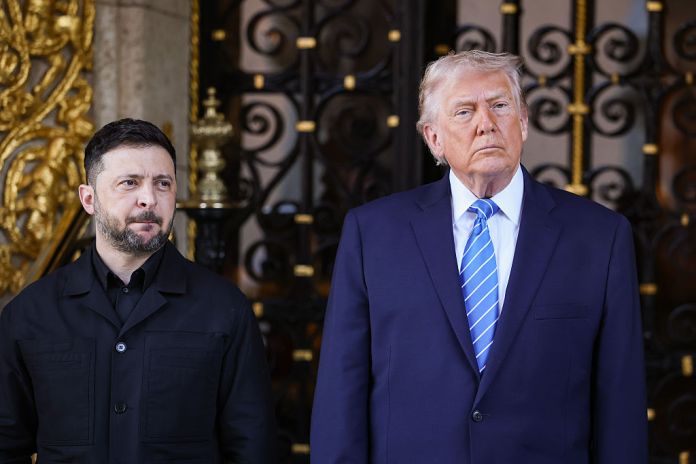
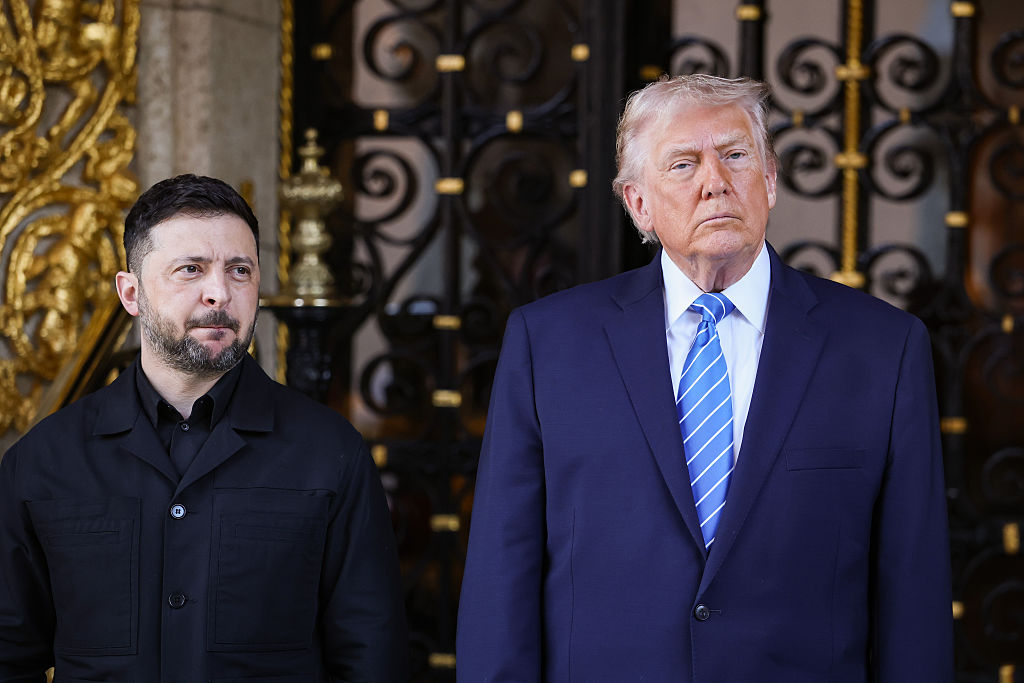
President Donald Trump, 79, hosted Ukrainian President Zelenskyy at his Florida resort for peace talks aimed at ending the nearly four-year war between Russia and Ukraine.

The high-stakes meeting focused on building momentum toward a negotiated settlement to the conflict that began in February 2022, with Trump asserting that the two nations were “closer than ever” to reaching a deal.

Zelenskyy arrived in his trademark black jacket and pants, while Trump wore his signature blue suit. The two leaders were briefly photographed shaking hands outside the resort before heading inside.

‘DEPENDS Are Falling Down His Leg’: Viewers Accuse Zelensky of Holding Trump Upright During Handshake, Exposing a Bulge in His ‘Shitty-Fitting’ Suit
PALM BEACH, FLORIDA – DECEMBER 28: U.S. President Donald Trump greets Ukrainian President Volodymyr Zelensky at his Mar-a-Lago club on December 28, 2025 in Palm Beach, Florida. Trump invited Zelensky to his private club to work on the U.S.-proposed peace plan to end the war in Ukraine, as the conflict approaches four years since the sudden full-scale invasion by Russia on February 24, 2022. (Photo by Joe Raedle/Getty Images)

Yet despite the gravity of the moment, public and social-media attention quickly shifted away from policy and toward appearance, notably Trump’s physical posture. Critics remarked that he looked tired and worn, with his stance and footwear drawing brutal scrutiny that he might “fall.”

‘Must of Had a Full Diaper’: Trump Executes a Painfully Slow Exit During Briefing as Cameras Zoom In on the People Suffering Behind Him

“Is it just me or is his right shoe longer than the other to hold his FA up?” one viewer quipped about his shoes.

‘Looks more like Zelensky is holding him upright,” another person added.

“Nah, the DEPENDS are falling down his leg. Does this fraud not have another suit? Z. is in his war outfit, but you can at least tell it’s new, he gets a new one for every hundred Russians that are K.I.A,” a third user wrote.

“He looks like he crapped his pants,” said a fourth person.

“Gosh….for a billionaire, he sure has shitty fitting suits….i guess it’s similar to lipstick on a pig,” said another.

This isn’t the first time Trump’s appearance has drawn attention. A photo of Him with his wife, Melania, from his first presidential term in 2018 was making the rounds on social media a couple of weeks ago. The couple posed in the picture, holding hands, as they attended an Easter service at Bethesda-by-the-Sea in Palm Beach, Florida.

Melania, 55, wore a sleeveless, red-and-white dress with large-framed sunglasses for the public outing at the Episcopal church located three miles north of her husband’s Mar-a-Lago resort. 

While the ex-model seemed fittingly styled for the festive occasion celebrating the holy Christian holiday, Trump’s suit appeared wrinkled and oversized. The seven-year-old image of the polarizing figure, taken during his first term in the White House, resurfacing has sparked new criticisms of the outfit from 2018.

“Can someone explain why every time I see Americans wearing suits, they fit so badly? It always looks like they’ve borrowed their dad’s suit, and they’re drowning in it,” a Threads user stated in response to the snapshot of Trump and Melania, which got a reply that read, “They’re hiding his weight.”

One person on the app wrote, “It’s just Trump. He wears oversized suits to hide the [fact that] he wears adult diapers.” Similarly, someone added, “Don’t generalize all Americans. That’s unfair. Dump wears the illest-fitting suits.”

“Don’t you dare use this man as [a] barometer for American anything, but especially fashion,” demanded one irked poster. Yet another commenter suggested, “Trump thinks his baggy suit and super long tie make him look thinner.” 

Despite Trump being a multi-billionaire, the real estate mogul was accused of not wanting to spend money from his partially inherited fortune on custom clothing. One critic offered, “He’s too cheap for tailoring.”

Great Job Y. Kyles & the Team @ Atlanta Black Star Source link for sharing this story.
Silver pulls back after topping $80 in historic year-end rally

Silver pulls back after topping  in historic year-end rally

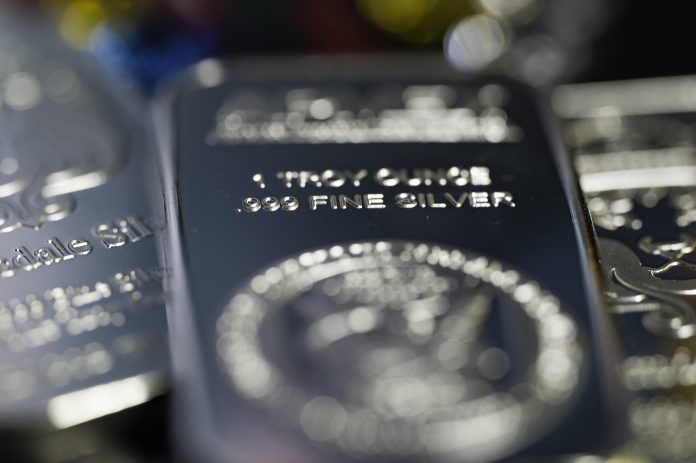
Silver retreated sharply after smashing through $80 an ounce for the first time, with traders taking profits from a record-breaking rally powered by a structural imbalance in supply and demand.

The white metal fell as much as 5% on Monday, after earlier spiking to a record $84 an ounce following five straight days of gains. A weaker dollar and escalating geopolitical tensions have added to the appeal of precious metals during an end-of-year jump to all-time highs for silver, gold and platinum. 

“Make no mistake: we are witnessing a generational bubble playing out in silver,” said Tony Sycamore, a market analyst at IG Australia.

Read More: Why Silver Has Been Surging Even More Than Gold

Silver’s rapid acceleration caps a yearlong rally for precious metals driven by elevated central-bank purchases, inflows to exchange-traded funds and three successive rate cuts by the US Federal Reserve. Lower borrowing costs are a tailwind for the commodities, which don’t pay interest, and traders are betting on more rate cuts in 2026.

In the last week, frictions in Venezuela — where the US has blockaded oil tankers — and strikes by Washington on Islamic State in Nigeria have added to the haven appeal of precious metals. The Bloomberg Dollar Spot Index, a key gauge of the US currency’s strength, fell 0.8% last week, its biggest weekly drop since June. A weaker dollar is generally supportive of gold and silver.

Silver is outshining gold for several reasons. For one, the market is thinner. Tighter inventories and liquidity that can evaporate quickly; while the London gold market is underpinned by around $700 billion of bullion that can be lent out in the event of a liquidity squeeze, no such reserve exists for silver. That historic supply squeeze happened in October.

Read More: Sold Out in India, Panic in London: How the Silver Market Broke

“The dominant driver of late has been a severe structural supply-demand imbalance in silver, sparking a scramble for physical metal,” said Sycamore. “Buyers are now paying a remarkable 7% premium for immediate delivery compared to waiting a year.”

Vaults in London have drawn sizable inflows since the October squeeze, but this has led to shortages elsewhere. In China, silver kept in warehouses linked to the Shanghai Futures Exchange last month hit the lowest level since 2015.

Added to that, much of the world’s readily available silver remains in New York as traders await the outcome of a US Commerce Department probe into whether imports of critical minerals pose a national security risk. The review could pave the way for tariffs or other trade curbs on the metal.

Read More: Precious Metals Craze Prompts China Fund to Turn Away Investors

Unlike gold, silver also has many useful real-world properties that make it a valuable component in a range of products like solar panels, AI data centers and electronics. With inventories near their lowest on record, there’s a risk of supply shortages that could impact multiple industries.

This prompted Elon Musk on Saturday to respond to a series of tweets on the supply shortage by saying on X: “This is not good. Silver is needed in many industrial processes.”

Technical indicators show the rally in silver may have run too hard, too fast. The metal’s 14-day relative strength index showed a reading of almost 80, far above the 70 that is considered to be overbought. 

Spot silver rose as much as 6% to a high of $84.00 an ounce before crashing 3.6% to trade at $76.47 as of 8:38 a.m. in Singapore. Gold fell 0.9% to $4,495.73 an ounce, below a record of $4,549.92 hit on Friday. Platinum and palladium both retreated after hitting records in the previous session.

This story was originally featured on Fortune.com

Great Job Robin Paxton, Bloomberg & the Team @ Fortune | FORTUNE Source link for sharing this story.
Eagles hang on to beat Bills 13-12 when Josh Allen misses an open Khalil Shakir on 2-point try

Eagles hang on to beat Bills 13-12 when Josh Allen misses an open Khalil Shakir on 2-point try

ORCHARD PARK, N.Y. – As Jalen Carter and his Philadelphia teammates celebrated in the end zone after making one last crucial stop, Buffalo’s Josh Allen removed his helmet and yelled out in frustration.

In a game decided by a 2-point conversion attempt, Allen came up short — a foot wide, actually — when he sailed his pass out of the reach of Khalil Shakir in the back of the end zone with 5 seconds remaining. That was the difference as the Eagles beat the Bills 13-12 on Sunday in a late-season matchup of Super Bowl contenders.

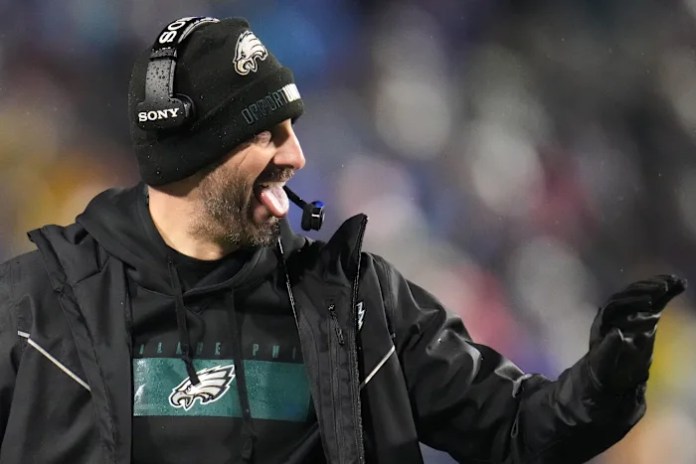
“Winning’s hard in this league, and I’m always going to enjoy a win,” Eagles coach Nick Sirianni said after his team nearly squandered a 13-0 fourth-quarter lead.

“If you come out of this and you’re just thinking about all the negative things that happened, then it’s just a miserable existence,” Sirianni added.

The NFC East champion Eagles (11-5) are assured of at least the conference’s No. 3 seed in the playoffs. They improved to 7-3 in one-score games and became the NFL’s first team since the Patriots in 1987 to win multiple games in which they failed to complete a pass in the second half.

Buffalo (11-5), which clinched a playoff berth last week, dropped to the No. 7 seed in the AFC. New England won its first AFC East title since 2019 with the Bills’ loss.

Allen had a far different take on the outcome than Sirianni.

“Yeah, it means a lot. We can learn a lot from this experience,” Allen said, looking ahead to the playoffs in two weeks. “I’d rather have won and learn from that too, but again, I got to make a play.”

After being shut out for nearly 55 minutes, Allen rallied the Bills by rushing for two touchdowns in the final 5:11. His second TD came on a 1-yard tush push on fourth-and-goal — one play after a replay review determined that tight end Dawson Knox’s elbow came down just short of the goal line.

Rather than playing for overtime, coach Sean McDermott opted to go for 2. Allen dropped back and was being pressured by linebacker Jalyx Hunt when he let loose a pass that sailed wide of Shakir. The Bills then tried an onside kick that Goedert recovered.

“Yeah I just missed. Rolling left, got to get him a better ball,” Allen said.

Dallas Goedert caught a 1-yard touchdown pass and Jake Elliott accounted for the rest of Philadelphia’s offense by hitting field goals of 28 and 47 yards.

Hunt had two of Philadelphia’s four sacks and a team-leading three quarterback hits.

And Carter made a major contribution in his return after missing three games with injuries to both shoulders. Carter got his hand up to block Michael Badgley’s extra-point attempt after Allen’s 2-yard touchdown run with 5:11 left.

“Just a big-time player who makes big plays,” Sirianni said of Carter, who also had a sack. “Relentless in everything that he does. Relentless effort.”

The Eagles needed their defense to preserve the win after their offense evaporated in the second half. Not including its game-closing kneel-down, Philadelphia combined for one first down and 17 yards of offense on five second-half possessions — all ending with punts.

“It’s a big-time win,” Hurts said. “Hell of a performance by the defense and how they played and how they were able to find a way to gut that out and make plays when we needed it the most.”

Hurts went 0 for 7 in the second half and finished 13 of 27 for 110 yards with a touchdown. Goedert’s TD was his team-leading 11th of the season and set the single-season team record for tight ends — one more than Pete Retzlaff had in 1965.

Allen went 16 of 25 for 172 yards in the second half and finished 23 of 35 for 262 yards. With his two rushing scores, the 29-year-old Allen increased his career total to 301 (passing, rushing, receiving) and became the first player to reach 300 before turning 30.

Allen, who was limited in practice this week with a sore right foot, got X-rays after the game. McDermott said the tests were negative, and Allen said he felt good and the foot injury had zero impact on his performance.

What hurt was coming one completion short.

“It just comes down to us executing, making one more play than they did. And obviously we saw that we didn’t make that last play,” Allen said, before correcting himself. “I didn’t make that last play.”

Injuries

Eagles: LB Nakobe Dean (hamstring) did not play.

Bills: LB Terrel Bernard did not return after hurting his calf in the first half. … Defensive tackles DaQuan Jones (calf) and Jordan Phillips (ankle) and safety Jordan Poyer (hamstring) did not play. TE Dalton Kincaid missed his fourth of seven games with a nagging knee injury.

Up next

Eagles: Host Washington next weekend.

Bills: Host the New York Jets next weekend.

___

AP NFL: https://apnews.com/hub/nfl

Copyright 2025 The Associated Press. All rights reserved. This material may not be published, broadcast, rewritten or redistributed without permission.

Great Job John Wawrow, Associated Press & the Team @ KSAT San Antonio Source link for sharing this story.
Secret Link