
Home News Page 188

The Real Reason We’re All Annoyed With Quentin Tarantino

The Real Reason We’re All Annoyed With Quentin Tarantino

All the glowing reviews for the four-hour-and-forty-one minute version of Quentin Tarantino’s Kill Bill — originally released as two separate films in 2003 and 2004 — are a sickening read if you actually go and see the damn thing, now titled Kill Bill: The Whole Bloody Affair. So little is changed, it’s shocking. It’s essentially the first two installments stuck together with a fifteen-minute intermission in between, an effect you could achieve at home by simply watching both films with a long bathroom break in between.

In case you need a reminder, Kill Bill is the saga of a top assassin named Beatrix Kiddo (Uma Thurman) who emerges from a four-year coma and seeks protracted, gory revenge on her former mentor-lover Bill (David Carradine) and the hit squad who nearly killed her.

When Beatrix finally awakens, it seems she’s also lost the baby she had been carrying. This is yet another vital reason that, in the list of revenge killings she plans to do, written down neatly in a notebook, she puts the death of the baby’s actual father last after the planned murders of hit squad members Vernita Green (Vivica A. Fox), O-Ren Ishii (Lucy Liu), Elle Driver (Daryl Hannah), and Bill’s brother Budd (Michael Madsen). Then finally, she declares, “I am going to kill Bill.”

There are really only four primary changes in this new cut. First, Tarantino has doubled the length of the anime sequence, laying out the backstory of formidable yakuza boss O-Ren Ishii. Second, the black-and-white gore in the extraordinarily bloody Tokyo nightclub sequence has been restored to full, crimson color. Third, some “segue” material from the opening of Kill Bill: Vol. 2, shot in black-and-white in imitation of certain French New Wave films, now plays behind the end credits. Fourth, the brief coda at the end of Kill Bill: Vol. 1, which featured Bill’s voice-over revealing that Beatrix’s baby did not die in the wedding party massacre after all, is now gone.

In the glowing reviews, you’ll read about how Kill Bill: The Whole Bloody Affair can only now be fully appreciated as the masterpiece it is. This is the familiar auteur-worshipping take that sells every “director’s cut” as revelatory, once it’s freed from the vile influences of interfering, money-grubbing producers and studio executives. And sometimes, director’s cuts are revelatory. But sometimes, they’re overlong and clotted with unnecessary material that obscures the impact of the films you already love. Or, as in this case, they make very little difference.

The original decision to split Kill Bill into two separate releases, over Tarantino’s objections, was made by producer Harvey Weinstein of the then-thriving studio Miramax Films. And given what’s happened in the years since, with Weinstein convicted of rape and sexual assault and serving a sixteen-year prison sentence, nobody wants to side with Weinstein about anything. But it must be acknowledged that almost any producer would’ve opted for exactly the same two-part release, purely for practical reasons. More standard-length screenings mean more audience members and greater profits. Even for a “special event” film like Kill Bill: The Whole Bloody Affair, it’s tough to get people who aren’t ardent cinephiles to commit to an almost five-hour running time.

Tarantino’s own legacy has been considerably tainted since his Kill Bill heyday — and it’s worth noting that even then he was an obnoxious personality who just happened to have undeniable filmmaking skills. But since the original release of Kill Bill, more unsavory aspects of Tarantino’s career have come to light. In his long association with Harvey Weinstein, he admitted he “knew enough to do more than I did” about Weinstein’s vile predatory habits. This is especially striking considering his intense creative friendship with Uma Thurman during the making of Kill Bill. She was one of the many women in Hollywood struggling to fend off Weinstein’s aggressive sexual advances.

Thurman went public with her charges against Weinstein in 2018, and in the same interviews, she also had serious complaints to make about Tarantino’s behavior during the making of Kill Bill. Though Tarantino included a credit on Kill Bill indicating their creative “Q and U” collaboration, he also indulged in sadistic acts aimed at Thurman that were designed to make it into the film. During the Crazy 88s fight sequence, for example, when teen assassin Gogo (Chiaki Kuriyama) is strangling Beatrix with a chain, causing her face to redden and her eyes to protrude, it was actually Tarantino pulling on the chain just out of camera frame. When Budd appears to spit tobacco juice in Beatrix’s face, it was Tarantino doing the spitting off camera. And most seriously, Tarantino insisted that Thurman drive a rickety car herself, ignoring her request that a stuntwoman do it:

“Quentin came in my trailer and didn’t like to hear no, like any director,” she says. “He was furious because I’d cost them a lot of time. But I was scared. He said: ‘I promise you the car is fine. It’s a straight piece of road.’” He persuaded her to do it, and instructed: “ ‘Hit forty miles per hour or your hair won’t blow the right way and I’ll make you do it again.’ But that was a deathbox that I was in. The seat wasn’t screwed down properly. It was a sand road and it was not a straight road.”

The resultant car crash gave Thurman a serious concussion as well as neck and knee injuries. Tarantino refused to allow Thurman access to the footage of the car crash until fifteen years later, in what he considered an act of atonement for an incident he regretted. Noted Thurman, “Not that it matters now, with my permanently damaged neck and my screwed-up knees.”

Recently, during the theatrical rerelease Kill Bill: The Whole Bloody Affair, Tarantino has been back in the news with a sudden burst of unsolicited commentary attacking actors he dislikes. In a widely quoted interview, Tarantino claimed that Paul Thomas Anderson’s There Will Be Blood would be even better if it weren’t for Paul Dano, who was “the weakest actor in SAG,” not strong enough to play opposite Daniel Day-Lewis and make the film the “two-hander” it should have been: “He is weak sauce, man. He’s a weak sister.”

Tarantino added to the list of actors he scorns Owen Wilson and Matthew Lillard. Lillard cogently pointed out that Tarantino was singling out actors lacking power in the current star rankings: “You wouldn’t say that to Tom Cruise. You wouldn’t say that to somebody who’s a top-line actor in Hollywood.”

But Tarantino seems to court controversy recently as he evinces less and less interest in actually making movies. His strong support for Israel since marrying his Israeli wife Daniella Pick and moving to Tel Aviv with their two children, has reportedly included touring a military base “to boost IDF morale,” supporting the troops currently waging war and committing genocide in Palestine.

Pick has proudly declared in a recent interview that Tarantino never considered leaving Israel for safety as bombs fell. He’s even quoted as saying, “Well, whatever. Like if something happens, I’ll die as a Zionist.”

Meanwhile, he’s aborted his tenth and possibly last film because of a realization he had after writing the script that he had no particular interest in actually filming it. “Every Tarantino title promises so much, except The Movie Critic,” he explained. “Who wants to see a movie called The Movie Critic?” There are still rumors that Tarantino will make a different and perhaps final film, just not immediately. Instead, Tarantino claims to be “really juiced about live theater now.”

Increasingly, the shine is off Quentin Tarantino among many film fans who admire his undeniable cinematic talents but are fed up with his tiresome, would-be macho acting out in his public conduct. But he maintains his reliable following among the dudebro contingent who worship his geeky loudmouth aggressivity and defend him against all social media backlash.

And Tarantino’s legacy of high-octane hits makes him bulletproof in Hollywood, where it’s clear he’d always be welcome to make a splashy comeback, no matter how long he stays away. But now semiretired from the film industry, Tarantino’s got nothing good to say about its current state of operations, which is fair enough. As he argues in a recent interview, talking about why he’s deserted filmmaking for the stage:

That’s a big f—ing deal, pulling [a play] off. . . . But making movies? Well, what the f— is a movie now? . . . What? Something that plays in theaters for a token release for four f—ing weeks? All right, and by the second week you can watch it on television. I didn’t get into all this for diminishing returns.

He’s right about the state of Hollywood. But it’s a further irritant that such an aggressive bigmouth is talking smack from the sidelines when what we really need from our top directors — especially the ones, like Tarantino, with the most leverage — is to join the front lines in the existential battle for American cinema.

Steven Spielberg, who is nearly twenty years older than Tarantino, is jumping right back into the fray with a big original sci-fi film, Disclosure Day. Martin Scorsese, at age eighty-three, is about to start filming What Happens at Night. Earlier this year, Tarantino’s friend Paul Thomas Anderson made a huge push to revive big non-IP theatrical movies for adults with One Battle After Another. Christopher Nolan not only just wrapped principal photography on the enormously ambitious The Odyssey, but — as the newly elected president of the Directors Guild — was the genesis behind the DGA’s unprecedented but very welcome public statement of “concerns” about the prospective Netflix purchase of Warner Bros.:

We believe that a vibrant, competitive industry — one that fosters creativity and encourages genuine competition for talent — is essential to safeguarding the careers and creative rights of directors and their teams. We will be meeting with Netflix to outline our concerns. . . .

And then there’s Tarantino — one of the last filmmakers in Hollywood who can snap his fingers and mobilize talent and financing for non-IP projects — reclining in the back row and shooting spit-wads, refusing to get back to work. Instead, he’s recycling his twenty-plus year-old movie with minimal additions or edits and calling it something new. If I had to guess, I’d say this is perhaps the overarching reason that Tarantino is vastly more grating than usual these days.

Because right now, the American movie is in a fight for its life. Tarantino’s peers have all taken up arms — challenging themselves like never before with hugely ambitious projects specifically for the big screen (and, hopefully, big audiences).

It’s time Tarantino once again joins the front lines and makes a last-ditch effort to save this medium we all love. Do that, Quentin, and you can talk all the smack you want, I promise.

Great Job Eileen Jones & the Team @ Jacobin Source link for sharing this story.

Why WeTransfer co-founder is building another file transfer service | TechCrunch

Why WeTransfer co-founder is building another file transfer service | TechCrunch

Nalden, who co-founded the file transfer service WeTransfer in 2009 along with Rinke Visser and Bas Beerens, is not pleased with the company’s direction after the service was acquired by Bending Spoon last year — and he doesn’t mince his words about it.

“Bending Spoons doesn’t really care about people, and even though I get that it is their private equity strategy, I notice that since I left [WeTransfer] in 2019, there were a lot of updates that were basically killing the product, in my point of view,” he told TechCrunch.

Post-acquisition, WeTransfer made a confusing move related to transfer link experiences and laid off 75% of its staff. This year, the company was caught in a controversy around using its users’ content to train AI models and had to backtrack on changes to its terms.

Around this time, Nalden had creatives reaching out to share their frustration with WeTransfer. He realized that he wanted to build an alternative to WeTransfer with the original ethos of the service around simplicity. The service is called Boomerang, and you can use it to transfer files without logging in.

“Why do tech companies always make things so complicated? I’ve always struggled with this, and I just wanted to offer another tool that is just, it’s all about user experience, it’s ease of use, it’s the simplicity of sharing something quickly, and that just saves time. You don’t need to sign up, you don’t need to verify via email,” Nalden told TechCrunch about the ethos of the service.

Image Credits: Boomerang

For casual users, the non-login experience would be sufficient, but it has its limits. You can have 1GB of total space, and upload files of up to 1GB in size with a seven-day expiration. If you want a bit more, you can choose to create a free account. That will get you 3GB of total space with a file upload limit of 3GB per file. You’ll asl get access to your upload history, the ability to add and delete files anytime, and the ability to customize emojis on the page while sending the file.

If you want even more, there is a €6.99 per month paid tier, which will give you 200GB per space (folders) and 500GB total storage with a file upload limit of 5GB per file. Plus, you’ll get custom covers for spaces, password protection for files, up to 90 days of expiry, and the ability to invite unlimited users to access files in a space.

Techcrunch event

San Francisco
|
October 13-15, 2026

Why WeTransfer co-founder is building another file transfer service | TechCrunch
Image Credits: boomerang

Nalden is clear that with this new service, he doesn’t want to offer advertising to users and keep a simple structure for payment. He feels that there is a lot of complexity in the advertising business, and with Boomerang, he wants to get the least amount of data he can from users.

“I just want to offer a tool that works for users. It’s like buying a hammer. You possibly don’t want to buy a fancy hammer, but a hammer that just works,” he noted.

Boomerang’s site and interface are barebones, and that is by design. Nalden noted that a lot of design is to please investors, and he feels that stripping down the experience is a refreshing change. While companies are looking to add more and more AI features, Nalden said that he is largely using AI to build the product, but he doesn’t want to use it around user-facing features.

Boomerang is available on the web, but the company said it is planning to release a dedicated Mac app soon.

Great Job Ivan Mehta & the Team @ TechCrunch Source link for sharing this story.

Oklahoma man charged with fatally shooting a neighbor while target practicing in his backyard

Oklahoma man charged with fatally shooting a neighbor while target practicing in his backyard

An Oklahoma man has been charged with first-degree manslaughter after allegedly shooting a woman a few blocks from his home while target practicing in his backyard.

The woman, Sandra Phelps, was sitting under a covered porch with family on Christmas day, holding a child in her arms, when the group heard gunshots north of the residence, according to the affidavit.

“Sandra commented that someone got a new gun for Christmas and then shortly after Sandra said ‘ouch’ and collapsed,” the affidavit said, noting that there were no more gunshots after this.

At approximately 3:15 p.m. on Thursday, authorities received reports of an individual with a gunshot wound, the Stephens County Sheriff’s Office wrote in a statement. Emergency personnel were dispatched to the location, where Phelps was pronounced dead.

Investigators found what appeared to be a single bullet that went through Phelps’ upper right arm and into her chest, the affidavit said.

Law enforcement officers canvassed the surrounding area and found that one home less than a mile away lacked suitable shooting backstops, according to the affidavit.

The Stephens County Sheriff’s Office received information that the resident of that home, Cody Wayne Adams, had recently purchased a Glock 45 for Christmas, which his neighbors heard him shooting in the afternoon, the affidavit said.

Deputies responded to the residence and contacted Adams, 33, who said that he had been shooting the handgun in his backyard, according to the affidavit.

Adams showed deputies the Red Bull can in his backyard, which he had been shooting. Authorities concluded that the vantage point where Adams was shooting aligned with the angle of the bullet that killed Phelps, according to the affidavit. Upon learning that someone was injured, “Adams became visibly upset and began to cry,” the affidavit added.

Adams was arrested on Thursday and released on a $100,000 bond on Friday, records show. It was not immediately clear if Adams has legal representation.

Great Job Kate Reilly | NBC News & the Team @ NBC 5 Dallas-Fort Worth for sharing this story.

‘I Would Be So Embarrassed’: Trump Spirals Mid-Presser, Viewers Swear He’s Medicated — Then a Confession Slips Out and He Can’t Walk It Back Fast Enough

‘I Would Be So Embarrassed’: Trump Spirals Mid-Presser, Viewers Swear He’s Medicated — Then a Confession Slips Out and He Can’t Walk It Back Fast Enough

President Donald Trump looked physically off and mentally scattered during a recent appearance, wandering through grievances and unfinished thoughts while struggling to stay anchored to a single point — a display that many viewers described as unsettling to watch in real time.

Much of Trump’s fixation centered on his escalating feud with Georgia Rep. Marjorie Taylor Greene, whom he spent several minutes mocking by name, cycling through derisive nicknames and openly wondering aloud what had “happened to her.”

‘I Would Be So Embarrassed’: Trump Spirals Mid-Presser, Viewers Swear He’s Medicated — Then a Confession Slips Out and He Can’t Walk It Back Fast Enough
US President Donald Trump participates in NORAD Santa tracker phone calls, on Christmas Eve, from the Mar-a-lago club in Palm Beach, Florida, on December 24, 2025. (Photo by ANDREW CABALLERO-REYNOLDS / AFP via Getty Images)

The speech Friday night, Dec. 19, has critics once again questioning Trump’s physical and mental health and overall fitness for office as he drifted all over the place, making outlandish comments about Greene’s name.

“And then you have Marjorie Traitor Brown, I call her because green turns to brown under stress,” the President began senselessly, sounding more and more feeble as he continued his tirade against Greene, who announced her resignation from Congress last month after a growing feud with Trump that started over their differences of opinion on releasing the Epstein files.

‘Someone Finally Said It’: Scott Jennings Slapped With a Brutal Name to His Face on CNN — Has No Answer, Just Stammering, as Trump Spin Backfires

“So, I call her Traitor Brown, which I don’t like doing, because two words is too much,” Trump continued.

“Two out of three, we’re changing to Marjorie Taylor Green, I’m going Marjorie Traitor Brown … and a lot of people don’t understand two words is too much to change,” the president absurdly stated.

 “I actually like Marjorie Taylor Brown better, but everyone says Marjorie Traitor Greene is good, but they’re all good,” Trump added nonsensically as he looked to the audience for support before asking, “But what the hell happened to her?”

Trump and Greene had a very public falling-out last summer after the Georgia congresswoman opposed the President, coming out in support of the victims of sex trafficker Jeffrey Epstein and releasing the Epstein files, something Trump and his cronies have tried desperately to prevent.

Trump’s rant over Greene continued on. He falteringly tried to explain his phone commitments as he became more and more incoherent.

“You know, I have 218, 19 to change. It’s short, but we have 200 and some odd congressmen and women. I have 53 senators. I have 212 countries. I’ve got a family. It’s nice to talk to my family, too,” Trump rambled about his seeming ownership of Congress and the world.

Then, without warning, he blurted out, “Highly neurotic,” before quickly attempting to redirect the comment. “Her, not me,” he said — only to immediately reverse course. “But I’m neurotic too. I think I’m probably very neurotic.”

The moment landed awkwardly, with Trump seeming to realize too late what he’d just admitted, then trying to regain control of the tangent he’d opened.

“Being neurotic, no good, but if it’s controlled, that’s okay. It gives you some energy,” he added.

Retired senior NBC Universal executive Mike Sington took to social media, calling Trump’s speech, especially the part about Greene, “frightening.”

“This is actually frightening. A weak and sweaty Trump rambles on and on incoherently for two minutes about Marjorie Taylor Greene. If you had any doubts about his physical and mental deterioration, watch this. Our nation is in danger,” Sington warned.

Social media spiraled over the post with plenty of posters agreeing.

One critic noted, “I would be so embarrassed being in the background trying to act as if this flaming pie hole makes sense. Not a good look MAGA”

“At this point it’s very clear that he’s just a front for Miller and company. He obviously isn’t doing anything but this sad rally act. He’s medicated to the gills,” observed Susan.

“SO RIGHT MAN WE ARE SO F-CKED WITH THIS LUNATIC AT THE HELM,” X user Richard J Lawrence chimed in.

“He’s rotting in front of us,” said one commentor while another added, “He’s totally mad.”

Others noted Trump’s repeated confessions, “He just said exactly what he wants …. I have 212 countries to run ….. no you have one and doing a shit job at that” and “I think I’m probably very neurotic.” The only true words he’s ever spoken.”

Although Trump and Greene’s relationship splintered publicly last summer after she joined Democrats in calls to release the Epstein files, their feud really erupted last month after Trump threatened to primary her and refused to support her in a possible Senate race. Greene resigned, and her last day in office is Jan. 5, 2026.

“Donald J Trump is a traitor to the United States, a criminal, and a conman,” X user Marie proclaimed.

Great Job Shelby E. & the Team @ Atlanta Black Star Source link for sharing this story.

Science & Medicine: Beneficial effects of a keto diet can be enhanced by intermittent breaks

Science & Medicine: Beneficial effects of a keto diet can be enhanced by intermittent breaks

This program originally aired on August 4, 2024.

Beneficial effects of a ketogenic diet can be enhanced by regular, planned breaks.

The ketogenic diet, commonly known as keto, is a diet that focuses on increasing the consumption of foods high in both saturated and unsaturated fats, while decreasing the amount of carbs consumed.

The diet is popular for weight loss, diabetes, and other health issues. Most who follow the diet, hold fast to its rigid requirements.

However, people who eat a strict keto diet are at risk for an accumulation of aged cells in their organs, according to research from UT Health San Antonio. But that’s not the main takeaway for the study’s lead author, David Gius, MD, PhD.

“The most important finding from our research is you don’t see any of those negative findings if you do what we refer to as an intermittent ketogenic diet,” said Gius. “And we are very strong proponents of—if you’re going to do a ketogenic diet, it should be an intermittent ketogenic diet.”

The keto diet is a high fat diet, and that high fat content isn’t optimal for mitochondria, considered to be the powerhouse of the cell.

David Gius, MD, PhD
Assistant Dean of Research and Professor with the Department of Radiation Oncology
Joe R. and Teresa Lozano Long School of Medicine at UT Health San Antonio
Associate Cancer Director of Translation Research at the Mays Cancer Center

“And we think that there’s mitochondrial lipid toxicity [for]some people if [they’re] on a keto diet for too long,” said Gius. “So it’s that yin and yang between the good properties from the ketones and the potentially less good properties from being very high cholesterol levels, or very high lipid levels.

However, taking breaks and making a keto diet an intermittent plan can help. For example, one can consider being on the diet for four days and off for three, or on the diet for five days and off for two.

“Then you can go on a keto diet and get the beneficial effects of it, but then you give your body a chance a few days to reset itself,” said Gius. “So when you go back on that ketogenic diet, your body is open right to the beneficial effects, and then you go off it. If you’re in a very small subgroup of people who might have a detrimental effect, you don’t have to worry about it, because you’ve reset the system,” added Gius.

Research shows that some 13 million Americans are living a ketogenic lifestyle, but taking a break is important.

“As we like to say, take a keto break,” said Gius. “You need a keto vacation. If you take one, you’ll be healthier.”

Great Job Bonnie Petrie & the Team @ Texas Public Radio for sharing this story.

NASA’s upcoming moonshot may let astronauts be the first to lay eyes on parts of the lunar far side that were missed by the Apollo program | Fortune

NASA’s upcoming moonshot may let astronauts be the first to lay eyes on parts of the lunar far side that were missed by the Apollo program | Fortune

Kicking off the year’s cosmic wonders is the moon, drawing the first astronauts to visit in more than 50 years as well as a caravan of robotic lunar landers including Jeff Bezos’ new supersized Blue Moon. A supermoon looms on Jan. 3 and an astronomical blue moon is on the books for May.

The sun will also generate buzz with a ring-of-fire eclipse at the bottom of the world in February and a total solar eclipse at the top of the world in August. Expect more auroras in unexpected places, though perhaps not as frequently as the past couple years.

And that comet that strayed into our turf from another star? While still visible with powerful backyard telescopes, the recently discovered comet known as 3I/Atlas is fading by the day after swinging past Earth in December. Jupiter is next on its dance card in March. Once the icy outsider departs our solar system a decade from now, it will be back where it belongs in interstellar space.

It’s our third known interstellar visitor. Scientists anticipate more.

“I can’t believe it’s taken this long to find three,” said NASA’s Paul Chodas, who’s been on the lookout since the 1980s. And with ever better technology, “the chance of catching another interstellar visitor will increase.”

Here’s a rundown on what the universe has in store for us in 2026:

Next stop, moon

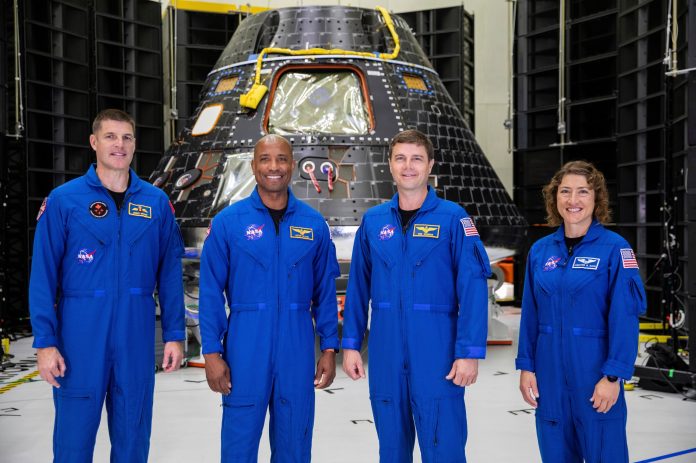
NASA’s upcoming moonshot commander Reid Wiseman said there’s a good chance he and his crew will be the first to lay eyeballs on large swaths of the lunar far side that were missed by the Apollo astronauts a half-century ago. Their observations could be a boon for geologists, he noted, and other experts picking future landing sites.

Launching early in the year, the three Americans and one Canadian will zip past the moon, do a U-turn behind it, then hustle straight back to Earth to close out their 10-day mission. No stopping for a moonwalk — the boot prints will be left by the next crew in NASA’s Artemis lunar exploration program.

More robotic moon landings are on the books by China as well as U.S. companies. Early in the year, Amazon founder Bezos is looking for his Blue Origin rocket company to launch a prototype of the lunar lander it’s designing for NASA’s astronauts. This Blue Moon demo will stand 26 feet (8 meters), taller than what delivered Apollo’s 12 moonwalkers to the lunar surface. The Blue Moon version for crew will be almost double that height.

Back for another stab at the moon, Astrobotic Technology and Intuitive Machines are also targeting 2026 landings with scientific gear. The only private entity to nail a lunar landing, Firefly Aerospace, will aim for the moon’s far side in 2026.

China is targeting the south polar region in the new year, sending a rover as well as a so-called hopper to jump into permanently shadowed craters in search of ice.

Eclipses

The cosmos pulls out all the stops with a total solar eclipse on Aug. 12 that will begin in the Arctic and cross over Greenland, Iceland and Spain. Totality will last two minutes and 18 seconds as the moon moves directly between Earth and the sun to blot out the latter. By contrast, the total solar eclipse in 2027 will offer a whopping 6 1/2 minutes of totality and pass over more countries.

For 2026, the warm-up act will be a ring-of-fire eclipse in the Antarctic on Feb. 17, with only a few research stations in prime viewing position. South Africa and southernmost Chile and Argentina will have partial viewing. A total lunar eclipse will follow two weeks after February’s ring of fire, with a partial lunar eclipse closing out the action at the end of August.

Parading planets

Six of the solar system’s eight planets will prance across the sky in a must-see lineup around Feb. 28. A nearly full moon is even getting into the act, appearing alongside Jupiter. Uranus and Neptune will require binoculars or telescopes. But Mercury, Venus, Jupiter and Saturn should be visible with the naked eye shortly after sunset, weather permitting, though Mercury and Venus will be low on the horizon.

Mars will be the lone no-show. The good news is that the red planet will join a six-planet parade in August, with Venus the holdout.

Supermoons

Three supermoons will lighten up the night skies in 2026, the stunning result when a full moon inches closer to Earth than usual as it orbits in a not-quite-perfect circle. Appearing bigger and brighter, supermoons are a perennial crowd pleaser requiring no equipment, only your eyes.

The year’s first supermoon in January coincides with a meteor shower, but the moonlight likely will obscure the dimmer fireballs. The second supermoon of 2026 won’t occur until Nov. 24, with the third — the year’s final and closest supermoon — occurring the night of Dec. 23 into Dec. 24. This Christmas Eve supermoon will pass within 221,668 miles (356,740 kilometers) of Earth.

Northern and southern lights

The sun is expected to churn out more eruptions in 2026 that could lead to geomagnetic storms here on Earth, giving rise to stunning aurora. Solar action should start to ease, however, with the 11-year solar cycle finally on the downslide.

Space weather forecasters like Rob Steenburgh at the National Oceanic and Atmospheric Administration can’t wait to tap into all the solar wind measurements coming soon from an observatory launched in the fall.

“2026 will be an exciting year for space weather enthusiasts,” he said in an email, with this new spacecraft and others helping scientists “better understand our nearest star and forecast its impacts.”

Great Job Marcia Dunn, The Associated Press & the Team @ Fortune | FORTUNE Source link for sharing this story.

2025 College Football Bowl Game Odds: Lines, Spreads for Every Game

2025 College Football Bowl Game Odds: Lines, Spreads for Every Game

It’s college football bowl season, and we’ve got the lines for every postseason matchup.

Let’s dive into the odds for all the exciting games at DraftKings Sportsbook as of Dec. 28.

This page may contain affiliate links to legal sports betting partners. If you sign up or place a wager, FOX Sports may be compensated. Read more about Sports Betting on FOX Sports.

All times ET

MONDAY, DEC. 29

Georgia Southern @ App State (2 p.m., ESPN)

Point spread: Georgia Southern -8.5 (Georgia Southern favored to win by more than 8.5 points, otherwise App State covers)
Moneyline: Georgia Southern -298 favorite to win; App State +240 underdog to win
Total Over/Under: 58.5 points scored by both teams combined

TUESDAY, DEC. 30

Coastal Carolina @ Louisiana Tech (2 p.m., ESPN)

Point spread: Louisiana Tech -9.5 (Louisiana Tech favored to win by more than 9.5 points, otherwise Coastal Carolina covers)
Moneyline: Louisiana Tech -325 favorite to win; Coastal Carolina +260 underdog to win
Total Over/Under: 51.5 points scored by both teams combined

Tennessee @ Illinois (5:30 p.m., ESPN)

Point spread: Tennessee -2.5 (Tennessee favored to win by more than 2.5 points, otherwise Illinois covers)
Moneyline: Tennessee -135 favorite to win; Illinois +114 underdog to win
Total Over/Under: 61.5 points scored by both teams combined

No. 16 USC @ TCU (9 p.m., ESPN)

Point spread: USC -6.5 (USC favored to win by more than 6.5 points, otherwise TCU covers)
Moneyline: USC -238 favorite to win; TCU +195 underdog to win
Total Over/Under: 55.5 points scored by both teams combined

WEDNESDAY, DEC. 31 

No. 23 Iowa @ No. 14 Vanderbilt (noon, ESPN)

Point spread: Vanderbilt -4.5 (Vanderbilt favored to win by more than 4.5 points, otherwise Iowa covers)
Moneyline: Vanderbilt -230 favorite to win; Iowa +190 underdog to win
Total Over/Under: 46.5 points scored by both teams combined

Arizona State @ Duke (2 p.m., CBS)

Point spread: Duke -3 (Duke favored to win by more than 3 points, otherwise Arizona State covers)
Moneyline: Duke -155 favorite to win; Arizona State +130 underdog to win
Total Over/Under: 49.5 points scored by both teams combined

No. 18 Michigan @ No. 13 Texas (3 p.m., ABC)

Point spread: Texas -7.5 (Texas favored to win by more than 7.5 points, otherwise Michigan covers)
Moneyline: Texas -345 favorite to win; Michigan +275 underdog to win
Total Over/Under: 48.5 points scored by both teams combined

Nebraska @ No. 15 Utah (3:30 p.m., ESPN)

Point spread: Utah -14 (Utah favored to win by more than 14 points, otherwise Nebraska covers)
Moneyline: Utah -535 favorite to win; Nebraska +400 underdog to win
Total Over/Under: 50.5 points scored by both teams combined

No. 10 Miami @ No. 2 Ohio State (7:30 p.m., ESPN)

Point spread: Ohio State -9.5 (Ohio State favored to win by more than 9.5 points, otherwise Miami covers)
Moneyline: Ohio State -395 favorite to win; Miami +310 underdog to win
Total Over/Under: 42.5 points scored by both teams combined

THURSDAY, JAN. 1 2026

No. 5 Oregon @ No. 4 Texas Tech (noon, ESPN)

Point spread: Oregon -2.5 (Oregon favored to win by more than 2.5 points, otherwise Texas Tech covers)
Moneyline: Oregon -125 favorite to win; Texas Tech +105 underdog to win
Total Over/Under: 52.5 points scored by both teams combined

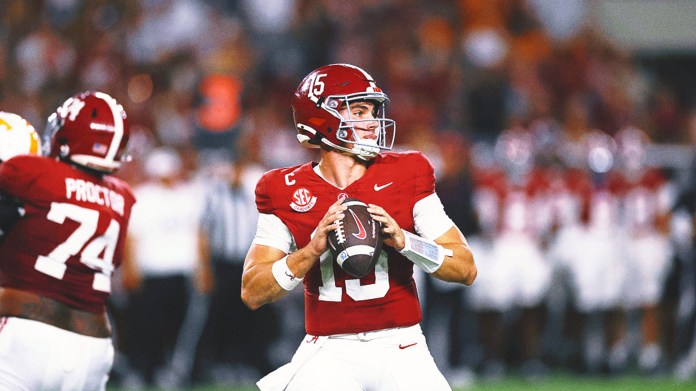
No.  9 Alabama @ No. 1 Indiana (4 p.m., ESPN)

Point spread: Indiana -6.5 (Indiana favored to win by more than 6.5 points, otherwise Alabama covers)
Moneyline: Indiana -250 favorite to win; Alabama +205 underdog to win
Total Over/Under: 47.5 points scored by both teams combined

No. 6 Ole Miss @ No. 4 Georgia (8 p.m., ESPN)

Point spread: Georgia -6.5 (Georgia favored to win by more than 6.5 points, otherwise Ole Miss covers)
Moneyline: Georgia -270 favorite to win; Ole Miss +220 underdog to win
Total Over/Under: 55.5 points scored by both teams combined

FRIDAY, JAN. 2

Rice @ Texas State (1 p.m., ESPN)

Point spread: Texas State -13.5 (Texas State favored to win by more than 13.5 points, otherwise Rice covers)
Moneyline: Texas State -520 favorite to win; Rice +390 underdog to win
Total Over/Under: 58.5 points scored by both teams combined

Navy @ Cincinnati (4:30 p.m., ESPN)

Point spread: Navy -7 (Navy favored to win by more than 7 points, otherwise Cincinnati covers)
Moneyline: Navy -250 favorite to win; Cincinnati +205 underdog to win
Total Over/Under: 54.5 points scored by both teams combined

No. 17 Arizona @ SMU (8 p.m., FOX)

Point spread: Arizona -3 (Arizona favored to win by more than 3 points, otherwise SMU covers)
Moneyline: Arizona -148 favorite to win; SMU +124 underdog to win
Total Over/Under: 51.5 points scored by both teams combined

Wake Forest @ Mississippi State (8 p.m., ESPN)

Point spread: Mississippi State -3.5 (Mississippi State favored to win by more than 3.5 points, otherwise Wake Forest covers)
Moneyline: Mississippi State -130 favorite to win; Wake Forest +110 underdog to win
Total Over/Under: 53.5 points scored by both teams combined

Want great stories delivered right to your inbox? Create or log in to your FOX Sports account, and follow leagues, teams and players to receive a personalized newsletter daily!

Great Job & the Team @ FOX Sports Digital Source link for sharing this story.

Movies Should Stop Letting Dads Off the Hook

Movies Should Stop Letting Dads Off the Hook

If you went to the movies this fall, you probably met him: the Sad Art Dad. You’ll have known him by his miserableness; despite the flash of the cameras and the cheers of the groundlings, he’s most often found moping alone. His vocation may vary—movie star (in Jay Kelly), art-house director (Sentimental Value), blockbuster Tudor playwright (Hamnet)—but his problem tends to be the same. He has chosen great art over good parenting, utterly failing as a father, and he knows it. There’s something delicious about his cocktail of self-pity and self-loathing, which can arouse both the viewer’s repulsion and compassion. It may not be much fun to be a Sad Art Dad, but it’s certainly fun to watch one.

The distant and distracted patriarch, although abundant on-screen in 2025, is not a novel invention. Yet most movie dads are more likely to be found balancing stellar careers and model parenting (lawyer-dad in To Kill A Mockingbird; Mob-dad in the Godfather films) than exhibiting—let alone acknowledging—their fatherly flaws. Sometimes prioritizing professional ambitions is even depicted as admirable: In Interstellar, Matthew McConaughey plays an astronaut who abandons his kids for a decades-long space mission, but only in order to save humanity. The character might beat himself up for it, but the viewer understands that it’s a pretty good excuse, as far as they go.

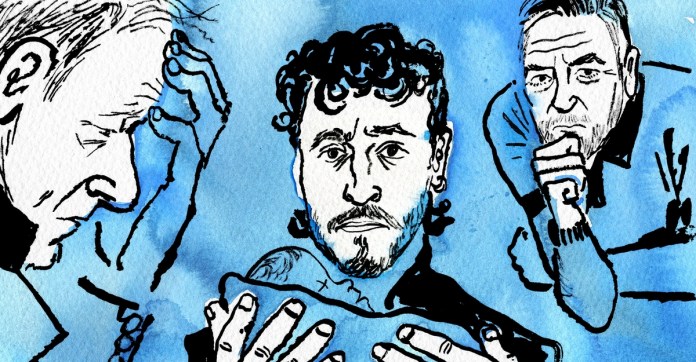
What’s different about this new cinematic crop of dads is their culpability. They each choose themselves over their kids, prioritizing creative fulfillment. George Clooney’s titular A-lister in Noah Baumbach’s Jay Kelly admits as much when trying to explain his years-long absence to his now-adult daughter: “I wanted something very badly,” he says, “and I thought if I took my eye off of it, I couldn’t have it.” At least Jay is trying to apologize. When Gustav (played by Stellan Skarsgård), the ornery patriarch of Joachim Trier’s Sentimental Value, is accused by his daughter Nora (Renate Reinsve) of never having watched her perform, he defends himself by saying that he doesn’t like theater. Meanwhile, in Chloé Zhao’s Hamnet, William Shakespeare (Paul Mescal) likes the theater a bit too much. Although he’s a much more affectionate parent than Jay or Gustav, the Bard’s absence—he gallops away from plaguey Stratford-upon-Avon to the Elizabethan West End—has calamitous consequences for his kids.

[Read: Parenting is the least of her worries]

But these films are not pat condemnations of the flawed fathers they depict; they illustrate, sometimes with seeming ambivalence, the consequences of such self-absorption. Tellingly, Sentimental Value’s most tender scene doesn’t feature Gustav at all. Instead, it’s a quiet moment between Nora and her sister, Agnes (Inga Ibsdotter Lilleaas). Having finally read Gustav’s latest screenplay, and found within it surprising echoes of the darkest periods of her own life, an emotional Nora sits on her bedroom floor beside her sister. The script is so uncannily accurate, Agnes notes, that it’s as though their father had been there for Nora’s suffering. “Well, he wasn’t,” Nora replies. “You were.”

It’s a gorgeous demonstration of familial love that also lays bare the true cost of the Sad Art Dad’s narcissism. He has made himself redundant; his children have learned, painfully, to cope without him. The same specter of redundancy haunts both Hamnet and Jay Kelly. When Shakespeare arrives home after tragedy strikes, he finds that he’s too late to help his family. He then announces his intent to return to London—and his wife, Agnes (Jessie Buckley), slaps him. Jay’s daughter Jess (Riley Keough) tells her father with brutal candor not to worry about her: “I’m gonna have a good life, just not with you.” A memorable shot in Sentimental Value shows Gustav standing alone on a Normandy beach, his hulking, black-suited figure marooned against miles of sand and scudding lilac clouds. The price of failed fatherhood, it seems, is loneliness.

Does the Sad Art Dad regret his choices? Is making great art—which, in these films, has a capacious, allegorical quality—worth ruining your relationship with your kids? Each of these movies tries to convince us, with varying degrees of success, that prioritizing your artistic endeavors offers emotional compensation. Hamnet, for instance, ends with a delicately choreographed moment of parental connection. Agnes, standing in the audience at the Globe Theatre, reaches out to grasp the hand of the young actor playing Hamlet; in the film’s version of the play, the tragic boy-hero is named for her dead son. Moving though it is, the scene’s mawkishness renders it unpersuasive: Agnes’s abrupt pivot from bitterly resenting her husband to forgiving him strains credulity. A play, even a Shakespeare play, is no substitute for a child.

[Read: Two different ways of understanding fatherhood]

Jay Kelly also considers the case for putting your craft before your kids, but only half-heartedly. It toys with the idea that the magic of the movies at least partially justifies Jay’s parental negligence; the film ends on a long close-up of Jay’s face as he watches a retrospective reel of his career, visibly moved. But the film ultimately gives up trying to convince the audience that the art was worth the human cost. In its closing line, Jay asks, fruitlessly, for a chance to live his life over again. Measured against the wreckage of his relationships, Hollywood’s comforts prove chilly even to the movie star.

Sentimental Value’s vision of film as a doorway to empathy and repair is by far the most compelling. Gustav’s script may dwindle beside the compassion his daughters offer each other, yet his transformation of Nora’s pain into art is still an act of love. As Agnes says to her sister: “I think he wrote it for you.” Gustav’s work, we realize, is more empathetic, more attentive to other people, than he is. His daughters might find this to be a bitter-tasting irony, but the consolation is real—particularly for an actor like Nora, who eventually finds creative catharsis playing the part Gustav based on her.

Oddly, despite his inadequacies, the Sad Art Dad suggests a promising cultural shift on-screen. To pay attention to the idea of flawed fatherhood, after all, is to think seriously about what constitutes its opposite, the good dad. Laura Dern’s unsentimental divorce lawyer says it well in Baumbach’s Marriage Story, which is also about depressed dads: “The idea of a good father was only invented, like, 30 years ago.” As such, it’s striking to find three films out at the same time that are gnawed by such similar anxieties. Perhaps Joachim Trier put it best: “Tenderness is the new punk.”

Great Job Susie Goldsbrough & the Team @ The Atlantic Source link for sharing this story.

14 best Airbnbs in Japan, from city condos to mountainside escapes

14 best Airbnbs in Japan, from city condos to mountainside escapes

Japan has no shortage of amazing hotels. From technologically savvy Tokyo suites to luxury forest retreats to playful boutique stays, travellers might have a hard time picking just one. But space can be limited, and not all hotels can cater to those once-in-a-lifetime large group trips. Finding the right lodging can sometimes dim the excitement of trip planning, especially when having to worry about factors like group sizes, access to certain amenities such as ryokans, and privacy. But renting an Airbnb in Japan will also give you a glimpse into the real lives of locals. You get a one-way ticket into the everyday lives of those who live in a city you’ve only dreamed about and can see and connect with them on a deeper level when living side-by-side. You can rent a private villa on a mountaintop that’ll accommodate all of your friends or a penthouse in Shinjuku with stellar skyline views that won’t break your budget.

While these Japanese Airbnbs are scattered all over the country and showcase different views, they have one thing in common: they are a favourite among bookers, earning Airbnb Guest Favourite status. These are properties with stellar reviews of 4.85 and above from reliable Superhosts with track records of little to no cancellations.

From mountainside cottages to luxury penthouses with amenities that rival popular hotel chains, here are the 14 best Airbnbs in Japan to know in 2026.

Our top picks

  • The best Airbnbs in Tokyo
  • The best Airbnbs in Kyoto
  • The best Airbnbs in Osaka

How we choose the best Airbnbs in Japan

We’ve vetted these listings based on Superhost status, ratings, amenities, location, previous guest reviews, and decor. All listings featured on Condé Nast Traveller are independently selected by our editors. If you book something through our links, we may earn an affiliate commission.

Great Job & the Team @ Condé Nast Traveler UK Source link for sharing this story.

The Revolutionary Roots of Social Democracy

The Revolutionary Roots of Social Democracy

Vivek Chibber

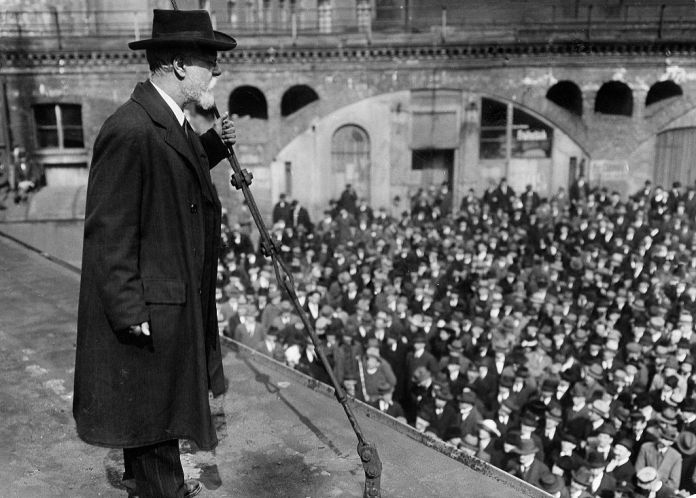
We have to divide the social democratic movement into prewar and postwar. And by war, I mean World War II, not World War I. I think, in the prewar period, that is, the social democratic movement of the first half of the twentieth century, there was a very robust understanding of the bourgeois state and the limits it puts on the chances for progressive change and progressive legislation.

It was not the kind of theory you see written in academic texts today, or since the 1980s and ’90s, when Marxists developed what we call modern state theory. But modern state theory — as developed by people like Nicos Poulantzas, Ralph Miliband, Fred Block, and Claus Offe — really built on the insights or the assertions that early twentieth century social democrats made, assertions which were very sharp and very smart, but weren’t articulated into a full theory.

What the Left did in the latter part of the twentieth century was turn those earlier assertions and affirmations into a theory, making explicit what was implicit.

What was implicit in the early parts of the twentieth century among social democrats was the understanding that the state — even a democratic state, which was in some way beholden to the voters, most of whom were workers — gave greater power to capitalists, even though workers had greater votes. That was essential to their understanding.

This is not as well encapsulated in Lenin’s State and Revolution, but the State and Revolution is not a representative text of how social democrats thought about the state. That book was forced down the throat of the global left because when the Bolshevik party became the most important and most famous communist party in the world, it became kind of a religious text. But it doesn’t express the entirety of what social democrats thought because its own theory of the state is actually quite impoverished. It isn’t a very well-worked-out theory of the state.

The more common understanding of the state was that it is not a naked instrument of class rule because once you got the democratic vote, capitalists couldn’t rely on the state just to be a naked instrument of rule. You had to have a more sophisticated mediation, a more sophisticated approach, to keeping the working class in line. You couldn’t just keep using the military or the cops against them because they had the right to vote.

The more sophisticated perspective essentially said that, even though the state’s class bias can be somewhat mediated or weakened through the vote, it will still remain a class state. Because it’s still a class state, it’s going to take real struggle, real power, and real threats of economic disruption from the working class to get legislators and to get parties to give us reforms, to give us legislation that’s going to make our lives better. So they did, and we know they understood this because that’s the strategy they used.

All social democratic parties — regardless of whether they were fighting in their own minds for socialism or whether they were fighting in their own minds for merely a form of capitalism — all of them had one thing in common, which was a very, very deep anchor in the working class, a very close relationship to trade unions, and a commitment to using the power of trade unions and of workers in their neighborhoods and in their other institutions to press their interests onto the state.

In other words, even though they were committed to using the power of the vote, they never exclusively relied on it because they knew that the vote would never be enough to bend the state to their interests and to their needs. It would have to involve class struggle. It would have to involve actually taking on power where it really exists in capitalism, which is not inside the state. It’s inside the investment prerogative of capitalists. They all knew this.

They didn’t articulate this perspective as well as the later left in the 1970s and ’80s did, but they all knew this. That was the theory that informed their practice. And that theory deepened and grew as their experience with the state grew.

Later on, it got, in many ways, weaker, not better. But in this part of their history — the first half of the twentieth century — they had a pretty robust understanding of the bourgeois state. The sad thing is, the current left is not even at the level of the early left, of the social democratic left of the 1920s, ’30s, and ’40s.

Great Job Vivek Chibber & the Team @ Jacobin Source link for sharing this story.

Secret Link