As the saying goes, if you don’t like the weather in Texas, just wait a minute and it will change. Though the capital city has enjoyed many 70- and even 80-degree-plus days in January, this weekend will usher in freezing temperatures and a possibility for snow, and Austin Pets Alive! is asking the community for support.
Today, the nonprofit put out a call for people to stop by its Town Lake Animal Center location at 1156 W. Cesar Chavez between noon and 6 p.m. daily through Friday, Jan. 23 to meet and pick up a dog to foster until Wednesday, Jan. 28. While regional shelters continue to deal with overcrowding and closed intake, 75 dogs are in need of temporary warm homes through Austin Pets Alive! during the cold front.
For those who cannot foster a dog, the rescue nonprofit is also asking locals to donate supplies (dropped off in front of ‘Building C’). The donations will help the dogs at the shelter and those going home with fosters. The request list includes:
Size medium, large, or extra-large dog crates
Baby gates
Long-lasting dog chews
Dog toys
APA has also provided a list of cold weather tips for Austinites, listed below:
Great Job Madeline Hollern & the Team @ Austin Monthly Magazine Source link for sharing this story.
If you have transthyretin cardiac amyloidosis (ATTR-CM) , the same misshapen proteins that affect your heart can also build up around the nerves, leading to nerve damage, or neuropathy. Symptoms are wide-ranging, from tingling toes to dizziness and incontinence. This transthyretin amyloidosis with polyneuropathy, sometimes called ATTR-PN, is a relatively rare but serious condition. It occurs in hereditary cases of ATTR-CM, in which you inherit a specific gene, and in wild-type cases, which have no known cause.e60dc2a1-f33c-4a05-9b50-8e3e8e597629f5e8d52e-7ea8-4778-8458-0d51fb55ae3be60dc2a1-f33c-4a05-9b50-8e3e8e597629c902e552-8350-47f9-b4ce-48025231afa7 Because neuropathy associated with ATTR-CM can happen gradually, it’s important to understand how these neurologic changes may show up and progress over time.
Symptoms of Neuropathy in ATTR-CM Symptoms The neurological symptoms of ATTR-CM may show up before heart-related symptoms.e60dc2a1-f33c-4a05-9b50-8e3e8e5976291911b334-28a7-465c-b2ac-8be7c553138a This is because amyloid deposits form on our peripheral nerves, which help control everything from our heart and other muscles to our digestive system. This network of nerves manages communication between our central nervous system (the brain and spinal cord) and the rest of our body. ATTR-CM may affect:e60dc2a1-f33c-4a05-9b50-8e3e8e597629c9fb393b-f94e-45a2-bbaf-0f4d56ed48a0 Sensory nerves, which help us determine temperature, pain, and touch Motor nerves, which control movement Autonomic nerves, which control subconscious tasks like breathing and digestion Neuropathic symptoms may include:e60dc2a1-f33c-4a05-9b50-8e3e8e597629c9fb393b-f94e-45a2-bbaf-0f4d56ed48a0 Diarrhea and constipation Sexual dysfunction Problems with urination Eye problems, from dry eye and cloudiness to glaucoma e60dc2a1-f33c-4a05-9b50-8e3e8e5976295ff654bc-fb6b-4a6b-979d-9ddf1b17fb04 Orthostatic hypotension , a drop in blood pressure when you stand up that can cause dizziness and faintinge60dc2a1-f33c-4a05-9b50-8e3e8e5976295ff654bc-fb6b-4a6b-979d-9ddf1b17fb04 Numbness or weakness Pain and tingling Burning sensation Fatigue Excessive sweating or lack of sweating Most of these symptoms are not exclusive to ATTR-CM, however. This makes it possible for ATTR-CM and neuropathy to be missed or misdiagnosed as something else, such as a gastrointestinal issue alone.e60dc2a1-f33c-4a05-9b50-8e3e8e5976291911b334-28a7-465c-b2ac-8be7c553138a That’s why it’s important for doctors to consider all symptoms and identify the disease early. In extreme cases that are not caught and treated, peripheral neuropathy can make it harder to walk, button a shirt, or use motor skills to perform other essential tasks. “As someone accumulates amyloid deposits, their disease progresses,” says Elizabeth A. Mauricio, MD , neurologist at Mayo Clinic in Jacksonville, Florida. “Earlier treatment will lead to a better quality of life.”
Treating the Root Cause Treatment ATTR-CM medications include “gene silencers” that stop protein production and transthyretin stabilizers. Gene silencers also can treat neurologic symptoms, Dr. Mauricio says. “Gene-silencing therapies work by reducing the production of problematic transthyretin proteins,” says Rabia Malik, MD , a neurologist with Rush Medical Group in Oak Brook, Illinois, adding that they can help mobility, pain, and digestive-system issues associated with ATTR-CM. The U.S. Food and Drug Administration originally approved gene-silencing treatment, such as vutrisiran (Amvuttra), to treat neuropathy related to hereditary transthyretin amyloidosis. Vutrisiran is now approved to treat ATTR-CM.e60dc2a1-f33c-4a05-9b50-8e3e8e597629747b548b-5ea8-4f6a-9f49-c426d6f1ec73 Other gene-silencing medications include: patisiran (Onpattro), which can stall progression of nerve-related symptoms and potentially help with mobility issuese60dc2a1-f33c-4a05-9b50-8e3e8e5976299571b780-8413-45aa-8074-56aeba65ea74e60dc2a1-f33c-4a05-9b50-8e3e8e5976299e2386d9-f094-423c-8a0f-f143da46d11d eplontersen (Wainua), which is prescribed to treat neuropathy in hereditary ATTR-CMe60dc2a1-f33c-4a05-9b50-8e3e8e59762992464188-be41-4578-9d9a-b926d3143922 Although these medications may stop symptoms from progressing, they are not a cure. “Nerves can repair themselves, but it’s a low, slow, and often incomplete process,” Mauricio says.
Supportive Medications Medications Some medications can provide short-term relief from symptoms of neuropathy, such as relieving pain, itching, and burning. These include: Medications typically prescribed to prevent seizures , such as gabapentin (Neurontin) and pregabalin (Lyrica)e60dc2a1-f33c-4a05-9b50-8e3e8e5976298d4bfff4-6708-40a9-9f98-ea71ec823c40 Antidepressants , including duloxetine hydrochloride and nortriptylinee60dc2a1-f33c-4a05-9b50-8e3e8e59762933668eaf-0e62-4af3-b56a-a8d313f57509 Topical treatments, such as lidocaine patches or the topical cream capsaicine60dc2a1-f33c-4a05-9b50-8e3e8e59762933668eaf-0e62-4af3-b56a-a8d313f57509 Medicinal cannabis, which may be helpful for some patients, despite little supporting evidence (consult your doctor before trying) Doctors should avoid recommending opioids to treat peripheral neuropathy because of their dangers and side effects, Mauricio says.
Nonmedicinal Techniques Nonmedicinal Techniques Some people with ATTR-CM and nerve damage may find relief in nonmedicinal options. Many are backed with anecdotal evidence only, however, and may not work for everyone. Treatments may include:e60dc2a1-f33c-4a05-9b50-8e3e8e5976298490932b-5ee7-4ea8-be2c-d95443029a79e60dc2a1-f33c-4a05-9b50-8e3e8e5976298f7a42ae-468f-4e22-9a15-46d3e805ea2c Ergonomic supports to reduce strain, such as splints or shoe inserts Relaxation exercises like breath work, meditation, massage, and yoga Acupuncture Dietary changes to reduce inflammation from food and beverages Transcutaneous electronic nerve stimulation (TENS) devices, over-the-counter machines that attempt to block pain with electrical stimulation applied to nerves Exercise, with a focus on low-intensity exercise like walking Cognitive behavioral therapy Hypnosis Avoiding alcohol and tobacco Getting at least seven hours of sleep each nighte60dc2a1-f33c-4a05-9b50-8e3e8e597629dceea7a2-12e4-454b-939e-ba55455a57c2 Green tea, which could help reduce amyloid depositse60dc2a1-f33c-4a05-9b50-8e3e8e597629174ba34e-6c08-4a30-8eb1-84e12d810f53 Alpha-lipoic acid supplements, antioxidants that can help with neuropathy associated with diabetes, Dr. Malik says, though there’s no data supporting its use with ATTR-PNe60dc2a1-f33c-4a05-9b50-8e3e8e5976298a90c142-8bfc-413d-8730-fe73fa853ed3
Preserving Independence Staying Independent In addition to pain, neuropathy can cause numbness, tingling, weakness, and other sensations that make it harder to function every day. Talk to your care team about safe ways for you to stay mobile inside and outside your home. To avoid complications from a fall, your doctor might suggest using a walking stick, cane, or walker, Malik says. Other ways to keep your environment safe include:e60dc2a1-f33c-4a05-9b50-8e3e8e5976291b0e3963-a1af-4e13-a864-5e32b45e7c5f Ensuring rooms in your home are properly lit Installing grab rails and bars in stairwells and bathing areas Removing rugs and other slip risks from floors Replacing furniture that has sharp edges or corners Purchasing specialized tools to help you get dressed, such as zipper pulls and dressing sticks
The Takeaway Nerve damage may accompany ATTR-CM, sometimes appearing before the heart disease is diagnosed. Symptoms of neuropathy with ATTR-CM, such as numbness and gastrointestinal issues, may resemble those of other conditions, making it important for you to share what you are experiencing to help your healthcare team. Although there is no cure for the condition, medications like gene-silencing therapies may stop the progression of neuropathy and improve your quality of life. Dietary changes, ergonomic supports, and relaxation techniques may help ease symptoms.
Resources We Trust Cleveland Clinic: Transthyretin Amyloidosis (ATTR-CM)Amyloidosis Research Consortium: Finding SupportFoundation for Peripheral Neuropathy: Peripheral Neuropathy NutritionMedlinePlus: Transthyretin AmyloidosisMemorial Sloan Kettering Cancer Center: Managing Peripheral Neuropathy
Great Job Jessica Migala & the Team @ google-discover Source link for sharing this story.
Industry reports and the growth of voice model companiesin the Indian market suggest that there is a growing demand for voice AI solutions in the country. Voice is a popular medium for communication among people and businesses in India. That’s why enterprises and startups are eager to use voice AI to be more efficient at customer support, sales, customer acquisition, hiring, and training.
But recognizing market demand is one thing — proving businesses will pay is another. Y Combinator rejected the application from Bolna, a voice orchestration startup built by Maitreya Wagh and Prateek Sachan, five times before finally accepting it into the fall 2025 batch, skeptical that the founders could turn interest into revenue.
“When we were applying for Y Combinator, the feedback we got was, ‘great to see that you have a product that can create realistic voice agents, but Indian enterprises are not going to pay, and you are not going to make money out of this,’” Wagh told TechCrunch.
The startup applied with the same idea for the fall batch but was able to show it had revenue of more than $25,000 coming in every month for the last few months. At that time, the company was running $100 pilots to help users build voice agents. Now the startup is pricing those pilots at $500.
The momentum has continued. The startup said on Tuesday that it has raised a $6.3 million seed round led by General Catalyst, with participation from Y Combinator, Blume Ventures, Orange Collective, Pioneer Fund, Transpose Capital, and Eight Capital. The round also includes individual investors, including Aarthi Ramamurthy, Arpan Sheth, Sriwatsan Krishnan, Ravi Iyer, and Taro Fukuyama.
The product and customers
Bolna is building an orchestration layer — essentially a platform that connects and manages different AI voice technologies — akin to startups like Vapi, LiveKit, and VoiceRun, to suit the idiosyncrasies of interactions in India, including noise cancellation, getting verification on the caller ID platform Truecaller, and handling mixed languages.
Feature-wise, the company has built specific nuances for Indian users, such as speaking numbers in English regardless of the core language, or allowing for keypad input for longer inputs.
Techcrunch event
San Francisco | October 13-15, 2026
Image Credits:Bolna
Wagh noted that the key differentiation of Bolna is that it makes it easy for users to build voice agents by just describing them, even if they don’t know much about the underlying technology, and start using them for calls. The company said that 75% of its revenue is coming from self-serve customers.
He also said that because Bolna is an orchestration layer, it doesn’t depend on a single model, so enterprises can easily switch when there is a better model available.
“Our platform allows customers to switch models easily or even use different models for different locales to get the best out of them. An orchestration layer is necessary for enterprises to ensure they are getting the best models because one model can be better today and another one can be better tomorrow,” Wagh said.
The company has a range of clients, including car reselling platform Spinny, on-demand house-help startup Snabbit, beverage companies, and dating apps. Most of these are small to midsize businesses that use Bolna’s self-serve platform.
Separately, Bolna is pursuing large enterprise deals. For these large enterprises and custom implementations, Bolna has a team of forward-deployed engineers — specialists who work directly with clients on-site or closely with their teams. The startup has signed two large enterprises as paying customers and has four more in the pilot stage. Currently, Bolna employs nine forward-deployed engineers and is adding two to three people to that team every month to support this enterprise push.
Bolna has seen steady growth in both call volumes and revenue. It say it’s now handling over 200,000 calls per day and on the verge of crossing $700,000 in annual recurring revenue (ARR). The company noted that while 60% to 70% of call volume is in English or Hindi, other regional languages are steadily rising.
Akarsh Shrivastava, who is part of the investment team at General Catalyst, said that the firm found Bolna impressive because its orchestration layer is flexible for various kinds of customers.
“Bolna allows you the freedom to choose any model and has a stack behind it to mold it according to your requirement. It’s a good option for people who want to own some part of the stack, want flexibility in model picking, and want to be able to maintain those products themselves,” Shrivastava told TechCrunch over a call.
Great Job Ivan Mehta & the Team @ TechCrunch Source link for sharing this story.
Greetings from Fiesta City sign at Frontier Fiesta on Thursday, April 10, 2025, in Houston, Texas. | Karolina Navarro/ The Cougar.
As the spring semester begins, a new set of events and socials sprout up for students at UH. Here’s a list of some must-attend events.
Frontier Fiesta
Frontier Fiesta, one of the most student-anticipated events of the spring semester, will take place from April 16 to 18, run by UH students at TDECU Stadium.
The event is the University’s oldest programming tradition, founded in 1939.
Though having a different impression than the first Frontier Fiesta, its core mission to empower the student body and boost school spirit remains.
The 2026 Frontier Fiesta schedule is currently not posted to the public, but in previous years, the event consisted of major musician headliners, student performances, variety shows from student organizations and carnival rides and games.
In addition to the festivities, the University also awards scholarships to students. Frontier Fiesta is free to the public, with pricing for food and games inside.
Hispanic Alumni fashion show
The UH Hispanic Alumni Association, in partnership with the student organization UH Fashion and Business, will host their 8th Annual Hispanic Alumni Fashion Show on Feb. 7 in the Student Center South Houston Room.
The event serves as both a promotion of largely Hispanic, house-based designers and a fundraiser for scholarships for Hispanic students at UH, awarding $500 to $5,000 per student.
Hosted in the evening, the collection displays a mix of riveting traditional Hispanic and cowboy attire, elegant ballgown dresses and edgy, sustainable streetwear.
Early pricing for tickets is at $55 for General Admission and $100 VIP.
Bill Yeoman golf tournament
The UH Alumni Association is hosting its 35th annual Bill Yeoman Golf Tournament on Feb. 16.
Held at Sugar Creek Country Club, the tournament helps raise scholarship funds for high school students planning to attend UH and honors UH’s former head football coach Bill Yeoman.
The festival is distinctively different from the previous performances of the academic year.
As the name implies, students will present complex stories, consisting of one set and one scene performances with two to three characters, creating a unique theater experience for the audience.
Tickets are priced at $10 for UH students and $20 for general admission.
news@thedailycougar.com
Great Job Sydney Jackson & the Team @ The Cougar for sharing this story.
Texas grid officials say the state is prepared to meet electricity demand ahead of a powerful winter storm that’s expected to bring days of freezing temperatures and the chance of ice or snow across parts of the state later this week.
The Electric Reliability Council of Texas, which oversees the state’s power grid, told The Texas Newsroom on Tuesday that based on expected weather conditions, it “anticipates there will be sufficient generation to meet demand” ahead of the storm.
“ERCOT will continue to deploy all available resources to manage the grid reliably and coordinate closely with the Public Utility Commission, generation providers, and transmission utilities,” the council said in a statement.
Sign up for the Hello, Houston! daily newsletter to get local reports like this delivered directly to your inbox.
As for Houston’s power grid, CenterPoint’s Vice President of Distribution Operations, John Cornelius Jr., said the utility company is preparing crews, contractors and equipment to respond to any weather-related power outages. CenterPoint provides and maintains the utility infrastructure in and around the Houston area.
“We expect for some weather to potentially cause outages, but we expect for that to be minimized,” he said.
Cornelius said CenterPoint has undertaken winterization efforts such as upgrading equipment, installing stronger poles and selectively bringing some power lines underground.
“CenterPoint is prepared, coordinated and ready for the winter weather approaching our territory,” he said.
Subfreezing temperatures are forecast to arrive by Friday as arctic air pushes south into Texas. Forecasters say moisture arriving late Friday night into Saturday could set the stage for hazardous winter weather throughout the state.
“We’ll start out with a cold rain across North and Central Texas, and that will quickly devolve into a wintry mix Friday and Saturday, so we’re expecting some ice, some snow,” said Allison Prater, meteorologist with the National Weather Service’s Dallas-Fort Worth office.
The most significant impacts are expected late Friday through the weekend, with temperatures plunging well below freezing. Prater said much of Texas could see overnight lows fall freezing, with hard-freeze conditions possible as far south as the Gulf Coast.
There’s still a chance parts of Texas could remain below freezing on Monday, but temperatures are expected to begin rebounding up to the lower 40s on Tuesday.
Prater urged Texans to prepare now by stocking emergency supplies at home and in their cars, checking smoke and carbon monoxide detectors and making sure vehicles have enough fuel. She also recommended winterizing homes to prevent burst pipes, monitoring forecasts closely and limiting time outdoors.
The approaching storm comes nearly four years after the February 2021 winter storm, which left millions of Texans without power for days during extreme cold and was blamed for widespread power and water outages. More than 240 people died statewide.
In the years that followed, the state has taken steps to strengthen the power grid during extreme cold, including requiring power plants and transmission facilities to weatherize their equipment. ERCOT says it has conducted thousands of inspections to ensure compliance with those rules, changes it says have improved the grid’s resiliency during periods of high demand.
Great Job & the Team @ Houston Public Media for sharing this story.
SEAN HANNITY (HOST): The problem with Europe is, Europe now has gotten weakened, they have gotten soft, they have gotten woke, they’ve become DEI. They have had unfettered immigration, they’ve become so liberalized that even Great Britain has 85 Sharia courts. Throughout areas in Western Europe, they have no-go zones and they’re allowing societies to live separately within their own country rather than enforce assimilation, you know, demands on people that want to live there, and, as a result, I think it has weakened these countries.
I can tell you right now, from my perspective, I just don’t have any faith in the NATO alliance in terms of their ability to contribute much to us. I think it’s us contributing to them. And I think because the president has so little faith in them that he sees, rightly so, as presidents before him have seen, the geopolitical importance of Greenland.
Great Job Media Matters for America & the Team @ Media Matters for America Source link for sharing this story.
I am very deeply saddened to hear of the death of Rob Hirst.
Midnight Oil has been my favourite band since I was a young teenager, and still remains an endlessly renewable resource of energy and inspiration with every repeat play. Rob’s lyrics, drumming, and vocals are one of the indivisible elements that made Midnight Oil into an Australian cultural and political phenomenon, forming an intrinsic part of the soundtrack to so many lives and campaigns.
Rob’s presence on stage was extraordinary and unforgettable. As wryly noted by a roadie in the film, Midnight Oil, 1984, the drum kit had to be literally nailed down–such was the force with which Rob struck the instruments. There was transcendent power in Rob’s performance–yet never any sense of aggro. What you were witnessing was tonic, not toxic; no aggression but incredible strength and singularity of purpose expressed through action in the moment. The dynamics generated by the members of the band on stage in combination were famously exhilarating, with the huge and whirling frame of Peter Garrett usually the focus of things. Still, it was Rob who provided the literal beat for the band’s enormous heart.
And offstage, Rob was just an absolutely lovely bloke. It is sometimes warned that you should never meet your heroes, but that simply didn’t apply to Rob Hirst.
Along with his bandmates, Rob was a tremendous supporter of the work of Greenpeace. The Oils played gigs and took numerous actions on Greenpeace campaigns, among the many causes and organisations to which the band gave their strength and resources. As Andrew Stafford has noted in his obituary in the Guardian, it was Rob’s particular inspiration that the song ‘Hercules’–part of the epic and historic Species Deceases EP–should be an elegy for the Greenpeace flagship, the Rainbow Warrior, which had been martyred by French secret service agents in Auckland Harbour.
Memorably, on their very final tour, the Oils collaborated with Greenpeace and others in staging a spectacular intervention against Woodside Energy’s climate-wrecking gas expansion plans. Greenpeace is very deeply grateful to Rob for his deep commitment to environmentalism and social justice over so many years.
It feels impossible to even try to select highlights in this raw moment, so here’s just one favourite, ‘Only the Strong’–a song written by Rob in extremis–performed as the opener, live at the Capitol Theatre in Sydney 1982:
Of course, Midnight Oil wasn’t Rob’s only band. He found time for a range of other musically varied acts, including Ghostwriters, Backsliders, The Break, and The Hillmans–the latter whose one-off tribute to Midnight Oil bassist and vocalist Bones Hillman, who died from cancer in 2020, now feels like it has an added layer of sadness and poignancy.
The audio and video recordings of Rob in full flight with the Oils mean that the energy and resolution expressed through the music is eternal; always there for anyone at the edge of themselves, or seeking that necessary inspiration and resolve to take the hardest line.
As Rob said when Midnight Oil received the Gold Medal for Human Rights from the Sydney Peace Foundation in 2020, ‘the fight goes on, daily and weekly in this country’. Rob Hirst may no longer be physically with us, but in these troubled times, his music and spirit could hardly be of greater necessity, or enduring power and salience.
On behalf of all at Greenpeace, our very deepest condolences to Rob’s wife Lesley, daughters Alexandra, Gabriella and Jay, and to the surviving members of Midnight Oil, Pete, Martin and Jim.
RIP Rob Hirst.
Great Job David Ritter & the Team @ Article – Greenpeace Australia Pacific Source link for sharing this story.
A sweeping, year-one rundown of how Trump’s second-term power grabs and policy rollbacks are eroding women’s rights, healthcare and economic security.
President Donald Trump speaks in the East Room of the White House on Jan, 16, 2026. (Chip Somodevilla / Getty Images)
This analysis was originally published by the National Partnership for Women and Families.
In the first year of the second Trump administration, there has been a barrage of harmful executive orders, the appointment of dangerous and unqualified political nominees, unprecedented firing of federal employees along with restructuring or near elimination of many federal agencies. Amidst a nonstop, chaotic whirlwind of daily breaking news, court decisions and more, the administration is abusing its power to turn back the clock on rights and protections for hundreds of millions of people.
Below we highlight some ways this administration has been particularly harmful for women and their families.
Threats to Women in the Workplace
1. Weaponizing the EEOC
The Equal Employment Opportunity Commission (EEOC) is an independent federal agency with a bipartisan slate of five commissioners; the agency is at the frontlines of civil rights enforcement, investigating and remedying employment discrimination charges. In FY 2023 alone, the Commission received more than 81,000 complaints of alleged discrimination, including discrimination by sex, race, religion and age. The EEOC plays a vital role in ensuring that all workers—and women workers in particular—are treated fairly; from 2014–2024, the EEOC recovered $5.6 billion for workers who were discriminated against.
2. Attempting to withdraw guidance on workplace harassment
On December 29, the Equal Employment Opportunity Commission took steps to rescind necessary guidance on workplace harassment; the request to withdraw the 2024 guidance completely bypasses the comment period that was used when developing the guidance, during which the EEOC received over 37,000 comments. The EEOC’s attempt to avoid public comment underscores the consequences pulling the comprehensive guidance would have for workers across the nation relying on their employers to have clear, actionable guidance to protect them from harassment in the workplace. It’s one more step taken by President Trump’s EEOC to abandon protections for women and LGBTQ+ employees in favor of a politicized focus on religious discrimination and perceived discrimination against white men.
3. Threatening the implementation of the Pregnant Workers Fairness Act (PWFA)
The Pregnant Workers Fairness Act is a commonsense law that requires employers to offer reasonable accommodations to workers who have needs related to pregnancy, childbirth and other related medical conditions. It ensures workers have access to basic accommodations, such as bathroom breaks or leave for healthcare appointments. It is enforced by the EEOC, which has the authority to investigate and settle discrimination complaints, including those that would be covered by the PWFA. While the previous administration defended the law and rules from attacks, pregnant workers are now threatened by the Trump administration’s approach to the rule and the EEOC. Research by the National Partnership finds that efforts to overturn or undercut the enforcement of the PWFA put 2.8 million pregnant workers at risk each year.
4. Undoing long-standing protections for federal contract workers from workplace discrimination by rescinding Executive Order 11246
For nearly sixty years—during Democratic and Republican presidential administrations alike—EO 11246 was in place to ensure that federal contractors took proactive steps to promote equal opportunity for employment and did not discriminate against their employees on the basis of race, religion, sex and more. The order was an important tool against rooting out historic gender discrimination, unearthing difficult to find pay disparities, and helping to increase the number of women in upper level, higher paying jobs in leadership when they’d been previously shut out due to their gender. Now that the Trump administration has rescinded the executive order in its entirety, those that contract with the federal government are no longer required to actively advance equal opportunity.
5. Undermining the Office of Federal Contract Compliance Programs (OFCCP)
6. Abandoning enforcement of protections for disabled federal contract workers
Executive Order 11246, the now-rescinded regulation for federal contractors, prohibits employment discrimination on the basis of race, color, religion, sex or national origin; Section 503 of the Rehabilitation Act of 1973 is an important counterpart, prohibiting employment discrimination by federal contractors on the basis of disability. It requires federal contractors to take intentional action to hire and retain qualified employees with disabilities, allow individuals to self-identify as workers with disabilities to help ensure important data tracking, and sets a goal for federal contractors to aspire to create a workforce where at least seven percent of employees are people with disabilities. These regulations are vital for advancing equity for the 3.7 million women workers with a disability. Despite this, President Trump’s Department of Labor paused enforcement of the anti-discrimination law for months, then proposed a rule to eliminate key provisions completely.
7. Revoking the $15 minimum wage for federal contractor workers
A Biden-era order raised the minimum wage for federal contractors to $15 an hour in 2022. Thanks to inflation adjustments, that rate increased to $17.75 last year. While that order raised wages for hundreds of thousands of workers employed in the private sector at companies with government contracts, on March 14, 2025, the Trump administration revoked the order, opening the door for some employees to experience up to a 25 percent cut to their pay. The workers helped by the Biden executive order—and thus, those most harmed by the Trump administration’s decision to undo it—are disproportionately women, Black workers and Hispanic workers.
8. Working to strip millions of domestic workers of minimum wage and overtime protections
Domestic workers, such as home care workers, nannies and housecleaners, have historically been excluded from important legislation that ensures workers’ rights to overtime protections and the federal minimum wage. This workforce is overwhelmingly made up of women and women of color and despite their crucial work, they contend with a lack of workplace safety, collective bargaining rights, and staggeringly low pay. After years of fighting for their rights, domestic workers won important minimum wage and overtime pay protections through Department of Labor rulemaking, which went into effect in 2015. Now, the Trump administration working to strip millions of domestic workers of those rights through another rulemaking process which, if successful, would further lower wages, increase turnover and undo a decade of progress.
9. Working to undo affirmative action requirements that help ensure women and workers of color have access to apprenticeship programs that can lead to good-paying jobs
Apprenticeship programs are proven to help workers secure good-paying jobs in the trades, such as construction, manufacturing and utilities. It is vital that all workers, including women, people of color, workers with disabilities and other historically excluded groups, can participate in apprenticeship programs that would increase their lifetime earnings potential and economic security. However, women are grossly underrepresented, making up only 14.4 percent of apprentices. Rather than investing in apprenticeship programs as President Trump promised, his Department of Labor (DOL) has pushed to make apprenticeships less accessible. The DOL proposed a rule that would remove requirements that certain apprenticeship programs conduct targeted outreach, recruitment and retention activities; that those programs set goals for enrollment based on race and gender; and that programs support workers with disabilities.
10. Intimidating private sector companies to do away with efforts to implement equitable hiring practices and Diversity, Equity, and Inclusion programs
On day one of the administration, President Trump signed an executive order aimed at dismantling “Diversity, Equity, and Inclusion” programs. President Trump and his conservative allies often use “DEI” as an all-encompassing phrase synonymous with perceived discrimination against white men, but that ignores the long history of racism and sexism that these programs and civil rights laws are designed to remedy. Instead, the Executive Order is a proxy for attacks on civil rights and discrimination protections overall. It targets equity measures in the federal government andthreatens advances in the private sector in equitable hiring, equal pay and anti-discrimination for women. Companies have used the “evolving legal landscape” to cut or change their diversity, equity and inclusion goals, including Accenture, Pepsi, and Citigroup. President Trump’s Department of Justice is enacting an intense pressure campaign, promising subpoenas and investigations into corporations with diversity programs.
11. Installing political appointees with anti-worker agendas
President Trump has chosen multiple people as political appointees with anti-worker agendas that would harm millions of women workers. For example, Keith Sonderling, the Trump administration’s pick for Deputy Secretary of Labor, voted against the EEOC’s final rule on the Pregnant Workers Fairness Act during his time as a commissioner. Notably, President Trump has tasked Russell Vought with running the Office of Management and Budget (OMB), an agency that plays a powerful role in dictating the experience of women and families across the country. OMB leads the creation of executive orders and legislative proposals from the Executive Branch, manages the Presidential Budget, and oversees the regulatory process happening across agencies. Vought was a major architect of Project 2025 and is now a key player in the chaotic, illegal expansion of presidential power that occurred in the first year of the Trump administration.
The administration has also selected nominees to critical civil rights enforcement agencies who pledge allegiance to their priorities rather than protecting the rights of workers, such as Brittany Panuccio to be a member of the Equal Employment Opportunity Commission, who suggested that she would agree to cease investigating discrimination charges filed by women if directed to do so by the president.
12. Threatening to eliminate the Women’s Bureau at the Department of Labor
The Women’s Bureau was established by Congress in 1920 and is the only federal agency mandated to work on advancing economic opportunity for working women. For more than 100 years, the office has conducted research, drafted policy and engaged in grantmaking and outreach to improve working conditions and wages for women across the workforce. For example, the Bureau has funded Women in Apprenticeship and Nontraditional Occupations grants, awarding more than $21 million dollars to organizations across the country to expand pathways for women in good-paying jobs, as well as providing research and grants that made passing state-level paid leave programs possible in about a dozen states. Instead of investing in programs and initiatives that address the barriers women face in the economy, the Trump administration is committed to dismantling the very agency dedicated to that work.
13. Introducing dangerous uncertainty to the economy through the chaotic implementation of extreme tariffs, increasing the risk of an economic downturn
The implementation of President Trump’s signature economic policy proposal of broad and un-strategic tariffs is stoking fears of a global trade war. Specifics of the tariffs have shifted throughout the year, but economists acrossparties have raised the alarm that President Trump’s rash economic decisions are increasing the possibility of an economic slowdown or recession. If a slowdown or recession becomes reality, there could be serious consequences for women’s wealth and long-term financial well-being. Already, we have seen meager job growth for the year. Monthly job growth in 2025 averaged just 49,000 jobs a month, compared to 168,000 in 2024. This drop was driven by losses in industries affected by tariffs, as well as painful cuts to the federal government. Women’s declines were also pronounced—they averaged 78,000 jobs gained each month in 2024, compared to just 35,000 in 2025.
Threats to Women’s Health
14. Increasing care costs by allowing vital Affordable Care Act (ACA) tax subsidies to expire
President Trump signed into law the “One Big Beautiful Bill” (OBBBA) in July 2025 that did not extend tax subsidies that make health coverage affordable for over 21 million enrollees in the ACA Marketplace, including 10 million women. The expiration of these subsidies at the end of 2025 will lead to significant premium increases, loss of coverage and increased uncompensated care for healthcare providers unless Congress acts. An estimated 4.8 million people could become uninsured in 2026.
15. Passing historic cuts to the Medicaid program, that will disproportionately affect women and children’s access to healthcare
The OBBBA cuts more than $1 trillion from the Medicaid and the ACA—representing the largest rollback of federal funding in U.S. history. An estimated 7.8 million people will become uninsured due to Medicaid cuts by 2034. These cuts will also put over 130 labor and delivery units in rural areas at risk of closure, making maternal healthcare even more inaccessible in rural communities. Loss of Medicaid funding may also force states to drop optional 12 months postpartum coverage which is essential in mitigating the maternal health crisis.
16. Signing legislation to implement “work requirements” for Medicaid eligibility which will cause 5 million people to lose coverage
OBBBA includes an unprecedented federal mandate to implement work reporting requirements for the adult Medicaid expansion group, including parents (of children over age 13). Evidence shows that work requirements do not increase employment rates and instead create unnecessary red tape and barriers that will lead to historic coverage losses, even for people with exemptions like people with disabilities and pregnant people (which can result in gaps in essential prenatal and postpartum care).
17. Ending Medicaid funding for state services that support people’s health and well-being
In April, the Centers for Medicare and Medicaid Services (CMS) announced that it will end a federal funding match to states for certain “non-medical” needs, such as health-related social needs and other public health initiatives. These cuts to necessary programs will harm Medicaid recipients and care providers across the country, including cutting grants for high-speed internet for rural health providers, student loan repayment programs and other initiatives that help many maintain independent living with personal care assistance and meal preparation.
18. Shuttering reproductive health clinics by freezing funding for the Title X Family Planning Program and defunding Planned Parenthood
The Trump administration’s efforts to withhold Title X funds and “defund” reproductive health providers have driven reproductive health clinic closures and exacerbated barriers to healthcare access. The Title X Family Planning Program funds critical reproductive health services in low-income communities, including affordable birth control, cancer screenings, STI testing and more. On April 1, the Trump administration withheld millions of dollars from sixteen Title X grantees due to alleged violations of recent executive orders, including prohibitions on diversity, equity and inclusion (DEI) efforts. While funding was later restored, withholding reproductive health funding threatens to delay care and close clinics for those who need them most. Furthermore, the OBBBA defunded Planned Parenthood clinics and Maine Family Planning by prohibiting Medicaid reimbursements. While the prohibition on federal funding is only written into law for one year, it’s already having longstanding effects. Following the loss of Title X funds and Medicaid reimbursements, nearly 50 Planned Parenthood health centers were forced to close last year.
19. Sowing mistrust in abortion pill safety to set the stage for future restrictions on access
Medication abortion is critical to abortion access nationwide, accounting for more than 60 percent of all clinician-provided abortion care. The Food and Drug Administration (FDA) announced it would formally review mifepristone, one of two pills commonly used for medication abortions, despite its longstanding record of safety and efficacy. Administration officials justified the politically-motivated re-evaluation of abortion pill safety with junk science and disinformation about risks. This manufactured crisis is an attempt to curb access to medication abortion, laying the groundwork for further restrictions on abortion pills in the future.
20. Undermining reproductive health privacy and leaving patients vulnerable to criminalization
The Trump administration refused to defend the 2024 HIPAA Privacy Rule for Reproductive Health, which had lessened the risk of pregnant patients being reported to law enforcement and better protected those forced to travel to receive care because of state abortion bans. In the first two years after the Dobbs v. Jackson Women’s Health Organization decision, prosecutors brought more than 400 cases charging pregnant people with crimes related to pregnancy, pregnancy loss or birth. Trump’s DOJ abandoned the fight to protect patient privacy and declined to appeal a district court ruling that took away protections against reproductive health criminalization from patients nationwide.
21. Banning abortion care for veterans and their families who rely on VA healthcare
In 2024, the Department of Veterans Affairs boasted that it had more women veterans enrolled in its healthcare system than ever before. The Trump administration quietly implemented a policy that no longer allows the VA healthcare system to provide abortion care or even abortion counseling, including in instances of rape or incest, affecting the over nine million veterans enrolled in the VA healthcare program. This is an abortion ban for veterans, with severe impacts. Research from the National Partnership finds that more than half of women veterans of reproductive age live in states that have banned abortion or likely to do so—now, the administration has eliminated a crucial source of access for those veterans who would otherwise have no options. And crucially, the ban also means that veterans and their families in states with abortion protections still won’t be able to access the abortion care they need due to their VA health coverage. This policy is now the most extreme abortion restriction across any federal healthcare program.
22. Limiting enforcement of the Freedom of Access to Clinic Entrances (FACE) Act
The FACE Act makes it a federal crime to use force, threats of force or physical obstruction to prevent people from receiving or providing reproductive healthcare such as abortions. This legislation was passed in 1994 in response to violence by anti-abortion protestors against abortion providers, such as through blockades, sit-ins at clinics and bombings. The National Abortion Federation finds that between 1977 and 2022, there were 11 murders, 42 bombings, 531 assaults and 492 clinic invasions amongst thousands of other criminal activities directed at abortion providers, patients and volunteers. Death threats and other threats of harm against providers have only increased in the wake of the Dobbs decision overturning Roe v. Wade, yet President Trump’s Department of Justice announced in its first days that it would no longer enforce the law except under severe and “extraordinary circumstances.” The lack of enforcement makes clinics less safe for patients and providers.
23. Pursuing pronatalist policies that constrain women’s health and autonomy over their family planning
Pronatalism is a policy that encourages people to bear children predicated on racist, misogynistic and ableist ideas about what kinds of families are desirable and worthy of being protected. Pronatalism confines women to a regressive reproductive framework and undercuts their decision-making around if, when, and how to have children, limiting their societal value to their capacity as mothers. Administration officials have pushed numerous pronatalist ideas and policies to incentivize a higher U.S. birth rate, including “baby bonuses,” fertility education classes, and a “National Medal of Motherhood.” The White House also promotes “blame and shame” fertility, which frames infertility as a failure of women. President Trump’s nominee to be the next Surgeon General supports this deeply stigmatizing, anti-reproductive freedom fertility approach. Glaringly lacking from the pronatalist agenda are the supports families need to raise healthy families, including expanded healthcare access.
24. Compromising access to emergency abortion care by undermining the Emergency Medical Treatment & Labor Act (EMTALA)
Barriers to emergency abortion care result in people being forced to continue dangerous and often life-threatening pregnancies. There are increasing, high-profile stories of women who could not access emergency abortion care and suffered devastating consequences. The Trump administration has undermined protections under the Emergency Medical Treatment and Active Labor Act (EMTALA) that require hospitals to provide stabilizing care, including abortion care, for patients in medical emergencies. The Department of Justice dropped a federal lawsuit that could have protected emergency abortion care and the Department of Health and Human Services (HHS). CMS later rescinded guidance that reminded hospitals of their duty to provide emergency abortion care even in states with abortion bans. These actions will exacerbate chaos and confusion around when and whether providers can perform life- and health-saving abortion care in the context of state abortion bans—putting pregnant people’s life, health and future fertility at risk.
25. Threatening efforts to reduce Black maternal deaths and improve maternal healthcare
Black women are three times more likely to die from pregnancy than white women and are also disproportionately affected by unexpected outcomes in labor and delivery with consequences to their health and well-being. As the National Partnership has previously outlined, President Trump’s Executive Order banning diversity, equity and inclusion practices significantly weakens the federal government’s ability to hold hospitals accountable for their treatment of Black birthing people and their role in improving Black maternal health. Threats to diversity, equity and inclusion programs could also contribute to a sharp drop in the diversity of the maternal health workforce which would have negative consequences on patient experience and health outcomes. When paired with the massive Medicaid cuts highlighted earlier, the consequences for Black maternal healthcare are dire.
26. Making controversial changes to vaccine schedules that are especially dangerous for pregnant women and children
At the start of the term, the CDC announced dramatic changes to the childhood immunization schedule. In May, HHS Secretary Robert F. Kennedy Jr. unilaterally removed COVID-19 vaccines from the CDC’s immunization recommendations for pregnant people. In June, Kennedy removed all 17 experts on the Advisory Committee on Immunization Practice (ACIP), installing all new members, including many known vaccine skeptics. The health consequences of these changes are already becoming clear: measles cases hit record levels in the U.S. since the disease was declared eliminated in 2000; visits for flu-like symptoms reaching a thirty-year high; and COVID-19 still responsible for 100,000 deaths a year.
27. Erasing trusted health information and pushing “junk science” that endangers women’s health
In early February, thousands of government websites were suddenly changed or offline. This included webpages for agencies such as the Center for Disease Control, USAID and the Food and Drug Administration; pages that included information vital to the public and medical professionals, such as information on vaccines and reproductive health, were pulled down in order to comply with the onslaught of Executive Orders, including those that called on federal agencies to reverse course on diversity measures and gender. Though a judge ordered the administration to restore online access, some links remain dark and the administration’s attempts to hide and change information necessary to the public—particularly information about how to provide care and support women and families—continues. The administration has used junk science to promote unproven claims about the risks of Tylenol to pregnant women, as well as to cast doubt on abortion pill safety. In November, the CDC website was changed to promote the debunked link between infant vaccines and autism.
28. Ending data collection necessary to monitor disparities and advance health equity
Racial, ethnic and gender inequities can only be eliminated when high quality data is available to identify them, craft solutions and monitor progress. In addition to firing many of the staff responsible for data collection and analysis, the administration has also halted or modified data collection within critical national surveys, including the Pregnancy Risk Assessment Monitoring System (PRAMS) and the National Health Interview Survey (NHIS). CMS removed both the gender identity and the perceived discrimination items from the national Medicare Current Beneficiary Survey. CMS also removed a structural measure from quality reporting that assesses hospital-level leadership in advancing health equity, including data collection and requirements designed to standardize the identification of social drivers of health, including housing, food, transportation and more.
29. Exacerbating the health workforce crisis
The Trump administration has taken a series of actions that are likely to exacerbate the health workforce crisis. For example, his administration rescinded significant Biden-era staffing standards for nursing facilities that addressed chronic understaffing, patient safety and compensation concerns for direct care workers and staff, 84 percent of whom are women. Additionally, the severe and historic cuts to Medicaid will affect everyone, including hospital employees that are at risk of losing their jobs due to loss of hospital revenue and potential closures. National Partnership analysis finds that more than 80 percent of people working in hospitals in rural areas are women. The Department of Education has also implemented strict federal loan limits that will disproportionately hurt women, who make up the majority of students pursuing graduate programs, such as nursing, physician assistant studies, public health, physical therapy and social work. The Department of Education also directed schools, including medical schools, to end race-based programs or risk losing federal funding, resulting in a chilling effect that has reduced DEI initiatives and has led to recent declines in enrollment of medical students of color.
30. Leading unprecedented attacks on immigrant and public health
Trump’s mass deportation campaign is forcing immigrants to wait until complications arise and to depend on more costly, emergency care for their source of healthcare. In November, the administration ordered Medicaid data be shared with ICE officials, putting the health privacy of over 80 million Medicaid enrollees at risk and discouraging millions of eligible immigrants from enrolling and utilizing healthcare coverage. Most recently, the administration proposed a rule seeking to undo public charge protections, effectively penalizing immigrants for accessing essential health services.
A Border Patrol agent sprays pepper spray into the face of a protester in Minneapolis on Jan. 7, 2026. (Alex Kormann / The Minnesota Star Tribune via Getty Images)
31. Ending funding for crucial research on women’s health
President Trump has led a continued attack on vital research funding. Important research institutions such as the National Institutes of Health have had their funding and staff cut, resulting in uncertainty of future research funding, canceled study panels and the serious possibility of researchers and scientists closing their labs. Even small delays put millions of dollars for vital women’s health research on the line. And in a serious loss for women’s health research, the Department of Health and Human Services attempted to cancel funding for its first and largest study focused on the health needs of women. The Women’s Health Initiative (WHI) has been conducting studies to understand the effects of medications and more on women for more than thirty years, producing essential results to prevent heart disease, osteoporosis and certain cancers. In one of its most significant studies, the WHI’s findings are estimated to have prevented 126,000 breast cancer cases and 76,000 cases of cardiovascular disease in women. After backlash, officials promised to restore funding but uncertainty persists—and it’s clear that without serious attention from experts and the public, similarly important research could slip through the cracks as the administration pursues ill-advised cuts.
32. Enacting widespread staffing cuts to vital Health and Human Services (HHS) offices, including those that improve access to healthcare for vulnerable populations and track maternal and infant health data
The United States is facing a maternal health crisis. However, on March 27, the U.S. Department of Health and Human Services (HHS) announced a rushed and ill-conceived Reduction in Force (RIF) as part of DOGE’s attack on the federal government under the guise of efficiency. Those cuts included an unprecedented mass firing of Health Resources and Services Administration (HRSA) employees who serve vulnerable populations such as children, seniors, uninsured and rural communities. The cuts have resulted in the decimation of the Bureau of Primary Health Care and the Maternal and Child Health Bureau, contradicting the administration’s Make America Healthy Again focus on preventative care and reducing the prevalence of chronic disease. They have also impacted staff who lead the National Maternal Mental Health Hotline, which provides pregnant people and new parents with mental health and postpartum depression. And the future of critical annual state-level surveys that track childbearing experiences through the CDC, known as the Pregnancy Risk Assessment Monitoring System (PRAMS), remains uncertain. HHS has also begun shuttering the Administration for Community Living, which is central in helping ensure disabled people can live in their communities with the supports they need.
33. Installing appointees who are harming women’s health
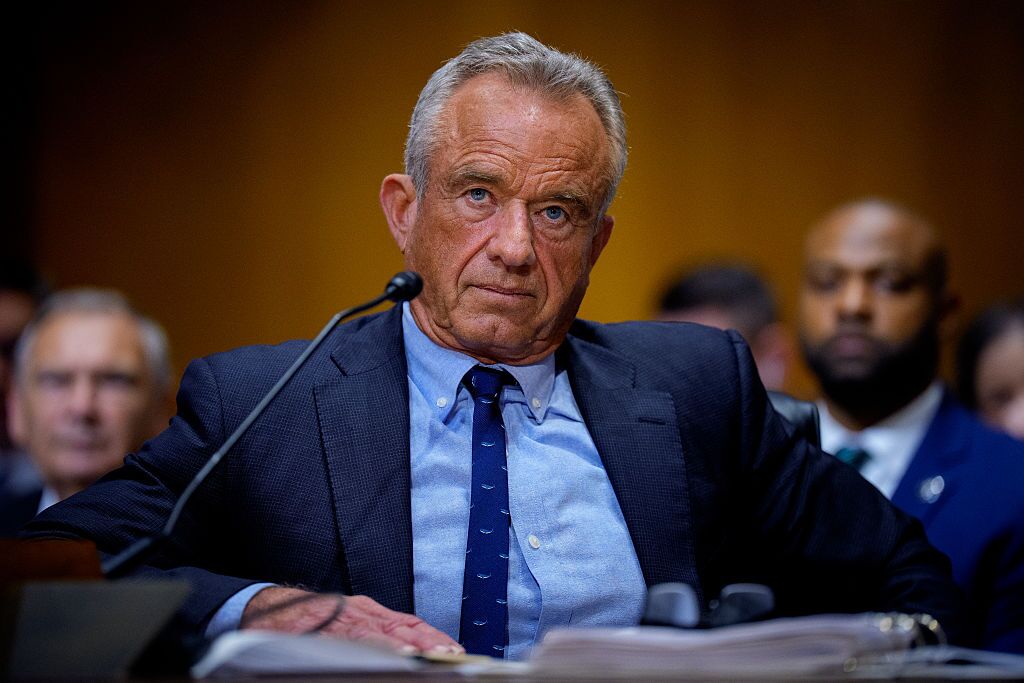
The Trump administration has also nominated and confirmed political appointees who are leading/overseeing efforts that harm or undermine women’s health. Health and Human Services (HHS) Secretary Robert F. Kennedy has been even worse for America’s health than feared. He has broken promises to leave vaccination schedules intact, continued to make false statements regarding vaccines and autism, and made controversial changes to U.S. dietary guidelines. Attorney General Pam Bondi is positioned to steer the Department of Justice toward weaponizing the Comstock Act to restrict access to abortion nationwide. And as the head of the powerful HHS Office for Civil Rights, Paula Stannard is empowered to gut enforcement of nondiscrimination and health privacy protections, putting patients at greater risk of criminalization for their healthcare decisions.
Health and Human Services Secretary Robert Kennedy Jr. appears before the Senate Finance Committee at the Dirksen Senate Office Building on Sept. 4, 2025. (Andrew Harnik / Getty Images)
Additional Threats to the Federal Workforce
34. Massive layoffs in the federal government, in part through overreach by Elon Musk and the “Department of Government Efficiency” (DOGE) impact local economies and communities, as well as federal women workers
As the Trump administration continues its attacks on federal workers—through mass firings, unprecedented “buyouts,” executive orders and intimidation—the impacts of losing the hard work of civil servants are all too clear. Federal workers perform essential jobs in communities across the country to protect consumers, workers and our health, including processing Social Security benefits, supporting survivors of domestic violence, rooting out discrimination and maintaining our national parks. Federal workers not only support the work that millions of women rely on across the country, but they are also important cornerstones to local economies. Research by the National Partnership finds that women make up 45 percent of federal workers and that Black and Native women and women veteran workers are especially likely to be federal employees. It’s estimated that more than 300,000 federal workers have left or been forced out of their jobs within President Trump’s first year in office.
35. Targeting Diversity, Equity, and Inclusion programs and offices in the federal government impacts women workers, workers of color, workers with disabilities and more
36. Revoking collective bargaining and union rights from workers across the federal government
In what has been called “the biggest attack on the labor movement in history,” the Trump administration issued an Executive Order to eliminate collective bargaining rights for tens of thousands of federal employees working across agencies under the guise of “national security concerns.” In reality, the order attempts to strip unionized employees of protections that both support the workforce and help the federal government be more productive and efficient. The order makes it clear that the Trump administration’s main intention was to retaliate against unions such as the American Federal of Government Employees (AFGE) and National Treasury Employees Union (NTEU) that are taking actions to protect federal employees from the administration’s constant, legally dubious attacks. The order has been subject to multiple legal challenges, and in December 2025, a bipartisan group of House Representatives voted to restore collective bargaining rights for federal employees, though that legislation has not passed the Senate.
Additional Threats to Civil Rights Protections and Diversity, Equity, and Inclusion Initiatives
37. Eliminating the Gender Policy Council
The White House Gender Policy Council was established by the Biden administration to promote gender equity and coordinate federal efforts to combat systemic discrimination, increase economic security, increase access to comprehensive healthcare, address caregiving needs and more. The Trump administration eliminated the Gender Policy Council in his first week on office.
38. Regulating gender and gender identity and threatening gender affirming care
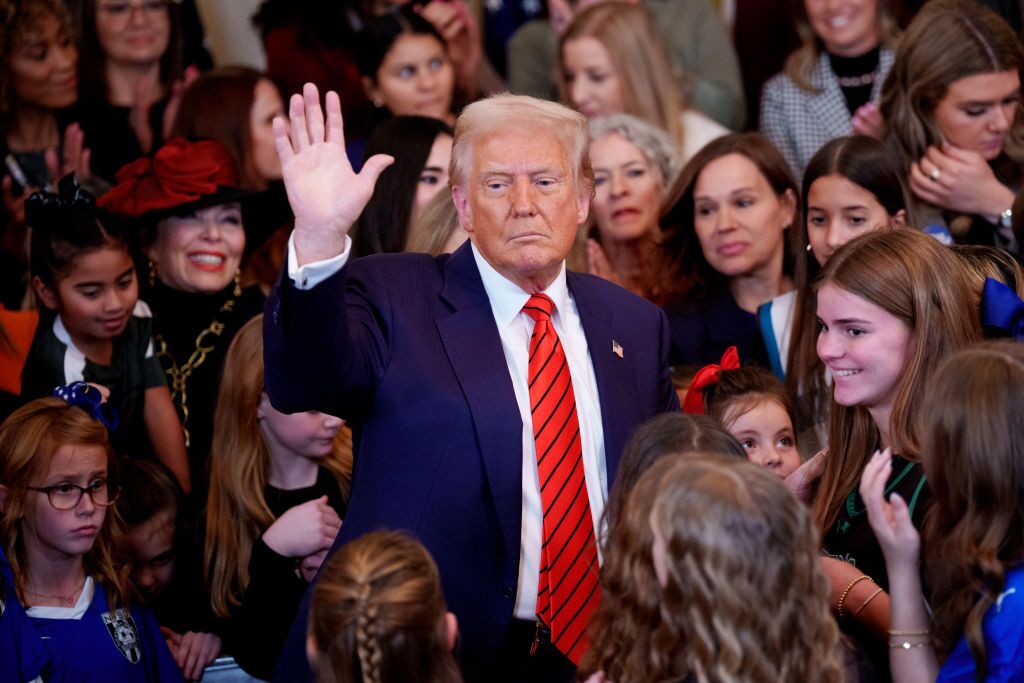
President Donald Trump waves after signing the “No Men in Women’s Sports” executive order in the East Room of the White House on Feb. 5, 2025. (Andrew Harnik / Getty Images)
39. Undercutting civil rights enforcement across federal agencies
The Trump administration is undermining civil rights enforcement across every federal agency, including the Department of Labor, Department of Education and the Social Security Administration. Eliminating the offices tasked with investigating claims of discrimination puts everyone at risk. For example, the Education Department’s Office of Civil Rights investigates thousands of claims of racial harassment, sexual harassment and sexual violence, and discrimination against students with disabilities each year. Undercutting agencies’ oversight and enforcement abilities is dangerous for the millions who rely on the government to enforce the laws passed to protect them.
40. Rejecting the “disparate impact” liability used by advocates and federal agencies to prove discriminatory impact
Disparate impact is a foundational concept of civil rights law—it maintains that certain practices can violate federal civil rights law because they affect certain groups differently, even when the action appears neutral and doesn’t explicitly state that it intends to discriminate against a protected group. Because of the disparate impact standard, for example, courts have been able to address job requirements that have the impact of discrimination and ensure that workplaces are held to a standard that does not disproportionately exclude women and people of color. The legal theory of disparate impact has been an important tool for civil rights advocates, helping to fight back against discrimination in housing, schools, workplaces and more. But as part of their continued attacks against civil rights, the Trump administration issued an Executive Order eliminating the use of the disparate impact standard by federal agencies and certain entities receiving federal funding, attempting to leave many without an important avenue to prove they’ve been discriminated against.
41. Threatening and withholding funds from universities and other institutions of higher education due to their Diversity, Equity, and Inclusion programs
The Trump administration’s attacks on Diversity, Equity, and Inclusion in higher education have been far-reaching and unprecedented; the President has wielded extraordinary influence to pressure colleges and universities to eliminate their diversity programs, withholding funding and terminating grants at schools across the country. Programs under threat include those that support women in pursuing degrees they are currently underrepresented in, such as engineering and mathematics. In October, the White House made its goal even more explicit: in a “Compact for Academic Excellence in Higher Education,” the administration attempted to promise federal grants to certain universities if those institutions agree to limit academic freedom, center conservative ideology in coursework and end diversity programs that have helped further equity and opportunity. Though the Compact was heavily criticized, the administration continues to pursue its pressure campaign, spreading uncertainty and extracting concessions from elite universities that put academic freedom at risk.
42. Working to limit enforcement of the Fair Housing Act
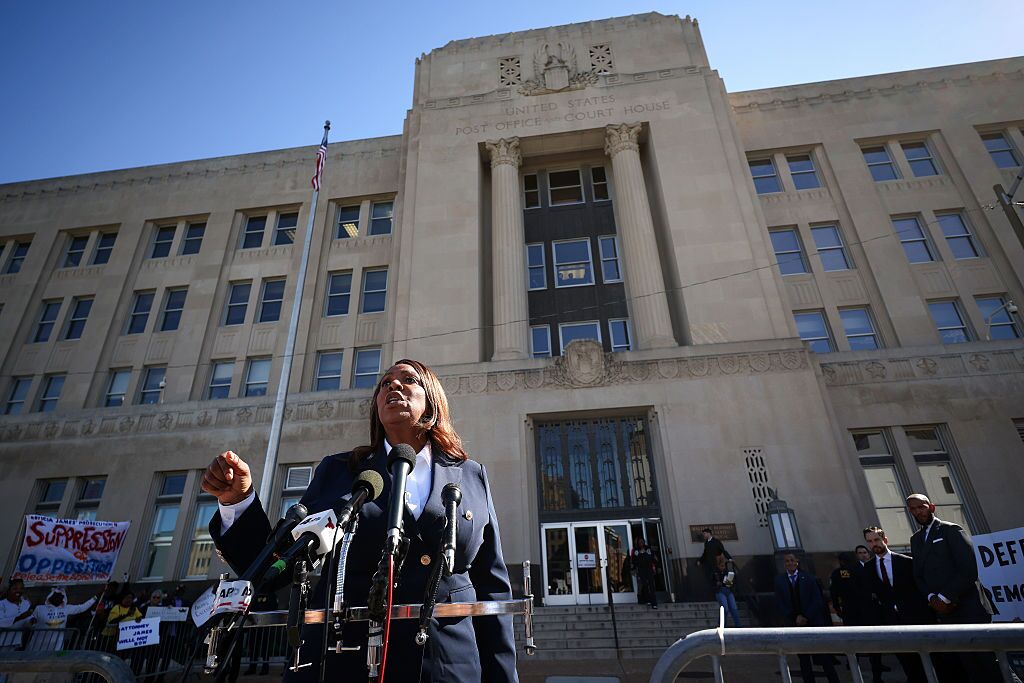
New York Attorney General Letitia James has long been the target of President Trump’s ire. Under the President’s direction, the Department of Justice has launched an attempt to build a criminal case against her—those attempts have been unsuccessful so far, but the DOJ has signaled that it will continue to target her for legal action as retribution as she continues to sue the Trump administration on behalf of the state of New York. In October, the National Partnership and the National Women’s Law Center drafted a letter in her support, calling for Congress to check the power of the President as he rules by force and intimidation.
New York Attorney General Letitia James outside the Walter E. Hoffman United States Courthouse following an arraignment hearing on Oct. 24, 2025, in Norfolk, Va. (Win McNamee / Getty Images)
45. Targeting Federal Reserve member Dr. Lisa Cook
In September 2025, President Trump attempted to fire Federal Reserve Governor Lisa Cook as a key step towards his ultimate goal of influencing and controlling the country’s central bank. The effort to unjustly remove her was blocked by a federal judge who found that her firing was unlawful and contrary to the public interest; the Supreme Court will hear oral arguments for the case in early 2026. The National Partnership for Women & Families drafted a letter in support of Dr. Lisa Cook, detailing her accomplishments and the importance of an independent Federal Reserve for women’s economic security.
46. Firing Dr. Erika McEntarfer, former commissioner of the Bureau of Labor Statistics
The Bureau of Labor Statistics collects and analyzes important labor data, providing unbiased statistical information about the health of the economy using indicators such as labor force participation and unemployment rates. Economist Dr. Erika McEntarfer led the Bureau until August 2025, when she was unceremoniously fired via social media by President Trump in response to an unfavorable jobs report. The firing was unprecedented and raised immediate concerns that the President would abuse his power to manipulate the economic data to his whims, undermine public trust and corrupt our ability to understand the economy in real time. The White House’s choice to replace Dr. McEntarfer, E.J. Antoni, was widely criticized for overt partisanship and inexperience and ultimately withdrawn from the process; as of January 2026, there has been no official replacement.
47. Firing National Labor Relations Board (NLRB) Board Member Gwynne Wilcox and General Counsel Jennifer Abruzzo
The National Labor Relations Board is an independent federal agency that protects employees from unfair labor practices, supports their ability to organize a union, and enforces the National Labor Relations Act. Research by the National Partnership finds that Black and Asian women and part-time workers had the largest gains in union membership growth in 2024 and women workers who are represented by a union see a multitude of benefits, including higher wages and more access to vital benefits such as paid leave, pensions and health coverage. Despite the benefits of the NLRB’s work, President Trump illegally fired Board member Gwynne Wilcox just one week after his inauguration. She is both the first Black woman to ever sit on the NLRB Board and the first to be terminated from the position. The decision has triggered a lengthy legal battle with profound consequences. In May, the Supreme Court issued an emergency administrative stay preventing her reinstatement to the NLRB as they considered the case. The D.C. Circuit Court in December upheld that the administration had the power to remove her without cause. The Supreme Court will decide on a similar case in 2026 that has the potential to overturn or diminish a precedent that protects members of some independent agencies from being removed for political causes. In the meantime, the NLRB finally reached a quorum and is able to decide cases again; with a new Republican majority, they will likely pursue an anti-union agenda.
48. Firing Equal Employment Opportunity Commission (EEOC) Commissioners Jocelyn Samuels and Charlotte Burrows, as well as General Counsel Karla Gilbride
The EEOC is an independent federal agency that does crucial work enforcing civil rights protections for workers. In a historically unprecedented move, President Trump illegally fired Commissioners Burrows and Samuels on the same day as NLRB Chair Wilcox (discussed above), raising related legal questions tied up in the same upcoming Supreme Court case, discussed in Samuels’s complaint. Samuels has shared that the Trump administration based her firing on her “support for what they termed radical Biden administration guidance for DEI initiatives and … refusal to defend women against extreme gender ideology.” The firings left the Commission without a quorum for many months, but the quorum was restored with the confirmation of Brittany Panuccio in October. The Commission is now moving to change commission voting procedures to disempower members with minority views—removing tools that now-Chair Lucas utilized with regularity during her tenure as a Commissioner throughout the Biden administration.
Additional Threats to Crucial Funding, Safety Net Programs, Federal Election Security and More
49. Furthering anti-immigrant policies, border militarization and a mass deportation agenda
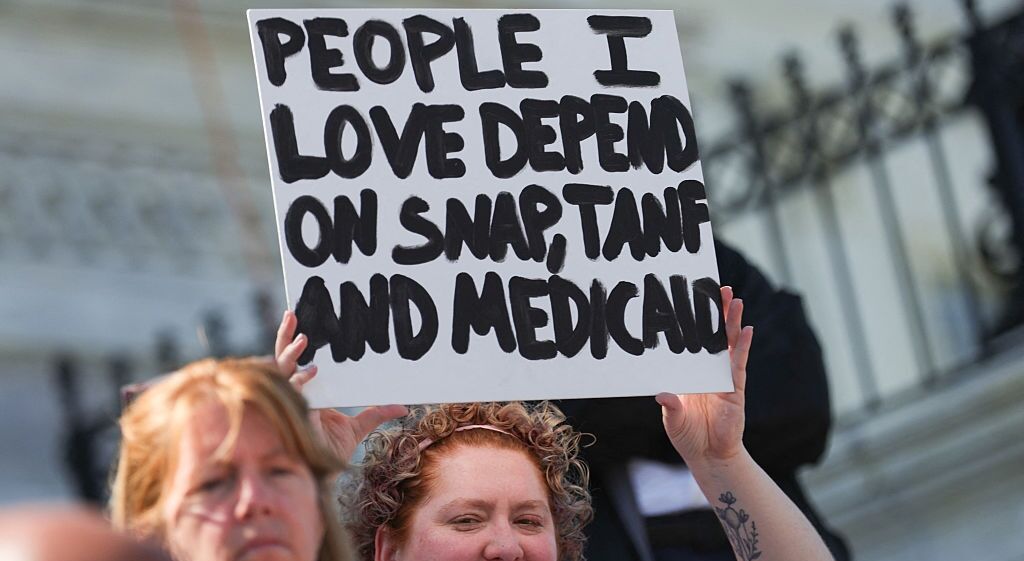
A demonstrator holds a sign reading ‘People I love depend on SNAP, TANF, and Medicaid’ during a sit-in protest against a Republican budget plan on the House steps of the U.S. Capitol on April 27, 2025. (Bryan Dozier / Middle East Images via AFP)
52. Proposing to eliminate funding for the Head Start program, along with cutting staff and funding for vital children’s programs across federal agencies
In late March, President Trump issued an Executive Order that, if implemented, would allow Trump’s federal government to commandeer the election system to preserve his own political power. The order instructs the Election Assistance Commission, an independent agency, to change the national mail voter registration form to require proof of citizenship to vote. The order also attempts to restrict state’s abilities to accept mail-in ballots received after Election Day, among other dramatic changes to the federal voting systems. This order has the potential to disenfranchise nearly 21 million otherwise eligible voters, who research shows may not have proof of citizenship readily available—those are voters across party lines, but they are disproportionately Black and Hispanic. As many as 69 million American women have a birth certificate that doesn’t match their legal name because they changed or hyphenated their last names upon marriage. The Executive Order has been challenged as an unconstitutional overreach in the courts, including in a lawsuit filed by 19 state attorneys general. As of January 2026, three federal judges have blocked major portions of the executive order as an overreach of presidential authority.
Great Job Areeba Haider & the Team @ Ms. Magazine Source link for sharing this story.
As YouTube, TikTok, and Instagram continue to dominate mobile viewing, Netflix is rethinking how its app fits into a social-first video landscape. During its fourth-quarter earnings call on Tuesday, the company announced plans to revamp its mobile app and expand its short-form video feature, which it mentions could help promote the new slate of original video podcasts it unveiled last week.
Set to launch later in 2026, Netflix’s redesigned mobile app is intended to “better serve the expansion of our business over the decade to come,” according to co-CEO Greg Peters. The update will act as a foundation for ongoing experimentation, allowing the company to “iterate, test, evolve, and improve” its offering over time.
At the center of the redesign is deeper integration of vertical video feeds, which the streaming giant has been experimenting with since May. The feed displays short clips from Netflix shows and movies in a format familiar to TikTok and Instagram Reels users.
“You can imagine us bringing more clips based on new content types, like video podcasts,” Peters remarked during the earnings call, further signaling that Netflix sees swipeable short-form clips as a powerful tool for capturing attention and increasing time spent in the app.
Netflix is also making a significant push into video podcasts — a sector where YouTube has long been the leader. This week, Netflix debuted its first original video podcasts, including shows hosted by high-profile personalities such as Pete Davidson and Michael Irvin. The company has also partnered with major podcast players to bring established video podcast libraries to the platform, including tie-ups with Spotify and iHeartMedia.
Both of these moves signal a broader effort to make content discovery and daily engagement on Netflix feel more like a social platform experience. At the same time, Netflix has been careful to position its strategy as experimentation rather than imitation. Speaking at the TechCrunch Disrupt 2025 conference, CTO Elizabeth Stone emphasized that the company isn’t trying to become TikTok, but rather to strengthen its entertainment discovery capabilities through mobile-first features.
During the earnings call, co-CEO Ted Sarandos reflected on the wider shift in the streaming industry: services are no longer competing only with one another, but with the entire entertainment industry.
Techcrunch event
San Francisco | October 13-15, 2026
“There’s never been more competition for creators, for consumer attention, for advertising and subscription dollars, the competitive lines around TV consumption are already blurring,” Sarandos said. “TV is not what we grew up on. TV is now just about everything. The Oscars and the NFL are on YouTube…Apple’s competing for Emmys and Oscars, and Instagram is coming next.”
Sarandos also commented on Netflix’s evolving film strategy, referencing the company’s recent shift in its theatrical release strategy as it prepares to acquire Warner Bros. This signals an openness to hybrid distribution models, as the line between cinema, streaming, and social content continues to blur.
In 2025, Netflix delivered $45.2 billion in revenue, with ad revenue rising to over $1.5 billion. Additionally, Netflix crossed the 325 million paid subscriptions milestone in the fourth quarter.
Great Job Lauren Forristal & the Team @ TechCrunch Source link for sharing this story.
Fort Worth Council member Michael Crain was arrested on suspicion of drunk driving by a Texas Department of Public Safety officer during a traffic stop.
The traffic stop took place at 10:20 p.m. on Friday, Jan. 16. There are no details as to where Crain was coming from.
Crain, who is a real estate broker and council member, was booked into the Tarrant County Jail on a Class B misdemeanor charge. His bond was posted hours later at $750.
In a released statement, Crain apologizes to his family and colleagues. “I want to sincerely apologize to my wife and children, the residents of Fort Worth, and my colleagues for the distraction this has caused. I regret the concern and uncertainty it has created for the people I care about and serve,” he said.
Crain was re-elected for his second term in 2025.
Crain serves on multiple boards within the Fort Worth community. Currently, he is Chair of the Legislative & Intergovernmental Affairs Committee and a member of the Public Safety and Infrastructure & Growth Committees.
He also serves on the North Central Texas Council of Governments Regional Transportation Committee (RTC) and its Executive Committee, as well as the Trinity Metro Board of Directors.
There are no details of the traffic violation or intoxication tests that were performed.
Great Job Tatum DeHart & the Team @ NBC 5 Dallas-Fort Worth for sharing this story.