Home News Page 24

Trump administration admits DOGE may have misused Americans’ Social Security data | TechCrunch

Trump administration admits DOGE may have misused Americans’ Social Security data | TechCrunch

Two members of Elon Musk’s Department of Government Efficiency may have accessed and shared Social Security numbers in an effort to help an advocacy group “overturn election results in certain States” last year, according to court documents

The revelation, which was first reported by Politico, comes as part of a series of corrections to previous testimony by top Social Security Administration officials related to legal battles over DOGE’s access to Social Security data. 

Neither the two DOGE members, nor the advocacy group, are named in the court documents.

In March 2025, a political advocacy group contacted two members of the DOGE team at the Social Security Administration (SSA) “with a request to analyze state voter rolls that the advocacy group had acquired,” said Elizabeth Shapiro, a Justice Department official, wrote in the court documents. 

“The advocacy group’s stated aim was to find evidence of voter fraud and to overturn election results in certain States,” said Shapiro.

Shapiro wrote that after these communications, one of the DOGE members, as an SSA employee, signed and sent a “Voter Data Agreement” with the advocacy group. 

The DOGE members may have accessed private information that was ruled to be off-limits by a court at the time, and shared data on unapproved “third-party” servers. 

Techcrunch event

San Francisco
|
October 13-15, 2026

“At this time, there is no evidence that SSA employees outside of the involved members of the DOGE Team were aware of the communications with the advocacy group. Nor were they aware of the ‘Voter Data Agreement’,” Shapiro wrote.

It’s unclear if the two DOGE members ended up sharing the data, according to Shapiro, but emails “suggest that DOGE Team members could have been asked to assist the advocacy group by accessing SSA data to match to the voter rolls.” 

According to Shapiro, the SSA referred the two DOGE employees for potential violations of the Hatch Act, a law that prohibits federal workers from leveraging their official positions for political activities. 

Last year, a federal judge issued an order to block DOGe’s members access to SSA’s systems, which included SSNs, medical records, drivers’ license numbers, tax information, and other types of personal information. Later on, a SSA whistleblower alleged that DOGE uploaded hundreds of millions of Social Security records to a vulnerable cloud server.

Great Job Lorenzo Franceschi-Bicchierai & the Team @ TechCrunch Source link for sharing this story.

Possible freezing temperatures forecast for Houston area this weekend | Houston Public Media

Possible freezing temperatures forecast for Houston area this weekend | Houston Public Media

Lucio Vasquez/ Houston Public Media

People gathered outside to play in the snow on Tuesday, Jan. 21, 2025, in Houston.

An arctic cold front is expected to push its way into Texas late this week, possibly bringing freezing or near-freezing temperatures into the Houston area over the weekend, but the chances of snow are currently low.

As of Tuesday, the National Weather Service Houston/Galveston Office forecasts a “strong cold front” to make its way into the greater Houston area late Friday into Saturday. The front is expected to usher in the coldest temperatures of the season so far this year, according to NWS. A hard freeze — with temperatures of 24 degrees or lower — is possible for parts of the region on Saturday and Sunday nights.

A forecast released by the National Weather Service on Monday, Jan. 19, 2025.

Cameron Batiste, the lead meteorologist at the Houston/Galveston NWS Office, said Tuesday morning that while freezing temperatures are expected, the chance for precipitation remains more uncertain.

“If any precipitation does fall to the surface, if it’s frozen, it will likely be a mixture of freezing rain or sleet, so we’re not expecting to see any snow in the Houston area for this forecast,” Batiste said. “The main window for potential winter weather impacts is going to be Saturday into Sunday.”

According to the NWS’s Monday forecast, Houston can expect an approximately 70% chance of rain on Saturday, with a less than 10% chance of freezing rain, snow or sleet beginning Saturday into early Monday.

“So what we have in the forecast for now for the Houston area Saturday night into Sunday morning is low temperatures in the upper 20s to low 30s, then again on Sunday night into Monday morning [with] upper 20s to low 30s,” Batiste said. “So, be sure to protect the four Ps: people, pets, pipes and plants. Make sure your loved ones are checked on. Make sure you have ways to stay warm as well.”

A forecast released by the National Weather Service on Monday, Jan. 19, 2025.

The NWS will continue to release updates throughout the week as a more certain forecast comes into focus.

Houston Public Media’s Rob Salinas contributed to this article.

Great Job & the Team @ Houston Public Media for sharing this story.

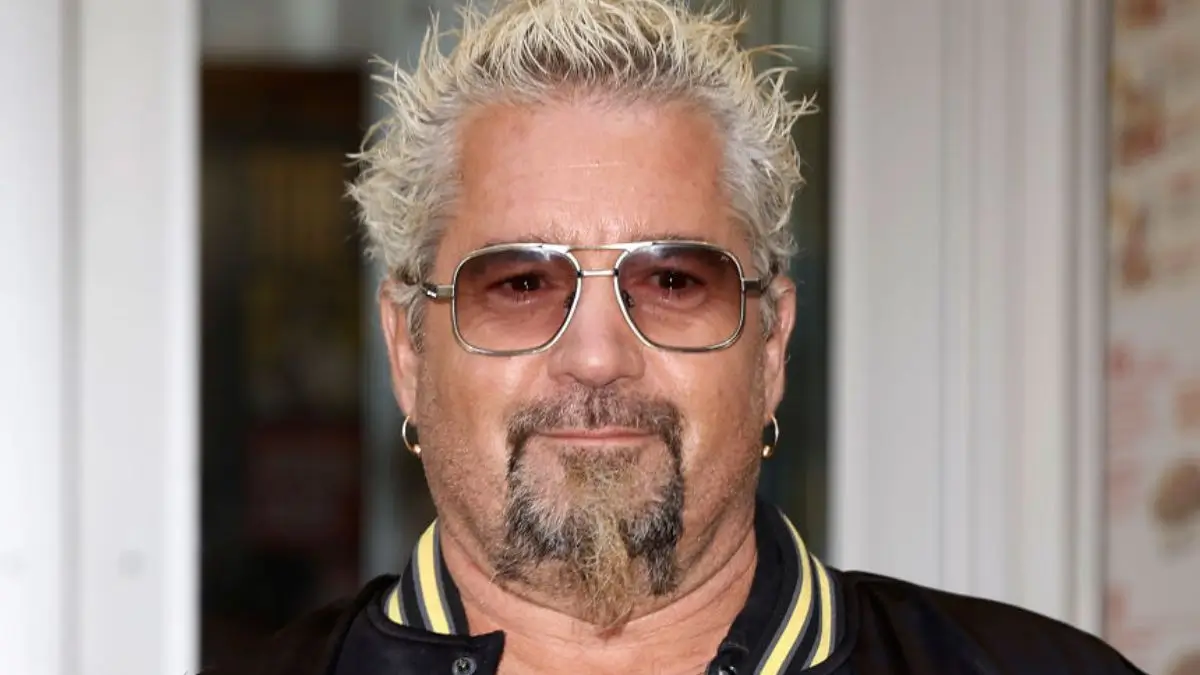
‘Driven Me Kind of Crazy’: Guy Fieri Says He was Struggling After Bizarre On-Set Accident Left Him in a Wheelchair and Fearing the Worst

‘Driven Me Kind of Crazy’: Guy Fieri Says He was Struggling After Bizarre On-Set Accident Left Him in a Wheelchair and Fearing the Worst

Celebrity chef Guy Fieri and his television jobs involve excess, energy, and nonstop movement, but being forced to slow down wasn’t part of the plan. The Food Network star is still recovering from an incident that was far more serious than anything he ever put on any menu.

While filming “Flavor Town Food Fight” last year, the 57-year-old had a freak on-set accident that brought production to an abrupt halt and ended with him in the emergency room — a moment that would change how he viewed even the most basic things he usually takes for granted.

‘Driven Me Kind of Crazy’: Guy Fieri Says He was Struggling After Bizarre On-Set Accident Left Him in a Wheelchair and Fearing the Worst
Guy Fieri is wheelchair-bound after a freak accident on set as he continues recovery by the 2026 Super Bowl. (Photo by John Lamparski/Getty Images)

‘Was I Wrong for Going Out?’: Beloved Food Network Star Relives the Horrifying Night He Was Randomly Ambushed and Nearly Lost His Life

The “Guy’s Big Bite” told Fox News Digital last November that he slipped on a flight of stairs while filming his new series.

“I slipped down a set of steps, and one foot went forward, and the other foot got caught on the threshold,” said the host, adding that he tore his quad muscle nearly in half. “You normally tear that muscle at your tendon or the tendon tears off the bone, but this was right in the center of the whole quad muscle and it exploded.”

The accident left Fieri in a wheelchair, and he provided a health update in an interview with People published on Jan. 14. The celebrity chef has been wheelchair-bound for eight weeks, but he says he is slowly improving.

“I’m doing better,” he told the magazine. “It was definitely a trying holiday, but you know what, you get some real appreciation for having the ability to just get up and walk around and do everything you used to. I’m a big CrossFit and hiking guy, so eight weeks of no hiking has driven me kind of crazy. But I’m looking forward to it, trying to take it easy.”

Fieri had previously said that Thanksgiving was a challenge, as he’d planned to cook and was anxious to do more, but his doctors gave him strict orders. After he’s done with the wheelchair, he’ll still need to use crutches for two months and attend rehab. “I want to get after it as fast as possible,” he said at the time.

During his latest interview, he said not much has changed, but he hopes to be in better shape for his special, “Super Bowl tailgate, Guy Fieri’s Flavortown Tailgate.” The special will feature the host as he attends Super Bowl LX on Feb. 8. Fieri wrote on Instagram that the event will be “the ultimate party and food festival.” He is also giving away 10,000 tickets for the event, which is set to include games, musical performances, and “must-try culinary experiences.”

“My doctors are all like, ‘We know you want to get after it, but let’s not go back to where we were.’ And I’m like, ‘We are never going back to that!’ That was the worst thing I’ve been through in the last 20 years,” he said. “But now I’ll be up and ready and healthy and rolling by the time we hit the Super Bowl for sure.”

Fans wished Fieri well upon learning his health update while also giving him encouragement. “I hope you get well. I love all your shows,” wrote one fan.

Another fan jokingly replied, “Did he slip on hot sauce?”

One user was surprised by the depth of Fieri’s injury and replied that he has a long road to recovery ahead.

“Man, that sounds absolutely horrible! OW!!!! Life can change in a second! I’m so glad this wasn’t a tragedy, but just a man injury that he can heal from. That will take probably two years to TRULY heal… and even then he’ll have to nurture his muscle/s for the rest of his life most likely.”

The celebrity chef’s 20-year-old son, Ryder, his other son, Hunter, 29, and his nephew Jules, 26, will also join Fieri on the Flavortown Tailgate.

Great Job Niko Mann & the Team @ Atlanta Black Star Source link for sharing this story.

European leaders’ text messages to Trump reveal a very different tone than their Greenland saber-rattling | Fortune

European leaders’ text messages to Trump reveal a very different tone than their Greenland saber-rattling | Fortune

While Europe is pushing back publicly against U.S. President Donald Trump over Greenland, the language appears softer behind the scenes.

Trump published a text message on Tuesday that he received from French President Emmanuel Macron, confirmed as genuine by Macron’s office.

Starting with “My friend,” Macron’s tone was more deferential than the criticism that France and some of its European partner nations are openly voicing against Trump’s push to wrest Greenland from NATO ally Denmark.

Before broaching the Greenland dispute, Macron opted in his message to first talk about other issues where he and Trump seem roughly on the same page.

“We are totally in line on Syria. We can do great things on Iran,” the French leader wrote in English.

Then, he added: “I do not understand what you are doing on Greenland,” immediately followed by: “Let us try to build great things.”

That was the only mention that Macron made of the semi-autonomous Danish territory in the two sections of message that Trump published. It wasn’t immediately clear from Trump’s post when he received the message.

Trump breaks with tradition

World leaders’ private messages to each other rarely make it verbatim into the public domain — enabling them to project one face publicly and another to each other.

But Trump — as is his wont across multiple domains — is casting traditions and diplomatic niceties to the wind and, in the process, lifting back the curtain on goings-on that usually aren’t seen.

This week, a text message that Trump sent to Norway’s prime minister also became public, released by the Norwegian government and confirmed by the White House.

In it, Trump linked his aggressive stance on Greenland to last year’s decision not to award him the Nobel Peace Prize.

“Considering your Country decided not to give me the Nobel Peace Prize for having stopped 8 Wars PLUS, I no longer feel an obligation to think purely of Peace,” the message read.

It concluded, “The World is not secure unless we have Complete and Total Control of Greenland.”

On Tuesday, Trump also published a flattering message from Mark Rutte, secretary general of NATO, which the alliance also confirmed as authentic.

“I am committed to finding a way forward on Greenland,” Rutte wrote. “Can’t wait to see you. Yours, Mark.”

Rutte has declined to speak publicly about Greenland despite growing concern about Trump’s threats to “acquire” the island and what that would mean for the territorial integrity of NATO ally Denmark. Pressed last week about Trump’s designs on Greenland and warnings from Denmark that any U.S. military action might mean the end of NATO, Rutte said: “I can never comment on that. That’s impossible in public.”

Macron’s relationship with Trump

Macron likes to say that he can get Trump on the phone any time he wants. He proved it last September by making a show of calling up the president from a street in New York, to tell Trump that police officers were blocking him to let a VIP motorcade pass.

Guess what? I’m waiting in the street because everything is frozen for you!” Macron said as cameras filmed the scene.

It’s a safe bet that Macron must know by now — a year into Trump’s second spell in office — that there’s always a risk that a private message to Trump could be made public.

Macron said Tuesday that he had “no particular reaction” to the message’s publication when a journalist asked him about it.

“I take responsibility for everything that I do. It’s my habit to be coherent between what I say on the outside and what I do in a private manner. That’s all.”

Still, the difference between Macron’s public and private personas was striking.

Hosting Russia and Ukraine together

Most remarkably, the French leader told Trump in his message that he would be willing to invite representatives from both Ukraine and Russia to a meeting later this week in Paris — an idea that Macron has not voiced publicly.

The Russians could be hosted “in the margins,” Macron suggested, hinting at the potential awkwardness of inviting Moscow representatives while France is also backing Ukraine with military and other support against Russian President Vladimir Putin’s invasion.

Macron wrote that the meeting could also include “the danish, the syrians” and the G7 nations — which include the United States.

The French president added: “let us have a dinner together in Paris together on thursday before you go back to the us.”

He then signed off simply with “Emmanuel.”

Making nice only goes so far

Despite Macron’s persistent efforts, in both of Trump’s terms, not to ruffle his feathers, any payback has been mixed, at best.

Trump bristled on Monday, threatening punitive tariffs, when told that Macron has no plans to join Trump’s new Board of Peace that will supervise the next phase of the Gaza peace plan, despite receiving an invitation.

“Well, nobody wants him because he’s going to be out of office very soon,” Trump told reporters, even through the French leader has more than a year left in office before the end of his second and last term in 2027.

“I’ll put a 200% tariff on his wines and champagnes and he’ll join,” Trump said.

___

Lorne Cook in Brussels, Sylvie Corbet in Paris and Kostya Manenkov in Davos contributed.

Great Job John Leicester, Nick Lichtenberg, The Associated Press & the Team @ Fortune | FORTUNE Source link for sharing this story.

Nick Fuentes: “Please pull the trigger. Please kill them, Mr. President. … I’m not actually wishing for violence, but please send in the military and restore order.”

Nick Fuentes: “Please pull the trigger. Please kill them, Mr. President. … I’m not actually wishing for violence, but please send in the military and restore order.”

Citation

From the January 15, 2025, edition of America First, streamed on Rumble

NICK FUENTES (HOST): We’re going to talk about Trump’s potential invocation of the Insurrection Act in Minneapolis. I wish he would. I wish he would. He keeps talking about it amid the unrest and riots in Minneapolis in response to the ICE deployment. By the way, nobody has been arrested. Do you know that? There have been all these riots happening in Minneapolis. Last night, you have an ICE agent — I think, actually it happened this afternoon. He shot a Venezuelan illegal because he was trying to arrest this guy and a bunch of agitators came out and hit him with shovels. And so ICE barged in, arrested everybody. 

But in Minneapolis, there’s straight up riots going on. They’re shooting fireworks at cops, taking over hotels. It’s mayhem.

… 

Do you know that Minneapolis police arrested zero people last night? So when you see these videos of fireworks blowing up and cops getting beat and the absolute anarchy that’s unfolding, nobody’s even getting arrested. So Trump says, “I’ll invoke the Insurrection Act.”

Bro, do it. Do something. Just stop chickening out. I’m just tired of the idle threats. “We’re going to bomb you,” “we’re going to tariff you,” “we’re going to invoke the Insurrection Act.” Always chickens out. Just do it. You’re the commander in chief. He does it every time. He did it during the BLM riots, he did it during the LA riots. Please pull the trigger. Please kill them, Mr. President. Please just kill them. Not actually. I don’t actually, I’m not actually wishing for violence, but please send in the military and restore order. This is your country. You are the commander in chief of the armed forces. You are the chief executive over this country and it is lawless. Take some responsibility, take the reins, send in the military. If this Jewish communist running the city won’t arrest these people, if this gay cuck governor, Tim Walz, doesn’t do it, send in the military. That’s why you were elected.

I don’t get it. This happened the last time in Minneapolis, BLM, summer of love. Trump kept threatening, “I’ll send them in. I swear I’ll do it. I’ll invoke the Insurrection Act.” Do it. Throw these people in jail. They are trash.

Great Job Media Matters for America & the Team @ Media Matters for America Source link for sharing this story.

Science Still Under Attack: Announcing the Revamp of the Silencing Science Tracker – Climate Law Blog

Science Still Under Attack: Announcing the Revamp of the Silencing Science Tracker – Climate Law Blog

Since its launch on January 20, 2018, the Silencing Science Tracker has been documenting government efforts to restrict and prevent scientific research, education, and the publication and use of scientific information. We are proud to announce the launch of an improved version of the Tracker—a tool more critical than ever as the second Trump administration takes a chainsaw to climate, public health, and other areas of scientific research.

The Climate Science Legal Defense Fund and the Sabin Center for Climate Change Law launched the Silencing Science Tracker 8 years ago as a comprehensive, accessible database of the many attacks on science during the first Trump administration. Entries date back to November 2016, when a Centers for Disease Control and Prevention website was changed to remove references to climate change, the first of many similar moves to censor or alter established scientific findings in the post-truth Trump era.

We continued to maintain the database during the Biden administration and have been busier than ever adding entries in the first year of Trump 2.0. Now we have transitioned it to a new platform that’s easier to use and has added functionality, including enhanced search capabilities–something that is sorely needed, with the tracker now including over 700 entries and expanding every week.

Some of the new and upgraded features of the Silencing Science Tracker include:

  • Enhanced tagging to make it easier to find specific information and identify larger patterns in the administration’s anti-science actions
  • A more intuitive interface that provides an easier user experience for filtering, sorting, and analyzing results
  • Improved search functionality, allowing users to easily find entries on specific topics or individuals
  • Highlighting instances when public outcry, court losses, or other pushback have forced the administration to change course

It’s now clearer than ever just how widespread, and devastating, the second Trump administration’s attacks on science have been. While the Tracker has historically focused on attacks against climate scientists, the data make clear that the current assault is much broader, affecting research in all fields.

Interference in public health research has become so prevalent that we have added it as its own category. The appointment of anti-vaccine conspiracy theorist Robert F. Kennedy, Jr. to lead the Department of Health and Human Services (HHS) has already had devastating consequences. Under his watch, the agency has fired thousands of federal scientists, terminated billions of dollars in grants, altered official government webpages to disseminate anti-vaccine and other propaganda, and installed sycophants in positions that are critical to our collective well-being.

While HHS makes up a disproportionate number of Trump 2.0 entries, the damage extends across the federal scientific infrastructure. Data sets, Congressionally-mandated reports, so-called controversial terms like “climate change,” and entire webpages have been removed from agency websites. Official federal agency reports pushing false claims about climate change and childhood diseases have been published (and, in both instances, immediately slammed by experts as relying on inaccurate or cherry-picked information to support an ideological objective).

The second Trump administration also paused or cancelled billions of dollars in federal grants for initiatives related to diversity, equity, and inclusion (DEI) and environmental justice, Covid-19 research, mRNA vaccine development, and medical research at U.S. universities, hospitals, and other institutions; cancelled funding for the Women’s Health Initiative (which RFK Jr. later called “fake news,” even as an agency spokesperson acknowledged its reversal); and halted funding for entire divisions like HHS’s Agency for Healthcare Research and Quality and the Environmental Protection Agency’s Office of Research and Development, which was eventually eliminated altogether.

As the 700+ entries in the Tracker make clear, attempts to silence science are not limited to the Trump administration (though his first and second terms account for nearly 500 of the entries). Critical, life-saving research and the people who perform it have been under relentless politically and ideologically motivated attack for decades, highlighting the need for continued vigilance and documentation.

The suppression of science isn’t just a political debate; it has very real and lasting consequences for public health, the environment, and democracy. With tools like the Silencing Science Tracker, we can ensure that efforts to undermine the scientific endeavor are documented, challenged, and ultimately stopped, and that those responsible can one day be held accountable.

Click here to visit the Silencing Science Tracker.

The Silencing Science Tracker is a joint project of the Climate Science Legal Defense Fund (CSLDF) and the Sabin Center for Climate Change Law at Columbia Law School.


Science Still Under Attack: Announcing the Revamp of the Silencing Science Tracker – Climate Law Blog

Dana Willbanks

Dana Willbanks is the Communications Coordinator at the Climate Science Legal Defense Fund (CSLDF).

Great Job Dana Willbanks & the Team @ Climate Law Blog Source link for sharing this story.

Fernando Mendoza headlines AP’s all-College Football Playoff team after leading Indiana to title

Fernando Mendoza headlines AP’s all-College Football Playoff team after leading Indiana to title

Indiana’s Fernando Mendoza spent the College Football Playoff showing the nation just why he earned the Heisman Trophy.

Mendoza threw more touchdown passes (eight) than incompletions (five) in Indiana’s first two playoff victories — lopsided wins over Alabama in the Rose Bowl quarterfinal and Oregon in the Fiesta Bowl semifinal. His statistics weren’t quite as impressive in Monday’s 27-21 championship game victory over Miami, but he showed plenty of poise and guile while returning to his hometown.

Mendoza delivered the signature moment of this playoff with his 12-yard touchdown run on a fourth-and-4 play to extend Indiana’s lead to 24-14 in the fourth quarter. He also avoided any turnovers while getting harassed all night by Miami’s superstar defensive line duo of Rueben Bain and Akheem Mesidor.

All three of those players were easy choices for the Associated Press’ all-playoff team. As we did with our all-bowl team that included top players from all the non-playoff bowl games, we made room for four defensive linemen, four linebackers and five defensive backs to account for all different types of defensive schemes.

Here’s a rundown of our top playoff performers at each position.

QB Fernando Mendoza, Indiana

Mendoza completed nearly three-quarters of his passes for 555 yards with eight touchdown passes, one touchdown run and no turnovers in the playoff. He was 14 of 16 with three touchdowns in the 38-3 rout of Alabama and 17 of 20 with five touchdowns in the 56-22 blowout of Oregon.

RB Mark Fletcher, Miami

Fletcher rushed for at least 90 yards in each of Miami’s four playoff games and totaled 507 yards rushing on 75 CFP carries. He ran for 172 yards on just 17 carries in a 10-3 win at Texas A&M. He had 19 carries for 90 yards plus a 25-yard touchdown catch in Miami’s 24-14 Cotton Bowl quarterfinal upset of Ohio State. He ran for 133 yards on 22 carries in a 31-27 Fiesta Bowl triumph over Mississippi. Against Indiana, Fletcher rushed for 112 yards and two touchdowns on 17 attempts.

RB Kewan Lacy, Ole Miss

Lacy rushed for 288 yards and four touchdowns in three playoff games. He ran for 87 yards on 15 attempts in a 41-10 first-round win over Tulane. Lacy had 22 carries for 88 yards and two touchdowns in a 39-34 Sugar Bowl quarterfinal upset of Georgia. In Ole Miss’ loss to Miami, Lacy had 11 carries for 103 yards, including a 73-yard score.

WR Charlie Becker, Indiana

Becker made a critical fourth-and-5 reception on Indiana’s final touchdown drive and a third-and-7 reception on the Hoosiers’ last possession in the championship game. He had four catches for 65 yards against Miami after scoring touchdowns in each of Indiana’s first two playoff wins.

WR Jeremiah Smith, Ohio State

Ohio State’s playoff appearance lasted only one game, but Smith made the most of it with seven catches for 157 yards and a touchdown against Miami. The AP All-America first-team pick has 26 receptions for 538 yards and six touchdowns in five career playoff games.

WR De’Zhaun Stribling, Ole Miss

Stribling caught 17 passes for 278 yards in three playoff games. He had five catches for 79 yards and his lone playoff touchdown against Tulane. Stribling followed that up with seven receptions for 122 yards against Georgia and five catches for 77 yards against Miami.

TE Jamari Johnson, Oregon

Johnson had a 41-yard touchdown catch in Oregon’s 51-34 first-round victory over James Madison. He caught four passes for 66 yards in a 23-0 Orange Bowl quarterfinal triumph over Texas Tech and had four receptions for 83 yards and a touchdown against Indiana.

All-purpose Malachi Toney, Miami

Toney had 10 catches for 219 yards in three playoff games while constantly showing his ability to turn short completions into long gains. He had 10 catches for 122 yards against Indiana, including a 22-yard pitch he caught in the backfield and turned into a 22-yard touchdown. Toney, an AP All-America second-team selection, also had a 55-yard punt return against Texas A&M.

OT Markel Bell, Miami

Miami’s starting left tackle didn’t allow any sacks in four playoff games, according to Pro Football Focus. PFF gave him a game-high 88.2 pass block rating for the championship matchup with Indiana.

OT Francis Mauigoa, Miami

This AP All-America first-team right tackle allowed no sacks and just one quarterback hit in four playoff games, according to PFF. The Miami duo of Bell and Mauigoa earned a spot on this team over Indiana left tackle Carter Smith, an AP All-America second-team pick who starred in the Hoosiers’ first two playoff contests but struggled against the Hurricanes.

C Pat Coogan, Indiana

Coogan performed so well in Indiana’s victory over Alabama that he became the first offensive lineman to get selected as a Rose Bowl most valuable player since Southern California’s Norm Verry in 1944. He also had the highest PFF rating of any Indiana offensive lineman in the championship game.

OG Drew Evans, Indiana

Evans missed Indiana’s CFP game a year ago after suffering a season-ending Achilles injury and sat out four games late in the 2025 regular season with an ankle issue, but he came back to produce a solid playoff this time around. Evans didn’t allow a single sack and gave up just one quarterback hit in three playoff games, according to PFF.

OG Bray Lynch, Indiana

Lynch didn’t allow any sacks or quarterback hits in three playoff games, according to PFF. The interior trio of Evans, Coogan and Lynch helped Indiana total 400 yards rushing in its first two playoff games.

DE Rueben Bain, Miami

The Atlantic Coast Conference defensive player of the year totaled five sacks and eight tackles for loss in four playoff games. Bain, an AP All-America second-team selection, had three sacks and four tackles for loss against Texas A&M. He closed his brilliant season by collecting eight tackles — 2 ½ for loss — and one sack against Indiana.

DE Akheem Mesidor, Miami

Mesidor recorded 5 ½ sacks in the playoffs. He collected two sacks each against Indiana and Ohio State, and he had 1 ½ against Texas A&M.

DT Will Echoles, Ole Miss

Echoles recorded 17 tackles in three playoff games and delivered half a sack against Miami. According to PFF, Echoles graded out at over 70 in Ole Miss’ victories over Tulane and Georgia. PFF credited Echoles with six hurries in Ole Miss’ three playoff contests.

DT Tyrique Tucker, Indiana

This AP All-America selection’s presence in the middle helped limit Alabama to 23 yards rushing on 17 carries in the Rose Bowl quarterfinal. PFF gave him the second-highest rating of any Indiana defensive player in the victory over Oregon.

LB Bryce Boettcher, Oregon

Boettcher was Oregon’s leading tackler in each of its three playoff games. He had nine tackles and three quarterback hurries against James Madison. He collected 12 tackles and forced a fumble in the Ducks’ shutout of Texas Tech. He had 11 tackles and broke up a pass against Indiana.

LB Aiden Fisher, Indiana

Fisher recorded a sack in Indiana’s victories over Alabama and Miami. He also forced a fumble in the Alabama game. The AP All-America third-team selection totaled 20 tackles – 4 ½ for loss — in Indiana’s three playoff games.

LB Suntarine Perkins, Ole Miss

Perkins had 2 ½ sacks and six tackles for loss in three playoff games. He forced and recovered a fumble in each of Ole Miss’ first two playoff contests. Perkins had seven tackles and 1 ½ sacks against Miami.

LB Mohamed Toure, Miami

Toure had a game-high 11 tackles against Indiana after recording a sack in Miami’s semifinal win over Ole Miss. He totaled 30 tackles in four playoff games.

DB Bryce Fitzgerald, Miami

Fitzgerald frankly didn’t play very much in Miami’s last three playoff games, but the Hurricanes might not have advanced beyond the first round without him. Fitzgerald had two interceptions against Texas A&M, including a game-clinching pick in the end zone on a third-and-goal play from the 5-yard line. Fitzgerald’s performance in that one game earned him a spot on this team.

DB D’Angelo Ponds, Indiana

Ponds scored on a 25-yard interception return on the opening snap of Indiana’s semifinal win over Oregon, and he forced a fumble that led to a touchdown against Alabama.

DB Keionte Scott, Miami

Scott scored on a 72-yard interception return against Ohio State after forcing a fumble and producing 10 tackles and two sacks against Texas A&M.

DB Jamari Sharpe, Indiana

Sharpe clinched the Hoosiers’ championship game victory by intercepting a pass in the final minute after Miami had reached Indiana territory.

DB Jakobe Thomas, Miami

Thomas totaled 27 tackles in four playoff games. He made nine stops against Texas A&M, produced an interception against Ohio State and broke up two passes against Ole Miss.

K Lucas Carneiro, Ole Miss

Carneiro went 9 of 10 on field-goal attempts in the playoffs and was 4 of 5 from at least 50 yards out. Carneiro was spectacular against Georgia, as he made field goals of 55, 56 and 47 yards. His lone miss was a 51-yarder against Miami, but he also made kicks from 42, 58, 54 and 21 yards out in that game.

P Mitch McCarthy, Indiana

McCarthy averaged 46.6 yards on 10 playoff punts. He averaged 48.2 yards on his five punts in the championship game, with two of his attempts pinning Miami inside its own 20-yard line.

Special Teams Mikail Kamara, Indiana

Rather than giving an all-playoff team spot to a kick returner, we’ll use this spot to honor the guy who made the biggest special-teams moment of any CFP game. Kamara, a starting defensive lineman for Indiana, blocked a punt that Isaiah Jones recovered in the end zone for a touchdown in the third quarter of the championship game.

___

Get poll alerts and updates on the AP Top 25 throughout the season. Sign up here. AP college football: https://apnews.com/hub/ap-top-25-college-football-poll and https://apnews.com/hub/college-football

Copyright 2026 The Associated Press. All rights reserved. This material may not be published, broadcast, rewritten or redistributed without permission.

Great Job Steve Megargee, Associated Press & the Team @ KSAT San Antonio Source link for sharing this story.

Unmarked Aircraft to Attack an Alleged Drug Boat: Perfidy?

Unmarked Aircraft to Attack an Alleged Drug Boat: Perfidy?

Reports have surfaced that a military aircraft used in the highly controversial Sept. 2, 2025, strike on an alleged drug boat, as well as a follow-on strike as two survivors were clinging to its wreckage, was imitating a civilian aircraft (see here and here). Reportedly, the aircraft had no military markings and carried weapons internally, but its transponder was “squawking” its military status. The aircraft apparently swooped in low over the boat, which turned back toward Venezuela, before attacking it and killing nine on board. Two shipwrecked crewmembers and the remains of the boat were then destroyed in a second strike (see analysis of the attacks here and here). 

Most discussion of disguising the aircraft’s military character has focused on whether doing so violates the law of armed conflict (LOAC) prohibition on perfidious attack, which involves feigning protected status under LOAC to kill the enemy. This article explains that using an aircraft not marked as military in character is lawful during peacetime and that, had there been an ongoing armed conflict (there was not), the attack would not have been perfidious under LOAC. However, if conducted as reported and if an armed conflict had been underway, the operation might have violated a separate LOAC obligation requiring that only military aircraft exercise belligerent rights, such as conducting attacks.

It is important to clarify at the outset that both the first and second strikes on the boat were clearly unlawful on other grounds (see here, here, and here). Moreover, it is difficult to see any operational merit in using an aircraft that appeared to be civilian to conduct the attack, although in the face of the administration’s lack of transparency, the wisdom of doing so is difficult to assess. That said, it is telling that subsequent attacks, which were likewise unlawful, appear to have been carried out by appropriately marked military platforms.

Which Body of Law Governs?

The administration claims that the drug boat strikes took place in the context of a non-international armed conflict to which LOAC rules apply. That claim is simply wrong (see the Just Security collection of articles on the attacks). The U.S. sinkings of alleged drug boats, at least until the U.S. attack on Venezuela (and still in cases lacking a sufficient nexus to that conflict), were governed instead by international law rules applicable in peacetime. This is because neither of the two requirements for the existence of a non-international armed conflict, an armed conflict between a State and an “organized armed group,” was satisfied at the time of the attack (or any time since). As explained previously in greater depth, 1) the drug cartels and gangs concerned do not qualify as “organized armed groups under LOAC, and 2) the violence between the United States and the drug cartels and gangs had not reached the requisite degree of intensity on Sept. 2 (DoD Law of War Manual, § 17.1.1; Tadić, para. 70). 

As a consequence, LOAC rules such as the prohibitions on attacking civilians and civilian objects, the qualification of shipwrecked individuals as protected persons who are hors de combat, and the prohibition on perfidy do not apply. Instead, the strike was an “internationally wrongful act” by the United States in violation of the right to life of those aboard the boat and an act of murder by some of those involved under the domestic criminal law of States that enjoy prescriptive (lawmaking) jurisdiction over the incident, such as the State of nationality of the participants in the strike and of those who were killed (see our discussion here).

As to the aircraft that conducted the Sept. 2 strike appearing to be of civilian character, the Chicago Convention on International Civil Aviation provides that “Every aircraft engaged in international air navigation shall bear its appropriate nationality and registration marks” (art. 20). However, the Convention explicitly excludes “State aircraft,” a category that includes “[a]ircraft used in military… services” from its reach (art. 3; with limited exceptions that are not relevant here). While there is a strong peacetime practice among States of identifying military aircraft using national rondels or insignia, tail markings, serial numbers, and unit or service identifiers, there is no international law obligation dictating how State aircraft must be marked. The use of an aircraft that appeared to have civilian (civil) status to mount the attack made it no more unlawful than it already was.

Did the Attack Violate the Perfidious Attack Rule? (had there been an armed conflict)

As noted, there was no armed conflict, and therefore, no violation of the prohibition on perfidious attack. However, even if an armed conflict had been underway, the use of an aircraft that appeared to be civilian would not, in the attendant circumstances, have qualified as a perfidious attack. 

There is universal agreement that under customary law, it is prohibited to kill or wound the enemy by resorting to perfidy (§ 5.22.2; see also ICRC Customary IHL study, rule 65). The DoD Law of War Manual defines perfidy as “acts that invite the confidence of enemy persons to lead them to believe that they are entitled to, or are obliged to accord, protection under the law of war, with intent to betray that confidence” (§ 5.22.1). A long-standing prohibition (see, e.g., 1863 Lieber Code, art. 16; 1899 Hague II and 1907 Hague IV Regulations, art. 23(b)), in treaty law, it is found in Article 37(1) of the 1977 Additional Protocol I for Parties to the instrument (the United States is not a Party). That provision extends the prohibition to perfidious capture. 

The applicability of the rule in non-international armed conflict is not entirely settled, an important point in light of the (flawed) U.S. claim that the attack occurred in that context. The DoD Law of War Manual discusses perfidious attack only in the context of an international armed conflict (conflict between States), although it does not expressly exclude application in a non-international armed conflict. However, the prevailing, and better, view is that it is likewise barred in such conflicts, with the ICRC setting out strong support for that position in its Customary International Humanitarian Law study’s catalogue of practice. This is also the conclusion of a study by the International Institute of Humanitarian Law (NIAC Manual, § 2.3.6). And the Rome Statute of the International Criminal Court includes perfidy as a war crime in both international and non-international armed conflict (arts. 8(2)(b)(xi) and 8(2)(e)(ix), respectively).

There is no question that civilian status is among the protected statuses that may not be feigned to attack the enemy. Indeed, “feigning civilian status and then attacking” is one of the five examples of perfidious attack in the DoD Law of War Manual (§ 5.22.3). And there is equally no question that the rule extends to aircraft. The international group of experts who prepared the HPCR Manual on the International Law Applicable to Air and Missile Warfare (Harvard AMW Manual) concluded that “[i]t is perfidious for a military aircraft to feign the status of a civilian aircraft,” giving as examples “painting civilian markings on a military aircraft” (commentary to rule 114(b); The Harvard AMW Manual confirmed that leveraging perfidy to “kill or injure an adversary” is unlawful in the aerial environment (rule 111). The Canadian Law of Armed Conflict at the Operational and Tactical Levels manual likewise provides that “using false markings on military aircraft such as the markings of civil aircraft” is among the “examples of perfidy in air warfare if a hostile act is committed” (§ 706(3)(a)). 

The aircraft at issue in the Sept. 2 U.S. strike did appear to be a civilian aircraft. And, while it was apparently squawking its military status, those aboard the boat that it was engaging would have been unable to acquire that signal. However, that does not end the analysis. There are two reasons the Sept. 2 attack would not constitute perfidy had it occurred during an armed conflict (as a reminder, it did not). 

First, a perfidious attack requires a specific intent. As noted in the DoD Law of War Manual, “The key element in perfidy is the false claim to protections under the law of war in order to secure a military advantage over the opponent” (§ 5.22.1, emphasis added). That military advantage can, for instance, be catching the enemy unaware or preventing the enemy from realizing the need to flee. 

Operationally, it is difficult to imagine how such military advantages could have played a role in the U.S. decision to use the aircraft. As has been demonstrated in the 35 drug boat strikes to date (and surely would have been apparent at the time of the first strike at issue here), U.S. forces can attack them with impunity, without risk, and with great tactical success. While it is true that the Sept. 2 strike was the earliest, it is hard to imagine why a very robust force would be concerned that a boat in transit that already had been located by U.S. forces might be able to get away if it spotted a military aircraft in the area, and that therefore they had to employ one appearing to be civilian to lull the crew into complacency. And in terms of vulnerability to attack from those aboard the boat lest they be alerted, it is unlikely that the boats posed much of a threat to intercepting aircraft or vessels had they been identifiable as military platforms – that is, reporting to date has not indicated the boats were armed with weapons that could have posed such a threat. Therefore, it is highly unlikely that the U.S. armed forces conceived a plan to sneak up on the drug boats to execute the strike successfully. This being so, the operation would not amount to perfidy had there been an armed conflict.

A second possible reason is that perfidious attack is limited to circumstances in which the specific intent is to feign protected status in order to kill or wound persons. The prohibition arguably does not extend to actions targeting objects; in other words, killing or wounding must be the intention, not the consequence. As noted in Bothe et al.’s New Rules for Victims of Armed Conflict commentary on Article 37, “sabotage or the destruction of property as such through the use of perfidious deception is not prohibited (page 234; see also Dinstein, page 305).

By this interpretation, even if the U.S. forces intended to feign civilian status to trick the boat crew, if the boat allegedly laden with drugs was the target, not the crew, the requisite intent may not have been present. True, those aboard the boats were almost certainly going to be incidentally killed or wounded. However, if the mission was solely to stop the shipment of drugs, not to deprive the cartels or gangs of those who transport them, that would be relevant to application of the perfidy rule. 

Despite the lack of access to all the facts, the intent requirements described above would seem to preclude characterization of the use of the seemingly civilian aircraft to mount the Sept. 2 attack as perfidy (again, assuming the prohibition on perfidy applies during non-international armed conflict and according to the erroneous U.S. view that such a NIAC was ongoing).

Was the Use of the Aircraft to Conduct the Attack Lawful?

It is well-settled in international law that “only military aircraft are entitled to engage in attacks in armed conflict” (DoD Law of War Manual, § 14.3.3.1; see also UK LOAC Manual, ¶ 12.34). This long-standing rule is based on the authoritative, albeit non-binding, 1923 Hague Rules of Air Warfare (art. 13). 

The Harvard AMW Manual experts agreed with the rule in principle, but concluded that it did not bar the use of civilian aircraft during non-international armed conflict, which the administration (wrongly) claims to have been engaged in on Sept. 2 (Harvard AMW Manual, rule 17(a) commentary). To support its position, it pointed to the use of law-enforcement aircraft during such conflicts. 

No such caveat appears in the DoD Manual, even though it post-dated the AMW project. Similarly, the UK Law of Armed Conflict Manual fails to distinguish the application of the rule in international and non-international armed conflict. And the German Law of Armed Conflict Manual appears to accept the rule in all armed conflict, noting, “Only military aircraft are entitled to conduct air operations. This also applies to all enforcement actions that do not in themselves entail the use of weapons such as intercepting, diverting or forcing to land other aircraft for the purpose of inspection” (¶ 1115).

If the Harvard AMW experts are right, there would be no violation of the limitation. But if the rule applies to all armed conflicts, the question becomes whether the aircraft is of military character. 

The Harvard AMW Manual experts defined a military aircraft as “any aircraft (i) operated by the armed forces of a State; (ii) bearing the military markings of that State; (iii) commanded by a member of the armed forces; and (iv) controlled, manned or preprogrammed by a crew subject to regular armed forces discipline” (rule 1(x), rule 13(j)). The requirement of being marked is based on the Hague Rules of Air Warfare (art. 3). 

The UK’s LOAC manual is in agreement with the marking requirement (¶ 12.10), as is the Canadian Law of Armed Conflict Manual (§ 704) and the German manual(¶¶  349, 1103). By these standards, the aircraft’s failure to be marked as military precludes its qualification as a military aircraft, and therefore it was unlawful for it to exercise the belligerent right of conducting attacks (again, assuming the limitation applies in a non-international armed conflict, and that such a conflict was in fact occurring, which it was not).

Interestingly, the DoD Law of War Manual takes a broader approach: “Military aircraft may be understood as aircraft that are designated as such by a State that operates them. The United States has not ratified a treaty that requires certain qualifications before an aircraft may be designated as military aircraft.” It cautions that while “[m]ilitary aircraft are customarily marked to signify both their nationality and military character … circumstances may exist where such markings are superfluous” (§ 14.3.3). In explanation of when such marking may be superfluous, a footnote cites as an example situations in which “no other aircraft except those belonging to a single state are flown” (citing the 1976 Air Force Pamphlet 110-31). 

Yet, it merits note that the Air Force Pamphlet cited by the DoD’s Law of War Manual also states that “while engaging in combat operations, military aircraft, as entities of combat in aerial warfare, are also required to be marked with appropriate signs of their nationality and military character” (§ 7.4, emphasis added). In other words, it appears that despite the mention of situations in which marking is superfluous in the DoD Law of War Manual, the U.S. position tracks those of other States vis-à-vis the circumstances at hand. At least with respect to belligerent rights, such as the right of attack, the aircraft concerned must be appropriately marked as military.

Conclusions

From the analysis above, a number of conclusions can be drawn about the Sept. 2 use of an aircraft to conduct the attack on the alleged drug boat.

  1. As there was no armed conflict, the law of armed conflict, including the prohibition of perfidious attack, was inapplicable. Instead, the U.S. attack violated the right to life of those aboard the boat and may have constituted murder by some of those involved.
  2. As the incident did not occur during an armed conflict, there was no requirement to mark the aircraft as a military aircraft.
  3. Had the law of armed conflict applied because the situation qualified as an armed conflict (it did not), the rule prohibiting perfidious attack would not have applied since U.S. forces likely did not intend to deceive the adversary to secure a military advantage.
  4. Even if U.S. forces did want to deceive those aboard the boat to achieve a military advantage, the prohibition on perfidious attack arguably only applies to situations in which the goal is to kill or wound, not to damage or destroy objects like drugs and boats transporting them (which may have been the case in this strike).
  5. Only military aircraft may conduct attacks during an international armed conflict. Whether this rule applies to non-international armed conflict is less settled.
  6. To qualify as a military aircraft during an armed conflict, the prevailing view is that aircraft must be marked as such, at least while engaged in combat operations. 
  7. If the limitation of attacks to military aircraft applies during a non-international armed conflict, and such a conflict had been underway (it was not), the use of an unmarked aircraft to conduct the Sept. 2 attack would have been a LOAC violation.

The confused and confusing discussion that resulted when the use of a military aircraft to conduct the Sept. 2 attack came to light underscores the importance of first identifying the applicable body of law before rendering legal analysis. It also drives home the unintended knock-on consequences of asserting unsupportable legal claims, as this administration has repeatedly done. Indeed, but for its legally incorrect claim that a non-international armed conflict was underway at the time, the use of an aircraft that was not marked as military would have raised no additional legal issues at all beyond the unlawfulness of the strike itself. 

FEATURED IMAGE: CARIBBEAN SEA – SEPTEMBER 22: In this handout provided by the U.S. Navy, An AH-1Z Cobra, assigned to Marine Medium Tiltrotor Squadron (VMM) 263 (Reinforced), fires an air-to-ground missile (AGM) 114N during a live-fire exercise on September 22, 2025 in the Caribbean sea. (Photo by Andrew Eggert/U.S. Navy via Getty Images)


Great Job Michael Schmitt & the Team @ Just Security Source link for sharing this story.

Sybil Wilkes Breaks Down What We Need to Know: January 20, 2026

Sybil Wilkes Breaks Down What We Need to Know: January 20, 2026

Source: Reach Media / Radio One

In this edition of “What We Need to Know,” we are looking at stories that celebrate our history, protect our finances, and reconnect our spirits. From the enduring wisdom of the King family to the brilliance of a hidden figure in STEM, today’s news is all about staying informed and empowered.

Honoring Dr. Martin Luther King Jr.

First up, as the nation reflects on the monumental legacy of Dr. Martin Luther King Jr., his daughter, Reverend Bernice King, offers a powerful perspective for us to carry forward. Amid deep political division and social tension, she calls this year’s holiday a “saving grace.” Reverend King reminds us that her father’s dream wasn’t just a moment in history, but an active call to bring sanity, morality, and hope back into our daily lives. She told the Associated Press that Dr. King’s legacy challenges us to continually stand up against injustice and inhumanity, proving that his message is as vital today as it was decades ago.

Remembering Dr. Gladys West

We also honor the life of a true pioneer, Dr. Gladys West, who has passed away at the age of 95. Born into poverty in segregated Virginia, Dr. West defied the odds to become one of the first Black women mathematicians at the Naval Surface Warfare Center. Her brilliance wasn’t just academic; it changed how the entire world navigates. Her complex calculations laid the foundation for modern GPS technology. Every time you use your smartphone map or travel globally, you are using technology built on her intellect. Dr. West’s quiet brilliance reshaped our world, and her journey from humble beginnings to global impact stands as a testament to Black excellence in science and innovation.

Demystifying the Home Office Deduction

Switching gears to your financial health, many Black business owners are leaving money on the table by missing out on the home office deduction. There are myths floating around that you need to own a home or have a totally separate room to qualify, or that taking the deduction raises your audit risk. Let’s clear that up: renters are eligible too, and the deduction is safe when you document it correctly. Any clearly defined, exclusive workspace can qualify. Don’t let fear stop you from claiming what you’ve earned—smart tax planning isn’t about working harder; it’s about using the right strategies to keep your business growing.

The Resurgence of Vintage Communication

Finally, from the “Good News File,” people are finding new ways to slow down in our fast-paced digital world. We are seeing a beautiful resurgence of vintage communication tools like letter writing, typewriter clubs, and calligraphy communities. These aren’t just hobbies; they are intentional acts of mindfulness that foster deeper human connections. Enthusiasts say that pen pals can feel just as close as friends you see every day, proving that meaningful relationships don’t always require a screen. It’s a gentle reminder to disconnect to reconnect.

Great Job Nia Noelle & the Team @ Black America Web Source link for sharing this story.

‘The Moral Property of Women’: Mifepristone, Fibroids and the Stakes of Suppressed Science

‘The Moral Property of Women’: Mifepristone, Fibroids and the Stakes of Suppressed Science

Mifepristone is more than just an abortion pill. From fibroids to miscarriage care, its medical promise has been sacrificed to antiabortion politics.

This is Part 1 of 3 in a new series, “The Moral Property of Women: How Antiabortion Politics Are Withholding Medical Care,” a serialized version of the Winter 2026 print feature article. Part 2, out Thursday, examines how mifepristone could transform treatment for endometriosis, cancer and other chronic illnesses that disproportionately affect women. Part 3, out Friday, explores the drug’s promise as a safer, non-hormonal form of contraception—and the political forces working to keep it out of reach.

On Sept. 28, 2025, activists nationwide commemorated the 25th anniversary of the U.S. Food and  Drug Administration’s approval of mifepristone for early termination of pregnancy.

Beyond abortion care, the FDA has also approved mifepristone for treatment of Cushing’s disease (a hormonal disorder) and has granted “compassionate use” to treat meningioma (a benign brain tumor) and other serious or immediately life-threatening conditions. Doctors widely prescribe mifepristone off-label to manage miscarriage, treat ectopic pregnancies, support cervical dilation during childbirth and induce labor.

But the drug has many other uses, especially for women.

Mifepristone functions as a synthetic hormone that adheres to progesterone receptors in the body, blocking the hormone’s action and preventing the negative effects it can sometimes have, such as when it stimulates the growth of uterine fibroids or certain cancer cells.

Mifepristone also blocks glucocorticoid receptors, meaning hormones such as cortisol cannot attach and suppress the immune system, increase blood glucose levels or cause stress leading to depression.

As a result, mifepristone has shown potential in treating a striking range of ailments, including fibroids, ovarian and breast cancer, depression, endometriosis, Gulf War Illness and potentially even symptoms of other autoimmune diseases, such as rheumatoid arthritis and lupus. Research also suggests that mifepristone may help prevent some forms of breast cancer and can serve as an effective weekly contraceptive without the side effects of hormonal birth control.

Despite mifepristone’s broad medical promise, its development has been repeatedly stymied by abortion opponents who fear wider availability would weaken their attempts to suppress abortion access.

Antiabortion politics have blocked or delayed the development of mifepristone for these other uses, leaving women in needless pain and subject to invasive and unnecessary surgical procedures such as hysterectomies.

Fibroids

Under normal circumstances, if you’ve got these kinds of results from a trial like this, you would do a phase 3 trial, and it would be funded by a pharmaceutical company.

Dr. Kevin Fiscella, University of Rochester

According to research cited by the U.S. National Institutes of Health, more than 26 million women in the U.S. are affected by fibroids, which are noncancerous growths of the uterus that can reach the size of a grapefruit or larger. Fibroids can cause heavier, longer or more frequent periods; severe pain in the pelvis, stomach or lower back; and difficulty conceiving. By the age of 50, up to 70 percent of white women and 80 percent of Black women will have developed fibroids. Treatment too often defaults to invasive surgery, either removing the fibroids or performing hysterectomies.

Some early U.S. research demonstrated mifepristone’s effectiveness in treating fibroids. From 2003 to 2009, Drs. Steven Eisinger and Kevin Fiscella at the University of Rochester published four peer-reviewed studies showing mifepristone’s efficacy.

As Eisinger recalls, “Right away, it was obvious: It was a great success. The fibroids shrunk. The bleeding stopped. Patients’ quality of life improved dramatically. They felt better, had more energy, more color in their cheeks. They would go about life with a lot more enthusiasm. The scores on quality of life were so dramatically different that we actually considered the possibility that mifepristone was a mood enhancer.”

Before treatment, many patients were anemic due to heavy bleeding from fibroids. “Their blood counts went up dramatically,” says Eisinger, who notes that as little as 2 milligrams of mifepristone daily effectively reduced fibroids—with minimal to no side effects. In contrast, the medications currently used to treat fibroids often do have negative side effects, including loss of bone density.

The scores on quality of life were so dramatically different that we actually considered the possibility that mifepristone was a mood enhancer.

Dr. Steven Eisinger, University of Rochester

Despite these promising results, the Centers for Disease Control and Prevention under the George W. Bush administration in the early 2000s declined to renew the research team’s grant. Eisinger sought assistance from Danco Laboratories, at that time the only maker of mifepristone in the U.S. According to Eisinger, Danco was interested and supportive of the research, but as a small private company, it could not provide enough funding for a phase 3 trial.

“Under normal circumstances, if you’ve got these kinds of results from a trial like this, you would do a phase 3 trial, and it would be funded by a pharmaceutical company,” Fiscella told Ms.

But antiabortion politics along with threats of violence and boycotts likely discouraged other pharmaceutical companies from cosponsoring the trials.

“I suspect the stigma of mifepristone probably made it a challenge to partner with other pharmaceuticals,” Fiscella says. “This wouldn’t have been a lot of money for some of these giant pharmaceuticals. There was nothing else on the market. It was an important niche. If it wasn’t mifepristone, I think it would have been a slam dunk.”

Mifepristone presents advantages such as noninvasiveness, fewer side effects and lower cost.

Dr. Yefang Huang, Chengdu University

Without funding, the U.S. researchers had to drop their study.

But other countries carried it forward. Recent studies from China, Italy, India and Nigeria report that small doses (5 to 50 milligrams) of mifepristone are effective for treating fibroids (by comparison, a 200-milligram dose is used for abortion). Across these studies, mifepristone reduced menstrual bleeding, relieved pain and improved quality of life.

Researchers in China recently synthesized all available studies on the use of mifepristone to treat fibroids. In a meta-analysis of 18 randomized controlled trials involving 2,066 patients, researchers found statistically significant support for the use of mifepristone to treat fibroids. Dr. Yefang Huang of Chengdu University in China told Ms. that mifepristone “effectively reduces fibroid volume, alleviates symptoms such as excessive menstrual bleeding and pelvic pain, and is generally well tolerated.”

With small daily doses of mifepristone, patients experienced significant pain relief, allowing them to resume daily activities more comfortably. Many patients were able to avoid surgical intervention, including hysterectomies—an invasive and painful surgery that carries risks of complications, requires a significant recovery period and can lead to early menopause.

Huang notes that current surgical and medical treatments for fibroids are associated with hot flashes, night sweats and vaginal dryness, and are typically more costly. “Mifepristone presents advantages such as noninvasiveness, fewer side effects and lower cost. Patients generally demonstrate better overall tolerability and quality of life during mifepristone treatment.”

China’s National Medical Products Administration approved mifepristone for the treatment of uterine fibroids in 2014. In China today, a three-month regimen of 10 milligrams per day is the approved protocol for treating fibroids.

Meanwhile, American women still do not have access to this very effective nonsurgical treatment.


What happened with fibroids was not an anomaly—it was a blueprint. And it has been repeated across conditions that cause chronic pain, disability and infertility for millions of women. Part 2 of “The Moral Property of Women” series, out Thursday, examines how the same political forces have blocked mifepristone’s development for endometriosis, cancer and other serious illnesses—revealing the full human cost of suppressing medical science.

Great Job Carrie N. Baker & the Team @ Ms. Magazine Source link for sharing this story.

Secret Link