
Home News Page 25

‘The Moral Property of Women’: Mifepristone, Fibroids and the Stakes of Suppressed Science

‘The Moral Property of Women’: Mifepristone, Fibroids and the Stakes of Suppressed Science

Mifepristone is more than just an abortion pill. From fibroids to miscarriage care, its medical promise has been sacrificed to antiabortion politics.

This is Part 1 of 3 in a new series, “The Moral Property of Women: How Antiabortion Politics Are Withholding Medical Care,” a serialized version of the Winter 2026 print feature article. Part 2, out Thursday, examines how mifepristone could transform treatment for endometriosis, cancer and other chronic illnesses that disproportionately affect women. Part 3, out Friday, explores the drug’s promise as a safer, non-hormonal form of contraception—and the political forces working to keep it out of reach.

On Sept. 28, 2025, activists nationwide commemorated the 25th anniversary of the U.S. Food and  Drug Administration’s approval of mifepristone for early termination of pregnancy.

Beyond abortion care, the FDA has also approved mifepristone for treatment of Cushing’s disease (a hormonal disorder) and has granted “compassionate use” to treat meningioma (a benign brain tumor) and other serious or immediately life-threatening conditions. Doctors widely prescribe mifepristone off-label to manage miscarriage, treat ectopic pregnancies, support cervical dilation during childbirth and induce labor.

But the drug has many other uses, especially for women.

Mifepristone functions as a synthetic hormone that adheres to progesterone receptors in the body, blocking the hormone’s action and preventing the negative effects it can sometimes have, such as when it stimulates the growth of uterine fibroids or certain cancer cells.

Mifepristone also blocks glucocorticoid receptors, meaning hormones such as cortisol cannot attach and suppress the immune system, increase blood glucose levels or cause stress leading to depression.

As a result, mifepristone has shown potential in treating a striking range of ailments, including fibroids, ovarian and breast cancer, depression, endometriosis, Gulf War Illness and potentially even symptoms of other autoimmune diseases, such as rheumatoid arthritis and lupus. Research also suggests that mifepristone may help prevent some forms of breast cancer and can serve as an effective weekly contraceptive without the side effects of hormonal birth control.

Despite mifepristone’s broad medical promise, its development has been repeatedly stymied by abortion opponents who fear wider availability would weaken their attempts to suppress abortion access.

Antiabortion politics have blocked or delayed the development of mifepristone for these other uses, leaving women in needless pain and subject to invasive and unnecessary surgical procedures such as hysterectomies.

Fibroids

Under normal circumstances, if you’ve got these kinds of results from a trial like this, you would do a phase 3 trial, and it would be funded by a pharmaceutical company.

Dr. Kevin Fiscella, University of Rochester

According to research cited by the U.S. National Institutes of Health, more than 26 million women in the U.S. are affected by fibroids, which are noncancerous growths of the uterus that can reach the size of a grapefruit or larger. Fibroids can cause heavier, longer or more frequent periods; severe pain in the pelvis, stomach or lower back; and difficulty conceiving. By the age of 50, up to 70 percent of white women and 80 percent of Black women will have developed fibroids. Treatment too often defaults to invasive surgery, either removing the fibroids or performing hysterectomies.

Some early U.S. research demonstrated mifepristone’s effectiveness in treating fibroids. From 2003 to 2009, Drs. Steven Eisinger and Kevin Fiscella at the University of Rochester published four peer-reviewed studies showing mifepristone’s efficacy.

As Eisinger recalls, “Right away, it was obvious: It was a great success. The fibroids shrunk. The bleeding stopped. Patients’ quality of life improved dramatically. They felt better, had more energy, more color in their cheeks. They would go about life with a lot more enthusiasm. The scores on quality of life were so dramatically different that we actually considered the possibility that mifepristone was a mood enhancer.”

Before treatment, many patients were anemic due to heavy bleeding from fibroids. “Their blood counts went up dramatically,” says Eisinger, who notes that as little as 2 milligrams of mifepristone daily effectively reduced fibroids—with minimal to no side effects. In contrast, the medications currently used to treat fibroids often do have negative side effects, including loss of bone density.

The scores on quality of life were so dramatically different that we actually considered the possibility that mifepristone was a mood enhancer.

Dr. Steven Eisinger, University of Rochester

Despite these promising results, the Centers for Disease Control and Prevention under the George W. Bush administration in the early 2000s declined to renew the research team’s grant. Eisinger sought assistance from Danco Laboratories, at that time the only maker of mifepristone in the U.S. According to Eisinger, Danco was interested and supportive of the research, but as a small private company, it could not provide enough funding for a phase 3 trial.

“Under normal circumstances, if you’ve got these kinds of results from a trial like this, you would do a phase 3 trial, and it would be funded by a pharmaceutical company,” Fiscella told Ms.

But antiabortion politics along with threats of violence and boycotts likely discouraged other pharmaceutical companies from cosponsoring the trials.

“I suspect the stigma of mifepristone probably made it a challenge to partner with other pharmaceuticals,” Fiscella says. “This wouldn’t have been a lot of money for some of these giant pharmaceuticals. There was nothing else on the market. It was an important niche. If it wasn’t mifepristone, I think it would have been a slam dunk.”

Mifepristone presents advantages such as noninvasiveness, fewer side effects and lower cost.

Dr. Yefang Huang, Chengdu University

Without funding, the U.S. researchers had to drop their study.

But other countries carried it forward. Recent studies from China, Italy, India and Nigeria report that small doses (5 to 50 milligrams) of mifepristone are effective for treating fibroids (by comparison, a 200-milligram dose is used for abortion). Across these studies, mifepristone reduced menstrual bleeding, relieved pain and improved quality of life.

Researchers in China recently synthesized all available studies on the use of mifepristone to treat fibroids. In a meta-analysis of 18 randomized controlled trials involving 2,066 patients, researchers found statistically significant support for the use of mifepristone to treat fibroids. Dr. Yefang Huang of Chengdu University in China told Ms. that mifepristone “effectively reduces fibroid volume, alleviates symptoms such as excessive menstrual bleeding and pelvic pain, and is generally well tolerated.”

With small daily doses of mifepristone, patients experienced significant pain relief, allowing them to resume daily activities more comfortably. Many patients were able to avoid surgical intervention, including hysterectomies—an invasive and painful surgery that carries risks of complications, requires a significant recovery period and can lead to early menopause.

Huang notes that current surgical and medical treatments for fibroids are associated with hot flashes, night sweats and vaginal dryness, and are typically more costly. “Mifepristone presents advantages such as noninvasiveness, fewer side effects and lower cost. Patients generally demonstrate better overall tolerability and quality of life during mifepristone treatment.”

China’s National Medical Products Administration approved mifepristone for the treatment of uterine fibroids in 2014. In China today, a three-month regimen of 10 milligrams per day is the approved protocol for treating fibroids.

Meanwhile, American women still do not have access to this very effective nonsurgical treatment.


What happened with fibroids was not an anomaly—it was a blueprint. And it has been repeated across conditions that cause chronic pain, disability and infertility for millions of women. Part 2 of “The Moral Property of Women” series, out Thursday, examines how the same political forces have blocked mifepristone’s development for endometriosis, cancer and other serious illnesses—revealing the full human cost of suppressing medical science.

Great Job Carrie N. Baker & the Team @ Ms. Magazine Source link for sharing this story.

One of the first alternative app stores in the EU is shutting down | TechCrunch

One of the first alternative app stores in the EU is shutting down | TechCrunch

One of the more prominent alternative app stores that emerged in the EU as a result of the region’s Digital Markets Act is shutting down. The store, Setapp Mobile, from the Ukrainian-based developer MacPaw, first launched in September 2024, offering dozens of apps across categories like productivity, finance, video, photo, creativity, and more.

Its model offered consumers access to all of Setapp’s mobile apps through a $9.99 monthly subscription, provided the user’s Apple ID was associated with an EU member state.

Now, the company says all applications will be removed from Setapp Mobile by the end of the sunset date, February 16, 2026. Applications that are available on Setapp Desktop will not be affected, the company told TechCrunch.

The news of the shutdown, announced on Setapp’s support site, was first spotted by MacRumors.

MacPaw stated that “still-evolving and complex business terms that don’t fit Setapp’s current business model” are the reason for its decision.

The “complex business terms” being referenced here are Apple’s complicated set of fees for apps operating under its new business terms in the EU, which include a controversial Core Technology Fee that charges developers €0.50 for each first annual install over one million in the past 12 months.

The tech giant revised its fee structure last year to avoid further penalties for noncompliance with the Digital Markets Act (DMA), but instead of simplifying the fees, it made them more complex.

Techcrunch event

San Francisco
|
October 13-15, 2026

One result of these constant changes is that developers can’t properly plan how to grow and monetize their business. It also suggests the fees, as they stand, don’t make running an alternative app store in the EU a viable option.

In a statement shared with TechCrunch, Setapp said it found its business model was not “viable,” as the commercial conditions continued to change. The statement reads:

“Setapp Mobile was a bold, breakthrough project that aimed to provide EU iOS users with access to alternative app marketplaces – creating a new app ecosystem where both developers and users could thrive. We are proud of what we have accomplished with it over the past two years and still believe passionately in this vision. As a result of still-evolving commercial conditions, we have determined that it is not viable to continue development or support for Setapp Mobile within Setapp’s current business model. While we are disappointed to discontinue Setapp Mobile and let down our user base and developer community in the EU, we are looking forward to pursuing the development of other innovations.”

There are still other alternative app stores operating in the EU, including, most notably, the Epic Games Store from the maker of Fortnite, and the open source AltStore.

Great Job Sarah Perez & the Team @ TechCrunch Source link for sharing this story.

Lawsuit filed against City of Austin regarding excessive use of force by police officer

Lawsuit filed against City of Austin regarding excessive use of force by police officer

The City of Austin is facing a new lawsuit regarding alleged excessive use of force by an Austin Police Department officer in July 2024.

The backstory:

In a news release from the Austin Justice Coalition, lawyers for Antonio Alexander say that on July 30, 2024, Alexander was stopped by two officers, identified as Officer Ryne Kirchberg and Officer Shalom Alvarez, for crossing the street outside a crosswalk.

Alexander’s lawyers say Alvarez allegedly attempted to reach for Alexander’s waistband, prompting Alexander to take a step back.

Officer Kirchberg stepped in and threw Alexander to the ground to arrest him, which caused severe injuries to Alexander’s leg, ultimately causing him to suffer potential permanent injuries and requiring surgery. 

Lawyers say Officer Kirchberg has a history of misconduct and excessive use of force, with numerous complaints made against this officer through the Office of Police Oversight, and had multiple investigations conducted by the Internal Affairs Division. 

Alexander’s lawyers say Alexander was unarmed, and they believe Alexander was profiled for congregating in an area of Austin deemed high crime. 

What they’re saying:

“No accountability has been taken by the Austin Police Department and the City of Austin regarding this incident. This is not an isolated incident, as the Austin Police Department has been sued in similar cases and had multiple officers investigated or suspended for alleged excessive use of force and misconduct,” says Austin Justice Coalition founder/co-executive director Chas Moore.

The Source: Information from Austin Justice Coalition news release and Tolbert & Associates.

AustinCrime and Public Safety

Great Job & the Team @ Latest & Breaking News | FOX 7 Austin for sharing this story.

Uvalde school shooting trial set to continue as testimony enters 3rd week

Uvalde school shooting trial set to continue as testimony enters 3rd week

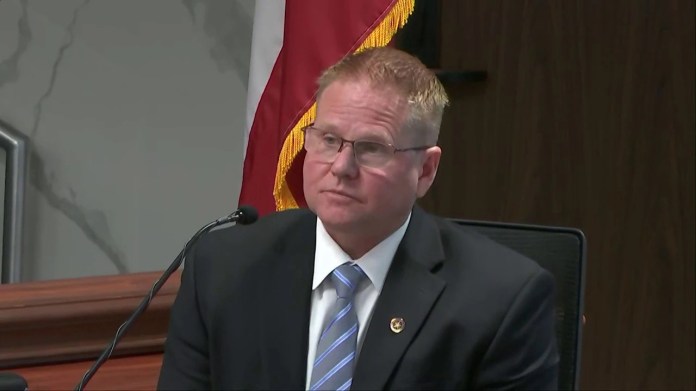
Entering the third week of trial, former Uvalde CISD officer Adrian Gonzales appeared in court again on Tuesday as witness testimony continued.

Gonzales is charged with 29 counts of abandoning or endangering a child. Prosecutors say he didn’t act quickly enough during the 2022 massacre, where 19 students and two teachers were killed.

Testimony is expected to begin at 9 a.m.

Previous testimony

The Latest:

On Friday, the trial continued with the testimony of a Texas Ranger. That ranger remained on the stand for around half an hour, answering questions about what he saw at the scene after the shooting.

The next witness was a Texas DPS Homeland Security officer, who was working as a Texas Ranger at the time. He told the court he was called to the scene after the shooting as a photographer, and he documented the evidence and spoke with representatives at a funeral home while working on the case. 

The second witness remained on the stand for questioning until the court adjourned for the day. 

Thursday, Jan. 15, trial proceedings

Proceedings began per usual on Thursday, but court was adjourned at 2 p.m. due to an emergency situation involving a family member of the jurors. 

Prior to the juror leaving, only one witness gave testimony in the morning’s proceedings. A retired Uvalde Police Department sergeant took the stand at the start of the day, and remained for questioning until the court broke for lunch around 1 p.m.

During his testimony, the former officer described the response that day, answering questions about how and when officers arrived at the scene and what he saw while he was there. He also reviewed his bodycam footage from that day.

The former sergeant was still on the stand when the court went to lunch, but was unable to continue due to the unexpected recess for the rest of the day. 

Wednesday, Jan. 14, trial proceedings

Employee testifies warning Gonzales of shooter

On Wednesday, Jan. 14, the court heard from multiple witnesses, including a former Uvalde CISD employee who first told Gonzales to confront the gunman. Melodye Flores testified about the moments leading up to the deadly shooting at Robb Elementary. 

Flores, a teacher’s aide at the school, told the court she learned about the shooter over her school radio hearing the gunman had jumped the fence and was firing a weapon. Her first thought was to run outside to protect the children at recess.

The defense questioned Flores’ perception of the day. They pointed out that her description of the white vehicle did not match Gonzales. They have maintained the entire trial that Gonzales did the best he could with what he knew at the time.

Doctor testifies treating students following incident

Dr. Cherie Hauptmeier testified on Wednesday, as well. She joined nearly 10 other doctors in treating around 15 patients. She described the medical injuries of each victim from the day. One of those injured was a 10-year-old 4th grader.

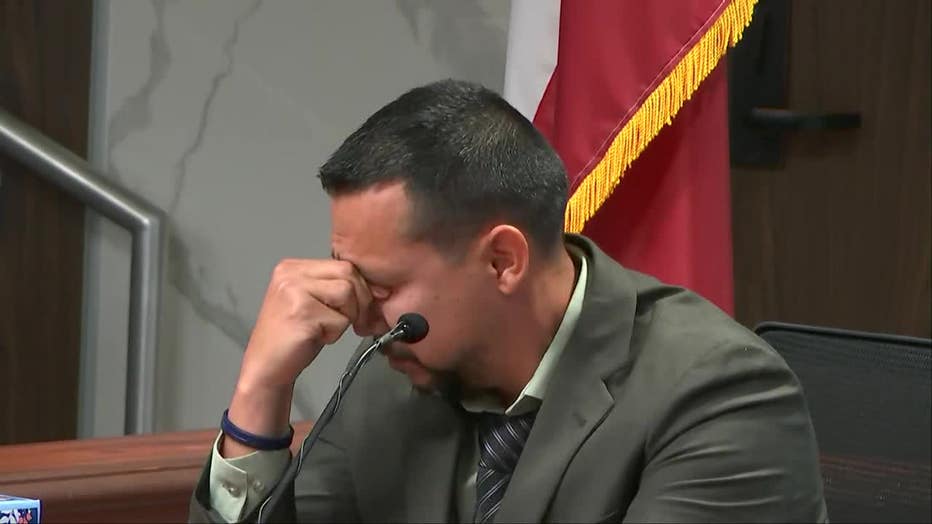
Wednesday was also the first day on which Gonzales appeared to become emotional during the trial. In previous days of proceedings, a stoic Gonzales rarely altered his facial expressions, remaining calm and even-tempered as witnesses delivered their testimonies. 

During the medical examiner’s time at the witness stand, however, Gonzales appeared to wipe away tears as the expert recalled the wounds sustained by some of the children that day. 

The officer who trained Gonzales gives testimony

The prosecution argues Gonzales ignored his active shooter training that day.

Retired Dallas police officer, Michael Witzgall, helped train Gonzales on active shooter response. He testified about the active shooter response, saying the main goal is to keep the gunman moving away from soft targets, which are places like schools, churches or hospitals.

The defense argued if Gonzales went in alone, it would have put Gonzales and other officers at a higher risk of being killed.

Tuesday, Jan. 13, trial proceedings

Robb elementary’s 4th grade teacher, Elsa Avila, testified on Tuesday, Jan. 13, recounting when her class noticed students running and screaming to getting classrooms before recognizing her gunshot wound upon the lockdown. When she noticed the wound, she says her fourth grade students tried to comfort her while staying quiet and hugging each other.

Off-duty officer testimony

On Jan. 13, testimony was also given by off-duty Zavala County Sheriff’s Deputy Sgt. Joe Vazquez. Vazquez rushed to the scene when he heard on the radio that there was an active shooter at the school. Vazquez’s daughter goes to that school so he sped to the school in his shorts, threw on his vest, grabbed his rifle and asked how he could help. Vazquez’s daughter was unharmed. 

Courtroom outburst

Just as Vasquez was getting off the witness stand, there was a loud outburst from the galley.  The sister of a victim made an emotional outburst in court, causing a disturbance in which she was escorted from the building. 

The judge then spoke to those in the courtroom, saying, “I want this case to go to verdict. Any further outbursts will just echo the attempt for another motion for mistrial. So please think about that. We’re trying to get this case to the jury, and these are not helping and, soon enough, if it continues, I will have no choice but to grant a mistrial. So please think about that. OK, we’re in recess until 1:30.”

Monday, Jan. 12, trial proceedings

Teacher testifies being shot and playing dead to stay alive

Arnulfo Reyes was a teacher working inside classroom 111 when the gunman walked in and opened fire. Reyes survived by playing dead. None of his students survived. Reyes goes on to describe that the shooter shot at him, striking him in the arm.

Reyes said the gunman then went into a neighboring classroom and continued shooting.

That gunman then came back into his classroom and taunted Reyes, before shooting him again in the back.

During the first week of trial

Last week, powerful images of the destruction of Robb Elementary School were shown to the juror depicting the day of the May 2022 shooting.

Prosecutors presented dozens of photos of new evidence throughout the school, documenting the damage left behind. During the presentation of evidence, some photos that were presented, the judge warned the audience, were “gruesome” and “shocking.”

The images depicted areas of the school struck by gunfire, such as classroom walls, windows with shattered glass and doorways with bullet fragments. Some of the photos also showed students’ school work and belongings left behind.

The state argued the images show the intensity of the attack and says Gonzales ignored his active shooter training and failed to act. The defense says Gonzales is not responsible for the bullet destruction in the classroom, stating that he previously said he radioed for help and helped evacuate students.

Mother of victim gives emotional testimony

The mother of one shooting victim, 9-year-old Eliana Garcia, gave her recollection of the day of the shooting. Jennifer Garcia said Eliana had asked to come home early that day, but Jennifer told her to stay to participate in an end-of-year pizza party with her class. Eliana would have turned 10 on June 4, just a week after the shooting.

The backstory:

Nearly 400 officers responded to the school on May 24, 2022. More than 70 minutes passed before a tactical team entered, killing the shooter.

Read more:

The Source: Information in this article comes from live coverage of the Uvalde school shooting trial in Corpus Christi, Texas.

Uvalde, Texas School ShootingTexas

Great Job & the Team @ Latest & Breaking News | FOX 7 Austin for sharing this story.

The high cost of child care is making mothers rethink having kids

The high cost of child care is making mothers rethink having kids

This article originally appeared in The 74.

The fertility rate for the United States has long been on a downward trend and is currently at a historic low. The price of child care, meanwhile, has been steadily rising; it grew 29% between 2020 and 2024, easily outpacing inflation, according to Child Care Aware of America.

Could those two trends be related? New research and surveys indicate yes.

In a recent research paper, Boston University economics Ph.D. candidate Abigail Dow finds that when child care prices increase, some American families decide to put off having more children, and many don’t have more children at all. 

Dow looked at child care prices across the country in a dataset compiled and published by the Women’s Bureau at the Department of Labor with data from 2010 to 2022. 

She then isolated a “shock” to child care prices — an event, unrelated to something like a recession or a spike in inflation, that made the cost of care go either up or down. The shock she identified was that when states mandate smaller group sizes and/or lower child to staff ratios, child care prices rise, so she studied what happened to fertility decisions when states passed such regulations.

“My key takeaway is that child care costs are high in the U.S., and I do find they’re a barrier to having children,” Dow said. She found that a 10% increase in the price of child care for children from birth to 2 years old led to a 5.7% decrease in the birth rate among women aged 20 to 44. Her research also found that the price increase leads to women delaying when they have children: a 10% increase prompts women to push back their first birth by four months and to extend the time between a first and second child by half a month. Dow found that women’s decisions about whether to have second and third children were particularly hampered by high child care prices. 

The findings are strongest for women ages 30 or older. This is, Dow posits, because they have more to lose if they can’t get child care: they’ve invested more time and resources into their careers and likely earn more, making the cost of having to give up on work to care for more children in the absence of affordable child care higher. Younger women have less to lose by having a child and dropping out of the work force if child care can’t be secured.

The research is novel: while there have been studies in European countries which suggest that women rethink having children when child care prices rise, Dow knew that those situations may not be applicable to the U.S., where the government spends much less on child care, it’s a primarily private system, and there is no guarantee of paid family leave. “There wasn’t a robust empirical analysis of: How do child care prices affect fertility rates?” Dow said. 

Dow noted that child care prices aren’t the only factor dampening the country’s fertility rate — other research has found that things like housing and health care prices also make an impact. But it’s clear that the cost of raising children is top of mind for American parents when they’re thinking about the sizes of their families. In a survey of 3,000 nationally representative respondents by YouGov, the Wheatley Institute at Brigham Young University, and Deseret News released in November, a record share of participants — 71% — said that raising children is unaffordable, a 13 percentage point increase over 2024.

That high cost of raising children was listed as the single most important reason survey respondents offered for why they’ve limited the children they either had or planned to have. That response was twice as prevalent as the next two reasons they gave — a lack of personal desire and a lack of a supportive partner — and for the first time in the survey’s 10-year history, it was the top reason respondents gave.

The survey also found that support for government resources aimed at parents through direct payments and better programs had increased since 2021, and opposition to such interventions was 10 percentage points lower. A majority favor universal day care, while just 18% oppose it. Survey respondents also supported increased tax credits for parents.

“If you think about, ‘What do I have to think about when I’m raising a family for those early years,’ child care is going to be front of mind,” Dow said.

The situation is poised to get worse for Americans considering whether and when to have children. Dow’s data only goes through 2022. Since then, the billions of dollars in pandemic-era federal relief for the child care sector has disappeared. In its wake, states like Arkansas and Indiana have cut back on support for the sector. Indiana stopped enrolling new children in its child care subsidy program, and the state has reduced reimbursement rates for providers, leading more than 100 providers to shutter. Arkansas has also cut provider reimbursement rates, put new subsidy applicants on a waitlist, and instituted new copays for parents who receive vouchers. More of the cost burden will now fall on parents in states that pull back.

Dow cautioned that her research shouldn’t be interpreted as an argument for relaxing regulations in order to bring child care costs down and boost births. “These regulations are really important for child health and safety,” she pointed out. “I’m absolutely not in the business of saying we should be making these regulations more lax purely to make child care more affordable for parents.” But, she said, her research makes it clear that parents, and particularly mothers, make decisions about whether to have children and how many to have based at least in part on whether they can afford child care. “Anything we can do to make child care more affordable seems important from a policy perspective,” she said.

Great Job Megan Kearney & the Team @ The 19th Source link for sharing this story.

Milwaukee pushes ahead on energy efficiency despite lost federal funds

Milwaukee pushes ahead on energy efficiency despite lost federal funds

The Trump administration canceled a grant meant to help city residents pay for insulation and new heating systems.

The post Milwaukee pushes ahead on energy efficiency despite lost federal funds appeared first on Yale Climate Connections.

Great Job YCC Team & the Team @ Yale Climate Connections Source link for sharing this story.

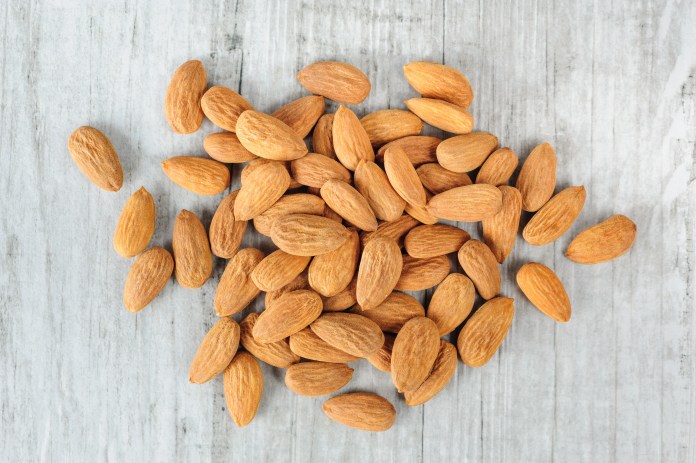
Nuts and Uric Acid: Health Effects, Gout, and Purines

Nuts and Uric Acid: Health Effects, Gout, and Purines

Lynn Grieger is a registered dietitian-nutritionist, certified diabetes care and education specialist, certified personal trainer, and certified health and wellness coach. She completed requirements to become a registered dietitian at Valparaiso University in 1987 and completed a dietetic internship at Ingalls Memorial Hospital in Harvey, Illinois, in 1988. 

Lynn brings her expertise in nutrition, exercise, and behavior change to her work in helping people reach their individual health and fitness goals. In addition to writing for Everyday Health, she has also written for websites and publications like Food and Health Communications, Today’s Dietitian, iVillage.com, and Rodale Press. She has a passion for healthy, nutrient-dense, great-tasting food and for being outdoors as much as possible — she can often be found running or hiking, and has completed a marathon in every state.

Great Job Jody Braverman, CPT, FNS, RYT & the Team @ google-discover Source link for sharing this story.

Meta’s Oversight Board takes up permanent bans in landmark case | TechCrunch

Meta’s Oversight Board takes up permanent bans in landmark case | TechCrunch

Meta’s Oversight Board is tackling a case focused on Meta’s ability to permanently disable user accounts. Permanent bans are a drastic action, locking people out of their profiles, memories, friend connections, and, in the case of creators and businesses, their ability to market and communicate with fans and customers.

This is the first time in the organization’s five-year history as a policy advisor that permanent account bans have been a subject of the Oversight Board’s focus, the organization notes.

The case being reviewed isn’t exactly one of an everyday user. Instead, the case involves a high-profile Instagram user who repeatedly violated Meta’s Community Standards by posting visual threats of violence against a female journalist, anti-gay slurs against politicians, content depicting a sex act, allegations of misconduct against minorities, and more. The account had not accumulated enough strikes to be automatically disabled, but Meta made the decision to permanently ban the account.

The Board’s materials didn’t name the account in question, but its recommendations could impact others who post content that targets public figures with abuse, harassment, and threats, as well as users who have their account permanently banned without receiving transparent explanations.

Meta referred this specific case to the Board, which included five posts made in the year before the account was permanently disabled. The tech giant says it’s looking for input about several key issues: how permanent bans can be processed fairly, the effectiveness of its current tools to protect public figures and journalists from repeated abuse and threats of violence, the challenges of identifying off-platform content, whether punitive measures effectively shape online behaviors, and best practices for transparent reporting on account enforcement decisions.

The decision to review the particulars of the case comes after a year in which users have complained of mass bans with little information about what they did wrong. The issue has impacted Facebook Groups, as well as individual account holders who believe that automated moderation tools are to blame. In addition, those who have been banned have complained that Meta’s paid support offering, Meta Verified, has proven useless to aid them in these situations.

Whether the Oversight Board has any real sway to address issues on Meta’s platform continues to be debated, of course.

The board has a limited scope to enact change at the social networking giant, meaning it can’t force Meta to make broader policy changes or address systemic issues. Notably, the Board isn’t consulted when CEO Mark Zuckerberg decides to make sweeping changes to the company’s policies — like its decision last year to relax hate speech restrictions. The Board can make recommendations and can overturn specific content moderation decisions, but it can often be slow to render a decision. It also takes on relatively few cases compared to the millions of moderation decisions that Meta makes across its user base.

According to a report released in December, Meta has implemented 75% of more than 300 recommendations the Board has issued, and its content moderation decisions have been consistently followed by Meta. Meta also recently asked for the policy advisors’ opinion on its implementation of the crowdsourced fact-checking feature, Community Notes.

After the Oversight Board issues its policy recommendations to Meta, the company has 60 days to respond. The Board is also soliciting public comments on this topic, but these cannot be anonymous.

Great Job Sarah Perez & the Team @ TechCrunch Source link for sharing this story.

Trump has promised cheaper oil. Texas’ economy could pay a price.

Trump has promised cheaper oil. Texas’ economy could pay a price.

ODESSA — After COVID-19 tanked oil prices, Texas’ oil and gas industry rebounded.

By 2024, operators were drilling record amounts of oil. Each barrel sold for at least $70, bringing profits and momentum that enriched the state’s coffers, school districts and local government budgets with billions in tax revenue.

Now, President Donald Trump’s pledge to bring oil prices down to $50 a barrel could decimate that momentum, making trouble — even if temporarily — for the Lone Star State.

Trump, who suggested the U.S. should take control of Venezuela’s oil after the country arrested President Nicolás Maduro, could certainly deliver on his promise to lower fuel costs for consumers by flooding the market with the South American country’s oil.

The result would be damaging for Texas oil and gas production, the backbone of the state’s economy, some experts argued. Operators will find it harder to break even on costs — much less profit — resulting in dwindling production for the industry’s estimated 495,000 Texas employees. And parts of Texas, such as the Permian Basin, where city and county governments rely on oil and gas, stand to lose revenue as a result.

Tom Manskey, director of economic development for Odessa, said prices that low, while beneficial at the gas pump, could injure the regional economy. In Odessa, a city of about 120,000, oil and gas is the dominant employer, he said.

“I would imagine it would have a negative effect on our region with regards to jobs and everything else,” Manskey said. “We’re in a very unpredictable economic time, and I think that’s just adding to it. There’s no predictability right now in the marketplace.”

Ray Perryman, an economist and founder of the Perryman Group, which conducts economic analyses across several Texas industries, suggested that if the price per barrel drops to $50, it would cause trouble and major market shifts with short and long-term impacts. Oil companies would change their practices and limit how much new oil is entering the marketplace, eventually driving the cost back up to make a profit, creating a volatile and unpredictable economic environment.

“If oil prices were to drop to $50 per barrel, the short-term effects are likely to be somewhat positive for many segments of the U.S. economy, but there would clearly be winners and losers,” said Perryman.

“In an area such as the Permian Basin, reducing activity in the oil and gas industry has substantial ripple effects on housing, retail in other areas,” Perryman said. “Because economic activity leads to tax receipts, an inevitable outcome is lower tax revenue to local entities.”

Other oil and gas industry leaders were bullish on the economy. While production will take a hit, existing drilling techniques will help operators continue to access an abundance of oil, said Ed Longanecker, president of the Texas Independent Producers and Royalty Owners Association, an industry trade group. Horizontal drilling, for instance, allows operators to access larger reservoirs of hydrocarbons, reducing the need to drill new wells.

“A slight decline in production in 2026 would modestly pressure (state and local) budgets, but Texas’s robust economy and drilling efficiencies would help to mitigate statewide impacts,” Longanecker said.

Texas Oil and Gas Association President Todd Staples said in a statement that the current conditions don’t spell serious trouble for the industry.

“The Texas oil and natural gas industry has a long history of delivering essential products while navigating price volatility,” Staples said. “What we’re seeing today reflects market adjustment rather than distress, recognizing that companies are necessarily adapting to current and forecasted market conditions.”

Staples said efficiency and innovation allow Texas producers to remain competitive into the future.

In Texas, it takes at least $62 per barrel to cover the cost of drilling more oil and gas wells and still make money.

Anything below that that price, operators will make little — if any — money from their wells, said Dane Gregoris, managing director of Enverus, an energy analytics firm. And shareholders who have been pushing oil companies to become profitable would not see their demands met.

Despite Trump’s promise to “drill, baby drill, oil and gas production in Texas between December 2024 and October 2025 remained relatively flat, at 5.8 million barrels per day. The number of drilling rigs, which indicate whether there is an appetite to extract more oil and gas, also declined. Texas has lost 20 rigs since Trump took office, according to the company’s data.

“These companies would be in survival mode rather than thriving in this environment,” Gregoris said. “At $50 (a barrel), things look pretty dire, and then at $40, you’re looking at big cuts to capital budgets, likely big declines in crude oil production in the US, and a significant amount of sort of cash flow negative producers out there, which usually spells trouble for foreign investors in the space.”

Declining production could have damaging effects on regional economies that rely on the industry for its revenue and workforce. Companies, for instance, could lay off more workers who are a key tax base for Odessa, said Renee Earls, president and chief executive of the city’s Chamber of Commerce. If those workers spend less, the local economy slows.

“We’re all in the oil business, regardless of whether we work at a restaurant, in a chamber, or in a bank,” she said. “We’ve learned to always prefer stability.”

Earls, who has witnessed many booms and busts in West Texas, said she’d really start to panic if oil dropped to $40 a barrel.

Disclosure: Texas Oil & Gas Association has been a financial supporter of The Texas Tribune, a nonprofit, nonpartisan news organization that is funded in part by donations from members, foundations and corporate sponsors. Financial supporters play no role in the Tribune’s journalism. Find a complete list of them here.

Great Job Texas Tribune, Carlos Nogueras Ramos & the Team @ KSAT San Antonio for sharing this story.

That’s How You Feel? Kevin Gates Upgrades Jelenny Tejada’s Wedding Ring After Calling Out Dreka & Alleged Tea Behind Their Divorce

That’s How You Feel? Kevin Gates Upgrades Jelenny Tejada’s Wedding Ring After Calling Out Dreka & Alleged Tea Behind Their Divorce

Kevin Gates apparently upgraded Jelenny Tejada‘s wedding ring after airing out Dreka Gates and the alleged tea behind their divorce last week.

RELATED: Game Over? Dreka Gates Reportedly Files For Divorce After Nearly A Decade With Kevin Gates

Kevin Gates Upgrades Jelenny Tejada’s Wedding Ring

On Monday, January 19, Jelenny Tejada took to Instagram to share a video post with her more than 203,000 followers. Furthermore, the post showed Tejada holding up a jewelry box with a ring inside. The ring featured a large, glistening halo-cut stone and a gold band.

“@iamkevingates upgraded my wedding ring AHHHHHHH I’m obsessed i love youuuuuu !! & I love being your wife ,” she captioned the post while shouting out her hubby.

Social Media Reacts

Social media users slid into TSR’s comment section, sharing their thoughts on her upgraded ring and Kevin Gates’ gesture for his new wife.

Instagram user @zorihya wrote, he get married every year ”

While Instagram user @xoxoxoxobs added, Wife? Ain’t he still married”

Instagram user @beautifiedbycamiel wrote, Trying to find Dreka in all these women while Dreka is unbothered on her farm ”

While Instagram user @queenlee601 added,It’s an Islamic spiritual marriage like the last one was … Yall relax, it’s Kevin … ”

Instagram user @diamondshinezbright wrote, Ladies don’t get it twisted a big rock doesn’t mean a man is SOLID…read that again!”

While Instagram user @thee_original_smiley added, May this type of delusion NEVER find me!!”

Instagram user @jps.3 wrote, I could never take him seriously with anyone after Dreka.”

While Instagram user @lifewithamandaaaa added, Performative.”

Instagram user @aliciadaniellaa wrote, I’m not even mad. Collect it all because rn it’s just your turn ”

While Instagram user @queenjole added, Why do I think he’s doing this to make Dreka mad”

Instagram user @msdesiiikay wrote, He can not be legally marrying her”

While Instagram user @mzblackcinderella added, Girl please, We ALL see now why he doing the most with you now He think he’s bothering The Unbothered Dreka!! Pressure bust pipes Sorry girl We Love Dreka”

Kevin Gates Upgraded His New Wife’s Ring After Airing Out Dreka Gates & Their Divorce Last Week

As The Shade Room previously reported, Dreka Gates made headlines in July 2025 when TMZ reported that she filed for divorce from Kevin Gates. This, reportedly, after ten years of marriage and while citing “irreconcilable differences.” Furthermore, Dreka listed their date of separation as July 10, 2025, and noted her desire to receive spousal support while blocking the support for Kevin.

In October 2025, it was reported that Dreka is seeking “$27,193 per month in child support” for their two sons and “$46,274 per month in spousal support.” Additionally, it was revealed that her divorce filing accused Kevin of dismantling the “financial foundation of their family” in late 2021. Per Dreka, Kevin allegedly “stopped paying for basic family obligations such as property taxes and their children’s private school tuition.” This, while he still allegedly purchased luxury vehicles and property.

To note, in her filing, Dreka noted that she wanted primary custody of their sons, at least if only temporarily, because they had spent the last two years with Kevin. In response to her filing, Kevin reportedly asserted that he and Dreka were never legally married.

Then, last week, Kevin took to social media, alleging that he and Dreka have been split since 2020. Additionally, he said that she only filed for divorce after he stopped giving her money. Furthermore, he accused Dreka and her family of stealing money from him, despite her allegedly being in a new relationship.

RELATED: Yikes! Kevin Gates Accuses Dreka Gates Of Allegedly Filing For Divorce After He Stopped Giving Her Money (WATCH)

What Do You Think Roomies?

Great Job Jadriena Solomon & the Team @ The Shade Room Source link for sharing this story.

Secret Link