For nearly a year, a motley crew scoured New Orleans for a shaggy white mutt named Scrim.
Great Job David W. Brown & the Team @ Everything Source link for sharing this story.

For nearly a year, a motley crew scoured New Orleans for a shaggy white mutt named Scrim.
Great Job David W. Brown & the Team @ Everything Source link for sharing this story.

Her She Squad – Women’s Empowerment & Healing
This isn’t just a community—it’s a sacred space for women who are ready to reclaim their voice, rise through their stories, and grow in sisterhood. Whether you’re rebuilding, rediscovering, or simply resting, Her She Squad offers connection without pressure, and healing without performance.
Subscribers will receive:
– Invitations to real-time community circles—virtual and local
– Empowering writing prompts and self-reflection tools
– Guest highlights and podcast episodes from *Through the Eyes of Women*
– First access to soul-aligning healing journeys thoughtfully guided through MOTA
– Optional invites to our Book Club, rooted in feminine wisdom and collective realignment
Felicia’s Action Network (FAN) – Voter Engagement & Civic Action
FAN stands for Felicia’s Action Network—a grassroots movement led by Felicia Ray Owens to mobilize everyday people into purposeful action. Whether you’re fired up and ready to march, prefer organizing online, or want to support quietly behind the scenes, FAN gives you a way to show up for what matters.
You don’t need political experience—just a heart for your community and a willingness to make a difference.
Subscribers will receive:
Greater Brain Group – Natural Healing & Elemental Wellness
This option is for those seeking a deeper return to self—through nature, food, energy, grief work, and holistic rebalancing. Whether you’re planting your first garden, healing from addiction, tracking the moon cycle, or watching the stars from a hillside in your camper—this path welcomes you.
Open to all who feel called—women, men, non-binary folks, LGBTQ+ kin, and anyone drawn to earth-centered healing.
Subscribers will receive:
Great Job Felicia Ray Owens & the Team @ Felicia Ray Owens Source link for sharing this story.

Last month, AppLovin (APP 1.78%) was punished by investors more for what it didn’t do than for what it actually did. A hoped-for graduation to a top stock index was one of the non-occurrences, while a short-seller felt compelled to write a scathing report on the company. In some respects, AppLovin was fortunate that its stock didn’t decline more deeply than the sub-11% dip it experienced across June.
The index let-down, such as it was, occurred near the top of the month. Every quarter, S&P Dow Jones Indices, the operator of the closely followed S&P 500 index (among many others), likes to “rebalance” the index, replacing component stocks deemed no longer suitable with new ones.
Image source: Getty Images.
Several days ahead of the current rebalancing, speculation grew about which companies would land on the hallowed index. AppLovin was mentioned as one of those candidates, at least by a team of analysts at heavyweight lender Bank of America.
The leading prospect, in their take, was online securities brokerage Robinhood Markets, but it also mentioned six other prospects. Among these was AppLovin. Alas, S&P Dow Jones Indices performed what felt like a head fake, electing not to change the composition of the S&P 500 index at all this time.
The market can usually shrug off a non-event like this, disappointing as it may be initially. It’s tougher to ignore a highly critical and detailed analysis of a stock, such as the ones typically published by institutional short-sellers. Unfortunately for AppLovin, that’s exactly what happened when such a firm trained its sights on the company.
In mid-June, the firm, Culper Research, unveiled a rather sprawling 30-page screed criticizing AppLovin’s business practices. Many of its accusations pertained to AppLovin’s goal of acquiring the non-Chinese operations of controversial social media video app TikTok, a service that has fallen afoul of the U.S. government.
In the report, Culper intimated that a significant AppLovin shareholder, Hao Tang, is an individual with a shady past and “extensive direct and indirect ties” to certain dark corners of the Chinese government. It decried this “covert Chinese ownership,” and warned of the danger posed to U.S. national security.
AppLovin hasn’t made any official statement on the Culper Research allegations. Perhaps, management feels they’ll blow over with investors before long.
Personally, I’d view that as a mistake since troubling allegations like the ones the short-seller raises have a way of lingering and, in turn, negatively affecting investor morale. We’ll see whether the company can deliver news encouraging enough to dislodge the numerous accusations from the collective investor memory.
Bank of America is an advertising partner of Motley Fool Money. Eric Volkman has no position in any of the stocks mentioned. The Motley Fool has positions in and recommends AppLovin and Bank of America. The Motley Fool has a disclosure policy.
Great Job newsfeedback@fool.com (Eric Volkman) & the Team @ The Motley Fool Source link for sharing this story.
The College Football Playoff will almost certainly expand again in 2026, going from a 12-team format to a 14- or 16-team format. While we don’t know which of these it’ll be, it’s always fun to think about what things could look like.
In the most recent episode of “The Joel Klatt Show: Big Noon Conversations,” Big Ten commissioner Tony Petitti broke down how discussions over the CFP expansion are going, as he holds a key role. He also shared that he’s seeking more meaningful games in the CFP expansion and believes that a 16-team format could help accomplish that.
“Bigger is better,” Petitti said. “I think 12 is not enough teams given the size of the teams that are competing. You look at professional leagues, they [have] somewhere between 40% and 50% of their teams qualifying for the postseason. We’re way below that, even at 16. I think we want to be really careful.”
As Petitti potentially seeks a 16-team CFP, the determination of which 16 (or 14) teams would qualify is still up for debate. Automatic qualifiers would likely be involved in some form or fashion.
So, let’s see how the proposed formats for the CFP expansion could have impacted last year’s field, with the consideration that the CFP has already gone to a straight seeding model after last year.
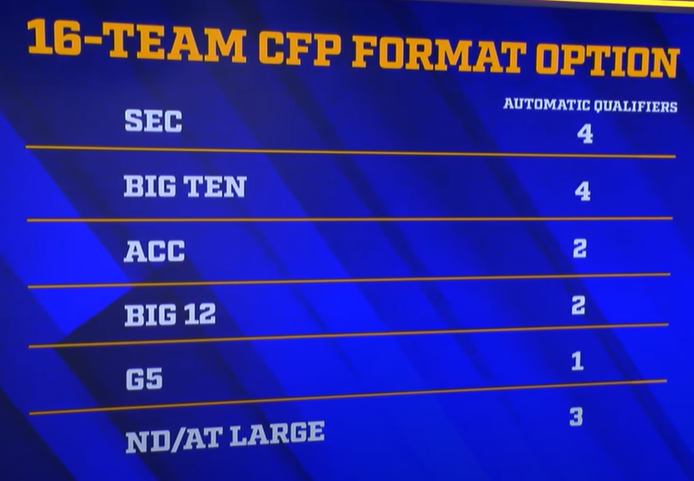
In this format of the 16-team model, the Big Ten and the SEC would’ve received four automatic bids to the CFP, while the ACC and Big 12 each would’ve received two. There also would’ve been an automatic spot for the highest-ranked Group of 5 conference champion and three at-large bids. With the idea of a conference championship weekend being thrown out there as an extension to the CFP expansion, we used the standings for the four major conferences to help determine which teams would have received those automatic qualifying spots.
In the Big Ten, both Oregon and Penn State would’ve received an automatic bid, as they had the two best conference records in the regular season. The other two games in the Big Ten during conference championship weekend would have been Illinois (No. 6 in the Big Ten standings) at Indiana (No. 3 in the Big Ten standings) and Iowa (No. 5 in the Big Ten standings) at Ohio State (No. 4 in the Big Ten standings). The winner of those two games would’ve received the two automatic bids. In this practice, let’s presume that Indiana and Ohio State win their respective games.
In the SEC, both Georgia and Texas would’ve received an automatic bid, as they had the two best conference records in the regular season. The other two games in the SEC would’ve been South Carolina (No. 6 in the SEC standings) at Tennessee (No. 3 in the SEC standings) and LSU (No. 5 in the SEC standings) at Alabama (No. 4 in the SEC standings). Just like the Big Ten, the winners of those games would’ve received the conference’s two other automatic bids. So, let’s presume the favorites of those games win, meaning Tennessee and Alabama advance.
As for the ACC and the Big 12, it isn’t exactly known what their conference championship weekends would look like. The ACC recently mentioned an idea where it could have its regular-season conference champion get a bye that week, meaning the second- and third-place teams in the regular-season standings play for the conference’s other automatic berth.
For the sake of this exercise, let’s send the two teams who finished No. 1 and No. 2 in the regular season standings for the ACC and Big 12 to the CFP. That would mean SMU and Clemson would advance out of the ACC, while Arizona State and Iowa State would’ve advanced out of the Big 12. Boise State was the highest-ranked Group of 5 conference champion, receiving the No. 9 ranking in the final CFP poll. That was an easy one to figure out.
As for the three at-large spots, that’s where things might get a little tricky. Notre Dame was ranked fifth in the final CFP poll, meaning it would’ve likely occupied one of these at-large bids. If we went by the rankings, Miami (Fla.) and Ole Miss would’ve received the final two at-large spots. However, neither of those teams would’ve played in conference championship weekend during this exercise, leading to some potential murkiness with assembling the field. For now, let’s send Miami and Ole Miss to the CFP.
Here’s how that 16-team field would’ve looked under that format, using the final CFP rankings:
First two teams out: South Carolina, BYU
One of the ideas being thrown out there for the 16-team CFP is for the top two seeds to get a double bye and a play-in round between the No. 13-16 seeds. That would mean Miami would host Iowa State, which was the Pop-Tarts Bowl matchup this past season, and Ole Miss would host Clemson. As for second-round matchups, Ohio State would’ve hosted Alabama and Notre Dame would’ve hosted Arizona State. Oregon also would’ve avoided Ohio State in the quarterfinals thanks to the straight seeding.
This is probably the easiest of the five formats to understand. In this format, the five highest-ranked conference winners plus the 11 highest-ranked at-large teams would’ve received a berth into the 2024 CFP.
Here’s how that would’ve looked like:
First two teams out: BYU, Iowa State
In the possible scenario that there’s a “play-in weekend,” we would’ve seen two conference matchups taking place. Miami would’ve hosted Clemson after the Tigers won the ACC Championship Game, while Ole Miss would’ve hosted South Carolina. This format would’ve really only changed the last two seeds from the previous format, with South Carolina taking Iowa State’s spot in the field. That would’ve left the Big 12 with just one team in the tournament.
This format is similar to the first format we mentioned. The only difference is that there would’ve been one more automatic bid for an ACC team or the Big 12 would receive a third automatic bid, depending on which conference’s third-place team is ranked higher. As a result, there would’ve been one fewer at-large spot.
For the sake of brevity, let’s assume that the same eight teams from the Big Ten and the SEC in the first format receive the eight automatic bids between the two conferences in this format. Let’s also assume SMU, Clemson, Arizona State and Iowa State also receive the first two automatic bids from their respective conferences, the ACC and the Big 12.
That would leave Miami and BYU as the two third-place teams from the ACC and the Big 12 seeking the other automatic qualifying spot. Miami was the higher-ranked team of the two (No. 13 to BYU’s No. 17 ranking), meaning the Hurricanes would advance to the CFP. But if the CFP really wanted to get creative, it could have the third-place teams in the ACC and the Big 12 go head-to-head for this spot.
Again, Boise State was the highest-ranked Group of 5 conference champion, so it would’ve received a spot in this format. Notre Dame was ranked fifth in the final CFP poll, so it likely would’ve been given one of the last at-large bids. Ole Miss would’ve been the second-highest ranked non-automatic-qualifying team, likely giving it a berth in the CFP.
Here’s what the 16-team field would’ve looked like in this format:
First two teams out: South Carolina, BYU
This format would’ve produced the exact same 16 teams and seeds as the first format we mentioned. The big difference is that the slight tweak would’ve given Miami an automatic bid, as none of the other formats would’ve given the Hurricanes a guaranteed spot in the field last season. It also would’ve given some more stability to the ACC or the Big 12, as their respective conferences’ third-place team typically isn’t ranked in the top 10 of the final CFP poll.
In this proposed format, the ACC and the Big 12 would each get three automatic qualifiers, while the Big Ten and the SEC would still get four. There would also be an automatic qualifier for the highest-ranked Group of 5 conference champion to go along with one at-large bid.
As with the other two examples where the Big Ten and the SEC get four automatic qualifiers, we’ll assume the same eight teams make it into the field via the conference championship weekend. How the ACC and the Big 12 would determine their three automatic qualifiers in this scenario is anyone’s guess, but the simplest way would be to have the top two teams in each conference in the regular season occupying two of those spots, while the third would be determined through a play-in game. If the higher-ranked team won those games, we’d have SMU, Clemson and Miami representing the ACC, while Arizona State, Iowa State and BYU would get the Big 12’s three automatic qualifiers.
Again, Boise State would be the Group of 5 representative and Notre Dame would likely occupy the lone at-large spot.
Here’s how the field would’ve like in this scenario:
First two teams out: Ole Miss, South Carolina
The big difference in this format is Ole Miss wouldn’t qualify for the CFP because it didn’t finish in the top six of the SEC, nor was it the highest-ranked remaining team for an at-large spot. A potential play-in weekend in this scenario would’ve featured two ACC-Big 12 battles, while the top 12 seeds remain consistent with the other three formats we’ve gone over so far.
While it seems unlikely, a 14-team format is still on the table for the latest round of CFP expansion. The most common format for a 14-team playoff features four automatic bids for the Big Ten and the SEC, while the ACC and the Big 12 get two apiece. The highest-ranked Group of 5 conference champion would also get an automatic bid, while there would be an at-large bid for the highest-ranked remaining team.
This format is comparable to the first format we mentioned; it just has two fewer at-large bids. So, the four teams representing the Big Ten and the SEC would remain the same in our practice scenario. The same goes for the ACC (SMU and Clemson) and the Big 12 (Arizona State and Iowa State), but as we mentioned earlier, it’s unclear what each of those conferences would likely do for a conference championship weekend if it had two automatic bids.
Just like the other formats, Boise State (highest-ranked Group of 5 champion) and Notre Dame (highest-ranked at-large team) would also make the field.
Here’s how a potential 14-team CFP format would’ve looked like last season:
First two teams out: Miami, Ole Miss
The top 12 seeds in this format would’ve remained the same compared to the other four formats, but this is the first format that doesn’t include Miami.
A play-in weekend also wouldn’t be possible in a 14-team format. Oregon and Georgia would’ve received first-round byes as the other 12 teams duked it out. Some of those first-round matchups would’ve included a game between former Big 12 foes (Iowa State–Texas), Clemson making the trip up to Happy Valley to take on Penn State and Alabama facing Ohio State.
Want great stories delivered right to your inbox? Create or log in to your FOX Sports account, follow leagues, teams and players to receive a personalized newsletter daily.
Get more from College Football Follow your favorites to get information about games, news and more
#FROUSA #HillCountryNews #NewBraunfels #ComalCounty #LocalVoices #IndependentMedia
Great Job Felicia Ray Owens & the Team @ FROUSA Media Source link for sharing this story.
#FeliciaRayOwens #TheFeliciaFiles #FROUSA #LocalVoices #IndependentMedia #HerSheSquad
Great Job Felicia Ray Owens & the Team @ Felicia Ray Owens Source link for sharing this story.
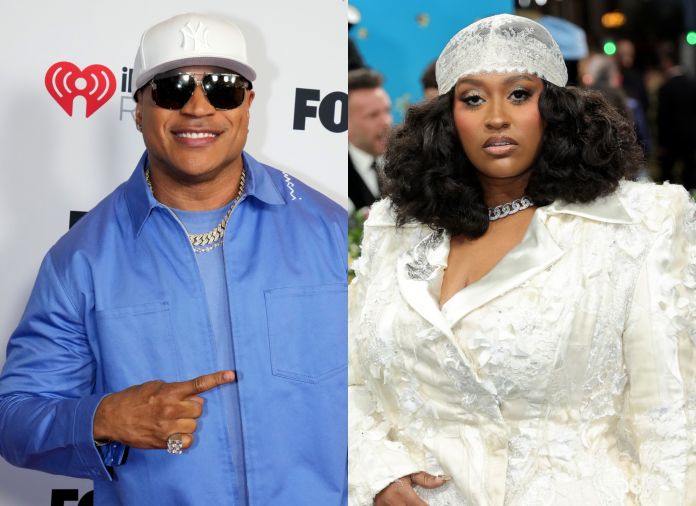
Philadelphia’s highly anticipated Wawa Welcome America July 4th concert saw a significant change to its lineup, as headliners LL Cool J and Jazmine Sullivan ultimately chose not to perform. Their decision came in a clear show of solidarity with striking municipal workers, emphasizing a commitment to labor over scheduled appearances.
For fans eager to celebrate Independence Day with live music, the news brought understandable disappointment. The Wawa Welcome America festival is a hallmark annual event in Philadelphia, culminating in a massive free concert on the Benjamin Franklin Parkway. However, this year’s festivities were overshadowed by an ongoing strike by AFSCME District Council 33, which represents thousands of the city’s blue-collar municipal workers, including sanitation, parks, and water department employees. These workers are fighting for better wages, benefits, and working conditions, establishing picket lines.
According to NBC Philadelphia, LL Cool J stated in a video posted on social media: “there’s absolutely no way that I can perform, cross a picket line and pick up money when I know that people are out there fighting for a living wage.” He further expressed hope that “the mayor and the city can make a deal. I hope it works out.” He also assured fans he never wants to disappoint them and planned to still be in Philadelphia in case a resolution was reached.
Jazmine Sullivan, a Philadelphia native and Grammy-winning R&B powerhouse, also withdrew from the concert. NBC Philadelphia reported that Sullivan shared on her Instagram story: “Today I choose to not perform at the Wawa Welcome America concert and stand with Philly’s DC33 until the city and union find a way to bring fair living wages to our working class. I love my city and I believe in you. Hopefully, we will get to celebrate when things are better.”
The withdrawal of these two major headliners meant a significant shift for the concert’s lineup, though organizers quickly worked to ensure the show would still go on with other performers. However, the message sent by LL Cool J and Jazmine Sullivan resonated far beyond the stage itself.
AFSCME District Council 33 represents approximately 9,000 city workers in various departments, including sanitation, water services, police dispatch, and street maintenance. The union is fighting for higher pay and health care benefits, reportedly seeking a 5% pay increase, and health care benefits for all employees.
Union President Greg Boulware of DC 33 emphasized the workers’ struggle for dignity, “The workers who provide all the comforts for people don’t have any comforts of their own.” He added, “We’ve got people that work and repair the water mains and can’t afford their water bill.”
The strike, which began on July 1, rapidly led to visible impacts across Philadelphia. Residential trash collection came to a halt, with trash bags quickly piling up on streets and at temporary drop-off sites. City services like some pools and libraries were closed, and recreation center hours were shortened. Even emergency services faced strain, with a judge ordering some 911 dispatchers and essential Water Department workers back to their posts due to public safety concerns.
Union President Greg Boulware lauded the artists’ decision to stand with them. Boulware stated, “LL Cool J’s decision to stand in solidarity with the labor movement by choosing not to cross a picket line is a powerful testament to his respect for workers’ rights. His actions highlight the importance of supporting those who strive for fair treatment and better working conditions.” He further expressed, “We are grateful for his exemplary stance and the impact it has on raising awareness and fostering respect for working people everywhere. LL Cool J truly is the G.O.A.T.!” Boulware said he was “profoundly humbled” by Sullivan’s decision as a native Philadelphian.
Great Job Kerbi Lynn & the Team @ Bossip Source link for sharing this story.

The College Football Playoff will almost certainly expand again in 2026, going from a 12-team format to a 14- or 16-team format. While we don’t know which of these it’ll be, it’s always fun to think about what things could look like.
In the most recent episode of “The Joel Klatt Show: Big Noon Conversations,” Big Ten commissioner Tony Petitti broke down how discussions over the CFP expansion are going, as he holds a key role. He also shared that he’s seeking more meaningful games in the CFP expansion and believes that a 16-team format could help accomplish that.
“Bigger is better,” Petitti said. “I think 12 is not enough teams given the size of the teams that are competing. You look at professional leagues, they [have] somewhere between 40% and 50% of their teams qualifying for the postseason. We’re way below that, even at 16. I think we want to be really careful.”
As Petitti potentially seeks a 16-team CFP, the determination of which 16 (or 14) teams would qualify is still up for debate. Automatic qualifiers would likely be involved in some form or fashion.
So, let’s see how the proposed formats for the CFP expansion could have impacted last year’s field, with the consideration that the CFP has already gone to a straight seeding model after last year.
In this format of the 16-team model, the Big Ten and the SEC would’ve received four automatic bids to the CFP, while the ACC and Big 12 each would’ve received two. There also would’ve been an automatic spot for the highest-ranked Group of 5 conference champion and three at-large bids. With the idea of a conference championship weekend being thrown out there as an extension to the CFP expansion, we used the standings for the four major conferences to help determine which teams would have received those automatic qualifying spots.
In the Big Ten, both Oregon and Penn State would’ve received an automatic bid, as they had the two best conference records in the regular season. The other two games in the Big Ten during conference championship weekend would have been Illinois (No. 6 in the Big Ten standings) at Indiana (No. 3 in the Big Ten standings) and Iowa (No. 5 in the Big Ten standings) at Ohio State (No. 4 in the Big Ten standings). The winner of those two games would’ve received the two automatic bids. In this practice, let’s presume that Indiana and Ohio State win their respective games.
In the SEC, both Georgia and Texas would’ve received an automatic bid, as they had the two best conference records in the regular season. The other two games in the SEC would’ve been South Carolina (No. 6 in the SEC standings) at Tennessee (No. 3 in the SEC standings) and LSU (No. 5 in the SEC standings) at Alabama (No. 4 in the SEC standings). Just like the Big Ten, the winners of those games would’ve received the conference’s two other automatic bids. So, let’s presume the favorites of those games win, meaning Tennessee and Alabama advance.
As for the ACC and the Big 12, it isn’t exactly known what their conference championship weekends would look like. The ACC recently mentioned an idea where it could have its regular-season conference champion get a bye that week, meaning the second- and third-place teams in the regular-season standings play for the conference’s other automatic berth.
For the sake of this exercise, let’s send the two teams who finished No. 1 and No. 2 in the regular season standings for the ACC and Big 12 to the CFP. That would mean SMU and Clemson would advance out of the ACC, while Arizona State and Iowa State would’ve advanced out of the Big 12. Boise State was the highest-ranked Group of 5 conference champion, receiving the No. 9 ranking in the final CFP poll. That was an easy one to figure out.
As for the three at-large spots, that’s where things might get a little tricky. Notre Dame was ranked fifth in the final CFP poll, meaning it would’ve likely occupied one of these at-large bids. If we went by the rankings, Miami (Fla.) and Ole Miss would’ve received the final two at-large spots. However, neither of those teams would’ve played in conference championship weekend during this exercise, leading to some potential murkiness with assembling the field. For now, let’s send Miami and Ole Miss to the CFP.
Here’s how that 16-team field would’ve looked under that format, using the final CFP rankings:
First two teams out: South Carolina, BYU
One of the ideas being thrown out there for the 16-team CFP is for the top two seeds to get a double bye and a play-in round between the No. 13-16 seeds. That would mean Miami would host Iowa State, which was the Pop-Tarts Bowl matchup this past season, and Ole Miss would host Clemson. As for second-round matchups, Ohio State would’ve hosted Alabama and Notre Dame would’ve hosted Arizona State. Oregon also would’ve avoided Ohio State in the quarterfinals thanks to the straight seeding.
This is probably the easiest of the five formats to understand. In this format, the five highest-ranked conference winners plus the 11 highest-ranked at-large teams would’ve received a berth into the 2024 CFP.
Here’s how that would’ve looked like:
First two teams out: BYU, Iowa State
In the possible scenario that there’s a “play-in weekend,” we would’ve seen two conference matchups taking place. Miami would’ve hosted Clemson after the Tigers won the ACC Championship Game, while Ole Miss would’ve hosted South Carolina. This format would’ve really only changed the last two seeds from the previous format, with South Carolina taking Iowa State’s spot in the field. That would’ve left the Big 12 with just one team in the tournament.
This format is similar to the first format we mentioned. The only difference is that there would’ve been one more automatic bid for an ACC team or the Big 12 would receive a third automatic bid, depending on which conference’s third-place team is ranked higher. As a result, there would’ve been one fewer at-large spot.
For the sake of brevity, let’s assume that the same eight teams from the Big Ten and the SEC in the first format receive the eight automatic bids between the two conferences in this format. Let’s also assume SMU, Clemson, Arizona State and Iowa State also receive the first two automatic bids from their respective conferences, the ACC and the Big 12.
That would leave Miami and BYU as the two third-place teams from the ACC and the Big 12 seeking the other automatic qualifying spot. Miami was the higher-ranked team of the two (No. 13 to BYU’s No. 17 ranking), meaning the Hurricanes would advance to the CFP. But if the CFP really wanted to get creative, it could have the third-place teams in the ACC and the Big 12 go head-to-head for this spot.
Again, Boise State was the highest-ranked Group of 5 conference champion, so it would’ve received a spot in this format. Notre Dame was ranked fifth in the final CFP poll, so it likely would’ve been given one of the last at-large bids. Ole Miss would’ve been the second-highest ranked non-automatic-qualifying team, likely giving it a berth in the CFP.
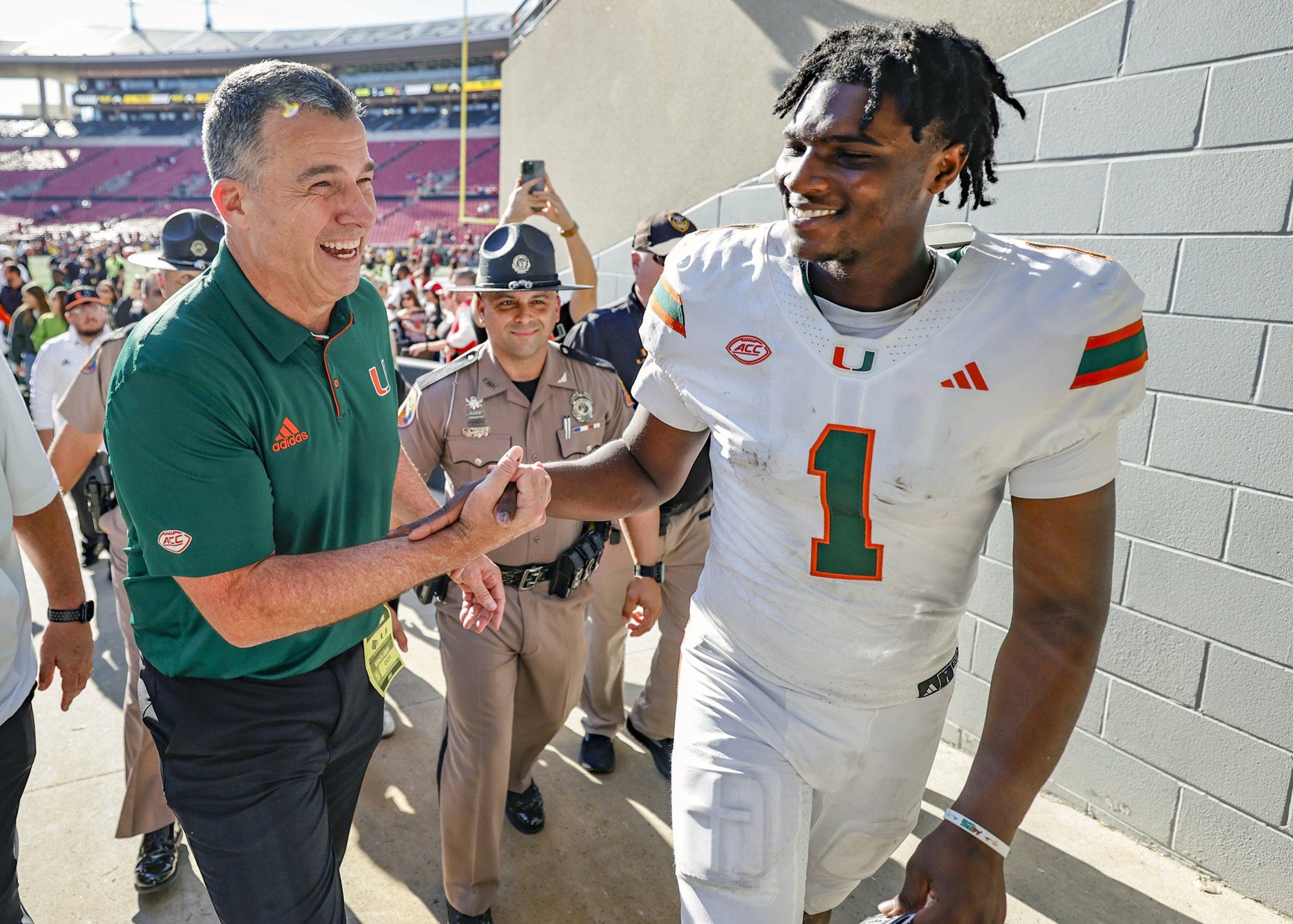
Cam Ward and the Miami Hurricanes would’ve almost certainly made the College Football Playoff if it was a 16-team field, regardless of the format. (Al Diaz/Miami Herald/Tribune News Service via Getty Images)
Here’s what the 16-team field would’ve looked like in this format:
First two teams out: South Carolina, BYU
This format would’ve produced the exact same 16 teams and seeds as the first format we mentioned. The big difference is that the slight tweak would’ve given Miami an automatic bid, as none of the other formats would’ve given the Hurricanes a guaranteed spot in the field last season. It also would’ve given some more stability to the ACC or the Big 12, as their respective conferences’ third-place team typically isn’t ranked in the top 10 of the final CFP poll.
In this proposed format, the ACC and the Big 12 would each get three automatic qualifiers, while the Big Ten and the SEC would still get four. There would also be an automatic qualifier for the highest-ranked Group of 5 conference champion to go along with one at-large bid.
As with the other two examples where the Big Ten and the SEC get four automatic qualifiers, we’ll assume the same eight teams make it into the field via the conference championship weekend. How the ACC and the Big 12 would determine their three automatic qualifiers in this scenario is anyone’s guess, but the simplest way would be to have the top two teams in each conference in the regular season occupying two of those spots, while the third would be determined through a play-in game. If the higher-ranked team won those games, we’d have SMU, Clemson and Miami representing the ACC, while Arizona State, Iowa State and BYU would get the Big 12’s three automatic qualifiers.
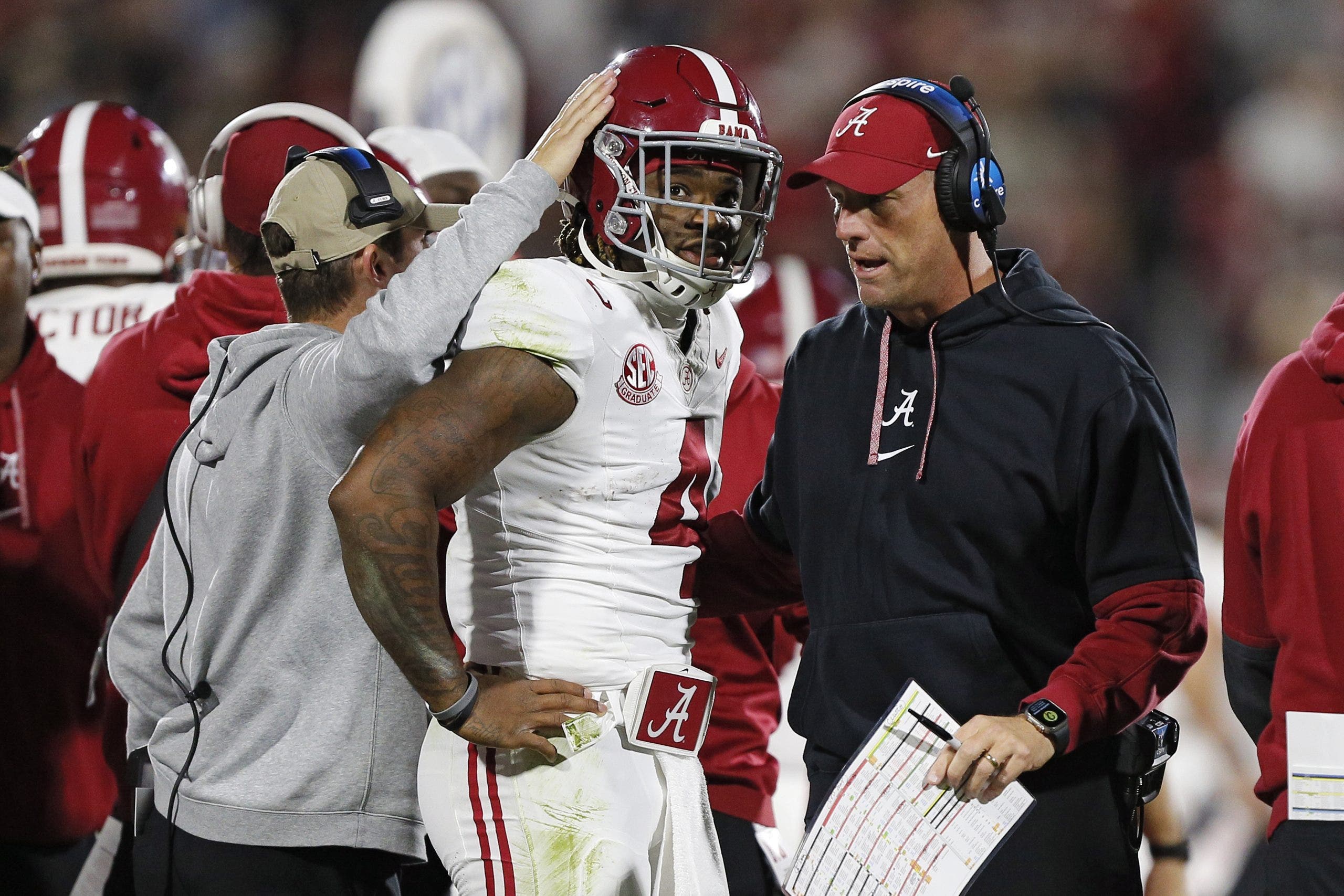
Jalen Milroe, Kalen DeBoer and Alabama could’ve made the College Football Playoff last season in an expanded field. (Photo by Brian Bahr/Getty Images)
Again, Boise State would be the Group of 5 representative and Notre Dame would likely occupy the lone at-large spot.
Here’s how the field would’ve like in this scenario:
First two teams out: Ole Miss, South Carolina
The big difference in this format is Ole Miss wouldn’t qualify for the CFP because it didn’t finish in the top six of the SEC, nor was it the highest-ranked remaining team for an at-large spot. A potential play-in weekend in this scenario would’ve featured two ACC-Big 12 battles, while the top 12 seeds remain consistent with the other three formats we’ve gone over so far.
While it seems unlikely, a 14-team format is still on the table for the latest round of CFP expansion. The most common format for a 14-team playoff features four automatic bids for the Big Ten and the SEC, while the ACC and the Big 12 get two apiece. The highest-ranked Group of 5 conference champion would also get an automatic bid, while there would be an at-large bid for the highest-ranked remaining team.
This format is comparable to the first format we mentioned; it just has two fewer at-large bids. So, the four teams representing the Big Ten and the SEC would remain the same in our practice scenario. The same goes for the ACC (SMU and Clemson) and the Big 12 (Arizona State and Iowa State), but as we mentioned earlier, it’s unclear what each of those conferences would likely do for a conference championship weekend if it had two automatic bids.
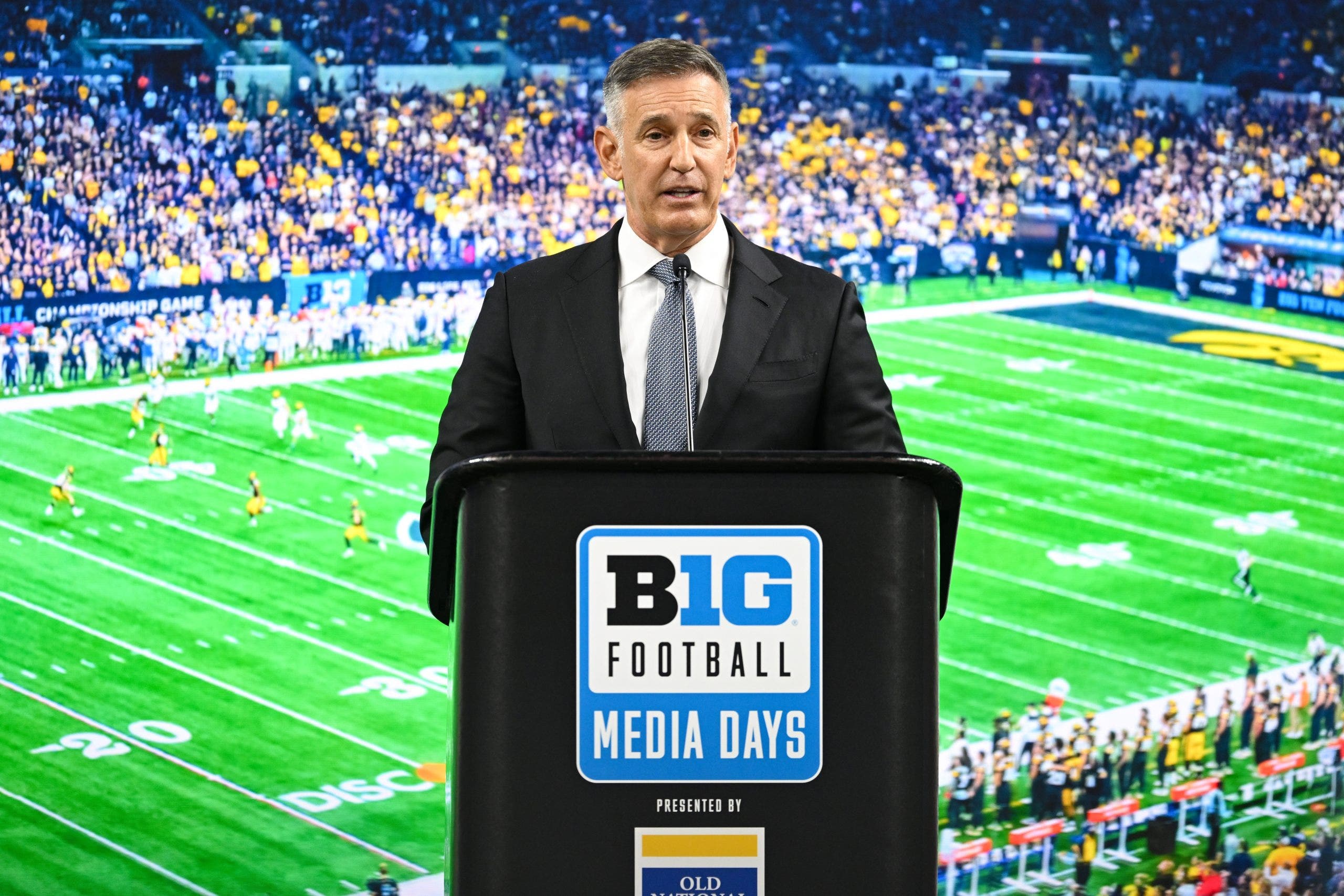
Big Ten commisioner Tony Petitti could help his conference receive four automatic bids in the next round of College Football Playoff expansion. (Photo by James Black/Icon Sportswire via Getty Images)
Just like the other formats, Boise State (highest-ranked Group of 5 champion) and Notre Dame (highest-ranked at-large team) would also make the field.
Here’s how a potential 14-team CFP format would’ve looked like last season:
First two teams out: Miami, Ole Miss
The top 12 seeds in this format would’ve remained the same compared to the other four formats, but this is the first format that doesn’t include Miami.
A play-in weekend also wouldn’t be possible in a 14-team format. Oregon and Georgia would’ve received first-round byes as the other 12 teams duked it out. Some of those first-round matchups would’ve included a game between former Big 12 foes (Iowa State-Texas), Clemson making the trip up to Happy Valley to take on Penn State and Alabama facing Ohio State.
Want great stories delivered right to your inbox? Create or log in to your FOX Sports account, follow leagues, teams and players to receive a personalized newsletter daily.
Get more from College Football Follow your favorites to get information about games, news and more
Great Job & the Team @ FOX Sports Digital Source link for sharing this story.
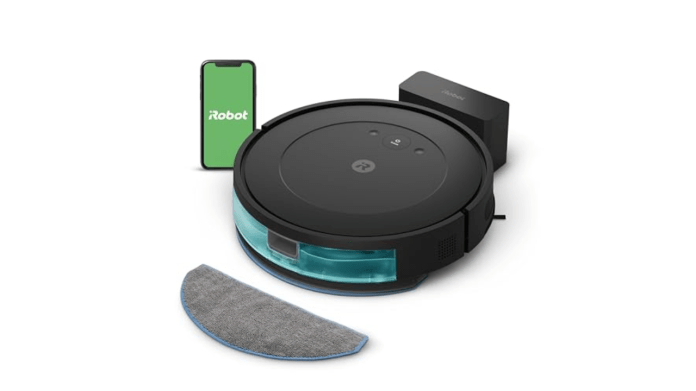
It’s that time of year again when Amazon is hosting deals on everything from wireless earbuds to air fryers. Starting July 8, Prime Day will run for four days with deep price cuts on smart home gadgets, including the Roomba Robot Vacuum and Mop Combo from iRobot that drops down to an all-time low of $140 from its original $275 price tag. While this Roomba was marked down to $149 earlier this year, the Prime Day deal is the first time we’re seeing a 49 percent discount. Just note that this deal is only for Prime members at the moment.
We ranked iRobot’s Roomba Robot Vacuum as our overall favorite budget option, but this Prime Day deal features a version that can both vacuum and mop. With the Prime Day price drop, the vacuum and mop combo is cheaper than the vacuum-only model, but it does double the work. The combo Roomba can even be set to only vacuum if you prefer to mop yourself, but you’d be missing out on the four-stage cleaning system that vacuums and mops in the same pass.
iRobot’s Roomba Robot Vacuum and Mop Combo offers a quick setup, multi-surface cleaning and can automatically return to its charging dock once it’s low battery. This double-duty Roomba hits an all-time low price of $140 and is an affordable and convenient way to keep your home clean.
Since it’s a Roomba, it’s a straightforward setup process that takes a few minutes before you can set it and forget it. The robot vacuum can navigate through your house or apartment, avoiding furniture and stairs, thanks to onboard sensors. Once it drains through its battery, which can last up to 120 hours, the Roomba knows to return to its charging dock to recharge itself. You can even customize this combo Roomba with three levels of both suction power for vacuuming and water levels for mopping. For more control, you can program it to spot clean a single spot in your home or schedule cleaning times through the companion iRobot Home app.
A number of other iRobot machines are on sale for Prime Day as well. That includes the Roomba 104 with auto-empty dock for 44 percent off, down to $250, and the premium Roomba j9+ for 36 percent off, down to $579.
Great Job Jackson Chen & the Team @ Engadget is a web magazine with obsessive daily coverage of everything new in gadgets and consumer electronics Source link for sharing this story.

A teenage girl who was witnessed being washed away is among those missing, the chief of Travis County Emergency Services District 1 confirmed to KVUE.
AUSTIN, Texas — Three people are confirmed dead and at least 10 people are missing in Travis County – including a teenage girl who was witnessed being washed away – as heavy rain continues to fall throughout Central Texas on Saturday.
Travis County spokesperson Hector Nieto confirms that a body has been discovered in the Briarcliff area of western Travis County.
According to Chief Donnie Norman with Travis County Emergency Services District 1, crews have responded to dozens of rescues in northwest Travis County, mostly along Big Sandy Creek and Cow Creek. No other details are available at this time.
It comes as first responders across Central Texas spent Saturday scrambling to rescue dozens of people from rising floodwaters, including in Burnet County and Williamson counties.
Emergency Management Coordinator for Burnet County Derek Marchio told KVUE first responders had conducted 25 water rescues all before 8 a.m. Saturday.
Emergency officials in Burnet County are also searching for a fire official who appears to have been swept away by floodwaters early Saturday. The man was responding to a call when he drove into water and his vehicle was washed away.
The emergency vehicle was since recovered but the man was not inside.
Williamson County has issued a disaster declaration in response to the flooding on Saturday.
The Office of Emergency Management activated its Emergency Operations Center at 5 a.m. on Saturday in order to coordinate resources and request assistance from the state. Additional personnel have been called in to respond to the flooding.
Up to 25 people have been rescued in the county, the majority from homes.
Austin-Travis County EMS officials also reported dozens of water rescues, many of which were along Cow Creek, west of Lago Vista. Crews have found remnants of mobile homes that appear to have been carried downstream, but they are uncertain whether the homes were occupied when they were swept away.
The flash flood threat will continue through the day Saturday as rain continues to fall over Central Texas.
Great Job & the Team @ WFAA RSS Feed: news Source link for sharing this story.

LONDON – Novak Djokovic became just the third player in Wimbledon history to reach 100 victories — after Martina Navratilova and Roger Federer — with his 6-3, 6-0, 6-4 win in the third round over Miomir Kecmanovic on Saturday.
Djokovic, who has won seven of his 24 Grand Slam titles at the All England Club, took control by winning nine consecutive games from 3-3 in the first set on Centre Court against his Serbian compatriot en route to his latest milestone.
The 38-year-old Djokovic, playing in his 20th Wimbledon tournament, will next face No. 11 Alex de Minaur for a spot in the quarterfinals.
Navratilova, a nine-time Wimbledon singles champion, amassed 120 singles victories. Eight-time champion Federer reached 105 singles wins.
Djokovic made just eight unforced errors through two sets before Kecmanovic made him work for the victory in the third.
___
AP tennis: https://apnews.com/hub/tennis
Copyright 2025 The Associated Press. All rights reserved. This material may not be published, broadcast, rewritten or redistributed without permission.
Great Job Associated Press & the Team @ KSAT San Antonio Source link for sharing this story.

Kelly Clarkson‘s 4th of July opening of her Studio Sessions concert series, a residency at The Colosseum at Caesars Palace in Las Vegas, was canceled shortly before she was expected to take the stage Friday night. The singer said both of her shows this weekend, scheduled for July 4 and July 5, would not go on.
Clarkson’s announcement was released around 6:30 p.m. local time. Ticketmaster lists her show time as 8 p.m.
“We have been working 24/7 to make Studio Sessions the most intimate and extraordinary experience with and for my incredible fans. I am beyond grateful that you always show up for me and I am devastated to have to postpone tonight and tomorrow’s opening at Caesars,” the pop star, who’s the original American Idol and now a daytime talk show host, wrote in a statement shared on Instagram Friday evening (July 4).
“The prep and rehearsals have taken a toll on my voice,” said Clarkson. “I want the shows to be perfect for y’all and I need to protect myself from doing serious damage so I am taking this weekend and next week to rest up so that we can deliver what you all deserve.”
She added, “The show is truly incredible. The musicians and singers are outstanding, and I want us all to start out strong. I can’t wait to be back next weekend and show y’all what we’ve been working on.”
Kelly Clarkson: Studio Sessions was announced in early February. Clarkson expressed excitement about returning to Vegas following 2023 and 2024 residencies at PH Live at Planet Hollywood Resort & Casino.
Her 2025 residency was set to kick off on the 4th of July and run through mid-August, before a break that would have her going back to The Colosseum for four dates in November.
Clarkson is now expected to open the show on Friday, July 11.
Great Job Ashley Iasimone & the Team @ Billboard Source link for sharing this story.
Stay Connected to Independent News in Hill Country

Get the latest stories, events, and updates from FROUSA.org delivered straight to your inbox.