Home News Page 2522

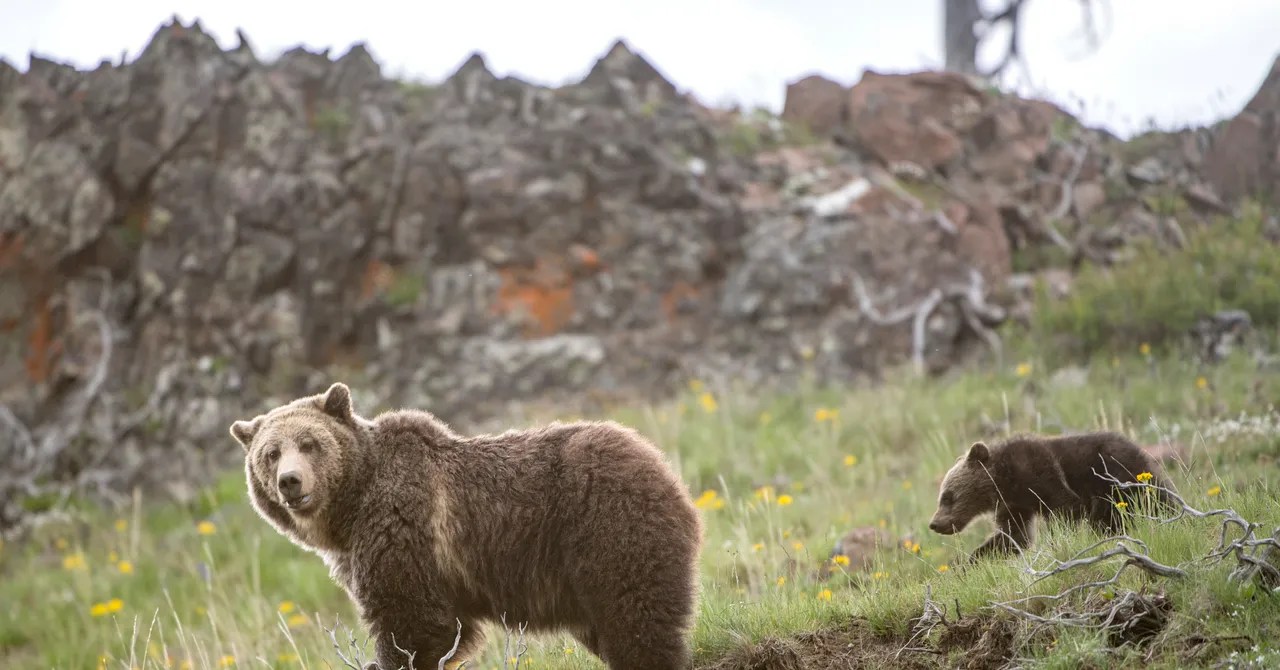
Is It Time to Stop Protecting the Grizzly Bear? | FROUSA Media | FROUSA Media

Is It Time to Stop Protecting the Grizzly Bear? | FROUSA Media | FROUSA Media

But the ESA was only meant to safeguard against “reasonably foreseeable future threats,” Willms argues. Congress has the ability to protect species indefinitely—like it did for wild horses under the 1971 Wild and Free-Roaming Horses and Burros Act or for numerous species of birds under the Migratory Bird Treaty Act. But those were specific, deliberate laws.

“If there are other reasons why somebody or groups of people think grizzly bears should be protected forever, then that is a different conversation than the Endangered Species Act,” he says.

But this power works in the opposite direction, too. If grizzly bears stay on the list for too long, Congress may well decide to delist the species, as lawmakers did in 2011 when they removed gray wolves from the endangered species list in Montana and Idaho.

Those kinds of decisions happen when people living alongside recovered species, especially the toothy, livestock-loving kind, spend enough time lobbying their state’s lawmakers, says Dunning, the wildlife conflict researcher.

When Congress steps in, science tends to step out. A political delisting doesn’t just sideline biologists, it sets a precedent, one that opens the potential for lawmakers to start cherry-picking species they see as obstacles to grazing, logging, drilling, or building. The flamboyant lesser prairie chicken has already made the list of legislative targets.

“Right now, the idea of scientific research has lost its magic quality,” she says. “We get there by excluding people and not listening to their voices and them feeling like they’re not part of the process.”

And when people feel excluded for too long, she says, the danger isn’t just that support for grizzly bears will erode. It’s that the public will to protect any endangered species might start to collapse.

The Case for Delisting the Grizzly

For Dan Thompson, Wyoming’s large carnivore supervisor, the question of delisting grizzlies is pretty simple: “Is the population recovered with all the regulatory mechanisms in place and data to support that it will remain recovered?” he says. “If the answer is yes, then the answer to delisting is yes.”

That’s why Thompson believes it’s time to delist the grizzly. And he’s not alone. The Greater Yellowstone Ecosystem population is “doing very well,” says van Manen. In fact, grizzlies met their recovery goals about 20 years ago.

Getting there wasn’t easy. After the landfills closed and the bear population plummeted, it took a massive, decades-long effort from states, tribes, federal biologists, and nonprofits to bring the grizzlies back. The various entities funded bear-proof trash systems for people living in towns near the national parks and strung electric fences around tempting fruit orchards. They developed safety workshops for people living in or visiting bear country, and tracked down poachers.

And little by little, it worked. Bear numbers swelled, and by the mid-2000s, more than 600 bears roamed the Yellowstone area.

Given this success, the US Fish and Wildlife Service proposed delisting the grizzlies for the first time in late 2005. Environmental groups sued, arguing bears needed continued federal protection as whitebark pine, an important food source, diminished. Bears could starve, groups maintained, and their populations could plummet again. But a subsequent federal study of what, exactly, grizzly bears eat, found that while grizzlies do munch whitebark pine seeds during bumper years, they don’t depend on the trees to survive. In fact, grizzlies consume no fewer than 266 species of everything from bison and mice to fungi and even one type of soil.

Great Job Christine Peterson & the Team @ WIRED Source link for sharing this story.

#FROUSA #HillCountryNews #NewBraunfels #ComalCounty #LocalVoices #IndependentMedia

Great Job Felicia Ray Owens & the Team @ FROUSA Media Source link for sharing this story.

#FeliciaRayOwens #TheFeliciaFiles #FROUSA #LocalVoices #IndependentMedia #HerSheSquad

Great Job Felicia Ray Owens & the Team @ Felicia Ray Owens Source link for sharing this story.

#FROUSA #HillCountryNews #NewBraunfels #ComalCounty #LocalVoices #IndependentMedia

Great Job Felicia Ray Owens & the Team @ FROUSA Media Source link for sharing this story.

#FeliciaRayOwens #TheFeliciaFiles #FROUSA #LocalVoices #IndependentMedia #HerSheSquad

Great Job Felicia Ray Owens & the Team @ Felicia Ray Owens Source link for sharing this story.

Better Artificial Intelligence (AI) Stock: Advanced Micro Devices vs. Micron Technology | The Motley Fool

Better Artificial Intelligence (AI) Stock: Advanced Micro Devices vs. Micron Technology | The Motley Fool

The demand for artificial intelligence (AI) chips has been increasing at a nice pace in the past few years. Major cloud service providers (CSPs), hyperscalers, and governments have been spending a lot of money on shoring up their cloud infrastructure so that they can run AI workloads.

This explains why the businesses of Advanced Micro Devices (AMD -0.44%) and Micron Technology (MU 0.45%) have gained terrific traction in recent quarters. As a result, shares of both these chip designers have clocked impressive gains in the past three months. AMD has jumped 32% during this period, and Micron stock is up 36%.

But if you had to put your money into just one of these AI semiconductor stocks right now, which one should it be? Let’s find out.

Image source: Getty Images.

The case for Advanced Micro Devices

AMD designs chips that go into personal computers (PCs), servers, and gaming consoles, and for other applications such as robotics, automotive, and industrial automation. AI has created impressive demand for the company’s chips in these areas, leading to healthy growth in its top and bottom lines.

The company’s revenue in the first quarter of 2025 was up by 36% from the year-ago period to $7.4 billion, while non-GAAP earnings per share shot up by 55% to $0.96. This solid growth was primarily driven by the data center and PC markets, which accounted for 81% of its top line. AMD’s data center revenue was up by 57% from the year-ago period, while the PC business reported a 68% increase.

In the data center business, AMD sells both central processing units (CPUs) and graphics processing units (GPUs) that are deployed in AI servers. The demand for both these products is strong, which is evident from the terrific growth the company recorded in Q1. Importantly, AMD estimates that the market for AI accelerator chips in data centers could create a $500 billion annual revenue opportunity in 2028.

So, the outstanding growth that AMD clocked in the data center business in Q1 seems sustainable, especially considering that it generated $12.6 billion in revenue from data center chip sales last year — nearly double the 2023 revenue. AMD is pushing the envelope on the product development front with new chips that are expected to pack in a serious performance upgrade and may even help it take market share away from Nvidia.

Meanwhile, AMD’s consistent market share gains in PC CPUs make it a solid bet on the secular growth of the AI PC market, which is expected to clock an annual growth rate of 42% in shipments through 2028. All this indicates that AMD is on track to take advantage of the growing adoption of AI chips in multiple applications, and that’s expected to lead to an acceleration in its bottom-line growth.

Consensus estimates are projecting a 17% jump in AMD’s earnings this year, followed by a bigger jump of 45% in 2026. As such, this semiconductor company is likely to remain a top AI stock in the future as well.

The case for Micron Technology

Micron Technology manufactures and sells memory chips that are used for both computing and storage purposes, and the likes of AMD and Nvidia are its customers. In fact, just like AMD, Micron’s memory chips are used in AI accelerators such as GPUs and custom processors, PCs, and the smartphone and automotive end markets.

Micron has been witnessing outstanding demand for a type of chip known as high-bandwidth memory (HBM), which is known for its ability to transmit huge amounts of data at high speeds. This is the reason why HBM is being deployed in AI accelerators, and the demand for this memory type is so strong that the likes of Micron have already sold out their capacity for this year.

Not surprisingly, Micron is ramping up its HBM production capacity, and it’s going to increase its capital expenditure to $14 billion in the current fiscal year from $8.1 billion in the previous one. The company’s focus on improving its HBM production capacity is a smart thing to do from a long-term perspective, as this market is expected to grow to $100 billion in annual revenue by 2030, compared to $35 billion this year.

Micron’s memory chips are used in PCs and smartphones as well. Apart from the growth in unit volumes that AI-enabled PCs and smartphones are expected to create going forward, the amount of memory going into these devices is also expected to increase. CEO Sanjay Mehrotra remarked on the company’s latest earnings conference call:

AI adoption remains a key driver of DRAM content growth for smartphones, and we expect more smartphone launches featuring 12 gigabytes or more compared to eight gigabytes of capacity in the average smartphone today.

Similarly, AI-enabled PCs are expected to sport at least 16GB of DRAM to run AI workloads, up by a third when compared to the average DRAM content in PCs last year. So, just like AMD, Micron is on its way to capitalizing on multiple AI-focused end markets. However, it is growing at a much faster pace than AMD because of the tight memory supply created by AI, which is leading to a nice increase in memory prices.

The favorable pricing environment is the reason why Micron’s adjusted earnings more than tripled in the previous quarter to $1.91 per share on the back of a 37% increase in its top line. Analysts are forecasting a 6x jump in Micron’s earnings in the current fiscal year, and they have raised their earnings expectations for the next couple of years as well.

Better Artificial Intelligence (AI) Stock: Advanced Micro Devices vs. Micron Technology | The Motley Fool

MU EPS Estimates for Current Fiscal Year data by YCharts.

So, Micron stock seems poised to sustain its impressive growth momentum, thanks to the AI-fueled demand for HBM.

The verdict

Both AMD and Micron are growing at solid rates, with the latter clocking a much faster pace thanks to the favorable demand-supply dynamics in the memory industry. What’s more, Micron is trading at a significantly cheaper valuation compared to AMD, despite its substantially stronger growth.

AMD PE Ratio Chart

AMD PE Ratio data by YCharts.

Investors looking for a mix of value and growth can pick Micron over AMD, considering the former’s attractive valuation and the phenomenal earnings growth that it can deliver. However, one can’t go wrong with AMD either. The company should be able to justify its valuation in the long run, considering its ability to clock stronger earnings growth.

Great Job newsfeedback@fool.com (Harsh Chauhan) & the Team @ The Motley Fool Source link for sharing this story.

Is It Time to Stop Protecting the Grizzly Bear? | FROUSA Media

Is It Time to Stop Protecting the Grizzly Bear? | FROUSA Media | FROUSA Media

But the ESA was only meant to safeguard against “reasonably foreseeable future threats,” Willms argues. Congress has the ability to protect species indefinitely—like it did for wild horses under the 1971 Wild and Free-Roaming Horses and Burros Act or for numerous species of birds under the Migratory Bird Treaty Act. But those were specific, deliberate laws.

“If there are other reasons why somebody or groups of people think grizzly bears should be protected forever, then that is a different conversation than the Endangered Species Act,” he says.

But this power works in the opposite direction, too. If grizzly bears stay on the list for too long, Congress may well decide to delist the species, as lawmakers did in 2011 when they removed gray wolves from the endangered species list in Montana and Idaho.

Those kinds of decisions happen when people living alongside recovered species, especially the toothy, livestock-loving kind, spend enough time lobbying their state’s lawmakers, says Dunning, the wildlife conflict researcher.

When Congress steps in, science tends to step out. A political delisting doesn’t just sideline biologists, it sets a precedent, one that opens the potential for lawmakers to start cherry-picking species they see as obstacles to grazing, logging, drilling, or building. The flamboyant lesser prairie chicken has already made the list of legislative targets.

“Right now, the idea of scientific research has lost its magic quality,” she says. “We get there by excluding people and not listening to their voices and them feeling like they’re not part of the process.”

And when people feel excluded for too long, she says, the danger isn’t just that support for grizzly bears will erode. It’s that the public will to protect any endangered species might start to collapse.

The Case for Delisting the Grizzly

For Dan Thompson, Wyoming’s large carnivore supervisor, the question of delisting grizzlies is pretty simple: “Is the population recovered with all the regulatory mechanisms in place and data to support that it will remain recovered?” he says. “If the answer is yes, then the answer to delisting is yes.”

That’s why Thompson believes it’s time to delist the grizzly. And he’s not alone. The Greater Yellowstone Ecosystem population is “doing very well,” says van Manen. In fact, grizzlies met their recovery goals about 20 years ago.

Getting there wasn’t easy. After the landfills closed and the bear population plummeted, it took a massive, decades-long effort from states, tribes, federal biologists, and nonprofits to bring the grizzlies back. The various entities funded bear-proof trash systems for people living in towns near the national parks and strung electric fences around tempting fruit orchards. They developed safety workshops for people living in or visiting bear country, and tracked down poachers.

And little by little, it worked. Bear numbers swelled, and by the mid-2000s, more than 600 bears roamed the Yellowstone area.

Given this success, the US Fish and Wildlife Service proposed delisting the grizzlies for the first time in late 2005. Environmental groups sued, arguing bears needed continued federal protection as whitebark pine, an important food source, diminished. Bears could starve, groups maintained, and their populations could plummet again. But a subsequent federal study of what, exactly, grizzly bears eat, found that while grizzlies do munch whitebark pine seeds during bumper years, they don’t depend on the trees to survive. In fact, grizzlies consume no fewer than 266 species of everything from bison and mice to fungi and even one type of soil.

Great Job Christine Peterson & the Team @ WIRED Source link for sharing this story.

#FROUSA #HillCountryNews #NewBraunfels #ComalCounty #LocalVoices #IndependentMedia

Great Job Felicia Ray Owens & the Team @ FROUSA Media Source link for sharing this story.

#FeliciaRayOwens #TheFeliciaFiles #FROUSA #LocalVoices #IndependentMedia #HerSheSquad

Great Job Felicia Ray Owens & the Team @ Felicia Ray Owens Source link for sharing this story.

Is It Time to Stop Protecting the Grizzly Bear?

Is It Time to Stop Protecting the Grizzly Bear?

But the ESA was only meant to safeguard against “reasonably foreseeable future threats,” Willms argues. Congress has the ability to protect species indefinitely—like it did for wild horses under the 1971 Wild and Free-Roaming Horses and Burros Act or for numerous species of birds under the Migratory Bird Treaty Act. But those were specific, deliberate laws.

“If there are other reasons why somebody or groups of people think grizzly bears should be protected forever, then that is a different conversation than the Endangered Species Act,” he says.

But this power works in the opposite direction, too. If grizzly bears stay on the list for too long, Congress may well decide to delist the species, as lawmakers did in 2011 when they removed gray wolves from the endangered species list in Montana and Idaho.

Those kinds of decisions happen when people living alongside recovered species, especially the toothy, livestock-loving kind, spend enough time lobbying their state’s lawmakers, says Dunning, the wildlife conflict researcher.

When Congress steps in, science tends to step out. A political delisting doesn’t just sideline biologists, it sets a precedent, one that opens the potential for lawmakers to start cherry-picking species they see as obstacles to grazing, logging, drilling, or building. The flamboyant lesser prairie chicken has already made the list of legislative targets.

“Right now, the idea of scientific research has lost its magic quality,” she says. “We get there by excluding people and not listening to their voices and them feeling like they’re not part of the process.”

And when people feel excluded for too long, she says, the danger isn’t just that support for grizzly bears will erode. It’s that the public will to protect any endangered species might start to collapse.

The Case for Delisting the Grizzly

For Dan Thompson, Wyoming’s large carnivore supervisor, the question of delisting grizzlies is pretty simple: “Is the population recovered with all the regulatory mechanisms in place and data to support that it will remain recovered?” he says. “If the answer is yes, then the answer to delisting is yes.”

That’s why Thompson believes it’s time to delist the grizzly. And he’s not alone. The Greater Yellowstone Ecosystem population is “doing very well,” says van Manen. In fact, grizzlies met their recovery goals about 20 years ago.

Getting there wasn’t easy. After the landfills closed and the bear population plummeted, it took a massive, decades-long effort from states, tribes, federal biologists, and nonprofits to bring the grizzlies back. The various entities funded bear-proof trash systems for people living in towns near the national parks and strung electric fences around tempting fruit orchards. They developed safety workshops for people living in or visiting bear country, and tracked down poachers.

And little by little, it worked. Bear numbers swelled, and by the mid-2000s, more than 600 bears roamed the Yellowstone area.

Given this success, the US Fish and Wildlife Service proposed delisting the grizzlies for the first time in late 2005. Environmental groups sued, arguing bears needed continued federal protection as whitebark pine, an important food source, diminished. Bears could starve, groups maintained, and their populations could plummet again. But a subsequent federal study of what, exactly, grizzly bears eat, found that while grizzlies do munch whitebark pine seeds during bumper years, they don’t depend on the trees to survive. In fact, grizzlies consume no fewer than 266 species of everything from bison and mice to fungi and even one type of soil.

Great Job Christine Peterson & the Team @ WIRED Source link for sharing this story.

China’s first Legoland opens to visitors in Shanghai

China’s first Legoland opens to visitors in Shanghai

It is one of 11 parks across the world and was built with 85 million Lego bricks.

SHANGHAI, China — A giant 26-meter (85-foot) Lego figure named Dada welcomed visitors to the new Legoland resort in Shanghai.

The resort, which opened Saturday, is the first in China. It is one of 11 parks across the world and was built with 85 million Lego bricks.

Among the main attractions is Miniland, which replicates well-known sights from across the world using Lego bricks. It features landmarks across China like Beijing’s Temple of Heaven and Shanghai’s Bund waterfront. There’s also a boat tour through a historic Chinese water town built with Lego bricks.

“My first impression is it is a good recreation, like a real fairyland of Lego,” said Ji Yujia, a Lego fan who was there on opening day.

The resort was developed in conjunction with the Shanghai government by Merlin Entertainments and the LEGO Group.

Visitors were greeted by performances featuring Legoland characters. Tickets range from $44 (319 yuan) to $84 (599 yuan).

Copyright 2025 Associated Press. All rights reserved. This material may not be published, broadcast, rewritten, or redistributed.     

Great Job & the Team @ WFAA RSS Feed: news Source link for sharing this story.

The Non-Exoneration of Diddy

The Non-Exoneration of Diddy

You think you’ve lost the ability to be shocked, and then you see supporters of Sean Combs—the rapper and producer also known as Diddy—spraying baby oil on one another outside the New York City courthouse where his trial was held.

This greasy display of militant fandom is even more bizarre once you know that the trial did not exonerate Combs. Although he was acquitted on Wednesday of racketeering and sex trafficking, he was found guilty of “transportation to engage in prostitution.” These counts relate to incidents where his ex-girlfriend Cassie Ventura and an anonymous woman, known in court as Jane, were asked to have sex with male escorts while he watched or filmed. The fans’ jubilant tone also ignored perhaps the most salient fact of the case: In court, Combs’s own defense team conceded that he was a domestic abuser.

Now, I understand why Combs himself might be relieved by the verdict. The racketeering charges carried a potential life sentence, whereas the lesser offenses had no minimum jail penalty attached. But his lawyers had no grounds to do what they did—which was to walk out of the courtroom and stand triumphantly in front of the newly lubricated crowds, acting as if Combs had been cleared. “It’s a great victory for Sean Combs; it’s a great victory for the jury system,” Marc Agnifilo, one of his lawyers, said in the post-verdict press conference.

No. The charges on which Combs was acquitted were developed for Mafia bosses, and are an uneasy fit for a case where the alleged conspiracy is not gun-running or a protection racket, but a network of employees and enablers dedicated to one man’s sexual gratification. His acquittal on these charges should not obscure the simple fact that Combs beat up Ventura, repeatedly, over many years. That is not in dispute, not least because some of it was captured on video. Last year, CNN published a surveillance clip, recorded in a hotel in 2016, that shows a clothed Ventura attempting to call an elevator, before Combs—dressed in only a towel—chases after her, grabs her by the neck, throws her to the ground, and kicks her twice while she is on the floor. “We own the domestic violence,” Agnifilo told jurors. “We own it. I hope you guys know this.” (The judge took note of the admission when denying Combs bail.)

Another man might have been ashamed of kicking his girlfriend while she lay motionless on the floor. Combs let his lawyers peacock around because he didn’t also get convicted of trafficking her. Our client is innocent! (Of some of the charges.) His reputation has been restored! (Say it enough, and it might come true.)

Maybe this brazenness will work. We now live in a time when what matters is declaiming half-truths, loudly and bullishly, in the expectation that most people aren’t paying attention to the details. Combs’s entire defense had a sassy, made-for-TikTok quality, shamelessly playing to the gallery—a tactic pioneered by O. J. Simpson’s lawyers in the age of television. One of Combs’s attorneys, the 30-something Teny Geragos, went viral with TikTok clips defending the mogul before the trial. His lawyers were performing for two audiences: the jury, and the online Diddy stans. The defense declined to put Combs on the stand to explain himself, and called no witnesses. That left the spotlight squarely on his accusers. As a result, it was their testimony that was harshly scrutinized online, not his actions.

From the start, this trial was not a vindication of Combs’s life choices. Over and over again, witness accounts portrayed a character that only a mother, or a defense team, could love. (Combs’s mother, Janice, was a staple of the public gallery, along with his six older children.) His lawyers presented his “freak-off” parties, where he invited men to have sex with his girlfriends, as a mere kink, part of an unorthodox but harmless swingers’ lifestyle. When federal agents searched his home in Miami Beach, they found 25 bottles of baby oil and 31 tubes of another lubricant in one closet. In total, prosecutors said that searches uncovered more than 1,000 bottles of such products—an assertion that only enthralled Combs’s admirers.

What the glistening fans outside the courthouse ignored is that Combs’s defense team, in dodging the racketeering charges, conceded that his relationship with Ventura was marked by threats and violence. The defense had to grant that premise, because those allegations had already led to a $20 million settlement with Ventura after she filed a lawsuit in 2023. Combs paid up the day after the documents became public. (That civil suit, and others filed by women against Combs, apparently helped trigger the federal investigation that led to his trial.)

Despite this history, his lawyers performed an impressive judo move, using the very fact of the settlement against Ventura, during the four grueling days of testimony to which she was subjected. Aren’t you just a gold digger? was the heavy implication. Ventura said that she would happily give back the money if she could also undo the freak-offs. Her civil lawsuit stated that she had not pressed criminal charges because she had no confidence in obtaining justice: “She recognized that she was powerless, and that reporting Mr. Combs to the authorities would not alter Mr. Combs’s status or influence but would merely give Mr. Combs another excuse to hurt her.”

This belief has been thoroughly vindicated. Nevertheless, the idea of a mercenary motive was clearly a potent line—and one that Combs’s lawyers have also deployed in the dozen civil suits now awaiting him from other alleged victims. “We live in a world where anyone can file a lawsuit for any reason,” they said when 10 more suits emerged in February of this year, on top of several existing claims of grooming, exploitation, and abuse of minors. Combs has denied these allegations.

Although people across America had seen the video from CNN, Combs was not on trial in New York for assault, so the defense argued that the incident was irrelevant to the charges. “Domestic violence is not sex trafficking,” Geragos, one of Combs’s lawyers, said in court. Combs’s team contended that the video did not show Ventura being punished for leaving a freak-off party, as the prosecution suggested, but instead followed an argument between her and Combs over a phone.

This was an impressive sleight of hand. If someone’s partner can be that violent in an everyday argument, then surely that affects their ability to say no to anything else that happens in the relationship? Ann Olivarius, a lawyer who specializes in abuse and harassment cases in the United States and Britain, told me that following the trial was a demoralizing experience for her. “I was glued to Cassie’s testimony,” she said over instant message. “I thought she was compelling, strong, admirable and also being crucified by the Defence.” She said that the defense’s acknowledgment of Combs’s domestic violence was a way “to put it in a neat little box and say: ‘When she wasn’t beaten black and blue, she happily and freely consented every time.’”

Other witnesses testified to violent and controlling behavior by Combs. The singer Dawn Richards said she had seen him kick Ventura when she was on the floor, after attempting to hit her with a skillet when she was cooking him eggs. (While the jury was out of the room, the defense called this allegation a “drop-dead lie.”) The makeup artist Mylah Morales testified that she saw Ventura with a split lip and a swollen eye. Ventura’s former friend Kerry Morgan said that she was present when Combs tried to break into Ventura’s apartment with a hammer after the hotel assault. She also said she once saw him drag Ventura down a corridor by her hair. Ventura’s mother, Regina, told the court that Combs had threatened to release sex tapes of her daughter. Two men testified that they had been paid to have sex with Ventura, and one of them, an escort named Daniel Phillip, told the court he had overheard Combs slap Ventura until she cried in another room.

As is quite common in allegations of coercive control, the defense could produce affectionate and sexually explicit messages from Ventura that seemed to undermine her claims of victimization. The fact that the prosecution could produce footage of her literally being victimized did not, apparently, offset the effect of these messages on the jury. Nor did the fact that Combs was not just her boyfriend, but also in charge of her career: They met when she was a 19-year-old aspiring singer, and he signed her to his label.

Jane, the anonymous witness who was a recent ex-girlfriend of Combs’s, told a story of coercion much like what Ventura faced. She said she had been pressured into “hotel nights” where she had sex with male escorts hired by Combs. These were painful and often left her with infections, she added, not least because Combs became angry when she asked the men to wear condoms. But she went along with the sex sessions because she was in love with Combs and “didn’t want to indicate any negativity.”

One thing the prosecution did right was bring in an expert on coercive control to explain to the jury that in abusive and controlling relationships, the victims become quintessential people pleasers—their entire lives end up being dedicated to placating their partner. “You destroy someone’s normal,” is how a British man named Luke Hart described the situation to me, when I interviewed him for my book Difficult Women. His father, Lance, had terrorized the whole family for many years, and when Luke’s mother finally walked out in 2016, Lance tracked her down at a local swimming pool and shot her dead, along with Luke’s 19-year-old sister. Lance then killed himself.

After the murders, Luke and his brother finally realized that their childhood had been abusive—even though, to outsiders, they had looked like a normal family. An orderly and well-behaved one, in fact, because everyone had been frightened of triggering Lance’s temper. Luke described being yelled at for hours over minor infractions, until he learned to modify his behavior to avoid his father’s anger. “Every part of your life is the slow crushing of those prison bars,” he told me.

Explained like that, most people can see how someone might send loving messages to their abuser. But juries still struggle with the situation, particularly when you add in our ambient sense that rich and successful people probably do attract gold diggers and hangers-on, as well as our self-flattering belief that we wouldn’t put up with being abused and would walk straight out the door.

Feminist theorists have also come up with an explanation for why people downplay or excuse abusers’ actions. Quite simply, doing so asks less of us. If, as a Diddy fan, you believe that Ventura consented to her abuse, then you can go on listening to his music without a moral scruple. If you are a business associate of his, you can keep cashing checks with a clear conscience. Believing her instead requires something from you—setting yourself against a powerful man and all the people who will line up behind him.

In the Combs case, the women’s testimony was parsed for minor inconsistencies by social-media creators, but the rapper’s voice was heard only through the respectable tones of his lawyers. This trial-by-TikTok means Ventura leaves the court with a vague stink on her. She must have liked this weird stuff if she hung around.

The sentencing hearing, likely in the fall, will let us know whether Combs’s lawyers have failed in their main objective, of minimizing his time behind bars. But their secondary aim has always been to create a perception of martyrdom, which will preserve Brand Diddy as a moneymaking enterprise. In the final week of the trial, Combs’s son Christian released an album, under the name King Combs, that included a track called “Diddy Free.” On the same day, another son, Justin, was accused of participating in a rape alongside his father in 2017, having lured a woman to Los Angeles with the promise of a job. (Combs’s lawyers deny the accusations.)

More is at stake here than just Combs’s freedom. “Celebrity court cases are how we metabolise these questions of power, sex and men and women,” Olivarius told me. The real tragedy of the Combs case is that Ventura did not feel confident enough to file criminal charges against him for domestic abuse. If she had done so, any resulting trial would have focused on his violence and threats, rather than the more nebulous charges of trafficking and racketeering. As a result, it would have been harder for his lawyers—and his fans—to maintain that he has been vindicated.


Great Job Helen Lewis & the Team @ The Atlantic Source link for sharing this story.

In Pasadena, a community comes together for a 14-year-old street vendor

In Pasadena, a community comes together for a 14-year-old street vendor

It was only 8 a.m. and the 500 tamales that Christopher Luna Garcia had hoped to sell were down to just a few dozen.

About 17 hungry people lined up at the food cart near Villa Parke in Pasadena, where an immigration sweep had taken place nearly two weeks ago on June 21.

Steam flowed from the cart and the scent of masa drifted through the air as Chris, 14, reached down to pull out tamales.

“It’s a lot,” he said of the community response. “But I’m grateful for it.”

Chris said he took over his mom’s street vending business after the immigration raid.

His mother, Carmen Garcia, 44, who is a legal resident, said three of her customers were detained during the sweep at the park. But immigration agents did not take her into custody.

“I was so afraid after that,” she said. “I have documents, but I’m still scared, very scared.”

It wasn’t long ago that Chris, a tall teenager, struggled to make sales, sometimes bringing in less than $100 daily — and on a really bad day just $20. But on Friday, the tamales were selling fast. So much so that his aunt joined to help meet the high demand with a second cart.

1

2

The side of a food cart reads "The best tamales in town."

1. Christopher Luna Garcia, 14, sells tamales to a customer from his mother’s cart near Villa Parke in Pasadena. (Luke Johnson / Los Angeles Times) 2. The side of the cart proudly states its contents. (Luke Johnson / Los Angeles Times)

Friday’s event was organized by Alex “Tio Joker” Murillo, an actor and community activist who stumbled upon Chris one afternoon and shared a video of him on social media.

“I want to help out the Latino youth,” Murillo said. “This ICE stuff is bad, but we’ve also turned it into something good.”

He took the video amid President Trump’s immigration crackdown, targeting criminal and immigrant workers suspected of living in the country illegally at Home Depots, car washes and sidewalks.

The wave of immigration sweeps over the past month has prompted some American-born children to take over street vending businesses on behalf of their parents.

The operation at Villa Parke prompted Pasadena city officials to cancel swimming lessons and other recreation programs at the park and two others.

Portrait of a teenager with short dark hair.

Christopher Luna Garcia says he took over his mother’s street vending business after an immigration raid.

That decision came after a string of recent immigration enforcement actions in Pasadena. In one raid, federal agents detained people at a bus stop at Orange Grove Boulevard and Los Robles Avenue on June 18. And residents demonstrated last month outside of the AC Hotel, where federal immigration agents were staying. Both took place less than a mile from Villa Parke.

Murillo said he decided to help the family when he learned that Chris had stepped up to sell tamales for his mom because of the sweep and also because they were falling behind on bills.

So Murillo took to Instagram, calling on his followers and others to show up at the stand on Friday to buy out the tamales. He also said he would sell food to raise money to take Chris and the children of a day laborer who was detained during the bus stop operation to Disneyland.

Enji Chung, 47, a resident and member of the Pasadena Tenants Union, was one of the first people to show up and purchase tamales. She said it was important to show support for those affected by the federal immigration crackdown.

People line up to buy food at a street cart.

People line up as Christopher Luna Garcia, 14, sells tamales from his mother’s cart on Friday near Villa Parke in Pasadena.

“I think it’s been extremely scary to know there are armed, masked people running around, inciting fear and snatching people off the street,” she said. “It’s not just undocumented people. It’s U.S. citizens and anyone they’re racially profiling.”

Yun Uen Ramos-Vega, 22, and Janette Ramos-Vega, 21, drove from Monrovia to support Chris after learning about his story. They said they related to his situation because they are also helping relatives by running errands on their behalf.

The pair said they know at least two people who have been detained by federal immigration agents. At least one has been deported to Mexico while the other remains at a detention center.

Laura Ruvalcaba, 40, of Pasadena, showed up with her husband and 8-year-old son.

“We saw Chris’ story and we’re going to be here,” she said. “We’re all about supporting the community, especially the youth.”

She said she was happy to see the long line of customers.

“It’s amazing,” she said. “Anything we can do to help out and come together is good.”

1

A person unfolds some money.

2

Business cards sit on top of a tamale cart.

1. Christopher Luna Garcia collects money after selling tamales from his mother’s cart. (Luke Johnson / Los Angeles Times) 2. Business cards sit on top of the tamale cart. (Luke Johnson / Los Angeles Times)

An American citizen, Ruvalcaba said the immigration sweeps have left her afraid.

“It’s not even about anything else but the color of my skin,” she said. “I’m scared to come out sometimes.”

She said she started carrying a copy of her American citizenship certificate two weeks ago, as well as her son’s birth certificate. She tells her 18-year-old daughter to be on alert when she goes out.

“Now, you’re not just watching out for bad things,” Ruvalcaba said she told her daughter. “You’re watching out for people in uniforms.”

The event Friday morning also brought out lowriders, which bounced as old-school hip-hop blasted from the car’s speakers, encouraging people to cheer and take videos with their cellphones.

It was nearing 9 a.m. when the tamales from both carts were gone, bringing in more than $1,500 that Chris and his family will use to pay bills and rent.

His brother, Erick Garcia, 20, said his mom and aunt had gone to cook more tamales in hopes of selling more throughout the day.

Exhausted, Chris sat on a fold-out chair for a moment, letting out a sigh of relief and massaging his eyebrows with his fingers. He had been up since 4 a.m. and though he was tired, he said he wanted to take action because his mother helped raised him and his three siblings alone.

“She doesn’t have much support,” he said. “I just want to help her out.”

A food cart with umbrellas.

Great Job Ruben Vives & the Team @ California Source link for sharing this story.

PBA: Pogoy awaiting doctor’s go-signal ahead of key Game 6 | FROUSA Media | FROUSA Media

PBA: Pogoy awaiting doctor’s go-signal ahead of key Game 6 | FROUSA Media | FROUSA Media

Roger Pogoy during Game 5 of the PBA Philippine Cup semifinals against Rain or Shine.- MARLO CUETO/INQUIRER.net

MANILA, Philippines—TNT star Roger Pogoy remained uncertain on his status heading into a crucial Game 6 against Rain or Shine in the PBA Philippine Cup semifinals on Sunday.

Pogoy has been dealing with a hamstring injury and last played in Game 2 of the semis, where the sharpshooting swingman left the game early in the second quarter and did not return.

Article continues after this advertisement

READ: PBA: TNT’s Pogoy ‘doubtful’ for Game 3 due to hamstring injury

“Secret,” said Pogoy in jest to reporters when asked about his Game 6 availability. “We’ll wait for our doctor’s [approval] because I’m already doing strengthening now. I’m resting and strengthening.”

TNT failed its first shot at closing out Rain or Shine, which kept its campaign alive with a 113-97 win in Game 5 on Friday.

READ: PBA: Calvin Oftana takes over for ‘amigo’ Pogoy in Game 2 win

While Rain or Shine coach Yeng Guiao is preparing himself for the return of TNT’s injured players for Game 6, Pogoy clarified he won’t play without clearance to suit up.

“Let’s see in the next game, because I’m really just waiting for the go signal. I’m still day-to-day but if it was up to me, I’d play. If only I can, I’d play.”


Your subscription could not be saved. Please try again.


Your subscription has been successful.

Great Job Felicia Ray Owens & the Team @ FROUSA Media Source link for sharing this story.

#FeliciaRayOwens #TheFeliciaFiles #FROUSA #LocalVoices #IndependentMedia #HerSheSquad

Great Job Felicia Ray Owens & the Team @ Felicia Ray Owens Source link for sharing this story.

#FROUSA #HillCountryNews #NewBraunfels #ComalCounty #LocalVoices #IndependentMedia

Great Job Felicia Ray Owens & the Team @ FROUSA Media Source link for sharing this story.

#FeliciaRayOwens #TheFeliciaFiles #FROUSA #LocalVoices #IndependentMedia #HerSheSquad

Great Job Felicia Ray Owens & the Team @ Felicia Ray Owens Source link for sharing this story.

PBA: Pogoy awaiting doctor’s go-signal ahead of key Game 6 | FROUSA Media

PBA: Pogoy awaiting doctor’s go-signal ahead of key Game 6 | FROUSA Media | FROUSA Media

Roger Pogoy during Game 5 of the PBA Philippine Cup semifinals against Rain or Shine.- MARLO CUETO/INQUIRER.net

MANILA, Philippines—TNT star Roger Pogoy remained uncertain on his status heading into a crucial Game 6 against Rain or Shine in the PBA Philippine Cup semifinals on Sunday.

Pogoy has been dealing with a hamstring injury and last played in Game 2 of the semis, where the sharpshooting swingman left the game early in the second quarter and did not return.

Article continues after this advertisement

READ: PBA: TNT’s Pogoy ‘doubtful’ for Game 3 due to hamstring injury

“Secret,” said Pogoy in jest to reporters when asked about his Game 6 availability. “We’ll wait for our doctor’s [approval] because I’m already doing strengthening now. I’m resting and strengthening.”

TNT failed its first shot at closing out Rain or Shine, which kept its campaign alive with a 113-97 win in Game 5 on Friday.

READ: PBA: Calvin Oftana takes over for ‘amigo’ Pogoy in Game 2 win

While Rain or Shine coach Yeng Guiao is preparing himself for the return of TNT’s injured players for Game 6, Pogoy clarified he won’t play without clearance to suit up.

“Let’s see in the next game, because I’m really just waiting for the go signal. I’m still day-to-day but if it was up to me, I’d play. If only I can, I’d play.”


Your subscription could not be saved. Please try again.


Your subscription has been successful.

#FROUSA #HillCountryNews #NewBraunfels #ComalCounty #LocalVoices #IndependentMedia

Great Job Felicia Ray Owens & the Team @ FROUSA Media Source link for sharing this story.

#FeliciaRayOwens #TheFeliciaFiles #FROUSA #LocalVoices #IndependentMedia #HerSheSquad

Great Job Felicia Ray Owens & the Team @ Felicia Ray Owens Source link for sharing this story.

Secret Link