Felicia Ray Owens is a media founder, cultural strategist, and civic advocate who creates platforms where power meets lived truth. As the voice behind C4: Coffee. Cocktails. Culture. Conversation and the founder of FROUSA Media, she uses storytelling, public dialogue, and organizing to spotlight the issues that matter most—locally and nationally.
A longtime advocate for community wellness and political engagement, Felicia brings experience as a former Precinct Chair and former Chief Communications Officer of Indivisible Hill Country. Her work bridges culture, activism, and healing through curated spaces designed to inspire real change.
Café Dior in Chengdu. Carhartt Coffee in London. Santander Work Café in Brooklyn.
Around the world, brands ranging from luxury fashion houses to workwear to banks are opening up coffee shops.
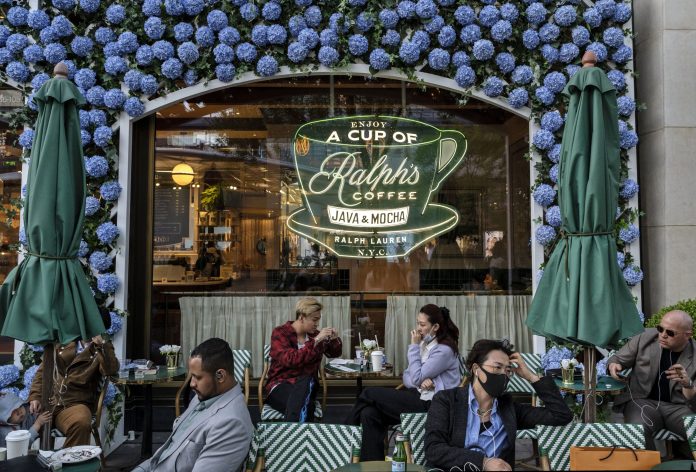
The phenomenon of retailers hosting coffee shops isn’t exactly new, as anyone who’s ever been to a Starbucks inside of a Target can tell you. But the number of brand-owned and -operated coffee shops seems to be creeping up. Ralph’s Coffee, owned by Ralph Lauren, opened in Manhattan in 2014, and is now neighbored by the Blue Box Café at Tiffany & Co., a Capital One Café, and a Uniqlo Coffee around its Fifth Avenue location. (And that’s not even including the brand restaurants.)
Post-Covid, there’s been a resurgence of interest in preserving or even establishing “third places,” which refers to places to spend time outside of home and work at the same time that brands are seeking to broaden their customer bases on- and offline by investing in customer experiences. Coffee shops, it seems, are working to satisfy both sides.
Sip, sip, pass
Earlier this year, Japanese-owned clothing retailer Uniqlo opened a coffee shop—its first in North America—at its store on Fifth Avenue to “enhance the shopping experience” for customers and project a welcoming brand persona, Nicolas Cessot, head of marketing for Uniqlo North America, told us.
“It’s a great branding proposition for us,” Cessot said. “It is a global flagship, so for us, it’s a global opportunity to continue to spread our brand [awareness] to customers from all over the world.”
Uniqlo has existing coffee shops in Tokyo, where Cessot said customer experience and hospitality is a cultural priority, and Manila. Other retailers, like French fashion brand Maison Kitsuné, also started their journey into coffee in Asia, with the first Café Kitsuné opening in 2013 in Okayama, Japan. Earlier this year, Japanese lifestyle brand Muji opened a food market in Manhattan, its first in the States.
It’s not just brands from overseas expanding their hospitality offerings. American brands Kate Spade and Coach have been experimenting in the hospitality space in Dubai and Jakarta, Indonesia, respectively, while Coach has also opened up coffee shops in Texas and New Jersey.
Beyond reaching new customers around the world, brand coffee shops allow retailers to reach customers across different interests—including those who might not want new clothes, but do want a cup of joe, Cessot said. That seems to be a key reason why higher-end brands like Dior and Ralph Lauren are opening cafés: to reach customers outside of their usual demo, specifically those who may not be able to or may not want to spend big bucks on a purse, but can justify a $7 iced latte.
“It’s giving people this opportunity to engage with the brand from a lifestyle standpoint, even if they can’t purchase a product,” Michelle Baumann, chief strategy officer, commerce at VML, told us.
That being said, a small purchase like a coffee can increase customer “dwell time,” which could mean more time to consider a larger buy. “The longer you’re in [store], the more likely you are to browse, the more likely you are to purchase,” Baumann said.
And, it seems, more likely to post. Canadian clothing brand Aritzia has been operating its in-store A-OK Cafes since 2018, and customers often share videos and images of drinktokens online, Baumann noted. Daniel Boulud, chef at Tiffany & Co.’s Blue Box Café, told Food & Wine earlier this year that “with social media today, [the café] has even more appeal” with its colorful interior.
“[Cafés are] doing a lot in terms of the amplification and being able to create that earned equity,” Baumann said. “You’ve got Instagrammable spaces and a lot of social media exposure.”
After opening its Fifth Avenue coffee shop, Cessot said Uniqlo saw plenty of user-generated content about the location on TikTok and Instagram.
“We’re…encouraging people to create and generate more content so we can continue to spread the news and spread our brand awareness across the country,” he said.
“How do you personify a brand?“
Whether it’s a YSL Café in Paris or an Ikea cafeteria, a unifying purpose among them all seems to be a desire to enhance the customer experience, Baumann said.
At Capital One, which opened its first Capital One Café in 2014, that is certainly the case, said Jennifer Windbeck, SVP of retail bank channels and operations, who told us the move was inspired, in part, by the insight that customers value in-person interactions around customer service and money management needs.
“There’s a major purpose of the café that’s not just basic banking,” Windbeck said.. “It is, ‘How do you personify a brand, and what is that in-person experience?’”
Capital One now operates more than 60 cafés in metropolitan areas across the country, the latest of which opened in New York’s SoHo neighborhood earlier this month. Inside the cafés, the brand hosts events ranging from coding classes to financial literacy workshops, which Windbeck said has helped build Capital One’s brand image as more than a credit-card company. Capital One Cafés also run promos that aim to encourage repeat foot traffic, including one where visitors get free drinks every Monday of the MLB season.
While the ultimate goal is to drive customer sign-ups, Windbeck said the cafés (and deals) are for everyone, not just Capital One customers. Offering amenities like free wi-fi allows Capital One to market to the masses “in a very intentionally non-sales” and “organic way,” she said.
Light roast ahead?
While there are plenty of benefits, opening a coffee shop can be a costly endeavor when considering the labor and materials, not to mention the potential for stains from coffee spills. (Neither Uniqlo nor Capital One would disclose operating costs or whether the cafés are revenue generators, although Windbeck said the continued expansion of Capital One Cafés could be seen as a sign of Capital One’s satisfaction with its results.))
There can also be reputational risks. Besides possibly getting roastedlike the beans it’s serving, Baumann noted that a brand coffee shop could be a threat to a brand’s image if the location doesn’t provide an adequate level of service. That’s especially true if the coffee isn’t free she said.
“If you have poor service, if people are waiting for a long time, all of a sudden that’s actually going to detract from the overall shopping experience,” she said.
For help on those fronts, some retailers choose to work with existing coffee brands like Verve Coffee, Capital One’s coffee partner of choice; La Colombe, which is served at Ralph’s; and Allpress, which has worked with Carhartt and Patagonia to help ensure product quality. But as with any business, there can also be risks for partners, Baumann said, citing Ralph’s growing reputation as a tourist destination.
Still, she said, she expects more brands to get in on the trend, especially since it can serve as a way to introduce novelty and surprise customers with additional offerings. If nothing else, visitors to these stores can know one thing for certain: No one’s going to ask them to leave their coffee cups at the door.
KERRVILLE, TEXAS – JULY 04: Trees emerge from flood waters along the Guadalupe River on July 4, 2025 in Kerrville, Texas. Heavy rainfall caused flooding […]
Great Job Felicia Ray Owens & the Team @ Felicia Ray Owens Source link for sharing this story.
Late in the Biden administration, the U.S. Environmental Protection Agency announced that it would clamp down on 218 of the nation’s worst chemical polluters, which put close to 10 million people at elevated risk of developing cancer. The EPA’s aim was to reduce that number by more than 1.2 million and improve air quality for high-risk communities by increasing monitoring and strengthening pollution controls at some of the country’s largest chemical plants.
But the regulation that would have set this effort in motion is in jeopardy. In March, the Trump EPA said it would re-evaluate the so-called HON rule—along with other National Emissions Standards for Hazardous Air Pollutants (NESHAPs)—saying the rules placed “unnecessary burdens” on industry. The agency offered companies step-by-step instructions for seeking two-year exemptions from the president, and two industry groups requested blanket exemptions for the 218 chemical plants subject to the HON rule, which covers hazardous organic pollutants.
The White House won’t say whether Trump has granted any such exemptions. But a Public Health Watch analysis has found that any disruption of the HON rule could have severe consequences, protecting polluters that frequently break the law and worsening health risks for already-overburdened communities.
We’re hiring!
Please take a look at the new openings in our newsroom.
About 1.4 million people—including 355,000 children and 61,000 veterans—live within two miles of chemical plants subject to the HON rule. This population—urban, suburban and rural—is disproportionately Black and Hispanic or Latino and has a poverty rate almost double the national rate.
When compared to the estimated national rates, residents of metropolitan areas who live near HON plants are more likely to identify as having “fair” or “poor” health status and a disability, according to the CDC. They are also more likely to lack stable housing and reliable transportation, and feel socially isolated.
HON facilities contribute the majority of emissions nationwide for five carcinogens—1,3 butadiene, ethylene oxide, ethylene dichloride, vinyl chloride and chloroprene—and 49 other hazardous air pollutants. They are also more likely to commit serious Clean Air Act violations, be subject to enforcement actions and remain out of compliance for months or years at a time.
Twenty-six percent of adults living near HON facilities in urban and suburban areas struggle to obtain adequate food, compared with 14 percent nationally. When compared to the estimated national rate, they are almost twice as likely to be threatened with utility shut-offs for overdue bills.
Tracey Woodruff, a former EPA scientist and policy advisor now on the faculty at the University of California San Francisco, has spent decades studying the impact of chemicals on health and childhood development. She said the Public Health Watch analysis is consistent with research showing that industrial facilities are frequently placed in communities that have fewer resources and are more impacted by other stressors like food and housing insecurity. These factors make residents of such communities even more susceptible to the effects of pollution, Woodruff said.
Delaying or dismantling the HON rule, she said, would only exacerbate the health outcomes highlighted in the analysis, such as diabetes, high blood pressure and depression. HON plants discharge chemicals known to not only cause cancer but also affect the reproductive, cardiovascular, respiratory and neurological systems.
“Rolling back the HON Rule is only going to make people sicker,” Woodruff said.
She noted that Trump’s Make America Healthy Again commission correctly noted that children are most impacted by exposures to toxic chemicals, even as his administration moves to dismantle rules meant to protect them.
“It just shows who they care more about, which is the polluting facilities and their donors and not the people who actually are going to suffer from this,” Woodruff said.
The EPA did not respond to questions about Public Health Watch’s analysis. Instead, a spokesperson said in an email that the agency was “not surprised to see yet another ‘media outlet’ ignore the fact that we can protect the environment and grow the economy at the same time.”
Industrial plants and chemical storage tanks as seen from the San Jacinto Monument just north of Deer Park. The city is surrounded by more than 20 chemical plants subject to the HON rule. Credit: Mark Felix/Public Health Watch
“This Place Represents Violence”
Traci Donatto grew up in Deer Park, Texas, a city along the Houston Ship Channel surrounded by more than 20 HON plants. She remembers sitting in the backseat of her parents’ car as a child, driving over the bridge that crosses the channel and staring out at a sea of lights and flares that sprawled for miles.
“My dad would be like, ‘Isn’t that gorgeous, girls? That’s money. As long as those lights are on, we can eat,’” said Donatto, whose father and great grandfather worked in the oil and petrochemical industries. “At the earliest age that was our perspective of thinking of these refineries as a source of safety and security.”
Now—whenever she finds herself wheezing or turning off her air conditioner to avoid sucking in the rancid outside air—Donatto sees things differently. To her, the pollution is an assault on her body and that of her 10-year-old son, Russell. After being away for 20 years, she moved back to Deer Park in 2023 to care for her father, who is dying of prostate cancer and a rare form of throat cancer. He spent five decades working as a contract welder for more than a dozen chemical plants and refineries.
“For me this place represents violence. Deep, deep, violation,” Donatto said.
Traci Donatto with her dog, Ava, at her home. Donatto, a disabled, single mother, wrestles with the decision to live in Deer Park, where she is surrounded by family—and chemical pollution. Her 10-year-old son, Russell, was diagnosed with asthma six months after moving to the city. Credit: Mark Felix/Public Health Watch
Deer Park is one of many Southern cities that are overburdened with petrochemical pollution and were supposed to benefit from the HON rule. EPA data show that 131 HON facilities—60 percent of the total—are located in Texas and Louisiana. Roughly three million people in those states live within about six miles of plants subject to the rule; one-third are Hispanic or Latino and a quarter are Black.
But industry and state regulators have resisted the EPA’s attempts to make the air in these places cleaner. For example, the Texas Commission on Environmental Quality, or TCEQ, and the chemical industry have tried to discredit the science behind one of the main carcinogens targeted in the rule—ethylene oxide.
Ethylene oxide is used to sterilize medical equipment and produce other chemical products like antifreeze. Releases of the chemical from HON plants are a major driver of cancer risk from air toxics for some 7 million people, according to the EPA. Ethylene oxide is known to cause blood and breast cancers. Because the chemical mutates DNA, children exposed to it early in life are especially at risk. A 2023 EPA analysis found that workers using the gas to sterilize medical equipment faced as high as a 1-in-10 cancer risk; the agency’s target is no greater than 1-in-10,000.
The updated rule seeks to cut HON facilities’ ethylene oxide emissions by 80 percent.
But Texas has argued for years that ethylene oxide has not been “conclusively demonstrated” to cause cancer in humans, disregarding decades of research that says otherwise. In 2020, the TCEQ, the American Chemistry Council—an industry lobby group—and Huntsman Petrochemicals, which was one of the largest emitters of ethylene oxide in the country, petitioned the EPA to significantly reduce the risk value it assigned to the gas. Texas had commissioned its own study that concluded the value should be thousands of times lower than the one established by the EPA. The agency reviewed and ultimately re-affirmed its assessment.
Although Huntsman had sold its ethylene oxide business to Indorama Ventures at the beginning of 2020, the company continued to challenge the EPA’s position. It appealed the agency’s assessment to the D.C. Circuit Court of Appeals in 2023, but the court sided with the EPA—upholding the rule and denying any further review.
Huntsman did not respond to requests for comment.
Keeve Nachman, a researcher and professor at Johns Hopkins Bloomberg School of Public Health, served on a National Academy of Sciences committee that weighed in on the debate last year. The committee found several holes in the TCEQ’s research—the exclusion of some key human breast cancer studies, for instance.
Nachmann told Public Health Watch that the evidence of ethylene oxide’s carcinogenicity has only gotten stronger since the EPA assigned its risk value in 2016. A follow-up study of workers exposed to the chemical, for example, found a breast cancer mortality rate three times higher than a non-exposed group. Delaying implementation of the HON rule “doesn’t make any sense,” Nachman said.
“Given [ethylene oxide’s] carcinogenic potential, this delay means fenceline communities will continue to be at a significantly increased risk of cancers,” he said.
A TCEQ spokesperson wrote in a statement to Public Health Watch that the agency’s “work to derive risk values is not outcome oriented. Rather, the work is to evaluate current science to determine the most appropriate risk values.”
The TCEQ said that it stood by its work and that there were “multiple errors and inconsistencies” in the National Academy of Sciences report.
“Spirit of Independence,” one of several Texas history murals on the chemical storage tanks at the Vopak terminal in Deer Park, Texas. Credit: Mark Felix/Public Health Watch
The Sprawling Reach of Ethylene Oxide
While those living closest to the facilities face the highest health risks, experts say, winds can carry pollution miles from the plants’ fence lines. Over a lifetime, even smaller amounts of ethylene oxide can increase the odds of developing cancer for residents of these more distant areas.
A tool created by the Environmental Defense Fund illustrates the reach of petrochemical pollution. It uses EPA datasets from 2020, the most recent year available, to calculate cancer risk from specific facilities’ emissions.
According to the map, over half of Traci Donatto’s cancer risk from petrochemical pollution comes from the ethylene oxide emissions of a former LyondellBasell plant in Pasadena, about seven miles from her home. In fact, the map estimates that the facility, sold to INEOS last year, contributes to cancer risk in communities 30 miles away. According to the most recent Toxics Release Inventory, the plant was the fifth-largest emitter of ethylene oxide in the nation in 2023.
Neighborhoods closest to the INEOS plant are in the 99th percentile in the country for cancer risk from air pollution, according to the map. It estimates that the facility’s ethylene oxide emissions account for between 50 and 80 percent of the community’s cancer risk from petrochemical pollution.
The INEOS plant in Pasadena, Texas, is the fifth-largest emitter of carcinogenic ethylene oxide in the country, according to the most recent EPA data. The HON plant was fined $1.4 million for dozens of violations that took place under its previous owners, including a 163-day leak that spewed thousands of pounds of ethylene oxide into the air. Credit: Mark Felix/Public Health Watch
A Pattern of Law Breaking
The INEOS plant exemplifies a common pattern among HON facilities—frequent violations of state and federal air quality laws.
Last year, Texas fined a LyondellBasell subsidiary, Equistar Chemicals, LP, $1.4 million for dozens of violations, including chemical releases, that took place at the Bayport facility in Pasadena between 2017 and 2022. One 163-day leak spewed thousands of pounds of the ethylene oxide into the air.
The facility also has two pending penalties. According to public records, the TCEQ proposed a $25,000 fine against Equistar in March for a three-month-long release of 27,000 pounds of volatile organic compounds, a class of chemicals that includes many carcinogens. The TCEQ declined to provide details on a second alleged violation by Equistar.
LyondellBassell did not respond to requests for comment.
An INEOS spokesperson said in a written statement to Public Health Watch that the company bought the facility before the violations occurred. The company is “focused on integrating the site into its current operations, which includes a clear priority on safety, health, and environmental performance,” the statement said. The spokesperson declined to comment on the status of the facility’s compliance with the HON rule and whether it has received an exemption.
The EPA considers most HON facilities to be “major” sources of air pollution, a classification that means a facility releases tens of thousands of pounds of one or more hazardous air pollutants. Public Health Watch analyzed the enforcement and compliance history of the more than 18,000 major sources in the country and found that HON facilities are more likely to be habitual lawbreakers. Twenty-three percent of HON plants remained out of compliance with their air permits for eight or more of the past 12 quarters, compared to just four percent of other major sources.
HON plants are also seven times more likely than other facilities to have been hit with multiple state or federal enforcement actions for air violations in the past five years, which often come with large penalties. More than half of HON facilities were fined for breaking air-quality laws during that period; the group collectively received more than $110 million in penalties.
Cynthia Palmer, a petrochemical analyst for the environmental advocacy group Moms Clean Air Force, said it would be immoral for the EPA to grant exemptions to facilities that are already flouting the law.
“If a criminal is on a killing spree, our society doesn’t just shrug it off and say, ‘Let them be. Thugs will be thugs,’” Palmer said. “Just because these chemical manufacturers are already violators and are middle-fingering law enforcement and the communities they’re located in does not mean we should let them do what they want and exempt them from pollution controls.”
Palmer and other advocates were hopeful the HON rule would hold chronic violators accountable. The rule comes with an added layer of transparency: a requirement that companies regularly collect air-quality data at the edges of their facilities, a practice known as fenceline monitoring.
This would give communities more precise data than the EPA’s databases, where companies self-report annual pollution emissions. Studies have shown that actual pollution levels are often higher than what companies report.
One study captured emissions in Louisiana’s Cancer Alley, an 85-mile stretch of the Mississippi River between Baton Rouge and New Orleans with more than a hundred petrochemical facilities and oil refineries. In 2023, scientists monitored pollution levels outside the property lines of six ethylene oxide-emitting facilities for eight hours a day over 23 days. They consistently found ethylene oxide levels 10 times higher than the EPA’s estimates, which are calculated from companies’ reported annual emissions.
Peter DeCarlo of Johns Hopkins, an author of the Louisiana study, said this suggests that plants are emitting much more than they are telling the government, a widespread problem in regulating petrochemical facilities. The EPA’s “maximum” acceptable cancer risk from exposure to all toxic air pollutants is 1 in 10,000. Along some fencelines, DeCarlo and his team detected ethylene oxide levels that would result in a cancer risk 3,000 times greater than that maximum. They concluded that some plants could have “undetected leaks, underperforming pollution control equipment [or] intentional or scheduled releases,” DeCarlo wrote in an email to Public Health Watch.
DeCarlo said the fenceline monitoring requirement in the HON rule may help facilities identify leaks before they get out of control—and save money at the same time. He’s concerned about the prospect of blanket exemptions.
DeCarlo said that removing pollution limits and monitoring requirements from companies that are already underestimating their emissions means pollution levels will continue to be much worse than expected.
“We’re going to be stuck in this problem where the cancer risk from breathing these chemicals is much higher than it should be for an extended period of time,” he said.
The White House declined to answer questions from Public Health Watch about the status of HON exemptions or the potential for increasing health risks if the rule is delayed or weakened. Instead, Assistant Press Secretary Taylor Rogers responded with a written statement: “No matter what the so-called radical climate ‘experts’ say, the facts remain: US air quality is among the best of industrialized countries and our framework for environmental protection remains the gold standard across the world. President Trump’s commonsense policies are lowering energy costs for American families and businesses while removing toxic chemicals from our environment.”
While it’s unclear whether Trump has granted any HON rule exemptions, the administration and the chemical industry appear to be well-aligned in their opposition to new regulation. When Trump’s EPA announced it would re-evaluate hazardous air pollutant standards, it questioned its own authority to make the rules as well as the science behind them. The agency also said that compliance would be too costly and “create unnecessary burdens” for manufacturers that are “a vital part of the economy.”
A spokesperson from the American Chemistry Council, one of the groups that submitted the blanket exemption request, wrote in a statement to Public Health Watch that the HON rule “exceeds the EPA’s statutory authority, disregards relevant scientific evidence, and overlooks significant practical concerns.”
A Painful Dilemma
When Traci Donatto learned about the hundreds of petrochemical facilities trying to avoid reducing their cancer-causing emissions, she felt unbridled rage.
Not only does she believe that industry pollution is responsible for her father’s cancer, she also sees it taking a toll on her child.
Traci Donatto outside her home in Deer Park, Texas. Credit: Mark Felix/Public Health Watch
Six months after moving back to Deer Park, her son, Russell, was diagnosed with asthma. Now Donatto faces a painful dilemma: remain in a place where Russell is thriving emotionally and surrounded by family members, or move away to protect his health.
But Donatto said there may be a third option.
Although she understands the allegiance people like her parents feel toward an industry that helps them put food on the table, she’s trying to convince her neighbors to fight for a healthy environment. She plans to hand out informational flyers and restart her podcast, which focuses on community organizing. She’s been reporting chemical leaks to the state and urging others to do the same.
“You making a living doesn’t have to be at the cost of my family,” Donatto said, “and it doesn’t have to be at the cost of your family, either.”
Public Health Watch analyzed four federal datasets for this story and consulted with data and public health experts for guidance. Read our methodology and access the data.
About This Story
Perhaps you noticed: This story, like all the news we publish, is free to read. That’s because Inside Climate News is a 501c3 nonprofit organization. We do not charge a subscription fee, lock our news behind a paywall, or clutter our website with ads. We make our news on climate and the environment freely available to you and anyone who wants it.
That’s not all. We also share our news for free with scores of other media organizations around the country. Many of them can’t afford to do environmental journalism of their own. We’ve built bureaus from coast to coast to report local stories, collaborate with local newsrooms and co-publish articles so that this vital work is shared as widely as possible.
Two of us launched ICN in 2007. Six years later we earned a Pulitzer Prize for National Reporting, and now we run the oldest and largest dedicated climate newsroom in the nation. We tell the story in all its complexity. We hold polluters accountable. We expose environmental injustice. We debunk misinformation. We scrutinize solutions and inspire action.
Donations from readers like you fund every aspect of what we do. If you don’t already, will you support our ongoing work, our reporting on the biggest crisis facing our planet, and help us reach even more readers in more places?
Please take a moment to make a tax-deductible donation. Every one of them makes a difference.
Thank you,
Great Job By Shelby Jouppi & the Team @ Inside Climate News Source link for sharing this story.
KERRVILLE, TEXAS – JULY 04: Trees emerge from flood waters along the Guadalupe River on July 4, 2025 in Kerrville, Texas. Heavy rainfall caused flooding along the Guadalupe River in central Texas with multiple fatalities reported. (Photo by Eric Vryn/Getty Images)
Great Job Austin Monthly Staff & the Team @ Austin Monthly Magazine Source link for sharing this story.
GONDOMAR – Liverpool players joined family and friends for the funeral of their teammate Diogo Jota and his brother on Saturday, two days after the siblings died in a car crash in Spain.
The service will be held at Igreja Matriz church in the Portuguese town of Gondomar, where Jota had a home.
Portugal’s national team coach Roberto Martínez and several top Portuguese players also attended, including Manchester City duo Bernardo Silva and Rúben Dias and Manchester United’s Bruno Fernándes.
Jota, 28, and his brother, André Silva, 25, were found dead near Zamora in northwestern Spain early Thursday after the Lamborghini they were driving crashed on an isolated stretch of highway just after midnight on Thursday and burst into flames.
The brothers were reportedly heading to catch a boat from northern Spain to go to England where Jota was to rejoin with Liverpool after a summer break.
Spanish police are investigating the cause of the crash, which did not involve another vehicle, they said. They said they believe it could have been caused by a blown tire.
Their bodies were repatriated to Portugal after being identified by the family. A wake was held for them on Friday.
Jota’s death occurred two weeks after he married long-time partner Rute Cardoso while on vacation from a long season where he helped Liverpool win the Premier League. The couple had three children, the youngest born last year.
Jota was born in Porto but started his playing career as a child on nearby Gondomar.
Silva played for Portuguese club Penafiel in the lower divisions.
Copyright 2025 The Associated Press. All rights reserved. This material may not be published, broadcast, rewritten or redistributed without permission.
Great Job Joseph Wilson And Manu Fernández, Associated Press & the Team @ KSAT San Antonio Source link for sharing this story.
Despite a federal judge briefly halting deportations of eight immigrants to war-torn South Sudan, he and a second judge eventually cleared the wat for the Trump administration to relocate the immigrants the day after the Supreme Court greenlighted their removal.
The unusually-busy Fourth of July court schedule began with District Judge Randolph Moss in Washington, D.C., putting a temporary hold on the deportations while he evaluated a last-ditch appeal by the immigrants’ lawyers. In an afternoon hearing, he decided he was powerless to halt their removals and that the person best positioned to rule on the request was Brian Murphy, the federal judge in Boston whose rulings led to the initial halt of the administration’s effort to begin deportations to the eastern African country.
But on Friday evening, Murphy issued a brief ruling concluding that the Supreme Court had tied his hands. “This Court interprets these Supreme Court orders as binding on this new petition, as Petitioners are now raising substantially similar claims, and therefore Petitioners motion is denied,” Murphy wrote.
The administration had earlier said it intended Friday to move the immigrants from the U.S. naval base in Djibouti, where they and their guards have lingered for weeks as their case has ricocheted through the courts, to South Sudan.
The administration has been trying to deport the immigrants for weeks. None are from South Sudan, which is enmeshed in civil war and where the U.S government has advised against travel. The government flew them to Djibouti but couldn’t move them further because Murphy had ruled no immigrant could be sent to a new country without a chance to have a court hearing.
The Supreme Court vacated that decision last month, then issued a new order Thursday night clarifying that it meant the immigrants could be moved to South Sudan. Lawyers for the immigrants, who hail from Laos, Mexico, Myanmar, Vietnam and other countries, filed an emergency request to halt their removal later that night.
The temporary stay was first reported by legal journalist Chris Geidner.
Copyright 2025 The Associated Press. All rights reserved. This material may not be published, broadcast, rewritten or redistributed without permission.
Great Job Nicholas Riccardi, Associated Press & the Team @ KSAT San Antonio Source link for sharing this story.
The saxophone, with its sultry tones and versatile range, has captivated audiences for over a century. From smoky jazz clubs to grand concert halls, this instrument has been the voice of countless musical legends. In this exploration of the top 15 best saxophone players of all time, we dive into the lives and legacies of artists who have not only mastered their craft but have also pushed the boundaries of music itself.
Imagine the soulful wail of John Coltrane, whose improvisational genius transformed jazz, or the smooth, seductive melodies of Stan Getz, whose bossa nova renditions whisk us away to sun-soaked beaches. These musicians, among others, have carved their names into the annals of music history, each bringing their unique flair and emotional depth to the saxophone.
Join us as we celebrate these iconic figures, uncovering the stories behind their groundbreaking performances and the innovations that shaped genres. Whether you’re a longtime saxophone aficionado or a curious newcomer, this list promises to inspire and ignite your passion for one of music’s most enchanting instruments. Get ready to explore the vibrant world of saxophone mastery!
1. John Coltrane
John Coltrane was more than a jazz saxophonist—he was a visionary who changed the course of music with his deep emotional intensity and spiritual drive. His playing transcended technical mastery; it was a form of prayer, especially evident in his 1965 masterpiece *A Love Supreme*. This album, both meditative and fiery, became a defining moment in jazz, revealing Coltrane’s journey toward spiritual awakening. In the 1960s, he pushed the boundaries of improvisation, exploring complex harmonic structures and embracing modal jazz. Yet even his most experimental work maintained a raw, human core. Coltrane had a way of channeling emotion through his horn, turning each note into a spiritual expression. He wasn’t just playing for audiences—he was reaching for something divine. His influence spans across generations and genres, from jazz to rock to classical, and countless musicians cite him as a guiding light. Coltrane’s legacy isn’t just in his notes or recordings—it’s in the feeling he left behind: a reminder that music can be sacred, transformative, and profoundly human.
2. Charlie Parker
Charlie Parker, affectionately known as “Bird,” was a revolutionary force in jazz who redefined what was possible on the alto saxophone. As one of the primary architects of bebop in the 1940s, Parker’s playing was fast, complex, and endlessly inventive. His solos were full of lightning-quick runs, rich harmonic ideas, and fearless improvisation, all delivered with a sense of elegance and ease that left listeners stunned. Tracks like “Ornithology” and “Ko-Ko” aren’t just classic jazz tunes—they’re masterclasses in creativity and technique. But beyond the technical brilliance, Parker had an undeniable soulfulness that gave his music depth and urgency. He lived a turbulent life, struggling with addiction, yet his genius shone through even during his darkest moments. Bird’s influence reached beyond jazz, inspiring classical composers, rock musicians, and avant-garde artists alike. He changed the language of modern music, and his legacy continues to ripple through every saxophone solo that dares to push the limits. Charlie Parker didn’t just play music—he changed how music could be played.
3. Sonny Rollins
Sonny Rollins is often hailed as one of the greatest saxophonists in jazz history, and for good reason. Known for his powerful tone, inventive improvisation, and relentless pursuit of excellence, Rollins has built a career that spans over seven decades. His iconic 1962 album *The Bridge* marked a creative resurgence after a two-year sabbatical, during which he famously practiced on the Williamsburg Bridge in New York City. That period of introspection led to a sound that was freer, bolder, and uniquely his own. Rollins’s performances—both live and recorded—are full of spontaneity and playfulness, often weaving in quotes from other songs or venturing into unexpected musical directions. He thrives on risk and exploration, constantly reinterpreting his own work in new ways. His ability to command attention with just his horn, without the need for embellishment, is a testament to his brilliance. Whether he’s swinging hard on “St. Thomas” or delving into introspection on a ballad, Rollins brings a magnetic presence to everything he touches. He’s not just a saxophonist—he’s a storyteller, a philosopher, and a living legend.
4. Stan Getz
Stan Getz was the embodiment of smooth, lyrical jazz playing, earning him the nickname “The Sound.” His warm, velvety tone on the tenor saxophone made him instantly recognizable, and his phrasing was so fluid it often felt like he was singing through his instrument. While he had an impressive early career in the cool jazz movement, it was his work in the 1960s that made him a household name. Getz played a key role in introducing bossa nova to American audiences, most famously through his collaboration with João Gilberto and Astrud Gilberto on *Getz/Gilberto*, which produced the timeless hit “The Girl from Ipanema.” His ability to blend jazz with Brazilian rhythms was not only innovative—it was deeply emotive. Getz brought a romantic, introspective sensibility to his music, but he also had the chops to play with intensity and fire when needed. His work bridged cultures and genres, opening jazz to new global influences. Even decades after his passing, Getz’s recordings remain essential listening for anyone who wants to understand the beauty and soul of jazz saxophone.
5. Cannonball Adderley
Cannonball Adderley brought a joyful, exuberant energy to jazz that few others could match. Known for his bright alto saxophone tone and spirited solos, he was a key figure in the development of soul jazz and hard bop. His playing was always warm and full of life, often making even complex musical ideas feel accessible and fun. Adderley first gained major attention playing with Miles Davis on landmark albums like *Kind of Blue*, but he also made a name for himself as a bandleader. His own group, featuring his brother Nat Adderley on cornet, produced classics like “Mercy, Mercy, Mercy,” a hit that brought jazz into mainstream consciousness. Cannonball’s music was deeply rooted in the blues and gospel traditions, which gave it a rich emotional undercurrent. He was also known for engaging with his audiences, often introducing tunes with witty commentary and infectious enthusiasm. More than just a master technician, Adderley was a communicator who used his horn to spread joy and connect with listeners. His legacy is a celebration of jazz’s capacity to uplift and groove at the same time.
6. Ornette Coleman
Ornette Coleman was a fearless innovator who completely reshaped the sound and structure of jazz. With his 1959 album *The Shape of Jazz to Come*, he introduced the world to the concept of “free jazz,” a radical departure from traditional harmony and rhythm. In Coleman’s world, improvisation wasn’t confined to chord changes or fixed structures—it was an open field of emotional and sonic exploration. His alto saxophone playing often felt like a raw, direct expression of feeling, unconcerned with technical polish and focused entirely on communicating something real and urgent. Critics were initially divided, but over time, Coleman’s vision earned widespread respect and admiration. He wasn’t just trying to break the rules—he was asking why the rules existed at all. His compositions, like “Lonely Woman,” are haunting, beautiful, and unpredictable, revealing the depth of his musical imagination. Ornette’s influence goes far beyond jazz, touching classical music, avant-garde art, and even punk rock. He opened doors for countless musicians who wanted to break free from convention. In every note he played, Ornette Coleman reminded the world that jazz is not just a style—it’s a state of mind.
7. Michael Brecker
Michael Brecker was a modern saxophone giant whose technical brilliance and creative curiosity left an indelible mark on contemporary jazz. A master of both the tenor saxophone and the electronic wind instrument (EWI), Brecker seamlessly navigated genres, moving from straight-ahead jazz to fusion, pop, and rock. His work with the band Steps Ahead in the 1980s introduced many to his futuristic, genre-defying sound, while his countless studio sessions made him one of the most recorded saxophonists in history. Whether he was playing with Herbie Hancock, Pat Metheny, or James Taylor, Brecker always brought precision, soul, and originality. His improvisations were harmonically complex yet emotionally grounded, blending high-level musicianship with heartfelt expression. Later in his career, Brecker’s solo albums, such as *Tales from the Hudson* and *Pilgrimage*, showcased his growth as a composer and spiritual seeker. Even as he battled a terminal illness, he continued to create profoundly moving music. Michael Brecker wasn’t just admired—he was revered by fellow musicians. His legacy is one of innovation, dedication, and the belief that jazz can—and should—keep evolving.
8. Wayne Shorter
Wayne Shorter was a profound musical thinker whose saxophone playing and compositions reshaped jazz from the 1960s onward. As a member of Art Blakey’s Jazz Messengers, the Miles Davis Quintet, and the fusion supergroup Weather Report, Shorter proved time and again that he was one of the most imaginative minds in music. His playing was never flashy for its own sake—instead, it was poetic, mysterious, and full of emotional depth. Albums like *Speak No Evil* and *Night Dreamer* highlight his singular voice as both a saxophonist and a composer. His melodies were often unconventional, winding through surprising harmonic terrain, but always felt natural and expressive. With Weather Report, he helped pioneer jazz fusion, blending electronic textures with improvisational freedom. Yet Shorter never stopped evolving; even in his later years, he continued to compose ambitious works that challenged musical boundaries. He approached music with the heart of a philosopher, often emphasizing storytelling and imagination over technical showmanship. Wayne Shorter’s work reminds us that jazz is as much about mystery and space as it is about notes. His legacy is one of fearless exploration and artistic integrity.
9. Grover Washington Jr.
Grover Washington Jr. played a pivotal role in shaping the smooth jazz genre, blending jazz, R&B, and soul with effortless charm. His tone on the saxophone was rich, round, and unmistakably soulful—an inviting sound that drew in listeners from all backgrounds. He first gained prominence in the 1970s with albums like *Mister Magic* and *Winelight*, which found the perfect balance between groove and melody. One of his biggest hits, “Just the Two of Us,” featuring vocals by Bill Withers, became an instant classic and remains a staple in both jazz and pop playlists. Washington’s ability to make complex music feel accessible helped broaden jazz’s audience significantly. But he was never just about easy listening—his musicianship was sophisticated, his improvisations thoughtful and fluid. Grover had a gift for melody, and he brought warmth and humanity to every note he played. Even decades later, his recordings continue to inspire saxophonists who want to connect with listeners on a deeper level. Grover Washington Jr. proved that jazz could be smooth, heartfelt, and musically rich all at once.
10. Art Pepper
Art Pepper’s music was a reflection of his turbulent life—raw, emotional, and deeply human. A West Coast alto saxophonist with a lyrical, introspective style, Pepper stood out for his ability to express vulnerability through his horn. His early work in the 1950s established him as a leading figure in the cool jazz movement, but it was his later recordings, made after periods of incarceration and personal struggle, that revealed the full depth of his artistry. Albums like *Art Pepper Meets the Rhythm Section* show a musician laying bare his soul, blending bebop fire with a haunting sense of longing. Pepper’s phrasing was deeply personal—never showy, but always expressive. He had a way of telling stories with his solos, drawing listeners into his emotional world. Despite his troubled past, or perhaps because of it, Pepper brought something profoundly honest to every performance. He wasn’t trying to impress—he was trying to connect. Art Pepper’s music reminds us that beauty can emerge from pain, and that the most powerful art often comes from the most human places.
11. Joe Lovano
Joe Lovano is a saxophonist who has never stopped pushing boundaries. With a sound that’s both earthy and cerebral, Lovano combines a deep respect for jazz tradition with a restless drive to innovate. He’s equally at home playing straight-ahead swing, free improvisation, or contemporary chamber jazz. A longtime presence on the Blue Note label, Lovano has released a wide range of albums that showcase his versatility, from the lush orchestrations of *Rush Hour* to the exploratory improvisations of his trio, Us Five. His tone on the tenor saxophone is robust and rich, often shifting between gritty textures and smooth, flowing lines. Lovano’s collaborations read like a who’s who of modern jazz—he’s worked with Paul Motian, Dave Douglas, and John Scofield, to name a few. Yet despite his adventurous spirit, his playing always feels rooted and intentional. Lovano brings a sense of warmth and wisdom to every project he joins. His music doesn’t shout—it invites you in and encourages you to listen closely. In a world of fleeting trends, Joe Lovano continues to prove that depth, curiosity, and craftsmanship never go out of style.
12. Pharoah Sanders
Pharoah Sanders was a towering figure in spiritual and avant-garde jazz, known for his deeply emotional and transcendent playing. Emerging from the free jazz movement in the 1960s, he made his name alongside John Coltrane during Coltrane’s most experimental period. Sanders’s sound on the tenor saxophone was unmistakable—raw, soaring, and full of longing. His 1969 album *Karma*, especially the iconic track “The Creator Has a Master Plan,” became a touchstone for spiritual jazz, blending gospel-inspired chants, long-form improvisation, and Eastern musical influences into something entirely new. Sanders was never afraid to stretch the limits of tone, often incorporating overblowing, multiphonics, and vocalizations into his solos. Yet beneath the intensity was a gentle soul whose music radiated peace, compassion, and a search for higher meaning. Even in his later years, Sanders continued to perform with humility and depth, proving that music could be both a personal offering and a communal experience. His legacy is not only sonic but spiritual—Pharoah Sanders reminded us that jazz could be a path to something divine.
13. Lee Konitz
Lee Konitz was a master of subtlety, known for his cool jazz tone and highly personal approach to improvisation. Unlike many of his bebop contemporaries, Konitz favored a more melodic, linear style, often weaving intricate solos that felt like carefully composed thoughts rather than fiery outbursts. He first rose to prominence in the late 1940s as part of the Miles Davis Nonet on the *Birth of the Cool* sessions, where his light, airy tone contrasted beautifully with the denser textures around him. Throughout his long career, Konitz maintained a commitment to spontaneity—he rarely played the same solo twice and often avoided rehearsing set material in order to keep things fresh. His performances were intimate, conversational, and full of quiet surprises. Tracks like “Subconscious-Lee” and his version of “Summertime” showcase his unique voice and deep understanding of harmony. Konitz’s contributions helped define the cool jazz aesthetic, but he never stood still artistically. Even in his 80s, he continued to perform and experiment, always seeking new ways to express himself. Lee Konitz showed that restraint could be powerful, and that true innovation often comes from listening more than speaking.
14. David Sanborn
David Sanborn stands as one of the most influential saxophonists in contemporary jazz and R&B. With a tone that is instantly recognizable—bright, sharp, and full of emotion—Sanborn helped shape the sound of smooth jazz while maintaining serious jazz credibility. His music is often a fusion of jazz, pop, soul, and funk, creating an accessible style that resonates with wide audiences. Sanborn’s solo career took off in the late 1970s with albums like *Hideaway* and *Voyeur*, and he quickly became a go-to session musician for artists such as Stevie Wonder, David Bowie, and James Taylor. But he wasn’t just a sideman—his own music made a powerful statement. Songs like “Chicago Song” and “Maputo” (with Bob James) became staples of smooth jazz radio, showcasing his expressive phrasing and rhythmic flair. Sanborn also brought jazz to television audiences through his long-running show *Night Music*, where he hosted a wide range of artists from across the musical spectrum. He plays with an emotional intensity that often borders on the vocal, making his saxophone feel like a second voice. David Sanborn didn’t just play the sax—he spoke through it, with passion and precision, leaving an enduring impact on modern music.
15. James Carter
James Carter is a powerhouse saxophonist known for his bold style, boundless energy, and staggering versatility. He’s a player who seems to have absorbed the entire history of jazz saxophone and then reshaped it into something entirely his own. Carter’s playing can swing hard, groove deep, or soar into avant-garde territory—all within the same tune. He first turned heads in the 1990s with albums like *JC on the Set* and *Conversin’ with the Elders*, where he paid homage to the jazz greats while fearlessly asserting his own voice. Whether he’s performing on tenor, baritone, soprano, or even bass saxophone, Carter brings intensity and personality to every phrase. His technical ability is off the charts, but it’s his musical imagination that truly sets him apart. He moves effortlessly between genres, incorporating blues, classical motifs, and funk into his improvisations, often with humor and theatrical flair. Live, Carter is a whirlwind of creativity, commanding attention with his charisma and fearless risk-taking. He reminds audiences that jazz is not a museum piece—it’s alive, dynamic, and deeply expressive. James Carter is one of the most exciting voices in modern jazz, and his influence continues to grow.
Edward Tomlin is a frequent contributor to Singers Room. Since 2005, Singersroom has been the voice of R&B around the world. Connect with us via social media below.
Great Job Edward Tomlin & the Team @ Singersroom.com Source link for sharing this story.
UP president Angelo A. Jimenez, as narrator of Aaron Copland’s “Lincoln Portraits” with the UP Symphony Orchestra, performed excerpts from memorable speeches and writings of US president Abraham Lincoln.
The concert on June 18 led by the University of the Philippines Symphony Orchestra (UPSO) dubbed “Alay sa Pamantasan ng Sambayanan” was unlike a standard symphonic concert. The program seemed more of a curated cultural ceremony—part musical showcase, part institutional homage.
The program nonetheless was ambitious in both performance and message, threading themes of patriotism, freedom, and identity into a cohesive musical narrative. Notably, six of the nine compositions performed were by Filipino composers—an effort underscoring the UPSO’s consistent push to prioritize local symphonic repertoire in their programming.
Under the baton of eminent music professor Josefino Chino Toledo since Day 1, the UPSO has come a long way since suddenly appearing in the cultural radar in December 2018 through a free holiday concert. It was met with surprise even in the university, as another prominent orchestra was booked much earlier in the same open-air venue that very same week. But for the new orchestra, the post-concert verdict was swift. They were not a ragtag team of 65 hastily assembled members—these Maroons were ready to play! UPSO has since been serenading UP campuses year around, holding mostly free events for the past six-and-a-half years. It’s been invited elsewhere, too, including a 2023 visit to Taipei.
Just two weeks ago, the orchestra collaborated with five pianists, five solo singers, and a new sister team—the UPSO Symphonic Chorus—to mark UP’s 117 th founding anniversary and the Philippines’ 127 th Independence Day at the University Theater in UP Diliman.
Opening with a new arrangement of Nicanor Abelardo’s UP Beloved (or UP Naming Mahal), conductor-arranger Toledo chose to pair its familiar melody with orchestral grandeur and bilingual lyrics. The effect was emotionally powerful, particularly for alumni in the audience. As someone who remembers singing this hymn during university events, hearing the English stanza felt both curious and thoughtful—perhaps a subtle nod to UP’s global identity.
Musical director and conductor Josefino Chino Toledo with the UPSO Symphony Chorus
The selection of Beethoven’s Egmont Overture and Copland’s Lincoln Portrait provided moments for cross-cultural resonance. Beethoven’s score carries historical weight in its depiction of resistance and sacrifice, while Copland framed his piece around excerpts from Abraham Lincoln’s writings, gaining local significance through its narrator. UP President Angelo Jimenez delivered the text with solemnity and poise, invoking a statesman-like presence that reinforced the concert’s civic undertones. It was a choice that risked feeling ceremonial but instead offered sincerity.
Among the most memorable segments was Toledo’s Tikladong Hirang, a texturally rich piece for five pianos and orchestra. The staging itself was technically seamless—the appearance of five grand pianos via a hydraulic lift drew audible murmurs of delight. But what stood out was the work’s collage-like structure, referencing compositions by notable Filipino composers and blending them into a tapestry of distinct musical gestures. While the coordination among pianists occasionally felt less than organic, the concept paid off in scale and symbolism.
Lucio San Pedro’s Panata sa Bayan and Toledo’s Tagpi-tagping Kundimang Hibik ng Bayan were the emotional linchpins of the program. The former, written for a UP presidential inauguration in 1988, carried a tone of solemn promise. Baritone Lionel Guico’s performance was commanding without overpowering the choral texture. The latter piece, with its use of kundiman idioms and fragmented nationalist texts, was perhaps the most intimate work on the program, its melancholy understated yet persistent.
Baritone Lionel Guico rendered “Panata Sa Bayan” by National Artist for Music Lucio SanPedro with the UP Symphony Orchestra Chorus
The finale—Tchaikovsky’s 1812 Overture—was executed with flair: the live carillon, cannon fire, and dramatic crescendos were intentionally theatrical. While one could debate the alignment of this particular piece with the concert’s Filipino-centric identity, its placement felt like a celebratory release. The audience’s reaction—raucous applause and a standing ovation—made clear how well it landed.
Two encores followed: a medley of protest songs and Kayumangging Malaya by San Pedro. The conclusion brought the focus squarely back to Filipino music and its role in social commentary.
As I walked out of the theater that evening, I felt a quiet admiration for the musical risks taken—not everything was perfectly balanced, but the conviction was unmistakable.
Your subscription could not be saved. Please try again.
Your subscription has been successful.
Joining Toledo and Jimenez were artists who performed works by seven National Artists for Music, including featured sopranos Mary Michael Boragay and Maria Charezka Dawal-Granda, tenors Kelbert Sinfuego and Johann Niccolo Uy, baritone Lionel Guico, pianists Ena Maria Aldecoa, Geraldine Marie Gonzales, Luci Magalit, Michelle Nicolasora, and Albert Napoleon Roldan; and the UPSO Symphonic Chorus led by chorus director Noemi Binag.
Great Job Felicia Ray Owens & the Team @ FROUSA Media Source link for sharing this story.
Rep. Tom Suozzi (D-N.Y.) has come under scrutiny for selling up to $50,000 in Global Industrial Co. GIC stock without prior disclosure.
What Happened: This transaction occurred just before a significant tariff announcement by President Donald Trump, according to a report by Fortune.
Suozzi’s stock sale was not publicly disclosed due to a loophole in federal law, which has since been addressed by Congress to prevent similar incidents. Suozzi’s office stated that he adhered to the rules in place when he last filed his financial disclosures in 2024.
His Chief of Staff, Matt Fried, confirmed that Suozzi complied with House Ethics rules.
The congressman’s stock dealings have attracted attention amid a push by a bipartisan group in Congress to prohibit lawmakers from trading stocks. They argue that the current financial disclosure law, the STOCK Act, is being misused.
Suozzi, now a member of the House Committee on Ways and Means, supports the Bipartisan Restoring Faith in Government Act of 2025, which aims to restrict stock trading by Congress members. He co-sponsored the bill in May.
Why It Matters: The issue of stock trading by lawmakers has been a contentious topic, with several recent reports highlighting questionable transactions.
For instance, Rep. Scott Franklin recently purchased Accenture stock valued between $27,027 and $405,000, while Rep. Robert Bresnahan sold 3M stock valued between $36,008 and $190,000.
These transactions, along with Suozzi’s, underscore the ongoing debate about the ethical implications of congressional stock trading and the need for stricter regulations.
Disclaimer: This content was partially produced with the help of AI tools and was reviewed and published by Benzinga editors.
Photo courtesy: Ron Adar / Shutterstock.com
Great Job Rounak Jain & the Team @ Benzinga – Stock Market Quotes, Business News, Financial News, Trading Ideas, and Stock Research by Professionals Source link for sharing this story.