

Home News Page 2541

Meteorologist Refutes Outlet’s False Claims On Climate-Induced Heat Waves And Grid Strain

Meteorologist Refutes Outlet’s False Claims On Climate-Induced Heat Waves And Grid Strain


In the article “Climate Change: How Heatwaves are Affecting Power Grids,” Sustainability Magazine (SM) claims that human-caused climate change is increasing the frequency and intensity of heat waves, which are allegedly placing a growing strain on power grids worldwide. [emphasis, links added]

This claim is at best highly misleading, and at worst, outright false. Data does not support the notion that heat waves are increasing in frequency or intensity on a global scale.

Evidence instead suggests that localized temperature increases, especially in urban areas where power grids are concentrated, are primarily driven by the Urban Heat Island (UHI) effect, not global climate change.

Evidence also strongly suggests that, to the extent power grids are being stretched to the limits, it is due to the addition of intermittent power in the form of industrial wind and solar facilities to the grid.

“Human-caused climate change has increased the frequency and intensity of heatwaves since the 1950s and is set to continue to do so, according to the World Meteorological Organisation,” says SM. “As temperatures continue to stay hot, power grids and markets are facing strain.”

The narrative pushed by SM is belied by the fact that there is no long-term upward trend in heat wave frequency or intensity when global datasets are correctly adjusted for the UHI effect.

For example, Climate Realism carefully analyzed heat wave claims in several articles here, here, and here, which explain that despite fluctuations year to year, the occurrence of heat waves over the last century has not trended upward globally.

The hottest years in U.S. history for sustained heat waves remain in the 1930s, a period with significantly lower atmospheric carbon dioxide levels than today.

It is critical to emphasize that heat waves are driven by weather patterns, particularly persistent high-pressure systems that block cooler air from moving into a region. These atmospheric-blocking patterns are not new, nor are they caused by minor increases in the global average temperature.

The distinction between weather and climate is often blurred in popular reporting, but they are fundamentally different. Weather is immediate and local; climate is long-term and regional or global. Heat waves are, and always have been, weather events.

The UHI effect is a well-documented phenomenon where cities experience significantly higher temperatures than surrounding rural areas due to heat retention by concrete, asphalt, and other man-made surfaces.

This UHI effect can elevate temperatures at the very locations where electrical infrastructure resides, potentially exacerbating stress on those systems.

However, this localized warming is often misinterpreted as evidence of widespread, climate-driven heat-wave intensification. In reality, it is a localized artifact of urbanization and poor siting of weather stations, not a signal of planetary-scale change.

The article’s claim that 2025 has already seen heat waves striking China, the United States, Canada, France, and the United Kingdom is presented, as though this constituted evidence of a crisis.

Yet the historical record shows that heat waves have periodically occurred in these regions throughout history, long before the modern industrial era, sometimes simultaneously.

There is currently no sound data to support the idea that simultaneous heat waves in multiple countries are exclusively a modern phenomenon caused by fossil fuels. Heat waves are episodic weather events, not unprecedented crises.

Furthermore, the suggestion that the power grid is under exceptional strain due to climate-induced heat waves is a deflection from the real problem: energy policy failures.

As covered in detail on Watts Up With That in the articles “Media Chases ‘Climate Enhanced’ Heat Waves, Misses Data Showing They are Less Frequent” and “The Grid Speaks,” power grids in the U.S. and Europe are increasingly fragile because reliable baseload generation from coal and nuclear plants has been intentionally phased out in favor of intermittent renewable sources like wind and solar.

These renewable sources often underperform during peak demand events, including heat waves, exacerbating grid instability. Solar panels, for example, lose efficiency, meaning the power they generate declines during periods of high heat.

SM acknowledges that solar panel efficiency drops by up to 25% during heat waves without a hint of irony.

If hot weather undermines solar power output during periods of peak electricity demand, that is a glaring indictment of our growing dependence on solar energy, not a call to double down on it.

This vulnerability to heat is a well-known design flaw of solar panels, yet the article glosses over it in favor of advocating for more renewable energy.

Also, extended heatwaves are regularly accompanied by no or low wind currents, one reason heat domes or heat waves linger over multiple days. When that occurs, wind turbines aren’t generating power, either.

In “Powering through the heat: how 2024 heatwaves reshaped electricity demand, “ Ember’s analyst claims that higher air-conditioning use is causing grid stress, which conveniently ignores that robust grids with sufficient dispatchable power have historically handled peak loads without widespread blackouts.

The problem is not ramped-up air-conditioner use—it’s that grid operators in most western countries have been forced by politicians to heavily rely on solar and wind power sources that can’t always deliver power when it’s most needed, as seen in the figure below:

Meteorologist Refutes Outlet’s False Claims On Climate-Induced Heat Waves And Grid Strain
SM’s mention of power plants reducing output due to warm cooling water is also framed as though it’s a new, climate-driven problem.

In reality, power plants have always had to manage cooling limitations during hot weather, and operational procedures to address this have been in place for decades. This is not a new vulnerability, nor does it signify an accelerating climate crisis.

Heat waves are not a novel threat, nor are they becoming more dangerous due to a minor uptick in average global temperatures. They are part of natural weather variability and have occurred throughout history, including during periods when global temperatures were cooler than today.

For example, Climate Realism shows that heat waves in the 1930s were both longer and more severe than anything experienced in recent decades, even as carbon dioxide levels were far lower.

Blackouts during heat waves are dangerous, but blaming such failures on climate change instead of on poorly managed energy policies and fragile grids dominated by weather-dependent renewables is a complete abdication of responsibility.

In closing, SM should be ashamed of this sloppy, one-sided piece, which parrots climate-alarmist talking points without the slightest attempt to critically examine the underlying data or consider alternative explanations for increasingly stressed power grids.

This article reads less like journalism and more like advocacy masquerading as science. It is precisely this sort of lazy echo-chamber reporting that erodes public trust and undermines rational discourse on energy and climate.

If Sustainability Magazine wants to be taken seriously, it would do well to start by doing its homework.

Read more at Climate Realism

Great Job Thomas Richard & the Team @ Climate Change Dispatch Source link for sharing this story.


Tipperary Name Unchanged Team for SHC Semi-Final as Kilkenny Bring Back Eoin Cody

Tipperary Name Unchanged Team for SHC Semi-Final as Kilkenny Bring Back Eoin Cody

Tipperary Name Unchanged Side as Kilkenny Bring Back Cody for All-Ireland Showdown

Tipperary and Kilkenny have announced their starting XVs ahead of Sunday’s All-Ireland Senior Hurling Championship semi-final at Croke Park.

Tipperary boss Liam Cahill has kept faith with the same side that defeated Galway in the quarter-finals, showing no changes as they prepare for a massive clash with the Cats.

Kilkenny, meanwhile, have made two switches from the Leinster final win over Galway. Eoin Cody returns from injury to take his place in the forward line, while Shane Murphy also comes in. Tommy Walsh and Stephen Donnelly make way.

Throw-in is set for 4pm at Croke Park on Sunday, 7th July.

Tipperary Team v Kilkenny (SHC Semi-Final)

1. Rhys Shelly
2. Ronan Doyle
3. Eoghan Connolly
4. Michael Breen
5. Craig Morgan
6. Ronan Maher (Captain)
7. Bryan O’Mara
8. Willie Connors
9. Paudie McGarry
10. Jake Morris
11. Alan Ormond
12. Sean O’Farrell
13. Diarmuid McCarthy
14. Jason McGrath
15. Jack Forde

Kilkennny team to play Tipperary


LiveScores Now Available at IrishScores.com

Great Job JoeNa Connacht & the Team @ SportsNewsIreland Source link for sharing this story.

EU says it will continue rolling out AI legislation on schedule | TechCrunch

EU says it will continue rolling out AI legislation on schedule | TechCrunch

The European Union on Friday said it will stick to its timeline for implementing its landmark AI legislation, in response to a concerted effort by over a hundred tech companies to delay the bloc’s AI rules, Reuters reported.

Tech companies from across the world, including giants like Alphabet, Meta, Mistral AI and ASML have been urging the European Commission to delay rolling out the AI Act, saying it will hurt Europe’s chances to compete in the fast-evolving AI arena.

“I’ve seen, indeed, a lot of reporting, a lot of letters and a lot of things being said on the AI Act. Let me be as clear as possible, there is no stop the clock. There is no grace period. There is no pause,” the report cited European Commission spokesperson Thomas Regnier as saying.

A risk-based regulation for applications of artificial intelligence, the AI Act bans a handful of “unacceptable risk” use cases outright, such as cognitive behavioral manipulation or social scoring. It also defines a set of “high-risk” uses, such as biometrics and facial recognition, or AI used in domains like education and employment. App developers will need to register their systems and meet risk and quality management obligations to gain access to the EU market.

Another category of AI apps, such as chatbots, are considered “limited risk” and subject to lighter transparency obligations.

The EU started rolling out the AI Act last year in a staggered fashion, with the full rules coming into force by mid-2026.

Great Job Ram Iyer & the Team @ TechCrunch Source link for sharing this story.
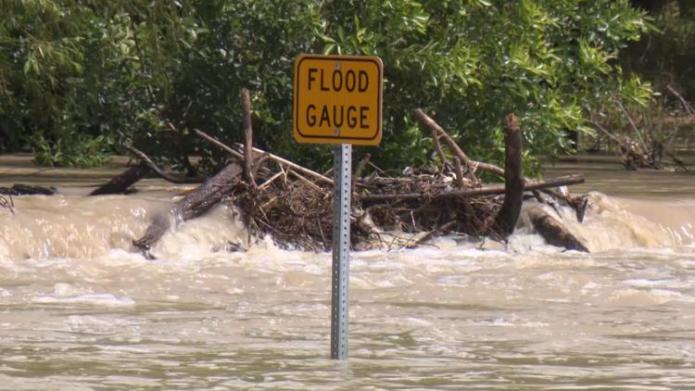
Evacuations underway for Guadalupe River area in Kerrville amid dangerous flooding situation

Evacuations underway for Guadalupe River area in Kerrville amid dangerous flooding situation

The start of July Fourth has brought “life-threatening flash flooding” to Kerr County, according to NWS.

KERRVILLE, Texas — The Fourth of July holiday has brought “major flooding” along the Guadalupe River in Kerrville, where 5 to 10 inches of rain has already fallen before sunrise during what’s become a “life-threatening” situation, according to the National Weather Service. 

Kerrville authorities are urging that residents who live within 100 yards of the river “evacuate now” as water overtakes several streets in town. A reunification area has been set up at the Walmart at 2106 Junction Highway. More rainfall is expected due to extremely slow-moving storms in Kerr and Bandera counties, which remain under a Flash Flood Warning until 10 a.m. 

The city’s “Fourth on the River” holiday celebration is cancelled, per event organizers, after Louise Hays Park flooded on Friday morning. 

7:05 a.m. KPD officers and Kerrville Fire Department are evacuating residents. Walmart is being used as a temporary…

Posted by City of Kerrville – Police Department on Friday, July 4, 2025

At 5:10 a.m., the Guadalupe River reached its second-highest height on record, the NWS says–even higher than the 1987 flood. 

“This is a very dangerous and life-threatening flood event,” weather officials said on social media, while urging residents to “move to higher ground.”

Street closures

This is a partial list of street closures in Kerrville due to the flooding:

  • Arcadia Loop
  • Most of Thompson Drive
  • Guadalupe Street
  • Rio Robles
  • Riverside Drive

This is a developing story. 

Great Job & the Team @ WFAA RSS Feed: news Source link for sharing this story.

Wimbledon: Naomi Osaka loses to Anastasia Pavlyuchenkova in the 3rd round

Wimbledon: Naomi Osaka loses to Anastasia Pavlyuchenkova in the 3rd round

LONDON – Naomi Osaka might be more comfortable on grass courts these days but she will once again leave Wimbledon in the third round after a 3-6, 6-4, 6-4 loss to Anastasia Pavlyuchenkova on Friday.

Osaka is a former No. 1 now ranked 50th and a four-time Grand Slam champion, all on hard courts — she won the U.S. Open and Australian Open twice apiece.

Osaka arrived at the All England Club this year having lost three of her last four matches at the place and with a career record of 5-4 there. Her best showing was getting to the third round in 2017 and 2018; she missed the tournament in 2021, 2022 and 2023.

From 4-all in the third set, Pavluchenkova grabbed eight of the match’s last 10 points, holding at love, then breaking in the final game with the help of a trio of forehand unforced errors by Osaka.

“A majority of you were cheering for Naomi, but that’s OK,” Pavlyuchenkova, who turned 34 on Thursday, told the crowd at Court No. 2. “I’m mentally tough, so that didn’t bother me at all. The opposite: It gave me energy.”

Pavlyuchenkova, who is ranked 53rd, was the 2021 runner-up at the French Open, and Friday’s victory moved her into the fourth round at Wimbledon for the first time since she was a quarterfinalist nine years ago.

___

AP tennis: https://apnews.com/hub/tennis

Copyright 2025 The Associated Press. All rights reserved. This material may not be published, broadcast, rewritten or redistributed without permission.

Great Job Associated Press & the Team @ KSAT San Antonio Source link for sharing this story.
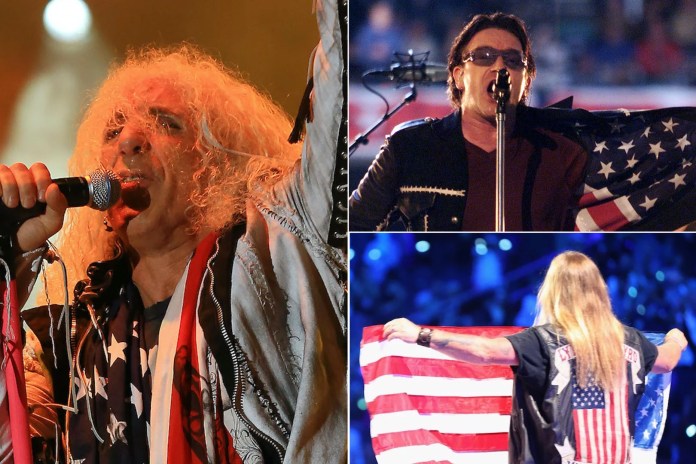
21 Rock + Metal Artists Showing Patriotism

21 Rock + Metal Artists Showing Patriotism

Here are some rock and metal artists showing their patriotism in honor of the Fourth of July.

On July 4, 1776, the Declaration of Independence was signed and the colonies officially separated from Great Britain, formally becoming the United States of America. We’ve come a long way since then, and we still have a lot of work to do, but the Fourth of July (also called Independence Day) is always a good time to express your admiration for the red, white and blue.

You probably learned about the origins of the American flag in school, but for a quick refresher — the 13 red and white stripes on the flag represent the 13 original colonies of the U.S., and the 50 white stars are for all of the states that are currently part of the country.

Plenty of rock and metal artists have publicly shown their appreciation for the U.S., whether they wore the American flag print on their clothes or displayed the flag behind them during a performance.

READ MORE: 16 of the Most Political Rock + Metal Bands

Some bands have played special shows for U.S. veterans and even traveled to military bases overseas to perform for stationed troops (we salute you, Avenged Sevenfold).

 A lot has happened in the United States over the last few years that we probably thought we’d never see in our lifetimes. But at the end of the day, we still have music — and that’s something that’ll hopefully be able to bring people together for generations to come.

Scroll below to see some patriotic rockers.

21 Rock + Metal Artists Showing Patriotism

See photos of rock and metal artists showing their patriotism by wearing the American flag or sporting it in some other way.

Gallery Credit: Lauryn Schaffner

Top 50 Hard Rock + Metal Live Acts

Here are the top 50 live acts in rock and metal.

Gallery Credit: Loudwire Staff

Great Job Lauryn Schaffner & the Team @ Loudwire Source link for sharing this story.

Los Angeles to halt ‘disaster tourism’ buses through Palisades fire zone

Los Angeles to halt ‘disaster tourism’ buses through Palisades fire zone

Pacific Palisades neighborhoods were closed to the public for months after a January firestorm devastated the community, but since its recent reopening, there have been sightings of a new, disturbing visitor in the neighborhood: disaster tourists. Busloads of them.

“My office and others have received numerous reports about commercial tour operators conducting disaster tours in the Pacific Palisades,” Los Angeles City Councilmember Traci Park said at a council meeting this week. “They’re looking to profit off of destruction and other people’s losses. It’s really gross and it needs to be stopped.”

In a bid to stop the trend from becoming routine whenever disaster strikes the area, the City Council unanimously approved restricting “disaster tourism” buses from the Palisades fire zone and any disaster zone.

On Jan. 7, the Palisades fire tore through Pacific Palisades and surrounding areas, destroying more than 6,000 structures, many of them homes, and leaving 12 people dead. Although officials vowed to have a speedy recovery, the rebuilding process for the worst disaster in the city’s history has been challenging — and slow.

Park said the tour buses were not only unsettling but also potentially distracting and hazardous for crews continuing to work in the area.

“It’s also … dangerous because we’re still actively clearing fire debris,” she said.

As a result of the vote on Park’s motion, the city’s Department of Transportation will restrict tour buses from any area declared part of a natural disaster emergency, and the ban will last through the duration of the emergency response.

The motion also called on the department to consider permanent tour bus restrictions in certain areas of the Palisades once the emergency expires, given the Palisades’ narrow, winding and steep streets — potentially unsuitable for large buses even before the fire.

Great Job Grace Toohey & the Team @ California Source link for sharing this story.
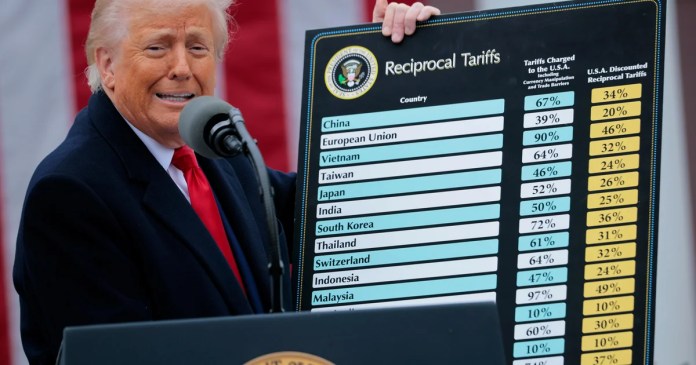
Tariffs could surge on July 9 with 90-day pause set to end. Here’s what experts think could happen.

Tariffs could surge on July 9 with 90-day pause set to end. Here’s what experts think could happen.

90-day freeze on sweeping U.S. tariffs is set to expire on July 9, sowing economic uncertainty as the Trump administration works to revamp the terms of global trade. 

The stakes for millions of U.S. consumers and businesses are high. Economists warn that the barrage of import duties announced on April 2, which President Trump called “Liberation Day,” could trigger another bout of inflation, put smaller companies out of businesses and dent financial markets. 

As next week’s deadline approaches, the Trump administration has touted new trade agreements with countries including China, the U.K. and Vietnam, while the status of other pacts remains under wraps. Mr. Trump told reporters on Friday that the the U.S. is likely to start informing some countries on Friday what tariffs their exports will face. Earlier in the week, he said doesn’t plan to extend the July 9 deadline, leaving little time to clinch bilateral deals with dozens of other countries. 

Under the April 2 tariffs, imports from some nations would only face a 10% universal tariff, while some Asian nations, such as Cambodia, would also be subject to duties of 49%. If the new tariffs take effect next week, country-specific rates would be added to the baseline 10% charge on all U.S. imports. 

That 10% duty has been in effect since early April, while the so-called reciprocal rates have largely been temporarily suspended. Additionally, many goods from Canada and Mexico have been exempted from 25% tariffs under the U.S.-Mexico-Canada Agreement. 

Chinese goods, which were temporarily subject to levies of as high as 145%, are currently subject to 30% across-the-board tariffs. 

If the U.S. fails to arrange trade deals with some nations by the deadline, country-specific tariffs would take effect after midnight on July 9, substantially hiking duties on billions of dollar in foreign imports from all corners of the globe. 

The White House didn’t immediately respond to a question about whether it could announce more trade deals by the July 9 deadline. 

Kicking the can?

Given the complexity of trade deals, some experts think the U.S. is likely to extend the tariff freeze pause for some nations. 

“It can take a lot more time [than 90 days] to truly iron these things out,” Clark Packard, a trade policy expert and research fellow at the Cato Institute, a nonpartisan public policy think tank, told CBS MoneyWatch. 

Countries that Trump administration officials see as negotiating in good faith could be given a longer runway, while tariffs are likely to rise on July as scheduled for nations viewed as less compliant, he added.

“I think countries the administration believes are not bending at the knee or kissing the ring are likely going to face tariff snapbacks,” Packard said. 

Although imposing sharply higher tariffs on dozens of countries could scare some investors and fuel concerns about higher prices in the U.S., extending the tariff freeze would prolong uncertainty for millions of U.S. businesses. 

“The threat of tariffs, and this uncertainty, causes capital to sit on the sidelines. You cannot plan out a year from now if you if you can’t even figure out what your costs are going to be in a week,” Packard said. “All of that causes uncertainty, and that’s the enemy of investment and broader economic growth, which are the kinds of things we want in the economy.”

3 buckets

Patrick Childress, an international trade police attorney at law firm Holland & Knight, expects the countries subject to higher U.S. tariffs to fall into three different broad categories as the clock strikes on July 9. 

First, he thinks “a modest number” of trade agreements will be finalized before the deadline. Under the new U.S. deal with Vietnam, for example, Mr. Trump said the country’s imports would be subject to levies of 20%, plus a 40% tariff on goods that pass through Vietnam from other countries. In return, Vietnam will allow the U.S. to sell products in the country tariff-free, Mr. Trump said. 

Mr. Trump has also announced the framework of what he called a “breakthrough” deal with the U.K. that includes “billions of dollars of increased market access for American exports.” Mr. Trump added that the under the terms of the deal, the U.K. would “reduce or eliminate” numerous nontariff barriers. A broad agreement with China has also been reached, according to both nations.

A number of other nations are likely to fall into a second category in which the U.S. keeps a 10% baseline tariff in place as trade talks continue, Childress said. 

A third group of U.S. trading partners, having either failed to nail down a trade deal or viewed as uncooperative by American trade officials, will be hit with sharply higher tariffs as of 12:01 a.m. on July 9.

“We don’t know which trading partners will fall into which of the three buckets, or how many trading partners will end up in each of three groups,” Childress said. 

What could happen next

“If no action is taken by the executive, the higher rates automatically go into effect,” David Murphy, a customs and trade attorney with law firm GDLSK, told CBS MoneyWatch. “If he makes deals like he’s done with the U.K., that pulls them out of the whole mess — their deal stands. So if he comes up with other deals and announces them before July 9, they are in that bucket as well.”

Because trade policy experts don’t expect all, or even most, deals to be finalized by Mr. Trump’s deadline, uncertainty will likely persist, they say.

“The most likely outcome seems to be some combination of very limited agreements which would allow the U.S. to grant further extensions without losing face,” analysts with Capital Economics, an investor advisory firm, said in a report. “Indeed, Trump has stated that a longer pause would be ‘no big deal’. But given his unpredictability, we wouldn’t rule out the possibility that some countries face Liberation Day tariffs from next week.”

Some experts also think a number of countries are unlikely to fold to U.S. pressure regardless of Mr. Trump’s self-imposed deadline. That includes the European Union’s 27-member nations, which account for a quarter of all U.S. exports, giving them significant leverage. 

Meanwhile, much of Mr. Trump’s trade agenda could end up in tatters after the U.S. Court of International Trade in May ruled that most of his tariffs were illegal. Although a federal appeals count in Washington, D.C., has temporarily blocked, a final ruling is pending. 

Great Job & the Team @ Home – CBSNews.com Source link for sharing this story.
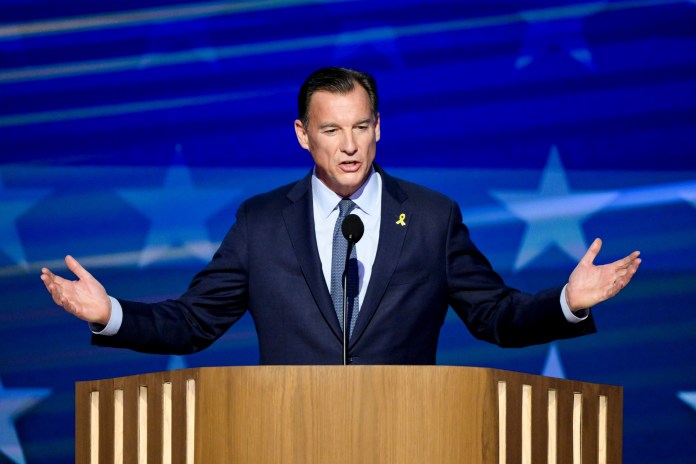
Democratic Congressman Suozzi’s $50,000 stock sale took advantage of a loophole in Congressional disclosure rules 

Democratic Congressman Suozzi’s ,000 stock sale took advantage of a loophole in Congressional disclosure rules 

WASHINGTON — When Rep. Tom Suozzi (D-N.Y.) sold a chunk of his personal stock holdings two days before President Donald Trump’s “Liberation Day” tariff announcements in April, the transaction appeared to be yet another routine financial move for someone Congress itself once investigated for his often opaque trading habits.

But Suozzi’s March 31 sale of up to $50,000 worth of Global Industrial Co. stock is notable for what it’s not: The congressman has never publicly disclosed owning the stock, prompting the question of how a federal lawmaker can sell a security he doesn’t appear to own in the first place.

The answer? Suozzi simply didn’t disclose his Global Industrial Co. stock, which he obtained more than two years ago, because of an apparent loophole in federal law—a loophole recently closed by Congress to address stock situations precisely like Suozzi’s, according to a Fortune review of federal documents and interviews with government officials.

Suozzi’s mysterious stock trade comes at a time when a bipartisan coalition in Congress are agitating to ban federal lawmakers from trading stocks altogether. They cite what they regard as abuses of a financial disclosure law known as the Stop Trading on Congressional Knowledge Act. Suozzi has violated the STOCK Act’s disclosure provision on four different occasions earlier this decade, according to media reports.

House Speaker Mike Johnson (R-La.), House Minority Leader Hakeem Jeffries (D-N.Y.) and even President Donald Trump have offered support, in principle, for a congressional stock-trade ban.

Suozzi’s congressional office told Fortune the congressman has done nothing wrong by not yet reporting his Global Industrial Co. stock ownership, arguing that he followed congressional rules that applied to him when he last filed mandatory personal financial disclosures in 2024.

“Congressman Suozzi has complied completely with the rules of House Ethics,” Suozzi Chief of Staff Matt Fried told Fortune.

Suozzi’s latest stock saga began in June 2023.

That month, according to Securities and Exchange Commission records, Suozzi received $50,000 worth of restricted, unvested stock in Global Industrial Co., while serving as a “non-management director” of the company after leaving Congress earlier that year following a failed campaign for governor of New York.

Later that year, Suozzi decided to run in a special election for New York’s 3rd Congressional District seat, which Rep. George Santos (R-N.Y.) vacated after the House of Representatives expelled him amid a swathe of federal criminal charges on which he was later csentenced to more than seven years in prisononvicted.

When Suozzi filed a mandatory candidate financial disclosure report on January 12, 2024, he did not disclose his stock in Global Industries Co. The company markets industrial and repair products through various e-commerce websites. Nor did he disclose it in two subsequent financial disclosures, in August and September of 2024, after he won his congressional seat in February 2024. The three financial disclosures applied to Suozzi’s personal financial activity during 2023.

Fried explained that Suozzi’s Global Industries Co. stock “had not vested and had no value” when Suozzi filed his personal financial disclosure in January 2024. Because House Committee on Ethics financial disclosure rules at the time did not specifically address unvested stock holdings, Suozzi did not disclose his Global Industries Co. stock holding, Fried said.

However, Suozzi’s Global Industries Co. stock did vest at some point between Suozzi’s financial disclosure on Jan. 12, 2024, and his swearing-in to Congress on Feb. 28, 2024, Fried said.

The Global Industries Co. stock “will be reflected” when Suozzi discloses his 2024 personal financial activity in a document that must be filed by August 2025, Fried said. In May, Suozzi requested, and received, a 90-day extension to file it., Fried said.

When the House Committee on Ethics released updated disclosure rules earlier this year, it included new language directly addressing the kind of situation Suozzi finds himself in, although it doesn’t appear to apply to members of Congress retroactively.

“You are required to disclose for yourself, your spouse, or dependent children your participation in a restricted stock plan if the value of stock was more than $1,000 at the end of the reporting period or earned more than $200 in income during the reporting period,” the House guidance reads. “Provide the name of the unvested stock (vested stock should be disclosed on a separate line item), value, type of income and amount.”

Tom Rust, chief counsel for the House Committee on Ethics, declined to comment.

“These disclosure requirements are important because they’re the only sort of ethical obligation members of Congress have been willing to impose on themselves,” said Walter Shaub, a former director of the U.S. Office of Government Ethics. “If they’d finally pass the long-languishing stock trading ban to uphold the bedrock ethical principle of avoiding conflicts of interest, they wouldn’t have to worry about these disclosures.”

In 2021, NPR reported — citing research from the Campaign Legal Center, a nonpartisan watchdog group — that Suozzi failed to properly disclose about 300 financial transactions.

Separately, Business Insider reported that Suozzi — on three different occasions in March, May and December of 2022 — violated the STOCK Act by waiting months or years past a federal deadline to disclose dozens of additional stock trades. 

“Quite frankly, we have a lot going on in Congress. I have a lot of other stuff going on. And it’s just not—ethics is a big priority for me. But the—some of the formalities are not necessarily something I make a priority of,” Suozzi told the independent Office of Congressional Ethics in 2022 during its investigation of his stock trading practices, while noting a financial adviser directed his trades.

The Office of Congressional Ethics’s board unanimously referred Suozzi to the House Committee on Ethics, writing that there was “substantial reason to believe” Suozzi had failed to properly disclose hundreds of personal stock trades. 

But the House Committee on Ethics, which members of Congress themselves constitute, unanimously concluded in July 2022 that there “was not clear evidence” that Suozzi committed a “knowing or willful” violation of the STOCK Act. The committee declined to penalize him.

In his second stint as a congressman, Suozzi is a member of the House Committee on Ways and Means, which is responsible for tax-writing, revenue-raising and other core government financial functions. He sits on the committee’s oversight and tax subcommittees, as well.

Fried, Suozzi’s chief of staff, said Suozzi backs the Bipartisan Restoring Faith in Government Act of 2025, one of several pending bills that, if passed, would ban or otherwise limit members of Congress from trading individual stocks.

On May 5, Suozzi became a co-sponsor of the bill, which is also sponsored by 10 other ideologically diverse lawmakers ranging from Reps. Brian Fitzpatrick (R-Pa.) to Alexandria Ocasio-Cortez (D-N.Y.).

When Suozzi sold his Global Industrial Co. stock on March 31, it was trading around $22 per share — down from about $27 a share when he obtained it in June 2023.

It’s the only stock trade Suozzi has reported making this year after reporting making just a handful last year.

“The congressman has made a point of not buying or selling stock since his new term began in January,” Fried said. “This was his only trade. It was done to raise money to pay fees to his financial adviser. This stock was sold because it was the only stock in which he had no capital gains.”

Dave Levinthal is a Washington, D.C.-based investigative journalist. Dave previously worked as editor-in-chief of Raw Story, deputy editor at Business Insider and as an editor or reporter at the Center for Public Integrity, Politico, OpenSecrets and the Dallas Morning News. He has also written for The Atlantic, TIME, Rolling Stone, Columbia Journalism Review, the Daily Beast, NOTUS and The Ankler.

Great Job Dave Levinthal & the Team @ Fortune | FORTUNE Source link for sharing this story.

WATCH LIVE: Storm chaser in San Antonio and Hill Country

WATCH LIVE: Storm chaser in San Antonio and Hill Country

The KSAT Storm Chaser is driving around San Antonio and the Hill Country during inclement weather on Friday, July 4.

Along the Guadalupe River in Kerr County, more than 6 inches of rain have fallen in the area, resulting in major flooding along the river. We will continue to keep everyone posted on this story here

Read the latest forecast here.

>> Watch live: Doppler radar

To keep up with the weather situation, please download the KSAT Weather Authority app for Apple or Android and allow notifications for updates, including livestreams from KSAT meteorologists.

Want to share what you’re seeing with KSAT12’s meteorologists? Submit photos and videos here, and your submission may get featured on KSAT.com or on air.

More resources:

Copyright 2025 by KSAT – All rights reserved.

Great Job Felicia Ray Owens & the Team @ Felicia Ray Owens Source link for sharing this story.

Secret Link