Home News Page 2540

Khloé Kardashian Says Her Lamar Odom Divorce ‘Prepared’ Her For Trystin’ Thompson’s ‘Traumatic’ Betrayal Blowup

Khloé Kardashian Says Her Lamar Odom Divorce ‘Prepared’ Her For Trystin’ Thompson’s ‘Traumatic’ Betrayal Blowup

Source: Derick E. Hingle, Luigi Iorio, Paras Griffin

Khloé Kardashian was an open book during her Khloé in Wonderland podcast as she discussed the fallout from her calamitous uncoupling with Lamar Odom and her bombshell breakup with persistently philanderous Tristan Thompson.

After a fan asked the 41-year-old reality TV star when she felt like the “strongest version” of herself, Khloé revealed that it was during the difficult time in 2013 when cheating rumors surrounding Lamar surfaced—four years after they married in August 2009. With her “family’s support,” she was able to get through the rough patch. The situation was made worse by the former Los Angeles Lakers star’s reported cocaine use. Khloé filed for divorce that same year.

“Me going through such a public divorce and handling that — and yes, it was between him and I, and it was a great love that was now lost and that whole thing — it was so public,” the mother of two explained. “So public that I’ve never dealt with something like that before. But I dealt with it, and I had my family’s support and all of that.”

Their divorce was finalized in July, but on Oct. 13, 2015, just two months later, Khloé called it off after Lamar was found unconscious in a Las Vegas brothel due to a near-fatal overdose. He was rushed to the hospital, where toxicology reports revealed cocaine, opiates, and sexual enhancement pills were discovered in his system, according to People and USA Today. Notably, during a Jan.19 appearance on The Kyle & Jackie O Show, Odom claimed that the drugs found in his body may have been unknowingly slipped into his drink shortly after he had signed the divorce papers handed down by Khloé while heading to the brothel.

Though Khloé stood by him during his recovery, the two eventually parted ways for good in 2016.

Khloé called her breakup with Tristan Thompson “traumatic.”

Shortly afterward, she began dating Tristan. But what she hoped would be a fresh start quickly turned into another painful and “traumatic” chapter, as Tristan cheated on her just days before the birth of their daughter, True, in April 2018.

Khloé Kardashian Says Her Lamar Odom Divorce ‘Prepared’ Her For Trystin’ Thompson’s ‘Traumatic’ Betrayal Blowup
Source: Jerritt Clark / Getty

While heartbreaking, Khloé explained that her painful divorce from Lamar prepared her for the worst with Tristan.

“Obviously, no one can prepare you for something like that,” the star shared. “And it wasn’t the cheating that’s like, ‘Ugh.’ People get cheated on. It’s more that I was nine months pregnant — I was having a baby two days later — and it was so public and it was everywhere. But I think I handled it the best that I knew how because I almost got a little experience of it, or a lot of experience of it, from my divorce with Lamar. So, it sort of prepared me.”

She added:

“But if it was maybe just the one-off situation and while you have these newly fresh hormones and you’re just trying to even be a first time mom or be present in this moment and experience this moment, I don’t know if I would’ve been able just to handle that isolated incident,” she admitted.

Khloé called things off with Tristan immediately after the scandal, but they eventually repaired their romance in 2021, welcoming a son named Tatum via surrogate in August 2022. Love didn’t last for long for the duo. In January 2022, they called it quits after news broke of Tristan welcoming a child with Maralee Nichols, as they were still together.

Still, love isn’t lost for the Good American co-founder after her painful relationships. 

“Everything prepared me for each experience in my life, and I think when you overcome those experiences, you feel really strong,” she told fans on the latest episode of Khloé in Wonderland. “And also for how I handled so many of those moments in my life, I’m really proud of myself for the way I handled them.”

What do you think of Khloé’s crazy breakups with Tristan and Lamar? Tell us in the comments section.

Great Job Shannon Dawson & the Team @ Bossip Source link for sharing this story.

Donald Trump uses anti-Semitic slur in victory rally

Donald Trump uses anti-Semitic slur in victory rally

Donald Trump uses anti-Semitic slur in victory rally

FILE PHOTO: US President Donald Trump. REUTERS/Kevin Lamarque/File Photo

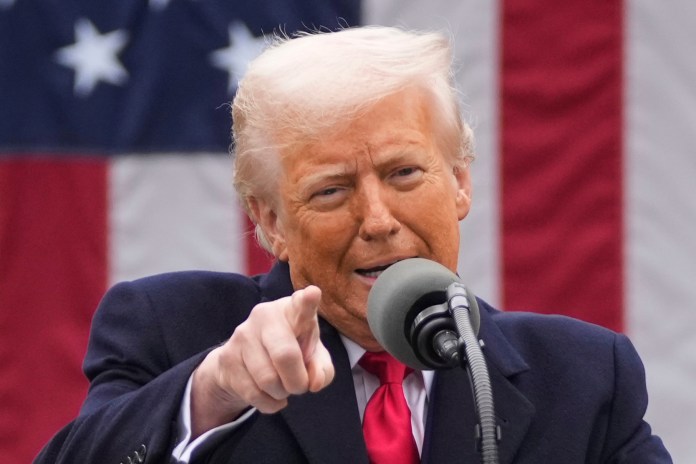
WASHINGTON — US President Donald Trump used an anti-Semitic slur during a rally in Iowa as he celebrated passage of his marquee spending bill but insisted he did not know the word was offensive to Jewish people.

“No death tax, no estate tax, no going to the banks and borrowings from, in some cases a fine banker, and in some cases shylocks and bad people,” Trump told the crowd Thursday at the Iowa State Fairgrounds in Des Moines.

Article continues after this advertisement

The term “shylock” is borrowed from William Shakespeare’s “The Merchant of Venice.” The tale features a Jewish character, who is portrayed as a ruthless moneylender demanding “a pound of flesh” from a merchant unable to repay a loan.

READ: Trump to visit ‘Alligator Alcatraz’ migrant detention center

The word refers to loan sharks and has long been considered offensive, playing on stereotypes of Jews and greed.

The Trump controversy echoes a similar incident in 2014 when then-vice president Joe Biden used the term while describing exploitative lenders. Biden later apologized, calling it “a poor choice of words.”

Anti-Defamation League

“We see once again how deeply embedded this stereotype about Jews is in society,” Abraham Foxman, then-director of a Jewish activist group, the Anti-Defamation League, said at the time.

Article continues after this advertisement

When asked about his use of the term after he got off Air Force One returning to Washington, Trump said he has “never heard that” the word could be considered anti-Semitic.

He added: “I’ve never heard it that way. The meaning of Shylock is somebody that’s a money lender at high rates. You view it differently. I’ve never heard that.”

Article continues after this advertisement

Daniel Goldman, a Democratic US congressman from New York, called Trump’s remarks “blatant and vile anti-Semitism, and Trump knows exactly what he’s doing.”

“Anyone who truly opposes anti-Semitism calls it out wherever it occurs — on both extremes — as I do,” Goldman wrote on X.

Before his re-election last year Trump promised to combat what he called a wave of anti-Semitic sentiment in the United States.


Your subscription could not be saved. Please try again.


Your subscription has been successful.

Since taking power his administration has attacked major universities that saw protests over the war in Gaza, accusing the schools of allowing anti-Semitism and support for the Palestinian militant group Hamas.

Great Job & the Team @ INQUIRER.net Source link for sharing this story.

14-Year-Old Boy Misdiagnosed By ChatGPT Of Gastric Infection; Turns Out He Had Anxiety Attack Owing To Bullying

14-Year-Old Boy Misdiagnosed By ChatGPT Of Gastric Infection; Turns Out He Had Anxiety Attack Owing To Bullying

A 14-year-old asked ChatGPT about bodily discomfort and the AI bot convinced the young lad of a gastroenterological infection. The boy was rushed to the ER at Apollo hospital, Mumbai, where his mother mentioned that ChatGPT diagnosed her son’s condition as such.

Dr. Rituprana Ghosh, a clinical psychologist at the hospital, was onboarded for further diagnosis. The result? The physician diagnosed the boy as suffering from an anxiety attack. Reportedly the boy had an episode after being relentlessly bullied by the seniors daily at school. This led to anxiety attacks, which mimic physical discomfort in the form of cramps, stomach pain, etc.

During any stressful event, the body’s blood flow is directed away from the digestive system and the symptom can be misdiagnosed, especially by AI. The good doc could dissect through the boy’s behavior when he would not meet eye to eye while talking and was quivering. As published in the Indian Express, upon further probe, he revealed his ordeal back at the school.

See Also: ChatGPT Fails At Diagnosing Child Medical Cases. It’s Wrong 83 Percent Of The Time.

See Also: Study Finds Heavy ChatGPT Usage Affects Brain Function Adversely; Internet Says ‘We Are Cooked’

More of these AI misdiagnosis gems can be found online even as users claim otherwise. Quoting a study, one netizen reminded how ChatGPT misdiagnosed 83% of Children’s Health Conditions.” Another user, quoting yet another study, remarked, “Reminder: do not trust ChatGPT with your mental health; multiple people have been involuntarily committed due to psychosis triggered by chatting with GPT.” A third user citing the same stated, “Many ChatGPT users are developing all-consuming obsessions with the chatbot, spiraling into severe mental health crises characterized by paranoia, delusions, and breaks with reality.” Yet another user quipped, “I told ChatGPT that I’ve had chest pain since yesterday, and this bitch is saying I’m about to die.”

“The number one issue with ChatGPT is that it can never admit when it doesn’t know something. It must always guess, even if it’s a completely baseless guess. If you call out an incorrect guess, and tell it to stop guessing, it will simply proceed with another incorrect guess,” a user reminded.

Cover: Illustrative / Pexels /Pexels

See Also: ‘Path To Medical Superintelligence’ Microsoft Claims To Build Superior AI Tool That Outperforms Doctors In Diagnosis

See Also: Mother Of Two Thanks ChatGPT For Saving Her Life By Detecting Cancer When Doctors Assumed It Was Arthritis

Great Job James Paul & the Team @ Mashable India tech Source link for sharing this story.

Joey ‘Jaws’ Chestnut hopes for a comeback victory in annual Nathan’s Famous hot dog eating contest

Joey ‘Jaws’ Chestnut hopes for a comeback victory in annual Nathan’s Famous hot dog eating contest

Chestnut didn’t compete last year due to a branding dispute. But with the issue ironed out for this year, Joey Chestnut is back. And he’s hungry.

NEW YORK — The Nathan’s Famous Fourth of July hot dog eating contest is back, and famed competitive eater Joey “Jaws” Chestnut is hoping for a comeback 17th win on Friday.

The 41-year-old, from Westfield, Indiana, was not in last year’s event due to a contract dispute involving a deal he had struck with a competing brand, the plant-based meat company Impossible Foods. But now he’s back, saying things have been ironed out.

Patrick Bertoletti, of Chicago, won the title in Chestnut’s absence and is the defending men’s champion.

In the women’s competition, defending champion Miki Sudo, 39, of Tampa, Fla., is the favorite this year and is seeking her 11th title. Last year she downed a record 51 dogs.

The annual gastronomic battle, which dates back to 1972, is held in front of the original Nathan’s Famous’ restaurant at New York’s Coney Island and draws large crowds of fans, many in foam hot dog hats.

Competitors in the men’s and women’s categories chow down as many hot dogs as possible in 10 minutes. They are allowed to dunk the dogs in cups of water to soften them up, creating a stomach-churning spectacle.

The 15 men in the competition hail from across the U.S. and internationally, including Australia, Czech Republic, Canada, England and Brazil.

The 13 women competitors are all Americans.

Chestnut set the world record of eating 76 wieners and buns in 10 minutes on July 4, 2021. He has won a record 16 Mustard Belts. Instead of appearing in New York last year, Chestnut ate 57 dogs — in only five minutes — in an exhibition with soldiers, in El Paso, Texas.

Chestnut told The Associated Press last month that while he was happy to compete at that event, he was “really happy to be back at Coney Island.”

Chestnut said he had never appeared in any commercials for Impossible Foods’ vegan hot dogs and that Nathan’s is the only hot dog company he has worked with. But he acknowledged he “should have made that more clear with Nathan’s.”

Copyright 2025 Associated Press. All rights reserved. This material may not be published, broadcast, rewritten, or redistributed.     

Great Job & the Team @ WFAA RSS Feed: news Source link for sharing this story.

Wimbledon: Ben Shelton needs four points and about a minute to wrap up a win

Wimbledon: Ben Shelton needs four points and about a minute to wrap up a win

LONDON – Two-time Grand Slam semifinalist Ben Shelton needed all of about a minute and exactly four points — three of which were aces — to wrap up a 6-2, 7-5, 6-4 victory over Rinky Hijikata on Friday in a second-round Wimbledon match suspended the night before because of darkness at 5-4 in the third set.

“Very different playing over two days and coming out for whatever that was — 55 seconds? — today,” the 10th-seeded Shelton said. “I was hoping to maybe hit a few groundstrokes today. I might have to go to the practice courts.”

The American, who reached the final four at the 2023 U.S. Open and this year’s Australian Open, was about to try to serve out the match on Thursday at 9:30 p.m. when action was halted at No. 2 Court, which does not have a roof or artificial lights.

They came back out to the same stadium a little less than 16 hours later and, after a warmup period that was quite a bit longer the resumption of actual play, Shelton began with a 141 mph ace. The 22-year-old left-hander then hit a second serve that resulted in a framed return by Hijikata, followed with an ace at 140 mph and one more at 118 mph to end things quickly.

“You come out here, serving for the match, the nerves are there a little bit. To hit three aces and take the pressure off of myself, I couldn’t have been happier with what I came out here and did,” said Shelton, who will face 105th-ranked Marton Fucsovics of Hungary for a chance to reach the fourth round at the All England Club for the second consecutive year.

Shelton told the crowd: “I’m sorry that you guys didn’t really get to see much tennis.”

Right before things were halted Thursday, Shelton held three match points while leading 5-3 and at love-40 on Hijikata’s serve. But but the 87th-ranked Hijikata grabbed the next five points to extend the contest.

Shelton faced only three break points against Hijikata, saving all of them.

“A great match,” he said. “A clean match.”

___

Howard Fendrich has been the AP’s tennis writer since 2002. Find his stories here: https://apnews.com/author/howard-fendrich. More AP tennis: https://apnews.com/hub/tennis

Copyright 2025 The Associated Press. All rights reserved. This material may not be published, broadcast, rewritten or redistributed without permission.

Great Job Howard Fendrich, Associated Press & the Team @ KSAT San Antonio Source link for sharing this story.

A Philosophy That Sees ‘Women as Doers’

A Philosophy That Sees ‘Women as Doers’

This is an edition of the Books Briefing, our editors’ weekly guide to the best in books. Sign up for it here.

When a woman’s clothes constrict her movement, squeezing her into unforgiving shapes, or her exercise regime is a punishing ordeal meant to winnow her down to the smallest possible size, the result is all too often an alienation from her body. This week, we published two book reviews that offer a different way to think about the physical self—one that replaces an obsession over surface appeal with an emphasis on functionality.

First, here are four new stories from The Atlantic’s books section:

My colleague Julie Beck’s essay on Casey Johnston’s new ode to weight lifting argues for seeing your body as a working object, rather than an enemy to be subdued; so does Julia Turner’s article about Elizabeth Evitts Dickinson’s new biography of the fashion designer Claire McCardell. This philosophy might seem, to some, like wishful thinking: Narrow standards of beauty, whether they dictate body size or one’s fashion sense, remain powerful in many settings. But Johnston’s memoir of her journey toward strength training describes how, as she built muscle, she also began rejecting a deeply ingrained internal voice warning her against gaining a single pound. Beck, who describes trading in punishing turns on the elliptical for lifting, writes that the decision transformed her relationship to her body. As she notes, lifting “builds up instead of whittling away; it favors function over aesthetics”; strength training has changed the way she walks, erased nagging pains, and allowed her to lift her carry-on into the overhead bin on airplanes with ease.

Fashion, too, has tended to prioritize appearances over practicality—skin-baring cuts when long sleeves might be more appropriate for the weather, high heels that are impossible to walk in—to the detriment of women’s well-being. In her essay on Dickinson’s Claire McCardell, Turner writes that the designer “hated being uncomfortable,” and worked to design clothes that people could actually live in. (She is credited with adding pockets to women’s clothes and moving hard-to-reach zippers to the sides of dresses.) As Turner argues, McCardell “saw women as doers, and designed accordingly.” Perhaps, Turner suggests, we should think of fashion less as an art and more as a kind of industrial design: practical and user-friendly, rather than beautiful to look at. Aesthetics aren’t irrelevant—style and sartorial creativity can be freeing and self-expressive—but these books refreshingly propose that we value our bodies for what they can do, not how they appear.


Bettman / Getty

The Feminine Pursuit of Swoleness

By Julie Beck

Casey Johnston’s new book, A Physical Education, considers how weight lifting can help you unlearn diet culture.

Read the full article.


What to Read

Be Ready When the Luck Happens, by Ina Garten

A lounge chair beside a pool in Florida, where I was vacationing with my family last winter, was the perfect place to devour Garten’s celebration of luxury, good food, and togetherness. This memoir is a record of a life spent prioritizing adventure over prudence, indulgence over temperance. Garten buys a store in a town she’s never visited, purchases a beautiful house she can barely afford, and wishes her husband well as he takes a job in Hong Kong while she stays behind. Her brio pays off, of course: That food shop was a success, and she went on to write more than a dozen cookbooks, become a Food Network star, and make pavlova with Taylor Swift. The book is escapist in the way that good, breezy reads often are. It was also, for me, inspiring: Be Ready When the Luck Happens gave me a bit of permission to imagine what I would do if I were the sort of person who embraces possibility the way Garten does. As I basked in the pleasant winter sunshine, I found myself thinking, What if we move to Florida, or to Southern California, or some other place where it’s warm in January? I haven’t followed through—vacation fantasies have a way of fading as soon as you get back to reality. But I was invigorated by imagining that I might. — Eleanor Barkhorn

From our list: The 2025 summer reading guide


Out Next Week

A Marriage at Sea, by Sophie Elmhirst

Becoming Baba, by Aymann Ismail

Bring the House Down, by Charlotte Runcie


Your Weekend Read

A Philosophy That Sees ‘Women as Doers’
Eric Rojas

The Bad Bunny Video That Captures the Cost of Gentrification

By Valerie Trapp

One of the effects of gentrification, Bad Bunny proposes, is silence. Throughout the DTMF album, Bad Bunny laments how many Puerto Ricans have been forced to leave the island amid financial struggles and environmental disasters such as Hurricane Maria; this is most notable on “Lo Que Le Pasó a Hawaii,” in which he notes that “no one here wanted to leave, and those who left dream of returning.” (As of 2018, more Puerto Ricans live outside Puerto Rico than on the island; the same is true of Native Hawaiians and Palestinians in their respective lands.) The DTMF short film makes their absence palpable. “Did you hear that? That music!” the old man says to Concho, when a red sedan drives by their front porch playing reggaeton (Bad Bunny’s “Eoo”). The old man is moved. “You barely see that anymore,” he says of the car moseying past. “I miss hearing the young people hanging out, the motorcycles—the sound of the neighborhood.” Señor and Concho, it seems, live in a community that has turned its volume down, now that most of its Puerto Rican inhabitants have left.

Read the full article.


When you buy a book using a link in this newsletter, we receive a commission. Thank you for supporting The Atlantic.

Sign up for The Wonder Reader, a Saturday newsletter in which our editors recommend stories to spark your curiosity and fill you with delight.

Great Job Maya Chung & the Team @ The Atlantic Source link for sharing this story.

15 Best Piano Players of All Time – Singersroom.com

15 Best Piano Players of All Time – Singersroom.com

The piano, a versatile instrument that has captured hearts and minds for centuries, boasts a rich tapestry of virtuosos who have left indelible marks on music history. From classical masterpieces to jazz improvisations and contemporary hits, the best piano players have not only mastered their craft but have also redefined the boundaries of musical expression. In this exploration of the top 15 piano players of all time, we journey through the lives and legacies of those who transformed the keyboard into a powerful voice of emotion and creativity.

Imagine the thunderous chords of Beethoven echoing through concert halls, the intricate melodies of Chopin whispering secrets of the soul, and the electrifying rhythms of jazz legends igniting dance floors. Each artist on our list has brought a unique flair to their performances, captivating audiences with their technical prowess and emotional depth. Whether they were pioneers of their genre or innovative trendsetters, these pianists have inspired generations and continue to resonate with music lovers today. Join us as we celebrate the extraordinary talent and unforgettable contributions of these musical giants, revealing the stories behind their iconic careers and the timeless pieces that define their legacy.

1. Ludwig van Beethoven

Ludwig van Beethoven stands as one of the most important figures in Western classical music, revolutionizing how the piano was understood and played. Though he began his career influenced by the likes of Mozart and Haydn, Beethoven soon broke through tradition to forge his own path—bold, dramatic, and deeply expressive. His piano sonatas, especially the famed “Moonlight Sonata,” are filled with emotional intensity, delicate lyricism, and structural innovation. What’s even more remarkable is that he composed many of his masterpieces while battling increasing deafness, a fact that underscores his genius and resilience. Beethoven used the piano not just as an instrument, but as a vehicle to convey profound human emotion—grief, joy, struggle, and triumph. His work bridges the Classical and Romantic eras, expanding the range and emotional depth of piano music forever. Whether performed in grand concert halls or studied by young students, Beethoven’s music continues to resonate across centuries. His legacy isn’t just in the notes he wrote, but in the powerful emotional journeys he created for listeners and pianists alike.

2. Franz Liszt

Franz Liszt was a piano virtuoso unlike any the world had seen before. Known for his astonishing technical command and theatrical stage presence, Liszt transformed the very idea of a piano concert. He was one of the first to perform solo recitals entirely from memory, a practice now considered standard. His composition “Hungarian Rhapsody No. 2” remains a dazzling showpiece, blending nationalistic themes with mind-bending difficulty. Liszt wasn’t just about flair—his music also contains rich emotional depth and innovation. He pushed harmonic boundaries, experimented with form, and inspired generations of composers and pianists. Offstage, he was an intellectual and humanitarian, admired not just for his talent but for his generosity and spiritual pursuits. He mentored younger composers, including Wagner and Saint-Saëns, and his transcriptions of symphonic works allowed broader access to orchestral music. Franz Liszt elevated the piano to a new artistic height and turned pianism into an electrifying, deeply expressive art form. Even today, his compositions remain both a technical challenge and an emotional journey for any pianist bold enough to take them on.

3. Sergei Rachmaninoff

Sergei Rachmaninoff is celebrated as one of the last great Romantic composers, blending passionate emotion with breathtaking technique. His music is instantly recognizable for its lush harmonies, sweeping melodies, and dramatic flair. As a pianist, Rachmaninoff was legendary—his enormous hand span and impeccable control allowed him to execute virtuosic passages with seeming ease. His *Piano Concerto No. 2* is one of the most beloved concertos ever written, marrying technical difficulty with heartfelt lyricism. The piece rises and falls like a tide, taking listeners on a deeply moving journey. His performances were marked by their power and precision, but also by their warmth and humanity. Rachmaninoff was a man of immense emotional sensitivity, and that sensitivity is present in every note of his music. After emigrating from Russia due to the revolution, his compositions became even more poignant, often reflecting a sense of loss and longing for his homeland. To this day, his works remain a staple in concert halls and an emotional touchstone for listeners. Sergei Rachmaninoff didn’t just compose piano music—he gave voice to the soul through every key.

4. Frédéric Chopin

Frédéric Chopin is often referred to as the “poet of the piano,” and for good reason. His music captures the full spectrum of human emotion—tenderness, melancholy, passion, and even quiet joy—all through beautifully crafted melodies and intricate harmonies. Though he composed almost exclusively for the piano, his impact on classical music is monumental. Pieces like his *Nocturnes*, *Etudes*, and *Ballades* are not only technically challenging but emotionally rich, often evoking a sense of intimacy and longing. Chopin’s unique touch, full of nuance and rubato, forever changed piano performance. His music isn’t about grand, thunderous statements—it’s about detail, color, and soul. Born in Poland and spending much of his life in France, Chopin’s work also reflects his deep love for his homeland, with several compositions rooted in Polish dances like the mazurka and polonaise. Despite his frail health and introverted nature, Chopin’s legacy continues to shine brightly. His works remain favorites in recitals and competitions, demanding both mastery and sensitivity from pianists. Chopin showed the world how a single instrument could sing, weep, and whisper—and his music still speaks directly to the human heart.

5. Art Tatum

Art Tatum was a phenomenon—arguably the most technically gifted jazz pianist to ever live. Blind in one eye and with limited vision in the other, Tatum defied all odds to become a towering figure in jazz. His playing was so fast, intricate, and harmonically adventurous that even seasoned musicians were left speechless. Tracks like “Tiger Rag” and “Tea for Two” are showcases of his dazzling speed, rhythmic complexity, and fearless improvisation. But Tatum wasn’t just about showing off—his playing had incredible swing, depth, and a refined sense of touch. He could take a simple melody and transform it into a whirlwind of harmonies, reharmonizations, and cascading runs. Many of his peers, including legends like Oscar Peterson and Charlie Parker, cited him as a major influence. Despite his virtuosity, Tatum remained a humble and focused artist, dedicated to his craft. He elevated jazz piano to a new level, blending classical sophistication with bluesy soul. Even today, pianists marvel at his recordings, often wondering how one man could produce such sound and complexity. Art Tatum didn’t just play the piano—he reimagined what the instrument could do.

6. Bill Evans

Bill Evans brought a quiet revolution to jazz piano. His style was introspective, harmonically rich, and deeply lyrical—he played as if he were telling a story, note by note. As a key figure in the development of modal jazz, Evans was a major influence on Miles Davis, contributing significantly to the legendary *Kind of Blue* album. But his own recordings, especially with his classic trio, remain some of the most revered in jazz history. Albums like *Sunday at the Village Vanguard* and *Waltz for Debby* show Evans at his finest—creating lush, floating harmonies that feel almost impressionistic. He wasn’t afraid of space or silence; instead, he used both to draw listeners into his world. Evans brought a classical sensibility to jazz, reimagining chord structures and voicings in a way that felt both innovative and emotionally honest. His touch was delicate yet expressive, and his playing often evoked a kind of gentle melancholy. Tragically, his life was marked by personal struggles and addiction, but his music remains timeless. Bill Evans didn’t need to shout—his quiet voice at the piano spoke volumes, and continues to move listeners around the world.

7. Oscar Peterson

Oscar Peterson was a force of nature at the piano—effortlessly combining speed, precision, and soul in a way few others could match. Often described as “the Maharaja of the keyboard,” Peterson’s playing was both technically brilliant and emotionally thrilling. His command of the instrument was so complete that even the most complex runs seemed to glide from his fingers with ease. Whether he was interpreting a Duke Ellington classic or improvising on a blues standard, Peterson infused everything he played with groove and sophistication. Tracks like “C Jam Blues” and “Night Train” showcase his rhythmic fire, inventive phrasing, and a swing so infectious that audiences couldn’t help but move along. Beyond the flash and virtuosity, Peterson had a deep musicality rooted in both classical training and the jazz tradition. He could be tender or thunderous, often within a single tune, and he never lost his connection to melody. A prolific recording artist and tireless performer, he left behind a vast catalog of work that continues to inspire pianists worldwide. Peterson didn’t just play jazz—he celebrated it, elevated it, and gave it a voice that still echoes through time.

8. Keith Jarrett

Keith Jarrett is a singular figure in the world of piano—an artist who blurs the lines between composition and improvisation. He’s perhaps best known for *The Köln Concert*, a completely improvised live performance that became one of the best-selling solo piano albums in history. In that recording, Jarrett took a few simple musical ideas and transformed them into something transcendent, full of emotion, spontaneity, and lyrical beauty. But Jarrett’s work goes far beyond that one night in Germany. Whether interpreting Bach on a harpsichord or diving deep into free jazz, his playing is always deeply expressive and original. Jarrett is known for physically immersing himself in the music—sometimes humming, groaning, or even standing while he plays—because for him, the piano is not just an instrument, it’s an extension of his being. His improvisational style draws on classical, gospel, folk, and jazz influences, often resulting in music that feels deeply personal and spiritual. Though he has become more reclusive in recent years due to health issues, Jarrett’s influence remains vast. He reminds us that music isn’t just about precision—it’s about honesty, exploration, and the courage to create in the moment.

9. Martha Argerich

Martha Argerich is a dazzling presence in the classical music world, known for her fiery interpretations and astounding technique. Born in Argentina, Argerich showed prodigious talent from a very young age, eventually winning the prestigious International Chopin Piano Competition in 1965—a moment that catapulted her onto the global stage. What sets Argerich apart is her rare combination of technical brilliance and emotional depth. Her performances of composers like Chopin, Ravel, Prokofiev, and Rachmaninoff are electrifying, full of energy, risk, and nuance. Yet she can also be deeply introspective, drawing out delicate shades of feeling in slow, lyrical passages. Argerich often shied away from solo recitals, preferring chamber music and concertos, where she could collaborate with other musicians—something that speaks to her deep love for musical connection. On stage, her charisma is undeniable; offstage, she’s known for her humility and passion for mentoring young artists. Martha Argerich doesn’t just perform music—she inhabits it, pouring every ounce of herself into the keys. For many, she represents the pinnacle of pianistic artistry, a true legend who continues to inspire awe in audiences and musicians around the world.

10. Vladimir Horowitz

Vladimir Horowitz was one of the most celebrated pianists of the 20th century—a virtuoso whose name became synonymous with brilliance, drama, and emotional intensity. Known for his incredible technique and expressive range, Horowitz could move effortlessly from thunderous, fiery passages to whisper-soft pianissimos that held audiences breathless. His interpretations of composers like Rachmaninoff, Scriabin, and Chopin are still considered benchmarks of pianistic artistry. Horowitz brought something almost mystical to the stage, combining precision with raw emotional power. He had an uncanny ability to draw out the character of a piece, often adding his own personal touches while still honoring the composer’s intent. His performances were events—crowds would gather just to witness his fingers dance across the keys with seemingly supernatural control. Despite his immense fame, Horowitz remained a complex and often private figure, marked by periods of withdrawal from public life. But each time he returned, his impact was profound. Whether performing in grand concert halls or recording in solitude, Horowitz gave everything to the music. His legacy is not just about technical skill, but about the ability to touch the soul through sound. He reminded us that great piano playing is both an art and an act of courage.

11. Glenn Gould

Glenn Gould was a true original—an eccentric genius who redefined how we listen to and understand classical piano music. Best known for his interpretations of Johann Sebastian Bach, particularly the *Goldberg Variations*, Gould brought an analytical precision and emotional depth that set him apart from his peers. His playing was clean, articulate, and often idiosyncratic, with tempos and phrasing that reflected his unique musical philosophy. Gould was famously known for humming while he played and for sitting unusually low at the keyboard, quirks that only added to his legend. He was also an early advocate for recording technology, eventually retiring from live performance entirely to focus on studio work, where he could fully shape his artistic vision. But what made Gould truly remarkable wasn’t just his technique—it was his mind. He approached each piece with a scholar’s curiosity and a poet’s sensitivity, constantly seeking new ways to interpret and communicate the music. Even decades after his passing, his recordings continue to spark conversation and admiration. Glenn Gould didn’t just play the piano—he challenged what it meant to be a performer, turning each note into a statement of individuality and intellect.

12. John Lewis

John Lewis was a pioneer who brought elegance and structure to jazz piano through his work with the Modern Jazz Quartet. A classically trained musician, Lewis had a deep appreciation for both European concert music and African-American jazz traditions, and he found a way to seamlessly merge the two. His playing was understated but deeply expressive, marked by clarity, subtlety, and a refined sense of rhythm. With the Modern Jazz Quartet, he helped craft a sound that was both sophisticated and accessible, bringing a sense of chamber music intimacy to the jazz stage. Pieces like “Django,” written in tribute to guitarist Django Reinhardt, reveal Lewis’s gift for melody and emotional nuance. He often served as the musical director of the group, shaping not just the notes but the entire aesthetic—reserved, polished, and emotionally resonant. Beyond performance, Lewis was a strong advocate for the dignity and artistry of jazz, helping to elevate it in the eyes of the broader public. His legacy lies in the quiet power of his music and his belief in jazz as a serious, expressive art form. John Lewis didn’t just play jazz—he gave it grace, structure, and lasting substance.

13. Yuja Wang

Yuja Wang has taken the classical music world by storm with her electrifying stage presence, phenomenal technique, and fearless interpretations. Born in Beijing, Wang began playing piano at a very young age and quickly rose through the ranks of elite performers, gaining international recognition in her teens. What sets Yuja apart isn’t just her technical brilliance—though her lightning-fast runs and precise articulation are jaw-dropping—it’s the sense of joy, spontaneity, and daring that she brings to every performance. She has a unique ability to breathe fresh life into traditional repertoire, whether she’s playing Rachmaninoff, Prokofiev, or contemporary composers. Her charisma and distinctive fashion choices have also made her a modern icon, drawing new audiences to the classical scene. Yet beyond the glamour lies an artist of deep intelligence and musical insight, who can deliver both thunderous intensity and tender lyricism with equal finesse. Yuja Wang is not afraid to take risks, and that spirit has made her one of the most exciting pianists of her generation. She continues to push boundaries—stylistically and culturally—making classical music more accessible, vibrant, and thrilling for today’s audiences.

14. Lang Lang

Lang Lang is a global ambassador for classical music whose exuberant performances and magnetic personality have captivated audiences from Carnegie Hall to the Great Wall of China. Born in Shenyang, China, Lang Lang showed extraordinary talent early on and quickly became a household name through televised concerts and major international competitions. What makes Lang Lang so compelling is his ability to connect emotionally with listeners of all ages. Whether he’s performing a delicate Chopin nocturne or an explosive Tchaikovsky concerto, he plays with a passion and flair that turns each piece into a personal statement. He’s also been tireless in his mission to make classical music more accessible, working with young musicians through his Lang Lang International Music Foundation and collaborating with artists across genres—from jazz and pop to film scores. Critics sometimes debate his showmanship, but there’s no denying the depth of his talent or the impact he’s made on global audiences. Lang Lang combines dazzling technique with sincere emotion, making him one of the most influential pianists of the 21st century. He brings classical music out of the concert hall and into the wider world, inspiring millions along the way.

15. Hiromi Uehara

Hiromi Uehara—often simply known as Hiromi—is a whirlwind of energy, imagination, and sheer musical brilliance. Blending jazz, classical, rock, and even progressive elements, her piano playing defies easy categorization. Born in Japan and trained both classically and in jazz, Hiromi burst onto the international scene in the early 2000s with a style that’s as visually dynamic as it is musically inventive. Her fingers fly across the keys with astonishing speed and control, but it’s her fearless creativity that truly sets her apart. Albums like *Spiral* and *Alive* showcase her genre-defying compositions and improvisations that range from contemplative to explosive—all delivered with a signature sense of playfulness. Hiromi’s performances are not just concerts—they’re events, where the piano becomes a living, breathing entity full of character and surprise. She often performs in small ensembles, allowing for incredible musical chemistry and spontaneous interplay. Despite her virtuosic chops, Hiromi remains deeply grounded in melody and emotional expression. She is constantly exploring new sounds and pushing the boundaries of what jazz piano can be. Hiromi doesn’t just play music—she lives it fully, with joy, intensity, and boundless curiosity.

Great Job Edward Tomlin & the Team @ Singersroom.com Source link for sharing this story.

How Trump Can Finish the Job in Iran—and the Middle East

How Trump Can Finish the Job in Iran—and the Middle East

Since taking office, U.S. President Donald Trump has gone for gold in the Middle East. He launched a dramatic military operation against Iran’s nuclear program, building on the broader dismantling of the country’s regional power. He then brokered a cease-fire between Israel and Iran and indicated a willingness to talk with the Iranian government. These outcomes have provided hope that if the United States can focus on the essential—the continued containment and further weakening of Iran—and avoid overcommitment to myriad other regional policy objectives, the Middle East might finally have the stability and normalcy it has long lacked.

But the region has seen similar optimism: after the Yom Kippur War in 1974, the defeat of Iran and then Iraq from 1988 to 1991, and after the takedown of the Taliban in 2001. In each case, the Middle East had reached a critical point of danger, prompting successful American intervention, followed by diplomatic campaigns to lock in these moments of stability. The Camp David accords, for instance, normalized relations between Egypt and Israel, and Israel and Jordan later signed a peace treaty of their own.

Yet after brief periods of peace, the region has always devolved back into chaos. First came the Iranian revolution and Soviet invasion of Afghanistan in 1979. The Oslo accords, which set up a peace process between the Israelis and the Palestinians, ultimately collapsed after 2000. The American invasion of Afghanistan after the September 11 attacks, like the Soviet one before it, stretched on for years, and it ultimately ended with the Taliban back in power. The invasion of Iraq heralded two decades of conflict, including indirect fighting with Iran and direct combat against the al Qaeda offshoot the Islamic State, or ISIS.

This history represents decades-long American policy failures. For years, the United States has managed to secure the Middle East from hostile dominance, but containment policy there differed dramatically from that in Asia and Europe. Asian and European states eventually established stable domestic institutions and regional cooperation systems, leaving the United States to focus on organizing collective security against China and Russia. In the Middle East, however, the United States has had to intervene repeatedly in internal and regional conflicts that undercut stability and containment—even after the Soviet Union passed from the scene.

This time, though, the situation may well be different. Thanks to a year and a half of war, Iran and its proxies are very weak. New leaders are reshaping the region’s power dynamics in Tehran’s absence. The Trump administration thus has a chance to do what its predecessors could not and truly stabilize the region.

UNDER NEW MANAGEMENT

Since the collapse of ISIS, Iran has been the Middle East’s primary generator of regional instability. Its proxy groups have unleashed attacks on Israel, U.S. forces, Arab Gulf states, and commercial ships in the Red Sea. But after Hamas’ October 7, 2023 attack on Israel, Tehran’s tools have largely evaporated. Hamas and Hezbollah were significantly degraded by Israel’s offensives. The Assad regime in Syria collapsed, and Iran’s nuclear, offensive missile, and air defense systems have been demolished by Israel and the United States. Iran can still count on its influence in Iraq and on the Houthis, and it has at least the remnants of its nuclear program. But it cannot erase the reality that these setbacks are its fault, first by allowing its proxies to attack Israel and then by joining in the fight directly, in 2024. As a result, the path toward regional stability is now much smoother.

Tehran’s decline has coincided with the rise of new power brokers in the Middle East. Israel, Turkey, and the Gulf states have become major international players, integrating themselves into the global economy and making internal reforms that both advance and reflect their more cosmopolitan populations and economies. Other than Turkish President Recep Tayyip Erdogan, the region’s leaders have not abandoned formal and informal relations with Israel over the huge civilian losses in Gaza. Arab leaders have demonstrated this new self-confidence by largely embracing the new Syrian government, choosing to look past President Ahmed al-Shara’s terrorist history and coordinating with Erdogan to push an initially reticent Trump administration to embrace Damascus’s leader.

For its part, the United States has been playing a far more effective regional role under Presidents Biden and Trump since the outbreak of the war in Gaza. It has neither pivoted away from the region nor dived into every social, political, and security problem. In a speech during his tour of the Middle East in May, Trump declared that the region has the ability to develop prosperity and peace on its own, with only some American support. Trump is handling military threats, if possible, via negotiations. When diplomacy is not possible, he is relying on massive, rapid military force to achieve limited, definable goals that Americans can understand—such as protecting freedom of navigation and stopping the development of an Iranian nuclear bomb. He has, in short, updated the 1980s Powell Doctrine, which held that military force should be a last resort but should be used decisively when necessary, with clear goals supporting national interests and popular support. Trump has benefitted from having Steve Witkoff and Tom Barrack as envoys, a knowledgeable team that enjoys his trust. And he does not have to contend as much with Moscow, a perennial troublemaker that has been unable to support its partners in Iran and Syria. 

SECOND TIME’S THE CHARM

If this propitious moment holds, the path to lasting stability is to further contain the Iranian threat, with Washington working by, with, and through its partners. Although difficult, this outcome is not impossible. In the 1990s, following its defeat in the Iraq War, Iran was all but supine in the region. The Trump administration thus should pay attention to why Iran broke out after 2000, exacerbating mayhem through the Levant and beyond and building huge nuclear and ballistic missile programs in the face of American, Arab, and Israeli opposition.

There are two complementary explanations for what went wrong. The first is that this loose coalition focused on other, ultimately less destabilizing issues, including counterterrorism, the wars in Afghanistan and Iraq, the Arab Spring, and Israeli-Palestinian relations. The second is that regional actors disputed the nature of Iran’s threat and so they attempted remedies that were both diverse and ineffective.

To handle Tehran, Washington considered both regime change and rapprochement. But ultimately reluctant to address the full dangers Iran posed head on, the United States and others turned to negotiations. They hoped that by treating Iran as normal state, they could both solve specific problems and nudge it toward a broader rapprochement with the region. The assumption here was that when met with enough understanding, dialogue and concessions, Iran would shed its distrust and insecurity, cease its nuclear and missile projects, and stop inciting its proxy network. This group saw military responses as futile, as Iran was assumed to have escalation dominance. Consequently, Washington and an international coalition struck a nuclear deal with the country in 2015. But the agreement was only temporary, did nothing to constrain Iran’s broader destabilizing behavior, and gave the regime new sources of revenue. As a result, the first Trump administration withdrew in 2018.

Developments in the Middle East since October 7 have demonstrated that Iran will not behave like a normal state, no matter what analysts may wish. Negotiations alone can slow the country down, yet they will not tame it. But decisive military action can cripple Iran’s capabilities and temper its taste for conflict, as Iraq’s offensives and the U.S. confrontation with Iran in the Gulf in 1988, the killing of Quds Force Commander Qasem Soleimani by the United States in 2020, and, so far, the Israeli and U.S. military operations all have.

In light of this, Washington should prioritize eliminating Iran’s nuclear weapons program and defeating its proxy forces. Victory could lead to comprehensive diplomatic openings or even a different Iran. But renewed dialogue or regime change should not be goals unto themselves. Instead, the United States must focus on making sure Iran retains no nuclear program that it could use to develop weapons.

SEIZE THE DAY

To achieve this aim, Washington should apply economic and, if necessary, military pressure until Iran comes clean on its weaponization programs and abandons all or almost all uranium enrichment for perpetuity. This is the most clear-cut and important mission and one that the United States now completely owns with its decision to use force against Iran. Israel has its own existential interest here, but by necessity it must coordinate with Washington. Critics of military action are correct that the nuclear dispute with Iran will end only with negotiations. But negotiations are not an end in themselves, only a means to prevent any possibility of nuclear weaponization. And absent immense pressure, it will not be achieved.

Washington must also better calibrate its policies to block Iran’s proxies from returning to Gaza and Syria and to reduce Tehran’s influence in Iraq, Lebanon, and Yemen. Proxy pushback is hard, and these countries all have other issues—energy, terrorism, humanitarian relief—that vie for Washington’s attention. But to truly stamp out Iran’s regional influence, the United States must subordinate these concerns and focus on combating Iran’s partners. Regional states, whose security has been repeatedly threatened by instability in Iraq, Syria, and Yemen, should play a leading role. Yet Washington must be willing to counter Tehran’s tactic of attacking via its proxies by retaliating not against them but against Iran.

Outside of Iran, the United States should heed Trump’s words and allow regional states to exercise their own agency, as it largely does in Asia and Europe. But there are exceptions—issues that affect overall security and in which Americans can clearly help. One is the Israeli-Palestinian impasse, which although not the core source of regional dysfunction, is significant. Until better managed, beginning with a Gaza settlement, it will be a drain on American and Israeli regional goals, including Arab-Israeli integration. The budding rivalry between the two most powerful regional states, Israel and Turkey, also bears attention. They do not have underlying security conflicts. Instead, their rivalry is partly a function of their two leaders’ mutual animosity and partly the inevitable result of realpolitik. Trump, who works well with both leaders, has an interest in calming their relations.

The Middle East requires U.S. engagement in other ways, as well, including ensuring the export of hydrocarbons, maintaining global transport routes, and managing terrorism threats and refugee flows. But the United States now has a chance, in concert with the region’s leaders, to more permanently stabilize the region and dramatically reduce its non-stop diplomatic crisis management and half century of nearly continuous combat operations. It should seize the moment.

Loading…

Great Job James Jeffrey & the Team @ FA RSS Source link for sharing this story.

Trump to sign

Trump to sign

Watch: House passes Trump budget bill


Watch: House passes Trump budget bill, sending legislation to president

36:18

Washington — President Trump is bringing pomp and circumstance to his signing of the “big, beautiful bill” on Friday, with a 4 p.m. Independence Day ceremony at the White House. 

Some Republican members of Congress who voted to pass the legislation are expected to attend, as the president puts his signature on his sweeping domestic policy bill. The final bill hasn’t appeased all Republicans, but the president and Congress managed to pass it ahead of their self-imposed July 4 deadline. 

The president watched coverage of the bill’s passage from the White House on Thursday. Mr. Trump took a victory lap during a speech in Iowa Thursday night, calling the first five months of his second term “a declaration of independence from a, really, national decline.” 

White House press secretary Karoline Leavitt called the legislation “an encapsulation of all of the policies that the president campaigned on and the American people voted on,” and said it’s a “victorious day for the American people.” 

Following days of handwringing and negotiations, and House Democratic Leader Hakeem Jeffries breaking the record for the longest speech on the House floor, the House passed the legislation Thursday afternoon in a 218-214 vote. Republican Reps. Brian Fitzpatrick and Thomas Massie voted against the legislation, and no Democrats voted for it. GOP leadership and the White House spoke with Republican holdouts for hours to advance the bill early Thursday morning. 

A senior Trump White House official told reporters on a press call Thursday that the president was “deeply” involved in the process of the bill, and through “late-night phone calls,” helped move the bill forward in Congress. Vice President Vance was also closely involved, the official said. 

What’s in the “big, beautiful bill”?

  • The current $2,000 child tax credit, which would return to a pre-2017 level of $1,000 in 2026, will permanently increase to $2,200. 

  • The legislation includes tougher restrictions on Medicaid, which provides government-sponsored health care for low-income and disabled Americans. The bill imposes work requirements for some able-bodied adults and more frequent eligibility checks. The Congressional Budget Office estimates that the bill will result in 11.8 million Americans losing health coverage under Medicaid over the next decade.
  • The bill would allow many tipped workers to deduct up to $25,000 of their tips and overtime from their taxes. That provision expires in 2028.

  • The bill would make changes to the Supplemental Nutrition Assistance Program, or food stamps, expanding work requirements and requiring state governments with higher payment error rates to cover some of the program’s costs.

  • The legislation also includes more than $46.5 billion for border wall construction and related expenses, $45 billion to expand detention capacity for immigrants in custody and about $30 billion in funding for hiring, training and other resources for U.S. Immigration and Customs Enforcement.

  • The package also includes an increase to the cap on the state and local tax deduction, raising it from $10,000 to $40,000. After five years, it would return to $10,000.
  • The bill would largely terminate numerous tax incentives from the 2022 Inflation Reduction Act for clean energy, electric vehicles and energy efficiency programs that benefited consumers. 
  • The legislation would raise the debt ceiling by $5 trillion, going beyond the $4 trillion outlined in the initial House-passed bill. Congress faces a deadline to address the debt limit later this summer. 


How to watch President Trump’s “big, beautiful bill” signing

  • What: President Trump holds an event to sign his “one big, beautiful bill”
  • Date: Friday, July 4, 2025
  • Time: 4 p.m. ET
  • Location: White House
  • Online stream: Live on CBS News in the player above and on your mobile or streaming device.

Great Job & the Team @ Home – CBSNews.com Source link for sharing this story.

Trump plans to start notifying countries of U.S. tariffs up to 70%

Trump plans to start notifying countries of U.S. tariffs up to 70%

US President Donald Trump said his administration will probably start notifying trading partners Friday of the new US tariff on their exports effective Aug. 1, while reiterating a preference for simplicity over complicated negotiations five days before his deadline for deals.

Trump told reporters that about “10 or 12” letters would go out Friday, with additional letters coming “over the next few days.”

“By the ninth they’ll be fully covered,” Trump added, referring to a July 9 deadline he initially set for countries to reach deals with the US to avoid higher import duties he has threatened. “They’ll range in value from maybe 60 or 70% tariffs to 10 and 20% tariffs,” he added.

US talks with economies from Indonesia and South Korea to the European Union and Switzerland are reaching critical stages, where the most contentious issues are hammered out. Trump’s latest threat, which fits his pattern of issuing ultimatums to break any impasses, aligns with earlier statements that some nations won’t have a say in their tariff level.

The top tier of his new tariff range, if formalized, would be higher than any of the levies the president initially outlined during his “Liberation Day” rollout in early April. Those varied from a 10% baseline tariff on most economies up to a maximum of 50%. Trump didn’t elaborate on which countries would get the tariffs or whether that meant certain goods would be taxed at a higher rate than others.

Trump said that countries would “start to pay on Aug. 1. The money will start going to come into the United States on August 1.” Tariffs are typically paid by the importer, or an intermediary acting on the importer’s behalf. But often it’s profit margins or the end consumer that ultimately absorb much of the cost.

Stocks in Asia and Europe dropped along with the dollar. US equity and Treasury markets closed for the Fourth of July holiday.

The lagged effect of tariffs on inflation has some Federal Reserve officials wary of cutting interest rates. The Fed has held off on lowering rates this year — despite intense pressure from Trump — in part to determine whether tariff-driven price hikes might evolve into more persistent cost-of-living pressures.

Trump has long threatened that if countries fail to reach deals with the US before next week’s deadline, he would simply impose rates on them, raising the stakes for trading partners that have rushed to secure agreements with his administration.

He initially announced his higher so-called “reciprocal” tariffs on April 2, but paused those for 90 days to allow countries time to negotiate, putting in place a 10% rate during that interval.

Bloomberg Economics estimates that if all reciprocal tariffs are raised to their threatened level on July 9, average duties on all US imports could climb to around 20% from close to 3% before Trump’s inauguration in January. That would add to growth and inflation risks for the US economy.

So far, the Trump administration has announced deals with the UK and Vietnam and agreed to truces with China that saw the world’s two largest economies ease tit-for-tat tariffs and lower export controls

Asked Thursday if more deals were on the way, Trump responded that “we have a couple of other deals, but you know, my inclination is to send a letter out and say what tariffs they are going to be paying.”

“It’s much easier,” he said. “I’d rather just do a simple deal where you can maintain it and control it.”

Trump announced the Vietnam deal on Wednesday, saying that the US would place a 20% tariff on Vietnamese exports to the US and a 40% rate on goods deemed transshipped through the nation — a reference to the practice whereby components from China and possibly other nations are routed through third countries on their way to the US.

Vietnam Deal

While the rates are lower than the 46% duty Trump imposed on Vietnam initially, they are higher than the universal 10% level. And many of the particulars of the deal are still unclear, with the White House yet to release a term sheet or publish any proclamation codifying the agreement.

After Trump’s announcement, Vietnam said the negotiations were still ongoing.

Indonesia is confident it is close to securing a “bold” trade deal with the US that will span critical minerals, energy, defense cooperation and market access ahead of the looming tariff deadline, according to the nation’s chief negotiator on Friday.

Many major trading partners, however, such as Japan, South Korea and the European Union, are still working to finalize their accords. 

South Korea’s top trade official will visit the US this weekend with fresh proposals in a last-minute bid for a reprieve before higher tariffs are scheduled to kick in. 

The US president has expressed optimism about reaching an agreement with India but has spoken harshly about the prospects of an accord with Japan, casting Tokyo as a difficult negotiating partner. He intensified his criticism this week, saying that Japan should be forced to “pay 30%, 35% or whatever the number is that we determine.”

Trump on Tuesday also said he was not considering delaying next week’s deadline. Asked about any potential extension of talks, US Treasury Secretary Scott Bessent said earlier Thursday that Trump would make the final call.

“We’re going to do what the president wants, and he’ll be the one to determine whether they’re negotiating in good faith,” Bessent said on CNBC when asked whether the deadline might be lengthened.

Great Job Akayla Gardner, Stephanie Lai, Bloomberg & the Team @ Fortune | FORTUNE Source link for sharing this story.

Secret Link