Jun 19, 2025; St. Petersburg, Florida, USA; Baltimore Orioles starting pitcher Charlie Morton (50) throws a pitch in the first inning against the Tampa Bay Rays at George M. Steinbrenner Field. Mandatory Credit: Jonathan Dyer-Imagn Images
Baltimore right-hander Charlie Morton will make his return to Atlanta on Friday when the Orioles open a three-game series against the Braves.
The Braves lost two of three against the visiting Los Angeles Angels the past three days and have dropped six of their past eight. The Orioles fell twice in a three-game road set against the Texas Rangers this week, and they have dropped seven of their past 11.
The Orioles won last year’s series against the Braves 2-1 in Baltimore.
Morton was selected by Atlanta in the third round of the 2002 draft and made his major league debut with the Braves in 2008. He rejoined the organization in 2021 and stayed with the Braves through 2024, winning 45 games in those four seasons. Morton signed with the Orioles as a free agent in January.
Morton (4-7, 5.63 ERA) will be opposed by Atlanta’s Spencer Strider (3-6, 3.86) in the series opener.
Because of mild tendinitis in his right elbow, Morton hasn’t pitched since June 24. He is riding a four-decision winning streak, and he has a 2.68 ERA in his past nine outings (six starts).
In his most recent appearance, Morton received no-decision against Texas after throwing five innings and allowing three runs on four hits and two walks with three strikeouts.
“He’s got a long track record,” Baltimore manager Tony Mansolino said regarding Morton’s resurgence. “A guy that’s been that successful for so long, it probably shouldn’t be that big of a surprise.”
Morton last faced the Braves as a member of the Tampa Bay Rays in 2020. He is 3-2 with a 3.53 ERA in seven career starts against Atlanta.
Strider has won three of his past four starts, pitching to a 2.25 ERA over that stretch. He lost 2-1 to the Philadelphia Phillies on Sunday despite allowing only two runs over seven innings.
Strider has made his lone career start against Baltimore in 2023, and he allowed two runs in five innings while striking out 10 in a no-decision.
Morton will face a struggling Atlanta offense. The Braves avoided their fourth shutout in the past seven games on Thursday when Jurickson Profar hit a solo homer in the ninth inning in a 5-1 loss to the Angels.
Profar has homered in both games since returning from an 80-game suspension.
Braves first baseman Matt Olson singled on Thursday to reach base for the 33rd consecutive game, the longest active streak in the majors. It’s the longest such streak by an Atlanta player since Freddie Freeman had a 33-game run in 2020. Gary Sheffield set the franchise record of 52 games in 2002.
Atlanta manager Brian Snitker remains confident the offense will emerge.
“You know what, I see them every day,” Snitker said. “They turn the page, they come in and they’ve got great attitudes. They work hard and they expect to win the game.”
The Orioles made several roster moves on the eve of the series.
While having Thursday off, Baltimore promoted right-handers Yennier Cano and Corbin Martin from Triple-A Norfolk. They designated right-hander Matt Bowman for assignment and put left-hander Keegan Akin on the 15-day injured list due to shoulder inflammation.
On Friday, the Orioles are expected to activate outfielder Tyler O’Neill, who has been out since mid-May because of a left shoulder impingement. O’Neill was batting .188 with two homers and 10 RBIs when he was sidelined.
–Field Level Media
Great Job & the Team @ Deadspin > Sports News Without Fear, Favor or Compromise Source link for sharing this story.
Longtime Fort Worth business executive, entrepreneur and philanthropic leader I. Jon Brumley has died, his family and friends confirmed July 3.
Brumley, 85, helped list seven companies on the New York Stock Exchange and was the founder of all but two. Among those he helped found and list was XTO Energy, which was eventually sold to ExxonMobil in a deal valued at $41 billion.
Brumley was also known for his service in the public sector both locally and statewide.
“One of many things about Jon is his character,” said Luther King, founder of Luther King Capital Management, who knew and worked with Brumley for over 60 years. “If you were going to do a deal with him, you didn’t need to go through all the legal parts before it was final. His word was that good. That’s the way he was.”
Brumley meant a lot to Fort Worth and the state, King said.
“His work on behalf of education for the state made Texas a better place and, on the business side, he mentored so many people,” King said. “It’s just a lasting impact.”
In the 1980s, Texas Gov. Mark White appointed Brumley as chairman of the State Board of Education. Brumley was part of a reform effort that resulted in pay raises and competency tests for teachers, bilingual education, class size limits for elementary schools and the landmark “no-pass no-play” rule barring students from participating in sports and other extracurricular activities if they were failing a class.
Fort Worth oil and gas executive Vaughn O. Vennerberg II was president of XTO Energy as it was starting. He said Brumley was very approachable and was always interested in hearing what others in the organization had to say.
“I hate the word icon, but certainly it fits,” said Vennerberg. “He was a great, progressive business leader and the biggest fan of the town and of the state. He contributed not just to business, but to education as well and to the community as a whole.”
Raised in Austin, Brumley earned his bachelor’s degree in business administration at the University of Texas in Austin, and his MBA from the Wharton School of the University of Pennsylvania.
He began his energy career with Southland Royalty Co., leaving in 1985 after Southland sold to Burlington Northern Railroad.
He then co-founded Cross Timbers Oil Co., which later became XTO Energy.
He was then chairman and CEO of Mesa Petroleum until it merged with Parker & Parsley to form Pioneer Natural Resources.
In 1998, Brumley co-founded Encore Acquisition Company, which he sold in 2010 to Denbury.
Brumley served on various boards and committees, including Texas Heart Institute, the MD Anderson Board of Visitors and the Fort Worth Stock Show & Rodeo board.
Brumley received numerous honors over the years. He was named as Fort Worth’s Business Executive of the Year in 2014. Forbes magazine named Brumley and his son, Jonny, Entrepreneurs of the Year in 2005.
He was inducted into the Petroleum Museum Hall of Fame in 2011, received the Distinguished Alumnus Award from Texas Exes, the UT alumni group in 2011. In 2012, he was an Exchange Club Golden Deeds honoree.
Brumley and his wife, Rebecca, established the Red Oak Foundation in 1991 to offer scholarship opportunities for students planning to become public school teachers in Texas. Red Oak expanded in 1997 to provide books and a foundation for reading to disadvantaged children. Red Oak Books has given over 460,000 books through these activities and will give away more than 37,000 books in 2025 to young children and their parents.
Vennerberg said Brumley served as an example to him and other young business leaders at the time.
“Jon taught me that business, no matter what type, is all about relationships and respecting the other party and their beliefs and goals,” said Vennerberg. “That was how you make success currently and going forward. Because more than likely you will cross paths again with those you deal with today.”
At the Fort Worth Report, news decisions are made independently of our board members and financial supporters. Read more about our editorial independence policy here.
On Thursday the Environmental Protection Agency placed at least 139 employees on administrative leave after they signed and publicized a “declaration of dissent” against Administrator Lee Zeldin and the greater Trump administration.
“Since the Agency’s founding in 1970, EPA has accomplished this mission by leveraging science, funding, and expert staff in service to the American people. Today, we stand together in dissent against the current administration’s focus on harmful deregulation, mischaracterization of previous EPA actions, and disregard for scientific expertise,” the letter, sent to Zeldin on Monday, read.
“Since January 2025, federal workers across the country have been denigrated and dismissed based on false claims of waste, fraud, and abuse. Meanwhile, Americans have witnessed the unraveling of public health and environmental protections in the pursuit of political advantage. Today, we come directly to you, Administrator Zeldin and our elected officials, with the five concerns outlined below. We expect your deliberate consideration of these concerns and look forward to working with you to restore EPA’s credibility as a premier scientific institution. Communities across America are counting on you to lead EPA in carrying out its mission.”
The EPA has been the target of hundreds of grant cuts, which Zeldin has enthusiastically participated in under the thumb of DOGE, and more troubling rollbacks in federal regulations are on the horizon.
The declaration goes on to note five main concerns: undermining public trust, ignoring scientific consensus to benefit polluters, reversing the EPA’s progress in America’s most vulnerable communities, dismantling the office of research and development, and “promoting a culture of fear, forcing staff to choose between their livelihood and well-being.”
The EPA promptly placed each employee who signed the letter on administrative leave, saying that it has a “zero-tolerance policy for career bureaucrats unlawfully undermining, sabotaging and undercutting the administration’s agenda as voted for by the great people of this country last November.” There is no indication of what further punishment will look like if it happens.
Great Job Malcolm Ferguson & the Team @ The New Republic Source link for sharing this story.
For many e-learning entrepreneurs, selecting the best platform for designing and selling courses online is a momentous decision. Comparing Thinkific vs Kajabi is something many entrepreneurs and educators find themselves doing, due to their popularity in this space.
Users should understand where these platforms differ and where they are similar. With that said, here is a detailed breakdown of Thinkific vs Kajabi features to help potential users decide which platform is right for them.
Course Creation And Customization
Both Thinkific and Kajabi provide comprehensive tools to create courses and develop content through engaging lessons for learners. Thinkific features a super user-friendly drag-and-drop interface that makes course creation a breeze, with no technical knowledge necessary. It also provides several templates to customize and enrich the learning process.
By contrast, Kajabi encompasses a myriad of tools, from custom themes to advanced course-building options. Thanks to its ability to create multi-layered courses with assessments, quizzes, and feedback forms, users ensure that every student experiences complete learning. The response for both is yes, but Kajabi is more inclined to showcase more exceptional customization to its users.
Marketing And Sales Tools
Effective marketing tools for attracting and retaining students are necessary for any LMS platform. Thinkific has key marketing tools for your online courses, including email marketing, affiliate programs, and building landing pages. The tools allow course creators to reach a larger market and increase sales.
Kajabi does more than just marketing; it has highly complementary tools for digital marketing in general. For automation, it lets users build in-depth marketing campaigns. Plus, Kajabi also has some built-in analytics that can make tracking user behavior a lot easier, and it can inform your marketing decisions better as well. Although Thinkific is sufficient with the mere essentials, Kajabi steps it up a notch with an all-in-one marketing solution.
Pricing And Affordability
For many, cost plays an important role in choosing a platform. This includes a free version with limited features and several pricing plans. It makes this option perfect for beginners who want to give the platform a shot without spending a dime. More features are available on paid plans, including plans and budgets for everyone.
Kajabi is not priced the same way as Thinkific—It is premium all the way, so you can expect premium prices. There is no free plan, but the business does offer a trial period for customers to try out what it has to offer. For many people, the Kajabi price may appear to be on the high side, but due to having so many integrated features, it might be a worthwhile purchase if you want an all-in-one platform.
Community And Support
Considerations include community building, with features like discussion forums and integration with third-party community platforms offered by Thinkific. The service also has great customer support, complete with tutorials and a help center available.
Kajabi stands a step higher when it comes to great community support. The platform includes discussion functionality, where users can host discussions. Regarding support, Kajabi has comprehensive tutorials, live chat, and a customer success team. While both platforms provide great options for support and community-building, Kajabi has a more streamlined approach that incorporates integrated platform capabilities.
Ability To Integrate And Scale
As your business scales, a platform that integrates with other tools is a must. There are many Thinkific integrations available with many of the most popular tools, including email marketing services and learning management systems. So, your scalability also gets more horsepower through its API, which enables developers to build custom integrations.
Kajabi supports many integrations, payment processors, email marketing apps, and even CRMs. Its integration with various tools means that businesses can grow without having to change the platform. Although both platforms provide integration functionalities, Kajabi’s wide array of integration options makes it a more scalable choice.
Conclusion
Ultimately, comparing Thinkific and Kajabi comes down to understanding what is best for the user and their needs for the business. Thinkific stands out for its low-cost, beginner-friendly platform that caters well to those just starting or those with simple requirements. Kajabi, on the other hand, is a great choice for those looking for a robust, all-in-one solution with powerful marketing and community features. Every platform has its merit, and the right one is what the business needs at the right budget. From a cost standpoint, Kajabi vs. Thinkific offers affordable solutions for developing and marketing online courses.
Great Job Our Culture Mag & Partners & the Team @ Our Culture Source link for sharing this story.
Week in and week out, there are plenty of brand-newrap songs, no matter the time of year. It can be really difficult to stay aware of what’s out and also what’s hot, so XXL decided to make things much easier for you. Instead of sorting out nearly everything that was released this week, we’ve narrowed it down to strictly the best of the week, saving you plenty of time.
Expect to see selections from the established stars, the next wave of new talent, the up-and-comers and everyone else in between. If the song is fire enough to beat the competition, it’ll take one of the weekly spots. You can trust us on this one; follow our lead and you’ll never get laughed off the aux cord again. Your friends will finally trust you with playlists; it’ll be wonderful. In addition to that, you can check back every week for the latest and greatest tracks. You’ll always have somewhere to turn to each week, being sure to find some songs you’ll dig.
Amid exploding fireworks, more than 130 firefighters battled a fire that engulfed four homes in Pacoima and critically injured a woman on Thursday night, authorities said.
The Los Angeles Fire Department responded to three burning one-story homes in the area of 12933 W. Corcoran St. around 9 p.m. Fireworks were exploding upon arrival, exposing surrounding homes and brush to the danger of ignition.
Fire crews began attacking the blaze in a defensive mode, stationed from a safe distance to prioritize the safety of the crew from the possibility of additional explosions, according to the LAFD.
At 9:30 p.m. the Fire Department declared the blaze a “major emergency” and said that a 33-year-old woman was transported to a hospital in critical condition. An injured dog was also taken to an emergency veterinary hospital.
Fire crews knocked down the fire at 10 p.m., by which point it had spread to a fourth home and a car, according to the Fire Department. Several animals were reportedly injured in the blaze, and a 68-year-old woman declined transportation to a hospital for smoke inhalation injuries.
A gas company has been requested to respond to a gas leak at one of the homes, while the L.A. Department of Water and Power has been requested to manage downed wires along the back of the initial three homes that caught fire, according to the LAFD.
The Fire Department’s arson and and hazmat teams were dispatched to the incident, as was the L.A. Police Department’s bomb squad. The Mayor’s Crisis Team was sent to the extinguished fire to provide counseling and resources to affected residents.
Animal Control was requested to respond to the incident. The Red Cross and the L.A. Department of Building and Safety are also being tapped to assist in the aftermath of the blaze.
The fireworks explosions were among several similar incidents reported across the state in the run-up to the Fourth of July.
A Thursday morning detonation killed one person in a Simi Valley home, and a similar incident critically injured two people in a Bay Area residence where officials suspect fireworks were being manufactured
In addition, seven workers remain missing after a massive explosion engulfed a warehouse holding fireworks in Esparto, a rural area outside Sacramento, on Tuesday night.
The LAFD released messages earlier this week reminding residents that all fireworks are illegal in the city of L.A. and urging people to refrain from hosting personal fireworks displays to celebrate the holiday.
“If you are storing or considering using fireworks this weekend, we beg you to reconsider and attend a professional show,” the department posted on X following Thursday night’s fire in Pacoima. “The most immediate way to render your fireworks inert is to soak them in water. Please step up and take care of your loved ones, pets, and neighbors.”
Great Job Clara Harter & the Team @ California Source link for sharing this story.
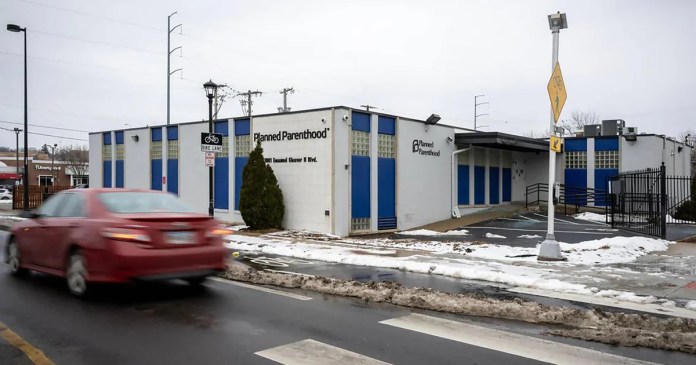
Jefferson City, Mo. — A Missouri judge blocked many of the state’s abortion restrictions Thursday, reimposing a preliminary injunction against them just a little over a month after the state’s highest court had lifted a previous hold.
Planned Parenthood said the order clears the way for it to again provide procedural abortions in Missouri.
But Missouri Attorney General Andrew Bailey said his office “will expeditiously appeal this ruling.”
The court order marks the latest twist in a multiyear battle that has seen Missouri swing back and forth between banning and allowing most abortions.
When the U.S. Supreme Court ended a nationwide right to abortion by overturning Roe v. Wade in 2022, it triggered a Missouri law banning abortions “except in cases of medical emergency.” But abortion-rights activists gathered initiative petition signatures to reverse that law.
Last November, voters narrowly approved a constitutional amendment guaranteeing a right to abortion until fetal viability, generally considered sometime past 21 weeks of pregnancy. That made Missouri the only state where voters have used a ballot measure to overturn a ban on abortion at all stages of pregnancy.
The state Supreme Court ruled in May that Zhang had applied the wrong standard when issuing rulings in February and December that blocked Missouri’s abortion restrictions.
Upon reconsideration, Zhang again issued preliminary injunctions against the abortion ban. The judge also reimposed a hold on various other laws, including a 72-hour waiting period for abortions, numerous abortion facility licensure requirements and a mandate that physicians performing abortions have admitting privileges at certain types of hospitals located within 30 miles or 15 minutes of where an abortion is provided.
“Abortion is legal again in Missouri because voters demanded it and we fought for it,” said Emily Wales, president and CEO of Comprehensive Health of Planned Parenthood Great Plains. “Care starts again on Monday in Kansas City.”
Planned Parenthood clinics in central Missouri and St. Louis also “will work as quickly as possible to resume scheduling abortion appointments,” said Margot Riphagen, president and CEO of Planned Parenthood Great Rivers.
The attorney general’s office said it will keep up the legal fight.
“Missouri will not stand idly by while the abortion industry seeks to strip away basic medical safeguards,” Bailey’s office said in a statement. “We will continue to uphold the State’s compelling interest in protecting women’s health, safety, and informed consent.”
Thursday’s order did not address medication abortions, which remain on hold while Planned Parenthood wrangles with the state over abortion regulations.
The court battle is just one part of Missouri’s ongoing abortion debate.
In May, the Republican-led Legislature approved a proposed constitutional amendment that would reimpose an abortion ban – but with exceptions for pregnancies caused by rape or incest. The measure could be on the ballot in 2026 or sooner.
Great Job & the Team @ Home – CBSNews.com Source link for sharing this story.
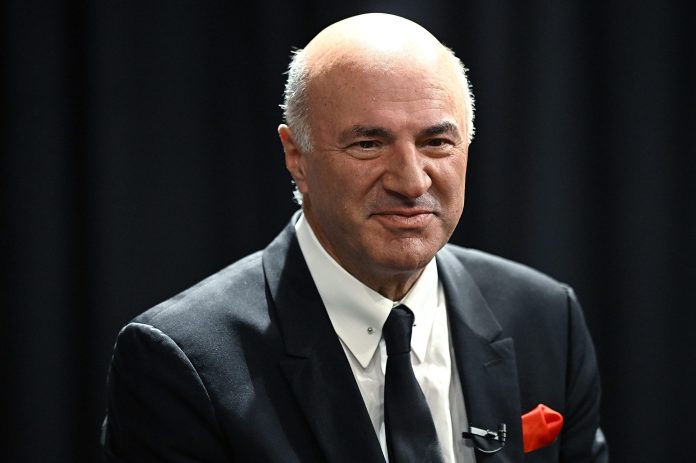
Kevin O’Leary has risen to icon status in the business world over his four-decade career. And he’s done it all—from being the iconic “Mr Wonderful” on investor series Shark Tank, to founding and selling his company SoftKey Software Products for $3.7 billion. Through all this success, his huge motivator has been the naysayers who think he can’t break through into new industries.
“I just love it when people tell me, ‘Oh, you can’t do this, you can’t do that,’” O’Leary tells Fortune. “When someone tells me I can’t do it, I turn around, two years later, kick their ass. That’s a great motivation. It’s not about the money anymore—I just like kicking their ass.”
O’Leary says his favorite example was when he wanted to go into the watch insurance business a few years ago. Some detractors argued that it was “impossible” for him to succeed in the hyperniche space, that he wouldn’t even be able to break in. But in April 2024, O’Leary announced that he would be launching a watch insurance platform called WonderCare.
His haters turned out to be great motivators, and with over 40 years of skin in the game, O’Leary isn’t easily deterred by a snide comment or occasional failure. A part of that attitude also rests on his “founder’s mindset” that he learned by working with the late Apple cofounder Steve Jobs in the 1990s: being able to tune out the “noise” of critics or external pressures, and focus on the “signal” of getting the day’s three to five most important things done straight away.
“I’m fairly lucky. I’ve made lots of mistakes in investing, but I’ve also had some extraordinary outcomes…I’m not scared to fail,” he continues. “I never bet the farm on any one thing.”
The founder’s mindset: leading with signal, and tuning out the noise
O’Leary says the “founder’s mindset” is a key ingredient in the entrepreneurial success he witnessed while working with Jobs, which everyone else needs to make it in business.
It was the 1990s, and SoftKey Software Products—later named The Learning Company—was spearheading the development of Apple’s educational software. O’Leary suggested that Jobs hear the input of students and teachers as to what they would want from the program. But Jobs was having none of it, stating their opinions didn’t matter, and that the games would be most successful following the Apple cofounder’s lead.
O’Leary saw his leadership style as brutal—but respected how Jobs was able to keep his eye on the ball, dubbed “signal” mode. Meanwhile, he was able to drown out the “noise” of everyday life and external opinions to stick with the game plan. O’Leary says Jobs struck a good balance of 80% signal, to 20% noise. He says he’s also reached that dynamic of 80:20, striking a balance between business and hobbies to keep himself dynamic. Meanwhile, he says others like Tesla CEO Elon Musk lead completely with 100% signal.
“I’ve had to work on it, because I didn’t even know that was important till I went through my whole thing with Jobs way back in the early 90s,” O’Leary says. “But I also deal with it in every aspect of what I’m doing…[If] business is biting, you focus on making money or losing money.”
“But I also have interest in photography, in watch collecting, guitar collecting, guitar playing, all kinds of things that I focus on to balance where my head is at,” he adds. “To keep the creative yin and yang.”
Great Job Emma Burleigh & the Team @ Fortune | FORTUNE Source link for sharing this story.
Election Day in New York City was a scorcher. Temperatures at Kennedy Airport reached 102 degrees last Tuesday, making it the city’s hottest June day since 1948. Average June temperatures in Central Park rarely exceed 75 degrees. The recommendation for vulnerable groups—usually the elderly or chronically ill—was to stay inside during the heat wave.
But for civically-minded New Yorkers, that advice was impossible to follow as polls opened for voters in the primary elections in the city.
The heat also got the attention of elected leaders in the state. “The NYC Board of Elections is not equipped to handle the heat wave,” wrote U.S. Rep. Gregory Meeks (D-N.Y.) and New York State Assembly Member Rodneyse Bichotte-Hermelyn in a joint statement they issued four days before the primary.
Leading up to election day, the New York City Board of Elections planned to install fans and distribute water at all polling sites. But Meeks and Bichotte-Hermelyn said that the plan was “not sufficient to sustain a healthy and safe environment” for voters “showing up in person on Election Day.”
We’re hiring!
Please take a look at the new openings in our newsroom.
They felt the plan lacked protections for “commonly disenfranchised communities of color,” those who are most impacted by the urban heat island effect. It’s to be seen if the heat wave substantially affected voter turnout in these neighborhoods. But extreme heat events are increasingly stressing elections both in the U.S. and abroad.
Climate change is shifting the distribution of hot temperatures during the calendar year, starting summer heat earlier and ending it later, and increasing the frequency of extreme heat events. And the impacts on electoral processes will increase with the temperatures.
The effects of extreme heat on elections are not just felt on the days that polls are open. Heat impacts everything from campaigning to the management of polling sites, as well as the act of voting. This is forcing municipal bodies to rethink how they can safeguard electoral processes.
Elections Heat Up Around the World
The New York City elections were not unique in their extreme heat exposure, said Ferran Martinez i Coma, a professor of government and international relations at Griffith University in Brisbane, Australia. During the June 2024 national election day in Mexico, multiple states reached a blistering 105 degrees—almost five degrees hotter than the expected maximum temperature that day. And in July 2023, 104 degree heat bore down on the Spanish national election.
“Twenty years ago, this didn’t happen, or happened way less often,” he said. “Now this is happening more often, and it’s affecting many more countries.”
But scorching temperatures on election day is only one part of the problem, Coma stressed. Extreme heat impacts three distinct groups during election season: the candidates, the poll workers and the voters. Each of these groups is affected differently, and at different parts of the electoral process.
In order to inform and try to activate voters, political parties and their candidates often knock on doors in the communities they want to serve or hold rallies for their base. Outdoor rallies, in particular, can threaten both prospective voters and candidates with heat illnesses. At a rally in Arizona for the presidential candidate Donald Trump in June 2024, 111 degree (44 degrees Celsius) temperatures sent 11 people to the hospital.
“The candidates, they are humans as well,” he said. “At some point they can even get sick.”
Swinging Temperatures Can Swing Elections
In parliamentary systems, where prime ministers or members of parliament dictate when elections take place, extreme heat starts to pose both safety and ethical questions, Coma said. If the ruling party in a parliamentary system recognizes that the opposition’s voter base is likely to be in the heart of an impending heat wave, it could be politically advantageous to hold the election when the temperatures are peaking.
“Some people will say, ‘well, those are the rules of the game,’” he said. “In some other countries, the [members of parliament] take advantage of the natural hazard to their own advantage.”
The sun rises over Manhattan during a heat wave in New York City on June 24. Credit: Spencer Platt/Getty Images
In the U.S., where federal or local laws set the dates for elections, this type of political manipulation of when votes are held can’t occur. But the lack of legislative flexibility around elections has its own issues.
Having elections tied to a specific month or season (November for federal elections in the U.S.) eliminates weather-related advantages an incumbent party might have in campaigning or the timing of the opening of polling places. Instead, the focus is often on poll site management to make the election resilient to the weather.
Dealing with extreme heat at polling sites on election day is really about being proactive, said Alina Garcia, Miami-Dade County supervisor of elections. In Florida, which has the second highest percentage of residents over the age of 65 in the nation, getting people out of the elements is a priority.
Poll sites in Miami-Dade County try to maintain adequate indoor space so that voters can wait inside—out of the sun and in air conditioning, she said. If that space fills up, voters can take a number to hold their place in line and return later. Miami-Dade also has early voting and voters can request a mail-in ballot, if necessary, she said. This allows voters to avoid exposing themselves to dangerous heat altogether.
But early voting may not spare the election system—or voters—from a weather related crisis, said Sarah Birch, professor of political science at King’s College London. While the bodies that manage elections can warn voters to avoid dangerous weather by casting their ballots before an oncoming heat event, that could inadvertently bottleneck the polling site, she said.
“The problem is, in your typical early voting system, they’re just not going to have the staff available,” she explained. “There’s not going to be a set up to cater for a huge rush of voters two days before.”
Protecting Voters and Poll Workers
Fully vote-by-mail systems have been considerably more climate resilient than other methods of managing voting during heat waves. King County, Washington, has been fully vote-by-mail since 2009. King County residents receive their ballots, without request, about three weeks before any election, Halei Watkins, communications manager for King County elections, said.
The system’s relatively long track record of success has nearly eliminated in-person voting, and that has shifted the focus of heat protections from voters to poll workers. If it’s forecast to be incredibly hot, Watkins said, King County will shift ballot collection schedules so that workers “start more at like 5 a.m. rather than 7 or 8 a.m. so they can get out and pick up ballots from drop boxes before it gets really hot out.”
This story is funded by readers like you.
Our nonprofit newsroom provides award-winning climate coverage free of charge and advertising. We rely on donations from readers like you to keep going. Please donate now to support our work.
Such precautions can make a big difference in health, safety and effectiveness of poll workers, as most of them are middle-aged volunteers who are more susceptible to heat exposure than younger people, said Birch at King’s College.
And, for people working long hours at voting sites, the consequences of extreme heat exposure can be severe. In spring 2024, heat waves baked large parts of Western and Northern India. Temperatures approaching 130 degrees (54 degrees Celsius) were recorded in New Delhi during the height of the general election season in June. At least 33 poll workers died in the state of Uttar Pradesh as a result of the heatwave.
Extremely dense municipalities, like those in India, have a much harder time shielding voters and poll workers from heat than places like Miami. Additionally, adequate funding is a prerequisite for implementing safety strategies. Air conditioning, fans and potable water from taps or in bottles all have a price tag attached to them. And those prices start to rise quickly during heat waves as demand for cooling supplies, like air conditioners, rise with the temperature.
“The governments that are trying to fund this are cash strapped,” Birch noted.
Because the funding isn’t always there to make election services or polling sites heat resilient, most countries only address the impacts of extreme weather on voting following a catastrophe, she added. And a voting system can only be as proactive and nimble as the law—or lawmakers—allow.
In 2021, Georgia lawmakers passed an election law that included a ban on the distribution of water in polling lines. A lawsuit from several civil rights and voting rights groups challenged the law, saying it infringed on the right of free expression by banning food and water distributions near voting centers, as well as requiring birth dates printed on absentee ballot envelopes. In 2023, a federal judge narrowed the law to allow for food and water distribution within 150 feet of a polling site. Up until last week, distributing water at polling sites was also illegal in New York, but Gov. Kathy Hochul signed legislation repealing a 1992 election law that made water distribution in election lines a misdemeanor.
“Providing water to voters waiting in line is a common-sense way to ensure New Yorkers have an easy, safe and secure experience in the voting booth,” Hochul said in a press release.
While American laws like these are starting to change in response to the stress that global warming is placing on the electoral system, some climate impacts on elections will demand more drastic responses. In 2012, flooding from Hurricane Sandy left polling sites in various parts of New York and New Jersey destroyed or unusable. Heat waves have rarely broken down the actual infrastructure needed for voting.
“Some people consider, ‘well, should we be able to delay some elections?’” Coma said. “You can think about it if there are floods, but no offense, we can’t delay elections because it’s hot.”
About This Story
Perhaps you noticed: This story, like all the news we publish, is free to read. That’s because Inside Climate News is a 501c3 nonprofit organization. We do not charge a subscription fee, lock our news behind a paywall, or clutter our website with ads. We make our news on climate and the environment freely available to you and anyone who wants it.
That’s not all. We also share our news for free with scores of other media organizations around the country. Many of them can’t afford to do environmental journalism of their own. We’ve built bureaus from coast to coast to report local stories, collaborate with local newsrooms and co-publish articles so that this vital work is shared as widely as possible.
Two of us launched ICN in 2007. Six years later we earned a Pulitzer Prize for National Reporting, and now we run the oldest and largest dedicated climate newsroom in the nation. We tell the story in all its complexity. We hold polluters accountable. We expose environmental injustice. We debunk misinformation. We scrutinize solutions and inspire action.
Donations from readers like you fund every aspect of what we do. If you don’t already, will you support our ongoing work, our reporting on the biggest crisis facing our planet, and help us reach even more readers in more places?
Please take a moment to make a tax-deductible donation. Every one of them makes a difference.
Chad Small is the 2025 AAAS Mass Media fellow with Inside Climate News. He is a third-year PhD student in Atmospheric and Climate Science at the University of Washington. Chad currently researches how information about tropical phenomena can improve our understanding of extreme rainfall and flooding events in both tropical regions and midlatitude regions, like the United States. Originally from New York City, he has also written as a freelance journalist with work appearing in the Bulletin of the Atomic Scientists, Grist, Imagine5, Next City and elsewhere. Most recently, Chad has been the Climate Change Editorial Fellow at the Bulletin of the Atomic Scientists.
Great Job By Chad Small & the Team @ Inside Climate News Source link for sharing this story.
By Dr. Frances Murphy Draper AFRO CEO and Publisher
A name that meant progress—and what it means to take it back
Last year, when the U.S. Army renamed Virginia’s Fort Lee to Fort Gregg-Adams, it marked a long-overdue step in the right direction. The base, once named for a Confederate general, now honored two groundbreaking Black military leaders: Lt. Gen. Arthur Gregg, a logistics expert who rose to the highest ranks, and Lt. Col. Charity Adams, commander of the 6888th Central Postal Directory Battalion—the only all-Black, all-female unit deployed overseas during World War II.
Dr. Frances Murphy Draper serves as AFRO CEO and publisher. This week, she discusses the reversal of Fort Gregg-Adams’ renaming and why the erasure of Black heroes—especially Black women—threatens to dim the true meaning of Independence Day. Credit: Photo courtesy of John Hopkins University / Will Kirk
This was more than a name change. It was a long-awaited recognition of service, sacrifice, and excellence in the face of racism and exclusion. For Black America—especially for Black women who’ve long been left out of the spotlight—it felt like something sacred had finally been seen.
But on June 16, 2025, that honor was revoked. Under the current administration, the base was quietly renamed Fort Lee once again—this time in honor of Private Fitz Lee, a Black Buffalo Soldier and Medal of Honor recipient. While Fitz Lee’s bravery deserves remembrance, the decision to erase Gregg and Adams—two high-ranking, history-making figures—is not just a reshuffling of military tradition. It’s a signal. A rollback. A retreat.
We should not have to choose which Black heroes deserve to be remembered. This should not be an either-or. The fact that it has become one is telling.
The power of a name—and the danger of erasure
In a year when DEI offices are being closed, race-conscious college programs are being dismantled, and books by Black authors are being stripped from school shelves, the Fort Gregg-Adams reversal feels like more than a single decision. It feels like part of a pattern—one aimed at erasing our progress, our power, and our presence.
Symbols matter. Names matter. That’s why Confederate monuments were challenged. That’s why we cheered when the names of oppressors were replaced with names of those who served and uplifted. And that’s why this reversal should concern us all.
This isn’t just about military bases—it’s about the soul of the nation’s memory.
What Douglass would remind us
More than 170 years ago, Frederick Douglass—who used his pen and voice like a weapon of truth—asked this powerful question:
“What, to the American slave, is your Fourth of July?”
He did not reject the holiday outright. Instead, he rejected the hollow celebration of freedom in a nation where millions remained unfree. He held up a mirror to America’s contradictions—not to condemn the idea of liberty, but to call the country to live up to it.
Douglass would likely see the events of this year—the dismantling of DEI, the attacks on truth-telling in education, the reversal of progress at places like Fort Gregg-Adams—as a dangerous attempt to sanitize history rather than confront it. He would not be silent. And neither should we.
The women of the 6888th deserve more
Let us not forget: Lt. Col. Charity Adams led over 800 Black women soldiers who processed and delivered millions of pieces of mail during the war—keeping hope alive for soldiers far from home. They worked under extreme pressure, faced discrimination within the military, and still completed their mission in record time.
These women didn’t just sort letters. They built morale. They built legacy.
Removing Adams’s name erases far more than history—it erases dignity earned through service.
The Black Press still matters
In this same season, we are also witnessing a troubling retreat from support for the Black press—institutions that have long served as the conscience of our communities. For more than a century, Black-owned newspapers like the AFRO have documented what mainstream media ignored, challenged injustice, and uplifted voices too often silenced. But today, both public funding and private sector advertising dollars are shifting away from community-based journalism. If this trend continues, we risk losing not just a business—but a vital part of our civic fabric.
This is not about saving an industry. It’s about saving a truth-telling tradition. If the Fourth of July is to mean anything for all Americans, then the platforms that tell our stories must be protected—not erased.
This Independence Day, let’s tell the whole story
At the AFRO, we’ve never been afraid to tell the full truth—not just the parts that make America feel good, but the parts that push it to be better.
So this 4th of July, while the fireworks flash and the flags wave, I invite you to reflect not just on where we’ve been—but on what is being undone right now.
• We must remember why the renaming of Fort Gregg-Adams mattered in the first place.
• We must resist the quiet unraveling of equity under the name of neutrality.
• We must teach our children about Gregg, Adams, and the 6888th, even when their names are removed from the buildings.
• We must carry on the tradition of Douglass—not just asking hard questions, but demanding better answers.
Freedom must include us all
We are still here. We are still rising. And we are still naming what matters.
Until freedom fully includes Black women, Black immigrants, Black soldiers, Black teachers, Black storytellers, and every Black life across this nation—our independence is unfinished business.
Let this Fourth of July not be a moment of silence—but a moment of renewed commitment.
Because we deserve more than symbols.
We deserve to be seen, heard, remembered—and never erased.
Great Job Frances Toni Draper AFRO Publisher & the Team @ AFRO American Newspapers Source link for sharing this story.