

Home News Page 2559

Which Active Players Can Realistically Reach 3K Strikeouts After Clayton Kershaw?

Which Active Players Can Realistically Reach 3K Strikeouts After Clayton Kershaw?

However many games the oft-injured Clayton Kershaw ends up playing in 2025, however, he had a major milestone in his sights from the start, one that would be in reach even if he had to visit the IL once more. After making his season debut against the Angels, Kershaw stood at 2,970 career strikeouts, good for 21st all-time, with the retired Zack Greinke directly ahead of him. In the eight starts that followed, culminating in Wednesday’s start against the White Sox, Kershaw picked up the remaining 30 strikeouts he needed to become just the 20th pitcher to ever reach the 3,000-strikeout mark in their career. 

As elusive it is to reach the 3,000-hit club (33 members), it’s a significantly less exclusive one than 3,000 strikeouts, even with Kershaw bumping the number up by one.

The only reason there are even 20 pitchers with at least 3,000 strikeouts is due to a few other recent entries to the list. Justin Verlander (3,471) and Max Scherzer (3,419) are the only active pitchers who have already managed the feat, with Verlander pulling it off in 2019 and Scherzer in 2021. (Verlander also became just the second-ever player to reach 3,000 strikeouts in the same game that he recorded his 300th strikeout of the season, joining Randy Johnson, who did the same in 2000.) CC Sabathia isn’t active, but he, too, picked up his 3,000th K in 2019. 

[Related: Clayton Kershaw becomes 20th pitcher in MLB history to reach 3,000 strikeouts]

Every single retired pitcher on the list is in the Hall of Fame, save Roger Clemens. The former Red Sox, Yankees, and Astros star received 65% of the vote in his final chance through the BBWAA, short of the 75% required for election, but could still enter Cooperstown through a veterans’ committee vote in the next few years. Verlander, 42, and Scherzer, 40, will surely reach the Hall of Fame the old-fashioned way after they retire.

Which is to say that only the greatest have reached this particular threshold. Kershaw’s achievements stood for themselves with or without 3,000 strikeouts — three Cy Young awards, four other top-five finishes for the award, 10 All-Star appearances, the 2014 Most Valuable Player award and votes in five other seasons, over 2,700 career innings, his entering 2025 as the league’s active leader in ERA (2.50) and ERA+ (156) for his career. Yes, a 2.50 career ERA – now 2.52 – over 2,700 innings. Maybe it’s a little easy to forget now, as he’s aged and been injured more regularly, but Kershaw had a 10-year stretch where he posted ERAs under 3, from age 21 through 30, where his actual ERA for that entire run was 2.29. Truly, one of the greats.

While the 37-year-old Kershaw reaching 3,000 strikeouts was seemingly assured, the next player to reach 3,000 strikeouts after him is a little tougher to pin down. It’s even tougher after that, and… then it gets real, real difficult to project.

Chris Sale is in his 15th season in the majors. At age 36, he sits at 2,528 strikeouts; still a ways off, but given he won the NL Cy Young award in 2024 while striking out a league-leading 225 batters, it’s also not difficult to see him reaching 3,000 before his career ends. The problem for Sale is health: the reason he hasn’t already logged his 3,000th strikeout is because of how the non-2024 parts of this decade have gone for him. He missed all of 2020 after undergoing Tommy John surgery, and all but nine starts in 2021 as he recovered from the procedure. He had a stress fracture in his ribs and surgery on a fractured pinky that, combined, cost him all but two starts in 2022. Then, a stress fracture in his scapula in 2023 took 70 days of his season: all told, he managed 182 strikeouts over 151 innings, which is perfectly Chris Sale, but it took three seasons to put that together.

If he can stay healthy, 3,000 shouldn’t be difficult to reach, even if the overall quality of his performance declines as he enters his late-30s. That’s a significant if, though, considering.

The next candidate for 3,000 K’s is Gerrit Cole, who is currently recovering from Tommy John surgery. The Yankees’ ace is out for all of 2025 after undergoing the procedure, but he’s expected to be back in 2026. He sits at 2,251 strikeouts, averaging 214 of them per year from 2017 through 2024, despite the pandemic-shortened 2020 and an injury-shortened 2024. From 2021 through 2023, Cole recorded 243, a league-leading 257, and 222 strikeouts. Assuming everything goes right with his surgery and recovery, then there’s little reason to expect him to pitch much differently in 2026. So he’s further away than Sale, but might have a better chance of actually getting there when you consider that he’s two years younger and has proven more durable overall. 

After those two… well. Charlie Morton is next up among active leaders, but even leaving aside his horrid start to 2025, is also 41 years old and just under 900 strikeouts short. Yu Darvish just crossed the 2,000-strikeout threshold last summer, but he’s already 38. If you include his seven seasons in Nippon Professional Baseball, though, Darvish has 3,257 over his career, as he recorded 1,250 strikeouts in Japan before coming over to MLB for the 2012 season. NPB, for the record, has just four pitchers who have reached 3,000 strikeouts. 

You then have to go all the way to Aaron Nola at just 1,831 strikeouts for the next-highest active player. He would need absolutely perfect health from here on out – he’s on the IL as of this writing – while averaging around 150 strikeouts per season from now through 2032. Not impossible! But it’s the little bit of built-in improbability in these exercises that have kept so many others, Hall of Famers included, from reaching 3,000.

Ask Jacob deGrom about that. He’s arguably the greatest pitcher of his generation in terms of pure talent, and the fastest to reach 1,700 career strikeouts, as he recently achieved in May. However, it took him until he was 37 as that is measured by games – and deGrom’s years are full of injuries that have limited him from recording even more. 

Beyond Nola, it’s basically impossible to say now, which is a combination of pitchers too old to get there before it’s time to retire, and pitchers too young to project forward. Strikeouts might be higher than they’ve ever been, but innings are so much lower these days counters that rise: teams are more willing to go to their bullpens sooner and more regularly. That means there will be fewer Kershaws, which were already a rarity, but also the likes of Sale, or Cole, or Darvish, or Nola. And the rise of major elbow injuries, owing at least in part to the commitment to going all-out with every pitch for maximum velocity, means more pitchers will miss time — including entire seasons — interrupting their chance to compile the necessary strikeouts for a historic outcome. 

Consider the young phenom, Pirates ace Paul Skenes: for all the talent he’s already shown at 23, he also averages just under six innings per start. He’s made 41 starts and struck out 285 batters in his young career, but he’d need to keep that up for almost 14 years in total to reach 3,000 strikeouts. That’s a huge ask that leaves little wiggle room for injuries of any kind, never mind one like a torn UCL that will eat at least one season of a career, depending on the timing of the injury and procedure. 

Which is all a long way of saying to appreciate what Kershaw has already done and what he appears to be on the verge of doing. This is not something that’s happened very often in MLB history as is, and it’s likely only going to become that much rarer going forward.

Want great stories delivered right to your inbox? Create or log in to your FOX Sports account, and follow leagues, teams and players to receive a personalized newsletter daily!

FOLLOW Follow your favorites to personalize your FOX Sports experience

Clayton Kershaw

Chris Sale

Gerrit Cole


Get more from Major League Baseball Follow your favorites to get information about games, news and more


Great Job & the Team @ FOX Sports Digital Source link for sharing this story.
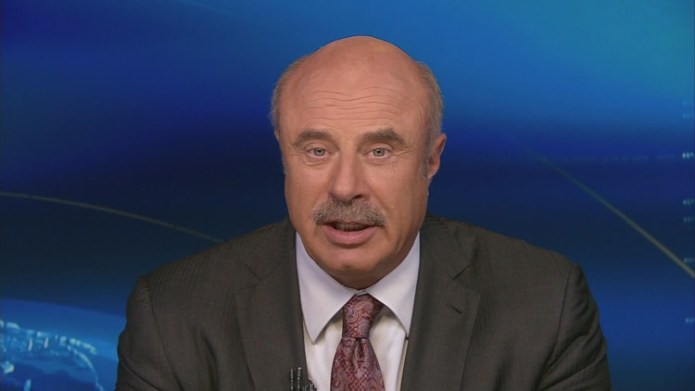
Dr. Phil’s North Texas-based TV network files for bankruptcy, sues its broadcast partner

Dr. Phil’s North Texas-based TV network files for bankruptcy, sues its broadcast partner

The bankruptcy filing and lawsuit come within weeks of Dr. Phil’s North Texas-based TV network confirming its most recent round of layoffs.

FORT WORTH, Texas — Dr. Phil’s North Texas-based TV Network Merit Street Media filed for bankruptcy and filed a lawsuit against its broadcast partner, Trinity Broadcasting Network, this week, alleging breach of contract. 

Merit Street’s filing for Chapter 11 bankruptcy, and the lawsuit against Trinity Broadcasting Network, both of which were filed Wednesday, comes less than two years after the network’s launch and shortly after its most recent round of layoffs. 

In the lawsuit, Merit Street accuses Trinity Broadcasting of “sabotage” of the network and a “conscious, intentional pattern of choices” that led to Merit Street’s bankruptcy.

“This lawsuit arises out of a sad, but oft told story: one side lived up to its commitments but the other, the Defendant TBN, did not. Moreover, these failures by TBN were neither unintended nor inadvertent,” Merit Street’s lawsuit reads. “They were a conscious, intentional pattern of choices made with full awareness that the consequences of which would be sabotage and seal the fate of a new but already nationally acclaimed network.”

Specifically, the lawsuit alleges Trinity Broadcasting saddled Merit Street Media with $100 million in debt. 

“TBN formed Merit Street as a joint venture and contractually committed to provide valuable services to the joint venture. But TBN then reneged on its obligations and abused its position as the controlling shareholder of Merit Street to improperly and unilaterally burden Merit Street with unsustainable debt,” the lawsuit reads.

Merit Street also alleges Trinity Broadcasting caused it to enter into various distribution agreements with third parties to distribute Dr. Phil content that total $96 million, court documents show. 

According to the bankruptcy filing, Merit Street has assets of between $100 million and $500 million and liabilities in the same range. 

Merit Street Media also lists more than 200 creditors, according to its bankruptcy filing, including DirectTV, which it owes about $1.7 million, and Dish Network, which it owes $900,000, among others. 

The lawsuit seeks damages and attorneys’ fees and court costs, among other things, court documents show.

WFAA has reached out to Merit Street Media and Trinity Broadcasting Network for comment on the bankruptcy filing and lawsuit. 

The filings come after Merit Street Media confirmed in June it had laid off 40 staff members in the second round of layoffs to hit the network since its launch amid a “summer hiatus” of Dr. Phil’s show.  Merit Street had previously laid off about 40 staff members in August of 2024.

Late last year, Professional Bull Riders (PBR) parted ways with Merit Street within months of announcing a partnership for the network to broadcast league events, with PBR alleging Merit Street failed to pay broadcast rights fees owed to the league. 

Great Job & the Team @ WFAA RSS Feed: news Source link for sharing this story.

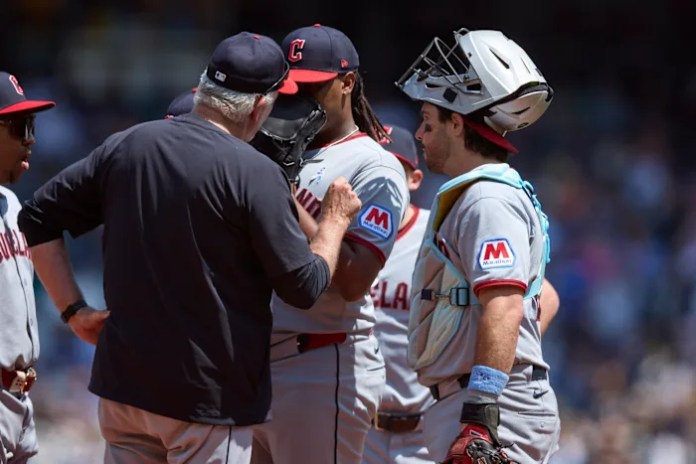
Cleveland pitcher Luis Ortiz placed on non-disciplinary leave by MLB amid investigation

Cleveland pitcher Luis Ortiz placed on non-disciplinary leave by MLB amid investigation

Copyright 2025 The Associated Press. All rights reserved

Cleveland Guardians pitcher Luis L. Ortiz throws tot he Athletics during the seventh inning of a baseball game Saturday, June 21, 2025, in West Sacramento, Calif. (AP Photo/Sara Nevis)

Cleveland Guardians pitcher Luis Ortiz was placed on non-disciplinary leave on Thursday due to an investigation by Major League Baseball.

MLB said Ortiz’s paid leave will be through the end of the All-Star break on July 18. MLB and the Guardians had no further comment on the investigation. Ortiz returned to Cleveland on Wednesday night.

The 26-year old Ortiz is in his first season with Cleveland after he was acquired in a trade with Pittsburgh last December. The right-hander is 4-9 with a 4.36 ERA and 96 strikeouts in 16 starts this season. The nine losses are tied for the most in the American League.

Ortiz was slated to be the starting pitcher for Thursday night’s game at the Chicago Cubs. Instead, left-hander Joey Cantillo will be recalled from Triple-A Columbus. Cantillo is 1-0 with one save and a 3.81 ERA in 21 appearances this season.

Cleveland (40-44) has dropped a season-high six straight games and is 9-18 since May 1.

___

AP MLB: https://apnews.com/hub/mlb


Great Job Associated Press & the Team @ KSAT San Antonio Source link for sharing this story.

Cubzoa (Penelope Isles’ Jack Wolter) Announces Debut Album, Shares New Single – Our Culture

Cubzoa (Penelope Isles’ Jack Wolter) Announces Debut Album, Shares New Single – Our Culture

Cubzoa, the solo project of Penelope Isles‘ Jack Wolter, has announced his debut album. Unfold in the Sky is set for release on October 24 via Bella Union. It’s led by the sunny new single ‘Choke’, whose second verse is sung by Nanna Schannong of Lowly. A press release cites Tame Impala and Rival Consoles as reference points, but Youth Lagoon’s beautifully tender dream-pop also comes to mind. Take a listen below.

Choke is about painting a picture in your own head, pretending that things are okay when they’re not,” Wolter explained in a press release. “The chorus lyrics brush the truth under the rug, whilst the verses pull it back, revealing the reality of unhealthy relationships with both substances and people. Often, with prior songs, I’ve tended to hide behind blurry lyrics, as a way to mask true feelings both from myself and audiences. But in this chapter I strove for honesty. I found the whole process therapeutic and consequently, probably for the first time ever, allowed myself to reflect this in my writing.”

Unfold in the Sky Cover Artwork:

Cubzoa (Penelope Isles’ Jack Wolter) Announces Debut Album, Shares New Single – Our Culture

Unfold in the Sky Tracklist:

  1. In 2 Worlds
  2. Choke
  3. Buckle Up
  4. Mid-Air Collider
  5. Lost In You
  6. I Dreamed A Beach
  7. Turtle
  8. Barcelona
  9. Chewin On My Lips
  10. Dance With Me
  11. Unfold In The Sky

Great Job Konstantinos Pappis & the Team @ Our Culture Source link for sharing this story.
Was 2010 Kesha the Brightest Star From an All-Time Pop Year?

Was 2010 Kesha the Brightest Star From an All-Time Pop Year?

If you looked at the Billboard Hot 100 dated Jan. 2, 2010, you’d see a new name at No. 1 — a name you might not even have recognized just a few months earlier. Kesha Rose Sebert — then known as Ke$ha — had crashed the pop music landscape (and the charts) with the suddenly inescapable breakout hit “Tik Tok,” capturing the first Hot 100 No. 1 of the new decade. In the process, she not only set the tone and tempo for the turbo-pop of the early 2010s, she kicked off a streak of hits that would take her all through 2010 and even into 2011 — a run that, while treasured by pop fans, feels a little underappreciated from a 2025 vantage, since it ended a little more abruptly and dramatically than anyone would’ve hoped for.

Explore

Explore

See latest videos, charts and news

See latest videos, charts and news

On this week’s Vintage Pop Stardom episode of the Greatest Pop Stars podcast, host Andrew Unterberger is joined by r/Popheads moderator and Main Pod Girl host AJ Marks to talk about the original pace-setting star for one of the great years in modern pop memory: 2010, a year ultimately defined by pop giants like Lady Gaga, Katy Perry and Rihanna, but which Kesha ruled as much as anyone. We follow her 2010 from her “Tik Tok” breakthrough to her run of Animal singles and its Cannibal bonus EP — a year which ultimately resulted in six top 10 Hot 100 hits, one No. 1 Billboard 200 album, and generally unprecedented validation for bearded dudes worldwide.

Along the way, we brace all the most pressing questions about Kesha’s 2010: What made Kesha a pivotal pop star at such an important moment in pop history? Do the deep cuts on Animal and Cannibal actually clear the singles? Did Kesha’s 2010 really need quite so much 3OH!3? Why didn’t critics get any of it? What is the most effective use of Jack Daniels during the teeth-brushing process? Will Kesha’s Period album, due this Friday (July 4), hit for pop fans like her earliest work? And knowing what we know now from the years of fallout that followed her early peak — do we look at this 2010 Kesha run a little differently than we once did?

Check it out above — along with a YouTube playlist of some of the most important moments from Sly & the Family Stone’s 1969, all of which are discussed in the podcast — and subscribe to the Greatest Pop Stars podcast on Apple Music or Spotify (or wherever you get your podcasts) for weekly discussions every Thursday about all things related to pop stardom!

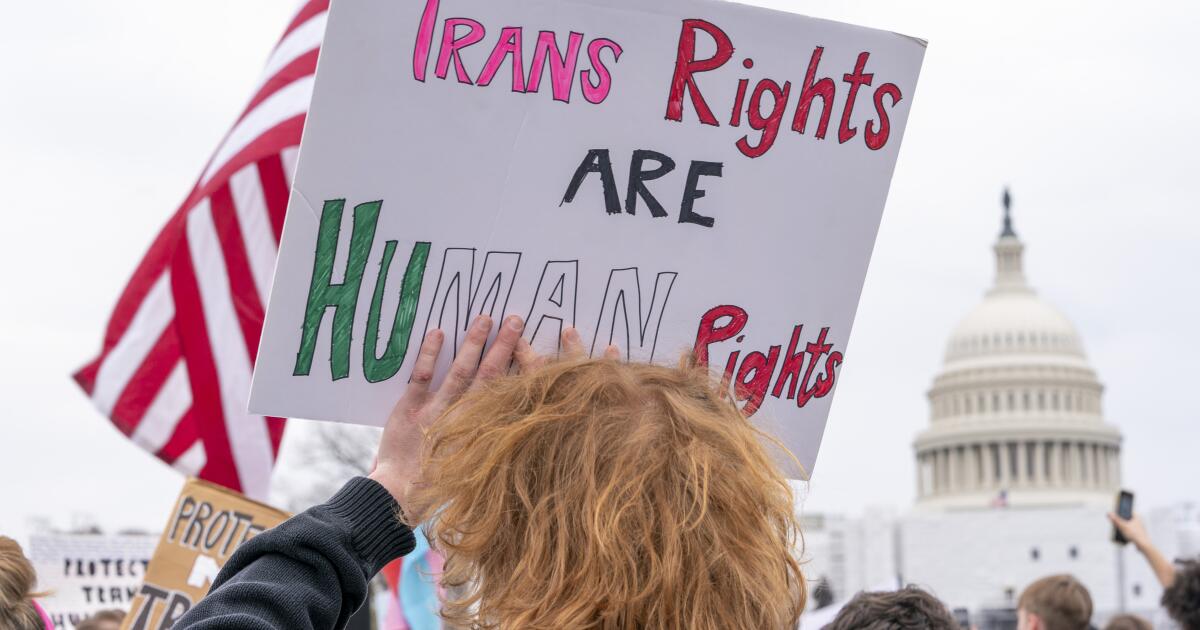
And as we say in every one of these GPS podcast posts — if you have the time and money to spare, please consider donating to any of these causes in the fight for trans rights:

Transgender Law Center

Trans Lifeline

Gender-Affirming Care Fundraising on GoFundMe

Also, please consider giving your local congresspeople a call in support of trans rights, with contact information you can find on 5Calls.org.

Great Job Andrew Unterberger & the Team @ Billboard Source link for sharing this story.

Supreme Court to decide if federal law bars transgender athletes from women’s teams

Supreme Court to decide if federal law bars transgender athletes from women’s teams

The Supreme Court agreed Thursday to weigh in on the growing controversy over transgender athletes and decide if federal law bars transgender girls from women’s school sports teams.

“Biological boys should not compete on girls’ athletics teams,” West Virginia Atty. Gen. JB McCusky said in an appeal the court voted to hear.

The appeal had the backing of 26 other Republican-led states as well as President Trump.

In recent weeks, Trump threatened to cut off education funds to California because a transgender athlete participated in a women’s track and field competition.

Four years ago, West Virginia adopted its Save Women’s Sports Act but the measure has been blocked as discriminatory by the 4th Circuit Court in 2-1 decision.

Idaho filed a similar appeal after its law was blocked by the 9th Circuit Court in San Francisco. The court said it would hear that case together with the West Virginia case.

At issue is the meaning of Title IX, the federal education law that has been credited with opening the door for the vast expansion of women’s sports. Schools and colleges were told they must give girls equal opportunities in athletics by providing them with separate sports teams.

In the past decade, however, states and their schools divided on the question of who can participate on the girls team. Is it only those who were girls at birth or can it also include those whose gender identity is female?

West Virginia told the court its “legislature concluded that biological boys should compete on boys’ and co-ed teams but not girls’ teams. This separation made sense, the legislature found, because of the ‘inherent physical differences between biological males and biological females’.”

California and most Democratic states allow transgender girls to compete in sports competitions for women.

In 2013, the Legislature said a student “shall be permitted to participate in sex-segregated school programs and activities, including athletic teams and competitions…consistent with his or her gender identity.”

The Supreme Court had put off a decision on this issue while the divide among the states grew.

McCusky, West Virginia’s attorney general, said he was confident the court would uphold the state’s law. “It is time to return girls’ sports to the girls and stop this misguided gender ideology once and for all,” he said in a statement.

Lawyers for Lambda Legal and the ACLU said the court should not uphold exclusionary laws.

“Our client just wants to play sports with her friends and peers,” said Sasha Buchert, director of Non-Binary and Transgender Rights Project at Lambda Legal.

“Categorically excluding kids from school sports just because they are transgender will only make our schools less safe and more hurtful places for all youth,” said Joshua Block, senior counsel for the ACLU’s LGBTQ & HIV Project. “We believe the lower courts were right to block these discriminatory laws, and we will continue to defend the freedom of all kids to play.”

Two years ago, the justices turned down a fast-track appeal from West Virginia’s lawyers on a 7-2 vote and allowed a 12-year old transgender girl to run on the girls’ cross country team.

Becky Pepper-Jackson and her mother sued after the school principal said she was barred by the state’s law from competing on the girls’ teams at her middle school in Bridgeport, W. Va.

She “has lived as a girl in all aspects of her life for years and receives puberty-delaying treatment and estrogen hormone therapy, so has not experienced (and will not experience) endogenous puberty,” her mother said in support of their lawsuit.

ACLU lawyers said then the court should stand aside. They said B.P.J. was eager to participate in sports but was “too slow to compete in the track events” on the girls team.

Last year, West Virginia tried again and urged the Supreme Court to review the 4th Circuit’s decision and uphold its restrictions on transgender athletes.

The state attorneys also claimed the would-be middle school athlete had become a track star.

“This spring, B.P.J. placed top three in every track event B.P.J. competed in, winning most. B.P.J. beat over 100 girls, displacing them over 250 times while denying multiple girls spots and medals in the conference championship. B.P.J. won the shot put by more than three feet while placing second in discus,” they told the court.

Last year, the court opted to rule first in a Tennessee case to decide if states may prohibit puberty blockers, hormones and other medical treatments for young teens who are diagnosed with gender dysphoria.

On June 18, the court’s conservative majority said state lawmakers had the authority to restrict medical treatments for adolescents who were diagnosed with gender dysphoria, noting the ongoing debate over the long-term risks and benefits. The ruling turned aside the contention that law reflected unconstitutional sex discrimination.

On Thursday, the justices released their final orders list before their summer recess granting review of new cases to be heard in the fall. Included were the cases of West Virginia vs. BJP and Little vs. Hecox.

In response to the appeals, ACLU lawyers accused the state of seeking to “create a false sense of national emergency” based on a legal “challenge by one transgender girl.”

The lawsuit said the state measure was “part of a concerted nationwide effort to target transgender youth for unequal treatment.” The suit contended the law violated Title IX and was unconstitutional because it discriminated against student athletes based on their gender identity.

West Virginia’s lawyers saw a threat to Title IX and women’s sports.

They said the rulings upholding transgender rights “took a law designed to ensure meaningful competitive opportunities for women and girls—based on biological differences — and fashioned it into a lever for males to force their way onto girls’ sports teams based on identity, destroying the very opportunities Title IX was meant to protect.”

Great Job David G. Savage & the Team @ California Source link for sharing this story.

U.S. added a higher-than-expected 147,000 jobs in June

U.S. added a higher-than-expected 147,000 jobs in June

Job growth was higher than expected in June, according to a federal report Thursday that showed the labor market beating milder forecasts.

Great Job Tom Howell Jr. & the Team @ The Washington Times stories: News Source link for sharing this story.

Nissan is recalling nearly half a million cars—and the flaw is so serious some may need new engines

Nissan is recalling nearly half a million cars—and the flaw is so serious some may need new engines
  • Nissan is recalling nearly half a million cars because of a flaw that could lead to engine failure. Some vehicle owners could receive new engines as a result of the recall. Nissan will determine how many engines are replaced after inspections by service technicians. Owners will be notified starting Aug. 25.

Owners of certain Nissan and Infiniti vehicles could be eligible for a new engine in their cars, due to a defect that has prompted a recall from the automaker.

Nissan is recalling 443,899 vehicles after discovering their VC Turbo engines could fail. Included in the recall are 2021-2024 Nissan Rogues, 2019-2020 Nissan Altimas, 2019-2022 Infiniti QX50s and 2022 Infiniti QX55s. All affected vehicles have 3-cylinder 1.5 liter or 4-cylinder 2.0 liter variable compression turbo engines.

Some of the motors, Nissan suspects, had a manufacturing flaw in their bearings that could lead to engine failure.

Before owners can get a replacement engine, however, Nissan is asking owners to take them into their dealer for an inspection. There, service technicians will remove and inspect the oil pans for debris. If they find some, Nissan will either repair or replace the engine.

Should no debris be found, dealers will replace the engine oil (and, in the case of 3-cylinder 1.5 liter vehicles, the oil pan gasket as well as reprogramming the engine control module) and send you on your way.

The Nissan Rogue is the most affected of the four cars. Of the nearly half million cars being recalled, 348,554 are Rogues.

The company will begin notifying dealers on July 15 and owners of the car starting Aug. 25. Owners with questions can contact Nissan at 800-647-7261.

Introducing the 2025 Fortune 500, the definitive ranking of the biggest companies in America. Explore this year’s list.

Great Job Chris Morris & the Team @ Fortune | FORTUNE Source link for sharing this story.

Supreme Court rejects Montana’s bid to revive parental consent law for minors’ abortions

Supreme Court rejects Montana’s bid to revive parental consent law for minors’ abortions

WASHINGTON – The Supreme Court said Thursday it will not hear a case involving a push to revive a law that minors must have their parents’ permission for an abortion in Montana, where voters have enshrined the right to abortion in the state’s constitution.

The justices rebuffed an appeal from the Republican-led state seeking to overturn a Montana Supreme Court ruling that struck down the law. The parental consent law passed in 2013 but was blocked in court and never took effect before it was invalidated last year.

Montana state leaders say that decision violated parents’ rights.

“The right that Montana seeks to vindicate here — parents’ right to know about, and participate in, their child’s medical decisions — falls well within the core of parents’ fundamental rights,” state attorneys argued in court documents.

Two conservative justices, Samuel Alito and Clarence Thomas, wrote separately to say the high court’s denial to take up the case was about its technical legalities rather than rejection of the state’s argument.

Planned Parenthood argued that the Montana Supreme Court decision balanced the rights of parents and of minors in a state that has protected the right to abortion. Montana’s highest recognized a right to abortion before the Supreme Court overturned it nationwide, and voters also enshrined it in the Montana Constitution last year.

“Petitioners seek to use the parental right as a cudgel against a minor’s rights,” the group wrote. “The broader interests of the child must be accounted for along with parental rights.”

The law would require notarized, written consent for people younger than 18 to get an abortion. It would also allow minors to petition judges for permission, a process known as judicial bypass. Montana also has another law in place requiring parents be notified of minors’ abortions.

More than two dozen states require parents consent to abortions for minors, though the laws have also been blocked in California and New Mexico, according to data gathered by KFF, a nonprofit that researches health care issues. Twelve more states require parental notification, though three of those laws are also blocked in court.

Copyright 2025 The Associated Press. All rights reserved. This material may not be published, broadcast, rewritten or redistributed without permission.

Great Job Lindsay Whitehurst, Associated Press & the Team @ KSAT San Antonio Source link for sharing this story.

#FeliciaRayOwens #TheFeliciaFiles #FROUSA #LocalVoices #IndependentMedia #HerSheSquad

Great Job Felicia Ray Owens & the Team @ Felicia Ray Owens Source link for sharing this story.

¿Una DANA solamente ocurre en Europa y el Mediterráneo? » Yale Climate Connections

¿Una DANA solamente ocurre en Europa y el Mediterráneo? » Yale Climate Connections

¿Una DANA solamente ocurre en Europa y el Mediterráneo? » Yale Climate Connections

Uno de nuestros lectors nos mandó la pregunta:

¿Una DANA solamente occurre en Europa y el Mediterráneo?

En 2024 ocurrió un fenómeno meteorológico en la costa mediterránea de España, donde más de 200 personas fallecieron debido a intensas inundaciones. El Dr. Rafael Méndez Tejeda nos explica qué es una DANA y si este fenómeno ocurre únicamente cerca del Mediterráneo.

Creative Commons LicenseCreative Commons License

Republish our articles for free, online or in print, under a Creative Commons license.

Great Job YCC Team & the Team @ Yale Climate Connections Source link for sharing this story.

Secret Link